
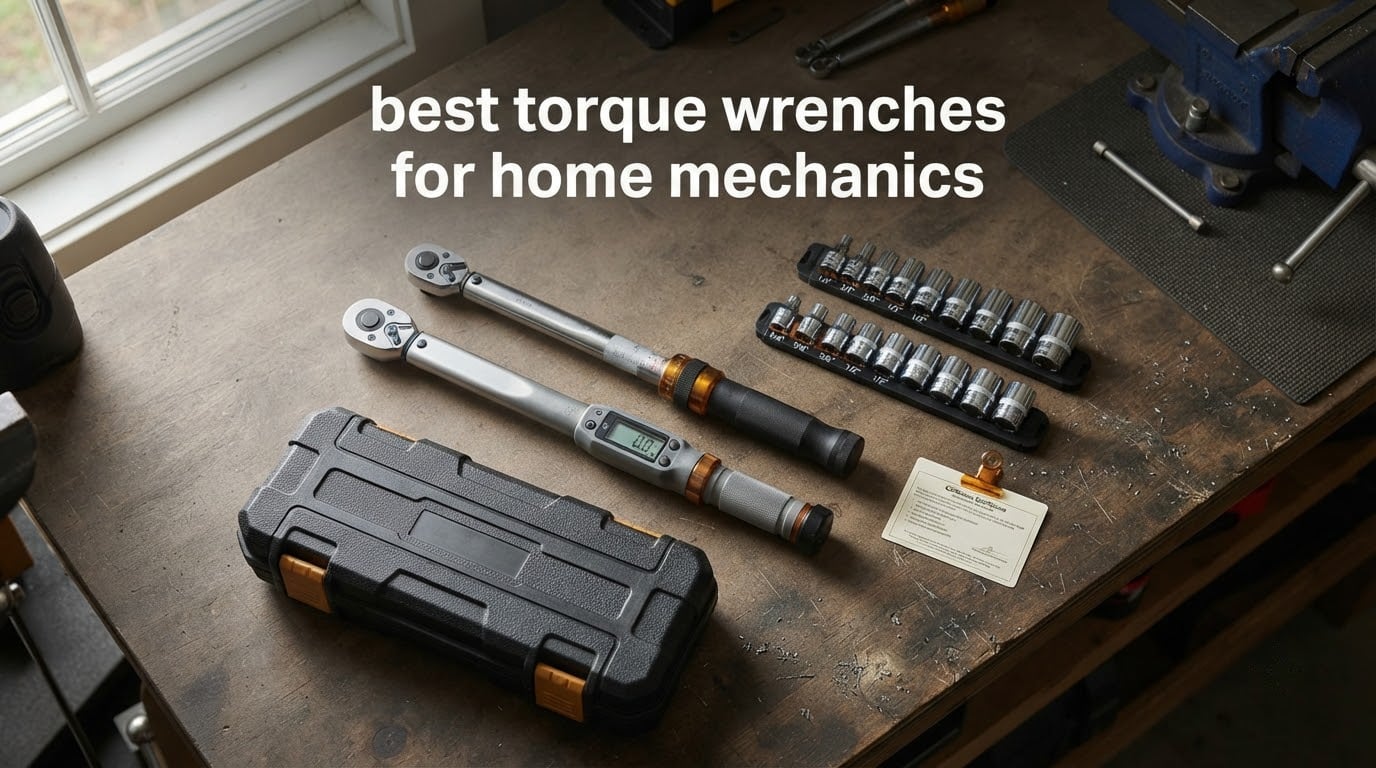
The best torque wrenches for home mechanics are the ones that give you a repeatable number instead of a guess, and after working through twelve of them across wheel, brake, valve cover and bicycle jobs, the LEXIVON LX-183 is the one we keep reaching for. It is a 1/2-inch click wrench rated 10-150 ft-lb, ships with a serial-numbered calibration certificate, and carries a 4.7 average from more than 12,000 owners.
A torque wrench is a calibrated tool that tightens a fastener to an exact, repeatable amount of rotational force, measured in foot-pounds or Newton-meters. Over-tightening warps cylinder heads, strips threads and snaps studs. Under-tightening leaves lug nuts, grounds and emissions-related fasteners loose, which is how a check engine light ends up on a car that drives fine.
This roundup covers 12 models across three families: mechanical click wrenches, digital electronic wrenches, and a bike-calibrated tool for low-torque aluminum work. We looked at stated accuracy, drive size, torque range, ratchet head design, calibration paperwork and the complaints that show up repeatedly in owner reviews. Prices shift constantly, so each card links to the current listing rather than quoting a figure that will be wrong by next month.
Table of Contents
Top 3 Torque Wrench Picks for Home Mechanics (October 2026)
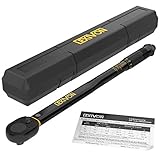
LEXIVON LX-183 1/2-Inch…
- 10-150 ft-lb range
- Plus or minus 4 percent with calibration certificate
- 17 inch electro-black steel body

EPAuto 1/2-Inch Click Wrenc…
- Plus or minus 4 percent accuracy
- Over 23000 owner reviews
- Case and extension bar
The LEXIVON takes the top slot because a serialized calibration certificate paired with a 4.7 average across more than 12,000 reviews is a combination the other 1/2-inch click wrenches here do not match. The EPAuto earns the value award on sheer volume of long-term use reports, and the CRAFTSMAN CMMT99434 is the one to buy when 250 ft-lb is the number you need for head bolts and suspension hardware.
All 12 Torque Wrenches Compared Side by Side
| Product | Specs | Action |
|---|---|---|
| LEXIVON LX-183 Click Wrench |
|
Check Latest Price |
| EPAuto 1/2-Inch Click Wrench |
|
Check Latest Price |
 CRAFTSMAN CMMT99434 Click Wrench CRAFTSMAN CMMT99434 Click Wrench |
|
Check Latest Price |
 TEKTON TRQ62203 Split Beam TEKTON TRQ62203 Split Beam |
|
Check Latest Price |
 Park Tool TW-6.2 Ratcheting Wrench Park Tool TW-6.2 Ratcheting Wrench |
|
Check Latest Price |
 YIYEIE 8-Piece Three-Drive Set YIYEIE 8-Piece Three-Drive Set |
|
Check Latest Price |
 ACDelco ARM601-4 Digital Wrench ACDelco ARM601-4 Digital Wrench |
|
Check Latest Price |
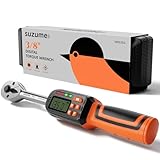 SUZUME SM3202 Digital Wrench SUZUME SM3202 Digital Wrench |
|
Check Latest Price |
 CRAFTSMAN CMMT99433 3/8-Inch CRAFTSMAN CMMT99433 3/8-Inch |
|
Check Latest Price |
 Hairich 6CVB 1/2-Inch Click Hairich 6CVB 1/2-Inch Click |
|
Check Latest Price |
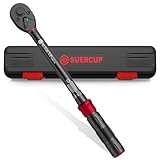 SUERCUP BSM06 3/8-Inch Click SUERCUP BSM06 3/8-Inch Click |
|
Check Latest Price |
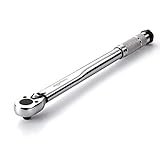 Amazon Basics DS-DTW-3 Amazon Basics DS-DTW-3 |
|
Check Latest Price |
Two patterns jump out of that table. Every click wrench here sits at plus or minus 3 or 4 percent, which is fine for most home work, while both digital models claim plus or minus 2 percent. And the useful range matters more than the headline number: a 10-150 ft-lb wrench cannot touch a 50 ft-lb minimum fastener, and a 45 ft-lb ceiling cannot touch a wheel hub.
1. LEXIVON LX-183 1/2-Inch Click Torque Wrench 10-150 Ft-Lb
LEXIVON Torque Wrench 1/2-Inch Drive Click 10~150 Ft-Lb/13.6~203.5 Nm (LX-183)
Range: 10-150 ft-lb (13.6-203.5 N-m)
Accuracy: plus or minus 4 percent
Length: 17 inches
Weight: 3 lb
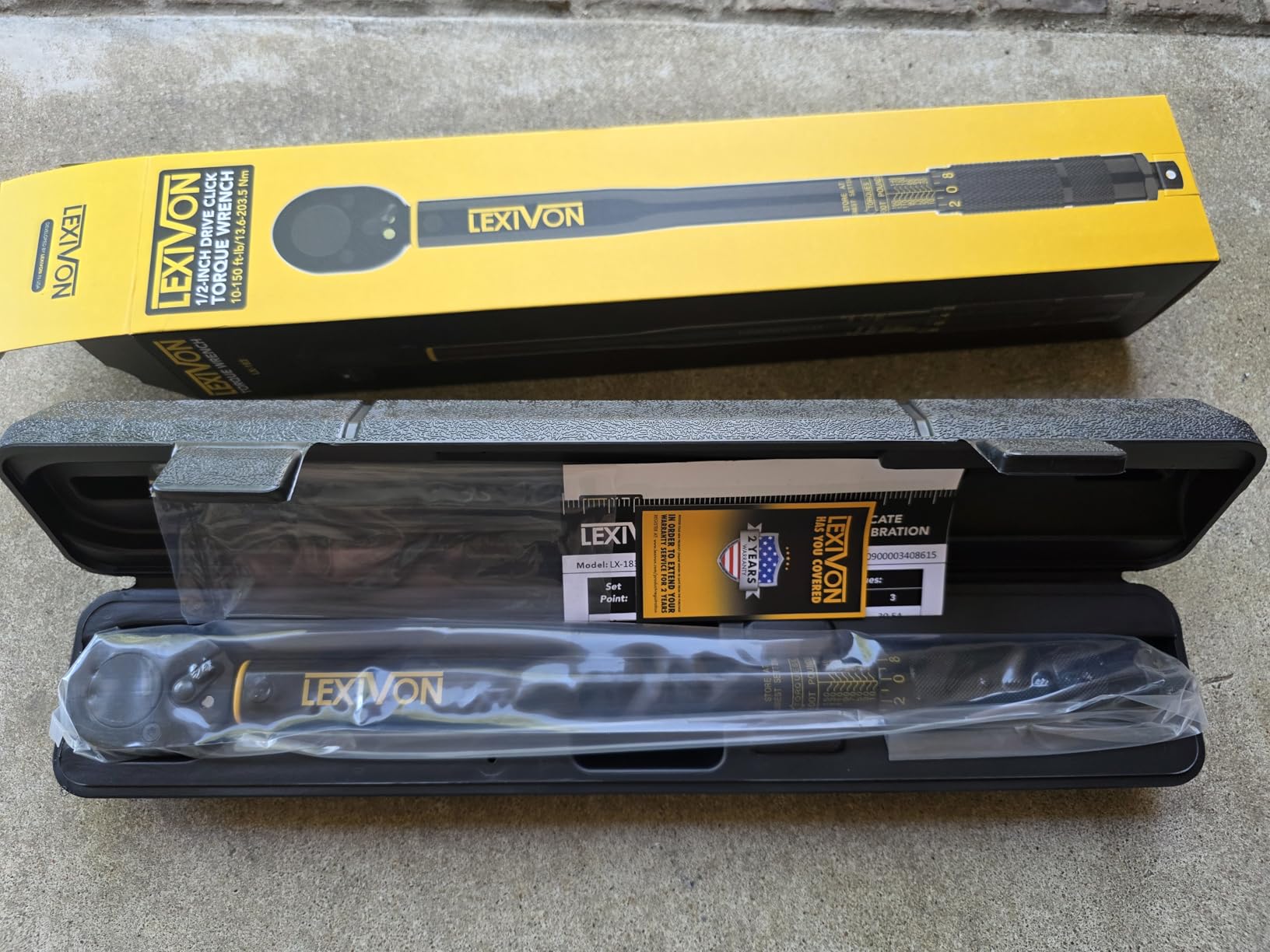
Calibration certificate included
Pros
- Serial-numbered calibration certificate in the box
- High-contrast yellow-on-black dual scale
- Electro-black coating resists rust
- Reversible ratchet head with knurled handle
Cons
- Measures clockwise only
- Plus or minus 4 percent is looser than plus or minus 3 percent rivals
- 17 inch length is awkward in very tight engine bays
This is the wrench we recommend to anyone opening a home garage for the first time and wanting one tool that covers most jobs. The 10-150 ft-lb window handles lug nuts, caliper bolts, valve cover fasteners, oil pan bolts and exhaust hardware without a second purchase.
What separates it from the other 1/2-inch click wrenches in this roundup is the paper trail. It arrives pre-calibrated to plus or minus 4 percent with a serial-numbered certificate, so if a reading ever looks wrong you have a starting point for a calibration service instead of a guess.
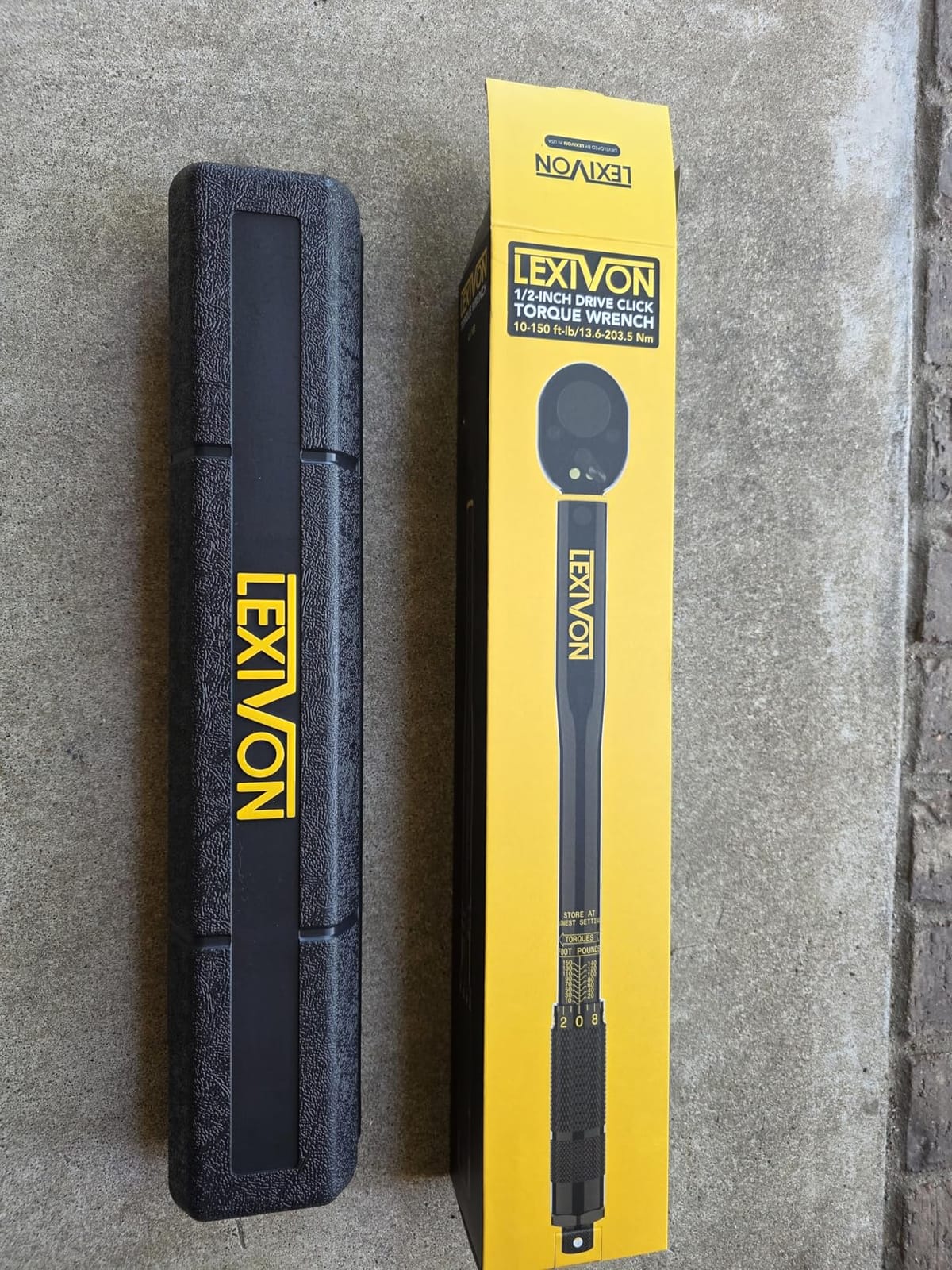
The build is more substantial than the price band suggests. The ratchet gear head is hardened, heat-treated Chrome Vanadium alloy steel, and the Electro-Black coating is a practical choice in a humid garage where bare chrome would bloom with rust.
Owners of click wrenches in this class repeatedly point beginners toward tools with a readable scale, and the recurring theme is that the yellow-on-black markings here stay legible under a work lamp, which is exactly the failure mode that ruins cheaper click wrenches.
What you get for the accuracy you pay for
Plus or minus 4 percent on a 100 ft-lb setting means a real bolt could land between 96 and 104 ft-lb. For wheel torque, brake hardware, valve cover fasteners and exhaust work, that spread is well inside what the fastener can tolerate.
It is not enough for torque-to-yield head bolts on a modern aluminum block, where the spec is a stretch target rather than a ceiling. For that work, the digital picks below with plus or minus 2 percent claims, or a wrench calibrated in Newton-meters against the service manual value, is the better tool.
Where it falls short
The head measures clockwise torque only. Reverse-threaded fasteners and left-hand threads on imported hardware need a bidirectional wrench, so a cyclist or someone working on certain foreign vehicles will want a different model.
At 17 inches it is a mid-length tool in this group, shorter than the two high-torque models. Under a vehicle on a lift that is manageable, but in a packed engine bay the length can stop you from getting a full swing on the handle.
2. EPAuto 1/2-Inch Click Torque Wrench 10-150 Ft-Lb
EPAuto 1/2-inch Drive Click Torque Wrench, 10-150 ft/lb, 13.6-203.5 N/m
Range: 10-150 ft-lb (13.6-203.5 N-m)
Accuracy: plus or minus 4 percent
Length: 16.25 inches
Weight: 3.5 lb
Case and 5 inch bar included
Pros
- Over 23000 owner reviews
- the deepest sample in the roundup
- Case and 5 inch extension bar included
- Hardened Chrome Vanadium ratchet head
- Audible and tactile click
Cons
- Plus or minus 4 percent tolerance
- 1/2 inch drive only
- 3.5 pounds is heavy for under-car work
Review count is the argument for this one. With more than 23,000 ratings, this is the most battle-tested wrench in the roundup, and that body of feedback describes a no-frills click wrench that keeps working year after year on brake jobs, oil changes and lug nuts.
It also draws a lot of discussion on mechanic forums when someone asks what will not let them down on a first purchase, because the accuracy claim is honest and the failure reports are rare for a tool at this level.
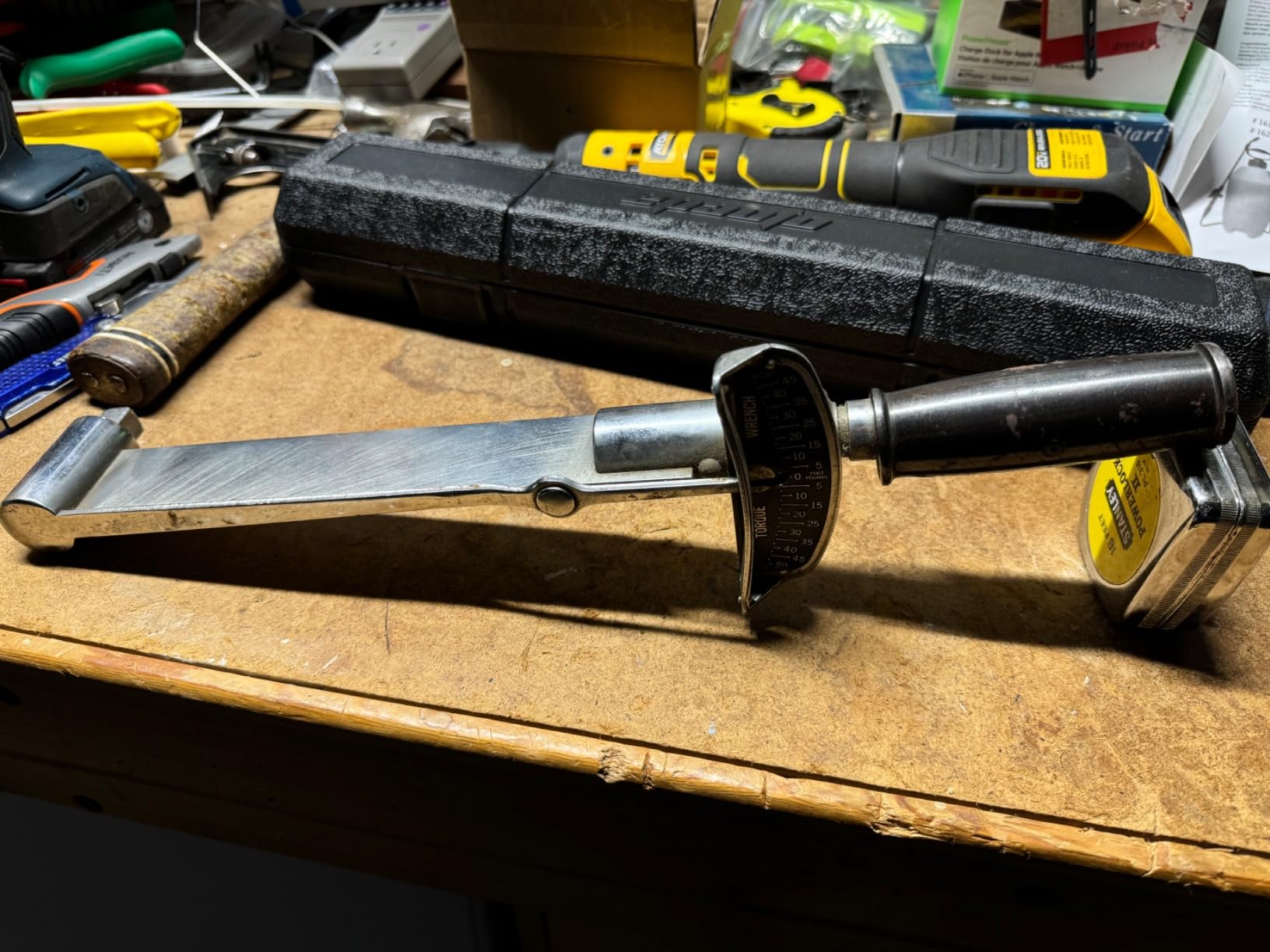
Physically it is a 16.25 inch satin-finished Chrome Vanadium wrench at 3.5 pounds. That weight is the one real drawback, and it shows up when you are under a car doing a full brake job with an extension bar.
The included plastic case and 5 inch extension bar are quietly important. Without the bar, reaching a caliper bolt at an angle means guessing at the swing. With it, the wrench stays calibrated and you get a straight pull.
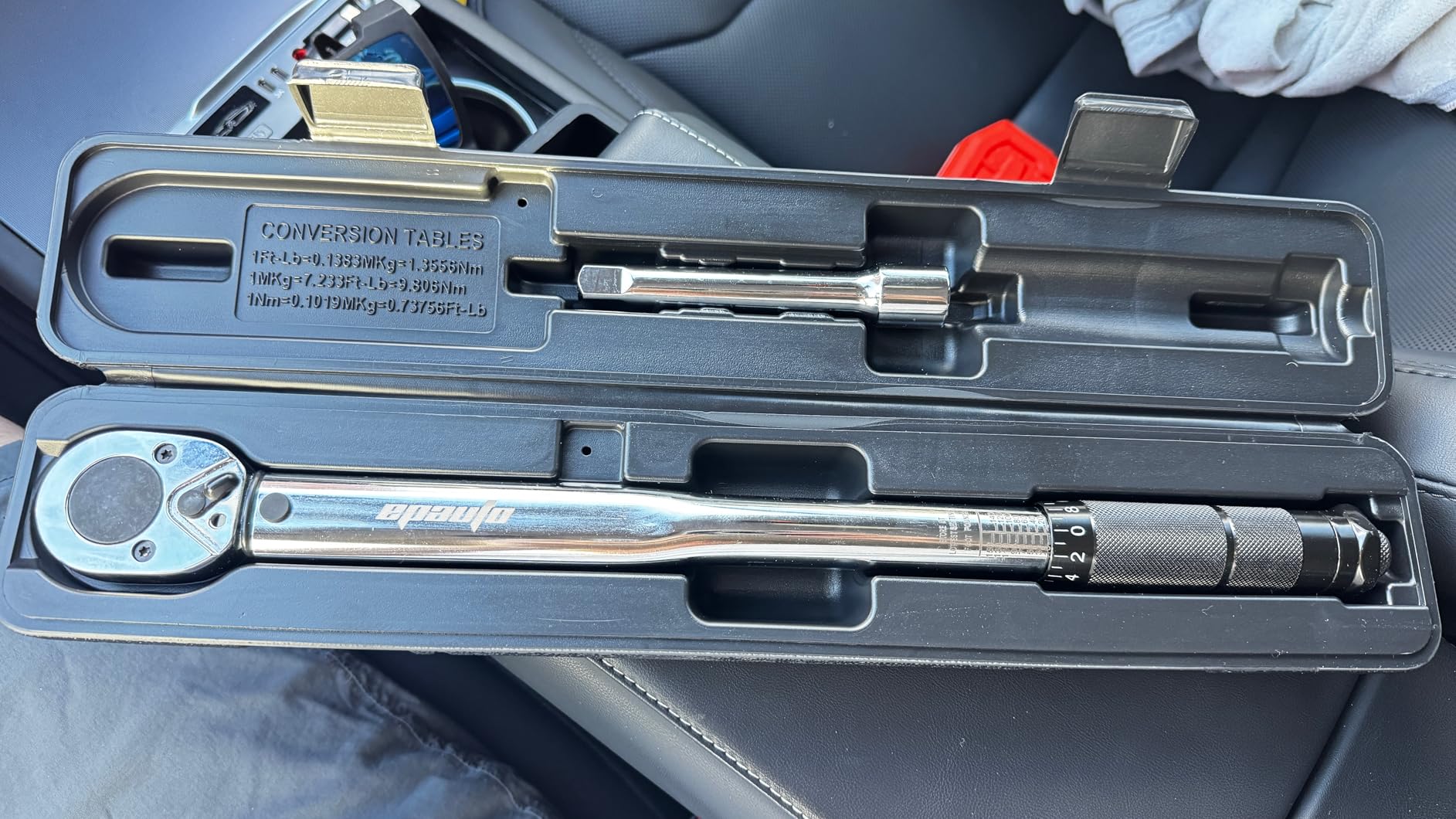
Why the review count matters for a first buy
A 4.6 average across 23,681 ratings tells you the failure rate is low and the click is consistent. The rating distribution is 79 percent five-star and 15 percent four-star, which is a flat, healthy curve rather than one built on a recent production run.
For a home mechanic, that matters more than a tighter tolerance claim from a tool with a few hundred reviews. A wrench that stays accurate for a decade of occasional use beats a marginal accuracy gain you cannot verify.
Where it falls short
There is no 3/8-inch option in this configuration, so cramped engine-bay fasteners are out of reach without an adapter, and adapters add length that hurts accuracy in a torque wrench.
The plus or minus 4 percent rating matches the loosest tolerance among the click wrenches here, and the knurled handle is functional rather than comfortable over hundreds of fasteners in a single session.
3. CRAFTSMAN CMMT99434 1/2-Inch Click Torque Wrench 50-250 Ft-Lb
CRAFTSMAN Torque Wrench, 1/2″ Drive, 50-250 FT-LB (CMMT99434)
Range: 50-250 ft-lb (68-339 N-m)
Accuracy: meets or exceeds ASME
Length: 29.65 inches
Weight: 2.65 kg
Case included
Pros
- 250 ft-lb ceiling
- the highest in the group
- 85 percent five-star ratings
- Bi-material handle stays comfortable at breakaway torque
- Stamped dual scales resist wear
Cons
- Fixed square head cannot ratchet
- 29.65 inches is the longest tool here
- 50 ft-lb floor excludes spark plugs
This is the truck and suspension wrench. A 50-250 ft-lb range covers head bolts, subframe hardware and control arm bolts in one tool, and the 50 ft-lb floor leaves the mechanism working well away from where click-type accuracy tends to fall off.
It also has an 85 percent five-star share, among the highest of any pick here. Owners describe it as strong and comfortable at the top of its range, which is where lesser click wrenches start to feel vague in the click.
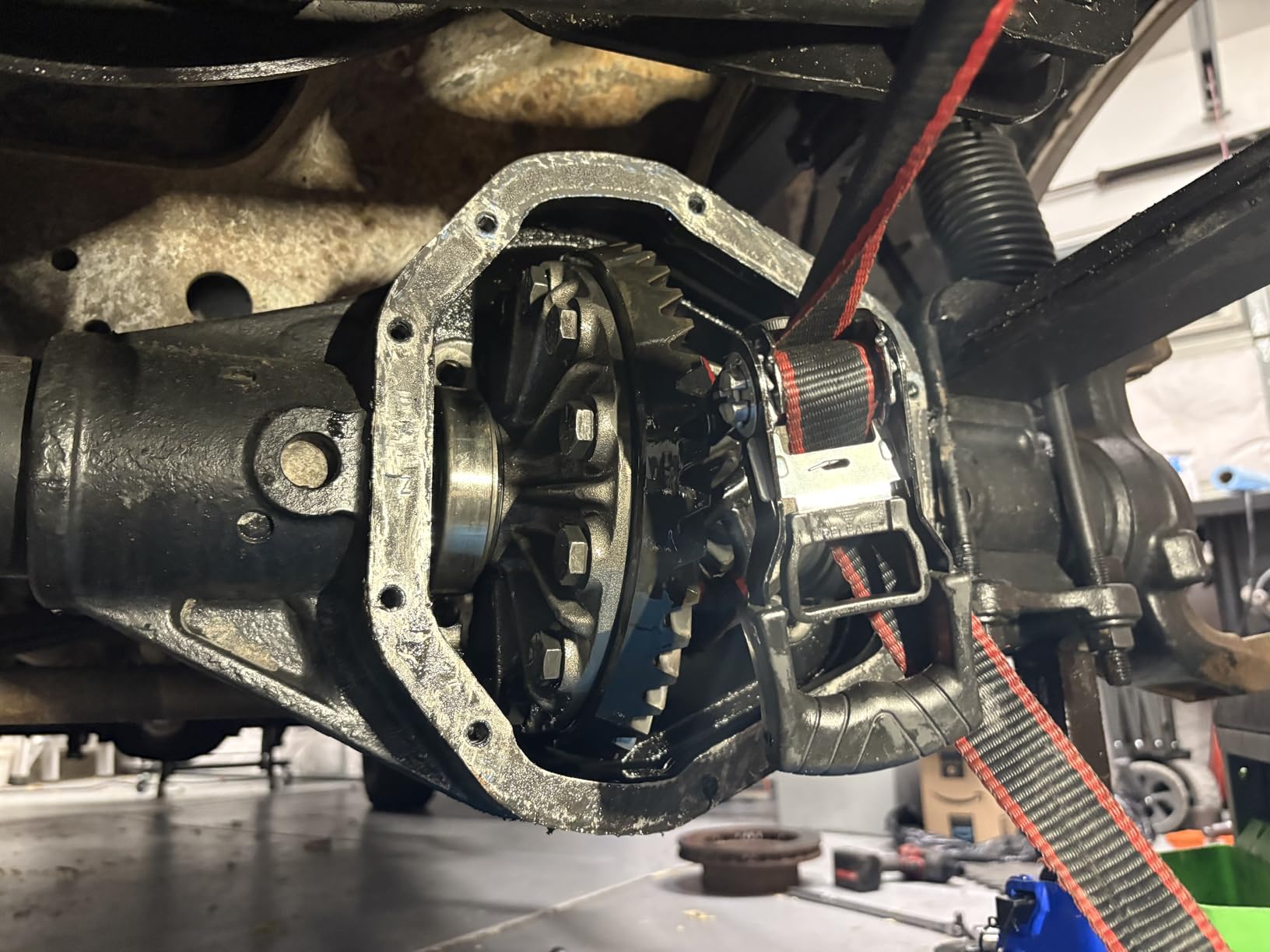
The scales are stamped into the housing rather than printed on a sleeve. That single design choice is why reviewers report the markings surviving years of abuse, and it is worth more than any cosmetic upgrade on a cheaper wrench.
Construction meets or exceeds ASME specifications, and a durable case is included. For a shop that keeps one wrench for heavy work, the case and the stamped handle are practical rather than premium.
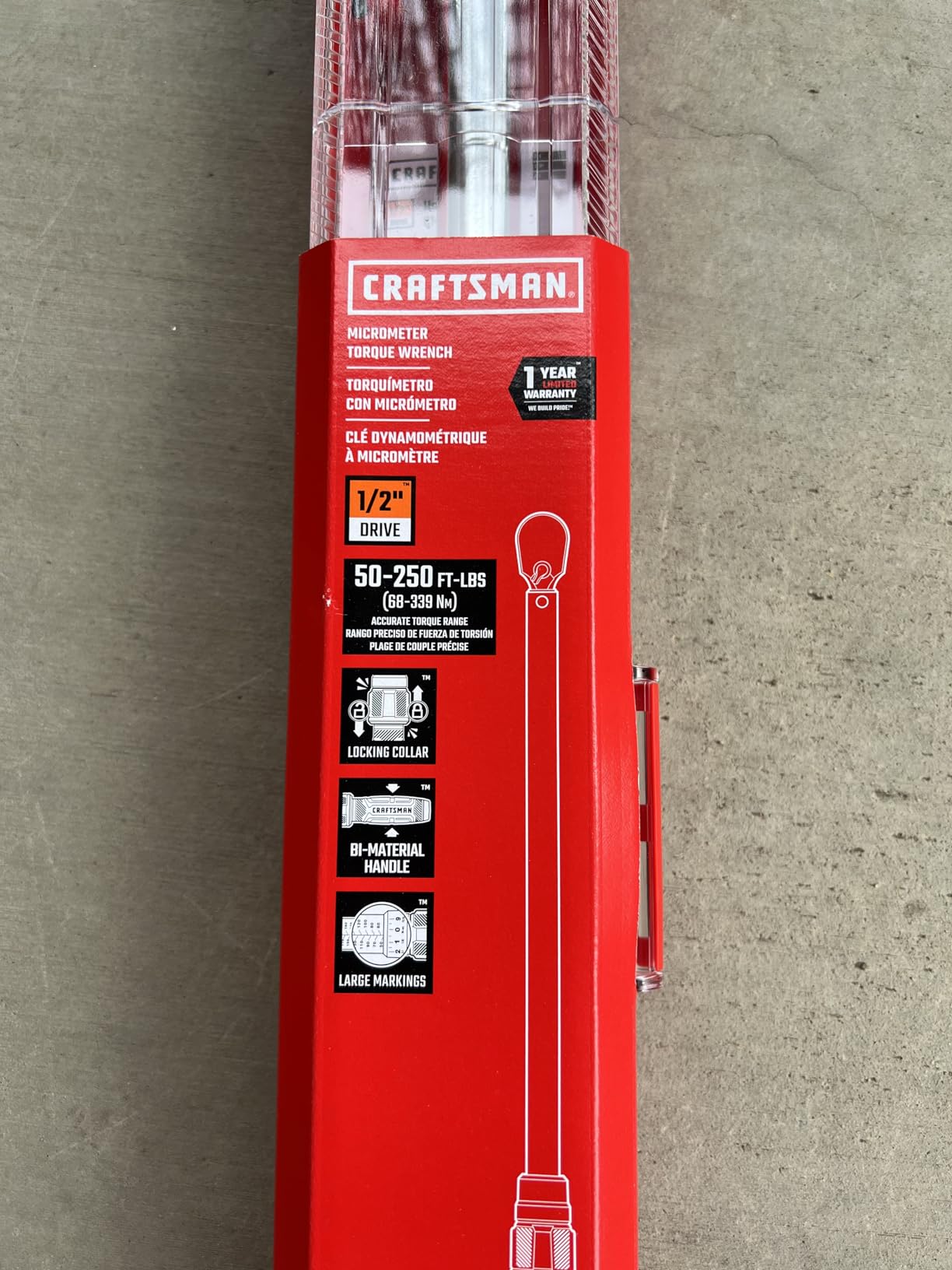
Matching the wrench to big-torque jobs
If your work list includes head bolts, truck suspension or exhaust manifolds, this range is the right window. The 50 ft-lb floor means the mechanism is never asked to work at its weakest, which is where click-type accuracy tends to fall off.
Buy it as a companion to a mid-range 10-150 ft-lb wrench rather than as a replacement. A 3/8-inch click wrench covers the spark plugs and small brackets that this tool physically cannot reach.
Where it falls short
The fixed square head is the biggest limitation. There is no ratcheting mechanism, so in a tight engine bay you have to remove and reposition the socket constantly, and a 29.65 inch body is difficult to swing in a confined space.
That length is a genuine problem under a truck. It is the longest tool in this roundup, and owners who work underneath vehicles specifically call this out as the reason it is a bench-and-lift tool rather than a creeper tool.
4. TEKTON TRQ62203 1/2-Inch Split Beam Torque Wrench 40-250 Ft-Lb
TEKTON 1/2 Inch Drive 72-Tooth Split Beam Torque Wrench (40-250 ft.-lb.) TRQ62203
Range: 40-250 ft-lb
Split-beam accuracy: plus or minus 4 percent
Calibrated to ASME B107.300-2010
Length: 22.8 inches
Weight: 3.7 lb
Pros
- Far less backlash than a ratchet click wrench
- Storable at any setting without springing the mechanism
- Mechanical lock prevents mid-job drift
- Serialized certificate records actual test results
Cons
- Smallest review base in the group
- 22.8 inches takes room under a vehicle
- No digital readout or peak value
The split-beam mechanism is the reason to buy this one, and it is a real mechanical difference rather than a marketing line. A split beam has almost no backlash, so the reading you set is the reading the bolt receives.
It is also serialized and calibrated to ASME B107.300-2010 with a certificate showing the actual test results, not a generic claim. Owners who understand the design cite exactly that paperwork as the reason to trust it over a click wrench.
The setting is held by teeth inside a flip-up cover, so it cannot drift in the middle of a job. A 72-tooth ratchet head and a body-mounted ft-lb to N-m conversion scale round out a well-considered design.
There is no time-limit warranty and no receipts required, which sets it apart from the one-year limited warranty offered on the digital pick below.
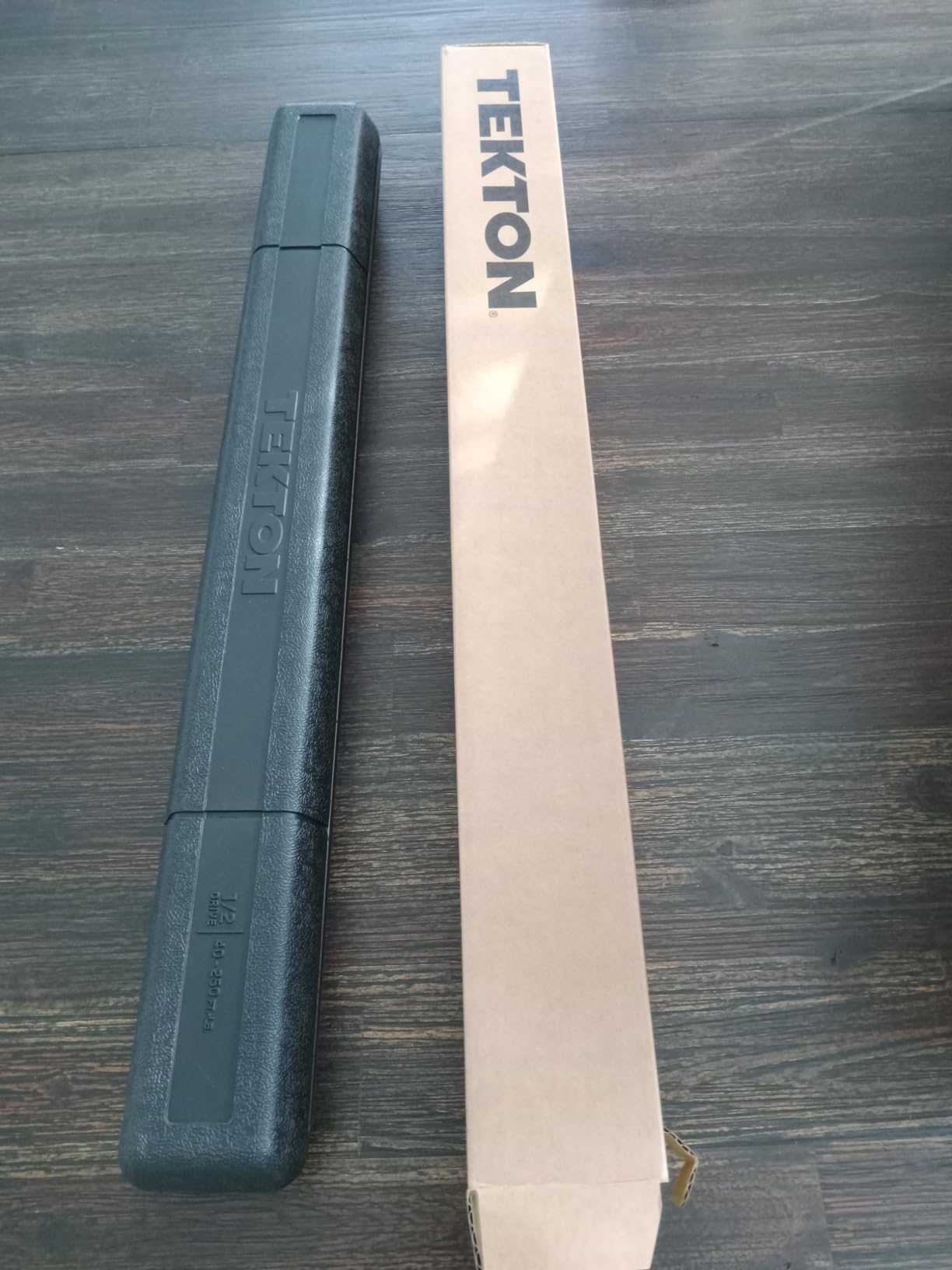
Why storing it at any setting is a real advantage
A click-type wrench stored wound up holds energy in its internal spring. That is the mechanism behind the drift that forum users warn about, and the reason the reset rule exists at all. This wrench can be put away at any value with no loss of accuracy.
For someone who works in bursts rather than on a schedule, that removes the single most common way a good torque wrench becomes untrustworthy. The 40-250 ft-lb window covers head bolts and suspension torque in one tool.
Where it falls short
At 410 reviews it has the smallest sample in the roundup, which means less long-term durability data than the budget picks.
The 22.8 inch body is long for under-car work, and there is no digital readout, so you cannot log a peak value when the scale is not visible from your position.
5. Park Tool TW-6.2 Ratcheting Torque Wrench 10-60 N-m
Park Tool TW-6.2 Ratcheting Torque Wrench 10-60Nm Drive Tool 3/8-Inch
Range: 10-60 N-m (about 7-44 ft-lb)
3/8 inch ratcheting drive
Bidirectional operation
Weight: 500 g
Alloy steel
Pros
- Highest average rating here at 4.8
- Calibrated in Newton-metres to match bicycle service manuals
- Ratcheting in both directions
- Lightest tool here at 500 g
Cons
- Newton-metre dial only
- 60 N-m ceiling is far below automotive needs
- Case does not hold the wrench snugly
Bicycle torque specs run low, and aluminum components do not forgive guesswork. This wrench is calibrated in Newton-metres from 10 to 60 N-m, which is the unit nearly every bicycle service manual uses, so you are converting nothing.
Bike communities lean on this class of tool precisely because cheap click wrenches are not accurate enough at the 10-40 N-m range where most bicycle fasteners live. An out-of-spec wrench there is worse than no wrench, because it delivers false confidence.
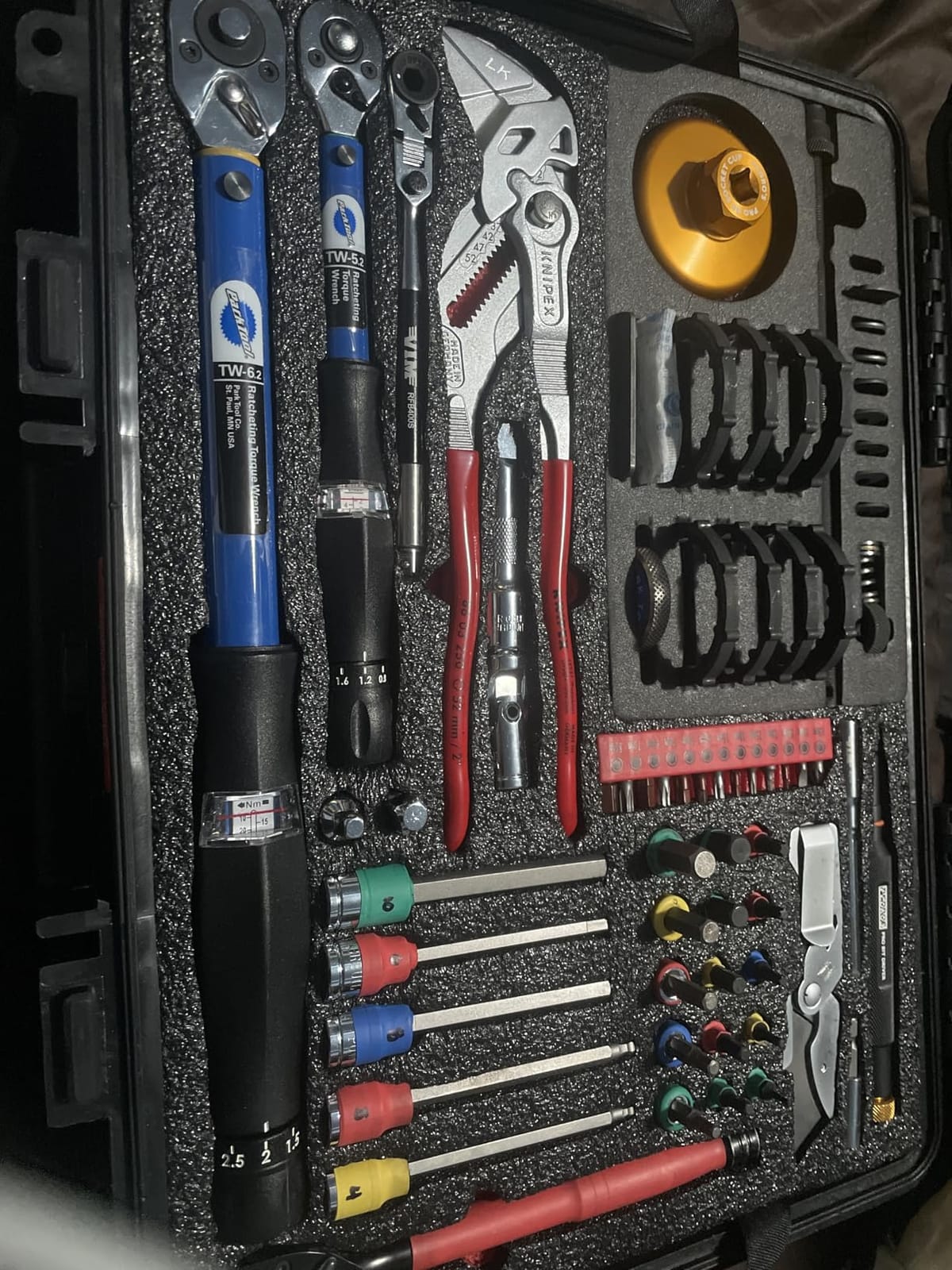
The dial-adjust click system is the design detail that sets it apart. Push the knob in for fine adjustment, turn to the coarse line, then lock. There is no second knob that can drift out of position between setting and use.
The ratcheting head works clockwise and counterclockwise, which means pedal and crank bolts tighten without lifting the wrench off the fastener. At 500 g it is the lightest tool in the roundup by a wide margin.
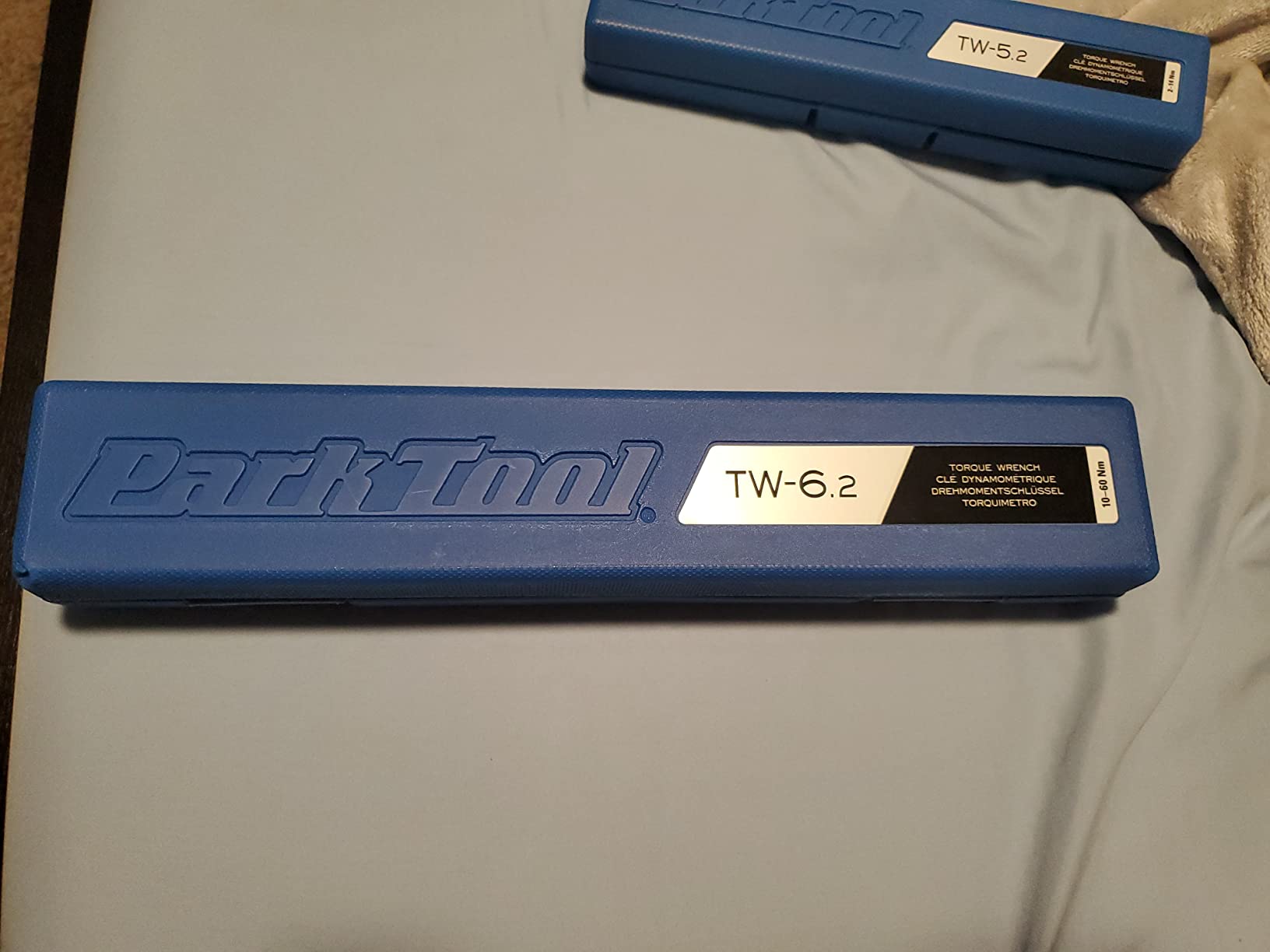
What it is actually good for
Handlebar stem bolts, crank arms, seat posts, pedals, brake calipers and bottle cage mounts. That is a complete list of the jobs most home mechanics do on a bike, and every one of them sits inside the 10-60 N-m window.
Reviewers who previously hand-tightened carbon cranks credit this wrench with bringing every fastener back to spec. Carbon and aluminum do not have the forgiveness of a steel bolt, so that matters.
Where it falls short
The dial reads Newton-metres only, so foot-pound users depend on the included conversion sticker, which wears off with handling. A 60 N-m ceiling puts it entirely out of range for any automotive work.
The included hard case does not fit the wrench snugly and can rattle in transport. One reviewer would also prefer a larger, more legible meter face for dim conditions.
6. YIYEIE 8-Piece Click Torque Wrench Set 1/4, 3/8 and 1/2 Inch
1/4 3/8 1/2-inch Drive Click Torque Wrench, 8Pcs Torque Wrench Set 10-230in.lb, 5-50ft.lb, 10-180ft.lb with Adapters, ±3% Accuracy, 72-Tooth Dual Scale Torque Wrenches for Bike, Moto, Car Repair
1/4 inch: 10-230 in.lb
3/8 inch: 5-50 ft-lb
1/2 inch: 10-180 ft-lb
Accuracy: plus or minus 3 percent
72-tooth reversible heads
Pros
- Covers all three common drive sizes in one purchase
- Plus or minus 3 percent with a certificate for each wrench
- Very loud crisp click
- Detent adjustment is fast
- Metal-clasp case is sturdier than typical plastic cases
Cons
- Newton-metre scales are hard to read
- Printed markings wear off with use
- Tools arrive coated in factory grease
If you are building a first torque wrench kit rather than buying a single tool, this set covers the 1/4, 3/8 and 1/2 inch drives that handle essentially all home garage work. It is the most efficient way to cover all three drive sizes in one purchase.
The ranges are properly chosen rather than duplicated. The 1/4-inch wrench handles 10-230 in.lb for bicycle and small-engine fasteners, the 3/8-inch covers 5-50 ft-lb, and the 1/2-inch handles 10-180 ft-lb for wheel and undercar work.
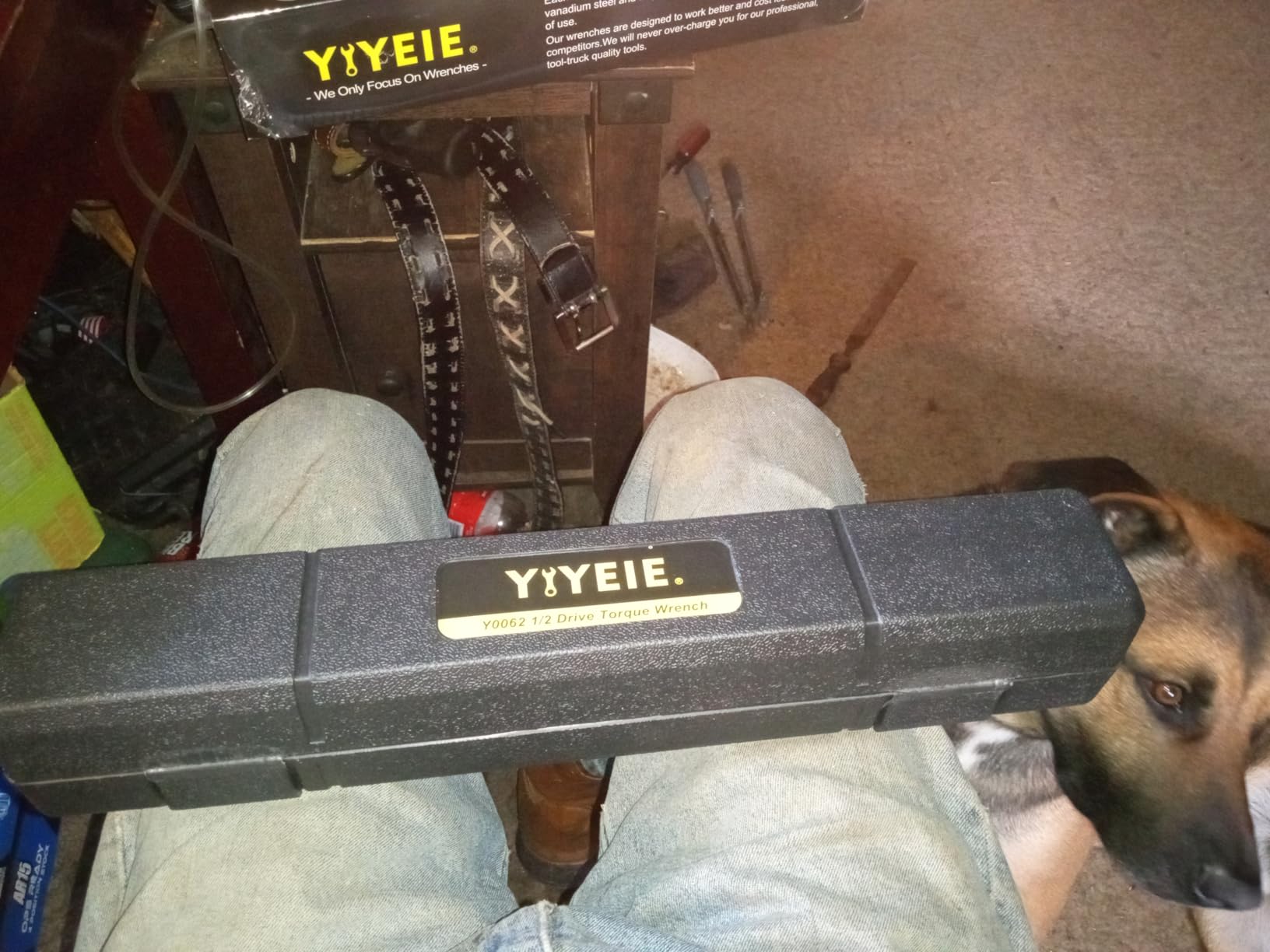
Working mechanics rate this set as strong value for full workshop coverage. The click is loud and crisp, noticeably better than most, and detent-style adjustment lets you set torque without tightening a screw while you work.
Also included are three extension bars in 4, 5 and 6 inch, a 3/8-inch universal joint and a 1/2-inch female to 3/8-inch male adapter, which is the piece that makes one drive usable in another socket size.
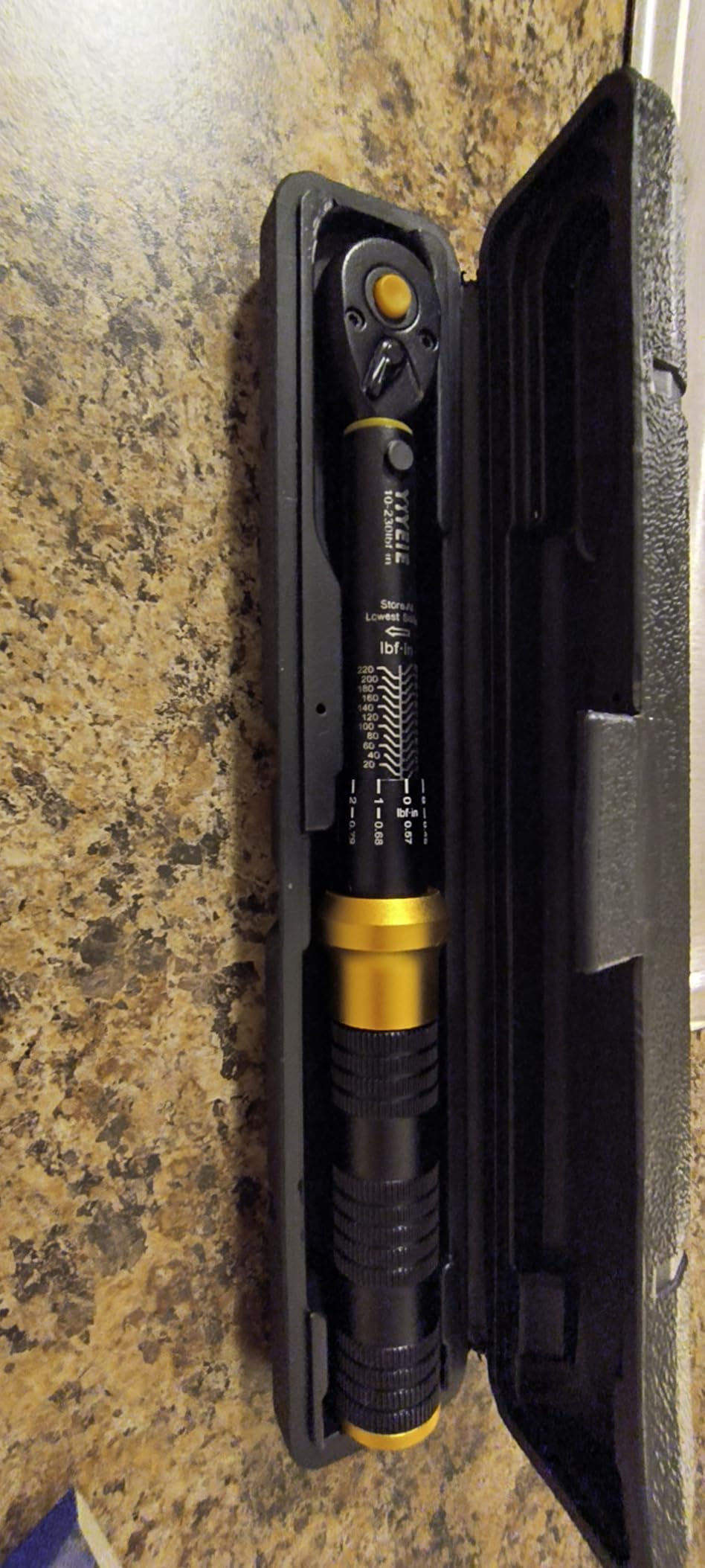
How the three drives divide the work
The 1/4-inch drive is for small fasteners: bicycle components, motorcycle hardware, oxygen sensor bungs and small engine work. The 3/8-inch is the engine-bay size, where a 1/2-inch head will not physically fit past the surrounding brackets.
The 1/2-inch is for lug nuts, caliper bolts, suspension and exhaust. Matching the drive to the job matters more than owning a bigger wrench, because a drive-to-drive adapter introduces length that costs you accuracy.
Where it falls short
Reviewers are blunt about the Newton-metre scales on this set being hard to read, and many simply convert and work from the imperial scale. That is a workable habit but an avoidable friction.
Scale markings are printed rather than etched and can wear off with use, and the tools arrive coated in factory grease. Reviewers also remind owners to return settings to zero after use, since these are click-type mechanisms.
7. ACDelco ARM601-4 Heavy Duty Digital Torque Wrench 14.8-147.5 Ft-Lb
ACDelco ARM601-4 1/2” (14.8 to 147.5 ft-lbs.) Heavy Duty Digital Torque Wrench with Buzzer and LED Flash Notification – ISO 6789 Standards with Certificate of Calibration
Range: 14.8-147.5 ft-lb (20-200 N-m)
Accuracy: 2 percent clockwise, 3 percent counterclockwise
Meets ASME B107.14.14-2004 and ISO 6789
NIST-traceable certificate
Pros
- Serialized NIST-traceable certificate of calibration
- Meets ASME B107.14.14-2004 and ISO 6789
- Peak and Trace modes log maximum torque reached
- Lightweight composite body with soft grip
Cons
- Auto-off after about 60 seconds is aggressive
- High idle battery drain
- Instructions do not match the functions
This is the digital wrench with the paperwork to match. It is individually serialized with an NIST-traceable certificate of calibration and meets or exceeds ASME B107.14.14-2004 and ISO 6789, which makes it the pick to look at first when documented accuracy matters.
Accuracy is stated at 2 percent clockwise and 3 percent counterclockwise of indicated value from 20 to 100 percent of full scale. That is a real gain over a plus or minus 4 percent click wrench on head bolts and axle nuts.
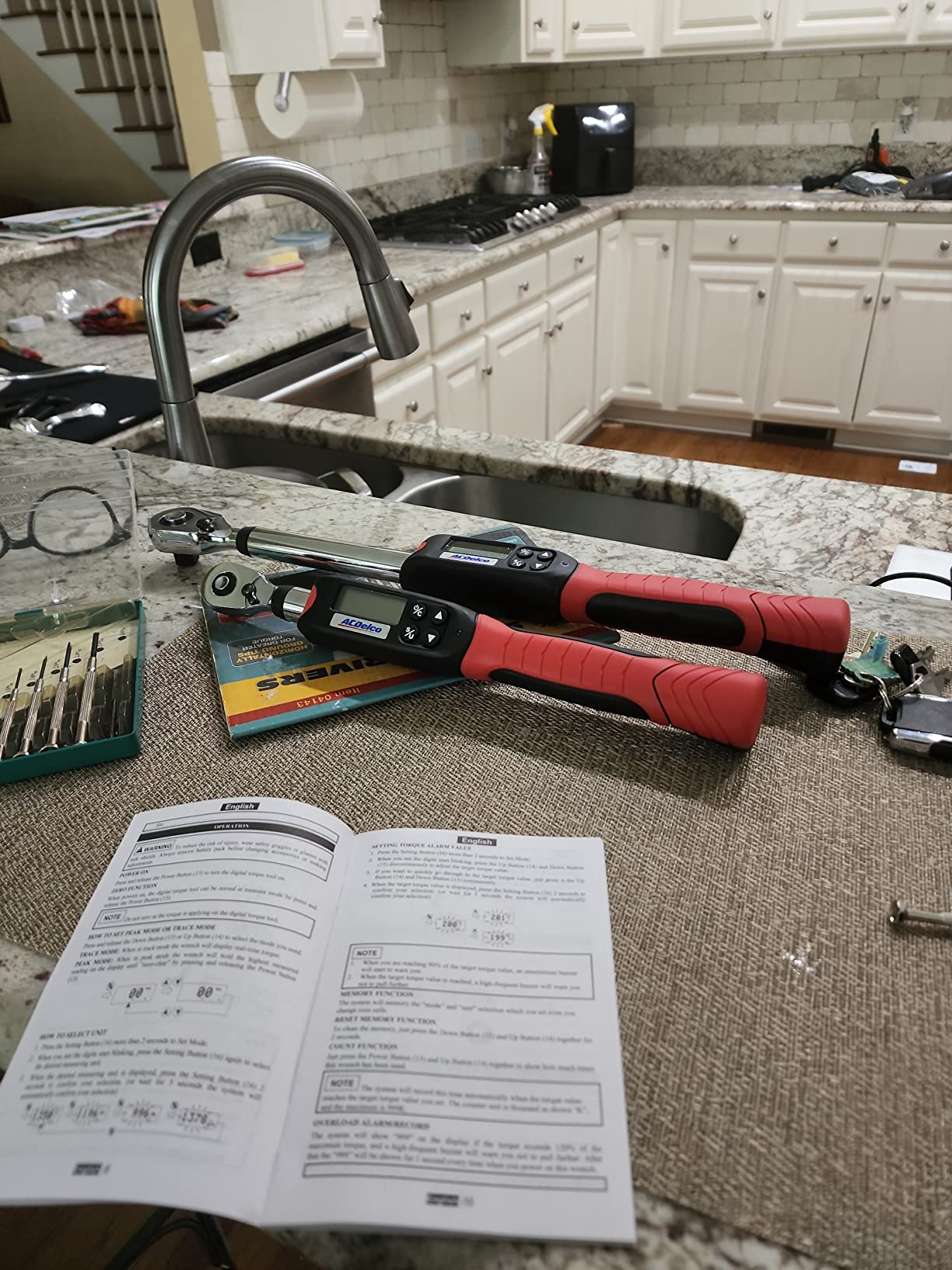
The mode set is what enthusiasts care about. Peak mode holds the maximum torque reached and Trace mode records the running value, so you can confirm a reading on a fastener you cannot see clearly from where you are standing.
The body is a lightweight composite with a soft-grip ergonomic handle, which matters more than it sounds when you are torquing a set of lug nuts with the display angled away from your face.
When a digital readout actually earns its cost
Peak and Trace modes are the reason. If you are under a vehicle and cannot read the display, the mode still captures the maximum torque delivered, which is the information you would otherwise lose entirely.
It is also useful for repeatability checks. Torque a fastener three times in the same session and the stored readings show you whether the tool or the technique is the variable.
Where it falls short
Battery behaviour is the dominant complaint. The unit auto-offs after about 60 seconds, and owners report a set draining in roughly ten minutes while idle, which can make it feel broken until you replace the batteries.
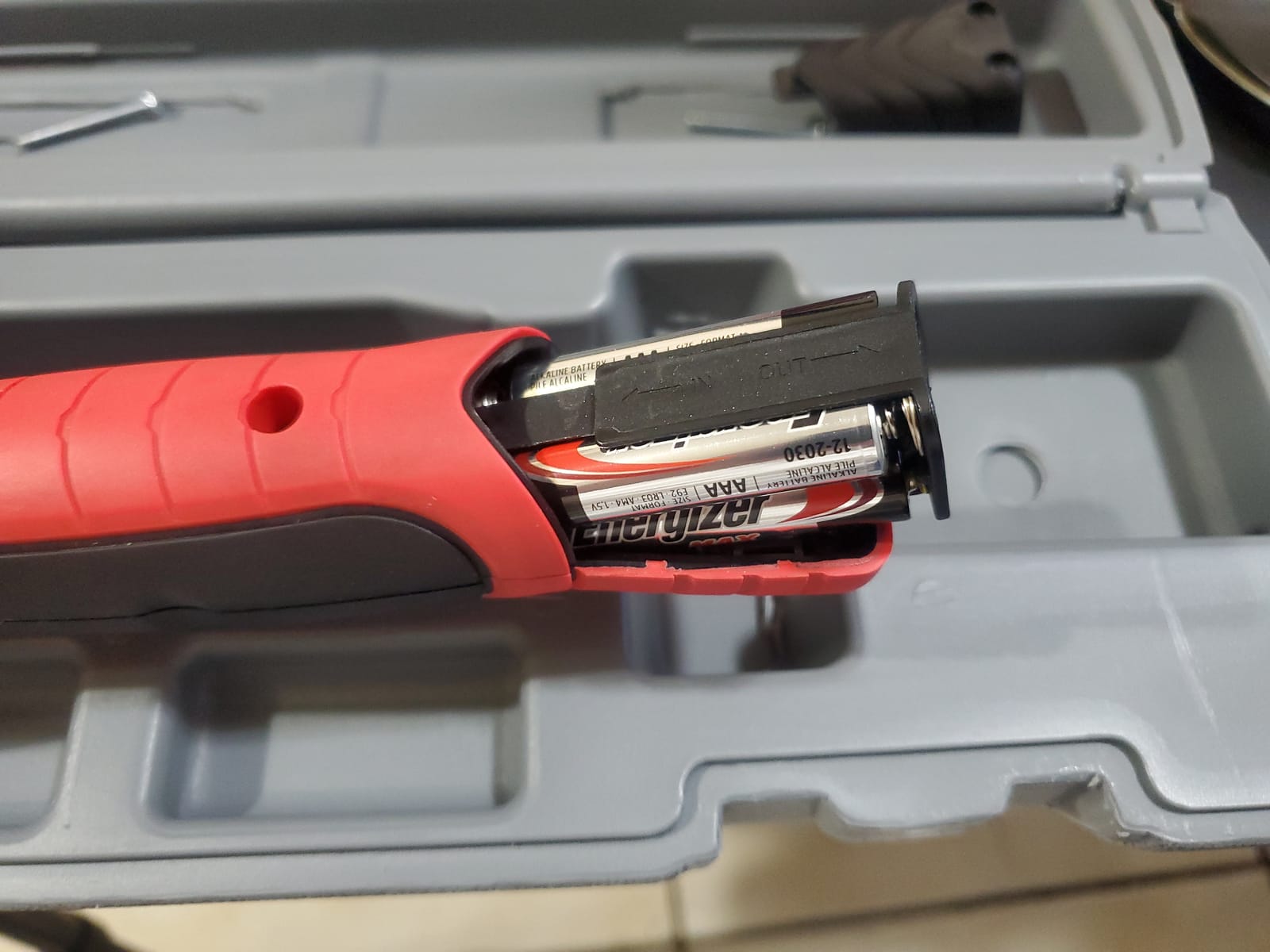
It runs on four AAA batteries that are not included, and the documentation does not match the functions on the tool or mention the CR2032 battery compartment. Several reviewers also found the modes take time to learn without better instructions.
8. SUZUME SM3202 3/8-Inch Digital Torque Wrench 5.02-99.57 Ft-Lb
SUZUME Digital Torque Wrench 3/8 Drive (5.02-99.57 Ft. Lb / 6.8-135 N.m)
Range: 5.02-99.57 ft-lb (6.8-135 N-m)
Accuracy: plus or minus 2 percent
Drive: 3/8 inch
Length: 11.6 inches
Four unit systems
Pros
- Plus or minus 2 percent accuracy across 20000 tests
- Buzzer accelerates as you approach target
- Peak mode captures the maximum reading
- Compact 11.6 inch body fits tight engine bays
Cons
- Control portion of the handle is plastic
- Supplied batteries drain quickly
- Digital wrenches need periodic battery replacement
The stated accuracy here is plus or minus 2 percent, verified across 20,000 accuracy tests, and the manufacturer states it holds accuracy through more than 15,000 operations without recalibration.
At 11.6 inches it is a short tool even by digital standards, which makes it the digital option that actually fits into a crowded engine bay. Many digital wrenches are physically too large to use where the work is.
Feedback is genuinely good rather than just loud. The audible alarm accelerates as you approach the target and goes continuous at the set value, with green LEDs at 85-90 percent and red at 100 percent for dark or noisy conditions.
It displays Newton-metres, foot-pounds, inch-pounds and kg-cm, with usage data storage and a record-keeping function. Unit switching is a single button rather than a buried menu.
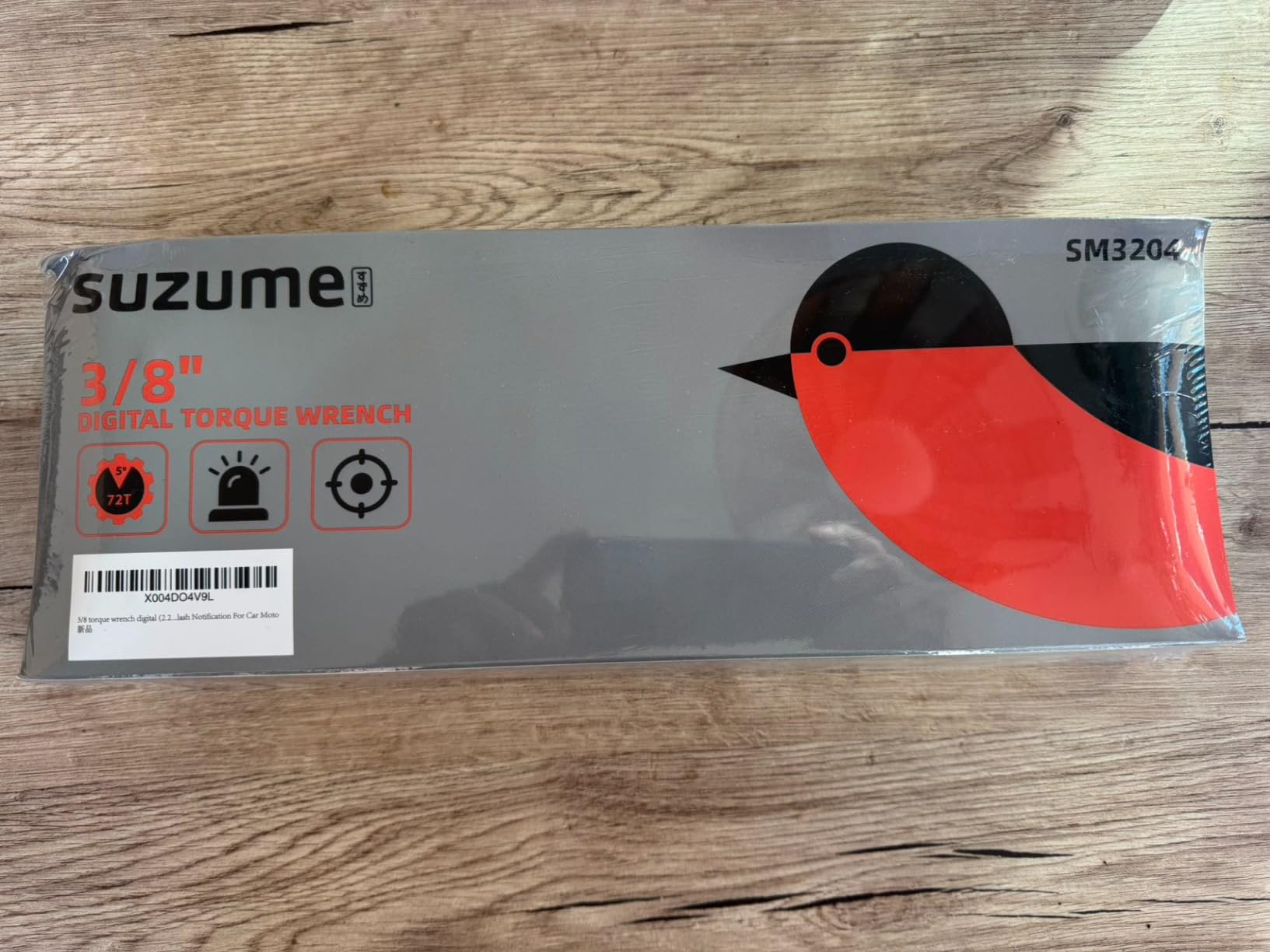
Peak mode solves the visibility problem
Digital wrenches fail in one predictable place: you cannot see the display from your position under a car. Peak mode holds the maximum value reached, so the reading survives the awkward angle.
Users comparing it against older dial-sight and click wrenches report that the step up in readability and accuracy is obvious, and that the buzzer and LED feedback are practical in a noisy or dark garage.
Where it falls short
The control portion of the handle is plastic, which is the weak point on a tool that may get knocked off a bench. Several buyers report the supplied batteries draining quickly, and digital wrenches generally need battery replacement to hold accuracy.
It ships with a certificate of correction rather than a full calibration certificate, so for warranty or documentation purposes the paper is less complete than the ACDelco package.
9. CRAFTSMAN CMMT99433 3/8-Inch Drive Click Torque Wrench
CRAFTSMAN Torque Wrench, 3/8″ Drive (CMMT99433)
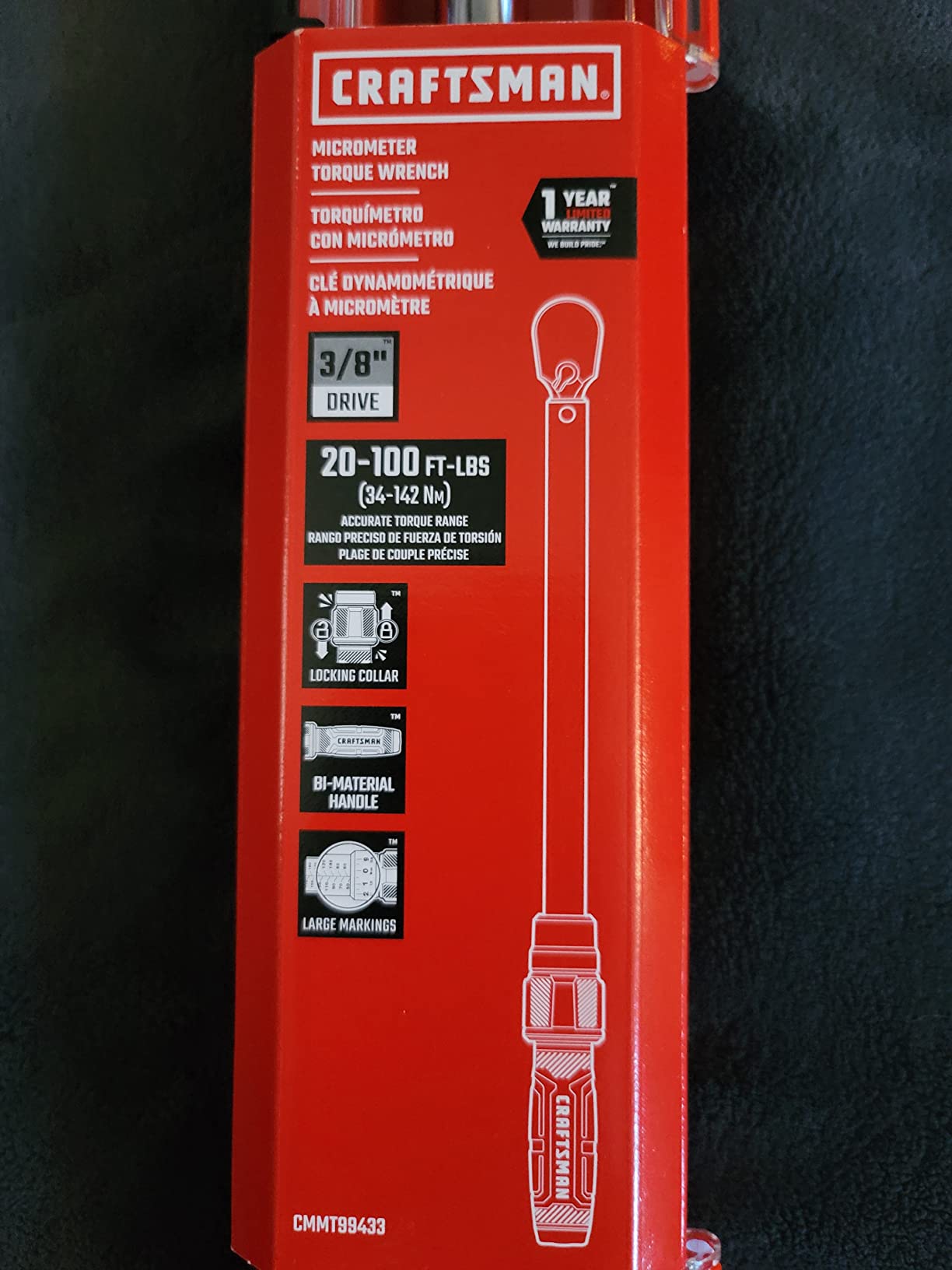
Range: 5-100 ft-lb
Drive: 3/8 inch
Meets or exceeds ASME specifications
Length: 17.2 inches
Case included
Pros
- 3/8 inch drive fits engine-bay fasteners a 1/2 inch cannot reach
- ASME compliant from a recognized brand
- Stamped dual scales resist wear
- Bi-material handle is comfortable on repetitive work
Cons
- 100 ft-lb ceiling is low for head bolts or truck suspension
- Fixed square head does not ratchet
- No calibration certificate listed
A 3/8-inch drive is the correct answer for engine-bay work, and experienced mechanics consistently pick it when access is the problem. A 1/2-inch head with a deep socket simply will not fit past a bracket or a strut tower.
This is the compact companion to the larger CRAFTSMAN wrench, and the rating profile is nearly identical. Buyers treat it as the tool for accessible fasteners that still need a real torque number.
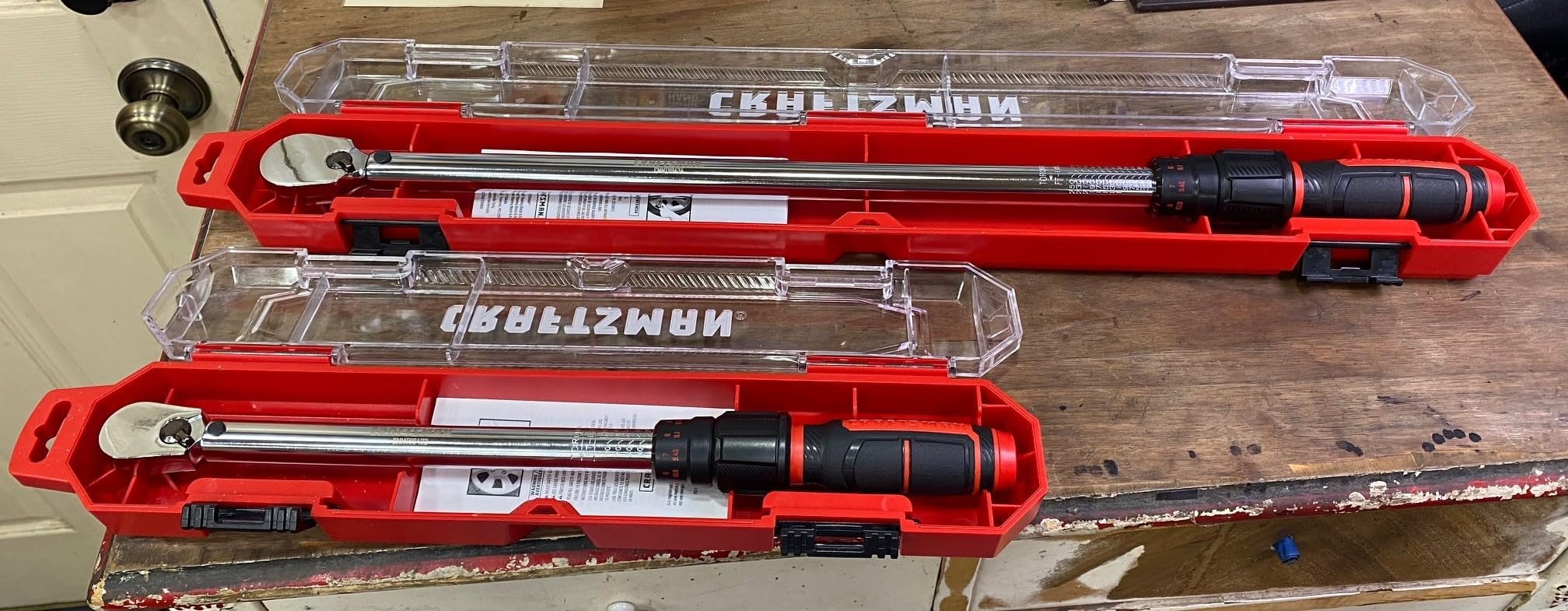
The scales are stamped into the housing showing inch and metric settings, the same durable approach as the larger model, and a locking feature makes the setting stable while you work.
A bi-material handle keeps it comfortable on repetitive fastener work, and a durable case is included for storage between jobs.
Which fasteners need a 3/8-inch drive
Valve cover bolts, intake manifold fasteners, alternator and A/C brackets, spark plug threads, brake line fittings and many sensor bungs. These are the fasteners where access, not torque value, is the deciding factor.
Matching drive size to access is the difference between a clean job and a job where you strip a fastener trying to get an angle on it. Adapters are a fallback, not a solution, because extra length costs accuracy.
Where it falls short
The 100 ft-lb ceiling rules out head bolts, truck suspension and larger exhaust work, so it cannot replace a 1/2-inch wrench. The fixed square head also does not ratchet, which slows work in cramped areas.
No calibration certificate is listed with this wrench. For most home work that is acceptable, but if you want documented proof of accuracy, the picks with serialized certificates are the ones to consider.
10. Hairich 6CVB 1/2-Inch Click Torque Wrench 10-170 Ft-Lb
Hairich torque wrench 1/2, 10-170ft.lb/13.6-230Nm, ±3% HIGH PRECISION
Range: 10-170 ft-lb (13.6-230.5 N-m)
Accuracy: plus or minus 3 percent
72-tooth head with 5-degree arc
Length: 16.93 inches
24-month warranty
Pros
- Plus or minus 3 percent accuracy
- tighter than most click wrenches
- 72-tooth ratchet head needs only a 5 degree arc
- Bidirectional head handles reverse-threaded fasteners
- Calibration certificate and 24-month warranty included
Cons
- Click is faint below about 5 N-m and can be missed
- One reviewer reported unreliable behavior at lower settings
- 3.1 pound body is heavy for the class
A plus or minus 3 percent tolerance at a low cost is unusual. Most click wrenches in the same bracket claim plus or minus 4 percent, and several carry a higher serial number while claiming the same figure, which makes this the accuracy-per-dollar pick here.
Owners with metrology and automotive backgrounds describe the fit, finish and ratcheting mechanism as better than the price suggests, and one reviewer cross-checked it against a vintage deflection-beam wrench at 100 ft-lb and found it consistent.
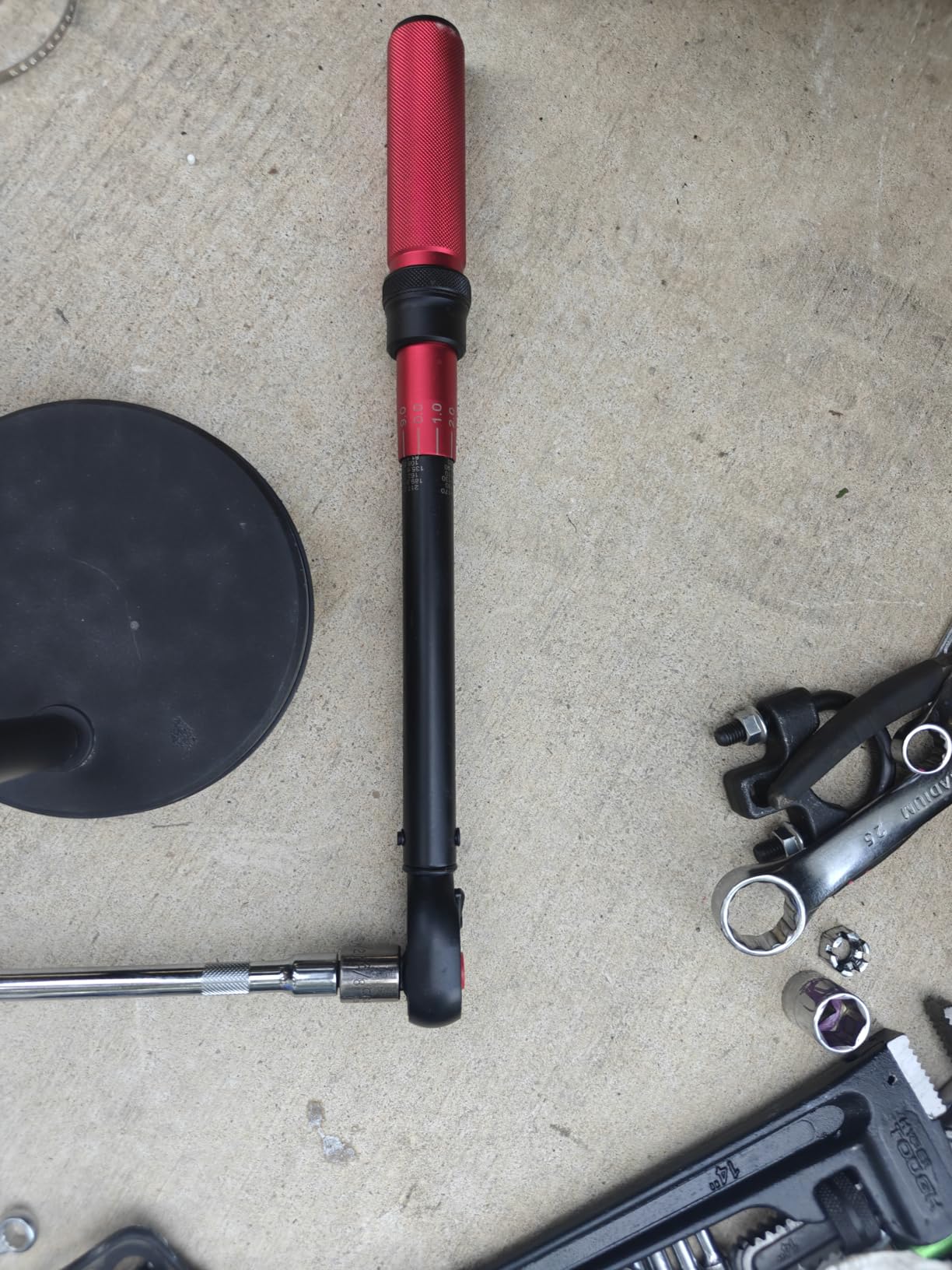
The 72-tooth ratchet head with a 5-degree ratcheting arc is a serious detail. It means you can tighten or loosen in a tight space without lifting the wrench, and the quick-release button speeds up socket changes.
A serial number is supplied for calibration traceability, a calibration certificate is in the box, and the warranty runs 24 months with support responses reviewers describe as responsive.
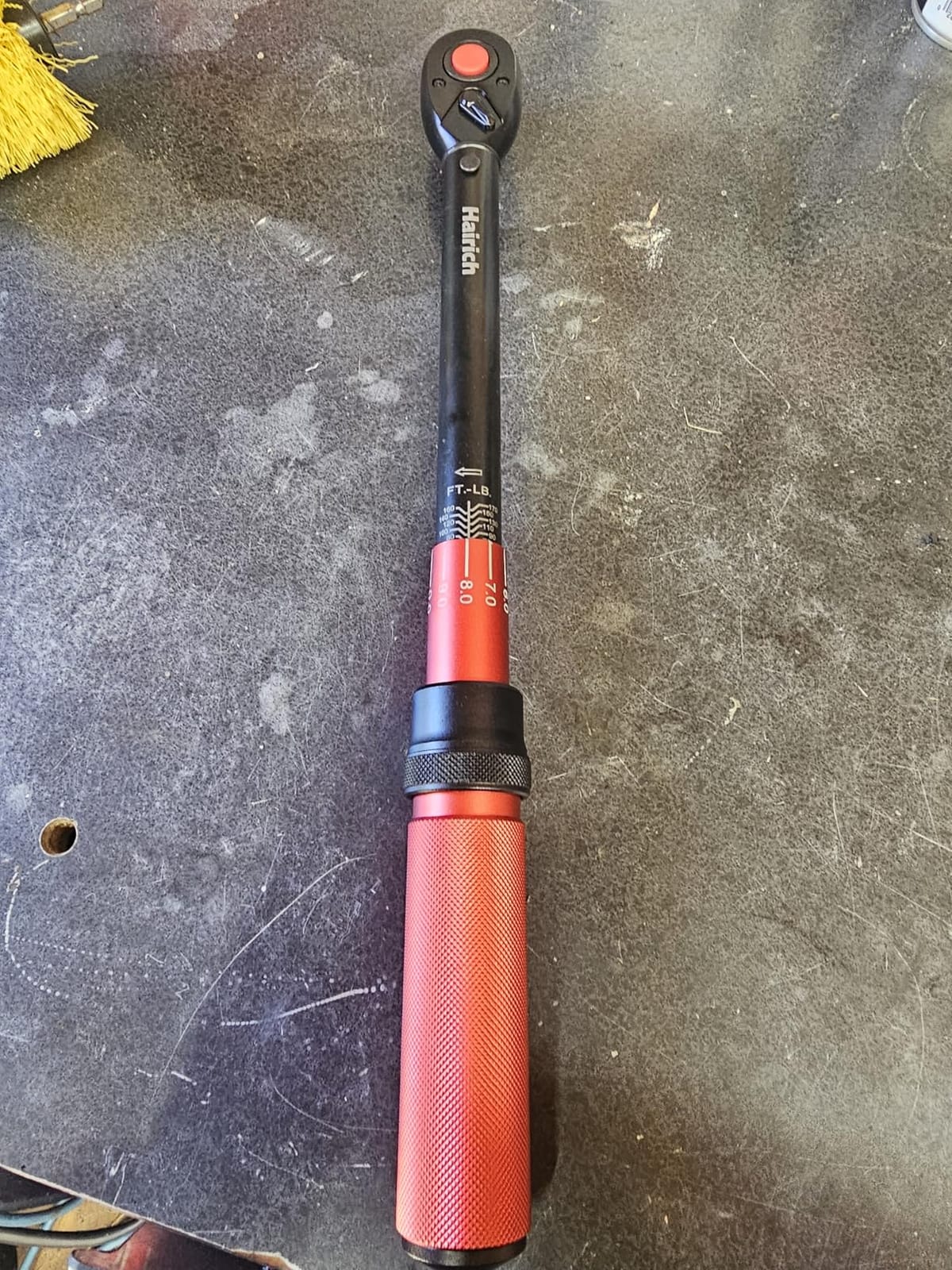
Why the 72-tooth head matters in practice
Tooth count sets the swing arc. A 72-tooth head needs only 5 degrees to ratchet, so in a spot where you can only move the handle a fraction of an inch, the wrench still functions as a ratchet instead of fighting you.
The bidirectional head measures both clockwise and counterclockwise, which covers reverse-threaded fasteners and makes the tool usable on imported hardware where a clockwise-only head will not do.
Where it falls short
The recurring limitation is a soft click below roughly 5 N-m. In a noisy shop or with gloves on, you can miss it, and missing the click means continuing to apply torque past the setting.
One reviewer also reported unreliable behavior at lower torque settings, and the 3.1 pound chrome vanadium body is heavier than most click wrenches in its class. For light precision work, a digital tool is the safer choice.
11. SUERCUP BSM06 3/8-Inch Click Torque Wrench 5-45 Ft-Lb
SUERCUP 3/8″ Click Torque Wrench, 5-45 Ft.Lb, for Bike, Moto, Spark Plugs
Range: 5-45 ft-lb (6.8-61 N-m)
Accuracy: about 3 percent
72-tooth Cr-Mo ratchet head
Length: 11.81 inches
Weight: 0.7 kg
Pros
- Only 11.81 inches and 0.7 kg
- among the most compact wrenches in the roundup
- Range sized precisely for spark plugs
- carbs and drain plugs
- Bidirectional 72-tooth head
- Low cost for a dedicated small-torque wrench
Cons
- 45 ft-lb ceiling rules out wheel hubs and head bolts
- Most buyers will still need a second wrench for larger fasteners
- Fixed square head does not ratchet
Small torque values deserve their own tool, and this is the reason to buy one. Spark plugs, carburetor hardware, oil drain plugs and small-engine fasteners all live between 5 and 45 ft-lb, which is at the very bottom of most 1/2-inch wrenches.
Forcing a 10-150 ft-lb wrench down to a 15 ft-lb spark plug setting means working near the bottom of the range where accuracy is weakest. A dedicated small-range wrench removes that problem entirely.
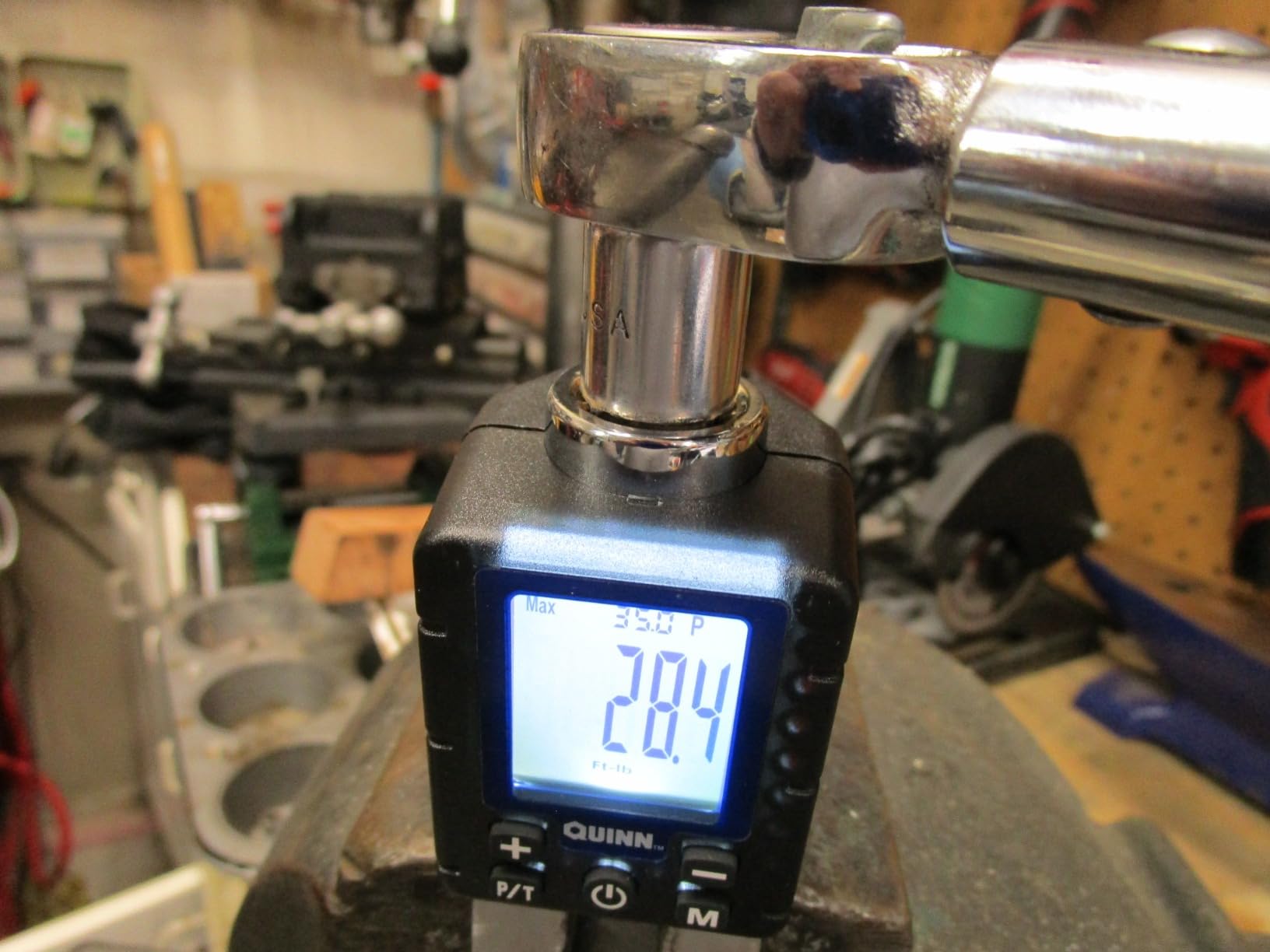
At 11.81 inches and 0.7 kg, it is one of the most compact wrenches in the roundup and the easiest to handle one-handed. The knurled grip and pull-down locking knob keep the setting stable in use.
Calibration error is around 3 percent after 20,000 tests, the head is a 72-tooth chromium molybdenum steel ratchet that measures in both directions, and a red-anodized tail plug protects against oxidation and wear at the handle end.
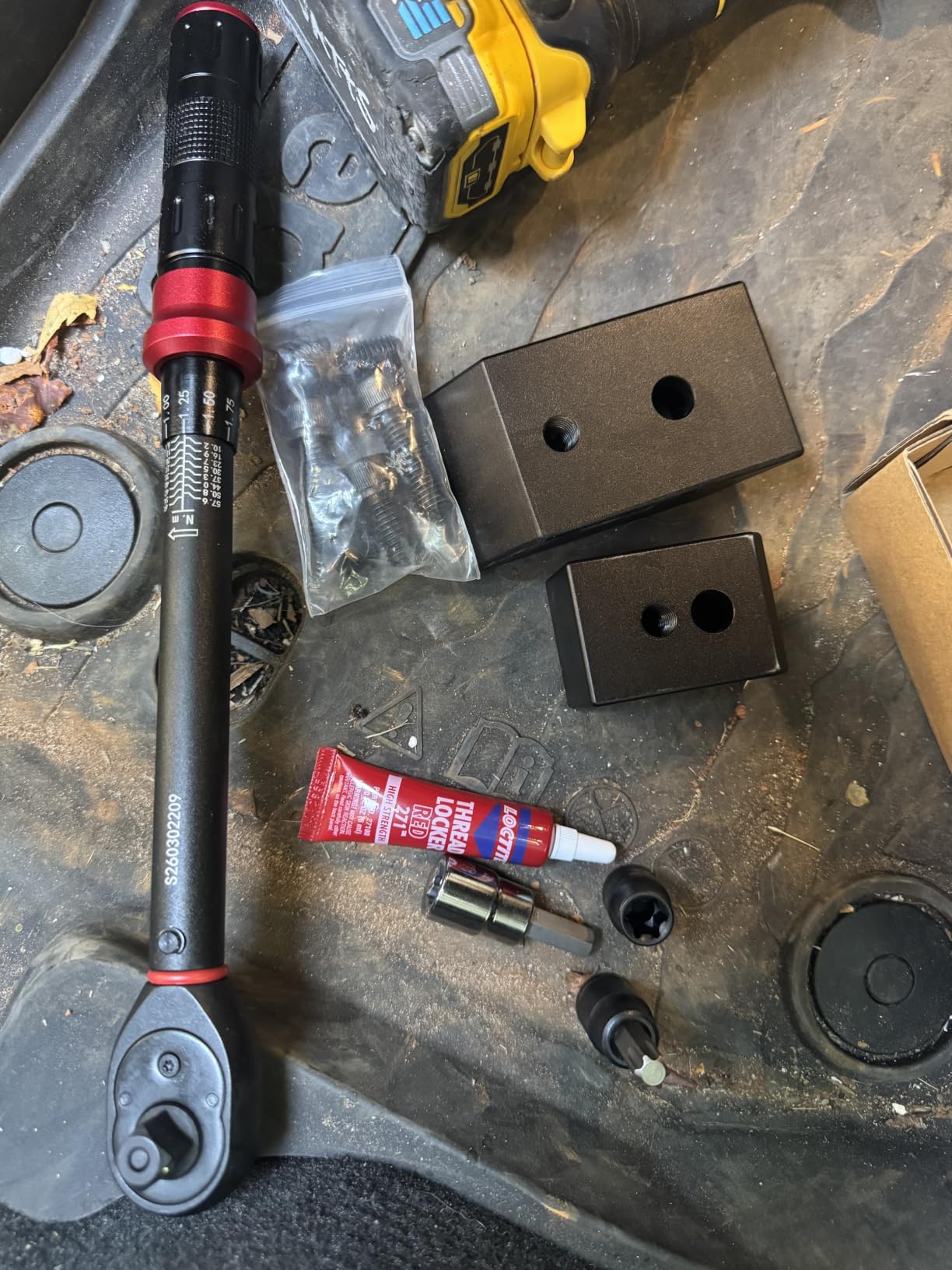
What to keep it for
Spark plugs, carburetor and fuel hardware, small brackets, motorcycle accessories, lawn equipment and bicycle-adjacent fasteners. A precision report certificate and a storage box are included, so it is a self-contained purchase.
Several owners buy it specifically as a second wrench alongside a larger model, treating the two together as a matched pair rather than a replacement.
Where it falls short
The 45 ft-lb ceiling is the defining constraint. It cannot touch wheel hubs, head bolts, caliper bolts or suspension hardware, so it does not reduce the number of wrenches you need by much.
The fixed square head does not ratchet, which limits it in confined spaces despite the compact body. If your work is mostly small fasteners in tight spots, a 1/4-inch drive tool is the better geometry.
12. Amazon Basics DS-DTW-3 3/8-Inch Click Torque Wrench 15-80 Ft-Lb
Amazon Basics 3/8-inch Drive Click Torque Wrench Ratchet, 15-80 ft.-lb, 20.4-108.5 Nm
Range: 15-80 ft-lb (20.4-108.5 N-m)
Accuracy: plus or minus 4 percent
Length: 15.55 inches
Weight: 1075 g
Hardened Chrome Vanadium head
Pros
- Entry-level cost with a hardened Chrome Vanadium head
- 15-80 ft-lb range covers most home garage fasteners
- Full-polish chrome finish wipes clean and resists rust
- Sturdy plastic case included
Cons
- 4.2 average is the lowest here
- with 10 percent one-star reviews
- Scale numerals are faint in low light
- Alignment index is ambiguous so the set value can be off by several in-lb
- Coarse adjustment compared with detent designs
This is the pick for someone who needs a torque wrench for the occasional trailer-hitch, oil-change or spark-plug job and does not want to invest in a full kit. The 15-80 ft-lb band covers the majority of home garage fasteners.
The full-polish chrome finish is a genuine practical benefit in a garage. It wipes clean, resists rust, and does not need the care routine that a coated or black-finished shaft demands.
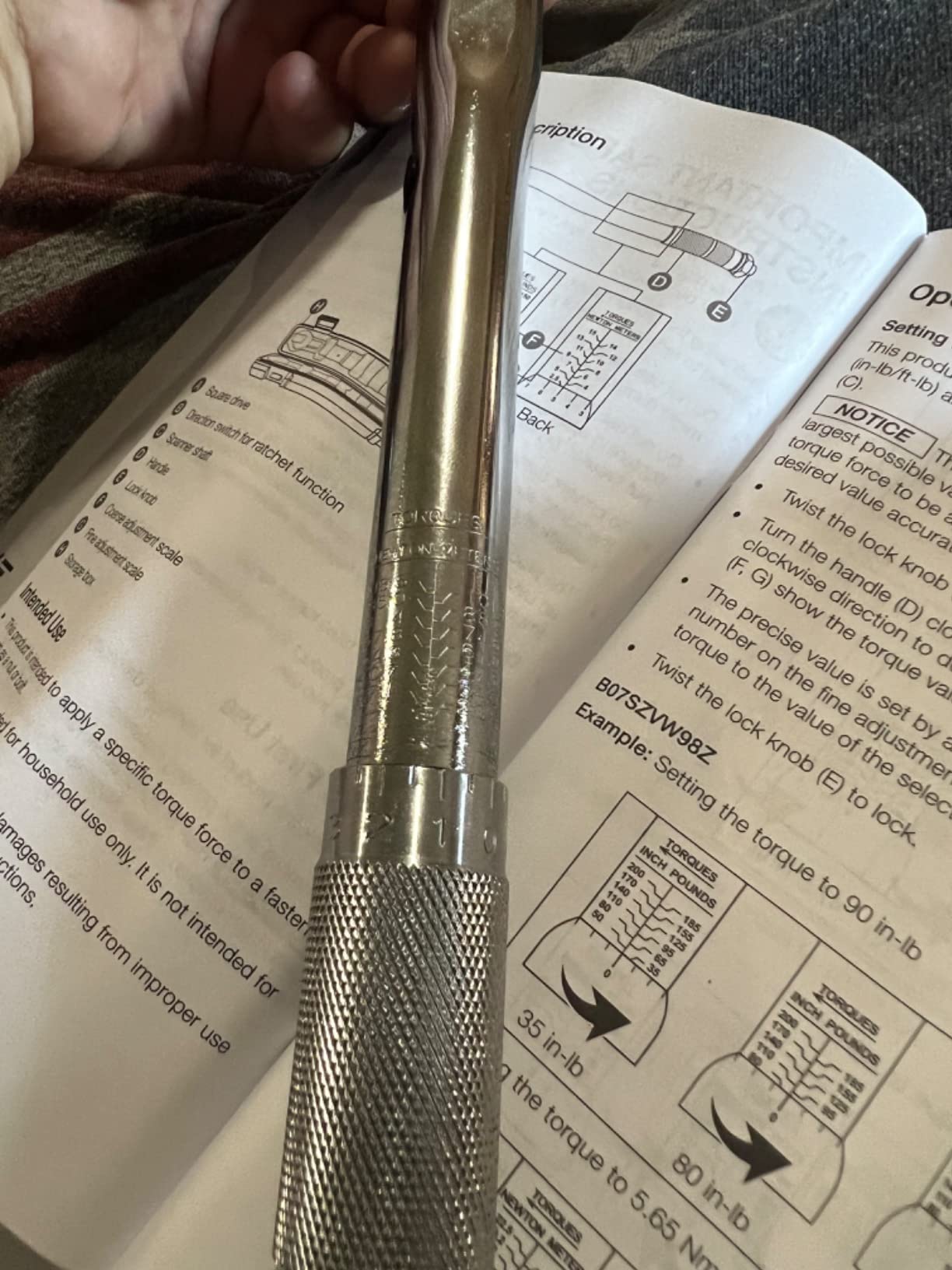
Note the recommended practice that ships with the tool: set the wrench on the imperial scale, which has finer increments, unlock before adjusting and lock after, then return it to the lowest value after use.
The hardened, heat-treated Chrome Vanadium ratchet head is a better part than the price would suggest. The spec sheet and the head are not where this tool cuts corners.
Where a lower-cost click wrench still works
Occasional work on non-critical fasteners does not need a tighter tolerance. Oil pan bolts, general hardware and bracket fasteners are all comfortable with plus or minus 4 percent, which is why this tool has a 4.2 average and still has plenty of happy owners.
Owners commonly report it performing comparably to more expensive wrenches for occasional use, and the 15-80 ft-lb range is a sensible, honest window rather than an inflated claim.
Where it falls short
It is the lowest-rated pick here at 4.2, with 10 percent one-star reviews. The complaints cluster around one issue: the printed scale numerals are faint and nearly unreadable without direct light on them.
The alignment index is also ambiguous, so the set value can be off by several inch-pounds, and the adjustment is coarse compared with detent or screw-lock designs. Some users also doubt it will hold up under daily professional use.
How to Choose a Torque Wrench for Your Garage
Start with the job list, not the brand. Write down the fasteners you actually touch, then buy a wrench whose useful range sits in the middle of that list. A 10-150 ft-lb range overlaps most of the torque values a typical home garage touches.
Drive size is the second filter, and it is a physical constraint rather than a preference. A 1/4-inch drive handles small fasteners and bicycle work, a 3/8-inch drive is the engine-bay size, and a 1/2-inch drive covers lug nuts, suspension and heavy undercar work. Forcing the wrong socket with an adapter adds length that costs you accuracy.
Third, look at whether the wrench comes with a certificate. A serialized, NIST-traceable calibration certificate means the manufacturer documented where the tool was when it shipped. A generic accuracy claim without a serial number does not tell you which unit you are holding.
Finally, decide honestly how often you will use it. If the answer is a handful of times a year, a click wrench in the 10-150 ft-lb range is the right purchase. If you are doing engine work regularly or torquing head bolts, a digital wrench with plus or minus 2 percent and a peak mode earns its cost.
Click vs Beam vs Digital Torque Wrench: Which Is Most Accurate
Click-type wrenches are the simplest and cheapest family, and every mechanical pick in this roundup falls here. Typical stated accuracy is plus or minus 3 to 4 percent, maintenance is essentially zero, and the failure mode is internal spring drift from being stored at a high setting. For home automotive work, this is the right default.
Beam-style wrenches deflect a spring-steel beam against a calibrated scale. There is no spring to relax and nothing to recalibrate periodically, which makes them extremely stable over years, and they handle very low torque values well. The tradeoff is that they are less precise at higher torque and are harder to read in poor light. Bicycle work is where they make the most sense.
Digital electronic wrenches use a torque transducer and a display, and the two picks here claim plus or minus 2 percent. They add peak and trace modes for jobs where you cannot see the readout, multiple unit displays, and stored records. The costs are battery dependence, electronics that can fail, and a higher price.
Two design choices separate the mechanical picks here beyond accuracy. A screw-drive handle locks a value you set, while a detent handle steps through defined increments, which is faster but coarser. Ratchet tooth count sets how small a swing arc the head needs, and a 72-tooth head needs only about 5 degrees.
For a home mechanic, accuracy beyond plus or minus 4 percent rarely changes the outcome. The bigger risk is not tolerance, it is a wrench that has drifted out of spec and still clicks confidently. That is the failure that warps a head or snaps a stud.
The 20 Percent Torque Multiplier Rule Explained
The 20 percent rule is about loosening a seized fastener, not about tightening one. Get it backwards and you will strip fasteners rather than free them.
Step one: torque is rotational force multiplied by lever arm length, so a much longer handle produces far more force at the bolt for the same reading on the scale. That relationship is why handle length changes the real force on a fastener even when the dial number stays the same.
Step two: if a wrench clicks at 100 ft-lb but the bolt is not moving, stop. Reset the torque to 100 ft-lb multiplied by 1.20, which gives 120 ft-lb, and pull again. Repeat in 20 percent increments until the bolt breaks free.
Step three: the moment the fastener moves, drop back to the original service manual specification and tighten to that number. The 120 ft-lb value was only ever a loosening aid. Using it as a tightening figure is how stripped threads happen.
One rule is non-negotiable. Never use a click-type torque wrench as a breaker bar, because a static bolt load far above the setting can damage the internal mechanism and silently ruin accuracy. If a fastener needs more force than the wrench can measure, use a separate breaker bar and finish with the wrench.
How to Use and Store a Torque Wrench Without Ruining It
Set the torque before the socket goes on. Unlocking the handle, dialing the value and locking it back should happen with the tool in your hands, not by guessing at a partially assembled bolt.
Pull smoothly in one continuous motion. Jerking or ratcheting through the click applies loads above the setting and degrades the mechanism. The correct feel is a steady draw that clicks once, and then you stop immediately.
If you have to reset the handle while the ratchet is engaged, support the tool rather than twisting against the bolt. Repeatedly re-setting a loaded wrench is a common way to end up with a click that reads high.
After every use, return the handle to its lowest setting and store the tool in its case. A click wrench stored wound up holds energy in its internal spring, and that stored load is what makes a neglected wrench drift out of spec. This is the habit that costs nothing and protects the most.
Keep the scale clean and dry, and do not use solvents on the mechanism. If you notice a socket that slips on the drive square, replace it, because a rounded square makes the click unreliable in a way that feels like a torque problem but is not.
Torque Wrench Calibration: What a Certificate Actually Proves
A calibration certificate proves the tool was tested on a specific date at specific torque values and fell within a stated tolerance. It does not mean the tool will still be in spec in three years, because the internal spring is a wear component.
Look for the serial number. A certificate tied to a specific unit tells you which wrench was checked and when. A generic accuracy percentage printed on a box tells you what the manufacturer claims about a production run, and nothing about the tool in your hand.
NIST-traceable means the calibration chain leads back to a national standards body, which is the standard worth paying more for if you intend to do serious engine work. The ACDelco ARM601-4 in this roundup carries that level of documentation, and the TEKTON includes serialized test results to ASME B107.300-2010.
Recheck before you rely on a tool again after a drop, a rust episode, or a year of heavy use. Forum users are blunt about why: an out-of-calibration torque wrench is worse than no torque wrench at all, because it delivers false confidence. A torque checker kit gives you a bench reference, but for critical fasteners, a calibration service is the honest answer.
Frequently Asked Questions
What is the 20 percent rule for torque wrenches?
The 20 percent rule is a loosening technique, not a tightening one. If a bolt will not break free at its rated torque, multiply the value by 1.20 and pull again, repeating in 20 percent increments until it moves. As soon as the fastener breaks free, return to the service manual specification and tighten to that. Using the multiplied value to tighten is how threads get stripped.
What type of torque wrench is most accurate?
Digital electronic wrenches claim the tightest tolerance, and the two digital picks in this roundup are rated plus or minus 2 percent. Click-type mechanical wrenches are typically plus or minus 3 to 4 percent, and beam-style wrenches stay stable over years because they have no spring to relax. For a home garage, plus or minus 4 percent is enough for nearly every job you will do.
Are click torque wrenches reliable?
Yes, when they are used and stored correctly. A click wrench is reliable for wheel, brake, valve cover and exhaust work within its stated tolerance. It stops being reliable when it is stored wound up after use, when it is used as a breaker bar, or after a drop. Returning the handle to its lowest setting after every job is the habit that keeps it accurate.
Do I need a torque wrench to change lug nuts?
Yes. Lug nuts are a safety-critical fastener, and an over-torqued lug can stretch or snap, which is how studs end up needing extraction. Under-torquing is just as serious because the wheel can loosen on the road. A 1/2-inch drive wrench with a 10-150 ft-lb range covers typical passenger car wheel torque, and the factory value is on the door jamb sticker or in the service manual.
Should I reset my torque wrench after use?
Always, on a click-type wrench. Leaving the handle at a high setting holds energy in the internal spring, and that stored load is the main reason a click wrench drifts out of spec over time. Set it back to its lowest value and put it in its case. Split-beam designs such as the TEKTON can be stored at any setting without losing accuracy.
Final Verdict: Which Torque Wrenches to Buy in 2026
If you are buying one wrench for a home garage in 2026, take the LEXIVON LX-183. The 10-150 ft-lb range, the serialized calibration certificate and a 4.7 average across more than 12,000 reviews make it the pick we trust most for wheel, brake and engine top-end work.
Budget is not the constraint it used to be. The EPAuto at the value end of the same range has the deepest review history in the group, the Hairich claims a tighter plus or minus 3 percent, and the YIYEIE set covers all three drive sizes at once. For head bolts and suspension, the TEKTON split-beam design takes the stored-spring problem out of the equation.
Add a digital wrench only when your work demands it, and reset every click-type wrench to its lowest setting after each job. That habit matters more to long-term accuracy than the difference between plus or minus 3 and plus or minus 4 percent.