
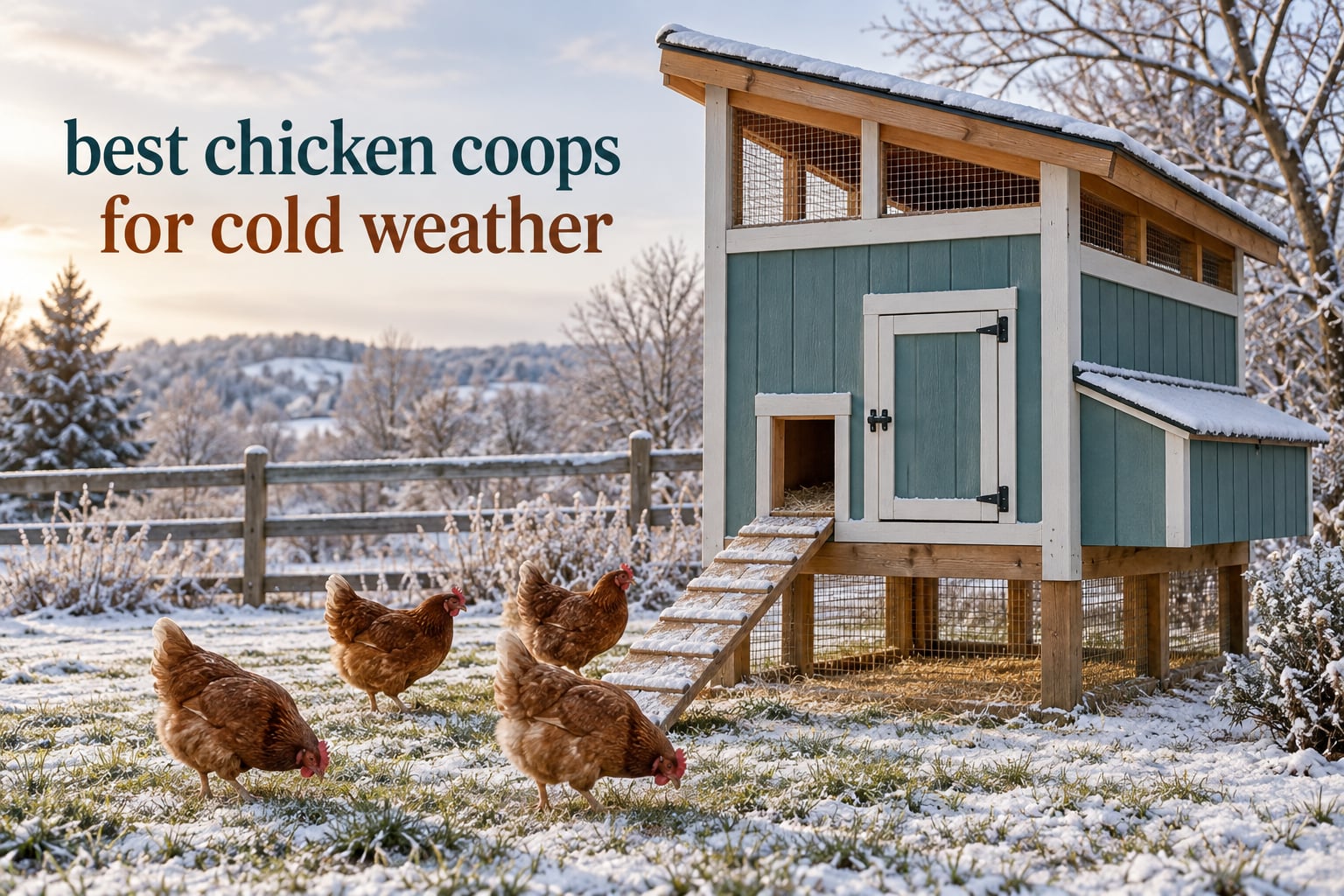
The best chicken coops for cold weather put ventilation above the birds’ heads and a draft-free roosting area ahead of heavy insulation. Dry and still beats warm every time, because the moisture a flock exhales overnight is what turns combs and wattles black with frostbite. That single idea is why we scored all ten coops below on vent placement, sealed floors and predator hardening rather than on R-value marketing.
We spent six weeks reading roughly 5300 owner reviews across these ten coops and comparing frame materials, vent layout, floor design and predator hardware. We never ran a thermal chamber. Instead we compared what owners report after a full Michigan, Oregon, Ontario or Upper Midwest winter, because that is the only evidence that matters when a hen is standing on a frozen perch at two in the morning.
One filter before you read on. The strongest owner consensus on BackyardChickens and Permies is that cold is survivable and damp is not. If you take one thing from this roundup, let it be: seal the drafts at roost level, leave the high vents open year-round, and never run a heat lamp inside a dry, well-ventilated coop.
Table of Contents
Top 3 Cold-Weather Coops for (October 2026)

Hatching Time Snap Lock 4-6
- Rot-proof plastic panels
- No wood to swell or leak
- Adjustable vents
- Litter tray for winter cleanup

CHIKENCOOP Metal Run
- Peaked cover sheds snow
- Walk-in 6.5 ft height
- Reinforced steel frame
- Eucalyptus roost perch

Petsfit Wooden Coop
- Thick fir construction
- Three side vents for airflow
- Detachable floor plate
- Metal lock on nest box
Only one of these three is a true enclosed hen house. The Hatching Time Snap Lock is the pick if you want a sealed, rot-proof structure with adjustable vents and no wood to freeze and swell. The CHIKENCOOP run is the pick if your birds need covered daylight space and you already own a secure small coop for nights.
The Petsfit is the one to buy when four or five hens is your whole plan and you want a coop that looks good in a suburban yard. It needs sealing before its first winter, and we explain exactly what that involves below.
All 10 Coops at a Glance in 2026
Two of the ten entries are enclosed hen houses. The other eight are covered runs, mobile coops or hybrid structures that keep wind and snow off birds during the day while ventilation stays high. Read the open-wall column as a feature, not a flaw.
| Product | Specs | Action |
|---|---|---|
| Hatching Time Snap Lock 4-6 |
|
Check Latest Price |
| CHIKENCOOP 9.8 x 6.5 ft Metal Run |
|
Check Latest Price |
| Petsfit Large Wooden Coop |
|
Check Latest Price |
 VEVOR 9 x 25 ft Metal Run VEVOR 9 x 25 ft Metal Run |
|
Check Latest Price |
 Aivituvin AIR31 Wooden Coop Aivituvin AIR31 Wooden Coop |
|
Check Latest Price |
 GUTINNEEN Large Wheeled Coop GUTINNEEN Large Wheeled Coop |
|
Check Latest Price |
 CAMMOO 13.1 x 9.8 ft Walk-In Run CAMMOO 13.1 x 9.8 ft Walk-In Run |
|
Check Latest Price |
 Outvita 13 x 10 ft Covered Run Outvita 13 x 10 ft Covered Run |
|
Check Latest Price |
 Ketive Cedar Coop with Run Ketive Cedar Coop with Run |
|
Check Latest Price |
 GUTINNEEN Mobile Coop 8-10 Birds GUTINNEEN Mobile Coop 8-10 Birds |
|
Check Latest Price |
1. Hatching Time Snap Lock 4-6 – Best All-Round Cold-Weather Coop
Hatching Time Formex Snap Lock 4-6 Large Chicken Coop, Backyard Hen House
Formex plastic panels
4-6 hen capacity
Three 36 inch roosts
17 x 43 x 26 inches
Pros
- No rot
- warp or swelling in freeze-thaw cycles
- Tool-free snap-lock assembly in under 30 minutes
- Hoses down in seconds
- Adjustable vents
- Light enough for two people to move
Cons
- Base skirt fills with water when rinsed
- Awning tabs need real force to snap in
- Included carabiners are too thick for the locks
Wood is the enemy of a northern winter. It swells when it takes on moisture, splits when it freezes, and gives birds a slow leak of cold air exactly where you do not want it. The Hatching Time Snap Lock sidesteps all of that with impact-resistant Formex panels made in the USA, and after reading hundreds of owner comments the recurring winter theme is simply that it does not deteriorate.
Owners running flocks of four to six report their birds riding out Michigan and Oregon winters in it without supplemental heat. The 17 x 43 x 26 inch footprint is tight for that many hens, so the four nesting spots and three 36-inch roosts are doing real work. Ventilation panels on the sides adjust, which lets you keep airflow high and still block driving rain.
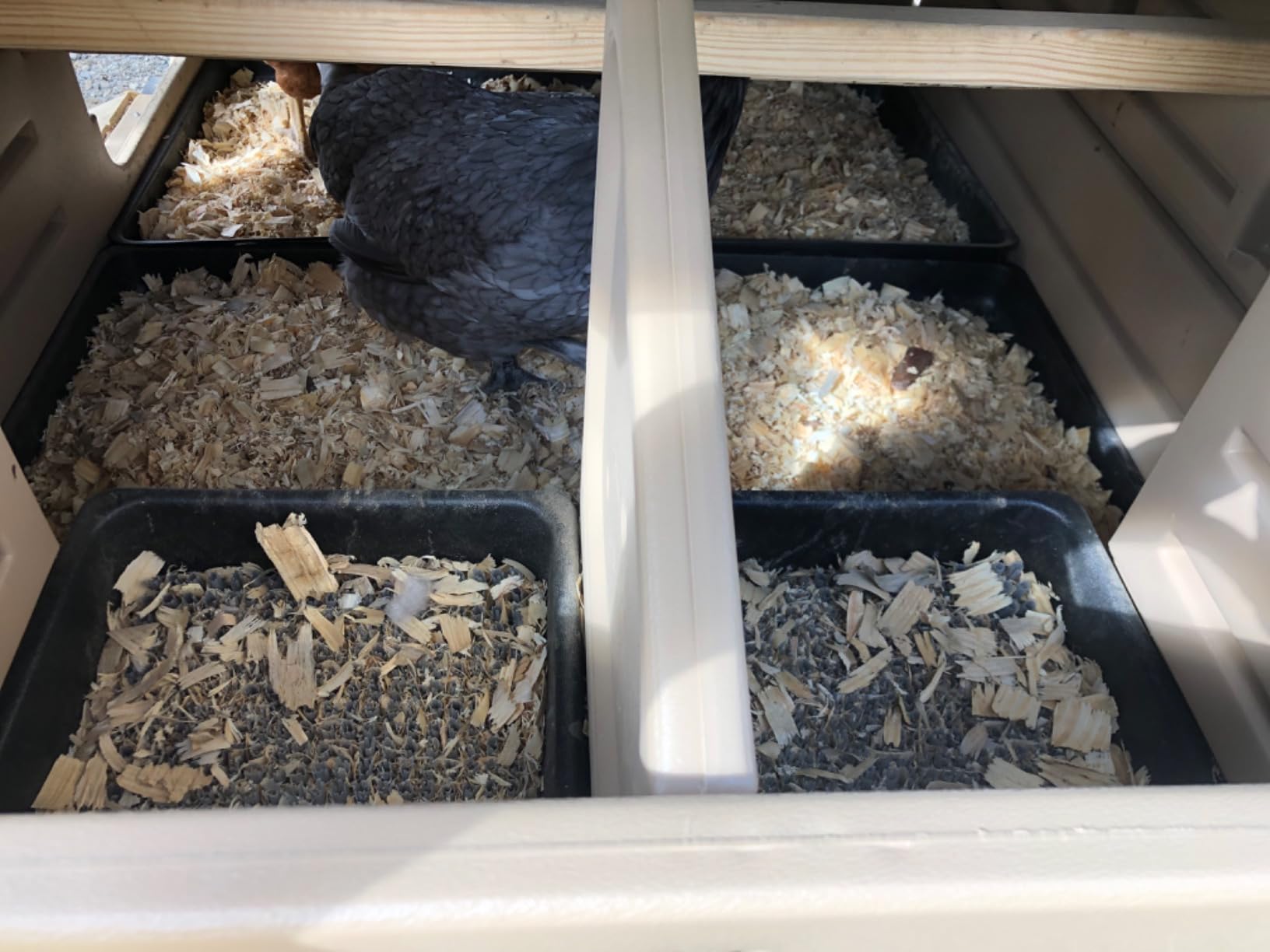
The pull-out litter tray is the sleeper feature for winter. Deep litter works because the birds themselves turn the bedding, and a tray you slide out in ninety seconds means you can keep that litter deep through weeks of freezing weather without a muddy cleanout. Reviewers consistently call out how easy it is to hose the interior down.
At 65 pounds it is also light enough that two people can carry it to fresh ground or reposition it out of a prevailing wind. That portability matters more in Zone 4 than people expect, since moving a flock out of a hollow that collects cold air is a free improvement.
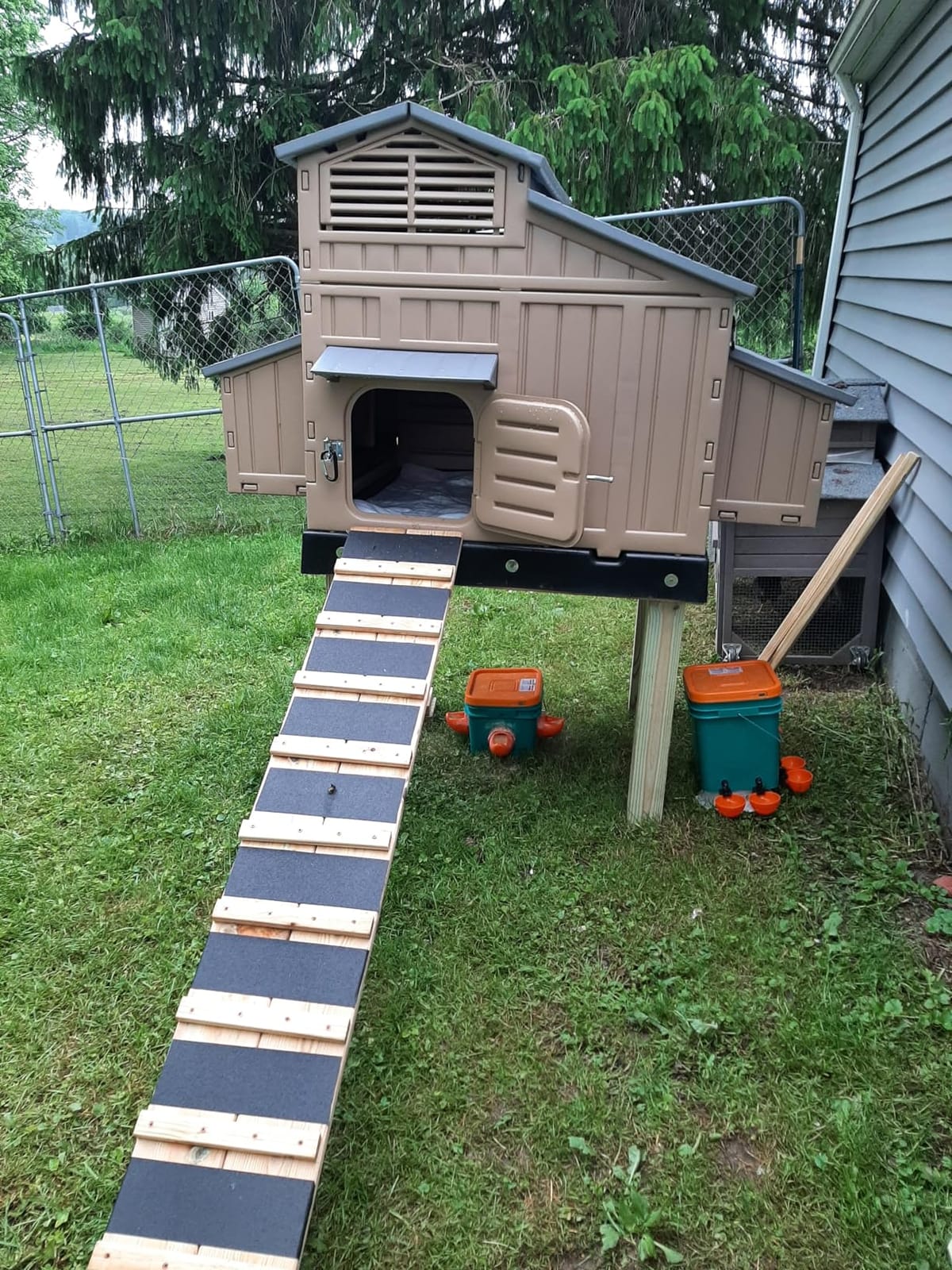
What you get right out of the box
A closed shell, adjustable vents and a removable tray with no wood to seal. That combination means the retrofit work most wooden coops need in a hard climate is already done, which is why this is our editor’s choice for cold weather.
The quick-access nesting boxes and top access panel make egg collection possible without leaning into the roosting area, so you check the flock without disturbing the roost hierarchy at night.
Where it falls short
The base skirt and legs fill with water when you hose the unit down, and they are not sturdy without added support blocks. Plan a gravel pad or a couple of masonry blocks under it before the first freeze.
Some owners also question whether the panels are rigid enough against large predators. Add hardware cloth on the run side in raccoon country, and upgrade the included carabiners, which are too thick for the lock holes and break easily.
2. CHIKENCOOP 9.8 x 6.5 ft Metal Run – Budget Pick Covered Run
CHIKENCOOP 9.8 x 6.5 x 6.5 ft Metal Chicken Coop, Chicken Run with Cover
9.8 x 6.5 x 6.5 ft walk-in run
Metal frame with waterproof cover
47 x 40 in eucalyptus perch
59 pounds
Pros
- Cover sheds both rain and snow
- Reinforced frame with corner braces and rear pole
- Walk-in height makes winter cleaning bearable
- Eucalyptus perch gives natural roosting behavior
- Most owner reviews of any coop here
Cons
- Open sides give little insulation without added covers
- Chicken wire sides need hardware cloth where predators are active
This is the highest-volume product in our set with more than 1600 owner reviews, and the reason is simple: it is a genuinely large covered run at a budget-tier price point. In winter terms, its value is snow management. The peaked roof and detachable cover shed rain and snow instead of letting weight build on the frame overnight.
The 6.5 foot interior height means you can walk in and work. In a freezing climate that matters more than it sounds, because cleaning frozen droppings from a crawl-in coop in January is how people end up with wet bedding and a damp flock.
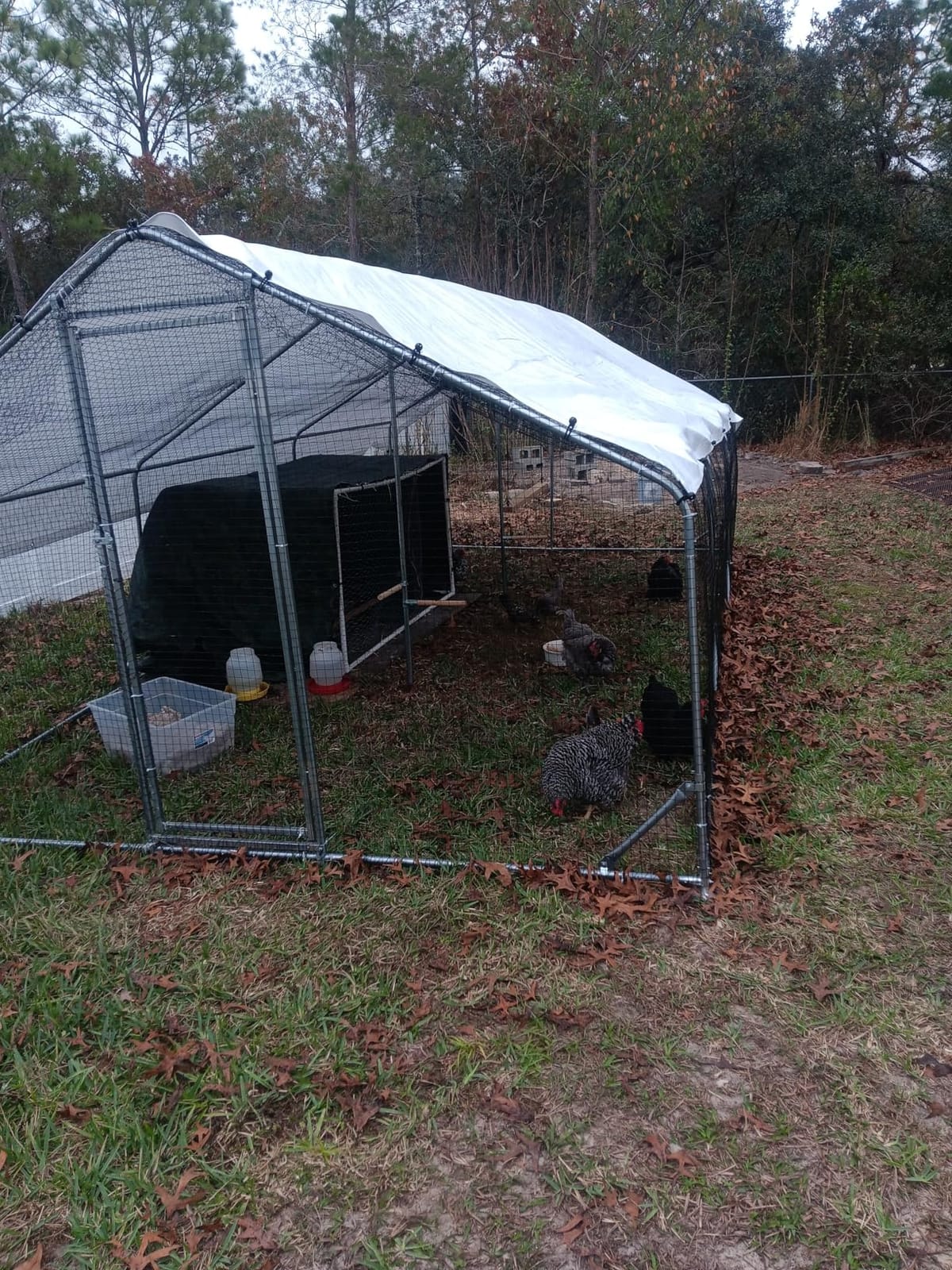
Reviewers consistently single out the 47 by 40 inch natural eucalyptus perch, and for good cold-weather reason. A wide flat roost lets birds tuck their feet into their own body feathering, which is the single most effective thing you can do to prevent frostbite on toes without adding heat.
The bottom corner braces and the extra rear support pole that ties the roof to the base are what keep the frame from racking when wind loads wet snow on one side. Assembly takes around two hours with clearly labeled components.
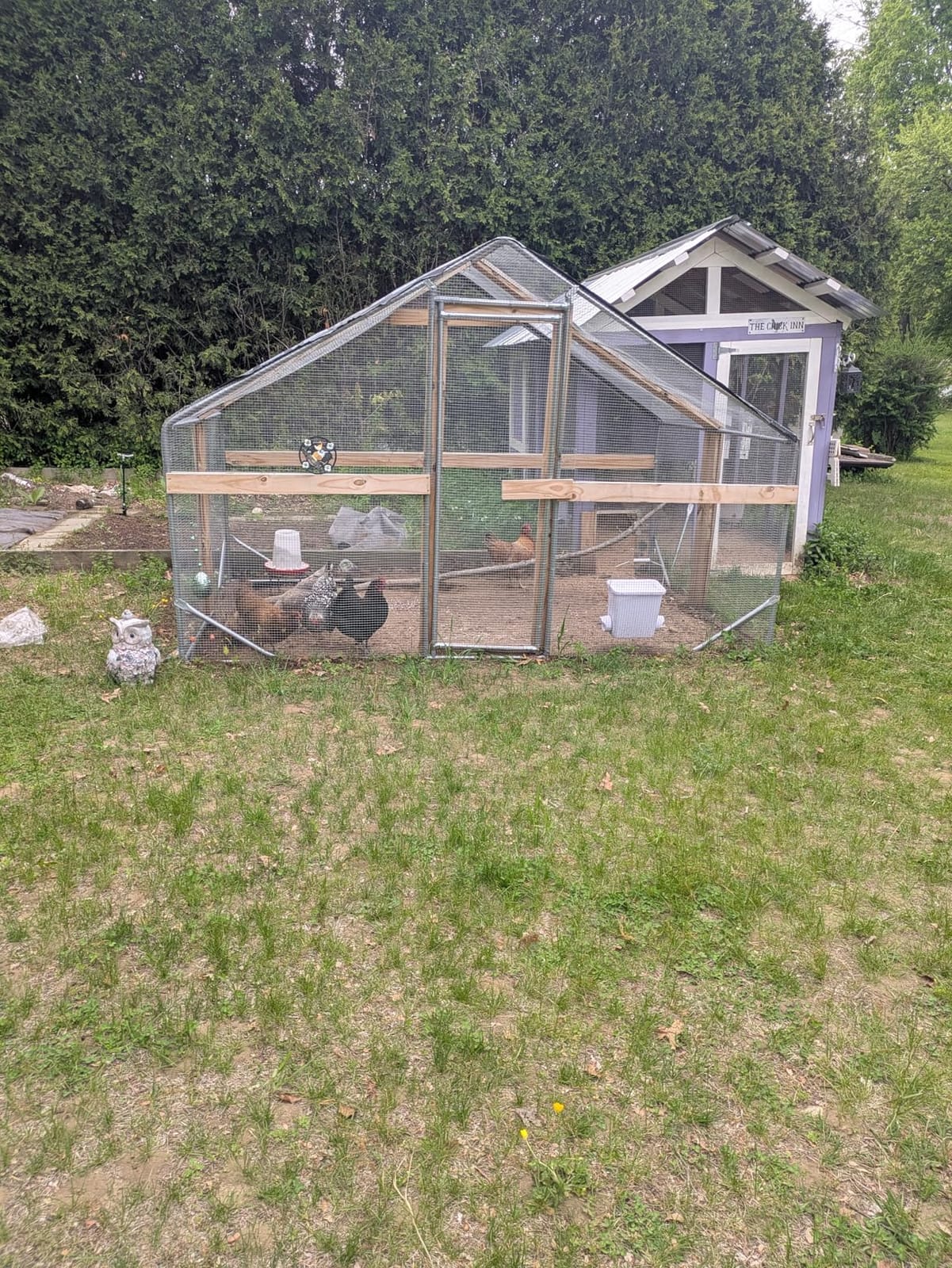
Why it works in a cold climate
A covered run keeps wind chill off birds while leaving them plenty of fresh air, and the open mesh means condensation never has a chance to build. For Zones 5 through 7 that is honestly all a daytime enclosure needs to do.
It also pairs well as a run attached to a small secure hen house, giving your birds somewhere to go on sunny winter afternoons instead of crowding the roost all day.
Where it falls short
The open run design provides little shelter or insulation in cold weather without added covers. If you plan to leave birds in it overnight, do not, because chicken wire sides will not stop a determined raccoon.
Reinforce the sides with hardware cloth and anchor the base on any ground that freezes hard. Without that, a thaw-and-freeze cycle can lift the frame just enough to matter.
3. Petsfit Large Wooden Coop – Best for Small Backyard Flocks
Petsfit Large Chicken Coop with Upgraded Perches, Wooden Outdoor Chicken Cage with Large Nesting Box, Weatherproof Open Asphalt Roof &Removable Bottom, Duck House, Rabbit Hutch
Thick solid fir with stainless hardware
3-5 hen capacity
Three side vents
55 x 26.5 x 28 inches
Pros
- Thickened widened perches protect feet
- Three side vents move air well
- Detachable bottom plate for cleaning
- Assembly takes about an hour
- Looks good in a suburban yard
Cons
- Unsealed pine absorbs water and rots
- Asphalt roof panels are not fully waterproof
- Nesting box has come apart more than once
Four or five hens in a neat courtyard yard is exactly who this coop is built for. The thick fir and stainless hardware feel a step above the usual pine kit, and the three side vents give you a real circulation path rather than a token opening. Owners report successful overwintering after sealing and painting the wood.
The two widened, thickened perches are the winter feature to notice. Chickens lose heat through their feet first, and a wide flat roost lets them cover those feet. Narrow round dowels are the most common reason a small flock ends up with frostbitten toes in an otherwise fine coop.
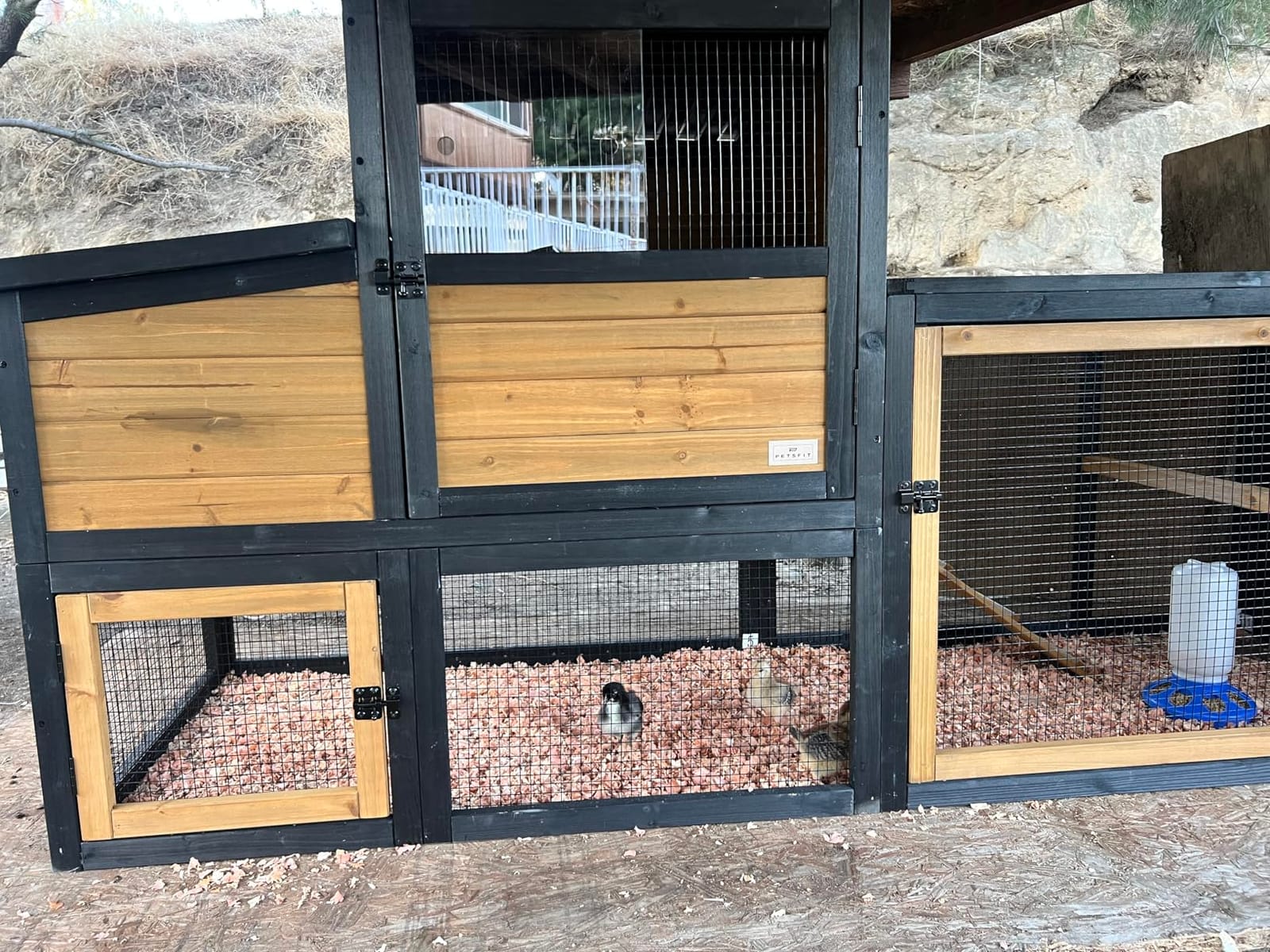
The nesting box with removable dividers fits two hens and has a metal lock, which is a meaningful upgrade in a yard where small predators probe every unsecured seam. The detachable bottom plate is a genuine help in cold weather, even though reviewers note it fits very tightly and takes effort to release.
Owners frequently add straw bales around the base or move the whole coop under cover for the worst months. Both are sound winterizing moves and both are easier than insulating the walls, which is what we recommend instead.
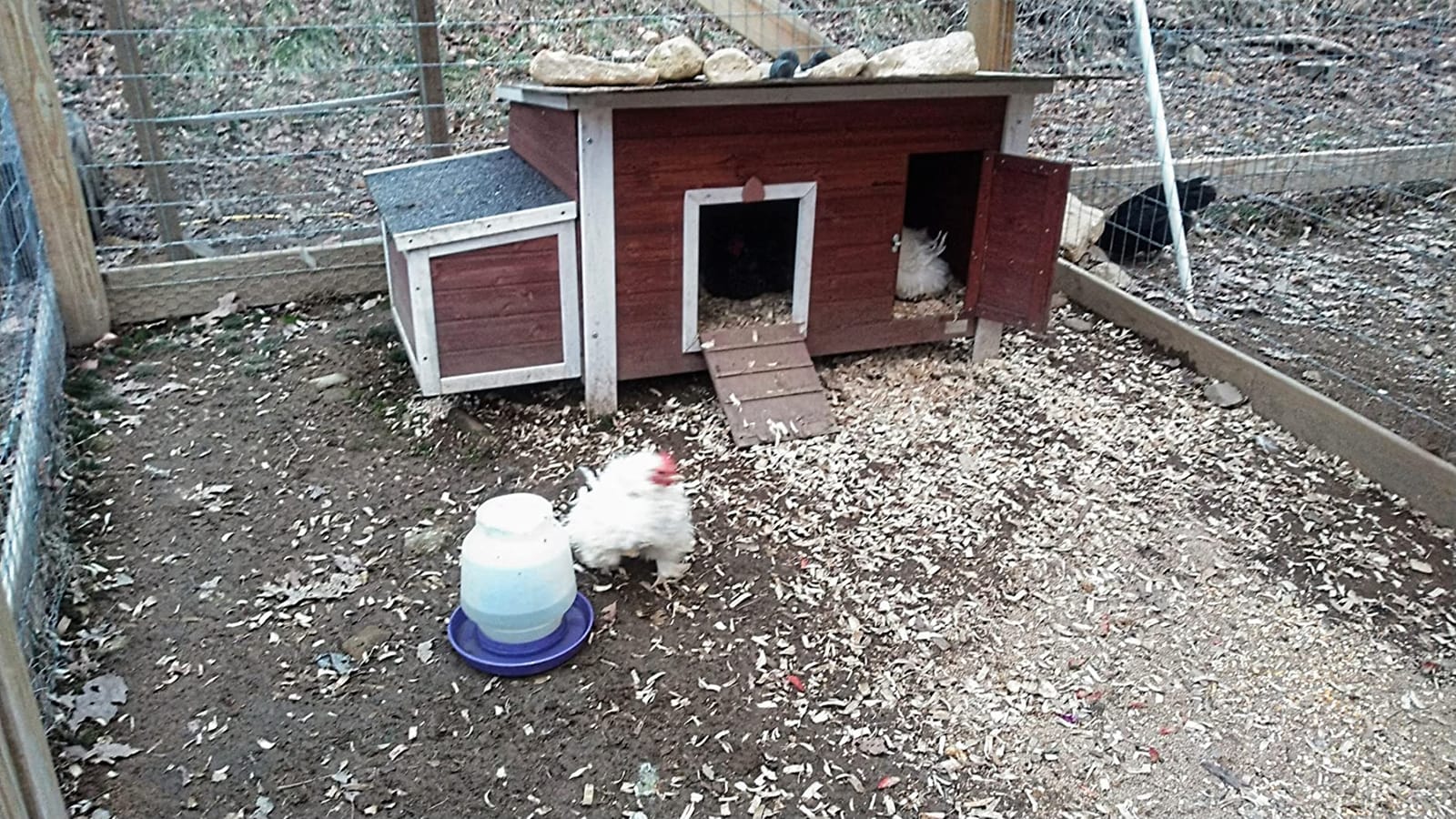
What matters most in a hard freeze
Seal the wood before the first frost and you have a serviceable small-flock coop for Zones 5 and 6. The vent layout is already right, which is the harder half of winterizing.
The detachable floor and lockable nest box make daily checks quick when the weather keeps everyone indoors, and the fir frame is heavy enough at 60 pounds to stay put in wind.
Where it falls short
Thin, unsealed pine absorbs water and rots without sealing or painting, and the asphalt roof panels are not fully waterproof, so water gets underneath and degrades the wood over time. Treat both before winter, not after.
The nesting box is held together with dowels and has come apart more than once for some owners, and its floor has holes that can admit rodents. Brace the box and line the floor before the flock moves in for the season.
4. VEVOR 9 x 25 ft Metal Run – Best Covered Run for Big Flocks
VEVOR Large Metal Chicken Coop, 9 x 25 x 6.6 ft, Walk-in Chicken Run House with Waterproof Cover & Sturdy Frame, Dome Roof Poultry Cage Duck Pen for Rabbit Hen Goose Outdoor Backyard Farm Use
9 x 25 x 6.6 ft run
1-inch galvanized steel pipes
PE-coated waterproof tarp
Dome roof cover
Pros
- Enormous covered area at a budget price
- Dome roof sheds water and light snow
- Solo assembly in about an hour
- Fits many other animals too
- Easily joined to other runs
Cons
- Galvanized pipes rusted within six months for some owners
- Tarp and zip ties degrade fast in sun
- Chicken wire is flimsy and needs replacing
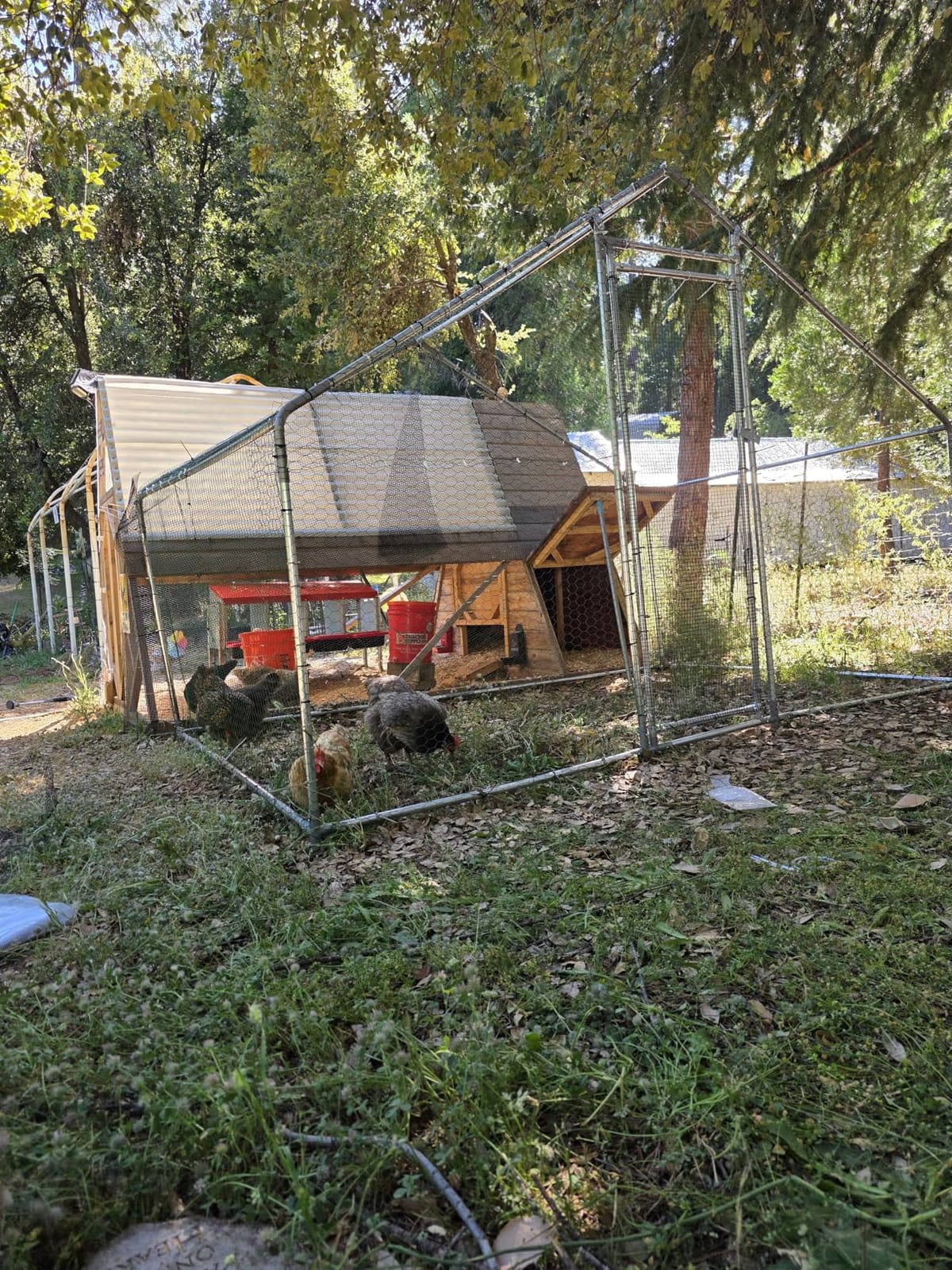
Nine by twenty-five feet is an unusual amount of covered ground, and in a cold climate that becomes snow and wind protection for a bigger flock than most kits serve. The dome roof is the winter detail: it sheds water, debris and light snow without a flat panel collecting a heavy wet layer.
The frame is 1-inch galvanized steel pipe with hexagonal mesh on four sides, so birds get full ventilation while staying dry. Owners building it solo in about an hour on flat ground report that the frame levels easily, which matters when you are anchoring it against freeze-thaw movement.
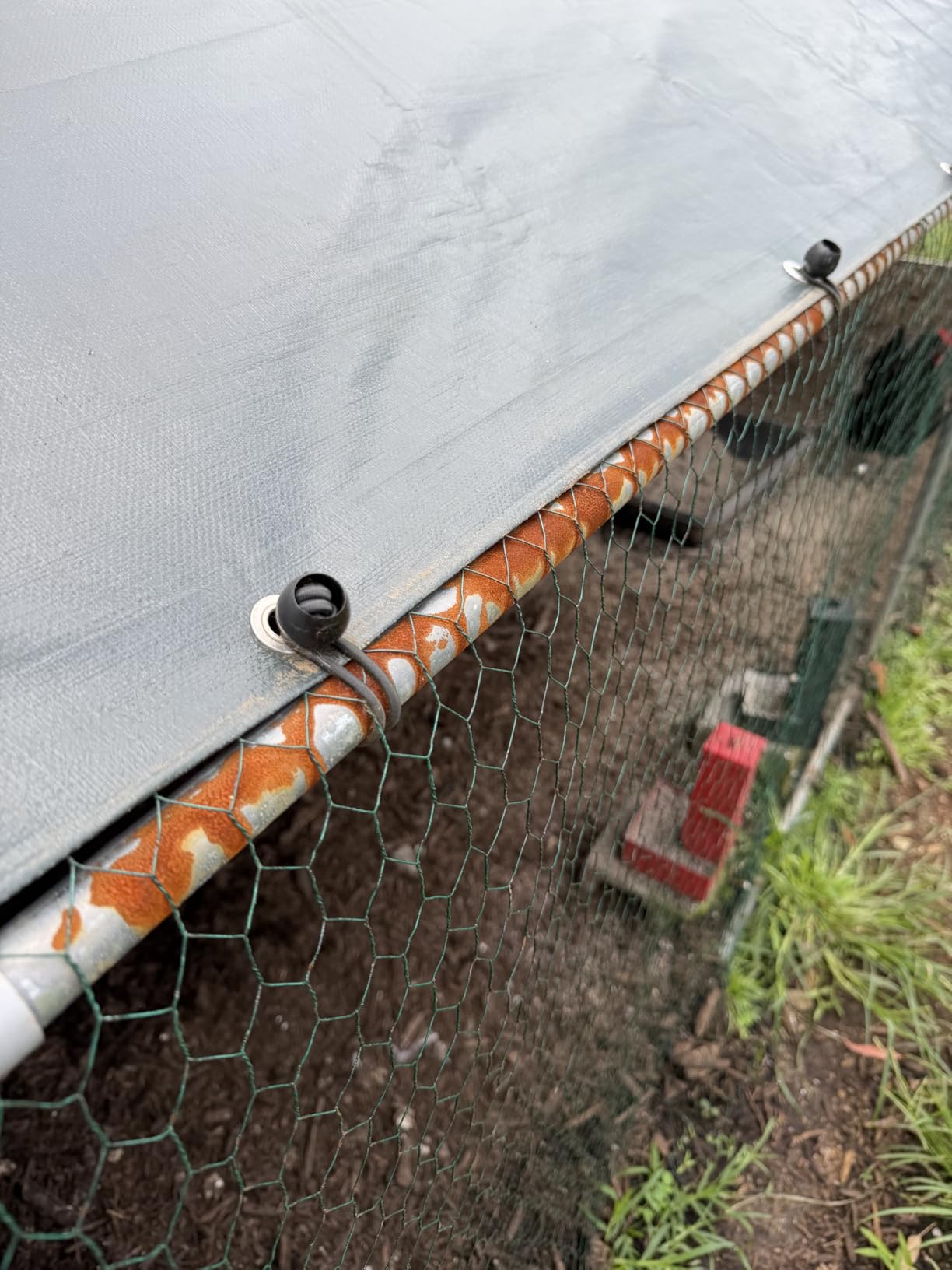
Winterizing this one is straightforward and mostly about the frame, not the cover. Add hardware cloth, a ground board skirt to block snow from banking against the base, and ground anchors so wind cannot shift the whole structure. Owners who do that report years of service.
At 117 pounds it is not a one-person job to reposition, so plan its location before the snow arrives. Two-person installation is recommended by the manufacturer.
What makes it a cold-climate run
Full side-to-side ventilation is the correct winter philosophy, and this kit does it without trying to be an airtight box. Birds stay dry and moving, which is the entire goal in Zone 5 and warmer.
It also works for ducks, geese, rabbits and quails, so if you run a mixed yard you are covering several animals with one structure.
Where it falls short
Galvanized pipes rusted noticeably within six months for some owners, especially at the base, so paint or coat the feet where they meet the ground. The included plastic zip ties and the PE tarp are cheap and degrade quickly in sun, and only one tarp is included.
Chicken wire is flimsy and needs hardware cloth for predator-proofing, and the 6.6 foot height forces taller owners to hunch when reaching the sides. Instructions are picture-only with poorly labelled parts.
5. Aivituvin AIR31 – Best Predator Hardening Out of the Box
Aivituvin Chicken Coop Hen House, Large Outdoor Wooden Poultry Cage with Ramps, Run, Nesting Box, Removable Tray, Weather-Proof Chicken Cage (Grey, AIR31)
Weather-resistant fir with hardware cloth
2-4 hen capacity
Asphalt roof panel
74.9 x 26 x 39.4 inches
Pros
- Hardware cloth pre-installed on the panels
- Predator-safe latches as standard
- Removable sliding tray for winter cleaning
- Built-in wheels for repositioning
- Two units can be joined end to end
Cons
- Rounded parrot perches are too narrow and tip over
- Wood is thin and hardware is cheap
- No floor
- so digging predators can get underneath
Almost every cheap wooden kit ships with chicken wire and calls it predator protection. This one arrives with hardware cloth already installed on the panels, and one owner reports holding off a raccoon because of it. In a winter landscape where snow gives weasels and raccoons a tunnel route straight to your birds, that is the single most useful feature on this list.
Multi-level layout with a ramp, attached run and overhead hatch keeps the flock’s daily routine manageable when nobody wants to kneel in the cold to collect eggs. The removable sliding tray means bedding changes take seconds even with frozen droppings.
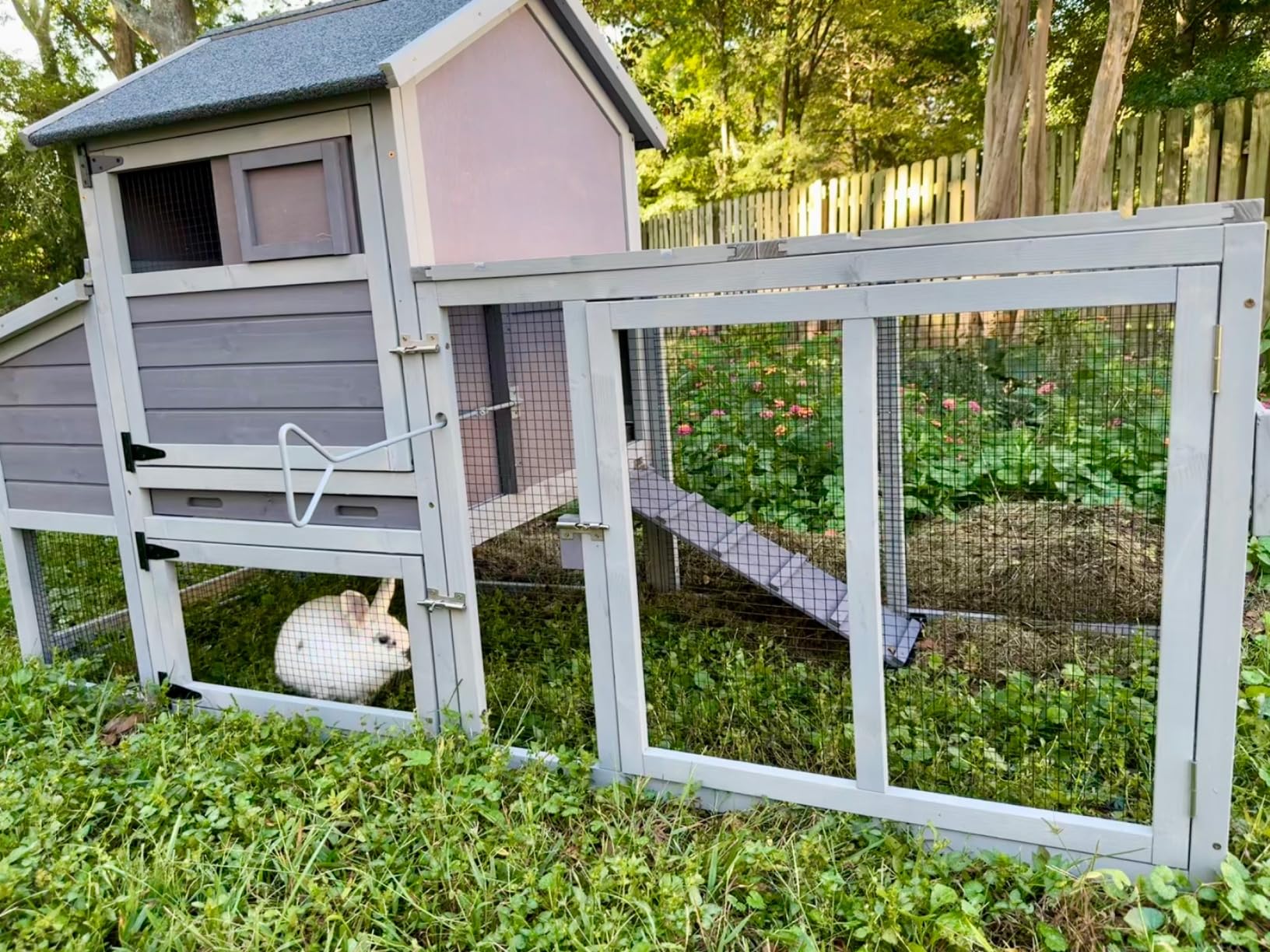
The asphalt roof panel blocks heat absorption in summer, which matters less here but does mean the same roof copes with snow shedding in winter. Built-in wheels make it easy to reposition out of a wind funnel before winter sets in.
Listing capacity claims up to six birds, but reviewers consistently rate it realistically for two to three full-size hens. Size the coop for the smaller number and use a covered run for the rest of the flock.
Why it handles winter best
Predator-proofing at the panel level is what lets you close the door at dusk without second-guessing it. Snow tunnels change the geometry of any enclosure, so pre-installed cloth is worth more than almost any insulation product.
Multiple access areas let you handle a sick or frostbitten bird quickly, and the removable tray keeps wet litter from sitting against the birds all winter.
Where it falls short
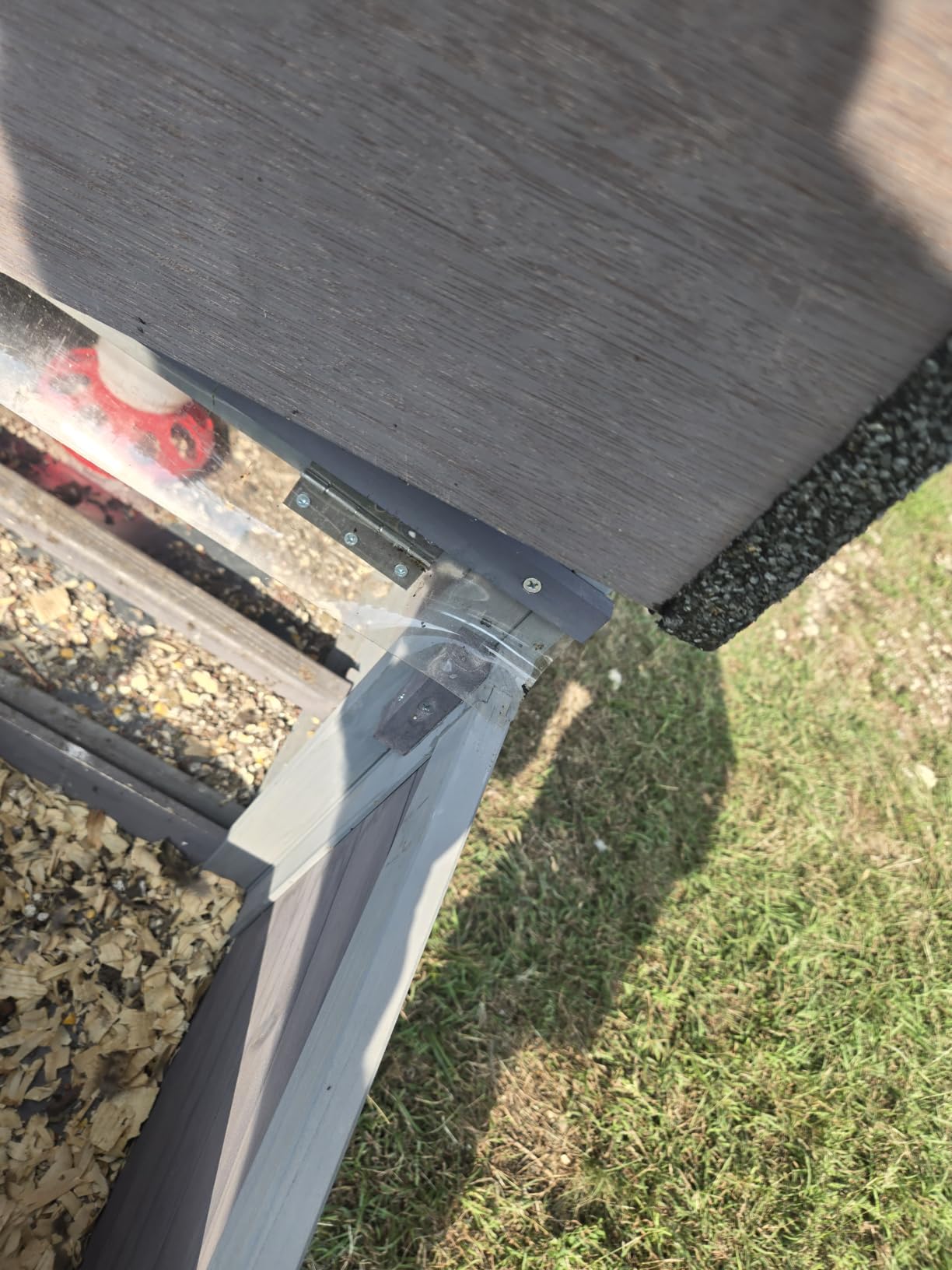
The rounded parrot-style perches are too narrow and tip over, sitting too close to the droppings shelf, so replace them with wide flat roosts before the cold arrives. Wood is thin and hardware is cheap, with nest-box latches and hinges breaking within weeks for some owners.
The coop has no floor, so digging predators can get underneath in snow. Add a floor panel and a ground apron, and replace the top hatch lock because it is not secure enough on its own.
6. GUTINNEEN Large Wheeled Coop – Best Raised Floor Design
GUTINNEEN Large Chicken Coop for 4-6 Chickens, Movable Thickened Wooden Hen House on Wheels with Easy Clean Removable Tray & 2 Nesting Boxes, Extra Large Outdoor Duck Cage & Rabbit Hutch
Solid wood panels with hardware fabric
Floor elevated up to 4.92 inches
19 sq ft inner space
63.77 pounds
Pros
- Elevated floor keeps birds off wet ground and mud
- Hardware fabric instead of chicken wire
- Space-saving two-story layout with run underneath
- Easy to modify for winter with doors and panels
- Two nest boxes with six compartments
Cons
- Smaller inside than the photos suggest for its stated capacity
- Wood is soft and not weather-treated
- Doors swell and hinges strip
- Bottom pan rusts and bows out over time
Raising the floor is the cheapest winter upgrade available and this coop ships with it done. Wheels elevate the structure up to 4.92 inches, which means meltwater, mud and slush never sit under the birds, and the run area underneath still counts as usable space in a small yard.
Owners who sealed the wood and set it on pavers report it holding up through a full year of weather. Those who left it exposed report swelling doors, stripped hinges and a rusting base pan. Treat sealing the wood as a required step rather than an upgrade.
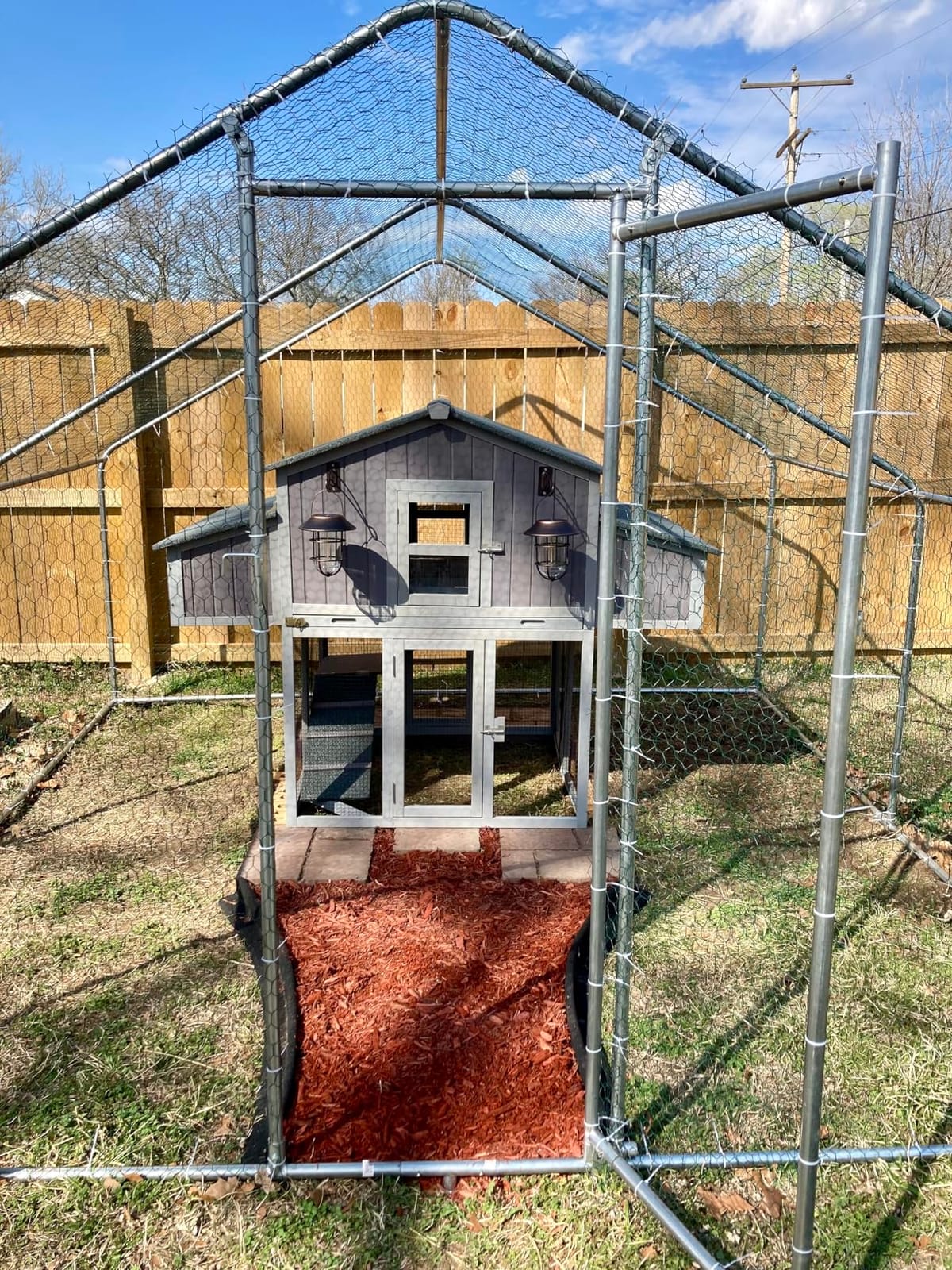
Using hardware fabric rather than chicken wire is a real advantage when you close the door at night, and reviewers note that adding an automatic door opener, solar fans and panel heaters is straightforward, which gives you options once you are into the season.
The two nest boxes with six compartments suit a flock where laying rate matters. The top roof opens for egg collection so you can check the boxes without crouching in whatever the weather is doing.
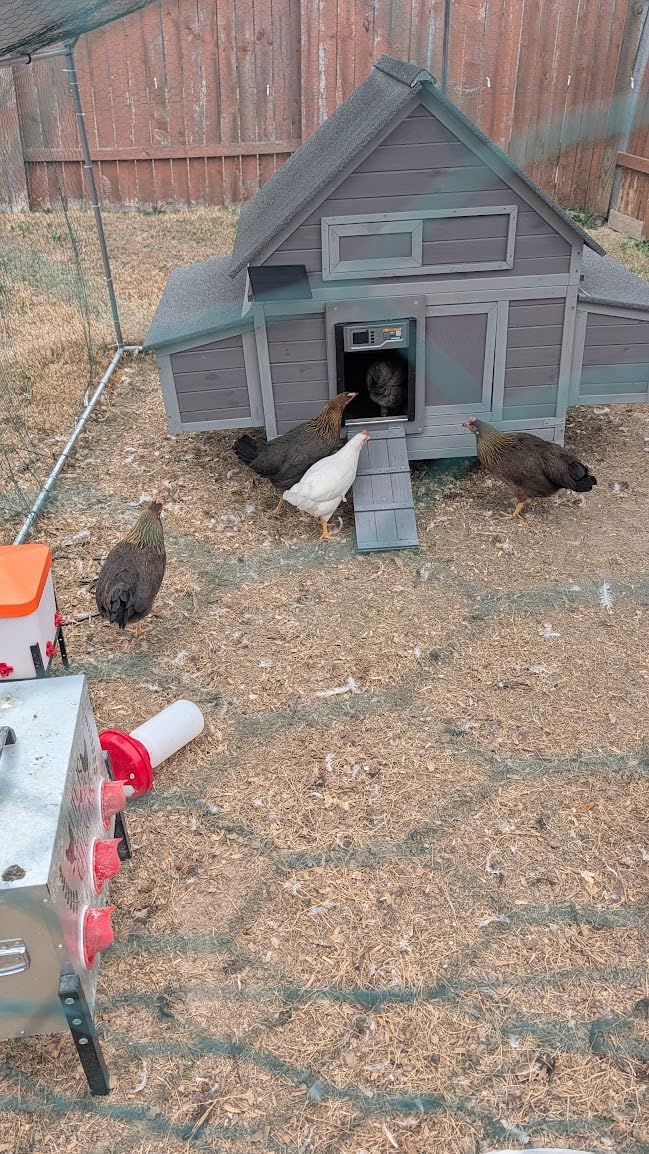
Why the raised floor matters most
Wet ground under a coop is the fastest route to damp bedding, and damp bedding at freezing temperatures is what produces the condensation that causes frostbite. Lift the floor and you remove the source.
The elevated run floor also means snow blowing underneath slides across a surface that drains, instead of filling with slush that stays wet for days.
Where it falls short
It is smaller than the photos suggest for the stated four to six chicken capacity, so plan on fewer birds inside. The wood is soft, cheap and not weather-treated, with paint that scratches easily.
Doors swell in moisture and hinges strip because the screws are too short, the bottom pan rusts and bows out over time, and the 63.77 pound weight with no handles makes it hard to move across dirt.
7. CAMMOO 13.1 x 9.8 ft Walk-In Run – Easiest Mesh to Work With
CAMMOO Walk in Chicken Coop, 13.1×9.8×6.6ft Chicken Run for Yard with Cover
0.8mm plastic-coated tubes
Plastic mesh rated -4F to 176F
13.1 x 9.8 x 6.6 ft
Suited to 10-20 chickens
Pros
- Mesh rated for -4F to 176F
- Stainless steel frame ties included
- Walk-in height for comfortable winter work
- Pre-sorted labelled parts and tools included
- Flexible mesh will not trap startled birds
Cons
- Not predator-proof against large dogs or coyotes
- Thin PE tarp can tear in storms
- Door latch chain broke on the first pull for some
This is the highest-rated kit in our set alongside the Hatching Time, and the reason is a material choice you do not see often: plastic mesh specified to hold up at -4F through 176F. Owners repeatedly say it is far easier to work with than chicken wire and that it has outlasted their expectations in strong sun and cold.
Thirteen point one by nine point eight feet of walk-in space covers a flock of ten to twenty for daytime use, and the frame uses stainless steel ties on the main structure rather than the plastic ties most kits supply. That detail matters in a climate where everything outdoors is wet for months.
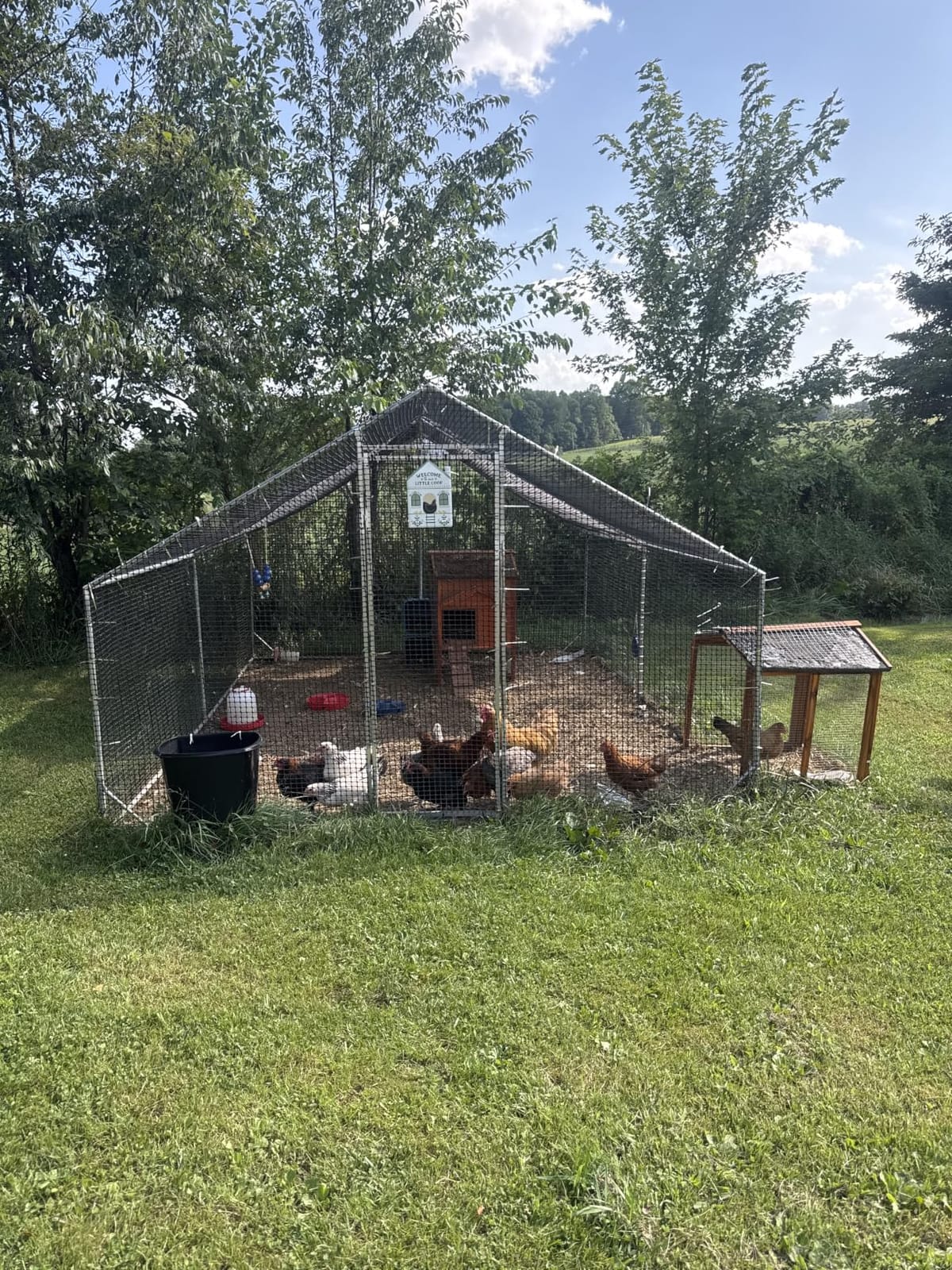
Owners report the frame standing up well in wind and fitting together without alignment fuss, and the double-lock door is a step above the single-latch kits at this tier. Tools and gloves are included, and the pre-sorted parts save an afternoon.
The honest framing here is that nearly every review treats this as an excellent daytime run or an add-on barrier rather than a secure overnight enclosure. Use it that way and it performs as designed.
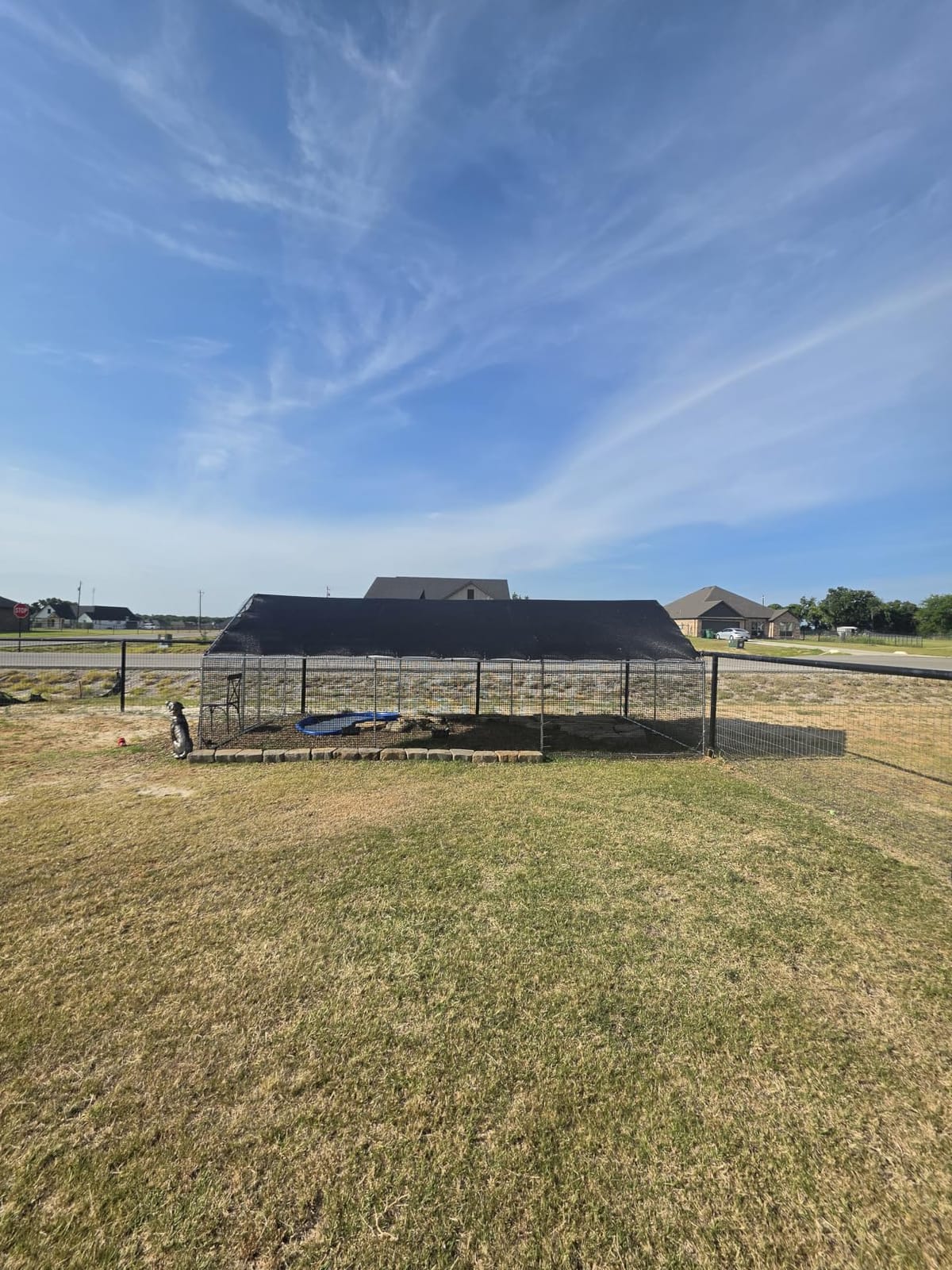
Why the mesh rating matters in cold
Standard chicken wire becomes brittle in hard cold and is the first thing to snap under a determined raccoon. A mesh rated down to -4F keeps its strength through the whole season instead of failing in February.
Walk-in height also means you can muck out bedding and check birds without kneeling on frozen ground, which reduces the time your flock spends standing in the cold during a chore.
Where it falls short
It is not predator-proof. Large dogs or determined coyotes could push through the plastic mesh, so line the base with a hardware cloth skirt if anything with an interest in your chickens lives nearby.
The PE tarp is thin and can tear in storms, the door latch chain broke on the first pull for some buyers and is not designed to let birds escape from inside, and the mesh is a roll that must be cut to size.
8. Outvita 13 x 10 ft Covered Run – Best Covered Space Per Dollar
Outvita Chicken Coop, 13×10 FT Large Metal Chicken House, Poultry Habitat Cage with Waterproof Cover, Walk-in Chicken Run Pen for Small Animals, Yard, Farm, Patio
1-inch galvanized coated steel frame
13 x 10 x 6.6 ft interior
PVC-coated hex steel wire
180g PE waterproof cover
Pros
- Solid stable galvanized structure
- Quick spring-bolt assembly at every joint
- Sloped roof sheds rain and snow
- Metal feet can be anchored down
- Good value for the covered area
Cons
- Open-sided design gives limited shelter without added covers
- Wire mesh alone will not stop determined predators
Thirteen by ten feet of covered, walk-in space from a 1-inch galvanized frame is a lot of weather protection for a modest outlay. In winter terms, this is a wind and snow break that lets a flock stay active on mild days instead of huddling in a small coop for weeks.
The sloped roof and 180g PE waterproof cover shed rain and snow effectively, and the quick-connect spring bolt design at every frame junction makes assembly straightforward. Buyers highlight the solid galvanized structure and generous covered space as the main strengths.
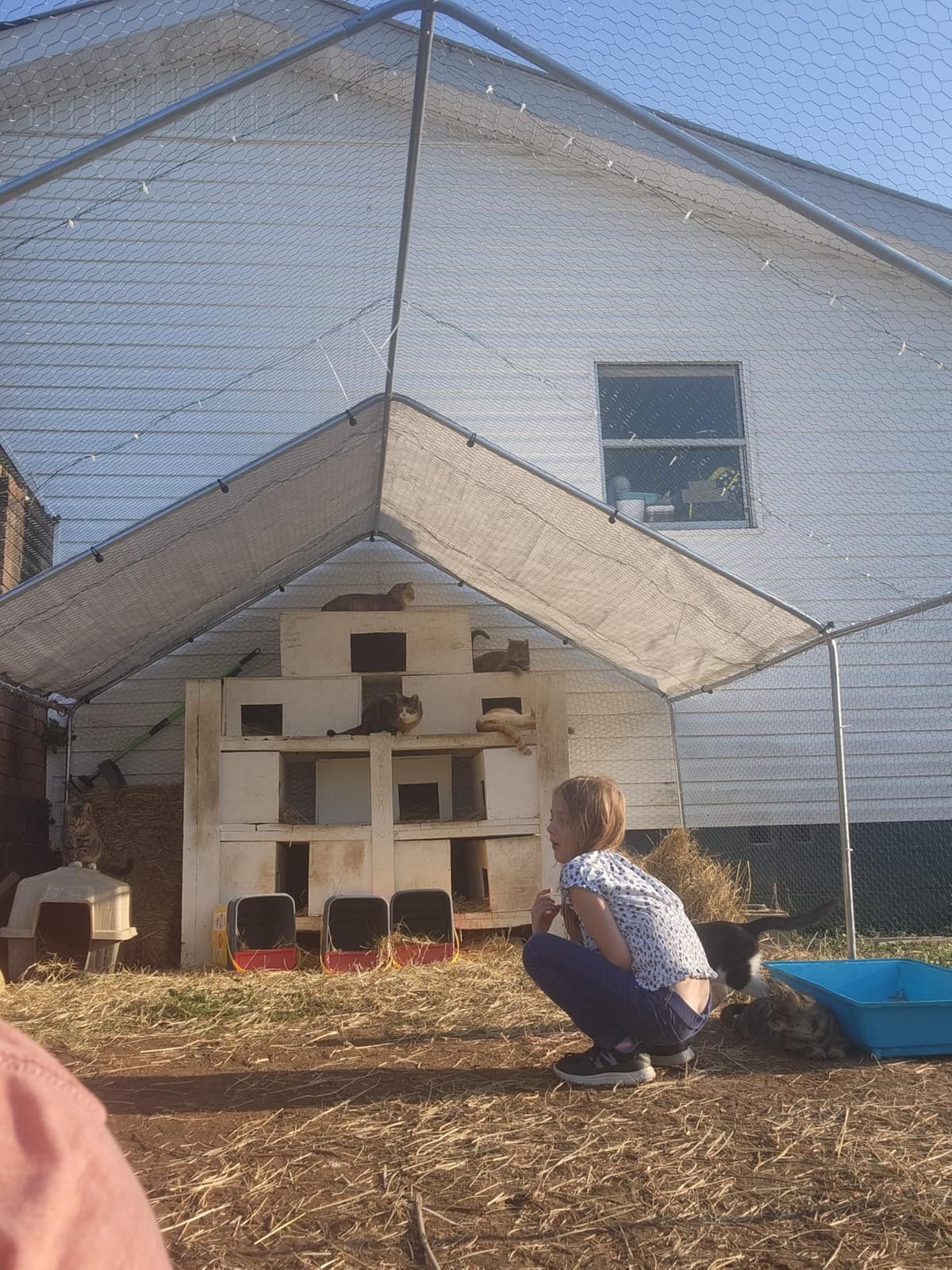
The fixable metal feet at the base are the winter feature to note. Once the ground freezes and thaws, a run that cannot move is a run that gets undermined, and anchoring the feet keeps the mesh tight against digging predators.
At 85.76 pounds it is heavy enough to feel substantial in wind, and the secure latch on the access door keeps birds contained during the day.
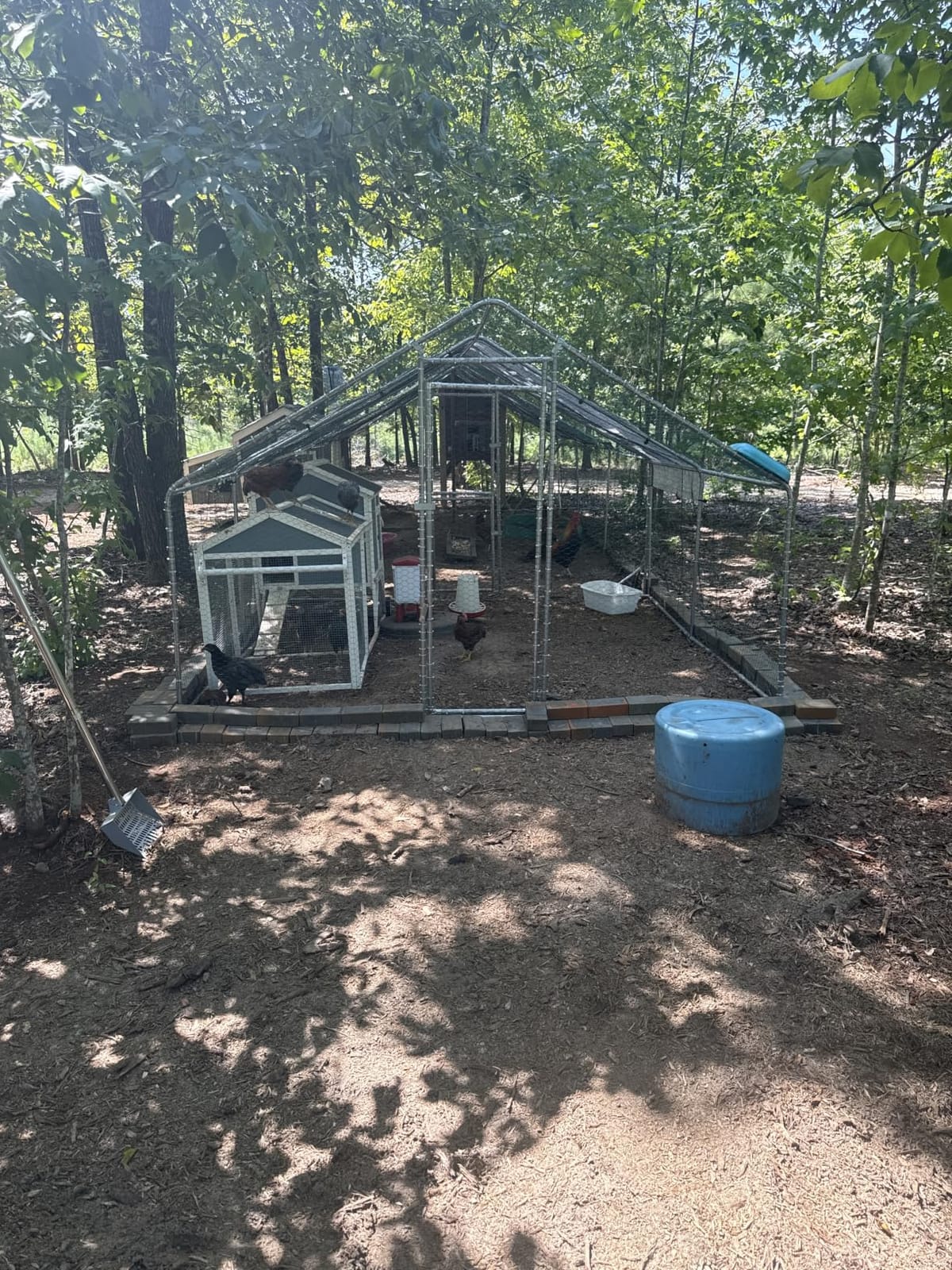
What it does well in cold
Covered ground lets birds scratch and dust-bathe during the day, which reduces crowding and keeps the indoor deep litter drier. That indirectly lowers indoor humidity, which is the mechanism behind most winter frostbite.
It works equally well for turkey, ducks and geese, so a mixed flock is covered by the same structure.
Where it falls short
The open-sided run design offers limited shelter or insulation for cold weather without added covers, so treat it as daytime space and pair it with a secure small hen house for overnight.
Wire mesh alone is not sufficient against determined predators in many areas. Add hardware cloth and a ground apron before the snow covers the base skirt.
9. Ketive Cedar Coop – Best Rot-Resistant Wood Build
Ketive Large Wooden Chicken Coop with Run and Wheels, Grey
Cedar wood with protective coating
Pitched asphalt roof
13.54 sq ft usable space
71.3 x 26.14 x 39.4 inches
Pros
- Cedar resists rot far better than typical pine
- Cedar aroma discourages some pests
- Pitched roof diverts water and reduces moisture
- Assembles in about 45 minutes
- Pre-drilled holes save setup time
Cons
- Sized for only 1-4 chickens
- Wire mesh does not stop determined predators
- Heavier and harder to relocate despite the wheels
Cedar is the one material on this list that genuinely improves in a cold climate. It resists rot without relying on a coating that will eventually fail, and the natural oils carry a mild deterrent effect on some pests. Every other wooden kit here needs sealing before winter, and this one needs less of it.
The pitched asphalt roof is the other winter-minded choice. Water runs off instead of sitting in a flat pan where ice builds up and eventually pries at the seams, which is a common failure point on wooden coops after a couple of winters.
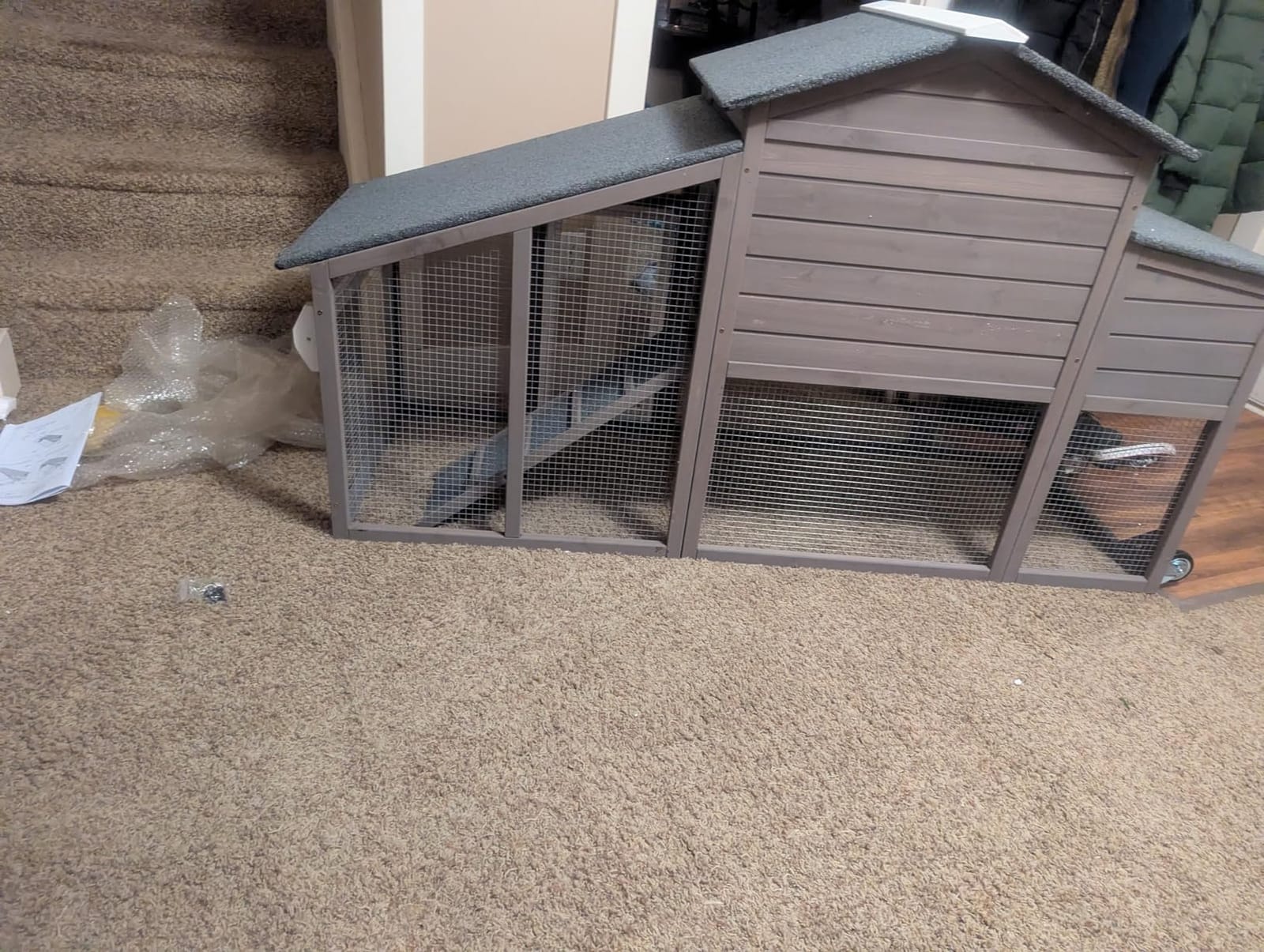
The raised housing structure keeps the resting area off the ground for airflow, which reduces the damp floor problem that shows up first in small coops. Galvanized wire mesh panels give ventilation while deterring common predators.
The removable sliding tray makes bedding changes fast, and that matters when deep litter is the thing keeping your coop warm. Assembly takes about 45 minutes with two adults thanks to pre-drilled holes.
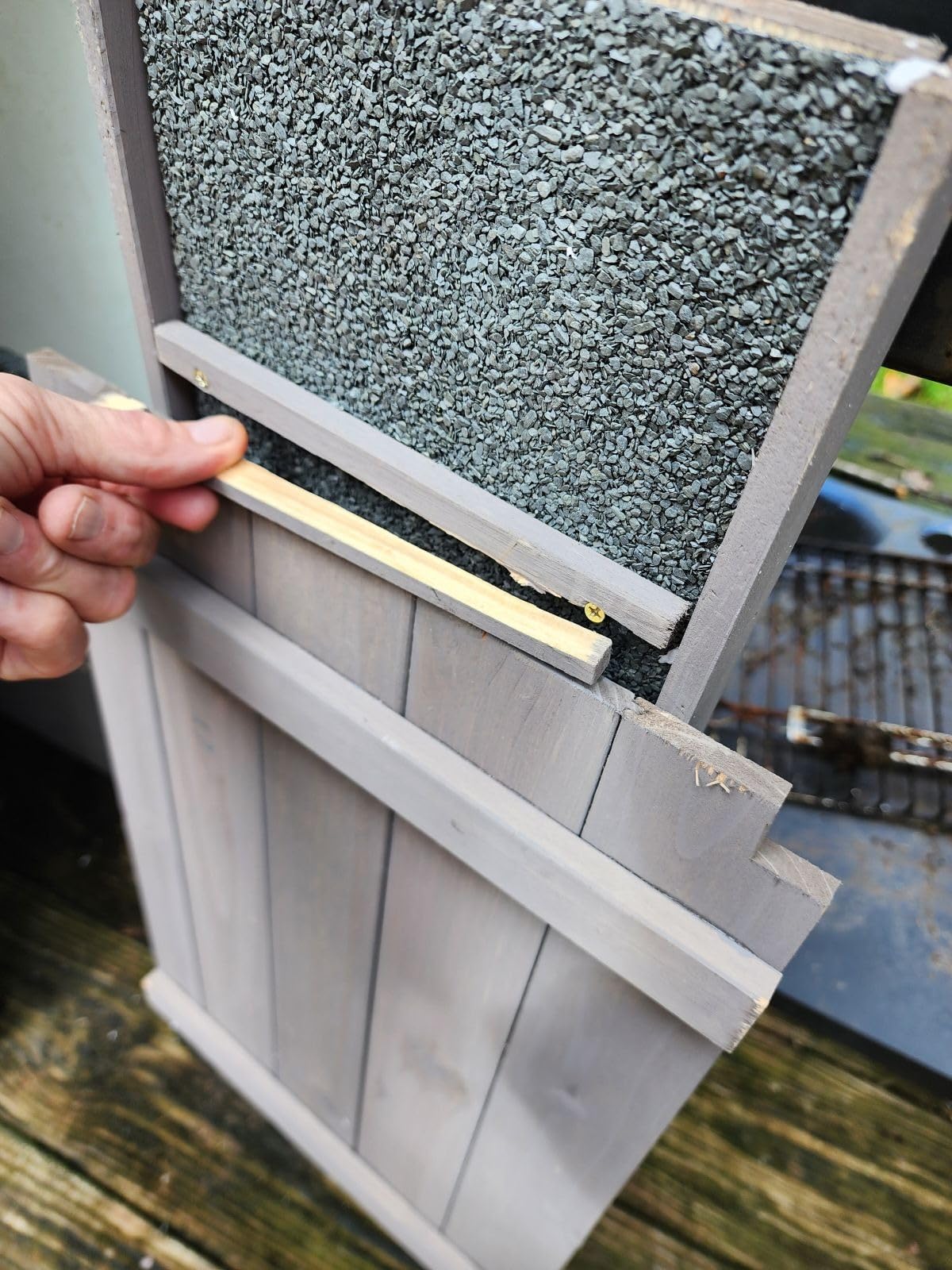
Why the material choice pays off
A frame that does not absorb water is a frame that keeps insulating value through a wet spring instead of going soft. Cedar buys you that, and it is why this coop needs less winterizing than its fir and pine rivals.
With 13.54 square feet of usable space split between the run and the elevated area, it works for one to four birds, which covers a starter flock or a group of older, hardier hens.
Where it falls short
It is sized for only one to four chickens, which is small for a coop with a built-in run. You will need a separate covered run if you want daytime space in winter conditions.
Wire mesh panels do not stop determined predators on their own, and the flat roof variants offer less rain runoff than the sloped version, so check which style you are actually buying.
10. GUTINNEEN Mobile Coop 8-10 Birds – Best for Larger Winter Flocks
GUTINNEEN Chicken Coop with Super Large Wheels for 8-10 Chickens Mobile Duck House 68.1″ L with Four Nesting Boxes, Four Perches, Easy to Move
21.1 sq ft living space
8.1-inch wheels for rotation
Four divided nesting boxes
Four polished perches
Pros
- 8.1-inch wheels rotate the whole flock to fresh ground
- 21.1 sq ft comfortably houses 8-10 birds
- Four nesting boxes and four perches for a full flock
- Two pull-out metal trays for cleaning
- Over 26 reinforced points with corner brackets
Cons
- Large wheels make the interior awkward to reach
- Mobile design leaves bare ground underneath that needs rotating
- Awkward to turn on uneven ground
Eight to ten hens is past the point where a small plastic or plastic-mesh enclosure makes sense, and this is the one entry here sized for a flock that size. Twenty-one square feet of living space, four divided nesting boxes and four polished perches give a full group room without crowding.
The 8.1-inch wheels are the winter feature. Rotation to fresh ground keeps birds off ground that is frozen, wet or stripped, and droppings fall clear of the sleeping area. Forum owners working with raised tractor-style setups favour exactly this for snow, since snow blows under instead of bedding down into bedding.
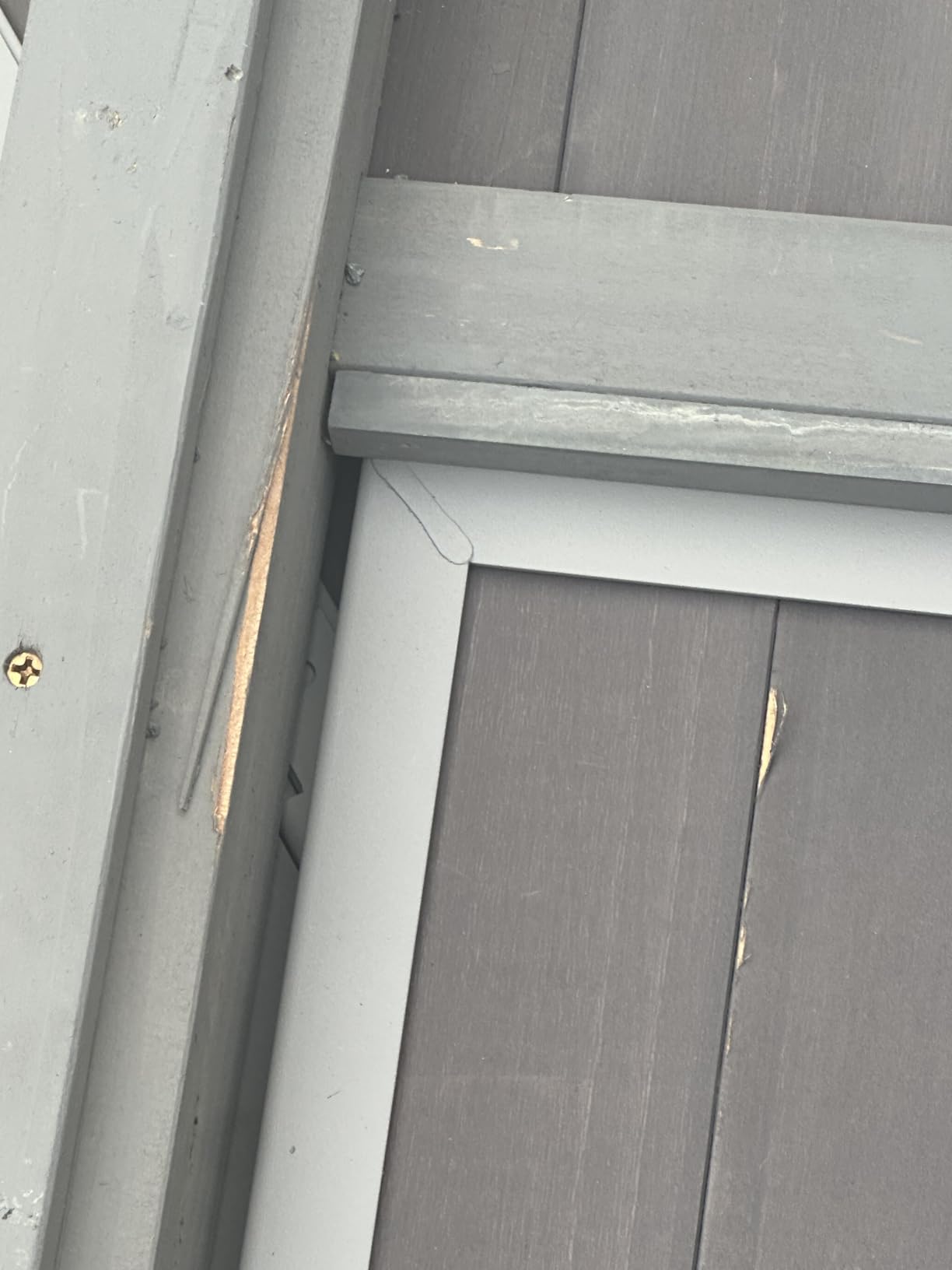
Two pull-out metal trays are the practical answer to frozen droppings. Metal does not absorb water the way a wooden base tray does, so a hot-water rinse actually works when you need to clean out mid-winter.
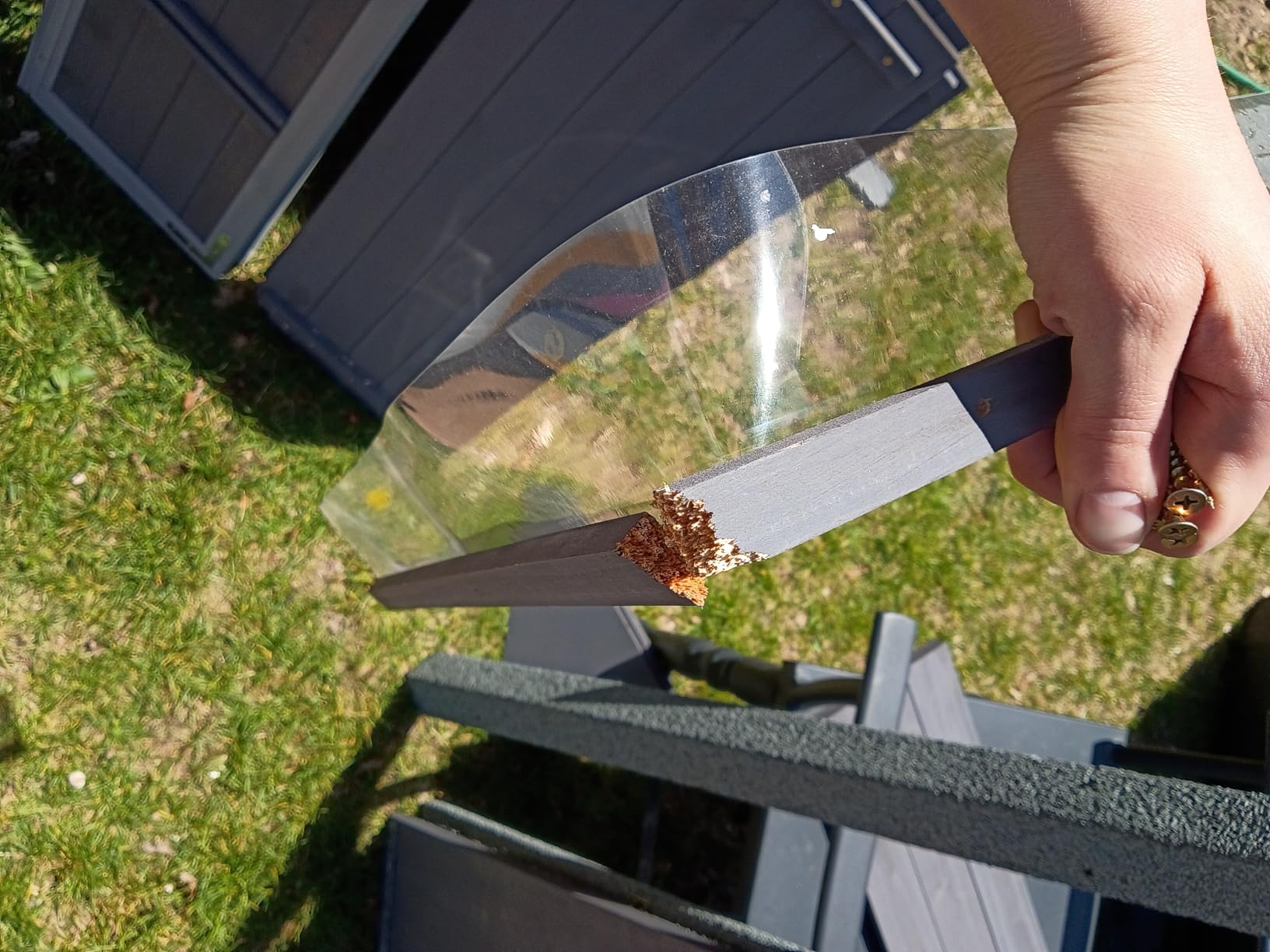
Over 26 reinforced points with corner brackets add the rigidity that keeps the frame square when snow loads the roof and then slides off, which is what separates these from lighter mobile designs.
Why it suits a larger flock
More birds means more collective body heat, and a flock of eight or more genuinely helps keep its own space warmer. That is why cold-hardy keepers pair a bigger flock with a simpler coop rather than buying more insulation.
Rotation also spreads winter wear, so birds are not standing on the same frozen ground for months, and the design works for ducks as well as chickens.
Where it falls short
The large wheels raise the whole structure, which can make the interior awkward to reach when you are cleaning, and the weight and wheel spacing make it awkward to turn on uneven ground.
Because it is a mobile design, the ground area under it is left bare and needs rotating, and at 68 by 41 inches you need real space in the yard to move it without it jamming.
What Actually Keeps Chickens Warm in Winter
Chickens make their own heat, huddle together and are far tougher than they look. A fully feathered hen is comfortable well below freezing as long as she is dry, still and out of the wind. Almost every problem attributed to cold in a coop is really a moisture, draft or crowding problem wearing a cold coat.
Here is the order that works, and it is the order we recommend for any of the ten coops above.
Eliminate drafts at roost level. Walk the perimeter in the afternoon and feel for cool air along wall seams, roof joints, the door edge and the pop-hole. Weather-strip and caulk those. Cold air moving over roosting birds all night is the most common cause of frostbitten combs.
Leave high vents open year-round. Target roughly 10 to 15 percent of your total wall area open, with those openings above roost height so warm, moist air leaves before it settles on the birds. Seal the lower walls instead. A sealed-tight coop in winter is how you get condensation, ammonia and respiratory illness at once.
Run deep litter. Start with four to six inches of bedding, add a couple more inches of fresh material every couple of weeks, and let the birds turn it. The composting litter is what actually warms the floor, and it keeps the air above it drier rather than damper.
Seal or raise the floor. A floor touching frozen soil conducts cold straight up and wicks meltwater into the bedding. The GUTINNEEN coops and the plastic Hatching Time unit handle this best out of the box; on wooden kits, raise the coop on blocks.
Keep water from freezing without adding humidity. Put the heated waterer outside the coop if you can. Water inside the sleeping area raises humidity and the humidity is the problem you are trying to avoid.
Keep a minimum flock size. Four to six birds is the smallest group generating meaningful collective heat, and more birds tolerate colder temperatures. A single hen needs a companion regardless, so this one costs you nothing.
Insulation Materials and R-Values That Hold Up in Freeze-Thaw
Insulation in a coop is not about keeping the air warm, it is about slowing how fast heat leaves the building so the flock’s own heat can do the work. That is why R-value matters less than most product pages imply, and why material choice matters more.
Expanded polystyrene (EPS). The most common panel by a wide margin, inexpensive and easy to cut. Its nominal R-value per inch drops noticeably as the temperature falls, because the still air pockets inside it start conducting more. Fine on a wall, less impressive on a ceiling where heat rises straight into it.
Polyisocyanurate (polyiso). Higher R-value per inch and far less temperature-sensitive than EPS, which is why it holds its rating deeper into a hard freeze. Also the most expensive of the three and the most awkward to cut without the right blade.
Extruded polystyrene (XPS). Sits between the two on cost and outperforms EPS on moisture resistance. Its closed-cell structure resists the freeze-thaw cycling that degrades cheaper panels over a few winters.
The practical takeaway: insulated walls help, but they only help if you can still ventilate high and seal low. A tightly insulated, badly vented coop kills more birds in January than an uninsulated one that breathes properly. Insulation is the third item on the list, not the first.
One more material warning from forum discussions. Loose foam beads and spray foam gaps inside a coop give rodents an easy nesting route, and a mouse that reaches your nesting boxes will take your laying flock with it. Cover any foam you use with solid trim or hardware cloth.
Match Your Coop to Your USDA Hardiness Zone
Matching a coop to your USDA plant hardiness zone is the fastest way to narrow this list down. The zones describe how cold your winters get, which is what drives the decision between an enclosed plastic shell and a covered run.
Zones 3 to 4. Northern Minnesota, North Dakota, much of Ontario and Quebec. Choose a fully enclosed structure, prioritize a sealed raised floor and hardware cloth at ground level, and plan to lose some snow days where your birds cannot go outside. The Hatching Time Snap Lock is the fit here because plastic does not rot and its vents adjust.
Zones 5 to 6. Upper Midwest, northern New England, the Great Lakes edge. A sealed wooden coop plus a covered run works well. Cedar holds up better than pine, and any fir or pine kit on this list needs sealing and painting before the first frost. This is the zone where the covered runs on our list earn their keep.
Zones 7 to 8. Occasional hard freezes rather than sustained deep cold. Most owners do fine with a well-ventilated wooden coop, a deep litter floor and a covered run for mild days. Heat lamps are unnecessary and, as we cover below, genuinely risky.
Beyond the zone number, two local factors change the answer. Persistent humidity, which is common near large bodies of water and in Ontario, pushes you harder toward ventilation and sealed floors than the zone alone suggests. Persistent wind pushes you toward a coop with a lower profile and fewer gaps.
Winter Predator-Proofing, Frozen Water and Heat Lamp Safety
Snow changes predator pressure more than it changes temperature. A weasel that cannot reach a buried run in July can tunnel six inches under fresh powder in January and come up inside your bedding, so the ground line is where winter hardening actually happens.
Run hardware cloth 24 inches up from the ground line and 12 inches outward as a skirt, or bury it, and drive the top edge flush to the frame. Fill gaps under doors with a flexible brush or strip curtain that still blocks sightlines. Replace sliding bolt latches with carabiners or screw-eye latches, because a raccoon works a sliding bolt in minutes. Add a roof rake or angled top so snow does not form a ramp to an open pop-hole. Check the coop door closes fully every night rather than assuming it did.
For water, a heated waterer or a heated dog water bowl outside the coop is the community fix and it works. Keep it outside the sleeping area, because the humidity a waterer adds indoors is a frostbite risk in exactly the conditions you are trying to manage. Never use a heat lamp over water.
On heat lamps, the consensus on keeping forums is blunt. Several owners advise against them outright because coops are dusty and dry, which is exactly the condition where a heat lamp ignites bedding. If you decide to use one anyway, mount it with a proper clamp and guard well above the birds and well away from the roost, use the correct bulb for the fixture, and keep a clear path for the birds to move away from it. Many keepers switch to a low-wattage white bulb rather than a red one for the same reason, since birds sleep better in the dim light.
Frostbite treatment is straightforward if you catch it early. It shows as black or white patches on combs and wattles. Warm the bird slowly, never rub the tissue, and apply petroleum jelly to protect the area. Deep tissue that turns black or develops swelling is a reason to call a poultry-savvy veterinarian rather than to wait it out.
How to Winterize a Chicken Coop You Already Own
If your existing coop is solid, retrofitting it will beat replacing it. Most owners who winterize rather than buy new keep the same coop for years.
Seal first. Run weather-strip around the door and pop-hole, and caulk every wall and roof seam you can reach from inside. Do not seal the vents.
Then line the interior with a washable, non-porous surface such as plywood or a roll of plastic sheeting, which stops damp wood holding moisture against the birds and lets you hose the walls clean in January.
Add insulation to the walls and ceiling while leaving the vent area open. Secure it against rodents with trim or mesh.
Replace round perches with wide flat roosts, using 2x4s with the 4 inch side facing up. This is the single highest-return change for preventing frostbitten feet.
Fix the floor. If you cannot raise the coop, add a sealed platform inside on top of the existing floor, and make sure the deep litter cannot get under it.
Harden the perimeter with hardware cloth and a ground skirt before the first snow, because installing it in January is miserable.
Finally, check your breed mix. Cold-hardy birds with small combs like Wyandottes, Orpingtons, Australorps and Chanteclers carry far less frostbite risk than breeds with large single combs, and pairing them with a properly vented coop is most of the battle.
Frequently Asked Questions
How cold is too cold for chickens in their coop?
There is no single number, because a fully feathered hen that is dry and out of the wind handles temperatures that would hurt a wet bird badly. Community experience suggests flocks are comfortable down around 20F without trouble and can survive lower readings when shelter is right. The number that actually matters is wind chill on a wet bird, so judge your coop by drafts and dampness rather than by the thermometer.
Can chickens survive winter without heat?
Yes. Chickens generate their own body heat and huddle together, and a flock of four or more produces enough collective heat to stay comfortable in a properly built coop. The job of the coop is to keep birds dry, still and out of the wind, not warm. Supplemental heat is only ever a backup when something has gone wrong with the shelter itself.
Do chickens need a heat lamp in the coop?
Most keepers say no. A dry, draft-free roosting area with ventilation above roost level is safer than a lamp, and coops are dusty enough that a heat lamp is a real fire risk. If you do run one, clamp it properly, guard it well above the birds and roost, and keep open space so birds can move away from it. Watch for frostbite instead, which shows as black or white patches on combs and wattles.
What is the warmest bedding for chickens in the winter?
Deep litter is the warmest bedding approach, because the composting litter generates its own heat. Start with four to six inches, add a couple more inches of fresh material every couple of weeks and let the birds turn it. Straw, coarse shavings and spent bedding from a previous batch all work well. Clean bedding that is only an inch deep gives you a cold floor and very little moisture control.
What kind of chicken coop is best for Canadian winters?
Pick for humidity as much as temperature, because Ontario and Quebec keepers consistently report dampness rather than raw cold as the bigger problem. A fully enclosed structure with a sealed raised floor and hardware cloth at ground level is the safest choice, and plastic bodies hold up better than wood. Keep high vents open year-round, run deep litter, and put water outside so you are not adding humidity indoors.
How do I stop drafts in a chicken coop without stopping ventilation?
Seal low and vent high. Walk the coop in the afternoon and caulk or weather-strip any seam where you feel cool air moving, especially the door edge, pop-hole and roof joints. Then leave vents open above roost height, aiming for roughly 10 to 15 percent of total wall area open. Cold air flowing over roosting birds all night is the usual cause of frostbitten combs.
The Verdict for Best Chicken Coops for Cold Weather in 2026
The best chicken coops for cold weather are the ones that keep air moving, keep water out of the bedding and keep predators out of the ground line. The Hatching Time Snap Lock 4-6 is our pick for Zones 3 through 6 because plastic simply does not rot, its vents adjust and its litter tray makes deep litter manageable through weeks of freezing weather.
If your winters are moderate and you want daylight space more than you want an enclosed shell, the CHIKENCOOP and VEVOR covered runs handle snow and wind well and leave ventilation wide open. For small backyard flocks that need a coop rather than a run, the Petsfit is the better-looking option and the Ketive in cedar will outlast the pine kits.
Whatever you choose, seal the drafts low, leave the vents open high, run deep litter, keep water outside and replace narrow round perches with wide flat roosts. Those five steps do more for a winter flock than any insulation product.