
An automatic chicken coop door is a small motorised pop door that opens and closes your flock’s entrance on a timer, a light sensor, or a command from your phone. It removes the two daily trips to the coop, and more importantly it secures the most common predator entry point on a schedule that does not depend on you remembering to latch it before bed.
The best overall pick in our roundup of the best automatic chicken coop doors is the RUN-CHICKEN Door T50. It runs on two AA batteries, mounts with six screws, and carries the deepest review history of any door we looked at, with 2656 ratings behind it. It suits almost every backyard flock that needs a door that just works in any weather.
Below we compare twelve units on the things that actually decide whether a door survives a real winter: opening size, power source, how many ways it can be triggered, and what its safety system does when a hen is standing in the way. We also cover the failure modes keepers report most often, and how to train your flock to come in before the door shuts.
Table of Contents
Top 3 Automatic Chicken Coop Doors (October 2026)


NyPots Solar Coop Door
- Solar plus USB backup
- three modes
- remote control
- 8.2 x 9.6 in opening

OKKOBI Solar Coop Door
- 2000mAh battery
- USB-C backup
- anti-pinch auto-reverse
- 5-year protection plan
How These Automatic Chicken Coop Doors Compare in 2026
Every door below does the same basic job, so the useful comparison is not brand versus brand. It is opening size against your birds, power source against your climate, and trigger modes against your schedule. The Check Latest Price button on each row gives you current pricing.
| Product | Specs | Action |
|---|---|---|
| RUN-CHICKEN Door T50 |
|
Check Latest Price |
| NyPots Solar Coop Door |
|
Check Latest Price |
| OKKOBI Solar Coop Door |
|
Check Latest Price |
 FarmLite Automatic Coop Door FarmLite Automatic Coop Door |
|
Check Latest Price |
 CHAMUTY Camera Coop Door CHAMUTY Camera Coop Door |
|
Check Latest Price |
 INNOLAND FO-006 Large Size INNOLAND FO-006 Large Size |
|
Check Latest Price |
 AsFrost Solar Coop Door AsFrost Solar Coop Door |
|
Check Latest Price |
 INNOLAND SP-003 Horizontal Slide INNOLAND SP-003 Horizontal Slide |
|
Check Latest Price |
 FabStyl XL Solar Coop Door FabStyl XL Solar Coop Door |
|
Check Latest Price |
 AdorStore ADOR1 Steel Door AdorStore ADOR1 Steel Door |
|
Check Latest Price |
 Azureblom J102 Camera Door Azureblom J102 Camera Door |
|
Check Latest Price |
 RUN-CHICKEN Door Eternal RUN-CHICKEN Door Eternal |
|
Check Latest Price |
Key Features to Look For in an Automatic Chicken Coop Door
Four criteria separate the doors that work from the doors that end up sitting in a shed. Check these before you read a single product page.
Obstruction detection with auto-reverse. The motor should stop and lift the door back up when it meets resistance, so a hen standing in the opening is not cut off or crushed.
A power source matched to your climate. Solar, battery, or plug-in each fail differently. Cold weather drains alkaline cells faster than the box suggests.
At least two trigger modes. A timer plus a light sensor gives you a fallback when one misreads a dark, stormy afternoon.
An opening larger than your biggest bird. Measure the tallest hen you own and add a couple of inches, rather than trusting the listed figure.
Everything below in this roundup was judged against those four criteria, using the published specifications and the patterns that show up repeatedly across thousands of owner ratings.
1. RUN-CHICKEN Door T50: Best Overall Automatic Chicken Coop Door
RUN-CHICKEN Door T50 – Automatic Chicken Coop Door Opener, Battery Powered & Weatherproof Aluminum, Smart App & Timer Control, Predator Proof, Easy Install, Reliable All-Season Performance (Gray)
2 AA batteries included
Aluminum body, 2 lb
13.8 x 9.5 x 1.3 in
Rated -15F to 140F
1-year warranty
Pros
- Installs in minutes with six screws
- Light-sensor mode tracks dawn and dusk without rescheduling
- Some owners report 2-3 years between battery changes
- Aluminum shows no rust or fading after years outdoors
- Support has replaced failed drive units free of charge
Cons
- Drive motor failure reported between roughly 6 months and 3 years
- Exterior manual override can be pressed by raccoons if mounted inside the run
- Track can freeze during freeze-thaw cycles
The T50 is the door we recommend to most people, and the reason is boring rather than exciting. It does the same four things a good pop door should do, and it has been doing them for years, which gives it by far the largest body of long-term owner feedback in this group.
When we weighed these doors, we scored installation effort, power independence, and cold-weather behaviour above screen features. The T50 mounts with six screws and no wiring, which means you can add one to a finished coop in an afternoon without taking anything apart.
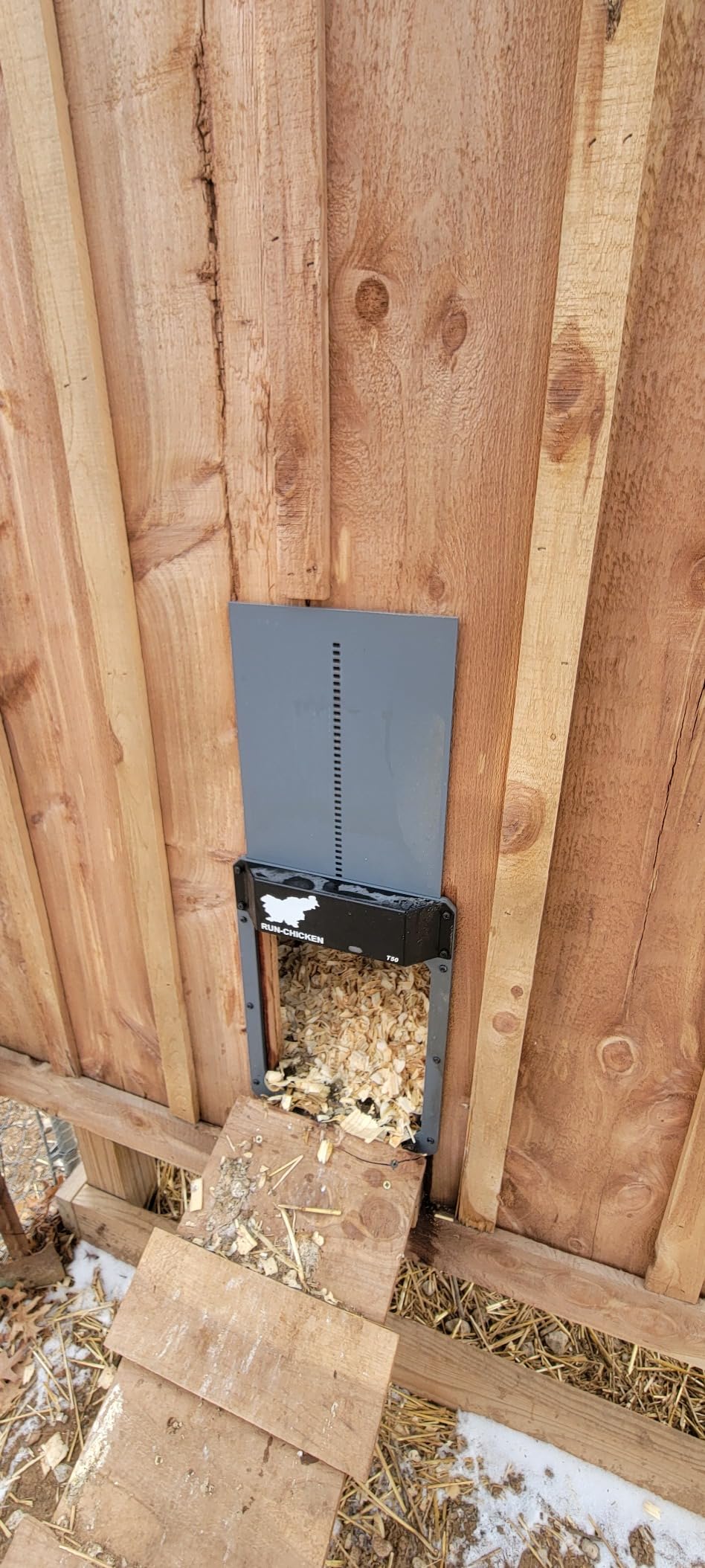
Owners repeatedly describe the light-sensor mode as the feature they forget about because it just works. Sunrise and sunset shift by nearly an hour twice a year in most of North America, and a timer set in spring is wrong by autumn. The T50 tracks the change on its own. Two AA batteries are included, and owners commonly report two to three years between changes, dropping toward a year in cold weather.
The build is weatherproof aluminum, tested from -15F to 140F, and reviewers with several seasons of use report no rust and no fading on the housing. That is the reason this door leads a list that includes plenty of cheaper plastic-bodied alternatives.
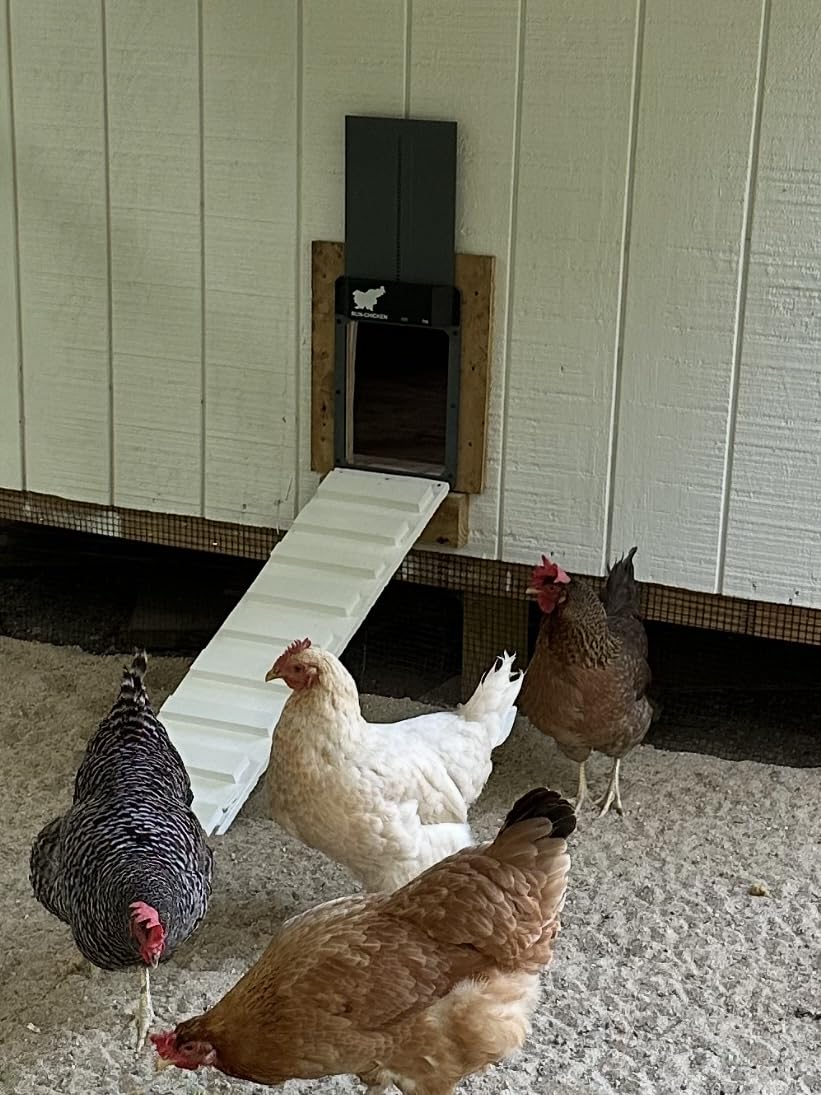
Reliability is the one real caveat. A minority of owners report drive motor failure somewhere between six months and three years, which is a fair description of the category as a whole rather than a flaw unique to this model. On Trustpilot, Run-Chicken has roughly 1783 ratings averaging 4.2, and owners there describe running the door in a dirt-floor coop environment for close to two years.
What you should know before buying the T50
Measure your pop hole before you order. The unit is 13.8 by 9.5 by 1.3 inches and fits over a standard opening, but the motor unit itself sits on the outside of the coop, so the controls are exposed to weather and reachable from the run side. If the manual override button faces into the run, think about that before mounting.
The exterior manual override button is the feature most likely to be criticised by keepers with predator pressure. A raccoon that learns to press it can open the door from outside the run. Keeping the motor unit mounted so the button is not reachable from the run side, or adding a guard, resolves it.
Who the T50 suits and who it does not
Pick the T50 if you want a door that installs fast, runs on batteries you can change with no tools, and never asks you to reset a schedule. It suits owners who free-range their flock, since the light sensor closes the door on its own at dusk without anyone counting heads.
Look elsewhere if your winters are severe and your coop is unheated, or if you want a camera to confirm what is happening at the door after dark. Those are the two scenarios where one of the units below handles the problem more directly.
2. NyPots Solar Coop Door: Best Value Pick
NyPots Automatic Chicken Coop Door Solar Powered with Timer & Light Sensor
Solar plus USB charging
1.57 lb, aluminum alloy and ABS
9.6 x 1.6 x 13 in
8.2 x 9.6 in opening
Pros
- Solar panel charges in indirect light and cloudy weather
- Installs in about 10 minutes
- Light-level thresholds adjustable as daylight changes
- Remote works from roughly 20 yards
- Opening wide enough for several birds at once
Cons
- Anti-pinch needed more force than expected to trigger
- One owner reported a mid-day close that would not respond to commands
- Opening measures smaller than the listed figures suggest
The NyPots CD04 is the door we reach for when a keeper wants solar power without giving up the features that make a door usable day to day. It carries a lithium ion cell, a USB charging cable, and an LCD screen that shows your programming parameters instead of hiding them behind a code sequence.
Solar is the main reason this door appeals to off-grid and vacation-minded keepers. The panel keeps charging through indirect light and overcast days, and the included cable lets you top it up indoors during a long stretch of bad weather. Nothing about the setup needs a wall outlet or a buried cable run.
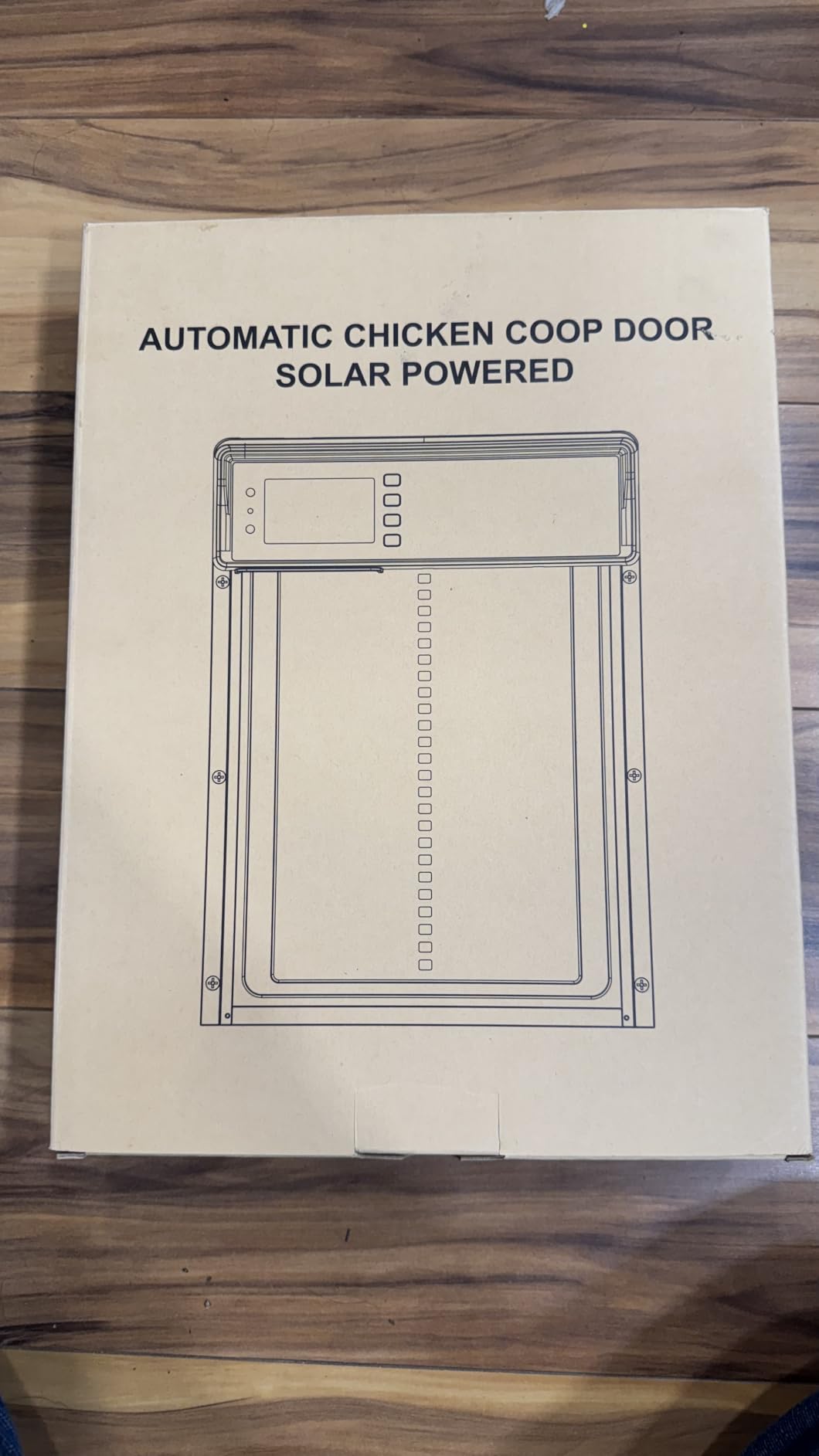
Three operating modes are available, including manual, alongside timer, light sensor, and a remote control that reaches roughly 20 yards. That is enough range to close the door from a window or a patio chair. For most flocks, the adjustable light thresholds matter more than the remote, because you can match the trigger to your property’s actual shade line and stop chasing schedule changes all year.
The construction is aluminum alloy and ABS, and the stated opening is 8.2 inches wide by 9.6 inches high, sized for poultry under 10 lbs including ducks, geese, and rabbits. Turkeys are outside that range, so this is not the door for a flock with a tom turkey in it.
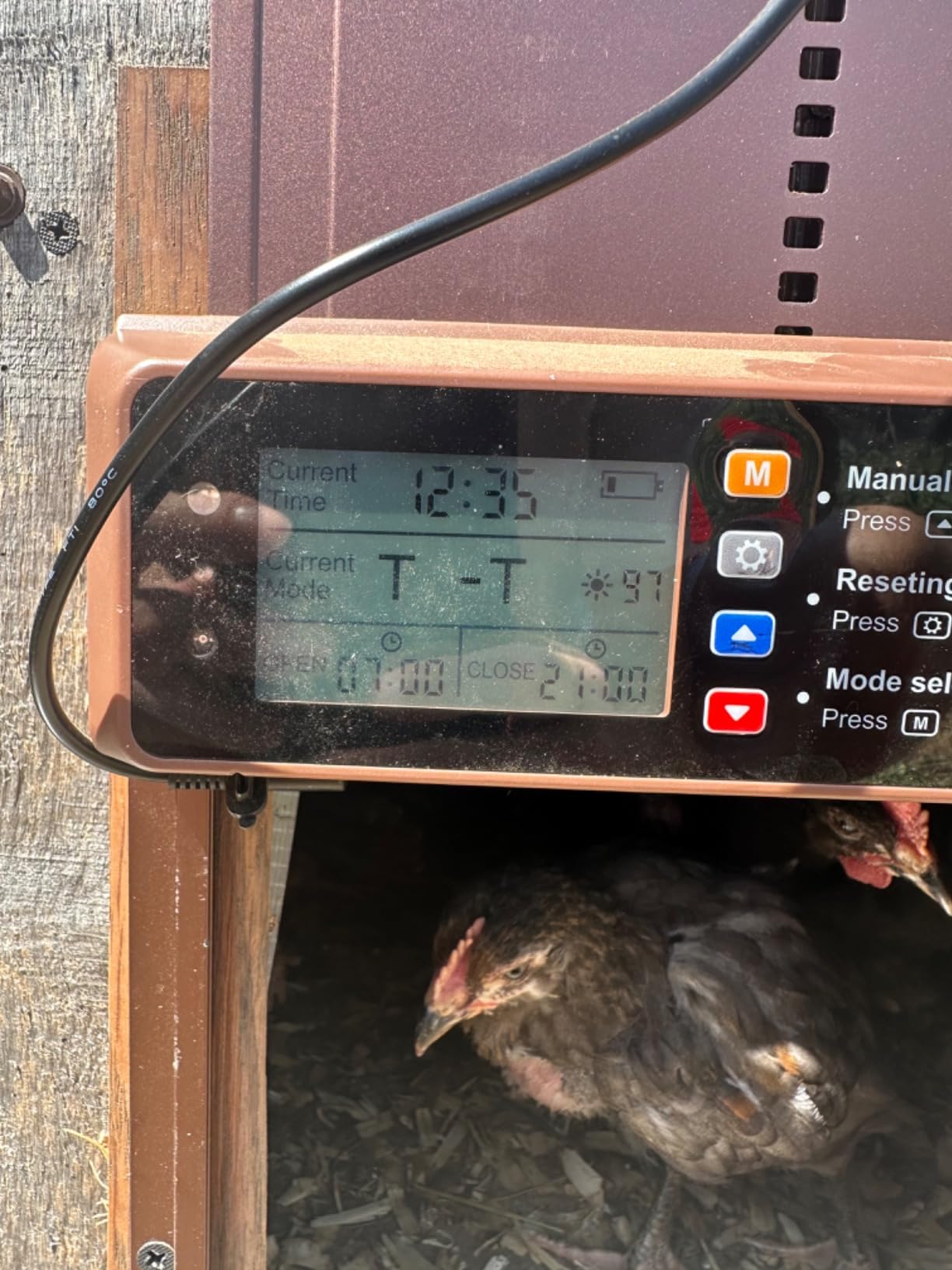
The most substantive criticism concerns the anti-pinch sensor. The door bounces back for ten seconds when it detects resistance and beeps if it has not fully closed, but owners report needing more force to trigger it than they expected, which raises fair questions about whether a light bird is detected reliably. A second recurring reservation is that the usable opening feels smaller in practice than the published 8.2 by 9.6 inches suggests.
Choosing between the two cheaper solar doors
This door and the OKKOBI unit below are close alternatives, and the difference is mostly in battery storage and warranty length. The NyPots uses a lithium ion cell and a USB cable; the OKKOBI uses a 2000mAh internal battery, USB-C, and carries a five-year protection plan. If you want the longer coverage, take the OKKOBI.
If you want the larger LCD and the remote, the NyPots is the pick. Neither door is sized for turkeys, and both open to roughly the same area, so measure your birds before choosing on features alone.
Where the solar approach gets tested
Solar’s weak point is a long stretch of short winter days with heavy cloud cover, when the panel generates less than the motor consumes. Owners running this door in genuinely dark winters generally keep the USB cable within reach as insurance, and lithium cells behave better in cold than alkaline ones.
For most climates this is a non-issue. The panel is described as charging reliably without direct sun, so the door is best suited to coops with a few hours of unshaded daylight and a reasonable chance of seeing the sun at all in December.
3. OKKOBI Solar Coop Door: Best Budget Solar Opener
Chicken Coop Door, Light Sensor, Solar Powered Automatic with LCD Display
2000mAh internal battery
Solar panel and USB-C cable
Aluminum alloy, 1.52 lb
9.6 x 8.2 in opening
Pros
- Metal and steel-style construction feels stronger than plastic-bodied rivals
- Holds charge for weeks including through an all-cloudy week
- Programming is self-explanatory and adjusts as daylight shifts
- Quick replacement service when a door failed
- Large opening that comfortably fits full-size chickens
Cons
- Track can jam when rain splashes dirt into the rails
- Can lock up from ice in freezing conditions
- Some reports of the timer resetting on its own
The OKKOBI door wins the budget slot because it sits at the low end of the price range while still giving you a real battery, a USB-C backup cable, and a five-year protection plan. Most doors at this level either drop the secondary charging path or wrap the warranty at a year.
The 2000mAh internal battery is the specification that matters most here. Owners report the door holding a charge for weeks at a time, including through a full week of overcast weather, and that is with the solar panel carrying most of the load day to day. The panel charges the internal cell, and the USB-C cable gives you a way to recover a long run of bad weather.
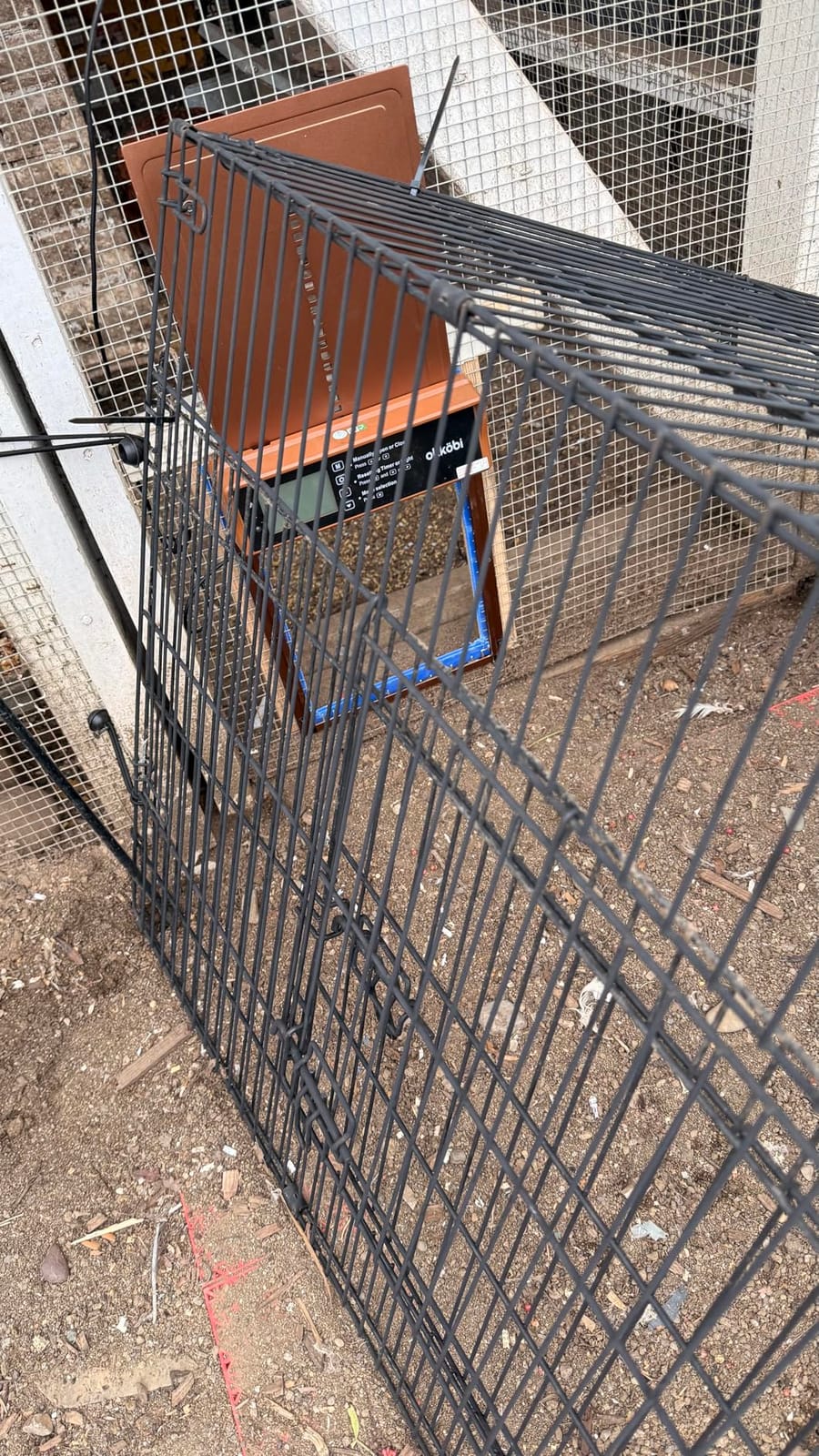
A large LCD shows real-time status and allows remote adjustment, which makes this one of the easier doors to program from scratch. Set a timer, or switch to the built-in light sensor for sunrise and sunset automation, and adjust the threshold as the season changes. The process is self-explanatory enough that most owners do it without the manual.
The housing is aluminum alloy and weather-resistant ABS, rated from -14F to 140F, and at 1.52 pounds it is light enough to mount on a thin wall without bracing. The 9.6 by 8.2 inch opening comfortably fits full-size chickens, which is a step up from the 8.2 by 9.6 unit further up the list when the taller dimension matters.
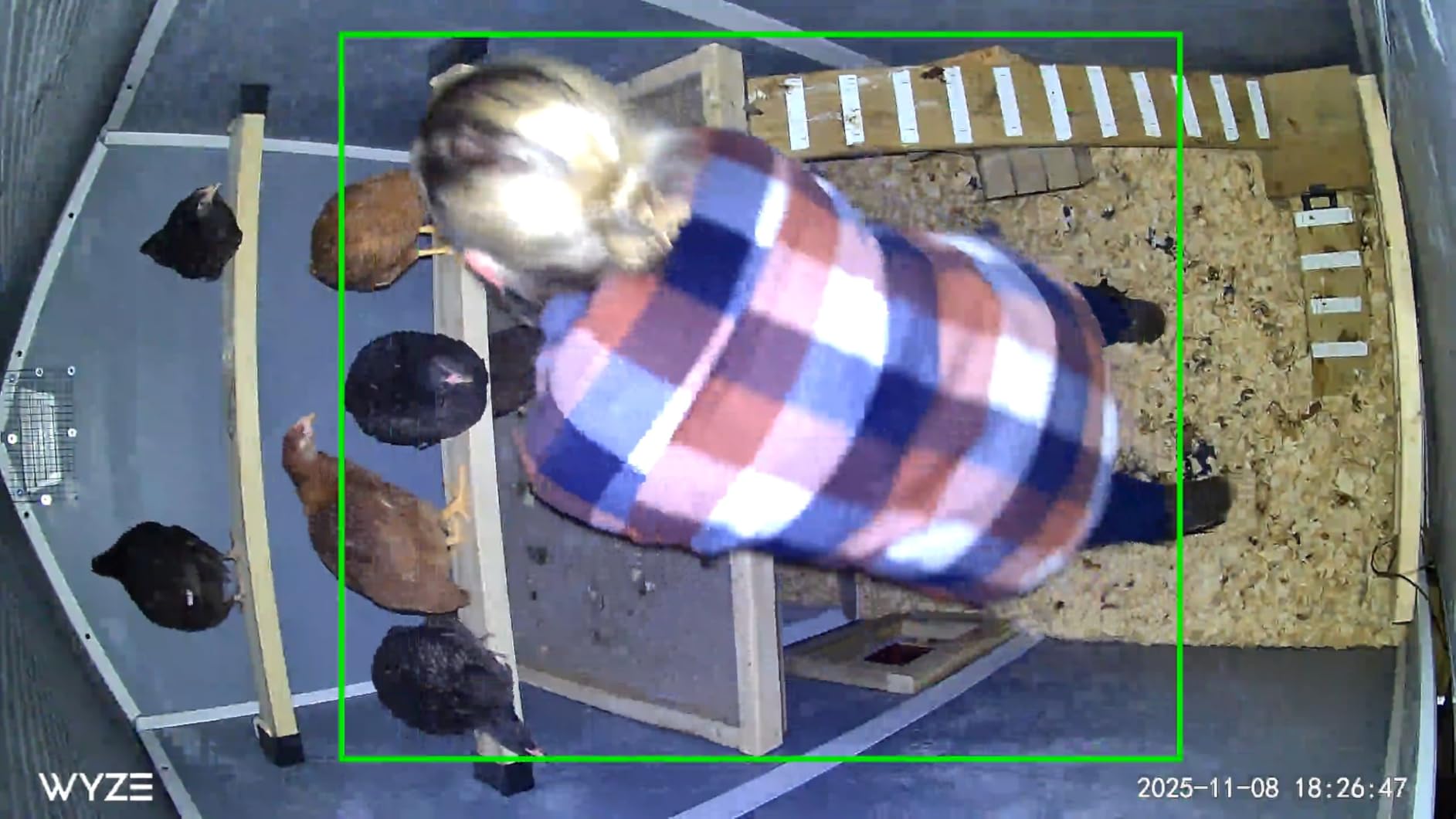
The complaints here are mechanical rather than electrical, and mechanical problems have a fix. Dirt thrown up into the rails by rain, ice locking the door in winter, and the occasional jam that clears with a shot of lubricant on the sliding bar are all things you address with a seasonal clean rather than a replacement. A smaller number of owners report the timer resetting on its own or the motor dying within a couple of months.
The maintenance routine this door needs
Two minutes at the start of each season is enough. Wipe the rails, run the door open and closed a dozen times by hand, and check that the anti-pinch system still reverses when you press a soft object against the closing edge. That test catches most problems before they leave a hen outside at dusk.
If your coop sits under trees or you get driving rain from one direction, angle the coop so splash goes away from the opening. A drip edge above the door removes most of the dirt-in-the-rails problem that owners report on this model.
Who this door is right for
It suits first-time buyers who want solar power and a warranty longer than a year without paying for a camera or an app. It also works well for a flock of standard hens kept in a run, where the opening size is comfortable and the flock is small enough that a single opening does not create a bottleneck.
Skip it if your winters bring sustained freezing conditions and you are not willing to clear ice from the track, or if your birds include turkeys, which exceed the under-10-lb sizing this class of door is built around.
4. FarmLite Automatic Coop Door: Best With a Safety Motion Sensor
FarmLite Automatic Chicken Coop Door Opener | Non-Battery Powered Automatic Chicken Door | Automatic Coop Door with Timer and Light Sensor | USA Brand
Infrared motion sensor
Timer or light sensor
3 lb weather-resistant body
Rough opening 10.5 x 8.5 in
Pros
- Infrared sensor adds a safety layer for late-returning birds
- Timer and light sensor both available for scheduling
- American-owned brand with direct support
- Weather-resistant construction
Cons
- 12V solar setup sold separately and not included
- Installation requires cutting the opening to about 10.5 x 8.5 in
The FarmLite is the only door in this roundup that holds the panel open until birds have actually entered, using an infrared motion sensor to detect birds at the opening before the close sequence begins. Every other unit here closes on a timer or a light threshold and relies on the flock to be inside already.
That single feature addresses the problem keepers raise most often, which is stragglers locked out overnight. A hen that is still walking up the ramp when the door reaches the bottom is what turns a convenient automatic door into an emergency trip out to the coop in the dark.
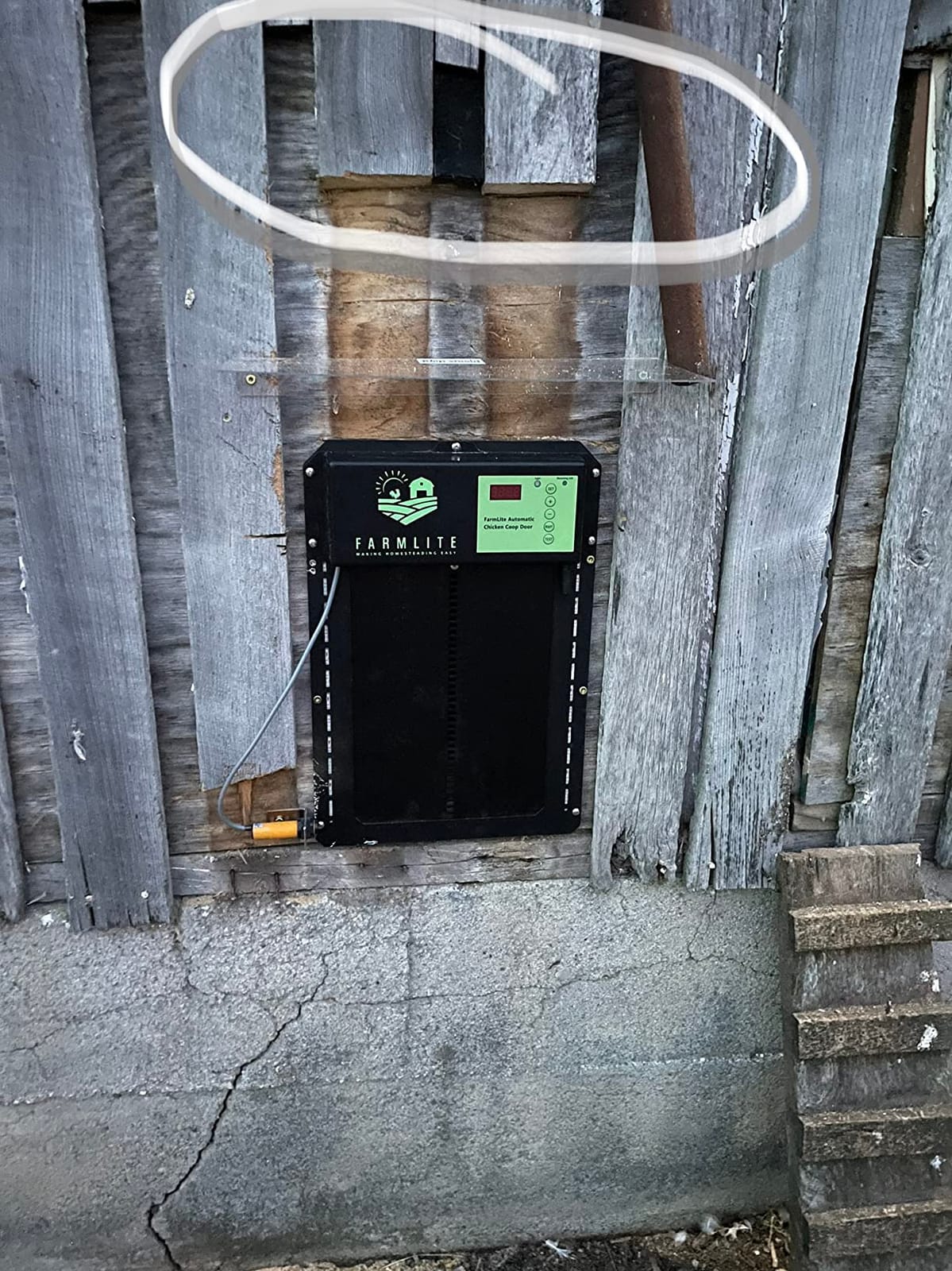
Both trigger modes are offered. A timer gives you fixed open and close times, and the light sensor handles sunrise and sunset automation so the schedule follows the season. Reviewers consistently praise having both, because it means a misreading sensor does not leave your flock locked in or out all day.
This is an American-owned brand, and direct customer support is one of the things reviewers mention most often. That matters more than it sounds. When a control panel or motor fails two winters in, the difference between a replacement arriving and a support inbox that never replies is the difference between an inconvenience and a lost flock.
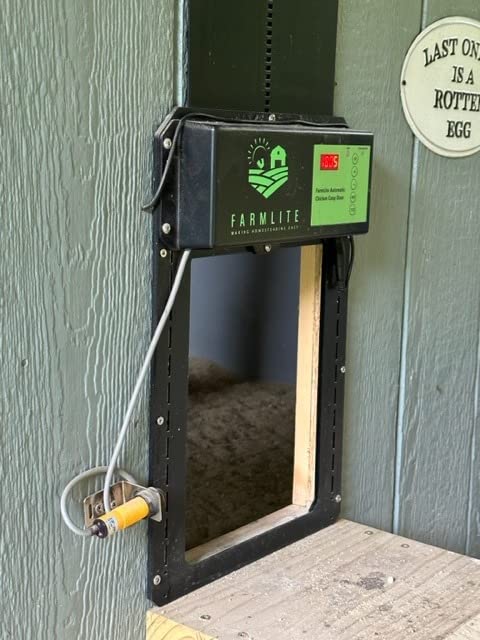
Two practical notes. The 12V solar setup is a separate purchase, not included with the unit, so budget for it if your coop has no outlet access. And the stated rough opening is approximately 10.5 inches tall by 8.5 inches wide, which means you may need to cut the coop opening to fit rather than mounting over an existing pop hole.
What the infrared sensor does and does not do
The sensor holds the door open while birds are present at the opening, which is genuinely useful at dusk when your flock is trickling back in. It is not a guarantee that every bird made it, and it does not detect a predator the way a camera-equipped unit does. Treat it as a delay built into the close sequence rather than a complete answer to the lockout problem.
Pair it with a close-delay setting if the unit offers one, and train your flock to roost before the trigger point. Together those two habits handle nearly every straggler case.
How this compares to the camera doors
If your real problem is not knowing what happens at your door after dark, a camera unit below answers that directly. The FarmLite gives you a safer close sequence with far less setup, no app, and no account to create.
For a keeper travelling regularly, the appeal is that you can hand the coop to a neighbour or a chicken sitter without leaving a key question unanswered. There is nothing to configure remotely and nothing to go wrong in an app you forgot about.
5. CHAMUTY Camera Coop Door: Best Automatic Chicken Coop Door With a Camera
Automatic Chicken Coop Door with Camera, WiFi App, 5000mAh Solar Powered
1080P HD night vision camera
7W solar and 5000mAh battery
4.74 lb roll-up design
PIR motion alerts
Pros
- Aluminum-feel construction operates reliably
- Tool-free battery swaps
- LCD makes timer and light-level adjustments straightforward
- Anti-pinch described as working as intended
- Roll-up panel lets small breeds and larger hens pass easily
Cons
- Light sensor can be unreliable in rain or snow so timer mode suits better
- Initial programming takes familiarisation with the display
- Perforations mean the door is not a fully airtight seal
The CHAMUTY is the one to pick if you want to see your coop at night without getting out of bed. The 1080P HD camera has night vision and streams through the iWFCam app, so you can check the flock, confirm the door closed, and see whether anything is loitering near the opening from your phone.
Power is the strongest part of this design. A 7W solar panel feeds a 5000mAh rechargeable battery, with USB charging as a backup, and that capacity sits at the top of the range among the units here. Reviews highlight that the battery changes are simple and need no tools, which matters more than it sounds when you are doing it in the dark in February.
What the roll-up panel changes
Unlike the sliding-panel doors elsewhere on this list, this one rolls the panel up into the housing. That means it needs no swing clearance in front of the opening, which is a real advantage in a narrow run where a vertically sliding door would foul on bedding or a ramp. Owners also report that the roll-up design lets even larger hens pass without hesitating.
The trade-off is the perforations. The panel is not a fully airtight seal, so this door is better for a secure run than for a coop where you need a draft-tight closure. Rain and blowing snow reach the opening to some degree.
Timer mode versus the light sensor here
The most common advice in owner reviews is to run this door on the timer rather than the light sensor, because rain and snow can throw the sensor off and close the door at the wrong time. The LCD makes either choice easy to set, and the app allows custom scheduling if you want remote control as well.
PIR motion detection sends app push notifications and can trigger an alarm, so the camera serves two purposes: peace of mind, and a heads-up when something is near the door. Family members can share app access, which is useful for two-adult households sharing the coop care.
6. INNOLAND FO-006 Large Size: Best Anti-Jam Track Design
INNOLAND Large Size Automatic Chicken Coop Door – Reinforced Gear Drive
Reinforced gear drive
Three AA for up to 6 months
1.28 lb aluminum alloy
11 x 9.5 in opening
Pros
- Reinforced gear drive gives quiet reliable movement
- Simple programming with a high-contrast display
- 11 x 9.5 in opening suits chickens ducks and geese
- External gear track resists straw and mud buildup
- Twist-lock battery compartment for a one-minute swap
Cons
- Solar panel mount is flimsy and held by a single quarter-inch screw
- One reviewer found a unit that only travelled halfway and arrived seeming used
- Listings disagree on whether the included panel is 6W or 7W
The FO-006 is a recent hardware refresh, and the change that matters is the drive. A reinforced gear drive and a more powerful motor replace the setup that made earlier vertical doors feel underpowered, and reviewers describe the movement as quiet and consistent rather than strained.
The second change is the external gear track, which is positioned to reduce the straw, mud, and snow buildup that jams conventional tracks. That is the single most common complaint across vertical-door owners, and moving the gearing out of the debris zone attacks it directly. A quick-access maintenance cover with an included cleaning brush makes the periodic clean painless.
Power comes from three AA batteries, with a twist-lock compartment and a battery level indicator, and the stated runtime is up to six months. That is among the better battery figures in this group, and the twist-lock design means a swap takes about a minute rather than a trip to find a screwdriver.
The opening is 11 by 9.5 inches, which is generous for standard hens and comfortable for ducks and geese. The body is aluminum alloy rated from -14.8F to 140F, and at 1.28 pounds it is light enough for a single person to mount on a thin coop wall.
The anti-pinch logic on this one is among the most detailed in the roundup. On detecting resistance, the door lifts 3 cm, pauses ten seconds, retries three times, and then reattempts every two hours. That staged escalation means a single stuck feather does not permanently stop your door, and it keeps trying overnight rather than giving up for the night.
The solar panel bracket is the weak point
Owners consistently single out the included solar panel mount as flimsy, describing it as a single quarter-inch screw that most people reinforce on day one. The door runs perfectly well on its AA batteries; the panel is a convenience for topping up between changes, not a requirement.
There is also a small tail of negative reviews describing units that only travelled partway up or down, and one owner received a door that appeared to have been used. Check the panel and the door travel the moment the box arrives.
Who this suits
It suits keepers whose coops have straw floors, muddy runs, or snow blowing across the doorway, because the external track is built for exactly those conditions. It also suits anyone who wants a battery-only door with a six-month runtime and a large opening.
It does not suit a flock of turkeys or very large breeds, and it is not the choice if you want a camera or app control. For those, the two camera units further down handle it directly.
7. AsFrost Solar Coop Door: Best for Off-Grid Coops
Asfrost Automatic Chicken Coop Door Solar Powered Automatic Chicken Door with Timer & Light Sensor, Anti-Pinch, Durable Aluminum Auto Chicken Door, Charge with 7W Solar Panel & USB – Orange
2000mAh battery with 7W solar
USB-C charging cable
Four control modes
Aluminum alloy and ABS
Pros
- Four operating modes for schedule daylight remote and manual control
- Solar plus USB-C suits coops with no power access
- Anti-pinch lets a bird pass and then reclose
- Large display makes timing and light sensitivity easy to set
Cons
- Detailed customer review text was not returned for this listing
- Only three trigger types plus manual rather than a full app schedule
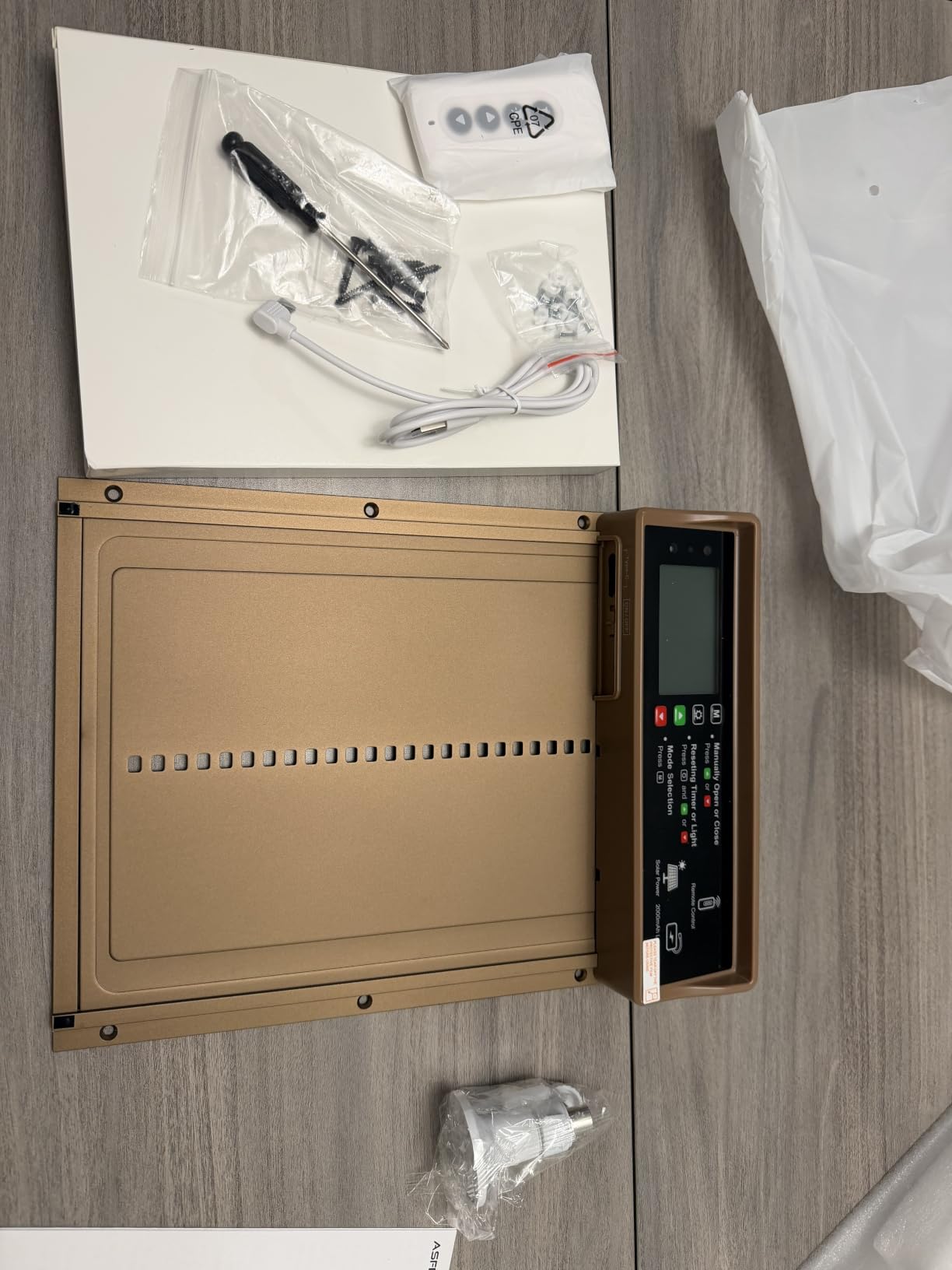
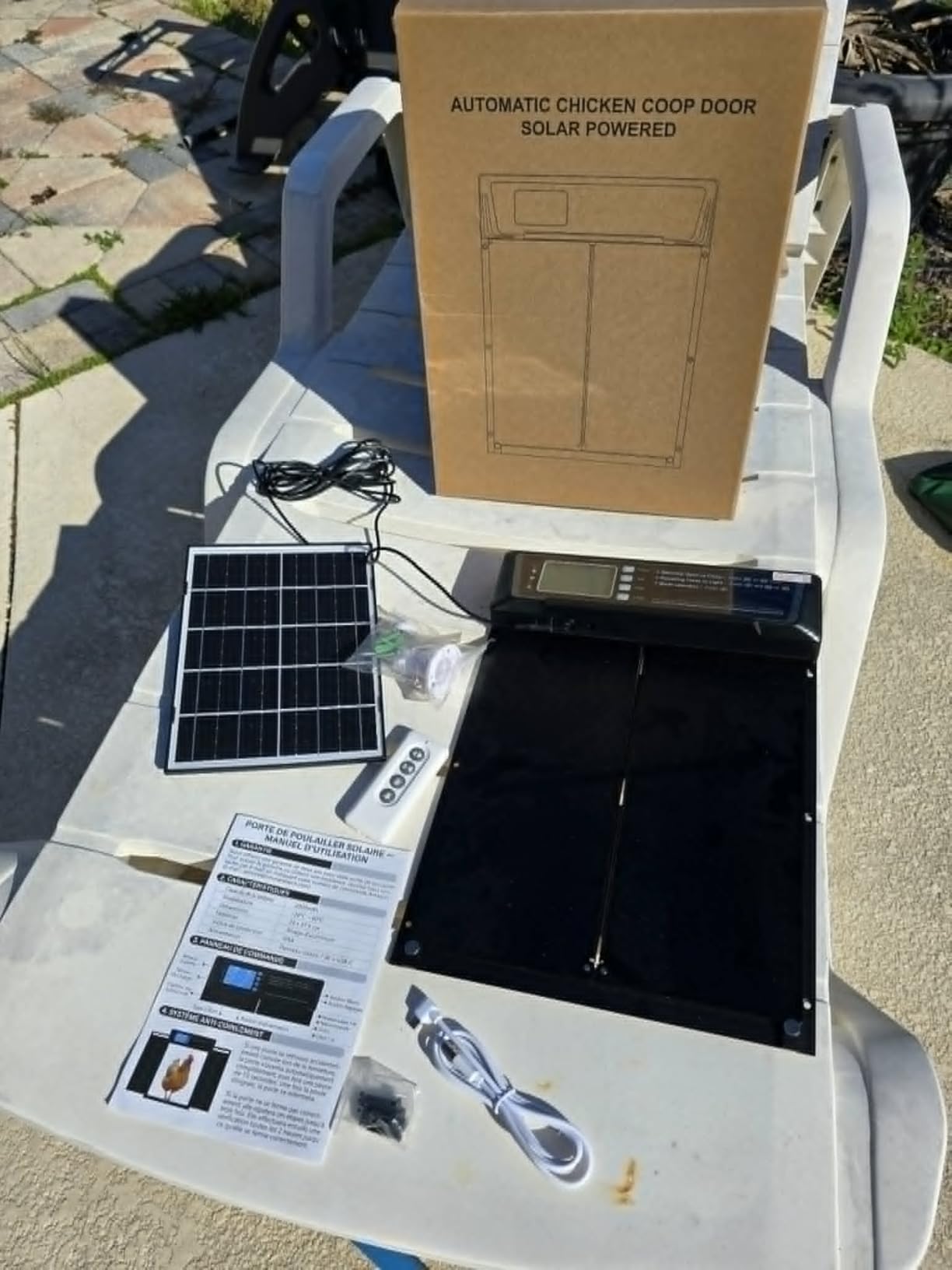
The AsFrost is built for the coop at the far end of the property, where running a cable to an outlet is not realistic. A 7W solar panel charges a built-in 2000mAh lithium polymer battery, and the included USB-C cable gives you a recovery path when the weather is bad for a long stretch.
Four operating modes is more than most doors in this price band offer: timer, light sensor, remote control, and manual. Having manual on the unit itself matters when something has gone wrong at dusk and you are standing in the dark, because you can cycle the door without a phone or a remote.
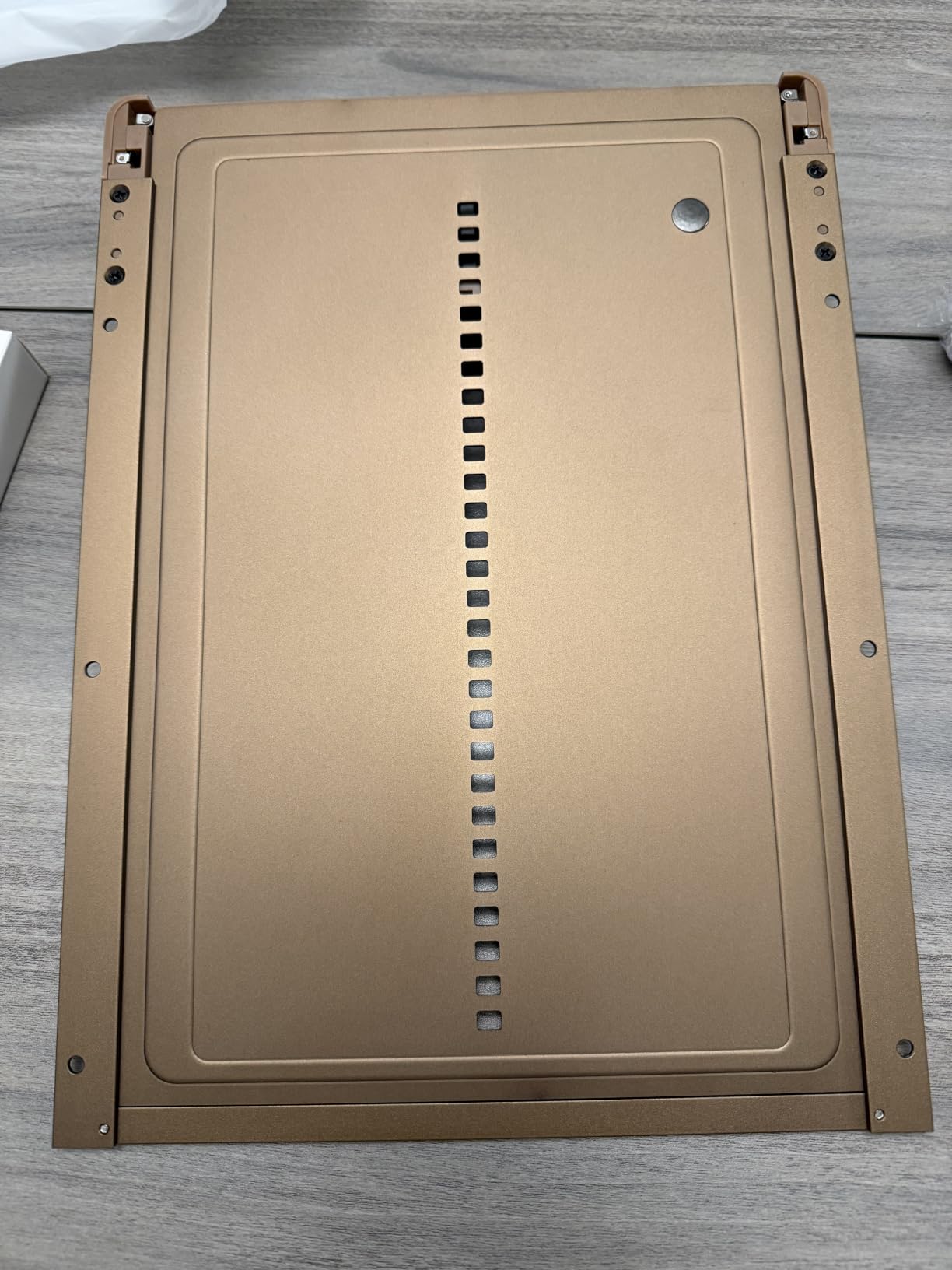
The anti-pinch function stops and reopens on detected pressure, and it beeps if the door does not fully close. That is a simpler version of the multi-stage retry logic the INNOLAND unit uses, but it does give a bird a chance to back off and clear the opening rather than holding the motor against it.
Construction is aluminum alloy and ABS, rated from -26C to 60C, and the opening is 9.53 by 8.27 inches. The stated sizing covers poultry under 10 lbs, including ducks, geese, rabbits, and turkeys, so this is one of the budget solar doors that handles a wider range of birds than most of its class.
What we can say with confidence here is thinner than for the other doors. Detailed customer review text was not returned for this listing, so the assessment rests on the aggregate rating of 4.4 across 669 ratings and the documented feature set. The rating distribution is strong, with roughly three quarters of ratings at five stars and a small share at one star.
How this compares to the other solar units
Against the NyPots and OKKOBI doors, the AsFrost adds USB-C charging and a 7W panel. The two features that set it apart are the four-mode control set including remote, and the wider bird sizing that includes turkeys.
If turkeys are in your flock and you are running off-grid, this is the door in the solar group that is explicitly built for them. For standard hens, any of the three will do the job and the differences are minor.
Setting it up off-grid
Mount the panel where it gets the longest run of unshaded daylight and angle it toward the winter sun rather than the summer sun. Winter is when the door has the least daylight to work with, and a panel aimed at the summer arc starves the battery in January.
Keep the USB-C cable indoors with the manual. A dead battery in a remote coop is a long walk, and five minutes of charging is a cheap insurance policy against a locked flock.
8. INNOLAND SP-003 Horizontal Slide: Best for Large Breeds
Large Size Automatic Chicken Coop Door Solar Powered – Timer/Light Sensor
Horizontal slide, no bottom track
11.6 x 8.6 in opening
Solar, USB-C and backup battery
Pros
- Horizontal track stays clear of bedding and debris
- Horizontal movement does not startle timid hens
- Programming is simple enough to skip the manual
- Monocrystalline panel holds charge on cloudy and rainy days
- Wide opening suits larger breeds and ducks
Cons
- One owner reports the unit stopped cycling properly after the first rain
- Solar installation bracket is the weakest part
- Sizing required frame adjustments relative to a previous wooden door
This door solves the jamming problem structurally rather than defensively. Instead of a vertical panel running in rails, it slides horizontally across the top of the opening with no bottom track at all, so bedding, grit, and small stones have nothing to jam against. Several owners say they chose this design specifically to avoid the stuck up-and-down doors they had before.
The second benefit of lateral motion is behavioural. A door that slides across the opening rather than dropping onto a hen does not startle timid birds, and owners with nervous flocks report calmer behaviour at the pop hole in the evening.
Power is triple: a monocrystalline solar panel, USB-C fast charging, and a backup battery. Off-grid users confirm the panel holds charge through cloudy and rainy days, which is the specific claim most solar doors leave untested. Four modes cover light sensor, timer, remote at 20 metres, and manual.
The opening is 11.6 by 8.6 inches, wider than any other vertical unit here, and it is specified for breeds up to 20 lbs and for low-roof coops where vertical clearance is tight. Pre-drilled holes mean installation is reported at under three minutes.
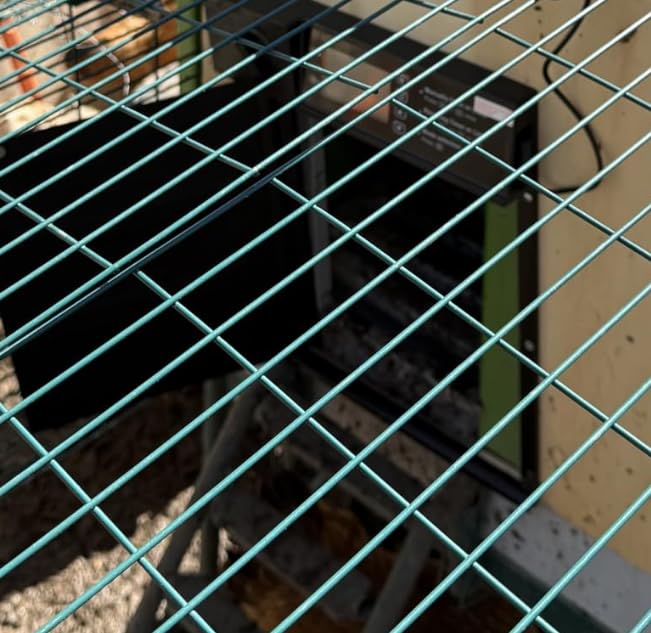
The fair criticism is that the solar mounting bracket is the weakest part, the same recurring note that appears on several doors here. And there is at least one report of a unit that stopped opening and closing properly after its first exposure to rain, so confirm the seal around the panel connector at installation.
Sizing may also mean adjusting the frame. If you are replacing a wooden door, compare the rough opening against the panel’s travel before cutting, because the horizontal design needs clearance to the side as well as above.
Why horizontal changes matter in winter
Vertical doors fail in cold because ice forms in the rails and locks the panel. With no bottom track and the moving parts mounted above the opening, there is much less surface for meltwater to freeze in a gap. Owners who switched from a vertical door specifically to escape winter jams report the difference as immediate.
The aluminium body is rated from -26C to 60C, so the panel itself handles the cold, and there is no rail below the opening for meltwater to freeze in. Ice management on the rails of a vertical door simply does not apply to this design.
Who should buy it
It suits keepers with heavy breeds, ducks, or geese who need more opening than a standard 8-inch door gives them, and anyone whose run floor is deep in bedding that would load a bottom track with straw every week.
It does not suit a small flock of standard hens in a tidy run, where a simpler battery door will do the same job for less, and it offers no camera or app-based monitoring.
9. FabStyl XL Solar Coop Door: Best for Extreme Cold
FabStyl Automatic Chicken Coop Door Solar Powered XL Chicken Door 3 Modes
XL 10.8 x 14.2 in opening
Solar with USB-C backup
3.02 lb aluminum body
Pros
- Very easy wall installation with a simple schedule setup
- Metal construction resists ice and extreme cold compared to plastic panels
- Local buttons plus remote give instant control from the house
- Solar charging tops the battery up without wiring
- Verified working from below -46F to above 100F
Cons
- Included solar panel has flimsy plastic arms and no mounting post
- Short power cord with a 90 degree bend is hard to replace
- Some units stopped working within a few months
Cold is the one variable that eliminates doors outright, and the FabStyl is the unit in this group that owners report working in the harshest verified conditions. Reviews describe verified operation from below -46F to above 100F, which covers the kind of winter that stops lesser plastic-bodied panels dead.
The aluminium door and housing are the reason. Metal handles repeated freeze-thaw cycles without the brittleness that develops in plastic roll-up doors, and owners running the door on mains or battery report it surviving freezing rain and sustained sub-zero temperatures.
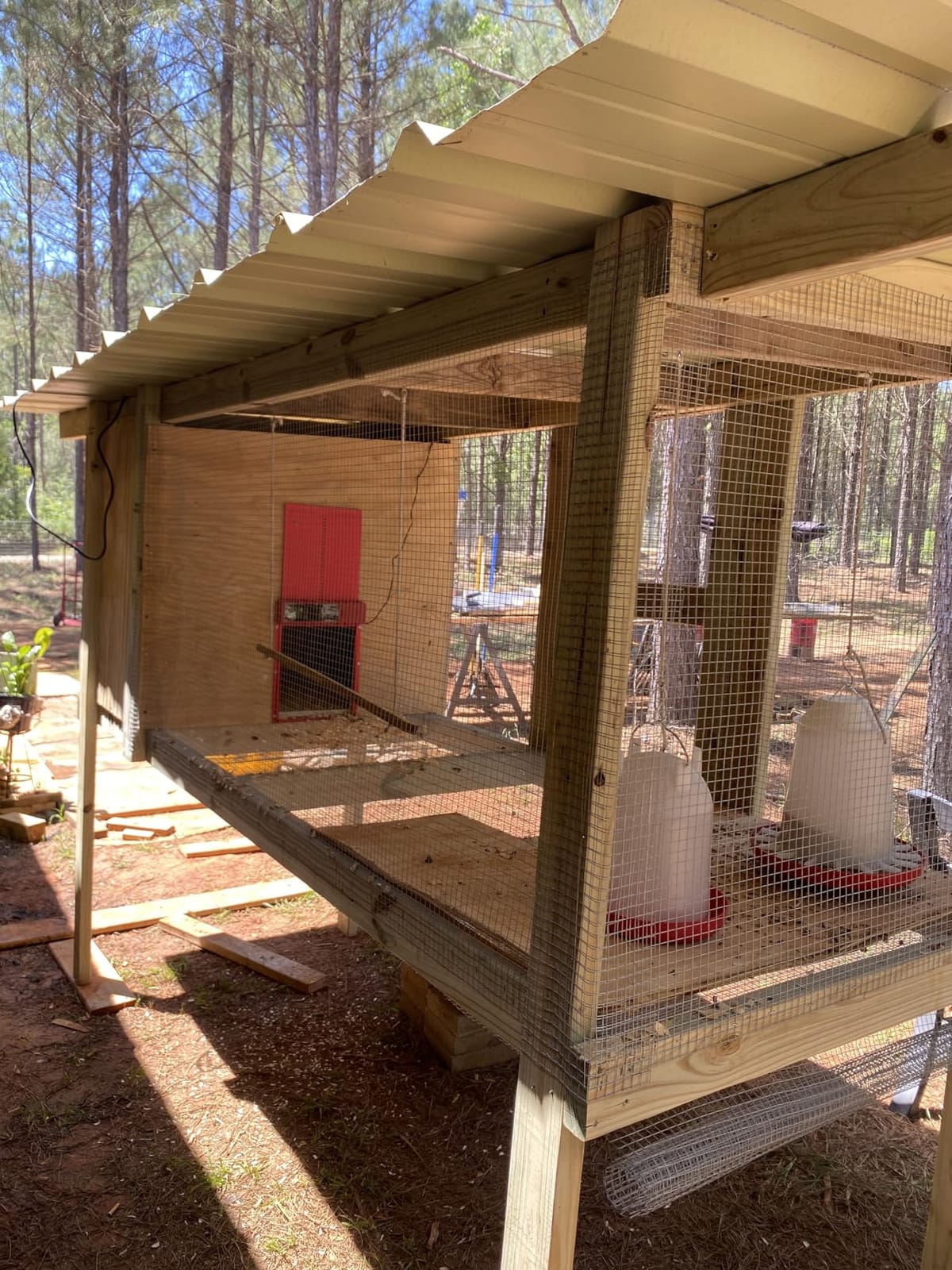
The opening is XL at 10.8 inches wide by 14.2 inches high, so it suits larger poultry and gives you a generous margin when the flock crowds the ramp at dusk. Local buttons on the unit plus a 20 metre remote mean you can trigger it from the house, which matters on a dark January morning.
Three modes are provided: timer, remote, and manual. There is no light sensor on this model, which is a deliberate simplification, and for a cold-climate keeper a fixed timer that does not depend on a sensor reading a white-out is arguably the more reliable behaviour.
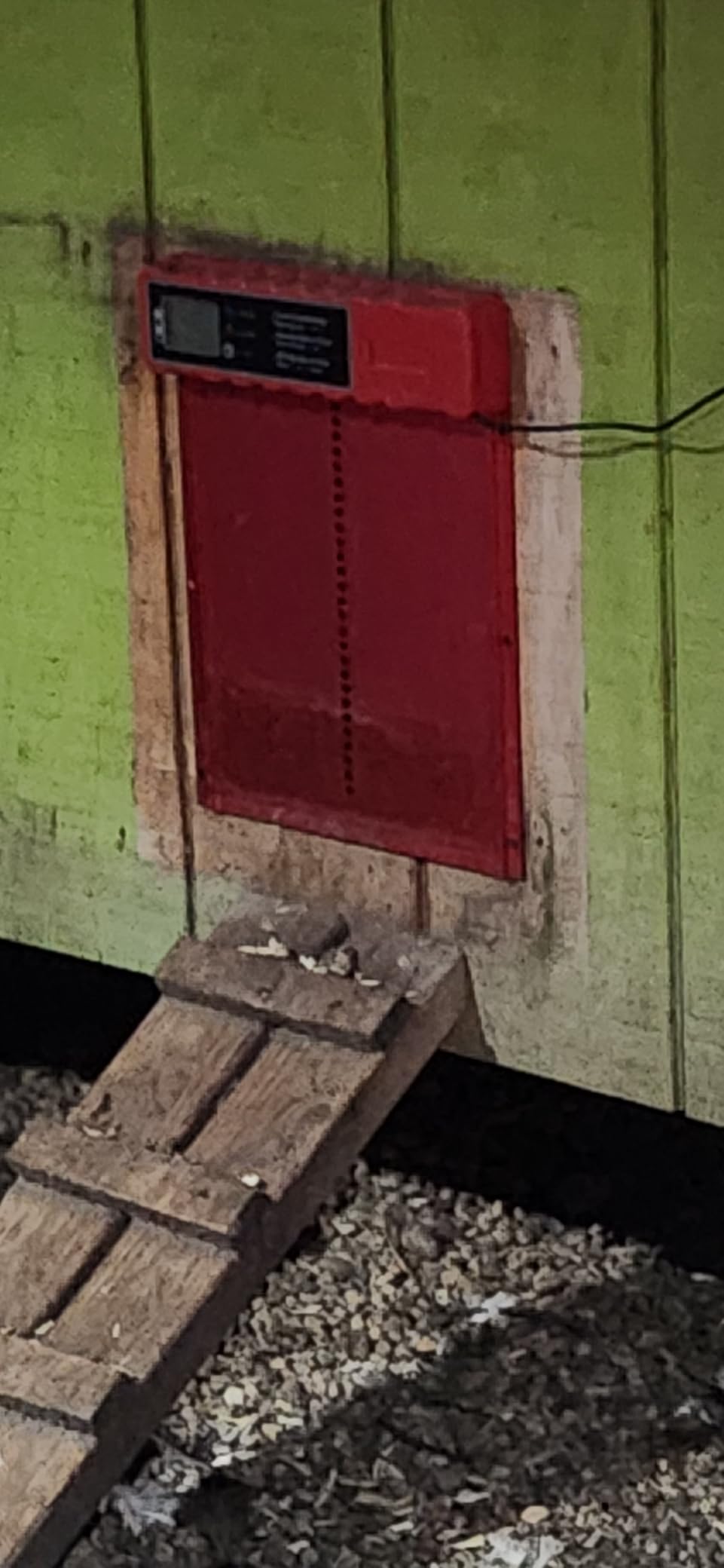
Two hardware complaints repeat. The included solar panel has flimsy plastic arms and no mounting post, and at least one buyer replaced it entirely. The power cord is short with a 90-degree bend, so a longer replacement is harder to source, and the cover over that cord is described as flimsy too. The clear USB-C connector does at least make a substitute panel straightforward.
One reviewer also flagged the closing action as aggressive enough to worry about for a trapped bird, and a small but vocal group reports motors failing within the first few months. The extreme cold claim is well supported; the long-term motor record is less consistent than the RUN-CHICKEN units further up this list.
Setting it up for winter
Run this door on mains or a mains-backed battery if you have any choice, and treat solar as a supplement. The panel’s flimsy arms are the weakest link in a system whose entire purpose is to survive cold, so replace or reinforce the mount before the first freeze.
If the door is wall-mounted with the cord at the top, route the cable with a drip loop and keep it away from where snow slides off the roof edge. A short cord with a 90-degree bend traps water at the connector, which is exactly how moisture gets to the motor.
How it fits against the other cold options
The RUN-CHICKEN units are tested to -15F, which makes them a sensible default for most climates. If your winters regularly drop well below that, the aluminium construction and verified sub-zero operation here are worth considering even though the door itself sits at the low end of this roundup’s price range.
It also suits a coop where the door is mounted inside the run and needs a large opening for a flock that includes larger breeds, which the XL height handles comfortably.
10. AdorStore ADOR1 Steel Door: Best Predator Resistance
Automatic Chicken Coop Door Extra Large 13 x 10.5 Inch Opening, Heavy Duty Galvanized Steel, Predator Resistant, ADOR1 Made in USA
Lifetime galvanized steel
13 x 10.5 in opening
4 C batteries included
9 lb direct-drive unit
Pros
- Galvanized steel is far heavier and more predator-resistant than aluminum or ABS
- Direct drive sprocket physically locks the door shut
- Extra-large 13 in x 10.5 in opening suits large breeds
- Tracks seasonal sunrise and sunset changes automatically
- Made in the USA
Cons
- Heaviest unit here at 9 pounds so installation is a two-person job
- Includes a 6V lantern battery rather than a modern rechargeable pack
The ADOR1 is the longest-running product in this roundup, and it carries the highest average rating of any door we compared at 4.7 stars across 389 ratings, with 88 percent of those at five stars and only 2 percent at one star. That distribution is the strongest consistency signal in the group.
Where every aluminium door trades mass for low weight, this one goes the other way. Lifetime galvanized steel at 9 pounds means a weasel or raccoon cannot chew or flex through the panel, and the direct-drive sprocket physically locks the door when closed rather than relying on a latch that a determined animal can work.
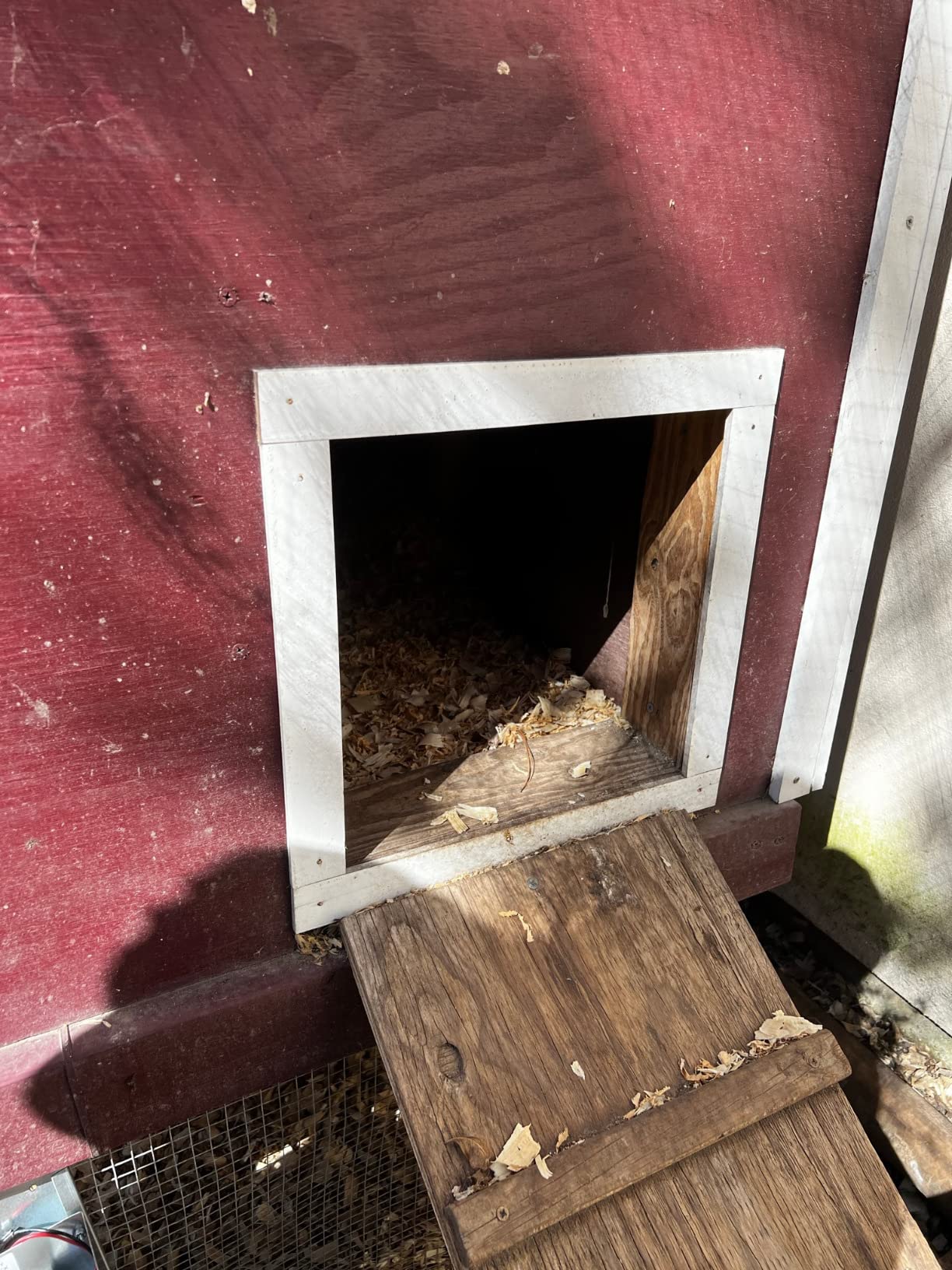
The 13 by 10.5 inch opening is generous and suits large breeds with room to spare. Scheduling is relative to sunrise and sunset, so the door self-adapts to seasonal daylight changes without any intervention, which is the same advantage the light sensor on the other units provides, implemented mechanically.
It runs on four C batteries, and a 6-volt lantern battery is included with other electric options available. That is the one part of the design that feels dated, but it has an advantage: lantern batteries sit in a cold shed for years without the capacity loss that ends a lithium pack’s useful life.
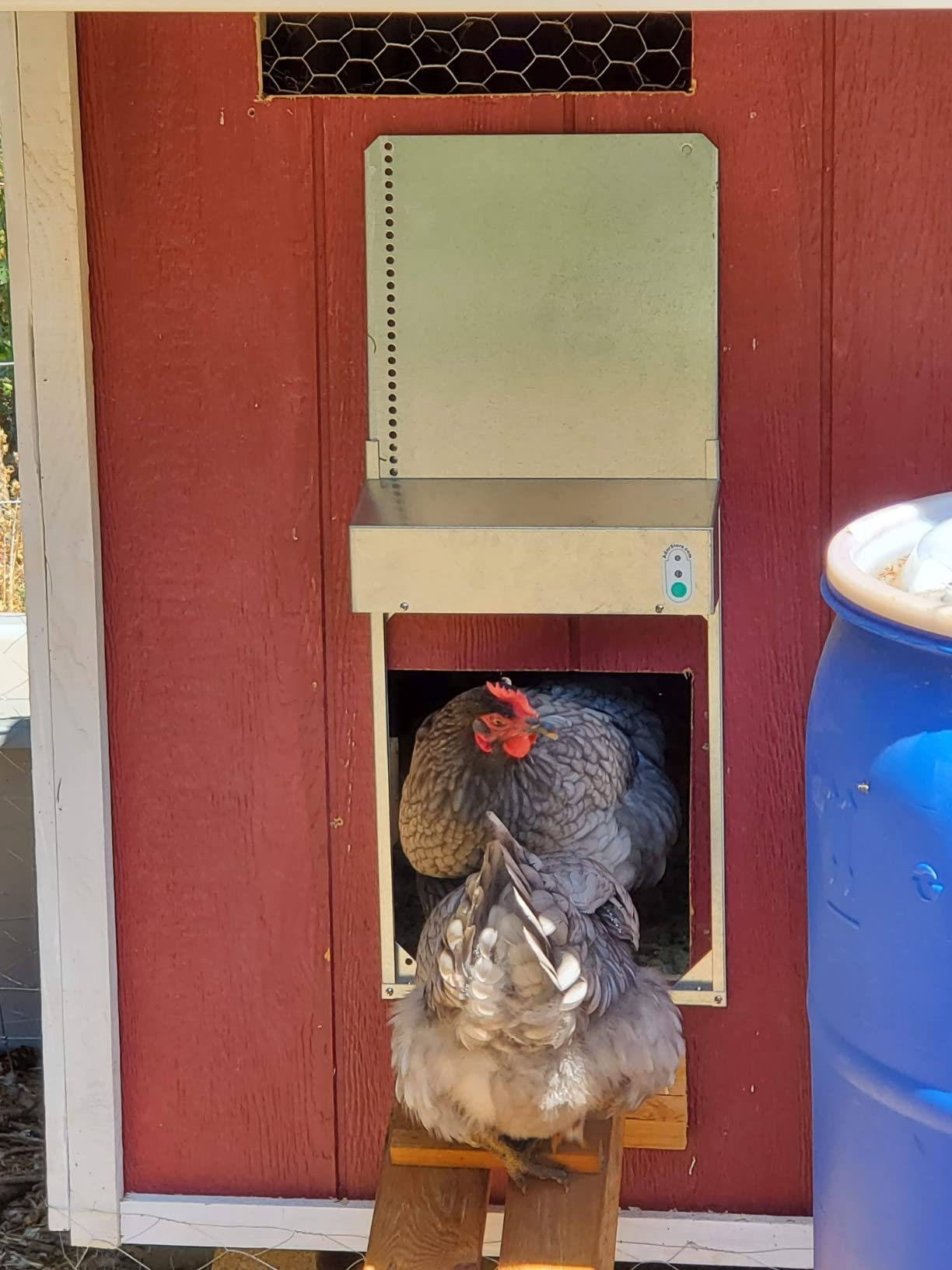
The trade-offs are physical. At 9 pounds it is by far the heaviest unit here, and mounting it is a two-person job with the panel overhead. Plan the install for a calm day, brace the coop wall if it is thin, and have someone steady the panel while you drive the fasteners.
The included 6V lantern battery is also a manual check rather than a sealed pack, which is a real benefit in a cold climate and a nuisance if you prefer not to think about battery maintenance at all.
When predator pressure justifies the weight
If you have active fox, raccoon, or weasel pressure, or if your coop sits in open country near a den, the mass and the locking drive are the point. Most predator losses at the pop hole happen because a lightweight panel flexes or a latch is simple enough to defeat, and this door removes both weak points.
If your coop is inside a fenced run with hardware cloth, the weight and price buy you very little, and one of the aluminium battery doors will serve the same purpose for a fraction of the outlay.
Long-term ownership
Made in the USA with a 1-year warranty, and with a rating distribution that skews heavily to five stars long after launch, this is the door that most looks like a fixed installation. Galvanized steel does not fade, rust, or warp, so the main wear point is the motor, not the body.
For a door you fit once and think about for a decade, that is a reasonable trade for the two-person install and the extra weight on the wall.
11. Azureblom J102 Camera Door: Best App Control
1080P HD Camera Solar Automatic Chicken Coop Door, 5000 mAh Large Battery, Support WiFi, APP Remote Viewing and Control, Timer, Alarm Driver Function, Easy to Install and Use.
5000mAh battery with USB-C
1080P night vision camera
App with hotspot fallback
Pros
- Second-highest average rating here at 4.6 stars with 3 percent one-star
- 5000mAh battery with both solar and USB-C charging
- Hotspot fallback keeps the app usable where coop signal is weak
- Night vision and alarm function add real predator awareness
- Anti-pinch infrared documented as working on obstacle detection
Cons
- No customer review text was returned for this listing
- Camera and app add setup steps a simple timer door does not need
The Azureblom J102 is the strongest all-rounder among the camera doors, and its distinguishing feature is connectivity that survives a bad signal. You can connect through the coop’s WiFi, or fall back to a mobile hotspot when the signal at the far end of the property is too weak for the app to reach the door.
That fallback matters more than the specs suggest. App-controlled doors become less useful when the coop sits behind a metal barn or at the bottom of a slope, and the hotspot option means you keep remote control in exactly the situation where you most want it.
The camera is 1080P with night vision, viewable through the app or from a memory card, so you have a recording option even if the network drops. A temperature-sensing alarm triggers on detected threats near the door, which gives the unit a real function beyond simple monitoring.
Power is a 5000mAh battery with solar charging and an included USB-C cable, and the body is aluminium and ABS rated from -26C to 60C. Five setting modes cover timer, app, remote, and manual, and installation is reported at under ten minutes.
As with the FarmLite, detailed customer review text was not returned for this listing, so our assessment rests on the aggregate 4.6 rating across 317 ratings, where 83 percent sit at five stars and only 3 percent at one star, plus the documented specification set.
How the anti-pinch system behaves
The infrared anti-pinch sensor lifts the door and waits three seconds before retrying when it detects resistance. That is a shorter pause than the ten-second retries on the INNOLAND and NyPots units, so a bird that steps back rather than standing still gets a quicker second attempt.
Test it after installation with a soft object rather than your hand, and test it in the dark, because that is when a failure would matter. If the door does not lift, the sensor is not protecting anything.
Choosing between the two camera doors
Against the CHAMUTY unit, this one wins on connectivity options and alarm functions, while the CHAMUTY wins on the roll-up panel that needs no swing clearance and on a larger solar panel at 7W. The Azureblom’s hotspot fallback is the more valuable of the two features for most properties.
Neither is the right choice if you want the simplest possible door with no app, no account, and nothing to go wrong in software. A battery door with a timer does that job with fewer things to maintain.
12. RUN-CHICKEN Door Eternal: Best Integrated Solar Design
RUN-CHICKEN Door Eternal – Solar Automatic Chicken Coop Door with Built-in Solar Power & Battery Backup, Smart App & Timer Control, Weatherproof Aluminum, Predator-Proof, Easy to Install (Red)
Integrated solar panel
2 AA plus internal battery
2.18 lb reinforced aluminum
Rated -15F to 140F
Pros
- Integrated panel removes the need to mount a separate one
- Sleek modern look that blends into an existing coop
- Opens and closes consistently on schedule in harsh winter weather
- Factory light-sensor defaults suit many setups
- Kept the door running 5 days after panel wiring was torn away
Cons
- Anti-pinch only retries once so a second attempt closes regardless of an obstruction
- App Bluetooth pairing is unreliable for some users leaving timer mode as the only option
- Setup tutorials refer to an earlier model with a manual button
- Some units arrived with dead rechargeable batteries
The Door Eternal is the RUN-CHICKEN solar model, and its selling point is that the solar panel is built into the unit rather than bolted on separately. Nothing to align, nothing to mount at an angle on the coop wall, and no external panel wire to run into the motor. Two AA batteries are included alongside the internal rechargeable cell.
Owners who have a working unit like the integrated approach. The panel sits flush against a normal coop wall, the unit is 2.18 pounds, and one owner reports the battery keeping the door operating for five days after a woodchuck tore the solar panel wiring away, which is a small but real demonstration of the backup reserve.
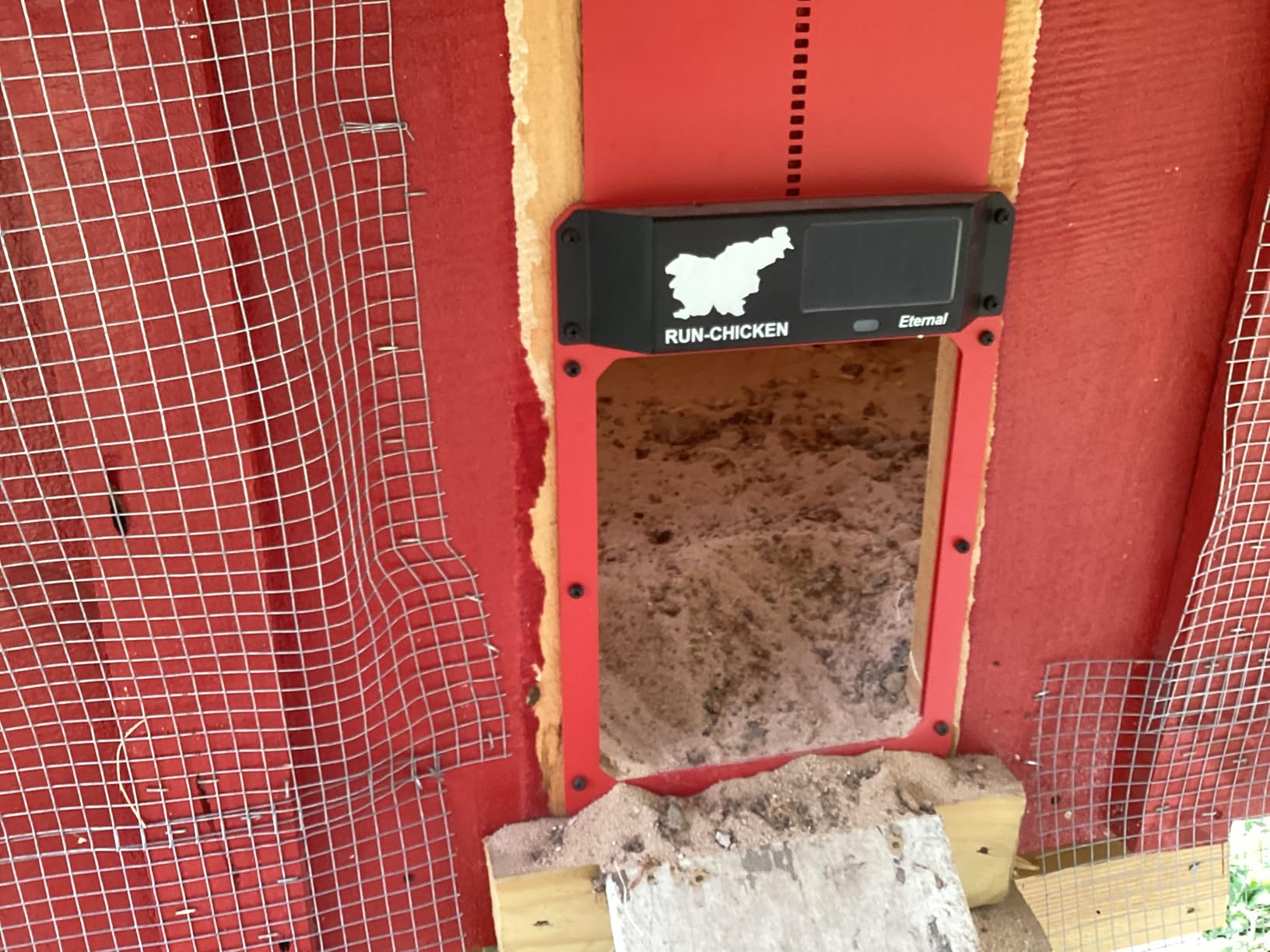
The app supports timer or sunrise and sunset mode, and the factory light-sensor defaults work well out of the box for many setups. The body is reinforced aluminium with a secure lock, tested from -15F to 140F, and the install is six screws with no wiring.
This is also among the lowest-rated doors in the roundup at 4.1 stars across 295 ratings, with 15 percent at one star. That gap between owners who love it and owners who received a problem unit is the defining story of this listing, so it belongs at the end of the list rather than near the top.
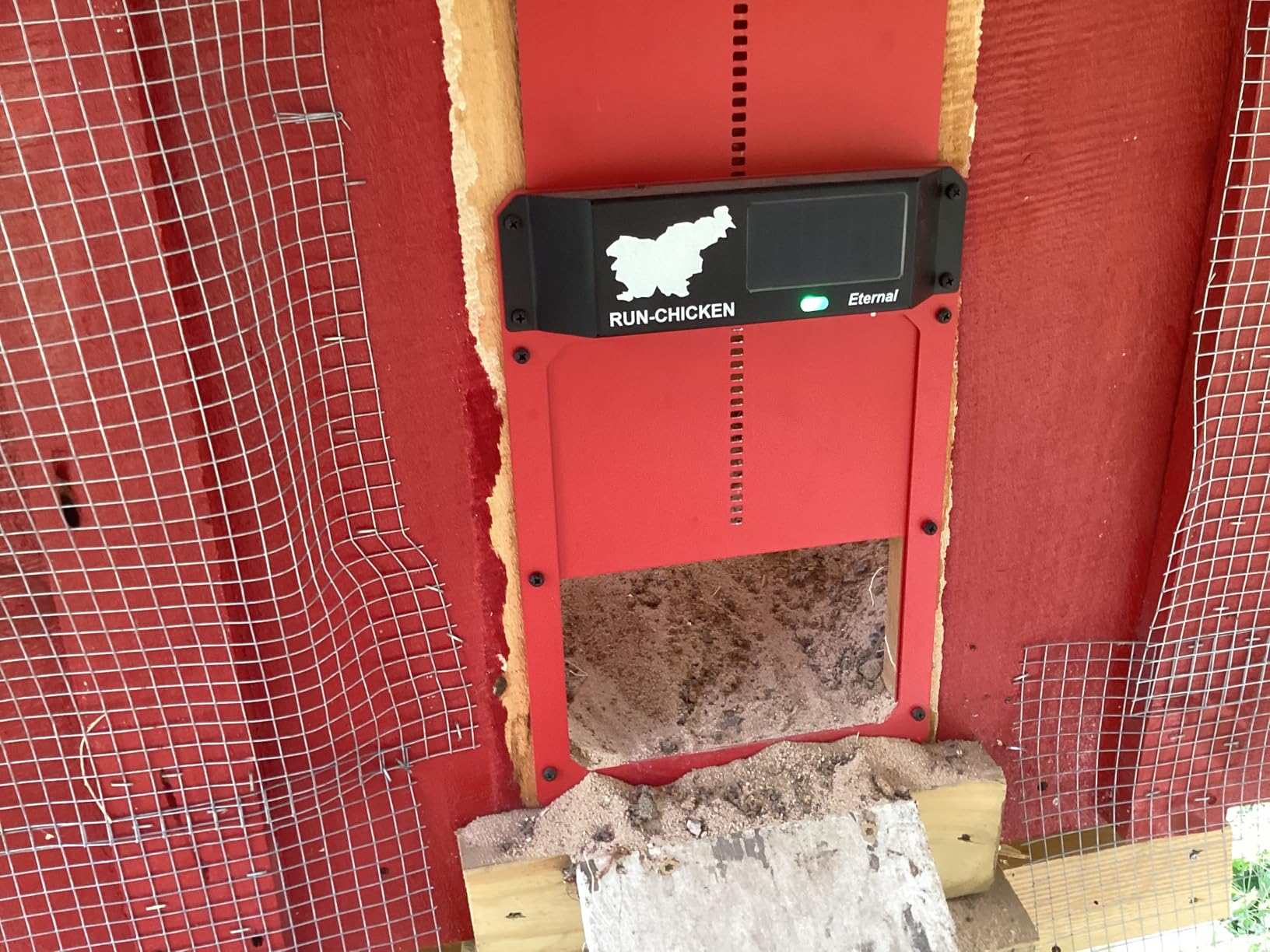
The most serious specific complaint concerns the anti-pinch mechanism, which only retries once, so the second attempt closes regardless of an obstruction. A reviewer reports it closing on a chicken’s neck. Whatever else you consider, do not rely on this door’s sensor to protect a bird that is slow to move out of the way, and test it before you trust it.
App Bluetooth pairing is also unreliable for some users, which leaves timer mode as the only option. Owners on the newer no-button revision report confusion because the setup tutorials were written for an earlier model with a manual button, and a factory reset requires unmounting the motor compartment. Some doors arrived with dead rechargeable batteries, so test the door the day it arrives.
When the integrated design still wins
If you want solar with nothing to mount, this is the cleanest way to get it. The flush panel suits a finished coop where an external bracket would look wrong or where the wall is too thin to hold a panel arm.
If you want the safety retry logic to be reliable, choose one of the multi-stage units such as the INNOLAND FO-006 instead, where the door retries three times and then again every two hours rather than closing on the second attempt.
Checking it on arrival
Charge the unit fully from mains before the first cycle, test the anti-pinch sensor with a soft object, and confirm the door completes a full up and down travel several times. That fifteen minutes of checking catches most of the first-year failures owners describe.
If the app does not pair on the second attempt, use timer mode and stop troubleshooting. The door works fine without the app, and the pairing problems reported here are not worth a support call.
Timer vs Light Sensor: Which Trigger Mode Fits Your Flock
A timer opens and closes the door at fixed times, and a light sensor triggers on daylight levels instead. Most doors in this roundup offer at least one of the two, and the best of them offer both. The question is which one you should run day to day.
Choose the timer when your coop is shaded, when the light sensor is exposed to rain or snow, or when you want the door shut at a fixed hour regardless of the sky. A timer is a clock, and a clock does not get confused by a storm. Its weakness is drift: the sun sets roughly an hour earlier in December than in September, so a spring-set timer closes an hour late at the worst time of year.
Choose the light sensor when your coop gets direct sun on its pop hole and you want the schedule to follow the season without intervention. A light sensor also opens the door when the first bird is up rather than at a fixed hour, which matters if you want daylight access as early as possible.
The compromise most keepers end up at is sensor as the default with a timer as the backup, and the close-delay setting as the safety net. The CHAMUTY owners are the clearest example, with the most common advice in their reviews being to run the door on the timer because the sensor can be thrown off by rain and snow.
Whichever you pick, adjust the light threshold during the first week of each season. The NyPots and OKKOBI doors make this easy because the threshold is a number on a screen rather than a hidden menu.
Solar, Battery or Plug-In: Choosing a Power Source
Power source is the decision with the longest consequences, because it determines what happens on the morning a battery dies in January. All three options work, and the right answer depends on outlet access and on your winter.
Battery only. The simplest to install, with no panel, no cable, and a battery change twice a year. The RUN-CHICKEN T50 runs on two AA cells and owners report two to three years between changes in mild climates, dropping toward a year in cold weather. The INNOLAND FO-006 runs three AA cells for up to six months. Alkaline cells lose meaningful capacity in cold, so switch to lithium in a winter climate if your unit takes them.
Solar. The best choice for a coop with no outlet access, and the most misunderstood. A 7W panel feeding a 2000mAh internal battery, as on the AsFrost and the CHAMUTY, handles a normal sunny or partly cloudy year without thought. A run of short overcast winter weeks is where solar panels earn their doubt, and keeping a USB cable within reach is cheap insurance.
Plug-in or hybrid. The only option with no battery anxiety, and the right answer for anyone whose flock cannot afford a locked door. The FarmLite, the NyPots, the OKKOBI, and the CHAMUTY all offer a USB or mains charging path alongside their battery, and the FabStyl owners running on mains are the ones reporting the strongest cold-weather performance.
Whichever you choose, confirm at installation that you can reach the unit to press a manual button in the dark. A door you cannot open by hand is a door you will one day be standing in the rain trying to force open.
Safety Features That Actually Matter
Anti-pinch and obstruction detection is the feature that separates a door worth owning from one that is a hazard, because a hen in the path of a closing panel can be injured. It is also the feature most often described without detail in product listings.
Obstruction detection with auto-reverse. The motor senses resistance as the panel closes and lifts the door back open. The NyPots bounces for ten seconds and beeps if the door has not fully closed. The INNOLAND FO-006 lifts 3 cm, pauses ten seconds, retries three times, then reattempts every two hours, which keeps trying through the night instead of giving up.
Retry count is what separates a real system from a token one. The RUN-CHICKEN Door Eternal retries only once, and the second attempt closes regardless of an obstruction, which one reviewer reports closing on a chicken’s neck. A single retry is a feature, not a safety system.
Sensor sensitivity is the failure mode to check. Some owners of the NyPots report needing more force than expected to trigger the anti-pinch, which raises reasonable doubt about whether light birds are detected. Test yours with a soft object after installation, not with the manual, because a sensor that never triggers protects nothing.
Motion sensing is a different layer. The FarmLite uses an infrared sensor to hold the door open until birds have entered, which addresses the straggler problem at the point where it happens rather than after the fact.
Test any door this way: put a soft object in the opening, trigger a close cycle from ten paces away, and watch whether the panel stops and lifts. If it closes through the obstruction, the door does not have a working safety system and you should treat it accordingly until the unit is serviced.
What To Do When an Automatic Chicken Coop Door Fails
Control panel and motor failures are the most reported problems in this category, typically somewhere between one and three years into ownership. They are common enough that planning for them is cheaper than reacting to them.
Check the manual override first. Nearly every door here can be opened by hand at the panel. Do it once, on installation day, while the sun is up. If your override requires a tool or a phone, know that now rather than at midnight in the rain.
Work through the cheap causes in order. A dead or cold-weakened battery is the first thing to rule out. Then dirt in the rails, which owners of several vertical doors describe repeatedly, and ice in freezing conditions. A shot of lubricant on the sliding bar resolves the recurring jam complaint on the OKKOBI. A damp or snow-covered solar panel is the fourth candidate.
Look for the light-sensor failure signature. A door that opens at the wrong time, or one that stops accepting reprogramming while still opening and closing correctly, has a sensor or controller problem rather than a motor problem. Those are different repairs, and a motor swap will not fix either.
Have a manual backup plan. Keep a latch or a lock on the run that you can operate without the motor, tell a chicken sitter how to close the coop by hand, and check the door yourself before leaving town. Several flocks are lost not because the door failed silently but because nobody realised it had.
Two failure stories from the community are worth knowing. A homeowner’s coop door received a direct deposit of chicken droppings straight into the mechanism, which seized it. And a panel reported faulty at around the three-year mark on a unit that had worked flawlessly before. Neither failure announces itself; both would have been caught by a monthly look at the door.
Installation and the First Week With Your Flock
Installation is the easy part. Most of the doors here mount with pre-drilled holes or six screws, run from under three minutes to about ten, and need no wiring. The planning that matters happens before the drill.
Measure your rough opening and compare it against the unit’s stated opening, adding a couple of inches for the largest bird you own. If you are replacing a wooden door, check side clearance as well as height, since a horizontal-sliding design needs room to the side. If your opening does not match, you will be cutting the coop wall, and that changes the job entirely.
Mount the unit so the panel is not reachable from inside the run where raccoons can press an exterior manual override. Then wire in any power, set the schedule, and test the anti-pinch with a soft object before you let the flock rely on the door.
Training the flock takes about a week. On day one, prop the door open and let the birds walk through freely. On days two and three, run the door on a shorter cycle so birds see it move often while the opening is available. From day four, close it partway for a minute at a time. By the end of the week most flocks are walking in on cue, and the ones that are not are almost always the ones that were locked out early and learned the door was not worth approaching.
Set the close time to be generous rather than exact. A ten-minute error that traps a hen outside is far worse than the flock getting ten minutes of extra dusk ranging, and the doors with a close-delay or motion-sensing feature handle this without you moving the schedule at all.
Frequently Asked Questions
Do automatic chicken coop doors work?
Yes. The best automatic chicken coop doors open at sunrise and close at sunset, or on a timer you set, without any input from you. Most owners report the main adjustment is training the flock to walk in before the door closes, which takes about a week. The main reliability limit is the battery or the track, not the motor, and both are inspectable in under a minute.
How much do automatic chicken coop doors cost?
Prices move constantly, so use the Check Latest Price button on each product above for current figures. As a rough guide for planning only, budget solar doors sit at the lower end, battery-and-app models sit in the middle, and the heavy galvanized steel and camera-equipped units sit at the upper end. The Check Latest Price buttons carry the live numbers.
What is the best automatic chicken coop door overall?
The RUN-CHICKEN Door T50 is the best overall automatic chicken coop door for most backyard flocks. It installs with six screws, runs on two AA batteries, has an anti-pinch sensor, and is rated from -15F to 140F. Its 2656 ratings are the largest body of long-term owner feedback in this roundup, which is why we rate it the most reliable choice.
Which automatic chicken door is the most reliable?
Reliability comes down to enclosure and battery rather than brand. The RUN-CHICKEN Door T50 has the deepest long-term feedback, and the AdorStore ADOR1 has the highest average rating at 4.7 across 389 ratings with a galvanized steel body and a locking drive. Battery quality matters more than most listings suggest, and lithium cells hold up better in cold.
What are common problems with auto coop doors?
The most common problems are motor or control panel failure after one to three years, a light sensor that misreads dark or stormy afternoons, ice or mud jamming the track, and batteries failing in cold weather. A door that stops accepting reprogramming while still cycling has a sensor or controller fault, not a motor fault. Dirt in the rails and a damp solar panel are the two cheapest things to check.
Are automatic chicken coop doors safe for chickens?
They are safe when obstruction detection works and the flock is small enough for the opening. Put a soft object in the opening and trigger a close cycle to test it. Avoid doors whose anti-pinch system only retries once, because the second attempt can close on a bird. Choose an opening larger than your biggest hen and keep the flock to a number the pop hole can serve comfortably.
How long do automatic chicken doors last?
A well-built door with a metal body, such as the galvanized steel AdorStore or the aluminium RUN-CHICKEN models, can last a decade or more with the motor as the main wear point. Budget plastic-bodied units more often see motor failure between six months and three years. Annual cleaning of the track, timely battery changes, and a unit you can open by hand are what decide how long yours lasts.
Which Automatic Chicken Coop Door Should You Buy?
For most backyard flocks, the choice among the best automatic chicken coop doors comes down to three picks. The RUN-CHICKEN Door T50 is the one to buy if you want a door that installs fast, runs for years on two AA batteries, and tracks daylight without being reset twice a year. The NyPots solar door is the better choice if your coop has no power access and you want the best value in the category. The AdorStore ADOR1 is worth the extra weight if you have active predator pressure and a big bird.
Everything else in this list earns its place on a specific problem: the INNOLAND FO-006 for muddy coops, the SP-003 for large breeds and straw floors, the FabStyl for winters well below -15F, the FarmLite for a safer close sequence, and the camera units if you want to see the coop at night.
Whichever you choose, test the anti-pinch with a soft object on day one, keep a way to open the door by hand within reach, and spend the first week training the flock to come in before the trigger. Those three habits matter more to how long the door lasts than any feature on the spec sheet. Check the latest price for your pick, and read reviews for the failure mode rather than the five-star summary.