
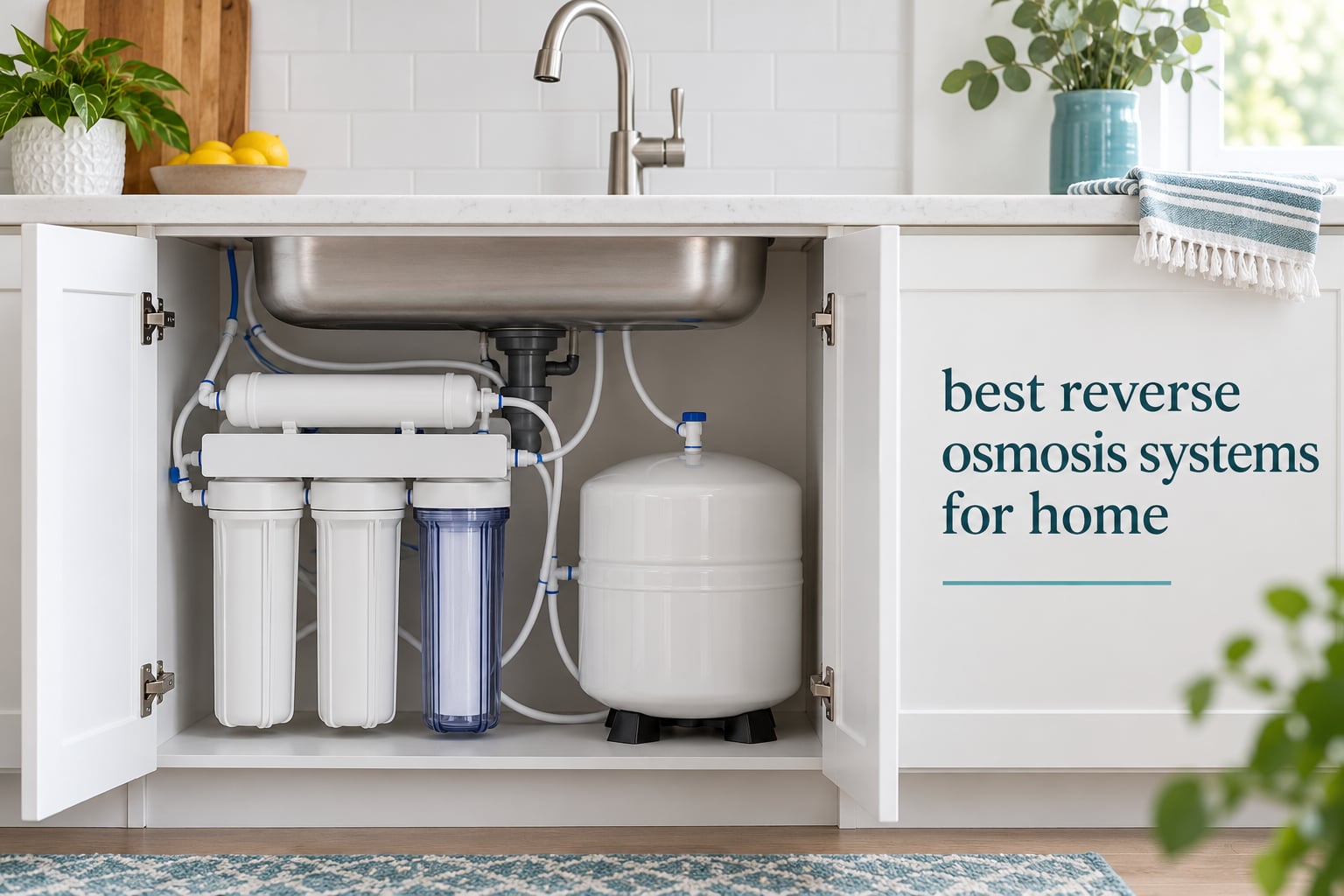
Choosing a reverse osmosis system for your home comes down to one of three shapes: a high-flow tankless unit mounted under the sink, a proven tanked system that stores purified water in a reservoir, or a countertop model that needs no plumbing at all. Everything else is detail. This guide covers the best reverse osmosis systems for home across all three, with the specs that actually change daily use: gallons per day, waste ratio, certification, and how often you will be unscrewing a housing.
RO is the only mainstream home treatment certified to cut lead, PFAS, nitrates, arsenic, and general dissolved solids at the same time, which is why it matters in homes on older plumbing, on wells, or anywhere a water report flags a contaminant. It is also a commitment: a dedicated faucet, a drain line, a hole in the counter, and filter changes on a calendar.
We spent weeks comparing spec sheets, certifications, and owner feedback across ten of the highest-rated systems on the market, and the differences that matter turned out to be pressure tolerance and filter cost, not stage count. If you want a fast answer, the iSpring RCC7AK-BN is the one we would put under a standard sink, and the Waterdrop G3P600 is the pick if your household outgrows a storage tank. Renters with no drilling allowed should read the countertop section first.
Table of Contents
Top 3 Picks For Best Reverse Osmosis Systems for Home (October 2026)

Each of those three solves a different problem. The iSpring is the most proven unit in the category, the APEC is the cheapest way to get a certified system under a sink, and the Waterdrop removes the storage tank entirely. The sections below explain who each one fits and who should skip it.
Best Reverse Osmosis Systems for Home at a Glance in 2026
| Product | Specs | Action |
|---|---|---|
| iSpring RCC7AK-BN Alkaline 75 GPD |
|
Check Latest Price |
 APEC ROES-50 5-Stage APEC ROES-50 5-Stage |
|
Check Latest Price |
 Waterdrop G3P600 Tankless Waterdrop G3P600 Tankless |
|
Check Latest Price |
 SimPure Y7P-BW UV Countertop SimPure Y7P-BW UV Countertop |
|
Check Latest Price |
 Bluevua RO100ROPOT Countertop Bluevua RO100ROPOT Countertop |
|
Check Latest Price |
 Waterdrop G2 Tankless Waterdrop G2 Tankless |
|
Check Latest Price |
 FS-TFC 5-Stage 100 GPD FS-TFC 5-Stage 100 GPD |
|
Check Latest Price |
 iSpring RCC7P-AK Pumped iSpring RCC7P-AK Pumped |
|
Check Latest Price |
 iSpring RO500AK Tankless iSpring RO500AK Tankless |
|
Check Latest Price |
 NU Aqua 100 GPD 5-Stage NU Aqua 100 GPD 5-Stage |
|
Check Latest Price |
1. iSpring RCC7AK-BN: The Most Proven System in the Category
iSpring RCC7AK-BN NSF Certified, 75 GPD, Alkaline 6-Stage Reverse Osmosis System, pH+ Remineralization RO Water Filter System Under Sink Patented Top-Mounted Faucet Design for Easy Installation
75 GPD
6-stage alkaline
284 L per day
NSF/ANSI 58 certified
Pros
- Top-mounted fastener design allows installation from above the sink
- Mineral boost alkaline stage adds back pH balance
- Transparent first-stage housing shows filter loading
- Full-system NSF/ANSI 58 certification
- Lifetime technical support from Atlanta GA
Cons
- Needs adequate incoming pressure to hold rated flow
- Alkaline stage changes the taste for users who prefer plain RO
This is the unit I keep coming back to because of how much owner history sits behind it. 21,569 ratings averaging 4.6 stars is a sample size almost nothing else in home water treatment can match, and the pattern in that history is consistent: people install it themselves, the water tastes clean, and maintenance is straightforward because you can see the first housing fill up.
Capacity is 75 GPD, or about 284 liters per day, which is comfortable for a household of three or four drinking and cooking from the faucet. The listed operating pressure is 70 psi, so it wants solid incoming pressure, and the supported feed water tops out at 750 ppm TDS. The tank-backed layout means you get stored water between uses rather than waiting on live production.
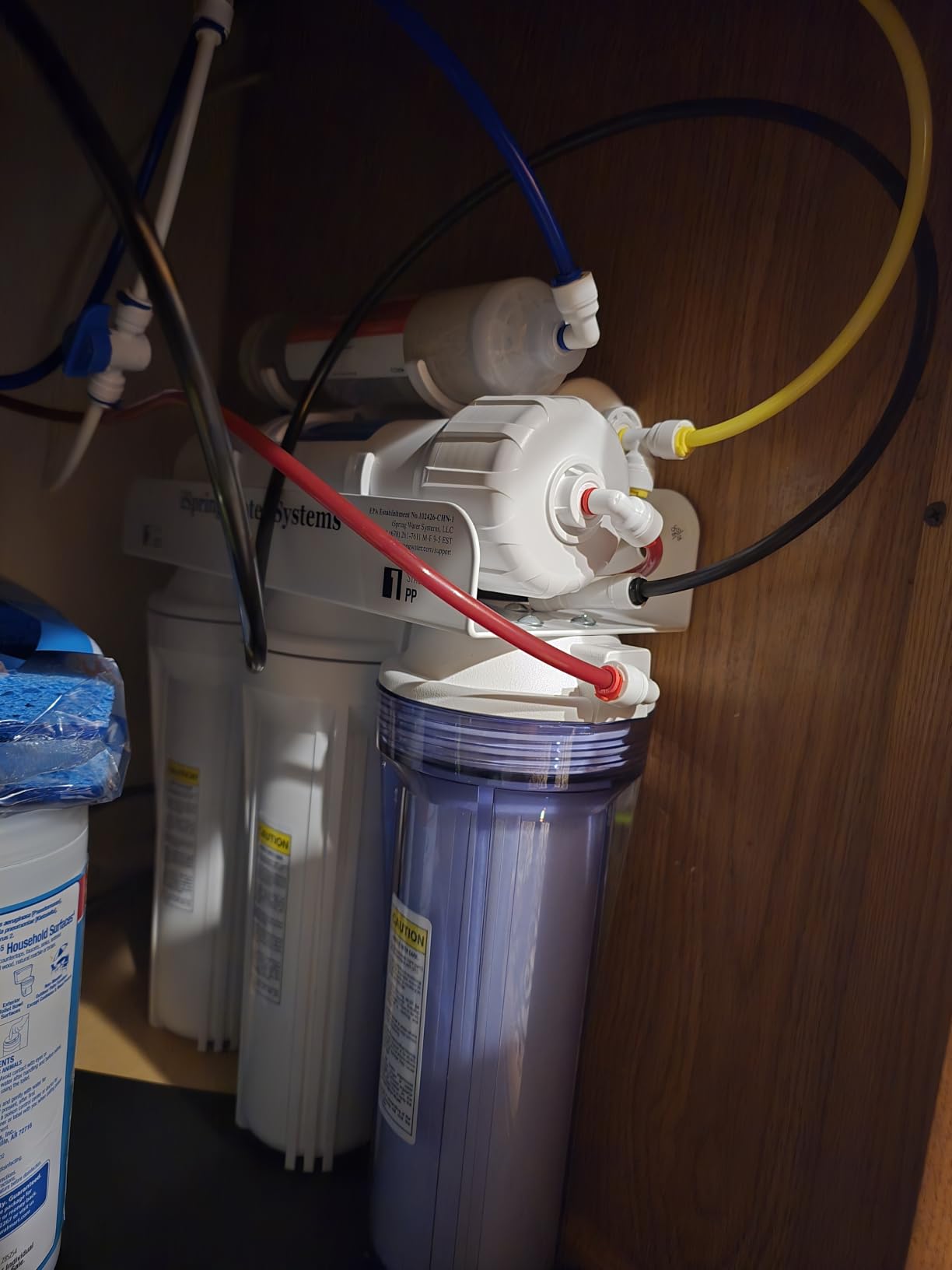
The design detail that separates it from the field is the patented top-mounted fastener. Instead of sliding the housing into position from below, you drop the unit in and tighten from above, which is the difference between a twenty-minute install and an hour of awkward reach-ups in a dark cabinet. That single feature explains a large share of the installation complaints aimed at competing systems.
The sixth stage is an alkaline remineralization filter, and it is why this water does not taste like the flat, faintly metallic profile most people associate with RO. If you prefer unmineralized water straight from the membrane, this is a downgrade rather than an upgrade, and the base five-stage configuration would suit you better. Replacement filters are the F4AK, F9K, F19K75, and F28K75, rated on a six-month pre-filter cycle.
What to check before you buy
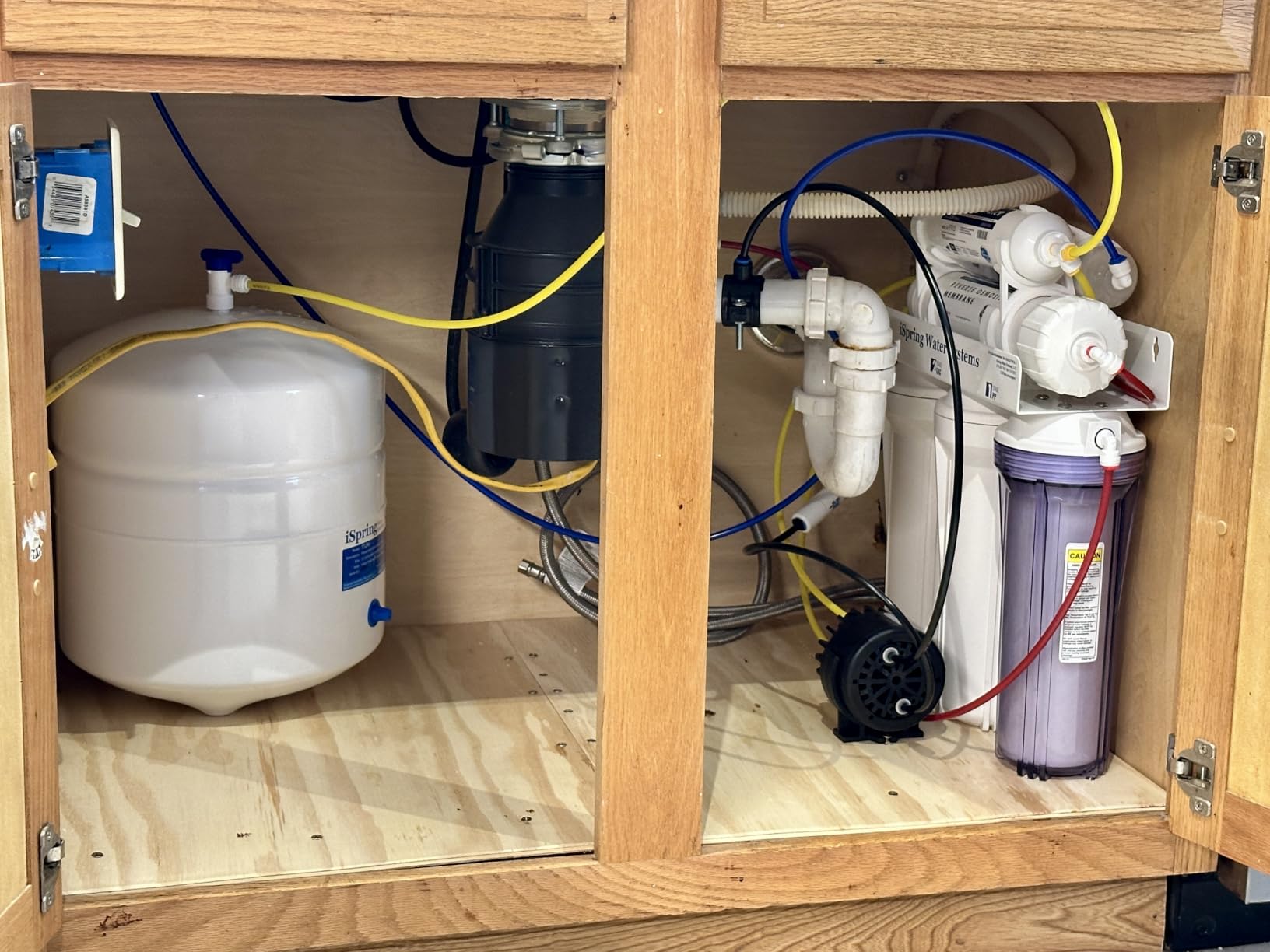
Measure the cabinet first. The unit is 15.5 by 16 by 18 inches and weighs 12.5 kg, so it needs a genuinely empty sink base rather than one shared with a trash pull-out. The brushed nickel faucet is included along with the tank and a tool set, and the top-mount pattern means the faucet hole and the drain saddle are the only two things you really need to plan for.
Who this suits and who it does not
It suits households on municipal water with decent pressure who want the lowest-risk purchase in the category, and anyone who values being able to see filter loading rather than guessing at intervals. It does not suit a renter who cannot drill a counter, a home with weak supply pressure, or a household that wants water instantly at a high rate without a tank. For those cases, look at the pumped model or a tankless unit further down.
2. APEC ROES-50: The Cheapest Certified System That Works
APEC Water ROES-50, 5-Stage Under Sink Reverse Osmosis System, 50 GPD
50 GPD
5-stage
40-85 psi
NSF/ANSI 372 and 58
Pros
- Quick-connect fittings resist leaks during service
- System tank faucet and install kit all included in one package
- Standard quarter inch parts available from many retailers
- Long service history across many owners
- Consistently drops TDS into single digits
Cons
- Faucet has no air gap so a code-compliant drain part is extra
- Housing caps can crack if overtightened
- 50 GPD yields only 2-3 gallons per draw cycle
APEC has been building these for over two decades, and the ROES-50 is the plainest expression of the design. Five stages, a 50 GPD membrane, a storage tank, and a brushed nickel faucet, with quick-connect fittings and color-coded tubing. Owners consistently report installing it in about an hour and pulling TDS down to single digits or low teens on city water.
Two spec numbers matter here. The operating range is 40 to 85 psi, the widest starting point of any tanked system in this group, and the supported feed water goes up to 2000 ppm TDS, which makes it a more sensible choice than the 750 ppm ceiling on the iSpring if you are on a well or a high-TDS municipal supply.
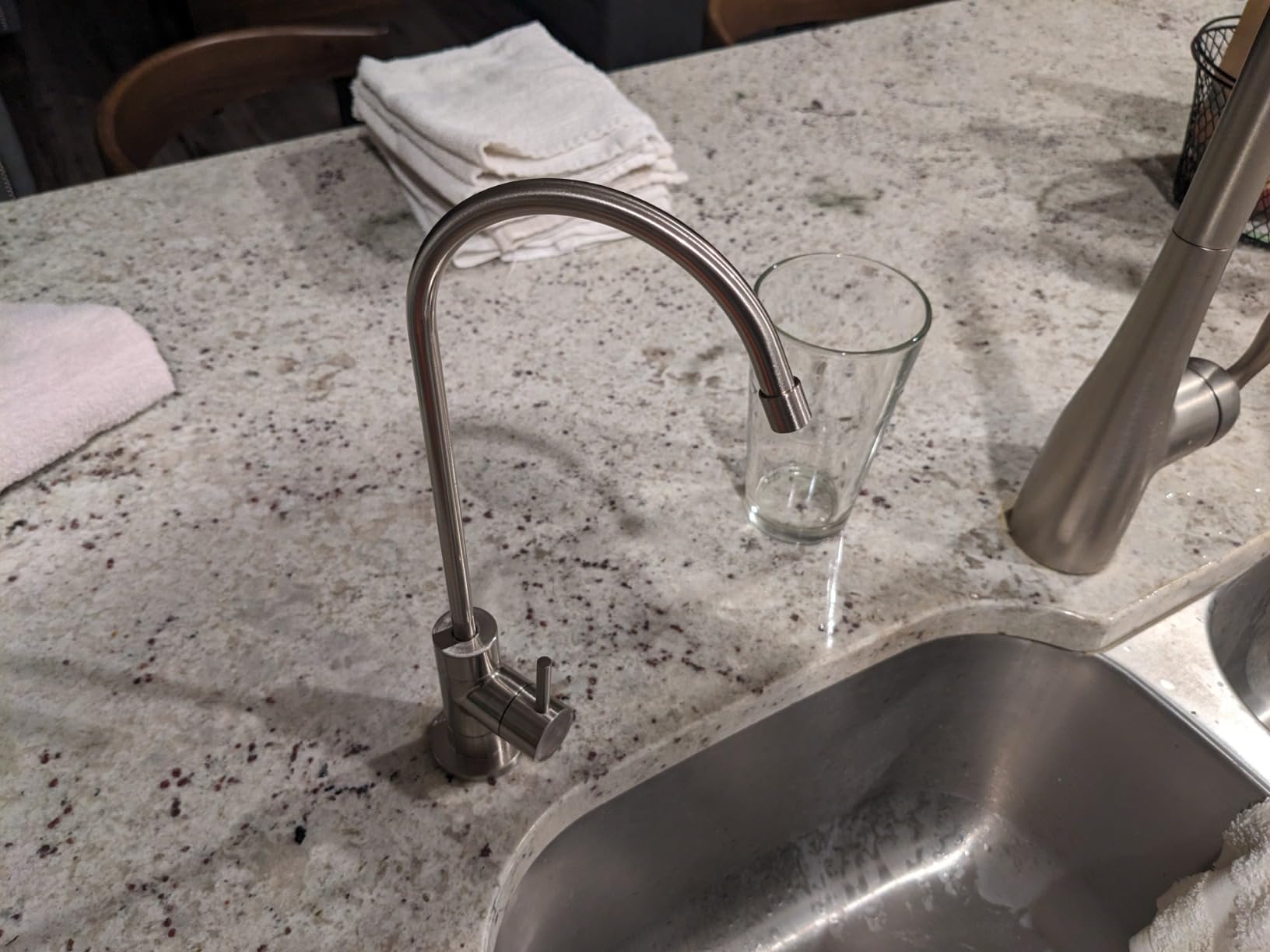
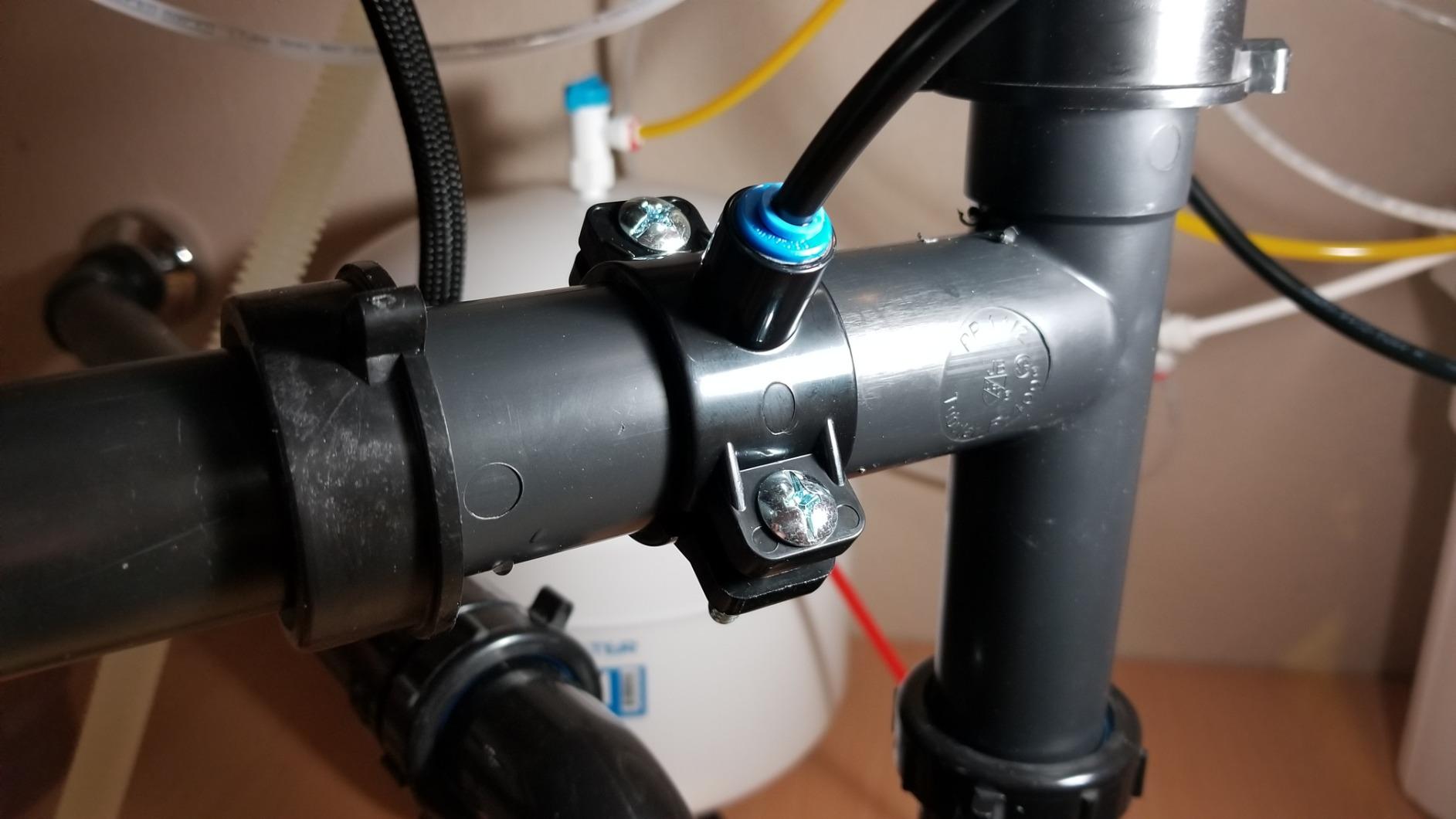
The one thing you should plan around is drainage. The included faucet has no air gap, so backflow prevention on the drain line depends on an add-on part that some jurisdictions require. Installers report this as the single most common point of confusion on this model, and it is worth a five-minute conversation with your local code before you buy.
The other recurring complaint is mechanical and entirely self-inflicted: overtightening the filter housing caps during a change can crack them, and a cracked cap weeps quietly for months. The double o-ring style housings on other models tolerate over-torquing better. Filter replacement is recommended on a 6 to 24 month cycle depending on the cartridge, and the included Filter-Max-ES50 set covers the first year.
What to check before you buy
Verify your drain-side requirements and whether you need an air gap kit, then confirm the 40 psi floor is comfortable for your supply. Rated flow is 0.03 gpm, and with a standard 5-gallon tank you will get roughly two to three usable gallons per draw cycle before the tank needs to refill. Footprint is 15.5 by 5.25 by 17 inches at 11.3 kg, which is slimmer than the iSpring and easier to fit around plumbing.
Who this suits and who it does not
It suits first-time buyers, budget-conscious households, and anyone who wants standard quarter-inch components they can source from several retailers rather than a single brand. It does not suit a household of five or more that wants uninterrupted flow, since 50 GPD is the smallest capacity here and the tank refill wait becomes noticeable. If capacity is the constraint rather than cost, the FS-TFC 100 GPD further down doubles it.
3. Waterdrop G3P600: The Best Tankless System for Heavy Daily Use
Waterdrop G3P600 Tankless Reverse Osmosis Water Filter System, 600 GPD
600 GPD
0.42 gpm
2:1 drain ratio
TDS display faucet
Pros
- Highest flow in the group with no tank refill wait
- Tankless design frees about 70 percent of under-sink space
- Faucet displays live TDS and filter life
- Filters change in about 3 seconds from the front
- 2:1 ratio cuts wastewater sharply
Cons
- Requires a live electrical outlet under the sink
- Replacement filters cost more than competing brands
- Faucet needs a larger countertop hole
- Auto-flush can waste water after long idle periods
Six hundred gallons per day changes the character of the appliance. There is no storage tank, so there is no waiting, no bacteria risk from a sitting reservoir, and roughly 70 percent more usable space in the cabinet. A 0.42 gpm flow rate fills an 8 oz cup in about eight seconds, and long-term owners report feed water readings in the 300 ppm range dropping to under 10 ppm at the tap.
The waste story is the other headline. A 2:1 pure-to-drain ratio means you are discarding two gallons for every gallon you drink, which is a large improvement over the 3:1 to 4:1 that older membrane systems produce and a meaningful difference on a metered supply or a septic system.
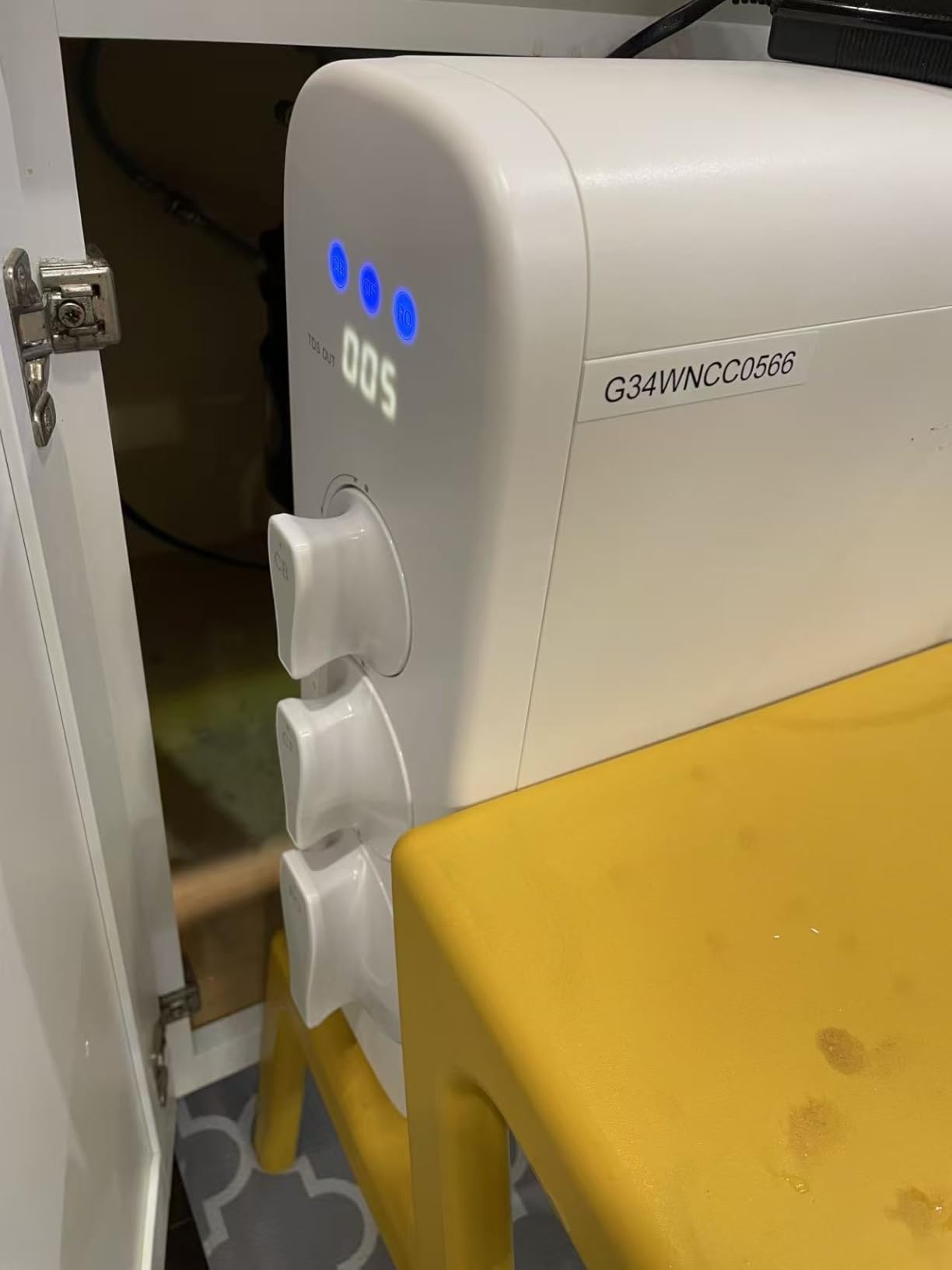
Low pressure is the usual reason people hesitate on tankless designs, and this is the model that gets recommended anyway. A user in r/waterfilter with low household pressure reported choosing the G3P600 and finding it worked well despite that constraint, and the 87 psi operating rating is the highest requirement figure in this group, so the pump-free approach is not universal.
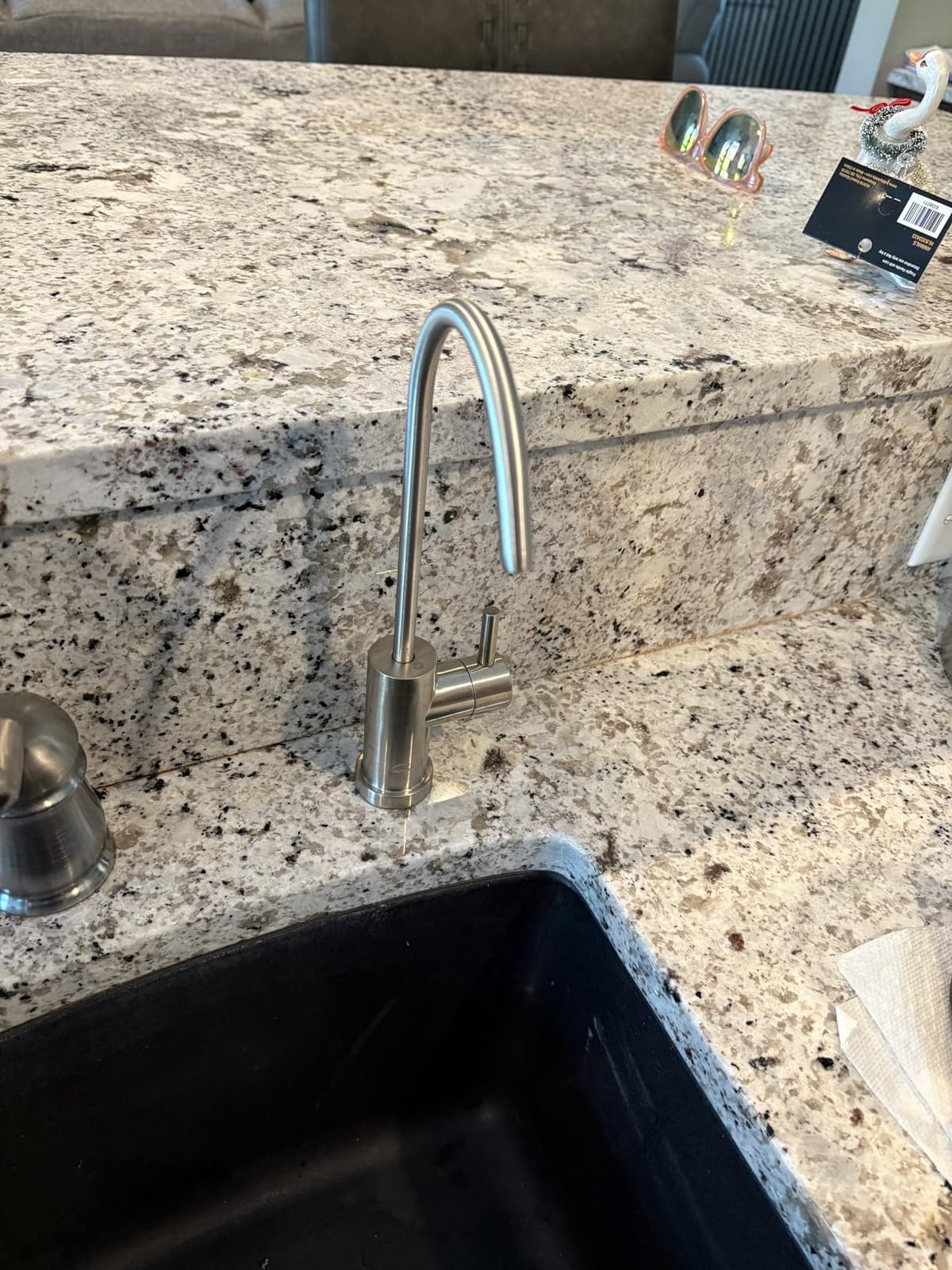
The smart display faucet reads live TDS and tracks filter life, which removes the single most common complaint about filtration systems generally: nobody knows when they last changed a filter. Certification covers NSF/ANSI 42, 53, 58, and 372. The trade-offs are the outlet requirement, a larger countertop hole than a standard small RO faucet needs, and higher replacement filter costs that owners consistently flag as the main downside over the unit’s life.
What to check before you buy
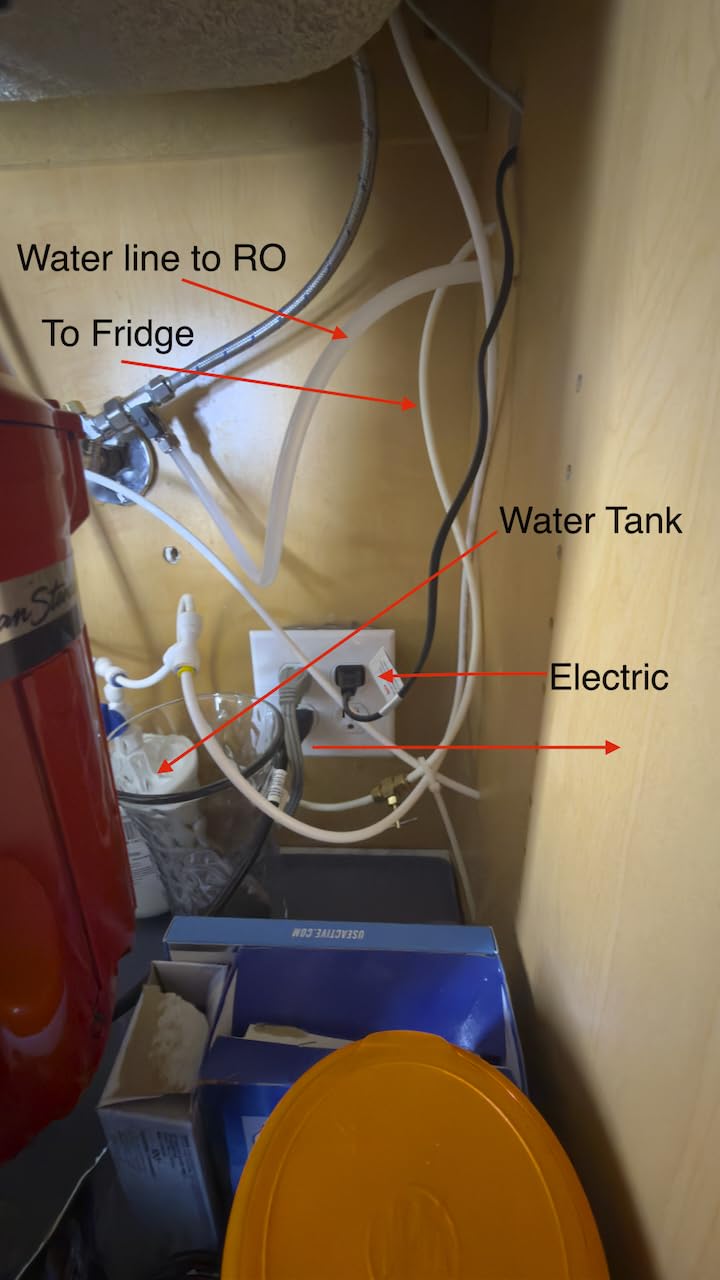
Confirm three things: an available outlet under the sink, a countertop hole wide enough for the metal faucet, and 1500 ppm or lower feed TDS, which is the supported maximum. Dimensions are 18.12 by 5.67 by 17.72 inches at 31 pounds, and the three pre-installed filters, faucet, and manual are all included, so the install is closer to 30 minutes than an afternoon.
Who this suits and who it does not
It suits large households, anyone who bottles water or makes ice in volume, and anyone who has hit the tank-empty wall before. It does not suit a rental where an outlet is not already present, or a household optimizing purely for ongoing filter cost, since the proprietary cartridges cost more than standard-size replacements. If you want tankless without the electrical dependency, the iSpring RO500AK pairs similar capacity with a 2:1 ratio.
4. SimPure Y7P-BW UV: The Best Countertop Pick for Renters
SimPure Y7P-BW UV Countertop Reverse Osmosis Water Filter, 5 Stage RO
Countertop, no installation
0.0001 micron RO plus UV
4:1 ratio
528 gallons
Pros
- No drilling or plumbing connection required
- UV stage disinfects without chemicals
- 4:1 ratio recovers water left in the tank
- Glass dispensing pitcher avoids storing water in plastic
- Large TDS reductions reported on high-TDS well water
Cons
- 1.3 gallon reservoir needs frequent refilling
- First flush cycle takes about 45 minutes
- Tank needs manual cleaning and descaling
- Manual is unclear in places
- Room-temperature output only
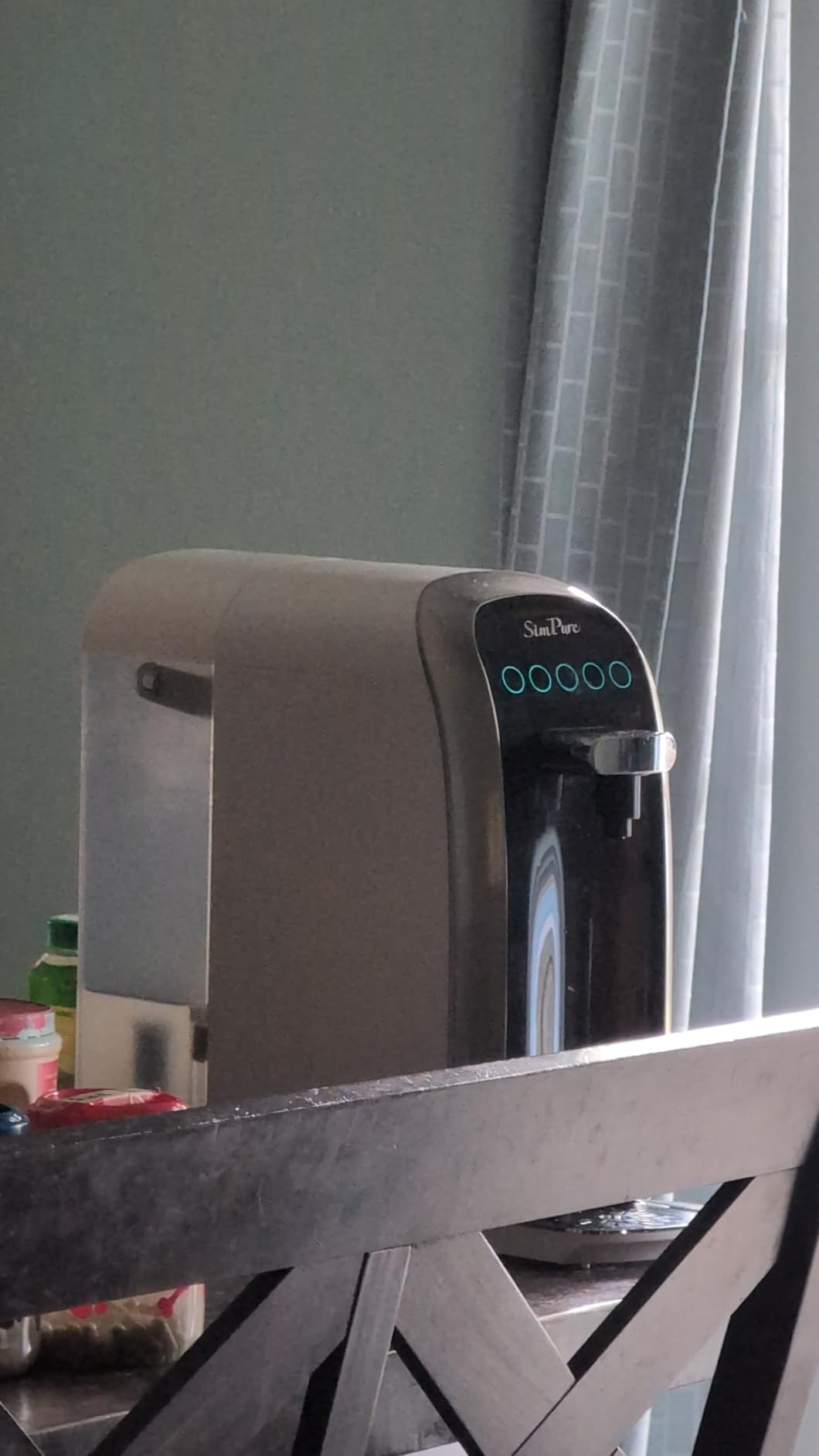
This is the unit to buy when drilling a faucet hole is not an option. It plugs into a counter outlet, needs no drain connection, and arrives with a pre-installed carbon and RO cartridge and a removable drip tray. A 0.0001 micron membrane is paired with a UV stage, which addresses microbes that carbon and osmosis alone will not touch, and the system was tested by SGS against the NSF/ANSI 58 standard.
Capacity is listed as 528 gallons per filter set, and the dispense rate works out to 418 GPD, filling a cup in about 15 seconds. The 4:1 pure-to-drain ratio is the best efficiency figure in this group because the design actively recovers the water still sitting in the tank rather than sending it to a drain.
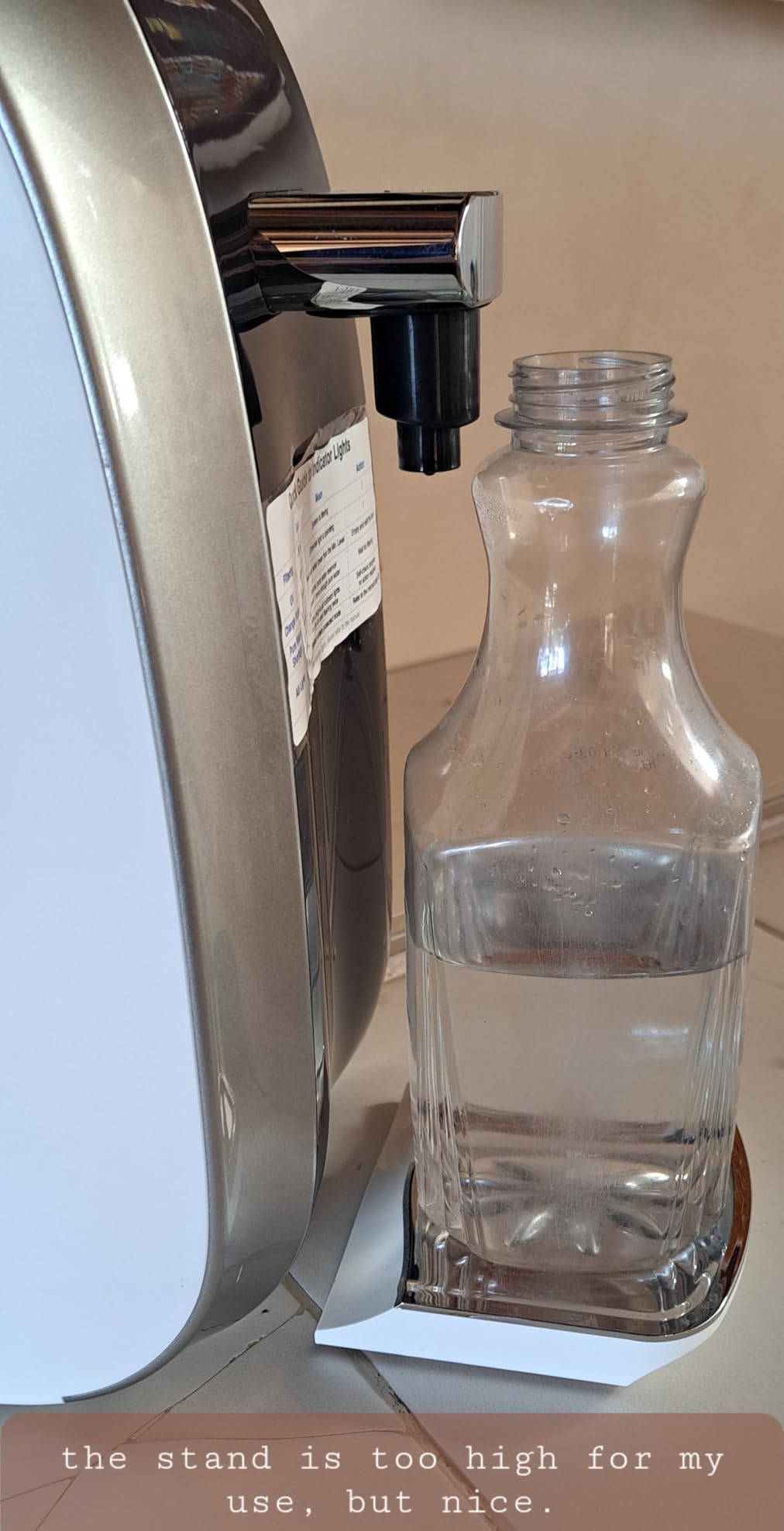
Two-year owners generally like the water and the support, and the glass pitcher is a genuine improvement over storing water in a plastic reservoir. The persistent complaint is that water left in the internal tank develops an off taste after roughly a month, which is the same problem that pushes people away from countertop units in general. Sanitizing the tank on a schedule keeps it in check.
Setup is not instant. The initial flush takes around 45 minutes, and beyond filter changes you will need to clean and descale the tank manually, which nobody mentions in the marketing copy. The 4.2 star average is the lowest here, and the 11 percent one-star share tracks that reservoir issue rather than any filtration complaint. It handles 500 ppm feed TDS or lower, and it dispenses room-temperature water only.
What to check before you buy
Measure your counter space honestly. At 17.3 by 7.5 by 17 inches and 13 pounds, this is not a slim pitcher, and the reservoir needs room to be lifted out for cleaning. Confirm you have an outlet within reach and that 500 ppm is a safe ceiling for your feed water, since that is lower than several under-sink options tolerate.
Who this suits and who it does not
It suits renters, dorm rooms, offices, and RVs where no plumbing work is permitted, and anyone who wants UV disinfection alongside membrane filtration. It does not suit a family of three or more, since the 1.3-gallon reservoir means constant refilling, and it will frustrate anyone who wants cold water on demand. The Bluevua below handles the same no-install brief with a glass carafe and a longer filter interval.
5. Bluevua RO100ROPOT: The Best Countertop Pick for Taste and Materials
Bluevua RO100ROPOT Countertop Reverse Osmosis Water Filter System
Countertop
glass carafe
5-stage with remineralization
2:1 ratio
Pros
- Borosilicate glass carafe replaces the plastic tank rivals use
- No plumbing or installation needed
- Five stages include a remineralization filter
- Filter life monitor shows service life and water quality
- 2:1 pure-to-drain ratio with standby power mode
Cons
- Reservoir needs manual refilling
- Long filter interval means longer waits when filters expire
- Countertop footprint is larger than pitcher filtration
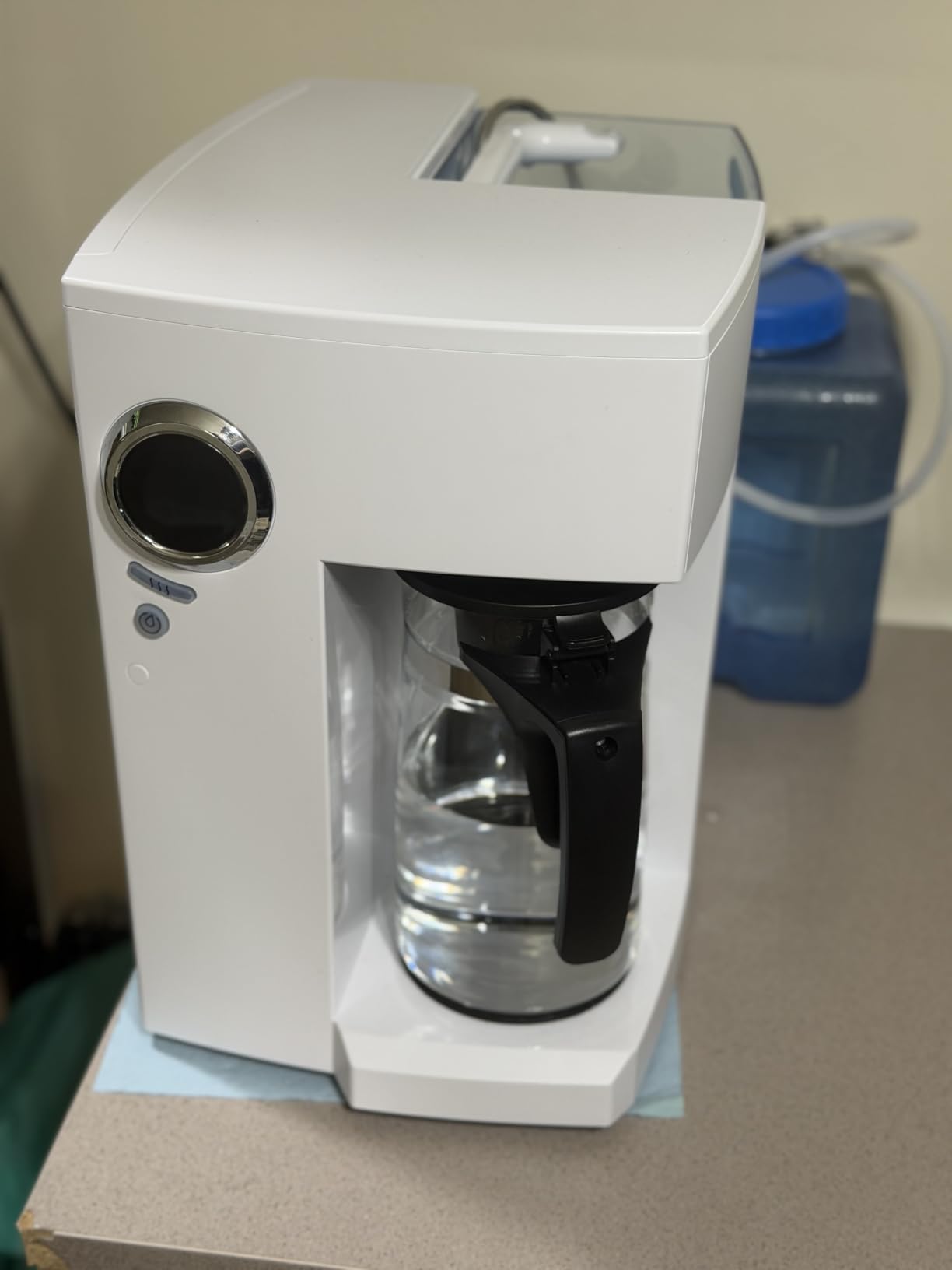
The distinction that makes this one different is the vessel. Instead of a plastic reservoir, you get a borosilicate glass carafe, which removes the secondary contamination question entirely and eliminates the off-taste problem that surfaces after a month of storage. At 4.6 stars from 3695 ratings with only 5 percent one-star reviews, it is the most favorably rated countertop unit in this group.
Filtration is five stages with a remineralization filter at the end, so the output is mineral-balanced rather than stripped, and it is WQA and NSF certified with feed TDS supported to 1000 ppm. The 2:1 pure-to-drain ratio and a power-saving standby mode keep idle consumption low, and the unit carries ClimatePartner certification for its sustainability design.
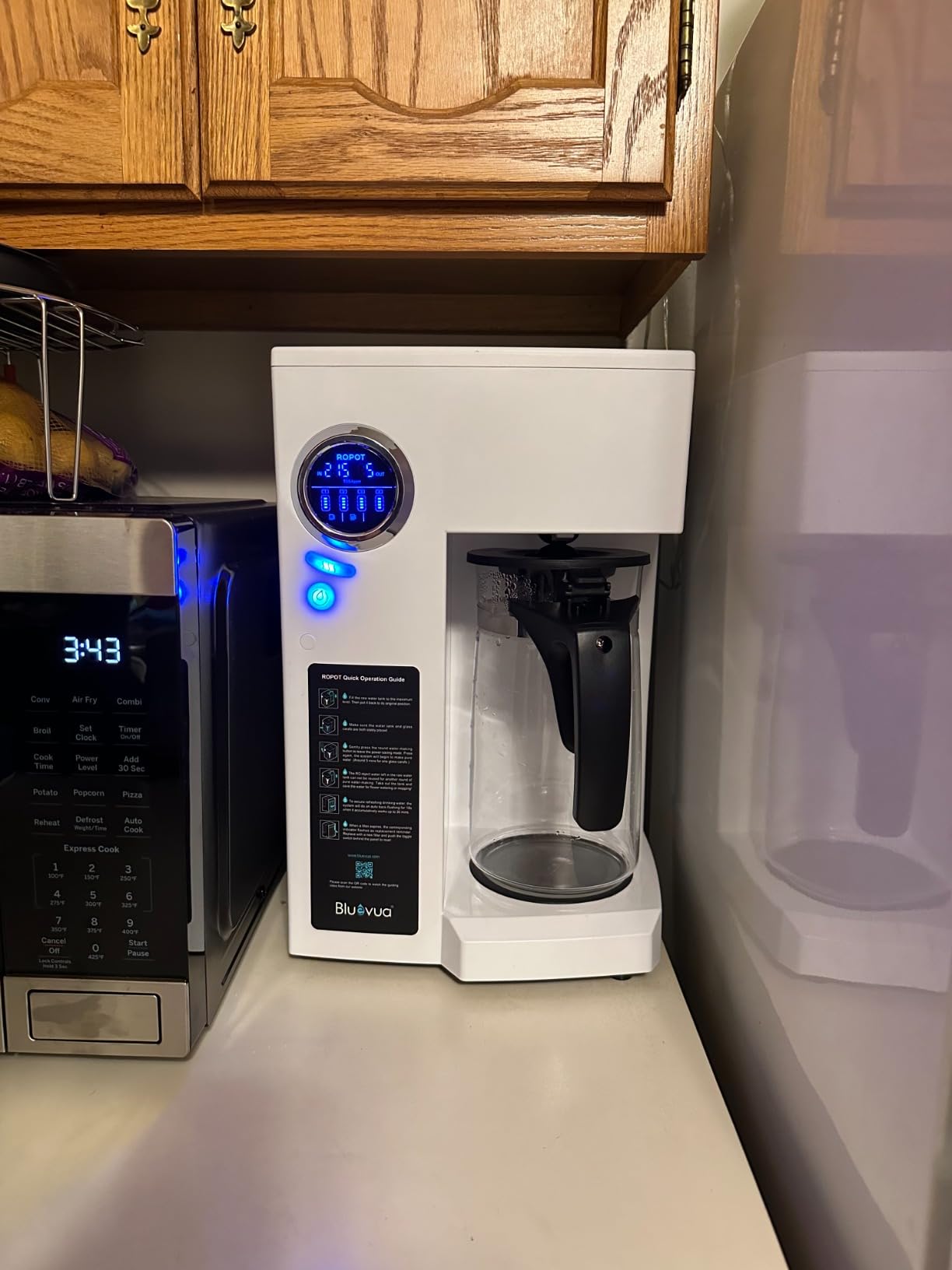
A built-in filter life monitor displays remaining service life and water quality directly on the unit, which is the kind of small thing that determines whether you keep up with maintenance. The listed filter life is 24 months, and the monitor is calibrated to a 12 to 24 month service window depending on your feed water. Setup is genuinely plug-and-play: carafe, power adapter, cleaning brush, four filters, and the mineral filter are all in the box.
The honest limitations are size and effort. At 10.9 by 15.4 by 14.3 inches it takes a real footprint, and you are refilling the reservoir by hand every cycle, which is exactly the habit that causes countertop units to get abandoned. Flow is 0.26 liters per minute, slower than the SimPure. Buy it for taste and materials, not for speed.
What to check before you buy
Confirm 1000 ppm is above your feed TDS, which it should be on municipal water, and check the 5 kg weight if you plan to move it between rooms. The carafe lifts out for cleaning, so leave clearance above the unit. A one-year limited manufacturer warranty applies once you register the product, which is worth doing immediately.
Who this suits and who it does not
It suits renters and anyone sensitive to plastics, households drinking a few glasses a day rather than a gallon, and people who dislike the flat taste of straight membrane water. It does not suit heavy daily drinkers, ice makers, or anyone who will resent a manual refill routine. For faster dispensing with the same no-install convenience, the SimPure runs roughly twice as fast.
6. Waterdrop G2: Tankless Flow in a Smaller Package
Waterdrop G2 Reverse Osmosis System, 400 GPD Tankless RO Water Filtration
400 GPD
0.28 gpm
1:1 drain ratio
NSF/ANSI 372 certified
Pros
- Tankless design saves over 70 percent of cabinet space
- 400 GPD fills a cup in about 12 seconds
- 1:1 ratio cuts water waste substantially
- Twist-and-pull filters change in about 3 seconds
- Integrated water and electrical design cuts leak points
Cons
- Requires an electrical outlet under the sink
- Higher upfront cost than comparable tanked systems
- Proprietary G2CF and G2MRO filters cost more than generic
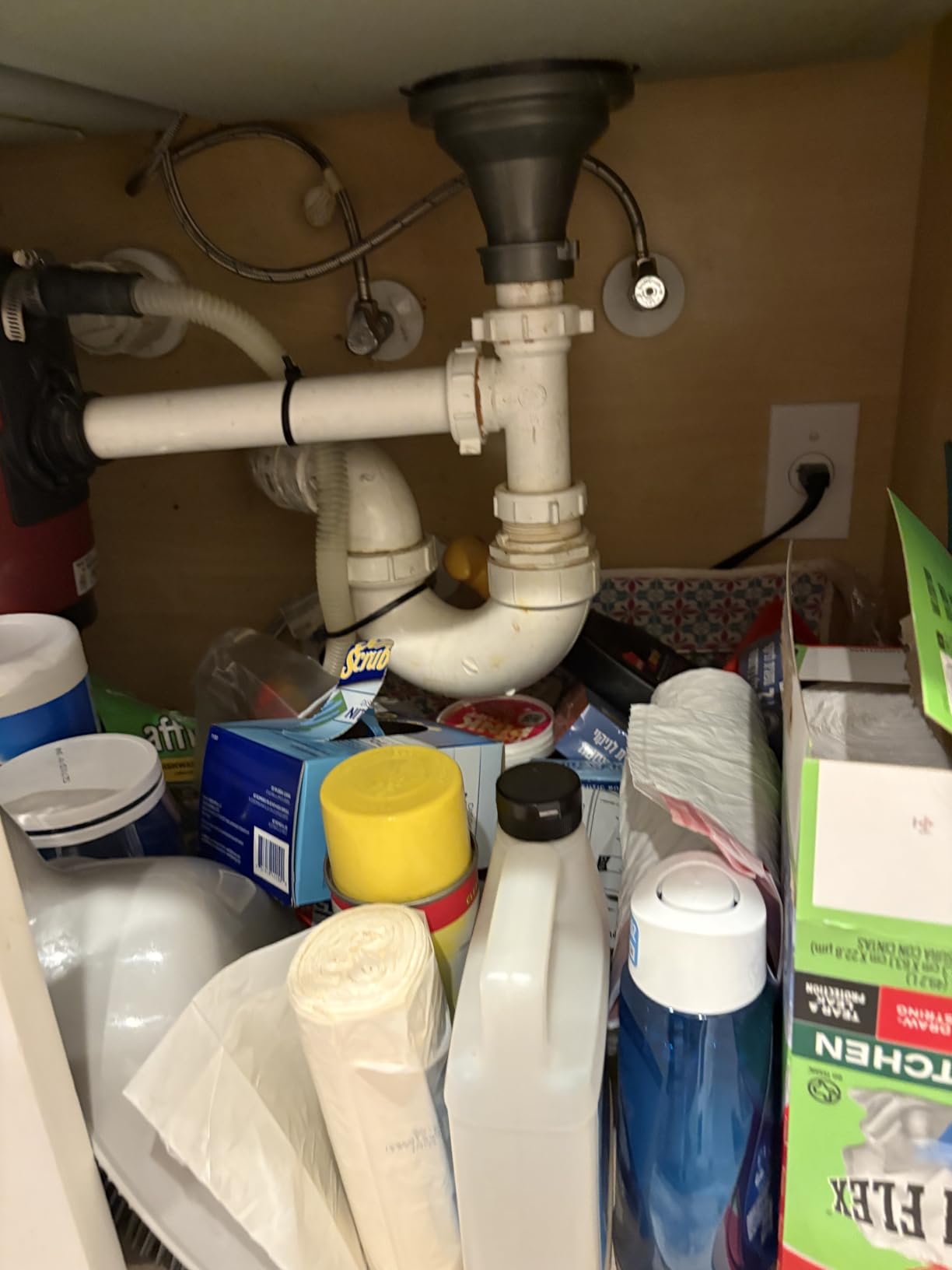
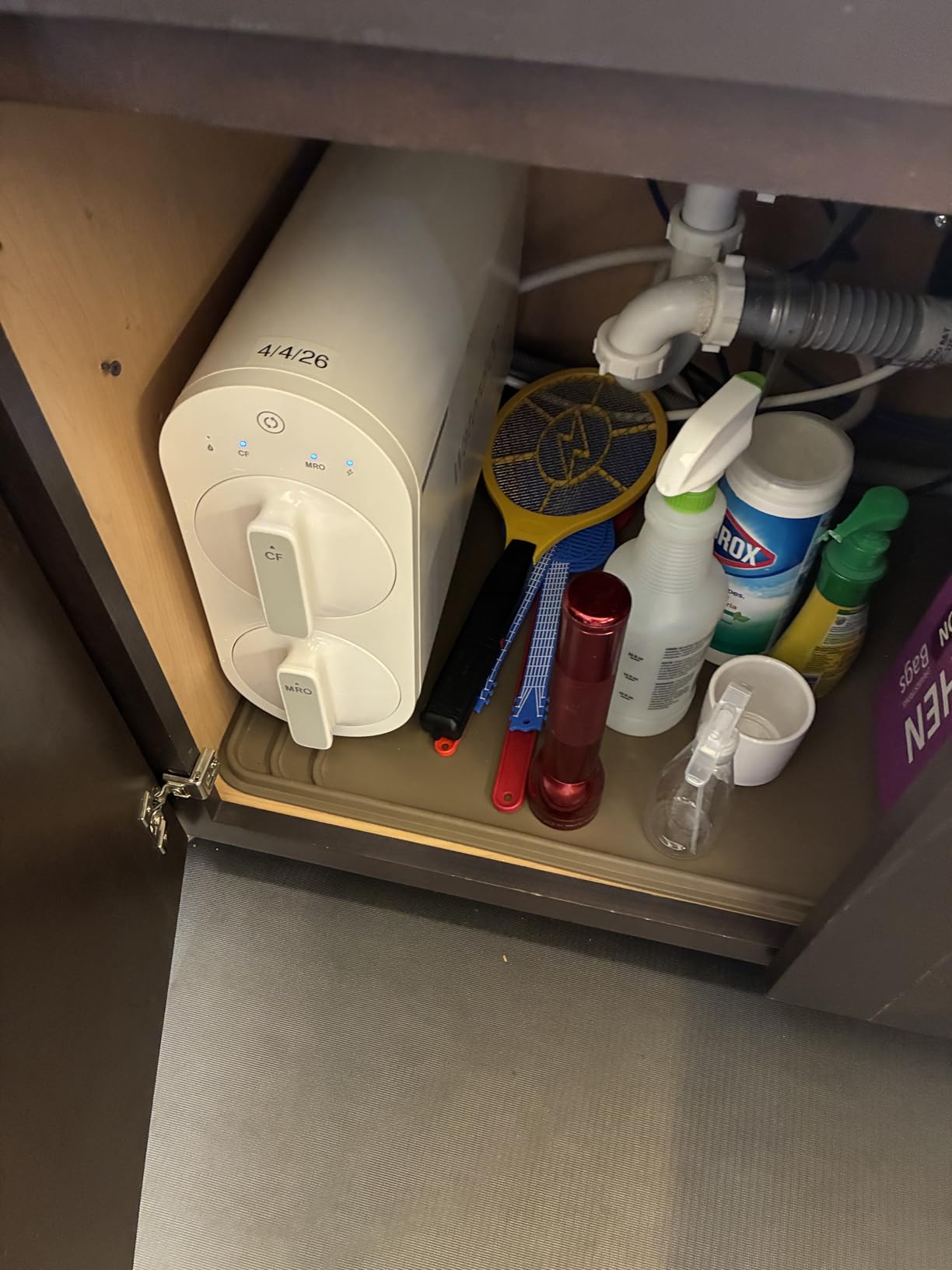
This is the more compact take on the tankless idea. Seven stages with a composite filter, 400 GPD of capacity, and a 1:1 pure-to-drain ratio, which is a genuine efficiency gain over the 3:1 typical of conventional membrane systems and roughly half the waste of the 2:1 models above. Flow sits at 0.28 gpm, so a cup fills in about 12 seconds.
Installation is advertised at under 30 minutes because the electrical and water circuits are integrated rather than plumbed separately, which also reduces the number of joints that can weep over a decade. Filters use a twist-and-pull front-access design with a stated three-second change. Certification here is NSF/ANSI 372 for lead-free materials rather than the 58 standard, which is a narrower claim worth understanding.
Owners point to the same two things: the space savings and the speed, plus a noticeable taste improvement over pitcher filters. The 1:1 ratio is the quiet advantage here, since water cost and septic concerns rarely factor into a purchase decision until the first utility bill arrives.
The catch is the feed water ceiling. Supported TDS tops out at 300 ppm, the lowest limit in this group, so if you are on a well or a high-TDS municipal supply this unit is the wrong choice no matter how good the flow is. The replacement cartridges are proprietary G2CF and G2MRO units, and that ongoing cost is the most common regret reported by long-term owners, alongside the outlet requirement.
What to check before you buy
Measure the cabinet. At 17.3 by 5.9 by 14 inches this is one of the shorter units in the group, which is the entire argument for it. Confirm 300 ppm or lower on your feed water and an available outlet. The mechanical faucet is included, and the unit runs on a stored cord rather than a hardwired connection.
Who this suits and who it does not
It suits small kitchens, RV and condo cabinetry, and anyone who wants tankless convenience at 400 GPD without stepping up to the G3P600. It does not suit well-water households or anyone planning to run it on a high-TDS supply. If you need certified contaminant reduction claims rather than a lead-free material certification, the APEC or the iSpring models carry the broader NSF/ANSI 58 designation.
7. FS-TFC 5-Stage 100 GPD: The Budget Pick With Spares Included
FS-TFC 5-Stage Reverse Osmosis Water Filter System, NSF Certified 100GPD RO Water Purifier Under Sink Reduces 99.999% Impurities, with 4 Extra Replacement Filters Free for Home Drinking
100 GPD
18 L per hour
30-85 psi
3.2 gallon tank
Pros
- Lowest cost in the roundup with four spare filters bundled
- Compact 11.5 by 5 by 11.5 inch footprint fits small sinks
- Tool-free install in about 10 minutes
- 18 L per hour fills a 200 ml cup in 5 seconds
- Two-year warranty with lifetime 24/7 support
Cons
- Some quick-connect fittings crack or leak and get swapped
- Housing condensation can be heavy without a drain trough
- No sixth remineralization stage so water tastes flat
- Mounting brackets are flimsy
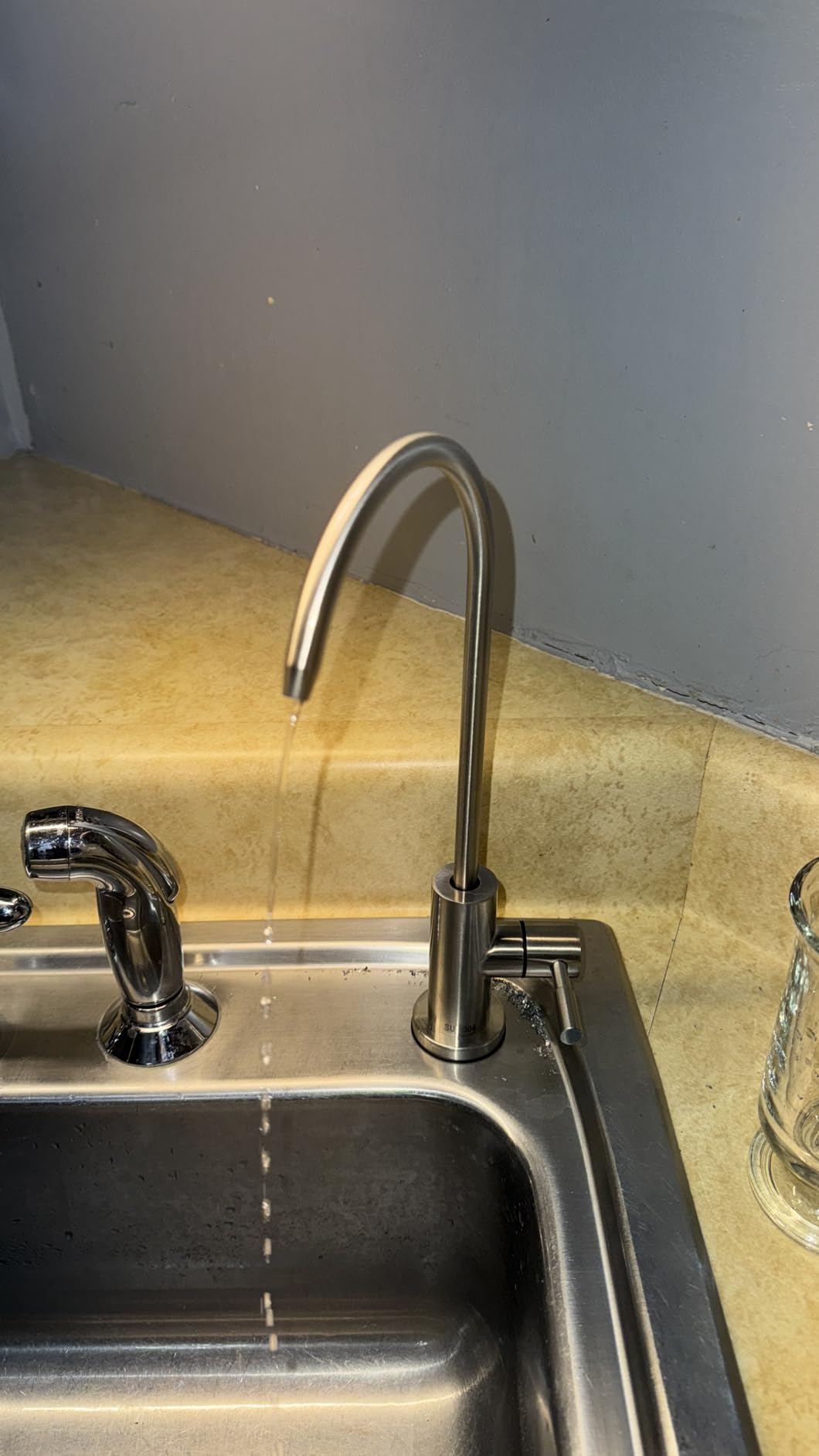
At 100 GPD this is the cheapest way into a full five-stage system, and the specification is more serious than the price suggests. Flow is 18 liters per hour, which puts a 200 ml cup in front of you in about five seconds at 60 psi, and the pressure range of 30 to 85 psi is the lowest floor in the group, so it tolerates weaker supply than most tanked systems here.
The box includes the system, faucet, tank, feedwater adapter, tool set, and four extra replacement filters, so the first year of ownership is largely covered. A two-year manufacturer warranty and lifetime 24/7 technical support back it up, and several owners report sub-10 ppm TDS across multiple units held over eight years.
Where it earns its 4.2 star average is hardware. Some owners report quick-connect fittings cracking or leaking and substituting parts from other brands, which is a solvable but annoying problem. Condensation also forms heavily on the lower housings, and some installations need a small drain trough underneath to keep the cabinet base dry. Both are manageable if you know about them going in.
There is no sixth remineralization stage, so the water tastes flatter than the alkaline models, and if taste is a deciding factor for your household, budget for that compromise. The mounting brackets are also described as flimsy, and a mounting panel or a couple of zip ties keeps the unit from shifting when you pull a housing. Feed TDS is supported to 500 ppm.
What to check before you buy
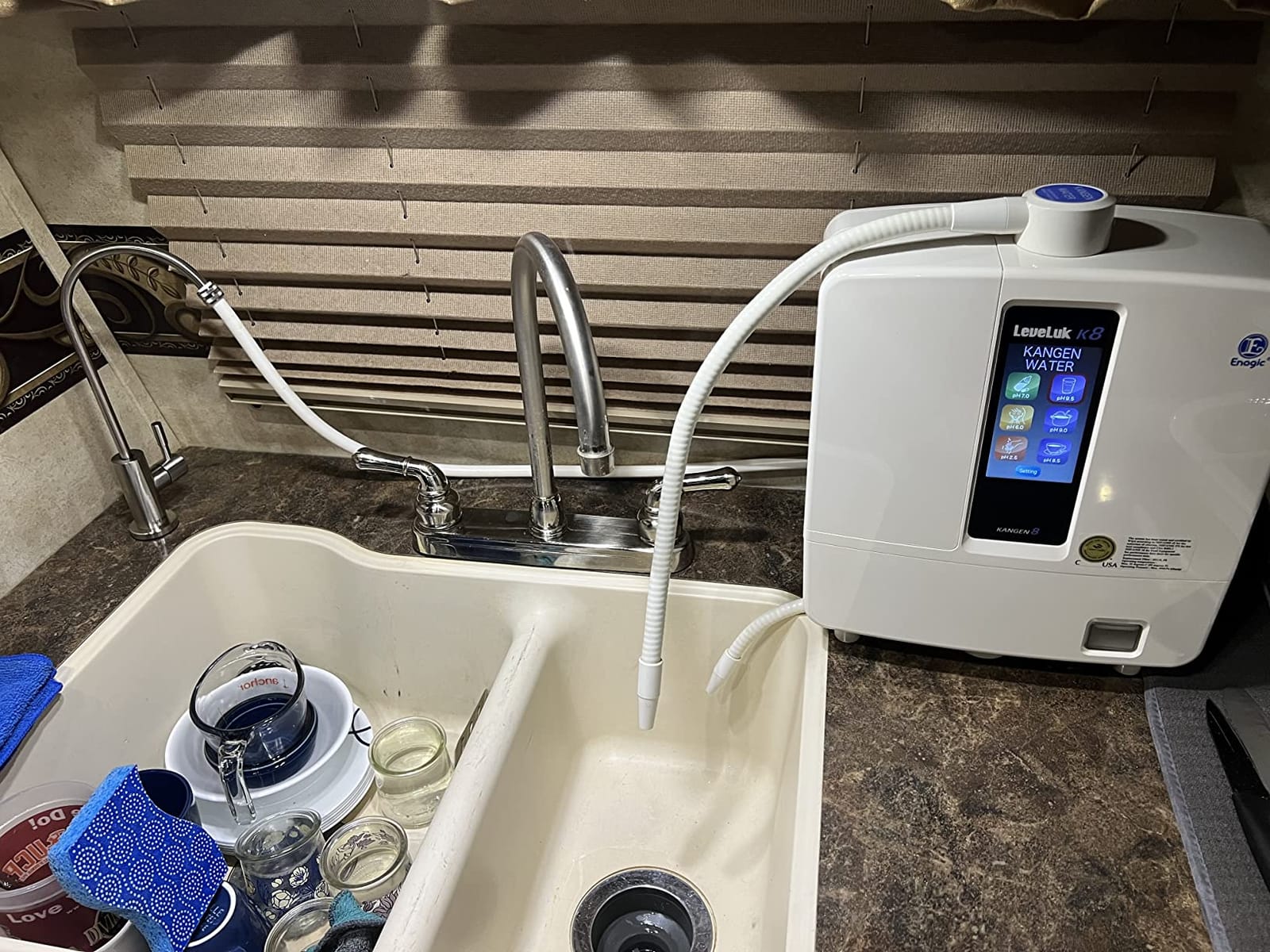
Check your clearance carefully. At 11.5 by 5 by 11.5 inches this is the smallest unit here and it fits small sinks, RVs, and even bathroom cabinets. The 3.2-gallon storage tank sits under the counter, and the included faucet is stainless steel. If you can handle a bracket upgrade on day one, most of the long-term complaints disappear.
Who this suits and who it does not
It suits first-time buyers on a tight budget, households in small spaces, and anyone who wants spares on hand for the first year. It does not suit taste-driven households, people who want a documented certification claim rather than a stated reduction percentage, or anyone unwilling to spend ten minutes tightening fittings. The APEC ROES-50 is the better buy at a similar tier if certification matters more to you.
8. iSpring RCC7P-AK: The Best Pick for Low Water Pressure
iSpring RCC7P-AK, 6-Stage Reverse Osmosis System Under Sink Alkaline Water Filter and Pump, RO Drinking Water Filtration System, Patented Top-Mounted Faucet Design for Easy Installation
75 GPD
integrated booster pump
6-stage alkaline
20 pounds
Pros
- Highest average rating in the group at 4.7 stars
- Integrated booster pump holds filtration performance at low pressure
- Sixth alkaline stage balances pH and improves taste
- Reduces up to 99 percent of 1000+ contaminants
- Universal 100-240V power adapter
Cons
- Booster pump requires an electrical outlet under the sink
- 20 pound unit uses more cabinet space than compact models
- Wastes more water at low flow without supply pressure
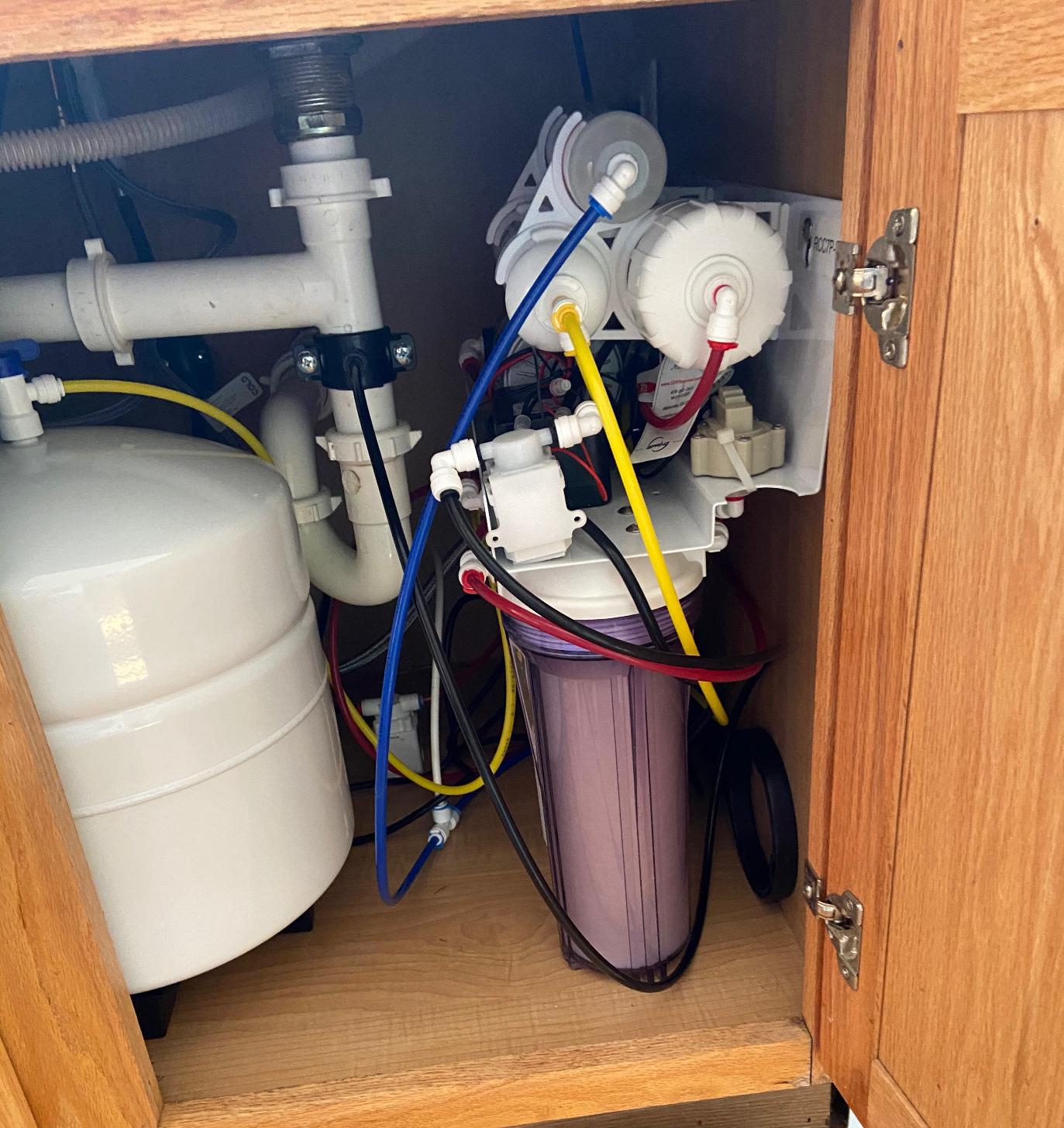
Low household water pressure is the most common reason an under-sink RO system disappoints, and this is the fix for it. An integrated electric booster pump pushes feed water through the membrane at proper working pressure regardless of what your supply is delivering, so rated performance holds up in old houses, upper floors, and homes with long runs of pipe from the main.
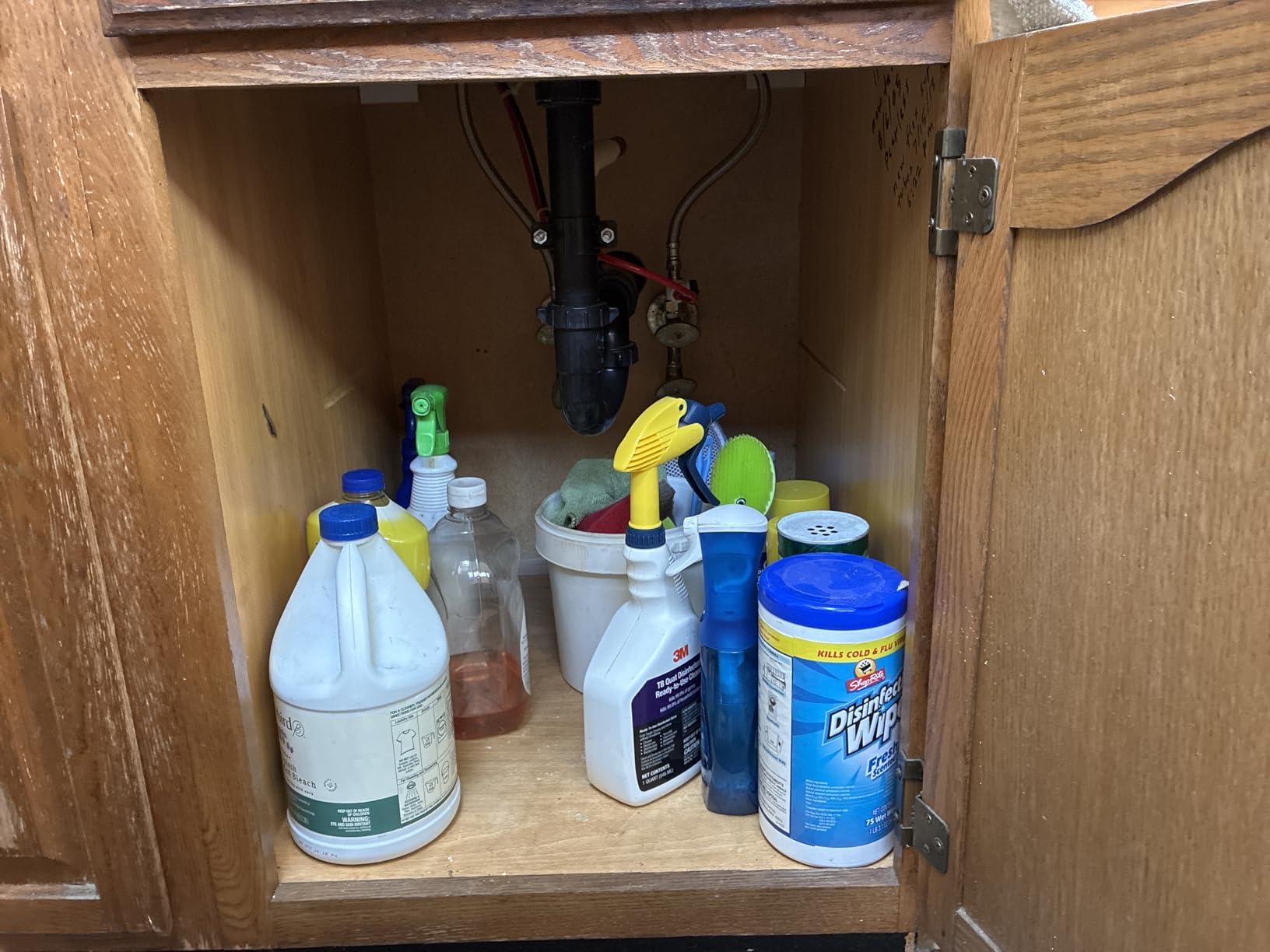
Everything else tracks the RCC7AK we recommend first: six stages, an alkaline remineralization stage, a transparent first housing, and up to 99 percent reduction across 1000+ contaminants including 98 percent lead. What changes is the pressure tolerance, the weight, and the power requirement. The unit is 20 pounds at 15 by 8 by 18 inches, a full ten pounds heavier than the non-pumped version.
At 4.7 stars with an 88 percent five-star share and 4 percent one-star, this has the strongest satisfaction profile in the group, and the pump-assisted low-pressure performance is the most-praised attribute in owner feedback. Support comes from Atlanta, GA, on a lifetime basis, and the 100-240V 50/60Hz adapter works across household configurations.
The trade-offs are honest ones. You need an outlet under the sink, which rules out some installations outright, and the bulk is real in a tight cabinet. A second consideration: running a booster pump against marginal supply pressure does not create water, it pushes water harder, so low-pressure homes will still see reduced output and higher waste ratios at the tail end of a tank fill.
What to check before you buy
Measure for a 15 by 8 by 18 inch footprint at 20 pounds and confirm an outlet exists near the sink base. Feed TDS is supported to 2000 ppm, the highest ceiling of the tanked models here, which makes it a strong choice on high-TDS supply. If your pressure is genuinely good, the added pump is overhead you do not need.
Who this suits and who it does not
It suits older homes, upper-floor apartments, and anyone whose last RO attempt ran slow or never reached pressure, plus households that want alkaline water without giving up tank storage. It does not suit renters without an outlet, tight cabinetry, or homes with strong supply pressure. For high-volume use with no tank, the RO500AK below is the pumped-design alternative with far higher capacity.
9. iSpring RO500AK: The Best Pick for High Household Demand
iSpring RO500AK Alkaline Reverse Osmosis System, NSF 58 Certified, 500 GPD
500 GPD
0.4 gpm
2:1 drain ratio
auto-flush after 24 hours
Pros
- 0.4 gpm flow fills an 8 oz cup in about 10 seconds
- Complete-system NSF/ANSI 58 certification
- 2:1 ratio saves up to 400 percent water
- Auto-flush protects the membrane after 24 hours idle
- Panel lights and buzzer signal filter changes
- Tankless design saves up to 70 percent of cabinet space
Cons
- Highest cost in this roundup
- Requires access to electricity under the sink
- Replacement filters are brand-specific
Five hundred GPD at 0.4 gpm is genuine household capacity. There is no tank, so no refill wait during a meal when someone is filling bottles and someone else is cooking, and an 8 oz cup fills in about ten seconds. For a family of five or more, or a home running an ice maker off the purified line, this is the volume the other units here cannot reach without a booster pump.
It carries complete-system NSF/ANSI 58 certification, which is a stronger claim than component-level testing, and the 2:1 drain ratio means roughly 400 percent less water wasted than a traditional RO installation. Feed TDS is supported to 1000 ppm and the pressure range is broad at 15 to 70 psi, so it has some tolerance for weaker supply.
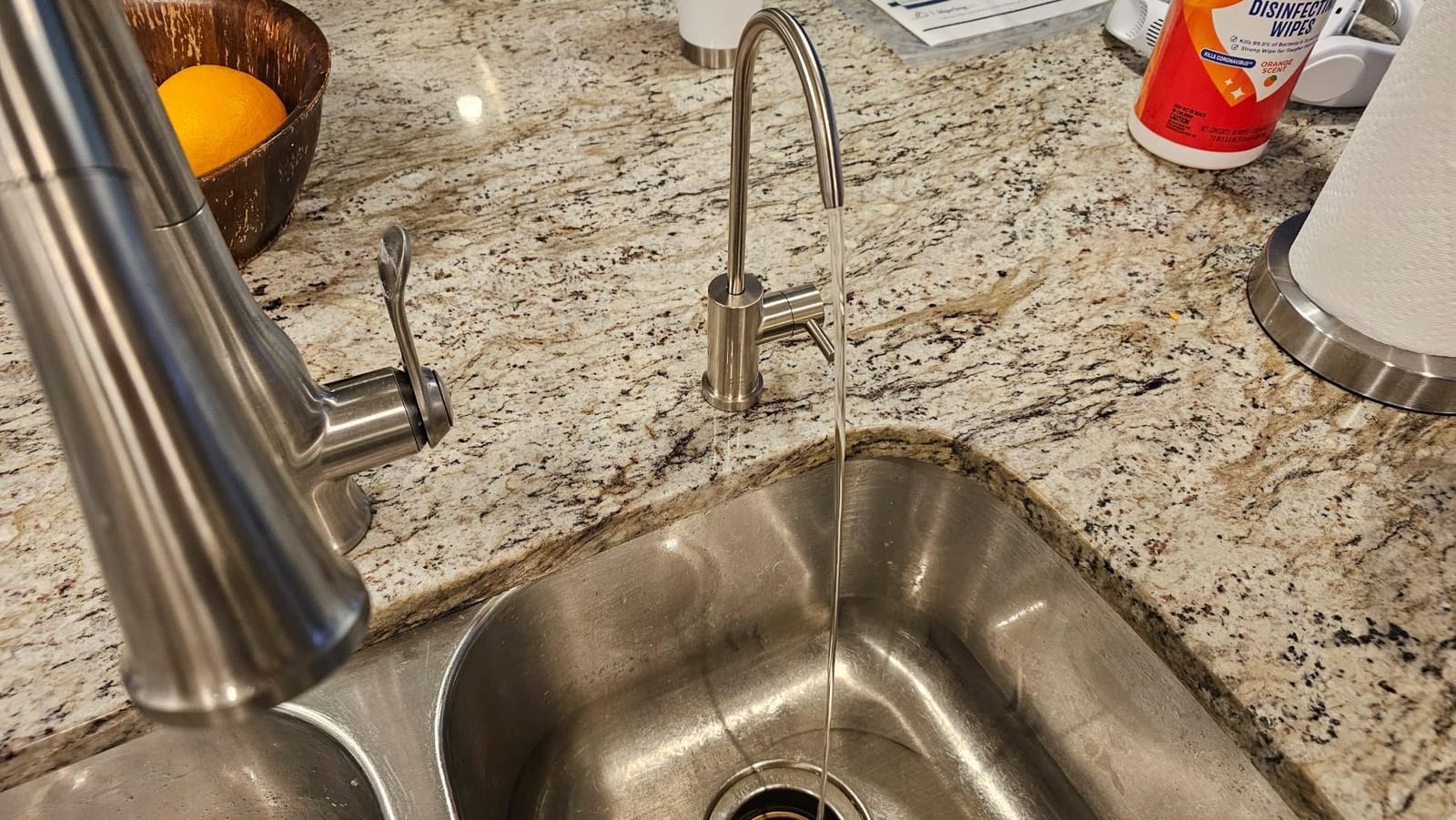
Two design details separate it from the generic tankless crowd. The auto-flush cycle runs after 24 hours of non-use, which keeps the membrane from drying out and going stale during a vacation, and the front panel uses lights and a buzzer to tell you precisely when a filter needs changing rather than leaving it to a six-month guess.
Owners with higher daily demand consistently praise the flow, the absence of a tank, and the reminder indicators, and the general acceptance is that the cost is justified by certified performance and the space savings. The real long-term cost is the brand-specific cartridges: FCF500, MRO500, FCA500, and F7-RO500AK, on a two-year filter life, which adds meaningfully to ownership over a decade.
What to check before you buy
Confirm an outlet and a 17.5 by 5.2 by 16.25 inch footprint at 21 pounds. This is the most expensive system in the group, roughly double the 75 GPD iSpring model, so the case for it rests entirely on how much water your household actually drinks. If daily use is light, the same brand at half the capacity delivers nearly the same experience.
Who this suits and who it does not
It suits large families, households that refill bottles daily, and anyone with a refrigerator or ice maker that should run on purified water. It does not suit light drinkers, renters without an outlet, or anyone optimizing for the lowest ongoing filter spend. The Waterdrop G3P600 matches the capacity with a lower purchase cost and a similar 2:1 ratio if you want the same output for less.
10. NU Aqua 100 GPD: The Best Warranty and Trial Period
NU Aqua 5-Stage Under Sink Reverse Osmosis Water Filter System – 100 GPD RO
100 GPD
HydraCoil membrane
3-year warranty
120-day home trial
Pros
- 120-day home trial plus a three-year warranty
- Includes a PPM meter for measuring output
- Quick-connect fittings with color-coded tubing
- Stainless steel faucet and double o-ring housings
- Repeat buyers report multiple units over eight years
Cons
- No booster pump so performance depends on supply pressure
- Alkaline stage on some variants can smell sulfur-like
- Instructions are confusing without video guidance
- Occasional reports of shutoff valve or tank pressure faults
The distinguishing feature here is risk. A 120-day in-home trial with a three-year manufacturer warranty is the most generous commitment on this list, and the included PPM meter lets you verify the water quality yourself instead of taking a percentage claim on faith. Repeat buyers report running multiple units over nearly eight years, which is the kind of durability evidence that does not show up in a star average.
Capacity is 100 GPD, which is double a typical small tanked system, through a HydraCoil membrane the manufacturer claims produces up to 50 percent cleaner output than competing membranes. Double o-ring sealed housings and color-coded tubing make a sub-hour install realistic, and the stainless steel faucet is a step up from the plastic ones that dominate this category.
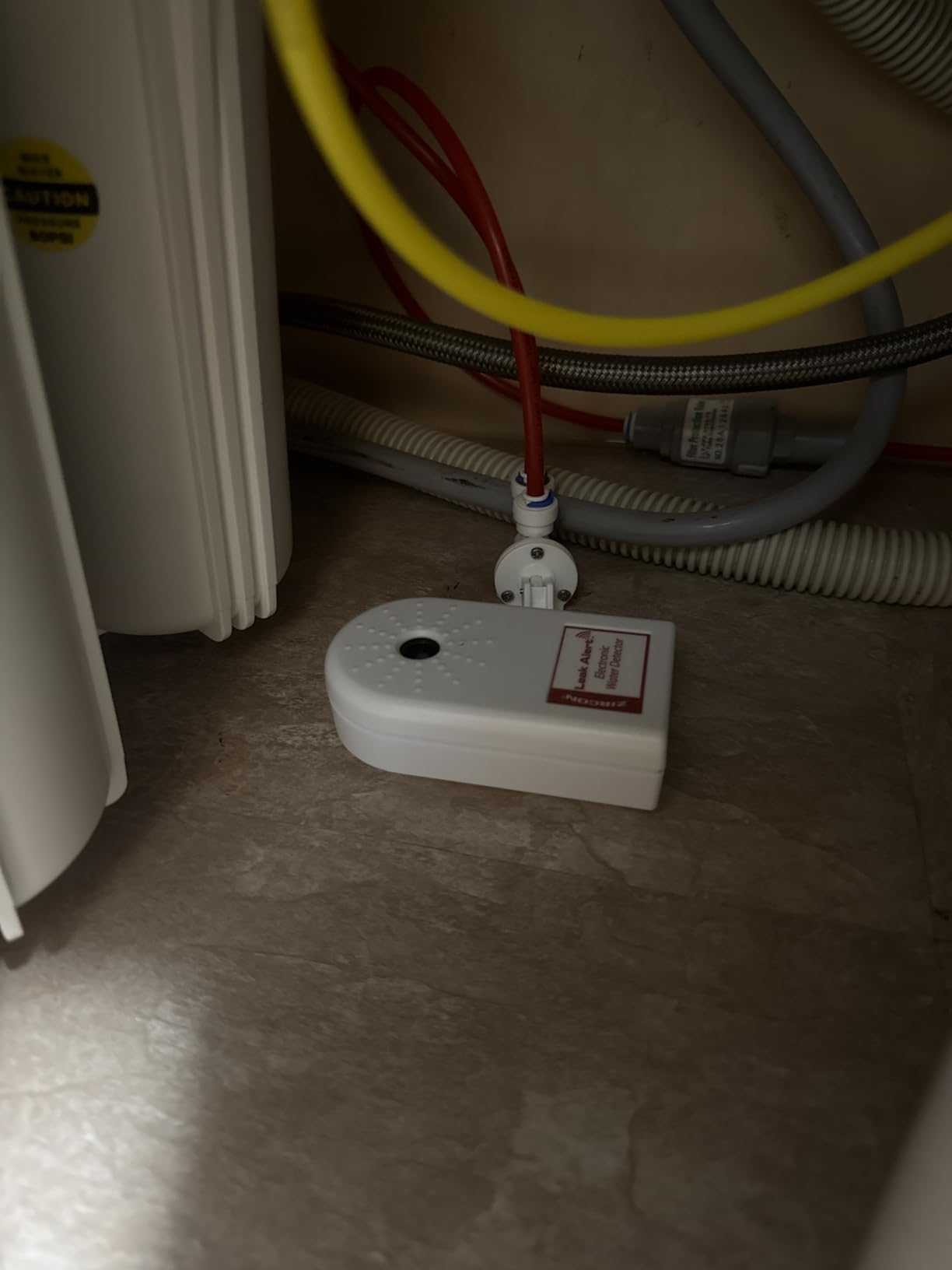
With 880 ratings, this is the smallest review base in the group, so the 4.4 average carries more uncertainty than the others. The weaker spot is support depth: some owners report limited knowledge from support staff on tank over-pressurization and automatic shutoff valve faults, though the manufacturer generally resolves problems when contacted.
There is no booster pump, so this is not the low-pressure answer. On some variants the alkaline sixth stage gives the water a sulfur-like smell that owners single out, and the written instructions are clearer with a video alongside them. Feed TDS is supported to 500 ppm. No power is required, which is a genuine advantage in a cabinet with no outlet.
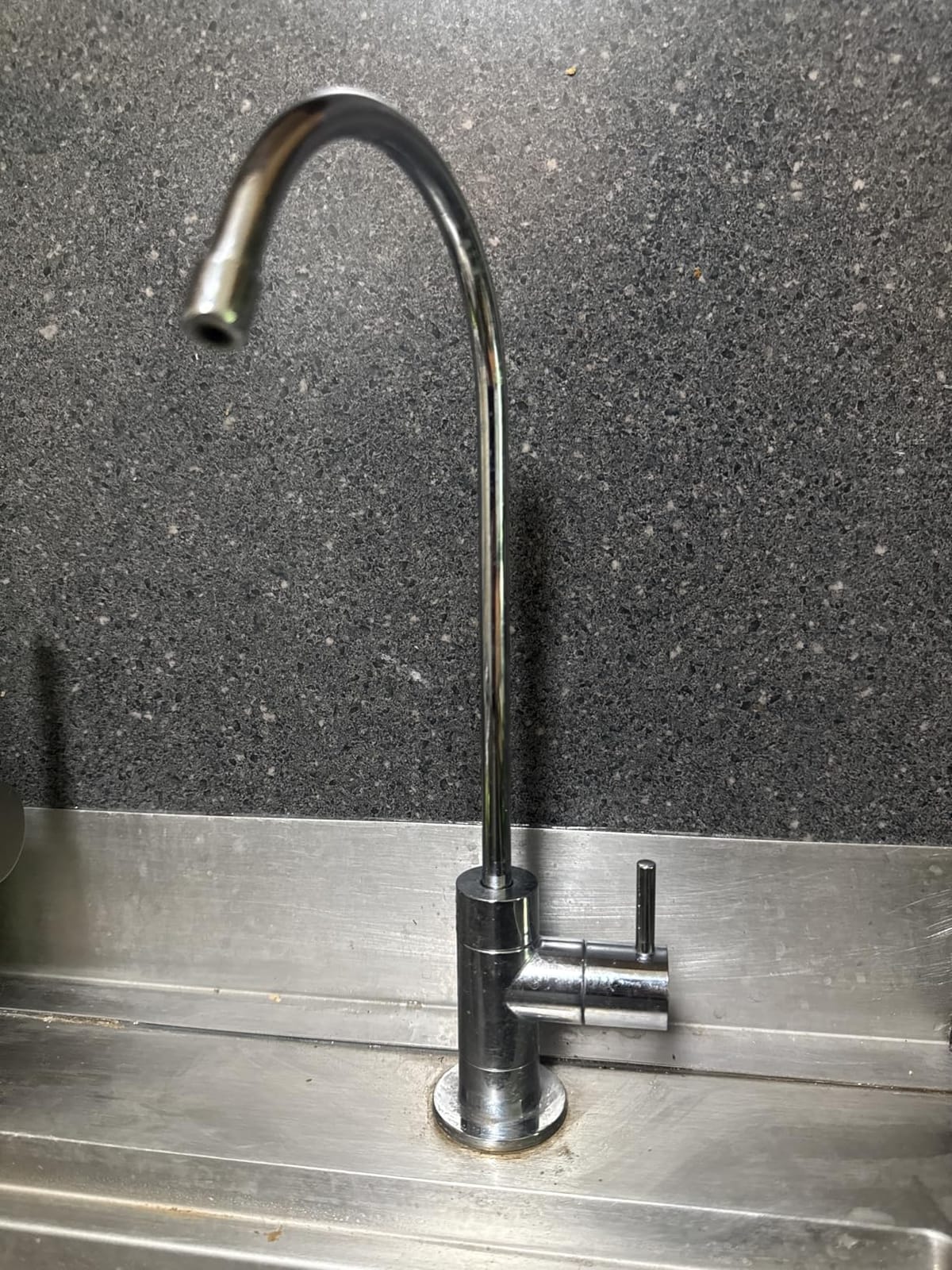
What to check before you buy
Budget for 15 by 5.5 by 17.5 inches at 20 pounds, which is a substantial footprint for a tanked system. Ask yourself honestly whether you can manage a 120-day evaluation period, because the trial only helps if you actually measure with the included meter. The unit needs no power, so installation is limited to the faucet, drain saddle, and feed adapter.
Who this suits and who it does not
It suits cautious buyers who want time to verify the water before committing, households that value a long warranty over a high spec sheet, and anyone without an available outlet. It does not suit low-pressure homes, or buyers who want the highest capacity in the group. If you want measurement and a trial but more flow, the FS-TFC 100 GPD covers the same capacity with a shorter warranty.
How to Choose a Home Reverse Osmosis System
Three questions that decide your system type
First, can you drill a hole in the counter and reach a drain within reach? If not, you are shopping countertop units and nothing else. Second, do you have an outlet under the sink? That single fact eliminates several tankless and pumped models, and it is the one homeowners most often forget to check. Third, is your household drinking more than about three gallons a day, including bottled water and ice? If so, a 50 to 75 GPD tanked system will leave you waiting, and you want 100 GPD or a tankless design.
How reverse osmosis actually works
Feed water runs through pre-filters first, which is where sediment, chlorine, and organic compounds get caught. Chlorine matters more than it looks, because it damages the thin-film membrane downstream and quietly degrades filtration performance over a year of service.
Pressurized water then crosses a semi-permeable membrane that passes water molecules and holds back dissolved salts, metals, and synthetic chemicals. The clean permeate water goes to a tank or straight to your glass, and the concentrated reject water goes down the drain. That drain line is the reason RO is not a whole-of-house solution without a much larger and costlier design.
Sizing GPD to your household
A gallon a day per person covers drinking and cooking comfortably; add roughly a gallon for coffee brewing, formula, or heavy ice production. Two adults are served by 50 GPD, a family of four wants 75 to 100 GPD, and a family of five or more should be looking at 200 GPD or above. These are the units where a booster pump or a tankless design starts earning its cost.
Certification is the real filter, not stage count
Stage count is largely marketing. Every system here uses the same three functional layers: sediment protection, a carbon block, and a membrane. What separates a credible claim from a decorative one is certification, and the relevant standards are NSF/ANSI 58 for reverse osmosis systems, NSF/ANSI 53 for health-related contaminant reduction, NSF/ANSI 42 for taste and odor, and NSF/ANSI 372 for lead-free materials.
Note the distinction between complete-system certification and component-only testing. It is the difference between a claim you can look up and one you cannot. Products described as tested against the NSF/ANSI 58 standard by a third-party lab are a reasonable middle ground, but the wording matters.
Water waste and recovery rate
Older membrane systems produce three or four gallons of reject water for every gallon of purified water, and that ratio is the single most common complaint about RO in general. Newer tankless designs push this to 2:1, and one countertop model here reaches 4:1 by recovering tank water rather than discarding it. On a metered supply, a septic system, or in a drought-restricted area, this number can decide the purchase.
Is RO water safe to drink every day?
For most people, yes, and certified systems are routinely certified precisely for drinking water use. The membrane also removes minerals along with contaminants, which is the reason for the alkaline remineralization stage on many units here. I am not a medical professional, and if you have a specific health condition or a physician has restricted your mineral or sodium intake, talk to them before making drinking water a daily habit. Adding a remineralization cartridge is the usual middle ground.
The honest downsides of RO water
The honest answer to the downside question is that RO strips water of dissolved minerals, sends a portion of every gallon to the drain, and depends on scheduled maintenance to keep working. Those are real trade-offs, not defects, and most people accept them once the water tastes good.
Mineral content drops along with the contaminants, which can leave a flat taste.
Waste water runs at two to four gallons per gallon produced.
A storage tank left unrefreshed can develop an off taste over weeks.
Filters must be changed on schedule or filtration quality quietly declines.
Installation needs a faucet hole, a drain connection, and cabinet clearance.
Proprietary cartridges can raise the cost of ownership over a decade.
Filter replacement and cost of ownership
Budget for two filter changes a year on most pre-filters and a membrane change every two to four years, and treat that as a running cost rather than a purchase cost. Units that ship with a spare filter set, like the FS-TFC, defer the first expense. The expensive systems are the ones with brand-specific cartridges and a two-year interval, because the per-change cost is higher even though the frequency is lower. Over ten years, cartridge cost routinely exceeds the price of the system itself.
Point-of-use versus whole-home RO
Everything above is point-of-use: one faucet in one kitchen, treating water only where you drink it. Whole-home reverse osmosis treats every tap, every shower, and the laundry, and forum discussions of installed whole-home projects put that category into a completely different budget range than a few hundred dollars of under-sink hardware. For drinking water quality alone, point-of-use is the rational choice, and the water-waste math makes whole-home treatment hard to justify except on very hard or very contaminated supply.
Frequently Asked Questions
What is the highest rated reverse osmosis system?
Among the systems we compared, the iSpring RCC7P-AK holds the highest average rating at 4.7 stars, and it is the only one with an integrated booster pump for low-pressure homes. If you want the safest all-around choice rather than the top number, the iSpring RCC7AK-BN pairs a 4.6 rating with more than 21000 individual ratings, which is far more evidence than any other unit in the category.
Is there a downside to drinking reverse osmosis water?
Yes. RO removes dissolved minerals along with contaminants, so the water can taste flat, and it typically sends two to four gallons to the drain for every gallon you keep. A remineralization cartridge puts some minerals back, and keeping the storage tank clean prevents the off taste that develops after a few weeks.
Is there something better than reverse osmosis?
For most homes, no, because RO is the only mainstream treatment certified to reduce lead, PFAS, nitrates, arsenic, and total dissolved solids at once. For taste and chlorine alone, a carbon block filter does the same job for far less money and no drain line. For hardness and scale, a softener is the correct tool, and for microbes, UV handles what carbon cannot.
Is it okay to drink reverse osmosis water every day?
For most healthy adults, yes, which is what certified drinking water systems are built for. The membrane strips minerals along with contaminants, so anyone with a medical condition or a physician-imposed restriction on mineral or sodium intake should check with their doctor first. Adding a remineralization filter is the usual compromise and improves taste at the same time.
Which reverse osmosis system is best according to consumer reports?
Certification tells you more than any review score. Look for complete-system NSF/ANSI 58 certification rather than component-only testing, and check the certified contaminant list against your actual water report. Among the units here, the iSpring RCC7AK-BN, APEC ROES-50, Waterdrop G3P600, and iSpring RO500AK all carry complete-system NSF/ANSI 58 status.
Is reverse osmosis for whole house worth it?
Usually not, unless your supply has a documented contaminant problem across every tap. Point-of-use RO treats only the water you actually drink at a fraction of the water waste, and whole-home installations are quoted in a completely different budget range by installers. Whole-home treatment makes more sense on very hard water or a well with verified contamination.
How much water does a reverse osmosis system waste?
Conventional membrane systems waste three to four gallons for every gallon produced, which is the most common complaint about RO generally. The newer tankless designs in this roundup run at a 2:1 pure-to-drain ratio, and one countertop model reaches 4:1 by recovering water left in the tank instead of discarding it.
How often do you replace reverse osmosis filters?
Pre-filters and the carbon block are typically replaced every six to twelve months, and the RO membrane every two to four years depending on feed water and usage. Filter life on the units we compared is quoted anywhere from six months on a pre-filter to a two-year interval on a tankless model. Setting a reminder matters more than the exact interval, because a neglected membrane degrades quietly.
Our Final Verdict on the Best Reverse Osmosis Systems for Home
After working through all ten, the best reverse osmosis systems for home divide cleanly by problem rather than by price. For a standard kitchen and an ordinary household, the iSpring RCC7AK-BN is the pick: the deepest owner history in the category, complete NSF/ANSI 58 certification, an alkaline stage that makes the water genuinely pleasant, and a top-mounted fastener that makes the install painless.
Buy the APEC ROES-50 if cost is the constraint, the Waterdrop G3P600 if you want 600 GPD with no tank, the iSpring RCC7P-AK if your water pressure is weak, and either countertop model if you cannot drill. Check your pressure, your cabinet, and your outlet before you order, and pick a unit with standard-size parts if you expect to own it for a decade.