
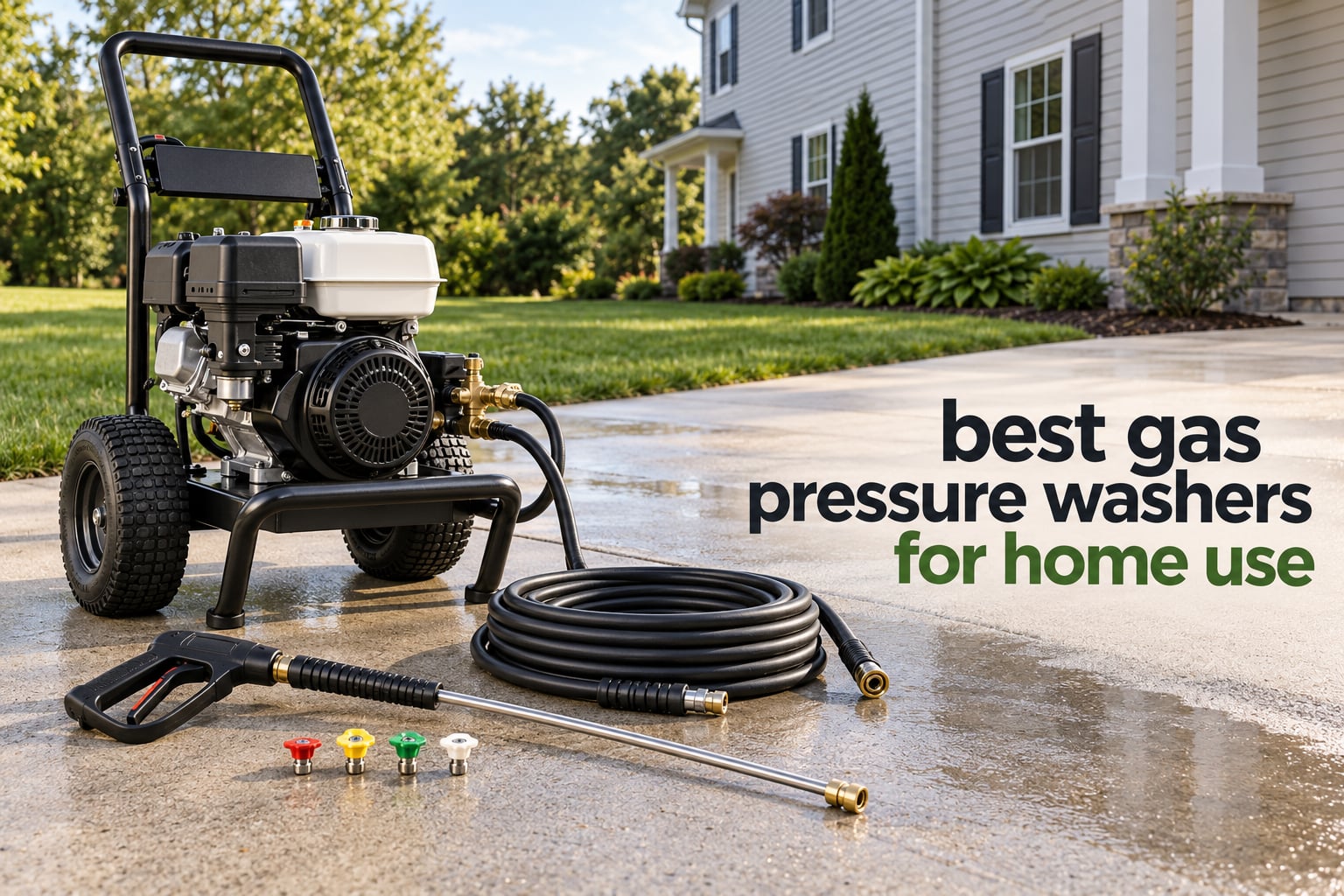
Most pressure washer roundups mix battery, corded electric and gas machines into one list, which is not much help if you own a long concrete driveway and the nearest outlet is at the side door. If that sounds like your property, the best gas pressure washers for home use are the only category worth shopping, because a cord is the single biggest limit on a corded electric machine and gas removes it entirely.
A midrange gas pressure washer also pushes roughly twice the water volume of a typical electric unit, and Consumer Reports puts midrange gas machines at about 50 percent faster cleaning than the average electric model. That extra flow is what lets you rinse a section of driveway clean instead of merely loosening the dirt and pushing it around. You are buying volume of water and independence from an outlet, not just a bigger number on the box.
We built this roundup around three numbers that actually predict how a machine feels to use: cleaning units, which multiply rated PSI by rated GPM; pump architecture, because an axial cam pump and a triplex plunger pump have very different service lives; and engine brand, because a Honda GX200 is the reason many owners would buy the same machine again. Eight gas units made the cut, covering the budget tier through prosumer duty, and each one is judged against home work rather than contractor work. This roundup was refreshed for 2026 against the latest owner feedback we could find.
Table of Contents
Top 3 Best Gas Pressure Washers for Home Use (October 2026)
Three machines earned a badge because they combine owner ratings, review volume and the specs that matter most on a residential property. Everything else in the roundup is a strong alternative, but these three are where we would start.

Simpson PowerShot PS3228
- 3300 PSI at 2.5 GPM
- Honda GX200 engine
- AAA triplex plunger pump
- 25 foot MorFlex hose

Simpson Clean Machine CM61083
- 3400 PSI at 2.5 GPM
- 208cc CRX engine
- Axial cam pump
- 64 lb low-profile frame

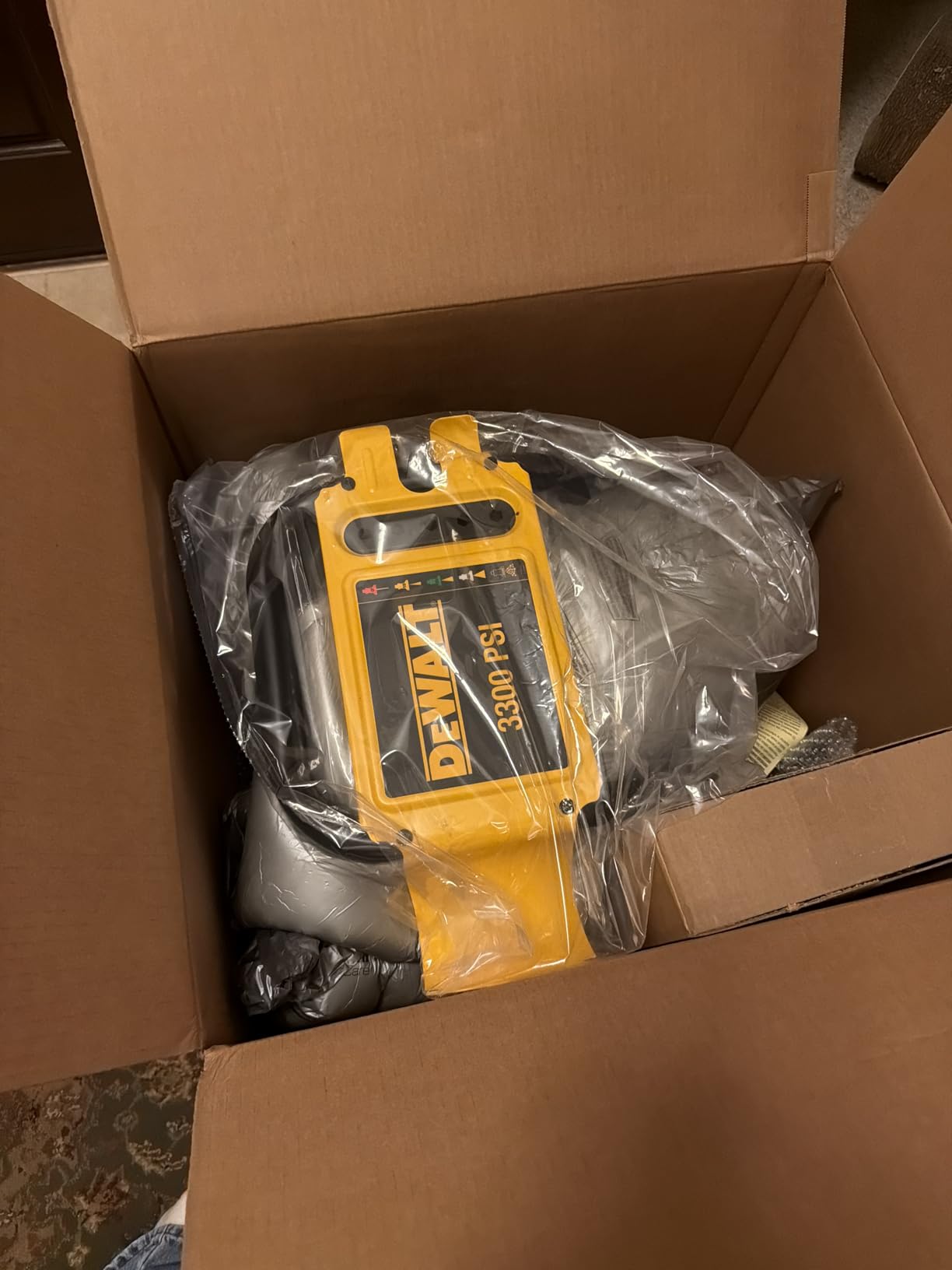
DeWalt DXPW3300-S
- 3300 PSI at 2.4 GPM
- 208cc DeWalt engine
- Axial cam pump
- 5 year frame warranty
Quick Comparison of the Best Gas Pressure Washers for Home Use in 2026
Every machine below is gasoline powered and rated for residential cold-water cleaning. Cleaning units are the product of the two headline figures, and they are the fastest way to see which of these actually out-cleans the rest.
| Product | Specs | Action |
|---|---|---|
| Simpson PowerShot PS3228 |
|
Check Latest Price |
| Simpson Clean Machine CM61083 |
|
Check Latest Price |
| DeWalt DXPW3300-S |
|
Check Latest Price |
 Simpson Aluminum ALH3425 Simpson Aluminum ALH3425 |
|
Check Latest Price |
 Ezasin 3500 PSI Gas Washer Ezasin 3500 PSI Gas Washer |
|
Check Latest Price |
 PowerSmart 3800 PSI Gas Washer PowerSmart 3800 PSI Gas Washer |
|
Check Latest Price |
 Generac 7019 OneWash Generac 7019 OneWash |
|
Check Latest Price |
 Westinghouse WPX3000 Westinghouse WPX3000 |
|
Check Latest Price |
Key features to consider
Flow rate before pressure. PSI breaks the bond between dirt and a surface, GPM rinses it away. At 2.3 to 2.5 GPM you are in the right band for home use.
Pump type. Axial cam pumps are maintenance-free and cheaper; triplex plunger pumps cost more and last longer, though experienced owners are divided on them.
Engine brand. Honda GX series engines are widely treated as the durability benchmark and the easiest to start. Proprietary and generic engines vary far more.
Rated versus maximum PSI. Maximum pressure is measured at the outlet with no flow. Rated figures from CETA or PWMA certified machines are the honest comparison.
1. Simpson PowerShot PS3228 – Honda GX200 Power With a 3300 PSI Triplex Pump
SIMPSON Cleaning PS3228 PowerShot 3300 PSI Gas Pressure Washer, 2.5 GPM, Honda GX200 Engine, Includes Spray Gun and Extension Wand, 5 QC Nozzle Tips, 5/16-inch x 25-foot MorFlex Hose, 49-State
3300 PSI
2.5 GPM
Honda GX200
AAA triplex pump
75 lb
25 foot hose
Pros
- Honda GX200 starts easily even after long storage
- AAA triplex pump handles driveways decks and siding
- Owners report multi-year reliable service
- Stays cool during long runs
- One person can move and store it
Cons
- Some units see pump seal wear around the two year mark
- Included 16 inch wand is short for ground-level work
- 25 foot hose is short on wide work areas
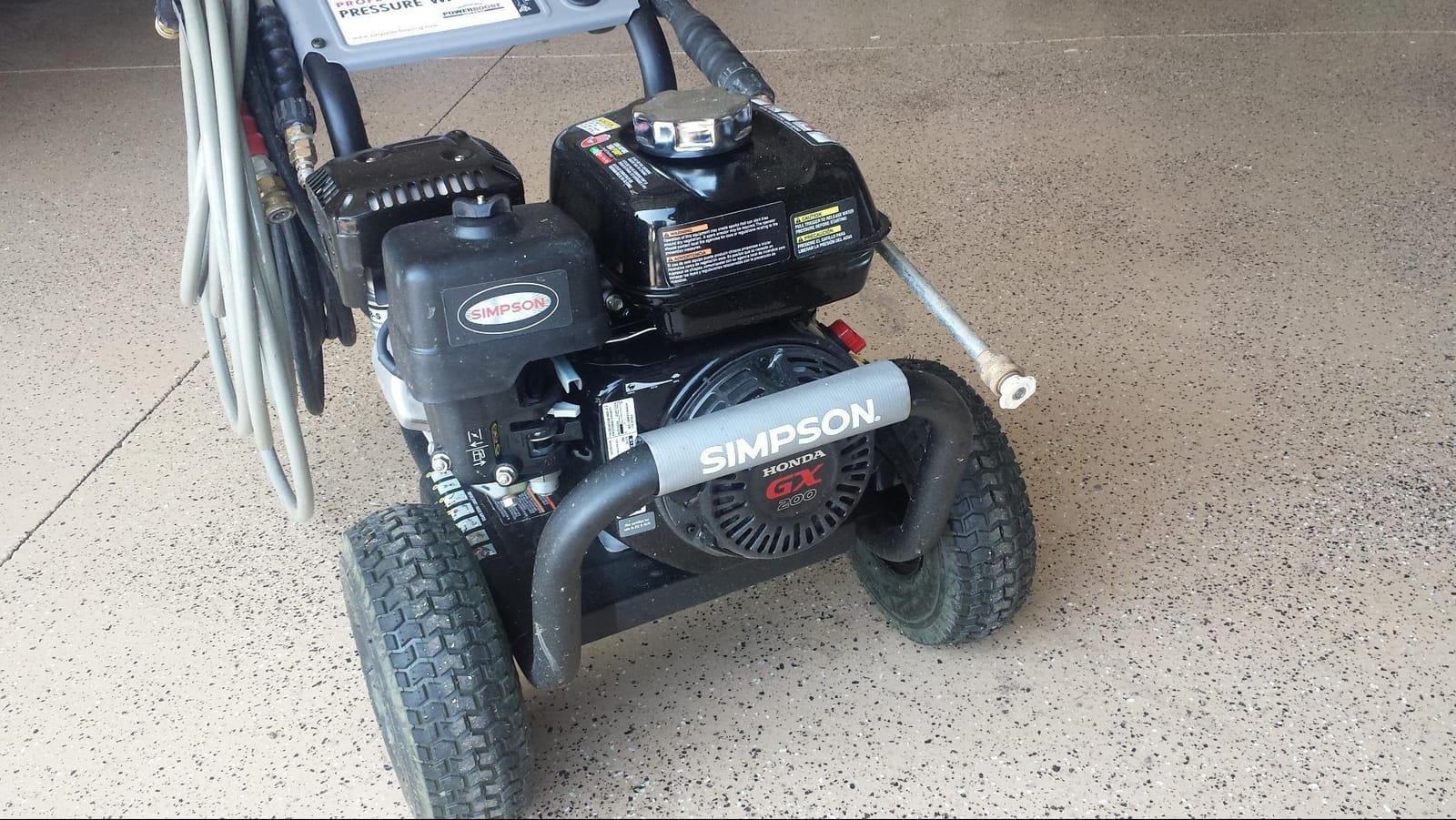
The PowerShot is the machine we keep coming back to for a reason that has nothing to do with marketing. A Honda GX200 does not care how old the gas is or how long the machine sat over winter, and owners consistently describe it as starting on the first or second pull after months of storage. On a machine you might use six times a year, that is the difference between starting it and giving up on it.
At 3300 PSI and 2.5 GPM the PowerShot produces 8250 cleaning units and pairs that output with a genuinely durable pump. The AAA triplex plunger pump includes an integrated unloader and thermal relief, so it is built to run long jobs without cooking itself. Reported performance on concrete driveways, wood decks, siding and vehicles is consistently strong, and several long-term owners describe units still running after a decade of intermittent use.
The honest weakness is the pump seal. A minority of owners report water getting into the pump oil at roughly the two-year mark, and because seals are treated as wear items rather than service items, that becomes a shop visit. Part sourcing through service centers is also the piece of friction long-term owners mention most, so if you are far from a dealer, check that before buying.
Two smaller upgrades are near-universal among owners: a longer wand extension and a bigger hose. The included 16 inch wand is fine for fences and siding but tiring on ground-level concrete. Note that this is a 49-state compliant machine and is not sold in California, which is worth checking against your address before you plan around it.
Where the PS3228 earns its place
Choose this one if you clean large concrete surfaces more than once a year, if you want the machine to still start in year five, and if a dealer or service network is within reasonable reach. The Honda engine is the deciding factor for most buyers who have owned a cheaper gas washer and watched it get harder to start each season.
It is also the honest choice when hard starting and fuel maintenance are a genuine concern rather than an abstract risk. Owners who switched to a Honda-powered machine after a generic engine gave them trouble tend to name the engine as the reason they would buy the same brand again.
Where the PS3228 is the wrong tool
Skip it if you only wash two cars a year, because the weight and the fuel handling add friction that an electric unit does not have. It is also the wrong pick for a small garage, because the 21 by 24 by 34 inch footprint with the tall pro frame is bulkier than the homeowner frames we tested against.
If your workload is light and your budget is tight, the Clean Machine below delivers similar headline numbers at a much lower tier, and you accept a shorter-lived pump in exchange for less money up front.
2. Simpson Clean Machine CM61083 – 3400 PSI and 2.5 GPM in a Low-Profile Frame
Simpson Clean Machine 3400 PSI Gas Pressure Washer, 2.5 GPM, CRX engine
3400 PSI
2.5 GPM
208cc CRX engine
Axial cam pump
61 lb
Low-profile frame
Pros
- 3400 PSI at 2.5 GPM matches the top flow rate in the roundup
- Low-profile frame stores in a small garage
- CRX engine has low-oil shutdown
- Maintenance-free axial cam pump
- Quick-connect fittings and non-marring hose
Cons
- Axial cam pump is a step down in longevity versus the pro line
- Four nozzles instead of the five on higher models
- Low-oil shutdown means it will not run until you check the oil
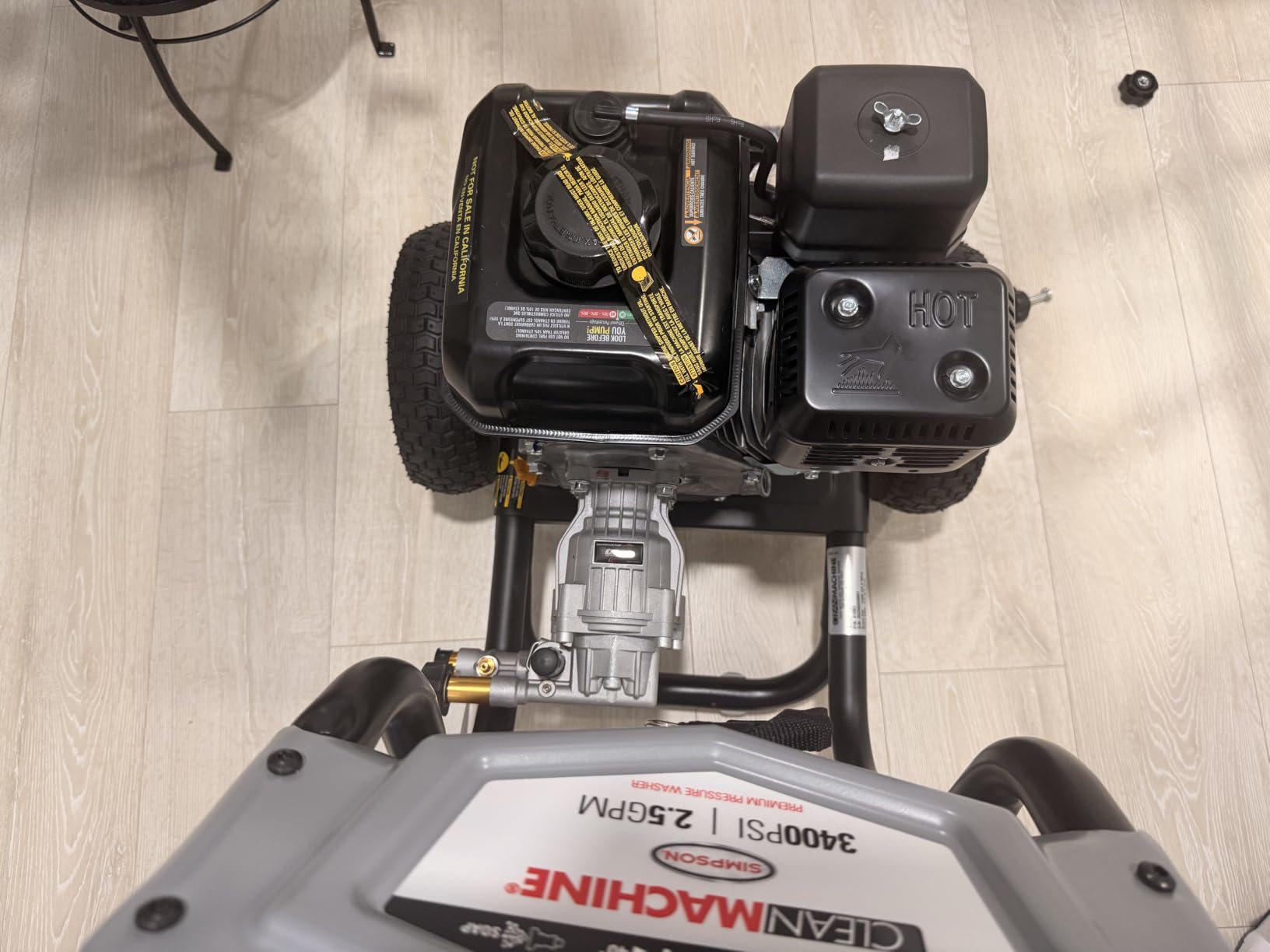
This is the Clean Machine, the value answer among eight machines that span the budget and prosumer tiers. At 3400 PSI and 2.5 GPM it produces 8500 cleaning units, and at 61 pounds it is one of the few machines you can genuinely lift into a pickup by yourself without a second person.
The frame is the quiet hero. Its low-profile welded steel layout sits at 37 by 30 by 21 inches, which is short enough to slide under a workbench in a single-car garage. The 208cc CRX engine carries low-oil shutdown, and the OEM Technologies axial cam pump is maintenance-free with a thermal relief valve, so there are no oil changes on the pump side and fewer seasonal chores overall.
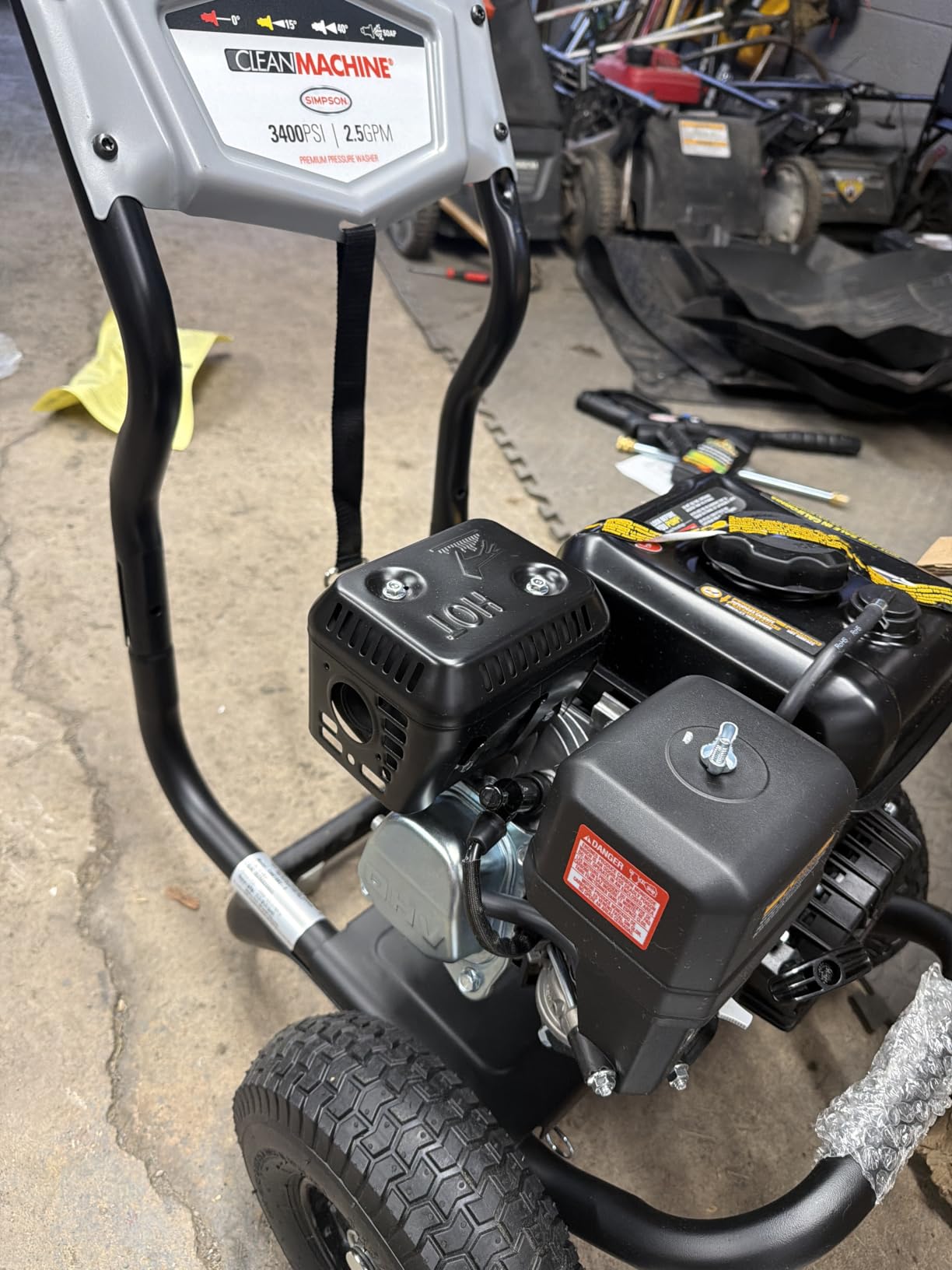
Owners report the machine handles driveways, decks, siding and vehicles without complaint, and about seven in ten reviewers give it five stars. The pump is the trade you make by sitting at this tier. An axial cam pump will not last as long as the triplex units in Simpson’s contractor line, so if you keep the machine for a decade and expect the pump to hold, this is not the one.
Smaller realities: it ships with four quick-connect tips rather than five, and the low-oil shutdown means a new owner who skips the oil check gets a machine that will not run. The warranty is split across components at 2 years on the engine, 1 year on the pump and 1 year on the frame, which is thinner than the DeWalt coverage later in this list.
How this machine handles real home surfaces
At 2.5 GPM this matches the top flow rate in the roundup, which makes it well suited to wide concrete aprons and long driveway runs where a lower-flow unit leaves you going back over the same section to rinse. It also has enough pressure for stubborn algae on north-facing siding without climbing into 4000 PSI territory.
The MorFlex 25 foot hose with quick-connect fittings keeps setup fast, and the non-marring jacket is a sensible touch if you will be working near finished surfaces. Owners also point out that the front-load spray gun is comfortable during long sessions.
What you give up by choosing the entry Simpson
The pump longevity gap is the real cost. If your property work is sporadic but light, an axial cam pump may outlast your interest in the machine. If you expect to keep it as a long-term asset, the difference between this and a Honda-powered triplex machine shows up in year three or four, not in the first summer.
Also remember that this is a 49-state compliant machine rather than one sold in California.
3. DeWalt DXPW3300-S – Long Warranties and an Easy-Starting 208cc Engine
DeWalt 3300 PSI Gas Pressure Washer, 2.4 GPM, Residential Model DXPW3300-S
3300 PSI
2.4 GPM
208cc DeWalt engine
Axial cam pump
64 lb
25 foot hose
Pros
- 3300 PSI at 2.4 GPM handles decks patios and siding
- 208cc engine is reported to start easily and run smoothly
- 5 year frame and 3 year pump warranty
- 64 pound frame with 10 inch pneumatic tires
- Five quick-connect nozzles and ergonomic spray gun
Cons
- Axial cam pump is less long-lived than a triplex pump
- Factory tested units may arrive with residual fuel odor
- Fuel level needs to stay below the filler neck in transport
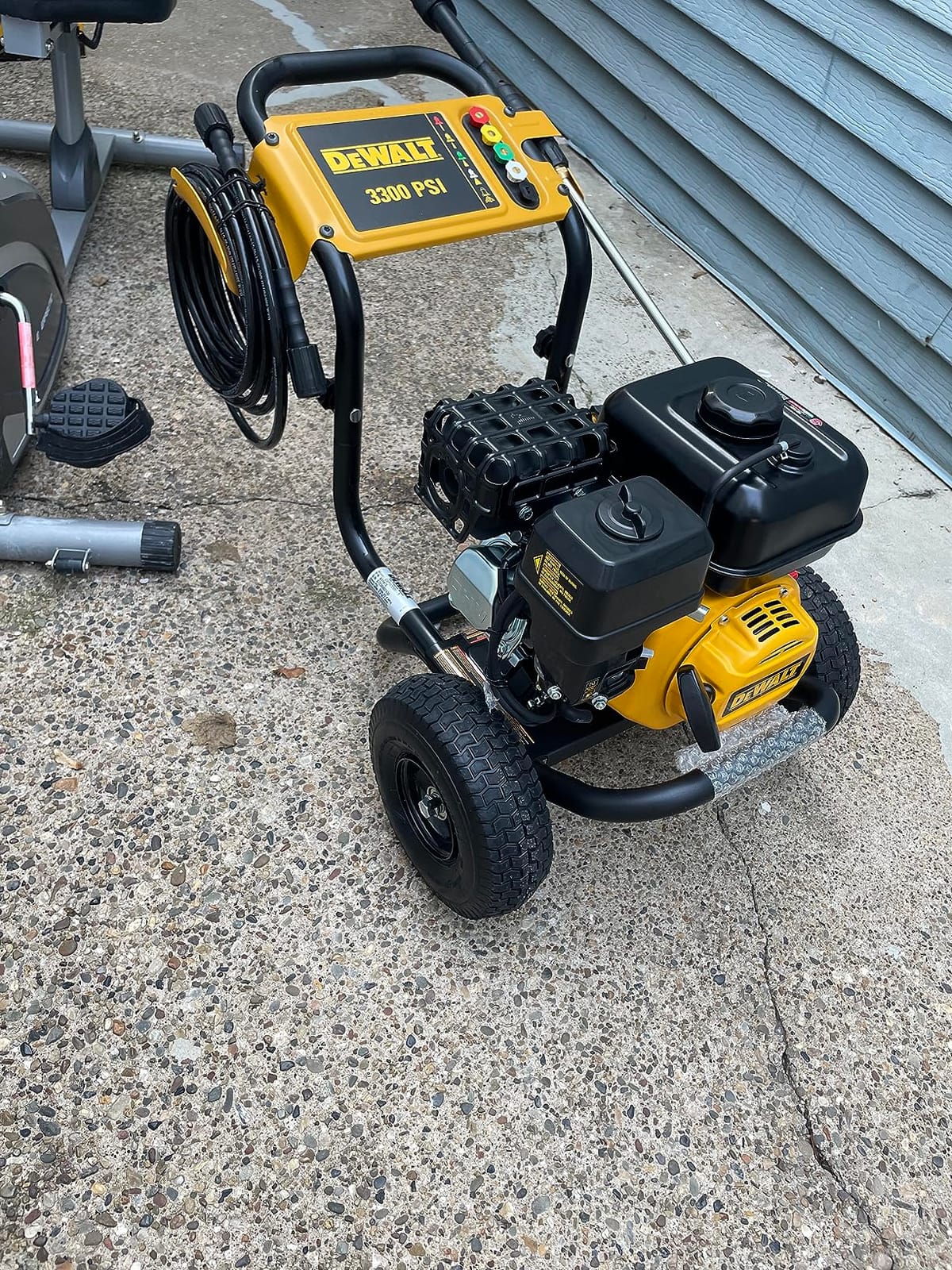
The DXPW3300-S is the pick we would suggest to someone who wants a gas washer to be a tool rather than a project. Its warranty is the longest in this roundup, at 5 years on the frame, 3 years on the pump and 2 years on the engine, and a 64-pound frame with 10-inch pneumatic tires is manageable for one adult on a normal driveway.
Specs sit right in the home-use sweet spot at 3300 PSI and 2.4 GPM for 7920 cleaning units. The 208cc DeWalt engine is described by owners as easy to start and smooth-running, and the OEM Technologies axial cam pump includes a thermal relief valve so it will not overheat during a long driveway session.
Two small things catch people out. Factory testing means a new unit can arrive with a faint fuel odor, which is normal and not a fault. And the manual specifically asks you to keep the fuel level about half an inch below the filler neck to prevent spillage during transport, which sounds odd until you have had gasoline wash down a truck bed.
The same pump caveat applies as with the Clean Machine. Axial cam pumps are cheaper and maintenance-free, but they are a step down in expected life against the triplex units on Honda-powered machines. What you gain is warranty length, which for many owners matters more over a five-year ownership horizon than pump design does.
Why homeowners keep this one for years
The package is well judged for residential work: a 25 foot abrasion-resistant hose, five quick-connect nozzles covering 0, 15, 25 and 40 degrees plus soap, an ergonomic spray gun and a 16 inch steel wand. Assembly is simple, and the welded powder-coated steel frame is described as sturdy and easy to put together without special tools.
For anyone cleaning siding, patios and decks who wants a predictable machine with a long safety net behind it, that combination is hard to argue with. Owners using it on exteriors before painting report it handles prep work without drama.
Where it falls short for a homeowner
The 41 inch overall length is the longest stated dimension in this roundup, so it takes more garage depth than the low-profile frames. If you are working mainly on a small patio and a car, this is more machine than you need and a corded electric unit would serve you better.
It is also 49-state compliant, so plan around that if you are in California. And if your priority is starting reliability in cold weather after a long storage break, a Honda-powered machine is the safer bet, because that is the one weakness owners of generic engines report most often.
4. Simpson Aluminum ALH3425 – Heavy-Duty Build for Frequent Large-Surface Work
Simpson Aluminum Series 3600 PSI Gas Pressure Washer, 2.5 GPM, Honda GX200
3600 PSI
2.5 GPM
Honda GX200
AAA triplex pump
35 foot hose
79 lb
Pros
- Honda GX200 starts on the first pull for most owners
- AAA triplex pump cleans harder than units claiming the same PSI
- Aircraft grade aluminum frame resists corrosion
- 10 year frame and 5 year pump warranty
- Clear instructions and on-machine labels
Cons
- Light weight lets the machine walk while it runs
- Included 16 inch wand is short for ground work
- Included hose is stiff and the hanger will not hold the full coil
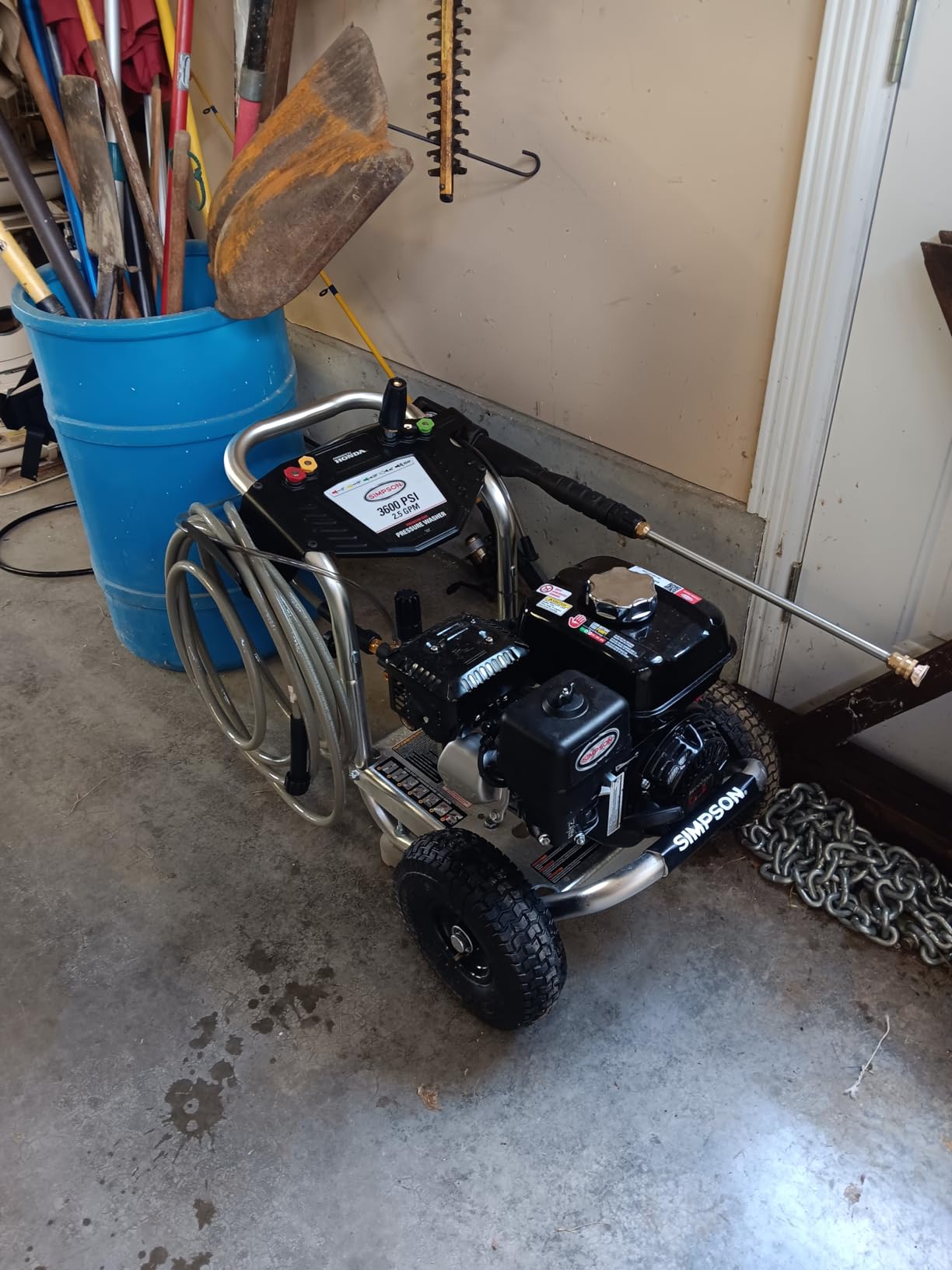
The Aluminum Series is the machine you buy when you want contractor construction without contractor pricing for the rest of your life. It pairs a Honda GX200 with an AAA triplex plunger pump and PowerBoost technology that delivers higher pressure at the nozzle, plus a 35 foot hose that reaches around most houses without you relocating the machine.
Rated at 3600 PSI and 2.5 GPM, it pairs a high pressure figure with 9000 cleaning units. The aircraft-grade powder-coated aluminum frame resists corrosion and stays lighter than comparable steel builds, which matters if the machine lives outside or on a damp garage floor. Owners report multi-hour runs without stalling.
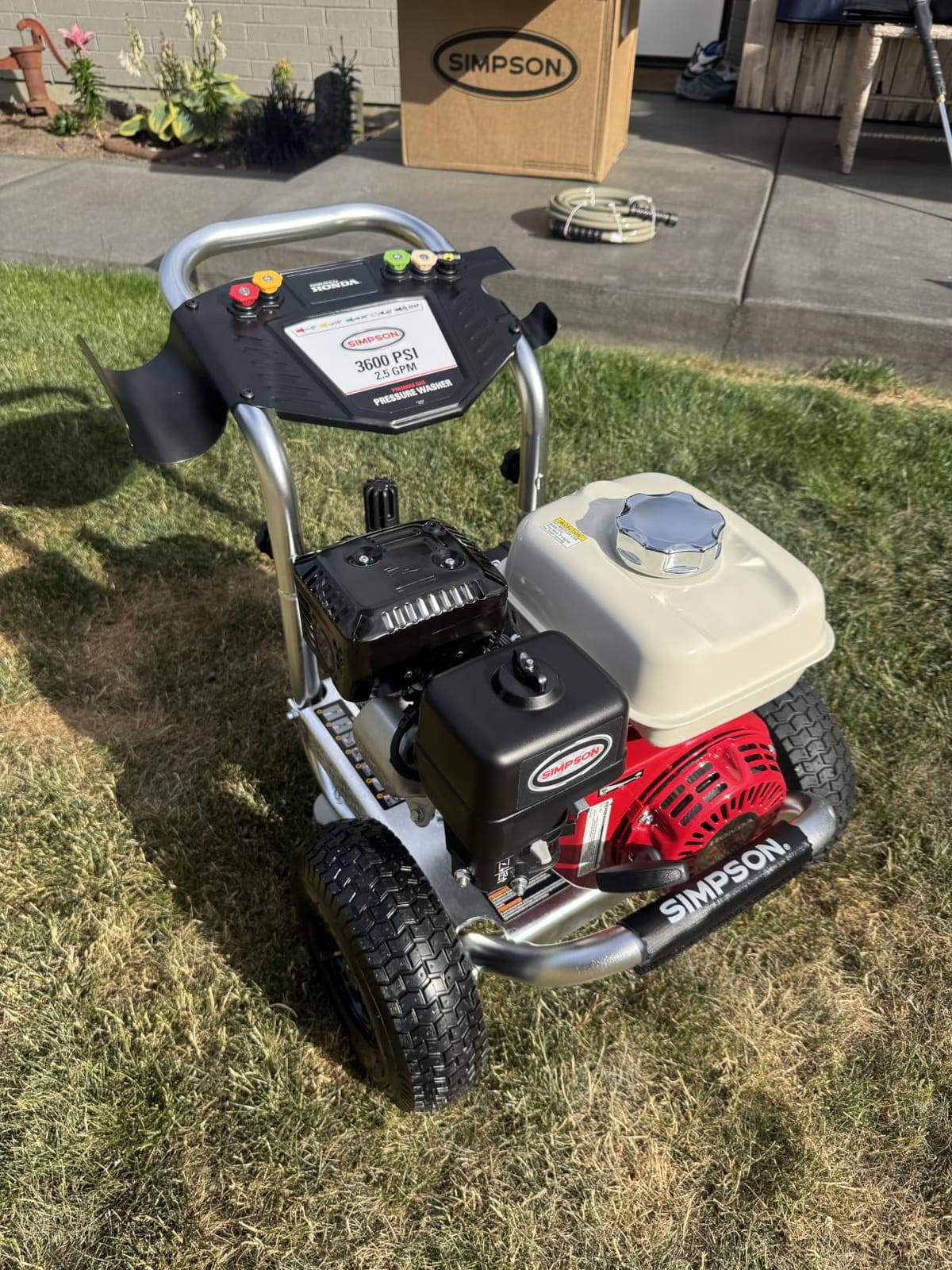
The warranty here is the best in the roundup at 3 years on the engine, 5 years on the pump and 10 years on the frame. Instructions and on-machine labels are described as unusually clear and well diagrammed, which matters if you are doing your own maintenance rather than paying a shop.
There is a specific quirk worth knowing. Because the frame is light and the engine vibrates, the machine can walk or drift across a driveway while running, and one owner reports noticeable handle kick when the trigger is fully depressed. Several owners also upgraded to a 50 foot hose and a wand extension to improve usability.
What makes this the durable choice
The Honda GX200 and the triplex pump are the two components that decide service life on any gas washer, and this machine has both. Long-term owners describe it as noticeably stronger on cleaning than units that merely advertise the same PSI, because the pump can hold output under load instead of sagging.
For a large property with several driveways, a long side yard and multiple exterior surfaces, the 35 foot hose removes most of the repositioning that ruins a job. If you clean the same big property every spring, the build and warranty justify the step up.
Reasons a homeowner would skip it
Listed at roughly 79 pounds, this carries the heaviest stated weight in the roundup, and owners regularly regret that loading one into a truck for occasional use is a two-person job. If your cleaning is a once-a-year driveway rather than a regular routine, the weight and footprint are real friction.
Some units needed carburetor cleaning and spark plug or air filter replacement before starting, so treat the first start as a break-in task rather than an instant. It is also 49-state compliant and not sold in California.
5. Ezasin 3500 PSI Gas Pressure Washer – Budget Cleaning Power With Safety Sensors
Ezasin Gas Powered Pressure Washer 3500 PSI – 2.3 GPM Heavy Duty High Power Washer,209CC 7HP Engine with 25Ft Pressure Hose, Axial Aluminum Pump, Soap Tank, 4 Quick Connect Nozzle (Blue)
3500 PSI
2.3 GPM
212cc 7HP 4-stroke
Axial aluminum pump
Onboard soap tank
Pros
- 3500 PSI strips mold algae and grime from siding and concrete
- 212cc engine starts on one or two pulls
- Assembly is straightforward with clear instructions
- Onboard soap tank and thermal and tilt sensors
- Customer service resolved a starting problem quickly
Cons
- Thermal cut-off blocks restarting after a shutdown in sun
- Tilt sensor cuts the engine when the machine is wheeled
- Fragile spray gun bracket that can crack under vibration
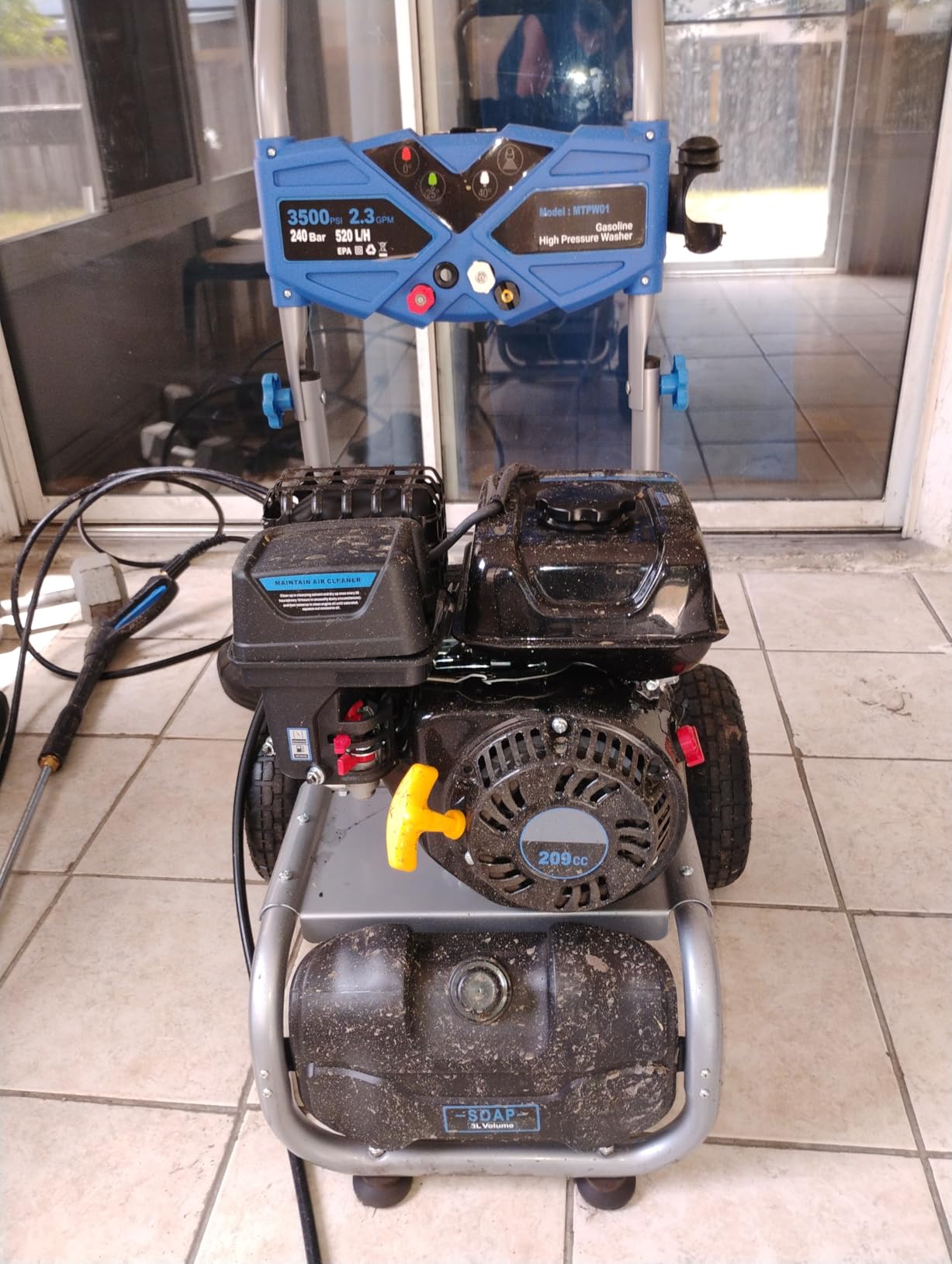
If your priority is raw pressure per pound spent, this machine is hard to argue with on paper. It rates 3500 PSI at 2.3 GPM for 8050 cleaning units, runs on a 212cc 4-stroke OHV engine rated at 7HP, and weighs 63 pounds with 10-inch tires and a 25 foot hose.
Owners report it stripping mold, algae and grime from siding, decks and concrete effectively, and the recoil-start engine starts on one or two pulls. Several note it runs enough on a tank to wash three cars in roughly 45 minutes of run time, which is a real answer to the running-cost question most roundups skip.
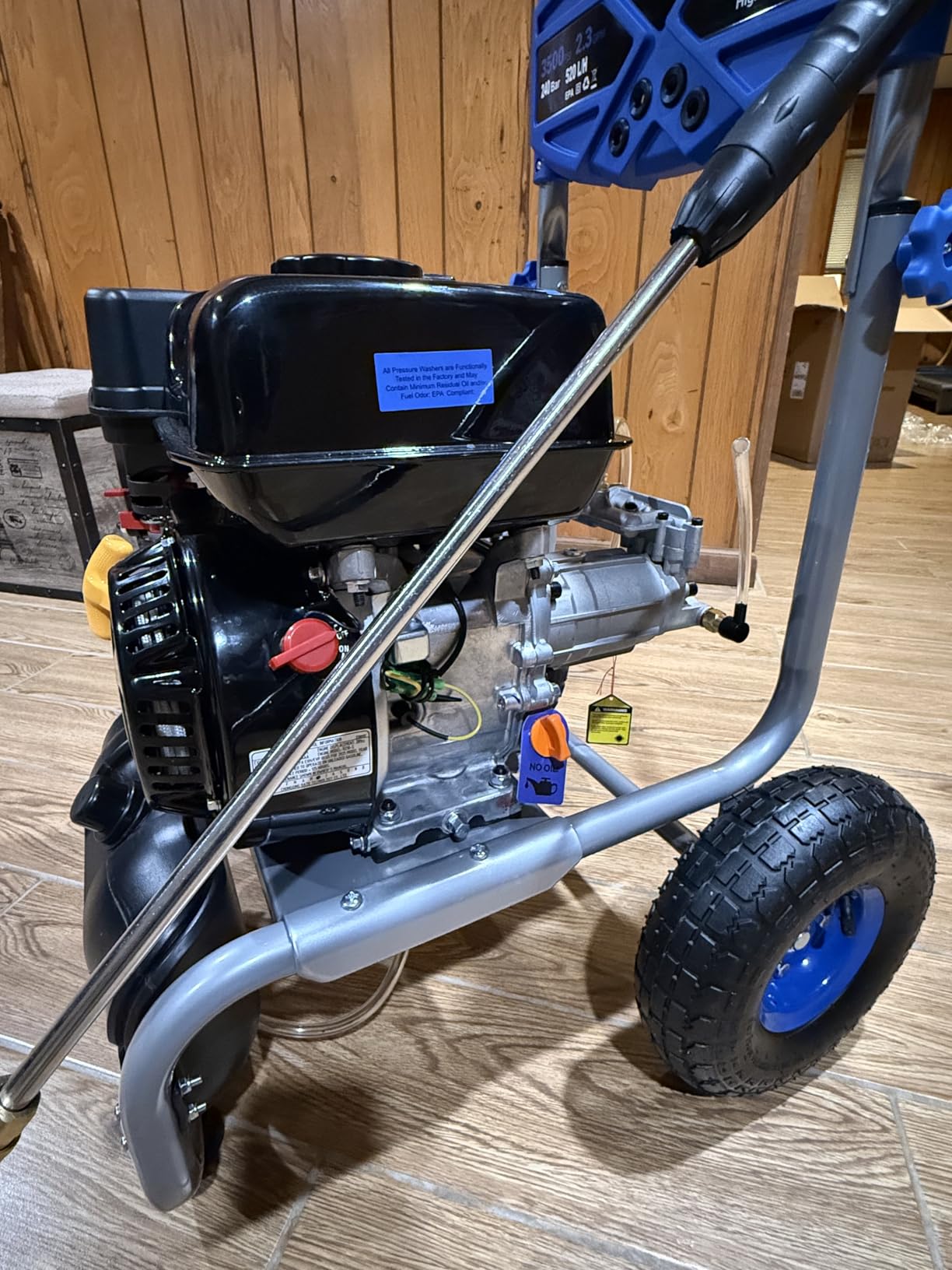
The thermal cut-off and tip/tilt sensor are unusual at this tier and genuinely useful in one direction: they stop the engine in situations where you would rather it stopped. But owners report they are over-sensitive. The thermal switch prevents restarting after the unit shuts off and sits in direct sun for a few minutes, and the tilt sensor cuts the engine when you wheel the machine while it is running.
Documentation is thin, with the manual mixing in instructions for other models, and the spray gun bracket is reported to crack under vibration. A small number of owners had units fail early or had soap delivery that did not work reliably, so treat the soap tank as optional rather than essential.
Where the budget pick makes sense
This suits a homeowner with one serious driveway job a year who wants maximum pressure without a premium brand name. The 212cc 4-stroke engine is easy to service, and the onboard soap tank plus four quick-connect nozzles cover the basic residential set of tasks from car washing to exterior prep before painting.
Several owners report it still running after a year and a half of minimal use, and the manufacturer support response to a starting problem was described as quick and professional.
What the pressure will not do for you
At 2.3 GPM this sits at the low end of the flow rates in the roundup, so large concrete areas take longer to rinse than with a 2.5 GPM machine. Owners also warn that the 0 degree and 25 degree tips are strong enough to cut softwood and damage skin at close range, so it demands discipline near decks and windows.
The one-year warranty is the thinnest here, and with a smaller owner base than the branded machines, replacement parts and service support are harder to find outside major retailers. Buyers who keep machines a decade should weigh that carefully.
6. PowerSmart 3800 PSI Gas Pressure Washer – 35 Foot Hose Reach and Certified Specs
PowerSmart Gas Pressure Washer, 3800 PSI and 2.5 GPM for House Cleaning
3800 PSI
2.5 GPM
212cc 4-stroke
35 foot hose
PWMA certified
Pros
- 3800 PSI at 2.5 GPM is the highest cleaning-unit figure here
- 212cc 4-stroke OHV engine is EPA engine certified
- PWMA performance certified and UL 1776 compliant
- 35 foot super-flex hose gives good reach
- Onboard soap tank and five quick-connect nozzles
Cons
- Small 0.79 gallon detergent tank needs frequent refills
- Powder-coated steel frame is heavier than aluminum machines
- Recoil start only with no electric start option
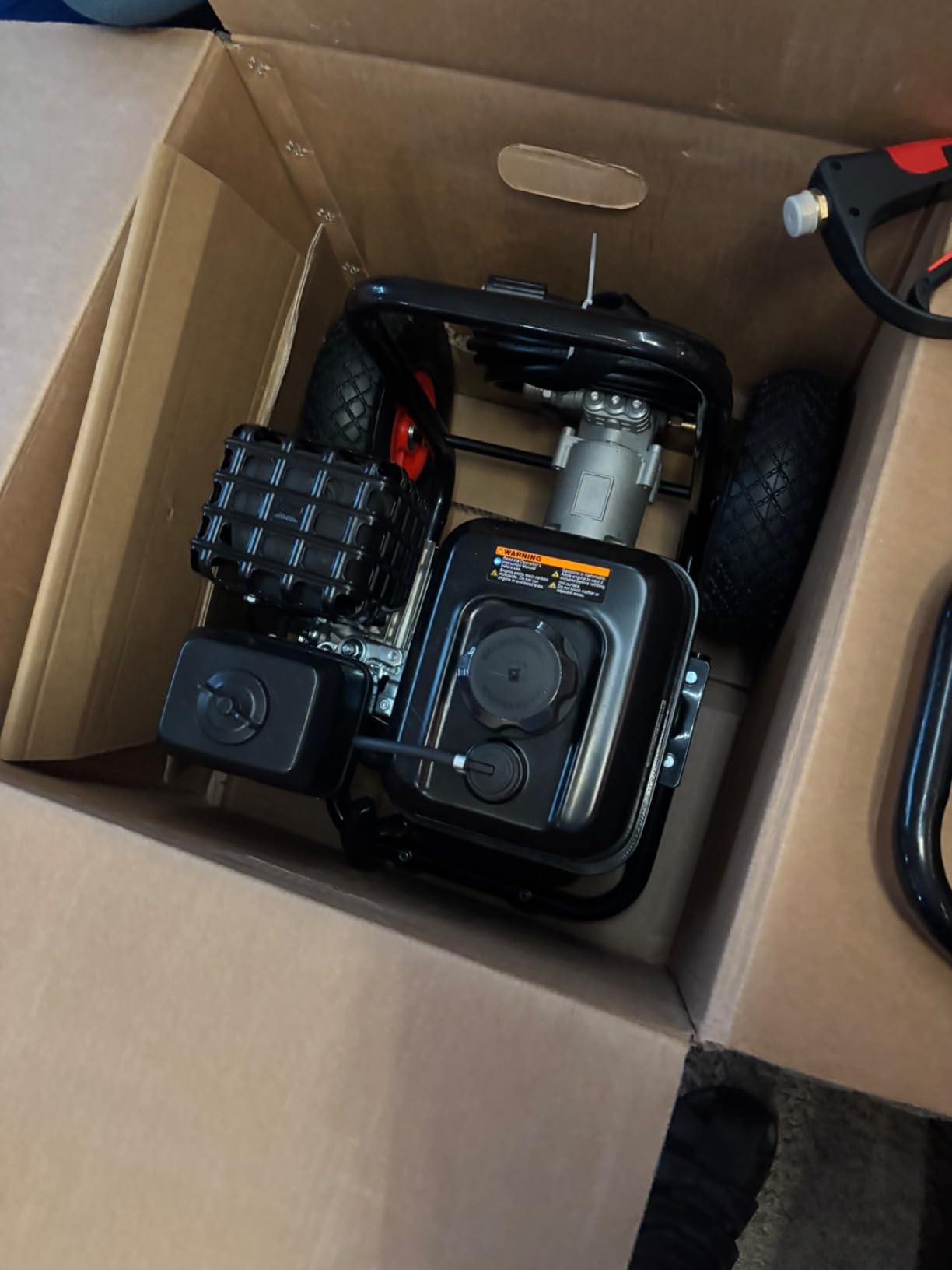
The PowerSmart is the reach specialist of this group. Its 35 foot abrasion-resistant super-flex hose is normally a prosumer feature, and paired with 3800 PSI at 2.5 GPM for 9500 cleaning units, it is the highest cleaning-unit figure in this roundup. If you have two-story siding or a house set back from where you can park, that hose is the reason to look here.
The specification sheet is also among the most transparent. This machine is PWMA performance certified, compliant with UL 1776 safety standards and EPA engine certified, which means the rated figures are more defensible than a bare maximum-pressure claim from a brand that lists nothing.
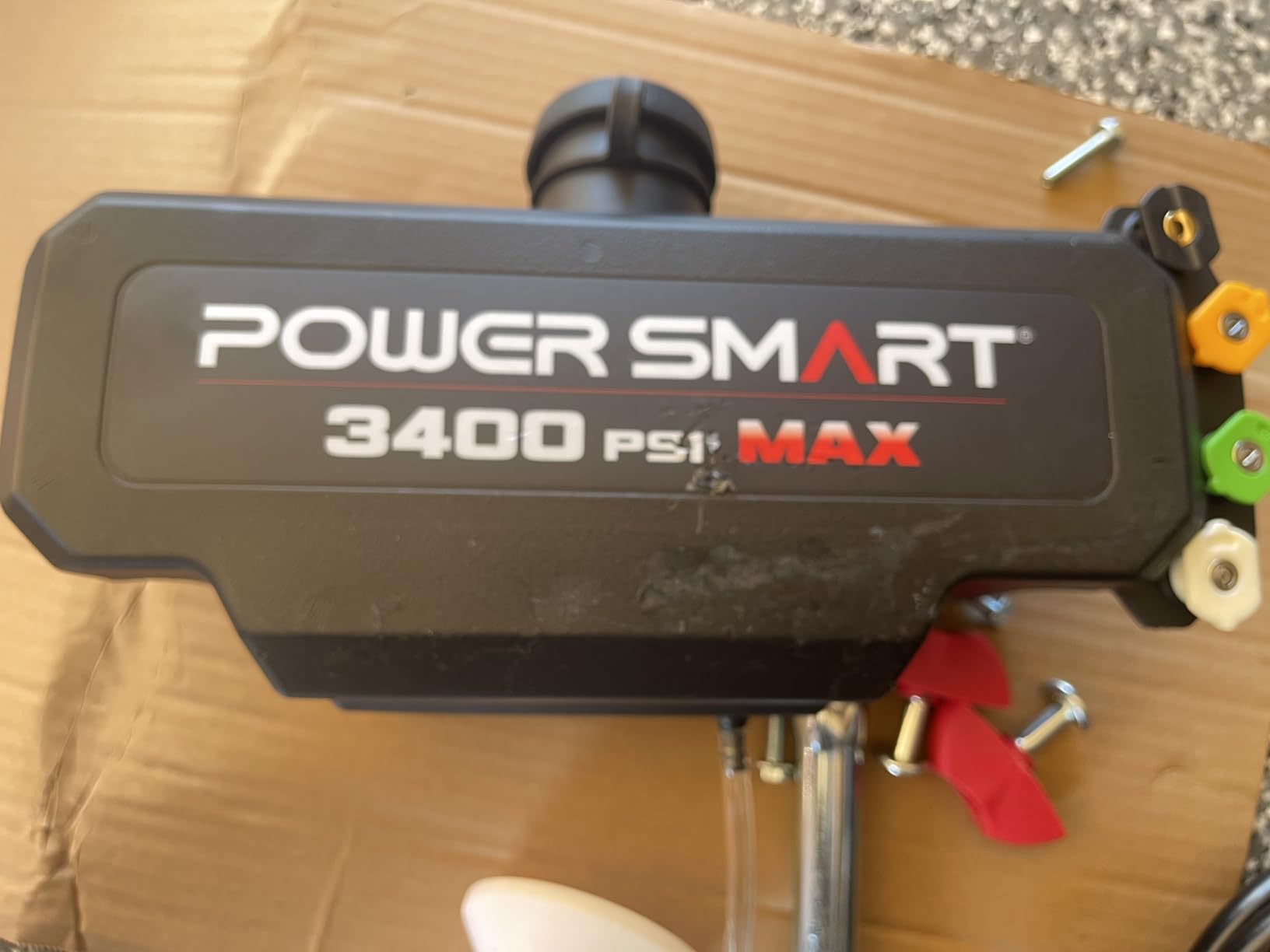
The 212cc 4-stroke OHV engine drives a rugged steel frame on 10-inch pneumatic tires, and the onboard soap tank, hook and sling, five quick-connect nozzles and soft-grip handle cover the standard residential kit. Owners point out that the hose gives genuinely good reach around a house without repositioning.
The compromises are specific. The detergent tank is only 0.79 gallons, which means frequent refills during a soap application pass. The steel frame is heavier than comparable aluminum machines, and starting is recoil only, with no electric or pressure-ready start option to take the strain off.
Best fit for large exteriors
Two-story window washing and full-height siding are where this machine separates itself, because the 35 foot hose and the rated flow mean you are not stopping every few minutes to drag the unit across a lawn. Owners also use it for driveways, patios and vehicles, where the 3800 PSI rated output shifts dried mud quickly.
The certification angle is worth weighing for buyers who have been burned by overstated specs. A PWMA rated figure is measured under a defined protocol, so the number on this listing is a number you can plan a job around.
Where it falls behind the branded machines
Parts availability and service support are the honest gap against Simpson, DeWalt and Westinghouse. If a pump seal or a carburetor fails after a few seasons, your repair options depend on the retailer rather than a dealer network, and that is the reason many owners stick with a branded machine.
The small soap tank is also a daily irritation on cars and siding where you use detergent regularly. And like most entry machines here, recoil starting means cold-weather starts depend on fresh fuel and a clean air filter more than on engine design.
7. Generac 7019 OneWash – Power Dial Pressure Control in the Spray Gun
Generac 7019 3100 PSI 2.4 GPM Gas-Powered OneWash Residential Pressure Washer: Unleash the Power of Cleaning
3100 PSI
2.4 GPM
Horizontal axial cam pump
Power Dial spray gun
65 lb
Pros
- Power Dial in the spray gun adjusts pressure without changing nozzles
- 3100 PSI horizontal axial cam pump cleans concrete well
- Simple assembly that first-time users can manage
- Onboard half gallon detergent tank is easy to refill
- Generac replaced a damaged hose at no charge
Cons
- Included hose is stiff and tangles easily and can be cut near the engine
- Plastic gun holder and unsecured gun end are flimsy
- Warranty service is dealer-only and some dealers do not service them
The OneWash solves a specific friction that most machines create. Its spray gun carries an integrated Power Dial, so you dial pressure for a car, a wooden deck, concrete or soap without stopping to swap nozzles. For a homeowner moving between surfaces on one property, that single feature changes how a job feels.
Output is 3100 PSI at 2.4 GPM for 7440 cleaning units from a horizontal axial cam pump, which owners report cleans concrete effectively. The onboard half-gallon detergent tank is a genuine improvement over the tiny tanks on entry machines, and assembly is straightforward enough for a first-time buyer.
The hose is the biggest practical complaint. Reviewers describe it as stiff, difficult to untangle and vulnerable to being sliced against the engine if routed too close while running, which is a routing habit worth learning before your first session. The plastic gun holder and the lack of a way to secure the gun end are also flagged as flimsy parts likely to break.
Quality control is a second theme. One owner found a loose pump-to-motor bolt and a second bolt nearly backed out after a single use, and factory assembly has arrived with a broken air filter housing from transit damage. Check both of those in the first ten minutes.
Service is the third. Warranty work runs through a dealer, and several reviewers describe dealers that do not service Generac pressure washers at all, which is worth confirming for your area before you buy rather than after.
Why the Power Dial earns a place
No other machine in this roundup lets you hold one nozzle and change pressure continuously. That matters on a property with mixed surfaces, because switching nozzles mid-task costs time, and over a full afternoon those interruptions add up. The horizontal axial cam pump layout is also a well-proven residential design.
For a homeowner whose main frustration with pressure washing is gouging wood while cleaning concrete, having a dial is a better answer than discipline. It also reduces the temptation to force a narrow tip into a soft surface.
Reasons to look elsewhere
It is also the one machine here that is CARB compliant and sold in all 50 states, which is a genuine advantage for California buyers dealing with the 49-state restriction on most of this list. Beyond that, the stiff hose, the light plastic storage hardware and dealer-only service make it a weaker choice for maintenance confidence.
If you intend to keep the machine for many years and want parts access, one of the branded Hondas is the safer route. If you want pressure control without nozzle juggling and you can live with a dealer network that may not service the unit, the OneWash is still a capable 3100 PSI washer.
8. Westinghouse WPX3000 – Lightweight Handling With a Steel Frame and Never-Flat Wheels
Westinghouse WPX3000 Gas Pressure Washer, 3000 PSI and 2.3 GPM, Spray Gun and Wand, 4 Nozzle Set, for Cars/Fences/Driveways/Homes/Patios/Furniture
3000 PSI
2.3 GPM
212cc OHV engine
50.7 lb steel frame
Never-flat wheels
Pros
- 3000 PSI at 2.3 GPM cuts through grime and stains on driveways and siding
- 50.7 pound frame that older users can move without hassle
- Quick assembly with clear instructions
- 0.95 gallon fuel tank and 25 foot super-flex hose
- 3 year limited warranty with nationwide support
Cons
- Recoil start is hard on a cold engine and warm restarts can fail
- No throttle control so the engine runs at full speed when idle
- Supplied hose is stiff and kinks easily
At 50.7 pounds this is the lightest stated weight in the roundup, and for owners over a certain age or anyone who moves a washer alone, that is not a footnote. The tough steel frame and never-flat wheels roll over gravel and grass without the puncture anxiety that comes with pneumatic tires, and owners describe older users moving it without difficulty.
Performance is respectable at 3000 PSI and 2.3 GPM for 6900 cleaning units. The 212cc 4-stroke OHV horizontal shaft engine has a recoil start, the maintenance-free axial cam pump needs no pump oil service, and the 0.95 gallon fuel tank is easy to fill. A 25 foot abrasion-resistant super-flex hose and four quick-connect nozzles cover the core kit.
Starting is the recurring theme in owner feedback. The recoil start is hard on a cold engine, one owner reports it will not restart until it has fully cooled after a warm shutdown, and another had starting resolved by Westinghouse service correcting the oil fill level. Check the oil level before the first start rather than assuming it is right.
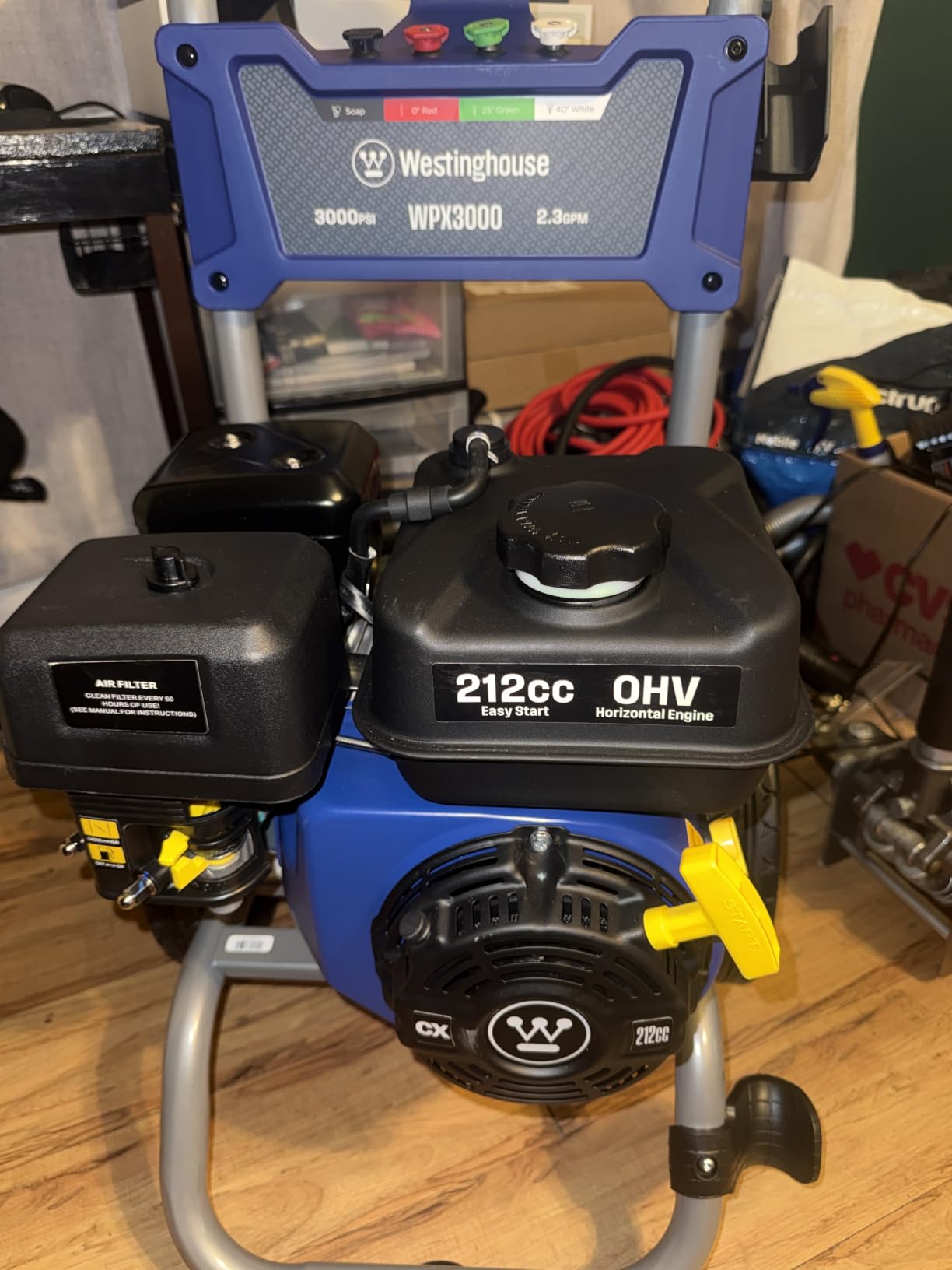
Two design details cause most of the friction. There is no throttle control, so the engine runs at full speed whenever the trigger is released, which is louder and harder on fuel than it needs to be. And the side-mounted garden hose connection can vibrate against the wheel, with one owner reporting a hole worn in a hose in roughly 30 minutes.
Documentation is thin at the other end too, since the quick start guide is printed very small, may incorrectly state that oil is included, and in one case shipped with missing hardware. Backed by a 3 year limited warranty with a nationwide service network, which is one of the better support stories in the entry tier.
Who this machine suits
It suits owners who want gas power and low effort of movement: smaller frames, level driveways, and users who find pneumatic-tired machines heavy. On cars, patios, siding and short driveway sections, 3000 PSI is more than sufficient and the never-flat wheels are a genuine convenience.
What pushes buyers to a different machine
If you own a long driveway, 2.3 GPM is among the slowest rinse figures here and you will be moving back over sections you have already cleaned. If cold starts are a recurring frustration, a Honda-powered machine removes that risk, and there is no throttle control on this unit to soften the noise while you reposition.
Side hose routing also needs care, and the stiff supplied hose kinks easily. Budget-conscious owners who plan to clean big concrete surfaces year after year usually end up on the Honda machines earlier in this list for that reason.
How to Choose a Gas Pressure Washer for Home Use
Start with GPM, then add PSI
PSI is the number on the box, but GPM decides how long the job takes. Experienced users in owner forums consistently frame the decision the same way: start with a flow rate around 2.3 to 2.5 GPM, then treat pressure as the variable you tune for the surface. PSI breaks the bond between the dirt and the concrete, and GPM is what carries the dirt away down the drain.
Multiplying the two gives you cleaning units, which compresses both into a single ranking number. In this roundup the machines range from 6900 to 9500 cleaning units, and that spread matters far more than the raw PSI headline suggests.
1,800 PSI or below: cars, bicycles, patio furniture and light rinsing.
1,900 to 2,700 PSI: decks, fences, siding, small patios and routine driveway washing.
2,800 to 3,100 PSI: heavy algae on siding, mud off concrete, prep before painting.
Above 3,100 PSI: paint stripping, embedded stains and contractor workloads. Use with care on brick and soft wood.
Read rated PSI, not maximum PSI
Maximum pressure is measured at the pump outlet with the trigger open and no water moving, so it is a burst figure rather than a working figure. Rated PSI is measured with the gun open and water flowing, which is what you actually experience. Where you can, compare CETA or PWMA certified rated figures, and treat an uncertified maximum-pressure claim as marketing.
Specs also inflate between categories. Independent lab testing has found most machines deliver less than their advertised figures, which is a normal gap rather than a defect, but it is another reason to shop on cleaning units than on PSI alone.
Axial cam pumps and triplex pumps
An axial cam pump is a cam-driven reciprocating design that is inexpensive and largely maintenance-free, which is why every entry machine in this roundup uses one. A triplex plunger pump has three pistons and higher internal tolerances, costs more, and generally runs longer under sustained pressure. Both can have an integrated unloader valve that bypasses water back to the inlet when you release the trigger.
Owner opinion on triplex pumps is genuinely mixed. Experienced users on pressure washing forums warn against low-grade triplex pumps, and the AAA-branded pumps used in the Honda-powered machines here are a different class of component from the cheap versions that drive that complaint. Our practical rule for home use: axial cam for occasional work and value, a reputable triplex pump if you intend to keep the machine a long time.
Engine brand decides long-term happiness
Honda GX series engines are widely treated as the durability benchmark for this category, and GX200 is the specific model most owners name when explaining why they would buy the same machine again. They start readily after long storage, run cool, and have parts networks that extend well beyond pressure washer dealers.
That advantage has a price, and it also has a catch. Honda GX pressure washers are almost exclusively recoil start, so the convenience of an electric-start engine usually means a Chinese OEM engine, which trades away some of the reliability benefit. Proprietary engines from DeWalt, Westinghouse and Generac sit in the middle, and the owner feedback in this roundup is mostly positive about starting except on the Westinghouse, where cold starts and warm restarts are the most common complaint.
When gas is not the right answer
For most homeowners with a driveway and some siding, a corded electric washer is enough. It is quieter, lighter, needs no fuel and cannot produce carbon monoxide, which matters if your storage space is attached to living space. The reasons to pay the fuel and maintenance cost of gas are specific: a large concrete area, a property where the nearest outlet is far from the work, and jobs you run for hours rather than minutes.
Renting is also a legitimate answer. If you need the machine once a year, a rental costs less than owning and removes storage and winterization entirely. Hiring a service makes more sense still when the work is a one-time paint strip on a large drive.
Gas Pressure Washer Maintenance and Troubleshooting
Almost every long-term complaint in the owner forums traces back to skipping one of four small chores. None of them take more than a few minutes, and doing them on a schedule prevents the majority of the hard-starting and pressure-loss stories we read.
Engine oil: check before every start and change on the interval in your manual, typically once a season. Low-oil shutdown on most machines in this roundup means a low engine simply will not run.
Air filter: a clogged filter is the single most common cause of a hard start, and cleaning a foam element takes two minutes.
Spark plug: a fouled plug that still fires weakly is the second most common cause. Replace rather than clean when in doubt.
Fuel: run fuel stabilizer into the tank and never run a machine dry at the end of a job. Stale fuel is the main reason a washer that started fine last season will not start now.
Pump inlet filter: flush it annually, and whenever pressure drops while running.
Winterization: drain the pump and lines if the machine freezes, run the pump dry with the water disconnected, and store it with the fuel valve off over winter.
When it will not pull start
Owners have discovered a simple first step that most manuals bury: squeeze the spray gun trigger fully to relieve residual pressure, and hold it there while you pull the cord. A pump that is still pressurised can bind and make a healthy engine feel dead.
Squeeze and hold the trigger to relieve pressure, then release.
Check the fuel valve is open and the tank has fresh fuel with stabilizer.
Check engine oil level, since low-oil shutdown prevents starting.
Clean the air filter.
Replace the spark plug.
Add a carburetor cleaner additive to fresh fuel and run the engine, or replace the fuel filter.
If it still will not start after fresh stabilised fuel and a clean plug, that is the point to take it to a repair shop rather than keep pulling on the cord.
When pressure drops mid-session
Signs of a failing unloader valve are specific and worth learning. Pressure builds normally, spikes or surges when you release the trigger, water temperature climbs while you spray, the engine bogs or dies under load, or pressure simply never returns to full. The unloader is the part that bypasses water back to the inlet when you let go of the trigger, so a sticking one either holds pressure against a closed system or opens without relieving it.
Before blaming the unloader, check the simpler causes in order: a clogged pump inlet filter, air locked in the pump line from running the machine dry, or a kinked hose. Run the machine with the gun open and the water supply on for a minute to bleed air before you conclude the valve is finished.
Gas Pressure Washer Safety Rules for Homeowners
These are not formalities. Every serious injury we read about in this category involved either a wand in the face or a gas engine running in a space it should never be in.
Never run a gas pressure washer in a garage, basement, shed or any enclosed space. Carbon monoxide is odourless and lethal, and a garage door open a few inches is not ventilation.
Start and run the engine outdoors, away from doors and windows, and keep the exhaust pointed away from the house.
Wear eye protection and closed-toe footwear every time. The 0 degree tip can strip paint at twenty feet.
Never point the wand at a person, a pet or an electrical fixture, and never spray into an outlet or a light fixture.
Check for buried lines and hoses before washing a driveway or digging near an exterior wall.
Do not run the pump dry. Water flow is what cools the pump, and five dry seconds can do damage that takes years to appear.
Let the engine cool before refuelling or storage, and keep the fuel level below the filler neck to prevent spillage.
Frequently Asked Questions
What is the most reliable brand of gas pressure washer?
Engine brand matters more than the pressure washer brand. Machines built around Honda GX series engines, such as the Simpson PowerShot PS3228 and the Simpson Aluminum ALH3425, are widely treated as the reliability benchmark because those engines start easily after long storage and have the deepest parts support. Simpson, DeWalt, Westinghouse and Generac all make serviceable machines with proprietary engines, but owner ratings vary more within those lines than between brands.
Should I buy an electric or gas pressure washer for home use?
For most homeowners cleaning cars, a patio and some siding, a corded electric washer is enough, quieter and lighter, with no fuel handling. Gas earns its place when you have a large concrete area, when the nearest outlet is far from the work, or when your cleaning jobs run for hours rather than minutes. Gas also removes cord length as a limit entirely.
How many PSI do I actually need for home use?
For most homes, 2,700 to 3,100 PSI at 2.3 to 2.5 GPM is the useful range. That covers driveways, decks, siding and heavy algae without the risk of etching brick or gouging wood that comes with 4,000 PSI commercial units. Below about 1,900 PSI you are limited to cars and light rinsing, and flow rate matters as much as pressure for finishing the job.
Why is my pressure washer really difficult to pull start?
In most cases residual pump pressure is binding the engine, so squeeze the spray gun trigger fully and hold it while you pull the cord. After that, work in order: confirm the fuel valve is open and the tank holds fresh fuel with stabilizer, check the engine oil level, clean the air filter, then replace the spark plug. Stale fuel is the underlying cause in the majority of long-term cases.
What are the signs that my pressure washer unloader valve is faulty?
A failing unloader shows up as pressure that surges when you release the trigger, rising water temperature during use, an engine that bogs or dies under load, or pressure that never returns to full. Before replacing it, check a clogged pump inlet filter, air locked in the pump line from running dry, and a kinked hose, since those produce similar symptoms and are much cheaper to fix.
Is an axial cam pump or a triplex pump better for home use?
An axial cam pump is cheaper and largely maintenance-free, which makes it the right choice for occasional work and for most value machines. A reputable triplex plunger pump costs more and generally lasts longer under sustained pressure, which suits owners who intend to keep the machine many years. Be aware that opinion on cheap triplex pumps is strongly negative among experienced users, so pump brand matters more than pump type.
Can a gas pressure washer be used or stored in a garage?
A gas pressure washer must never be run in a garage or any enclosed space, because carbon monoxide is odourless and lethal. Storing the machine in a garage is fine as long as the fuel valve is off, the engine is cool, and the fuel is treated with stabilizer. If your only storage space is attached to living space, a battery or corded electric unit is the safer choice.
What PSI do I need to clean a concrete driveway?
For a residential driveway, 2,700 PSI at 2.3 to 2.5 GPM is enough to lift dried mud, oil stains and algae from sound concrete. Higher pressure adds little on a sound slab and risks etching older or aggregate surfaces. Work in sections with a 40 degree tip to clean, then rinse with the soap nozzle, and keep the tip moving rather than parking it in one spot.
Final Verdict: The Best Gas Pressure Washers for Home Use
The Simpson PowerShot PS3228 is the editor’s choice and the machine we would buy, because a Honda GX200 and an AAA triplex pump will still be there in ten years when most entry machines are not. Buy the Simpson Clean Machine CM61083 if you want the same brand at the value tier and can accept a shorter-lived axial cam pump, and step up to the Simpson Aluminum ALH3425 when you have large surfaces and a 35 foot working radius. For warranty length and handling, the DeWalt DXPW3300-S is hard to beat, and the Westinghouse WPX3000 wins on weight alone.
If you only need the machine once a year, rent it instead. Otherwise, this is the best gas pressure washers for home use lineup we would put in a garage: pick by cleaning units, verify the pump type and engine brand, and check whether it is sold in your state before you plan around it.