
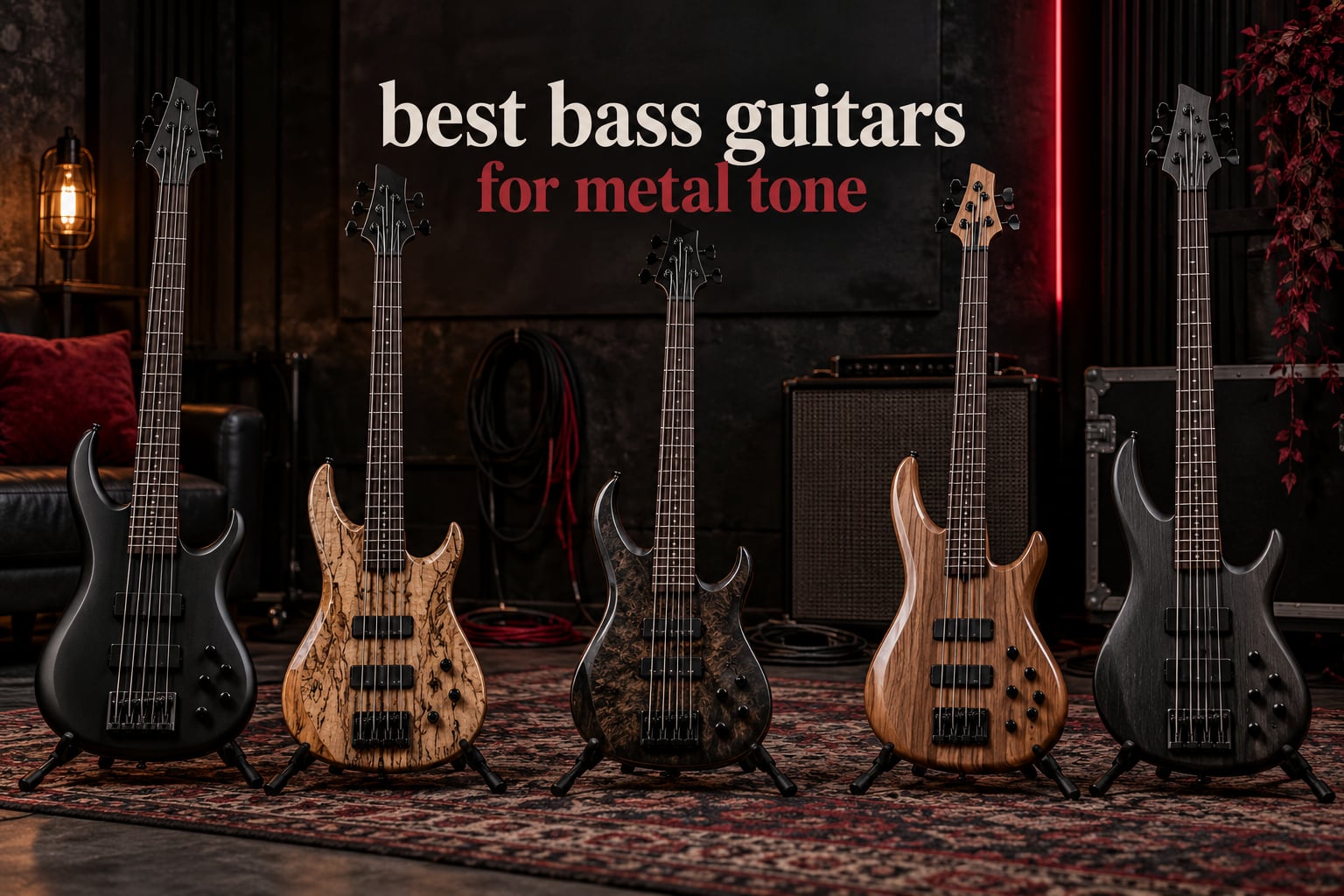
The best bass guitar for metal is one with a high-output or hot passive pickup, a P or P/J layout, and ideally an onboard EQ so you can tighten the low end after the gain hits. The instrument alone does not make the tone, but the right one gets you there without fighting it for an entire rehearsal.
That is the honest answer most gear lists skip. Players spend months saving for a boutique instrument, plug a cheap passive P-bass into a high-gain rig, and wonder why the low end fizzles out. The pickup is doing the work, the preamp is doing the work, the amp EQ is doing the work, and the string gauge is doing the work.
We compared these eight basses across body wood, pickup configuration, output level, onboard electronics, and fret access, then read what owners actually report after months of playing rather than the press release. The guide covers the five decisions that actually set your metal tone, a practical routine for dialling in a growling low end, and a straight verdict on where each of these instruments fits.
Everything here reflects 2026 product data and owner reviews, and the same rules apply whether you play thrash, death, djent, doom, or power metal: get the signal hot enough to survive distortion, then control it from the amp and your hands.
Table of Contents
Top 3 Metal Bass Picks (October 2026)
Three picks stand out if you want a short answer. The Ibanez GSR100EX GIO wins overall because a single humbucker in a poplar body delivers an aggressive, thick tone with no EQ to fiddle with. The Ibanez GSR205BWNF GIO takes the five-string slot with a mahogany body, dual active humbuckers, and onboard EQ. The Sterling by Music Man StingRay Ray4 covers the modern-ting tone players look for when they want something that is not a vintage P-bass shape.


Sterling StingRay Ray4
- Basswood body
- Maple neck and board
- Ceramic pickup
- Two-band active preamp
All 8 Metal Basses at a Glance in 2026
Every instrument below is in the same roundup, so the table uses identical attribute names across the board. Scan the pickup type, string count, and EQ column first, because those three attributes decide whether a bass suits your rig before any tone description enters the picture.
| Product | Specs | Action |
|---|---|---|
| Ibanez GSR100EX GIO |
|
Check Latest Price |
 Jackson JS Series Spectra JS2 Jackson JS Series Spectra JS2 |
|
Check Latest Price |
 Ibanez GSR205BWNF GIO Ibanez GSR205BWNF GIO |
|
Check Latest Price |
| Sterling by Music Man StingRay Ray4 |
|
Check Latest Price |
 Squier Classic Vibe 70s 5-String Jazz Bass Squier Classic Vibe 70s 5-String Jazz Bass |
|
Check Latest Price |
 Yamaha TRBX304 BL Yamaha TRBX304 BL |
|
Check Latest Price |
 ESP LTD B-205 ESP LTD B-205 |
|
Check Latest Price |
 Schecter Stiletto Stealth 5-String Schecter Stiletto Stealth 5-String |
|
Check Latest Price |
How to Get a Metal Tone on Bass
Six moves do most of the work, and none of them require a different bass than the one you already own. Run them in order the first time you plug in, then adjust from there.
1. Pluck closer to the bridge. Moving your picking hand toward the bridge compresses the low end and sharpens the attack. Toward the neck, the tone thickens and softens. Metal riffs live closer to the bridge than most rock playing does.
2. Set the tone pot to 10 o’clock, not 2. Rolling the tone control back is the fastest way to kill the fizz that high gain exposes. Leave full treble for slap and funk tones, not for distorted riffs.
3. Blend your pickups before you change amps. On a P/J, pulling the neck pickup up a few percent fills in the midrange that a single pickup leaves empty. On a P/J or P/P, the blend control is the fastest EQ you own.
4. Push the bass EQ above 800 Hz. On most solid-state bass amps, the bass EQ and presence controls overlap above roughly 800 Hz. Nudge the bass up a little and the low end fills out under distortion instead of disappearing.
5. Add light compression. A compressor with a slow attack evens out your pick attack so the low end stays consistent through a whole song. It is the difference between a bass that pumps and one that vanishes on the quiet parts.
6. Record or practise through a DI. A direct input captures the raw signal before amp coloration. Recording at home or in a rehearsal room with a DI shows you the actual note you are playing, which makes it far easier to hear whether the problem is your bass or your gain structure.
1. Ibanez GSR100EX GIO – Single Humbucker Punch for Your First Metal Riffs
Ibanez GSR100EX GIO – Mahogany Oil
Poplar body
Maple neck
Jatoba fingerboard
Single humbucking pickup
Pros
- Punchy aggressive tone from a single humbucker
- Comfortable maple neck
- 4.6 average across 236 reviews
- Solid PPD4 bridge for note stability
Cons
- Single pickup limits tonal flexibility
- Poplar is lighter and thinner than mahogany
- Oil finish is hard to spot-repair
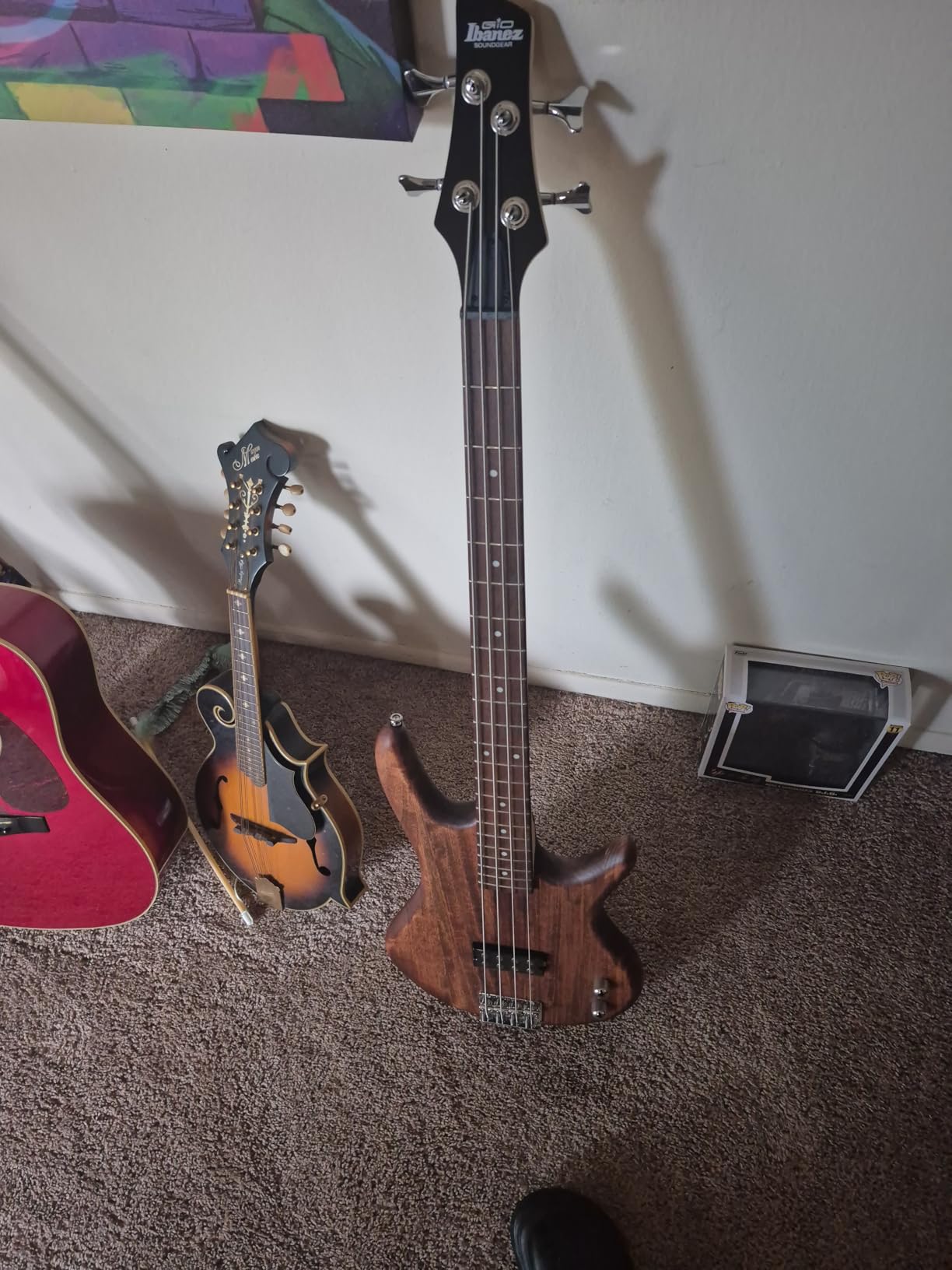
The Ibanez GSR100EX GIO is the bass I keep coming back to for anyone starting out in metal with one guitar. A single humbucking pickup sounds like a cheat code at first: no blending, no EQ, no guessing, just a fat aggressive note the moment you turn the amp up.
Owners consistently describe the tone as punchy and aggressive, which is exactly the register most first-time metal players are chasing. The poplar body is light at 10 pounds, so long rehearsals with a strap on do not wreck your shoulder, and the maple neck is described as comfortable straight out of the box.
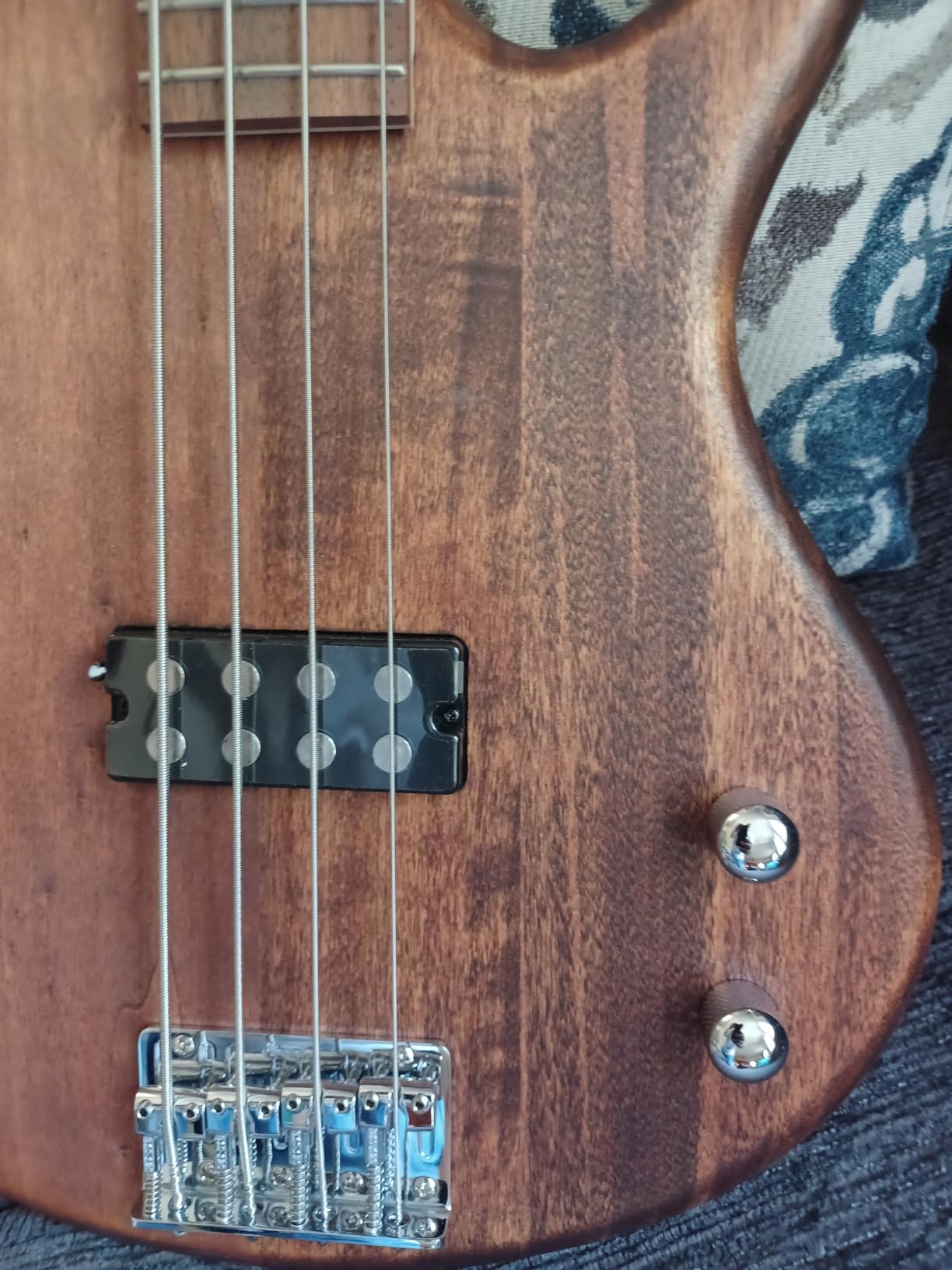
The Jatoba fingerboard and PPD4 bridge earn their keep under distortion. Fret buzz is the first thing that ruins a heavy tone, and a stable bridge keeps the low notes solid when you are leaning on the instrument with a down-picked riff. A 4.6 average across 236 reviews reflects that, with 77 percent of owners handing out five stars.
The honest limitation is flexibility. One pickup means no blend, and if you later decide you want the scooped, mid-heavy character of a P/J, you are shopping again. For straight thrash riffs, gallows-era punk, and heavy rock, that limitation rarely matters.
Who it suits and what to check before you buy
This is the right pick for a beginner metal player, a student rehearsing in a bedroom amp, and anyone who wants a growling low end without studying electronics. If your material is thrash, hardcore-leaning rock, or groove metal on a four-string, the single humbucker covers it well.
Check the scale length and the action when it arrives. A setup pass on string height and intonation is routine on instruments at this level, and a pro setup costs less than a single lesson. Verify the oil finish in person if you can, because an oil finish scuffs more readily than gloss and repairs are not straightforward.
Where it falls short
Players who switch between metal and slap, funk, or R and B will find one pickup limiting. Poplar is also the lightest and least dense body wood here, so the midrange thickness that makes a tone sound expensive is present but not emphatic.
If you already own a passive P-bass and want a metal upgrade, do not start here. Look at a model with an onboard preamp instead, since that is the feature that changes the sound after distortion. This instrument is for building a first rig, not refining an existing one.
2. Jackson JS Series Spectra JS2 – Active P.J Value Starter
Jackson JS Series Spectra Bass JS2, Gloss Black, Laurel Fingerboard
Active P.J pickups
Poplar body
Maple neck
Hardtail bridge
Pros
- Active P.J config gives thump and articulation
- Hardtail bridge holds tuning stability
- Bolt-on maple neck suits fast changes
- Accessible entry cost
Cons
- Lowest average rating here at 4.3
- Gloss finish shows fingerprints
- 12.2 pound listed weight is heavy
The Jackson JS Series Spectra JS2 is the rare budget instrument that arrives with active P.J electronics already installed. That combination puts a thumping single-coil character and a bright bridge pickup in one guitar, and the blend between them is the fastest tone sculpting tool on the whole instrument.
Reviewers like the active electronics and the tuning stability that the hardtail bridge provides, especially in a band rehearsal where temperature and humidity are working against you. The bolt-on maple neck is a familiar shape that transfers quickly if you are moving from another four-string.
Six percent of ratings are one star, so expect a small minority of units that need attention from a tech before they sound right.
The gloss black finish is the other recurring note. It shows fingerprints and fine scratches, which matters if you play in a club with a stand that rubs against the body. The listed weight of 12.2 pounds is the second-heaviest here, noticeable on a long standing set without a strap.
Warranty is a two-year term, which is longer than several competitors in this list. That is a real advantage for a first instrument, where a nut or pot failure in year two is a genuine expense.
Who it suits and what to check before you buy
This fits a player who wants active electronics on a four-string without stepping up into a five-string. The P/J layout handles funk, rock, and metal equally well, so it is a good choice for a beginner whose taste is still changing.
Check the neck relief and the bridge setup on arrival, and inspect the gloss finish under light. Ask for a setup quote before you buy, so you are not surprised by the cost after the box is open.
Where it falls short
The review base is small, so long-term reliability data is thin. Gloss finishes and a heavy listed weight are both minor quality-of-life drawbacks that do not affect the tone itself.
Players who plan to move into low tunings quickly will outgrow a four-string. If death metal or djent is the destination rather than a possibility, the extra cost of a five-string is money better spent up front.
3. Ibanez GSR205BWNF GIO – Five-String Mahogany With Onboard EQ
Ibanez GSR205BWNF GIO – Walnut Flat
Mahogany body
34 inch scale
Two active humbuckers
Volume tone and EQ
Pros
- Thick tuned tone from mahogany and actives
- Dual volume plus tone and EQ knob
- 676 reviews at a 4.5 average
- Bolt-on maple neck with Jatoba board
Cons
- Active electronics add complexity for beginners
- Some units need setup out of the box
- Flat walnut finish is less distinctive
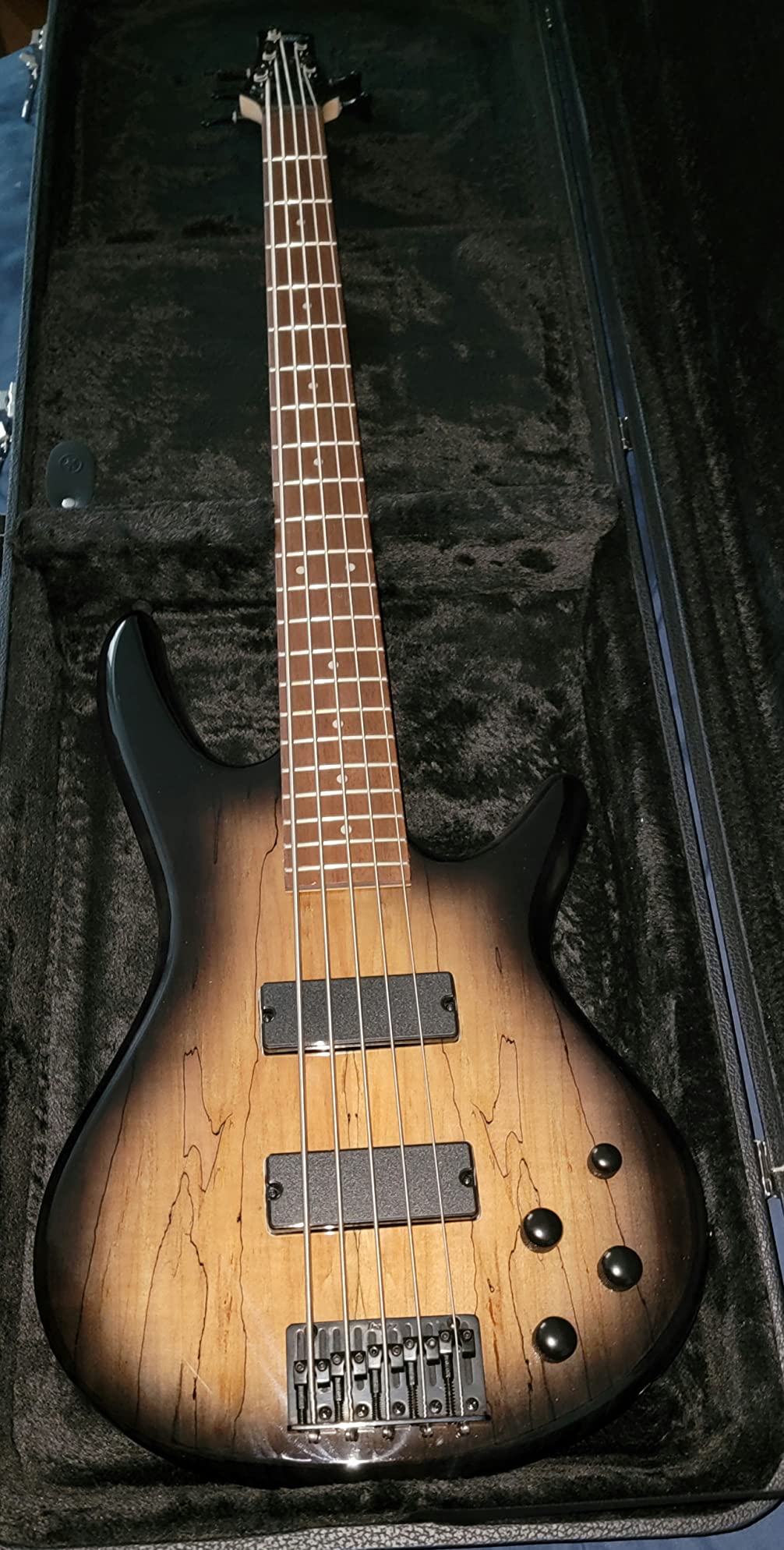
The Ibanez GSR205BWNF GIO is the most thoroughly reviewed instrument in this roundup, with 676 ratings at a 4.5 average. That volume of long-term owner feedback is the reason I trust its setup claims more than most, and the tone description is consistent: thick, punchy, and shaped by the onboard controls.
A 34-inch scale five-string with two active humbuckers on a mahogany body covers the modern metal brief almost exactly. The low B has the string length and the midrange density to sit under distorted guitars, and the B15 bridge is stable enough for drop tunings and heavier gauge strings.
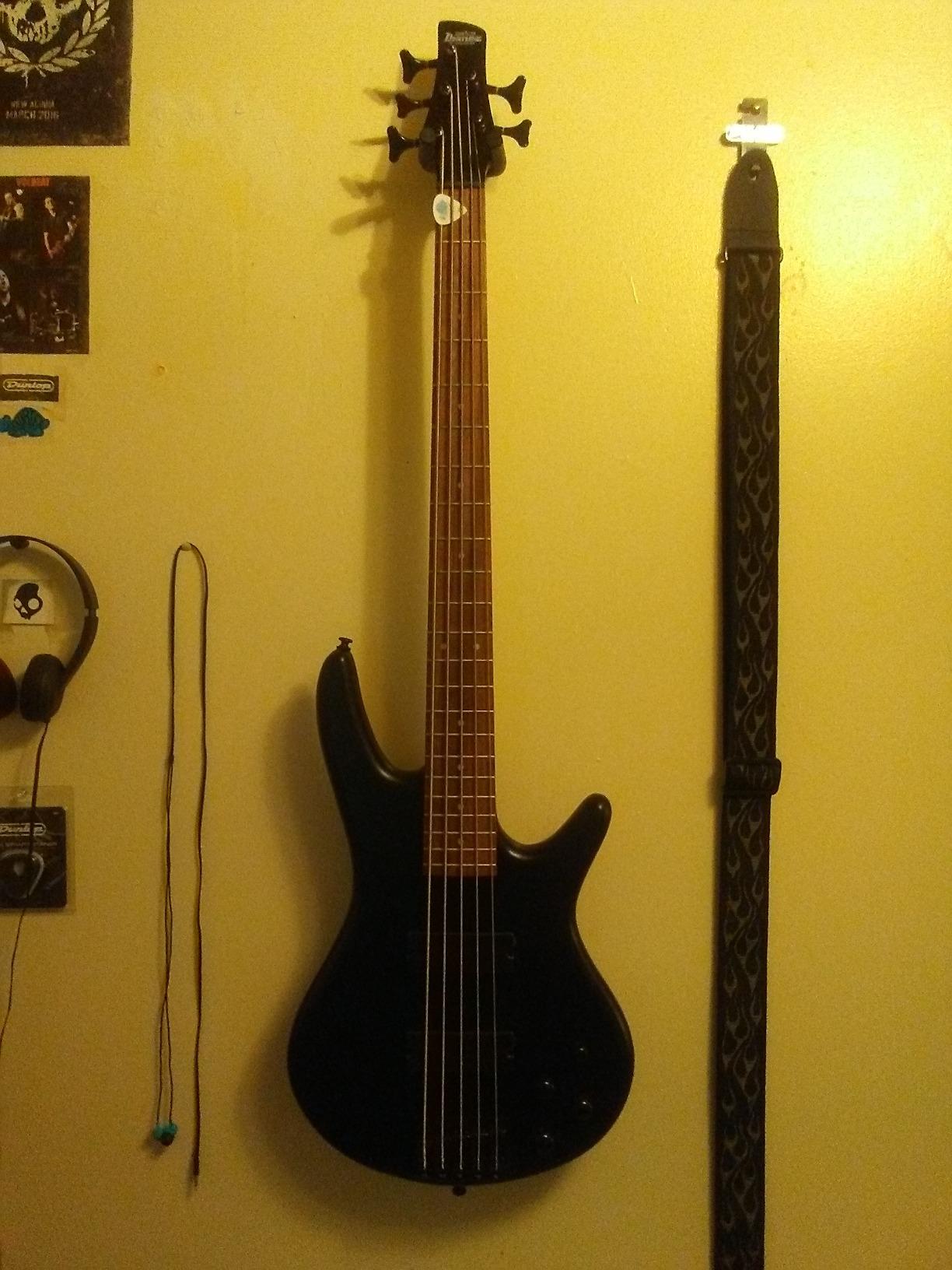
Two volume controls, a tone control, and an EQ knob give more tonal range than a passive P/J. That matters most when the amp is doing the tone shaping badly, because you have onboard authority to fix it rather than reaching for a pedal mid-set.
Five percent of ratings are one star, and the recurring theme in those is factory setup. A small share of units need intonation or action work before they play properly, which is normal at this level but worth budgeting for.
Who it suits and what to check before you buy
This is the pick for a player moving into death metal, djent, or progressive work where the low B is not optional. It also suits gigging players who want onboard EQ control rather than a pedal chain full of bass EQ.
Check the nut action and intonation when it arrives, and confirm the battery compartment is easy to reach. The weight is listed at 10 pounds, which is reasonable for a five-string.
Where it falls short
Active electronics and a five-string body represent two learning curves at once for a beginner. Someone starting their very first instrument may find the controls more than they need for a first sound.
If you play in a pop-punk or funk cover band alongside metal, a four-string will serve you with fewer compromises. The extra low end is a specialty, not an advantage in every style.
4. Sterling by Music Man StingRay Ray4 – Modern Zing With a Two-Band Preamp
Sterling by Music Man StingRay Ray4 Bass Guitar in Mint Green
Basswood body
Maple neck and board
Ceramic pickup
Two-band active preamp
Pros
- Wide tonal range from the active preamp
- Final setup and inspection done in the USA
- Frets arrive leveled with minimal buzz
- Solid mod platform
Cons
- High factory string height on some units
- Active electronics need a 9V battery
- Unfinished neck cannot be spot-repaired
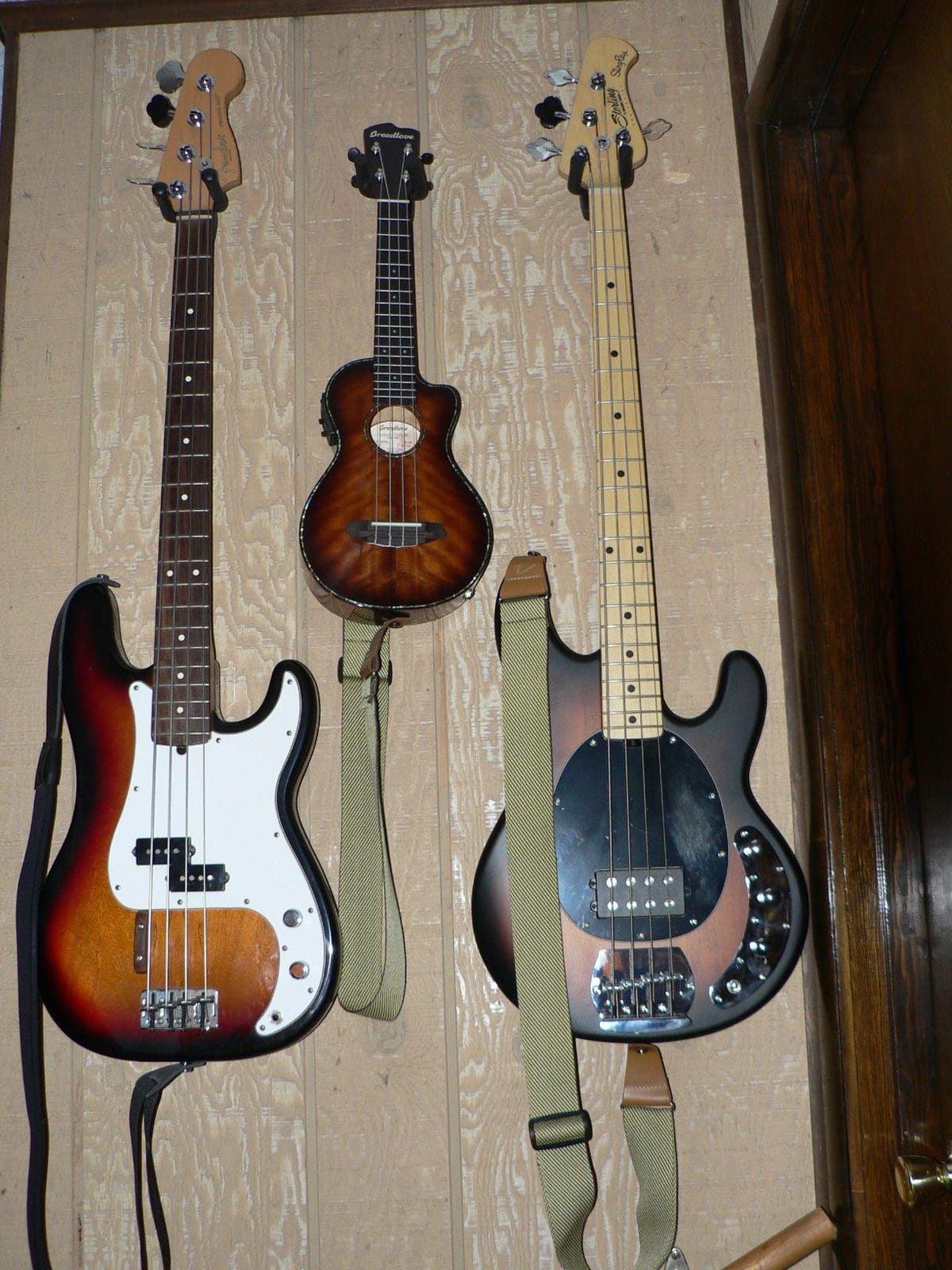
The Sterling by Music Man StingRay Ray4 is the modern alternative to a vintage P-bass, and that is exactly how owners describe it. The ceramic pickup and two-band active preamp produce a bright, articulate tone that reviewers compare to both Fender and Rickenbacker voices.
Forum players often name the StingRay for its modern zing, which is the phrase that matters for metal. A P-bass gets you weight and grind; the StingRay gets you definition, and definition is what stays audible when two distorted guitars are already occupying the low-mids.
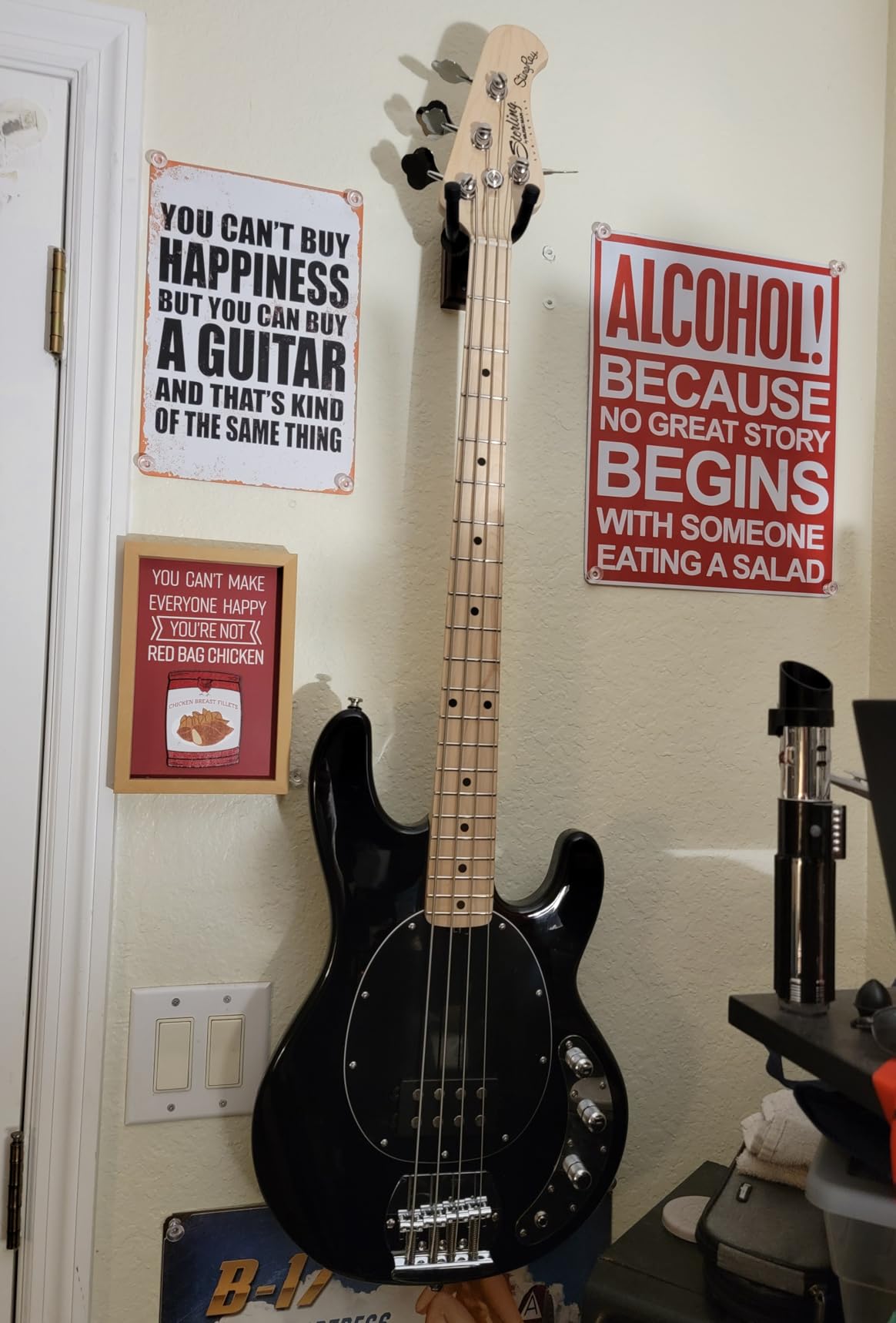
Build quality is the standout for the money. Final setup and inspection happen in the USA, frets arrive properly leveled, and owners report minimal buzz with only small adjustments needed. A 4.5 average across 379 ratings reflects an instrument that mostly arrives ready to play.
Active electronics mean a 9V battery, which is an added step for beginners. The unfinished neck and body also mean scratches cannot be spot-repaired, so a gigging player who is hard on instruments should think twice.
Who it suits and what to check before you buy
This is the pick for a player who finds a vintage P-bass too dark under distortion, and for groove metal, technical death metal, and progressive work where note definition carries the riff. The Mint Green finish and white pickguard also make it unmistakable on a stage.
Check string height on arrival, since a number of units need it lowered, and verify that the neck is straight. Ask about battery availability before a long trip overseas.
Where it falls short
Some units arrive with paint chips or a loose input jack, and the satin finish cannot be repaired locally. The high factory string height on some examples is the single most common setup complaint.
It is a four-string, so low-B work is out of scope. If your material is dropped to C or lower on a five-string basis, choose a longer-scale instrument instead.
5. Squier Classic Vibe 70s 5-String Jazz Bass – Vintage-Shape Alternative to the P-Bass
Squier Classic Vibe 70s 5-String Jazz Bass, Natural, Maple Fingerboard
Maple body and fingerboard
Fender-designed alnico pickups
5-string
Nickel steel strings
Pros
- Clear cutting tone owners rate highly
- Build quality rivals the Vintage Modified line
- All-maple body and neck for a defined edge
- Strong 5-string foundation for beginners
Cons
- Notably heavy for a five-string
- Pickup output is low so a swap may be needed
- Arrives needing setup and fret work
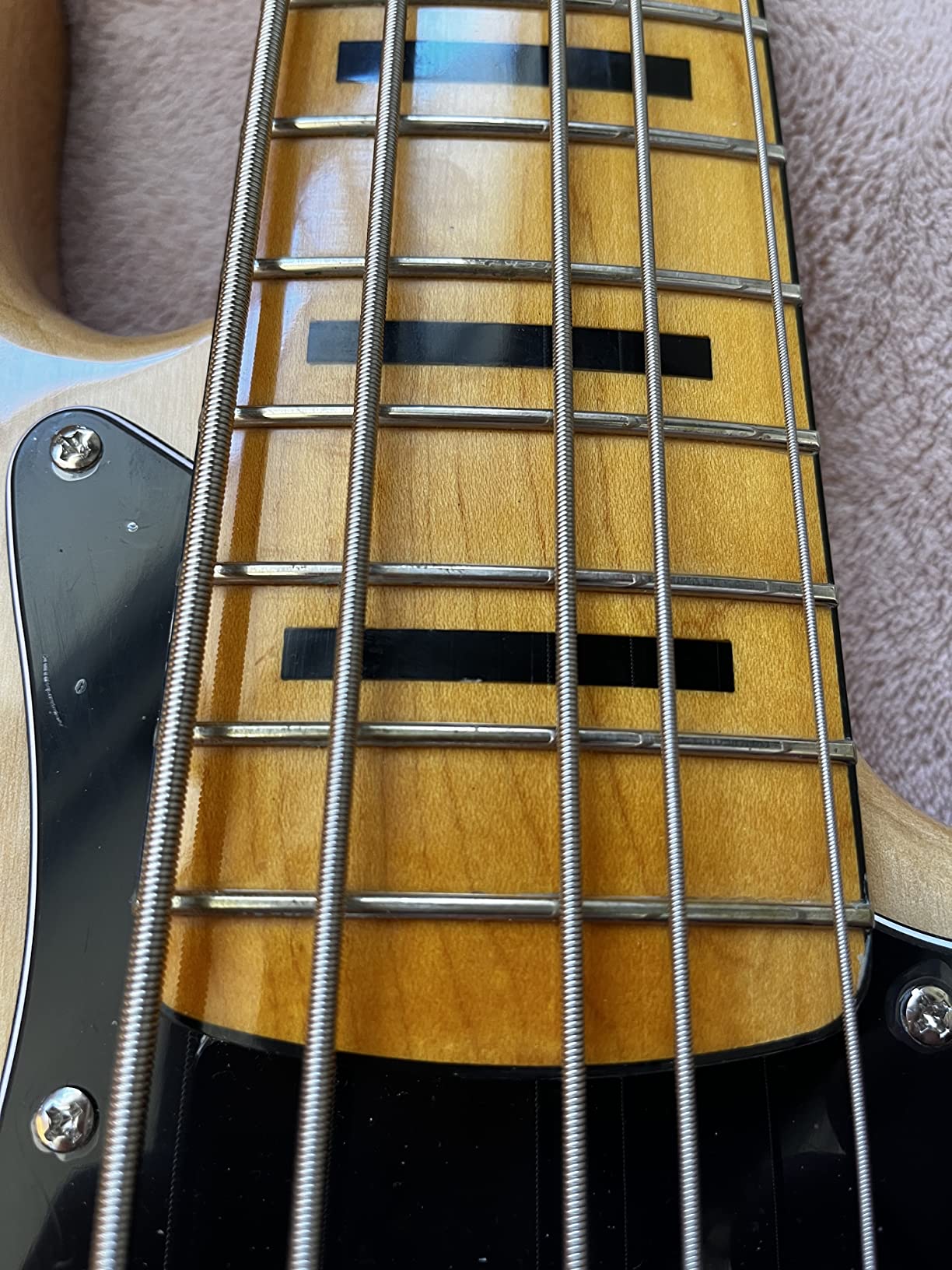
The Squier Classic Vibe 70s 5-String Jazz Bass answers the question about the best alternative to a Fender Precision Bass, and the answer is a vintage Jazz Bass shape with a five-string neck. The all-maple body and fingerboard produce a defined, cutting tone that sits forward in a mix rather than underneath it.
The Fender-designed alnico pickups are an upgrade over older Squier instruments, and owners single out their clarity. That clarity comes with lower output than the active basses in this roundup, so if you are running a high-gain rig, know that you may want a pickup swap later.
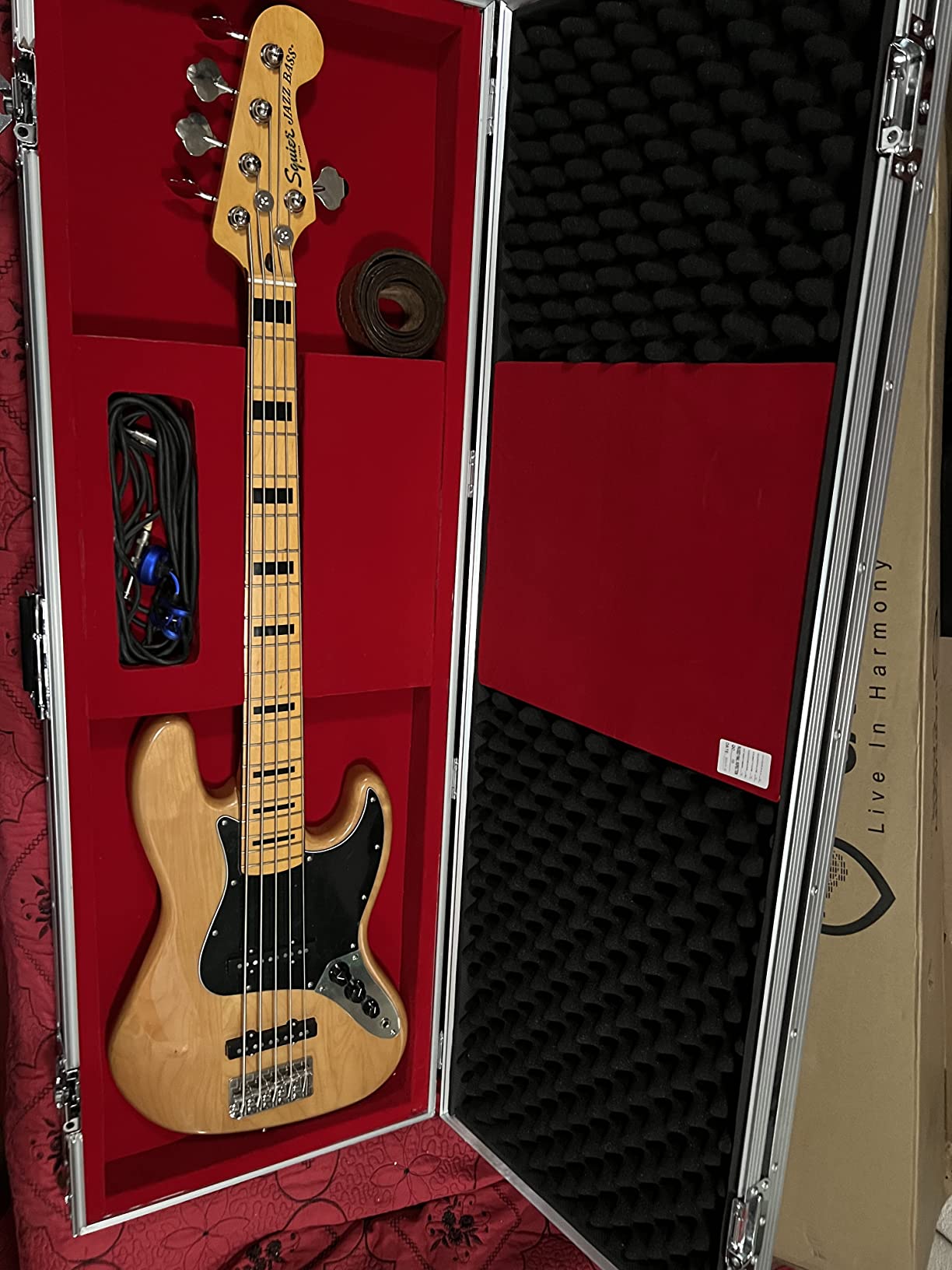
The five-string neck and body are the strongest part of the package. Players describe the build as rivaling Squier’s higher-tier Vintage Modified line, which is a lot of instrument for a first five-string, and the neck-only upgrades make it a good foundation if you plan to grow into it.
The weight is the practical issue. All-maple construction in a five-string is heavy, and players with smaller hands will want the neck measured before committing. Some buyers also report uneven or unleveled frets out of the box, so budget for a setup.
Who it suits and what to check before you buy
This suits a player who wants vintage looks, a maple-board bite, and a five-string range without stepping into active electronics. It also works as the cheapest path into a five-string here, with an upgrade path through pickups later.
Check the frets carefully on arrival and confirm the pickup output suits your amp gain. If your rig runs hot distortion, hot passive or active replacements will solve it without replacing the guitar.
Where it falls short
Low output is the defining constraint. Under heavy gain the tone is clear but thin unless you blend, boost, or swap the pickups, which is a fight the active instruments in this list do not have.
The weight works against long standing sets. If you gig often without a strap, a lighter basswood or poplar body will serve you better.
6. Yamaha TRBX304 BL – Balanced Mahogany and a Performance EQ Switch
Yamaha TRBX304 BL 4-String Electric Bass Guitar
Mahogany body
Five-piece maple and mahogany neck
Active electronics
Performance EQ
Pros
- Balanced punchy tone from solid mahogany
- Five-piece neck adds stability and clarity
- Performance EQ switch offers five playing voices
- Held a 4.5 average across 377 ratings
Cons
- Active electronics need a battery
- Four-string limits heavy low-B work
- Some units need intonation work on arrival
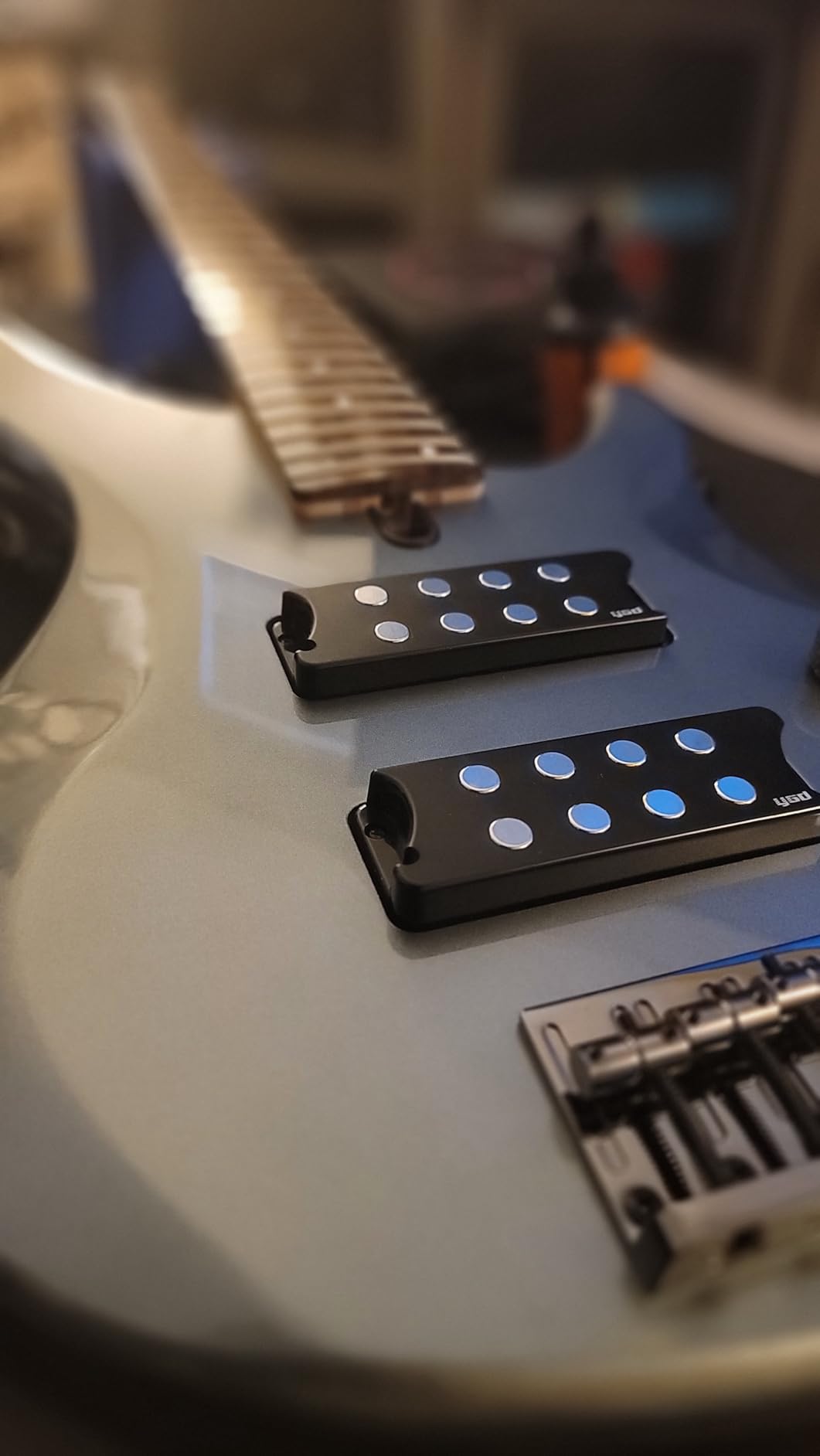
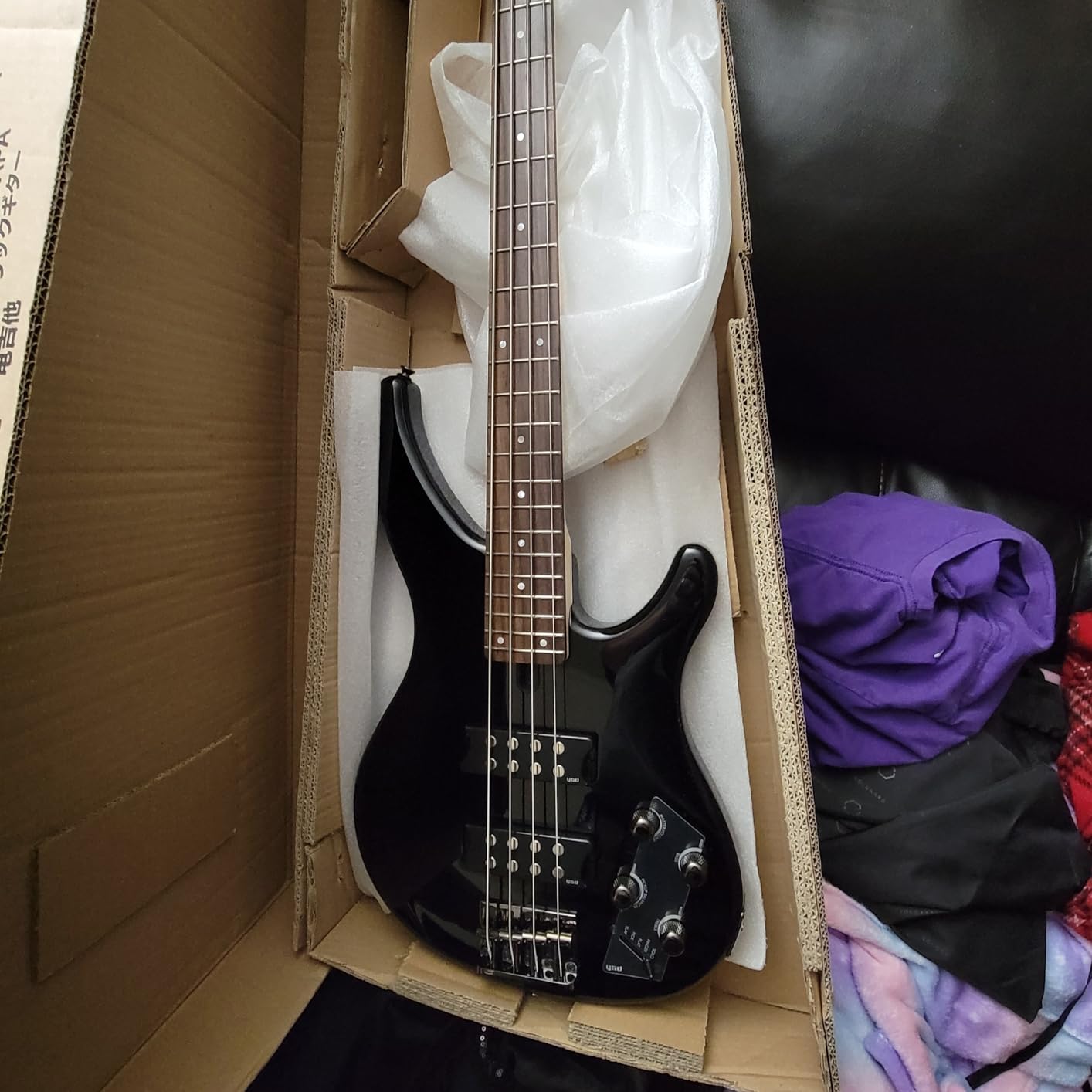
The Yamaha TRBX304 BL is the most balanced instrument here, and the most recommended by people who simply want to play. The solid mahogany body is described as punchy and well balanced, and the five-piece maple and mahogany neck is the most stable neck design in this roundup.
The Performance EQ switch is the feature metal players tend to underrate. It selects between slap, pick, flat, finger, and solo voices, so you can change the whole character of the instrument without touching a single knob. For a player moving between styles, that is faster than any pedal.
Owner feedback is consistent about neck stability and a balanced tone, with 76 percent of ratings at five stars. The tone profile is even rather than aggressive, which means it will not fight a distorted guitar for the same midrange space that a hotter instrument would.
Six percent of ratings are one star, mostly around battery-related issues and factory setup. Yamaha covers it with a one-year manufacturer warranty, which is the shortest on this list along with Ibanez and Squier.
Who it suits and what to check before you buy
This suits a player covering a wide setlist, a beginner who wants a forgiving instrument, and anyone who plays bass in a band where the songs change genre between numbers. The active electronics also give you output headroom into a high-gain rig.
Check intonation on arrival, and confirm your amp has gain available for an active source. An instrument this clean into a very high-gain rig can produce more low-end noise than a passive would.
Where it falls short
It is a four-string, so it is not the right tool for low-B and drop tuning. The battery adds a maintenance step and one more failure point than a passive design.
If you are specifically after a threatening, aggressive tone, this is the opposite choice. It is the comfortable, balanced option in a list that also contains several outright heavy hitters.
7. ESP LTD B-205 – Dual Humbuckers Under a Spalted Maple Top
ESP LTD B-205 5-string Bass Guitar – Natural Satin
Ash body with spalted maple top
Five-piece maple and jatoba neck
Two humbucking pickups
5-string
Pros
- Dual humbuckers give a thick focused low end
- Spalted maple top has distinctive natural grain
- Five-piece neck built for stability
- Limited lifetime warranty
Cons
- Smallest review base here at 36 ratings
- LTD hardware and pickup detail trail ESP instruments
- Bolt-on construction is less resonant
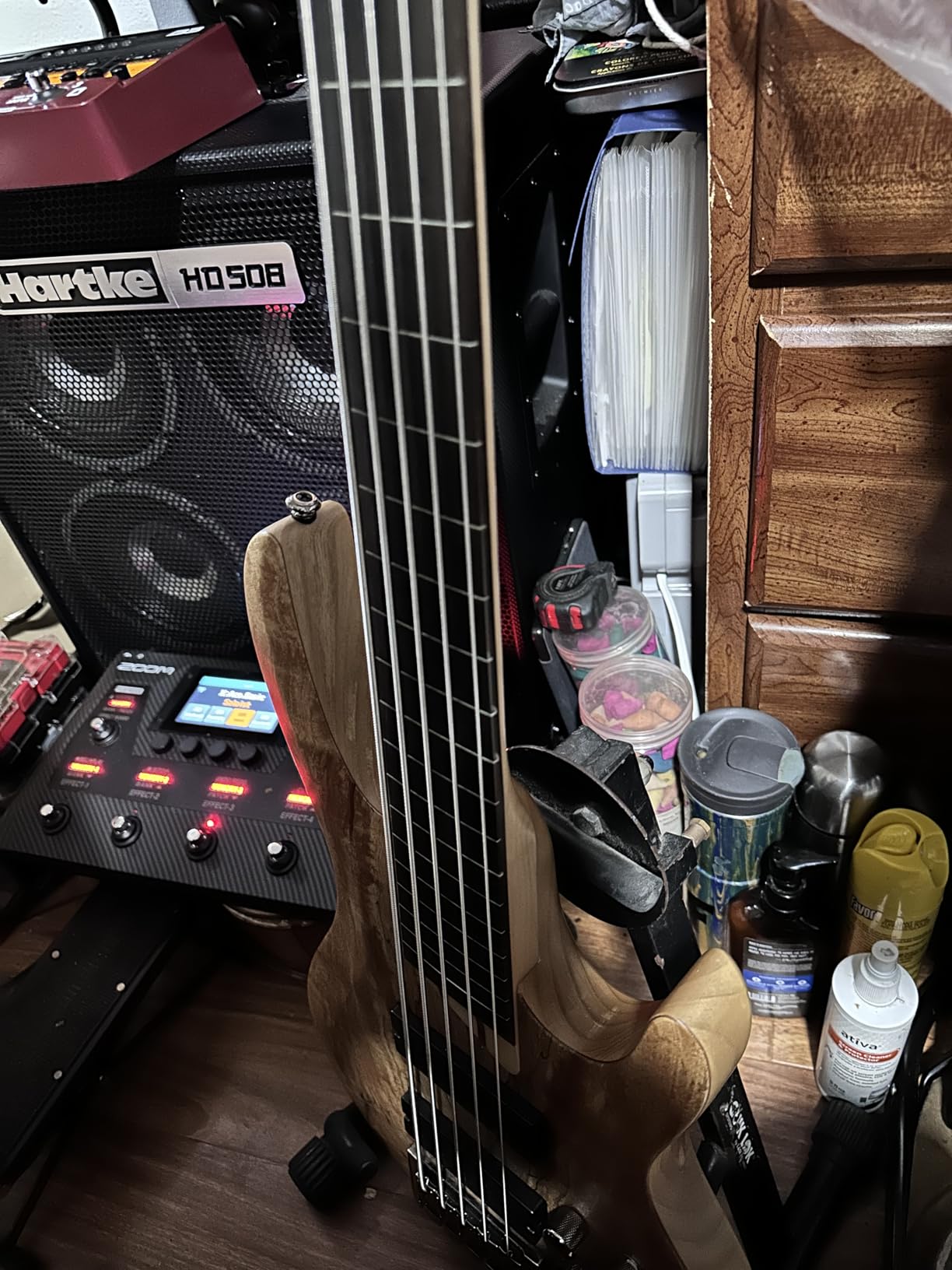
The ESP LTD B-205 builds a heavy five-string around two humbucking pickups on an ash body with a spalted maple top. That combination is the most traditional heavy-metal recipe in this roundup: thick, focused, quiet, and deliberately less sculpted than an active EQ.
Humbuckers handle high gain without the single-coil noise and hum that shows up as a hiss or buzz the moment distortion goes up. For death metal and doom, where the low end is the whole point, that silence under gain matters more than an onboard preamp.
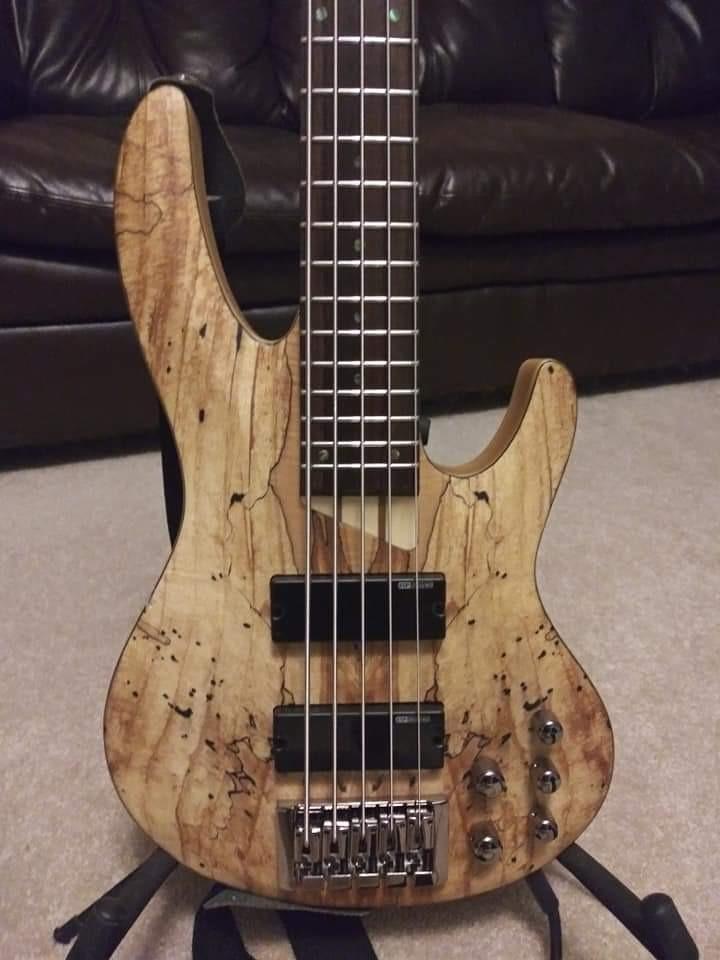
The five-piece maple and jatoba neck is built for stability, which is the part that matters for a five-string under tension. The spalted maple top gives the instrument a distinctive natural grain rather than the uniform look of a painted body, and owners single it out as the visual standout.
With 36 ratings, this is the smallest evidence base in the roundup, and that is worth being honest about. A 4.5 average from a small group of owners is encouraging, but it is a thinner signal than a 676-review record.
Who it suits and what to check before you buy
This suits a player who wants maximum low-end thickness and quiet electronics, which points at death metal, doom, and sludge. The limited lifetime warranty is the strongest long-term cover in this roundup.
Check the neck relief and fret ends on arrival, and note the bolt-on construction. If resonance at the body joint matters to you, compare it with a set-neck instrument before buying.
Where it falls short
Without onboard EQ, tone shaping depends on your amp and pedals. That is a real limitation for a player who wants to fix a muddy tone from the instrument itself.
Hardware and pickup detail sit a step below ESP’s higher-tier instruments, and the LTD badge carries less resale recognition. If you are buying once and keeping it for decades, that is a fair trade for the tone.
8. Schecter Stiletto Stealth 5-String – Quiet Dual-Humbucker Groove Machine
Schecter Stiletto Stealth – Satin Black, 5-String
Basswood body
Maple neck
Rosewood fingerboard
Two humbucking pickups
5-string
Pros
- Dual humbuckers and two-band EQ cover many styles
- Satin neck finish is smooth under the hand
- Small body and low noise floor when clean
- Build quality rated above the price tier
Cons
- Tuning pegs are the weakest component
- Neck profile runs wide and thick
- Action can arrive too high with sharp frets
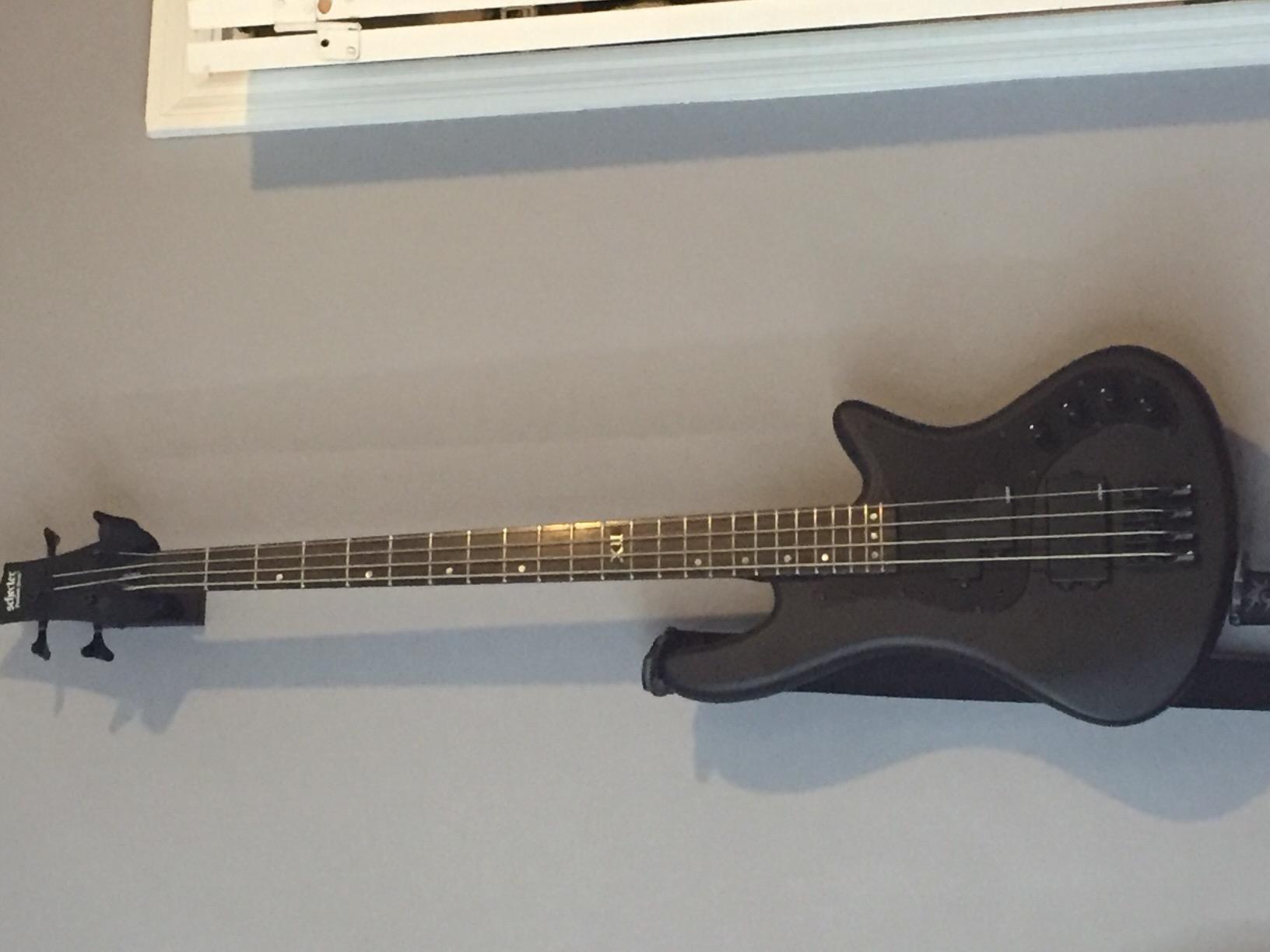
The Schecter Stiletto Stealth 5-String pairs two humbucking pickups with a two-band EQ on a compact basswood body, and the small body is a genuine ergonomic advantage. Players moving between a four-string and a five-string report an easier transition than a full-size instrument would give.
The low noise floor is the practical win. With humbuckers and a small body, this is one of the quietest instruments here, which matters in a rehearsal room where a hum at high gain is distracting and in a studio tracking pass.
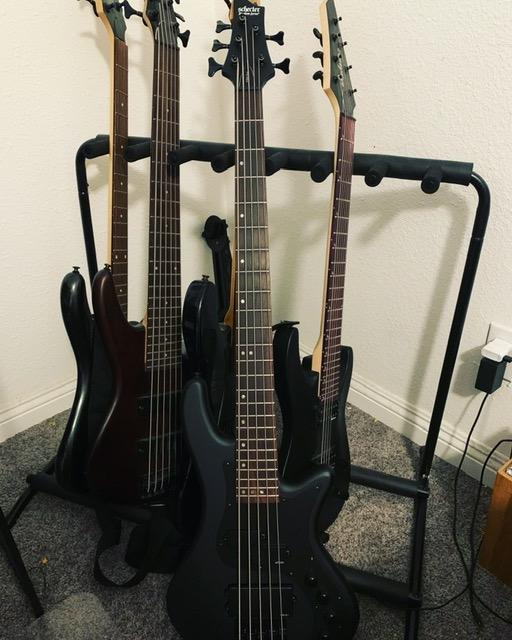
Owners rate the build above what the price tier would suggest, and the satin neck finish is reported as smooth with no sharp fret edges after setup. The two-band EQ keeps the controls simple, which is a deliberate contrast to the four-knob layouts elsewhere in this list.
At a 4.2 average from 38 ratings, it is the lowest-rated instrument here, and the reasons are consistent rather than random. Tuning machines drift, the neck profile runs wide for small hands, and the action frequently arrives too high with sharp frets that need attention.
Who it suits and what to check before you buy
This suits a player with smaller hands, or anyone who wants five-string range in a compact body. The two-band EQ is a good match for a straightforward heavy or groove setup where you do not need deep sculpting.
Check the tuning machines and the string action first, since those are the two documented weak points. Sit with the neck and confirm the width feels comfortable before you commit.
Where it falls short
The tuning machines are the weakest component, and drifting tuners are the most common complaint. The wide neck profile and factory setup work are the other two recurring issues, so budget a full setup.
The listed weight of 14 pounds is the heaviest in this roundup, and a five-string at that weight is tiring over a long set. If you stand for every show, that is a real consideration.
Buying Guide – The Five Decisions That Set Your Metal Tone
A bass contributes roughly half of a metal low end. The other half comes from strings, preamp, amp EQ, and how you play. These five decisions are the ones that change your result; brand names and inlays do not.
1. Pickup type: active or passive. Active electronics use a preamp and a battery to output a hotter, lower-impedance signal. That signal survives high gain without pushing your amp into noise. Passives need no power and need no maintenance, and they respond to your touch more directly. Players call active basses sterile, and players call passive basses weak, and both opinions come from the same fact: actives compress and passives do not.
2. Configuration: P, J, or P/J. A Precision split-coil sits at the neck and gives weight and midrange. A Jazz single coil sits at the bridge and gives brightness and click. A P/J gives you both plus a blend knob, which is the most usable tone control on any passive bass. For metal, the P/J and the P/P are the two shapes most players reach for, and the Squier Jazz Bass and the Jackson Spectra above are the clearest examples in this roundup.
3. Scale length and fret count. A 34-inch scale five-string, as on the Ibanez GSR205, gives enough string length for a low B under heavy gauge without the fret buzzing that a 30.5-inch scale produces. Twenty-plus frets is where extended-range bass stops being a marketing line and starts being useful for tunings below B.
4. Onboard EQ. An onboard three-band or two-band preamp lets you fix a muddy tone in five seconds instead of routing a pedal. Forum consensus treats onboard EQ as the most valued single feature on a metal bass, which is why the Ibanez GSR205 and the Yamaha TRBX304 both earn their place here.
5. Body weight and neck comfort. A five-string in all-maple is a heavy instrument to hold. Weight matters more to a player than a spec sheet admits, because a tired shoulder changes how you play, and how you play is half the tone.
One more path deserves attention. If you already own a P-bass or Jazz Bass and want a metal voice without a new instrument, a pickup swap changes more than most people expect. A r/Bass player reported dropping a P-bass to C, F, Bb, and Eb and fitting EMG pickups, and described the result as fantastic. For an existing owner, that is the cheapest meaningful upgrade available.
String Gauge, Tuning and Low-End Setup for Metal
String gauge is the most underestimated variable in a metal tone. Too light for the tuning and the low B will feel dead and buzz against the frets; too heavy and the neck will dive and the tuning will not hold.
For standard four-string tuning, a set in the 45 to 105 lb range gives a good balance of tension and tone. For a 34-inch five-string at standard tuning, a heavier low-B set around 130 to 150 lb is the usual starting point, and it is also what pushes the scale length decision.
When players drop to C, F, Bb, and Eb on a four-string, the tension falls far enough that a light set sounds slack and undefined. A heavier set restores the attack. On a five-string, the equivalent move is a low-B tuning, where the string is long and heavy enough to stay articulate.
A fresh set of roundwounds changes the tone more than any pickup swap, and it is the first thing to check when a bass suddenly sounds thin. Flatwounds produce a smoother, more defined attack, which some players prefer for death metal where note separation matters more than weight.
Matching a Bass to a Metal Subgenre
The subgenre you play decides the spec, because each one asks for a different balance of weight, definition, and low-end range.
Thrash metal favours a four-string P or P/J with tight articulation and midrange bite. The Ibanez GSR100EX and the Sterling StingRay both serve this well, with the StingRay adding brightness for fast single-note lines.
Death metal wants a five-string with a quiet, thick low end and no hum under gain. The ESP LTD B-205 and the Schecter Stiletto Stealth fit that brief, and the Ibanez GSR205 covers it if you want onboard control as well.
Djent depends on low B and drop tuning, so fret access and scale length come first. A 34-inch five-string with twenty-plus frets, like the Ibanez GSR205, is the safe pick.
Doom metal is about sustain and density rather than definition. Dual humbuckers on a resonant body, which is the LTD B-205, serve the slow, heavy material better than a bright single-coil instrument.
Power metal needs a clean, articulate low end that does not smear under fast arrangements. A P/J blend, as on the Jackson Spectra, keeps melodic lines audible without crowding the guitars.
Grunge and heavy rock sit between the styles, where a vintage single-coil like the Squier Classic Vibe Jazz Bass delivers the growl and the movement that those songs need.
Outside metal, the same logic holds. For funk and slap, the Yamaha Performance EQ switch covers the voice changes instantly. For a genre that changes every other song, onboard voicing is worth more to you than raw output.
Frequently Asked Questions
How to get a metal tone on bass?
Pluck closer to the bridge for attack, set the tone pot around 10 o’clock to cut fizz, blend a neck pickup into a bridge pickup for midrange, push the amp bass EQ above 800 Hz, add light compression for consistent low end, and use a DI to check the raw signal before amp coloration.
What is the best bass guitar for metal?
The best bass guitar for metal is one with a high-output or hot passive pickup, a P or P/J configuration, extended fret access for low tunings, and ideally an onboard EQ, because those specs survive high gain and let you sculpt a tight, growling low end. In this roundup the Ibanez GSR100EX GIO takes the overall spot.
Is precision or jazz bass better for metal?
A Precision Bass gives you metal weight, midrange punch, and a tight low end, while a Jazz Bass gives brightness, click, and a scooped character that cuts through faster riffs. A P/J is the most flexible option because the blend knob moves between both without a pickup swap, and adding an onboard preamp or a hot pickup set is what decides the result under heavy gain.
What type of bass string is best for metal bass?
Roundwound strings in a gauge matched to your tuning give the most attack and definition. A four-string in standard tuning suits roughly 45 to 105 lb, while a 34-inch five-string needs a heavier low B around 130 to 150 lb. Below standard tuning, a heavier set restores the attack that a light set loses.
What bass pickups are best for metal?
Active pickups from EMG, Bartolini, and Nordstrand are the most requested choice for metal because a hot, low-impedance signal survives distortion and onboard EQ lets you sculpt the tone. Hot passive setups work too, especially a P/J with a split-coil neck pickup, but they need more help from the amp to stay defined.
Why are 5 string basses hated?
Most objections to 5-string basses are practical: extra weight, neck dive, the added cost of a hard low-B string, and the fact that the low B sits where a distorted guitar already lives. Those are real concerns for a player who never leaves standard tuning. For death metal, djent, and drop tunings, the low B is the reason to own one at all.
What is the best alternative to the Fender Precision Bass?
The most common alternative is a Jazz Bass shape, such as the Squier Classic Vibe 70s 5-String Jazz Bass, which trades a Precision midrange punch for brightness and a scooped attack. Active instruments like the Ibanez GSR205 and the Sterling StingRay Ray4 are the other route, offering higher output and onboard EQ instead of pure vintage weight.
Do cheap basses with cheap pickups stop sounding good once distorted?
A bass with thin output and a single-coil pickup will expose its weaknesses under high gain, because distortion exaggerates fizz, noise, and a weak low end. A passive P-bass with hot passive or active pickups fitted, plus a heavier string set and amp EQ, gets close to a dedicated metal bass without a new instrument.
Conclusion – The Best Bass Guitar for Metal, by Use Case
For most metal players, the Ibanez GSR100EX GIO is the best bass guitar for metal overall, because one humbucker and a poplar body get you an aggressive tone with nothing to learn. If you need the low B and onboard control, the Ibanez GSR205BWNF GIO takes it with 676 owners behind it. For a modern bright voice rather than vintage weight, the Sterling StingRay Ray4 is the pick.
Below that, the Jackson Spectra covers the budget P/J route, the Yamaha TRBX304 covers players who change style every set, the Squier Classic Vibe 70s five-string covers vintage looks with range, the ESP LTD B-205 covers maximum thickness and quiet electronics, and the Schecter Stiletto Stealth covers smaller hands. Whichever one you settle on, run the six tone moves above before you judge it, and budget for a setup on arrival. Use the price-check button on any card to see current listings, and refresh your search for 2026 lineups as these models change.