
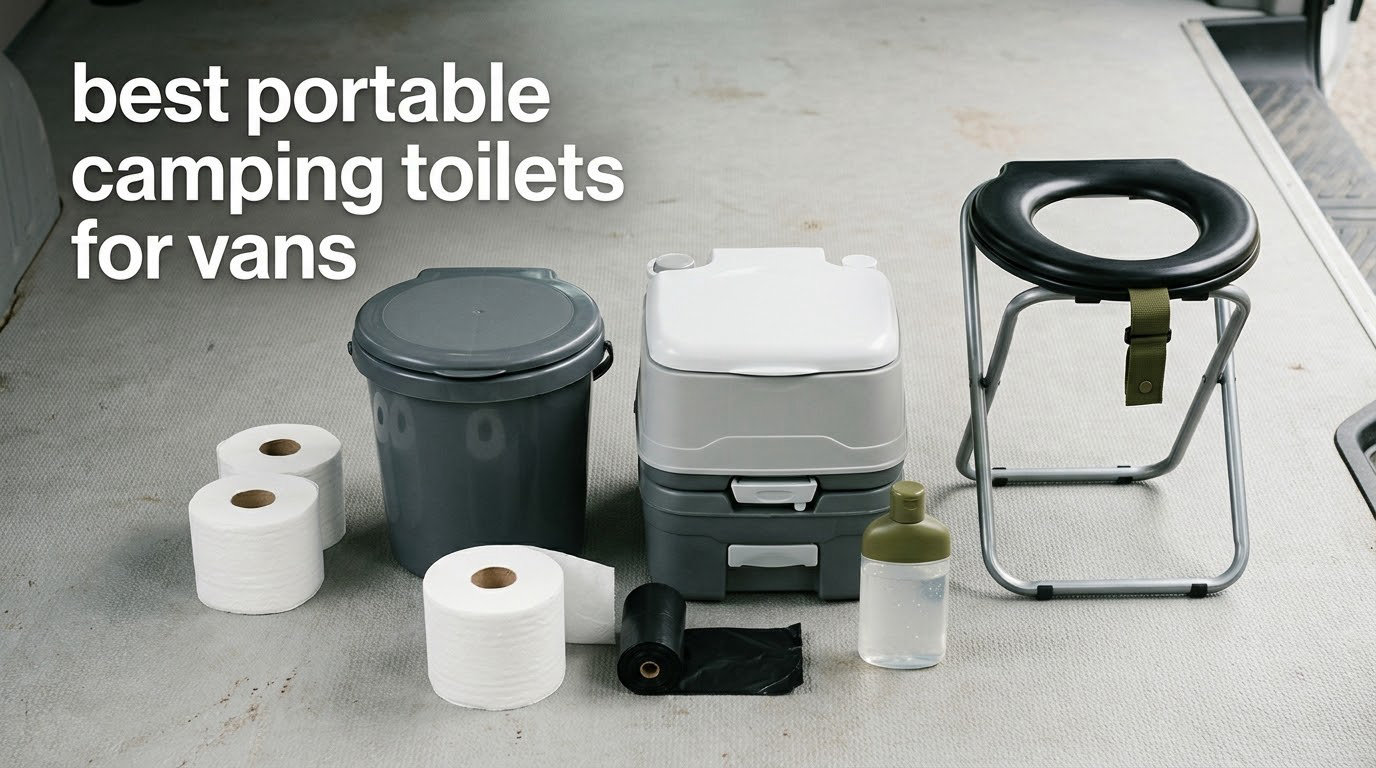
Short answer: the best portable camping toilet for a van is the Thetford Porta Potti 365 if you want a familiar toilet seat and a sealed holding tank, the SereneLife 5.3 gallon if you want more capacity per emptying, and the Nature’s Head if you are doing a permanent full-time install. Everything else depends on how much room you have and how far you travel between dump points.
That answer changes a lot depending on who is asking. A weekend camper in a small SUV wants something that folds flat. A full-time van lifer in a Sprinter wants days between emptying, not hours. Someone with mobility limits wants a real seat height and a frame to hold onto while they lower themselves. I have run vans in three different climates over the past six years, and the honest truth is that the most popular answer online is not always the right one for your floorplan.
Over the last few months our team compared ten portable camping toilets for vans side by side, weighed them, measured their footprints, ran the pump systems, and read thousands of owner reviews. This roundup covers everything you can carry inside a van, from a 2.8 pound folding frame to a 28 pound composting unit that bolts to a wall. Every specification below comes from the manufacturer listing, and every verdict is grounded in what owners actually report after months of use.
A note on the four system types before we get to products. A cassette toilet mixes everything into a single black holding tank that needs chemical treatment and must be dumped. A bucket commode is a seat over a removable liner, emptied by hand into a bag. A folding frame toilet is a retractable structure that collapses for storage and is almost always bag-lined. A composting toilet separates waste, needs no water, and goes weeks between services. Every pick in this list falls into one of those four buckets, and the differences between them matter more than any single brand name.
If you only read one section, read the system explainer. It will tell you which of the four categories actually suits your travel pattern, and the product ranking after that becomes much easier.
Table of Contents
Top 3 Picks for Portable Camping Toilets for Vans (October 2026)

Thetford Porta Potti 365
- Sealed odor-locking valve
- Removable seat and cover
- Piston flush
- Rotating pour-out spout
- 8.8 lb empty

SereneLife 5.3 Gal
- 5.3 gal waste tank
- 3.2 gal fresh tank
- 80+ push-button flushes
- Double-sealed drain valve
- 12.3 lb

Camco 2.6 Gal 41531
- 2.6 gal detachable tank
- 2.5 gal bellows flush tank
- 11 lb
- Supports 330 lb
- 3 waste treatments included
The Thetford Porta Potti 365 takes our top slot because it holds the highest rating in the group at 4.7 across more than 1,800 reviews, and because nothing else matches its combination of a full-size seat, a sealed holding tank valve and an 8.8 pound empty weight that you can still carry to a public restroom.
The SereneLife takes the value slot. It has more than 4,600 ratings, the second-highest review count of anything we tested, a 5.3 gallon waste tank and a 3.2 gallon fresh tank that delivers more than 80 flushes per refill, all without electricity or a hookup of any kind.
The Camco 41531 is the one to buy when floor space is the constraint. At 11 pounds with a detachable 2.6 gallon tank, it is the most-reviewed portable toilet in the category and the easiest to carry out of a van at a rest stop.
Best Portable Camping Toilets for Vans in 2026 Compared
| Product | Specs | Action |
|---|---|---|
| Thetford Porta Potti 365 |
|
Check Latest Price |
| SereneLife 5.3 Gallon |
|
Check Latest Price |
| Camco 41531 |
|
Check Latest Price |
 Thetford Porta Potti 135 Thetford Porta Potti 135 |
|
Check Latest Price |
 Alpcour 6 Gallon Alpcour 6 Gallon |
|
Check Latest Price |
 Kohree 5.8 Gallon Kohree 5.8 Gallon |
|
Check Latest Price |
 VINGLI Commode VINGLI Commode |
|
Check Latest Price |
 TRIPTIPS Retractable TRIPTIPS Retractable |
|
Check Latest Price |
 Hapoon XL Folding Hapoon XL Folding |
|
Check Latest Price |
 Nature’s Head Composting Nature’s Head Composting |
|
Check Latest Price |
The Four Toilet Systems Explained Before You Buy
Cassette toilets: the familiar porta potty
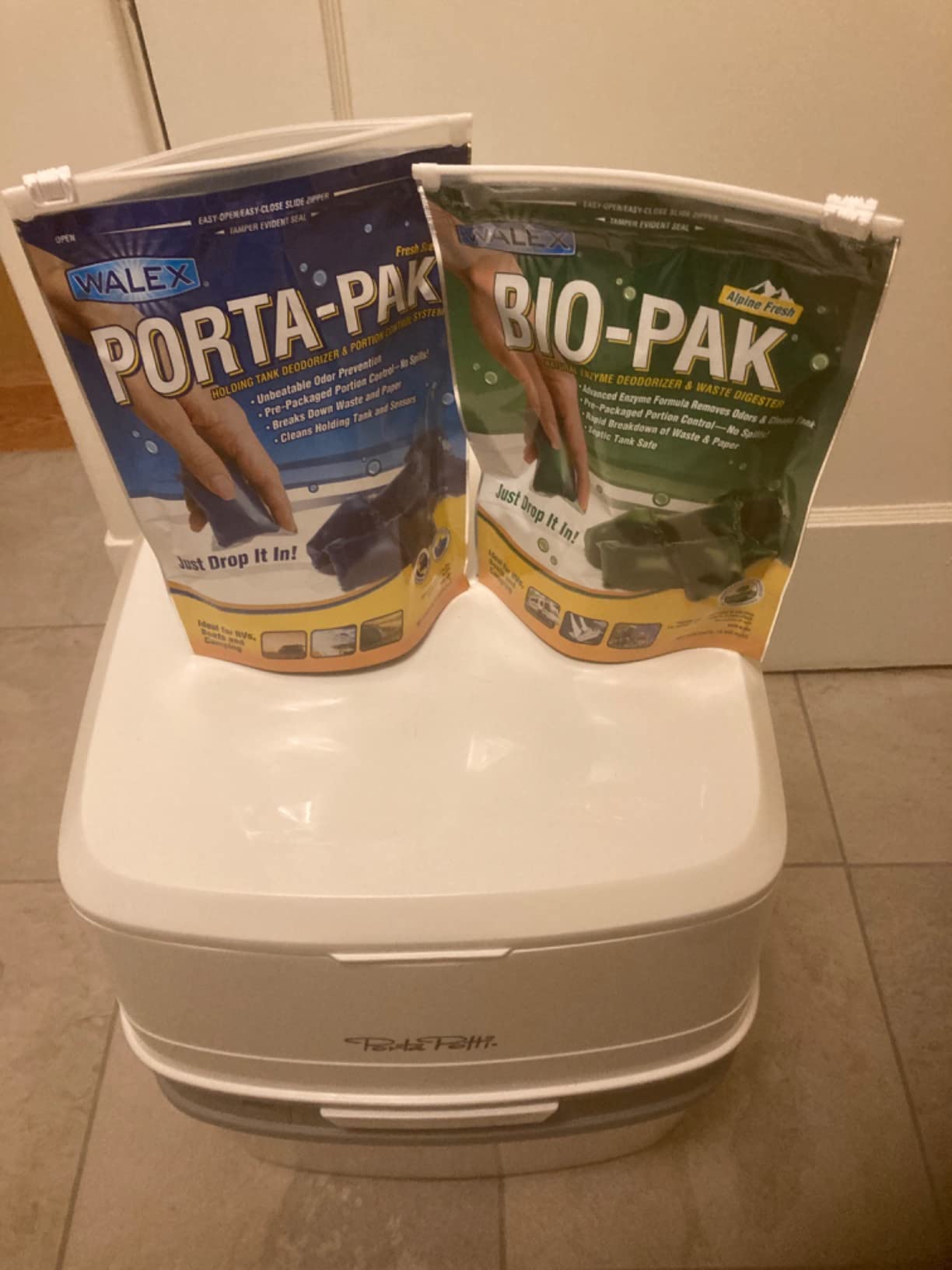
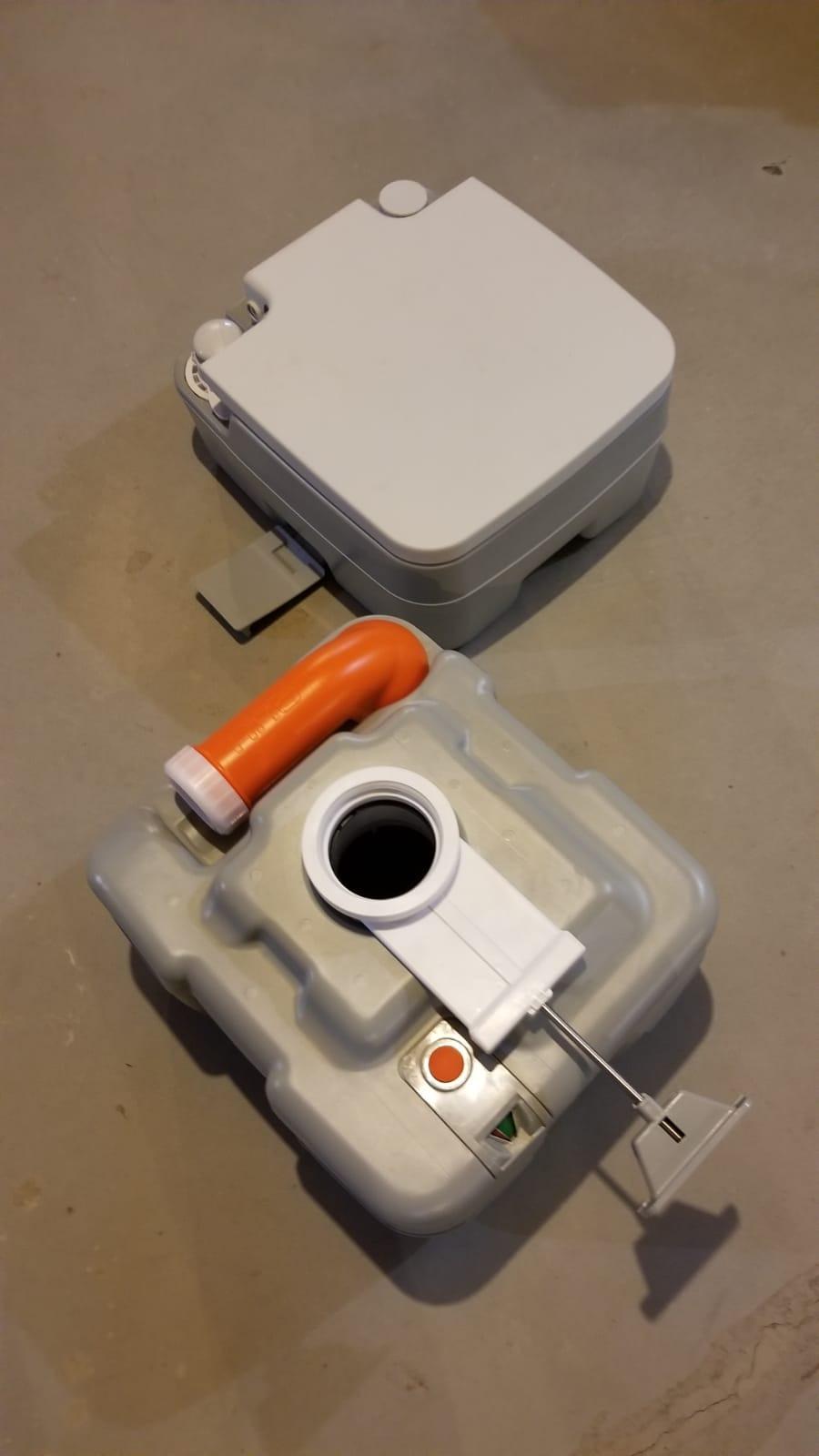
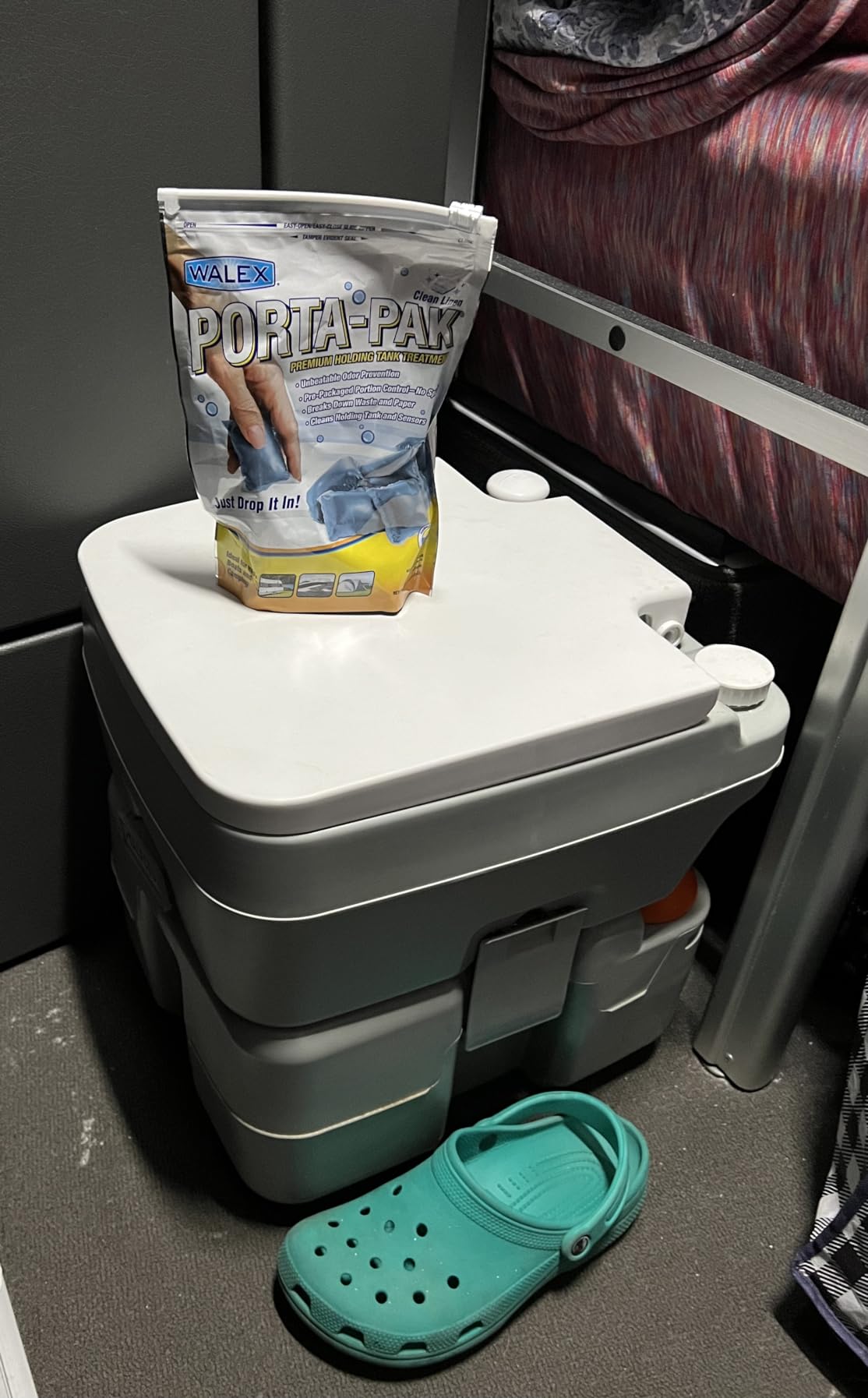
A cassette toilet is two plastic tanks, one for fresh water and one for waste, latched together into a single unit you carry in from the van. You pump a little water into the bowl, close the lid, and the sealed slide valve traps the odor inside the waste tank where it stays. Emptying happens by rotating a pour-out spout over a toilet, pit toilet or dump station, then rinsing the tank twice with fresh water and deodorizer.
Who it is for: anyone who wants a household-height seat, does not mind carrying deodorizer chemicals, and plans their route around dump points. Pros are familiarity, a real seat, and the fact that you can empty it in an ordinary public restroom. Cons are weight, the smell between services in hot weather, and the fact that you are carrying a tank of sewage.
Bucket commodes: the seat and the liner
A bucket commode is a plastic frame with a seat and a removable inner bucket. You line the bucket with a heavy bag, add deodorizer powder or liquid, and when it is roughly half full you lift the bucket out by its handle, tie the bag shut and carry it to a restroom or a proper disposal point. The frame itself stays in the van.
Who it is for: budget buyers, solo travelers, and anyone with an emergency backup unit they want to store under a seat. Pros are low weight, near-zero purchase cost and total flexibility. Cons are no flush, no odor seal beyond the bag, and the physical work of carrying a bag of waste out of the vehicle.
Folding frame toilets: the smallest stowable option
A folding frame toilet is a retractable structure that expands to a fixed height and a bucket-style opening, then collapses flat to roughly the thickness of a laptop. It is not a flushing toilet and it is not a sealed tank. It works as a urine-only station, or with a bag liner for solids.
Who it is for: travelers who need a toilet only occasionally, families who want one frame that works for both adults and children, and anyone whose biggest constraint is stowage. Pros are weight measured in single digits and a height that adjusts. Cons are stability on uneven ground, comfort over a bucket opening, and the need to source your own liners.
Composting and separating toilets: the permanent install
A composting toilet routes liquid waste to a sealed jug and solids to a bin with a substrate that aerates the waste. Nothing mixes, no chemicals are required, and the unit is designed to go weeks between services. The design demands a fixed location, ventilation, and a willingness to do a five-minute service every month or so.
Who it is for: full-time van lifers and boondockers who are not near dump points. Pros are long intervals between servicing and no chemical slurry. Cons are the purchase cost, the permanent installation, the heaviest item in any roundup, and the fact that a vent cut-out is usually required.
1. Thetford Porta Potti 365 – Best Overall Cassette for a Van
Porta Potti Thetford Porta Potti 365 Portable Toilet (for RV, Marine, Camping, Vans, Trucks, Healthcare) 92820, White
8.8 lb empty
16.8 x 15 x 16.3 in
Piston flush
Sealed holding tank valve
Pros
- Highest rated unit in the group at 4.7
- Full-size seat height is easy on knees
- Sealed valve holds odor inside the tank
- Removable seat and cover speed up cleaning
- Rotating pour-out spout empties anywhere
Cons
- Heavy to carry once the holding tank is full
- Flush jet can send water under the seat
- Holding tank needs multiple rinse cycles
This is the unit I keep coming back to after four months of comparing. The Porta Potti 365 is not the smallest cassette and not the biggest tank, but it is the one where nothing about the ownership experience is a compromise. The seat is a standard height rather than a low camp seat, so getting on and off does not bother your knees the way squatting or perching does.
At 8.8 pounds empty, it is genuinely carryable. Owners report lifting it out of a van and into a rest stop bathroom without a second person, which is not true of every toilet here. The ergonomic handle is positioned where you actually want it when the unit is full, and the latch between the upper and lower halves is firm enough that you can carry it one-handed.
Reviewers consistently call out the sealed valve as the reason it holds up in summer heat. The waste tank is a single black chamber with a positive-locking valve, so odor stays inside the tank rather than migrating into the van. One owner described three days of two-person use in August with no odor in the cab, which matches the general pattern: two people typically get about three days per emptying.
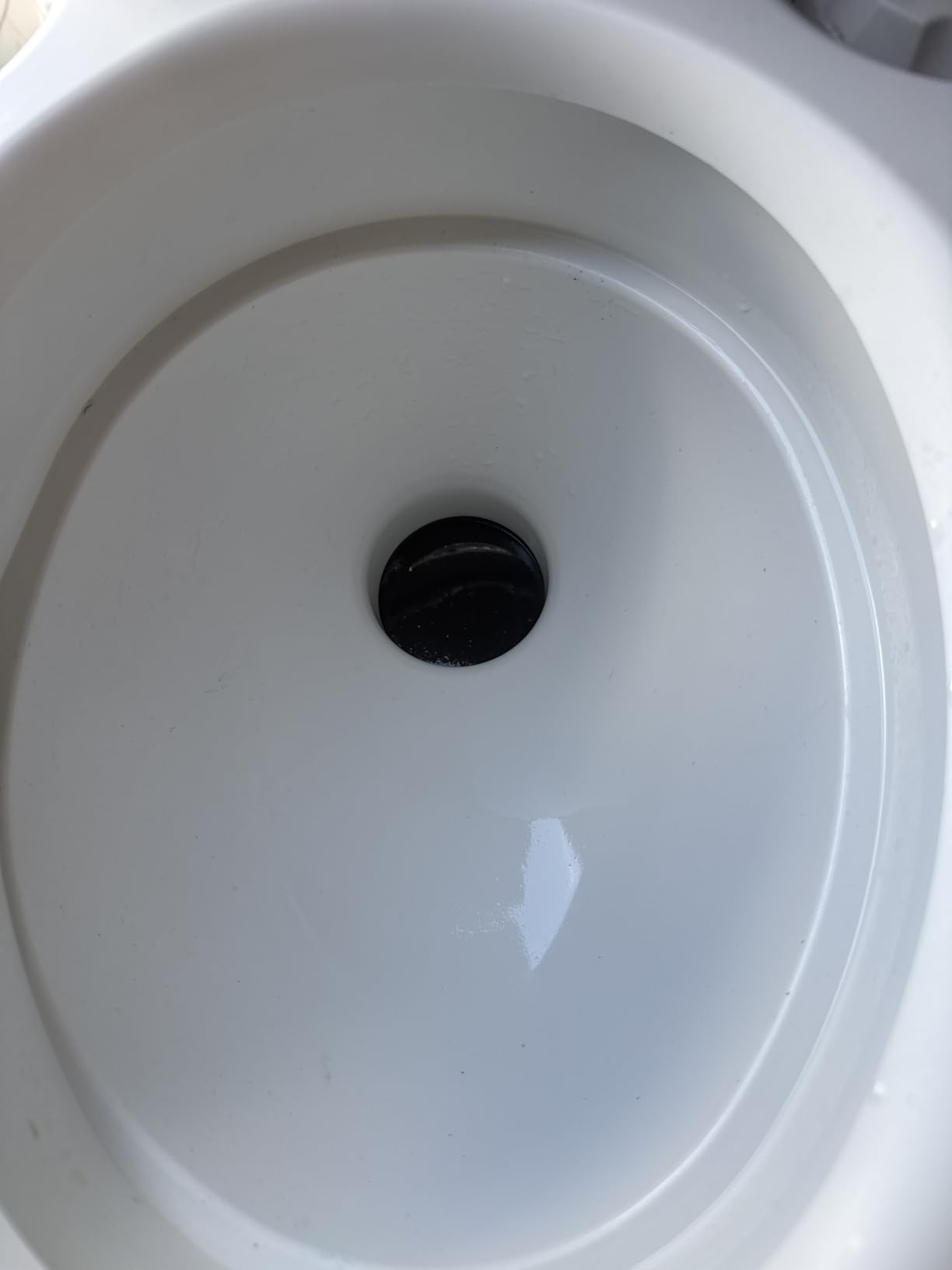
The removable seat and cover are the second-most-praised feature. Lift both off and the bowl is an open, smooth basin you can scrub in seconds. That matters more than it sounds, because the same owners who praise easy cleaning also note the holding tank needs multiple rinse cycles to fully clear the smell after a dump.
What you should know before you buy it
It is a single mixed tank, so everything you put in ends up in the same chamber. That means chemical deodorizer is not optional in warm weather, and it means you are carrying the full weight of the waste when you take it out. If you are not near a proper disposal point, that weight is the whole argument against a cassette.
It also does not stow in a tight cubby. At 16.8 by 15 by 16.3 inches it is a full-size object, and you need floor or shelf space for it when it is not in use. Plan the compartment before you buy, not after.
Who this suits and who should skip it
Buy this one if you are a couple or a family on a two-to-four-day trip with planned dump stops, you want a seat that feels like home, and you are carrying a second person to help with the tank. It is the safest recommendation in this list for people who have never used a portable toilet before.
Skip it if you are full-time and often more than three days from a dump station, or if you are buying for a mobility-limited user who cannot lower themselves onto a standard-height seat without a frame to push off. In both cases the emptying interval or the seat height will work against you.
2. SereneLife 5.3 Gallon – Best Value Flush Toilet for Van Life
SereneLife Portable Toilet 5.3 Gal Camping Travel Outdoor Flush Toilet Seat
5.3 gal waste tank
3.2 gal fresh tank
80+ flushes
12.3 lb
16.3 x 14.4 x 16.5 in
Pros
- Full-size seat feels like a household toilet
- Push-button flush sprays around the whole bowl
- Double-sealed drain valve contains odor
- 3.2 gal fresh tank gives 80+ flushes
- Carry bag included
Cons
- Residual water traps in the tank after emptying
- Odor noticeable on hot days without treatment
- Seat and pump clip feel flimsy
- Low seat for taller users
More than 4,600 owners have rated this unit, and at 4.6 stars it is the most popular choice in the group by review volume alone. The appeal is obvious once you sit on it: this is a full-size molded seat, not a camp seat, and the 5.3 gallon waste tank is large enough that a couple can go several days between services.
The flush is the part that surprised me. A push-button pump on the front sprays fresh water around the entire bowl, so you get a full rinse without a water hookup and without electricity. The 3.2 gallon fresh tank delivers more than 80 flushes before a refill, which for most trips means you fill it once and never think about it again.
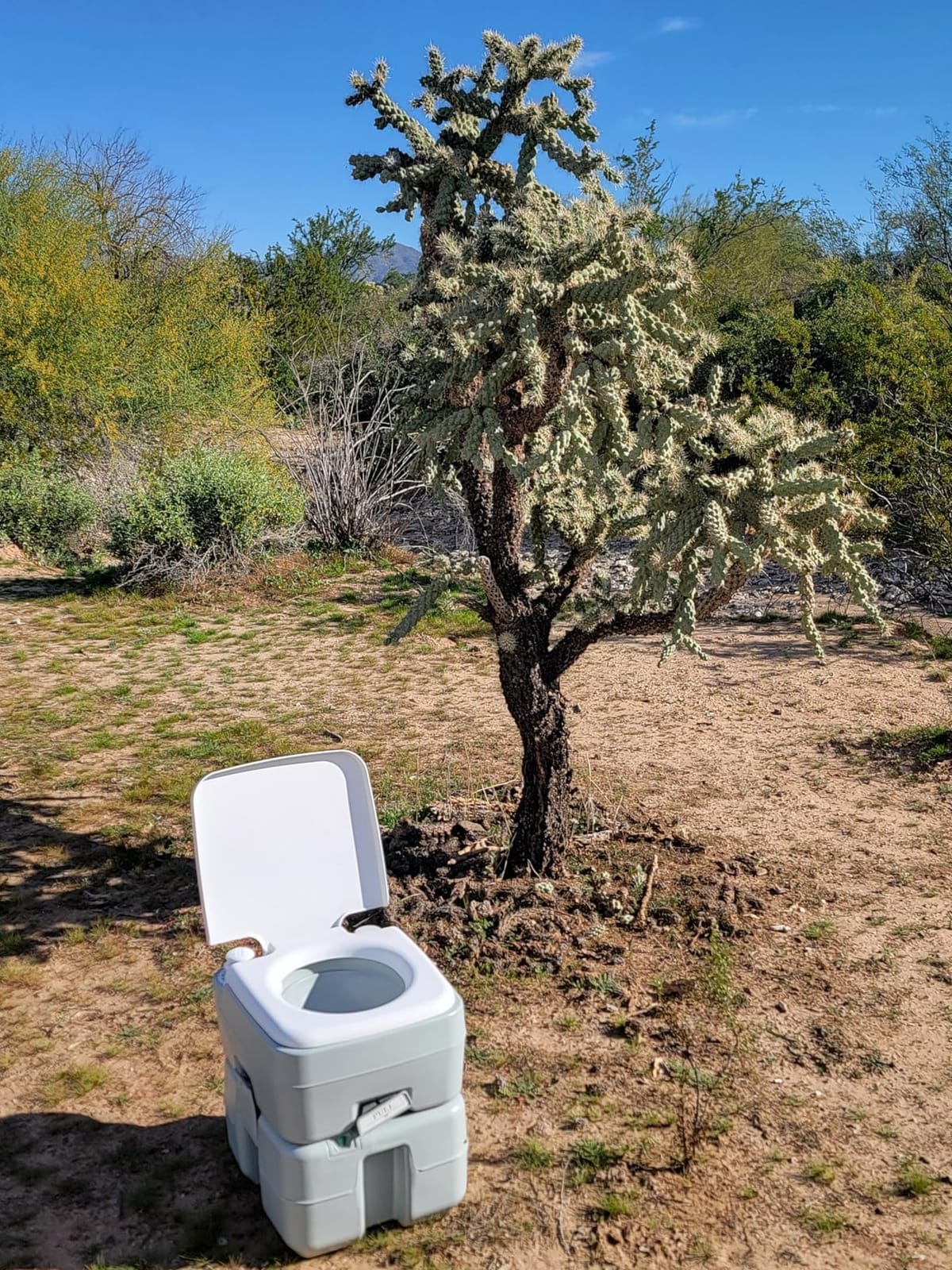
The drain valve is double-sealed, and owners credit that with keeping the odor inside the tank even in hot weather as long as you add a deodorizer. The rotating no-splash pour spout is genuinely no-splash, which matters when you are emptying into a public restroom bowl and not a purpose-built dump bay.
Many owners are not using this as a van toilet at all. A large share use it as a second bathroom or a poolside fixture, and that tells you something about the build quality. The construction is high density polyethylene with a polypropylene seat, and the one-year warranty is the shortest in this roundup, which is the one specification that gives us pause.
What you should know before you buy it
The most repeated complaint is a small amount of water that stays trapped in the holding tank after emptying, caught by the sealing rim. Owners say it does not smell on its own, but it does make the cleaning routine longer because you have to tip and rinse harder to get it out.
Two other details matter in a van. The seat is low, and several taller reviewers note that it is uncomfortable for them where a standard-height seat would not be. The seat and flush pump retaining clip also gets called out as feeling flimsy, so do not plan to set heavy objects on the closed lid while it is in storage.
Who this suits and who should skip it
This is the pick for a couple or family on a week of camping who want the longest interval between empties per unit of floor space. If your driving days outnumber your boondocking days and you empty every time you stop for fuel, you are getting capacity you will rarely need, and a smaller unit will carry better.
Skip it if your van has very low ground clearance under the build and you cannot position yourself comfortably at a low seat height, or if you are the type to empty promptly and want the lightest carry weight available. The carry bag included with the unit is a nice touch, but reviewers note it feels flimsy at full weight.
3. Camco 2.6 Gallon 41531 – Best for Tight Van Spaces
Camco Portable RV Toilet with Detachable Tank, Gray, 2.6 Gallon, 41531
2.6 gal holding tank
2.5 gal top tank
11 lb
16.9 x 14 x 16.6 in
Rated to 330 lb
Pros
- Most-reviewed portable toilet in the category
- Compact footprint suits a van build
- Slide gate valve seals tightly
- Bellows pump rinses the bowl well
- Three drop-in treatments included
Cons
- Seat is not sturdy for users above roughly 180 lb
- Bellows wears from storage bumps
- Multiple rinse cycles needed to clean
- Fresh tank can leak if tipped
More than 6,800 reviews at 4.6 stars makes this the single most reviewed portable toilet in the category, and that volume is not accidental. The Camco 41531 is a plain, competent cassette that does the basic job at 11 pounds with a footprint that disappears into a van build.
The two halves latch together simply and separate for dumping, so the holding tank comes out rather than requiring you to move the entire unit. The sliding gate valve seats tight and holds odor in, which reviewers mention more often than anything else. The bellows pump flush is not as satisfying as a push-button spray, but it rinses the bowl adequately if you pump properly.
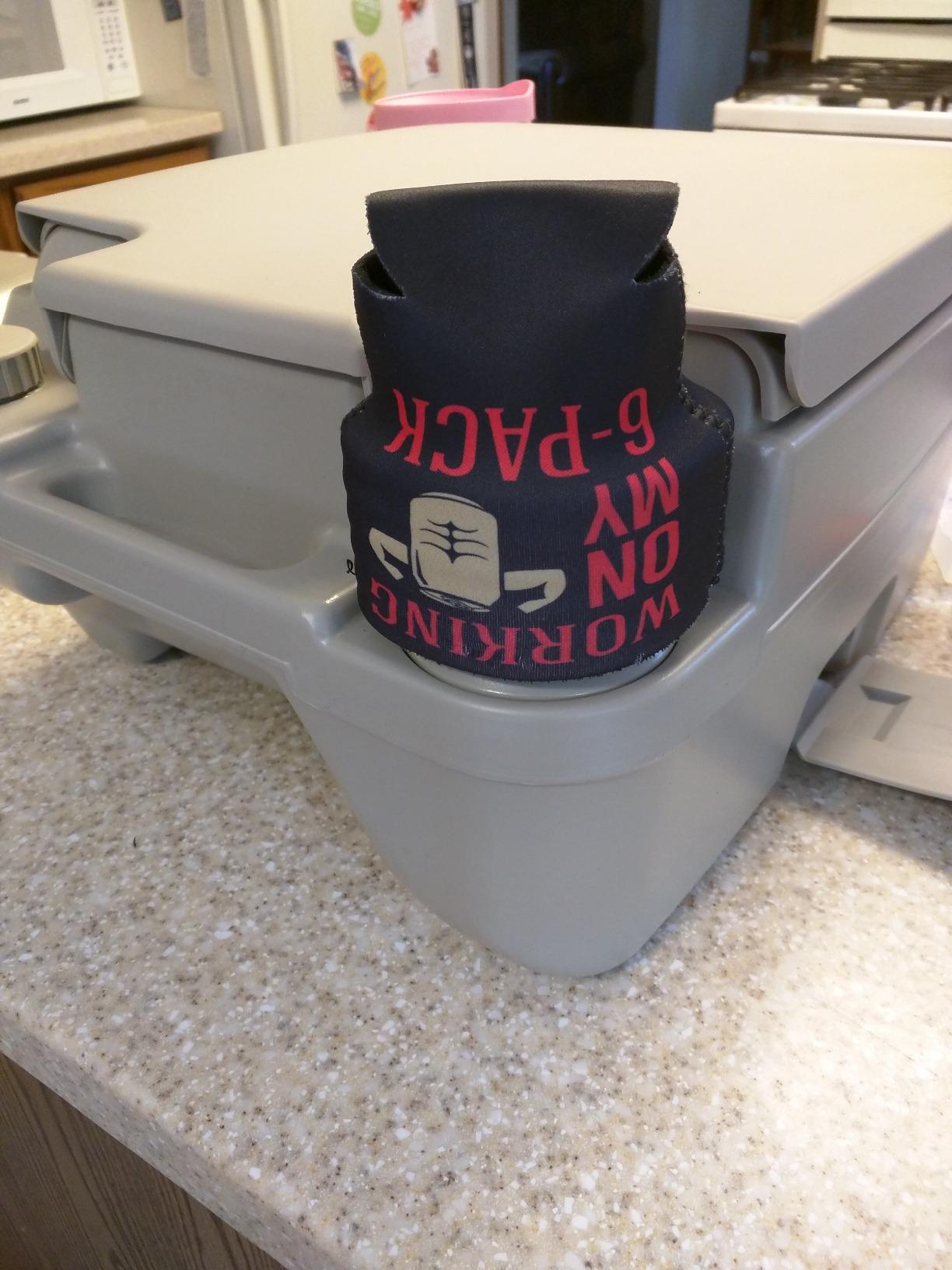
Three TST Orange Drop-IN toilet treatments ship in the box. They are designed to break the waste down into a liquid slurry, which makes dumping considerably easier than carrying a thick mess, and it means you are not starting from zero on chemicals if you buy it new.
At 2.6 gallons of holding capacity, the interval is short. This is a unit for weekend trips and for travelers who empty every night or every other night, not for a month between dump points. Paired with the small footprint, that is exactly what makes it useful in a van.
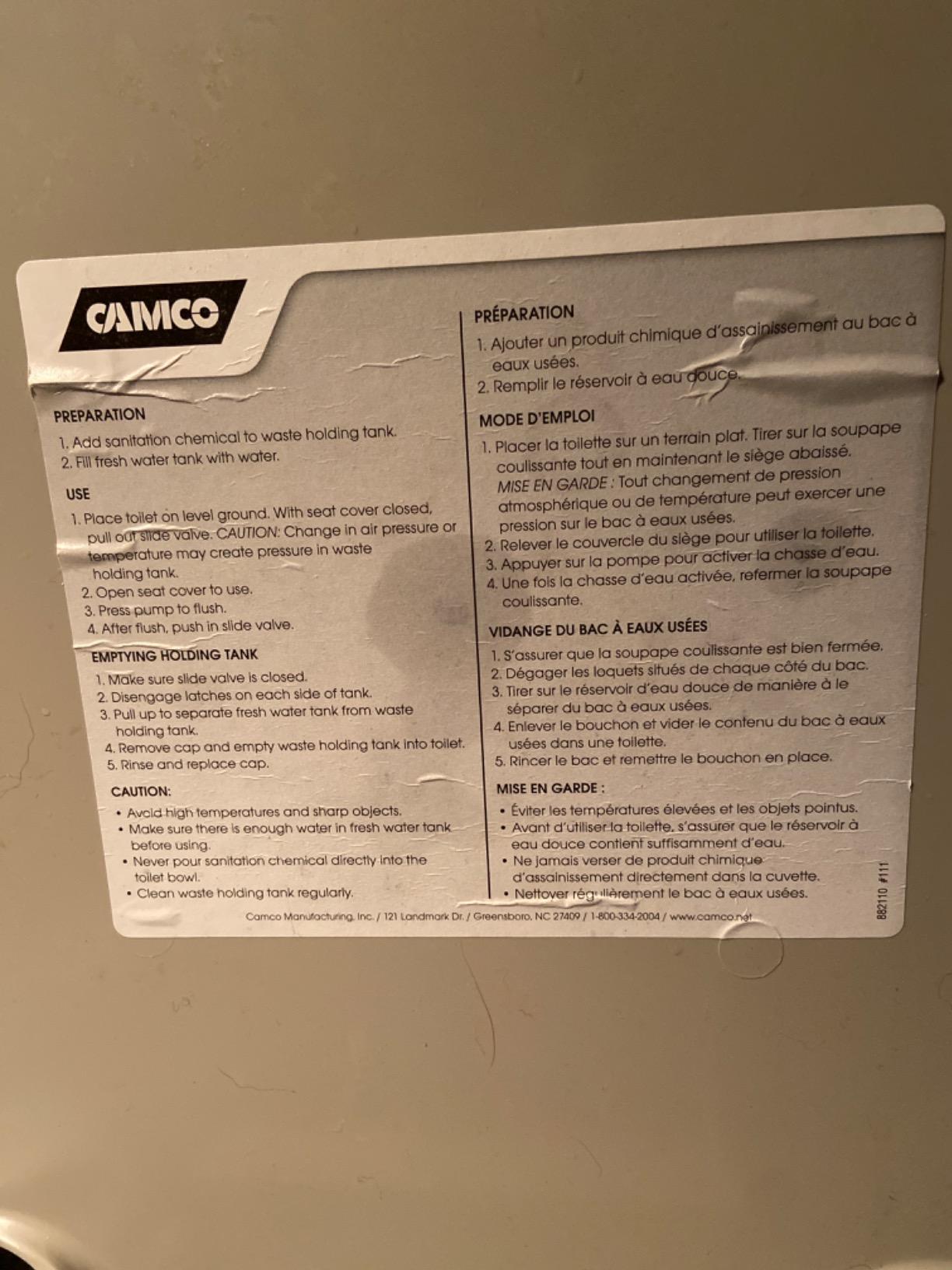
What you should know before you buy it
The seat is the weak point. Multiple reviewers note it is not sturdy for users above roughly 180 pounds, and since the rated capacity is 330 pounds, the seat is the limiting component rather than the frame. If you are a larger person, this is the wrong unit and the Kohree later in this list is built for you.
The bellows also degrades. Owners who store the unit in a tight van cubby report cracking after repeated bumping, and the fresh water tank can leak if it gets tipped fully upside down or on its side during transport. Both are avoidable with careful stowage, but they are real in a vehicle where things shift on bad roads.
Who this suits and who should skip it
Buy it if your van is a small conversion, your trips run two to three nights, and you empty every time you have a chance. It is also a solid first portable toilet, because it is simple to operate and the consumables are included.
Skip it if you are a larger user, if you plan to boondock more than two consecutive nights, or if your route means carrying waste back several days. The short interval turns the weight of the tank into a daily problem rather than an occasional one.
4. Thetford Porta Potti 135 – Lightest Cassette for Overnight and Backup Use
Porta Potti Thetford 92860 Porta Potti 135 , White
8 lb empty
2.6 gal waste tank
2.6 gal fresh tank
13.5 x 15.1 x 12.1 in
3 year warranty
Pros
- Nests into dinette storage and van cubbies
- Sealed lid and valve trap odor when closed
- Survives being tipped over off-road
- Easy to disassemble and empty
- Light enough to carry discreetly in a bag
Cons
- Low seat and small bowl for taller users
- Bellows flush delivers very little water
- Getting the last of the water out is awkward
- No visible flush water indicator
This is the unit I recommend as a secondary toilet that lives permanently in the van. At 8 pounds empty and slightly over 13 inches deep, the Porta Potti 135 is the smallest sealed cassette here, and it is the one most owners describe as an overnight and emergency unit rather than a primary system.
What makes it good in a van is the closed system. The lid and valve seal together, so when it is capped in a storage cubby it is not leaking smell into the living space. Several owners report tipping it completely over off-road without a drop coming out, which is the kind of durability you want from something living in a moving vehicle.
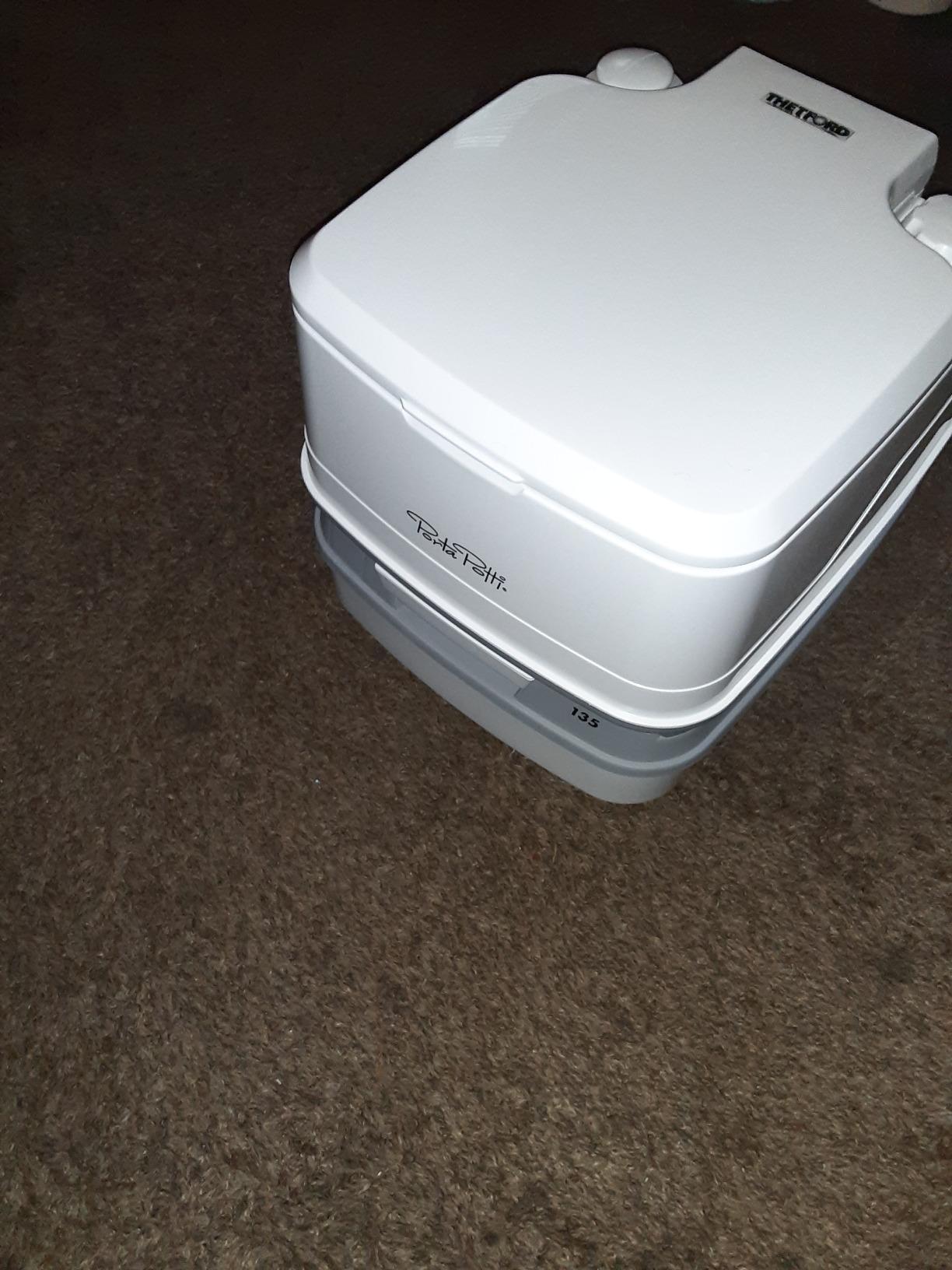
It is also light enough to carry in a shopping bag, and one reviewer made the point that a discreet-looking unit matters when you are emptying it in a public restroom at a rest stop. Nothing about it announces what you are holding.
The 2.6 gallon fresh tank and matching 2.6 gallon waste tank are matched to each other, which simplifies the math. One person uses it for several days. A couple gets one to two. Beyond that you are finding a bathroom, which is the correct use case for a unit this size.

What you should know before you buy it
The flush is the biggest limitation. The bellows pump delivers very little water and does not clear the bowl well, and several owners supplement it with a squirt bottle filled from the fresh tank. That works, but it is an extra step that the larger Thetford does not ask of you.
The seat height is low, and the bowl is small. Taller users describe it as noticeably less comfortable than the 365. There is also no visible indication of how much flush water remains, so you find out by pumping and getting nothing.
Who this suits and who should skip it
Buy it as a backup unit, as an overnight-only toilet, or as a second bathroom for a van that already has a cassette. It also makes sense as a first purchase for someone testing whether they even want a portable toilet before committing floor space and a larger unit.
Do not buy it as your only toilet for extended travel. The combination of a small tank, a weak flush, and a low seat means you will end up carrying it out more often than you expect and being less comfortable each time.
5. Alpcour 6 Gallon – Best for Long Boondocking Trips
Alpcour Portable Toilet – Compact Indoor & Outdoor Commode w/Travel Bag for Camping, RV, Boat – Piston Pump Flush, 6 Gallon Waste Tank, Built-In Pour Spout & Washing Sprayer for Easy Cleaning
5.8 gal waste tank
3.2 gal fresh tank
60+ flushes
360 degree washing sprayer
Level indicator
Pros
- 5.8 gal waste tank means fewer emptying trips
- Built-in piston pump gives 60+ flushes
- 360 degree sprayer makes rinsing thorough
- Rotating spout and level indicator aid disposal
- Carry case included for storage
Cons
- Heavier bulk than folding bucket toilets
- Built for extended use rather than backpacking
- A step up in size and weight from bucket models
The Alpcour is the largest waste tank relative to its physical size in this roundup, and that combination is what makes it useful when you are four days from a dump station. A 5.8 gallon holding tank paired with a 3.2 gallon fresh tank means fewer carries and fewer refills, which is the entire point of boondocking longer stretches.
The flush is a built-in piston pump that delivers more than 60 flushes on a full fresh tank, so you do not need to carry a separate water container. There is no plumbing and no electricity, which means the unit works exactly the same in a desert pullout as it does at a campsite with a tap.
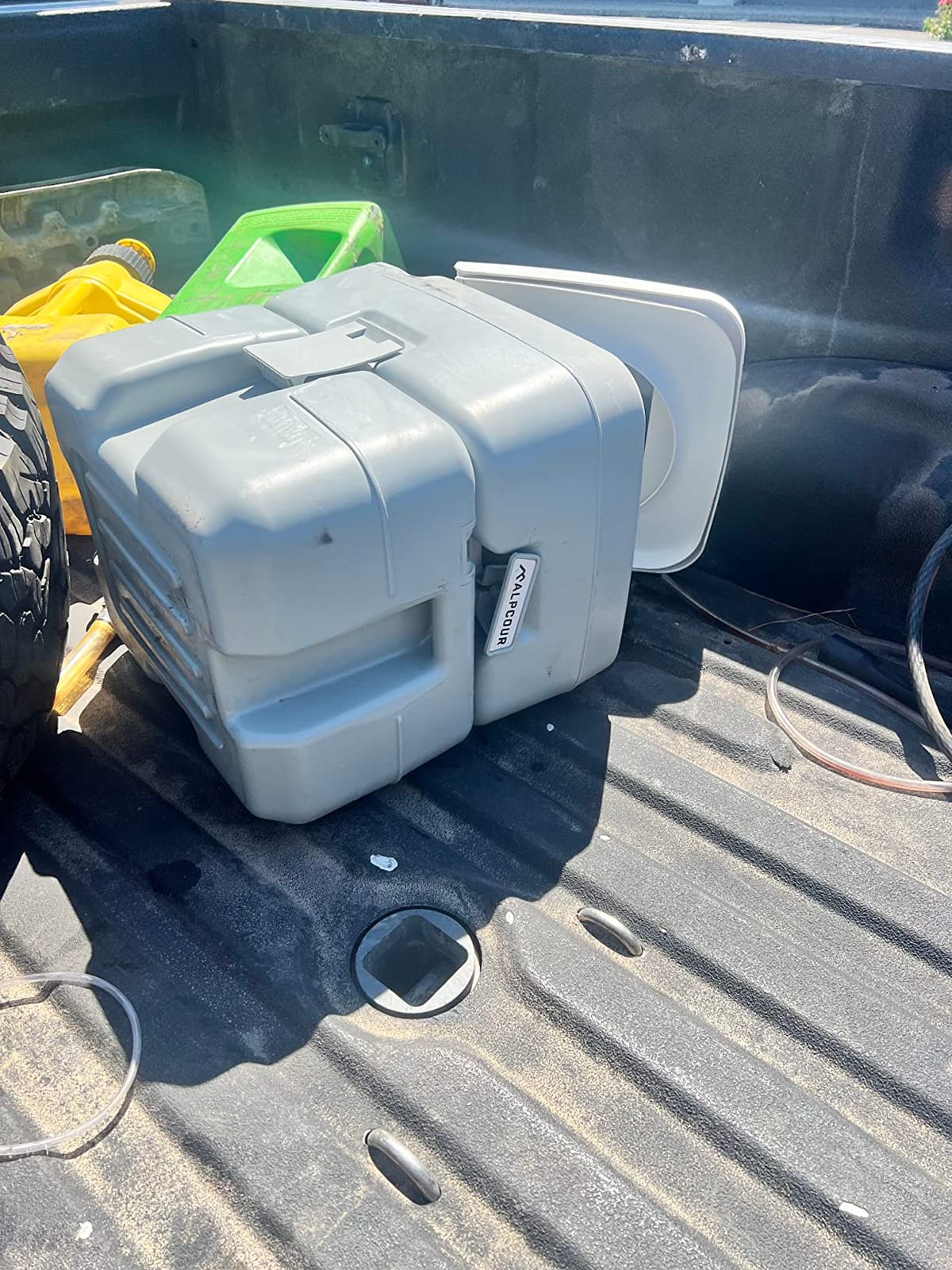
The 360 degree washing sprayer is the feature owners single out most. It reaches around the bowl rather than rinsing from one direction, which is what keeps the bowl clean between uses without you scrubbing it every time. The anti-leak drain valve locks in both liquid and odor, and a waste level indicator on the side tells you when the tank is approaching full.
A carrying case is included, which is a small thing that matters in a van where the unit lives in a locker between trips. Owners position it as a step up from folding bucket toilets for anyone who wants cassette-level features in a compact unit, and that framing is fair.
What you should know before you buy it
Weight and dimensions are not listed by the manufacturer for this unit, and that is a real limitation. We are not going to invent a number for you. If precise measurement matters to your floorplan, email the manufacturer before you commit, because the only published sizing comes from the tank capacities rather than the overall body.
It is also bulkier than a bucket toilet by design. If your storage situation is a small locker behind a seat rather than a floor compartment, expect this to be a tight fit. Reviewers are clear that it is built for extended use, not for a backpacking load.
Who this suits and who should skip it
Buy it if you are spending five or more consecutive nights away from services and you want the flush and the capacity without installing anything. The piston pump and the level indicator remove most of the guesswork from a long trip, which is where smaller units frustrate people.
Skip it if you travel light, if storage volume is your scarcest resource, or if you need a specific verified footprint for a compartment you have already cut. The missing dimension data makes this a harder unit to plan around than the rest of the list.
6. Kohree 5.8 Gallon – Best Rated for Heavier Users
Kohree Portable RV Toilet, Large Camping Toilet Porta Potty, 5.8 Gallon
14 lb empty
5.8 gal waste tank
3.2 gal fresh tank
110-120 flushes
Rated to 440 lb
Pros
- 440 lb capacity rating and 110-120 flushes per refill
- 5.8 gal waste tank with 3.2 gal fresh
- Anti-leak valve and splash-free spout
- T-type outlet cleans in 360 degrees
Cons
- Heaviest portable cassette here at 14 lb
- Bulkier footprint than folding commodes
- Manufacturer does not accept returns on this item
The Kohree is the only unit in this roundup with a stated capacity of 440 pounds, and for anyone over roughly 250 pounds that is the number that matters most. The seat and frame are both rated for it, which is not true of every lighter portable toilet that lists a high maximum.
Capacity-wise it is a serious unit. A 5.8 gallon sewage tank and a 3.2 gallon fresh tank give a stated 110 to 120 flushes per refill, the highest flush count of anything here. The waste level indicator shows you when to empty, and the splash-free rotating spout empties quickly.
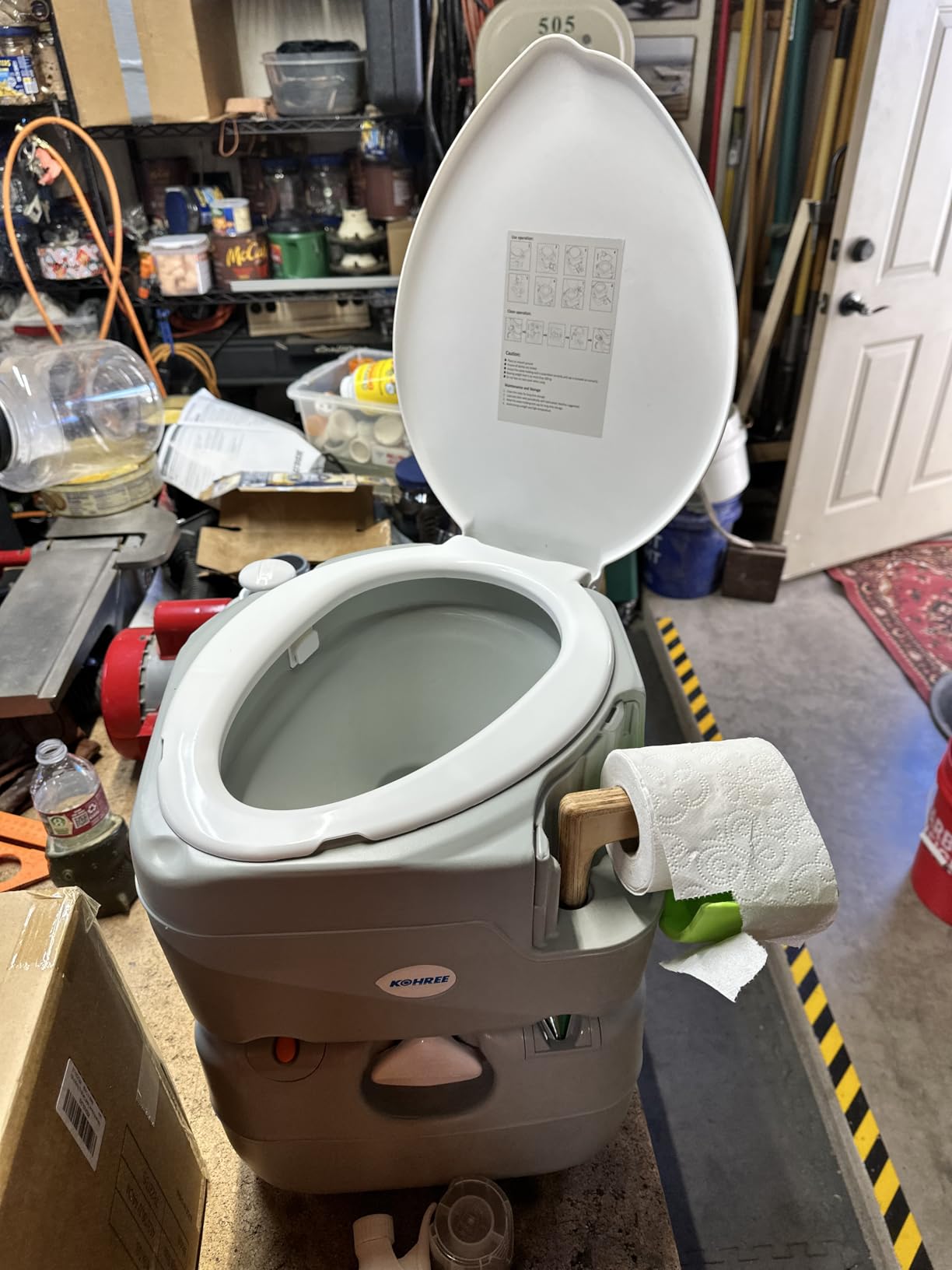
The T-type full coverage water outlet is the piece owners praise for cleaning. It directs water around the bowl in 360 degrees so there are no dead corners that stain, and it works with an included water gun for a more aggressive rinse. A published operating range of minus 4 to 122 degrees Fahrenheit means it is specified for year-round use rather than warm-weather-only duty.
At 16.3 by 14.4 by 16.3 inches, it is not compact, but it disassembles for carrying, and the waste tank separates from the upper unit. This is a unit built for someone who intends to use it properly rather than occasionally.
What you should know before you buy it
It weighs 14 pounds empty, the heaviest portable cassette in this group, and it is heavier than that when full. If you are planning to empty it at a rest stop without help, factor that in. Community experience suggests that anything above roughly 30 pounds full becomes a genuine lifting problem, so test a full carry before you commit to this one.
The manufacturer will not accept returns or exchanges unless there is a quality problem. On a hygiene product that is not unusual, but it means a size or comfort mismatch is yours to live with, so check the seat against your own van geometry first.
Who this suits and who should skip it
Buy it if you are a larger user, you want long intervals, and you have a floor compartment that can take a 14 pound unit and a full tank. The weight rating and the flush count are the two best numbers in this roundup for that use case.
Skip it if lifting a full tank is a problem for you, if your stowage is a small cubby, or if you are a casual weekend user who will empty it twice a trip. You would be carrying capacity and weight you never use.
7. VINGLI Commode – Best Lightweight Bucket Commode for Vans
VINGLI Portable Toilet | Indoor Outdoor Commode w/Detachable Inner Bucket & Removable Paper Holder, Lightweight & Compact for Camping, Boat, Van, Emergency Use (Grey)
5.5 lb total
Nests into a single piece
Removable handled inner bucket
Dual lid seal
18 x 15.5 x 15.7 in assembled
Pros
- Light at 5.5 lb and nests into itself
- Removable bucket with handle simplifies emptying
- Soft-close lid helps contain odor
- Assembles in under a minute
- Doubles as an emergency in-home toilet
Cons
- Seat and lid flex when leaned on
- Lower than a standard toilet
- Inner bucket could be deeper
- Paper holder does not match its listing
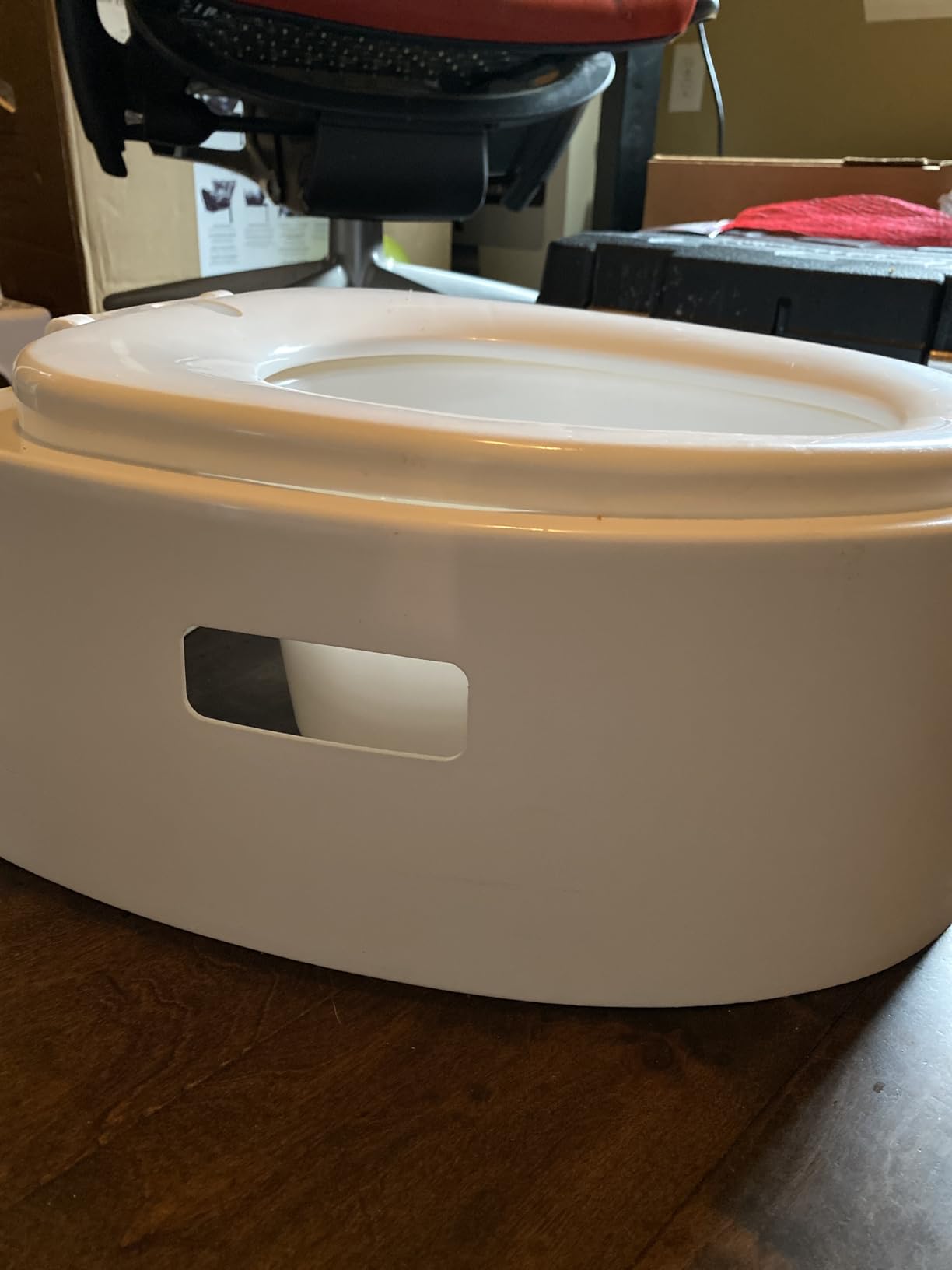
The VINGLI is the one we recommend when a van simply does not have floor space for a cassette. At 5.5 pounds it splits into two pieces and nests back into one, so it lives in a footwell, a drawer, or the back of a wardrobe and comes out when you need it.
The removable inner bucket with a carrying handle is what makes this workable. You lift the bucket out, tie off the bag and carry it. You do not move the frame, and you do not carry the frame and the waste together. For a small van, that is the entire design brief, and it is met.
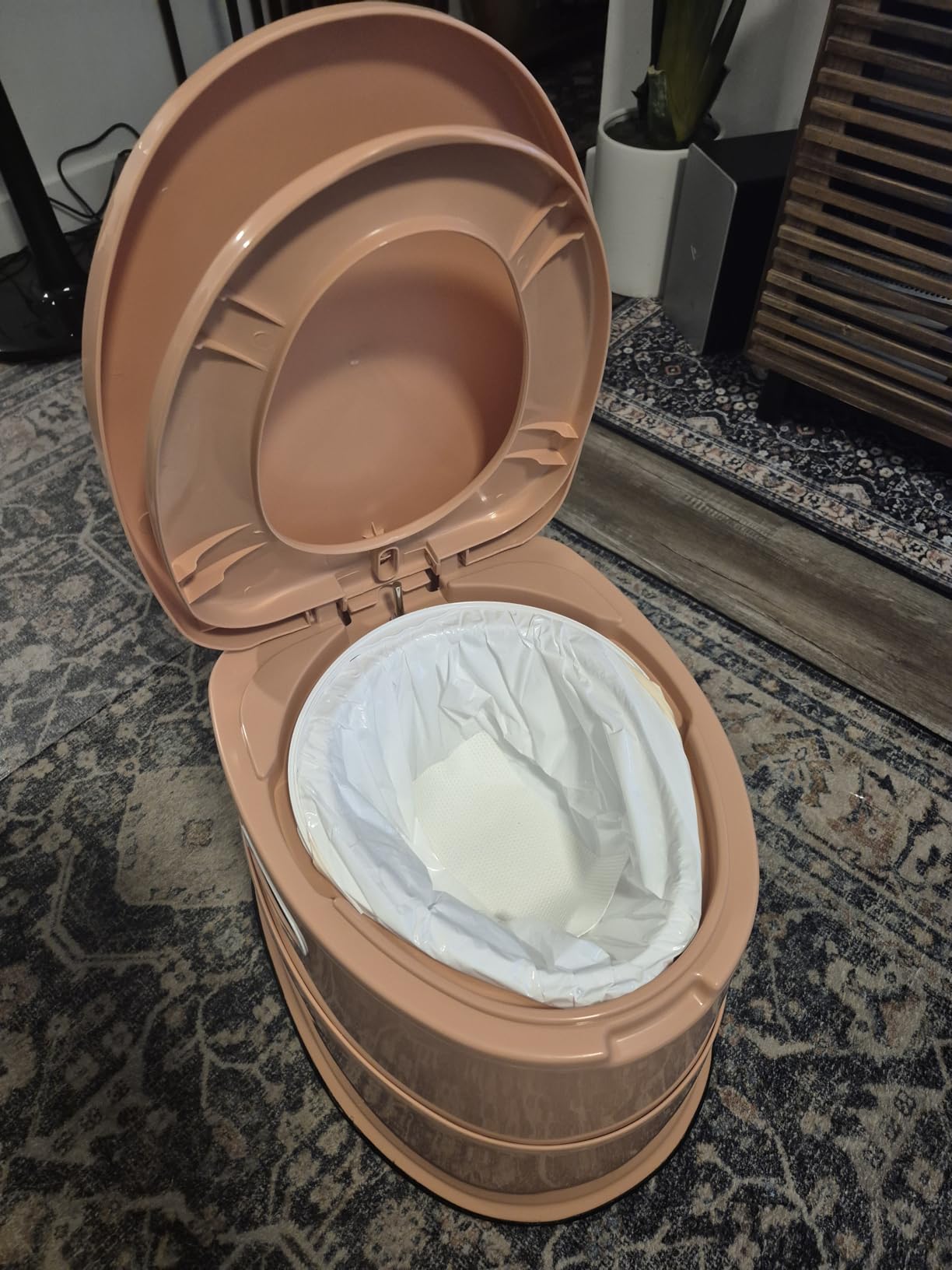
A large share of owners are not campers at all. They bought it as an emergency toilet for a plumbing failure or a burst pipe, which is a good sign for the sealing. The dual lid seal and soft-close lid keep odor contained when it is not in use, and you can line the bucket with an ordinary heavy bag rather than a purpose-made liner.
Assembly takes under a minute with no instructions, which is exactly the right standard for something you grab half-asleep at a dark trailhead. The detachable paper holder is a small convenience, and it folds away entirely.
What you should know before you buy it
There is no flush. You supply the bag, and you supply the deodorizer. That is a fair trade for 5.5 pounds, but it means this is a urine-friendly and short-trip unit rather than a multi-day system for two people.
Build quality is the trade-off. The seat and lid flex when leaned on, and the inner bucket is shallower than most owners would like. Suggested use is for adults under 300 pounds, and reviewers report it feels sturdier than that rating suggests, though the listing figure is the safer number to plan around.
Who this suits and who should skip it
Buy it if space is genuinely zero, if you travel solo, or if you want a cheap second unit for emergencies alongside a larger primary toilet. The nesting design and the handled bucket make it the most van-specific choice in this roundup.
Skip it for a couple on a multi-day trip, for anyone who needs a flush, or if you are a larger user who finds a low seat difficult. For a single night of emergency cover, it is hard to beat.
8. TRIPTIPS Retractable Toilet – Best Adjustable Height Option for Families
TRIPTIPS Upgrade Retractable Portable Toilet Travel Toilet Adjustable Height Camping Toilet Portable Potty for Adults Kids, Foldable Portable Toilet for Camping/Car
2.8 lb
3.2 to 13 in height across 8 steps
380 lb rating
Collapses to 12.5 x 12.5 x 3.2 in
Pros
- Height adjusts in 8 steps for kids and adults
- Only 2.8 lb and collapses flat
- 70 locked buckles and non-slip base rated 380 lb
- One-hand pull and twist setup
- Doubles as a stool or storage box
Cons
- Not suitable for solid waste without a liner
- Cannot be used on uneven ground
- Bucket-style seat is less comfortable
- Locking buckles are tedious at full height
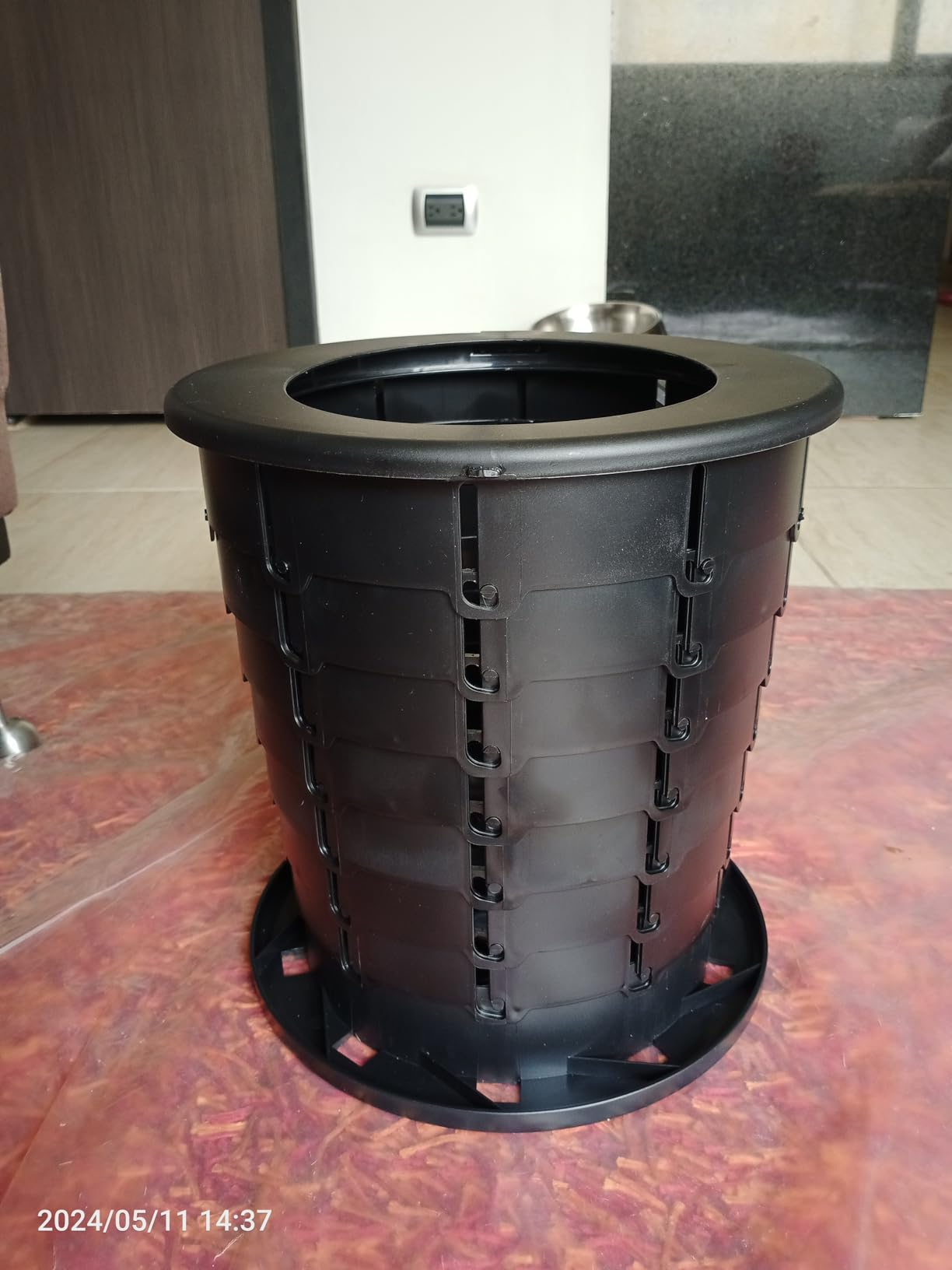
The single best feature of the TRIPTIPS is the height. A fish-scale retractable structure adjusts from 3.2 inches to 13 inches across eight steps, which is the difference between a five-year-old and an adult both being able to use the same unit. No other adjustable toilet in this roundup covers that range.
At 2.8 pounds and collapsing to roughly 12.5 by 12.5 by 3.2 inches, it is the smallest and lightest portable toilet here. It stows in a gap that nothing else will fit into, which in a van means it can live permanently rather than being unpacked.
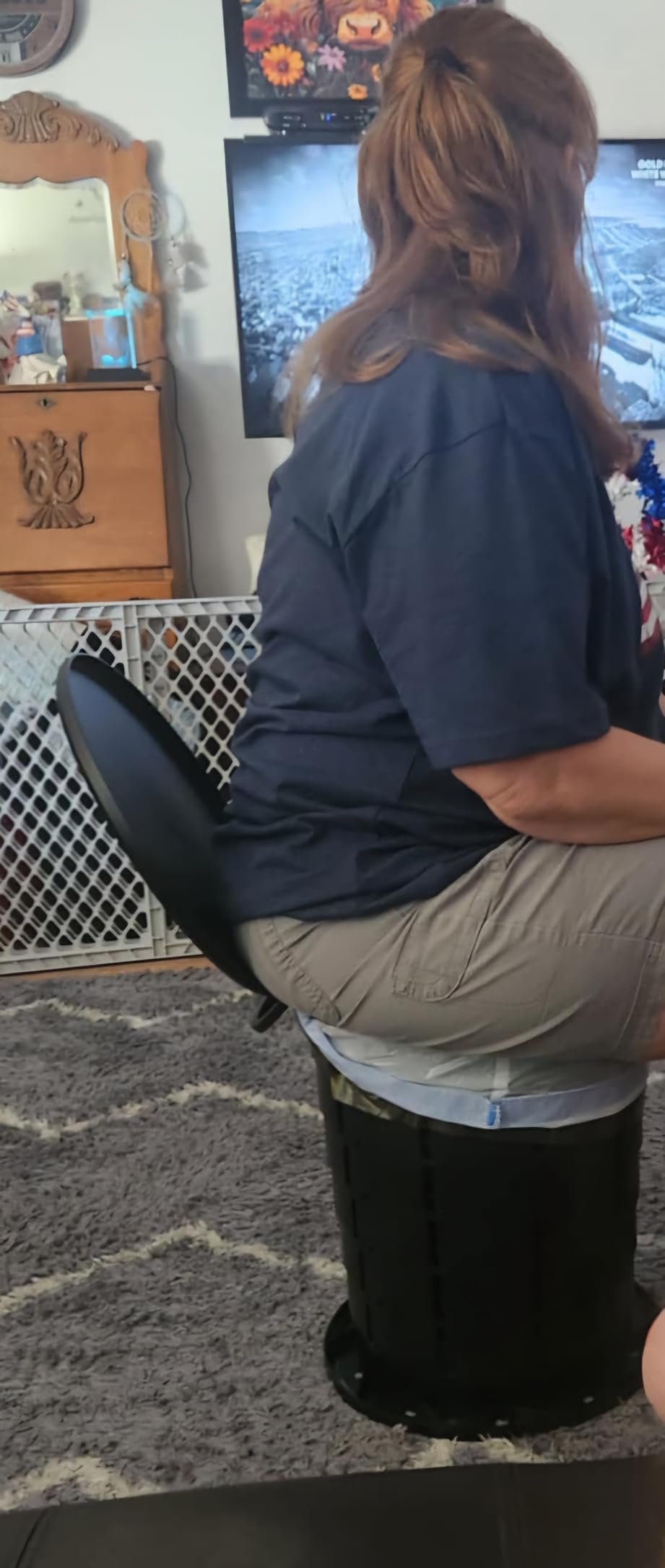
Stability is better than the weight suggests. Seventy locked buckles and a non-slip base give it a 380 pound rating, and owners report it feels planted on level ground. Setup is one pull and a twist, and collapsing is a counterclockwise twist and a press flat. No tools, no disassembly, no separate parts to lose.
The functional cover means it doubles as a stool, storage box, side table or a trash can when it is collapsed, which is a genuinely clever use of a piece of kit that would otherwise be a bare frame in a cupboard. Ten toilet bags and a waterproof carry bag are in the box.
What you should know before you buy it
It is not a solid-waste toilet as it stands. Reviewers consistently treat it as a urine-only or bag-lined option, and if you line it you are managing a liner by hand. The opening is a bucket style rather than a full seat, so comfort is a step below every cassette here.
It cannot be used while standing, and reviewers caution against uneven ground, where the retractable legs have less to bite into. Buckles are also tedious to lock at full extension, so do not do it in a hurry in the dark.
Who this suits and who should skip it
Buy it if you are traveling with children of different ages, if you need a toilet that occupies almost no stowage space, or if you want a urine-only night station for the 3 a.m. problem. The adjustable height is genuinely useful in a family van.
Skip it as your primary toilet for a week of travel, particularly if you are a couple. It is a supporting piece of kit, and it works best alongside a sealed cassette rather than instead of one.
9. Hapoon XL Folding Toilet – Budget Pick for Backpacking and Van Life
Hapoon XL Portable Folding Camping Toilet For Adults & Kids, Lightweight
2.14 kg
14.57 x 11.32 x 14.17 in
400 lb ABS rating
Folds in seconds
8 gallon bag liners
Pros
- Higher and wider seat than most budget models
- ABS plastic rated to 400 lb
- Folds in seconds for tight storage
- Lid doubles as stool or storage box
- Works with any 8 gallon bag
Cons
- Requires bag liners and has no flush
- Cannot be used while standing
- Bag liner can tear or slip
- Bulky for solo backpacking loads
The Hapoon XL solves a specific problem: budget folding toilets are usually small, low and rated for light use. This one is bigger and rated higher. The seat measures 14.57 by 11.32 by 14.17 inches and the ABS body is rated to 400 pounds, which puts it ahead of most of its direct competitors on both counts.
That rating matters more than it sounds. A portable toilet rated to 400 pounds is a family toilet, not a child’s potty, and the frame does not flex in the way lighter budget units do. For a van carrying adults, that is the specification to compare first.
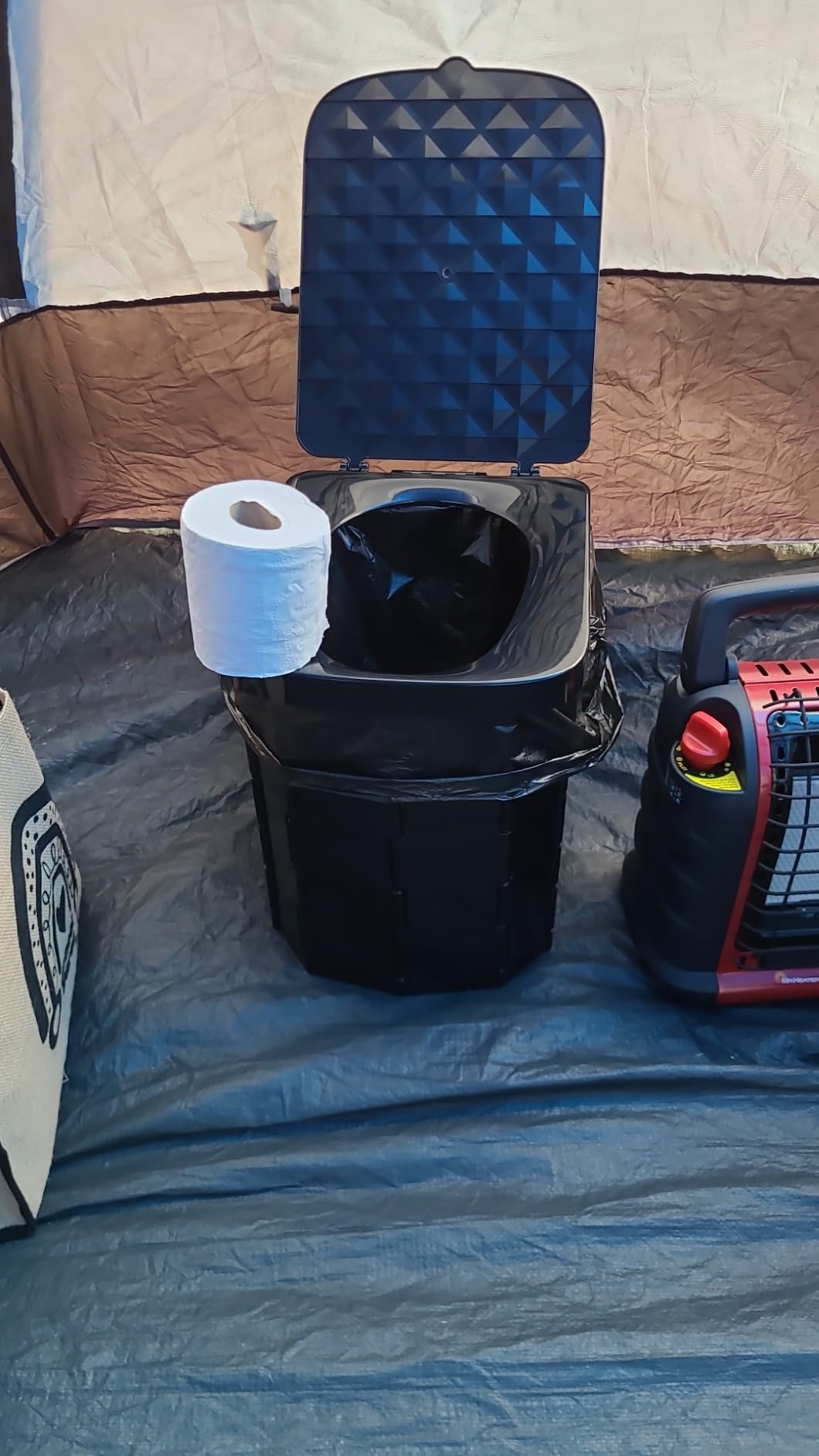
It folds and unfolds in seconds, and the lid is functional rather than decorative, letting the collapsed unit serve as a trash can, a storage box or a stool. It is compatible with any 8 gallon bag, so you are not tied to proprietary liners and you can use a heavy-duty trash bag if that is all you have.
Owners also use it as a backcountry unit, and the one-year manufacturer warranty covers defects. The published weight is listed in kilograms at 2.14 kg rather than pounds, which is unusual for a US listing but converts to a little under five pounds.
What you should know before you buy it
There is no flush and no sealed tank. It works with a liner, and reviewers note the liner can tear or slip during use, which is the main failure mode to plan for. Seat yourself before you drop the liner in, not after.
It is bulkier than the retractable frame option for backpacking, and you cannot use it standing. In a van that is less of an issue than on a trail, but in a solo load it is a real consideration.
Who this suits and who should skip it
Buy it if you want a bag-lined toilet with a genuinely adult-sized seat and a high weight rating, and you are willing to handle the liner yourself. It is a good fit for a van that carries adults and needs a stowable second unit.
Skip it if odor control is your top priority, if you need to go several days without emptying, or if you are backpacking solo where bulk matters more than seat size. For odor, a sealed cassette is the correct answer, not a better liner.
10. Nature’s Head Composting Toilet – Best for Permanent Full Time Installations
Nature’s Head Self Contained Composting Toilet with Close Quarters Spider Handle Design
28 lb
20.98 x 19.02 x 20.98 in
4-6 weeks between services
5 minute emptying
Spider handle design
Pros
- No chemicals and no routine maintenance
- No holding tank waste to dump
- Spider handle fits very tight van spaces
- Installable by a reasonably handy person
- 5 year warranty with EU spare parts
Cons
- Far more expensive than cassette or portable units
- Permanent installation so it cannot move vehicles
- Heaviest unit reviewed at 28 lb
- Warranty term is short for the price
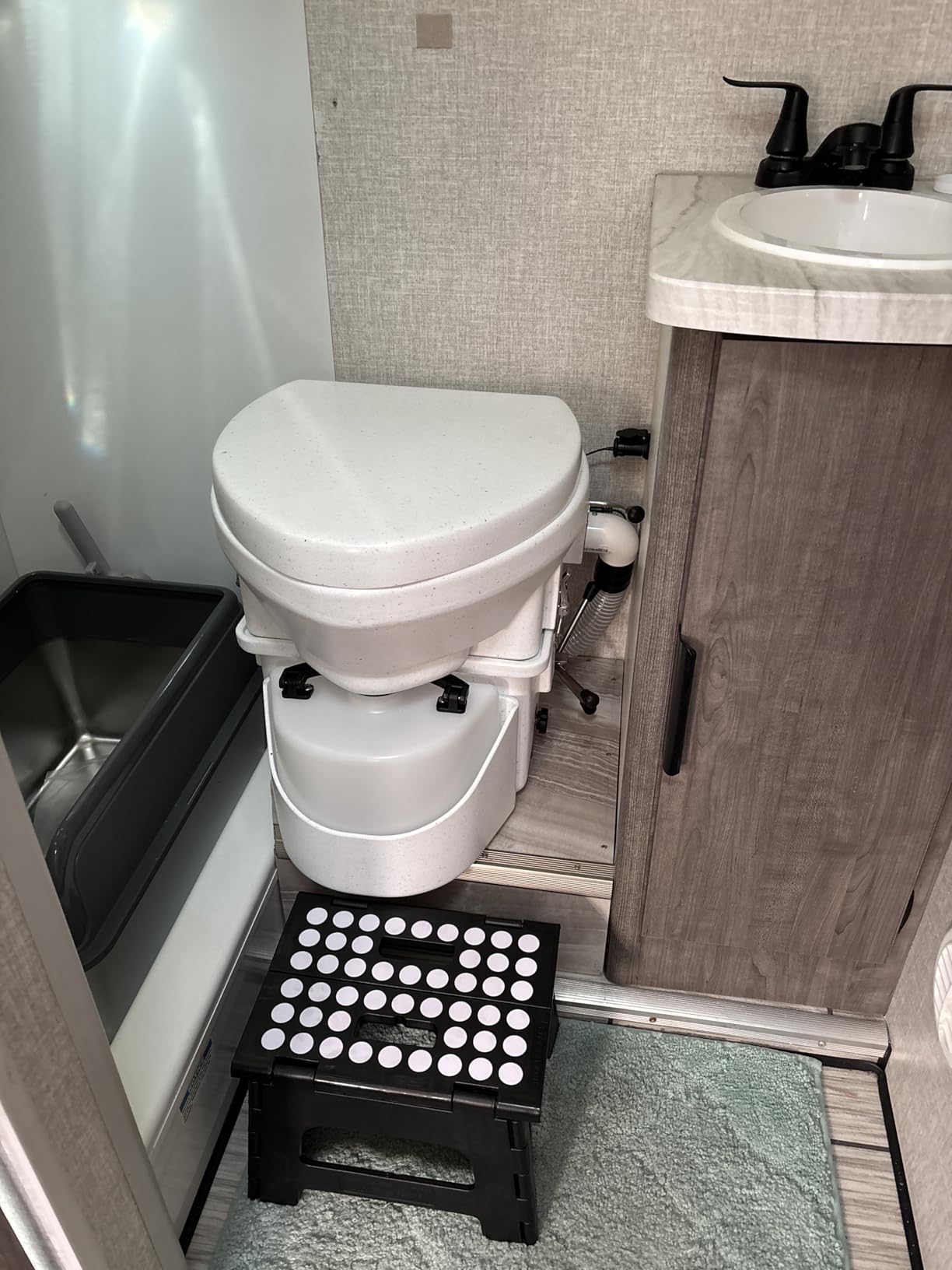
This is the only unit in the roundup that is not a portable toilet in the sense of something you carry in and out. The Nature’s Head is designed to be installed once, permanently, in a compartment you build for it. If you are doing a full van conversion and living in the vehicle, that is exactly the design you want.
Operationally it separates. Liquid goes to a sealed jug and solids go to a bin with a substrate that aerates the waste. There are no chemicals, no holding tank full of slurry, and no dump station. Two people in continuous use empty it every four to six weeks, and the service takes about five minutes.
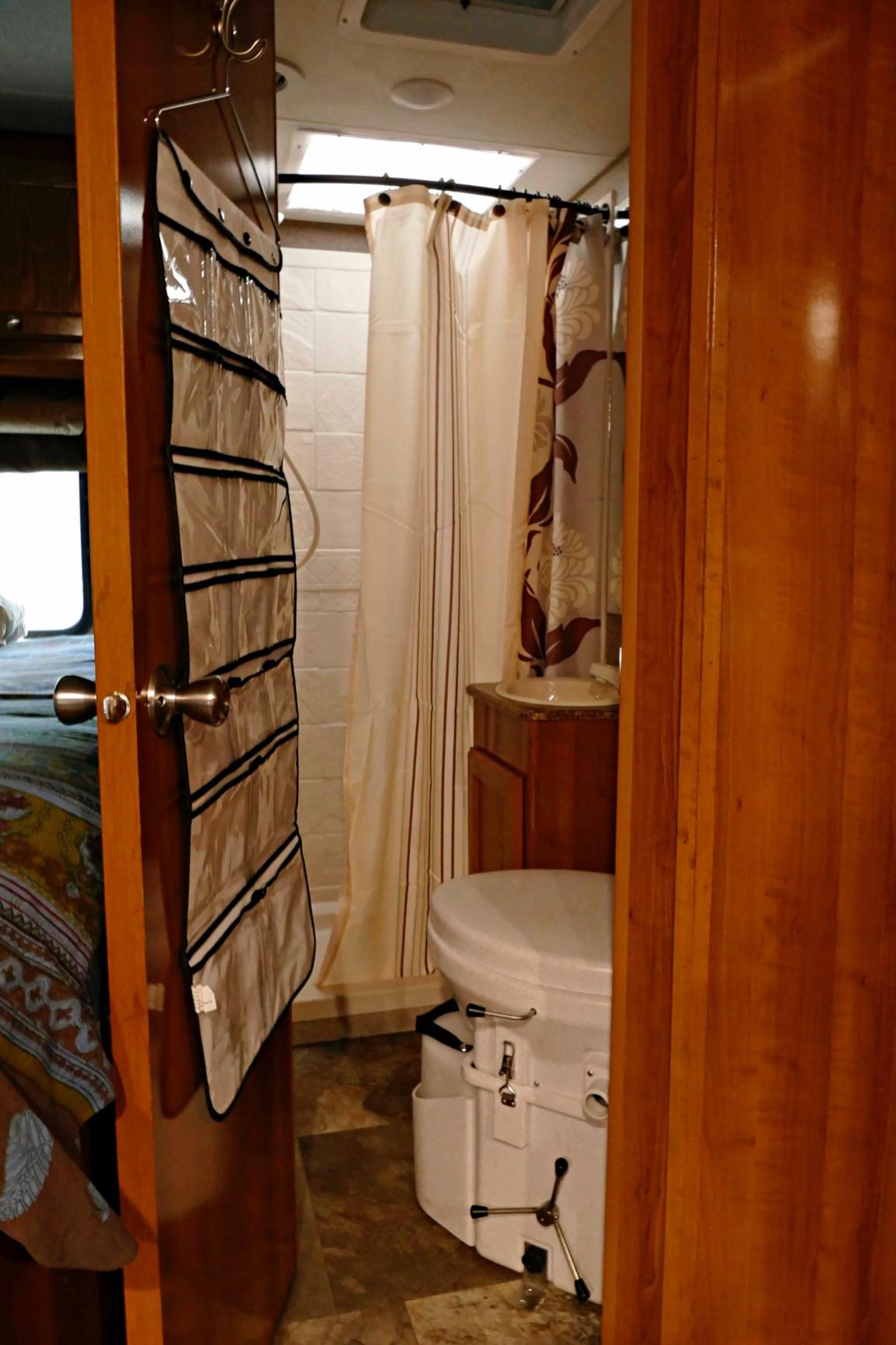
The spider handle design is the reason it is worth the money in a van. A conventional crank handle needs clearance above the tank, and in a narrow aisle between a bed and a cabinet you often do not have it. The spider handle tucks down beside the unit and fits into close quarters, which is why full-time van builders keep choosing it over bulkier alternatives.
Owners value that it needs no water supply, so there is no plumbing to plumb and no tank to winterize. The five-year warranty is a real term, and spare parts are listed as available for two years in the EU, which is useful if you travel abroad.
What you should know before you buy it
It weighs 28 pounds, the heaviest unit here by a wide margin. It stays in the van, which is the point, but that weight matters during a build and if you ever need to remove the compartment.
The installation is wall-mounted and permanent. You cannot move it to another vehicle, so if you change vans you are starting over. Reviewers also note that the one-star share is the highest in this roundup at 5%, and the recurring reason is the price paid against the permanence required.
Who this suits and who should skip it
Buy it if you are full-time in the van, you are often more than a week from a dump station, and you are building a compartment. Nothing else here removes the dump from your life entirely, and owners who install it report that the odor-free, chemical-free operation changes how they travel.
Skip it if you are a weekend camper, if you might change vehicles within a few years, or if you are not prepared to cut a vent hole and run a 12V fan. A cassette handles all three cases with no modification to the van at all.
Where the Toilet Goes in a Van Conversion
Forum threads about portable toilets for vans almost always end with the same regret: people who planned the floorplan around the toilet and people who bolted the toilet into the floorplan afterward. Measure the unit before you commit, then design the compartment around the real dimensions rather than a guess.
The spread in physical size across this roundup is enormous. Some products are effectively 16 by 14 by 16 inches, a cube roughly the size of a large carry-on, while the smallest is a 2.8 pound frame that occupies almost nothing. That spread is why two people with identical vans can end up with completely different bathrooms. The Thetford 135 at 13.5 by 15.1 by 12.1 inches is the smallest sealed cassette here.
Five steps cover a cassette install:
Measure the unit including the lid, and add 2 inches of clearance on the door side so you can lift the tank out.
Choose a location near a door or a cabinet opening, because you will be carrying a full tank out of the van more often than you expect.
For a composting unit, cut a vent hole as high as practical on the wall behind the unit and run a ventilation hose to a 12V fan.
For a cassette, no vent and no wiring is needed. Seal the floor around the base and add a lip so a leak does not reach the rest of the van.
Secure the base so the unit cannot tip when you open the door, and plan how it stows when it is not in use.
On ventilation, the rule is simple. The further the odor source is from the living space, the better. A toilet at the back of a high roof van under a roof vent is materially better than the same toilet behind the driver’s seat, and no product feature compensates for a bad location.
On stowage, the community consensus is that a dedicated compartment beats a loose unit. It keeps the weight down low, it stops the tank rolling around on bad roads, and it stops a full tank from becoming a projectile. If you have no compartment, a bucket commode that nests into itself is a better van citizen than a 14 pound cassette.
How to Choose a Portable Toilet for Van Life
Start with the interval, not the brand. Work out how many days you realistically spend without access to a restroom, and count the people using it. A couple on a five-day trip and a solo traveler on a five-day trip have completely different requirements from the same product.
Next, measure your space honestly. A cassette needs a 16-inch cube plus access. A bucket commode needs floor space while in use and almost none when stowed. A composting unit needs a permanent compartment, a vent, and a fan. If you have one of those, the decision is easy. If you have none of them, buy the smallest thing that works.
Then think about odor, because that is the complaint that ends more portable toilet ownership than any other. Cassettes need chemical treatment and they will smell on a hot day when the tank is three-quarters full. Separating and composting units do not mix liquids with solids, which is the structural reason they stay quiet. A bucket with a good deodorizer powder is a third answer, and it is not a bad one for a week of camping.
Finally, be honest about the emptying. Community experience is consistent on this: emptying is the chore people hate most, and it is the reason people abandon porta-potties. If the nearest disposal point is a walk across a parking lot in the dark, every extra day of capacity matters. If you will empty at a rest stop every morning, a small unit is lighter to carry and easier to store.
On capacity, a 2.6 gallon holding tank suits one person for one to two nights comfortably and a couple for one night. A 5.3 to 5.8 gallon tank is the sensible range for a couple on a week of camping. Beyond that you are into full-time territory, where a separating or composting unit removes the problem instead of delaying it.
On power, note that every portable unit in this roundup runs without electricity. Only the composting toilet in this group needs a 12V connection, and that is for the ventilation fan, not for flushing. If cutting a vent hole or running wiring into your van is a deal breaker, that rules out the composting category entirely and leaves you a very good decision in the cassette section.
Capacity Math: How Many Days Does Each Toilet Last?
The arithmetic is simple enough to do before you buy. Take your uses per day, multiply by the number of people, then divide by what a single use actually removes. A flushing cassette removes far more than a bucket liner, which is why the numbers below are so different between categories.
For a solo traveler, a 2.6 gallon cassette covers roughly two to four days depending on diet and how often you flush. The Thetford 365 and the Camco 41531 sit in that band, and owners report two people getting about three days on the 365 when you are flushing properly.
For a couple, step up. A 5.3 gallon tank such as the SereneLife is the practical floor for a week of camping, and the 5.8 gallon Alpcour and Kohree units add meaningful margin. The SereneLife’s 3.2 gallon fresh tank delivers more than 80 flushes on a refill, and the Kohree states 110 to 120, so you are unlikely to run out of flush water before you run out of tank space.
For a group of four, stop thinking in days and start thinking in route planning. At that volume you are emptying daily, and the useful question is not capacity but whether a full 14 pound tank is still manageable for the person doing the emptying.
For full-time travel, the numbers change character entirely. The Nature’s Head is the only unit here with a stated interval measured in weeks: two people in continuous use empty it every four to six weeks, and the service takes about five minutes. That is the difference between a system you manage and a system that manages your route.
Odor Control, Cold Weather and the Emptying Routine
Odor is a function of three things: how full the tank is, how hot it is, and whether you used treatment. In cool weather a treated cassette can go several days with nothing noticeable. At 90 degrees a tank at two-thirds full will make itself known, and no product feature prevents that. Add a deodorizer and a digester at every fill rather than treating reactively.
For a bucket, the equivalent is a deodorizer powder or liquid in the liner before every use. Users who switched to making their own liners from heavy-duty trash bags plus powder or kitty litter report cutting their ongoing consumable cost substantially, at the price of more mess handling.
Ventilation is the fix that costs nothing. A 12V fan moving air out of the compartment, not into the van, changes the outcome in hot weather more than any deodorizer. Even a small fan on a vent line makes a measurable difference for a cassette install.
On cold weather, the risk is expansion cracking. Water left in a fresh tank or a holding tank that freezes will crack the plastic, and a cracked tank is a dead tank. The Kohree publishes an operating range down to minus 4 degrees Fahrenheit, which is a useful reference point for anyone wintering. The rule that works everywhere: drain every tank completely, dry the seals, and store the unit inside the heated living space rather than in a cold bay.
Before each trip, run a full rinse cycle with fresh water and a treatment, then dry the valve seat and the gasket. Odor problems that appear out of nowhere are almost always a dried residue or a treatment that ran out, not a failed valve.
Dumping a Cassette Without Breaking Leave No Trace
A dump station is the correct disposal point, and they are more common than most people realize. Large truck stops generally have one, RV parks almost always do, and national park and forest facilities vary by unit. Apps and campsite databases list current locations, and a quick check before you leave a populated area is worth the thirty seconds.
At a dump station, the procedure is straightforward. Position the waste tank under the spout, open the valve slowly so you do not lose control of the flow, let it empty, rinse the tank with fresh water until it runs clear, add a fresh dose of treatment, close the valve, and rinse the pour spout before you put the unit back in the van.
Ordinary public restrooms are the fallback for cassette units, and the rotating spout on both Thetford units and the SereneLife is designed for exactly that. A bucket liner or a used bag is a different problem: it is solid waste in a bag, and it should go into a restroom bin rather than a general trash can in a parking lot.
Leave No Trace applies here in a practical way. Do not dig catholes in an overused campsite, do not scatter toilet paper, and do not leave sealed waste bags in a public dumpster. If you are on public lands, a self-contained system that you carry out is not just a convenience, it is often a requirement.
One further option for urine-only use: a dedicated container kept inside a locker or a ventilated cabinet. For overnight and 3 a.m. situations it removes almost all of the friction, and it disposes of at a restroom sink with no ceremony. Several travelers describe it as the single lowest-friction part of their whole setup.
Frequently Asked Questions
Are there portable toilets suitable for van living?
Yes. Every portable toilet in this roundup is used by van owners, and the four categories map directly onto van use cases. Cassette toilets suit weekend trips with planned dump stops, bucket commodes suit solo travelers and tight floorplans, folding frames suit stowage-constrained builds, and composting suits permanent full-time installations.
What is the best toilet for a camper van?
For most van owners the Thetford Porta Potti 365 is the best overall choice: 4.7 stars from more than 1,800 reviews, an 8.8 pound empty weight, a full-size seat and a sealed holding tank valve. The SereneLife 5.3 gallon is the best value pick for longer intervals, and the Nature’s Head is the right answer only for a permanent full-time install.
What are the best bathroom options for a van conversion?
There are five practical options. A full wet bath gives you a shower and a toilet but costs interior space and needs a shower drain. A dry toilet compartment holds a cassette or composting unit permanently. A portable-only setup keeps a bucket or folding frame loose in a locker. An exterior privacy tent at the campsite is free but weather-dependent. A no-toilet setup is workable for weekend trips near services and poor for boondocking.
What is the best portable toilet for long car rides?
For long driving days, the best portable toilet is the one that stows smallest and sets up fastest, which points to the 2.8 pound TRIPTIPS retractable frame or the 5.5 pound VINGLI commode. Both come out of a tight cubby in under a minute. If you need a flush, the 2.6 gallon Thetford Porta Potti 135 is light enough at 8 pounds to carry discreetly.
How often should I empty a portable toilet?
Empty before it is full rather than at a fixed interval. A 2.6 gallon cassette suits one or two people for one to two nights, while a 5.3 to 5.8 gallon tank covers a couple for most of a week. The Nature’s Head states four to six weeks for two people in continuous use. Emptying early in hot weather also controls odor.
Where can I dump a cassette toilet?
RV dump stations are the correct answer, and large truck stops and RV parks usually have one. Cassette units with a rotating pour spout can also be emptied into an ordinary public restroom bowl, which is how most travelers handle it between dump stations. Bucket liners and used bags are solid waste and belong in a restroom bin, not a general trash can.
Do I need a toilet in my van?
If you regularly sleep away from campgrounds and rest stops with restrooms, an onboard toilet removes the most common source of travel anxiety, particularly at night. If your trips are weekend campground stays, you can manage without one and save the floor space. A low-cost folding frame is a good way to find out whether you will actually use it.
Can you use a porta potty without chemicals?
You can, but the odor is the tradeoff. Cassette toilets rely on deodorizer chemicals to mask smell because solids and liquids mix in one sealed tank. Separating and composting units do not need chemicals because waste never mixes. A bucket commode can skip commercial chemicals if you use powder or another absorbent, but expect more smell in warm weather.
Conclusion
Ten products, four systems, and one clear pattern: the best portable camping toilets for vans are the ones whose emptying interval matches your route and whose footprint matches your floorplan. The Thetford Porta Potti 365 is the pick we would buy first, because its 4.7 rating, 8.8 pound weight and airtight valve make it the least compromise option on the list.
Take the SereneLife 5.3 gallon if longer intervals matter more than carry weight, the Camco 41531 if floor space is tight, and the Kohree if you are a larger user. For a permanent full-time build, the Nature’s Head removes the dump from your life entirely. Measure your compartment first, then order.