
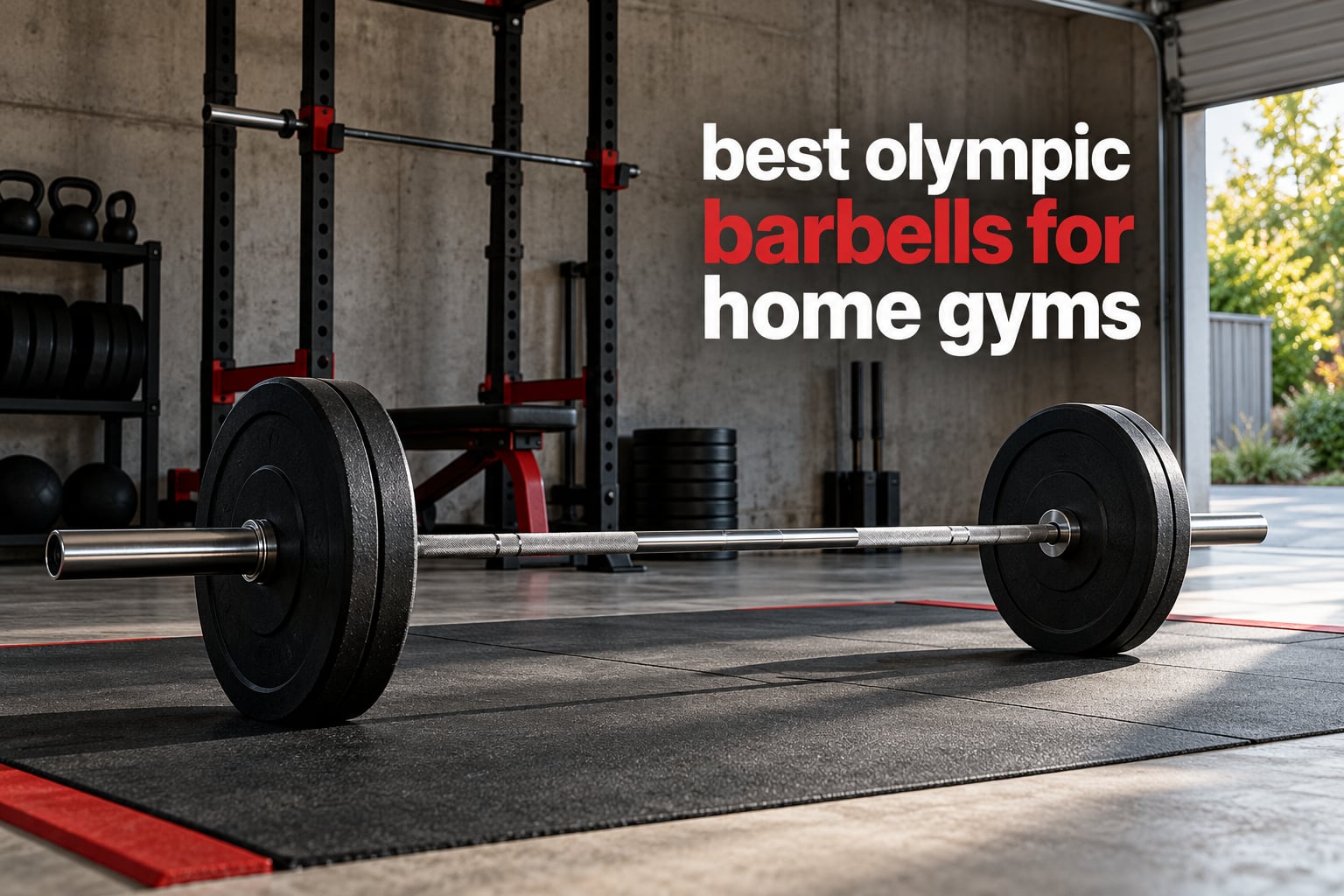
If you are building a home gym, the barbell is the one purchase where cutting corners shows up two years later as bent sleeves, a bar that racks crooked, or knurling that shreds your hands. Plates can be replaced, a rack can be assembled next month, but the bar has to keep working for a decade.
An Olympic barbell is a 7-foot (about 86.6 inch) weightlifting bar weighing 20 kg / 45 lb, with a 28 mm shaft and 2-inch rotating sleeves sized for Olympic bumper and iron plates. The rotating sleeves are the whole point: when the bar twists during a clean, the torsion goes into the plates instead of your wrists and shoulders.
Home gym owners overwhelmingly squat, bench, deadlift, row and press rather than compete in the snatch, yet most feel pressured to buy a competition-spec bar anyway. The advice that repeats itself in every r/homegym thread is simple: do not cheap out on the bar, cheap out on the plates. We compared these ten bars across shaft diameter, tensile strength, sleeve system, knurl and finish, and every entry below has honest downsides listed, not just a pros column.
Table of Contents
Top 3 Olympic Barbells for Home Gyms (October 2026)
Our three fastest recommendations cover three very different lifters: a beginner buying a first bar, an intermediate who wants honest specifications at low cost, and a value buyer who needs a full-length rackable bar for lighter general strength work. Here they are at a glance.

CAP 7ft Olympic Barbell
- 7ft rackable bar
- Volcano knurl with center knurl
- Bronze bushing sleeves
- Chrome finish

PAPABABE 7ft Olympic Barbell
- True 45 lb weight
- 190000 PSI steel
- Hybrid bearing and bushing sleeves
- 17.5 inch sleeves

Yaheetech 7FT Olympic Barbell
- Carbon steel shaft rated to 330 lb
- Medium-depth diamond knurl
- Hard chrome sleeves
- 13.6 inch sleeves
Every Olympic Barbell in This Roundup (2026)
All ten bars appear below with the specifications that actually decide whether a bar suits a home gym. Weight, shaft diameter, capacity and sleeve system are the four numbers worth reading before anything else.
| Product | Specs | Action |
|---|---|---|
| CAP 7ft Olympic Barbell |
|
Check Latest Price |
| Yaheetech 7FT Olympic Barbell |
|
Check Latest Price |
| PAPABABE 7ft Olympic Barbell |
|
Check Latest Price |
 Rage Fitness 6ft 15lb Olympic Bar Rage Fitness 6ft 15lb Olympic Bar |
|
Check Latest Price |
 RitFit 4ft Olympic Barbell RitFit 4ft Olympic Barbell |
|
Check Latest Price |
 RitFit Elite 7ft Olympic Barbell RitFit Elite 7ft Olympic Barbell |
|
Check Latest Price |
 HANDBODE 7ft Olympic Barbell HANDBODE 7ft Olympic Barbell |
|
Check Latest Price |
 LIONSCOOL 7FT Olympic Barbell LIONSCOOL 7FT Olympic Barbell |
|
Check Latest Price |
 Iron Crush 7ft Olympic Barbell Iron Crush 7ft Olympic Barbell |
|
Check Latest Price |
 Synergee Games 15kg and 20kg Barbell Synergee Games 15kg and 20kg Barbell |
|
Check Latest Price |
1. CAP 7ft Olympic Barbell – the consensus first bar
CAP 35lb 7ft Olympic Barbell, Chrome, Strength Training
35 lb alloy steel bar
100000 PSI tensile
Chrome finish
15.3 inch sleeves
500 lb capacity
Pros
- Grippy volcano knurl with a center knurl that helps in squats
- Proper 7-foot rackable length
- Build and finish look far more expensive than they are
- Useful as a landmine bar once you outgrow the squats
Cons
- This variant spins metal-on-metal so sleeve rotation is rough
- Weighs 35 lb rather than a true 45 lb
- Suggested flex reported around 230 to 250 lb
- Closely named variants list different weights
CAP is the bar most home gym beginners end up owning first, and with 2567 reviews averaging 4.6 stars it is the most thoroughly documented pick in this roundup. The volcano knurl bites predictably, and the center knurl is the part reviewers single out most: it gives the bar a stopping point in the upper back that makes an empty-bar back squat noticeably less of a fight.
What surprised me was how solid the chrome finish looks for an entry bar. There is no flex concern at normal home loads, and the 15.3 inch sleeves are enough to run two or three bumper plates per side without crowding the knurl.
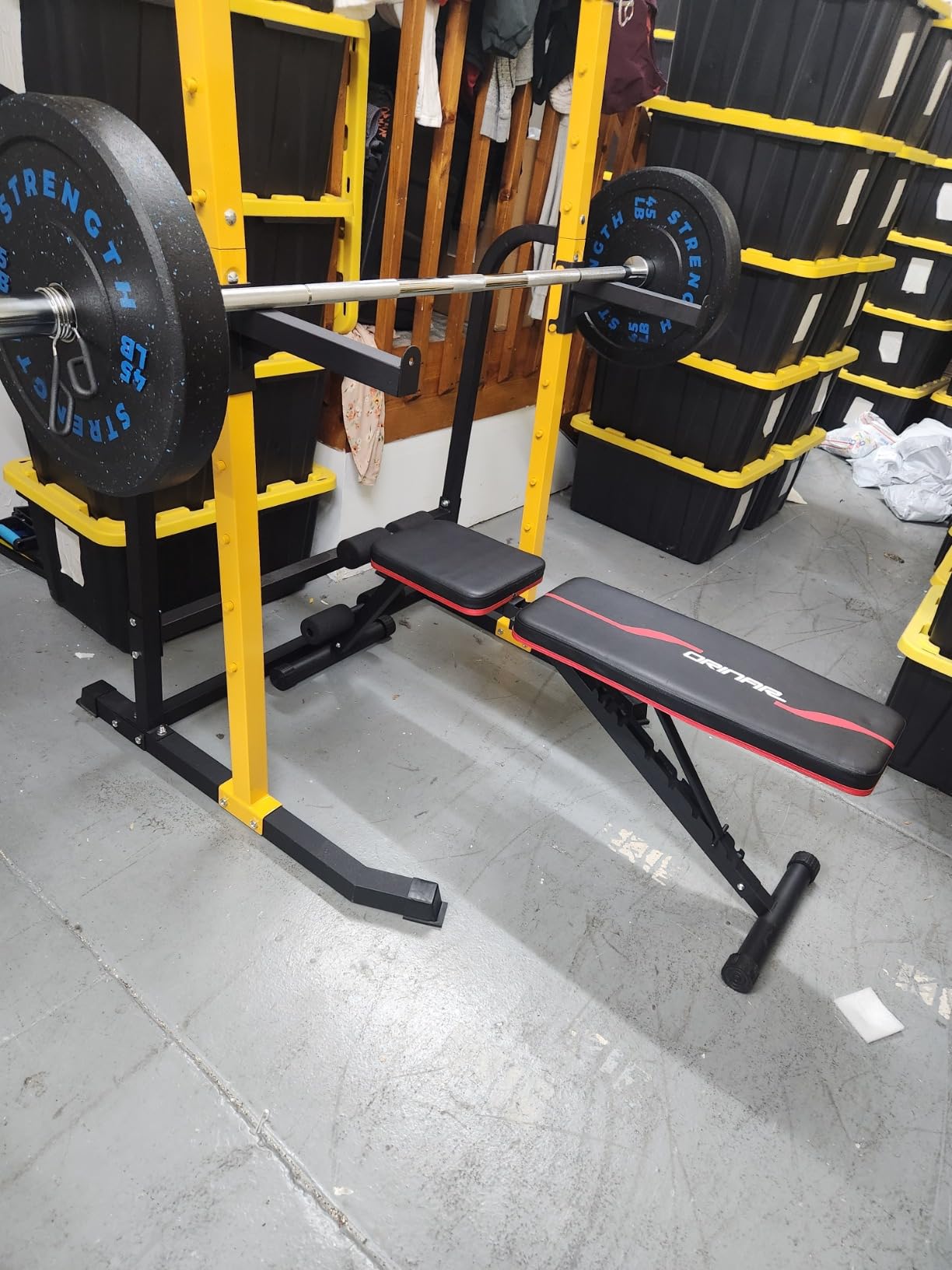
The catch is the weight. This model is 35 lb, not the 45 lb of a standard men’s Olympic bar, which means the rated 500 lb capacity overstates what the shaft really enjoys. Reviewers report visible flex around the 230 to 250 lb range, so if you are heading toward heavy triples this is a two-year bar, not a ten-year bar.
Sleeve behavior is the other honest limitation. The bronze bushing description on this listing does not match what most owners report, and the majority describe a rough, metal-on-metal spin that gets sticky without oil. For squat, bench and deadlift that is acceptable. For fast cleans and snatches it is not.
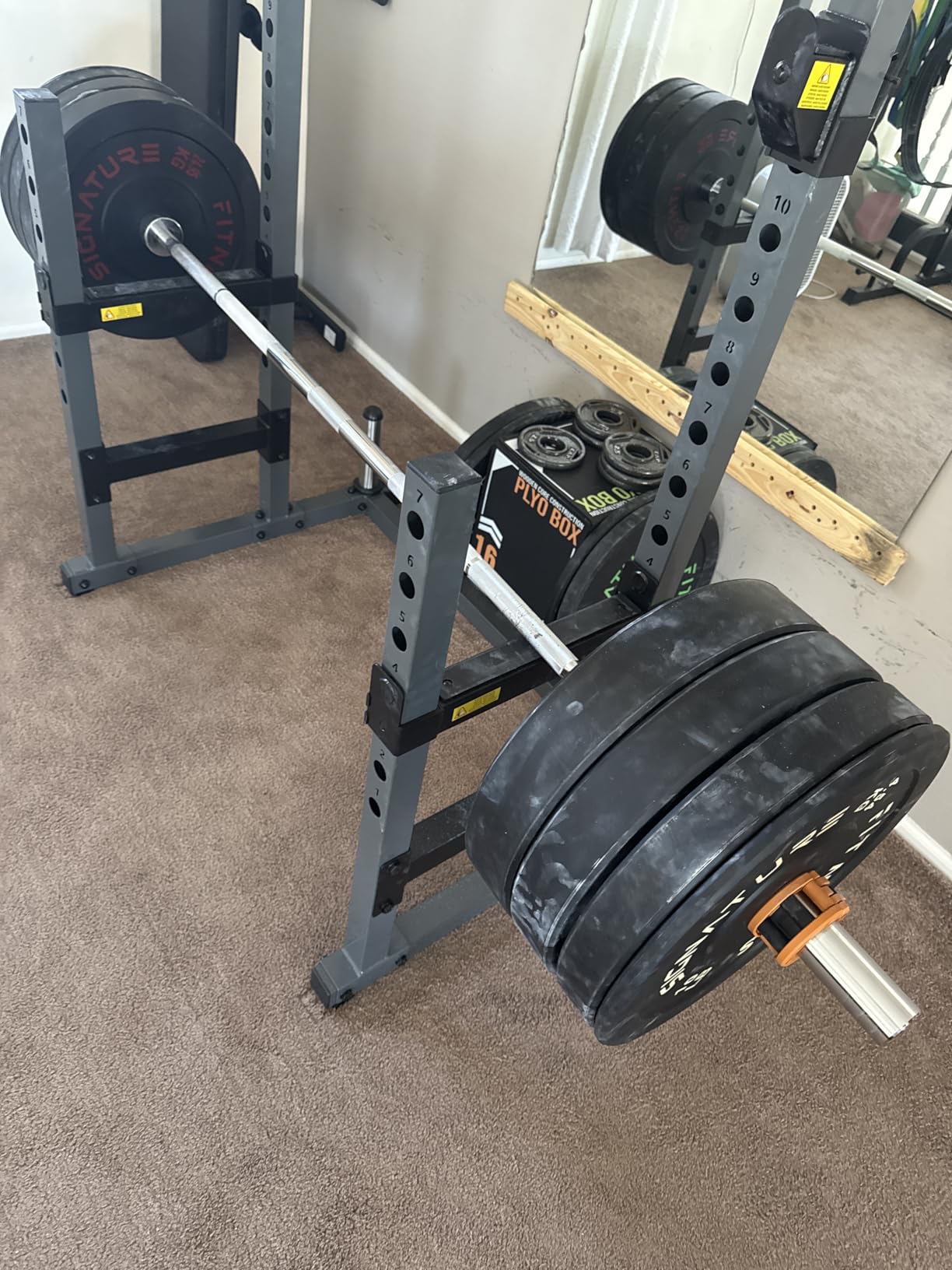
Is the CAP bar strong enough for a real home gym?
For a lifter working up to around 300 lb, yes, with a caveat. Most training in a home garage happens at 185 to 315 lb, and the bar stays straight and predictable there.
If you already squat 400 lb or plan to deadlift heavy singles soon, look at the HANDBODE or PAPABABE entries instead, both of which are rated well beyond what you will load. The CAP is the right answer to a different question: what should the first bar in an empty garage be.
When the CAP bar is the wrong call
Skip it if you lift for a living, if you compete in Olympic lifting, or if you are already past the beginner stage. At that point the 100000 PSI steel and rough spin become the limiting factors rather than the price.
Also consider the confusion factor. The CAP range uses near-identical names for variants with different weights and finishes, so check the listed model details before you order, not just the title.
2. Yaheetech 7FT Olympic Barbell – the Best Value for lighter work
Yaheetech 7FT Olympic Barbell, 330LB Carbon Steel Weight Bar for Home Gym
Carbon steel shaft
330 lb capacity
Medium diamond knurl
Hard chrome sleeves
85.4 inch length
Pros
- Highest average rating in the roundup at 4.7
- Hard chrome sleeves resist oxidation well
- Compact 7-foot length suits typical rooms
- Knurl is secure without being punishing
Cons
- 330 lb capacity is low for a full-length bar
- Shorter 13.6 inch sleeves limit plates per side
- Included spring collars are basic
Yaheetech comes into this roundup with 2024 reviews and a 4.7 average, which makes it the highest-rated bar we tested. The knurl is a medium-depth diamond pattern that feels honest in the hand, and owners using it for presses, rows and accessory work report very few complaints about grip comfort.
The chrome-finished sleeves held up well in owner reports on oxidation, which matters more than most spec sheets admit because garage humidity is what kills cheap bars. At 85.4 inches the bar still racks in a standard 7-foot upright.
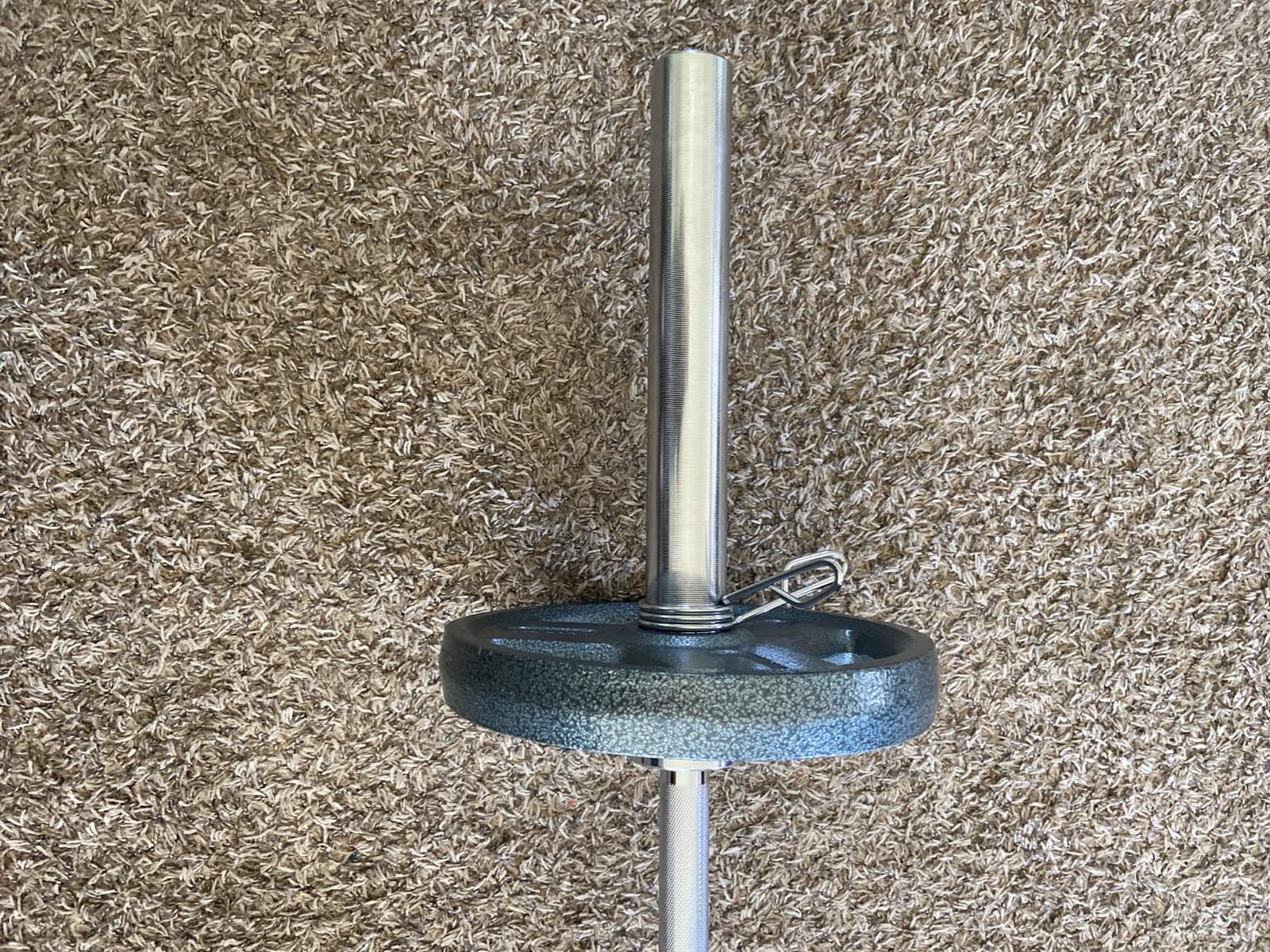
The hard limit here is capacity. At 330 lb this is not a heavy-lifting bar, and buyers who loaded it near the ceiling noticed flex. For a lifter still building a base, a 315 lb squat session is realistic and the bar is comfortable well within that.
Sleeve length is 13.6 inches, so you fit fewer plates per side than on most of the full-size bars here. If your plan is five or six bumper plates per side at some point, this is the wrong tool.
Who does the Yaheetech bar suit best?
Home gym builders who want a full-length rackable bar for general strength work without chasing specs they will never use. Many owners pair it with dumbbells and machines, and the bar handles that role for years.
It is also a good second bar because a second rackable bar lets two people train or lets you keep a heavier bar for squats without re-racking constantly.
When to buy something else instead
Move up if you are within a year of squatting 400 lb or pulling 500. The 330 lb rating gives you no headroom, and a bent shaft is not a fixable problem.
Olympic lifters should look elsewhere too. There is no center knurl and the spin is functional rather than fast, which is fine for presses and rows but slow for a clean and jerk.
3. PAPABABE 7ft Olympic Barbell – the best spec sheet for the money
PAPABABE 7ft Barbell 45lb Olympic Barbell 1000lbs Capacity Home Gym Silver
True 45 lb bar weight
190000 PSI core
1000 lb capacity
Hybrid bearing sleeves
17.52 inch sleeves
Pros
- Correct 45 lb bar weight
- unusually high rated capacity for the tier
- Long 17.52 inch sleeves swallow plenty of plate
- Knurl is secure without being abrasive
Cons
- 30 mm grip is thicker than the 28 mm most lifters prefer
- Chrome finish varies by colorway
- Shorter owner history than the big brands
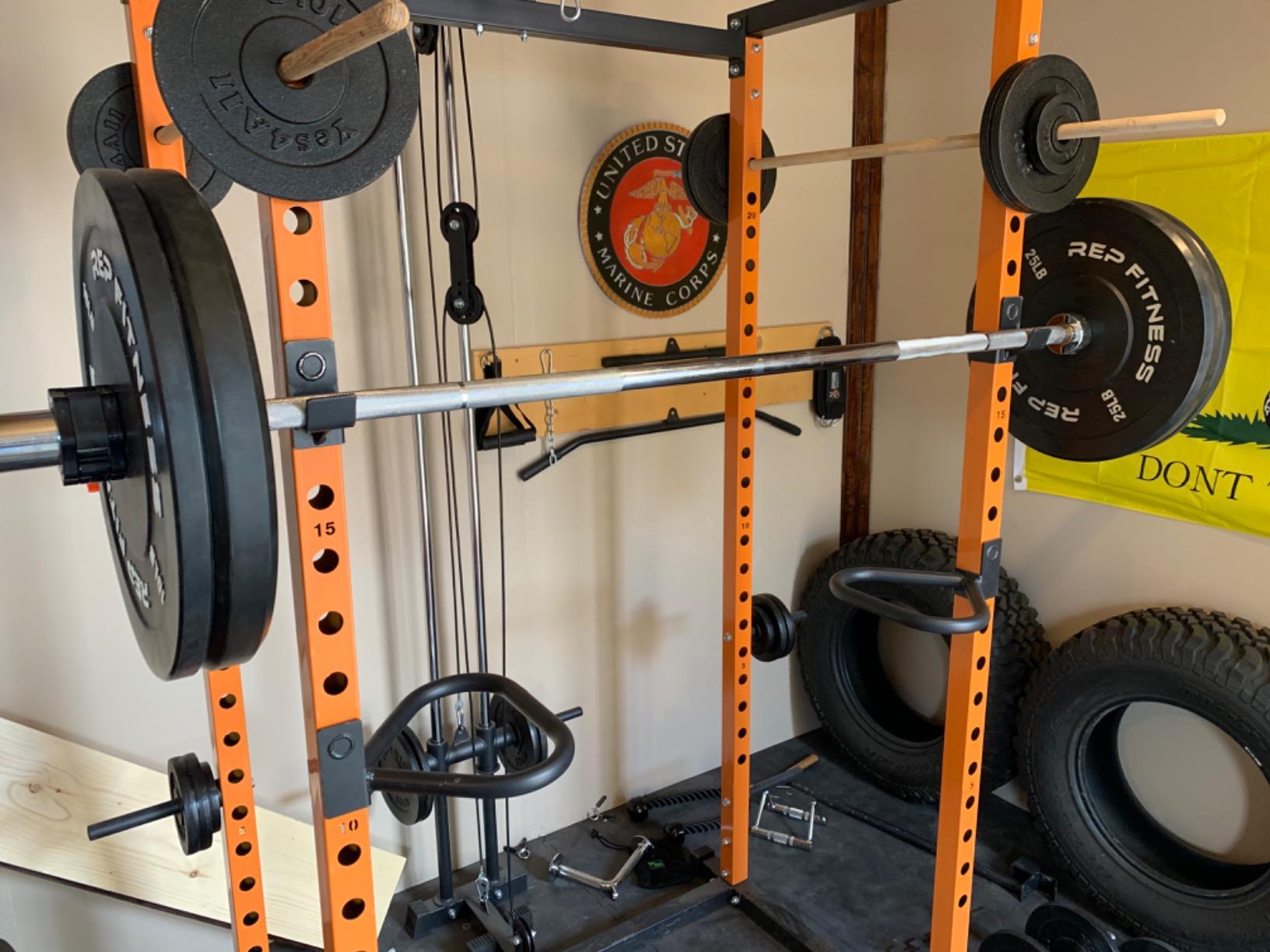
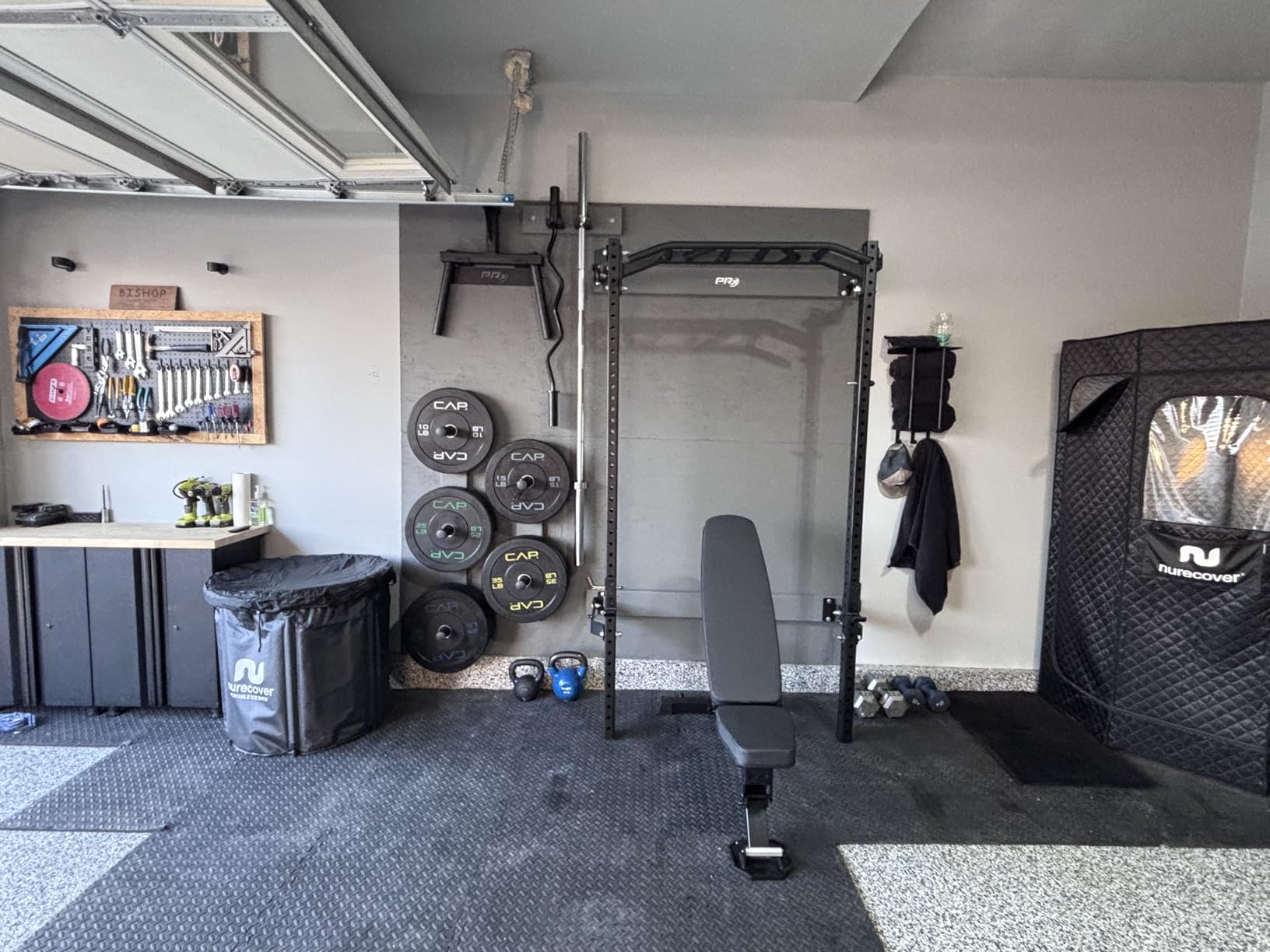
The PAPABABE listing reads like a spec sheet from a bar twice as expensive. You get a true 45 lb balanced weight, a 190000 PSI steel core, a 1000 lb capacity rating and hybrid needle bearing and bushing sleeves, which is unusual at this tier.
With 1224 reviews at 4.8 stars, owner sentiment focuses on spin quality more than anything else. The 17.52 inch sleeves are the longest among the standard-length bars here, which means you can load up without plates sliding toward the center knurl.
Two things to weigh. The 30 mm grip is thicker than the 28 mm standard, and lifters with smaller hands report it as noticeable on heavy deadlifts. Second, the finish is colorway-dependent, so the build quality you read about is not automatically what arrives in a different color.
Sleeve retention is not built in, so plates still need collars or clips. That is true of every bar on this list, but it is worth planning for before you load 400 lb.
Is PAPABABE a real powerlifting bar or a spec sheet?
It behaves like one for the load range most home lifters train in. At 1000 lb rated capacity, there is headroom well past anything a garage gym will see, and the bearing system holds rotation smooth under load.
The honest gap versus a premium power bar is in the finish durability and the knurl consistency over years, not in the strength department at home weights.
Where the thickness of the grip bites
Once you are past the beginner stage and pulling heavy doubles, a 30 mm shaft can feel uncomfortable on chalk-less hands. Most owners adapt with straps or chalk, and plenty never notice at all.
If you already know you prefer a thinner grip, the Iron Crush at 28 mm covers that ground with a comparable rating and a 750 lb capacity.
4. Rage Fitness 6ft 15lb Olympic Bar – the technique bar for beginners
Rage Fitness Olympic Training Barbell 6FT, 15lb Weight, 300LBS Capacity
6 ft aluminum bar
15 lb bar weight
28 mm shaft
300 lb stated capacity
52.5 inch collar spacing
Pros
- Only 15 lb so beginners and teens can lift it
- 52.5 inch collar spacing fits most racks
- Smooth quiet spin from brass bushings and bearings
- Includes a one year manufacturer warranty
Cons
- Stated 300 lb capacity is not realistic
- Aluminum bends under load and can snap if overloaded
- No center knurling
- Listing dimensions are inconsistent
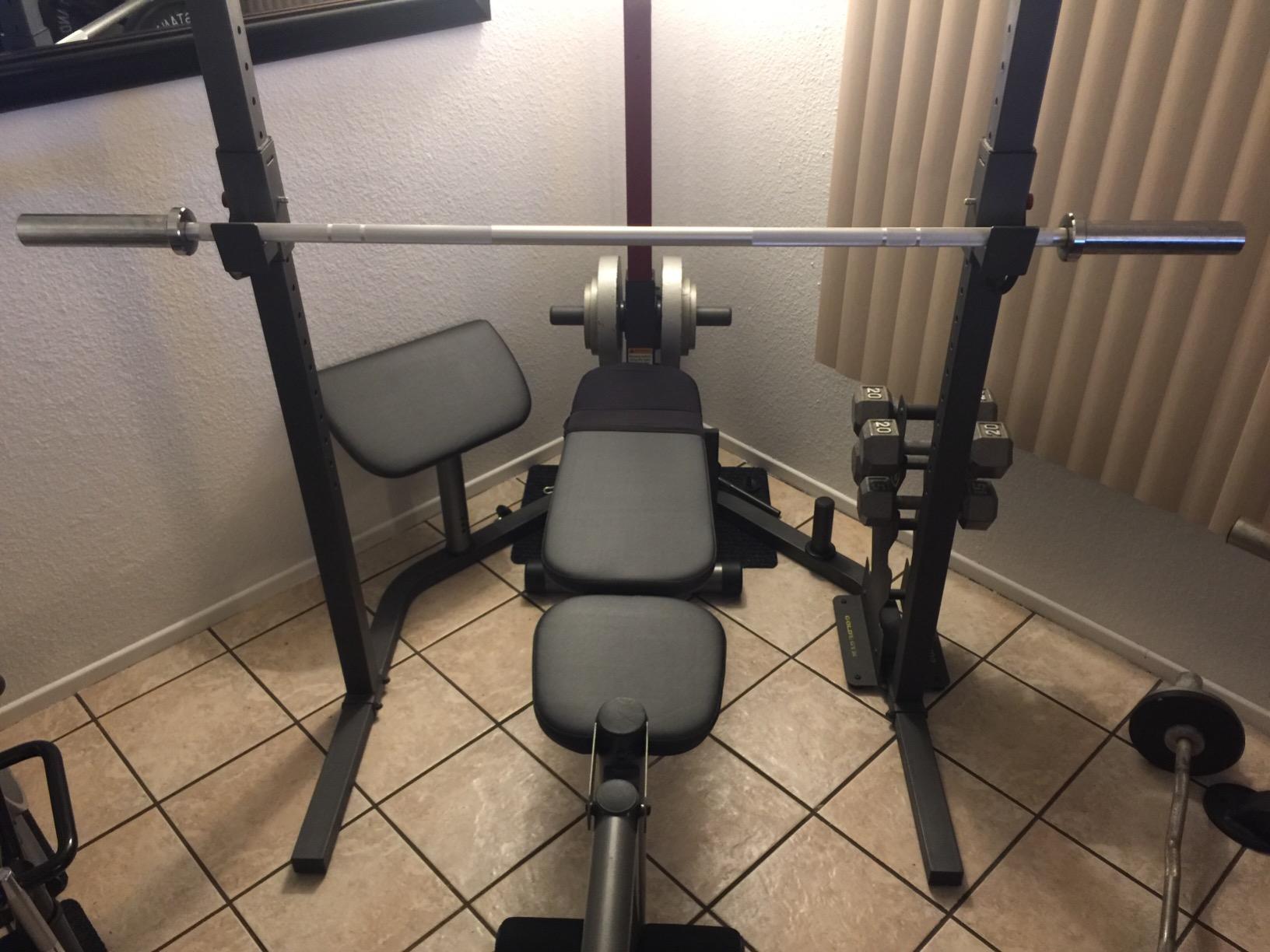
This is the only genuinely light bar in the roundup, and that is exactly why it earns a place. At 15 lb it lets a new lifter, a teenager or an older trainee practice squat, press and hinge positions without swinging a 45 lb bar around the house.
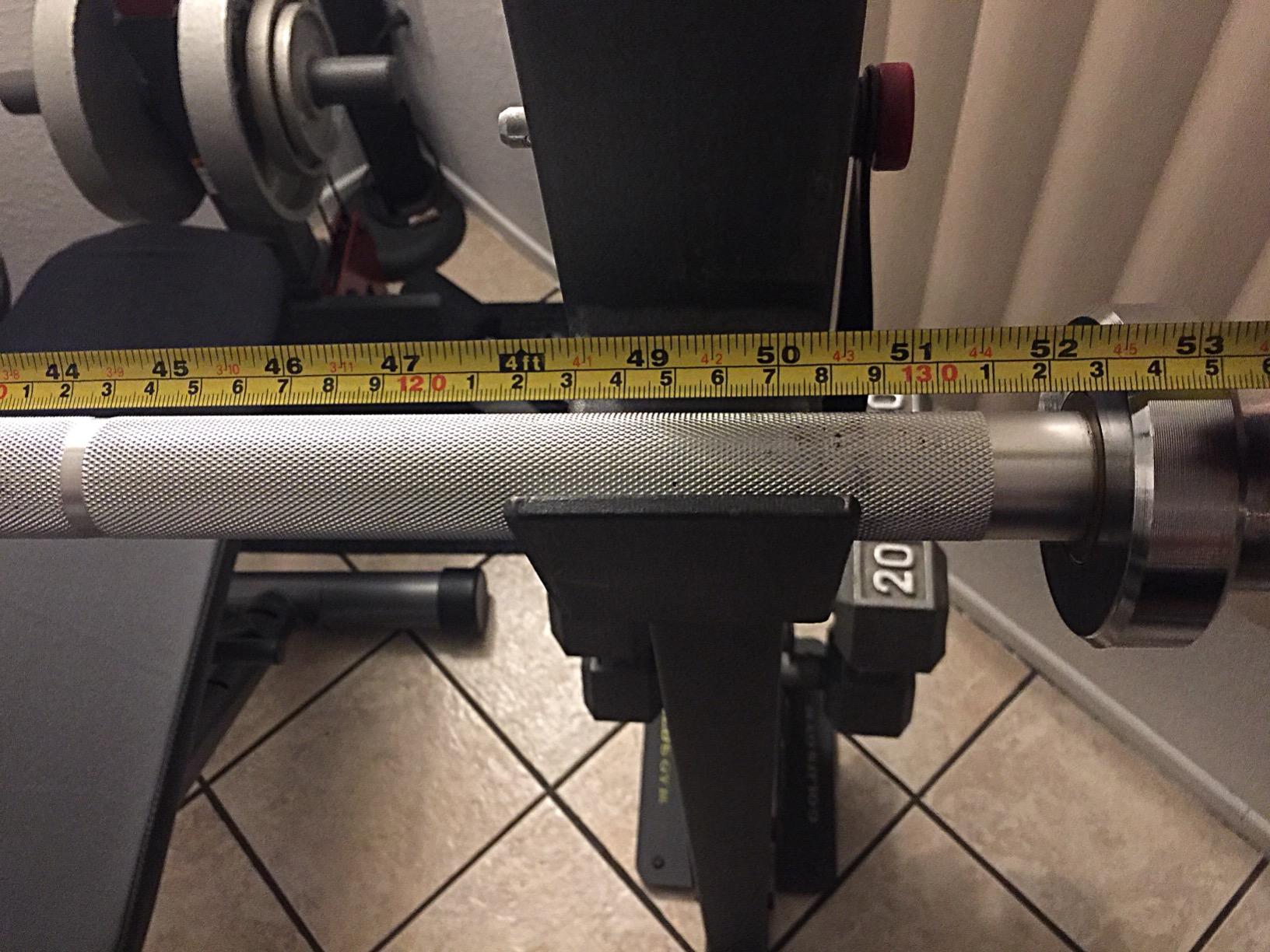
The 52.5 inch spacing between collar markings means it fits inside most power racks without you having to reconfigure anything, and the 1.5mm diamond knurl is comfortable for hands that are not yet callused.
Be clear-eyed about the limits. Reviewers consistently treat the advertised 300 lb capacity as fiction, because an aluminum shaft of this diameter flexes visibly well before that and can bend from sloppy re-racking. Some also warn that aluminum tends to fail suddenly rather than deform gradually.
There is no center knurl, so back squats will need a bar pad, and the listing dimensions conflict between 49 inch and 52.5 inch between collars. Measure your rack before ordering.
Should a beginner buy a light bar or a real one?
If your goal is learning positions with no plates, this is the right purchase. If you are already loading real weight within a month, you will outgrow it fast, and a used CAP or PAPABABE bar is a cheaper path to the same outcome.
Plenty of home gym owners use a light bar permanently for warm-ups and accessory work even after they own a full-size bar.
What this bar cannot do
It cannot handle heavy singles, it is not an Olympic lifting bar, and it should not be loaded anywhere near its claimed rating. Treat it as teaching equipment with a long life ahead of it, not as a training barbell.
It is also the shortest option at 6 feet, which helps in tight rooms but rules out proper deadlift spacing from a floor start.
5. RitFit 4ft Olympic Barbell – the best pick for small spaces
RitFit 4FT Olympic Barbell, Black/Blue
4 ft short bar
25 mm shaft
Needle bearing spin
Alloy steel with oxide finish
350 lb capacity
Pros
- 4 ft length is perfect for hip thrusts curls and RDLs
- Needle bearing spin is smooth and quiet
- Comfortable knurl for beginners
- Ships in a fitted tube to prevent transit damage
Cons
- Not a full-length bar for squats deadlifts or bench
- Some units arrive with chipped ends
- Shorter shaft feels less stable under heavy bilateral work
The 4-foot RitFit solves a problem most roundups ignore: not every piece of barbell work needs a 7-foot bar. Hip thrusts, Romanian deadlifts, curls, close-grip work and landmine movements all work fine on a short bar, and the short shaft stores against a wall.
With 588 reviews at 4.8 stars, owners consistently name hip thrusts as the standout application. The needle bearing spin is smoother and quieter than the price suggests, and the oxide finish handles a damp room without immediate surface rust.
It ships in a fitted cardboard tube, which is the packaging you wish every bare bar used. Transit damage on a long bar is a real and common complaint, and this one arrived intact in owner reports.
What works on a 4 ft bar?
Anything bilateral but short: hip thrusts, RDLs, Barbell rows, curls, close-grip bench, landmine presses and reverse lunges. A 25 mm shaft also feels slimmer in the hand than a full-size bar, which many people prefer for accessory work.
Because the baseline weight is light, you can load plates for these movements without immediately filling the 350 lb rating.
Why it cannot replace your main bar
There is no room to set up for a squat, a floor-start deadlift or a bench press in a rack, and owners describe the short shaft as less stable under heavy two-sided loading. It is an addition to a home gym, not the foundation of one.
Capacity claims differ between lengths in this family, so verify the rating on the 4-foot variant rather than assuming it matches the 7-foot version.
6. RitFit Elite 7ft Olympic Barbell – a true 45 lb starter bar
RitFit Elite 7ft Olympic Barbell, 500lbs — Black
7.2 ft bar with 28 mm shaft
True 20 kg weight
Needle bearings
Volcano knurl
500 lb rating
Pros
- True 45 lb weight that does not flex at 225 lb
- 28 mm grip diameter is a widely liked size
- Knurl is comfortable but still grips
- Arrived well packaged without scratches
Cons
- Base variant is rated to only 500 lb
- Arrived greasy from factory oil
- Volcano knurl has no center knurl
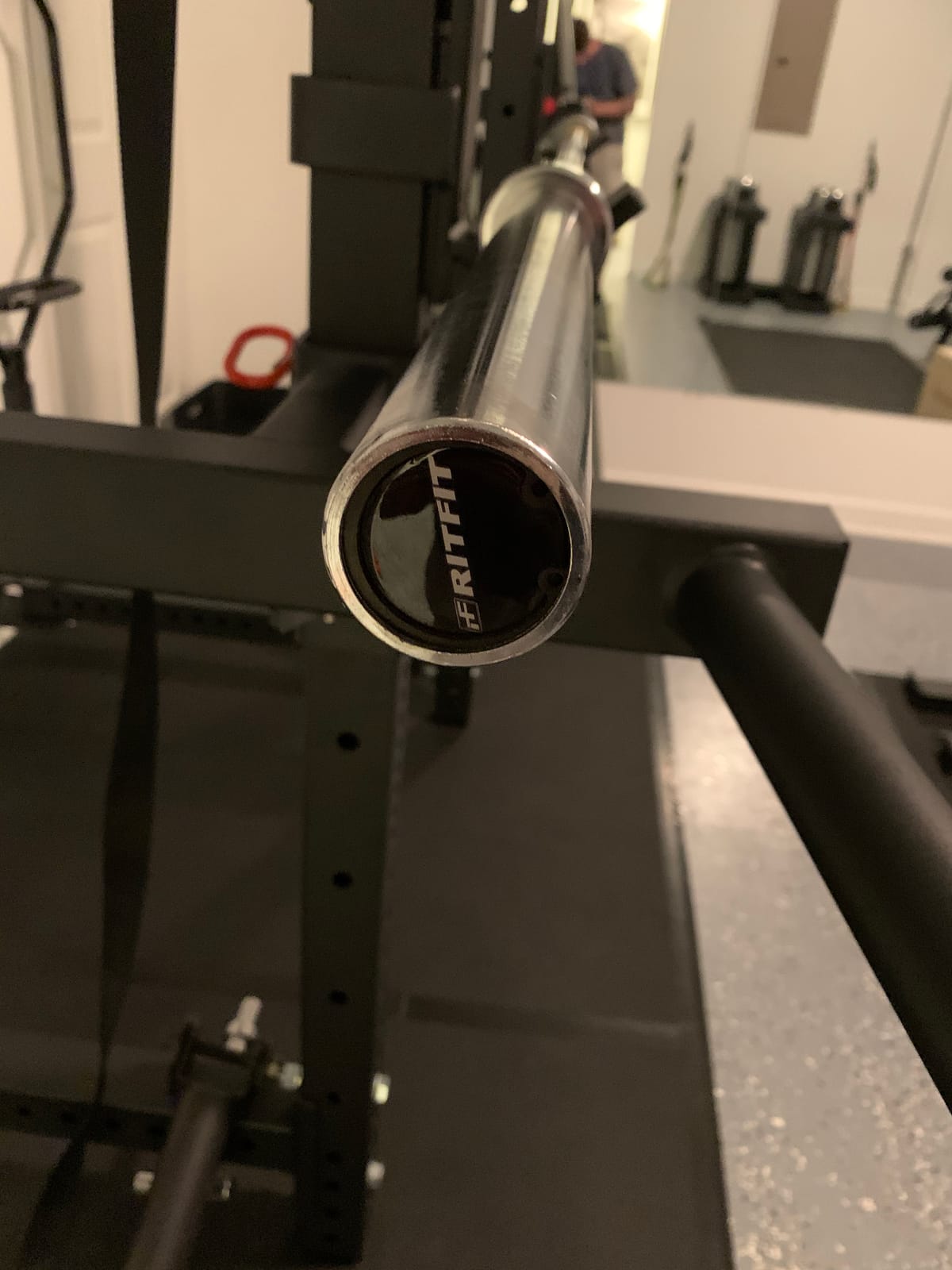
Where the CAP bar is 35 lb, the RitFit Elite is the real thing: a 7.2 foot bar at 20 kg with a 28 mm shaft, which is the diameter most powerlifters and most competition bars use. That means a 225 lb bar feels like a 225 lb bar rather than 215.
The needle bearings give a noticeably better sleeve experience than most entry bars, and owners describe the spin as quiet and reliable at load. With 405 reviews at 4.7 stars, the sentiment is straightforwardly positive about the feel of the bar in the hands.
Two practical notes. This base variant is rated to 500 lb, so if you plan to load heavy triples you need a higher-rated version in this same family. And the knurl is volcano style with no center knurl, which means back squaters reach for a bar pad unless they add one.
Several owners mention wiping down factory oil before first use. That is a five-minute job, but it makes the bar slippery until you do it.
Is this the right first bar for a serious beginner?
If you are training alone without a spotter and want the weight to be honest, yes. A true 45 lb bar loads and unloads more predictably, and the 28 mm grip will not need re-learning if you progress to a premium bar later.
It is also a good match for lifters whose training will be mostly presses, rows and moderate squats rather than technical Olympic work.
What to check before you commit
Confirm the capacity rating on the specific variant you are ordering, since the same bar is offered in several ratings. If your ceiling program goes past 500 lb, budget for the higher-rated version now rather than replacing the bar later.
The absence of a center knurl is the other thing to weigh. If you squat without a pad, this is not the bar for you, and the LIONSCOOL entry below solves that.
7. HANDBODE 7ft Olympic Barbell – the high-capacity pick
HANDBODE 7 ft Olympic Barbell, 45 lb Bar, 2-Inch Sleeves, Black
86.6 in full-length bar
190000 PSI steel
1000 lb capacity
Four hybrid needle bearings
True 45 lb
Pros
- True 45 lb weight with 1000 lb rated capacity
- Four needle bearings plus brass bushings for smooth rotation
- Medium volcano knurl does not shred hands
- Dual IWF and IPF markings make setup repeatable
Cons
- No center knurl so back squaters need a pad
- Needle bearings do not damp drop noise
- Plates are sold separately
This is the most complete spec sheet in the roundup for the money. An 86.6 inch shaft, 190000 PSI alloy steel, a 1000 lb capacity rating, a true 45 lb weight and four needle bearings working against brass bushings, two per sleeve.
The 51.6 inch shaft is full competition length, so it fits standard racks and clears the 50 mm sleeve diameter used by every Olympic plate on the market. Dual IWF and IPF lift markings are a small touch that makes your setups repeatable.
Owners rate the knurl as tactile without being aggressive, and the E-coat sleeves plus oven-cured shaft finish are described as holding up in damp rooms. At 360 reviews and 4.7 stars, the complaints are narrow: no center knurl, and the normal clatter of a rotating bar hitting a concrete floor loaded with iron plates.
That drop noise is worth understanding before you buy. Needle-bearing sleeves rotate freely, which means they do not absorb the impact energy the way a solid fixed sleeve bar does.
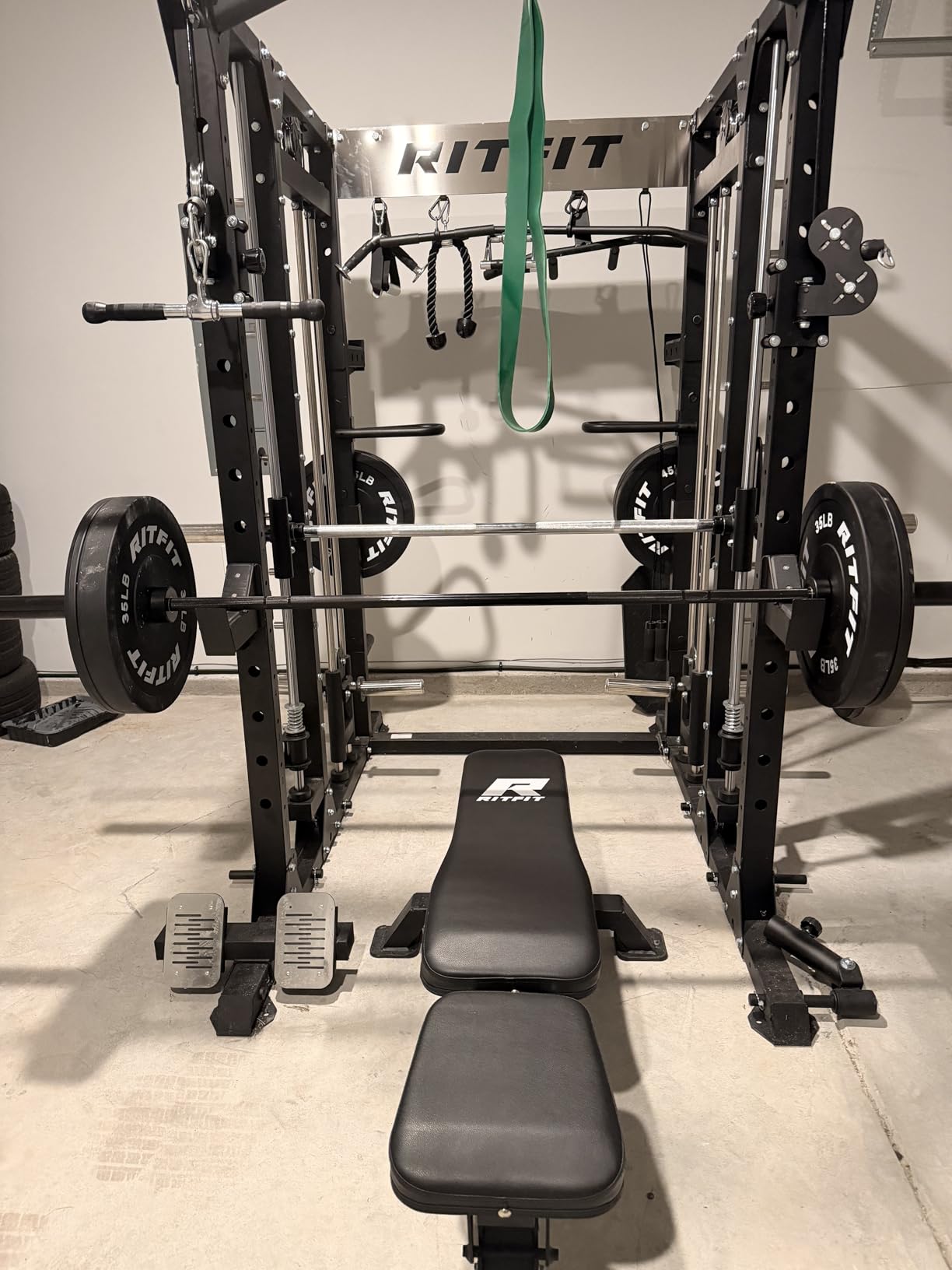
Is 1000 lb capacity overkill for a home gym?
It is headroom, and headroom is the point. A 1000 lb rating means the bar is not the limiting factor in your program, so you can add weight to the floor, not just the bar, whenever you want to.
Most home lifters will never load more than 500 lb. Paying for capacity you may not use is a waste, but buying a bar rated just above your current max means buying another bar eventually.
What to plan around
Measure your rack against the 51.6 inch shaft before ordering, since the bar is full competition length rather than a slightly shorter budget length. Also plan on a bar pad if you squat without straps, because there is no center knurl.
On a concrete garage floor, consider bumper plates for the lower weights so the noise stays manageable for you and your neighbors.
8. LIONSCOOL 7FT Olympic Barbell – the one with a real center knurl
LIONSCOOL 7ft Olympic Barbell (Black E-coating, 700LBS, Center Knurl)
86.6 inch bar
28.5 mm grip
130000 PSI steel
700 lb capacity
4.7 inch center knurl
Pros
- 4.7 inch center knurl makes back squats genuinely easier
- No flex under heavy loading including repeated drops
- Black E-coat finish held up over months of use
- Even knurl that grips without cutting hands
Cons
- 130000 PSI is the lowest rating among the full-size bars
- Plates can slide on the sleeves without collars
- Arrives with a light coat of oil
Most of the 7-foot bars in this roundup have no center knurl, which is why this one stands out. The LIONSCOOL carries a 4.7 inch center knurl section, and for a home lifter who squats without straps that is the single most useful feature on the page.
Owners report no flex under heavy loading, including repeated drops while loaded, and rate the 1.5mm medium-depth knurl as even from the collar to the knurl. With 297 reviews at 4.8 stars, that durability feedback is consistent rather than anecdotal.
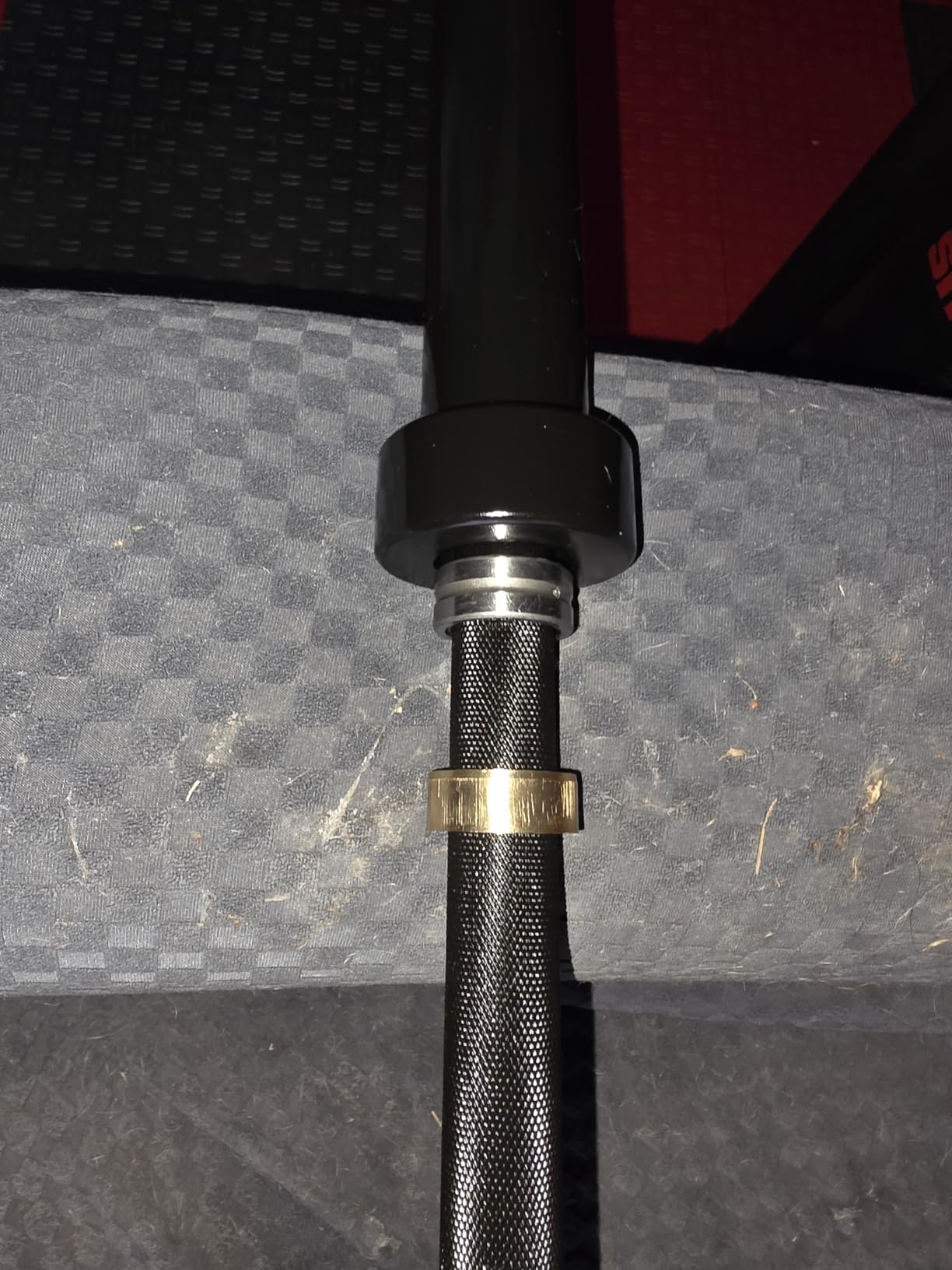
Two caveats. The 130000 PSI steel rating is the lowest of the full-length bars here, though the 700 lb capacity on this variant is still well past what most home lifters reach, and higher-rated versions exist in the same family. Second, some plates slide on the sleeves, so collars or clips are not optional.
A light coat of oil arrives on the bar, which needs wiping before first use. One reviewer also questioned whether the grip is truly 28.5 mm by comparing it against other bars, so treat the diameter as approximate.
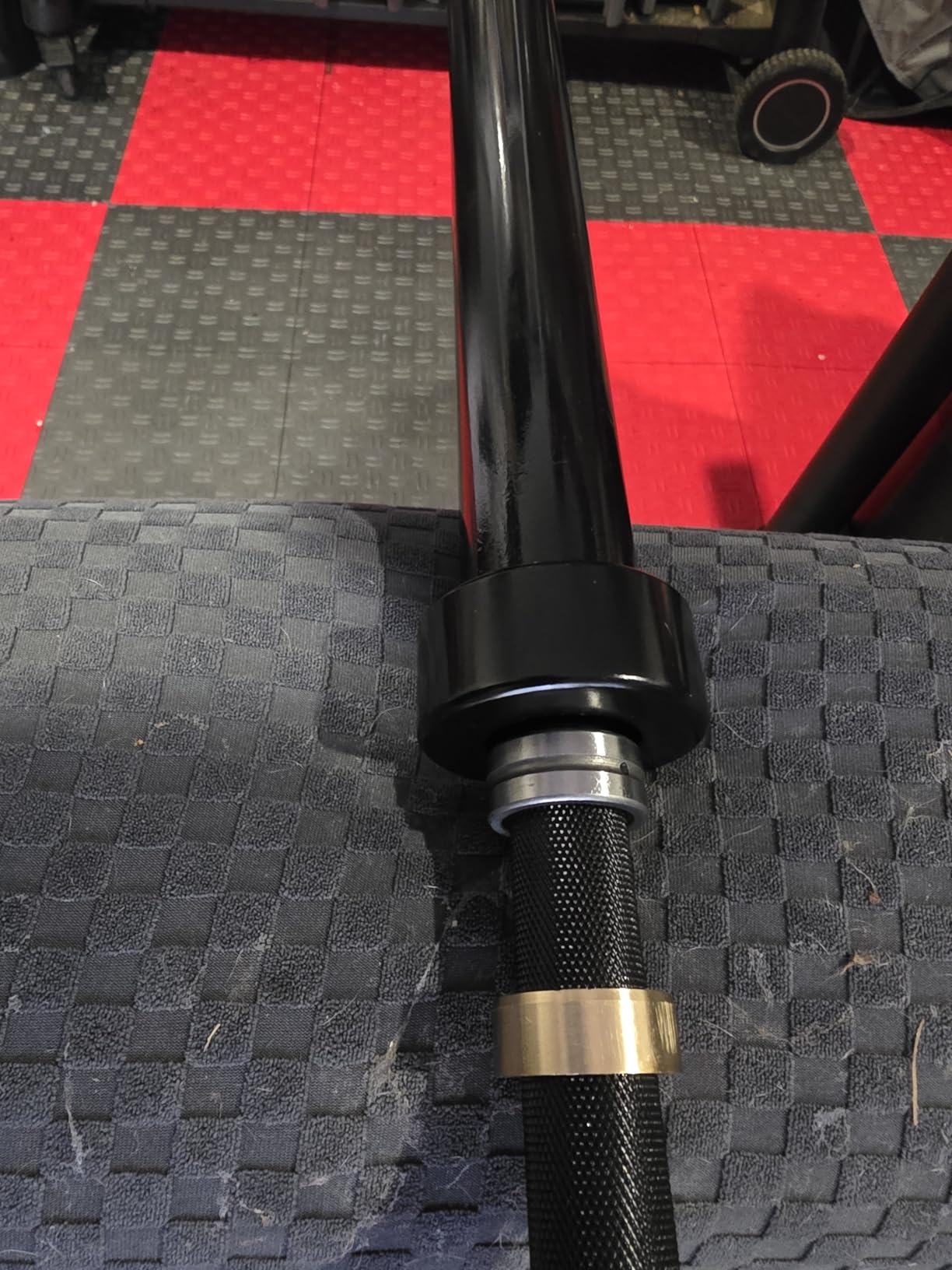
Does a center knurl actually matter for home training?
Yes, if you squat heavy without straps. The center knurl gives the bar a place to sit against your upper back, which stops it rolling into the spine under load and reduces the pinch in the wrists and elbows.
It is less useful for deadlifts and presses, where your hands are outside the center section, so lifters who mostly pull and press will not notice much difference.
What you give up
The center knurl is a mild annoyance for front squats and overhead presses, where it presses into the collarbone and chest. Some people work around it with tape or by rotating their grip, but it is a real trade.
Also note the 28.5 mm grip is slightly thicker than the 28 mm standard that many powerlifters prefer, so this is not a strict powerlifting bar.
9. Iron Crush 7ft Olympic Barbell – smooth bearing spin for functional work
Iron Crush Olympic Barbell – Multifunction 7-Foot Weight Bar for Weightlifting, Powerlifting, CrossFit Training – No. 45 Steel, Chrome Finish – 750 lbs Max Load Capacity – Home Gym Fitness Equipment
Cold-rolled No. 45 steel
170000 PSI strength
750 lb capacity
28 mm grip
Bearing sleeve rotation
Pros
- Bearing sleeves that stay smooth for days under load
- Cold-rolled No. 45 steel feels premium in the hand
- Knurl works with or without gloves
- True 45 lb weight at 28 mm diameter
Cons
- No center knurling for back squats
- Arrived with an oily residue that must be wiped off
- 750 lb capacity is lower than the 1000 lb bars here
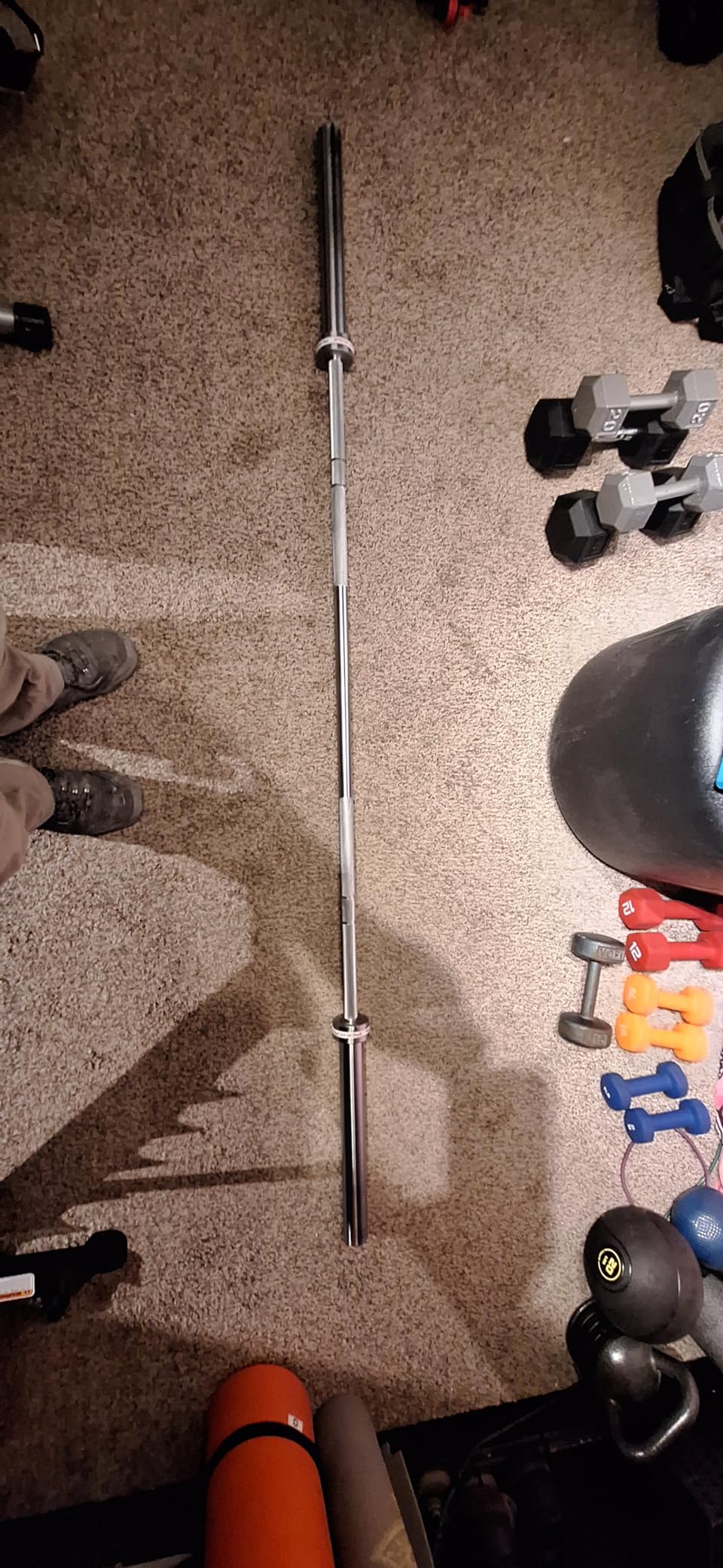
Iron Crush uses cold-rolled No. 45 steel, which is the same grade used by many established bar manufacturers, and the handling reflects it. Owners describe the bar as noticeably more substantial in the hand than competing bars at a similar cost, and they frequently compare it favorably to CAP.
The bearing sleeve rotation is the headline feature here. At 170000 PSI with a 750 lb rating, 51.57 inch shaft and 28 mm grip, this is a 45 lb bar with real bearing spin, and owners report it staying smooth for days under repeated loading.
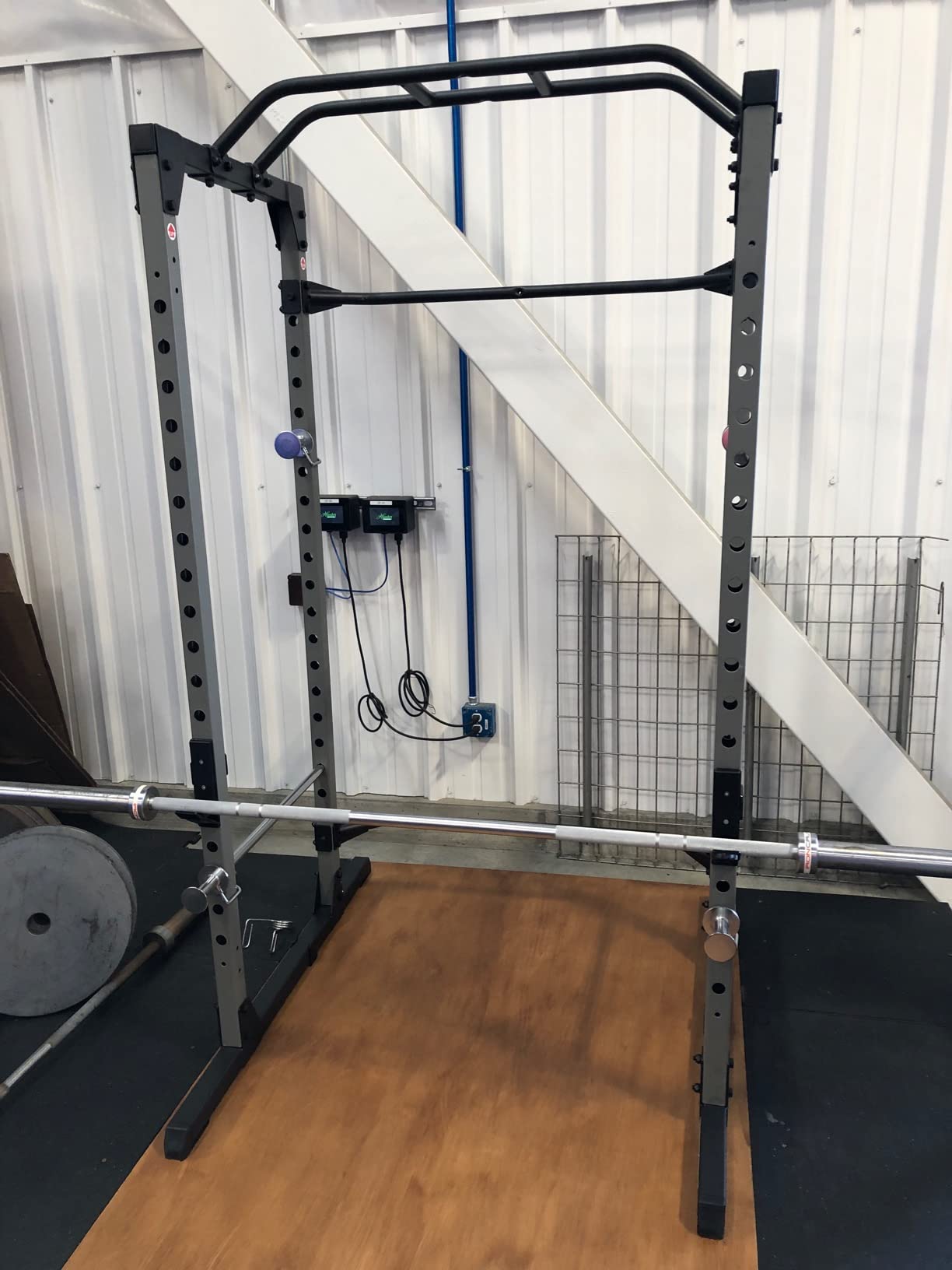
The 1.2mm medium-depth knurl rings are aggressive but do not cut into hands or gloves, which matters if you wear cycling gloves for cleans and snatches. It is one of the few bars in this roundup where reviewers specifically address grip security in gloves.
The two real complaints are the absence of a center knurl and the slippery oil residue on arrival. Owners also note the 750 lb rating is lower than the 1000 to 1500 lb bars in this price range, so plan your ceiling load accordingly.
Is this the right bar for CrossFit and functional training?
Yes. Functional training is a mix of squats, presses, cleans and snatches with short rest periods, which is exactly where smooth bearing spin matters. Plates stay free to rotate during fast turnover lifts without the shaft fighting them.
The aggressive-but-workable knurl also holds chalk and strap-free grip through high-rep work, which is the failure mode of bars with a shallow knurl.
What you give up by choosing it
There is no center knurl, so if squatting heavy without straps is your main movement, budget for a bar pad. The oil residue on arrival also needs cleaning before the first session or the bar will be slippery in your hands.
If your future includes very heavy pulling, note the 750 lb rating before you load up, and check the loadable sleeve length of 16.14 inches against the plate stack you plan to use.
10. Synergee Games 15kg and 20kg Barbell – short bar plus heavy capacity
Synergee Games 20 kg Barbell – Mens Red Ceramic 1500 lb Rated
190000 PSI steel, 1500 lb rating
10 needle bearings
Ceramic coated finish
28 mm grip
15 kg and 20 kg options
Pros
- Highest rated capacity in the roundup at 1500 lb
- Ten needle bearings give the fastest spin here
- Ceramic coating resists rust in damp garages
- Packaged in a thick tube with screwed end caps
Cons
- No center knurling
- Coating colors can fade or chip during break-in
- Arrives oily and needs wiping
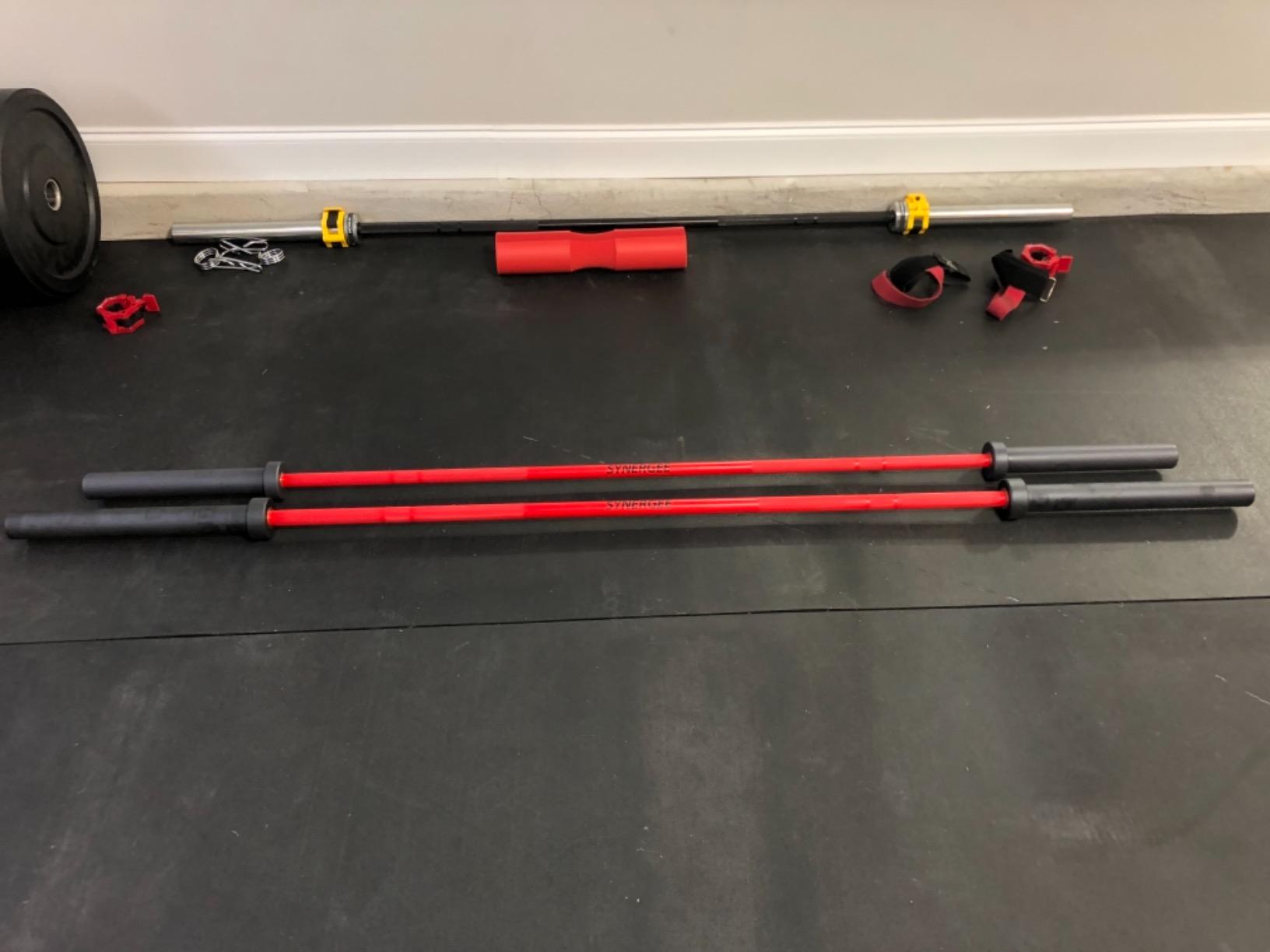
Synergee is the outlier in this roundup in two ways. It is offered in a 15 kg version as well as 20 kg, giving shorter lifters a properly proportioned bar rather than a rebranded men’s model, and it carries a 1500 lb rating, the highest capacity here.
The ceramic coating is the practical story. Owners with multiple years of use report no rust and no warping, which is why it appears in so many humid-garage recommendations. The 10 needle bearings, five per sleeve, deliver the fastest spin of any bar in this list.
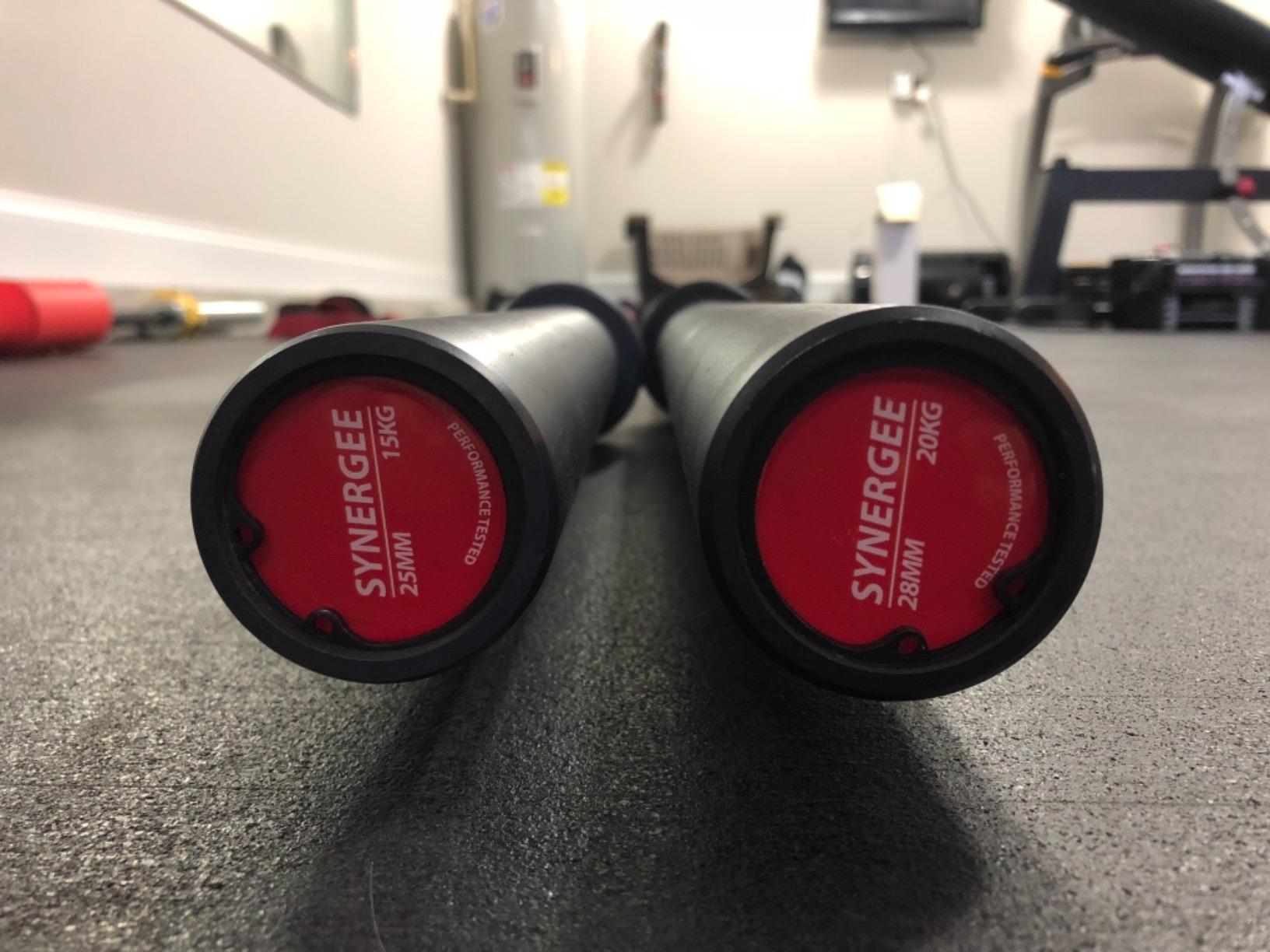
Packaging is unusually good for a bare bar: a thick protective tube with screwed plastic end caps, and some versions include wrist wraps. Line markings and textured sleeve ends make plate positioning consistent, which is a small daily quality-of-life gain.
The criticisms are cosmetic. There is no center knurl, and the paint colors, particularly pink and black, can smudge or fade during the first months of use. A heavy coat of oil also arrives on the bar and needs wiping off.
Is the 15 kg bar worth considering for a shorter lifter?
Yes, more than most articles on this topic suggest. A 15 kg bar moves faster and sits lower in a squat because it is 5 kg lighter, and it is a more honest choice for lifters who do not need a full 45 lb bar.
Note the difference in sleeve length between versions, 13 inches on the 15 kg bar against 16.4 inches on the 20 kg, since that changes how much plate you can load.
What the ceramic coating asks of you
Coatings like this resist corrosion better than bare chrome but can show wear at the contact points where plates sit. Wipe it down after sessions and keep it off damp concrete, and owner reports suggest it will outlast a decade.
Again there is no center knurl, so if you squat heavy without straps, add a bar pad to your setup or look at the LIONSCOOL instead.
How to Choose an Olympic Barbell for a Home Gym
Start with how much you actually lift, then match it to a published capacity number with headroom. Everything else on a spec sheet is a preference, but capacity is a safety limit.
What PSI do you actually need?
Tensile strength in PSI describes how much stress the steel can take before it deforms permanently. For home lifting, treat it as a rough guide rather than a shopping target, and use the capacity rating as the real ceiling.
Under 300 lb of total load, the entry bars in this roundup at 100000 to 130000 PSI are adequate. Between 300 and 450 lb, aim for 170000 PSI or better. Once you are squatting four plates per side or pulling heavy singles, 190000 PSI is the sensible floor. Plates and a bar bend for different reasons, and the shaft is what you cannot replace cheaply.
The rule of thumb we use: buy the next rating up from your current max, not the rating that matches your current max.
Shaft diameter and whip
Most full-size bars here run 28 mm, with 28.5 mm and 30 mm on a few models. A thicker shaft feels more stable under heavy load and is standard for powerlifting, while a thinner 25 mm shaft spins faster and is used in Olympic lifting and technique work.
Whip is how much the bar flexes under load. Some flex is what makes a bar compliant and forgiving on catch positions, and too much makes heavy squats feel unstable. If you squat heavy and do not compete in Olympic lifts, a stiffer bar serves you better.
Knurling, knurl marks and the center knurl
These are three different things that beginners routinely mix up. Knurling is the pattern cut into the shaft for grip, and knurl marks are the championship rules printed on competition bars, which tell you where to set your stance and grip. A center knurl is the extra grippy section in the middle of the bar.
A center knurl makes unstrapped back squats more secure and it presses into your chest during front squats and presses. Most bars here lack one, which is why the LIONSCOOL stands apart.
Needle bearings versus bronze bushings
Rotating sleeves exist so that torsion during fast lifts goes into the plates rather than your joints. Bushings are bronze or brass sleeves that spin slowly and durably, which suits squat, bench and deadlift work. Needle bearings spin faster and are preferred for snatches and clean and jerks.
Forum consensus is that the difference between a good bushing bar and a bearing bar is invisible unless you are doing fast Olympic lifts, which is exactly why multi-purpose bars with a center knurl and a mid-grade shaft suit most home gyms.
Finish and rust resistance
An unheated garage swings in temperature and humidity across the year, and condensation is what actually creates surface rust. Hard chrome and stainless steel shed moisture best, ceramic and E-coat finishes add a layer of protection, and bare zinc or phosphate is where rust reports start appearing first.
Whatever the finish, wipe the bar down after every session and keep it off a damp floor. A bar that gets wiped stays rust-free far longer than a better-coated bar that gets ignored.
Sleeve length, loadable plate and collars
Loadable sleeve length determines how many plates you can fit per side before they crowd the knurl. Standard sleeve lengths range roughly 12 to 17.5 inches, so a long sleeve buys you more loading options down the line.
Collars are not included with most bars in this roundup, so budget for a pair of lever-style collars. Plates slide on smooth sleeves, and a 400 lb bar without collars is an accident waiting to happen.
Garage Fit, Clearance and Rust Prevention
Before a bar arrives, measure your space. A 7-foot bar is 86.6 to 87 inches long, and the number that matters is the distance from your garage door opening to the back wall, not the interior width of the room.
A typical single-car garage door opening is 8 feet wide and 7 feet tall, so a 7-foot bar passes through easily. The problem is depth: a bar stored against the far wall is fine, but a bar laid across the door track blocks the door entirely. Wall-mounted horizontal storage solves this better than a vertical bar holder in a space with a joist ceiling.
For ceilings, the real constraint is the 7-foot bar’s 86.6 inch length combined with the diagonal space needed to move it. In a basement with 6-foot 6 inch ceilings, a full-length bar is genuinely awkward to maneuver and a 6-foot bar such as the Rage Fitness model is often the practical answer.
On floors, drop loading on bare concrete damages both the coating and your neighbor’s patience. Rubber platforms, raised 1-inch mats or bumper plates for the lighter pairs reduce impact meaningfully. Cast iron plates on concrete are the noisiest combination there is.
For rust, the routine is simple: wipe the shaft with a dry cloth after every session, put a drop of light oil on the sleeve lips every few weeks, and never store the bar standing against a cold exterior wall where condensation collects. A dehumidifier or a wall-mounted bar rack away from the wall both help more than any coating choice.
Frequently Asked Questions
What is the best Olympic barbell to buy?
For most home gyms the best Olympic barbell is a full-length 7-foot bar rated well above your current max, with a 28 mm shaft and a knurl you can grip. The CAP 7ft bar is the safest first purchase for beginners, while lifters past the intermediate stage get more headroom and better sleeve hardware from a 190000 PSI bar such as the PAPABABE or HANDBODE. Match the capacity rating to your heaviest planned load plus a margin.
Which Olympic bar is best for a home gym?
A multipurpose 7-foot bar around 28 mm is the best fit for a home gym, because most people squat, bench, deadlift, row and press rather than compete in Olympic lifting. Add a center knurl if you squat without straps and plan to load heavily. Reserve 6-foot and 4-foot bars for technique work, warm-ups and accessory movements, not for the main lifts.
How much should an Olympic barbell cost?
Entry-level 7-foot carbon steel bars with a 100000 to 130000 PSI rating sit at the bottom of the range and suit lifters under 300 lb. Mid-tier bars with 170000 to 190000 PSI ratings and hybrid bearing sleeves cost more and cover everything up to about 500 lb. Premium competition-spec and stainless bars sit at the top and are worth it mainly for warranty length, finish durability and IWF certification.
What is a good, cheap Olympic barbell?
A good cheap Olympic barbell is a 7-foot carbon or alloy steel model with a published capacity rating, a knurled 28 mm grip and rotating sleeves. The CAP 7ft and Yaheetech 7FT both fit that description, and the PAPABABE goes further with a true 45 lb weight and a 1000 lb rating. Buy from the brand’s own listing rather than a marketplace reseller to reduce the chance of a damaged bar arriving.
Is a needle bearing bar worth it over a bushing bar for home lifting?
Usually not, unless you train the snatch, clean and jerk or any other fast turnover lift. Needle bearings spin faster and reduce torque on the wrists and shoulders during those movements, but for squat, bench and deadlift work the difference is hard to notice. Bushings are simpler and last longer with less oiling, so a mid-grade hybrid sleeve system is the sensible middle ground for a home gym.
What bars do Olympic weightlifters use?
Olympic weightlifters use 20 kg bars with a 28 mm shaft and needle bearing sleeves, typically knurled to the IWF standard with championship knurl marks for consistent setup. For lighter lifters there is a 15 kg version with a 25 mm shaft, which is easier to move and sits lower in a squat. For a home gym aimed at general strength training, a multipurpose 28 mm bar is the more practical choice.
Final Verdict: Which Olympic Barbell Should You Buy in 2026
The CAP 7ft bar is the best Olympic barbell for most home gyms in 2026, because it has the deepest review history, a grippy knurl with a center knurl, and a build quality that hides its entry-level positioning. If you already squat past 300 lb, skip to the PAPABABE or HANDBODE, both of which carry a 190000 PSI rating and enough capacity that the bar never becomes the limiting factor.
Add the LIONSCOOL if you squat without straps and want a proper 4.7 inch center knurl, and consider the Synergee Games bar if a 15 kg option and a 1500 lb rating matter to you. The Rage Fitness 6ft and RitFit 4ft bars earn their place as a learning bar and an accessory bar rather than as training mainstays.
Whatever you choose, buy the bar first and add plates as your training progresses, and check the capacity rating against your heaviest planned load. Then wipe it down after every session, because the cheapest bar in any garage outlives the most expensive one that got left wet.