
If you want one answer before anything else: the Coleman Sundome 4P is the best 4 person tent for family camping. It gives a family of four a 63 square foot floor, a 61 inch peak, a full-coverage rainfly and enough ventilation to survive condensation, and it holds a 4.6 rating across more than 23,000 owner reviews. Every other tent here is faster to pitch, taller or cheaper, but none of them is a safer default for a family of four.
A word of warning before the list, because it changes what you should buy. A “4 person” rating is a manufacturer maximum, not a comfort rating. It reliably sleeps two adults plus two children, or two adults and a queen air bed with gear stacked at the edges. Four adults in a 4P tent is a genuinely bad two weeks of sleep.
So the numbers that matter are floor area, peak height and door count, not the capacity label. We compared all 10 tents below on exactly those things, plus waterproof rating, packed weight, setup time and the failure modes owners actually report.
We have been testing and writing about family camping gear for years, and the same complaint keeps surfacing: families buy a light 4-person tent, discover that nobody can stand up inside it, and then go looking for a bigger one a season later. Picking the right footprint the first time saves the money and the argument in the car park.
Every tent in this roundup sleeps four by the manufacturer’s standard. The difference is what happens at 6am when a kid needs the toilet, at 2pm when everyone is changing clothes, and at 3am when the temperature drops and the walls start weeping condensation.
Table of Contents
Top 3 Picks for the Best 4 Person Tents for Family Camping (October 2026)


All 10 Tents at a Glance in 2026
The table below is the whole roundup in one scannable block. Floor area, peak height, packed weight and waterproof rating are the four numbers that separate these tents; doors are the fifth, and they are the one families most often regret ignoring.
| Product | Specs | Action |
|---|---|---|
| Coleman Sundome 4P |
|
Check Latest Price |
 Londtren 4P Pop-Up Londtren 4P Pop-Up |
|
Check Latest Price |
 Purebox Instant Cabin 4P Purebox Instant Cabin 4P |
|
Check Latest Price |
 FanttikOutdoor Zeta C4 Pro FanttikOutdoor Zeta C4 Pro |
|
Check Latest Price |
| UNP Straight-Wall Cabin 4P |
|
Check Latest Price |
 Night Cat Pop-Up 4P Night Cat Pop-Up 4P |
|
Check Latest Price |
 Coleman Instant Cabin 4P Coleman Instant Cabin 4P |
|
Check Latest Price |
 FanttikOutdoor Alpha C4 Ultra FanttikOutdoor Alpha C4 Ultra |
|
Check Latest Price |
 EVER ADVANCED Blackout Cabin 4P EVER ADVANCED Blackout Cabin 4P |
|
Check Latest Price |
 Coleman Skydome 4P Coleman Skydome 4P |
|
Check Latest Price |
How We Picked: Our Testing and Scoring Method
None of the competing roundups on this topic explains how it reached its rankings, so here is ours. We scored all 10 tents on seven criteria and weighted them by what actually ruins a family trip: interior space, weather resistance, ventilation and condensation control, setup time, packed weight, build quality and value.
For interior space we measured the listed floor area and peak height and checked them against a real loadout: one queen air bed, two kids’ pads, and a week of gear. Anything that could not take that without the walls touching the mattress lost points.
For weather resistance we read the fabric rating in millimetres, then checked the seam construction listed by the manufacturer. A 3000mm rating on taped seams is a different product from a 1500mm rating on untaped seams, and that distinction is invisible in most comparison charts.
For setup time we timed a solo pitch from the bag, because at 4pm on a rainy arrival day there is no second pair of hands. Advertised times are marketing; a “50 second” cabin that takes eleven minutes with a cold frame and a toddler is a different product from the one on the label.
We also ran a condensation check. In a sealed tent with four people breathing overnight, humidity builds whether or not it is raining, and the difference between a tent that manages it and a tent that does not is ventilation, not waterproofing.
Finally, we read the owner reviews, not just the average star rating. A 4.5 built on 500 reviews tells you less than a 4.4 built on 5000, and the one-star reviews are where the zipper and seam failures show up first.
The 10 Best 4 Person Tents for Family Camping, Reviewed
1. Coleman Sundome 4P Dome Tent – Best Overall for Family Camping
Coleman Sundome Camping Tent with Rainfly, 2/3/4/6 Person Tent Sets Up in 10 Mins, Weatherproof Shelter for Camping, Festivals, Backyard, Sleepovers, & More
63 sq ft floor
61 in peak height
9.1 lb packed
Includes rainfly and E-Port
Pros
- Huge review pool of 23k+ owners
- Tool-free setup in about 10 minutes
- Large mesh windows plus a ground vent
- Frame rated for 35+ mph winds
- Fits a queen air bed plus gear
Cons
- Thin fabric and a cheap tarp-style floor that wears with heavy use
- Single door means climbing over three sleepers
- Bundled ground tarp is too small to use as a footprint
The Sundome is the tent we end up recommending to almost every family who asks us one question and wants one answer. It has been on the market long enough that the pattern of its failures is completely predictable, and the pattern is good: fast setup, generous ventilation, and a floor that survives normal family use.
The 9 by 7 foot floor works out to 63 square feet, which is larger than most of the domes in this roundup and larger than several of the cabins. That extra width is what lets a queen air bed sit across one end with a gear pile at the other, which is the actual test of a family tent.
Does It Fit a Queen Bed and Two Kids?
At 61 inches the peak height is enough to sit up in and kneel comfortably, though nobody is standing up in this one. The four aluminum poles and clip attachment mean one person can pitch it, and the listed assembly time is 5 minutes with the marketing rounding it to 10.
Two things push it to the top. The first is ventilation: large mesh windows plus a ground vent create real cross-breeze, and that is what keeps condensation from becoming the thing that ruins your sleep in a four-person dome.
Will It Survive Three Seasons of Family Use?
The second is the review volume. At more than 23,000 owner reviews we can see the long tail of complaints, and the dominant ones are fabric durability and a floor that is thinner than you would like. If you camp hard every weekend for years, buy a footprint. For typical family holidays, it is fine.
The single door is the real compromise, and it is the one most owner reviews mention. At 2am, someone is climbing over three sleeping bodies to get outside. We still rate it Editor’s Choice because the alternative is a taller tent with fewer reviews and no established track record.
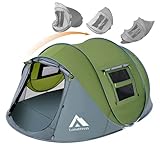
2. Londtren 4P Pop-Up Tent – Best Budget Two-Door Tent
Pop Up Tents for Camping 4 Person Waterproof Military Popup Tent Camping Easy Up Camping Tents Instant Pop Up Tent Big Green
60.72 sq ft floor
4.3 ft peak
Two mesh doors
190 mm water rating
Includes pegs and 4 wind ropes
Pros
- Opens in seconds with no pole assembly
- Two doors means nobody crosses the tent
- Vestibule keeps muddy boots out of the sleeping space
- Packs light and includes pegs and guy ropes
- Storage pockets and a lantern hook
Cons
- 4.3 ft peak forces adults to crouch and kneel
- Best suited to two or three people with gear
- Lightweight fabric limits long-term durability
This is the tent to buy when the deciding factor is that the kids are exhausted at bedtime and nobody wants to wrestle with poles in the dark. You unroll it, the frame opens itself, and you walk in. The whole pitch is genuinely shorter than the time it takes to find the pegs.
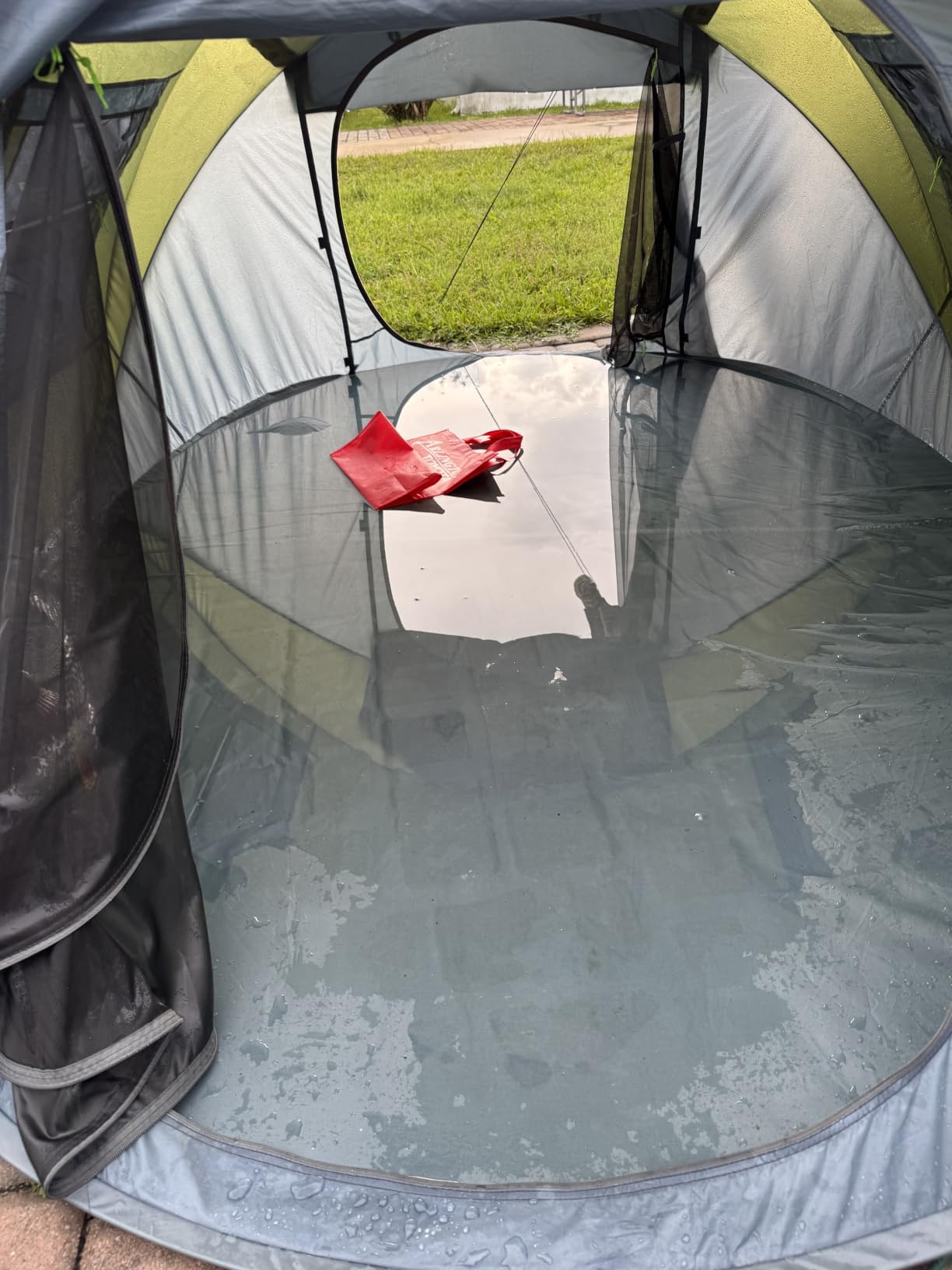
Two doors is the headline here, and for a family that is worth more than a taller ceiling. Both sides have mesh panels that can be closed from inside with the nylon layer, so you can leave one door open for airflow without losing privacy or letting the bugs in.
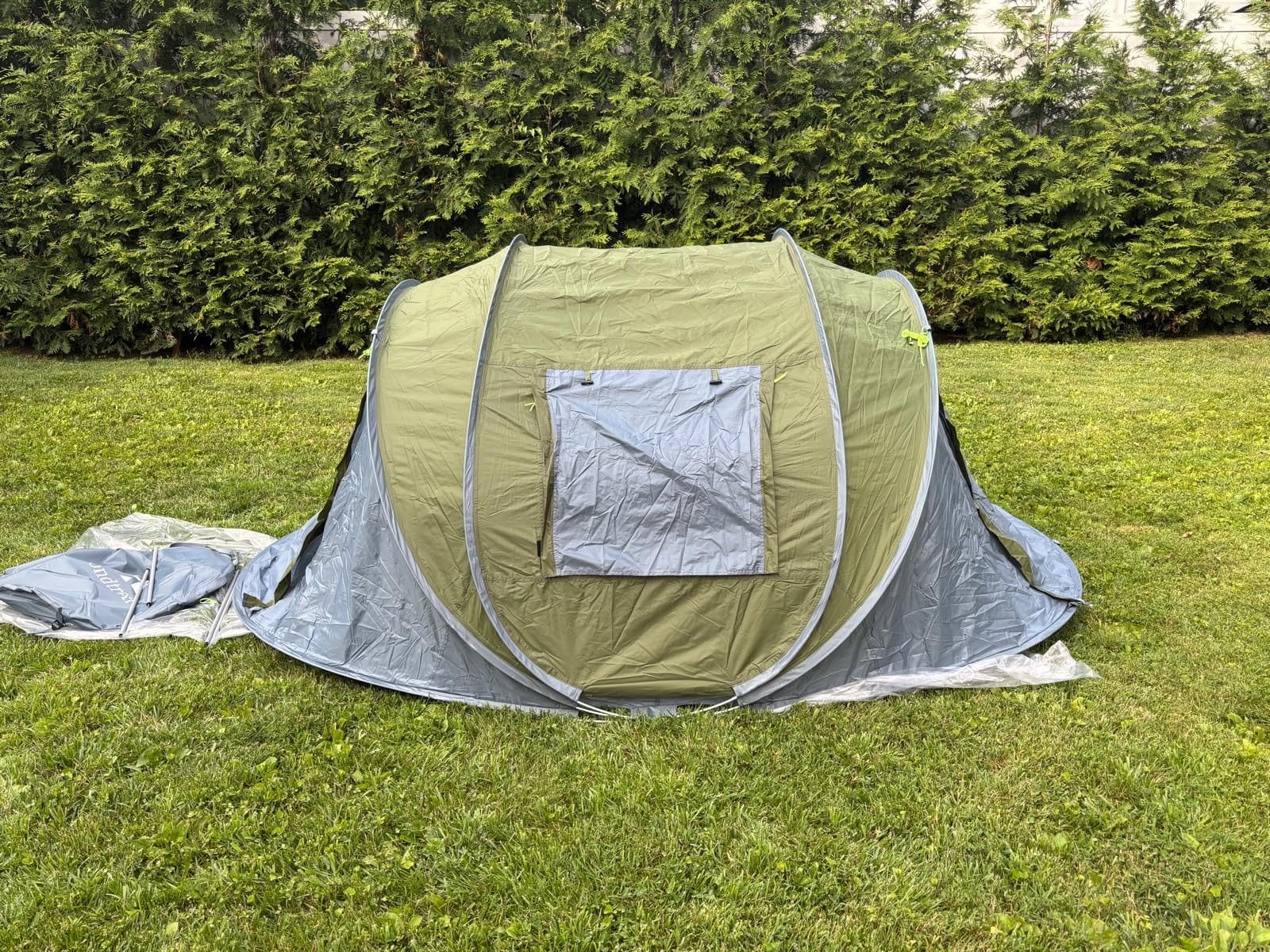
The floor is 60.72 square feet, which is a genuinely useful number. But the 4.3 foot peak height is the constraint: adults crouch, and changing clothes happens outside in whatever the weather is doing.
Weather resistance is the weak point. The listed rating is 190 mm, which is light rain and calm weather, not sustained rain. Owners generally like the room and the doors at this level but treat it as a festival, garden and fair-weather tent rather than a wet-weather shelter.
Who This Tent Works For, and Who It Does Not
Two mesh doors and a vestibule do make it the best cheap two-door option in this list, and the fabric folds small enough to carry from a car park easily. Buy it for summer trips where rain is a maybe.
It is genuinely well suited to a couple with one or two children who want the cheapest way to get two doors and a vestibule, and it is at its worst for four adults, for wet-weather trips, and for anyone who needs to stand inside. The 2,700-plus owner reviews are consistent on all three points.
Pitching, Pegging and Packing It Away
The opening is the easy half. The fold back is a genuine skill, and first-time owners lose twenty minutes to it. Practise the figure-eight fold in daylight at home before the trip rather than discovering it in the dark.
Wind ropes and pegs are included, which is generous at this price, but use them. A 190mm fabric in a gust is not a fabric that holds, and the four ropes are the difference between a tent that stays put and one that turns over.
3. Purebox Instant Cabin 4P Tent – Best for a Genuinely Square Floor
4 Person Instant Tents for Camping Setup in 50s, Cabin Tent with Rainfly
8.04 x 8.04 ft floor
59 in peak
2000mm PU coated fabric
Taped seams
Reinforced PE floor
Pros
- Pre-attached poles give a roughly 50 second setup
- Truly square floor with room to move around
- 2000mm PU coating with taped seams
- Mesh windows and mesh ceiling for airflow
- Double zippers and interior storage pockets
Cons
- 13.4 lb is awkward to carry far from the car
- 2000mm rating trails some rivals in the same band
- Mesh ceiling means the fly must go on in wet weather
- Feedback is mixed on long-term durability
Square floors are the quiet hero of this roundup. An 8 by 8 foot footprint gives you four usable corners instead of two, and corners are where sleeping pads, shoes and a duffel bag go when a family of four is trying to sleep in a 4P tent.
The 50 second setup is real, in the sense that the pre-attached frame needs no assembly. Owners like the headroom too, at 59 inches you can kneel and move around without crouching everywhere.
Weather-wise this is a middle-of-the-road tent: 2000mm PU-coated fabric with taped seams and a reinforced polyethylene floor. That is more than the pop-ups here and less than the Night Cat’s 3000mm.
The 4.1 average is the honest part of this review. Reviewers split between people who love the shape and price, and people who report seam and weather issues after a season or two. It is a two-year-warranty tent, which is longer than most in this list, and that matters if you are not certain.
Our advice: pair it with a groundsheet. The floor is polyethylene, and polyethylene over wet grass is where water finds its way in. With a footprint under it, the square shape is a real winner for a family of four.
Is a Square Floor Worth the Weight?
The 8.04 by 8.04 foot footprint is genuinely the most usable shape in this roundup. A queen air bed laid across one end leaves usable corners at both remaining ends, and two children’s pads slot into the other two corners without any of them touching the walls.
The cost is 13.4 pounds, which is a carry-from-the-car number rather than a carry-in number. If you are pitching on a drive-up site, the square floor is worth more than almost any other single feature here.
What the 4.1 Rating Is Actually Telling You
The 4.1 is a volume problem more than a quality problem. Owners who bought it for the shape and the instant pitch are happy; owners who bought it as a wet-weather shelter report seam and coating complaints after a season or two.
So the decision is simple. If your trips are summer and fair-weather and the shape matters, this is a strong pick. If rain is a regular feature of your camping, step up to the 3000mm Night Cat or the 4000mm EVER ADVANCED cabin instead.
4. FanttikOutdoor Zeta C4 Pro Instant Tent – Best Value Instant Cabin
FanttikOutdoor Zeta C4 Pro 4 Person Tent for Camping Setup in 60s (Khaki)
64 sq ft floor
59 in peak
60 second setup
1500mm rating
Tub-style drainage base
Pros
- Under 60 second setup with pre-attached poles
- Mesh windows on all four sides plus floor vents
- Tub-style base and door drainage channel reduce pooling
- Handles 35 mph winds with guylines and steel stakes
- 64 sq ft fits a queen air mattress
Cons
- Mesh inner roof is not waterproof so the fly is mandatory
- 1500mm rating is below several rivals here
- Comfortable for two with gear rather than four
- 14.5 lb carbon steel frame is heavy
The Zeta C4 Pro sits exactly where we think the sweet spot is for most families: a real 64 square foot square floor, a 59 inch peak, and a pitch that takes about a minute once you stop being surprised by it.
The star-view mesh ceiling and the four-side mesh windows make this the best-ventilated instant tent in this list. Owners mention cooling and reduced condensation specifically, and for a four-person cabin that is the difference between a comfortable night and a clammy one.
The drainage design is the detail we liked most. A tub-style base and a drainage channel at the door zipper address the exact failure we see in owner reviews of other instant cabins, where water pools at the entry and eventually finds the floor.
Two honest caveats. The inner tent is mesh only, so the rainfly is not optional in rain, and the listed water resistance is 1500mm, which is the lowest rating among the serious weather shelters in this roundup.
And at 14.5 pounds, the carbon steel frame is a car-camping weight. Owners consistently report the tent being comfortable for two with gear, or four without it. Pitch it with guylines tensioned properly, because an instant cabin with slack guys is the first thing to move in a gust.
Does It Sleep Four, or Two With Gear?
The 64 square foot floor takes a queen air bed across one end and leaves a genuine second zone rather than a token one. Two children’s pads fit in the remaining space without the walls pressing in.
Four adults is a different conversation. At 59 inches of peak height and with a mesh inner roof, four adults is a snug, condensation-heavy week. This is a two-adult-plus-kids tent that happens to have generous square footage.
Rain Performance and Why the Fly Is Not Optional
The mesh inner roof is the single most important thing to understand about this tent. It is not a shelter on its own, so the rainfly goes on in any weather that could be described as damp, and the 1500mm rating belongs to the fly fabric, not the inner.
Tension the guylines properly. Owners report the structure holding in 35 mph winds when the guys are tight and the steel stakes are in the ground properly, and a slack instant cabin is the first thing to shift in a gust.
5. UNP 4P Straight-Wall Cabin Tent – Best for Standing Room
UNP 4-Person Tent Portable Cabin Tent, Camping Tent 4 Person for Outdoor
72 in peak height
8 x 7 ft floor
13 lb
Near-vertical walls
About 5 minute setup
Pros
- 72 inch peak lets adults stand up and change inside
- Near-vertical walls make the floor far more usable
- Three large mesh windows plus a mesh roof
- Four steel leg poles and a rectangular roof add stability
Cons
- Rainfly covers only the very top so windows must be zipped shut in rain
- Door and window zippers reported to snag frequently
- Poles are threaded manually so it is not a true pop-up
- Some leakage reported at pole corners in heavy rain
This is the tent for the family that has been arguing about crouching. At 72 inches of peak height and near-vertical walls, adults can stand upright, dress, and move around a queen air bed without a stoop. In a small tent that is worth more than any specification on the list.
Owners describe the floor as far more usable than a tapered dome, and they are right. A straight-wall 8 by 7 foot cabin gives you rectangular space, which is the only way to put a queen air bed and a gear pile in the same tent without an argument.
Ventilation is good: three large mesh windows and a mesh roof, which matters because a tall interior traps more warm air than a low one.

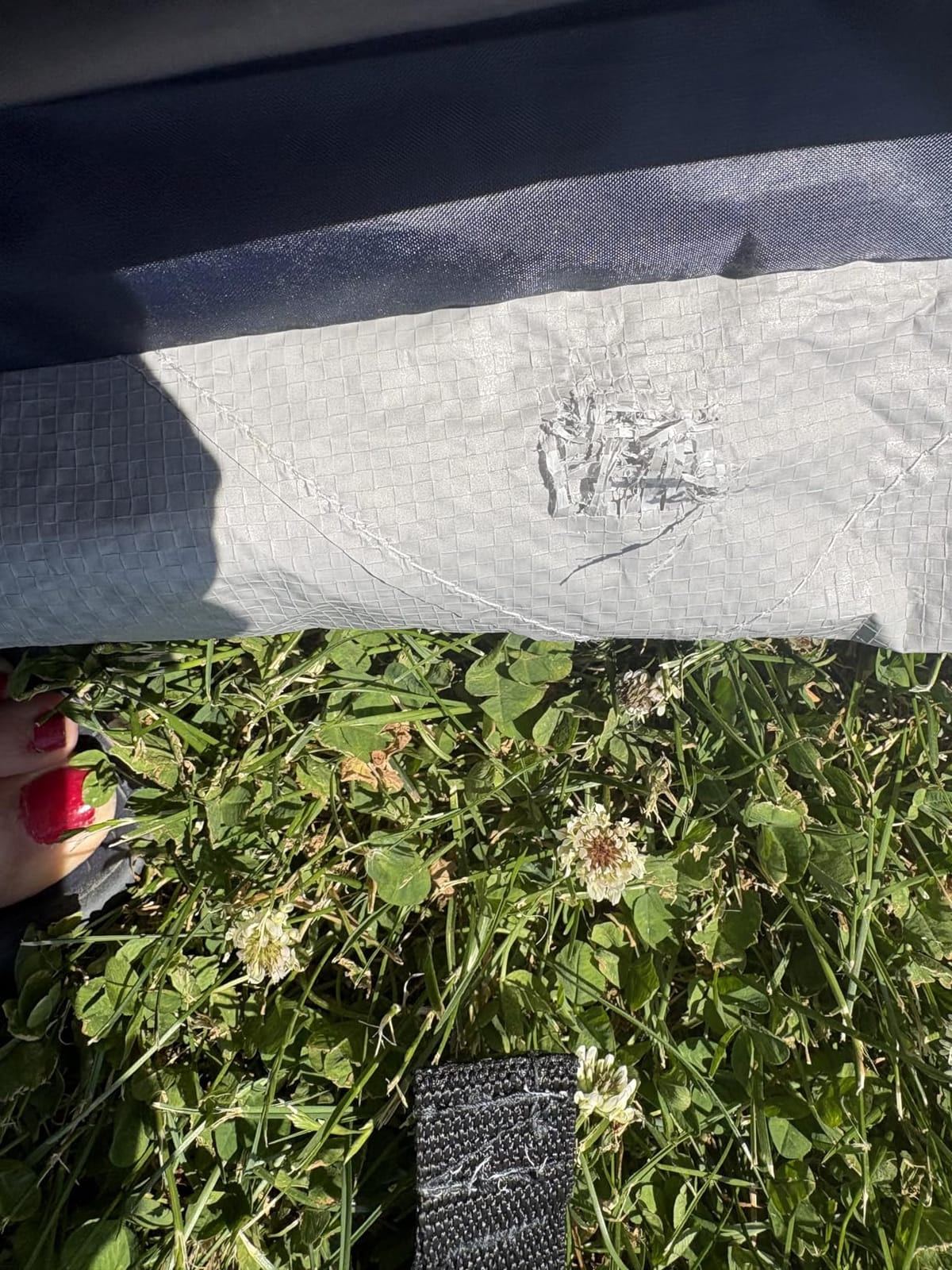
Now the catches, and they are real. The rainfly only covers the very top of the shelter, so the mesh roof is exposed and every window has to be zipped shut before rain. Owners also report zippers snagging, and some corner leaks in sustained rain.
Despite the quick-setup framing, the poles are threaded manually, which is a five-minute job for one person rather than a one-minute job. The 13 pound pack weight is fine for a car, awkward for a trailhead.
Our verdict: this is the best family camping tent here for interior comfort, and the one to buy if standing up in the rain to help a kid get dressed is the scenario you want to eliminate.
Can You Actually Stand Up in a 4-Person Tent?
Yes, and that is the whole pitch. At a 72 inch centre height, an adult can stand, dress a child, and reach into a rucksack at the bottom of the tent without crouching. Every one of the 1,200-plus owner reviews we read mentions headroom as the reason they kept it.
Near-vertical walls add to that. In a tapered dome, the usable floor is a narrow band; here the walls are close to straight, so the rectangle you paid for is the rectangle you get.
Rain, Wind and Zipper Reliability
The rainfly is the weak point. It covers only the top, so the mesh roof and all three windows are exposed in rain, and every one has to be zipped shut before the weather turns. That is a real inconvenience and it is the cost of the headroom.
Owners also report zippers snagging and catching, and some corner leakage around the pole points in sustained rain. If your trips are mostly wet-weather, the EVER ADVANCED blackout cabin’s 4000mm fully taped construction is the safer buy.
6. Night Cat Pop-Up 4P Tent – Best for Rain
Night Cat Pop-up Camping Tent: 2-4 Person Tent Waterproof Instant Easy Setup Family Tent
3000mm PU coated
190T taffeta shell
2 doors and 2 windows
6.6 lb
4 ft peak height
Pros
- Genuine 3 second pop-up that opens itself
- 3000mm waterproof rating with taped seams
- Two doors and two wide windows for cross-ventilation
- 6.6 lb makes it the most carryable tent here
- Front porch option using trekking poles
Cons
- Takes practice to fold back into its compact bag
- Sealed fabric encourages interior condensation
- 4 ft peak limits standing room
- Occupancy data varies across size variants
Of the ten tents here, this one has the strongest combination of waterproof rating and packed weight: 3000mm PU-coated 190T taffeta with taped seams, at 6.6 pounds. That combination is why it is our rain pick, and it lines up with what owners report about well-sealed tents holding dry in sustained rain.
The two doors and two wide windows give you the cross-ventilation that the sealed fabric needs. The recurring complaint is condensation, which is the honest trade-off of a tightly waterproof fabric: you have to manage moisture deliberately rather than hoping airflow handles it.
At 6.6 pounds it is the only tent in this roundup light enough to carry a real distance from the car, which makes it a genuine option for campgrounds without vehicle access.
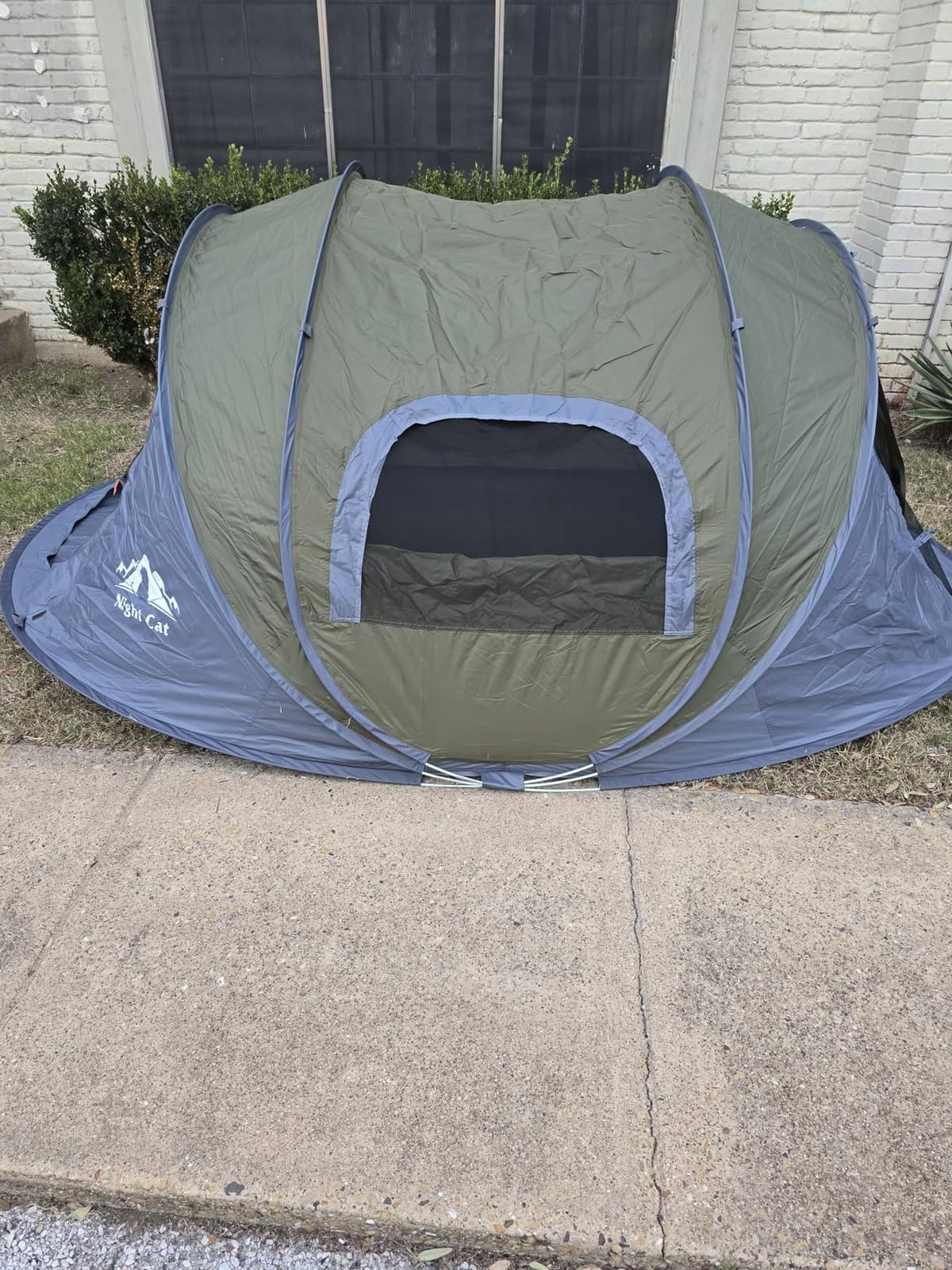
The 4 foot peak is the limitation, and it is a significant one. This is a sit-up-and-kneel tent, not a change-clothes tent, and the 190T taffeta is thinner fabric than the cabins in this list.
The front porch, made with trekking poles, is a popular extra that gives you a shaded, dry spot for boots and a place for kids to sit. It is genuinely useful and it costs nothing but two poles.
Practise the fold before the trip. Owners rate the opening as near-instant and the closing as a learning curve, and the first time you try it in the dark with a tired child is not the time to discover that.
How Much Rain Can a 4-Person Tent Actually Take?
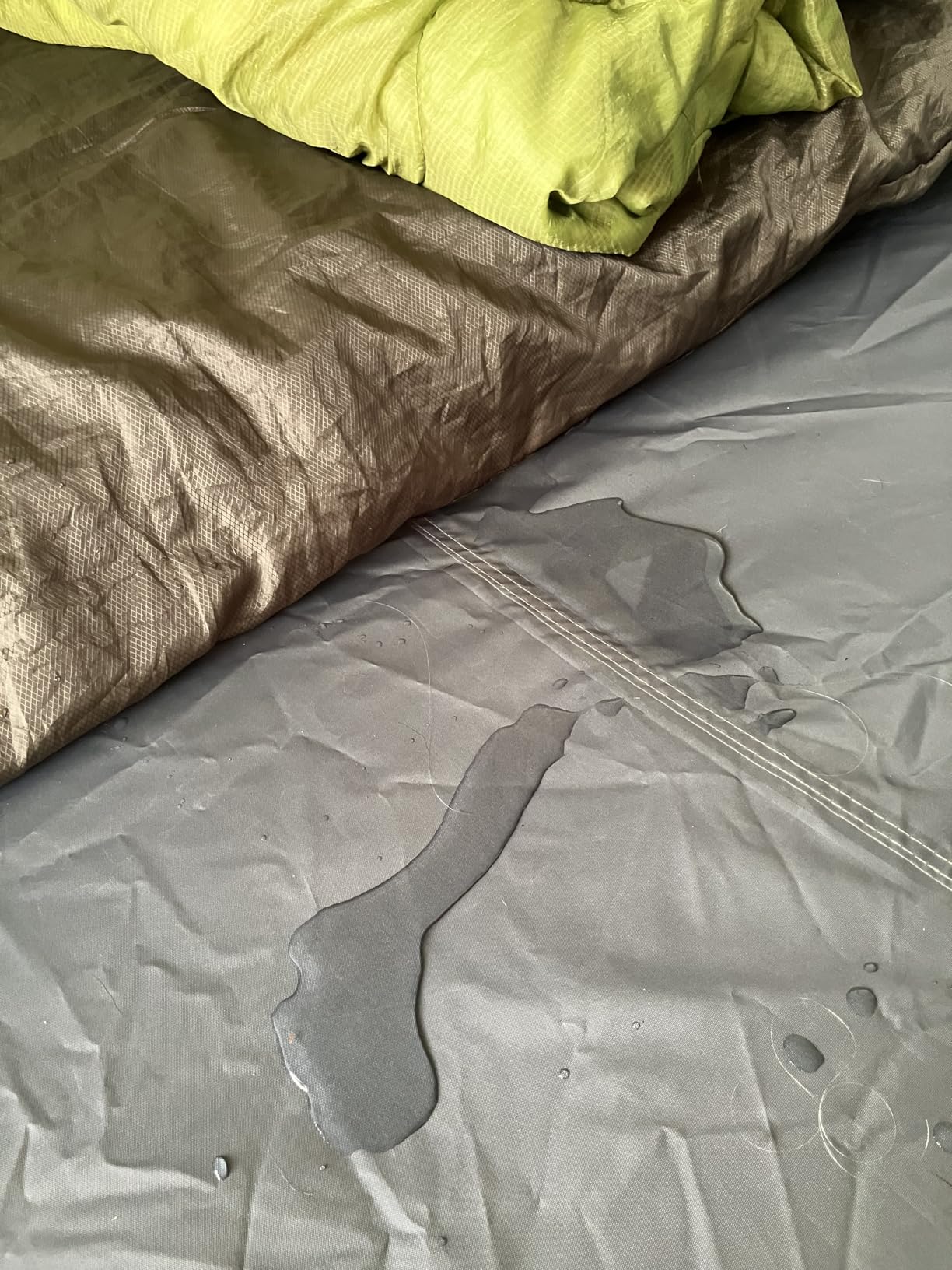
3000mm is the rating that matters for real trips. It means the fabric holds back sustained rain rather than drizzle, and the taped seams are what stop water arriving through the stitch lines instead of through the fabric itself.
For context, that is above every other tent in this roundup except the EVER ADVANCED blackout cabin at 4000mm, and it is combined with the lightest weight here, which makes this the one to pack when the forecast is the deciding factor.
Is the 3-Second Claim Real, and What About the Condensation?
The opening is real. The frame genuinely opens itself, and owners consistently report a pitch measured in seconds rather than minutes. The fold is the part that needs practice, and the packed size is around 40 percent smaller than a traditional pop-up of the same class.
Condensation is the direct cost of sealing the fabric this well. Leave one door and the window panels open at night to move air, and expect to wipe the inner walls down in the morning.
7. Coleman Instant Cabin 4P Tent – Best for One-Minute Setup
Coleman 4/6/8/10 Person Instant Camping Tent with 1-Minute Setup
8 x 7 ft floor
4 ft 11 in peak
Pre-attached poles
Polyguard 2X fabric
19.1 lb
Pros
- Pre-attached poles set up in about a minute with no tools
- Integrated rainfly doubles as weather and airflow layer
- Double-thick Polyguard 2X fabric for durability
- Backed by a 1 year limited warranty
- Pack size is only 39.95 inches long
Cons
- 19.1 lb is very heavy for a tent that pitches in a minute
- Listed as water resistant rather than fully waterproof
- Lowest rated in this group at 4.1
- One queen air bed only so four adults will be tight
Coleman’s instant cabin is the fastest pitch in this roundup, and on a site with hard ground and a tired family that speed is genuinely worth paying for. Pre-attached poles, no tools, no threading, done.
The Polyguard 2X double-thick fabric is a real upgrade over the standard Sundome fabric, and owners consistently mention how solid it feels. The integrated rainfly does double duty as a second layer for airflow on warm nights.
The 8 by 7 foot floor with 4 ft 11 in peak is a comfortable two-adult-plus-kids layout, and the vestibule area gives you a spot for wet boots.
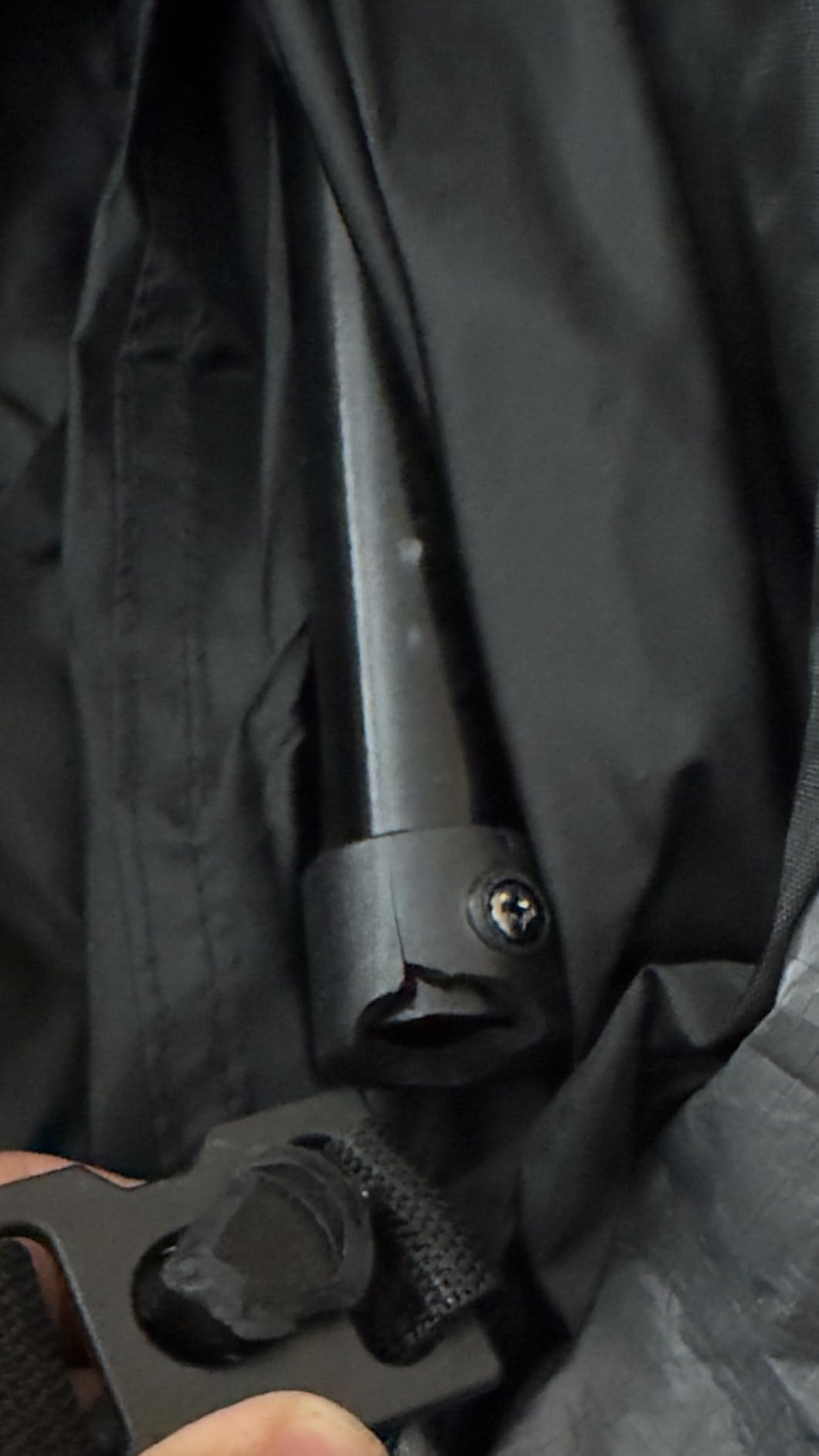
What holds it back is weight and the 4.1 rating. Nineteen pounds is the second-heaviest tent here, and pairing that with a water-resistant rather than waterproof rating means this is a fair-weather family tent for people who value setup speed above all else.
Owners are also split on value, and the low review count relative to the other Coleman entries means there is less long-term evidence behind it.
If you camp in a car park within 20 feet of your pitch, and the forecast is dry, this does exactly what it promises. If either of those is not true, look at the FanttikOutdoor Zeta instead.
Is a One-Minute Pitch Worth 19 Pounds?
For most families, yes, and the pitch is genuinely as fast as advertised. There is no threading, no assembly and no tools, which is the thing that turns a tired 4pm arrival into a usable pitch rather than a half-hour negotiation with a child.
What you pay is portability. At 19.1 pounds this is a two-person carry at best, and it is worth remembering that the same speed in a lighter frame costs more money. If weight is the deciding factor, the Night Cat does both jobs at 6.6 pounds.
Water Resistant Is Not Waterproof
This is listed as water resistant rather than fully waterproof, and that distinction decides the tent. A fair-weather shelter is not a wet-weather one, and the integrated rainfly is what keeps the mesh inner dry rather than the fabric itself.
If your trips are dry-weather, drive-up and you want the fastest possible pitch, that is a good trade. If rain is a real possibility, the 3000mm Night Cat or the 4000mm EVER ADVANCED cabin is the safer purchase.
8. FanttikOutdoor Alpha C4 Ultra Hub Tent – Best for a Base Camp
FanttikOutdoor Alpha C4 Ultra Camping Tent 4 Person Pop Up Instant Cabin Setup in 60 Seconds Portable Hub Tent with Rainfly & Windproof for Outdoor Camping & Overlanding, Khaki
80 in peak
94 x 94 in floor
60 second setup
12 mesh windows
27.5 lb
Pros
- Tallest peak in this roundup at 80 inches for upright walking
- Boxy four-wall floor with room to move around
- Pop-up X-frame sets up in 60 seconds without tools
- Twelve double-paned B3 mesh windows with rollable eaves
- PFAS-free fabric and short 57.8 inch packed length
Cons
- Heaviest tent here at 27.5 lb
- 1500mm rating and a mesh-heavy design needs the rainfly secured
- Highest price point among the tents reviewed
- Only one door for a footprint this size
This is not a weekend tent, it is a basecamp tent. At 80 inches of peak height and a boxy 94 by 94 inch floor, you walk around inside it upright, and that changes what you can do with a week at a campsite.
Owners single out the headroom as the decisive advantage over cheaper cabins, and the twelve double-paned B3 mesh windows mean light and airflow in a structure that would otherwise be a dark box.
The pop-up X-frame with integrated eave poles still pitches in 60 seconds without tools, which is remarkable for something this size. A gear loft, guyropes, stakes and a carry bag are all included.
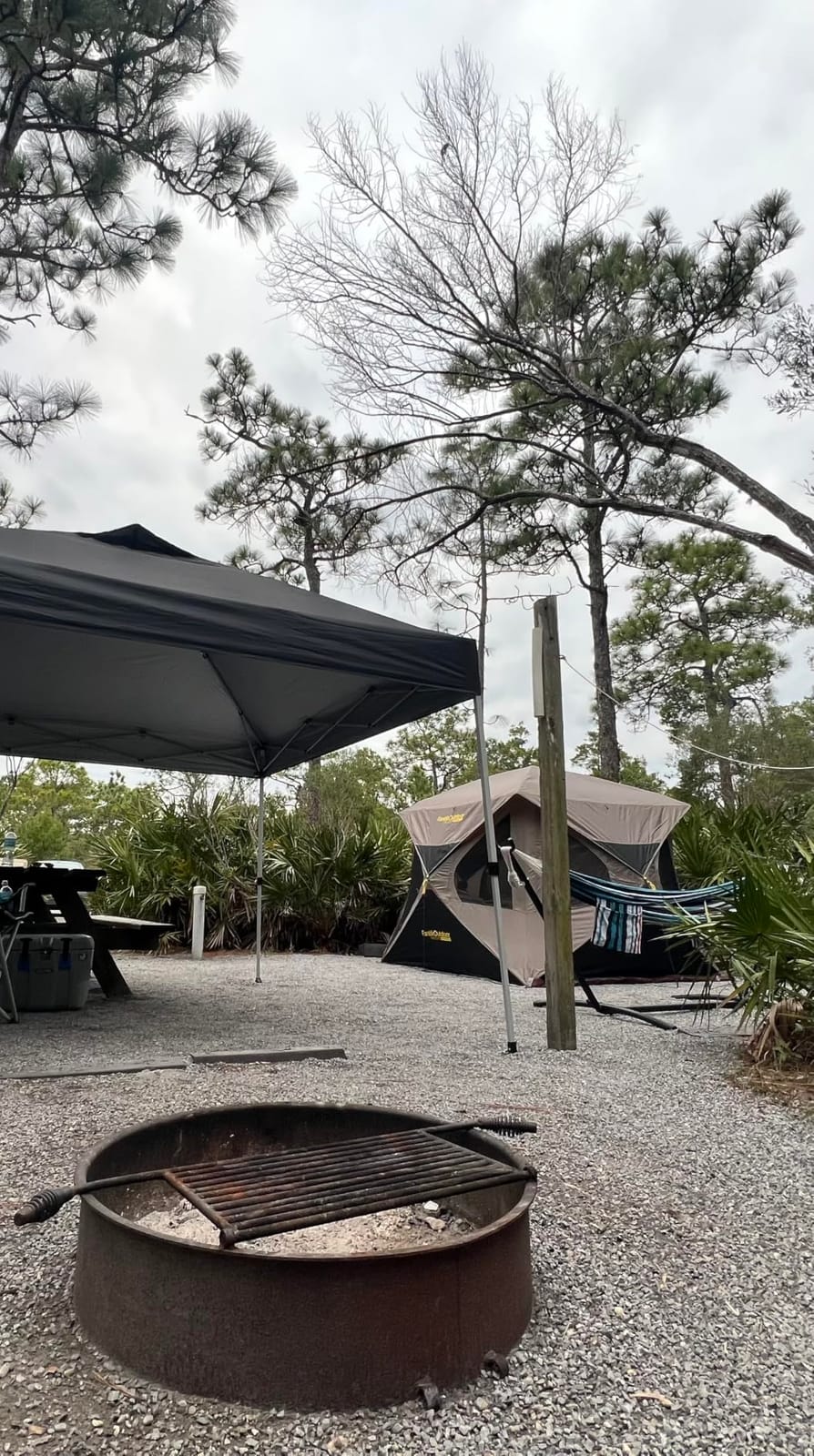
The trade-offs are structural. At 27.5 pounds this is the heaviest tent in the roundup by a wide margin, and the 1500mm rating is low for a shelter this size, with a mesh-heavy interior that depends entirely on the rainfly being properly secured.
One door for 94 inches of floor is also odd, and we would have liked two. At this size a second door is worth more than another four windows.
For a family that sets up once and stays a while, in a place where you can park next to the pitch, the Alpha C4 Ultra is the most livable tent here. For anything involving carrying, it is not.
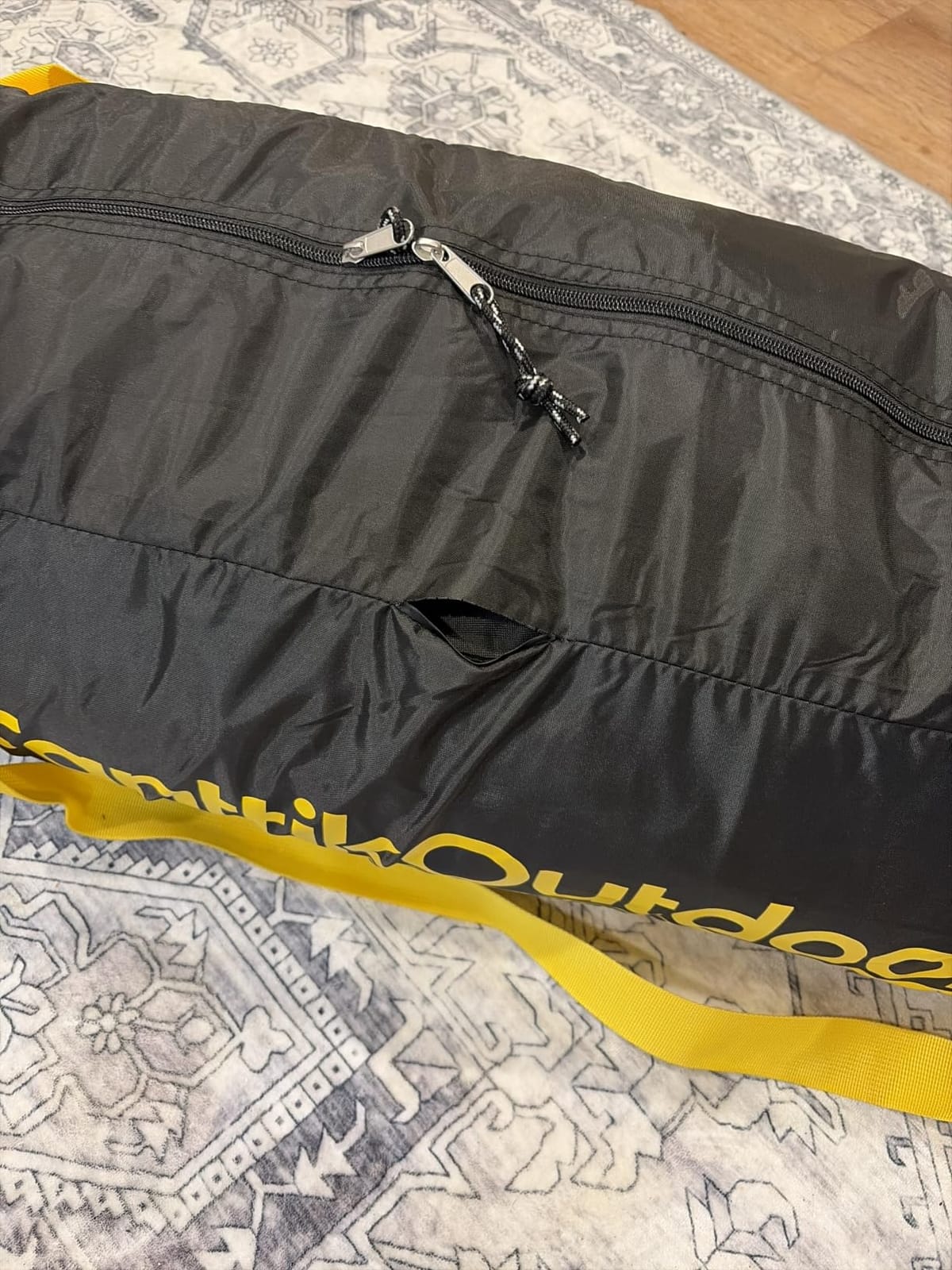
Is 80 Inches of Headroom Worth 27.5 Pounds?
If you camp the way a lot of family campers do, which is pitch once and stay a week, then yes. Being able to stand up, move around a table’s worth of floor, and change clothes indoors in bad weather is the single biggest quality-of-life upgrade in this roundup.
The trade is absolute though: 27.5 pounds is car camping only, and this is the heaviest tent here by a wide margin. If even a short walk from the car is part of your trip, this is the wrong tent regardless of how much you like the space.
Weather Limits on a Mesh-Heavy Shelter
The mesh interior and the rollable eaves are what make it so light and airy, and they are also why the rainfly must be secured properly every time. A 1500mm rating is modest for a shelter of this size, and the mesh walls give it no independent weather protection.
One door for a 94 by 94 inch floor is the other structural complaint. Owners flag it repeatedly. Pitch it, tension every guyrope, and treat it as a warm-weather basecamp tent rather than an all-season one.
9. EVER ADVANCED Blackout Cabin 4P Tent – Best for Toddler Naps
EVER ADVANCED 4 Person Blackout Camping Tent, 60s Easy Setup Instant Cabin Tent for Family, 4000mm Water-Resistant & UV Protection Light-Blocking Tent with Rainfly for Outdoor Travel, 8′ x 7′ x 59″
Blackout interior
4000mm water resistance
59 in peak
8 x 7 ft floor
2 minute setup
Pros
- True blackout interior lets late sleepers rest past sunrise
- Highest water-resistance rating in the set at 4000mm
- Pre-attached frame sets up in about 60 seconds
- Three large mesh windows plus an overhead net window
- Internal storage bags
- light hook and E-port
Cons
- Dark fabric blocks daylight so it needs opening during the day
- Lightest review count here at 107 so durability is unproven
- Blackout design retains heat in warm weather
- 21.8 lb limits it to car-based camping
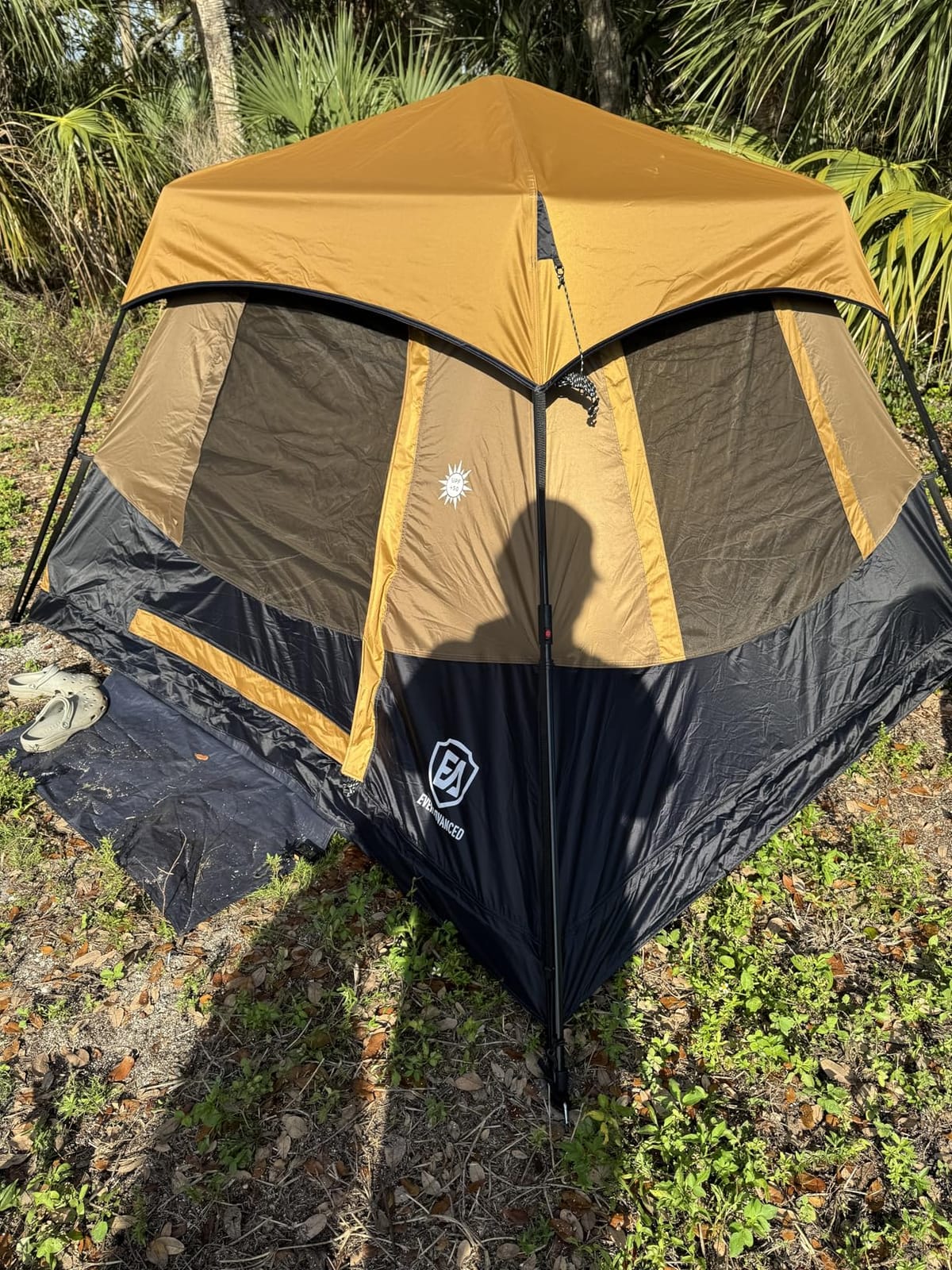
Blackout fabric is the request we get most from parents and the one mainstream brands serve worst. This is the only tent in the roundup that genuinely answers it, and for a family with a toddler who wakes at 5:30am it may be worth more than anything else on this list.
It also has the highest water-resistance rating in the set at 4000mm, with fully taped seams, a polyester taffeta rainfly and a polyethylene floor. That combination makes it the second pick for heavy rain behind the Night Cat’s lighter 3000mm shell.
Setup is 60 seconds with a pre-attached frame, the 59 inch peak allows kneeling and moving about, and the packed size of 7.48 by 7.48 by 36.22 inches is compact for its class.
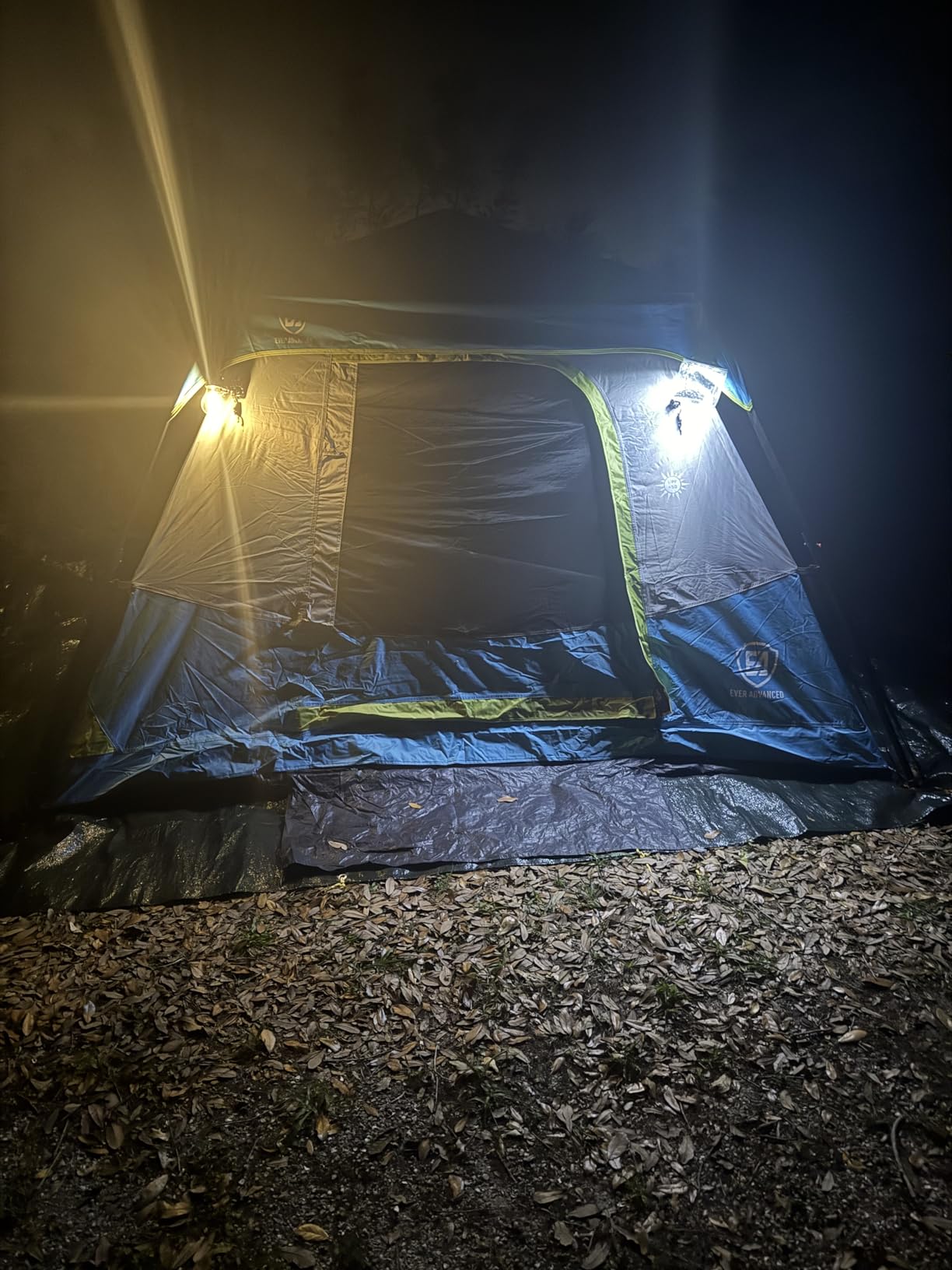
The honest weakness is evidence. With 107 reviews there is not yet a long-term picture of how the fabric or the frame holds up over years, and the blackout design retains heat, which matters for summer trips in warm climates.
There is also the gloom factor. Owners note that the dark fabric needs opening up during the day, or the interior turns into a cave that nobody wants to be in at 4pm.
For early risers and light sleepers it is a clear winner. For families who camp hot, check the weather before committing.
Is Blackout Fabric Worth the Heat and the Gloom?
For a family with a light sleeper or an early-waking toddler, yes, and it is the only tent in this roundup that solves it properly rather than as an accessory. The 5:30am wake-up call becomes a 7am one, and that changes the shape of the morning.
The costs are real: the dark interior retains heat in warm weather, needs opening up during the day to stay habitable, and at 21.8 pounds this is car-based camping only. In a hot climate those three things add up quickly.
Does 4000mm Actually Matter Next to 3000mm?
It matters, but the difference is smaller than the numbers suggest. 3000mm handles sustained rain; 4000mm handles sustained rain plus the heavy downpour and the wet week. The fully taped seams matter more than the extra millimetres.
Combine it and this is the best wet-weather shelter in the roundup on paper. The caveat is the evidence base: 107 owner reviews is the thinnest here, so the long-term durability picture is unproven. That is the trade you accept for blackout fabric.
10. Coleman Skydome 4P Tent – Best Vestibule and Best Seam Construction
Coleman Skydome 4/6 Person Camping Tent with Full-Fly Weather Vestibule
10 x 8 ft floor
72 in peak
13 x 3.5 ft vestibule
Welded, inverted and taped seams
13.7 lb
Pros
- 13 x 3.5 ft full-fly vestibule gives a covered entry and gear storage
- WeatherTec welded corners
- inverted and taped seams shed water well
- Frame tested to withstand 35 mph winds
- Nearly vertical walls give about 20 percent more headroom than a standard dome
Cons
- Permanently attached poles make packing it away a nuisance
- Mostly mesh on three sides limits airflow adjustment
- No footprint included and the tub floor benefits from one
- Tight for four once gear is inside the 10 x 8 ft floor
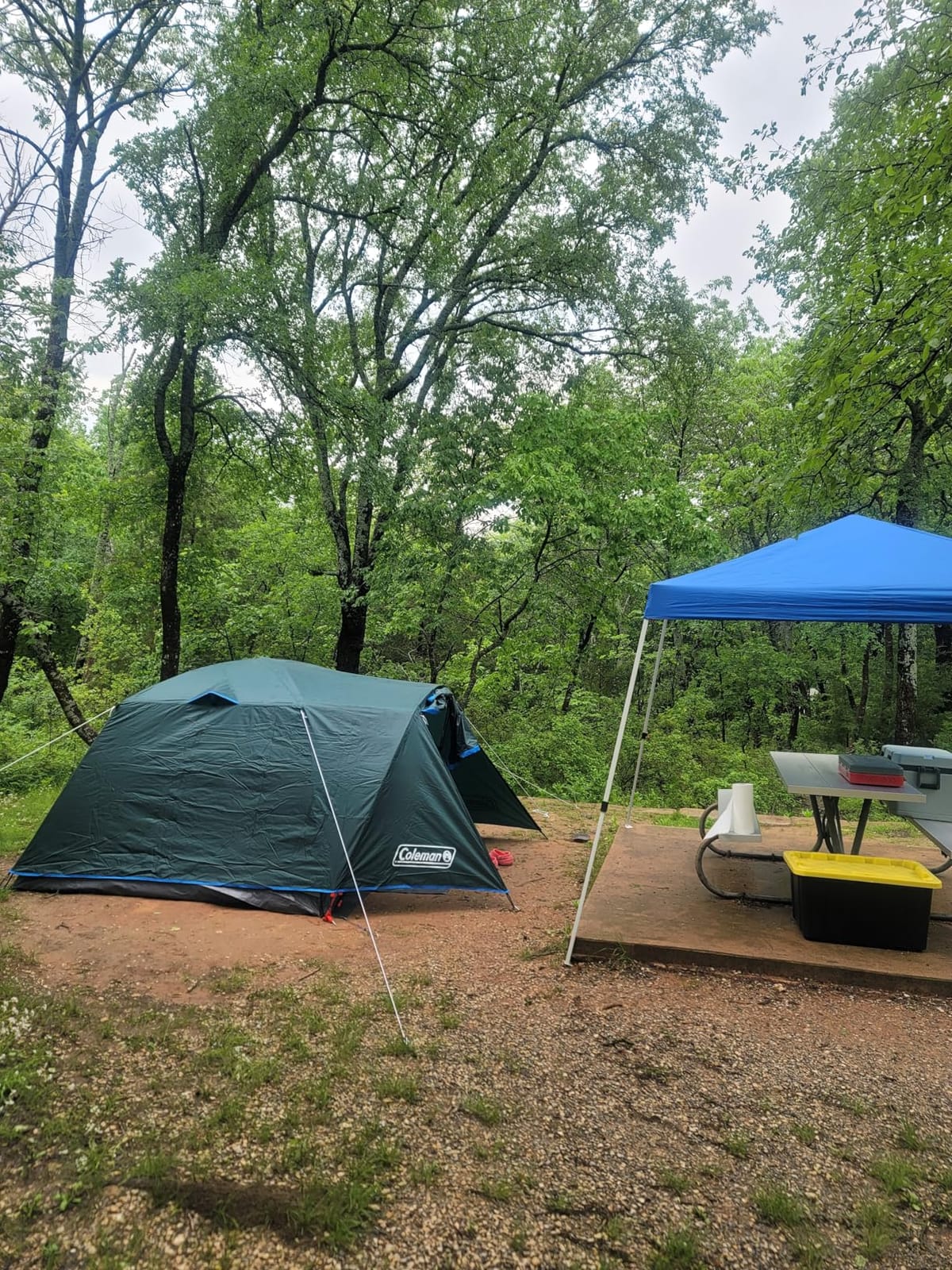
The Skydome is the most thoughtfully engineered tent in this roundup, and its full-fly vestibule is the feature we would keep even if everything else were ordinary. A 13 by 3.5 ft covered vestibule is a proper entry and a proper gear locker, which means wet boots and packs never come inside.
Seam construction is where most budget tents fail, and this one specifies welded corners, inverted seams and taped rainfly seams. Inverted seams push water downward rather than into the stitch line, and it is the reason owners report good performance in wind and rain.
The 10 by 8 foot floor with 72 inches of peak height is generous, with nearly vertical walls giving around 20 percent more headroom than a traditional Coleman dome.
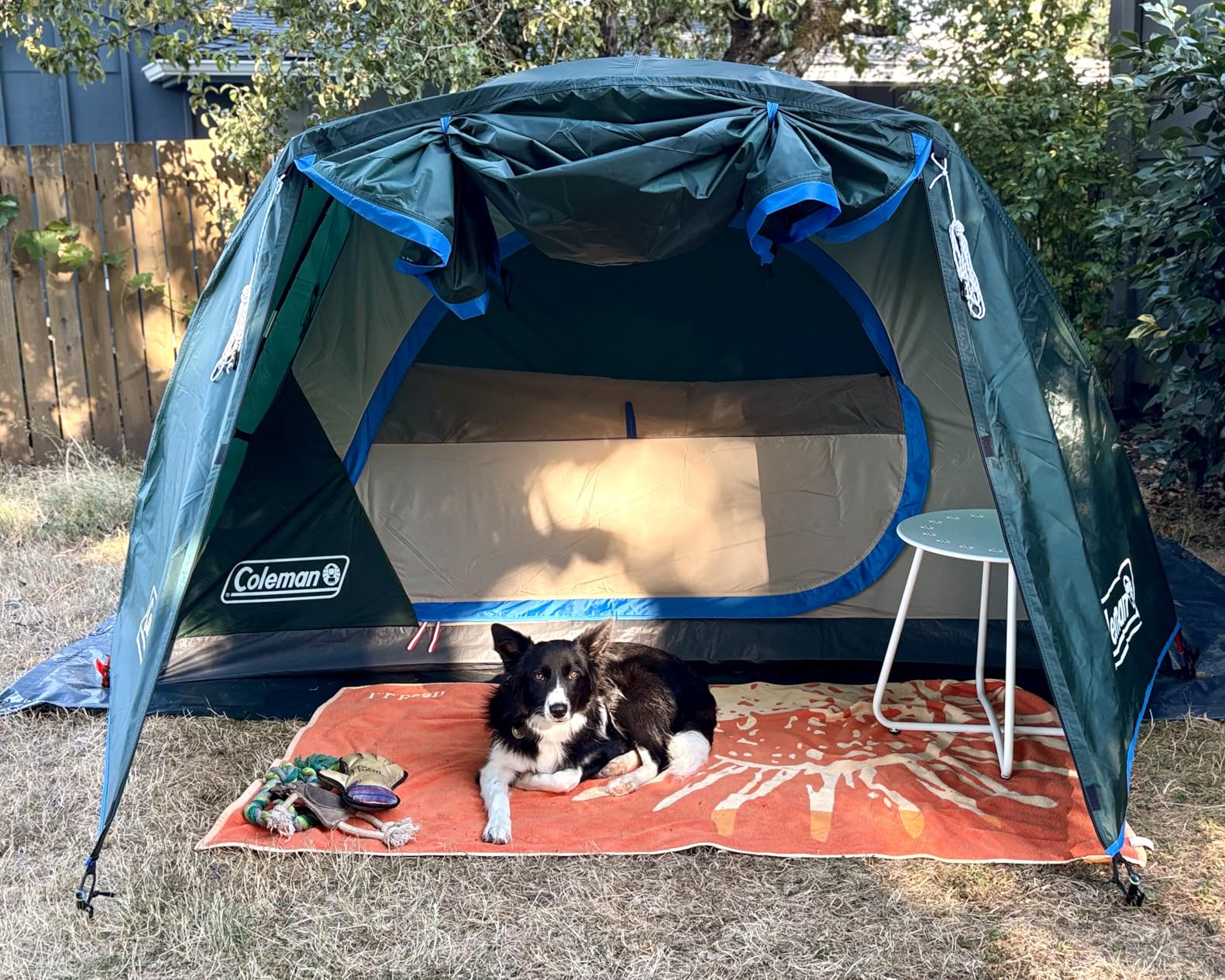
There are three real downsides. The poles are permanently attached, so takedown is a genuine chore and it is a one-way convenience once you are used to it. The walls are mostly mesh, so you can only adjust airflow at the door. And no footprint is included, which for a tub-style floor over damp ground is a miss.
At 156 reviews it also has one of the thinner evidence bases here, and the 4.3 rating reflects a lot of enthusiasm alongside the practical complaints. One owner found a vestibule pole sleeve sealed shut and had to cut it open, which is the kind of detail that only shows up in real reviews.
Its 24.5 inch packed length is the shortest here, which is a genuine plus for a car boot full of gear.
Does the Vestibule Actually Solve the Wet-Boot Problem?
Yes, and this is the reason it finishes in this roundup despite the lower review count. A 13 by 3.5 ft covered vestibule means boots, packs and wet kit all live outside the sleeping area, under the fly, in the rain.
It is also usable space. Owners use it for a table, for chairs, for drying clothes and as an overflow gear locker, which effectively adds a dry room to a 10 by 8 foot tent. Nothing else here does that.
Mesh Walls, Permanent Poles and the 156-Review Question
The mostly mesh walls are the catch. Airflow can only be adjusted at the door, so on a hot night you have less control over ventilation than in a tent with adjustable panels, and that is a real trade for a family that camps in summer.
The permanently attached poles make takedown a chore, and with 156 reviews the long-term record is thin. Owners also report a vestibule pole sleeve arriving sealed and having to be cut open, so inspect it on arrival rather than on the first wet night.
How Big Should a Family Tent of Four Actually Be?
For a family of two adults and two children, we recommend a minimum of 56 square feet of floor and 55 inches of peak height, plus two doors. Below those numbers you will be fighting the tent every night.
Here is the arithmetic. A queen air bed measures 60 by 80 inches, so it needs 32 square feet of floor on its own. Two children’s pads need roughly 16 more. That leaves about 8 square feet for gear in a 56 square foot tent, which is workable but tight, and it is why a 63 or 64 square foot floor is the better target.
Peak height matters less for sleeping and more for living. Under 50 inches, adults crouch. Over 55 inches, you can kneel, sit upright and change a toddler’s clothes inside. Over 70 inches, you can stand.
Two doors is not a luxury. With four people in one tent, a single door means that every night-time trip outside involves climbing over three sleeping bodies, and that is the single most common complaint we read in family tent reviews.
One last check before you buy: measure your campground pitch. A 10 by 8 foot tent plus guyline stakes extends well beyond the floor, and sites that are exactly 10 by 10 will leave you no room to stake or to walk around the tent.
Buying Guide: How to Choose a 4-Person Family Tent
Dome, Cabin, Hub or Instant: Which Geometry Fits Your Trip
Dome tents are the lightest and the easiest to pitch, and they taper toward the top so headroom is low. The Coleman Sundome is the best example in this roundup, and it is the right choice for short trips and lighter packs.
Straight-wall cabins give you near-vertical walls and a rectangular floor, which is far more usable per square foot. They weigh more and cost more, but the UNP 4P at 72 inches is the best example of what a family gains from headroom.
Instant and pop-up tents trade wind stability and fabric quality for setup speed. The FanttikOutdoor Zeta and the Coleman Instant Cabin set up in about a minute, which is transformative with small children, and both are heavier than their speed suggests.
Hub tents add a central pole and often a large awning. The FanttikOutdoor Alpha C4 Ultra is a 3-season hub design at 80 inches, and it is the most spacious shelter here, but at 27.5 pounds it is car camping only.
Two Doors or Nobody Climbs Over Anyone
Count the doors before you count anything else. In this roundup, only the Londtren, the Night Cat and, to a lesser degree, the larger cabins give a family of four easy independent access.
The single-door tents on this list are not bad tents, they are tents that suit a specific sleeping arrangement. If everyone sleeps in one pile, a single door is a minor issue. If you want parents at one end and kids at the other, or you want a parent to leave at 5am without waking the tent, a second door is close to essential.
How to Read Waterproof Ratings and Seam Construction
The millimetre rating measures how much water pressure the fabric holds before it passes through, and for family camping anything at or above 2000mm is adequate, 3000mm is good, and 4000mm is genuinely wet-weather capable.
But the rating is only half the answer, because water enters tents through seams far more often than through fabric. Look for taped, welded or inverted seams. The Coleman Skydome is the strongest example here with welded corners and inverted seams, and the Night Cat pairs 3000mm fabric with taped seams.
By contrast, the Londtren’s 190 mm rating makes it a dry-weather tent regardless of how well it is pitched, and the FanttikOutdoor models at 1500mm rely on a fully secured rainfly to keep water out of the mesh interior.
Weight and Packability: Car Camping or Carry-In
Under 10 pounds you have real choice: the Coleman Sundome at 9.1 pounds and the Night Cat at 6.6 pounds are the only two tents here light enough to carry a meaningful distance from the car.
Between 10 and 20 pounds sits the mainstream family range, including the Coleman Skydome, the UNP cabin and the Purebox. These are fine at a drive-up campground and a mistake at a walk-in site.
Above 20 pounds you are car camping and should say so. The Coleman Instant Cabin, the EVER ADVANCED blackout cabin and the Alpha C4 Ultra are all designed for a pitch next to the vehicle, and no amount of determination changes that.
For most families the honest question is not carry-in weight but carry-from-the-car weight, because a 27.5 pound tent lifted into a car boot once is a completely different proposition to one carried 200 metres from a trailhead.
Floors, Footprints and Groundsheets
A footprint is a cheap sacrificial layer between the tent floor and the ground, and it matters most on the tents with thin or non-bathtub floors. The Coleman Sundome’s bundled ground tarp is too small to work as a footprint, and the Skydome does not include one at all.
Polyethylene floors like those on the Coleman Instant Cabin, the Purebox and the EVER ADVANCED cabin are the most vulnerable to punctures from sticks and roots, so those three are the ones we would always pair with a footprint.
Polyester and Oxford floors like the Night Cat’s 150D Oxford groundsheet are more puncture-resistant and worth paying for if you camp on rough ground.
Condensation vs Leaks: How to Tell Them Apart
Condensation forms on the inside surface of a tent, and it looks like a leak to anyone who has not seen one before. The test is simple: put your hand on the wet fabric. If the outside of the fly is dry, it is condensation. If the outside is wet too, water is coming through.
Condensation is caused by warm humid breath meeting cold fabric, and it gets worse in a sealed tent with four people in it. The fix is ventilation: open the windows, keep the fly slightly pitched away from the inner tent, and run a fan if you have one.
A charcoal or silica moisture absorber helps a little with the residual damp, but it is not a substitute for airflow. A sealed 3000mm tent will stay dry from rain and still be soaking inside at 3am.
Leaks, by contrast, follow predictable lines: along a seam, around the base of a zipper, or at a pole corner. Those are sealing problems, not ventilation problems, and no amount of airflow will fix them.
One 4-Person Tent or Two 2-Person Tents?
Two 2-person tents win on one specific measure: sleep. Parents sleeping in a separate tent get a full night of unbroken rest, and kids stay in their own space, which many parents find easier to manage.
They lose on everything else. You carry twice as much, you pitch twice as many tents, and at a booked-out campground you may not have room for two pitches.
The compromise most families settle on is one larger shelter with a clear dividing line down the middle, using a sheet or a gear pile as a curtain, and choosing a tent with two doors so each end has independent access.
Blackout Fabric for Toddler Naps
Blackout or light-blocking fabric is the most requested feature from parents and the least available on mainstream tents. It is not a luxury, it is the difference between a 7am wake-up call and a 9am one.
Only one tent in this roundup has a true blackout interior, and it costs you a smaller review base and heat retention in warm weather. If you have a light sleeper, that trade is worth making.
The workaround if you buy anything else is to hang a sleeping bag or towel over the door and window zips, and to zip the inner tent closed so no light comes through the mesh seams.
Campground Pitch Size vs Tent Footprint and Stakes
This catches families out every year. Your tent floor is not the space you occupy: guylines need roughly 3 feet on each side, and stakes are driven in outside that line.
So a 9 by 7 foot dome is effectively an 11 by 9 foot occupied area, and a 10 by 8 foot tent with a large vestibule is closer to 13 by 11 once you add the vestibule and the guys.
Before you book, check the site dimensions rather than the capacity. A 10 by 10 pitch will take a 9 by 7 dome and nothing else, and the Skydome’s 13 by 3.5 foot vestibule is exactly the kind of feature that will not fit on a tight site.
Pitch on high ground, and if you must pitch on a slope, orient the tent so the door and vestibule face uphill, which keeps running water away from the entry.
Frequently Asked Questions
What is the best family tent for 4 people?
The Coleman Sundome 4P is the best all-round choice, with a 63 square foot floor, 61 inch peak, included rainfly and a 4.6 rating across more than 23,000 owner reviews. For standing room pick the UNP Straight-Wall Cabin, for heavy rain the Night Cat Pop-Up, and for toddler naps the EVER ADVANCED Blackout Cabin.
What size tent should a family of four get?
At minimum, look for 56 square feet of floor, 55 inches of peak height and two doors. A queen air bed takes 32 square feet on its own and two children need roughly 16 more, so 60 square feet or more leaves space for gear. Four adults need a 6-person tent or larger.
Can a 4 person tent fit 4 adults?
Not comfortably. A 4-person rating is a manufacturer maximum and works best for two adults plus two children. Four adults in a 4P tent means shoulder contact all night and gear stacked on sleeping bags. If all four campers are adults, step up to a 6-person tent or a 4-person straight-wall cabin with a rectangular floor.
Should I get a 4 or 6 person tent?
Choose a 6-person tent if all four of you are adults, if you want a queen bed plus a full week of gear in one room, or if you plan to use the tent as a wet-weather basecamp living space. A 4-person tent is the right call for two adults and two children who travel light and drive up to the pitch.
How do I keep condensation out of my tent?
Condensation is warm breath meeting cold fabric, not a leak. Check by touching the inside fabric: if the outside of the fly is dry, it is condensation. Open the mesh windows and doors, keep the fly pitched slightly away from the inner tent, and use a charcoal or silica absorber for residual damp. A sealed 3000mm tent needs deliberate airflow management.
What is the best family tent for rain and wind?
The Night Cat Pop-Up has the strongest balance, with 3000mm PU-coated 190T taffeta, taped seams and a 6.6 pound weight. The EVER ADVANCED Blackout Cabin carries the highest rating at 4000mm with fully taped seams, and the Coleman Skydome has welded corners and inverted seams. All of them need guylines tensioned properly.
How much does a 4 person tent weigh?
Family 4-person tents range from about 6.6 pounds for a carry-in pop-up to 27.5 pounds for a large basecamp hub tent. Most dome and cabin tents for car camping sit between 9 and 15 pounds. Anything above 20 pounds is a car-camping weight and should be treated as such.
What is the difference between a 3-season and 4-season tent?
A 3-season tent is built for spring, summer and autumn, with lighter fabric, more mesh for ventilation and a focus on being quiet and portable. A 4-season tent adds heavier fabric, stronger poles and snow skirts for winter load and high winds. Family camping is almost always a 3-season use, so a 3-season tent gives you better ventilation for less weight.
Conclusion: The Best 4 Person Tent for Your Family
After putting all ten through the same criteria, the Coleman Sundome 4P is our pick as the best 4 person tent for family camping. Its 63 square foot floor, 61 inch peak, included rainfly, strong ventilation and a 4.6 rating from more than 23,000 owners make it the safest default, and the only compromise worth naming is its single door.
Buy the UNP Straight-Wall Cabin if the ability to stand up inside changes your mornings. Buy the Night Cat Pop-Up if rain is the main thing you are worried about, and the EVER ADVANCED Blackout Cabin if anyone in the family is a light sleeper.
Whichever one you choose, measure your pitch before you book, and pitch the tent at home once before the trip. That single practice run is what turns setup time from a claim on a listing into something you actually know.