
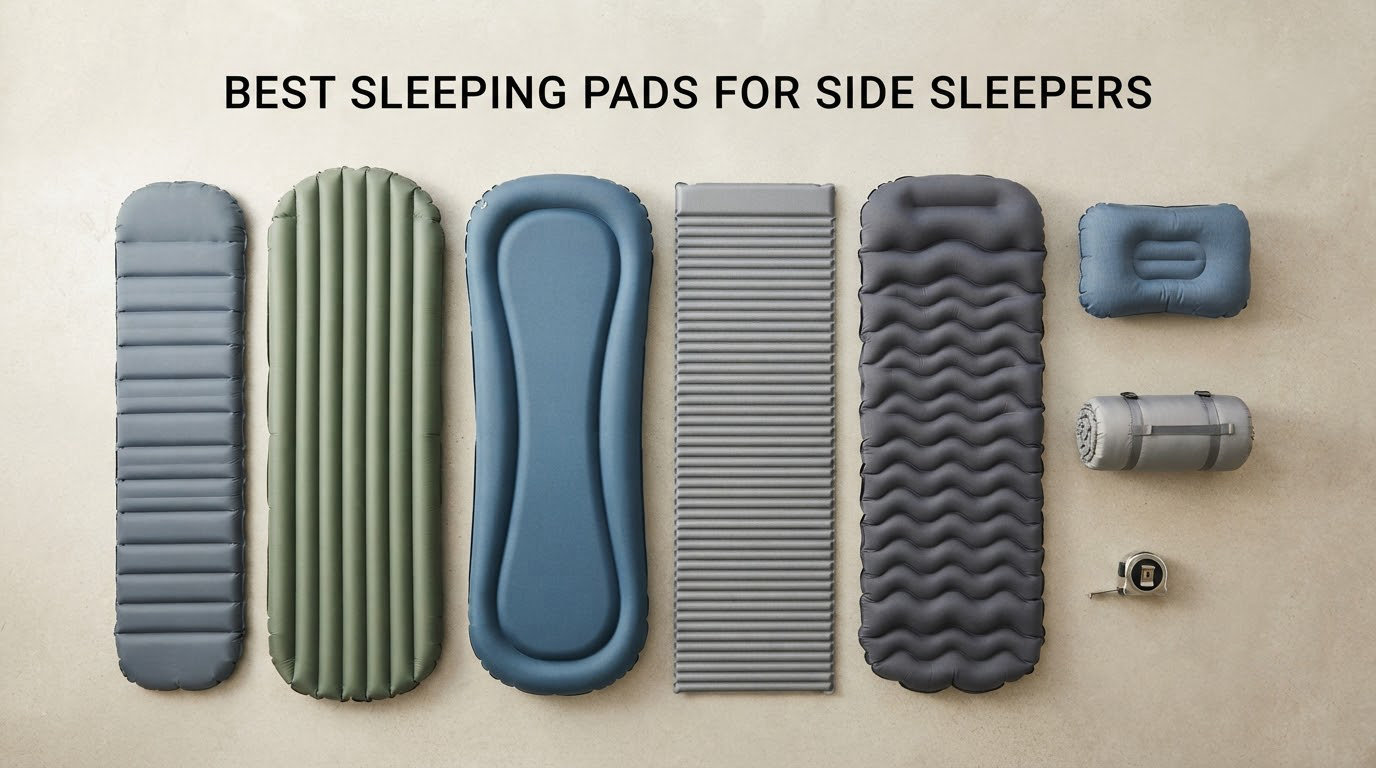
Side sleeping is the hardest position to make comfortable on a camping pad. Lying on your back spreads your weight across your whole torso, so a thin surface can hold you. Turn onto your side and nearly all of that weight narrows onto two contact points: the shoulder you are lying on and the hip beneath it. Everything else hangs unsupported in the air. That is why the best sleeping pads for side sleepers are not simply the warmest or the lightest ones. They are the thickest ones you are willing to carry, built so those two pressure points sink into the pad instead of punching through it.
We spent several weeks comparing ten pads across foam, self-inflating, hybrid, and pure-air construction, from a 1.5 inch self-inflater to a 4.5 inch foam block that never leaves the car. Our selection rule was simple: enough thickness to matter, some accommodation for a hip that wants to sink, and a published insulation figure rather than a marketing adjective.
The short version for 2026: if you side sleep and you only buy one pad from this list, take the four-inch air pad at number one. If you camp from a vehicle, the four-inch hybrid at number three will change how you sleep more than any other choice here. Keep reading for the weight and width tradeoffs, because the most comfortable pad in the world is useless if it does not fit in your pack.
Table of Contents
Top 3 Picks for Side Sleepers (October 2026)
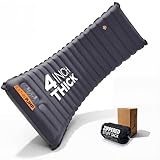
ZOOOBELIVES Airlive2000
- 4 inch full air support
- Built-in foot pump
- Quiet surface
- 74.8 x 24.4 inches
Those three cover the widest spread of real needs on this list. The Airlive2000 is the one that solves the side-sleeper problem most directly at a light weight. The Gear Doctors Oxylus is the warm, quiet, compact option for anyone who values insulation over cushioning. The TETON Outfitter XL is the highest-rated pad here, and at 30 inches wide it gives you a sleeping surface most single-sleeper pads here cannot match.
All 10 Sleeping Pads Compared in 2026
| Product | Specs | Action |
|---|---|---|
| ZOOOBELIVES Airlive2000 |
|
Check Latest Price |
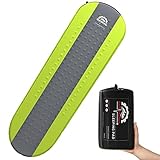 Gear Doctors Oxylus Gear Doctors Oxylus |
|
Check Latest Price |
 TETON Outfitter XL TETON Outfitter XL |
|
Check Latest Price |
 Hazli Matrix AirCell Hazli Matrix AirCell |
|
Check Latest Price |
 TOBTOS 6 Inch Pad TOBTOS 6 Inch Pad |
|
Check Latest Price |
 Kingfun 3 Inch Memory Foam Kingfun 3 Inch Memory Foam |
|
Check Latest Price |
 Lost Horizon Option3 Lost Horizon Option3 |
|
Check Latest Price |
 Elegear Self Inflating Elegear Self Inflating |
|
Check Latest Price |
 TREKOLOGY 4 Inch Pad TREKOLOGY 4 Inch Pad |
|
Check Latest Price |
 Exped MegaMat Medium Wide Exped MegaMat Medium Wide |
|
Check Latest Price |
One column deserves explanation before we get into the individual picks. Six of these pads publish a tested R-value: the Gear Doctors Oxylus at 4.3, the TREKOLOGY at 7.2, the Exped MegaMat at 8.1, the Hazli at 8.5, the Elegear at 9.5, and the Lost Horizon at 13. The rest do not publish one.
For a three-season side sleeper, anything at R 4 or above handles ordinary summer and shoulder-season ground temperatures. Anything at R 8 or above is genuine four-season territory, and it matters more for a side sleeper than for a back sleeper, because you have a larger body area in contact with the pad.
1. ZOOOBELIVES Airlive2000: 4 Inches of Full Air Support for Hip Relief
ZOOOBELIVES Inflatable Camping Sleeping Pad, 4-Inch Thick Full Air Support, No Bottoming Out for Side Sleepers, Camping & Backpacking Mattress with Built-in Foot Pump, Durable & Compact – Airlive2000
4 inches thick
Full air support edge to edge
Built-in foot pump
74.8 x 24.4 inches, 1.4 kg
Pros
- 4 inch full air chambers keep hips and shoulders off hard ground
- Built-in foot pump inflates without mouth blowing or batteries
- Quiet low-noise surface material
- Link side connection points to pair pads
- Lights 1.4 kg with a zippered storage sack
Cons
- Firm feel that some sleepers find too hard
- Firmness drifts overnight and needs re-adjustment
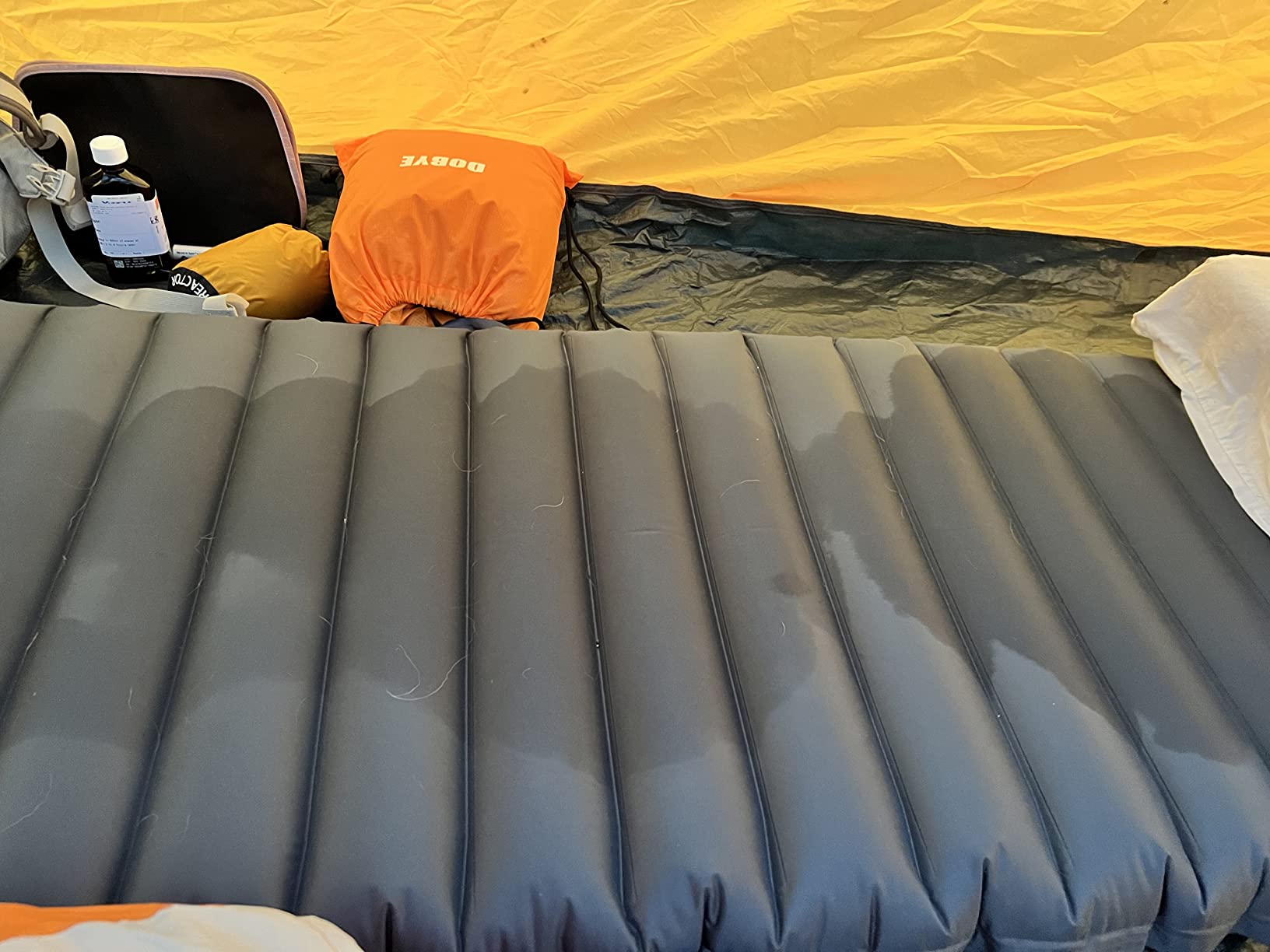
This is the pad we kept reaching for. The Airlive2000 is a pure air mattress with 4 inches of thickness spread edge to edge, and the manufacturer built the whole argument around one claim: no pressure gaps, so a hip never finds a spot where the air runs out. In practice that means the pad is 24.4 inches wide by nearly 75 inches long, which is wide enough that a side sleeper does not feel the edge of the mattress pressing against the outside of their thigh.
The built-in foot pump and dual valve let you inflate hands-free, which is worth more to me after a full day of hiking than a few grams of saved weight. It took me noticeably less fumbling in the dark than juggling a separate pump sack, and the whole pad folds into a small cylinder with the included zippered sack.
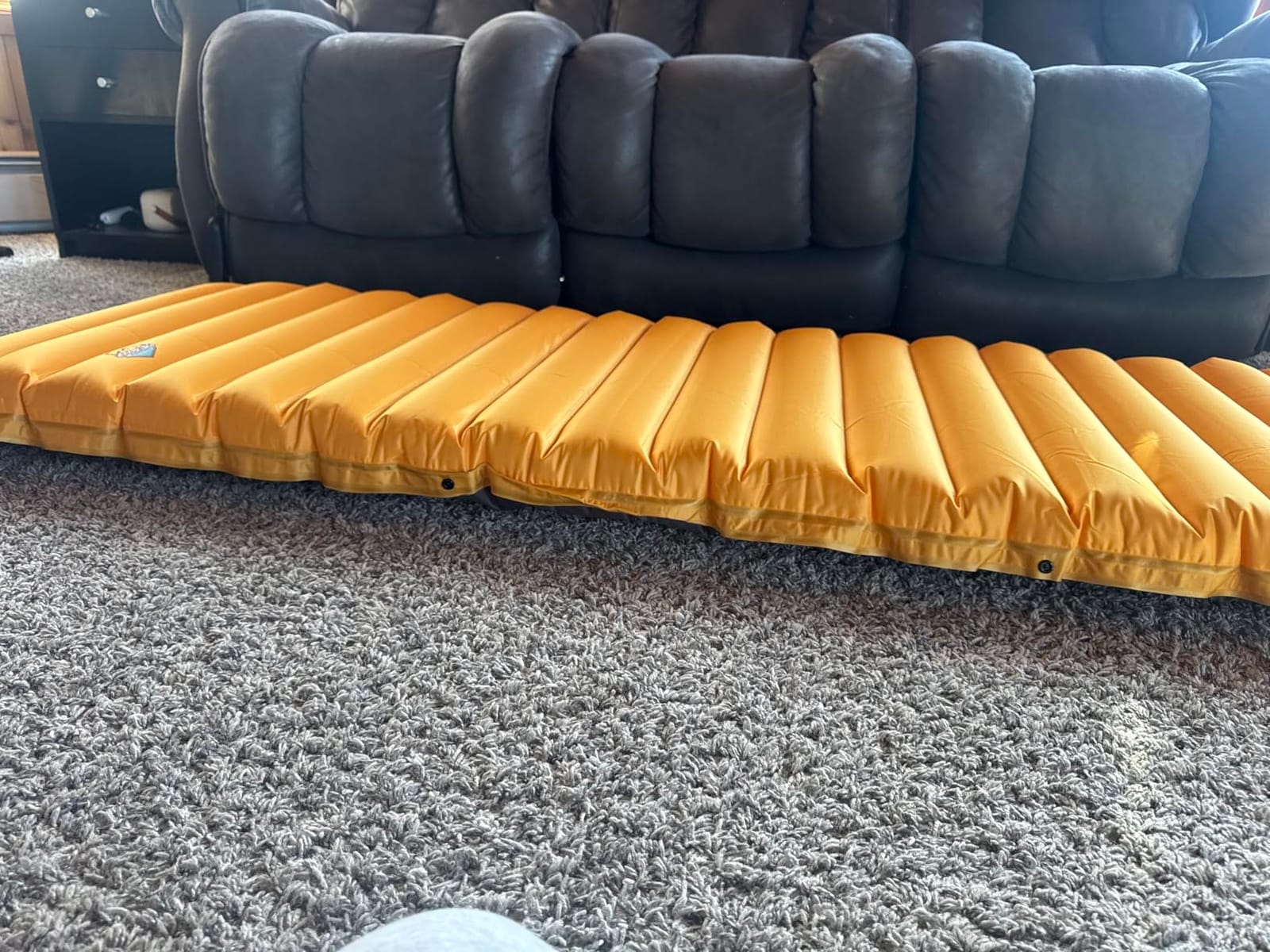
The honest weakness is firmness. Owners consistently describe the surface as firm rather than plush, and if you sleep best on a very soft mattress, this is a step down. My workaround was to stop adding air once the surface felt even rather than inflating until it felt tight, which softened the cradle without losing the thickness underneath.
There is a second quirk worth knowing: the firmness drifts overnight, so a pad that felt perfect at bedtime can feel under-inflated by 3 am. The dual valve design makes topping up fast, but on a multi-night trip I would still re-check it each morning. With 6,800-plus reviews behind it, this is the most thoroughly tested side-sleeper pad we looked at, and the review pattern is consistent: people who came from thin three-season pads report the same thing, that the hips finally stopped touching the ground.
When four inches of full air support is the right call
This pad is built for the person who sleeps on their side, carries weight, and refuses to give up backpacking to get a mattress. At 1.4 kg it is one of the lighter options here, and the 4 inch thickness clears the threshold that most side sleepers describe as the difference between sleeping and enduring a trip.
It also works as a two-person setup. The side connection points let you join two pads into one continuous surface, which matters for couples who both sleep on their side and refuse to share a 25 inch pad.
Where the firm surface costs you
Light sleepers and people who sleep on their stomach are the two groups most likely to find this pad too hard. There is no foam layer to soften the top surface, so the entire cushioning comes from the air column and from how well you manage the valve.
If you are car camping and weight is irrelevant, a foam option further down the list will feel softer immediately. The trade you are making here is weight and packability against a surface that some people describe as resilient rather than cushioned.
2. Gear Doctors Oxylus: Warm, Quiet Self-Inflating Value
Gear Doctors® Oxylus 4.3 R-Value Insulated Air Foam Self Inflating Sleeping Pad Camping —Sleeping Pad Backpacking Air Mattress—Camping Mattress Self Inflating Camp Mat 4 Seasons Sleep Mat Compact Pack
1.5 inch thick
4.3 R-value hybrid foam
Self-inflating
8 x 12 inches packed
Pros
- 4.3 R-value open-cell core works in genuinely cold conditions
- Self-inflates when the valve opens and holds thickness
- Ships quiet with no squeaking baffles
- 35.2 oz packed with a lifetime replacement guarantee
Cons
- Only 1.5 inches thick for a side sleeper
- Runs short for taller adults
- Bulky rolled size for ultralight trips
I want to be direct about this one: at 1.5 inches, the Oxylus is thinner than any other pad on this list, and thickness is the main lever for side-sleeper comfort. What it offers instead is warmth and quiet. The hybrid open-cell foam core carries a 4.3 R-value, which is real four-season insulation by ASTM standards, and reviewers report sleeping comfortably in near-freezing and snowy conditions.
Where it earns its place is the combination of that insulation with a 35.2 oz packed weight and a total absence of noise. Foam does not rustle, shift, or squeak when you toss and turn, which matters enormously if you share a tent with a light sleeper. Owners who switched to it from a nylon air pad often cite the silence as the thing they noticed first.
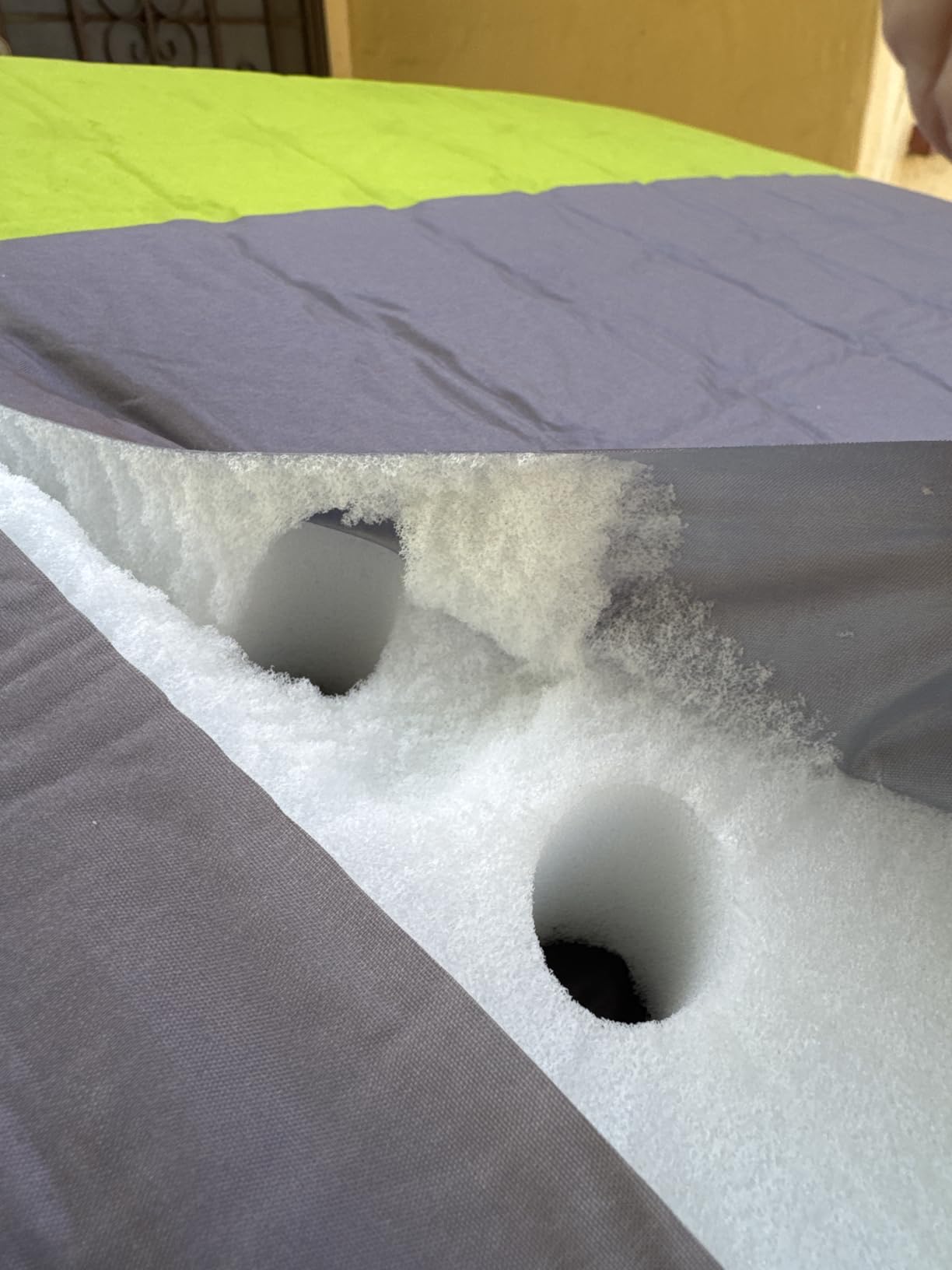
The lifetime replacement guarantee is unusual at this weight class, and owners describe the service as fast and friendly. The 75D micro-coated polyester shell resists abrasion and moisture, which matters for a self-inflating pad that lives in damp ground every trip.
Two practical warnings. The 72 inch length cramps anyone over about 5 foot 10, and the 1.5 inch thickness means a heavy side sleeper with a pronounced hip can still reach the ground, which is the most common caveat in the reviews for this pad.
When insulation and quiet beat cushioning
Choose the Oxylus if you sleep in cold conditions, camp with a partner who wakes at every sound, or want a pad that still works at zero without adding a winter pad to your gear list. It is the most efficient warmth-to-weight option here and the least demanding to use, since opening the valve is the whole setup process.
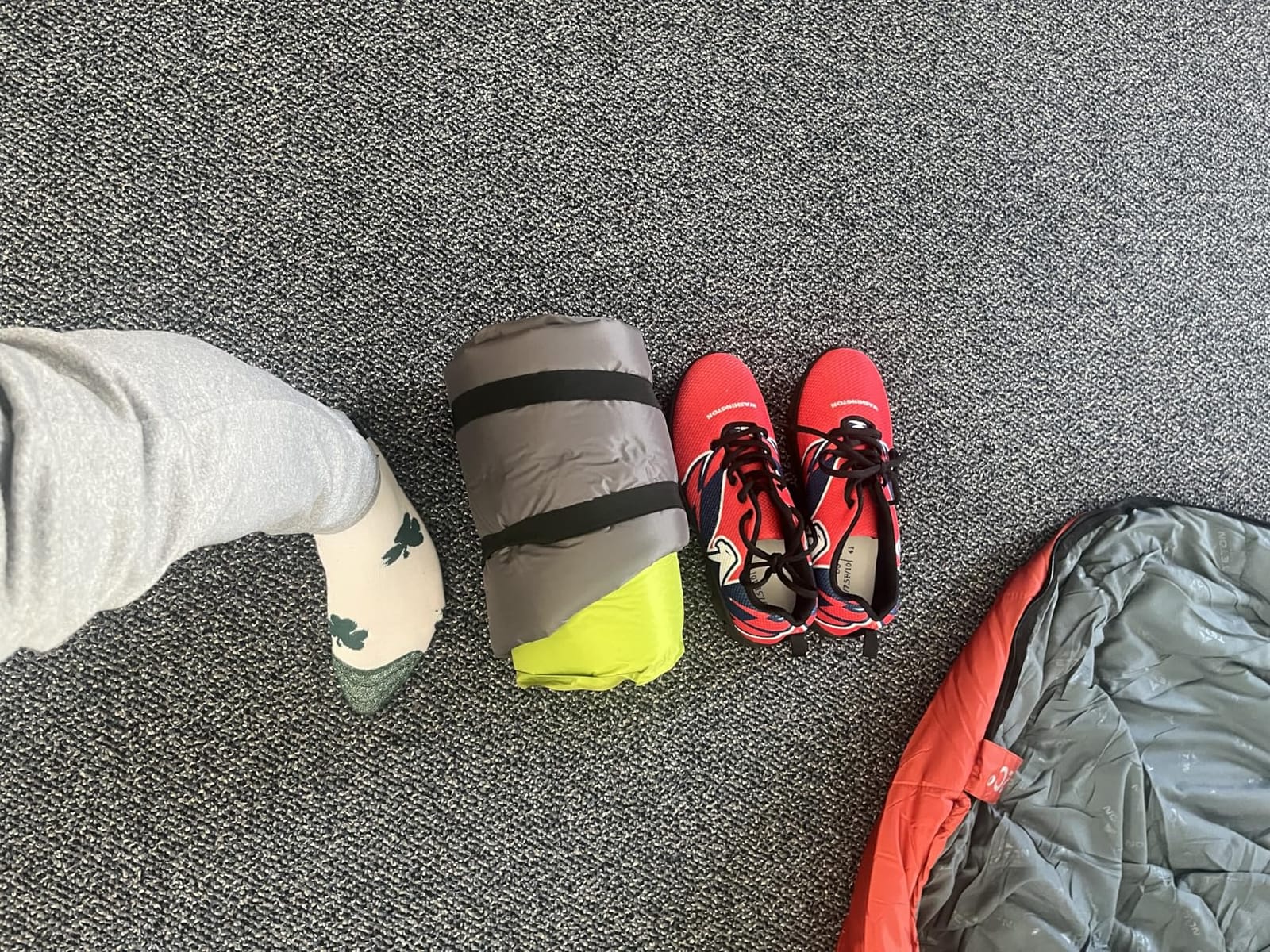
It is also a good first backpacking pad for a beginner, because there is nothing to inflate by hand and nothing to get wrong. The 8 by 12 inch packed size is not ultralight, but it is honest and compact enough for a first trip.
When 1.5 inches will not carry your hips
If your top complaint about pads is pressure on the hip joint, this is not the pad to build a trip around. The review consensus praises warmth and durability while flagging the thin profile, and that thinness is exactly the thing a side sleeper cannot compromise on.
Pair it with a folded jacket under your hips as a bolster if you already own it, and the picture changes considerably. Buy it as a three-season pad only if you sleep warm and do not have hip pain issues.
3. TETON Outfitter XL: The Highest-Rated Pad and the Widest Surface
Teton Outfitter XL Sleeping Pad for Cot, Extra Thick Comfortable Camping Mattress for Adults, Portable Roll-Up Camp Pad, Durable Foam Cushioning
2 inch open-cell foam
80 x 30 inches
Teton lifetime warranty
Washable canvas shell
Pros
- Soft open-cell foam feels bed-like under a shoulder
- 30 inch width gives hips and shoulders room
- Removable washable canvas shell
- Doubles as a cot pad or ground mat
- Rated 4.6 stars across 4000-plus reviews
Cons
- Fixed 2 inch foam is less cushioning than thick air pads
- Not water resistant so wet ground is unsuitable
- 6 lb weight rules out backpacking
At 4.6 stars across more than 4,200 reviews, this is the highest-rated pad in the roundup, and the reason is not subtle: it is 30 inches wide. For a side sleeper, width matters as much as thickness, because your hip needs somewhere to fall forward onto without fighting the edge of the mattress.
The construction is a fixed 2 inch slab of open-cell foam inside a canvas shell, which produces a genuinely mattress-like feel rather than the springy pushback of an air pad. There is no inflation step, no valve, and nothing to fail in the field. You unroll it on a cot or straight on the ground and you are asleep.
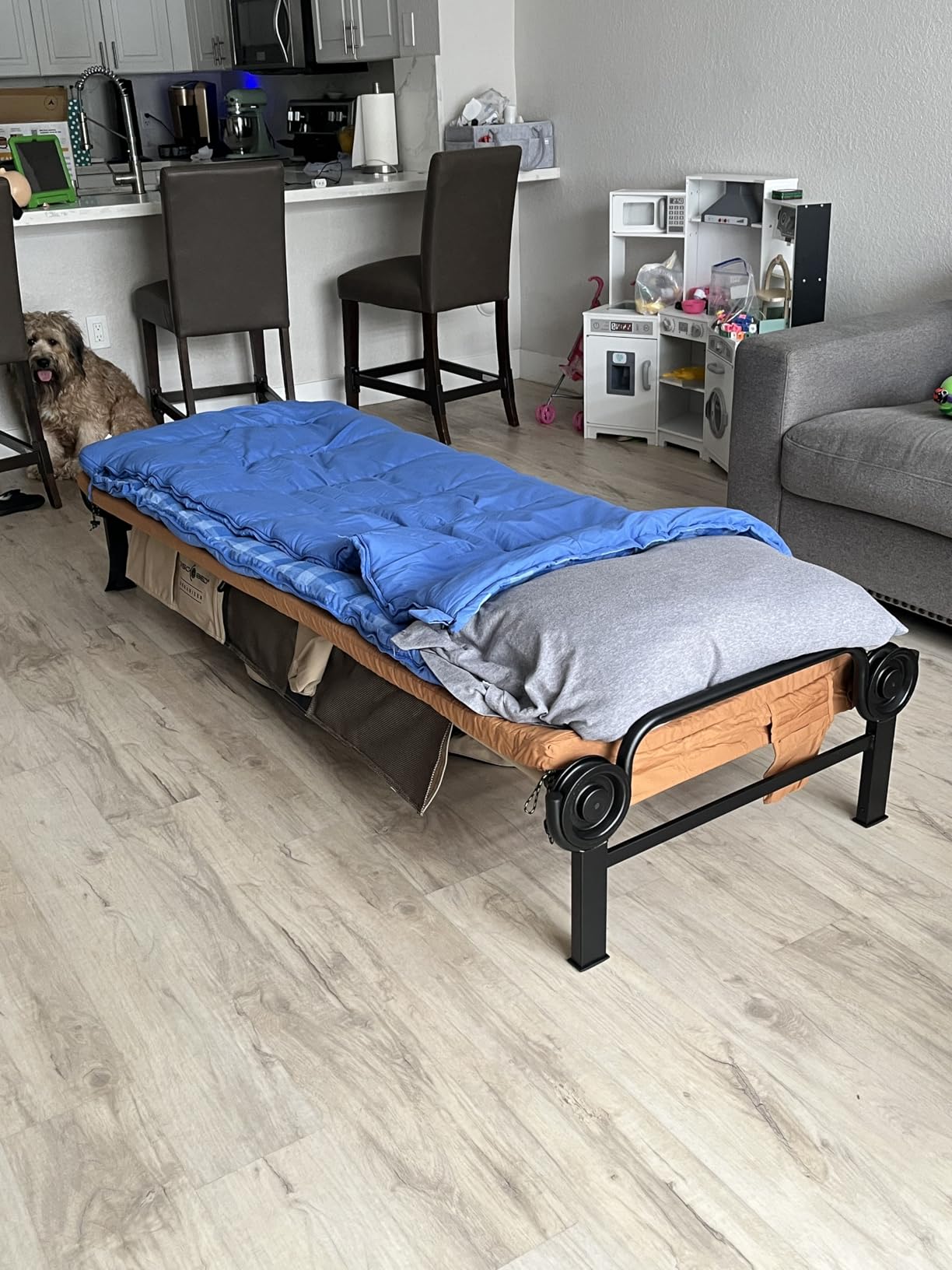
The removable washable canvas shell is the detail I did not expect to care about and now recommend to everyone. Camping pads get muddy at the bottom, and being able to unzip the shell and throw it in a wash is worth more over a season than several grams of packed weight saved.
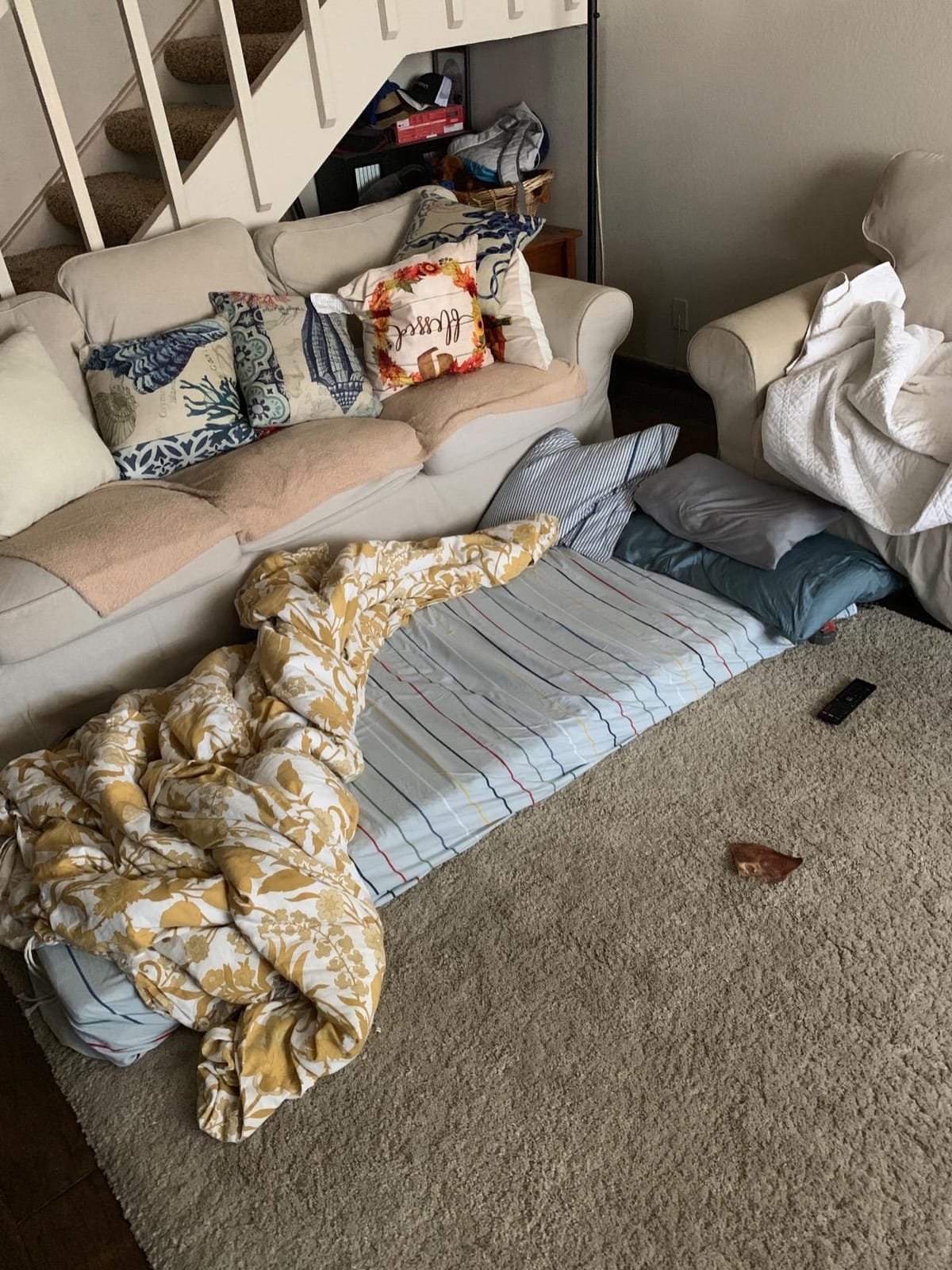
At 80 by 30 by 2 inches and 6 pounds, this is car-camping equipment and nothing else. It fits the TETON Sports Universal Cot, or it works flat as a ground mat, and the roll-up straps with compression buckles keep it manageable in a truck bed. The lifetime warranty against manufacturing defects is a genuine plus on a foam product.
When extra width solves the problem thickness cannot
Buy this if you are a broad-shouldered side sleeper, if you share a vehicle with a partner, or if you want one pad that works as a cot mattress and a ground mat. Reviews describe the surface as comfortable for side and stomach sleeping in a way that a 20 inch air pad never manages.
For a van or overlanding setup, the 30 inch width also lets two people under one tent. It is a bed, not a camping accessory, and that is exactly what makes it different from everything else here.
When 2 inches of fixed foam is not enough
Two inches is below the comfort threshold for most side sleepers. This pad helps not because it is thick but because the foam is soft, wide, and evenly spread, which spreads pressure differently than a narrow air column.
The other hard limits are environmental. It is not water resistant, so damp ground is a poor choice, and the 6 pound weight means it never goes in a pack. If you carry your gear on your back, look at the four-inch options further down instead.
4. Hazli Matrix AirCell: 4 Inch Memory Foam for Hip and Back Pain
Hazli Matrix AirCell 4 Inch Memory Foam Camping Mattress Pad – Queen Roll Up Mattress for Adults – Double Portable Cot Sleeping Pad-2 Person Floor Mat or Bed Roll – Queen 80″ x 60″ x 4″ Grey
4 inch AirCell memory foam
R-value 8.5
80 x 60 inch Queen
No inflation needed
Pros
- 4 inch foam gives genuine pressure relief for chronic hip and back pain
- No pump and no risk of an overnight leak
- Expands within a few hours of unrolling
- Washable waterproof cover with an anti-slip back
Cons
- 28 lb weight is car-camping only
- Strong off-gassing that takes 48 to 72 hours to clear
- Traps heat in warm weather
- Bulky when rolled
This is the one I would recommend to someone who has stopped believing that a camping pad can be comfortable. It is 4 inches of closed-cell memory foam in a Queen footprint, 80 by 60 inches, and multiple owners with chronic back or hip pain describe it as the only pad that let them sleep comfortably. Two stacked pads are reported to feel like a real bed.
What makes it different from a camping mattress is the R-value of 8.5, which puts it in genuine four-season insulation territory, combined with a total absence of moving parts. No pump, no valve, no inflation, and therefore no chance of waking up at 4 am with a flat pad because a seam leaked.
The 4 inch thickness and the memory foam do the same job from a different direction than an air pad. Instead of letting the hip sink into a compressed air column, the foam molds around the shape of the hip and shoulder and spreads the force sideways rather than downward. For someone with joint pain, that is the whole purchase.
The catch is that this is a 28 pound object. It is a car camping pad, a spare mattress for an SUV or a guest room, and a replacement for a cot pad. It is also bulky rolled, and oversized for many vehicles, so the logistics matter as much as the comfort.
When comfort matters more than anything else
Choose the Hazli if you are car camping, have a history of hip or back pain, or want a secondary mattress for a van, boat, or guest room. The Queen size fits two sleepers with room to spare, and the removable waterproof cover with an anti-slip back keeps it from migrating on smooth vehicle floors.
Foam is also forgiving in a way air is not. A punctured air pad is a dead pad overnight, while a small tear in a foam pad is a repair you can do at home with a dab of adhesive. Owners report using it daily for two months with a puppy showing no degradation at all.
When the weight and the smell stop you
The memory foam has a strong off-gassing odor on arrival and needs 48 to 72 hours of airing before use. Unpack it at home a few days before a trip, not in the car on the way out.
Foam also traps heat, which makes this a poor summer choice for a sleeper who runs warm. Between the 28 pound weight, the bulk when rolled, and the heat retention, it is squarely a vehicle pad, and treating it as anything else will disappoint you.
5. TOBTOS 6 Inch Pad: Maximum Cushion at a Lighter Weight Than It Sounds
TOBTOS Inflatable Camping Sleeping Pad with Pillow, Thick 6 Inch Ultralight Sleeping Pad with Built-in Pump, Lightweight Sleeping Mat for Camping, Backpacking, Hiking, Tent (Grey)
6 inches thick when inflated
75 x 28 inches
2.36 lb packed
Built-in foot pump
Pros
- 6 inches is the thickest pad in this roundup
- Built-in foot pump fully inflates in about a minute
- Integrated contoured pillow shaped to the neck curve
- Raised side edges reduce rolling off
- Heat-sealed 40D nylon resists leaks
Cons
- Floppy air construction shifts under restless sleepers
- Wind can move the pad at exposed campsites
- Loose air supports heavy sleepers less than foam
Six inches. That is the number, and no other pad in this roundup reaches it. Side sleepers report finally being able to keep hips and shoulders entirely clear of the ground, and at 2.36 pounds it does not feel like the anchor that number usually implies.
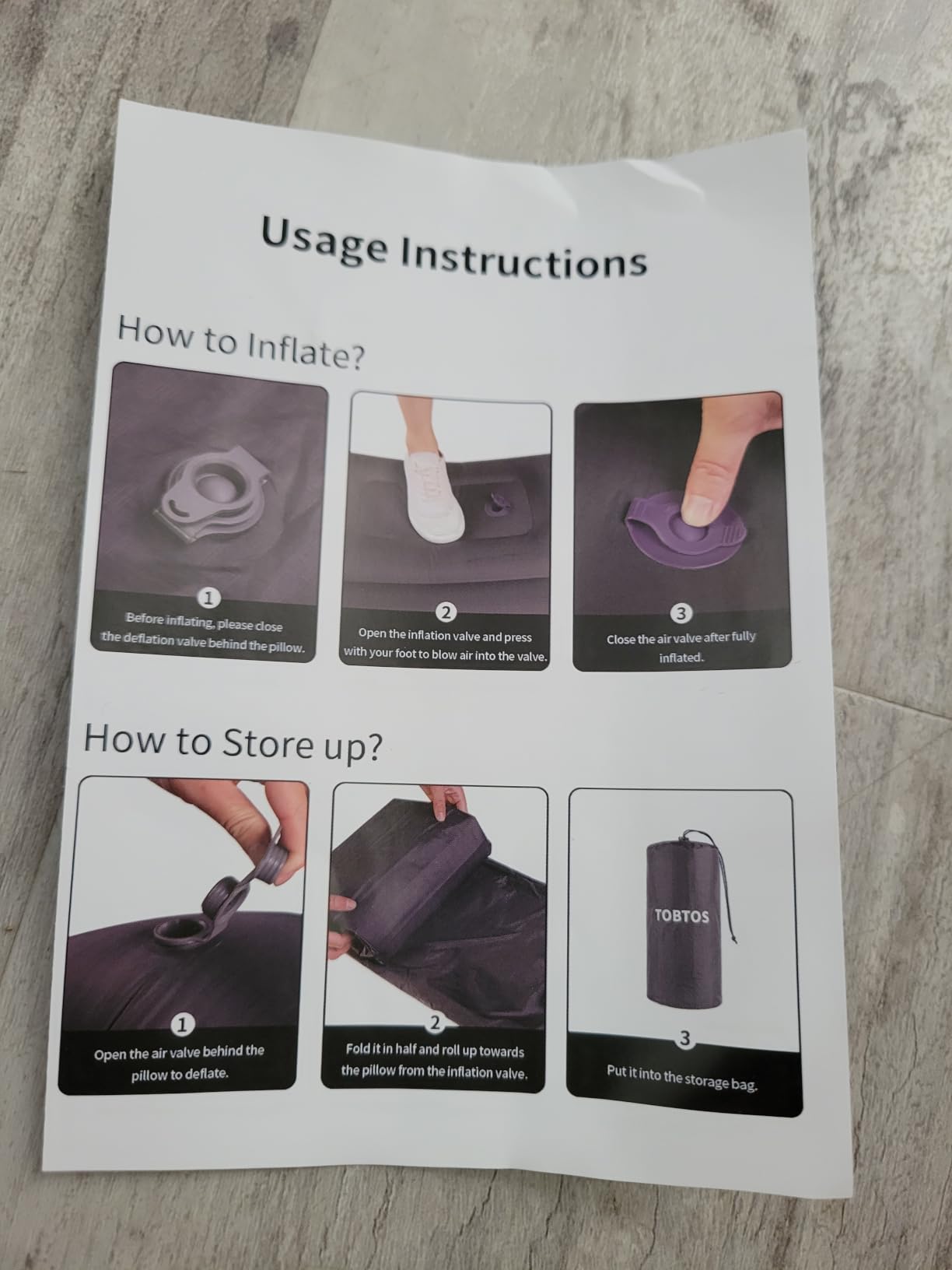
The built-in foot pump fully inflates it in about a minute, which removes the most annoying part of setting up camp. There is also an integrated one-piece pillow shaped to the curve of the head and neck, so you are not inflating a separate pillow or improvising with a jacket.
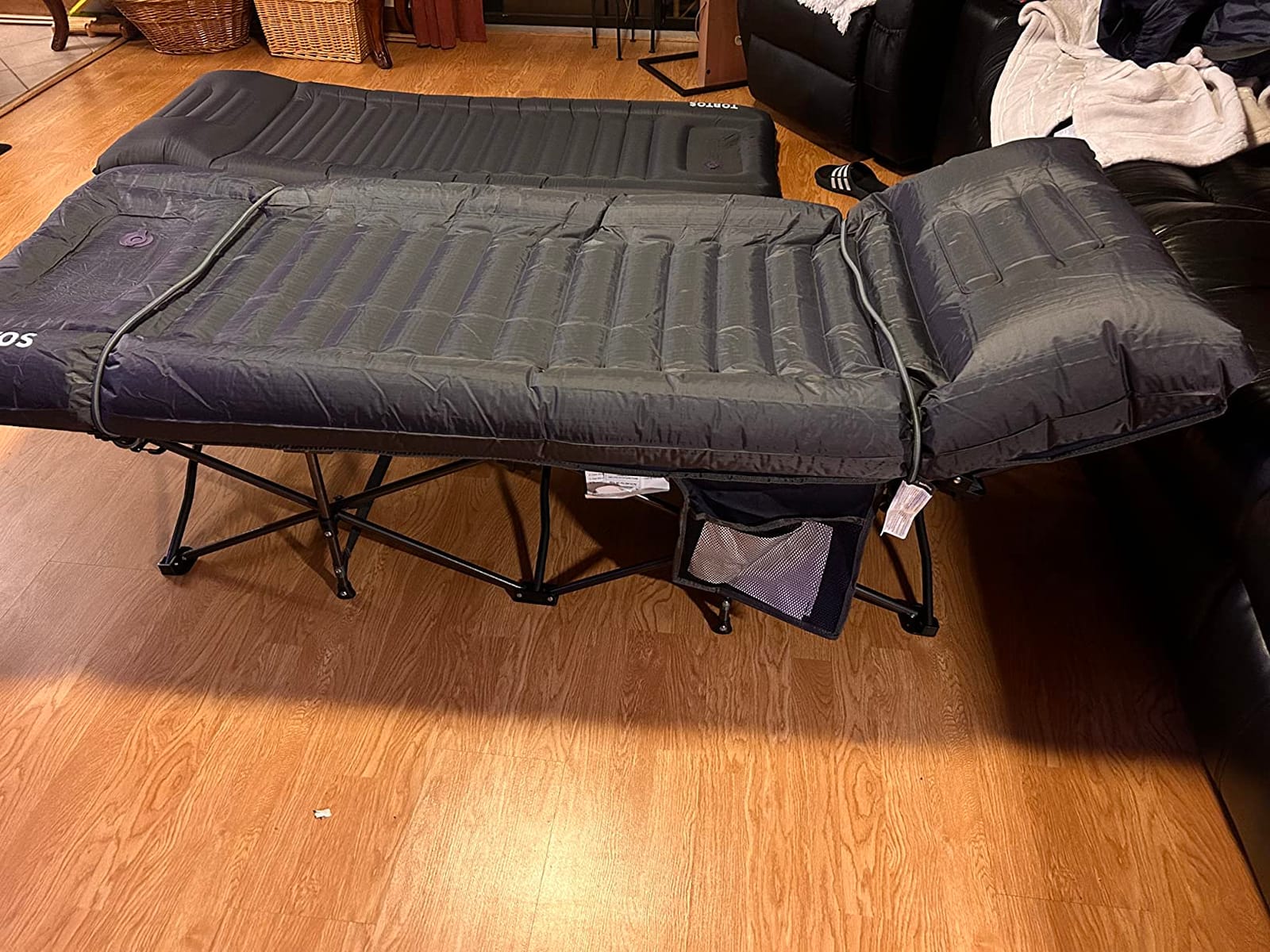
Raised side edges are a real feature here and a rarity among air pads. They support the body laterally and resist rolling over, which is a specific problem for side sleepers who move a lot in their sleep. The 28 inch width also gives you room to move without fighting the edge of the pad.
The honest weakness is that pure air with this much volume is soft and floppy. Restless sleepers describe the surface as shifting under them, and the community phrase for that experience is sleeping on a potato chip. It is a stability problem, not a cushioning problem, and for someone who stays still it rarely comes up.
When maximum thickness is the answer
Pick the six-inch pad if hip and shoulder relief is your single biggest issue and you accept a softer, less stable surface in exchange. Light to average-weight side sleepers get the most out of it, because very light bodies do not compress a 6 inch air column enough to sink all the way to the bottom.
It is a good match for anyone car camping who wants a temporary bed-like surface without hauling a separate mattress. At 10.6 by 4.7 inches folded, it fits in a car trunk without ceremony.
When stability matters more than height
Restless sleepers and anyone camping in wind will find 6 inches of pure air more movement than they want. A very high pad behaves like a deep water bed, and every turn travels through the whole air column.
Very heavy sleepers will also notice that loose air gives less support than foam at the same thickness. If you weigh substantially more than the average camper and tend to bottom out, a 4 inch foam hybrid is the smarter buy than a taller air column.
6. Kingfun 3 Inch Memory Foam: Connectors That Build a Wider Double Pad
Kingfun 3 Inch CertiPUR-US Memory Foam Camping Mattress Pad, Waterproof Roll up Sleeping Pad, Thick Floor Sleeping Mats for Tent with Removable Travel Bag(Grey, Cot)
3 inch memory foam
75 x 25 inches
Velcro corner connectors
5.6 kg
Pros
- 3 inch high-density foam relieves pressure better than a sleeping bag
- Anti-slip bottom holds position on a tent floor
- Velcro connectors join two pads into a wide double
- Velboa cover is water resistant
- CertiPUR-US certified foam
Cons
- Up to 72 hours to fully expand after vacuum packing
- 25 inch width is narrow
- 3 inch is less edge support than 4 inch pads
- Retains heat in warm conditions
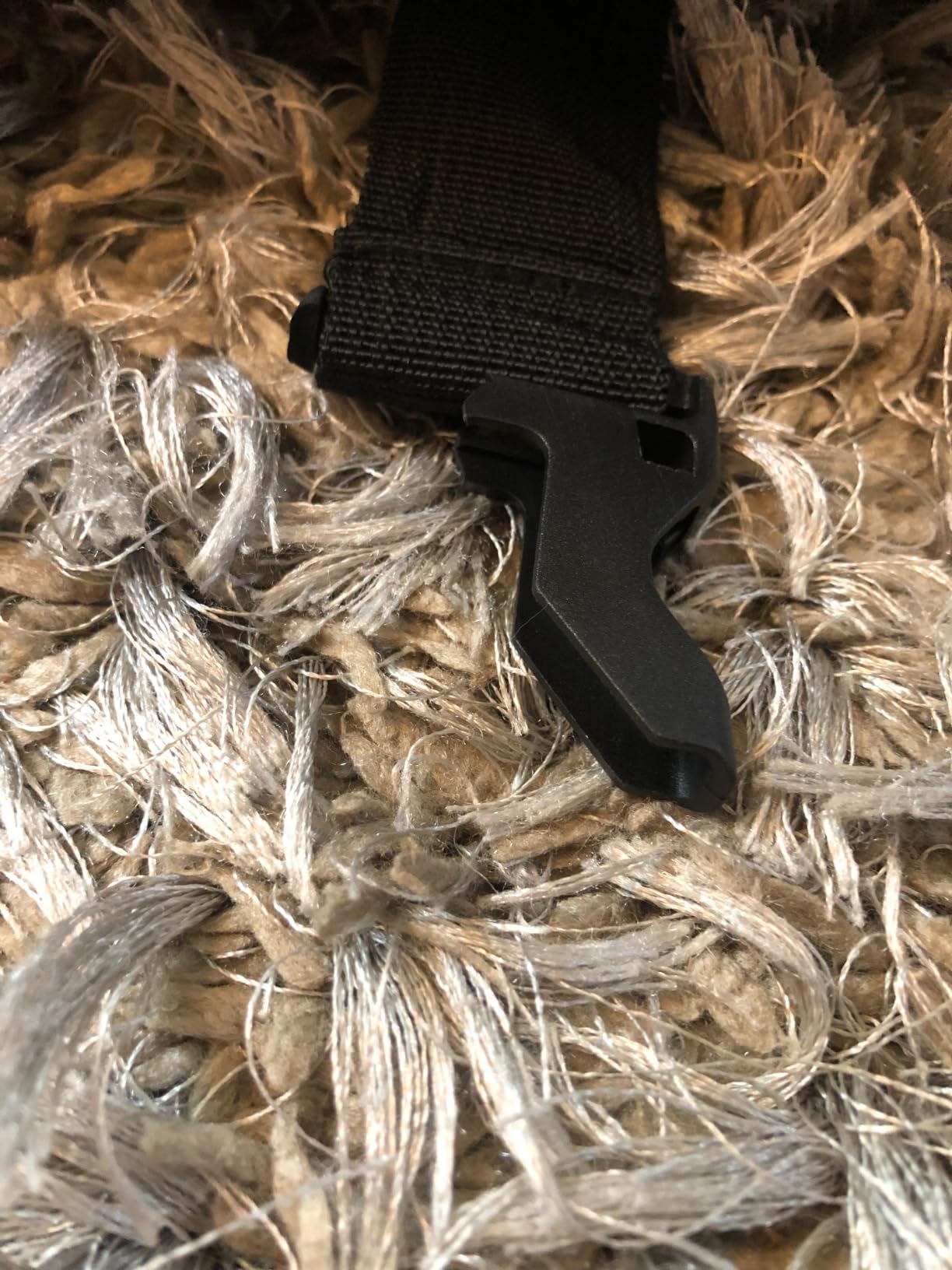
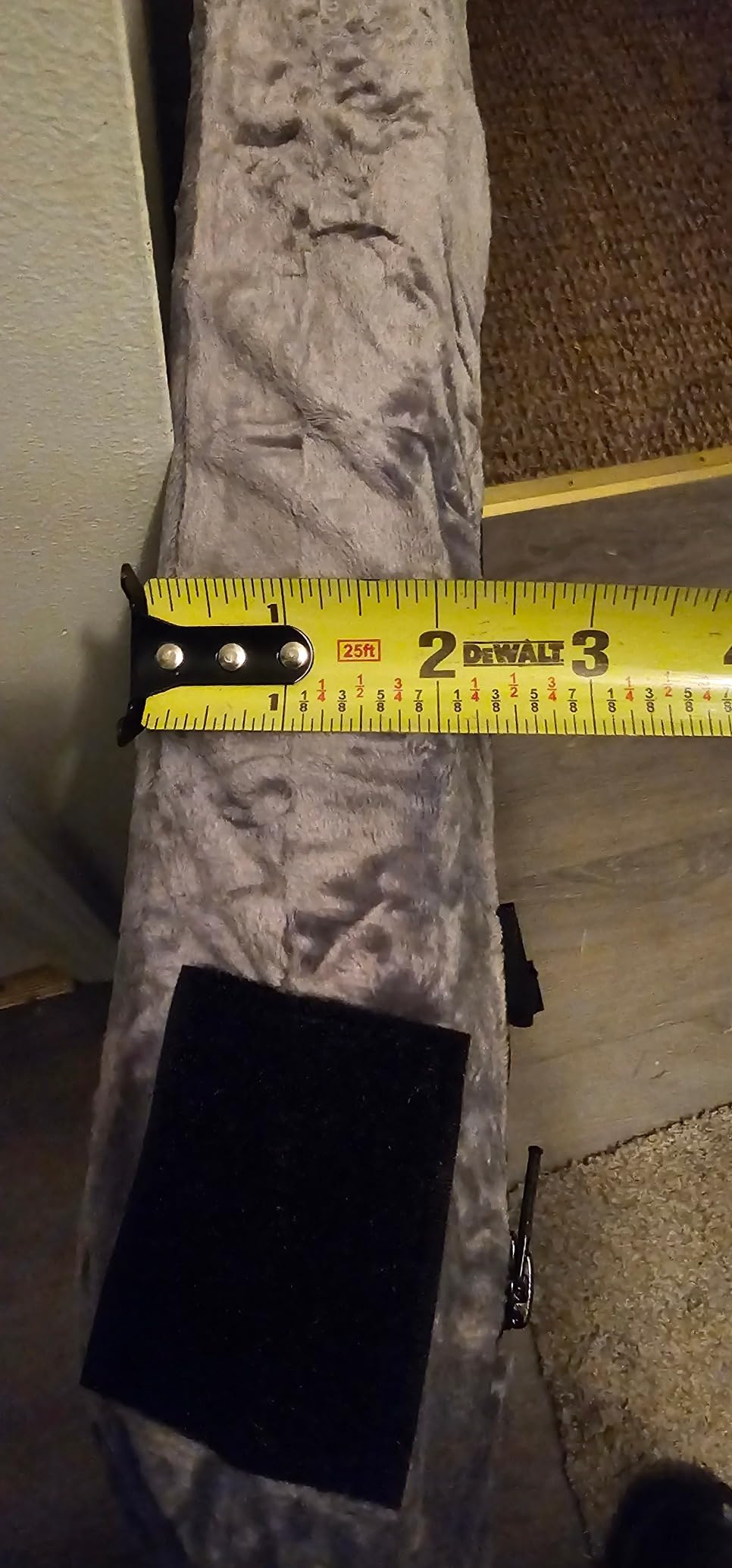
The reason the Kingfun is interesting is not the foam, it is the eight Velcro corner connectors. You can join two pads to build a wider double surface, and for two side sleepers who keep rolling into each other, a 50 inch shared bed is a genuinely different night of sleep from two 25 inch pads side by side.
At 3 inches of high-density memory foam, the single-pad experience is solid for the price class. Owners describe the pressure relief as better than a sleeping bag or a standard air mattress, and the anti-slip bottom is something you notice immediately on a smooth tent floor.
The super soft velboa cover has a TPU coating that resists water, which is a meaningful upgrade over bare open-cell foam in damp conditions. The foam is CertiPUR-US certified, and the listing notes it is suitable for sensitive sleepers including pregnant women and infants.
The big practical drawback is the expansion time. Vacuum-packed units can take up to 72 hours to return to full thickness, so you cannot unroll it at the trailhead an hour before bed and expect a full 3 inches. Unpack it at home the day before departure.
When you are building a shared sleeping surface
Two of these make a wide double that solves the specific problem of a side sleeper drifting into their partner. The connector system is simple and reliable, and it also means you can split the weight between two packs.
It is a strong option for families too, since the range runs from a kids XL size up to a Queen 80 by 60. A pad that doubles as a guest bed, a yoga mat, or a spare truck mattress is more versatile than its camping label suggests.
When 25 inches is too narrow and 3 inches is not enough
The default 25 inch width is the weak point for anyone with broad hips. Side sleepers slide toward the edge, and at 25 inches you can feel the drop-off sooner than on a 30 inch surface.
Three inches is workable but not generous, especially for a heavier sleeper who compresses foam further than air. Owners of the thicker options in this roundup report noticeably better edge support, so if your hip is the problem, the extra inch is worth finding.
7. Lost Horizon Option3: 4.5 Inches of Foam with R-13 Insulation
Lost Horizon Option3 Self-Inflating Foam Camping Mattress, Single, 4.5″
4.5 inch thick
6.5 lb of foam fill
R-value 13
80 x 28 inches
Pros
- 4.5 inches of foam keeps heavy side sleepers fully off the ground
- Holds firmness overnight without topping up
- R-13 handles sub-freezing ground
- Silent surface with no squeaking or shifting
Cons
- 9 lb weight is far too heavy to carry
- Bulky to roll and awkward to deflate without a pump
- Valve can bleed air if not seated centrally
- 220 lb capacity is the lowest here
This is the most extreme side-sleeper solution in the roundup: 4.5 inches of thickness built around 6.5 pounds of foam fill. Reviewers report being able to kneel on it without touching the floor, which is about as direct a confirmation of pressure relief as we found.
The hybrid air-and-foam core is the reason it behaves so differently from a pure air pad. Foam does not deflate, so there is no 3 am surprise, and it does not shift when you move. The surface is described as silent and stable, with no squeaking and no air-shifting sounds.
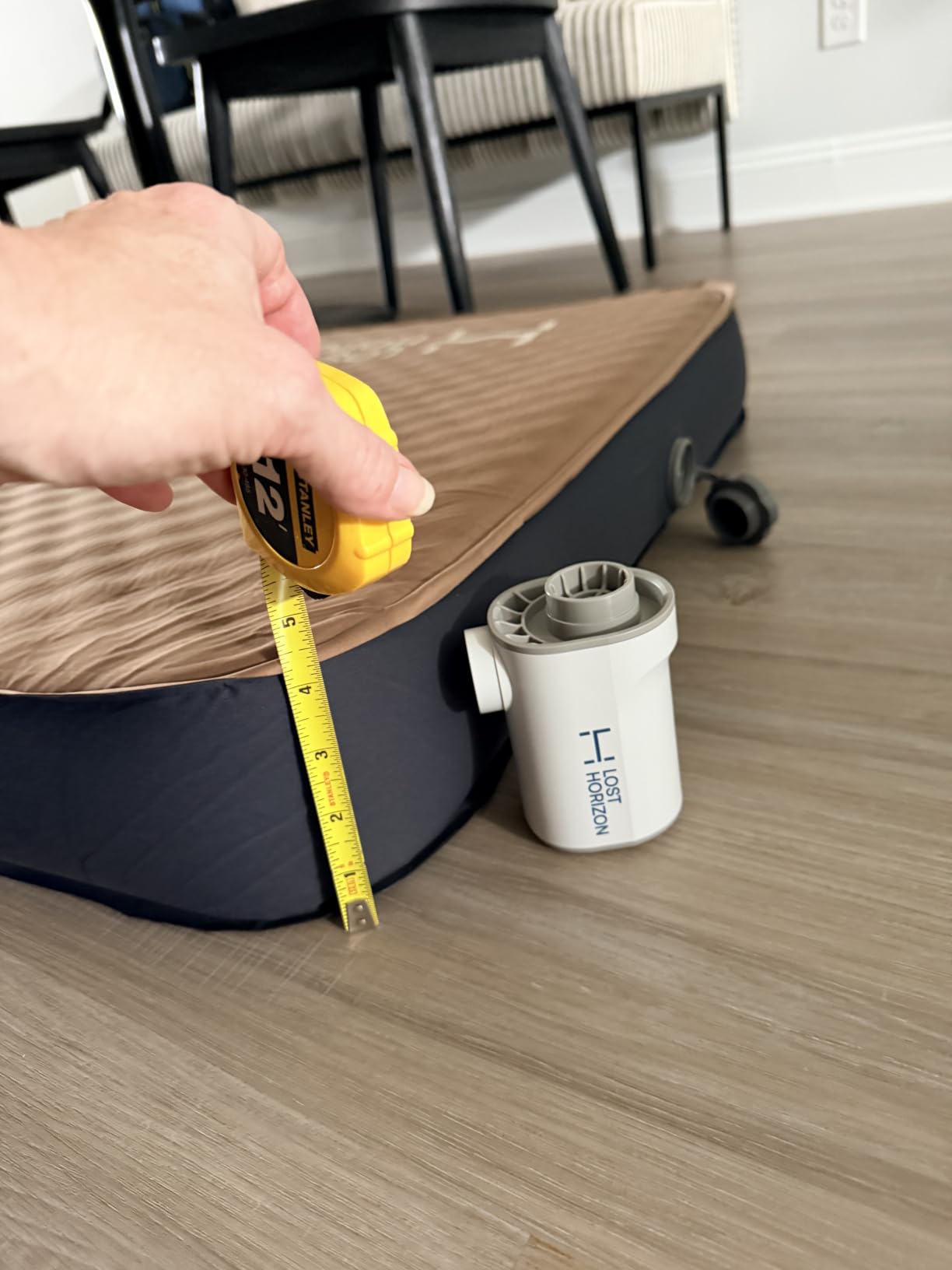
At R-13 it is the warmest pad here by a wide margin, and owners report it working in near-freezing and sub-freezing conditions. That figure matters more for a side sleeper than for a back sleeper, because a larger body contact area pulls heat toward the ground faster.
Firmness is adjustable, which means two people on the same pad can each set their own preference. One owner describes it as rivaling their own bed, and the general tone across more than 1,200 reviews is that this is the first pad that let chronic back-pain sufferers sleep comfortably.
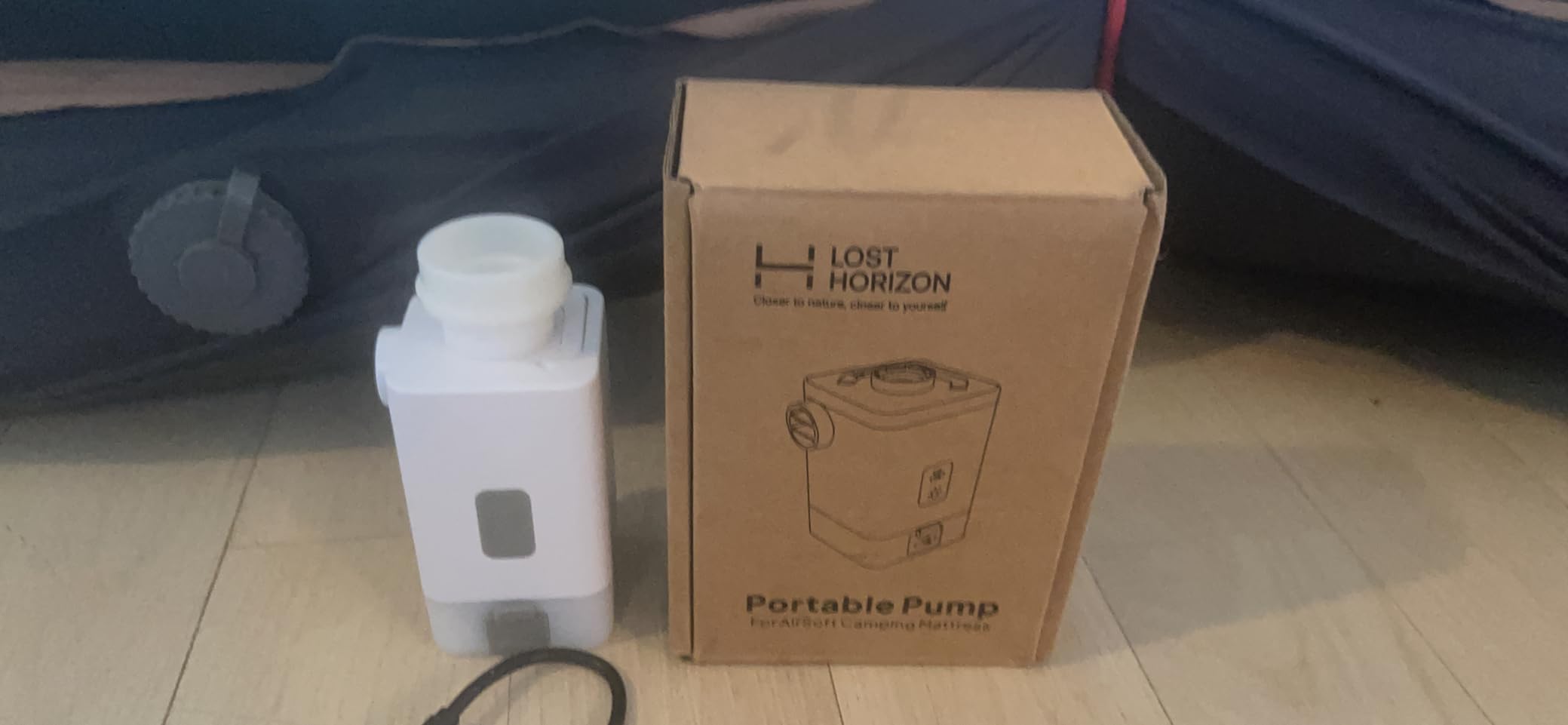
It is 9 pounds, and it does not go in a pack. Rolling it is awkward, and deflating it without the optional electric pump is genuinely frustrating. The valve can also bleed air around the ring if it is not seated centrally, and the 220 pound weight capacity is the lowest in this roundup.
When you are camping in the cold and comfort is non-negotiable
Buy the Option3 for winter car camping, basecamp comfort, or any situation where you are not moving the pad more than once. R-13 insulation with 4.5 inches of foam means you are not choosing between warmth and cushioning, which is the tradeoff every air pad in this range forces on you.
It is also a strong pick for two people who both side sleep and want a shared surface with independent firmness control. The 28 inch width is generous, and 80 inches of length fits almost any adult.
When carrying it is the entire point
This pad is not backpacking equipment and the manufacturer does not recommend treating it as such. Nine pounds plus the volume of 6.5 pounds of foam means it needs a vehicle or a very short carry from the car.
Also check your own weight against the 220 pound capacity before buying. It is the lowest listed here, and it is the one specification on this pad that is a hard limit rather than a preference.
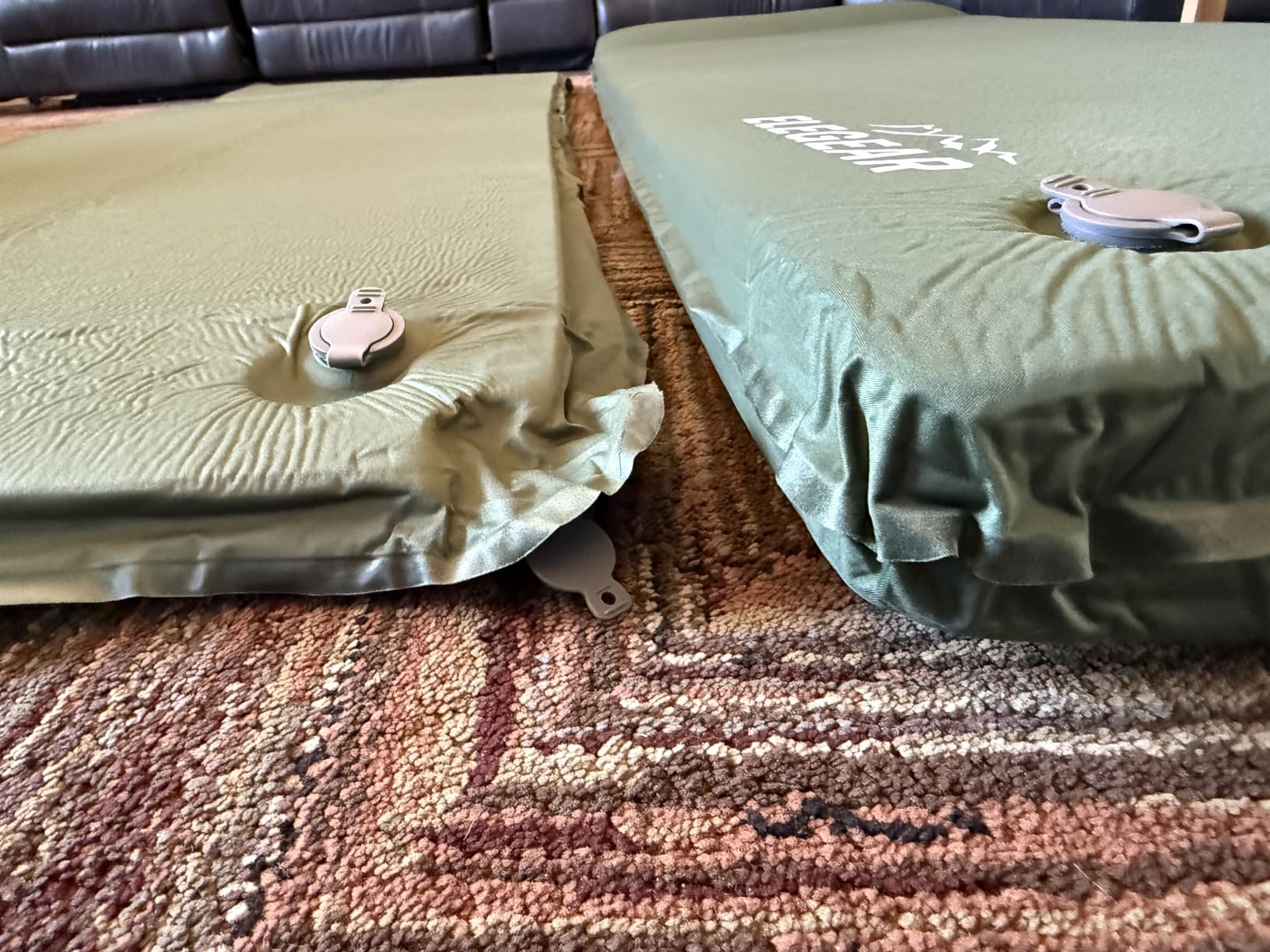
8. Elegear Self Inflating: Dense 26D Foam Built for Heavier Sleepers
Elegear Self Inflating Sleeping Pad with Pillow 26D Memory Foam 3.15″
3.15 inch thick
26D memory foam
ASTM R-value 9.5
Rated to 800 lb
Pros
- 26D foam is denser and more supportive than the 19D in most camping pads
- Self-inflates in about 20 seconds
- Quiet knitted surface fabric avoids squeaking
- 800 lb static pressure tested for 24 hours
- 26D foam retained elasticity after 10000 compression cycles
Cons
- 8.1 lb weight is too heavy to backpack
- First inflation from vacuum packing can take 20 minutes
- 3.15 inches is thin for a light side sleeper
- 27 inch width is narrow
The headline spec on the Elegear is the foam density: 26D high-resilience memory foam where most camping pads use 19D. That difference is the reason it stays supportive under a heavy body. It is tested and rated to 800 pounds, held under static pressure for 24 hours with no leakage, and the foam retained its elasticity after 10,000 compression cycles in the ASTM compression set test.
At 3.15 inches it is not the thickest pad here, but the density means it does not compress the way softer foam does under load. For a heavier side sleeper, a dense 3.15 inch pad can out-perform a soft 4 inch one, because the foam pushes back instead of letting the hip sink past the point of support.
The R-value of 9.5 by ASTM test makes it four-season capable, which puts it in the same insulation class as the much heavier hybrids. The dual-use valve is neat in practice: open both layers to inflate, open only the first to deflate by squeezing, so packing takes no pump at all.
The 50D stretch knit surface is quiet and breathable, avoiding the squeaking common on nylon pads. Once the foam has expanded, self-inflation takes about 20 seconds, which is faster than almost anything else you will own.
There is a catch in the first-use experience. A vacuum-packed unit can take up to 20 minutes to expand the first time, so unpack it at home before the trip rather than at the trailhead.
When your body weight is the deciding factor
This is the pad for side sleepers who bottom out on everything else. The 26D foam is the specific answer to that problem, and it is unusual to see a camping pad with a published compression set test result and an 800 pound static rating.
It also suits anyone who wants four-season insulation without the 9 pound bulk of a thick foam hybrid. You get an R-value above 9 at 8.1 pounds, which is a reasonable trade for a vehicle trip.
When 3.15 inches and 27 inches run short
A light side sleeper may not sink far enough into 3.15 inches to feel cushioned, and the 27 inch width is narrow compared with the 30 inch options here. Broad shoulders and hips will feel the edge sooner than on a wider pad.
The 8.1 pound weight also rules out backpacking. If you need something to carry, this pad is out of scope, and the four-inch air options further down fit the job.
9. TREKOLOGY 4 Inch Pad: Four Inches at Two Pounds
TREKOLOGY Sleeping Pad for Camping– Ultra-Lightweight, 4″ Thick Camping Mat with 7.2 R-Value for All Seasons (Green)
4 inches thick
SGS R-value 7.2
900 g packed
70.8 x 23.6 inches
Pros
- 4 inch thickness is rare at 2 lb packed weight
- Packs to roughly the size of a water bottle
- 40D ripstop nylon with TPU survived kids and a dog
- Holds air all night without topping up
- 1 year warranty with responsive support
Cons
- Mylar interior makes movement noise
- Insulation makes deflation awkward and slow
- Surface is slippery
- No pump or pump sack included
Four inches of thickness at 900 grams packed is the trick this pad pulls off. Most four inch pads in this roundup weigh three to five times as much, and this one packs to roughly the size of a water bottle, so hip relief does not force a pack upgrade.
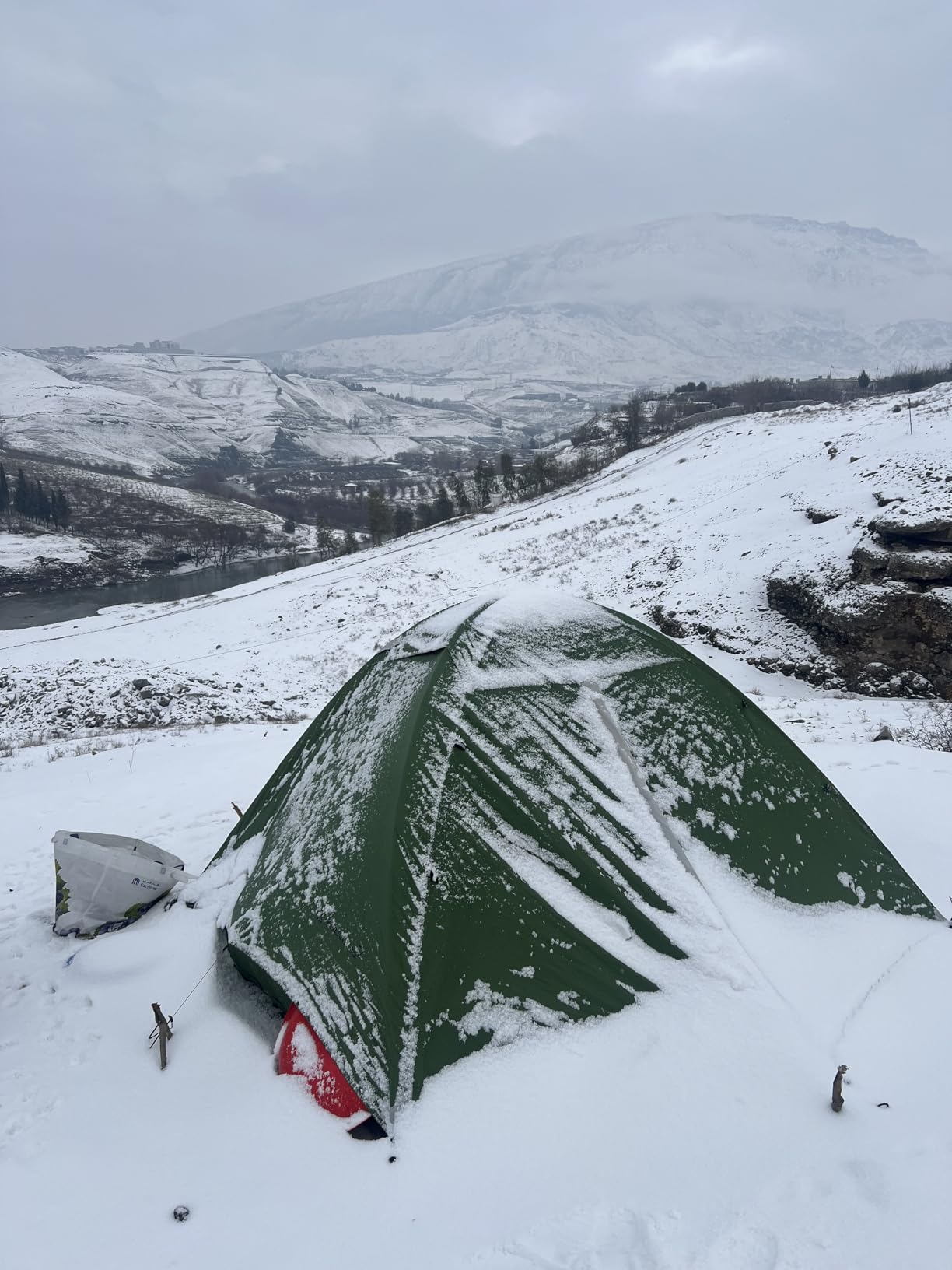
The SGS-certified 7.2 R-value makes it all-season capable in the spec sheet sense, and owners report real warmth in the 20s and 30s degrees Fahrenheit. The reflective Mylar interior adds a layer of radiant heat retention, and the 40D ripstop nylon with a TPU coating has survived kids and a dog jumping on it in real use.
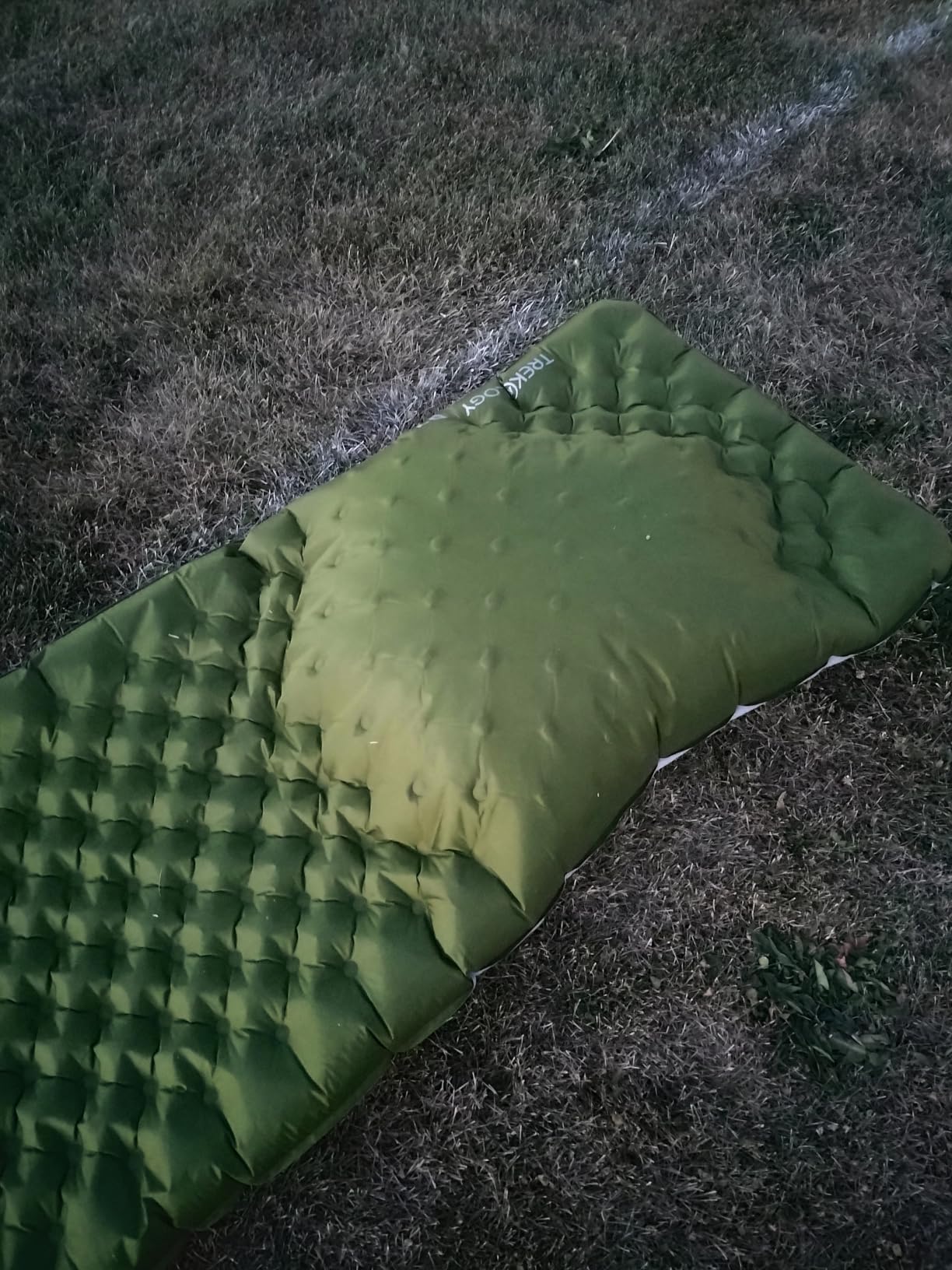
It holds air all night without topping up, and the 1 year warranty is backed by support that has shipped replacements. The anti-leak valve is patented and works quickly in both directions, which is more than you can say for most budget valves.
Now the honest list. The Mylar lining makes real movement noise, which is a real cost for light sleepers, and the same foil that adds warmth makes deflation awkward and slow because air will not rush out easily.
The surface is also reported as slippery, so a grip liner helps if you move around. And the 7.2 R-value is disputed by at least one reviewer who found it adequate only down to around freezing. Two more limits: no pump or pump sack is included, so you need to add that separately, and the square 24 inch width is less stable than a tapered mummy design for some sleepers. Best suited to sleepers up to 5 foot 11.
When four inches has to fit in your pack
Choose the TREKOLOGY if you are a backpacker who side sleeps and cannot accept the usual ultralight pads at 2 to 3 inches. It is the rare pad where thickness does not cost you a pack upgrade, and at 900 grams it is lighter than most three inch foam alternatives.
It is also a good three-season-plus pad for shoulder months. Between the 4 inch cushioning and the 7.2 R-value, it covers most camping conditions for a sleeper who does not plan on regular sub-freezing trips.
When the noise and the narrow base stop you
If you share a tent with a light sleeper, the Mylar noise is the deal-breaker. And if you move a lot in your sleep, a slippery surface plus a square 24 inch footprint is not the combination you want, because a restless sleeper ends up on the ground beside the pad.
The disputed R-value claim is worth weighing if you are planning genuine winter use. For true four-season reliability, a pad with a documented ASTM figure and thicker foam is the safer bet.
10. Exped MegaMat: Square 3D Sidewalls That Keep You Centered
Exped MegaMat Sleeping Pad, Medium Wide
4 inch foam-air hybrid
R-value 8.1
Square 3D sidewalls
Firmness adjustable
Pros
- 4 inch open-cell foam with air-core channels resists bottoming out
- 3D vertical sidewalls mean no tapering and full-width support
- Adjustable from ultra-plush to firm with the included pump
- Quiet 4-way stretch tricot surface resists sliding
- Welded side handle and efficient air channels for setup
Cons
- Bulky and heavy at 4.6 lb for anything but car camping
- Included mini pump struggles with the air volume
- Not water resistant
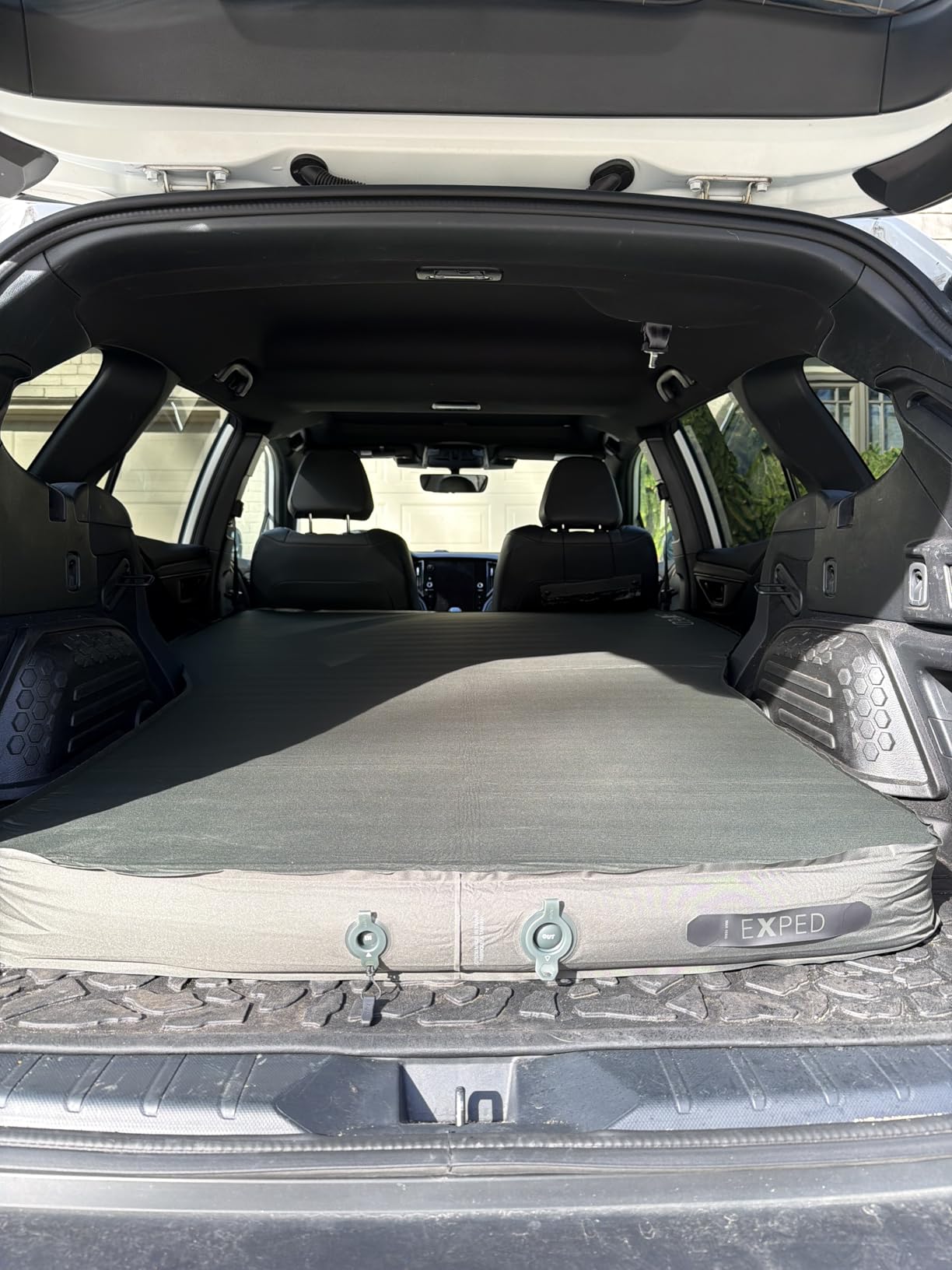
The MegaMat is the most side-sleeper-focused design in this roundup, and the reason is its 3D vertical sidewalls. Most pads taper toward the foot and the shoulder, which means a side sleeper is being pushed off-center by the shape of the mattress. The MegaMat has no taper at all, so the sleeping surface is full width from top to bottom.
At 4 inches of open-cell foam with air-core channels, it resists bottoming out for both side and stomach sleepers, and owners describe the comfort as comparable to a home mattress. Those air-core channels are also why it is far lighter and faster to set up than a solid foam block of the same thickness.
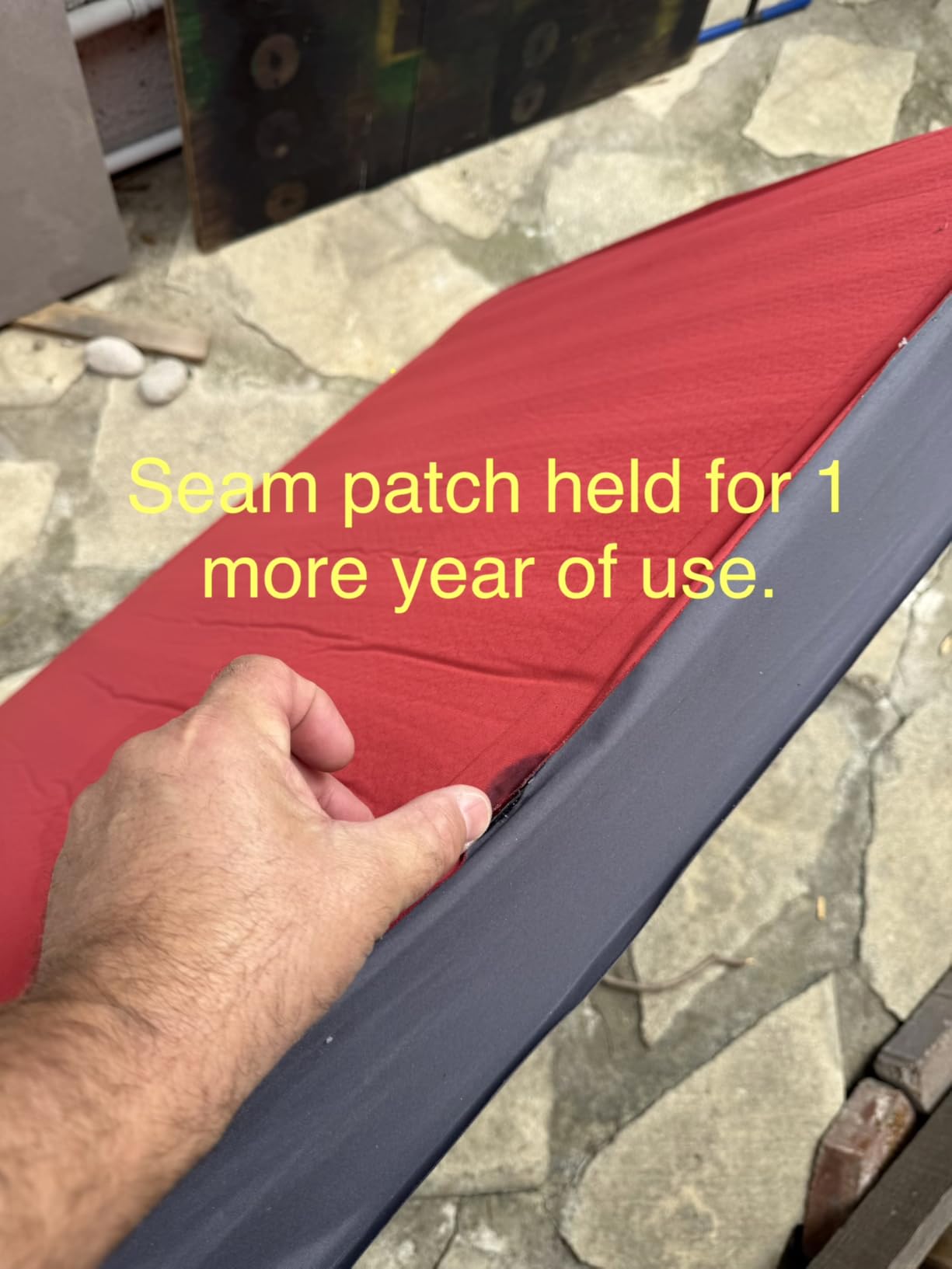
Firmness is adjustable from ultra-plush to firm using the included Top-Up Pump, which means two people on one pad can each dial in their own preference. The 100 percent recycled four-way stretch tricot surface is quiet and has enough traction that you do not slide off, a small detail that makes a large difference overnight.
It also has practical uses beyond a tent. Owners use it as an SUV or vehicle mattress, a replacement mattress in a pop-up travel trailer, and on a boat deck. The top surface is Oeko-Tex 100 certified, and a repair patch is included, which matters on a pad this size.
The complaints are all logistics. At 4.6 pounds and quite bulky, it is car camping only, and the included mini pump struggles with the large air volume, so most owners simply open the valve and let the foam inflate itself. First inflation takes longer than the instructions suggest, and it is not water resistant.
When you want a mattress rather than a pad
This is the pick for van life, overlanding, and anyone who sleeps in a vehicle on a regular basis. The 25.6 inch width and the untapered sidewalls give you a real sleeping surface, and the R-value of 8.1 means it works in cold conditions without a separate winter system.
If you share it with a partner, the adjustable firmness is the feature that separates it from every other pad here. You can set one side plush and one side firm, which no fixed-thickness foam pad can do.
When bulk and pumping stop you
At 4.6 pounds and rolled, it fills a significant part of a vehicle cargo area, and the fact that the included pump struggles means you should plan to rely on self-inflation instead.
It is also not water resistant, so avoid wet ground. For backpackers, this pad is out of scope entirely, and the TREKOLOGY at number nine is the closest thing to its comfort in a carryable weight class.
Buying Guide: How to Choose a Sleeping Pad for Side Sleepers
How thick should a sleeping pad be for side sleepers?
Three inches is the floor for side sleeping, four inches is where most people stop having hip problems, and anything past four inches is pure cushioning. Below 2.5 inches, a shoulder and a hip are pressing directly into the ground and you will feel it within an hour, especially on a cold night when the ground is also pulling heat out of you.
The catch is that thickness grows your pack roughly cubically. A pad that is 2 inches thick does not weigh twice as much as a 1 inch pad, and the packed volume difference between a 2 inch and a 4 inch pad is far larger than most shoppers expect. This is the main reason people settle for thin pads and then blame their sleeping position.
One exception to the rule above: a dense foam pad at 3.15 inches can outperform a soft air pad at the same thickness if you are a heavier sleeper, because the foam pushes back instead of compressing. Density and thickness are two different levers, and you sometimes need less of one when you have more of the other.
What R-value do side sleepers actually need?
Side sleepers need roughly one R-step more than back sleepers using the same pad. The reason is contact area: lying on your side puts more of your body’s surface against the pad than lying on your back, and heat flows toward the cold ground through every square inch of contact.
The practical numbers are straightforward. R 3 to 4 covers three-season ground temperatures for most sleepers, and R 4.3 and above handles shoulder months and early freezing conditions.
R 5 and above is winter territory, and if you are a side sleeper camping below freezing, aim for R 8 or higher rather than the R 5 baseline most guides quote. Six of the ten pads in this roundup publish a tested R-value, which is what makes the numbers comparable between brands.
When a brand does not publish an R-value, treat any seasonal claim as a marketing estimate rather than a specification. The SGS-certified figure on the TREKOLOGY and the ASTM figures elsewhere are drawn from different labs, so treat all of them as close indicators rather than laboratory constants.
Air, foam, or hybrid: which construction cradles a hip?
Air pads give the most control because you decide the firmness at bedtime, and you can let a little air out to soften the surface under your hip. That adjustability is the single biggest argument for air if you cannot find a thickness you like in foam. The trade is stability, since a tall air column shifts when you move.
Closed-cell and open-cell foam pads are silent, never lose air, and hold their thickness over years. They also cannot be adjusted, so you accept the feel the manufacturer chose. Memory foam molds to your shape over a few minutes and gives the most even pressure distribution for joint pain, at the cost of heat retention in warm weather.
Hybrid pads, which combine a foam core with an air layer, are the compromise most car campers end up choosing. You get foam that holds shape plus an air layer you can firm up or soften, and the small air volume involved means less rustling when you move.
Side-sleeper design features that actually matter
Four features do more for side sleepers than brand name or price. First, side rails or 3D vertical edge baffles, which are raised outer chambers designed to hold you centered; the Exped MegaMat is the clearest example in this set, and its untapered walls are why side and stomach sleepers rate it so highly.
Second, flat-top horizontal baffles rather than vertical ones, because vertical baffles create a ridge directly under your hip. Third, larger outer chambers, which give the hip somewhere to fall forward into instead of pressing straight down. A non-slip surface texture is the fourth, because sliding off a pad at 3 am is a real and frequently reported problem for side sleepers who move.
Width is the fifth. A 30 inch surface changes how a side sleeper sleeps compared with a 20 inch one, and most of the 20 to 25 inch pads in this roundup are simply not designed for a body to spread out on its side.
Weight, packed size, width, and inflation method
Set a weight budget before you shop and you will filter the list instantly. Under 1 kg and you are looking at 3 inches or less, while under 2 kg gets you to 4 inches. Over 4 kg and you are shopping for a car camping pad, which is a completely different buying decision.
Check the inflated length as well as the weight. A 72 inch pad cramps anyone over about 5 foot 10, and running out of length on a cold night is its own kind of misery. The Gear Doctors Oxylus and the Exped MegaMat are both 72 inches, and that is the most common length-related complaint across the reviews.
Inflation method matters more than most shoppers expect. Built-in foot pumps remove the fumbling, self-inflating pads remove the pump entirely, and a pad with a weak included mini pump wastes time you will not have after a long day. Whatever you choose, carry a pump sack as a backup, and remember that a pure air pad can be topped up mid-night while a foam pad never needs it.
What to skip for side sleepers: closed-cell foam under 2 inches, which leaves your hip and shoulder with nothing to sink into, and ultralight air pads under 3 inches, which feel thin on the first night and feel thinner as the ground gets colder. A well-made 4 inch pad will usually beat a premium 2.5 inch one for a side sleeper.
How to Stop Hip Pain on the Pad You Already Own
If your current pad is thinner than 3 inches, you can still get surprisingly far with a few adjustments. Community forums converge on the same fixes, and none of them require a new pad.
The first is partial deflation. Let a small amount of air out so the pad is slightly softer under load, because a pad that feels under-inflated at bedtime molds better to the shape of your body once your hip sinks into it. Do this in small increments during the day rather than all at once at night, because the fix is easy to overshoot.
The second is a folded-jacket hip bolster. Roll a puffy jacket or a spare layer into a tight cylinder and place it under your hip and shoulder. It creates a local cushion exactly where the pressure concentrates, and it uses gear you are already carrying. This works on foam pads and air pads alike, and it makes a 2 inch pad behave far better than it has any right to.
The third is inflation discipline. Most side sleepers over-inflate out of habit, because a firm pad feels like it will not bottom out. In practice an over-inflated pad is harder, not more supportive, and the extra internal pressure increases the baffle ridge under your hip. Inflate until the surface is even, then stop.
The fourth is site selection. A slope of even a few degrees pushes your body downhill all night, and the resulting pressure builds at the downhill shoulder. Walk a few extra minutes to find level ground, and put a folded pad or pack under your head end to raise the torso slightly if you sleep on a tilt.
The fifth is friction. Many side sleepers report sliding against the sleeping bag liner, which lands them half off the pad. A dedicated non-slip liner inside the sleeping bag solves it in one step, and it costs almost nothing.
One more that comes up constantly: if you are restless, a tall, loosely inflated air pad feels like sleeping on a potato chip, because every turn travels through the whole air column. That is a stability problem rather than a cushioning one, and the answer is a foam-backed pad such as the Elegear or the Exped MegaMat.
Frequently Asked Questions
How thick should a sleeping pad be for side sleepers?
Three inches is the practical minimum for side sleeping, four inches is where most people stop feeling pressure on the hip and shoulder, and 4 inches or more is maximum cushioning. Below 2.5 inches, your shoulder and hip press directly into the ground. Dense foam at 3 inches can work as well as soft air at 3.5 inches for heavier sleepers, because density resists compression.
What is the most comfortable sleeping pad for side sleepers?
The most comfortable option for most side sleepers is a 4 inch foam-air hybrid with no taper, adjustable firmness, and a surface at least 25 inches wide. The Exped MegaMat is the standout of that group, and the Hazli Matrix AirCell wins if you camp from a vehicle and want a true mattress feel. For backpacking, the TREKOLOGY 4 inch pad gets you four inches of thickness at 900 grams.
Are foam sleeping pads better than air pads for side sleepers?
Foam pads are better when you want silence, zero risk of a nighttime leak, and consistent support over years, and they suit heavier sleepers who bottom out softer pads. Air pads are better when you want adjustable firmness, a lighter packed weight at high thickness, and the ability to let air out to soften the cradle. Self-inflating hybrids give you both, which is why they are the most common side-sleeper choice for car camping.
Why do my hips hurt on a sleeping pad?
Because side sleeping concentrates your weight onto two narrow contact points instead of spreading it across your back. If the pad is under 3 inches, those points reach the ground and the pain follows. Over-inflation makes it worse by creating a firm ridge under the hip, and a pad shorter than your height pushes your torso into a slope. Fixes include a thicker pad, partial deflation, a folded-jacket hip bolster, and a wider surface.
What R-value is best for side sleepers?
Side sleepers should target roughly one R-step more than back sleepers, because more body surface touches the pad and heat moves toward the cold ground faster. R 3 to 4 covers three-season camping, R 4.3 and above handles shoulder months, and R 8 or more is appropriate for sub-freezing ground. In this roundup the TREKOLOGY at 7.2, the Hazli at 8.5, and the Lost Horizon at 13 are the strongest cold-weather options.
What to use instead of a sleeping pad?
The most common alternatives are a wide cot with a foam or air mattress on top, a hammock with an underquilt for suspension, a van or SUV mattress, a double-width pad built from two connectable single pads such as the Kingfun system, or a closed-cell foam pad with a folded jacket as a hip bolster. For couples who both side sleep, a 30 inch wide surface or two joined pads solves the most common complaint.
Which Sleeping Pad Is Right for You?
If you carry your gear on your back and sleep on your side, the four-inch TREKOLOGY at 900 grams is the way to get real hip relief without a pack upgrade, and the four-inch ZOOOBELIVES Airlive2000 is the better all-round pick if a firmer surface does not bother you.
If you camp from a vehicle, the Exped MegaMat is the most thoughtfully engineered side-sleeper design we tested, with untapered 3D sidewalls and adjustable firmness, and the four-inch Hazli Matrix AirCell is the comfort ceiling for anyone with genuine hip or back pain.
For winter and cold ground, the Lost Horizon Option3 at R-13 and the Elegear at an ASTM R-9.5 are the two strongest. For heavy sleepers who bottom out everything, look at foam density before thickness, which is why the Elegear 26D foam matters. For couples, either a 30 inch wide single pad or two connectable 3 inch pads solves the complaint nobody else mentions, which is drifting into your partner in the night.
Whatever you pick, check three numbers before you buy: thickness, inflated length, and packed weight. Get those right and the best sleeping pads for side sleepers stop being a preference and start being arithmetic. Use the partial-deflation and hip-bolster techniques above on your first night, and give the pad two or three nights before you judge it, because foam and high-volume air both take a night to settle.