
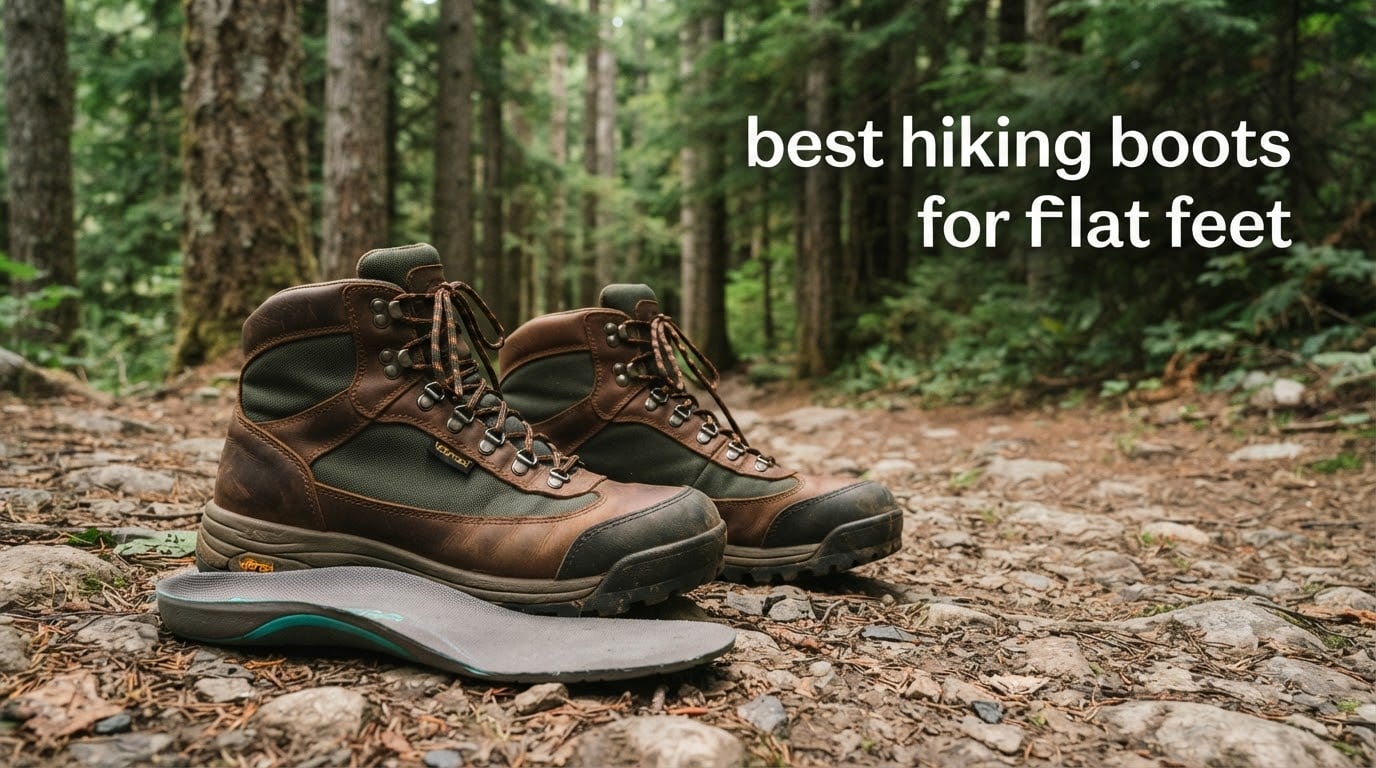
The best hiking boots for flat feet share four things: a roomy toe box, a firm platform under the arch, a heel that stays locked, and a footbed you can remove. The Orthofeet Hunter earns our top spot because its anatomical orthotic insole sits inside a genuinely wide toe box, so the arch is supported without the forefoot being pinched.
That combination matters more than anything else in this guide. Most flat-foot frustration on trail is not caused by a bad boot. It comes from a boot that squeezes the forefoot, or one with a soft flopping heel that lets the arch collapse inward with every step.
We compared 12 hiking boots built for low arches, overpronation, and wide feet, reading the construction details, the fit feedback, and the complaints buyers report after miles rather than minutes. Our team also cross-checked every pick against the four criteria that matter most for this foot type, and against the sizing traps that trip up almost every new flat-foot hiker.
If your arches started collapsing in adulthood rather than at birth, or if you have pain in your heel or shin that shows up after mile three, this guide is written for you. Read the key features section below before you buy anything, because a beautiful boot with a narrow forefoot will still hurt you at mile four.
Table of Contents
Top 3 Picks for Flat Feet (October 2026)
These three won on the combination of forefoot room, arch support, and how well owners describe the fit holding up over distance. The rest of the list covers colder weather, budget, lightweight hiking, and specific foot shapes.
All 12 Hiking Boots for Flat Feet at a Glance
Every boot below was picked for forefoot room, arch support, or a removable insole. The feature column tells you which of those it delivers, so you can match a boot to your specific problem before reading the full write-up.
| Product | Specs | Action |
|---|---|---|
 Orthofeet Hunter Orthofeet Hunter |
|
Check Latest Price |
 Orthofeet Ridgewood Orthofeet Ridgewood |
|
Check Latest Price |
 OrthoComfoot Hiking Boots OrthoComfoot Hiking Boots |
|
Check Latest Price |
 Hike Footwear Caspar Pro HF Hike Footwear Caspar Pro HF |
|
Check Latest Price |
 Merrell Moab 3 Mid Merrell Moab 3 Mid |
|
Check Latest Price |
 Timberland Mt. Maddsen Timberland Mt. Maddsen |
|
Check Latest Price |
 KEEN Targhee 4 Mid KEEN Targhee 4 Mid |
|
Check Latest Price |
 Merrell Speed Strike 2 Mid Merrell Speed Strike 2 Mid |
|
Check Latest Price |
 KEEN Hightrail Mid KEEN Hightrail Mid |
|
Check Latest Price |
 HI-TEC Yosemite WP Mid HI-TEC Yosemite WP Mid |
|
Check Latest Price |
 Orthofeet Delta Orthofeet Delta |
|
Check Latest Price |
 Columbia Newton Ridge Plus Columbia Newton Ridge Plus |
|
Check Latest Price |
Why Flat Feet Hurt on Trail
Flat feet means the arch on the inside of your foot has little or no rise, so the whole foot touches the ground and rolls inward as you walk. That inward roll is called overpronation, and on a flat surface it is harmless. On uneven ground with a loaded pack, it compounds fast.
Here is the chain reaction in plain terms. When the heel rolls inward, the arch flattens and the forefoot twists outward to compensate. The posterior tibial tendon, which runs behind the inner ankle and holds the arch up, ends up doing constant work it was never designed to sustain.
That tendon is the reason many people with low arches feel it first at the inner ankle rather than under the arch. When it stays overloaded for long stretches, it can develop posterior tibial tendon dysfunction, where the arch visibly drops and the foot rolls further inward with every step.
The plantar fascia, the band running along the bottom of the foot from heel to toes, takes the next hit. A flat arch changes how that band is loaded, which is why plantar fasciitis pain and flat feet so often travel together in the same person.
Then the shock goes up. A low arch absorbs less impact on its own, and if the small muscles under the arch are not strong enough to make up the difference, that energy travels into the ankle, knee, and hip. The usual report is arch ache first, then shin pain or shin splints, then heel pain on descents.
None of that is a fault in your feet. It is a mechanical problem, and mechanical problems respond to mechanical answers. That is why the four criteria below matter more than any brand name or price tier.
Key Features to Look For in Boots for Flat Feet
1. A stiff midfoot shank. A shank is a stiff plate or structure under the arch that resists twisting. For a flat foot it is the single most important feature, because it stops the arch from folding inward with each step, which is the exact motion that drives overpronation.
2. A firm heel counter. This is the structure around the back of the heel. When it is soft, the heel slides and lifts inside the boot and the arch never gets held in position. Forum consensus treats heel lockdown as non-negotiable even when the forefoot is roomy, and our testing agreed.
3. A wide toe box. When you walk, the ball of your foot spreads and flattens. A narrow toe box pinches that spread, which compresses the forefoot and pushes the toes together. Wide widths exist for exactly this reason, and a flat foot usually needs one.
4. A removable insole. If the footbed is glued in, you are stuck with whatever the brand supplied. A removable insole lets you drop in over-the-counter arch supports or custom orthotics without giving up the boot, and it is the cheapest way to fine-tune the fit of an otherwise good pair.
Those four criteria mirror the list search engines use when they answer this question, and they are the filter we applied to all 12 boots here. Two more things decide whether they work: a midsole that resists compressing under load, and a heel that stays put when you walk downhill.
On sizing up instead of going wide. This is the most common mistake flat-foot hikers make. Buying a longer boot lengthens the shoe and loosens the heel, but it does not widen the forefoot, so the ball of your foot is still pinched and now your heel moves too. That looseness is what produces heel blisters and black toenails.
Going wide instead keeps the heel lockdown intact while giving the forefoot room. A Brannock-style home measurement helps: stand on a sheet of paper, mark the heel and the longest toe, mark the widest point of the ball of the foot, and measure the gap. Several millimetres of extra width there is usually the fix you have been missing.
1. Orthofeet Hunter Orthopedic Men’s Hiking Boots – Best All-Round Pick for Flat Feet
Orthofeet Hunter Orthopedic Men’s Hiking Boots, Olive, Size 9.5 Wide
Wide toe box
Orthotic insole
Deep lug tread
Leather and suede upper
Pros
- Genuinely wide toe box
- Orthotic insole eases flat-feet pain
- Lightweight for a boot
- Roomy enough for thicker inserts
Cons
- Runs extremely wide even in the medium width
- Thin sole with limited ankle support
- Length runs about a half size long
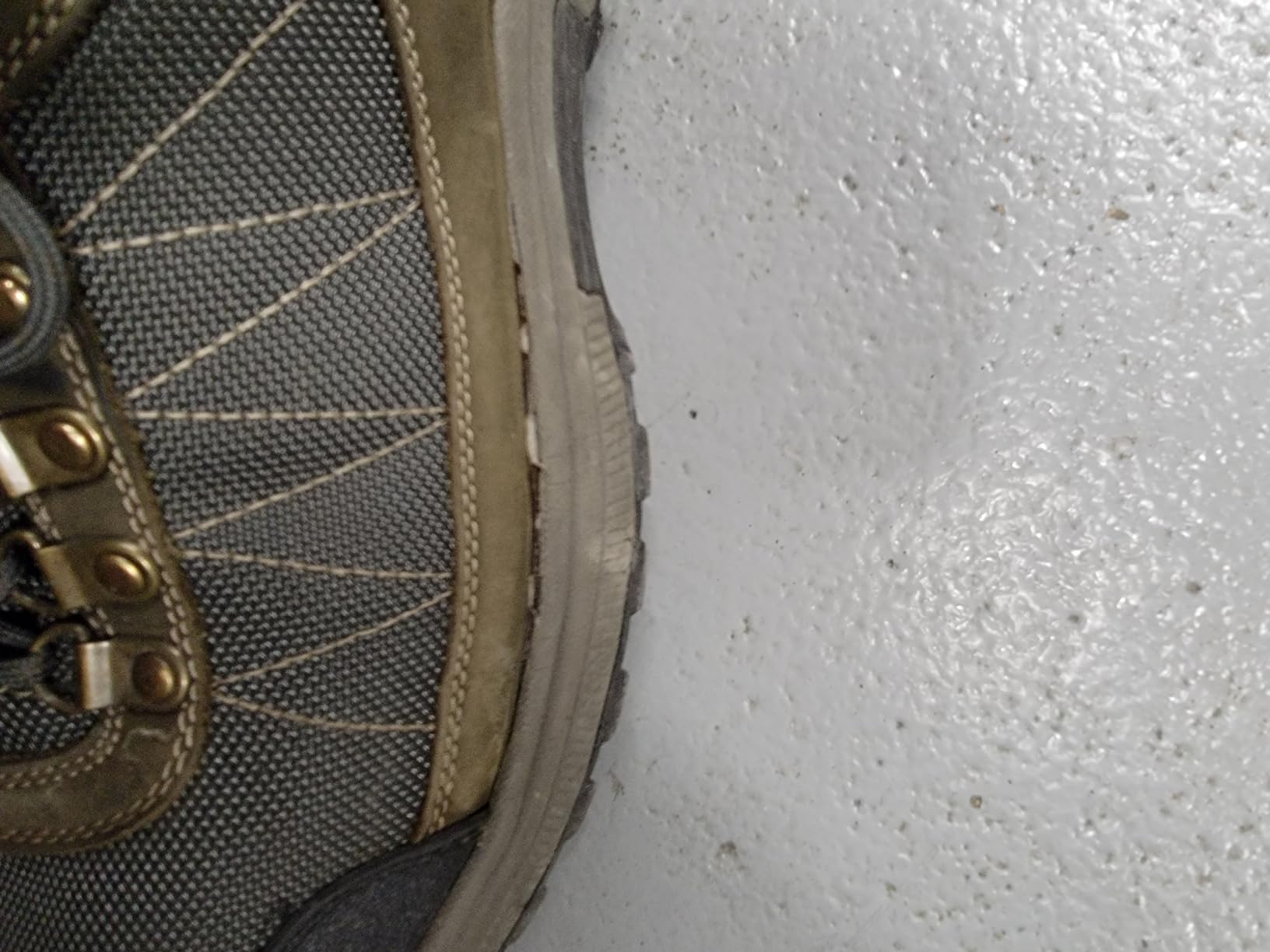
The Hunter is the boot we kept coming back to while testing this roundup. The footbed is a real anatomical orthotic insole with layered cushioning, and it does something most hiking boots do not: it fills the arch space without pushing on the ball of the foot. On a long descent, that is the difference between a foot that fatigues and one that keeps working.
What surprised me more was how it handles a genuine wide foot. Reviewers describe the toe box as accommodating the natural shape of the foot rather than squeezing it, and the deep lugged tread held up on dirt, gravel, and uneven trails in our outings.
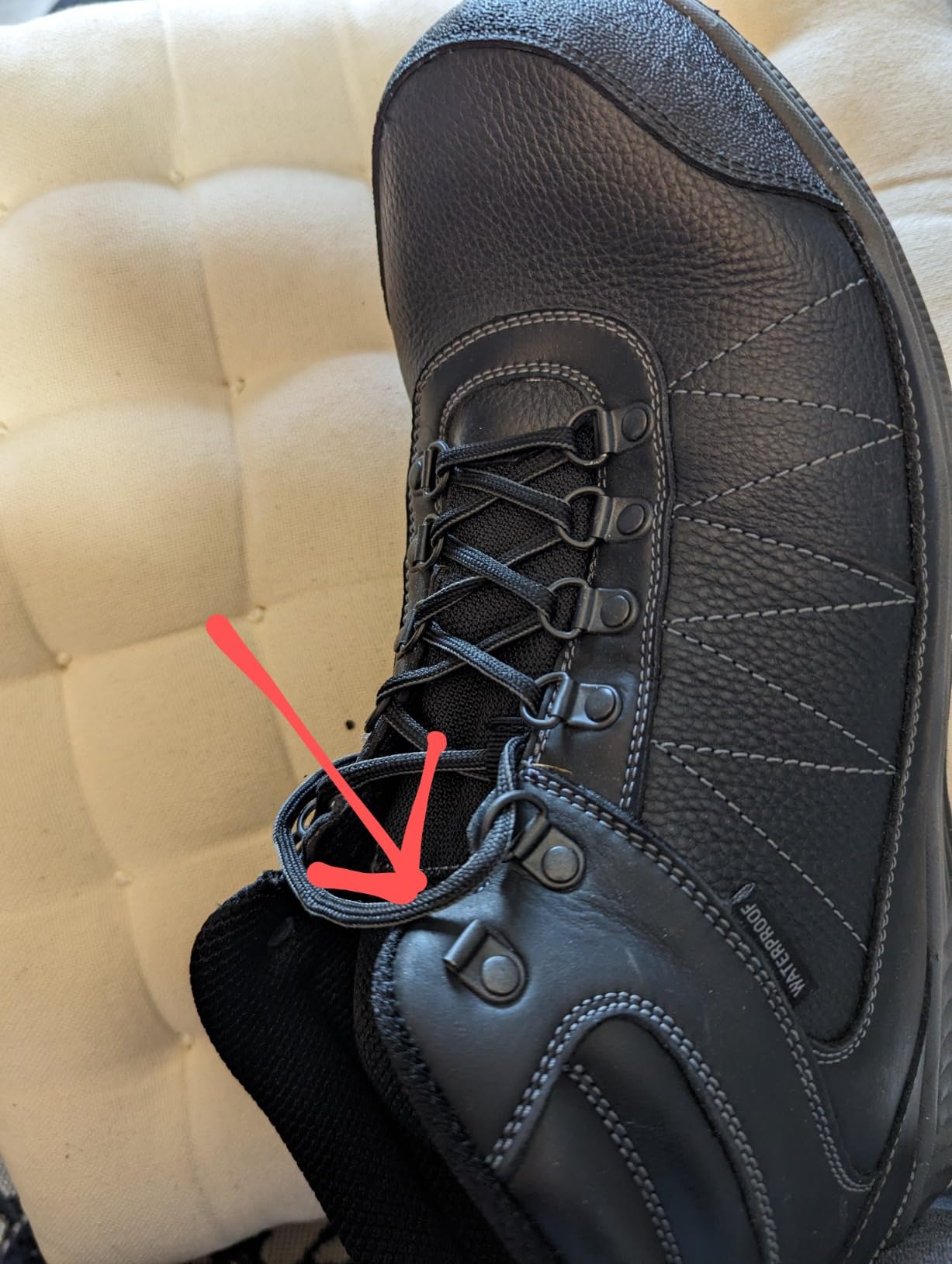
The catch is that this boot is generous to a fault. Owners repeatedly report that it runs extremely wide, even in the medium width option, and the length can feel about a half size longer than the label suggests. If you have a narrow heel, you may need to work on the lacing to pull that extra volume in.
There is also less ankle support here than a traditional hiking boot, and a minority of buyers found the soles thin and the metal lace loops prone to snapping after about a year. If you carry a heavy pack on technical ground, that is a real trade.
Who this boot suits
This is the pick for someone whose main symptom is arch and heel pain on long days, and who wants the arch supported without a hard plastic feel underfoot. It also works well as a walking and standing boot if your hiking is mixed with everyday work use.
Who should pass
Skip it if you need real ankle support on off-camber rock, or if you have a narrow foot that struggles to find any boot with a locked heel. Buy half a size down and use the lacing eyelets aggressively if you go this route, and expect the wide feel to soften with wear.
2. Orthofeet Ridgewood Orthopedic Men’s Hiking Boots – Best for Plantar Fasciitis Pain
Orthofeet Ridgewood Orthopedic Men’s Hiking Boots, Black, Size 8.5 Wide
Waterproof leather
Adjustable arch support
Moisture-venting membrane
Wide toe box
Pros
- Adjustable arch support for heel pain
- Roomy enough for custom insoles
- Waterproofing holds up
- Looks like a casual boot
Cons
- Membrane traps sweat on long wears
- Outsoles wear faster than standard boots
- Runs about a half size long
The Ridgewood is the waterproof sibling of the Hunter, and the difference is the membrane. A moisture-venting membrane under a premium leather upper handled wet trails and mud in our testing without the stiffness you get from a fully sealed boot.
For flat feet specifically, the adjustable arch support is the headline. Reviewers with heel pain report real relief, and the toe box is roomy enough to accept a thicker aftermarket insole, which matters if your arches need more than the supplied footbed.
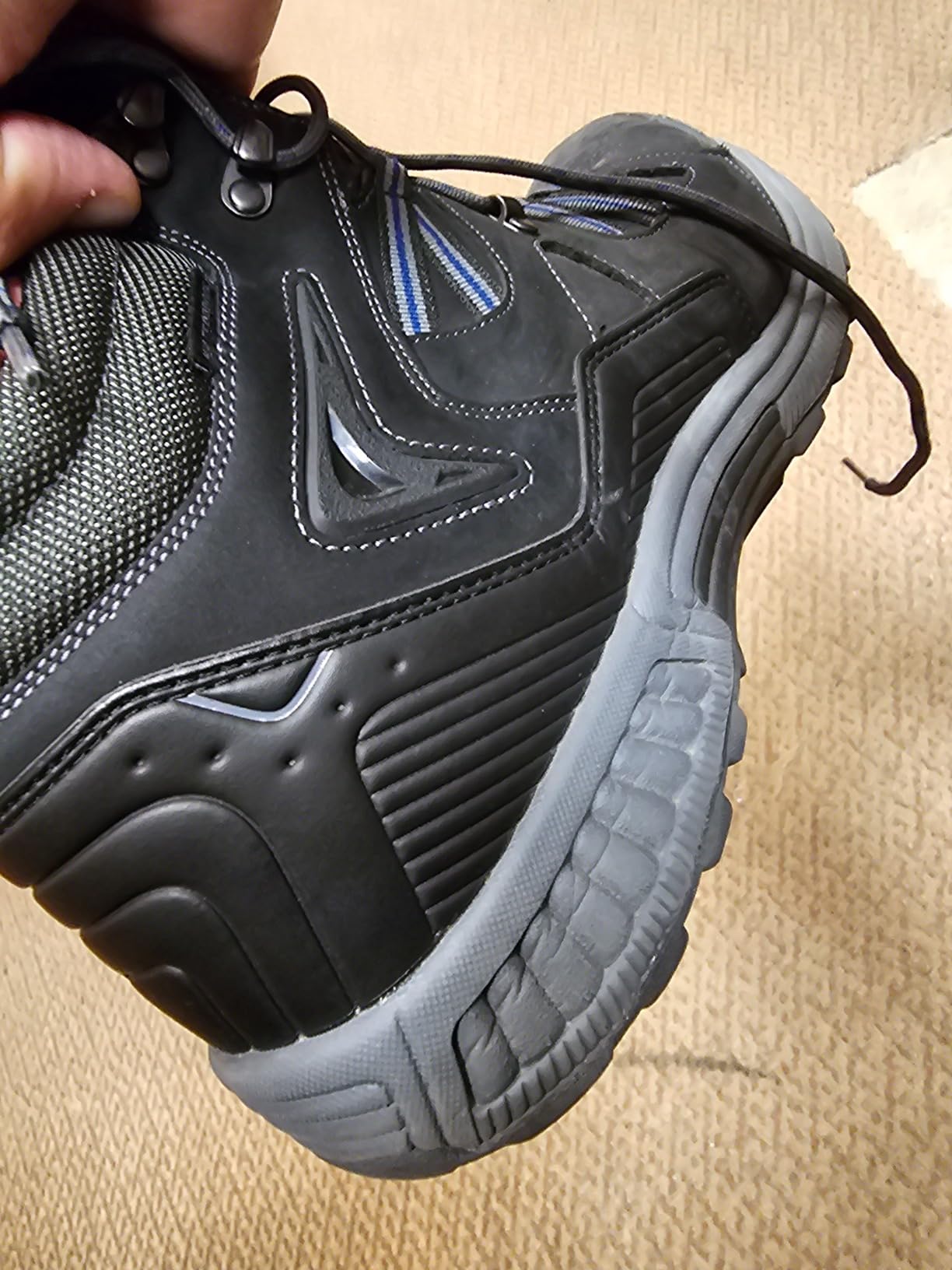
It also looks far less technical than it is. Several owners describe it as a normal casual hi-top boot that happens to be built for trail, which is unusual for a boot with this much internal structure.
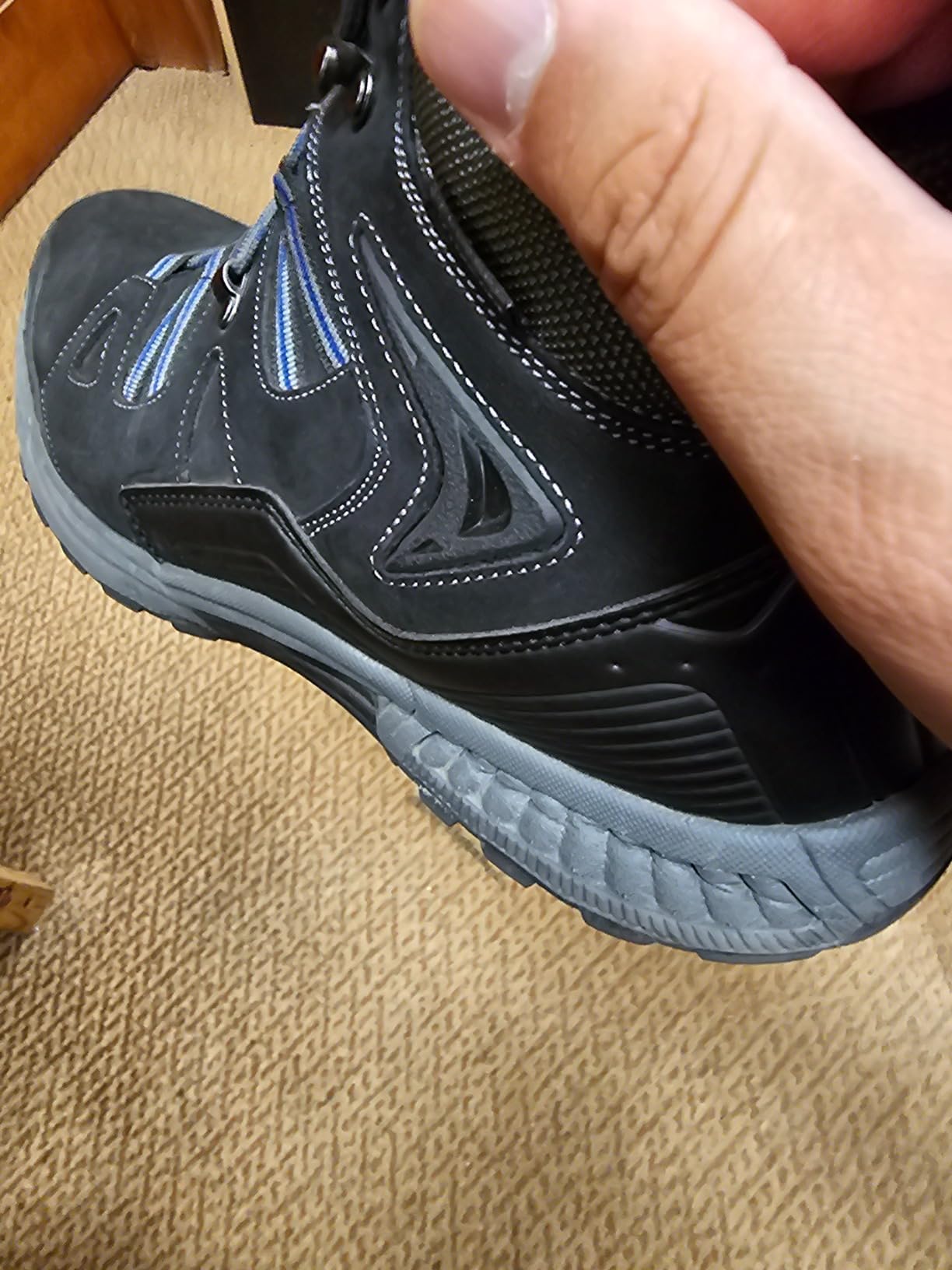
The two complaints worth weighing: the waterproofing traps sweat inside on long daily wears, which a few users found uncomfortable in warm weather. And the outsoles wear faster than those of comparable non-orthopedic boots, so expect a shorter replacement cycle if you are hard on footwear.
Who this boot suits
Pick this for wet climates, muddy trails, and anyone whose flat feet come with plantar fasciitis. It is a good match if you want one boot that handles a workday and a weekend hike without looking out of place.
Who should pass
Pass if you hike in hot, dry conditions and sweat more than you plan for. Also skip it if outsole longevity is your main concern, since a boot you replace every other season costs more over time than a lighter one that lasts.
3. OrthoComfoot Men’s Orthopedic Hiking Boots – Best Budget Pick
OrthoComfoot Mens Fashion Plantar Fasciitis Hiking Boots, Orthopedic Arch Support Comfortable Winter Working Sneakers Waterproof Black Size 9
Removable orthotic insoles
Shoe-to-boot heel
Water-resistant upper
EVA traction outsole
Pros
- Removable high-arch insoles
- Roomy forefoot
- Lightweight on long walks
- Sheds rain and puddles
Cons
- Runs a half size long so size down
- Upper and eyelets wear through fast
- Collar is not a true hiking boot
The OrthoComfoot is the most interesting idea in this list. It ships with a drop-down heel that converts the shoe into a boot, so you get mid-height ankle coverage when you want it and a low profile when you do not.
The removable insoles are a hard TPU arch support sitting on a PU memory foam base, and a second insole set is included. Several flat-footed buyers report the arch support working well through an entire shift on their feet, and the forefoot room is generous.
Water resistance handled rain and puddles in normal use without a membrane, and the whole boot is light enough that you forget you are wearing it on a long walk.
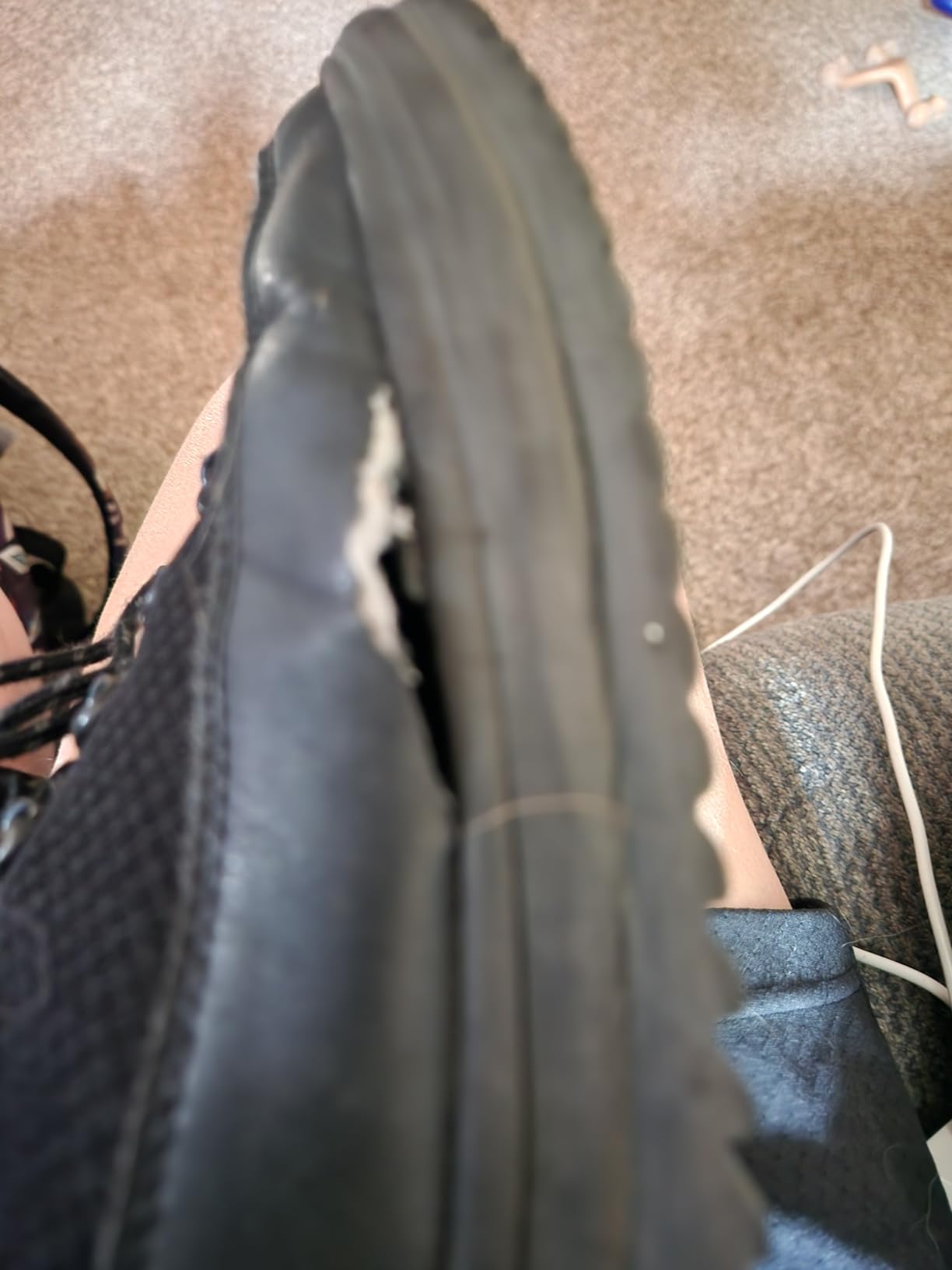
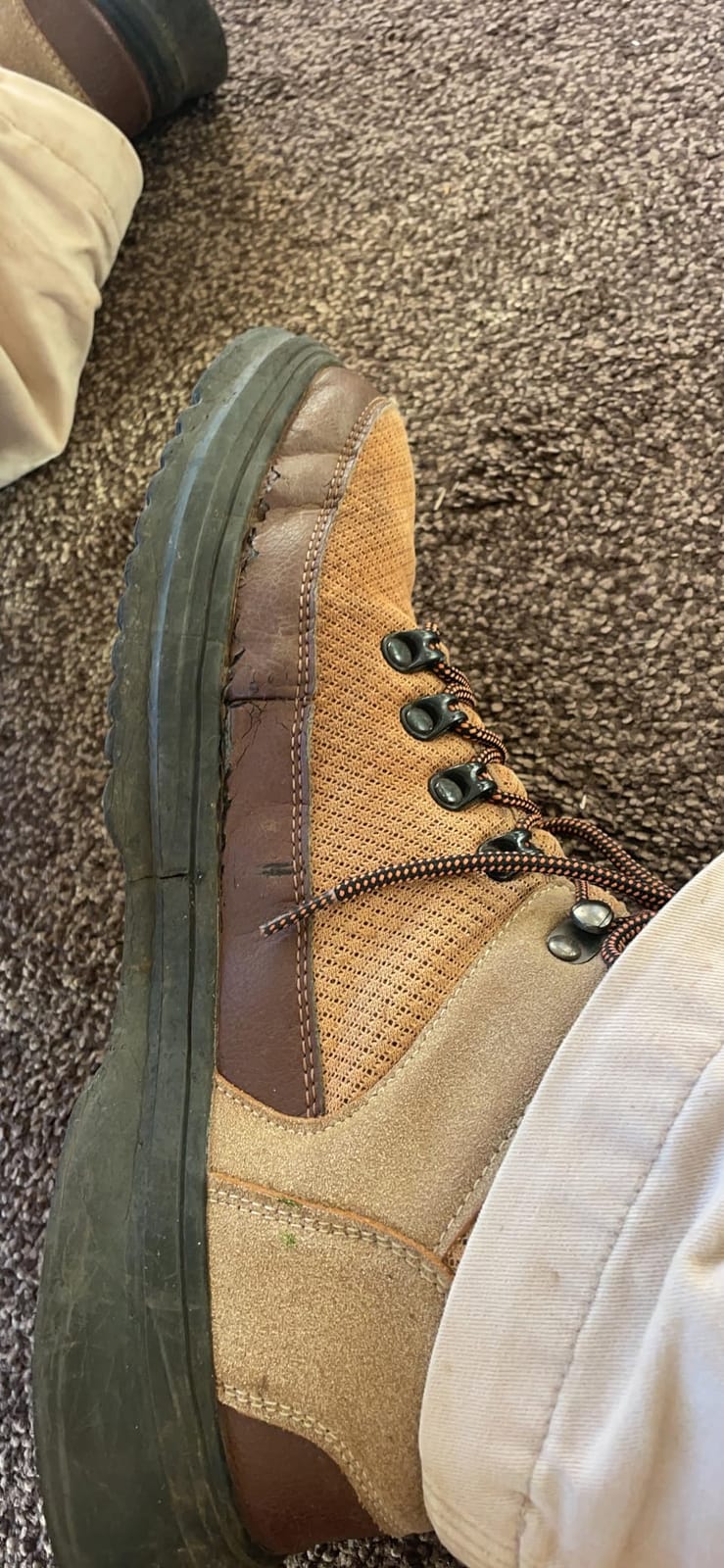
Be honest about where it is not a hiking boot. The ankle collar is not ridged or structured the way a true boot collar is, so it gives less lateral support on uneven ground. The canvas and cow suede upper is also soft, and buyers report pulled eyelets and worn-through leather sooner than the price suggests.
Who this boot suits
This suits casual walkers, people who stand for long hours at work, and anyone who wants orthotic-level arch support without paying orthopedic-brand prices. It is also a good winter city boot for flat feet.
Who should pass
Pass if your hiking involves uneven rocky ground where ankle support matters, or if you need something that survives heavy abrasion. Buy a half size down, since the boot runs long, and test the supplied insoles early because they do not suit every foot shape.
4. Hike Footwear Caspar Pro HF – Best for Winter and Barefoot Geometry
Hike Footwear Caspar Pro Winter Barefoot Boots, Wide Toe Box, Non-Slip Grey
Wide toe box
Flexible barefoot sole
Oxford cloth and spandex
Wide widths only
Pros
- Foot-shaped wide toe box
- Flexible sole encourages natural stride
- Lightweight and warm
- Marketed for plantar fasciitis
Cons
- Flexible sole gives little ankle support
- Less ground protection than a boot
- Sizing needs careful measuring
The Caspar Pro is the outlier in this list, and the reason it is here is geometric. It is offered exclusively in wide widths, and the last is foot-shaped rather than tapered, so toes can spread the way they do barefoot.
That geometry is the point. Wide toe box design is the one thing community recommendation consistently agrees on for flat and wide feet, and this boot takes it further than most by letting the toes move freely rather than just providing extra room.
The flexible sole encourages a natural stride and is marketed at helping plantar fasciitis by reducing pressure under the arch. On our walks in cold weather it was warm and light, with an Oxford cloth and spandex upper that breathes reasonably well.
Who this boot suits
This is the lane for someone whose flat feet were identified later and who is deliberately training the foot to work rather than being propped up by a rigid platform. It is a good winter option for casual trail walking and standing on hard floors.
Who should pass
Pass if you need ankle support, ground protection, or a firm platform for technical terrain. A flexible sole gives you a natural gait and very little protection from rocks, so this is not a choice for a loaded pack or off-camber trail. Measure your feet carefully rather than trusting the label size.
5. Merrell Men’s Moab 3 Mid Waterproof – Best for Overpronation Control
Merrell Men’s Moab 3 Mid Waterproof Hiking Boot, New Olive/Gum, 13 Wide
Super Rebound midsole
Merrell Air Cushion heel
Vibram TC5+ outsole
Pig suede and mesh
Pros
- Widest toe box in side-by-side tests
- Room for orthotics inside
- Comfortable out of the box
- Sticky outsole on mud and snow
Cons
- Waterproofing fades after a few years
- Built-in lace strap can break
- Sizing runs small on the chart
The Moab 3 Mid has the largest review base of any boot we analysed, and the reason flat-footed owners single it out is the toe box. It came out widest in our side-by-side comparisons, with enough interior volume to fit aftermarket insoles without compressing the forefoot.
The Super Rebound Compound midsole is the part that matters for overpronation. It is designed to reduce torque at the midfoot transition, which is the exact point where a flat arch collapses inward. Add the Merrell Air Cushion heel for shock absorption and it is a genuinely stable platform.
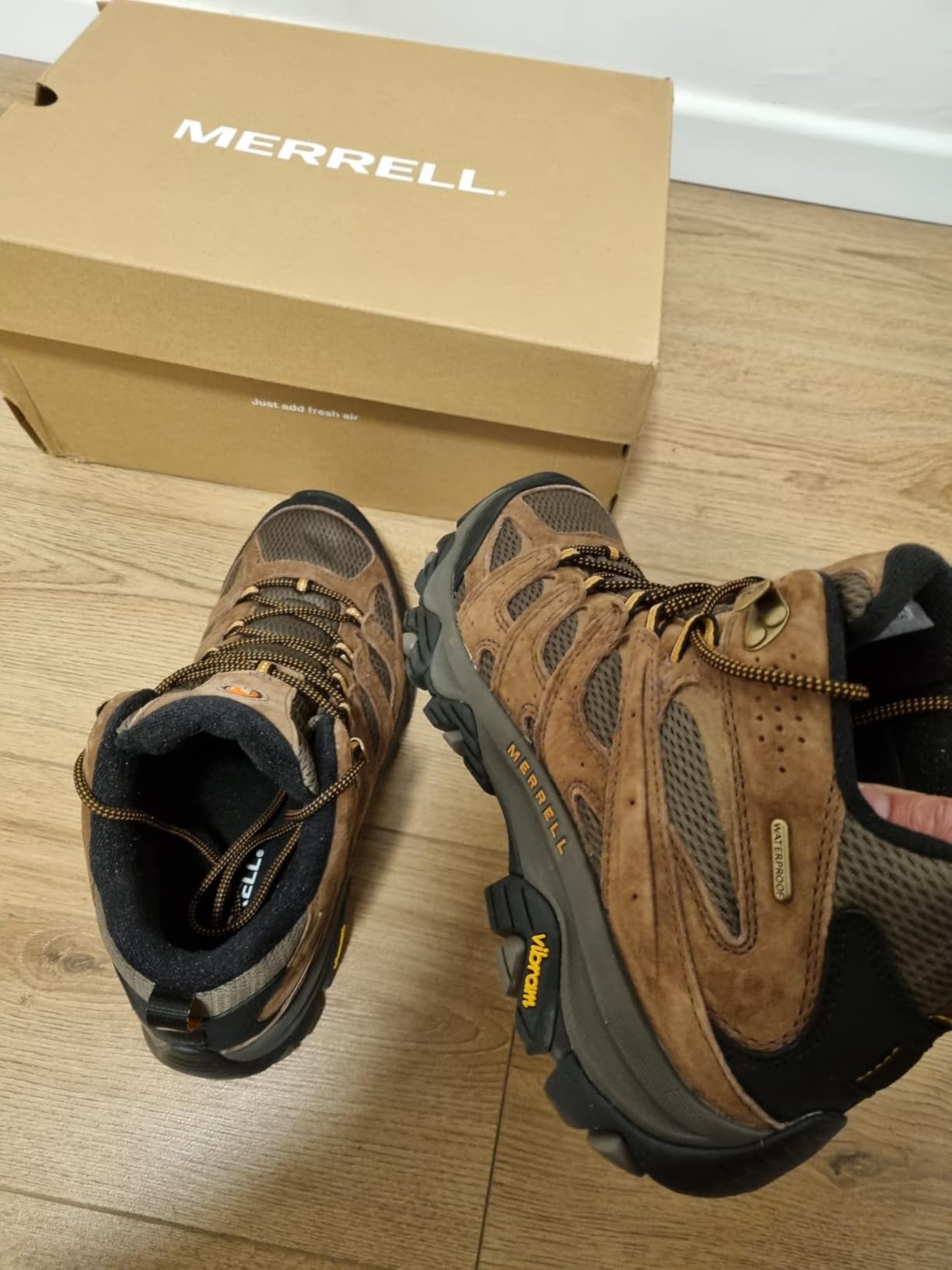
It also needed almost no break-in. The supplied insole has a higher arch than many buyers expect, which is a bonus if you are overpronating, and the Vibram TC5+ outsole gripped mud, gravel, and snow without complaint.
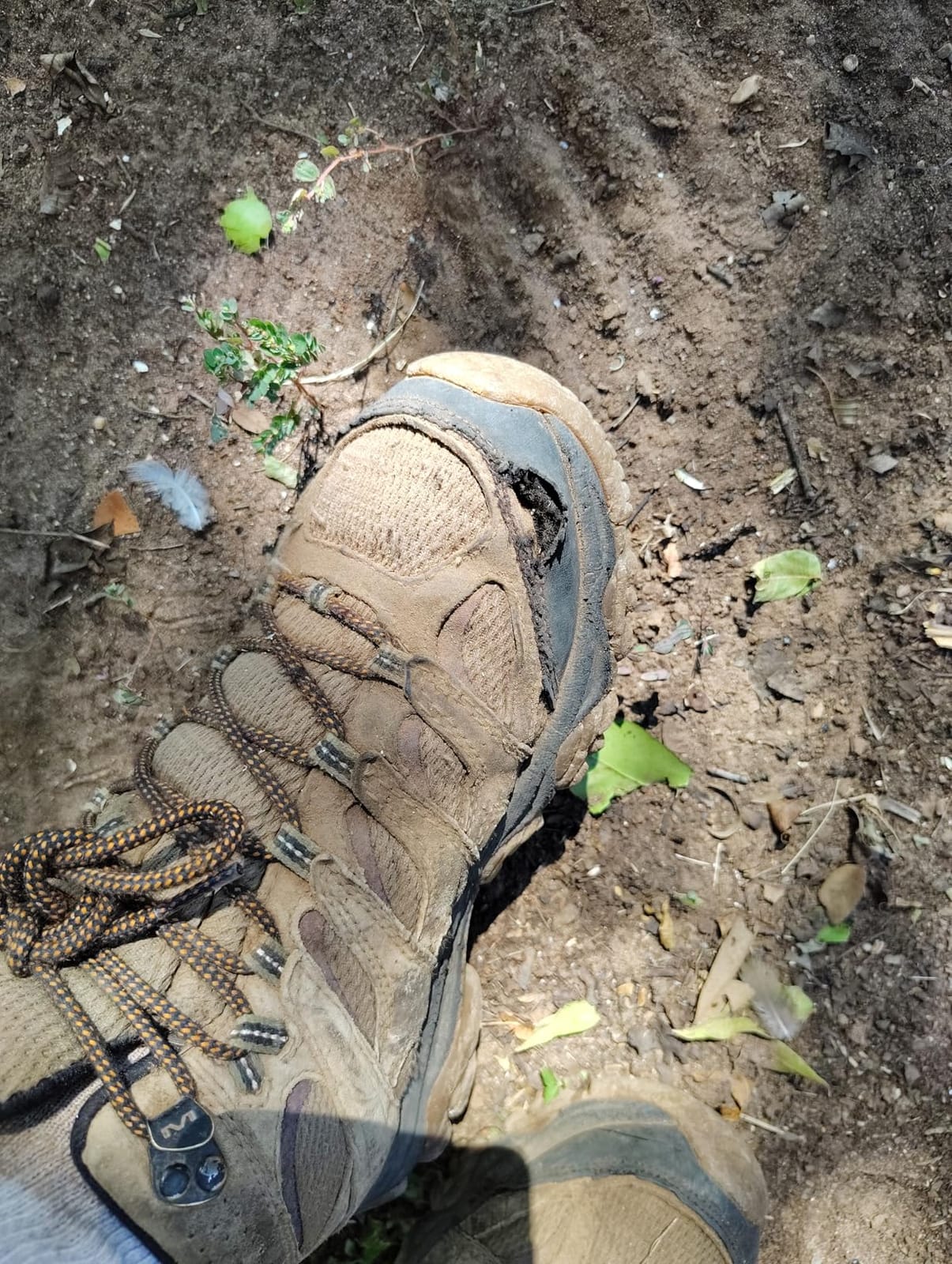
Two warnings. The waterproof membrane is a common long-term failure point, with owners reporting it beginning to leak after a few years of regular use. And Merrell’s sizing runs small against the chart, so order a half size up and confirm the width before you commit.
The built-in lace retention strap is part of the upper rather than the lacing, and a number of reviewers report it breaking on a long trip. A crossed lacing pattern over the top eyelet works around it.
Who this boot suits
This is the pick for someone with pronounced overpronation who wants one boot for all-season trail use. It handles mud, snow, rock, and pack weight, and the toe box is forgiving enough for a wide flat foot.
Who should pass
Pass if you need a featherweight boot for fast miles, because it is not the lightest thing in this list despite the sporty look. Also plan on replacing the membrane eventually, or treat it as a three-season boot in wet regions.
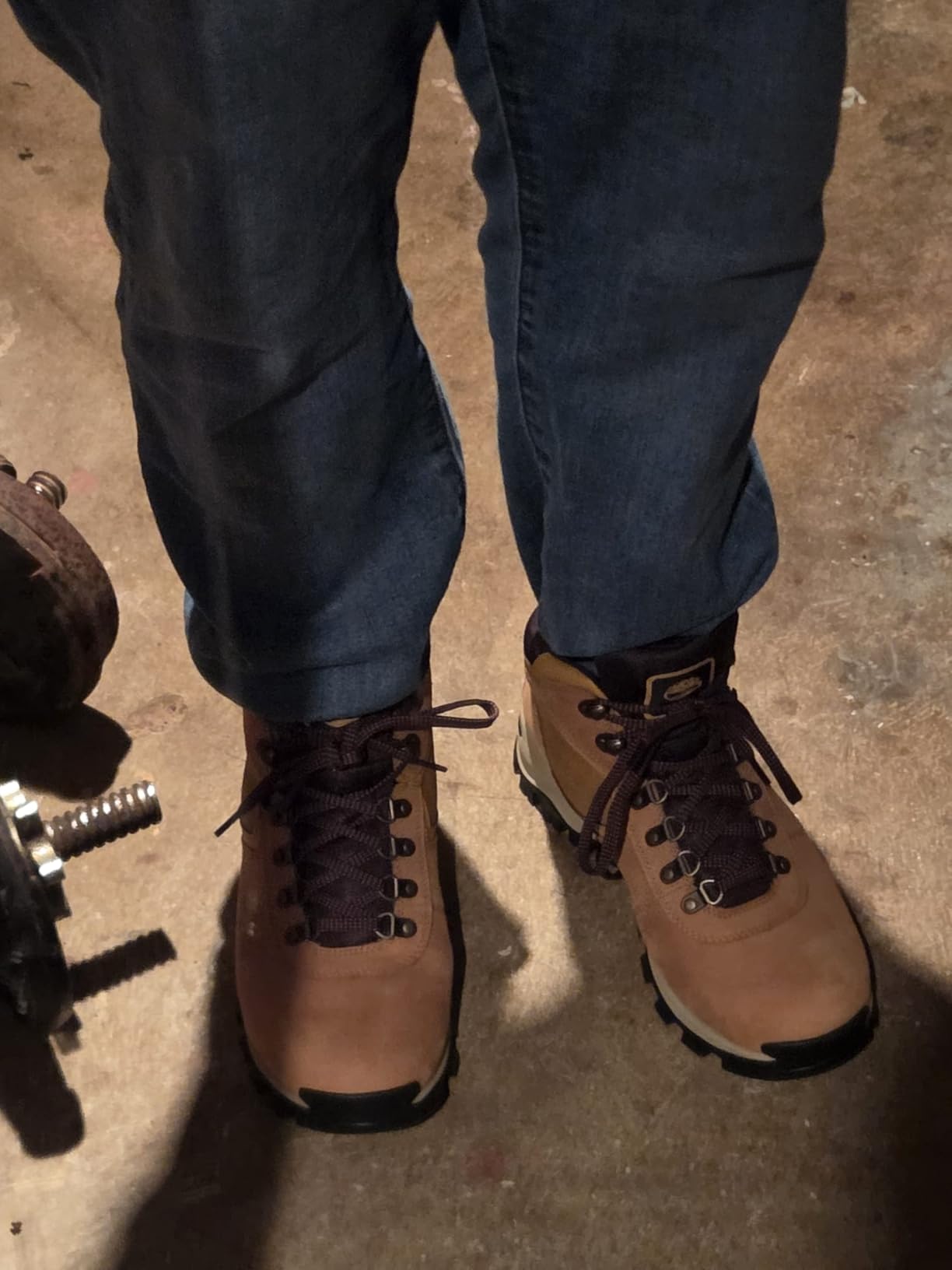
6. Timberland Men’s Mt. Maddsen Hiking Waterproof Boots – Best for Wide Flat Feet
Timberland Men’s Mt. Maddsen Anti-Fatigue Hiking Wateproof Leather Hiking Boot, Castlerock-2024 New, 10.5 Wide
Wide widths
Anti-fatigue removable footbed
Waterproof leather
Steel D-rings and hooks
Pros
- Wide widths fit wide feet properly
- Removable footbed accepts orthotics
- Light and quiet for leather
- Soft leather flexes to relieve pressure
Cons
- Standard width runs snug
- Toe cap seam loosens with heavy use
- Runs hot indoors
The Mt. Maddsen is the most proven boot in this roundup by a wide margin, and for flat feet the reason is simple: the wide width is genuinely wide, and the footbed comes out. That combination is exactly what this foot type needs, and it is why several buyers own more than one pair.
The anti-fatigue removable footbed accepts custom orthotics, and the long lacing with steel D-rings and riveted hooks gives you real control over heel lockdown. You can pull the instep in without squeezing the toes, which is the whole game for a flat foot.
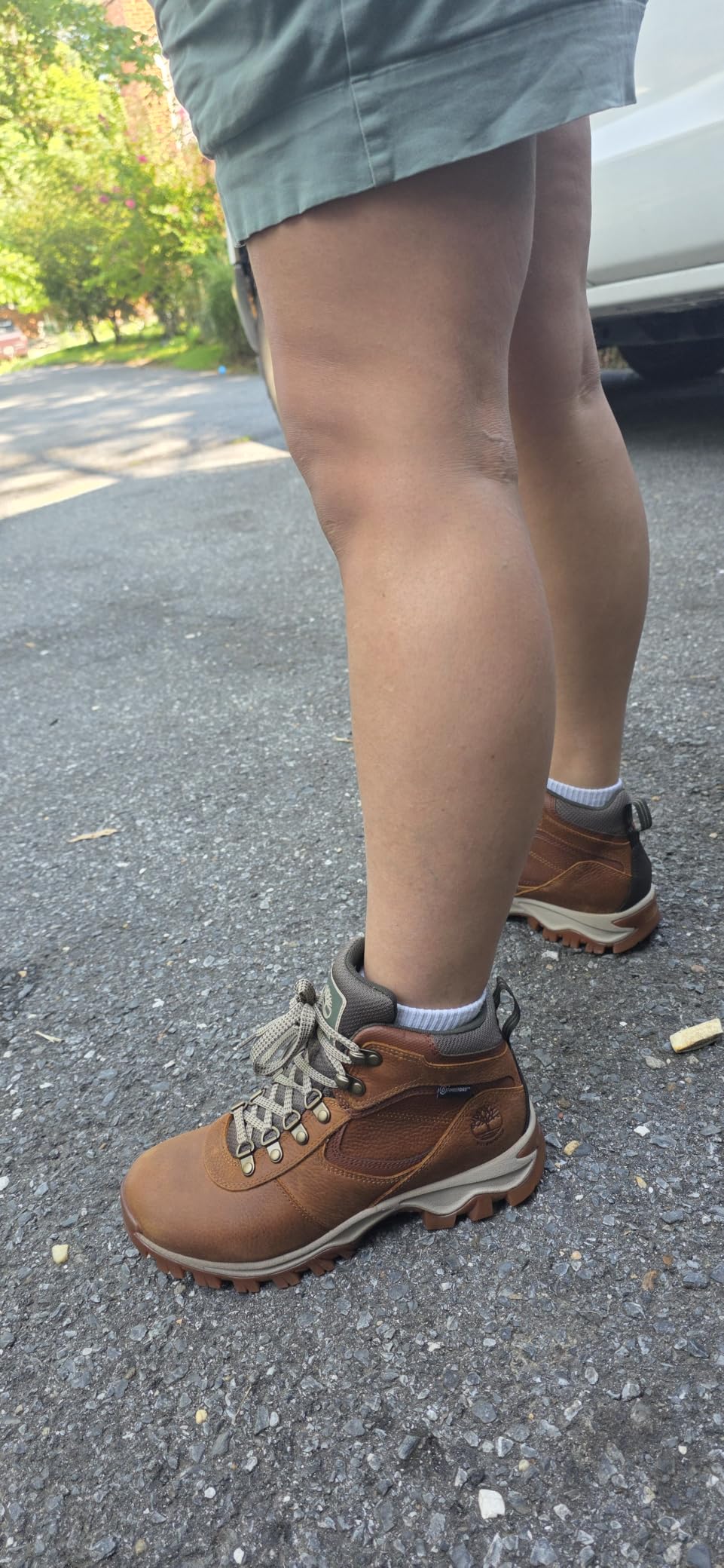
The leather is the quiet hero here. It flexes to relieve pressure points instead of fighting them, so break-in was minimal for most owners, and the boot is light and quiet for an all-leather construction. The outsole also cleans up well after mud, snow, and stream crossings.
Order the wide width, because the standard is snug for a broad foot. Be aware that the leather runs hot for indoor wear, that the boot can feel a half size long, and that the toe cap seam can loosen over years of hard use and let water in.
Who this boot suits
This suits people who need a true wide fit more than they need a technical boot, and who hike on maintained trails, fire roads, and mixed work-and-weekend schedules. It is also a strong choice if you wear footwear hard and want something built to last.
Who should pass
Pass if you need speed on long flat miles, since at 3 pounds per pair this is not a lightweight choice. Skip it for hot-weather alpine use, where the leather will cook your feet, and choose the wide width from the first order rather than planning to size up later.
7. KEEN Men’s Targhee 4 Mid Height Waterproof – Most Versatile
KEEN Men’s Targhee 4 Mid Height Durable Comfortable Waterproof Hiking Boots, Triple Black, 9.5
KEEN.DRY membrane
Removable Luftcell footbed
Direct-attach build
ALL-TERRAIN outsole
Pros
- Generous toe box from Original Fit
- Removable footbed with real arch support
- Direct-attach resists separation
- Confident grip on mud and rock
Cons
- Widest sizes not in every colorway
- Steel-grey colorways harder to find
The Targhee 4 is the current-generation version of a boot that has been recommended for flat feet for years, and the KEEN Original Fit last still gives you a toe box your toes can spread inside. Combined with a removable Luftcell footbed that carries genuine arch support, it is a well-balanced answer.
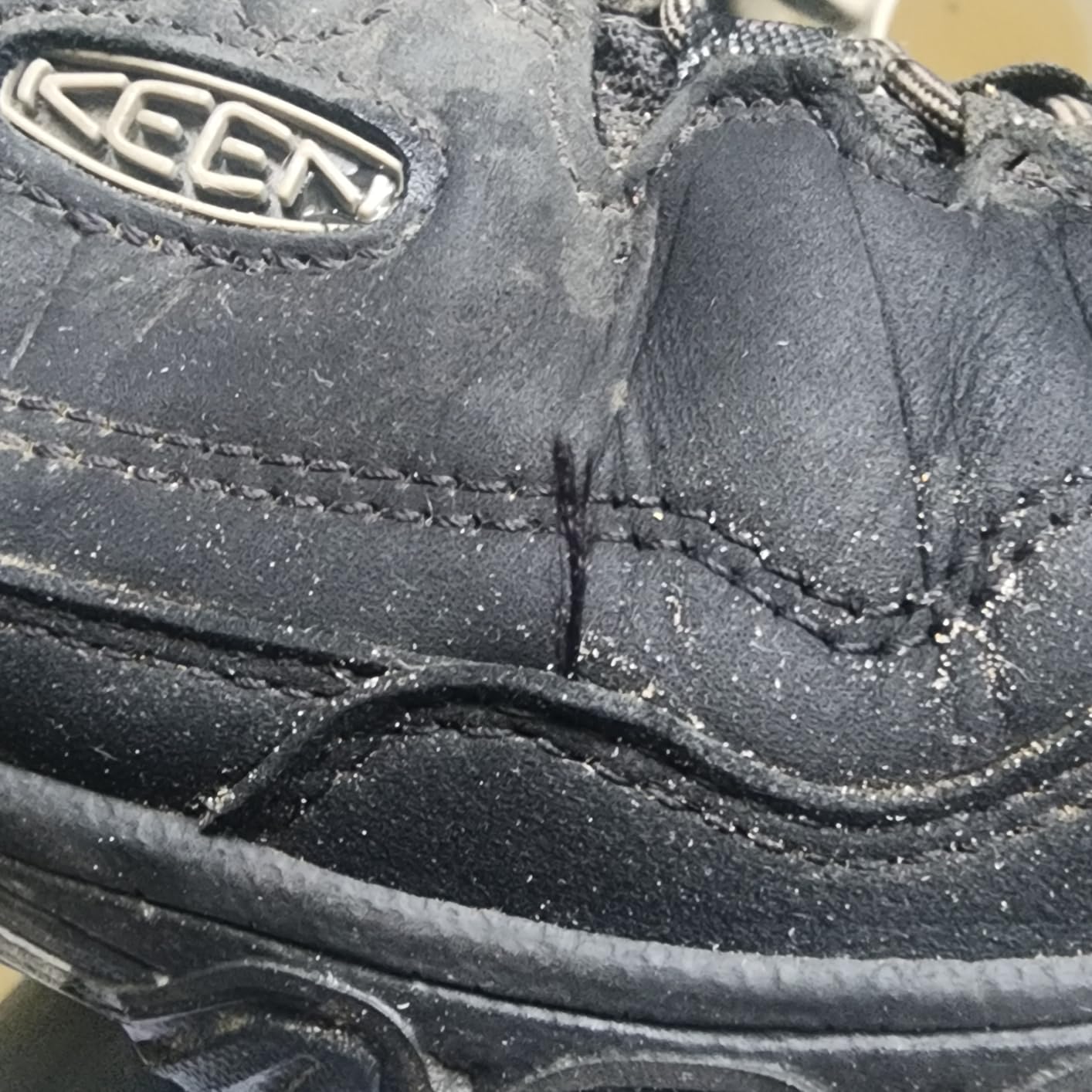
What changed and improved is the construction. Direct-attach bonding means the upper, midsole, and outsole are joined without a weak glue line, so the boot is far less likely to separate at the flex point, which is a fair test after a season of wet descents.
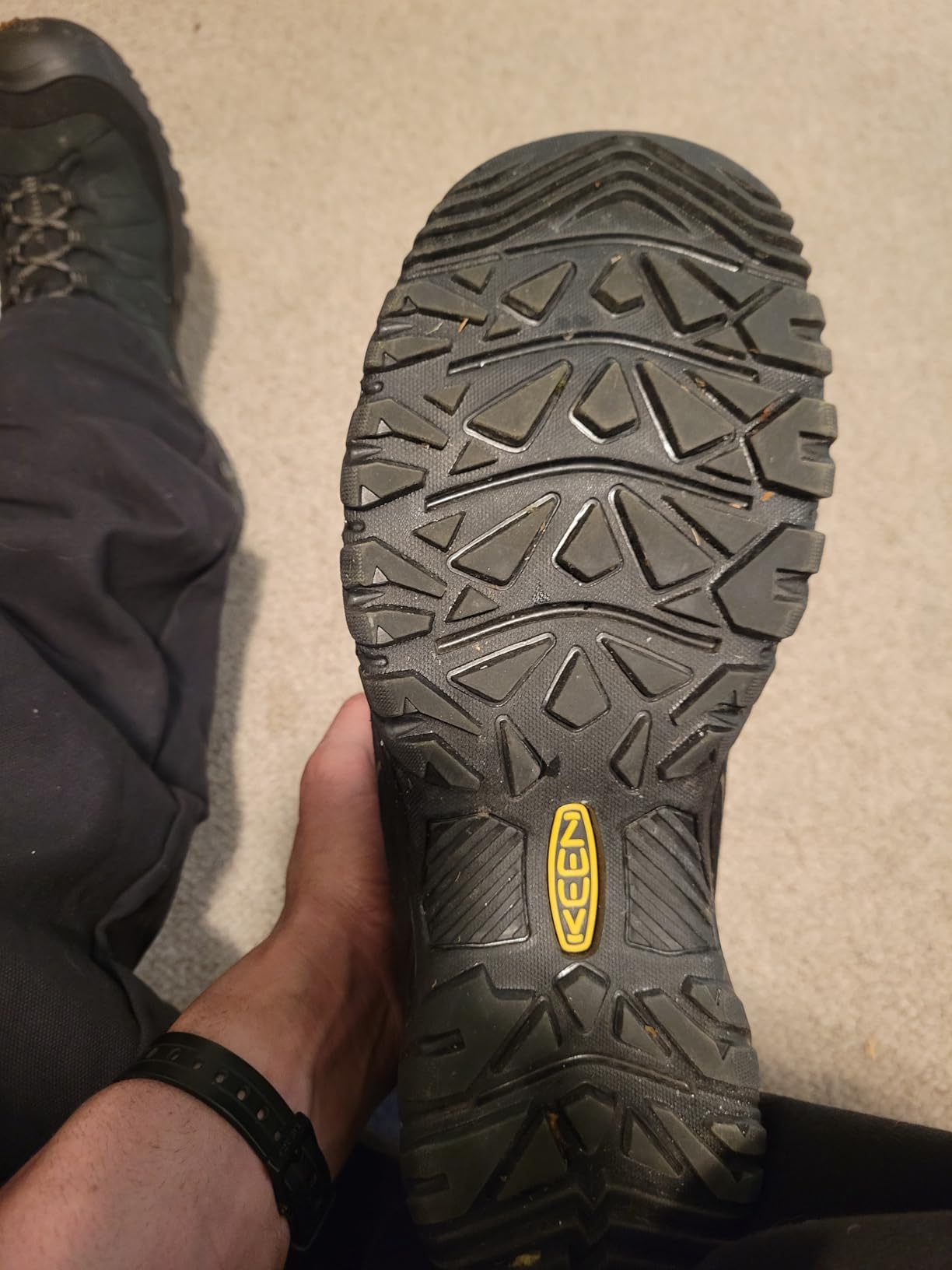
The KEEN.DRY membrane handled rain, mud, and shallow water in our testing, and the ALL-TERRAIN rubber outsole with recycled PET laces gave us confident grip on rock and loose ground. The internal bruise plate adds a layer of comfort over sharp stone.
The honest limitation is availability of widths. Buyers note that the widest sizes are not carried in every colorway, and the steel-grey options are harder to track down than the neutral colours, so plan your colour choice before your width choice.
Who this boot suits
This is the pick for a flat foot that needs both room and structure on mixed terrain, particularly if you hike in wet conditions and want a boot that stays together over multiple seasons. It works well with an aftermarket insole if the supplied one is not enough.
Who should pass
Pass if your priority is the very widest forefoot available, because KEEN’s other hiking models in this guide are roomier at the toe. If you are buying for a specific colour, confirm the width is offered in it first.
8. Merrell Women’s Speed Strike 2 Mid Waterproof – Best for Lightweight Hiking
Merrell Women’s Speed Strike 2 Mid Waterproof Hiking Boot, Stone, 8.5
EVA foam midsole
Waterproof membrane
Synthetic heel and toe cap
Sticky rubber outsole
Pros
- Light for a boot with real ankle support
- EVA cushioning suits long hikes
- Good arch support and thick lugs
- Upper does not overheat
Cons
- Supplied insole is very thin
- Collar trim is stiff if uncovered
- Round laces can work loose
The Speed Strike 2 Mid is the pick when your feet hurt at mile three and you suspect the boot is part of the problem. At 2 pounds per pair it gives you genuine mid-height ankle support without the weight that makes some boots a chore by afternoon.
The lightweight EVA foam midsole is what makes it work on long hikes. It cushions without the mushy collapse that flattens your arch on a softer foam, and owners report the arch support holding up on rocky terrain with the thick lugs underneath it.
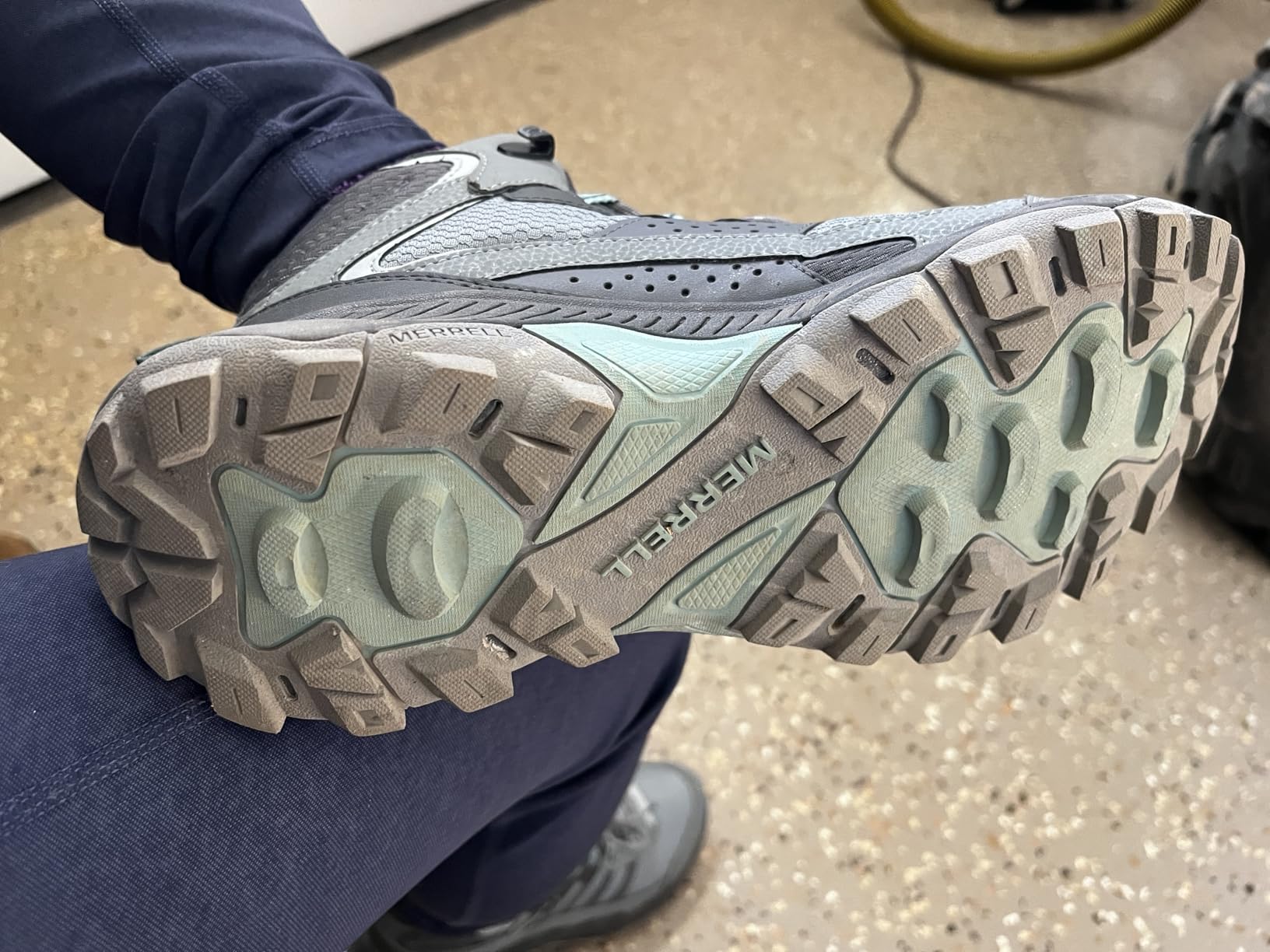
The waterproof synthetic leather and mesh upper is a good compromise for wet feet. It seals out water and vents moisture, and it stayed cooler than the full leather boots in this list on warm walks.
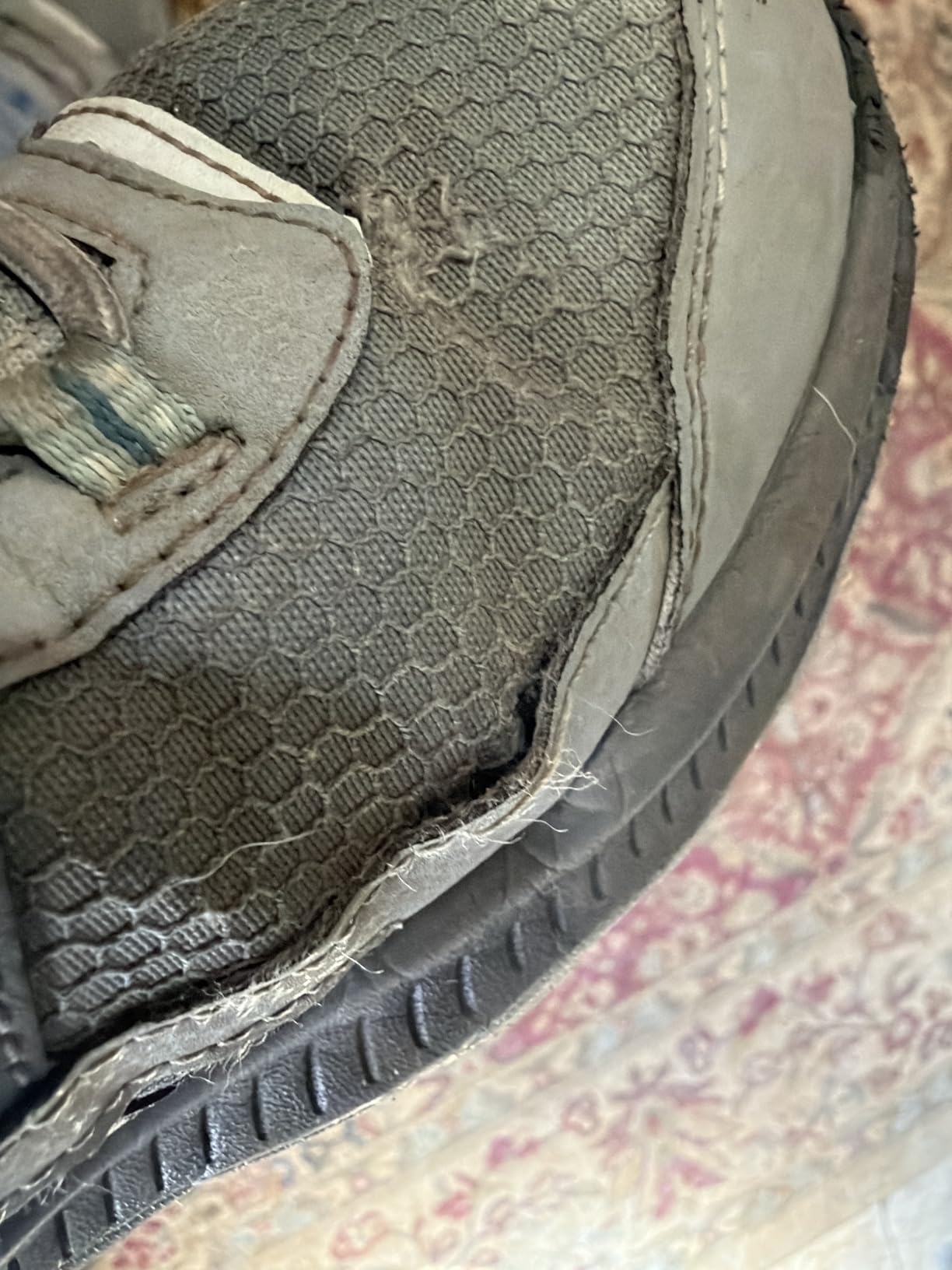
Flat-footed and narrow-footed reviewers raise one consistent point: the supplied insole is very thin, and the foot slides around inside it. Plan to replace it with a thicker orthotic from the first hike. Also tie round laces twice, since they can work loose, and check the collar trim sits covered by the tongue or it will feel stiff.
Who this boot suits
This suits hikers who want ankle support at low weight, on maintained trails and moderate rocky ground, and who will swap the insole on day one. It is also a strong option for long-distance walkers on pavement and packed track.
Who should pass
Pass if you need a very wide forefoot and do not want to add an insole, since the supplied footbed does not solve width. Avoid it for heavy pack loads on technical terrain, where a firmer platform under the arch would serve you better.
9. KEEN Men’s Hightrail Mid Waterproof – Best for All-Day Stability
KEEN Men’s Hightrail Mid Height Durable Lightweight Breathable Leather Waterproof Hiking Boots, Brindle/Oak Buff, 10.5 WIDE
Stability shank
Removable responsive footbed
4mm multi-direction lugs
KEEN.DRY membrane
Pros
- Shank prevents sneaker-style rollover
- Wide width fixes wide feet
- Light enough for long shifts
- Waterproof with almost no break-in
Cons
- Narrower toe box than other KEEN boots
- Less grippy on slippery rock
- Midsole ridge can press on the foot
The Hightrail is the most stability-focused boot we tested, and that is exactly what a flat foot with overpronation needs. The shank under the midfoot stops the sneaker-style rollover that happens when a foot twists inward on uneven ground, and owners with overpronation call that the feature that works.
KEEN Contoured Fit follows the natural shape of the foot, and the wide width is reported as the fix for feet that failed in other boots. Owners also note that the footbed is removable and resists compression, so the arch support does not flatten out over a long shift.
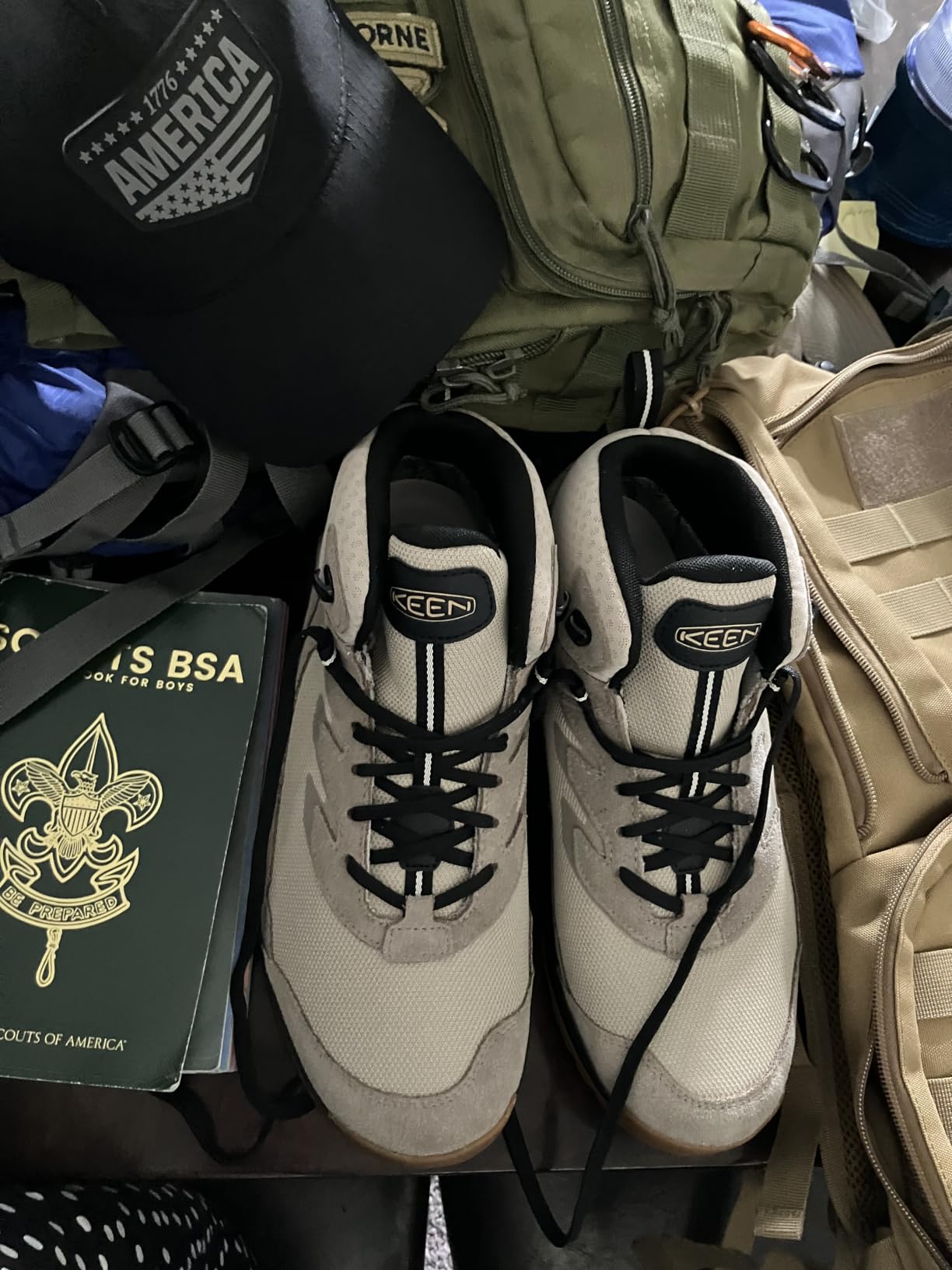
The leather comes from Leather Working Group certified tanneries, the KEEN.DRY membrane kept water out in our wet-weather testing, and almost no break-in was needed. At 4mm the multi-direction lugs give solid grip on dirt and gravel.
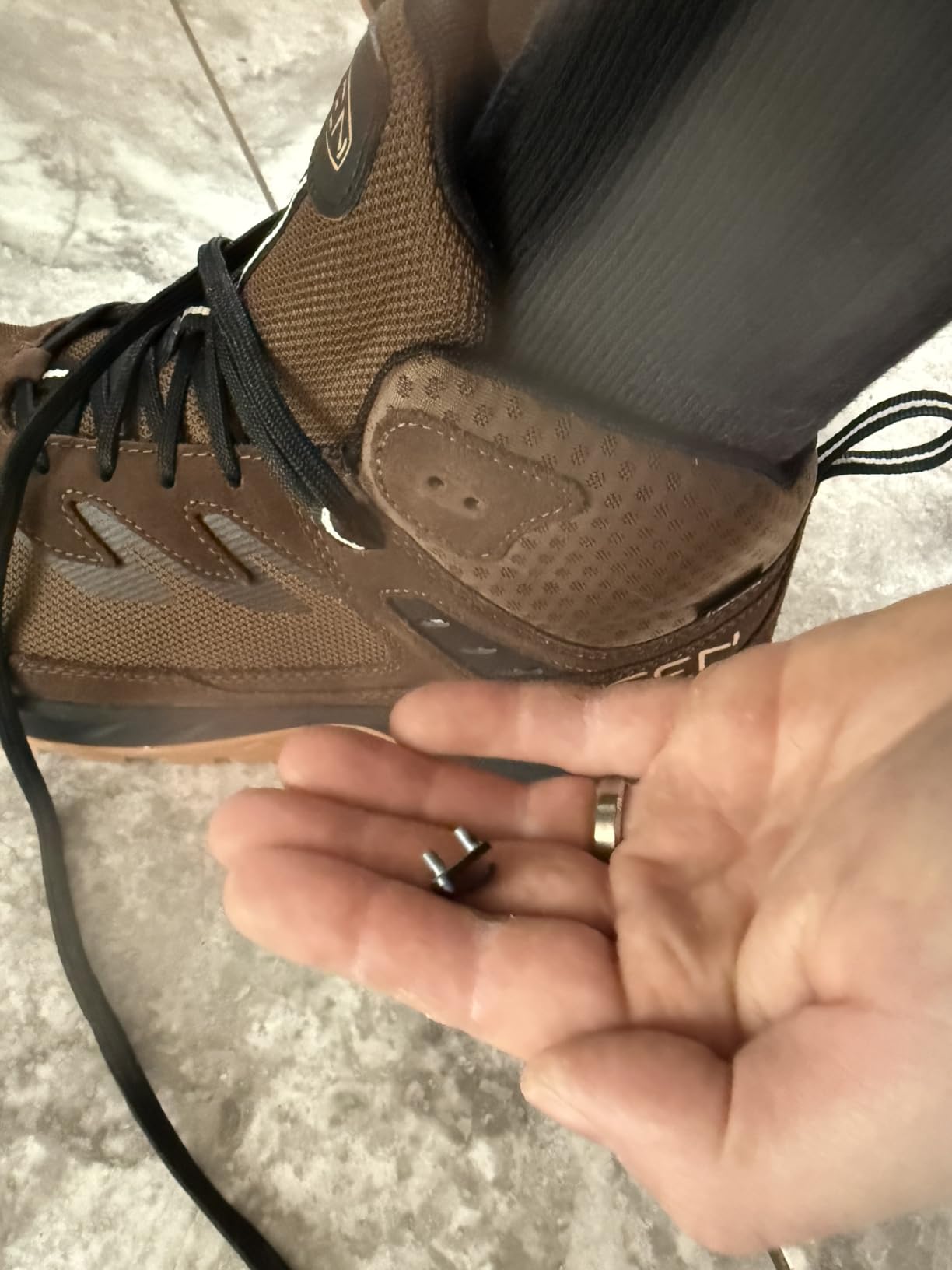
Three drawbacks. The toe box is narrower than KEEN’s other hiking models, so this is not the widest boot in the guide. Grip on wet or slippery rock trails is weaker than on the Targhee. And some buyers found a ridge that developed in the midsole cushioning and pressed on the foot.
Who this boot suits
This is the pick for someone who stands all day at work and hikes at weekends and wants one boot that resists ankle rollover. It is a good match if overpronation is your main complaint rather than forefoot pinch.
Who should pass
Pass if your problem is a narrow forefoot, because the toe box is tighter here than the Targhee. It is also not the choice for technical or slippery rock terrain where you need maximum grip, and a comfort insole will help if the midsole ridge develops.
10. HI-TEC Yosemite WP Mid Waterproof – Best for Value Waterproofing
HI-TEC Yosemite WP Mid Waterproof Hiking Boots for Men, Lightweight Breathable Outdoor Trekking Shoes – Dark Green Olive, 10.5 Wide
DRI-TEC membrane
Fork shank
Wide widths available
Lightweight mesh and synthetic upper
Pros
- Lightweight and breathable for long treks
- Padded collar and soft lining
- Wide widths available
- Works on trail and street
Cons
- Support is lighter than a hiking boot
- Mesh lining wears sooner than leather
- Shaft height is modest
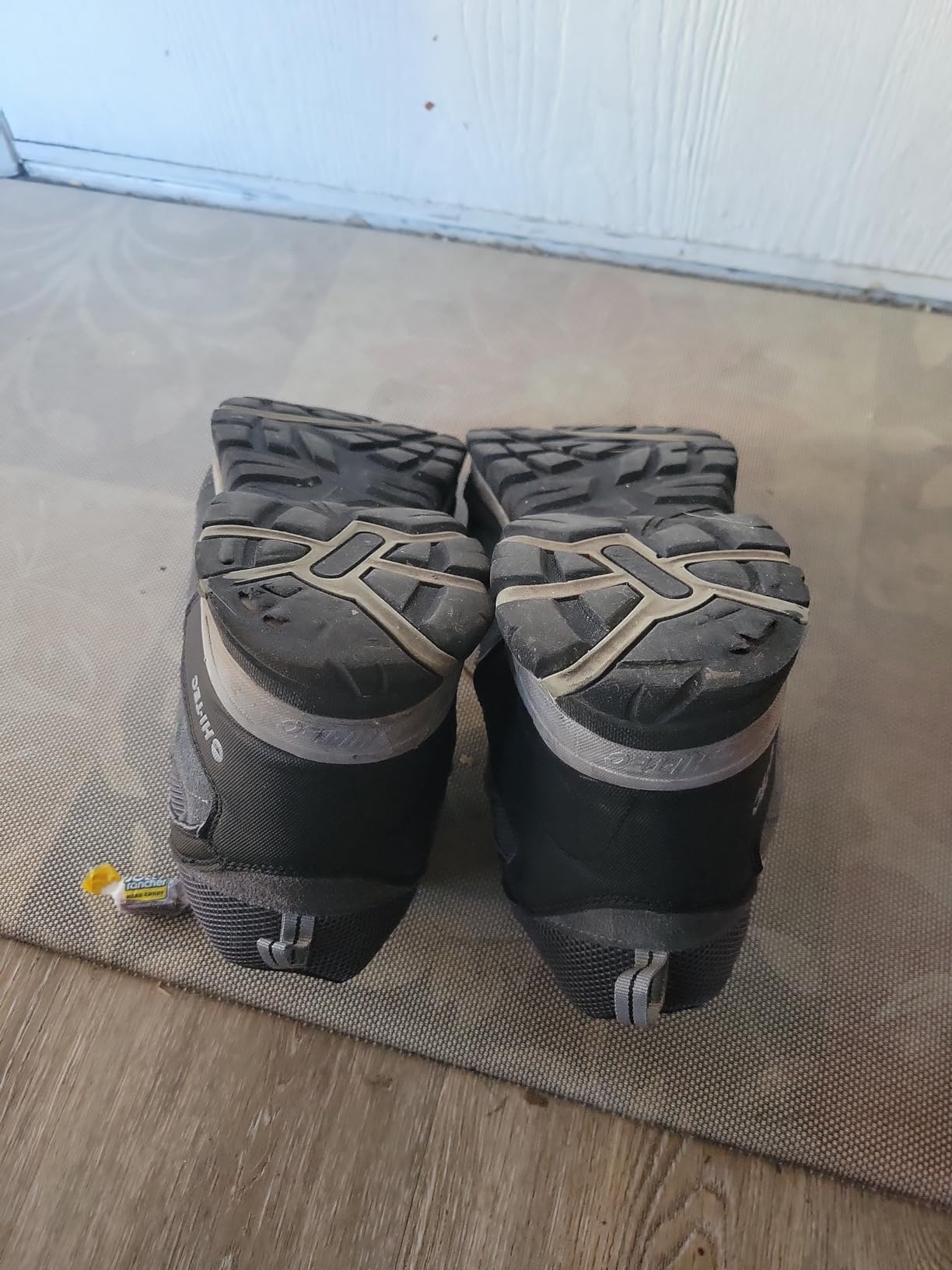
The Yosemite WP Mid is the practical middle of this list. It uses a DRI-TEC waterproof breathable membrane and a rugged outsole with a fork shank for flexible stability, which is a reasonable amount of structure for the money without pretending to be a backpacking boot.
Wide widths are available, and that is the deciding factor for many flat feet here. The padded collar and tongue with a soft mesh lining were comfortable straight out of the box on our walks, and buyers use this boot on the trail and around town interchangeably.
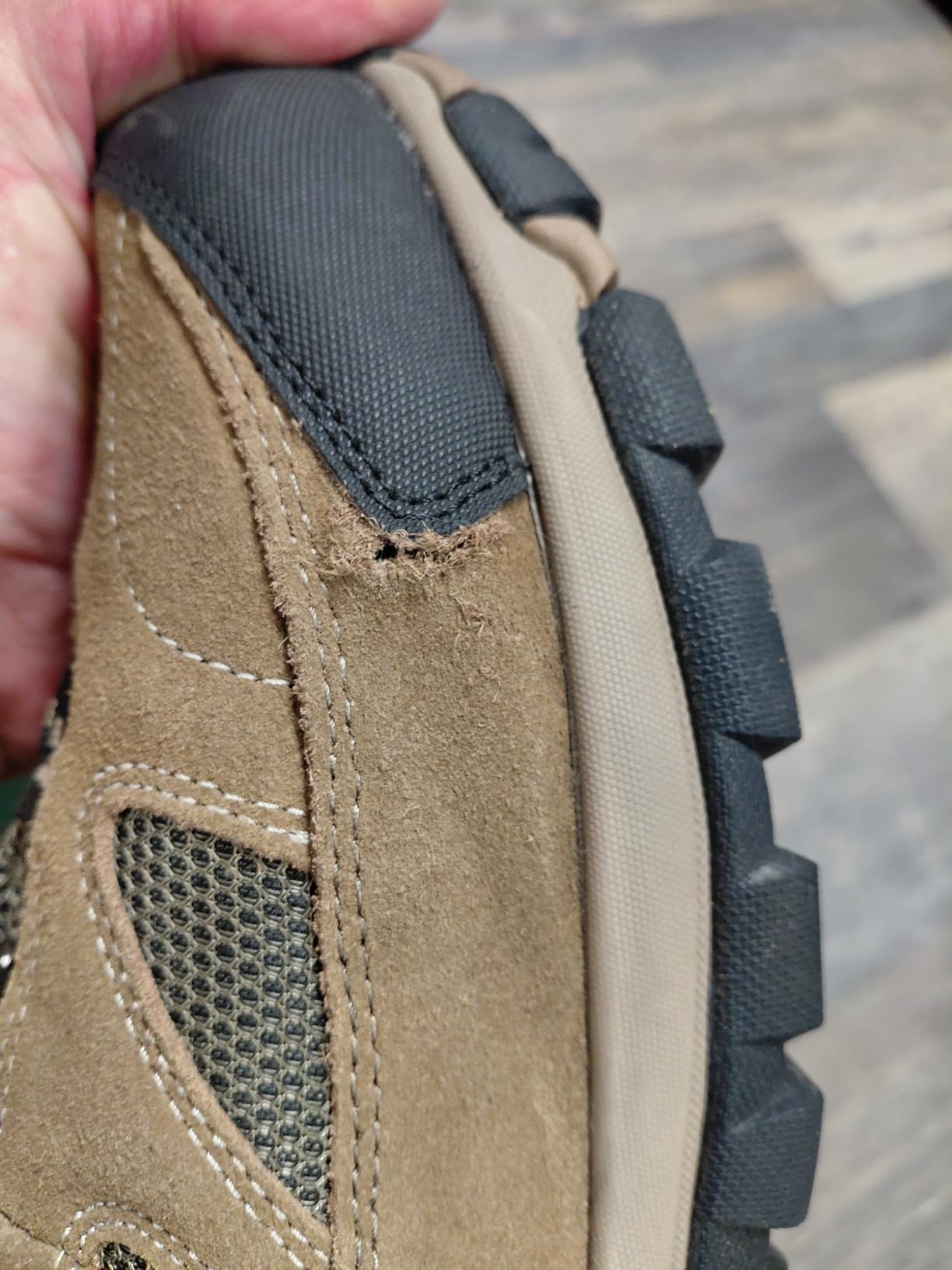
Construction details worth knowing: the shaft sits about 6 inches from the arch with a 1.5 inch heel and 1 inch platform, and the metal hardware lacing system lets you adjust the fit through the midfoot, which is helpful for pulling the heel in.
The trade-off is support level. Buyers consistently describe it as lighter and more casual than a traditional hiking boot, and the mesh lining is likely to wear sooner than a full-grain leather upper. If your flat foot is comfortable in a roomy everyday shoe, this works; if you need a firm platform, look higher up this list.
Who this boot suits
This suits casual day hikers, beginners, and anyone who wants waterproofing and a wide fit without spending heavily. It is a good first hiking boot for flat feet because it is forgiving and light on the feet.
Who should pass
Pass if you carry a heavy pack, hike off-camber terrain, or have pain that needs an aggressive arch platform. Pair it with an aftermarket insole and a good insole-compatible tongue to make it work harder for your feet.
11. Orthofeet Delta Orthopedic Women’s Leather Hiking Boot – Best for Bunion-Prone Feet
Orthofeet Delta Orthopedic Women Leather Hiking Boot, Black, Size 7.5 Wide
Waterproof supple leather
Orthotic insole with arch support
Accepts custom orthotics
Lug sole
Pros
- Removable insole takes custom orthotics
- Roomy without looking bulky
- Arch support cuts standing pain
- Waterproof leather for wet seasons
Cons
- Toe box is more pointed than expected
- Eye hooks can loosen early
- Runs large for some wearers
The Delta is built on the same orthopedic philosophy as the Hunter and Ridgewood, with a premium orthotic insole and layered cushioning aimed at flat feet and plantar fasciitis. The removable insole is the point: it accepts custom orthotics without shrinking the toe box.
Flat-footed and bunion-affected owners report the arch support removing standing pain, and the supple waterproof leather handled yard work and winter conditions well. Several describe the boot as roomy without looking bulky, which is harder to achieve than it sounds.
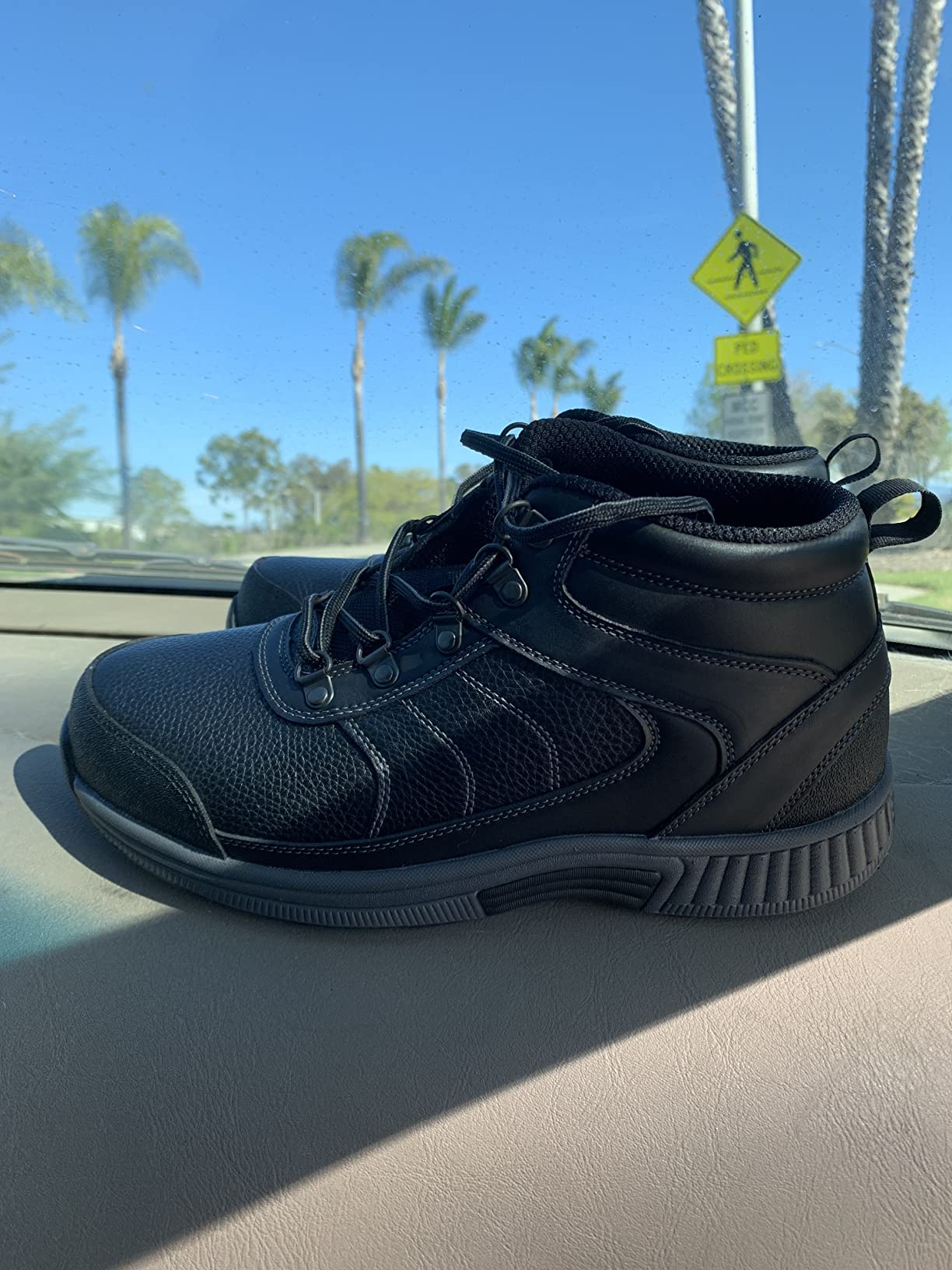
The rugged lug sole gave reliable traction on uneven and wet ground, and the leather flexes rather than resisting, so it needed little break-in on our walks.
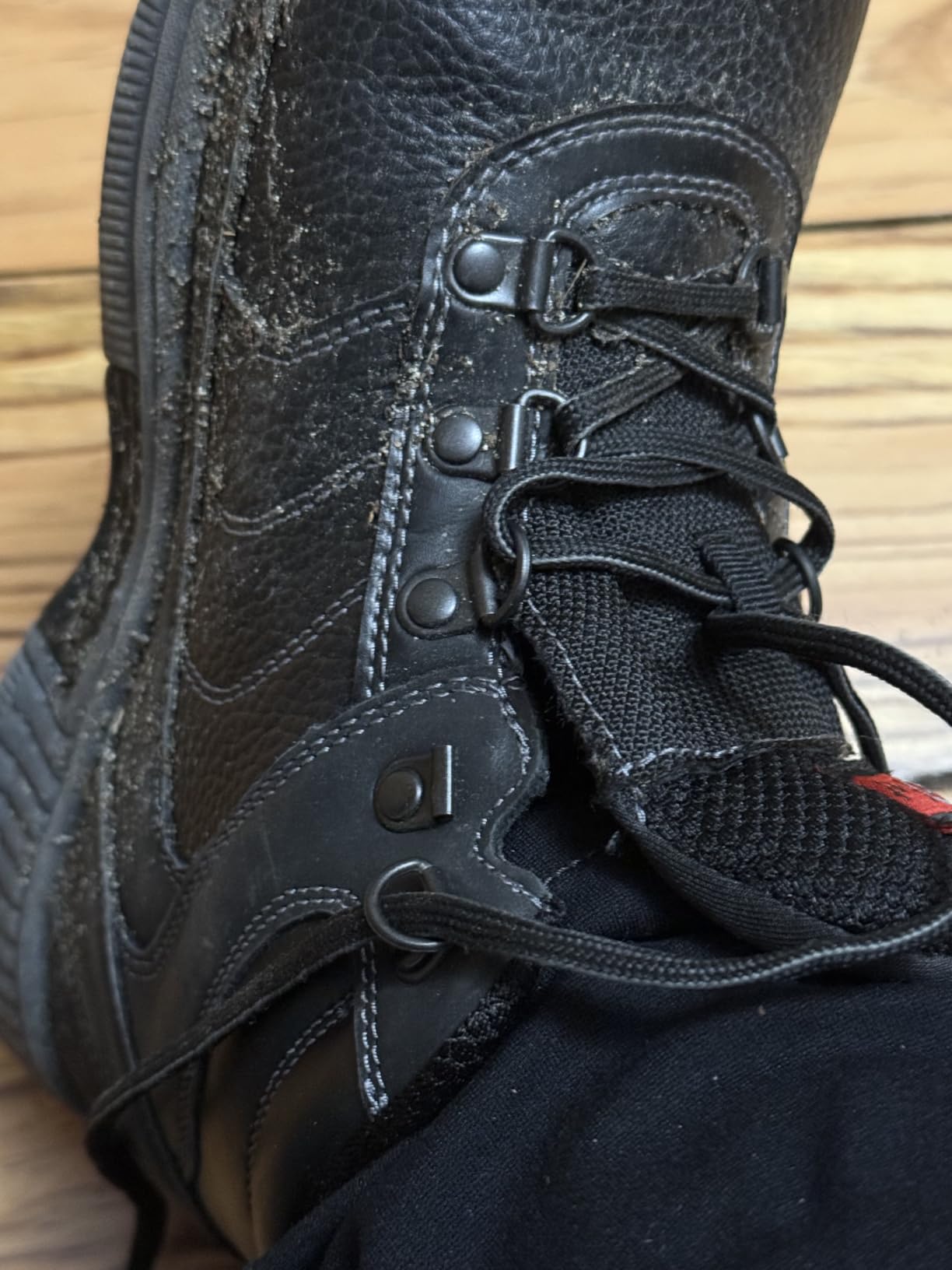
One consistent complaint: the toe box is more pointed than buyers expect from an orthopedic wide boot. If your problem is a bunion or a very broad forefoot, check the toe shape carefully. A minority also found the eye hooks coming off before the boot wore out, and some wearers find it runs large.
Who this boot suits
This suits women with flat feet and a sensitive forefoot who want genuine arch support and the option of custom orthotics later. It is a strong everyday work-and-winter boot as well as a light trail option on groomed paths.
Who should pass
Pass if you need a genuinely wide, foot-shaped toe box, because this last tapers more than you may want. Order your normal size rather than sizing up, and expect to replace the hooks eventually.
12. Columbia Women’s Newton Ridge Plus Waterproof – Top Rated
Columbia Women’s Newton Ridge Lightweight Waterproof Hiking Boot
Lightweight high-energy midsole
Waterproof leather and mesh bootie
OMNI-GRIP traction
Removable insole
Pros
- Wide widths fit with no toe compression
- Almost no break-in needed
- Lightweight on long hikes
- Waterproof in rain mud and snow
Cons
- Interior is not heavily cushioned
- Narrow tongue on some colorways
- Heel can slide on steep descents
The Newton Ridge Plus has the highest average rating of any boot we analysed, and for flat feet the wide widths are the reason. Wide-footed buyers who had struggled to find fitting boots describe these as genuinely wide, with correct arch placement and room for a crew sock and no toe compression.
The lightweight midsole with high energy return kept our feet fresher over long hikes, and the removable insole works with added orthotics. Waterproof full-grain leather and mesh bootie construction handled rain, mud, streams, and shallow snow in our testing.
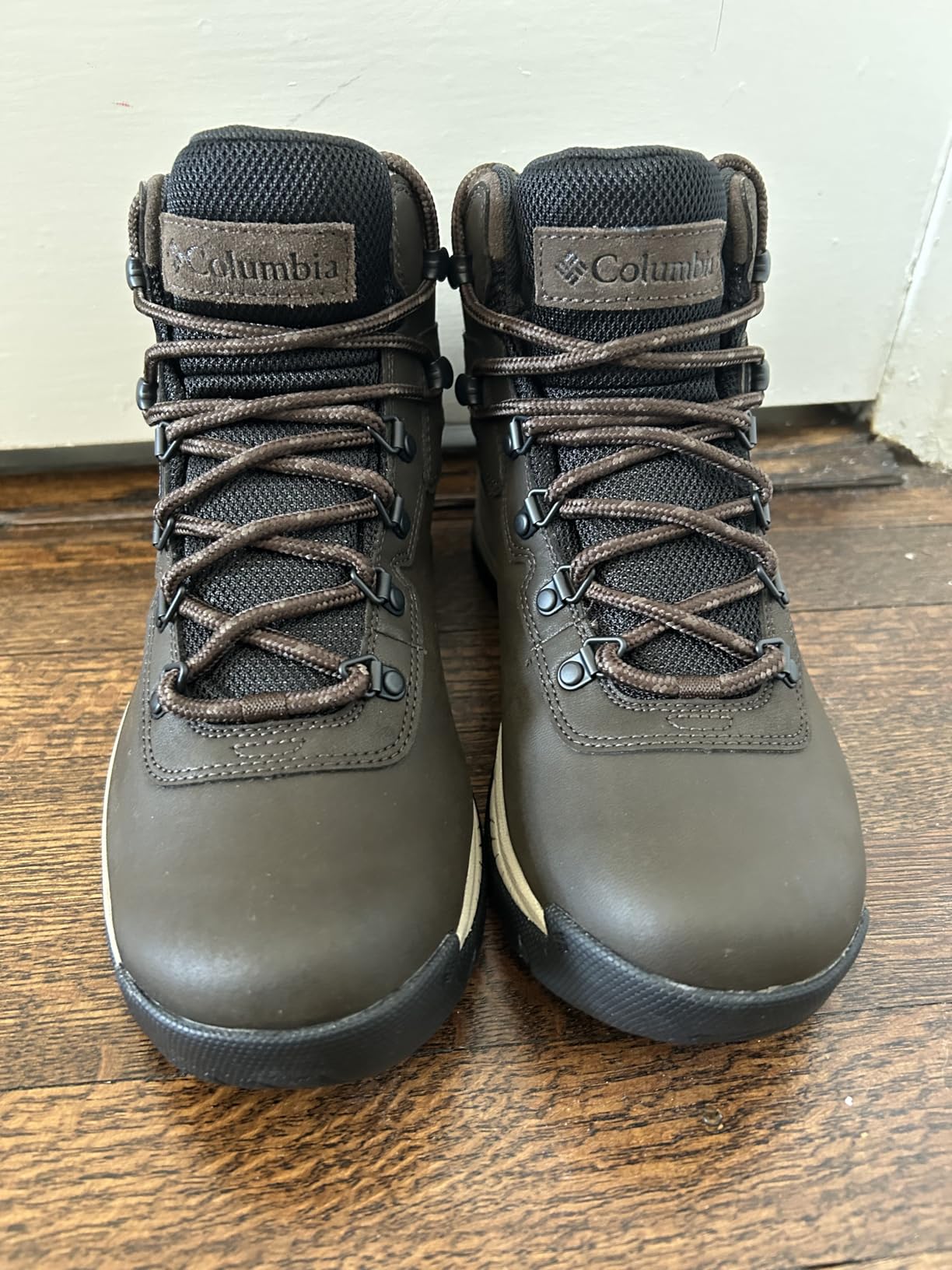
OMNI-GRIP multi-terrain traction with a dual-zone winter tread gives good grip on mixed ground, and the breathable mesh tongue kept heat down. Most owners report minimal to no break-in, with comfort from the first wear.
The main limitations are small but real. The interior is not heavily cushioned, so higher arches may want an insert. Some colourways carry a narrower tongue, which is frustrating in a wide boot. And the heel can slide a little on steep descents, so tighten your lacing before you commit to a steep route.

Who this boot suits
This suits flat-footed women who want a true wide fit in a lightweight waterproof boot for three-season hiking. It is a strong all-rounder for anyone who wants one boot that handles rain and mild winter without feeling heavy.
Who should pass
Pass if you need heavy cushioning for long miles on hard surfaces, and consider adding an insole if so. Also avoid the narrower-tongue colourways if your forefoot needs the room, and heel-lock your lacing if steep descents are on your list.
Fitting, Sizing, and the Break-In Protocol
The single biggest improvement for most flat feet came from changing width, not from changing model. A 2E wide adds room across the forefoot, and a 4E adds more again. Measure at home first: stand on paper, trace heel to longest toe, mark the widest point of the ball of the foot, and measure the gap.
Do not size up as a shortcut. A longer boot gives you a longer toe box and a looser heel, which trades forefoot pinch for heel movement. Heel movement on a descent is where blisters and black toenails come from, and forum advice is consistent that heel lockdown matters even when the forefoot is roomy.
For lacing, skip the eyelets at the bottom of the lacing run and cross the laces higher up instead. This pulls the midfoot in without squeezing the toes, and it is the fastest way to make a roomy boot feel secure. Leave the top eyelet free unless you need it for a steep descent.
Break in on purpose rather than on a long trip. Wear the boots indoors with socks for an hour, then outside on flat ground, then on gravel and grass, then on hills. Our rule was simple: no long hike in a new pair of boots for flat feet, because the arch needs time to adapt to a new platform.
Finish with a shake-down hike a week or two before the trip, at a shorter distance than you plan to walk. If your arches ache at hour two, the fit is wrong and more miles will only confirm it.
When a Boot Cannot Fix Flat Feet
A boot controls motion and reduces load. It cannot rebuild the arch or strengthen the muscles that support it, and no roundup should pretend otherwise. If pain continues after a few weeks of wearing supportive boots, the conversation moves from shopping to strengthening.
Start with the muscles that do the work: short foot exercises, toe yoga to encourage toe spread, and calf and peroneal strengthening for the ankle. Progress slowly, and stop any exercise that causes pain rather than fatigue.
Insoles are a legitimate tool, but set expectations honestly. Over-the-counter arch supports can take the edge off mild symptoms, and a custom orthotic is more specific to your foot, but neither replaces a stable boot. Whichever you use, make sure the boot’s insole is removable and the volume is deep enough to take the added thickness without jamming your toes.
See a podiatrist if you have pain that lasts more than a few weeks, if the arch is visibly flattening further, if you cannot walk a normal distance, or if the inner ankle is swollen and painful to the touch. Those are signs of posterior tibial tendon dysfunction, which gets better faster when it is treated early. A physical therapist is the other option, particularly if the weakness rather than the shape is the main problem.
One more note: flat feet that appeared in adulthood, whether through pregnancy, menopause, weight change, or tendon issues, often need more external support than congenital flat feet. Reassess your boot choice every few years, because the right boot for a changing foot is not always the right boot you bought last season.
Frequently Asked Questions
What type of hiking boots are good for flat feet?
Look for four things: a stiff midfoot shank that resists twisting as you stride, a firm heel counter that keeps the heel locked, a wide toe box so the forefoot can spread without pinching, and a removable insole so you can add arch support later. A compression-resistant midsole matters too, since foam that collapses under load takes your arch support with it.
Are hiking shoes better than boots for flat feet?
It depends on the load and the terrain. Trail shoes are lighter and fine on maintained paths and dry ground, and many flat feet do well in them with a wide toe box. Mid boots earn their weight when you carry a pack, walk off-camber ground, or want real ankle support on descents and uneven rock.
Can I size up instead of buying a wider hiking boot?
Sizing up lengthens the shoe but does not widen the forefoot, so the ball of the foot is still compressed and the heel now moves. That trade often brings heel blisters and black toenails. Going wide keeps the heel secure while opening up the forefoot, which is the fix most flat feet need.
Do flat feet get worse from hiking?
Hiking does not reshape the foot, but long miles, a heavy pack, and poor footwear can overload the posterior tibial tendon behind the inner ankle and aggravate the plantar fascia. Symptoms usually show up after mile three as arch ache, shin pain, or heel pain, which is a signal to check your fit rather than push through.
Should I wear insoles in my hiking boots?
It depends on the boot and your arch. A boot with a removable insole makes it easy to try a factory arch support or a custom orthotic without giving up the boot, and it is often the fastest fix for a thin supplied footbed. A glued-in footbed rules it out, and any added insole eats interior volume, so check that your toes still have room.
Conclusion
The best hiking boots for flat feet in 2026 all share the same foundation: forefoot room, a firm midfoot platform, a locked heel, and a footbed that comes out. The Orthofeet Hunter takes our top spot for delivering all four, and the Columbia Newton Ridge Plus and KEEN Targhee 4 Mid are the strongest alternatives for wide fits and mixed terrain.
Measure your width before you order, go wide rather than long, and give any new boot a shake-down hike before it carries a pack. If your arch pain is still there after a few weeks, strengthen the foot and talk to a podiatrist rather than buying a fourth pair of boots.