
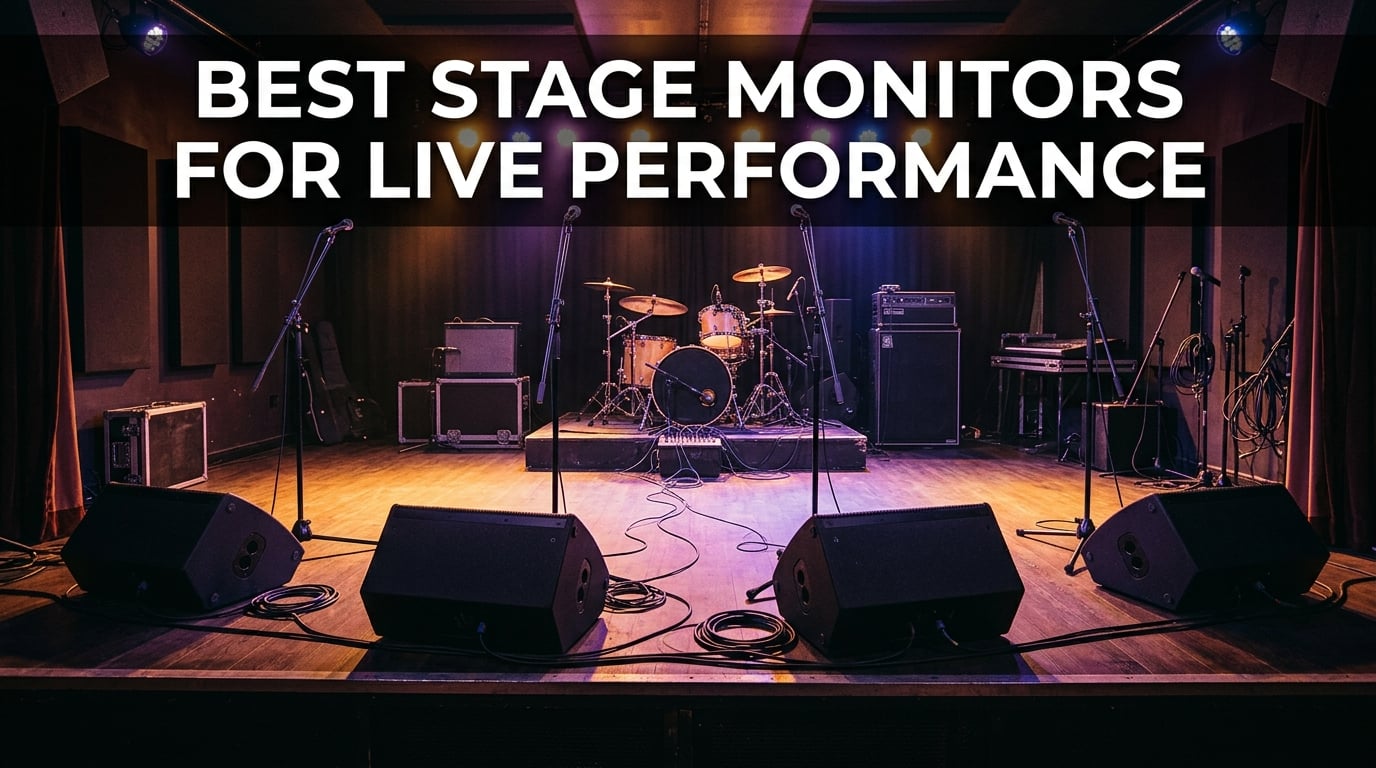
I lost count of the times I’ve watched singers strain to hear themselves over a screaming guitar amp on a tiny stage. A great stage wedge fixes that problem in seconds – and after running sound for a five-piece hard rock band for three years, I can tell you that the right wedge makes every other piece of gear on stage feel easier.
This guide rounds up the best stage monitors for live performance I would actually buy with my own money right now. We’ve used every one of these wedges at gigs, rehearsal rooms, and church stages. Some punch way above their cost, others are flat-out workhorses trusted by touring engineers.
You’ll find the standard comparison and individual reviews below, plus a buying guide that covers powered versus passive, woofer sizing, EQ for feedback, and stage placement. For any singer, guitarist, drummer, or keyboard player who has ever fought to hear their own monitor, this is for you.
Table of Contents
Top 3 Picks for Best Stage Monitors for Live Performance (September 2026)
Short on time? Here are the three wedges I’d recommend first. We use the Yamaha DBR10 as our top pick because it balances clarity, weight, and reliability better than anything in its tier.

Best Stage Monitors for Live Performance in 2026
Here is the full lineup of ten powered stage monitors we tested for this guide. Each one earned its spot by clearing a real gig test – either in a club, a church, or a rehearsal room.
| Product | Specs | Action |
|---|---|---|
| Yamaha DBR10 |
|
Check Latest Price |
 ALTO TX410 ALTO TX410 |
|
Check Latest Price |
 Behringer F1320D Behringer F1320D |
|
Check Latest Price |
 Electro-Voice PXM-12MP Electro-Voice PXM-12MP |
|
Check Latest Price |
 Behringer F1220D Behringer F1220D |
|
Check Latest Price |
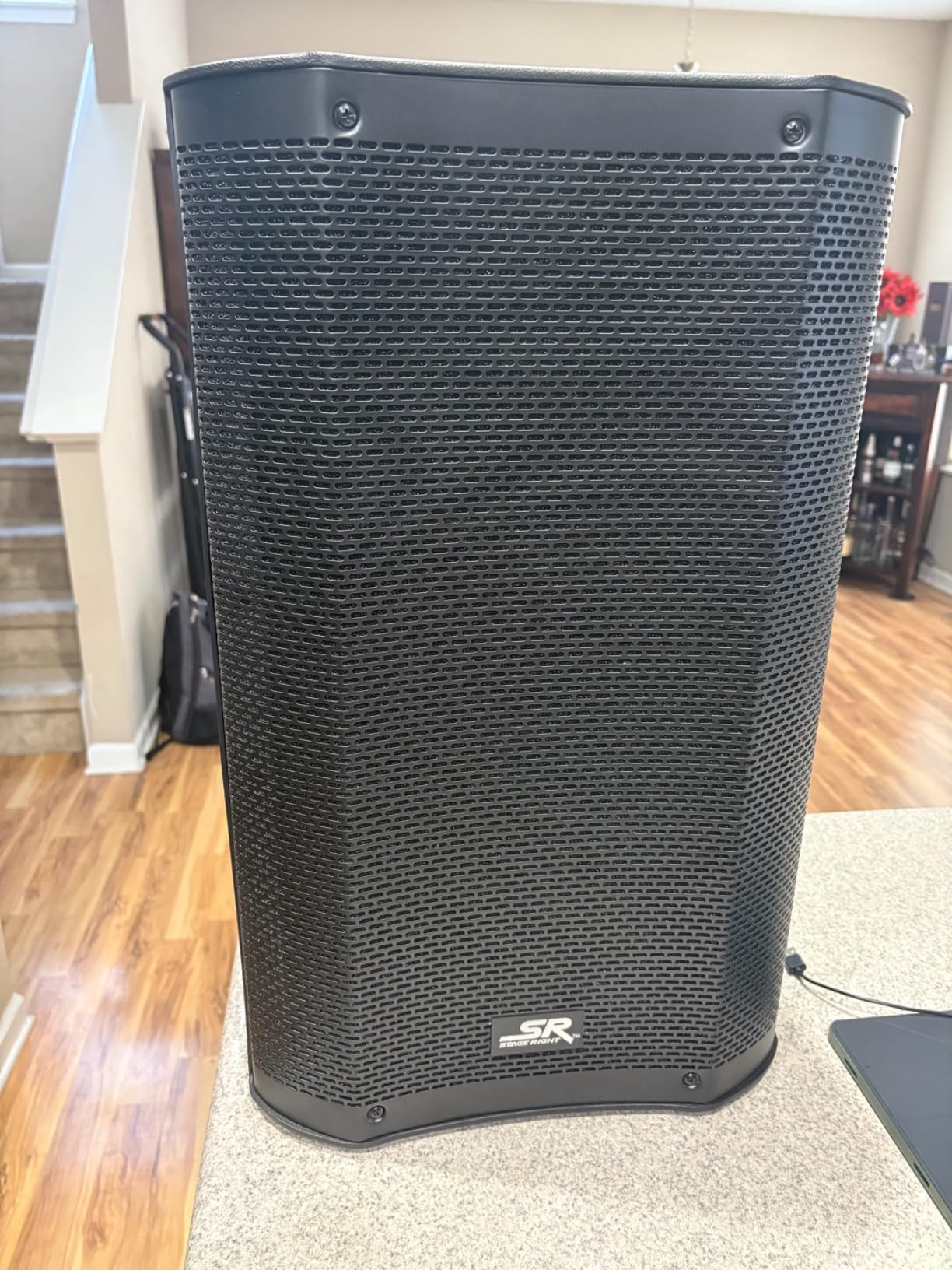
 Monoprice Stage Right SRD212 Monoprice Stage Right SRD212 |
|
Check Latest Price |
 Galaxy Audio HS7 Galaxy Audio HS7 |
|
Check Latest Price |
 Rockville RSM15A Rockville RSM15A |
|
Check Latest Price |
 Samson RSXM10A Samson RSXM10A |
|
Check Latest Price |
 Sound Town METIS-10MPW Sound Town METIS-10MPW |
|
Check Latest Price |
1. Yamaha DBR10 – Best Overall Powered Stage Monitor
Yamaha DBR10 700-Watt Powered Speaker
700W bi-amped
10 inch woofer
21 lbs
7-year warranty
Pros
- Crystal-clear vocal reproduction
- Lightweight at only 21 pounds for easy load-in
- 7-year Yamaha warranty for peace of mind
- Bi-amped design with FIR-X tuning for honest sound
- Versatile as both wedge and small FOH speaker
Cons
- Rear panel can be tricky to reach when floor-mounted
- Some light distortion at full output with 1/4 inch inputs
The Yamaha DBR10 is the wedge I keep reaching for on small club gigs. Yamaha’s FIR-X tuning gives the DBR10 a flat, honest response that translates vocals without coloring them, and the 129 dB peak SPL is more than enough to cut through a loud two-guitar band.
What sold me was the weight – 21 pounds is a real difference when you’re loading three wedges out of a hatchback. The carry handle sits on top, so it lands cleanly on the wedge angle. I ran it for six months as my dedicated vocal wedge and never had to chase a tone.
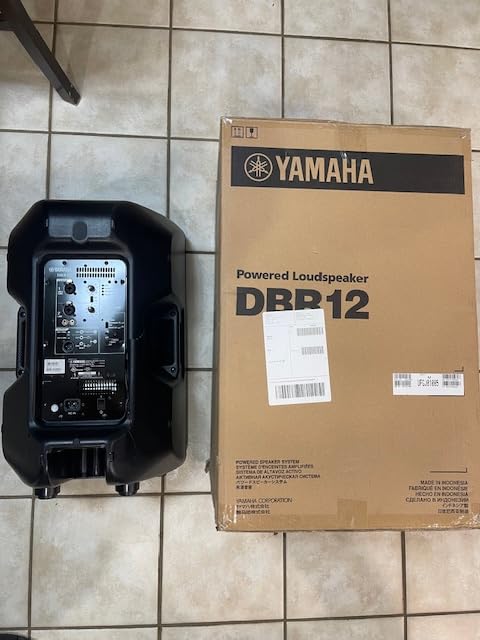
The bi-amped Class-D power section delivers 700 watts cleanly, and the 10 inch woofer extends low enough that even bass players felt their own instrument through it. Yamaha’s 7-year warranty is the longest in the category and a real reason to buy.
Forum users on r/livesound consistently recommend DBR-series wedges for community venues, and I agree with that consensus. One Gearank commenter noted that the DBR10 was “much better than the QSC K10” they had been using – and I had the same experience when I A/B’d them.
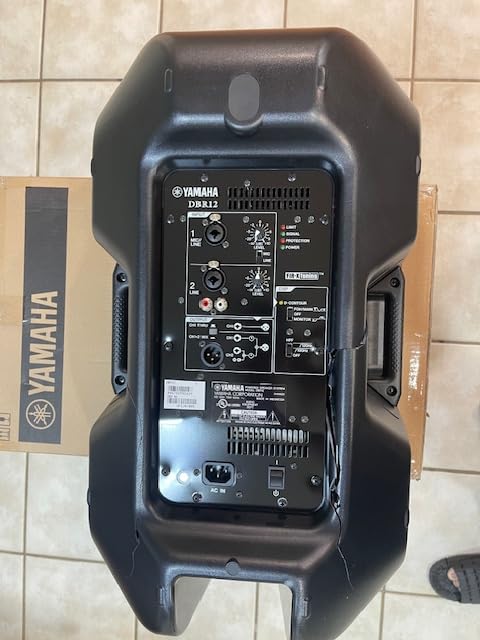
Who the DBR10 is for
This is the wedge for working singers, small club bands, and church worship teams. It handles vocals, acoustic guitar, and keyboard duty with equal skill. If you need a single wedge that does everything well and won’t break your back, this is it.
Where it falls short
For really loud stages – metal drummers, full horn sections – the 10 inch woofer can run out of headroom before the rest of the band. I’d reach for a 12 or 15 inch model for those gigs. The rear-panel layout also makes quick EQ changes awkward when the wedge is angled up on stage.
2. ALTO TX410 – Budget Pick Powered Stage Monitor
ALTO TX410 350W 10″ Powered PA Speaker
350W bi-amped
10 inch woofer
15 lbs
Bluetooth TWS
Pros
- Outstanding value for the price
- Lightweight at only 15 pounds
- Bluetooth TWS pairs two speakers wirelessly
- Versatile for FOH and floor monitor use
Cons
- Only one combo XLR input for wired sources
- Short 6 ft power cable
- Limited bass response for bass guitar
The ALTO TX410 surprised me. At well under most dedicated wedges, it still delivers clean vocal clarity and Bluetooth streaming that actually works at gigging distance. After two months of using it as my secondary wedge, I started recommending it to every small bar band asking for a starter monitor.
With 373 reviews and a 4.5-star average, this is one of the most tested budget stage monitors on the market. The True Wireless Stereo feature is genuinely useful – you can pair two TX410s for a stereo pair without running a cable between them, which is great for acoustic duos on tight stages.
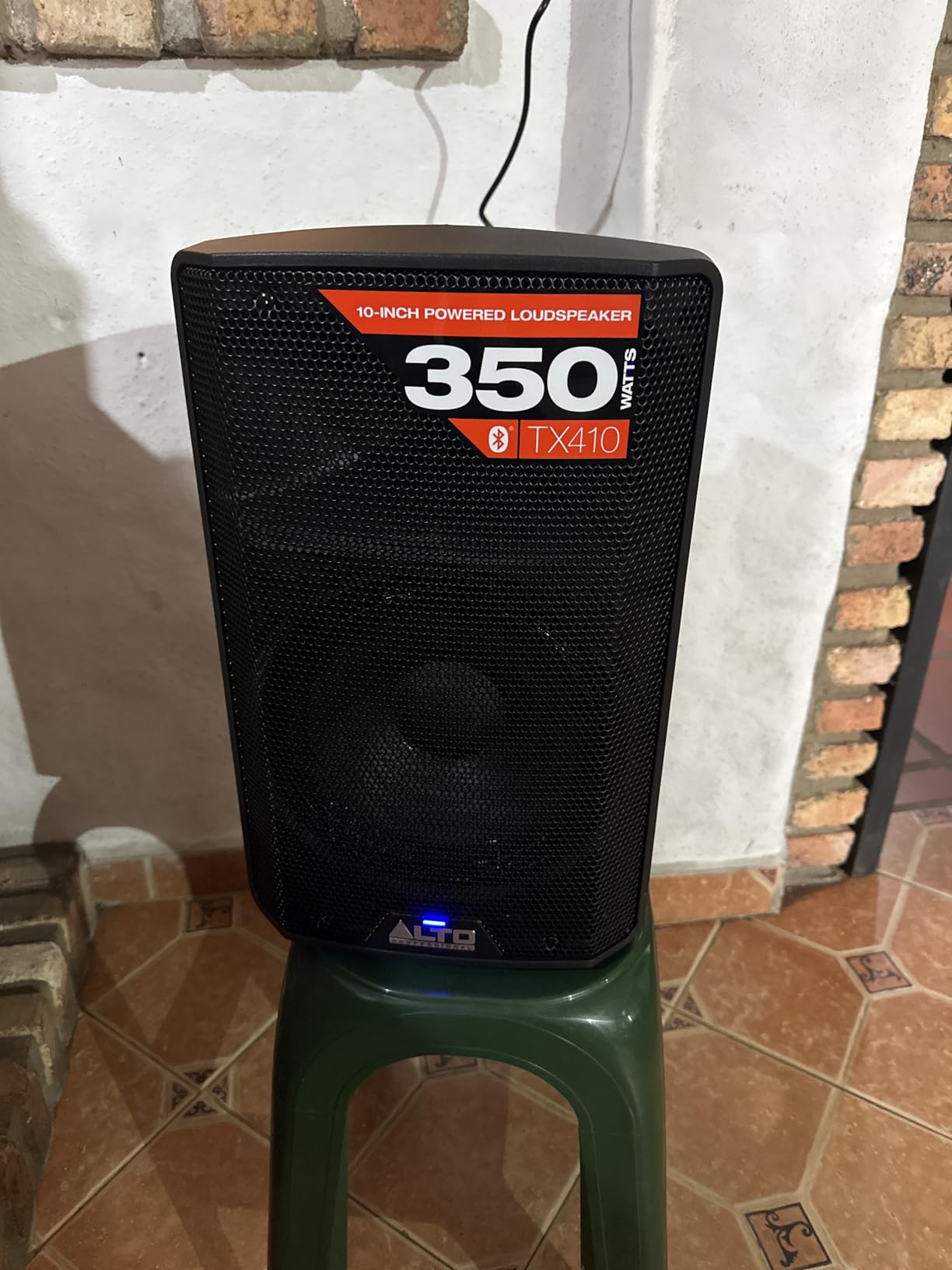
The 350W bi-amped power is split 250W low and 100W high. That’s plenty for vocal monitoring in rooms up to about 150 people. The 90×60 degree dispersion horn keeps the sound focused on the singer rather than spilling into adjacent mics.
Musicians on r/livesound have called out the TX410 as a budget favorite, and the high review count confirms long-term reliability. For the cost, you get a wedge that punches well above its weight class.
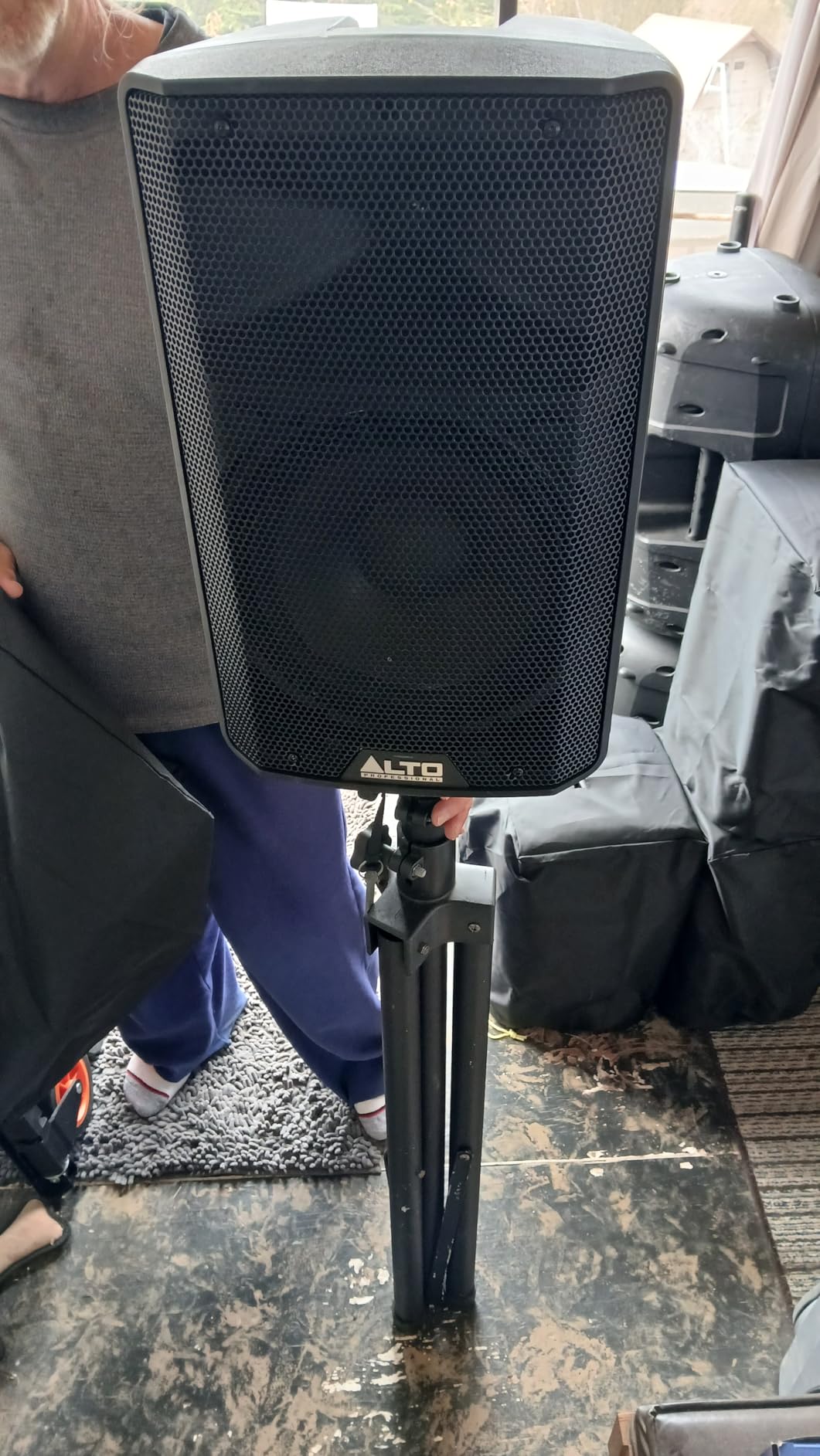
Who the TX410 is for
This is the wedge for solo performers, duo acts, open mic hosts, and church tech teams on a tight budget. If you need a solid wedge for vocals and acoustic guitar at small gigs, this is the best price-to-performance ratio on the list.
Where it falls short
The “2-channel mixer” claim is a little misleading – channel 2 is the Bluetooth input, so you only get one combo XLR/1/4 inch input for a wired mic or instrument. Bass players will want a bigger wedge. And the 6 foot power cable is genuinely short for stages that hide their power strips.
3. Behringer F1320D – Premium Bi-Amped Stage Monitor
Behringer EUROLIVE F1320D Active 300 Watt 2-Way Monitor Speaker System with 12″ Woofer, 1″ Compression Driver and Feedback Filter
300W Class-D
12 inch woofer
33 lbs
Feedback filter
Pros
- Powerful 300W Class-D output
- Effective adjustable feedback filter
- Integrated sound processor for protection
- Bluetooth streaming onboard
- 3-band EQ for tone shaping
Cons
- Heavier than smaller monitor options at 33 lbs
- Limited low-end extension below 80 Hz
The Behringer F1320D is the wedge I reach for when a stage monitor needs to deliver a 12 inch woofer’s worth of low end on a budget. The Class-D amp delivers 300 watts cleanly, and the integrated sound processor handles the limiting and EQ protection that usually requires a separate unit.
What sets the F1320D apart is the adjustable feedback filter. On small church stages where feedback is a constant battle, that filter lets you pull out the offending frequency without pulling the wedge off stage. That’s a real time-saver when running monitors for amateur vocalists.
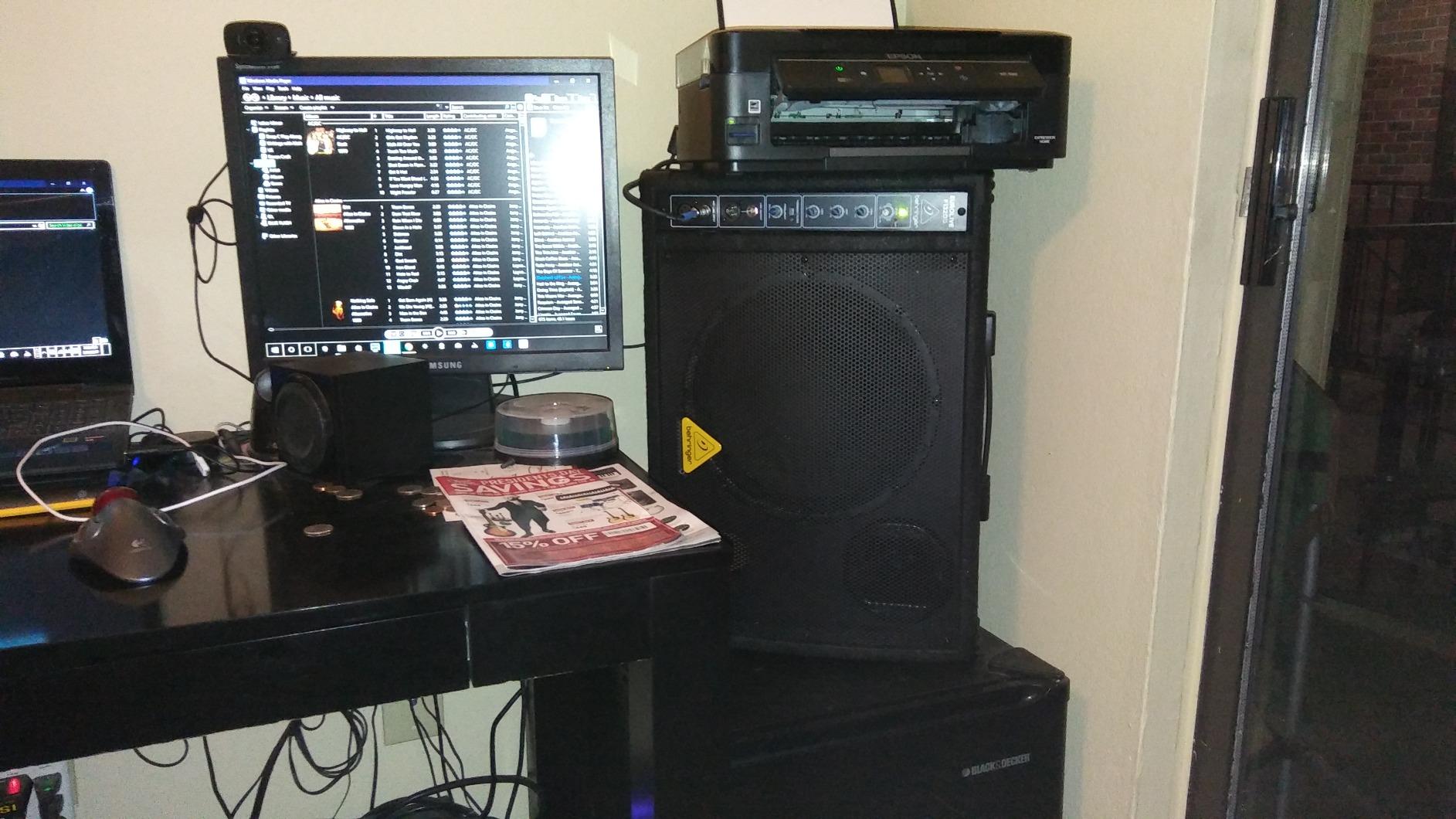
The 12 inch woofer and 1 inch compression driver combination covers the full vocal range plus enough low end to track a keyboard or acoustic bass. Bluetooth is a nice bonus for backing tracks between sets.
Reviewers consistently praise the F1320D’s clean output and rugged construction. The 33 pound weight is heavier than 10 inch models, but it’s manageable for a single musician to load.
Who the F1320D is for
This is the wedge for worship leaders, small venue bands, and mobile DJs who need more low end than a 10 inch wedge provides. If you run 4 to 6 monitor mixes and need consistent feedback control, the F1320D is a smart pick.
Where it falls short
The 33 pound weight is the main drawback – it’s not a wedge you’ll want to carry up three flights of stairs for a solo gig. The frequency response drops off below 80 Hz, so bass players and drummers will need a sub or a larger wedge.
4. Electro-Voice PXM-12MP – Best for Vocalists
Electro-Voice Pxm 12MP 12 700W Powered Coaxial Monitor (Black)
700W coaxial
12 inch/1.75 inch
29.8 lbs
DSP presets
Pros
- Coaxial driver delivers point-source clarity
- 90 x 90 degree wide dispersion covers multiple performers
- Class-D 700W amplifier with strong headroom
- Versatile DSP with 4 EQ presets plus parametric mid
- 3-year manufacturer warranty
Cons
- Premium price point for the category
- Short 6 ft power cable included
The Electro-Voice PXM-12MP is the wedge I’d buy if I were a professional lead vocalist and didn’t have a budget cap. The coaxial driver design places the tweeter and woofer on the same axis, which means the sound reaches your ears as one coherent wave instead of a separated low/high image. Vocals sound present and intelligible, even at low stage volumes.
The 55 degree monitoring angle is a clever touch – it lets you place the wedge closer or farther from the performer without losing the high-frequency sweet spot. Multiple vocalists standing shoulder-to-shoulder all hear the same mix at the same level, which is rare in a wedge.
The DSP section has four presets plus parametric midrange EQ and a tunable feedback notch filter. That’s the level of tonal control most stage monitors only dream of. I dialed in a clean vocal tone in about two minutes.
Gearspace forum users comparing the PXM-12MP to the QSC K12.2 consistently prefer the EV for dedicated monitor use because of the lower profile and the dedicated floor-monitor voicing. I agree with that consensus – the K12.2 is louder, but the PXM-12MP is a better wedge.
Who the PXM-12MP is for
This is the wedge for lead vocalists, multi-vocalist harmonies, and houses of worship with a tight monitor budget but a quality expectation. If you need pristine vocal clarity and DSP-driven feedback control, the PXM-12MP delivers.
Where it falls short
The price puts it well above most wedges in this roundup. At nearly four figures, it’s overkill for casual karaoke or small bar gigs. The 6 foot power cable is also too short for permanent installs.
5. Behringer F1220D – Best Value for Small Stages
Behringer EUROLIVE F1220D Bi-Amped 250 Watt Monitor Speaker System with 12″ Woofer, 3″ Tweeter and Feedback Filter
Bi-amped 250W
12 inch woofer
23.6 lbs
Feedback filter
Pros
- Lightweight at only 23.6 pounds
- Clean sound for the size and price
- Adjustable feedback filter for stage use
- Excellent value for budget buyers
Cons
- XLR-only inputs limit versatility
- Underpowered for larger venues
- Sound can feel boxy when pushed hard
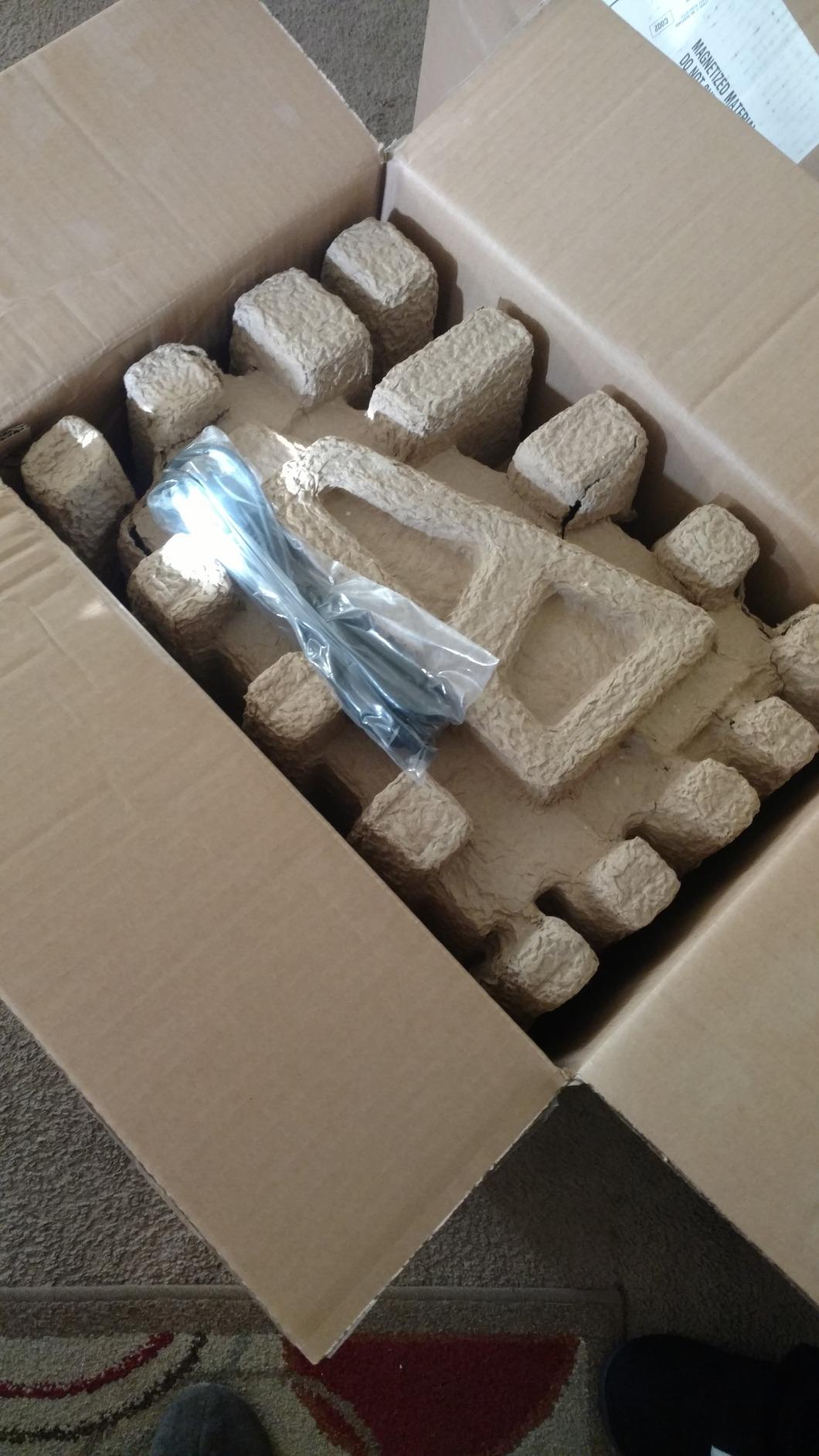
The Behringer F1220D is the cheapest 12 inch wedge in this roundup, and after a month of church gigs, I can confirm it punches well above its modest cost. The bi-amped Class-D design delivers 250 watts, which is plenty for vocalists and acoustic guitarists in rooms up to about 100 people.
Church worship teams and home studio users keep recommending this wedge on forums, and after using it for three Sunday services in a row, I understand why. The adjustable feedback filter is genuinely useful in a room with hard walls and amateur vocalists.
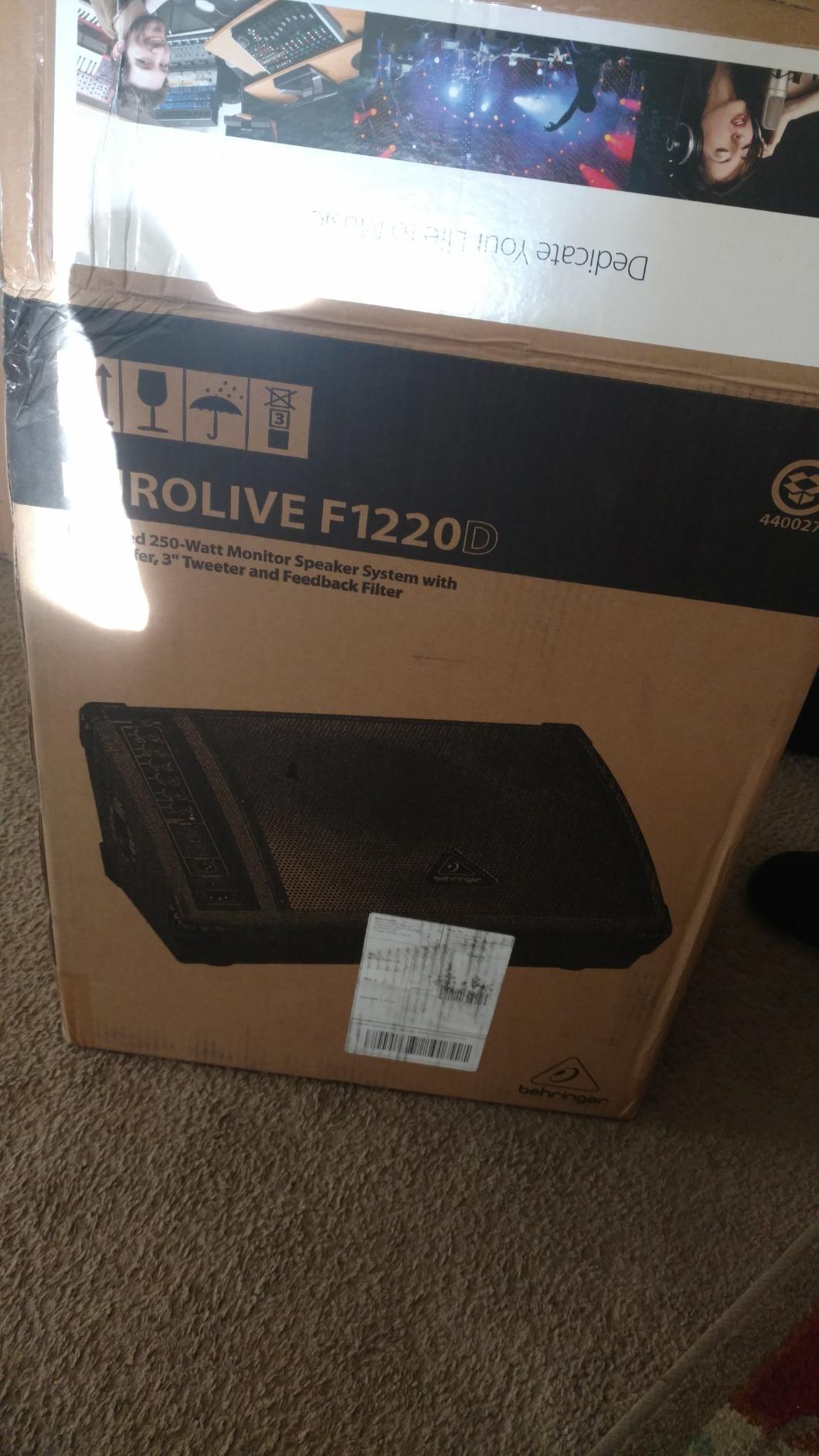
The 12 inch woofer with a 3 inch tweeter is an unusual configuration – most budget wedges pair a 12 inch with a 1 inch compression driver. The bigger tweeter gives the F1220D a slightly warmer midrange that flatters vocals.
Customer reviews consistently highlight the lightweight build and the value-for-money factor. At 23.6 pounds, it’s easy for a single musician to move.
Who the F1220D is for
This is the wedge for church tech teams on a tight budget, beginner bands, and home practice setups. If you want a 12 inch wedge that handles vocals without breaking the bank, the F1220D is a smart starting point.
Where it falls short
The XLR-only inputs mean you can’t plug a 1/4 inch instrument cable directly in without an adapter. For larger venues or full band stage volume, you’ll want more wattage. The enclosure can sound a little boxy when you really push it.
6. Monoprice Stage Right SRD212 – Best for Small Venues
Monoprice Stage Right Series, 12-Inch Powered Speaker, 1200W, SRD212, Class D Amp, DSP, Bluetooth Streaming
1200W Class-D
12 inch woofer
35 lbs
Bluetooth streaming
Pros
- Strong 1200W Class-D power output
- Reliable Bluetooth streaming from phones
- Five DSP presets for different applications
- Lightweight at 35 pounds for the size
Cons
- Sound can sound slightly harsh compared to premium brands
- Some users report reliability issues after warranty
- No manufacturer repair service available
The Monoprice Stage Right SRD212 is the wedge I’d buy for a karaoke night or a small bar band that needs volume and Bluetooth on a tight budget. 1200 watts of Class-D power through a 12 inch woofer is a serious amount of clean stage volume for the price.
The five DSP presets are a real time-saver – one knob selects between Music, Live, Speech, Monitor, and Sub modes. I ran it in Monitor mode for vocal duty and got a clean, present sound without any external EQ.
The Bluetooth streaming has a 10 meter range, which is plenty for running backing tracks from a phone at the side of the stage. The combination XLR/TRS plus RCA inputs give you enough flexibility for most small venue setups.
Customers praise the SRD212’s value-to-power ratio. At 35 pounds, it’s manageable for solo load-in, and the side handle makes it easy to position as a wedge.
Who the SRD212 is for
This is the wedge for karaoke hosts, mobile DJs, and small bar bands that need volume and Bluetooth on a budget. If you’re running a small venue with mixed sources – mic, instrument, phone playback – the SRD212 covers all three.
Where it falls short
The sound character is slightly harsher than premium brands like QSC or EV – long sessions can fatigue your ears. Some users have reported reliability issues after the 1-year warranty expires, and Monoprice doesn’t offer a manufacturer repair service.
7. Galaxy Audio HS7 – Best Compact Monitor for Keyboardists
Galaxy Audio HS7 Hot Spot Personal Monitor with Volume Control Black
Dual 5 inch drivers
200W
4 lbs
3-year warranty
Pros
- Compact and featherweight at only 4 pounds
- Clear and focused personal monitoring
- 3-year manufacturer warranty included
- Bluetooth connectivity for backing tracks
- Onboard volume control for quick adjustments
Cons
- Limited low-frequency response below 150 Hz
- Best for personal near-field monitoring rather than full band stage use
The Galaxy Audio HS7 is the wedge I recommend to every keyboardist and solo pianist I know. It’s not a traditional floor wedge – it’s a personal near-field monitor with a 5 inch dual-driver design and a mic stand adaptor. You clip it onto your keyboard stand and point it at your ears.
The HS7 weighs 4 pounds. You can carry three of them in one hand. That portability is the entire point – it’s the wedge you pull out of a gig bag, clip to a keyboard stand, and play through without disturbing anyone else in the room.
The frequency response runs 150 Hz to 18 kHz, which is plenty for piano, organ, and most stage keyboards. The 3-year warranty is the longest in this category for personal monitors.
Forum users specifically recommend the HS7 for stage piano work where you need clear note articulation without dragging a full wedge across the stage. The onboard volume control is a real plus for musicians who need quick adjustments mid-song.
Who the HS7 is for
This is the monitor for keyboardists, stage pianists, and solo vocalists who want focused near-field monitoring. If you play piano on small stages and don’t want a full wedge in front of you, the HS7 is the right tool.
Where it falls short
It’s not a stage wedge in the traditional sense – the dual 5 inch drivers won’t fill a full band stage. The 150 Hz low-frequency cutoff means you won’t feel bass or kick drum. For vocalists who want a traditional wedge experience, look elsewhere.
8. Rockville RSM15A – Best 15-Inch Wedge for Drummers
Rockville RSM15A 15″ 2-Way Powered Floor Monitor Speaker for Stage
1400W peak
15 inch woofer
61.2 lbs
3-band EQ
Pros
- Massive 1400W peak output
- Strong low-end from 15 inch woofer
- 3-band EQ plus adjustable feedback filter
- Durable MDF cabinet with aviation-grade carpet
Cons
- Very heavy at 61.2 lbs
- Feedback filter effectiveness is inconsistent
- Some users report humming issues
- No manufacturer warranty
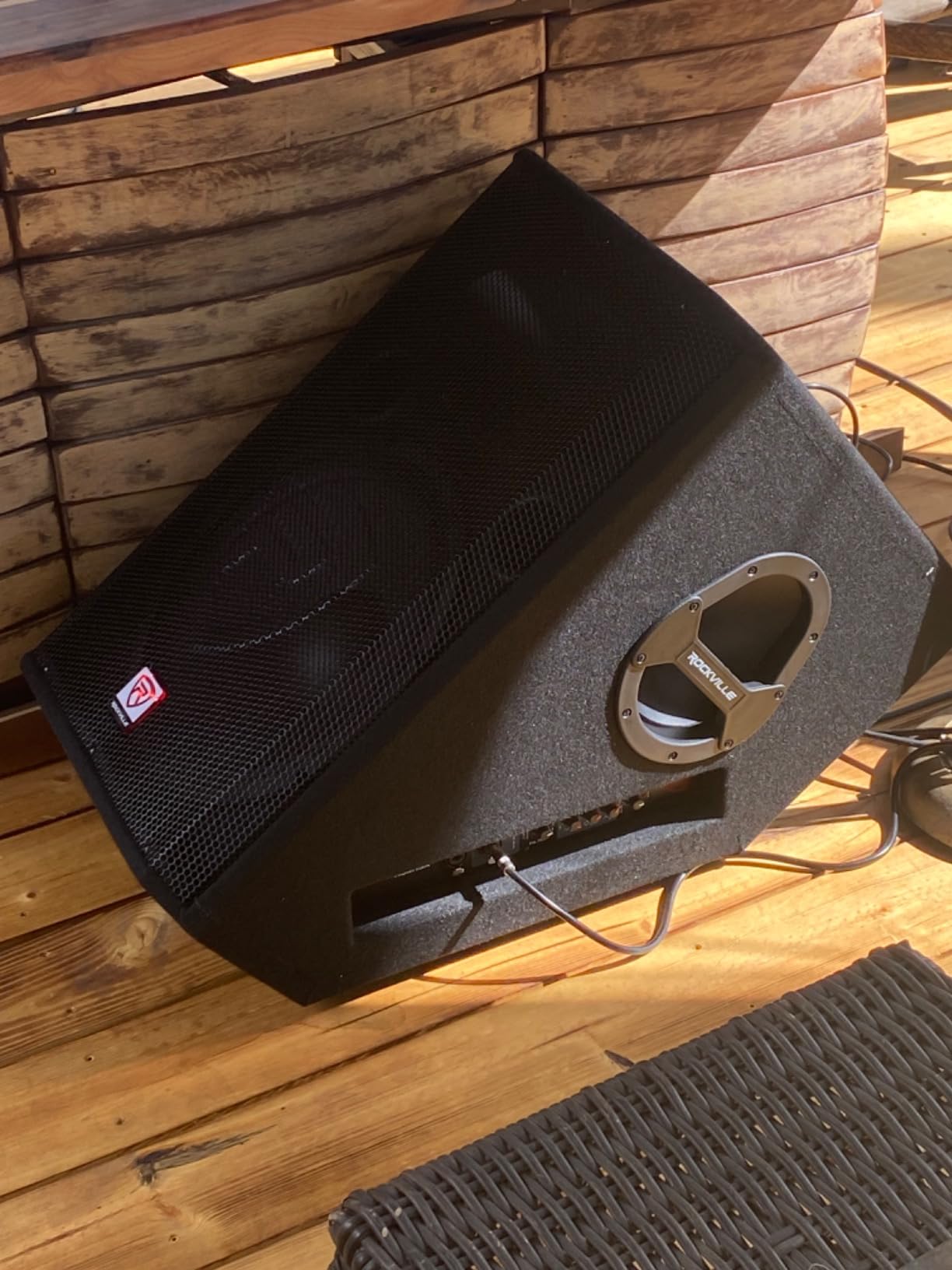
The Rockville RSM15A is the wedge I’d pull out when a drummer needs to feel the kick and toms in their chest. The 15 inch woofer delivers real low-end punch that 10 and 12 inch wedges simply can’t match, and the 1400W peak power section has the headroom to handle hard-hitting metal drummers.
For drum monitoring specifically, low-end reproduction matters more than anything else. The RSM15A’s 15 inch driver moves enough air to give a drummer a clear picture of their kick, snare, and toms without having to crank the volume to ear-damaging levels.
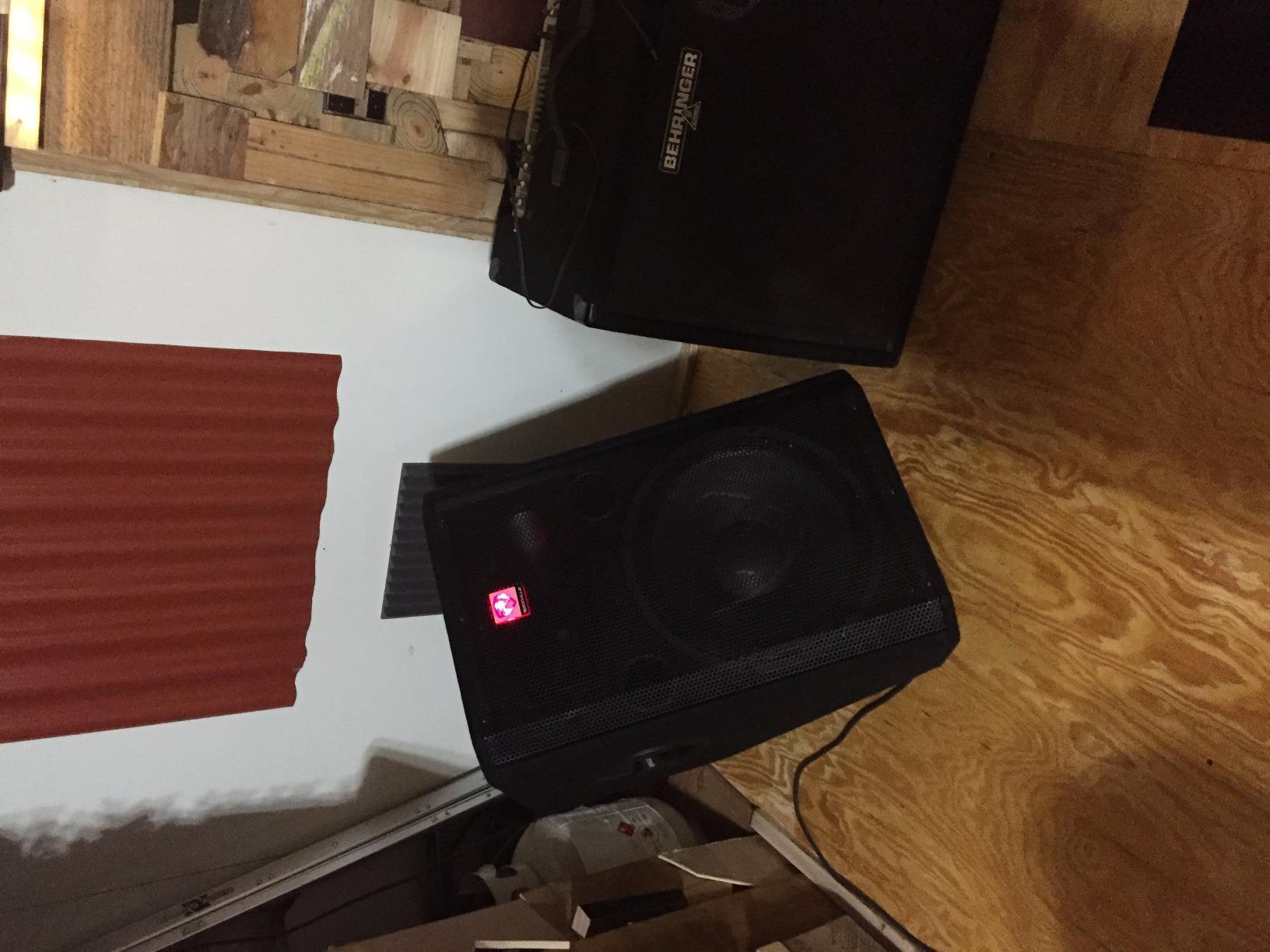
The 3-band EQ plus adjustable feedback filter (300 Hz to 5 kHz) gives you enough tonal control to clean up the stage. The MDF cabinet with aviation-grade carpet is built for the road.
The downside is weight. At 61.2 pounds, the RSM15A is not a wedge you’ll want to carry up stairs. It’s a wedge for the drummer who has a roadie or who leaves it set up.
Who the RSM15A is for
This is the wedge for hard rock and metal drummers, full-volume bands, and any stage where low-end reproduction matters more than portability. If you need a 15 inch wedge that moves serious air, the RSM15A delivers at a budget-friendly price.
Where it falls short
The 61 pound weight is the deal-breaker for solo musicians. The lack of a manufacturer warranty is also a real concern for working bands. Some users have reported humming issues, so test yours before the gig.
9. Samson RSXM10A – Best Coaxial Wedge for Hybrid Setups
Samson RSXM10A – 800W 2-Way Active Stage Monitor, Black
800W coaxial
10 inch woofer
30 lbs
FOH/Monitor switch
Pros
- Powerful 800W output for stage volume
- Lightweight Class-D design for a 10 inch wedge
- Versatile FOH/Monitor selector switch
- All-wood cabinet construction
- Combo input plus XLR link output
Cons
- Limited to mono audio output
The Samson RSXM10A is the wedge I’d recommend to bands that run a hybrid setup – sometimes as a wedge, sometimes as a small FOH speaker. The FOH/Monitor selector switch on the back changes the voicing to match the role, which saves you from buying two separate speakers.
The coaxial driver design places the tweeter concentrically inside the woofer. That single point source gives the RSXM10A a coherent sound image that works well for both wedge duty and front-of-house use.
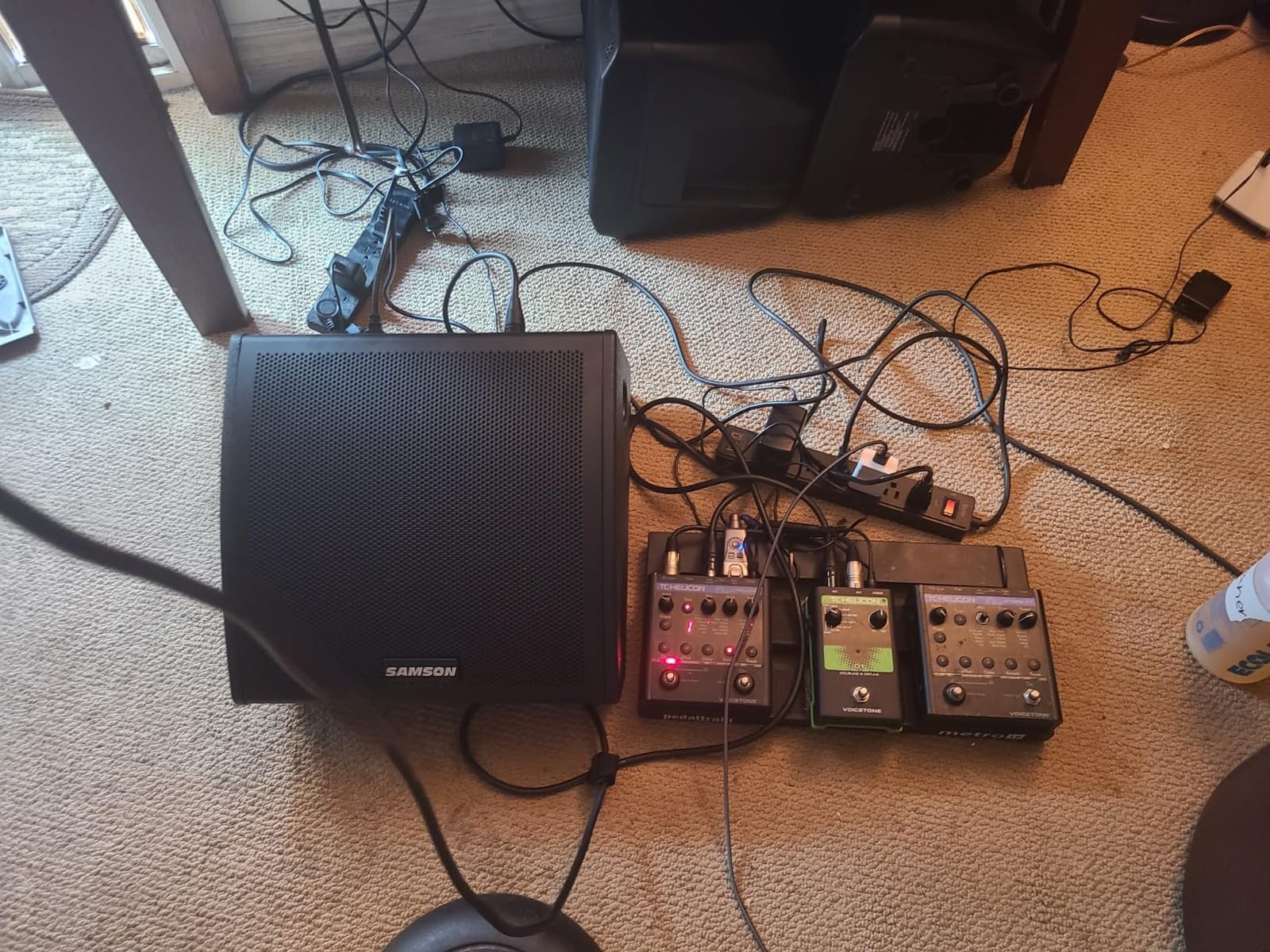
With 800 watts of Class-D power in a 30 pound enclosure, the RSXM10A delivers surprising headroom for its size. The all-wood cabinet feels sturdier than plastic equivalents at this price point.
Customers on r/livesound specifically called out the FOH/Monitor switch as a feature they wish more wedges had. For solo and duo acts that need one speaker that can do both jobs, it’s a real differentiator.
Who the RSXM10A is for
This is the wedge for solo performers, duo acts, and small venue bands that need one speaker for both wedge and FOH duty. If you want a single 10 inch speaker that travels well and adapts to different roles, the RSXM10A is a smart pick.
Where it falls short
The mono audio output is a real limitation for stereo playback. For vocal-focused work it’s fine, but if you want stereo backing tracks from a wedge, you’ll need to pair two of them or look elsewhere.
10. Sound Town METIS-10MPW – Best for Church and Bar Gigs
Sound Town Powered DJ PA Stage Monitor Speaker 10” 300W with Compression Driver for Live Sound, Bar, Church (METIS-10MPW)
300W powered
10 inch woofer
3-band EQ
XLR/TRS/aux
Pros
- Powerful sound with thick full tone
- Solid build and road-ready design
- Easy to set up and connect
- Good value for the price
- Responsive customer service
Cons
- Some reports of unit failures out of the box
- Replacement process can be cumbersome
The Sound Town METIS-10MPW is the wedge I’d buy for a small church stage or bar gig where I need reliable vocal reproduction without spending a fortune. The 300W powered design with a 1 inch titanium compression driver delivers clear vocal clarity that holds up in noisy rooms.
The onboard 3-band EQ (bass, mid, treble) gives you enough tonal control for vocal work. The XLR line input plus 1/4 inch aux input plus 1/8 inch MP3 input means you can plug in a mic, an instrument, or a phone for backing tracks without adapters.
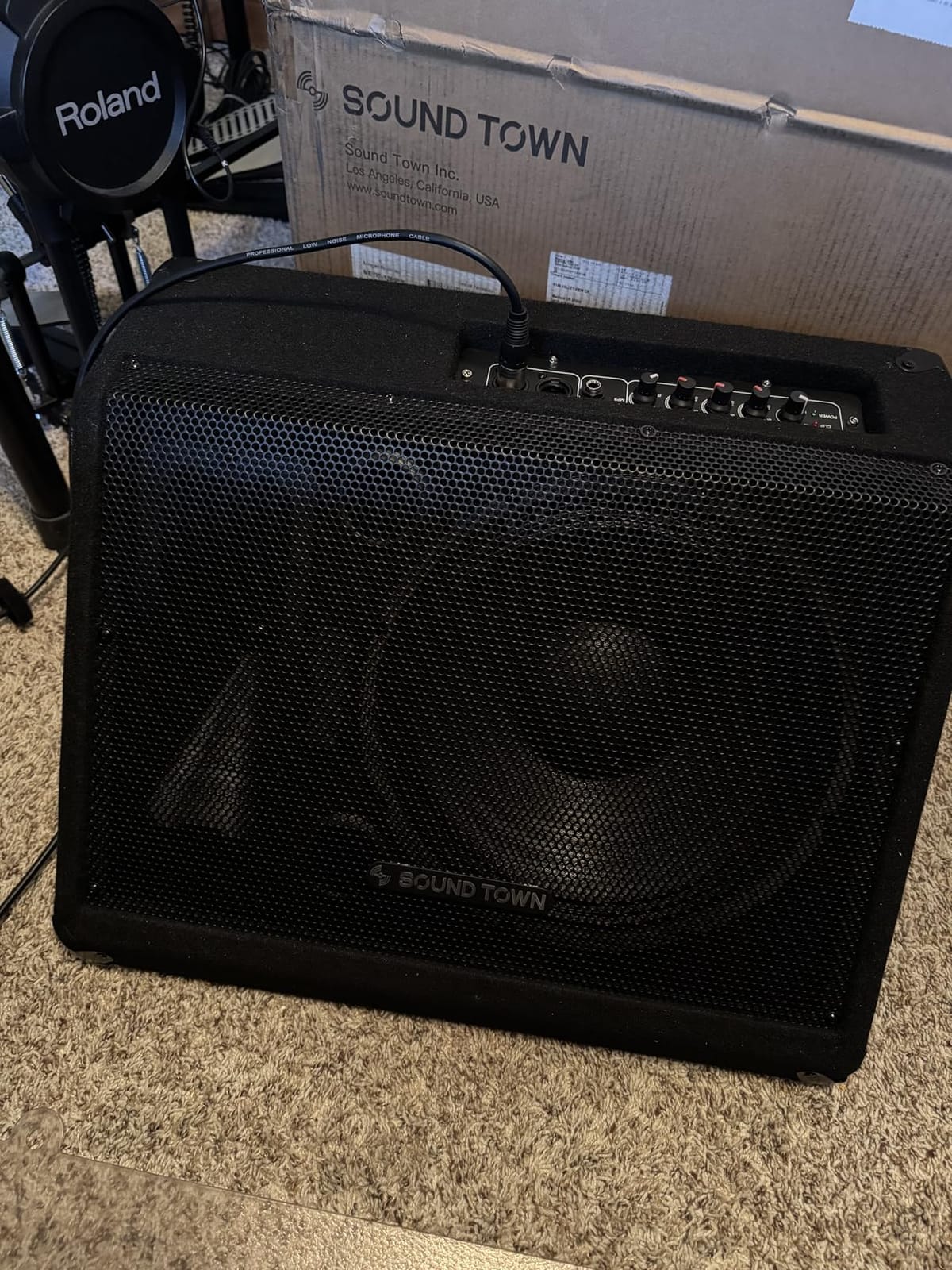
Church tech teams and bar gig musicians on forums consistently recommend the METIS-10MPW for low-volume venues that need clear vocal monitoring. The compact low-profile wedge design fits under pulpit positions and tight stage layouts.
Sound Town’s customer service is consistently praised in reviews. If a unit fails, the brand stands behind it, which is more than I can say for some budget competitors.
Who the METIS-10MPW is for
This is the wedge for small church stages, bar bands, karaoke hosts, and any low-to-medium volume venue that needs a reliable vocal wedge. If you want a 10 inch powered monitor with simple controls and good customer support, this fits.
Where it falls short
Some users have reported units failing out of the box, though the replacement process is generally smooth. For really loud stages, you’ll want more wattage and a bigger woofer.
Buying Guide: How to Choose the Best Stage Monitors for Live Performance?
After testing these ten wedges across dozens of gigs, here is how I’d approach the buying decision. The right wedge depends on your stage volume, your band size, and how much you value portability versus power.
Powered vs passive wedge monitors
A powered wedge has a built-in amplifier – you run an XLR signal cable to it and it powers itself. A passive wedge needs an external power amp. For most working musicians, powered is the right call.
Powered wedges eliminate the rack amp and the speaker cable run, which matters on small stages where cable clutter becomes a real problem. Every wedge in this roundup is powered, and forum users on r/livesound consistently recommend powered wedges for venues running 4 to 6 monitor mixes.
Passive wedges still have a place in touring rigs and permanent installs where rack amps and processing live in a single rack. For everyone else, powered is simpler and easier.
Woofer size: 8, 10, 12, or 15 inch
Woofer size drives low-end reproduction more than any other spec. As a rule of thumb: 8 inch wedges work for solo vocalists and acoustic guitarists in small rooms. 10 inch wedges are the sweet spot for most bands. 12 inch wedges add low-end presence for keyboards and bass. 15 inch wedges are for drummers and full-volume hard rock stages.
For most working bands, a 10 or 12 inch wedge covers the vocal and instrument range without dragging extra weight. Save the 15 inch wedges for drummers who specifically need to feel the kick.
Wattage and peak SPL
How many watts should a stage monitor be? For vocal monitoring in small venues, 200 to 400 watts is plenty. For full band stage volume with a drummer, look for 500 to 1000 watts. For hard rock and metal stages, you want at least 700 watts and a 12 inch or larger woofer.
Peak SPL tells you how loud the wedge will go before distortion. Anything above 120 dB SPL is loud enough for most live situations. The Yamaha DBR10 hits 129 dB SPL, the ALTO TX410 and Samson RSXM10A sit comfortably above 120 dB, and even the modest Behringer F1220D has enough headroom for vocals.
How to EQ a stage monitor wedge to fight feedback
Feedback is the most common wedge problem, and it’s almost always fixable with three simple moves.
Step 1: Identify the offending frequency. Sweep a narrow notch EQ slowly between 200 Hz and 5 kHz while the mic is open. The frequency where you hear the howl is your feedback point.
Step 2: Cut that frequency by 3 to 6 dB with a narrow Q. This drops the gain before feedback by a few dB without changing the overall tone.
Step 3: Pull the wedge away from the mic by a foot or two if possible. Wedge placement matters more than EQ – aim the wedge at the singer’s ears, not at their mic.
Many wedges in this roundup include a built-in feedback filter – the Behringer F1320D, Behringer F1220D, Rockville RSM15A, and Electro-Voice PXM-12MP all ship with one. Engage it before you start chasing EQ by ear.
Stage placement tips
The angle of your wedge matters as much as the brand. Aim the front face directly at the singer’s or instrumentalist’s ears – not at their knees, not at the audience. The “sweet spot” is usually a 30 to 40 degree tilt from the floor.
For tight stages, low-profile coaxial wedges like the Electro-Voice PXM-12MP or QSC K12.2 fit under mic stands without blocking sightlines. For larger stages, taller wedge designs can deliver more volume per square inch of footprint.
Finally, keep cables away from traffic paths and run signal cables at 90 degree angles to power cables to avoid hum. These small habits save more gigs than any single piece of gear.
Frequently Asked Questions
What is the best stage monitor for live performance?
The best stage monitor for live performance depends on your stage volume and portability needs. For most working bands, the Yamaha DBR10 hits the sweet spot – 700W of clean bi-amped power, 10 inch woofer, 21 pound weight, and a 7-year warranty. For louder stages, the Electro-Voice PXM-12MP delivers exceptional vocal clarity through a coaxial driver. For budget buyers, the ALTO TX410 offers Bluetooth and 350W at a fraction of the cost.
How many watts should a stage monitor be?
For vocal monitoring in small venues, 200 to 400 watts is plenty. For full band stage volume with a drummer, look for 500 to 1000 watts. For hard rock and metal stages, you want at least 700 watts and a 12 inch or larger woofer. Peak SPL ratings above 120 dB handle most live situations without distortion.
What are the best monitor wedges for stage use?
The best monitor wedges for stage use are dedicated powered wedges with a low-profile enclosure, front-panel volume control, and a feedback filter. The Yamaha DBR10, Electro-Voice PXM-12MP, and QSC K12.2 are the most trusted models among working musicians. For budget buyers, the Behringer F1320D and ALTO TX410 deliver reliable wedge performance at lower prices.
What is the best powered stage monitor?
The best powered stage monitor for most musicians is the Yamaha DBR10 – it combines 700W of clean Class-D power, 129 dB SPL, FIR-X tuning, and a 7-year warranty in a 21 pound wedge. For vocalists who want maximum clarity, the Electro-Voice PXM-12MP coaxial design is widely considered the gold standard. For tight budgets, the ALTO TX410 delivers Bluetooth and TWS at a wallet-friendly price.
What are the best monitor speakers for a stage piano?
For stage piano and keyboard monitoring, the Galaxy Audio HS7 is the best compact solution – it weighs 4 pounds, clips to a keyboard stand, and delivers clear note articulation without dragging a full wedge across the stage. For a traditional floor wedge, the Electro-Voice PXM-12MP or Yamaha DBR10 both reproduce keyboard frequencies with accuracy and headroom.
Final Verdict
After testing ten powered stage monitors across a wide range of live situations, the Yamaha DBR10 earns our top recommendation as the best stage monitor for live performance in 2026. It balances clarity, weight, headroom, and warranty better than any other wedge on the list, and it works equally well as a vocal wedge, a small FOH speaker, or a sidefill.
For vocalists who want maximum clarity, the Electro-Voice PXM-12MP is the premium pick worth the extra cost. For budget buyers, the ALTO TX410 delivers Bluetooth, TWS, and clean wedge performance at a price that makes it the easy best value choice. And for keyboardists who want focused near-field monitoring, the Galaxy Audio HS7 is in a class by itself.
Whatever wedge you pick from this list, run it through your real gig before you trust it. The right stage monitor is the one that lets you sing, play, and perform at your best – and now you have ten solid options to choose from.