
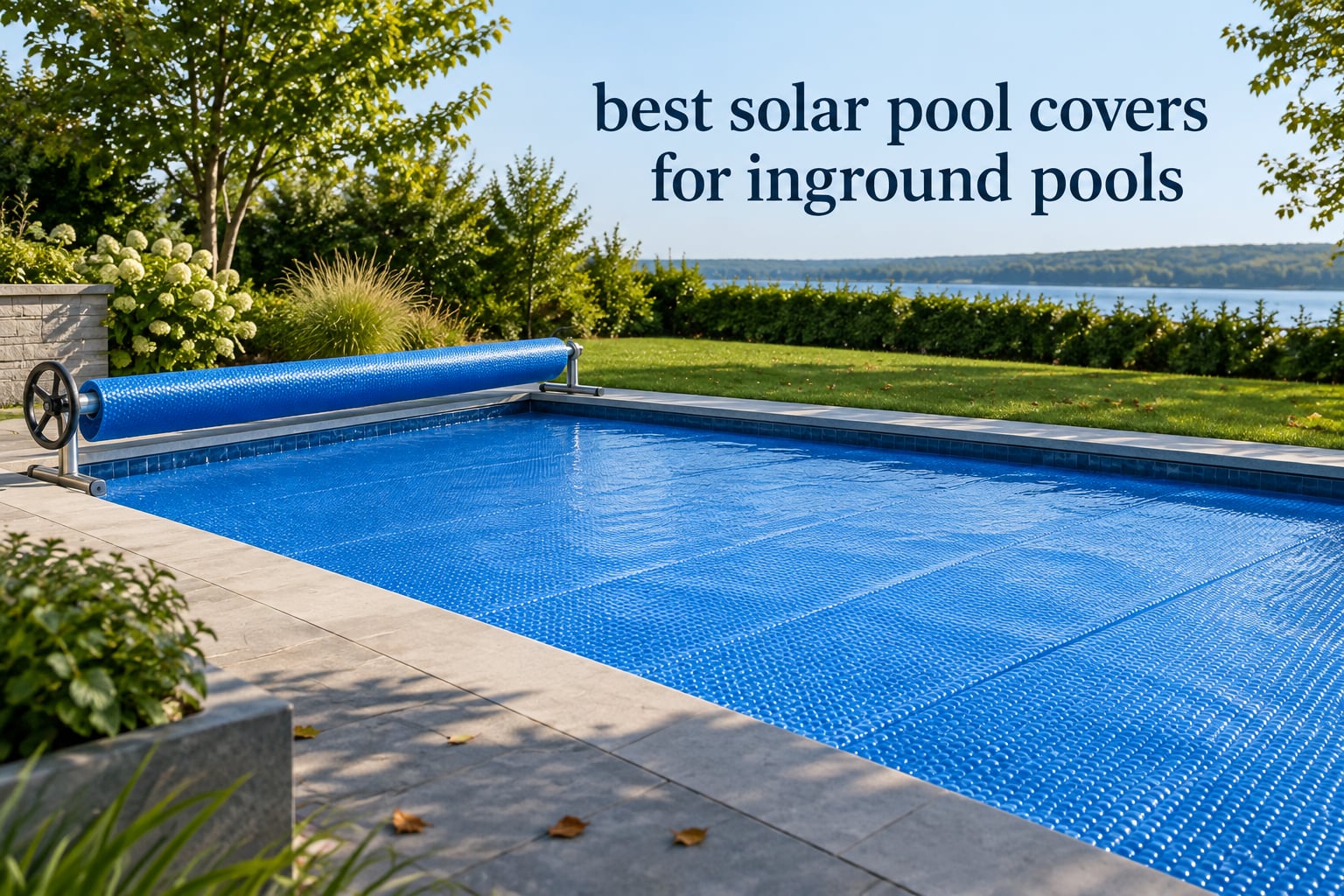
Yes, solar pool covers work, and on an inground pool they earn their keep faster than on any other pool type. A floating solar blanket cuts evaporation, holds heat overnight and blocks leaves, and an uncovered inground pool in summer can lose on the order of a foot and a half of water to evaporation in a single week along with a matching share of your chlorine. The catch is that most of the disappointment comes from buying the wrong thickness or the wrong size, and both mistakes are hard to undo once a cover is cut. I spent weeks reading through verified reviews on ten of the most-purchased solar blankets in this category, comparing mil thickness, seam construction, weight per cover and the durability complaints that appear again and again. Everything below is scoped to inground pools, which is where sizing decisions get expensive and where most generic roundups go quiet.
One thing to settle before you read further: a solar pool cover is a thermal and evaporation device. It is not a safety cover, it will not hold a child or a dog, and no brand in this roundup is rated for that. If you need a barrier against entry, you are shopping for an automatic safety cover instead, and that is a different product category at a different price scale.
Everything here is updated for 2026. If you want the short version first, jump to the top three, then read the measurement section before you order anything. Sizing is the one decision you cannot easily change later, and it is where the gap between a sensible purchase and an oversized one opens up fast.
Table of Contents
Top 3 Picks for Solar Pool Covers for Inground Pools (October 2026)

VEVOR 16 Mil Solar Pool Cover 32 x 16 ft
- 16 mil polyethylene
- Up to 95% evaporation reduction
- Cut to fit any pool shape
Blue Wave 12 Mil Solar Blanket 16 x 32 ft
- 12 mil polyethylene
- 512 square feet
- 5 year manufacturer warranty

BigXwell 16 Mil Heavy-Duty Cover 16 x 32 ft
- Heavy-duty 16 mil PE
- Up to 95% evaporation reduction
- Trim to fit any shape
All 10 Solar Pool Covers at a Glance in 2026
Every cover below is a floating bubble blanket. Thicker is not automatically better for your pool, but it is reliably better for the life of the cover.
| Product | Specs | Action |
|---|---|---|
| VEVOR 16 Mil Solar Pool Cover 32 x 16 ft |
|
Check Latest Price |
| Blue Wave 12 Mil Solar Blanket 16 x 32 ft |
|
Check Latest Price |
| BigXwell 16 Mil Heavy-Duty Cover 16 x 32 ft |
|
Check Latest Price |
 VINGLI 18 x 36 ft Solar Pool Cover 12 mil VINGLI 18 x 36 ft Solar Pool Cover 12 mil |
|
Check Latest Price |
 Goplus 12 Mil Solar Blanket 12 x 24 ft Goplus 12 Mil Solar Blanket 12 x 24 ft |
|
Check Latest Price |
 In The Swim 8 Mil Standard Solar Cover 16 x 32 ft In The Swim 8 Mil Standard Solar Cover 16 x 32 ft |
|
Check Latest Price |
 Real Relax 16 Mil Bubble Blanket 16 x 32 ft Real Relax 16 Mil Bubble Blanket 16 x 32 ft |
|
Check Latest Price |
 AllAreN 10 Mil High-Density Cover 16 x 32 ft AllAreN 10 Mil High-Density Cover 16 x 32 ft |
|
Check Latest Price |
 VINGLI 16 Mil Welded-Seam Cover 16 x 32 ft VINGLI 16 Mil Welded-Seam Cover 16 x 32 ft |
|
Check Latest Price |
| BigXwell 12 Mil 1200 Series 16 x 32 ft |
|
Check Latest Price |
How Solar Pool Covers Actually Work on an Inground Pool
A solar cover is a sheet of UV-stabilized polyethylene with thousands of tiny air pockets pressed into it. Those pockets do three jobs at once. They keep the blanket floating, they let sunlight pass through and warm the water underneath during the day, and they act as insulation that slows heat loss after sunset. The flat polyethylene layer on the underside is the part that actually stops evaporation.
The distinction between day and night matters more than most marketing suggests. With the cover on during daylight hours you are collecting solar energy, which is where the widely quoted temperature gains come from. With the cover on overnight you are only slowing the loss of heat you already have. That is why the biggest practical wins come from a habit: put the cover on in the morning, take it off to swim, and put it back on for the evening.
Will a pool warm up faster with a cover on or off? Faster with the cover on during sunny hours, because the blanket traps radiant energy that the bare water surface would simply lose to the air. But a covered pool will never get as hot in the middle of a hot afternoon as an uncovered one that has absorbed solar heat all day. The right question is not which heats faster, it is which ends the week with a warmer pool and a lower water bill.
Evaporation is where the argument gets strongest. Roughly 1.5 inches of water per week is a reasonable summer estimate for an uncovered pool, and every gallon you lose takes chlorine and heat with it. Cut that loss and the cover pays for itself inside a single swimming season in most climates, before you even count the season extension at either end.
Wind is the factor most roundups ignore. A thin cover catches air and skates across the surface; a thick, stiff cover sits down onto the water and resists displacement. That difference is not a marketing line, it is a consequence of weight per square foot, and it is the strongest argument for 16 mil in windy regions.
1. VEVOR 16 Mil Solar Cover 32 x 16 ft: Best Overall for Inground Pools
VEVOR Solar Pool Cover 32 x 16 ft, 16 Mil Rectangle Solar Blanket Blue
16 mil polyethylene
32 x 16 ft rectangle
37.8 lb
Cut to fit any shape
Pros
- 16 mil PE resists tearing and UV warping
- Up to 95% evaporation reduction
- Cuts to any pool shape including L-shape and raised spa
- Large verified review base
Cons
- Must be trimmed before first use
- Rolling it on and off daily suits a cover reel
The VEVOR 16 Mil is the best overall pick for inground pools because it combines the thickest mainstream material in this roundup with the second-largest verified review base, and it holds its shape well enough that trimming a rectangle down to an irregular outline does not leave you fighting a floppy sheet. Across 1,276 ratings it sits at 4.3 out of 5, with 72 percent five-star and 8 percent one-star, which is one of the cleanest distributions anywhere in the category.
The physical numbers matter for inground owners. Each cover covers 512 square feet, the listed shipping weight is 37.8 pounds, and the sheet arrives as a flat rectangle with no pool-shaped contour. That last point is the honest trade-off: nothing in this category arrives pre-cut to a raised spa or an L-shaped deck, and VEVOR’s material is forgiving enough that a pair of scissors is genuinely enough to get the job done.
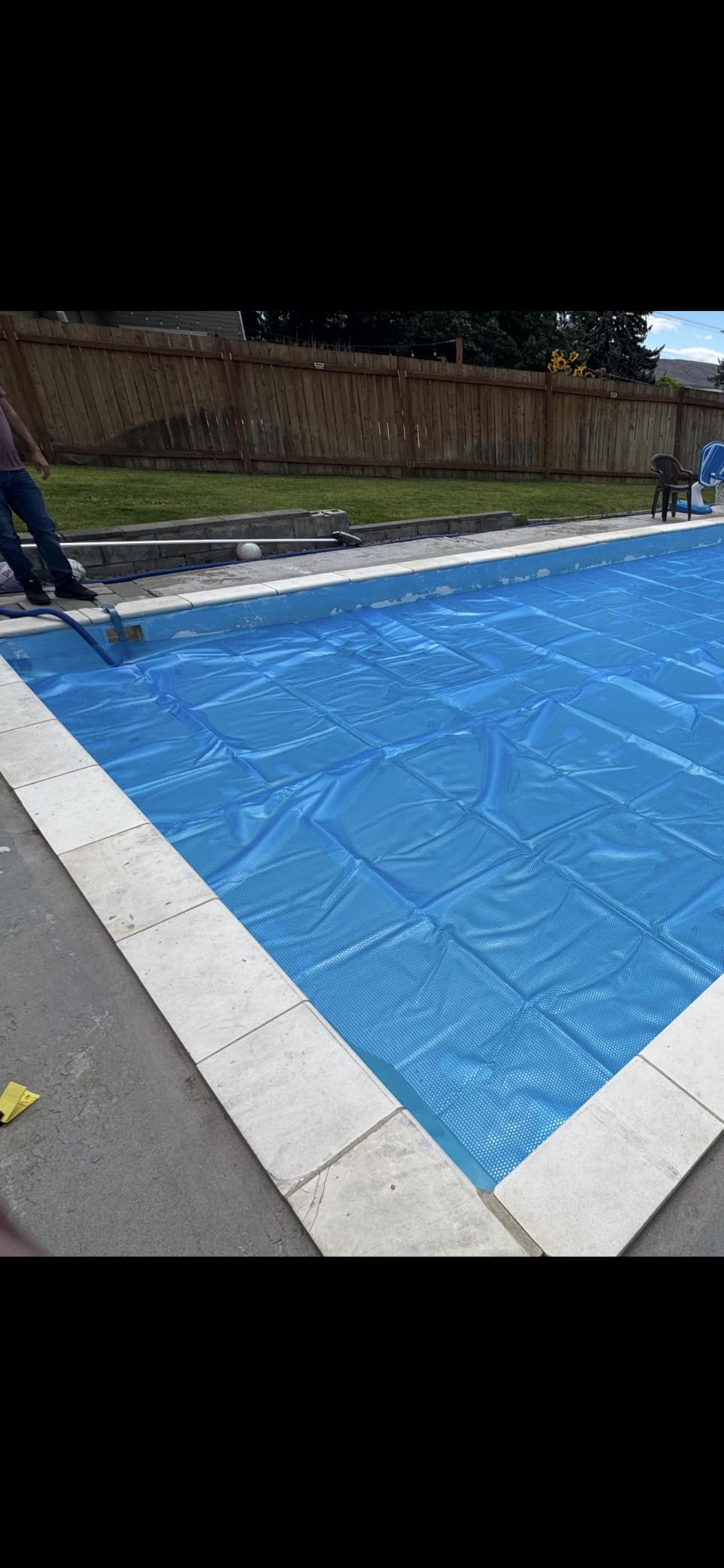
On performance, the manufacturer claims an 8 to 15 C rise in water temperature depending on conditions and up to 95 percent evaporation reduction. Independent reviewers put it in similar territory, describing water that measurably warmed through the day and held overnight, and fewer vacuum passes for leaf debris. The same reviews consistently note the practical daily reality: this is a cover you put on and take off by hand, and a roller makes that routine far less of a chore on a 16 by 32 pool.
For larger or unusual inground shapes the trim-to-fit approach is where this cover pulls ahead of the 8 mil and 10 mil options. Its tensile strength means a cut edge resists fraying over repeated seasons, which is the failure mode that ends cheaper blankets early.
What inground pool owners will notice first
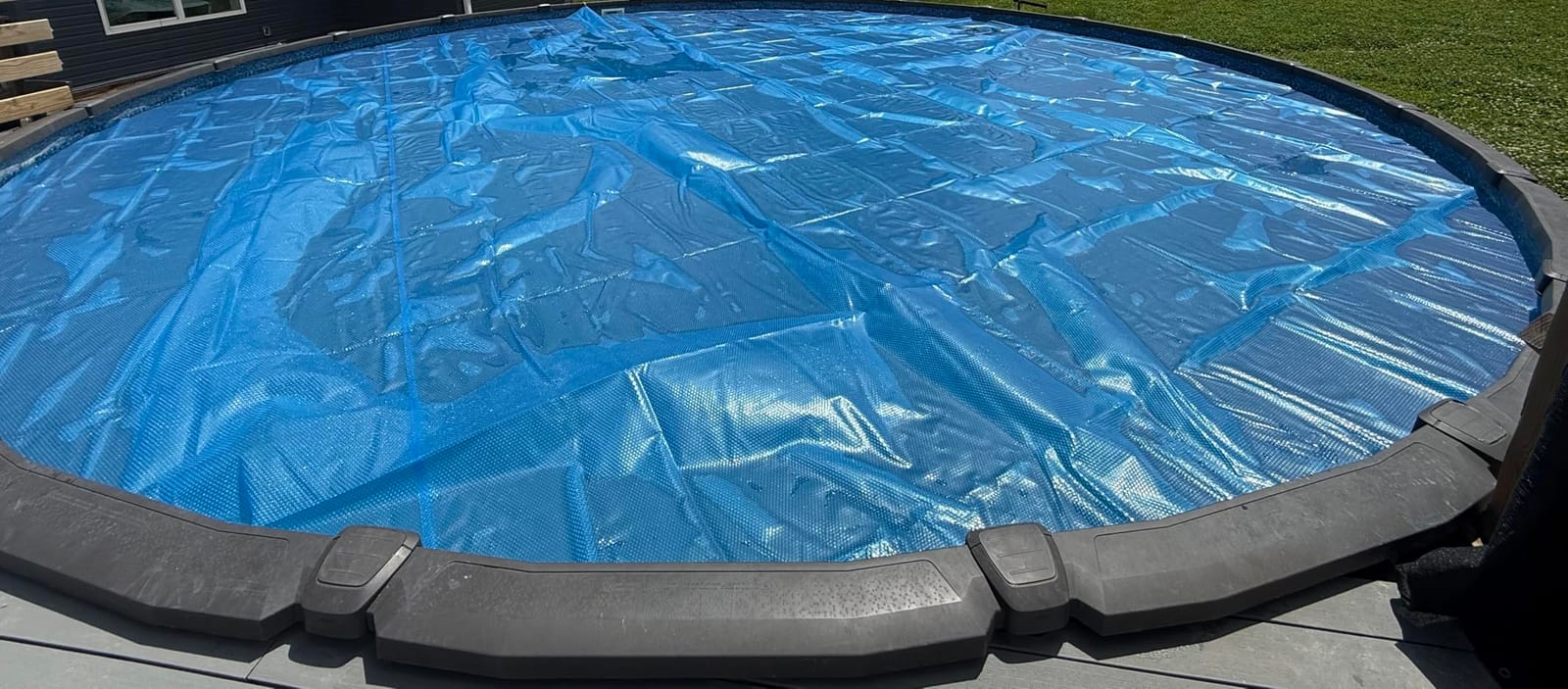
At 16 mil this cover stays down on the water instead of riding up on a gust, which matters most in the shoulder months when the cover is on overnight and the air is moving. Expect a visible temperature lift over a warm week and a noticeable drop in how often you top the pool up.
The 37.8 pound unit is real weight, though. One person can lift it, but pulling a saturated sheet off a large pool is not a solo job, and that is worth factoring in before you buy.
Where it falls short
It arrives as a raw rectangle, so you are cutting to fit on day one, and cutting is a one-way door. If you have a raised spa or a complex L-shape, trace carefully and cut from a single straight edge so the seams stay intact.
There is also no reel in the box and no warranty figure listed in the specifications, so if warranty length is a deciding factor for you, this one leaves the question open.
2. Blue Wave 12 Mil Solar Blanket 16 x 32 ft: Best Value With the Biggest Review Base
Blue Wave 16×32-ft Rectangle Solar Pool Cover 12-Mil Blue – Solar Cover for Above Ground Pool & Inground Pool, Thermal Bubble Blanket for Heat Retention & Reduced Evaporation
12 mil polyethylene
512 square feet
27 lb
5 year limited warranty
Pros
- Largest review base at 2510 ratings
- Lightweight at 27 lb for a full-size cover
- Confirmed heating and evaporation control
- Trims and rolls easily
Cons
- Bubbles can pop and shed plastic into the filter
- Some owners report wear after one to two seasons
- Warranty coverage is prorated
The Blue Wave NS420 is the best value pick, and the evidence base behind it is the widest in the entire roundup. It carries 2,510 ratings, by a wide margin the largest verified pool of any cover here, and it is the only product in the group with a stated manufacturer warranty of 5 years limited.
That review volume is genuinely useful rather than just impressive. Owners report a measurable shift in daily baseline temperature within about a week of use on a standard inground pool, an owner in Hawaii reporting no added water for over a month, and consistent confirmation that leaves, insects and even curious wildlife stay out. At 27 pounds for 512 square feet, it is also the easiest full-size cover here to pull on and off alone, which is not a trivial consideration when you are doing it every day.
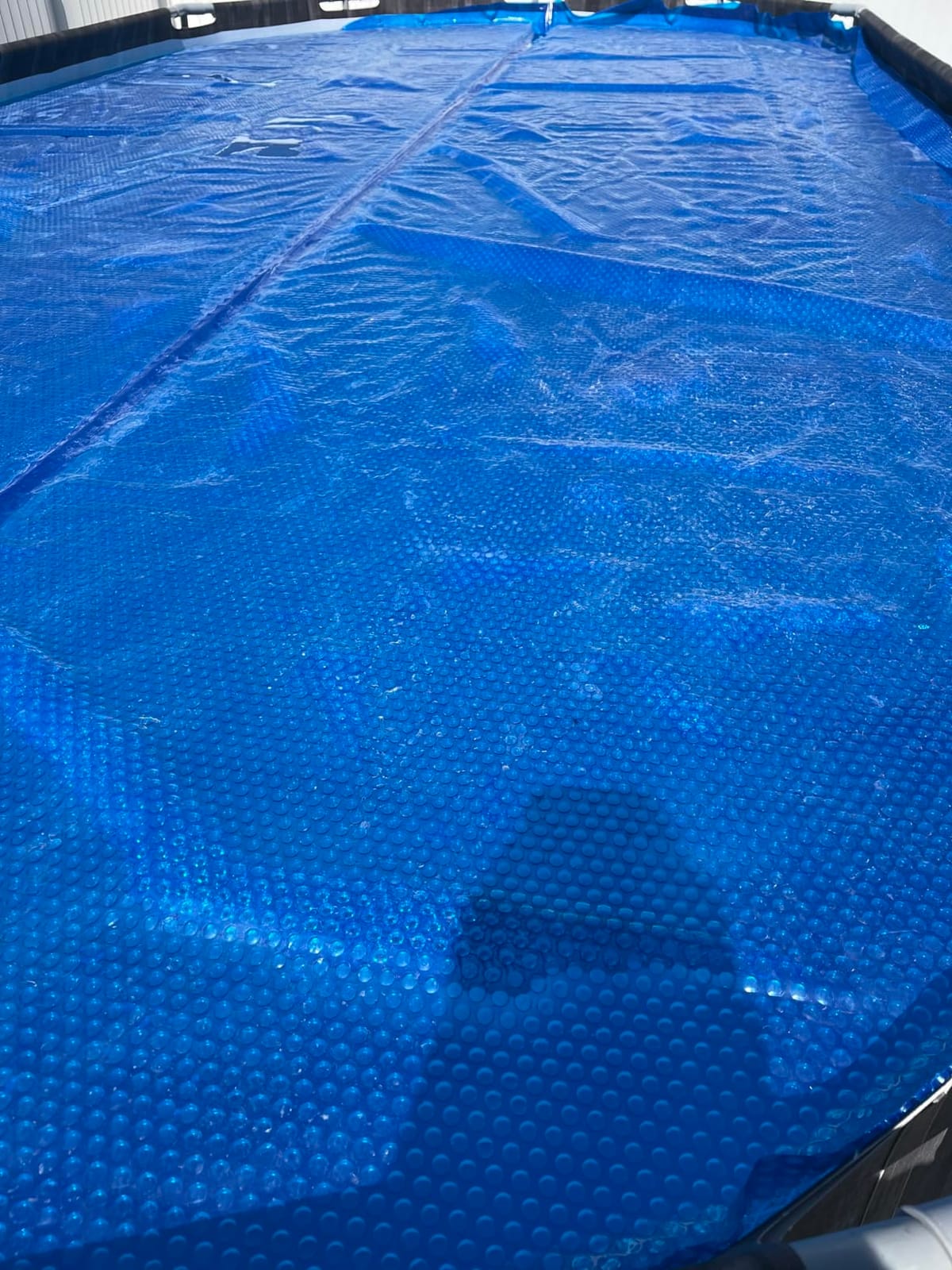
The 12 mil build is the consensus recommendation that keeps showing up across pool forums too, and this cover sits right on it. The tradeoff is that 12 mil is a middle weight: it will not stay as planted as a 16 mil sheet in wind, and it has less puncture resistance if a ladder foot or a sharp edge finds it.
Read the warranty fine print rather than the headline number. Owners describe the 5 year coverage as prorated and expensive to actually claim, so treat the warranty as a defect remedy rather than a five year replacement promise.
Who this fits best
If you want proven performance data, a light cover you can handle by yourself, and a single product that covers a standard 16 by 32 inground rectangle, this is the safe pick. The consistent baseline temperature gain in the reviews is the clearest evidence of that.
It also suits owners who leave the cover on through a full season and then expect to keep using it. Many buyers describe reaching for it year after year, and several report switching away from a competing brand that kept peeling.
Where it falls short
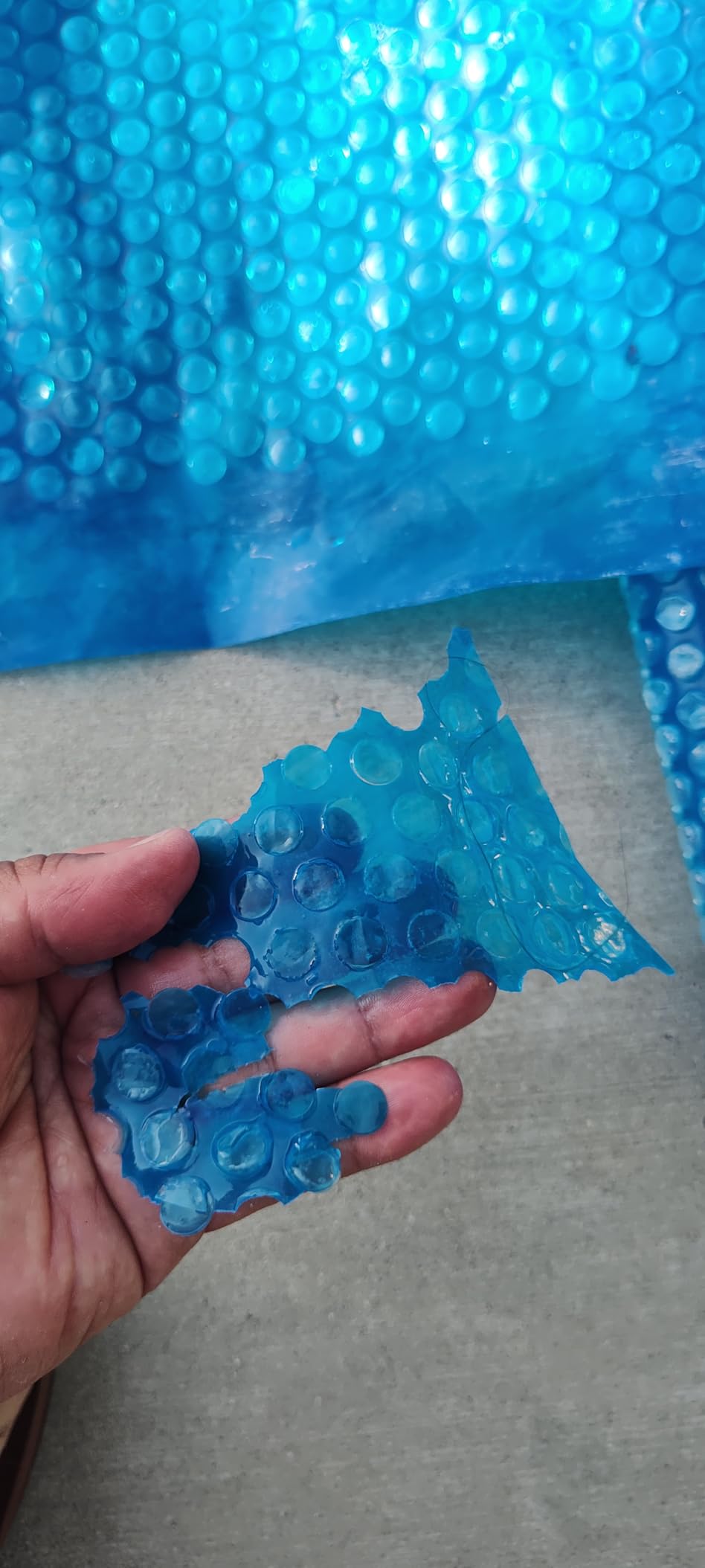
The most repeated complaint is bubbles popping and shedding small plastic pieces into the water, which then reach the filter. If you are fussy about debris in the pool, this is the one to think hard about before buying.
A secondary theme is simply durability. A handful of owners describe the material breaking down after one to two seasons, and the panel seams mean the blanket is joined rather than a single continuous sheet, which is a weak point compared with welded or heat-sealed construction.
3. BigXwell 16 Mil Heavy-Duty Cover 16 x 32 ft: Best Durability for Large Inground Pools
BigXwell Heavy-Duty Solar Pool Cover 16x32ft – 16Mil Blue
16 mil polyethylene
32 x 16 ft rectangle
384 in by 192 in
Thermal bubble construction
Pros
- 16 mil is noticeably thicker and stiffer than rivals
- 78 percent five-star ratings
- Low overnight heat loss in owner testing
- Cuts cleanly without fraying
Cons
- Two people generally needed for a full-size cover
- Arrives oversized so trimming is required
The BigXwell 16 Mil is the heavy-duty choice, and its 4.5 rating across 1,035 reviews with 78 percent five-star and only 5 percent one-star is the best durability profile among the large covers here. Reviewers describe the material in exactly the terms you would hope for: noticeably thicker and stiffer than competing blankets.
Owners measuring real overnight loss report a drop of roughly 5 F on a Florida night with the cover in place, and several describe the sheet as cutting cleanly with scissors without tearing or fraying at the edge. Cutting cleanly matters more than it sounds, because a frayed 16 mil edge is the beginning of the end. Buyers also report buying this brand again after a first cover finally wore out, which is the closest thing to a repeat-purchase signal available in this category.
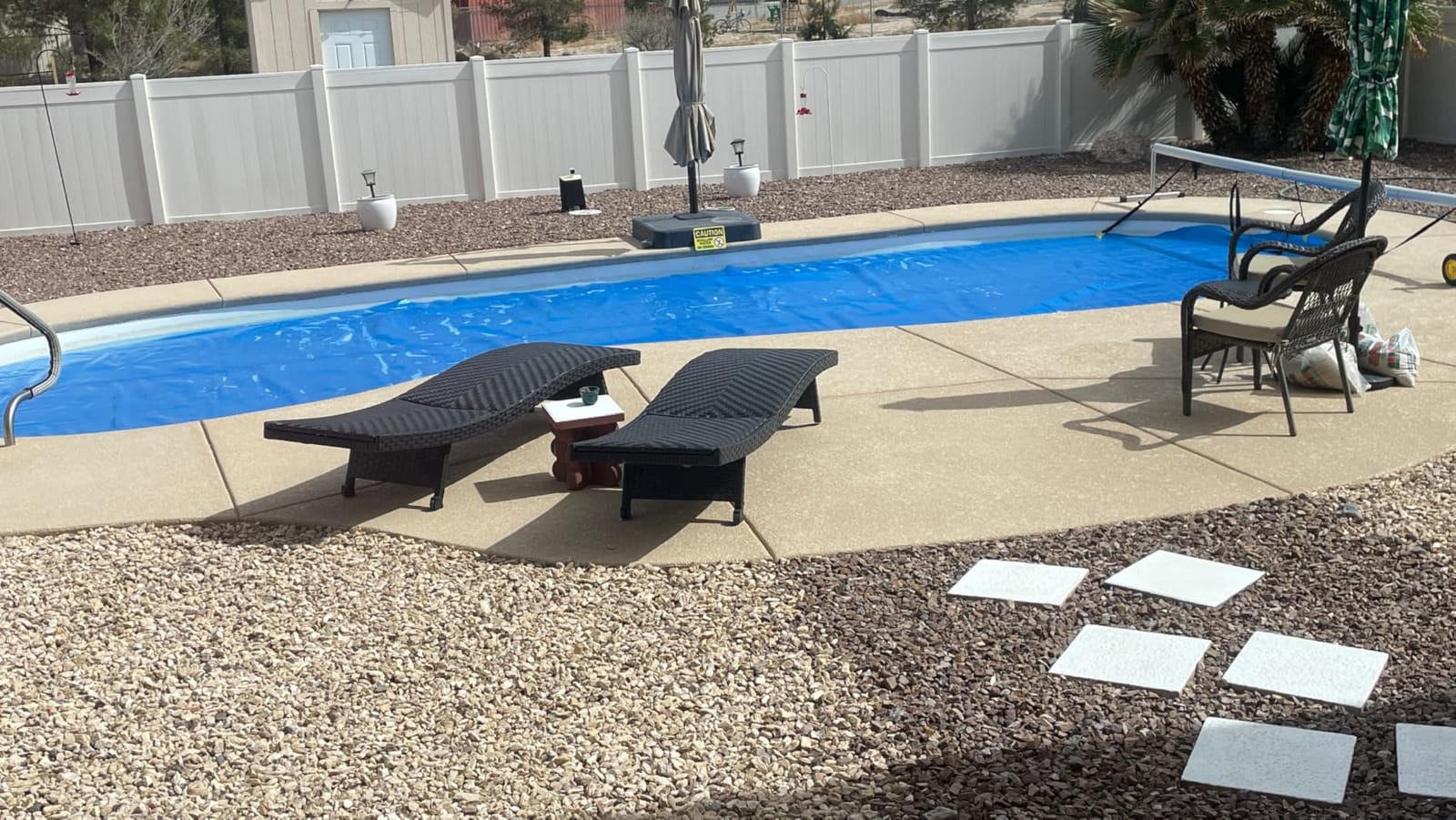
The thermal bubble construction is specified to cut evaporation by 95 percent and to hold temperature on cloudy days as well as sunny ones, and the listed dimensions of 384 inches by 192 inches give you the raw material to cover a full-size inground rectangle or an oversized custom shape after trimming.
This is also the one large cover that explicitly lists its use for hot tubs and spas, so owners with a raised spa inside the pool can use a single sheet rather than juggling two.
What you will notice in the first week
The stiffness is the difference you feel first. This cover lies flat and stays where you put it, which means less chasing it around the deck when a breeze comes up and less drifting debris into the open corner of the pool.
Overnight heat retention is the difference you feel at night. Fewer warm evening swims without turning the heater on is the entire reason most inground owners buy a cover at all.
Where it falls short
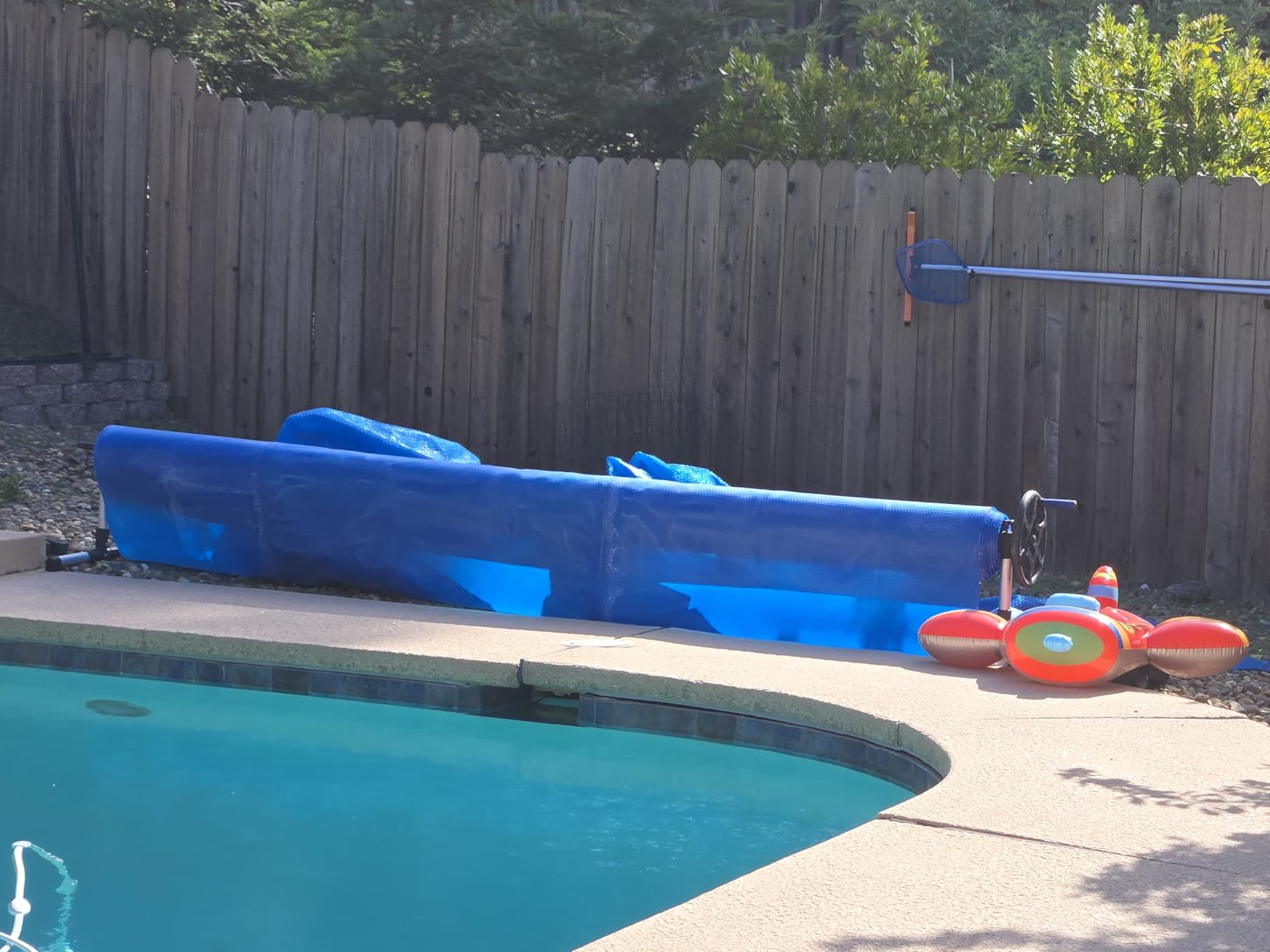
Handling is the real cost. A saturated 16 mil blanket over 500 square feet generally needs two people, and if you are over 65 or have any back issues, factor that in before you commit.
There is also a sizing warning worth heeding. One reviewer ordered a 12 foot round and received a 14 foot diameter, so verify the actual panel dimensions rather than trusting the size selector alone.
4. VINGLI 18 x 36 ft Solar Pool Cover 12 mil: Best for Oversized Inground Pools
VINGLI 18x36ft Solar Pool Cover 12mil Rectangle Blue
12 mil polyethylene
36 x 18 ft rectangle
19.87 kg
Welded seams
Pros
- Largest listed panel size for oversized pools
- Welded seams resist seasonal wear
- Trim to fit with scissors
- Works with a matching VINGLI reel
Cons
- Arrives oversized so trimming comes first
- Bubble side must face down
- Manual placement suits a reel
The VINGLI 18 by 36 is the pick for oversized inground pools, and the reason is right there in the dimensions. At 36 by 18 feet this is the largest listed panel in the roundup, which makes it the practical choice for a long rectangular pool, a pool with a wide sun shelf, or an L-shape where one rectangular sheet covers more of the water than two smaller ones would.
Rated 4.3 across 806 reviews with 74 percent five-star, it is well supported. The construction detail that matters most here is welded seams, which reviewers specifically credit for surviving repeated seasons. Welded or heat-sealed seams beat stitched ones because a stitch is a hole that water chemistry can reach over time.
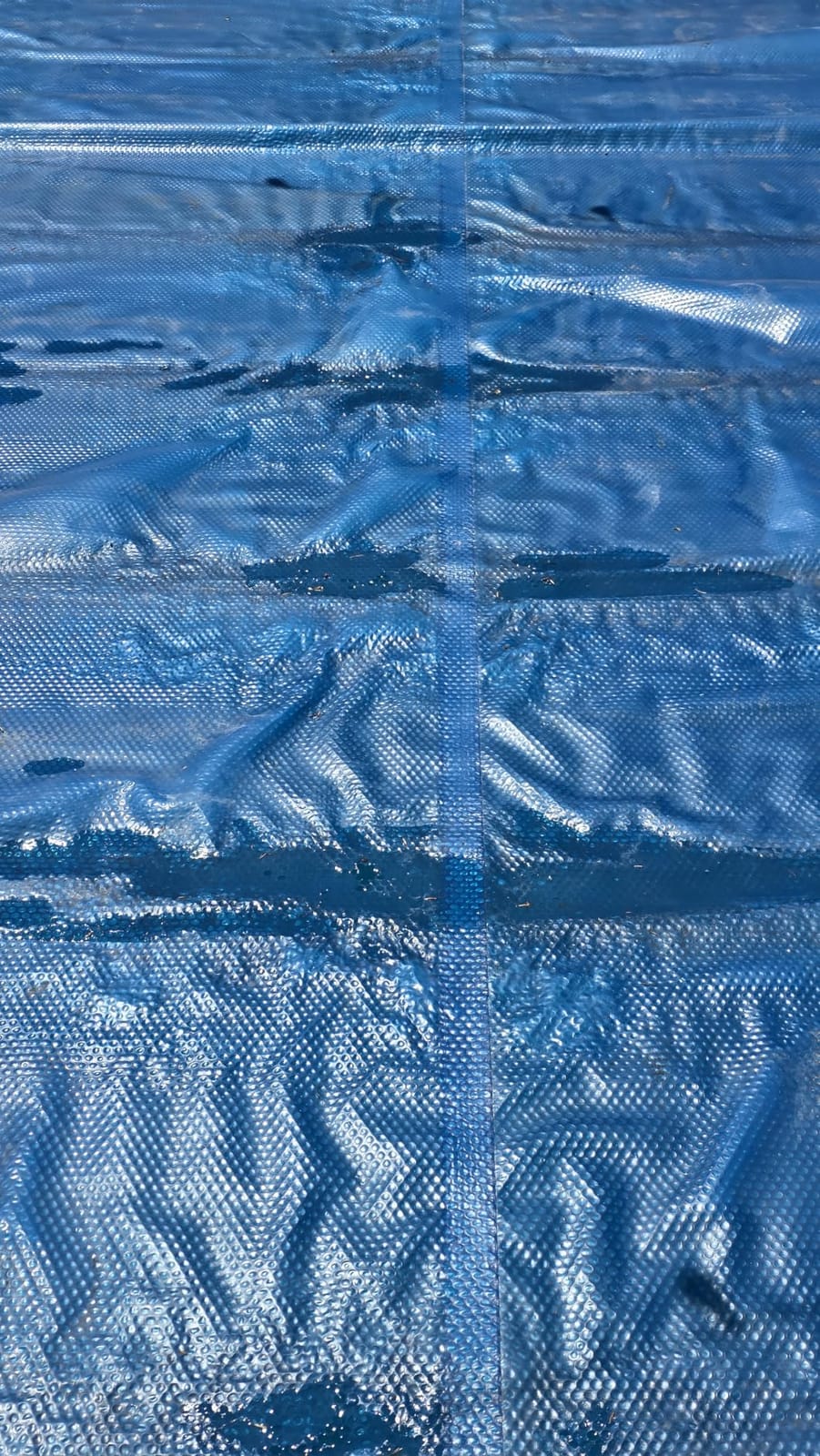
VINGLI sizes these covers with two inches of extra material included and states that they are trimmable with scissors to any pool shape. That is an important detail for inground pools with steps, where the steps eat into the rectangle and you want slack rather than a gap.
The brand also builds a matching cover reel, and the specs note the cover pairs well with it. For an 18 by 36 sheet at this weight, a reel is close to essential rather than a nice-to-have.
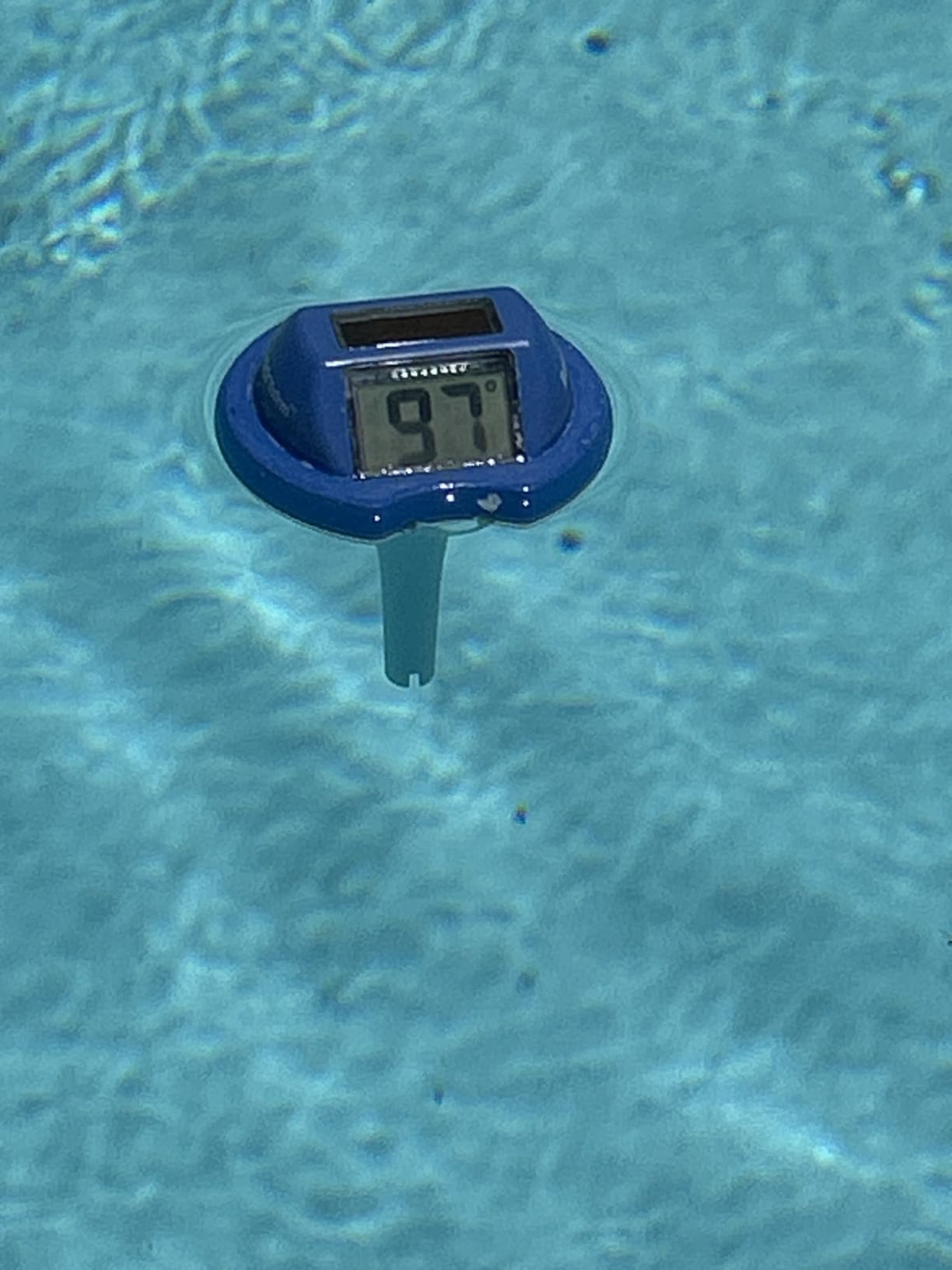
Why big pools need a bigger sheet
A cover that is too small leaves open water, and open water is where evaporation happens. On a long pool, coverage percentage matters more than thickness, so the oversized panel is the correct trade even at 12 mil rather than 16 mil.
Matching it to a reel also matters. Dragging 650 square feet of saturated blanket across coping by hand is how covers get torn, and torn covers are not covered by any warranty.
Where it falls short
Two handling notes carry over from owners: the cover arrives larger than the pool and must be cut before the first use, and the bubble side has to face down or the heat gain collapses. Both are avoidable, but only if you know them in advance.
At roughly 19.87 kg before it gets wet, this is a two-person job unless you have a reel already installed.
5. Goplus 12 Mil Solar Blanket 12 x 24 ft: Best Starter Cover for Smaller Inground Pools
Goplus Solar Pool Cover, 12 x 24 FT Solar Blanket 12 Mil with Carrying Bag for In-Ground and Above-Ground Swimming Pools, Rectangle Hot Tub SPA Thermal Blanket, Blue Bubble
12 mil polyethylene
24 x 12 ft rectangle
Includes carrying bag
Tear resistant
Pros
- Includes a handled carrying bag
- Small dense bubbles roll tighter on a reel
- Cuttable to round or irregular shapes
- Six size options across the range
Cons
- UV breakdown reported within about a year in some reviews
- One owner reports the cover slides off
- Materially thinner than other 12 mil covers
The Goplus 12 by 24 is the budget pick and the most compact of the group, aimed at smaller inground pools and at anyone who wants a second cover for a spa or an overflow trough. What sets it apart is the small dense bubble geometry, which reviewers consistently note rolls tighter on a reel than the larger bubble designs, and the included handled carrying bag, which most covers in this price range do not include.
Performance claims run high: the listing states a 14 to 27 F temperature rise depending on environment and up to 95 percent evaporation reduction. Independent owners report a rise in morning baseline temperature from 75 F to a new 80 F within five days, and report that thick 12 mil material cuts very easily and holds its shape on the pool once trimmed.
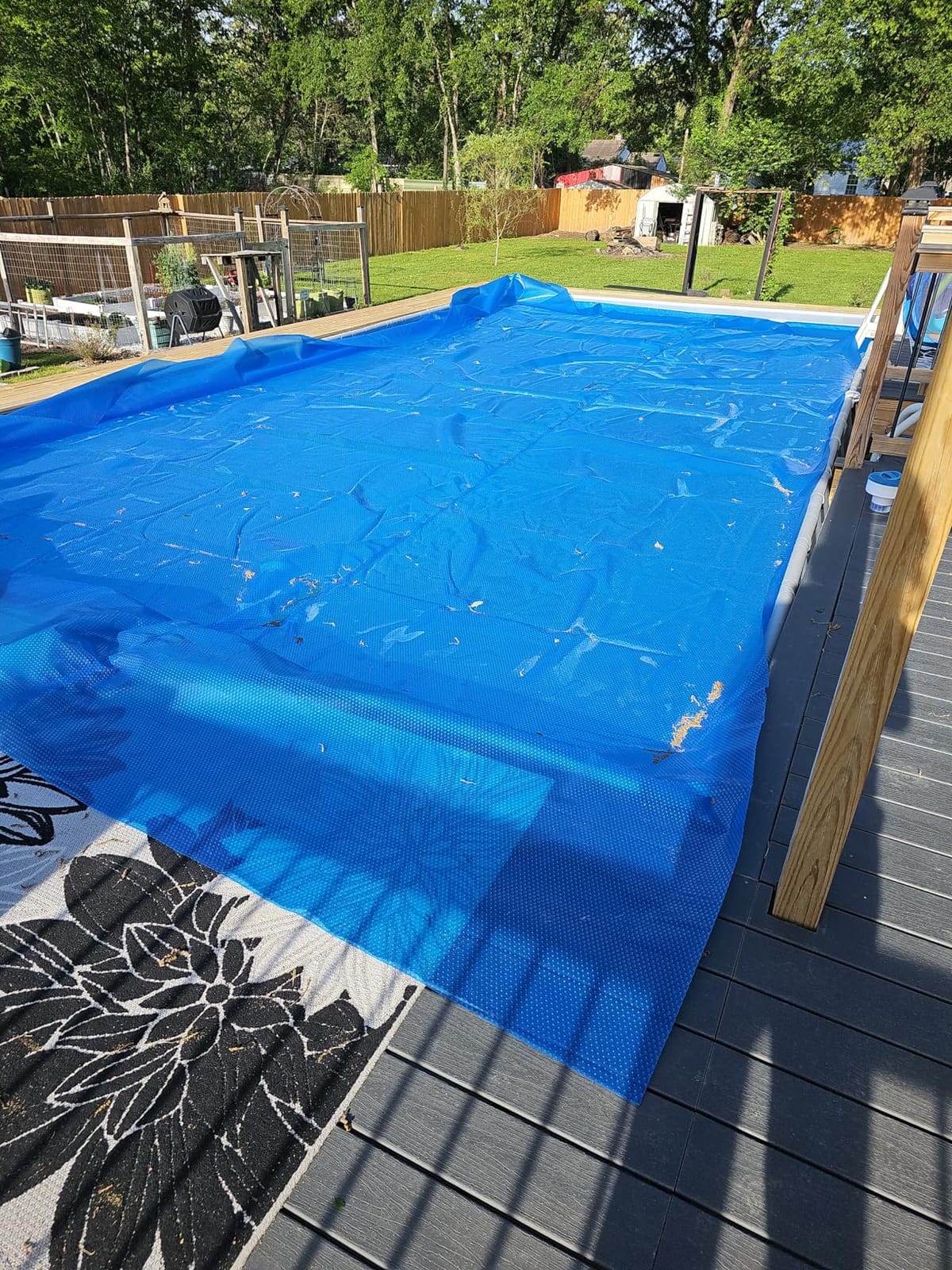
The size range is genuinely useful for shape-matching. This cover is offered at 8 by 8, 12 by 12, 24 by 12, 32 by 16, 36 by 18 and 40 by 20 feet, so an L-shaped inground can often be covered by a single trimmed panel rather than a custom order.
It is also freely cuttable to rectangle, square, round and irregular outlines, which makes it a sensible fallback when you cannot find a pre-cut shape that matches your pool.
Who should pick this one
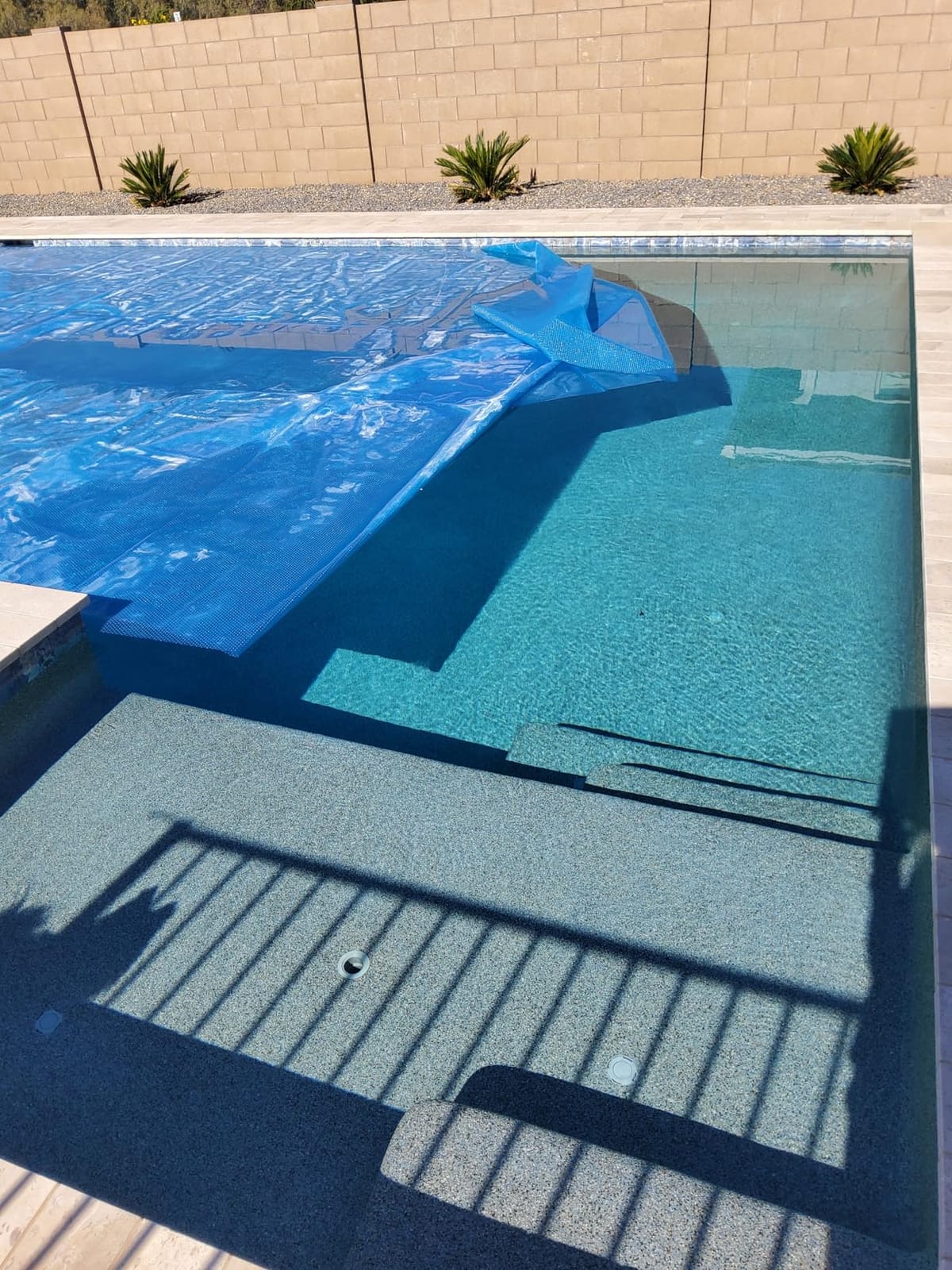
Choose this if your inground pool is on the smaller side, if you want a cover you can genuinely store folded in a cupboard between seasons, or if you want a low-commitment way to test whether a solar cover suits your pool at all before buying a heavy-duty sheet.
The carrying bag matters more than it sounds. A cover that folds small and has somewhere to live off-season is far more likely to be used correctly than one that ends up draped over a fence for six months and cracks under UV.
Where it falls short
The reviews split hard on durability. Several owners describe UV degradation breaking the plastic down within about a year and leaving fragments in the water, and others describe the material as thinner than comparable 12 mil covers even though the label says 12 mil.
One detailed account describes a cover that repeatedly folds or slides off, leaving part of the pool uncovered, so if wind displacement is your main worry this is not the one to buy. Larger sizes in this range are also a two-person placement job.
6. In The Swim 8 Mil Standard Solar Cover 16 x 32 ft: Best for Lightest Daily Handling
In The Swim 16′ x 32′ Standard Blue Rectangle Solar Pool Cover 8 Mil
8 mil polyethylene
32 x 16 ft rectangle
28 lb
3 year manufacturer warranty
Pros
- Lightest construction in the roundup at 8 mil
- Trims cleanly around ladders and steps
- Reduces chemical use with less debris
- 3 year manufacturer warranty
Cons
- Thinnest material here and least puncture resistant
- Chlorine and pH must be managed carefully
- Expect a shorter service life than 12 or 16 mil
The In The Swim 8 Mil Standard is the light-handling pick. Rated 4.0 across 226 reviews, it has the widest rating spread of anything here, with 60 percent five-star and 13 percent one-star, and that spread tracks almost perfectly with the thickness: people who expect a lightweight cover are delighted, people who expect durability are not.
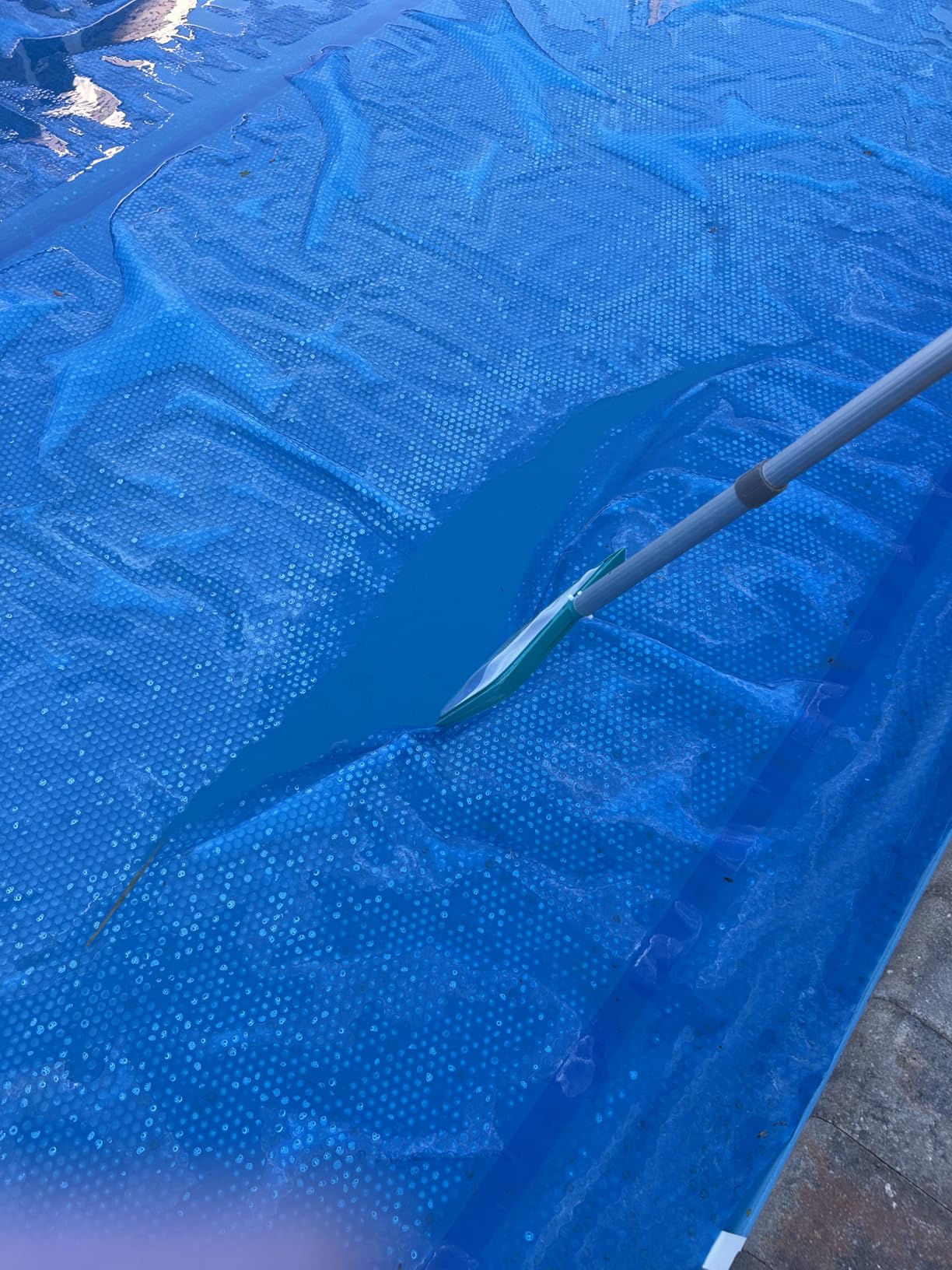
That is the honest framing. At 8 mil and 28 pounds for 512 square feet, this is the easiest full-size cover to move, and the listing is explicit that the trade is durability for easy daily handling. Owners like that it trims cleanly with scissors to fit around ladders, steps and unusual contours, which is precisely the situation an inground pool with a ladder presents.
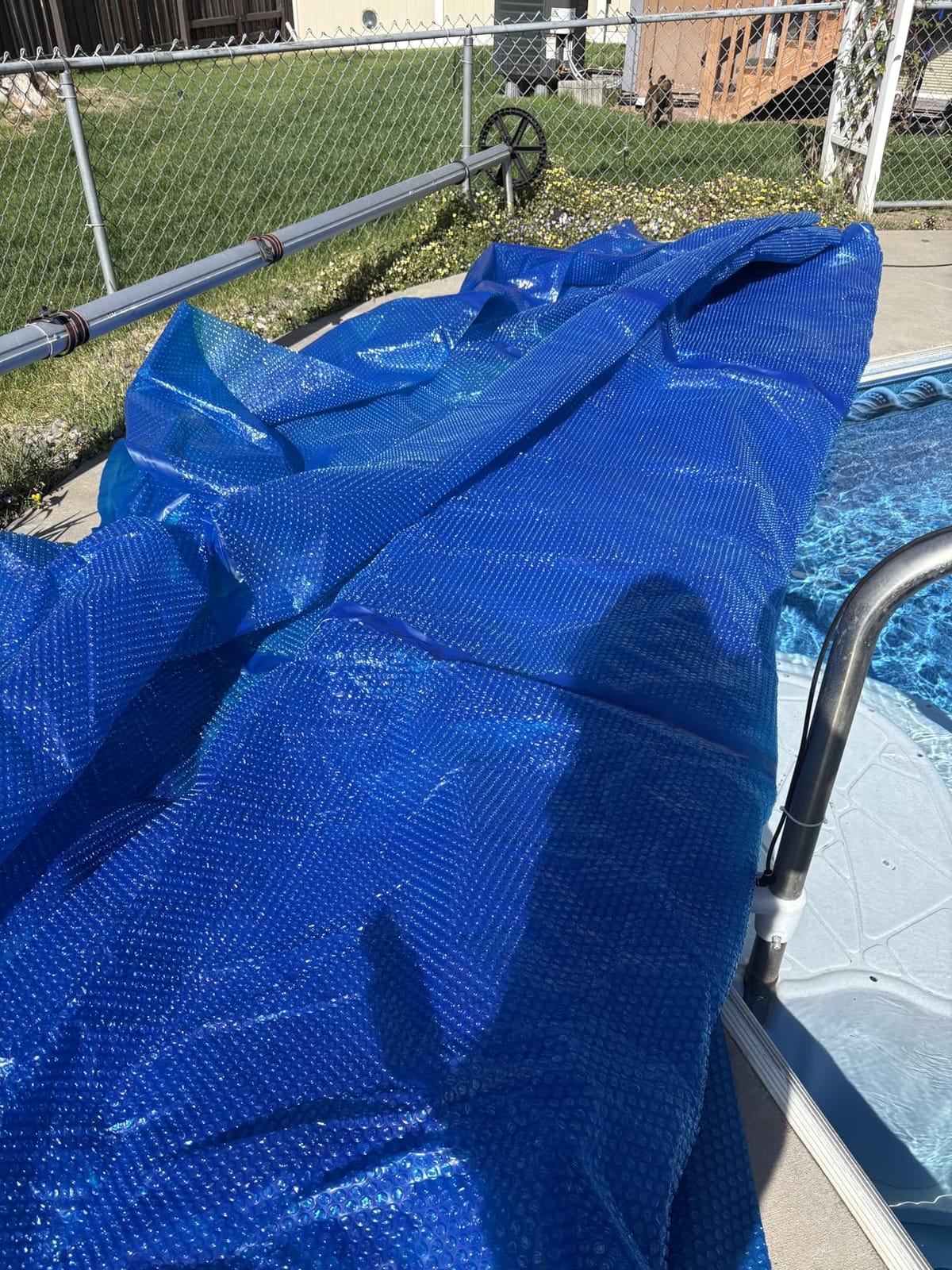
Performance is still real. The cover is specified to warm the water and retain heat overnight, to reduce evaporation and refill frequency, and to cut chemical consumption by keeping debris out, which helps you hold water balance with less product.
There is also a stated care requirement worth respecting: keep chlorine below 2.5 ppm and pH above 7.2. That is stricter than most covers in this roundup ask, and high chlorine levels degrade the material faster than anything else.
What makes this one different from the rest
It is manufactured by Midwest Canvas Corporation and belongs to a series structure with Standard, Premium and Ultra tiers offered in many sizes, so if you outgrow the Standard you can step up within the same brand rather than starting over.
The 3 year manufacturer warranty is the only stated warranty in the roundup other than Blue Wave, and for an 8 mil cover it is a reasonable match rather than a stretch.
Where it falls short
Eight mil offers the least puncture resistance of anything here. A ladder foot, a sharp coping edge or a stray tool in the water will find it faster than it would find a 16 mil sheet.
Plan on replacing it sooner than a 12 or 16 mil cover, and be disciplined about chlorine and pH. High chlorine is the fastest route to material breakdown, and this cover asks you to manage it more carefully than most.
7. Real Relax 16 Mil Bubble Blanket 16 x 32 ft: Best Heat Retention Per Rating
Real Relax 16 mil Solar Pool Cover, 16 x 32 ft Rectangle Bubble Blanket
16 mil polyethylene
32 x 16 ft rectangle
39 lb
UV and tear resistant
Pros
- Highest rating in the roundup at 4.7
- 81 percent five-star and 2 percent one-star
- Thick rigid PE resists sagging
- Trims to irregular shapes
Cons
- Heaviest unit at 39 lb so trimming needs two people
- Smaller review base limits long-term durability data
The Real Relax 16 Mil carries the highest rating in this roundup at 4.7 out of 5, with 81 percent five-star and only 2 percent one-star across 129 reviews. No other cover here has a cleaner distribution, and if you are optimising purely on owner satisfaction in cool or shoulder-season climates, this is the one.
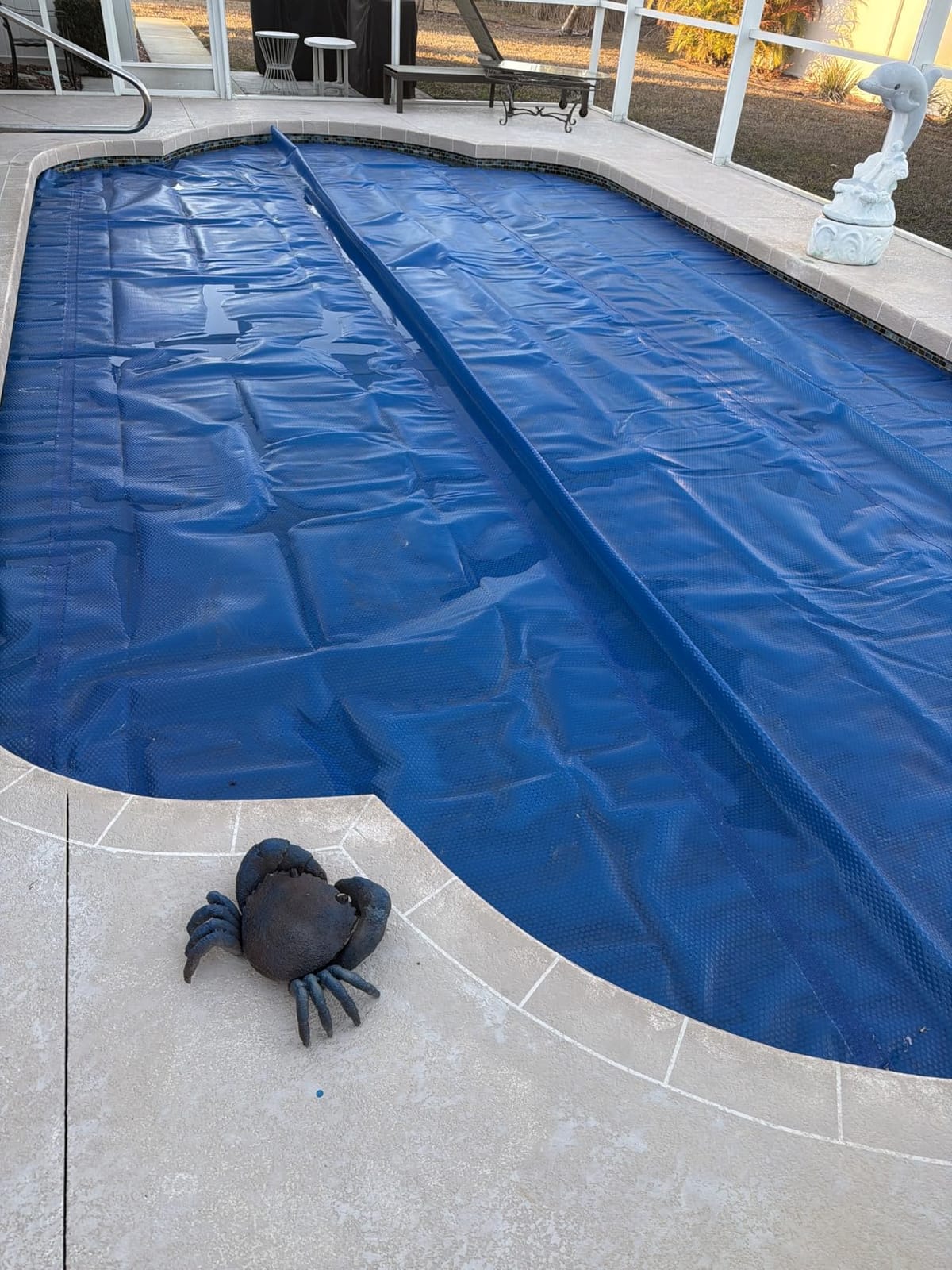
What reviewers consistently describe is rigidity. The 16 mil polyethylene is thick enough to hold heat and to resist sagging across the middle of a large pool, which matters because a sagging sheet develops slack at the edges and eventually folds. Owners also confirm effective heat retention, reduced evaporation and straightforward trimming to irregular shapes.
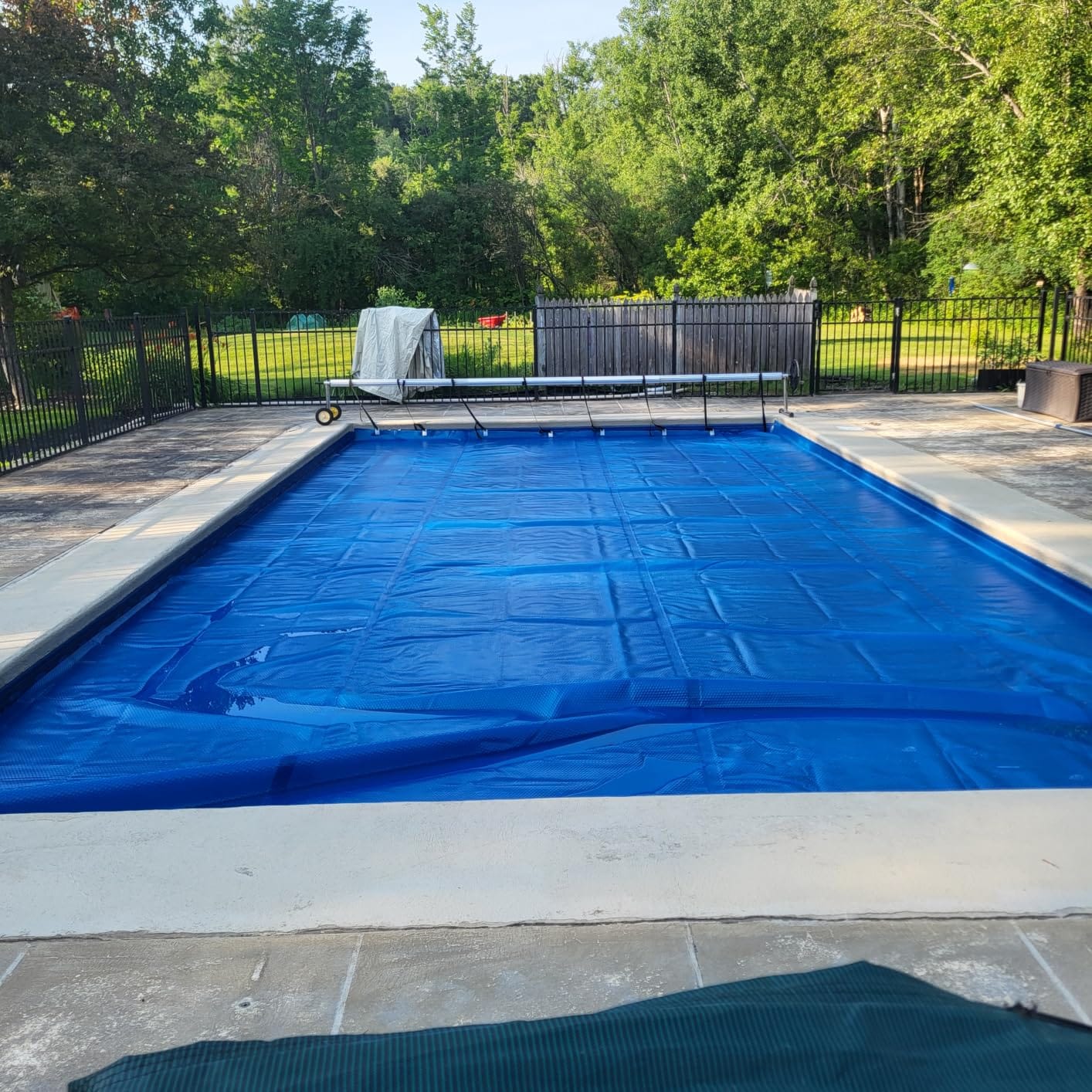
The listed specifications are explicit about orientation, with the bubble side facing down, and about evaporation, at up to 95 percent reduction when the pool is not in use. It is available in rectangular, round and oval sizes in both 12 and 16 mil, so it works for a rounded inground as readily as a rectangle.
The listed features also include UV resistance and tear resistance, which in this category is close to a prerequisite rather than a bonus. UV degradation is the single most common cause of solar blanket failure.
Where the ratings come from
The enthusiasm in the reviews tracks with the material. Owners like that the blanket stays flat and dense on the water instead of floating loose, and that overnight warmth survives into the morning without extra heating.
For a pool in a cool climate, or for anyone who swims at the tail end of the season, that staying-put behaviour is worth more than a few extra dollars of thickness elsewhere in the market.
Where it falls short
At 39 pounds this is the heaviest unit in the roundup, and it arrives as a flat sheet. Two people for trimming and placement is the realistic expectation, and trimming 16 mil with scissors is a real workout.
The 129-review base is also the second smallest here. A high rating on a smaller base tells you current owners are happy, but it tells you less about how the material holds up in year five.
8. AllAreN 10 Mil High-Density Cover 16 x 32 ft: Best Midweight for Custom Shapes
ALLAreN Solar Pool Cover 16×32 Ft Rectangle,10Mil Blue
10 mil high-density polyethylene
16 x 32 ft rectangle
UV resistant
Floating installation
Pros
- Dense PE feels sturdier than cheaper covers
- Warms water faster than owners' previous covers
- Trims to an exact fit
- Works for stock tanks and round pools too
Cons
- Some reviewers report peeling after limited use
- One reviewer describes the material as thin
- Midweight build with less puncture resistance than 16 mil
The AllAreN 10 Mil is the midweight option and the best of this group for an unusual inground outline. Rated 4.4 across 130 reviews with 75 percent five-star, the consistent theme in the reviews is that the material feels denser and more solid than the price suggests, and that several owners found it warmed their water faster than the covers they had been replacing.
That midweight position is genuinely useful. It is heavier in the hand than an 8 mil sheet without the two-person handling burden of a 16 mil one, which makes it the practical middle if you want more durability than the lightest option without committing to a heavy blanket.
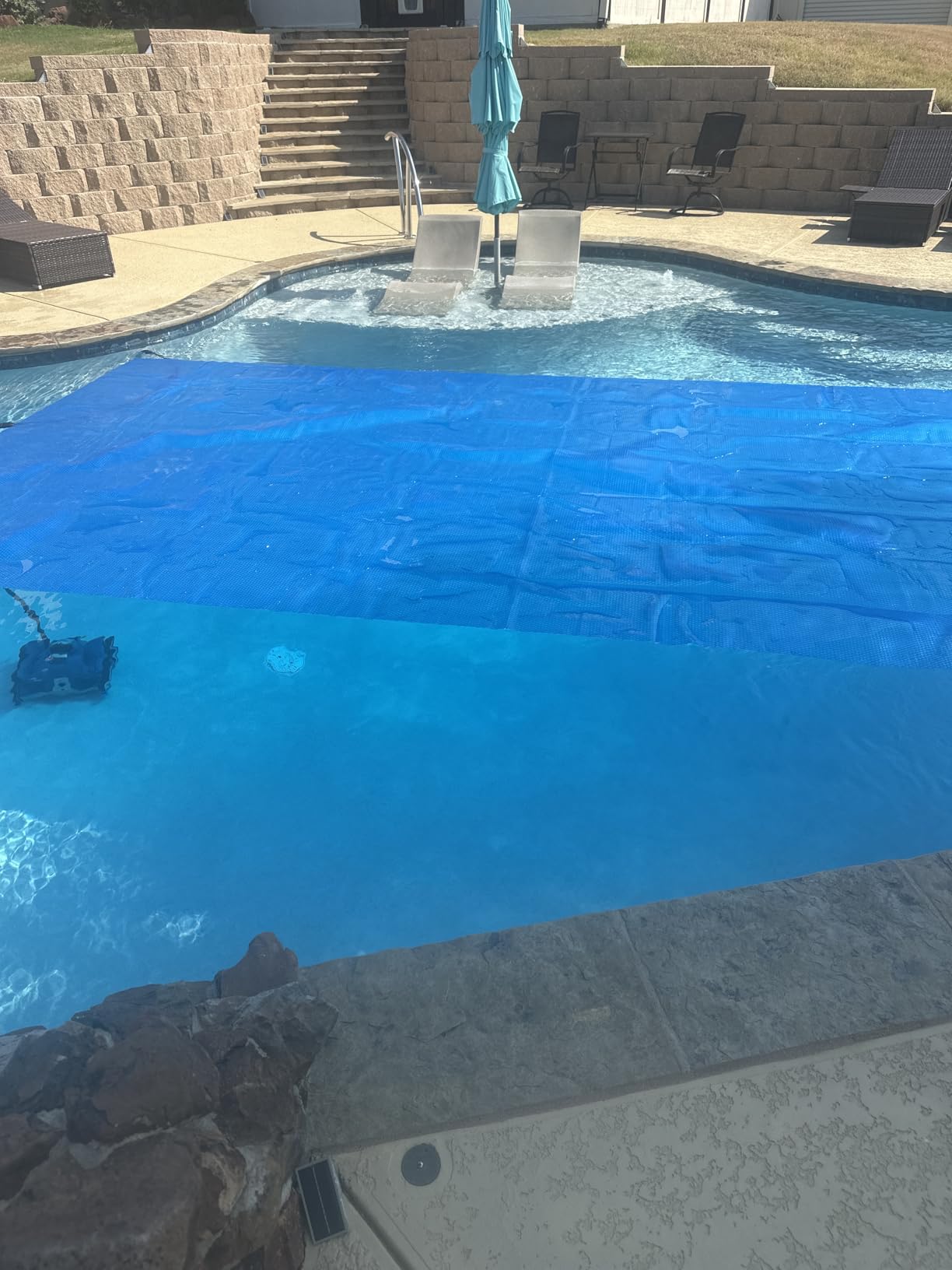
For shape matching, the listing states it is cuttable with scissors to fit irregular pools and custom shapes, and reviewers confirm easy trimming to an exact fit. Several also use it on aboveground stock tanks and round pools, which suggests the material is forgiving enough for tight cuts.
The claimed performance is up to 95 percent evaporation reduction while covered, with a bubble matrix that captures and releases heat to raise water temperature and extend swim time. Debris exclusion is the other benefit owners mention most, particularly in leaf season.
Who this suits
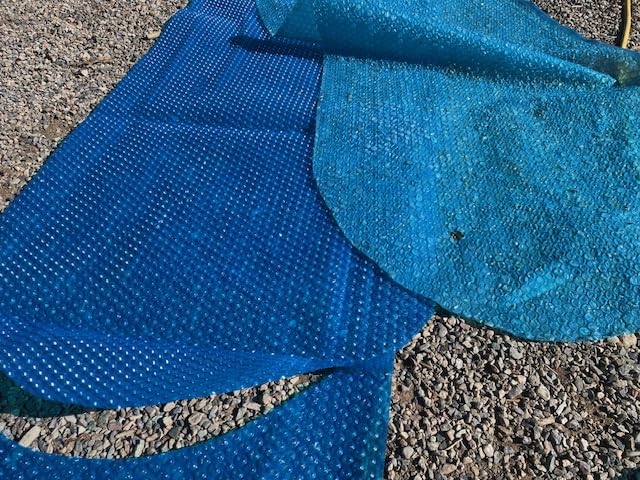
Pick this one if you are trimming an L-shape, a kidney or a pool with a deep step, and you want a sheet that is easy to cut precisely without needing industrial scissors. Dense material trims cleanly and holds the cut line.
It is also a reasonable second cover for a spa or a cold plunge, where a full-size blanket is unnecessary.
Where it falls short
A small number of reviewers report peeling after limited use, and one describes the material as thin despite the 10 mil label. That is the recurring tension with midweight covers, and it is why we rank it below the 12 and 16 mil options overall.
Expect a shorter service life than a heavy-duty cover, and expect some wind movement in exposed locations.
9. VINGLI 16 Mil Welded-Seam Cover 16 x 32 ft: Best 16 Mil Stay-Put Cover
VINGLI 16Mil Solar Pool Cover, Blue 16’x32′ Rectangular
16 mil polyethylene
16 x 32 ft rectangle
Welded seams
Bubble side down
Pros
- Heavy ply keeps the cover in place better
- One owner measured a 3 F loss after a 40 F night
- Strong welded seams
- Easy to trim to size
Cons
- Runs oversized for smaller pools with excess folded over the edge
- Heavier than 8 or 10 mil to handle
- Care guidance is specific about chemical contact
The VINGLI 16 Mil is the pick for windy sites, and the reason owners give is that the heavier ply keeps the cover in place. Rated 4.5 across 162 reviews with 74 percent five-star and only 4 percent one-star, the standout measurement in the reviews is heat retention: one owner recorded only a 3 F loss after a 40 F night with the cover on.
Welded seams are the construction detail to note. Both VINGLI covers in this roundup specify strong welded seams, and that is the seam type that survives multiple seasons of chemical contact compared with stitching. Reviewers also describe the material as rugged, well made and sturdy.
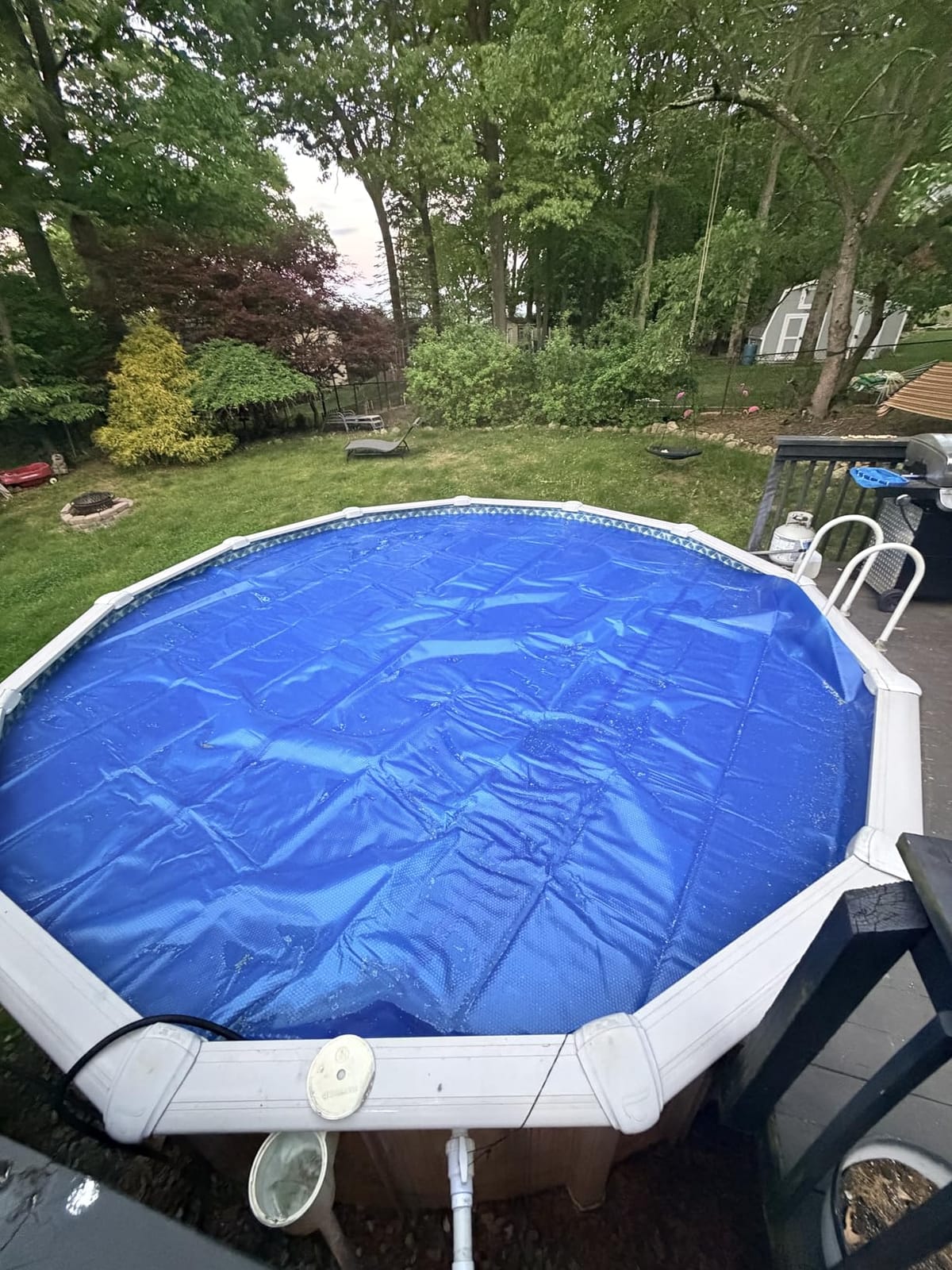
The listed care guidance is unusually specific and worth reading before you buy. It instructs washing and drying before storing and avoiding contact with pool chemicals for at least 24 hours, which is the same protocol described in the care section below. Manufacturers that publish guidance like this tend to have products that last longer.
The cover is specified with two inches of extra material and trimmable to irregular shapes, and the bubble side down orientation is stated explicitly, which removes the two most common beginner errors.
Why wind resistance changes the recommendation
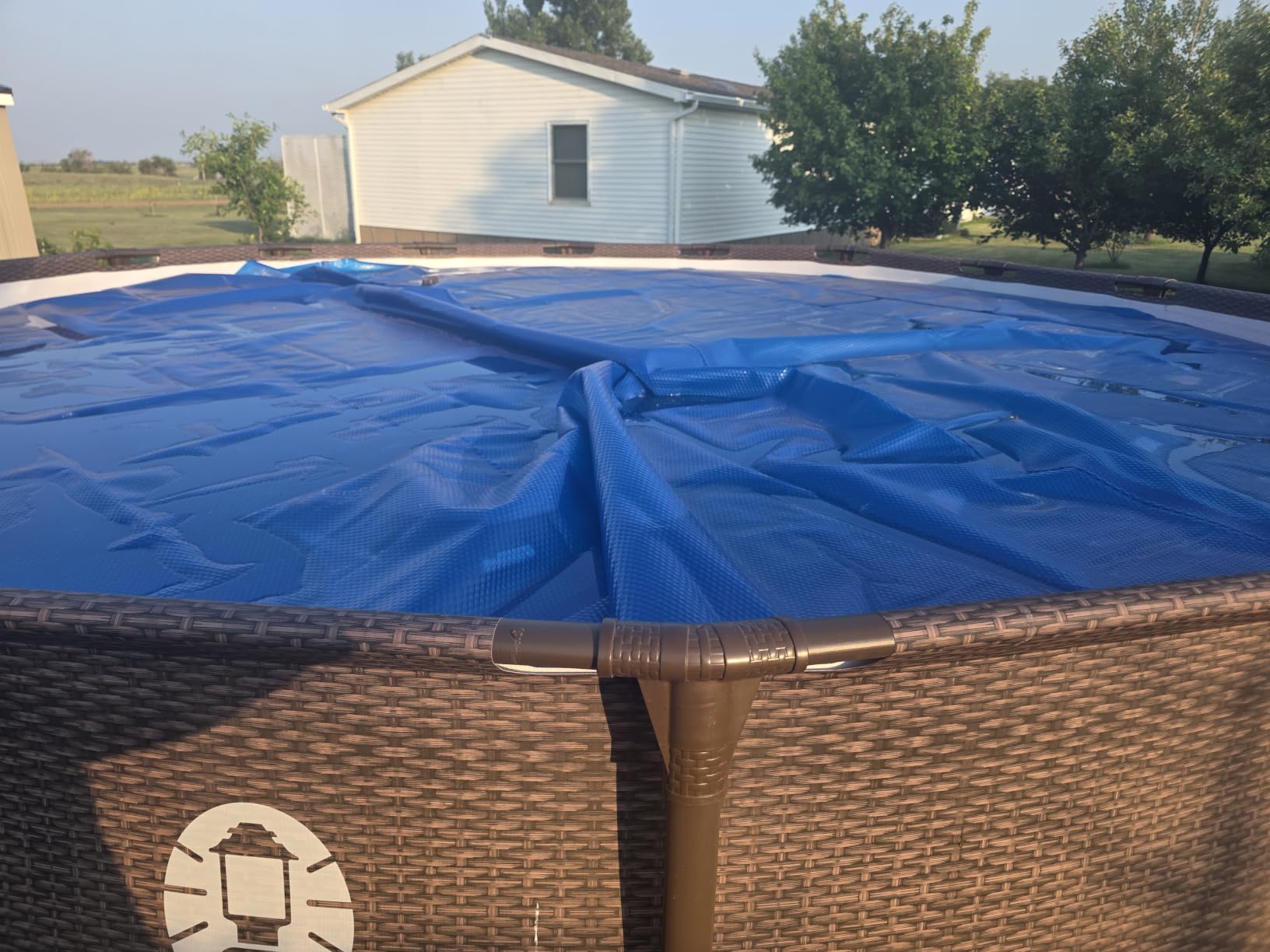
A cover that slides or folds leaves open water, and open water is where you lose evaporation and gain debris. Weight per square foot is the physical answer, and this is one of the heavier sheets per square foot in the roundup.
If your site is exposed, or if you cover the pool overnight through autumn and spring, that extra stay-put behaviour pays for itself in weeks of not chasing a cover across the deck.
Where it falls short
It is described as oversized for smaller pools, with excess material folding over the edge once trimmed. If your pool is well under 16 by 32, that waste is real.
Handling is heavier than 8 or 10 mil, so this is a two-person job without a reel, and the 162-review base is smaller than the top three.
10. BigXwell 12 Mil 1200 Series 16 x 32 ft: Best Balanced Everyday Blanket
BigXwell Solar Pool Cover, 12Mil 16×32 Foot Rectangle for Above-Ground and In-Ground Pools, 1200Series (16×32 FT)
12 mil polyethylene 1200 Series
32 x 16 ft rectangle
Thermal bubble construction
Trim to fit
Pros
- Same five-star distribution as the brand 16 mil model
- Reliable daytime heating and overnight retention
- Cuts easily to fit any shape
- Blocks debris and cuts cleaning time
Cons
- Must be trimmed before use
- Less puncture resistance than 16 mil
- Cannot stay on indefinitely without watching water balance
The BigXwell 12 Mil 1200 Series rounds out the list as the balanced everyday option, and it is the only cover in this roundup with two brand entries at different thicknesses. Rated 4.4 across 279 reviews with 78 percent five-star, it shares the same five-star distribution as the brand’s 16 mil heavy-duty model, which tells you the material engineering is consistent between the two tiers.
Owners credit reliable heating during full sun, heat retention on cloudy days and chilly nights, simple trimming and debris exclusion. The claimed evaporation reduction is 95 percent, in line with every other cover in this roundup.
At 12 mil this is the thickness most pool communities land on as the default. The material cuts easily with scissors for any pool shape and is described as lightweight and easy to install or remove, which is the compromise you accept in exchange for not needing a second person every morning.
It is sold for both inground and aboveground pools, and the brand builds it as part of a numbered series, so 1200 Series sizing tends to align with the larger panels in this roundup.
Why we recommend it as a starting point
Twelve mil is where the weight, the durability and the handling burden balance out, and this cover performs at that thickness without the complaints that show up at 8 mil. It heats, it retains, it trims, it keeps leaves out.
If your pool is a standard rectangle around 16 by 32 feet and you want one cover that does everything without being punishing to handle, this is the lowest-risk choice in the roundup.
Where it falls short
It must be trimmed to your pool’s dimensions before use, like nearly every cover here, and the lighter 12 mil build offers less puncture resistance than a 16 mil option.
It also cannot be left on indefinitely without attention to water balance. That is true of any bubble cover, but it is worth stating plainly: covers and stagnant chemistry are a bad combination.
How to Measure an Inground Pool for a Solar Cover
Measure the water surface, not the deck. For a rectangular inground pool, measure the length and width of the water at its widest points, then add a foot to each dimension so the cover overlaps the coping all the way around. A cover that ends exactly at the waterline leaves a gap, and that gap is where evaporation slips past.
Steps are the detail most measuring guides skip. Walk the perimeter and note every interruption in the straight line of the pool wall. Count the width and depth of any steps, add them into that run, and add the same overlap foot beyond them. A raised spa or a swim spa counts the same way, treated as an extension of the rectangle that the cover has to span.
For an L-shaped or kidney-shaped pool there is no single rectangle. The practical approach is to buy the largest rectangular panel that will cover the main body of the pool, trim it in place with scissors, and accept a loose section over the shallow arm rather than a gap across the deep end. Every cover in this roundup is advertised as trimmable, so this works, but you lose some coverage you are paying for.
Be careful about how far you oversize. A very large commercial-size panel pushes you toward commercial-grade reels and hardware, and it costs materially more than a panel sized to your pool plus a foot. The gap between a sensible 16 by 32 purchase and an oversized rectangular panel is the largest single cost decision in this category.
Finally, buy the size and thickness you need, not the biggest available. Once a sheet is cut to fit there is no putting the material back, and cutting too small is far more expensive than trimming a little excess away.
Mil Thickness: 8 vs 12 vs 16
Mil means thousandths of an inch, so 8 mil is about 0.008 inch and 16 mil is 0.016 inch. It sounds negligible, but mil is the number that correlates most strongly with puncture resistance, wind stay-put and how many seasons you get out of a cover.
At 8 mil you are buying handling convenience. It is the easiest to lift, cut and roll, and it does the evaporation job well enough on a small pool in a mild climate. It is also the thinnest option here with the least puncture resistance and the shortest expected service life.
At 12 mil you are buying balance, and this is the thickness pool communities settle on more often than any other. It handles a full-size inground rectangle without a second person, resists casual damage, and carries the mid-tier warranty positions you see in this category. If you are unsure, this is the answer to what mil is best for a solar pool cover.
At 16 mil you are buying durability. These sheets sit down onto the water instead of riding over it, resist shifting in wind, hold heat through cold nights better, and generally last longer. The cost is handling weight, which on a large saturated cover usually means two people or a reel.
Is 12 mil or 16 mil better? It depends on your pool size and your climate. For a large inground pool, an exposed site, or a region with cold shoulder seasons, 16 mil earns its extra weight. For a small or sheltered pool in a warm climate, 12 mil does the same job and is far easier to handle every morning.
One practical note on weight. The listed shipping weights here range from 27 pounds for the Blue Wave 12 mil at 512 square feet to 39 pounds for the Real Relax 16 mil at the same size. That is the dry weight. Saturated, a thick cover is heavier than it looks in a listing photo, and that is the number that decides whether you need a roller.
Blue vs Clear vs Silver-Blue: What Color Actually Transmits
Every cover in this roundup is blue, and that is not an accident of selection so much as a signal about the market. Blue is the default choice in this category for good physical reasons, and it is worth understanding them before you go looking for a clear alternative.
The heat gain does not come from the color absorbing sunlight in a simple sense. It comes from the air pockets, which let solar radiation reach the water and reduce the rate at which that heat radiates back out. The tint on the flat polyethylene layer is a secondary effect. Blue tints do sit slightly cooler to the touch in direct sun than clear sheets, and they hide debris and algae staining better, which is a practical rather than thermal advantage.
Is clear or blue solar cover better? For maximum visible sunlight penetration into the water, a clear or transparent blue cover is the more common choice, and several covers here describe themselves as transparent blue specifically. For hiding debris, water discoloration and the general look of the pool surface, blue wins clearly. Clear covers show every leaf shadow and stain, which matters more in leaf season.
The trade-off most buyers do not expect is lifespan. Clear and lighter covers expose the polymer to more direct UV, and faster UV breakdown is exactly the failure mode that owners in this category describe as brittleness and eventual disintegration. If you want maximum heat gain, go transparent blue. If you want the cover to still be there in five years, go deeper blue and accept marginally less transmission.
Silver-blue and silver-grey variants exist mainly as winter or dual-purpose covers. They reflect rather than transmit, so they are the opposite of what you want for spring and fall heat collection.
Warranty Length vs Real-World Lifespan
Two products here state a manufacturer warranty. Blue Wave lists 5 year limited coverage, and In The Swim lists 3 years. Everything else in the roundup does not publish a warranty figure in its specifications, which is itself worth knowing when you compare.
Understand prorated coverage before you rely on a number. A prorated warranty pays a percentage of the original value based on age, so a five year warranty on a cover that fails in year two pays out a fraction of what you paid. Treat any warranty as a defect remedy rather than a replacement promise.
Now reconcile warranty with lifespan. Owners across pool forums consistently report real-world service of roughly 5 to 7 years for heavy-duty inground blankets, described as tarp-like material sandwiching foam in the middle. That sits well below the 8 to 10 year figures brands sometimes advertise, and the gap is worth planning around.
Know what warranties exclude. Damage from a cover sitting on a hot deck in full sun, from extended chemical contact, and from improper handling are commonly excluded. Forum users describe covers overheating on the deck, becoming brittle and developing blue dots, and that specific failure is usually not covered.
Most covers fail from handling rather than sun. Dragging a cover across coping, cutting near a vinyl liner, or folding it into a tight crease in wet condition all shorten life. Budget for a replacement every five to seven years and treat a warranty as insurance, not a schedule.
Wind, Anchoring and Keeping the Cover On
Weight per square foot is the main defense against wind displacement, and no competitor page in this category explains that. Thicker covers sit down onto the water and resist movement. Thin covers catch air, lift at one corner, and then the whole sheet moves.
The practical habit that helps most is putting the cover on in calm conditions and letting it settle fully before you leave it. A cover laid on flat and left alone stays put. A cover flicked on quickly in a breeze has slack at one edge and will drift toward it.
For pools with high wind exposure, a manual cover reel makes a measurable difference. It rolls the cover on evenly at the correct tension instead of letting it slop onto the water unevenly, which is where slack and folds begin. The same reel is what makes a 16 mil sheet manageable for one person.
There is a simple threshold rule most experienced owners follow. If forecast winds are strong enough to lift the cover, take it off and put it away rather than letting it beat against the edge of the pool all night. A cover thrashing at the coping will damage both the cover and the pool finish.
Debris accumulation in the centre of the pool, where it is unreachable, is a specific complaint from inground owners with heavy leaf cover. It is not a reason to skip a cover, it is a reason to use a reel so the sheet can be rolled back and the pool vacuumed properly.
Circulation, Chemistry and the Post-Shock Protocol
Is it okay to run a pool pump with a solar cover on? Generally yes, for circulation, and the cover will not block the return jets. The reason people hesitate is that a covered pool can trap a pocket of still, warm, chlorine-rich air near the surface, which is a circulation problem rather than a pump problem. Running the pump for a period each day addresses it.
The caution is with certain equipment. A cover on a pool with a specific water feature, or over a pool where a cover sits directly on a return fitting that must discharge into the pool, can cause a circulation dead spot. Check that water is moving under the cover before you leave it on for days.
Chemistry limits are the bigger durability issue. In The Swim specifies keeping chlorine below 2.5 ppm and pH above 7.2, and those are sensible limits for any bubble cover. High chlorine and low pH together will bleach and embrittle polyethylene faster than sun exposure will.
How long should you leave the cover off after shocking the pool? The widely recommended guidance is 8 to 10 hours after adding shock, and about 2 hours after other strong chemicals. Several manufacturer care notes in this roundup are even stricter, with one specifying at least 24 hours of no contact with pool chemicals before storage.
Follow the stricter of the two where they conflict. Shock trapped under a cover is the fastest route to a bleached, weakened sheet, and it is the failure that most damages an otherwise good blanket.
For off-season storage, clean the cover with a soft brush and mild detergent, avoid harsh chemicals, dry it fully, roll it rather than folding it into hard creases, and keep it out of direct sunlight while it is off the pool. A cover that lives folded on a sunny deck degrades far faster than one that lives dry in a shaded shed.
Frequently Asked Questions
Do solar pool covers actually work?
Yes. A floating solar cover with sealed air pockets blocks the evaporation that drives most heat loss and lets sunlight through to warm the water during the day, then insulates it overnight. An uncovered inground pool can lose roughly 1.5 inches of water per week in summer along with a matching share of chlorine, so a cover typically pays for itself within one swimming season.
What thickness pool solar cover is best?
12 mil is the best default for most inground pools because it balances durability against handling weight. Choose 8 mil for a small pool in a mild climate where easy daily handling matters more than puncture resistance, and 16 mil for a large pool, an exposed windy site or a cool climate where staying put and holding heat overnight are worth the extra weight.
Will a pool warm up faster with a solar cover on or off?
Faster with the cover on during sunny hours, because the trapped air pockets reduce the rate at which solar energy radiates back out of the water. A covered pool will not reach the same peak temperature in the middle of a hot afternoon as a bare pool, but it ends the day and the week warmer, which is what matters for swimming.
Is it okay to run a pool pump with a solar cover on?
Yes, running the pump with the cover on is fine and helps prevent a pocket of still, warm, chlorine-rich air forming under the blanket. The cover will not block return jets. Just confirm water is actually circulating beneath the sheet, particularly if you have a water feature or a return fitting that discharges into the pool.
Is clear or blue solar cover better?
Blue is the better all-round choice because it hides debris, water discoloration and staining, and deeper blue tints generally resist UV breakdown longer. A transparent blue or clear cover transmits more visible sunlight into the water, which is the choice if maximum heat gain is your goal. Every cover reviewed here is blue.
How long does a solar pool cover last?
Expect roughly 5 to 7 years of real-world service from a good heavy-duty blanket, which is shorter than the 8 to 10 year figures some brands advertise. Most covers fail from handling, UV exposure or trapped chemical contact rather than from wearing out evenly. Store the cover dry, out of direct sun, and rolled rather than sharply folded.
Is a solar pool cover a safety cover?
No. A solar bubble blanket is a thermal and evaporation device only. It will not hold a child, a pet or any weight, and no product reviewed here is safety rated. If you need a barrier against pool entry, shop for an automatic safety cover, which is a separate product category at a much higher cost.
The Best Solar Pool Cover for Your Inground Pool
The VEVOR 16 Mil Solar Pool Cover is the best overall choice, pairing the thickest mainstream material in this roundup with one of the largest verified review bases and a construction that trims cleanly to an irregular inground outline. If you want a lighter cover you can handle alone every morning, the Blue Wave 12 Mil is the value pick with the widest evidence behind it, and for exposed sites or cold shoulder seasons the BigXwell 16 Mil heavy-duty cover holds heat and stays put better than anything else here.
Measure your pool properly before ordering, buy the thickness that matches your climate and your strength, and remember that this is a cover for heat and evaporation, never a safety barrier. Get the size right the first time and the best solar pool covers for inground pools will pay you back every season for years.