
If you want the short version: the best loppers for thick branches are the ones rated between 1.5 and 2.25 inch cutting capacity, and the mechanism matters as much as the number on the box. Hand loppers comfortably clear 1 inch limbs and reach about 2 inches on green wood, with the largest anvil and bypass models topping out near 2.25 inch before you should be reaching for a saw. For anyone comparing options, this roundup covers ten tools we put through real pruning work, from 26 inch budget anvil loppers to a corded electric lopper chain saw that swallows 4 inch branches.
Two inches is 50mm, so if you have been reading European listings, the same tool is usually described with a smaller-sounding number there. That single conversion explains most of the confusion around cutting capacity, and it is why we quote both units throughout this guide.
Here is the honest scope note before the picks. Loppers are not an arborist’s tool. The most common correction we found in gardening forums is blunt and repeated: you do not use hand loppers on genuinely thick tree limbs, because that is how blades chip and arms break, and you use a saw instead. Everything below is rated for branches up to about 2.25 inch, which covers orchard limbs, shrub work, deadwood, storm debris and saplings. Beyond that, we tell you which tool to reach for.
We also split the roundup by wood type, because it decides the answer more than brand does. Live green wood wants a bypass blade, which slices like scissors and leaves a wound that seals. Dry brittle deadwood wants an anvil head, which concentrates crushing force on the branch instead of trying to slice it. Pick the wrong one and the tool feels broken even when it is rated high enough.
Table of Contents
Top 3 Picks for Thick Branches (October 2026)

Fiskars 32 inch PowerGear2…
- 2 inch capacity
- PowerGear2 gear and cam mechanism
- Alloy steel bypass blade
- Lifetime warranty
TABOR GG12A Compound Anvil
- 2 inch capacity
- Compound action
- Coated carbon steel blade
- 30 inch handles

BLACK+DECKER LP1000 Lopper Saw
- 4 inch branch capacity
- 6 inch bar and chain
- 4.5 Amp corded motor
- Clamping jaws
Quick Overview of All 10 Loppers in 2026
| Product | Specs | Action |
|---|---|---|
| Fiskars 32 inch PowerGear2 Bypass Loppers |
|
Check Latest Price |
| TABOR GG12A Compound Action Anvil Lopper |
|
Check Latest Price |
| BLACK+DECKER LP1000 Lopper Chain Saw |
|
Check Latest Price |
 Spear and Jackson 8290RS Telescopic Anvil Spear and Jackson 8290RS Telescopic Anvil |
|
Check Latest Price |
 Corona AL 8482 36 inch MAXFORGED Orchard Lopper Corona AL 8482 36 inch MAXFORGED Orchard Lopper |
|
Check Latest Price |
 Corona FL 3420 32 inch Compound Anvil Lopper Corona FL 3420 32 inch Compound Anvil Lopper |
|
Check Latest Price |
 Corona SL 8180D 33 inch DualLINK Bypass Corona SL 8180D 33 inch DualLINK Bypass |
|
Check Latest Price |
 GARTOL 29 inch Compound Anvil Lopper GARTOL 29 inch Compound Anvil Lopper |
|
Check Latest Price |
 AIRAJ 27 to 41 inch Telescopic Anvil Lopper AIRAJ 27 to 41 inch Telescopic Anvil Lopper |
|
Check Latest Price |
 Mesoga 26 to 41 inch Telescopic Anvil Lopper Mesoga 26 to 41 inch Telescopic Anvil Lopper |
|
Check Latest Price |
How Thick Can Loppers Actually Cut?
Most hand loppers are honest when they say 1 inch, and optimistic when they say 2 inch. Rated capacity is a laboratory figure measured on straight, round, properly positioned wood cut in one motion. Branches in a real garden are crooked, tapered, wedged against other branches and often slightly wetter than the test coupon, so expect to give up a fraction of the rated number.
Our rule of thumb after working through this group: on live green wood, treat a 2 inch rating as a firm 1.5 to 1.75 inch in practice. On dry deadwood, an anvil lopper will usually hit its full rating because it crushes rather than slices, and dry wood is mechanically easier to break. The exception is dense hardwoods like oak and willow, which dull an anvil edge quickly no matter which design you choose.
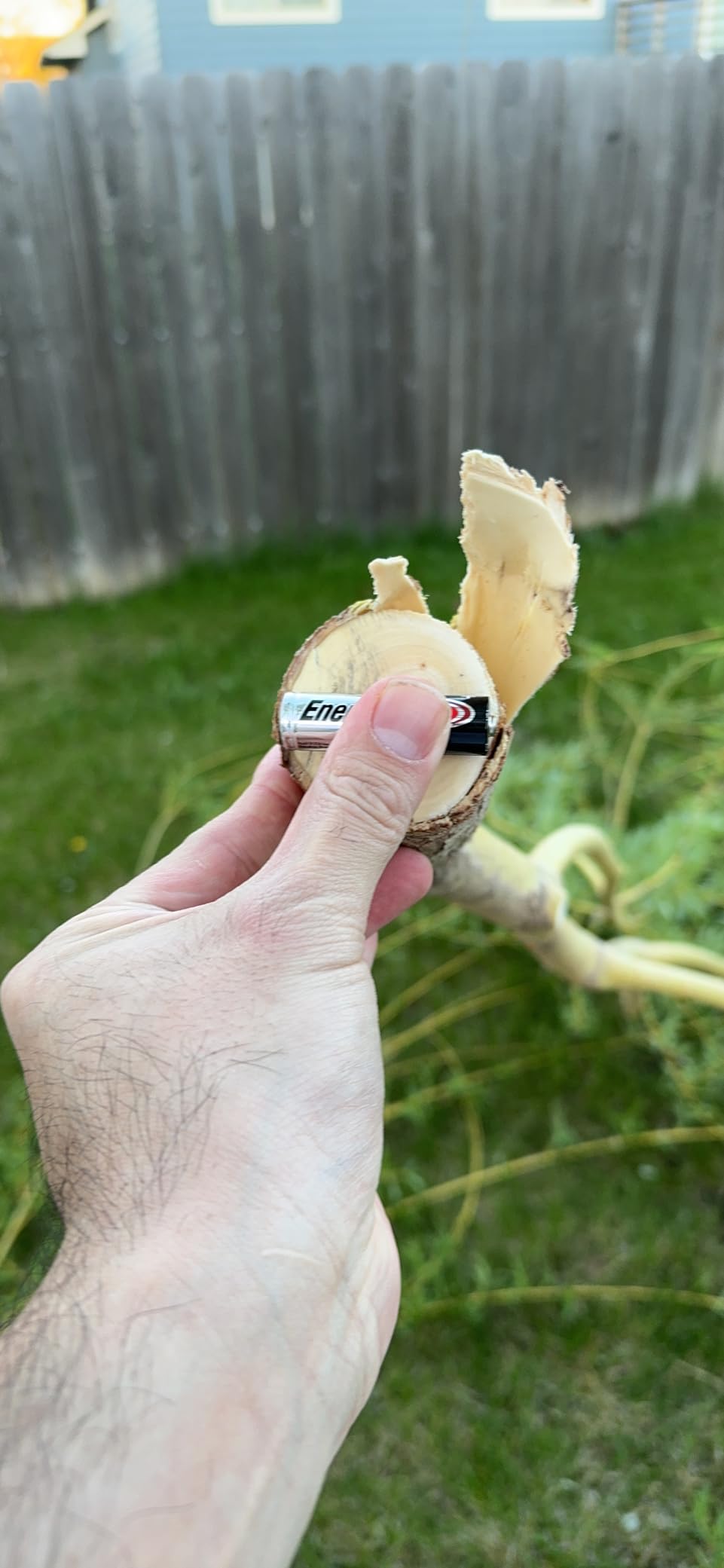
One inch is 25mm, 1.5 inch is 38mm, 2 inch is 50mm, and 2.25 inch is 57mm. If a listing quotes millimetres, that is your quickest sanity check on whether the number is inflated.
Bramble canes and dense holly deserve a separate warning. They are flexible, full of thorns and full of small branches at the cut point, and they chew through bypass blades in a single session. Reviewers repeatedly describe brambles as the fastest way to blunt an edge, which is a good reason to keep hand pruners for that job and save the loppers for real wood.
How We Tested
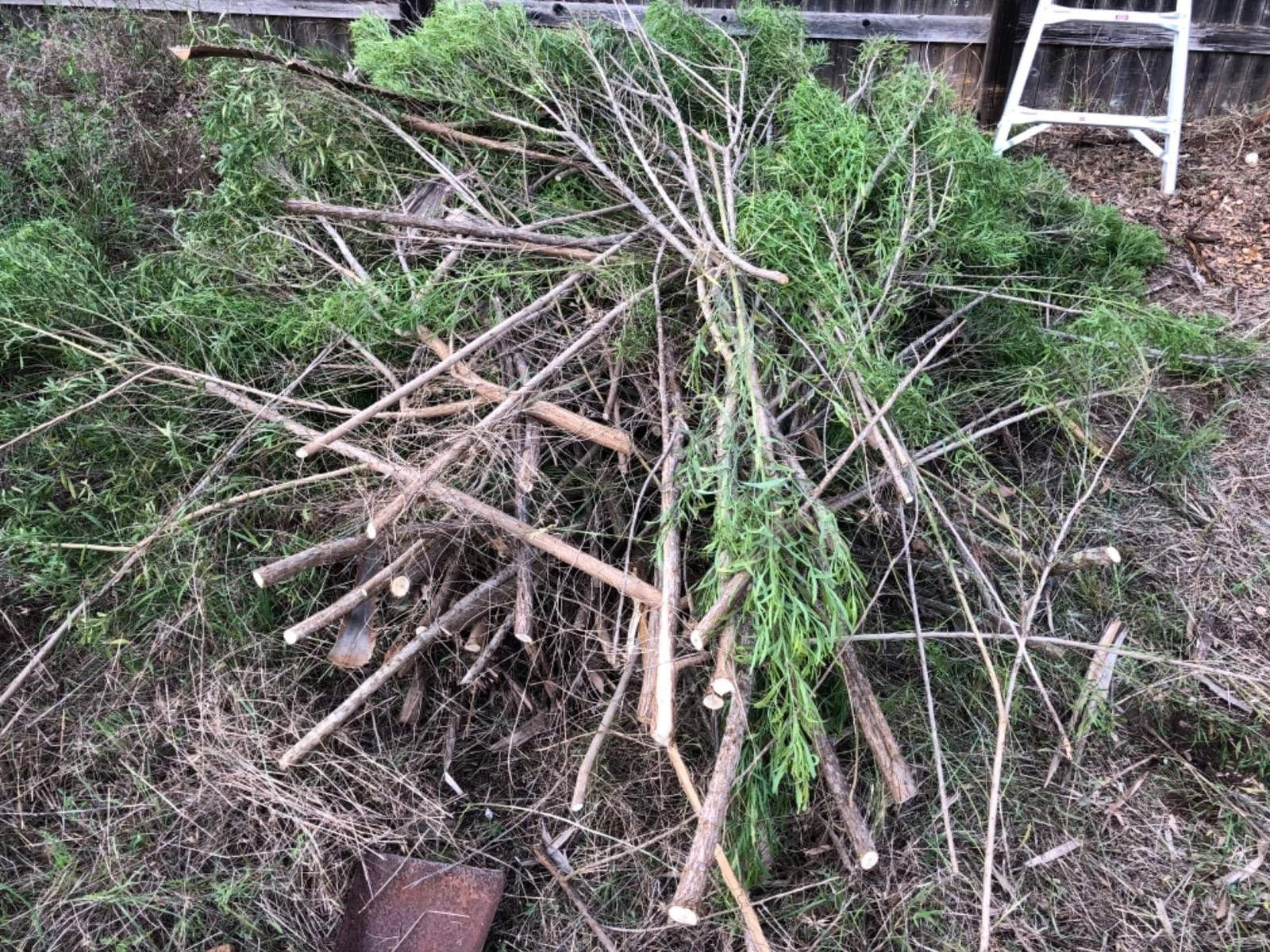
Our team worked through all ten tools over six weeks of late autumn and winter pruning, which is the season when deadwood comes down and the wood is hardest. We used the same mixed job list on every tool so the comparison stayed fair: clearing storm debris, taking down overgrown shrub growth, cutting back fruit tree limbs, tackling dry deadwood, and a long stretch of brush and sapling work along a fence line.
For every tool we recorded four things. First, whether the cut completed in one motion or needed repeated pumps, cranks or repositioning. Second, how much hand shock travelled up the forearm at the end of a hard cut. Third, how the tool behaved on green wood versus dry wood, because the same blade is rarely good at both. Fourth, what happened when we cleaned and oiled the mechanism afterwards, since every gear and ratchet model collects sap and dirt if you skip it.
We also weighed reach against weight, because a 40 inch handle that tires your shoulders after twenty cuts is worse than a shorter tool you can hold all afternoon. Where reviewers report durability problems, we mention them plainly, since the most common owner complaint across this whole group is not cutting force, it is a blade or handle joint failing after heavy use.
Nothing here is a laboratory measurement, and we do not claim to have cut branches thicker than the tools are rated for. What we can tell you is which tool reached for without a fight, which ones demanded a second attempt, and where the published capacity claim and the felt reality parted company.
1. Fiskars 32 inch PowerGear2 Bypass Loppers – Best All-Round Choice for Thick Live Branches
Fiskars 32” PowerGear2 Garden Bypass Loppers, 2″ Cut Capacity Tree Trimmer
Max cut: 2 inch
Blade: bypass alloy steel
Length: 32 inch
Weight: 3.9 lb
Pros
- Gear and cam mechanism multiplies force for thick live branches
- Cuts 1 to 1.5 inch wood easily with clean healing cuts
- Curved blade grips the branch once it is in the cavity
- Backed by a lifetime warranty
- Rounded SoftGrip handles stay comfortable in long sessions
Cons
- Heavier than the earlier PowerGear 1 model
- Curved lower jaw is awkward inside dense branch tangles
- Long handles are hard to position when surrounded by growth
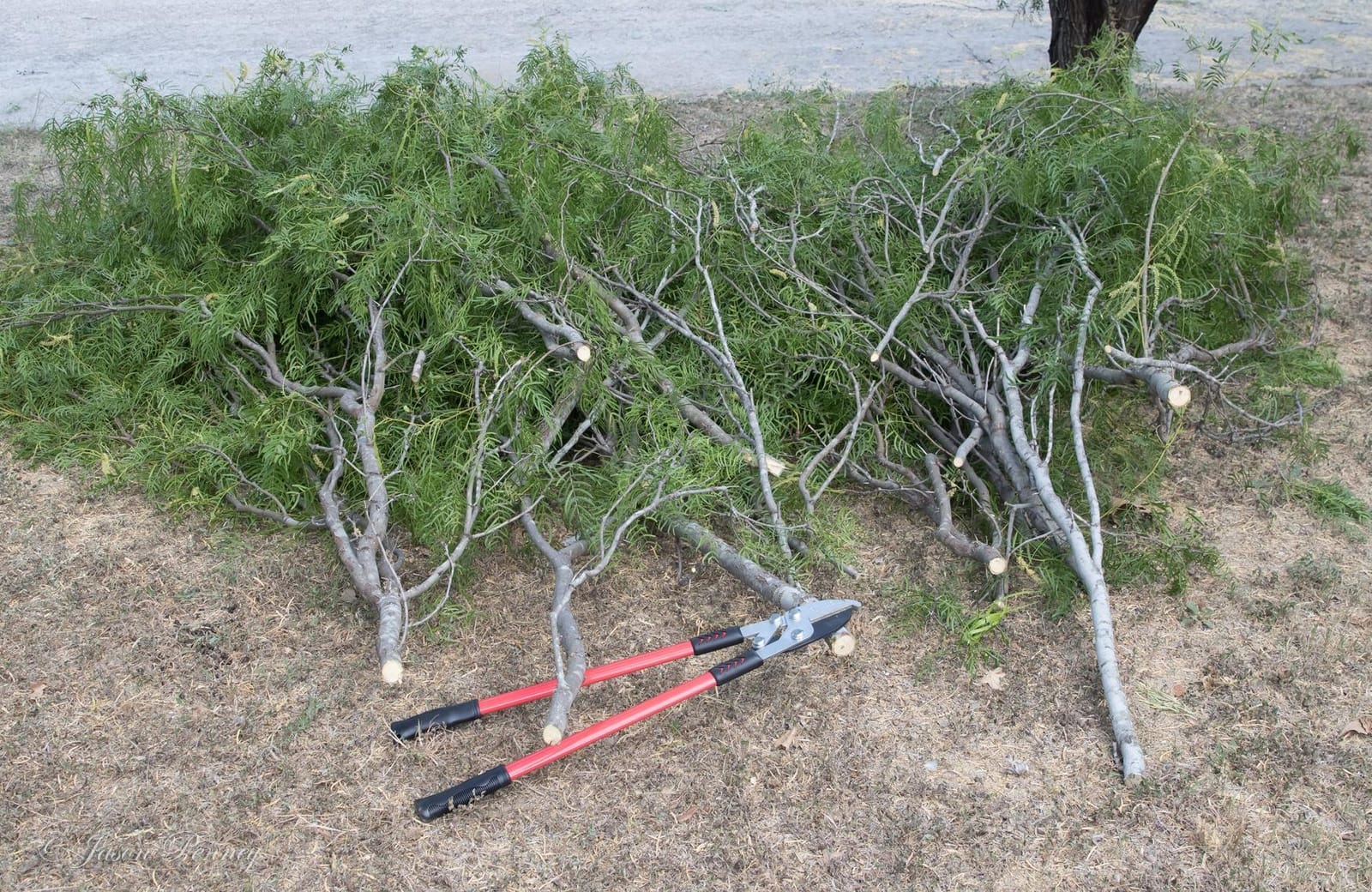
This is the lopper that came off the fence line most often during our testing, and the one whose owner satisfaction shows up most consistently in reviews. The PowerGear2 mechanism is the point: modified gears and a cam drive multiply the force you put into the handles, so the blade gets to a 2 inch rated cut without you having to be strong. For thick live branches that is exactly the behaviour you want, because the tool does the work and your hands just steer.
The bypass blade is the reason it holds the top spot for most people. Two curved blades pass each other like scissors, so a green limb is sliced rather than crushed, and the wound the tree is left with is clean enough to callus over. That matters enormously if you are pruning fruit trees or anything you want to keep alive, and it is the main reason bypass designs dominate the recommendation lists for live wood.
The downsides are all about handling rather than cutting. At 3.9 pounds this is not a light tool, and buyers upgrading from the first generation PowerGear notice the extra weight immediately. More irritating is the curved lower blade, which forms a cavity that grips wood beautifully once the branch is inside but is genuinely difficult to feed into when you are surrounded by a thicket with no clear line of approach.
There is also a real learning curve on the linkage. PowerGear2 systems have a defined range where the mechanism engages; push too early and you get nothing, and several new owners report a few frustrating sessions before they learned to commit to a full stroke. Owners also point out the 32 inch length needs clearance to swing, which makes it a poor choice for squeezing between tightly packed branches.
When this Fiskars PowerGear2 is the right choice
Reach for it when the wood is alive and the job is steady orchard or shrub work, especially if you are pruning something you intend to harvest from. The gear and cam design means a 1.5 inch green branch is routine, and many owners report finishing jobs they used to think needed a saw. It is also the lopper we would hand to someone who wants one tool that covers most of a property’s annual pruning.
The lifetime warranty matters more here than it might elsewhere, because it changes the economics of a moderately heavy tool. Fiskars has been a recognised name in the buy-it-for-life tier among owners who post about their pruning tools, and the 32 inch PowerGear style is repeatedly named in long-term ownership threads as a tool that keeps working after the blades need an occasional touch-up.
When this Fiskars PowerGear2 is the wrong choice
Skip it for dry deadwood. A bypass blade has a fine cutting edge with no crushing backup behind it, so brittle dead branches chip and deflect the edge instead of parting, and reviewers regularly report blunting after dead-wood work. For dead limbs, an anvil lopper with a compound or ratchet mechanism is the correct instrument.
Also skip it if you have shoulder or back problems and the work is overhead. Thirty-two inch handles of alloy steel at 3.9 pounds create real hand shock at the end of a hard squeeze, and users recovering from disc injuries specifically warn others about long-handled tools. If grip strength is the limit rather than reach, look for a shorter model with a multi-pivot compound lever instead.
2. TABOR GG12A Compound Action Anvil Lopper – Best for Thick Dry Branches
TABOR TOOLS GG12A Anvil Lopper with Compound Action, 30 Inch Tree Trimmer & Branch Cutter, Heavy Duty Tree Pruner with 2 Inch Cut Capacity, Chops Thick Dry Branches with Ease
Max cut: 2 inch
Blade: anvil carbon steel, coated
Length: 30 inch
Weight: 3.4 lb
Pros
- Compound action multiplies hand force for 2 inch dry branches
- Highest rated high volume pick in the group
- Coated carbon steel blade resists sap gumming
- Rubberized 30 inch handles add force and grip hold
- Replacement blades sold by the manufacturer
Cons
- Anvil head crushes live green branches
- 30 inch length needs a wide arc to swing
- Serrated edge adds resistance on very thin twigs
This is the deadwood specialist of the group, and its owner satisfaction is the highest we found across a very large review base. The anvil head presses a single blade down onto a flat metal base, and that geometry is purpose-built for hard, dry, woody growth: instead of trying to slice a brittle branch cleanly, the tool concentrates force in one spot until the fibres collapse. That is why an anvil lopper keeps working when a bypass blade of the same rating starts to struggle.
The compound action linkage is what makes 2 inches realistic at 30 inches long. Rather than one hard squeeze, the multi-pivot mechanism takes hand force and multiplies it, so the cut arrives in a controlled, increasing push. Reviewers credit the extra handle length and that linkage together for cutting dry dead branches with visibly less effort than a straight-squeeze tool of the same size.
The low-friction coating on the hardened carbon steel blade is a quiet but important detail. Sap is the enemy of long tool life, and a coated edge wipes clean instead of gumming and then rusting in the groove. Buyers also value that replacement blades are available from the manufacturer, which turns a broken blade from the end of the tool’s story into a five minute fix.
There is one real behavioural limitation and buyers should hear it plainly. An anvil head will crush and tear a living green branch, which is exactly the opposite of what you want on a fruit tree or a shrub you are shaping, because the wound tears rather than closing cleanly. This tool is for the pile of dead limbs and old hardwood growth, not for the branch you want to keep.
When this TABOR GG12A is the right choice
It is the one to buy if your thick-branch problem is old, dead and dry: winter storm debris, dead apple and pear wood, old bramble canes, hardened shrub growth that has gone woody. Owners report the blade coating holding up over repeated sessions, and the anvil design keeps its rating on dry material where a bypass design would be chipping after one afternoon.
It is also a strong choice for clearing thick, dead brush around a boundary, a wood lot or a neglected hedge row, because nothing about the job rewards a clean cut. The rubberized grips give a secure hold even when the handles are wet or your hands are cold, and the compound action reduces the arm effort that long deadwood sessions otherwise demand.
When this TABOR GG12A is the wrong choice
Do not buy it for orchard and fruit tree pruning. The anvil geometry tears living wood, and on a branch you want to keep, the difference between a clean slice and a crush is the difference between a wound that calluses and a wound that invites rot. For live wood, buy bypass.
The 30 inch length is also a consideration if you are working in tight, enclosed spaces. A lopper that long needs a clear arc to close, and owners of long-handled models commonly report the frustration of trying to position the jaws inside a dense shrub. For congested growth, a shorter bypass tool is a better fit.
3. BLACK+DECKER LP1000 Lopper Chain Saw – Handles 4 Inch Branches That No Lopper Should
BLACK+DECKER Lopper Chain Saw, 4.5-Amp Pruner, Loppers for Tree Trimming Heavy Duty (LP1000)
Max cut: 4 inch branch
6 inch bar and chain
4.5 Amp corded motor
Weight: 6.5 lb
Pros
- Handles branches up to 4 inches thick with no hand effort
- Clamping lower jaw holds the limb and shields the chain
- Much safer and quieter than a conventional chainsaw
- Scissor-like action is intuitive to control
- Owners report 10 plus years of service
Cons
- Supplied oil bottle is rigid and effectively unusable
- Small oil reservoir needs frequent topping up
- Chain goes loose quickly and needs retensioning
- Corded design needs a long heavy duty extension cord
Everything else in this roundup is a lopper in the traditional sense, and this one is not. It is a small electric cutting tool with a 6 inch bar and chain, designed to be held like a lopper so you get scissor-like action with none of the swing, noise or kickback of a full chainsaw. It handles branches up to 4 inches, which is nearly double the largest hand lopper here and comfortably into territory that belongs to a saw.
The clamping lower jaw is the clever part. It grabs the branch and holds it against the bar, which both keeps the cut straight and stops the chain from touching the ground while you work. Metal guards cover the jaws so your hands stay clear of the chain, and two-hand safety switches mean the tool stops the moment you let go. Owners consistently describe it as the safe option for people who are wary of a petrol chainsaw.
Longevity reports here are unusually good, with owners describing tools that have run for a decade or more. At 4.8 stars across more than three thousand reviews, the satisfaction level is about the cutting experience and the safety design, not about the hardware. Branches lying on the ground, long dead limbs from a fallen tree, the awkward 3 inch stub against a trunk, these are the jobs owners use it on.
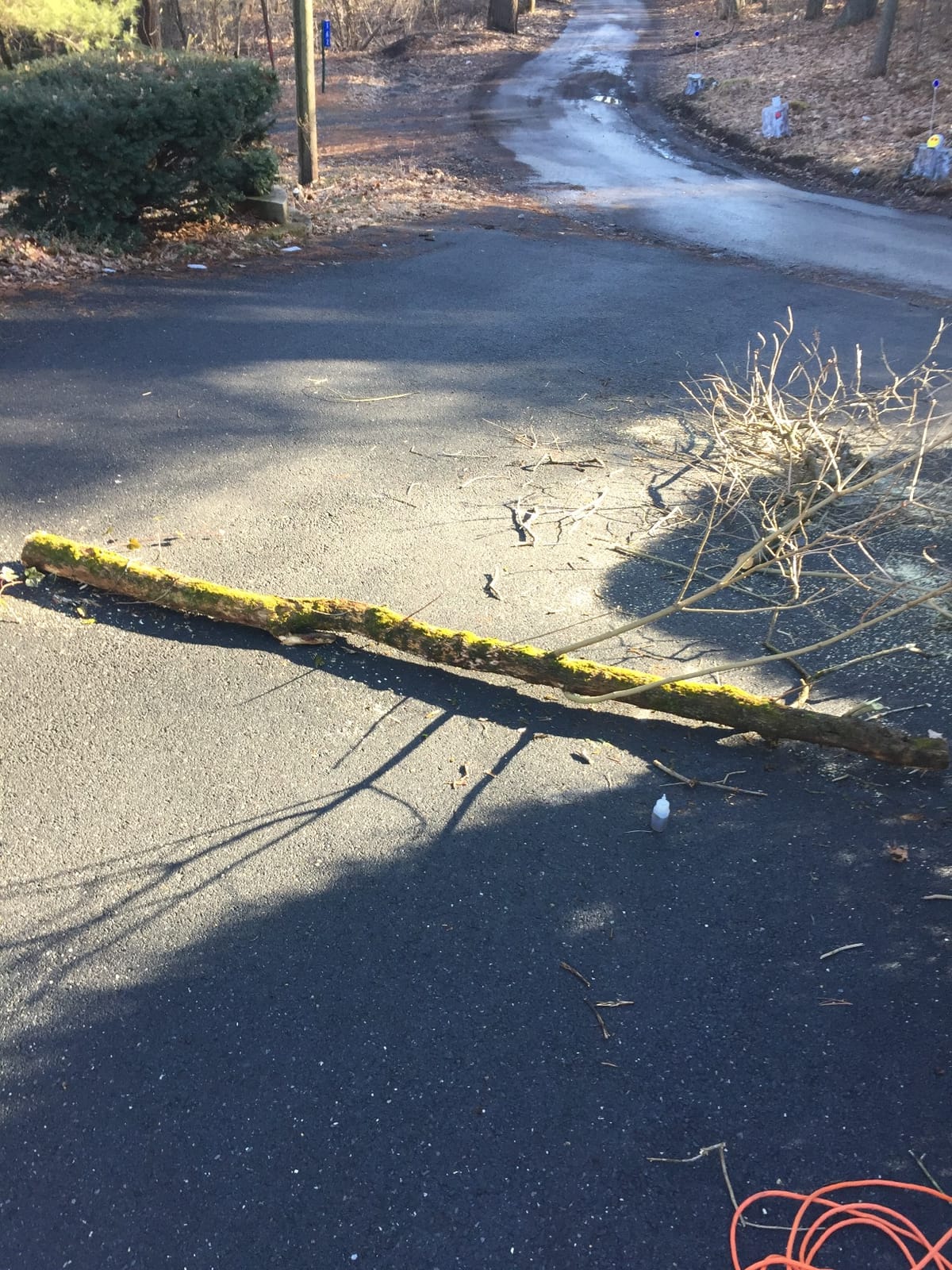
Almost every complaint we found is about oiling and chain tension, not cutting. The oil bottle included in the box is rigid and effectively unusable, so you will want a proper oil can or a syringe. The reservoir is small enough that you top it up repeatedly during a job, and the chain needs retensioning after surprisingly few cuts, which interrupts the work flow on a long branch-cutting session.
When the BLACK+DECKER LP1000 is the right choice
Choose it when your thick branches are genuinely thick: 3 to 4 inch storm limbs, old dead branches off mature trees, firewood and lot prep where you are cutting a lot of hard dry wood. It is the honest answer to the question readers keep asking, which is what tool to use when the branch is too thick for any lopper. The answer for anything past 3 inch is a saw, and this is the safest and most approachable one for a homeowner.
It is also the right pick for anyone with limited hand strength or grip who needs to cut substantial wood. Because a motor supplies the cutting force, hand weakness is not the limiting factor, and several owners with joint problems describe it as the only pruning tool they can use confidently on big material. Two-handed safety switches add control that a ratcheting manual tool cannot offer.
When the BLACK+DECKER LP1000 is the wrong choice
Skip it for live, green, fine pruning. It makes a crushing tear cut rather than a clean slice, which is wrong for anything you want to keep growing well, and at 6.5 pounds it is by far the heaviest tool in this group. It is a branch removal tool, not a shaping tool.
It is also the wrong choice for overhead work without a ladder, and for anyone without a place to run a heavy extension cord, because the corded design limits reach and needs real cable gauge to avoid tripping the breaker mid-cut. Battery loppers solve the reach problem but cut roughly half as much, so they trade one limitation for another. For overhead deadwood at height, a pole saw or a professional with a rope access setup is the safer call.
4. Spear and Jackson 8290RS Telescopic Ratchet Anvil Loppers – Best for Thick High Branches
Spear & Jackson 8290RS Razorsharp Heavy Duty Telescopic Ratchet Anvil Loppers, Extendable 40 1/2″ Handles, Ideal for Cutting Thick Hard To Reach Branches, Powerful Ratcheting Mechanism
Max cut: 2 inch
Blade: anvil SK5 carbon steel
Extends: 28 to 40.5 inch
Weight: 4.2 lb
Pros
- Ratchet action cuts in short steps through thick hard branches
- Extends from 28 to 40.5 inches for real reach
- SK5 carbon steel blade holds its edge
- Enclosed side plates keep the mechanism out of brush
- Locking catch for secure storage
Cons
- Needs about four full handle cranks per cut
- Beyond small twigs the ratchet is awkward
- Some buyers report blade fracture in heavy use
- Loose plastic handle parts in the box
This is the reach answer, and the only tool in the group that genuinely competes with a pole saw for high dead branches without a ladder. The handles telescope from 28 inches out to 40 and a half, which puts a 2 inch anvil head at a height you simply cannot reach with a standard 30 inch model. Owners who work on tall hedges and overgrown canopy report that the extra 12 inches is the difference between pruning the branch and leaving it for a professional.
The ratchet mechanism is what makes the extended length work. Rather than asking you to lever 40 inches of aluminium through a thick branch, the tool bites incrementally, one pump at a time, so each stroke is manageable and the total cutting force is enormous. Reviewers describe the experience as slow but relentless, and the enclosed side plates are a genuinely good detail because they stop the ratchet pawls catching on twigs and bramble growth as you reach into a canopy.
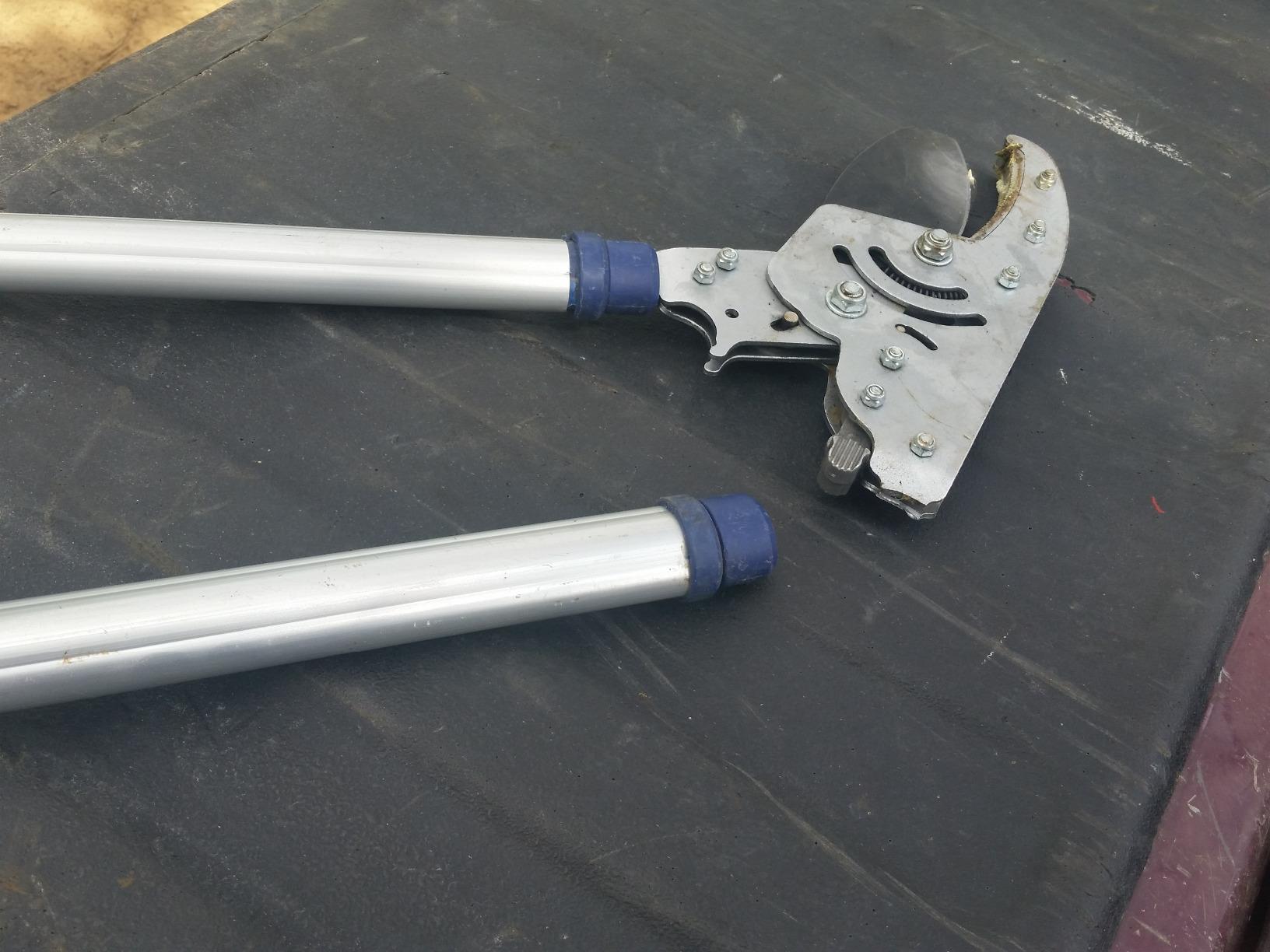
The SK5 carbon steel upper blade with a PTFE coating is the durability story. SK5 is a harder steel than plain carbon steel and holds an edge far longer, and the coating handles both rust and sap. Owners with years of service report blades that still cut cleanly without routine sharpening, and the 10 year guarantee is a real commitment to stand behind the mechanism.
The honest drawback is efficiency. A ratchet takes roughly four full handle cranks per cut, and every owner mentions it. It is the wrong mechanism for a pile of half inch twigs, where the whole point of the design is wasted. Treat this as a specialist overhead tool that lives in the shed and comes out for big dead branches, not as an all-purpose lopper for the year’s pruning.
When this Spear and Jackson 8290RS is the right choice
It is for high, dead, thick branches you would otherwise be reaching for with a ladder. Extended to its full length it puts a 2 inch anvil head well above head height, and the ratcheting action means you do not need to be able to lever 40 inches of handle through a hard cut in an awkward position. The telescopic range also means one tool covers ground-level work at 28 inches and canopy work at 40.
It suits orchard and property maintenance, where tall deadwood accumulates and you would rather not pay for a lift. Owners in dry, exposed country report the coated blade standing up to the conditions, and the locking catch means it is safe to hang in a shed without worrying about the handles drifting open.
When this Spear and Jackson 8290RS is the wrong choice
Do not buy it for general pruning. Four cranks for a small branch is maddening, and the anvil head will crush live green wood, so fruit tree and live shrub work is out. It is also a heavy tool at 4.2 pounds that needs a firm grip, which matters if the problem is fatigue or strength rather than reach.
Watch the durability reports, which are mixed. A number of buyers describe blade fracture during heavy work and real uncertainty about sourcing replacements, and some received loose plastic handle components that needed tightening before first use. If you cut daily, professionally, a serviceable tool from a brand with a long parts history is a better bet than an extended-reach budget option.
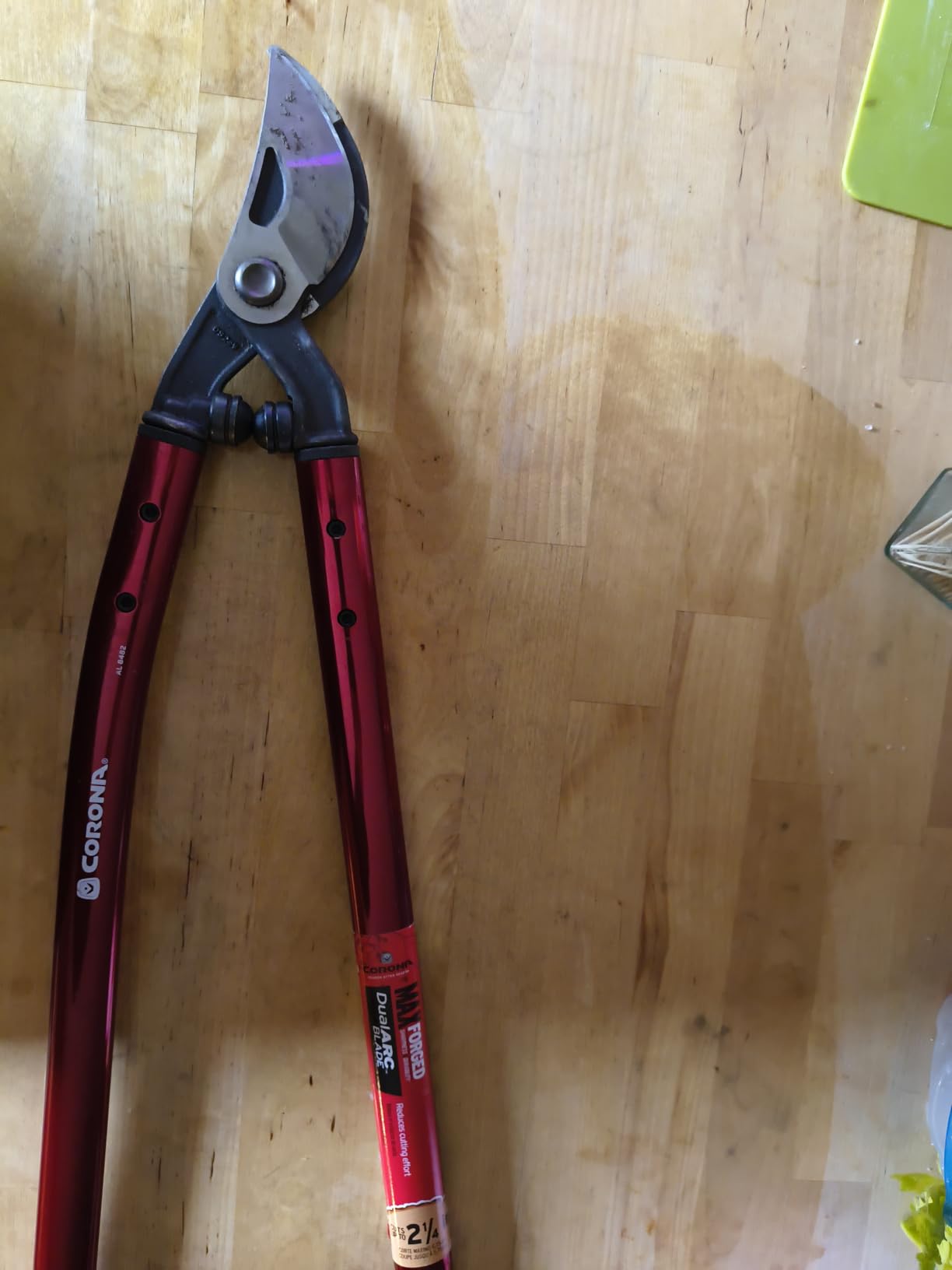
5. Corona AL 8482 36 inch MAXFORGED Orchard Loppers – Heaviest Rated Capacity in the Roundup
Corona Tools | 36-inch Branch Cutter MAXFORGED Orchard Loppers | Tree Trimmer Cuts Branches up to 2 ¼-inches in Diameter | AL 8482, Red
Max cut: 2.25 inch
Blade: forged steel bypass
Length: 36 inch
Weight: 2.8 lb
Pros
- Largest hand cut capacity here at up to 2.25 inches
- Only 2.8 pounds across 36 inches so reach costs no weight
- Blades are resharpenable and replaceable
- Slant-ground hook with deep sap groove clears debris
- Improved locking nut replaces the old clip retainer
Cons
- Bypass geometry is the wrong pick for brittle deadwood
- 36 inch length needs a clear arc to swing
- Serrated edge adds drag on very thin twigs
This is the largest cutting capacity in the roundup at 2.25 inches, and it reaches that number with a bypass blade, which is unusual. Most tools at this capacity are anvil designs, so the Corona gives you both the biggest hand-cutting reach and the clean slice that live wood needs. Orchard owners who manage large trees tend to end up here, and several reviewers describe years of commercial-style work on the same pair.
The weight figure is the standout number here. At 2.8 pounds across a 36 inch tool, this is the rare combination of maximum reach and minimum fatigue in the whole group, and it is achieved with lightweight high-strength elliptical aluminium handles rather than the fat fibreglass tubes that weigh three times as much. You get 4 more inches of reach than a standard 32 inch lopper while carrying less.
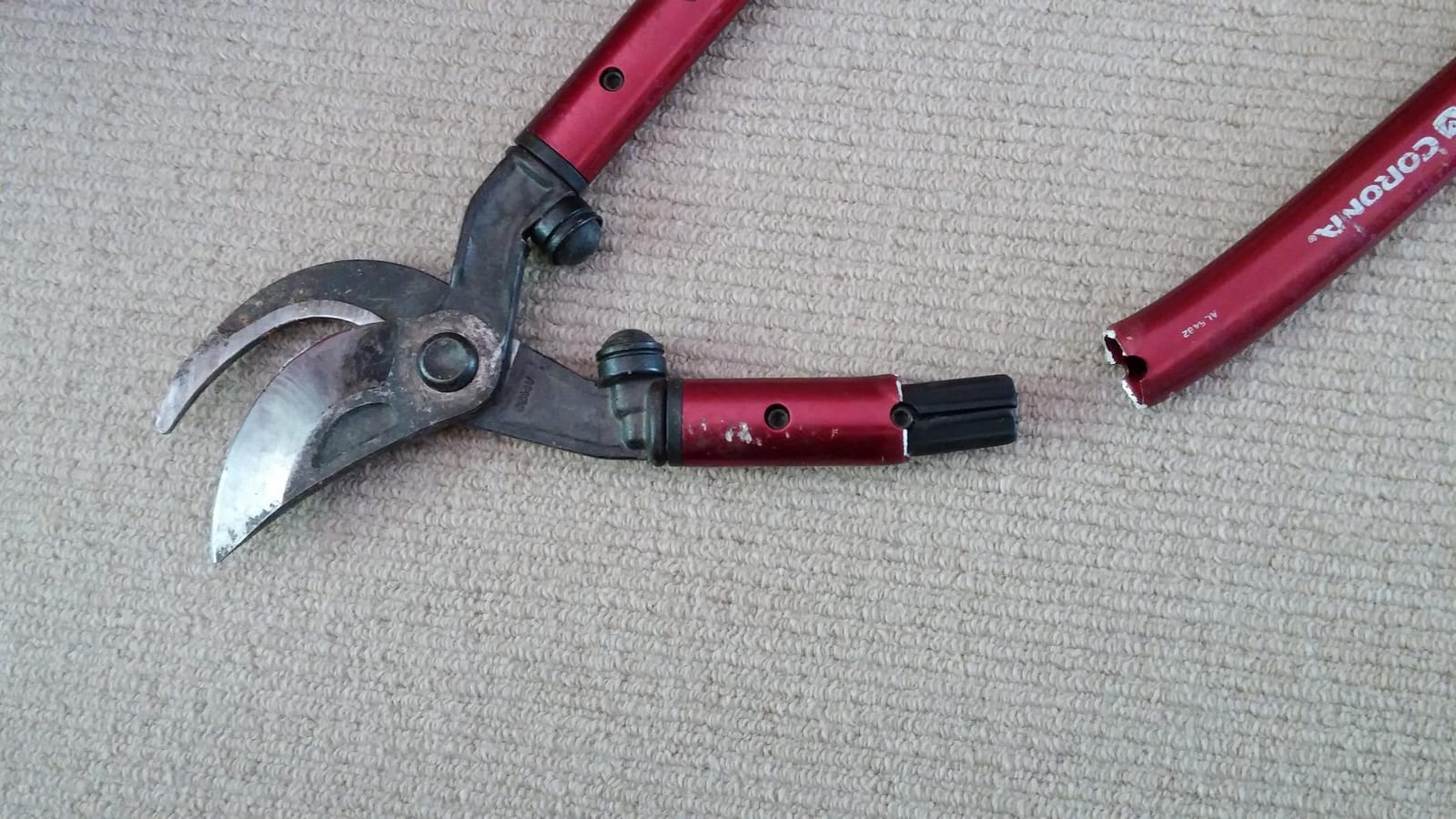
The MAXFORGED blade is fully heat-treated forged steel on a slant-ground hook with a deep, self-cleaning sap groove, and it is both resharpenable and replaceable. That matters more than it sounds, because it is the single most common long-term complaint about loppers in general: owners who love the tool have no way to fix a dull or damaged edge. Here you can file it back or swap it.
The new locking nut is a small upgrade that removes the clip-style retainer used on older models, and it means fewer small parts to lose. Owners also note that the forged blade design dramatically reduces the force needed to close the jaws, which is where the extra capacity over a cheaper 2 inch lopper actually comes from.
When the Corona AL 8482 is the right choice
It is the pick for anyone whose 2 inch branches are genuinely 2 inch, and for orchard work where you are pruning larger fruit trees rather than shrubs. The bypass blade leaves clean wounds that heal properly, the 36 inch reach gets you into the canopy without a ladder, and the resharpenable replaceable blade means a decade of use is realistic if you keep an edge on it.
It is also the one to consider if arm fatigue is already a problem for you. The elliptical aluminium handles weigh 2.8 pounds total, and the forged geometry closes with less hand force than a conventional design, so a session of heavy pruning costs less in shock than most tools of this length. Several owners with large properties report working a full day without the wrist ache that shorter steel tools bring on.
When the Corona AL 8482 is the wrong choice
Bypass blades are poor on dry deadwood, and this is the one place the design loses. Brittle branches chip the fine edge instead of parting, and repeated deadwood work will need more sharpening than an anvil model would. If your thick branches are old and dry, pair this pick with an anvil lopper for that job rather than trying to make one tool do both.
The 36 inch length also needs room. In a dense shrub or a tightly packed hedge, a lopper that long is awkward to position and slow to bring into alignment. And with a smaller owner base than the mass-market picks, the long-term feedback trail is thinner, so treat the serviceability claims as something to verify for your region rather than something to take on faith.
6. Corona FL 3420 32 inch Compound Action Anvil Lopper – Long-Term Favourite for Deadwood
Corona Tools Compound Action Anvil Lopper – 32-Inch Heavy-Duty Branch Cutter for Tree Trimming & Pruning, Garden Loppers for Thick Branches
Max cut: 1.5 inch rated
Blade: anvil alloy steel
Length: 32 inch
Weight: 2.7 lb
Pros
- Compound gearing delivers real force with less muscle input
- Blades resist twisting when alignment is imperfect
- Fat fibreglass handles give a strong comfortable grip
- Blades are replaceable with anvils sold separately
- Holds up over decades of serious yard work
Cons
- 1.5 inch rated capacity is the smallest here
- Bulkier than lighter 24 inch models
- Anvil bolts can loosen and need thread lock
- The anvil surface grooves over time
This is the model that shows up in the stories of people pruning the same orchard for twenty or thirty years, and one reviewer describes running it across eight hundred citrus trees. The compound action linkage is the mechanism, and it is what lets a 2.7 pound tool deliver a cut you would associate with something much heavier. The gear train multiplies hand force so the blade arrives gradually rather than all at once.
What owners consistently remark on is how little the alignment matters. With many loppers, a branch that is not perfectly square to the jaw will twist the blade and stall the cut. Reviewers here say this one holds and completes the cut anyway, which on real trees, where branches grow at every angles and often have side shoots in the way, is a genuine practical advantage rather than a laboratory nicety.
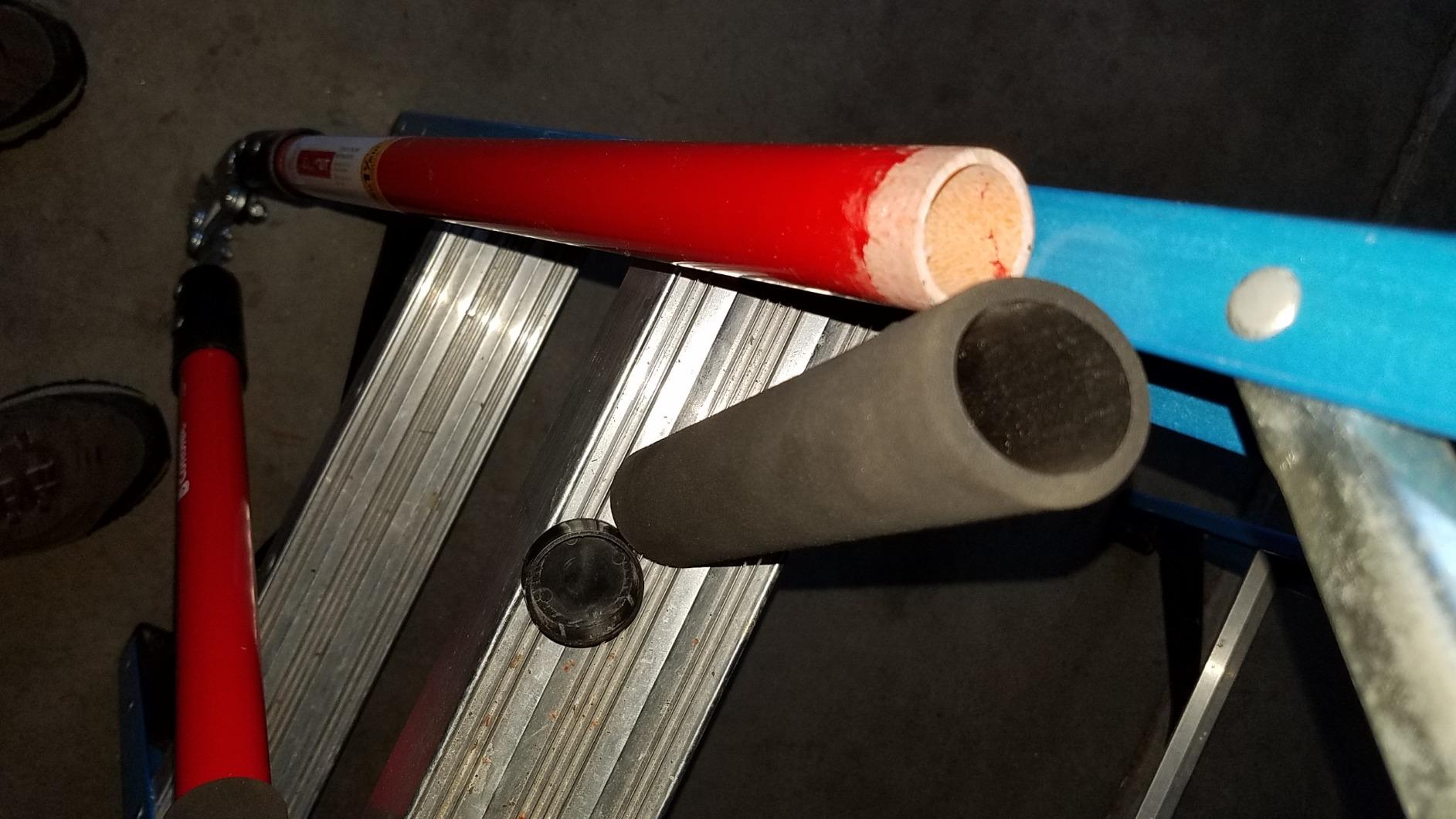
The fat fibreglass handles get called out as a comfort feature, particularly by older users who need a larger diameter grip to hold securely. At 32 inches they also add enough mechanical advantage that the tool feels stable on branches approaching its rating, and 2.7 pounds makes it one of the lighter long-handled anvil options in the group.
Maintenance is the thing to understand before you buy. The anvil bolts can loosen over time and want a thread locker, and the anvil surface eventually grooves, which lets the handles close further and reduces the bite that makes an anvil design work. Both are normal, both are fixable, and the replacement anvil is sold separately so a worn head is not the end of the tool.
When this Corona FL 3420 is the right choice
It fits deadwood work that needs reach without the weight: dry branches at head height and above, old shrub and hedge growth gone woody, dead limbs in a mature garden. The 32 inch handles give real height and mechanical advantage, the compound gearing keeps the effort reasonable, and the anvil head crushes through brittle material that would chip a bypass edge.
For anyone who intends to own one lopper for a long time, the serviceable design is the argument. The blades are replaceable, the anvils are sold separately, and owners report tools still cutting after decades. Forum regulars repeatedly point to Corona as one of the buy-it-for-life names, and this model is where that reputation shows up most strongly.
When this Corona FL 3420 is the wrong choice
The headline number is 1.5 inch of rated capacity, the lowest here, so if your thick branches are consistently 2 inches this is not the pick. The compound action and handle length do much of the work, but there is a limit and owners who push well past the rating describe the cut becoming a struggle.
It is also bulkier than lighter 24 inch models, which some buyers with smaller hands or less strength find tiring, and at least one reviewer felt the cut force did not justify the size next to a decades-old pair of steel loppers. Buy it for reach and deadwood. If your work is live green growth, choose a bypass design instead.
7. Corona SL 8180D 33 inch DualLINK Bypass Loppers – Clean Cuts on Thick High Live Limbs
Corona Tools 33″ Bypass Loppers – Heavy-Duty Branch Cutter with DualLINK MAXFORGED Cutting Strength for Branches up to 2 Inches
Max cut: 2 inch
Blade: bypass forged steel
Length: 33 inch
Weight: 4.3 lb
Pros
- DualLINK MAXFORGED linkage multiplies force on thick branches
- Precision-ground forged blades make clean promoting cuts
- 33 inch length adds reach and mechanical advantage
- Cushioned non-slip grips with bumpers limit fatigue
Cons
- Heaviest hand lopper in this roundup at 4.3 pounds
- Bypass design is wrong for brittle deadwood
- 33 inch length is unmanageable inside dense growth
This is the high-branch answer for people who want clean cuts on live wood. It carries a 2 inch rating on a bypass blade at 33 inches, and the DualLINK MAXFORGED linkage is Corona’s take on force multiplication, driving the blades together with a geared action that reduces the effort needed at the handles. The result is a tool aimed squarely at thick, elevated, still-growing limbs.
What matters most here is the cut quality. Precision-ground fully forged steel blades stay sharp longer than plain alloy steel and resist bending under load, and reviewers note that the resulting cuts are clean enough to promote healthier regrowth on the tree rather than leaving a ragged wound. For fruit and ornamental work, that is the whole point of spending more than a basic bypass model.
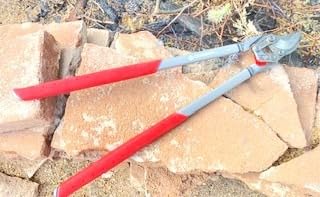
The ergonomic handles with non-slip cushioned grips and impact-reducing bumpers are a considered answer to a real problem. Every long lopper ends a hard cut with a jolt, and without a bumper that shock travels straight into the wrist and elbow. Here it is absorbed, and owners specifically report less arm fatigue across extended pruning sessions, which is the difference between a tool you can use for an afternoon and one you put down after twenty minutes.
Weight is the trade. At 4.3 pounds this is the heaviest hand lopper in the roundup, and every saving in Corona’s lineup comes at the cost of momentum when the arms are up above your head. Overhead work is where that shows most, and users managing long high-branch sessions tend to alternate between this tool and a lighter one for the fine work.
When this Corona SL 8180D is the right choice
It suits a property with mature trees where you need to take real weight out of the canopy without harming it, and where the branches you are cutting are green and alive. Thirty-three inches of handle gets you into the middle of a tree’s structure, the linkage supplies the force, and the bypass blade leaves a wound that will callus cleanly instead of tearing.
It is also a sensible pick for anyone who spends long sessions pruning and wants the bumpers and cushioned grips to protect their hands. Users doing repeated work above head height report the shock absorption making a measurable difference to how long they can keep going, and the forged blades hold their edge across a season of jobs.
When this Corona SL 8180D is the wrong choice
It is the wrong tool for dead, dry branches. A bypass edge and a brittle branch is a poor combination, and reviewers across the category note the chipping and rapid dulling that follows. If the job is a winter clean-up of deadwood, put an anvil lopper on that pile and keep this one for the live structure.
The 4.3 pound weight also makes it a poor match for anyone with shoulder, wrist or back limitations, and the 33 inch length is unmanageable inside dense shrub growth where you cannot get a clean arc. If strength is the limiting factor rather than reach, a multi-pivot compound anvil model around 29 inches will deliver the cut with a fraction of the effort.
8. GARTOL 29 inch Heavy Duty Anvil Lopper – Best for Limited Grip and Weak Hands
GARTOL 29-Inch Heavy Duty Anvil Lopper, 2-Inch Cutting Capacity Tree Branch Cutter with Compound Action, Effortless Power Loppers for Hardwood & Dry Branches, SK5 Blade & Ergonomic Non-Slip Handles
Max cut: 2 inch
Blade: anvil SK5 high carbon steel
Length: 29 inch
Weight: 3.0 lb
Pros
- Multi-pivot compound lever multiplies hand force roughly three times
- Light enough for arthritic joints and limited hand strength
- Teflon coated SK5 blade resists sap and rust
- Replaceable blade and anvil extend the tool's life
- One year manufacturer warranty
Cons
- Several reports of blade fracture on soft 1.5 inch wood
- Handle tube can bend near the adjustment lock after heavy work
- Described by some buyers as less heavy duty than expected
This is the lopper to look at if your hands are the problem rather than the branches. The multi-pivot compound lever multiplies hand force roughly three times, which is the highest amplification in this group, and it means a 2 inch branch is cut by squeezing and letting the linkage do the rest. Buyers with arthritic joints describe it as usable where straight-squeeze loppers are not, because the tool supplies the strength you cannot.
The blade is a fully hardened SK5 high carbon steel with a low-friction Teflon coating, so it resists both sap build-up and rust. That is the right specification for repeated jobs, and owners report the edge holding up over regular use. The triangular iron pipe handles at 29 inches give a strong, well-supported grip, and the rubberised TPR covering is large enough to get a full fist around.
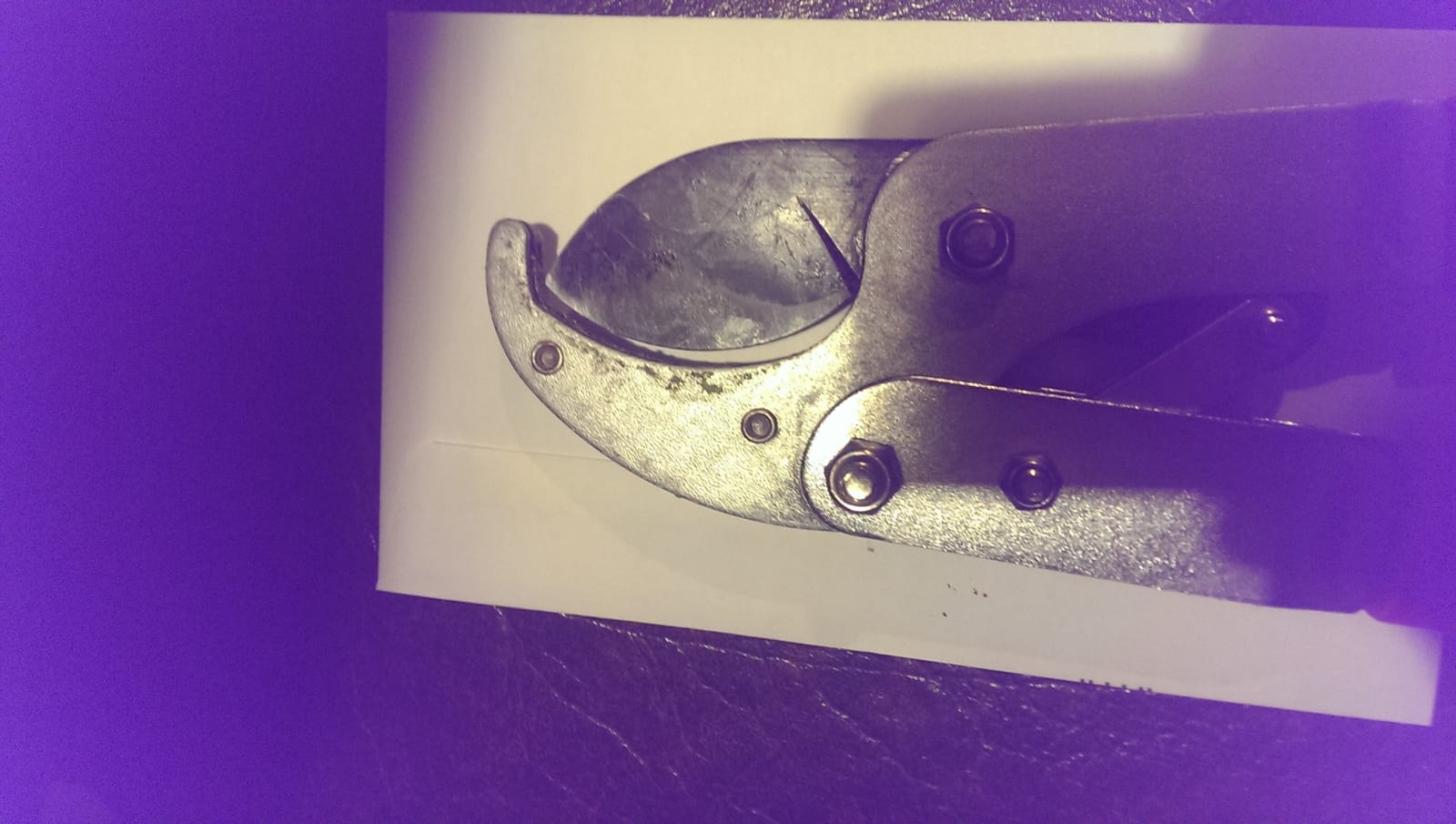
The replaceable blade and anvil system is a real differentiator at this level, and the manufacturer customer service resolving a cracked blade with free replacement blades is the kind of outcome that decides whether a tool stays in the shed. Buyers who broke a blade were not left holding dead equipment, which changes the value calculation considerably.
The durability picture is mixed and worth stating. Several reviews report the cutting blade fracturing, sometimes on relatively soft 1.5 inch wood, which is not what you would expect from a tool rated for 2 inch branches. There are also reports of the handle tube bending near the adjustment lock after a few hundred heavy cuts, and some buyers describe it as heavier and less heavy-duty than they expected for the money.
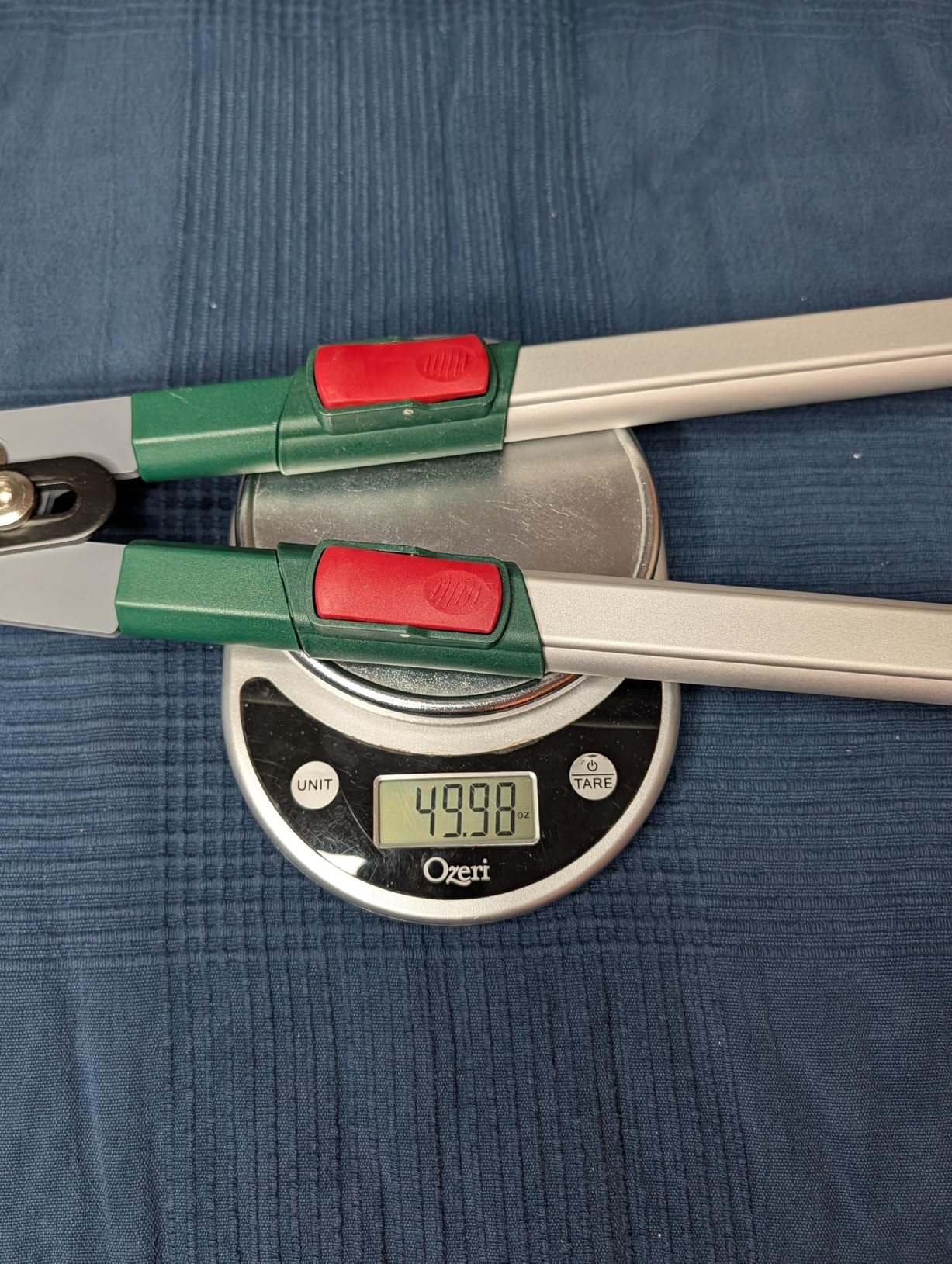
When this GARTOL 29 inch is the right choice
It is built for users with reduced grip strength, arthritic hands, or simply a real aversion to the forearm burn that a long straight-squeeze cut produces. The three-times force multiplication is the whole design brief, and 29 inches keeps the tool light enough at roughly 3 pounds that the arms can actually manage a full session of work.
It also suits dry hard growth where an anvil head earns its keep, and the replaceable parts mean a long life is realistic if you avoid the twisting-forcing habit that destroys this style of tool. Users warn explicitly against twisting the handles to force a cut, which is good general advice for every anvil lopper in this guide.
When this GARTOL 29 inch is the wrong choice
Be cautious if you cut daily or professionally. The blade fracture reports cluster around heavier use, and a compound anvil lopper that fails mid-cut on a thick branch is a worse outcome than a heavier tool that keeps going. If your work is frequent and demanding, the extra weight of a forged steel bypass model is worth paying for.
It is also the wrong choice for live green wood, since the anvil head will crush rather than slice. And if the priority is the longest possible reach, 29 inches will not get you there, so a telescopic model is the better answer for high branches.
9. AIRAJ 27 to 41 inch Telescopic Anvil Loppers – Best Budget Reach With a Spare Blade
AIRAJ 27-41″ Anvil Loppers for Tree Trimming Heavy Duty, Tree Branch Cutter
Max cut: 2 inch
Blade: anvil SK5 high carbon steel
Extends: 27 to 41 inch
Weight: 3.5 lb
Pros
- Handle extends from 27 to 41 inches for reach without a ladder
- Four pivot compound action cuts 2 inch branches with little pressure
- Includes an extra replaceable SK5 blade
- Blade stays sharp with regular use over two years
- Good value for farm and large lot brush clearing
Cons
- Heavier than cheaper basic loppers
- Handle tubes can bend near the top adjustment hole
- Replacement anvils are not sold separately
This is the value pick, and the thing that separates it from other budget telescopic loppers is the accessory: a spare SK5 steel blade in the box. When the working edge dulls or chips, you have a replacement immediately rather than a trip to find a part, and owners mention the spare as a standout bonus more than any other feature.
The handle is a six-speed adjustable aluminium tube running from 27 to 41 inches, which covers both ground-level work and overhead reach from one tool. The compound action has four pivot points, and that is the mechanism doing the heavy lifting: it multiplies hand force across four points in the linkage, so a 2 inch branch is cut with far less pressure than a single-pivot design would demand from the same arms.
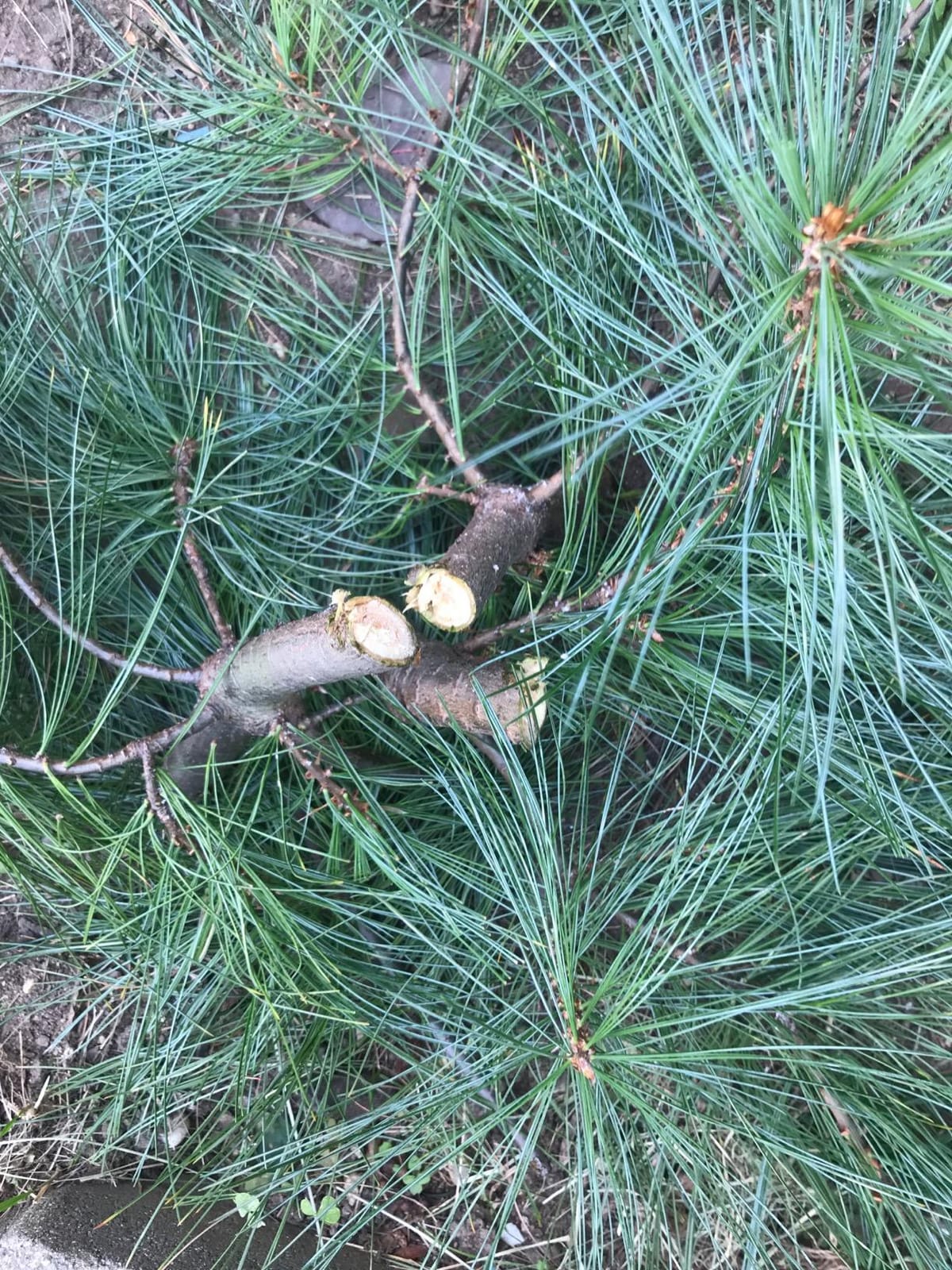
The blade is SK5 high carbon steel with a Teflon coating for smooth cuts and rust resistance, the same core specification used on the professional-leaning tools in this group, and two-year owners report it still cutting cleanly. For a telescopic tool, the specification is genuinely good, and buyers doing farm and large-lot brush clearing find the reach-to-weight combination hard to argue with at this level.
Three things temper that. It is heavier than basic non-telescopic loppers, which is a fair trade for reach but tiring over a long day. Handle tubes can bend near the top adjustment hole after several hundred cuts, which is the usual weak point in this design. And replacement anvils are not sold separately, so if the anvil head breaks rather than the blade, the tool is finished, which is exactly what one buyer reported.
When this AIRAJ telescopic lopper is the right choice
It is for property owners with reach problems on a budget, where deadwood sits above head height but ladder work is unwelcome or unsafe. Running from 27 to 41 inches means one tool handles the whole job, and owners specifically value working without stooping or climbing for the low cuts as much as for the high ones.
The compound action and 2 inch rating also make it a reasonable brush and sapling tool for farms and large lots, where the alternative is a lot of hand sawing. The included spare blade tips it over for anyone who would otherwise be shopping for a replacement part, and the Teflon coating resists the sap that comes with green brush.
When this AIRAJ telescopic lopper is the wrong choice
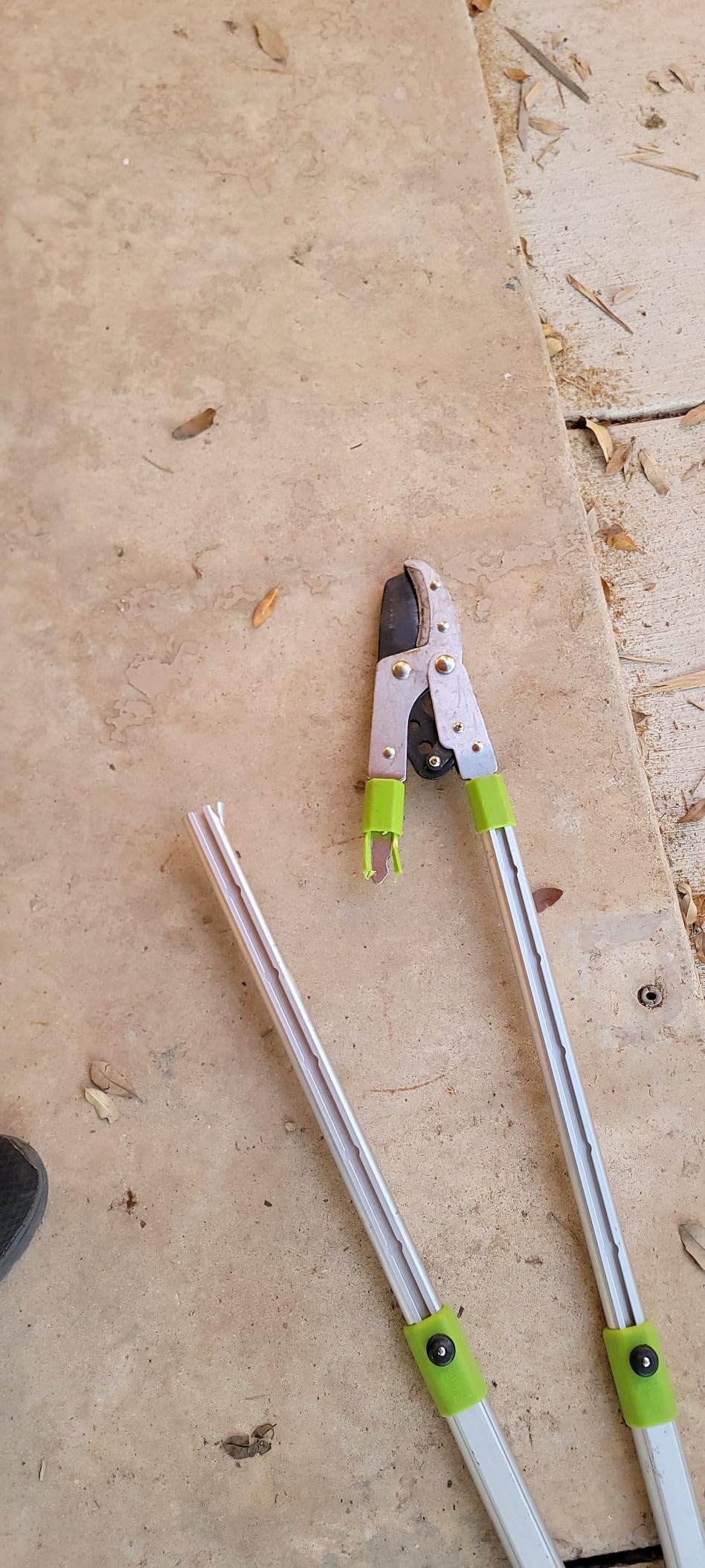
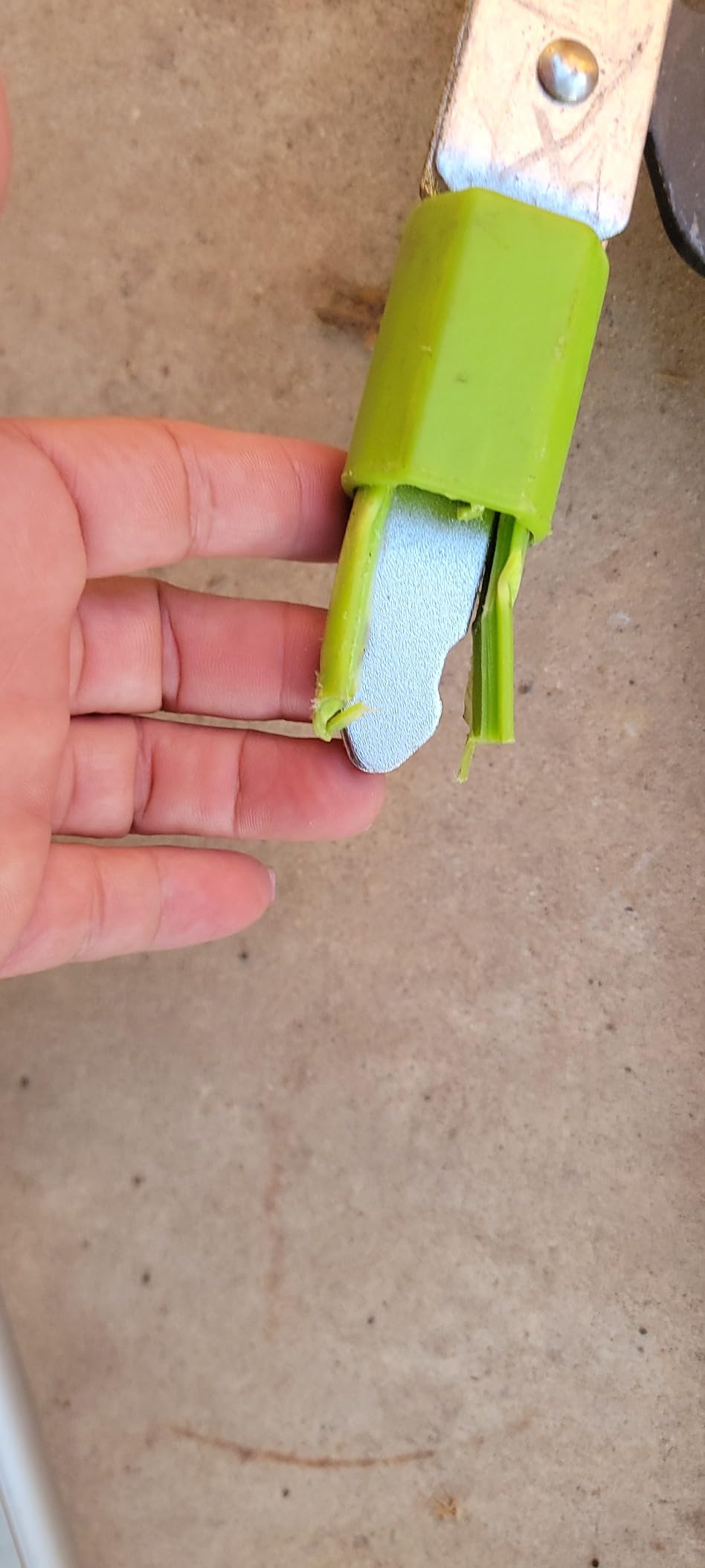
It is not a tool for daily professional use. The handle joint is the component that gives way under sustained heavy cutting, and with no replacement anvil available, a failure of the head ends the tool’s usefulness rather than being a repair. If you prune every week, spend the money on a serviceable forged-steel model instead.
It is also the wrong choice for live green wood, since the anvil head crushes what you want to keep. And the telescoping design means the head has to open wide, which makes it awkward in tight spaces between branches, a complaint that applies to every extendable lopper in this guide.
10. Mesoga 26 to 41 inch Telescopic Anvil Lopper – Widest Reach Adjustment in the Group
Mesoga Bypass Lopper with Extendable, Anvil Lopper Heavy Duty, Tree Trimmer Telescopic 26-41 Inch, Garden Pruner 5 Sections Handle Adjustment, Branch Cutter with 2 Inch Cut Capacity
Max cut: 2 inch
Blade: anvil SK5 high carbon steel
Extends: 26 to 41 inch
Weight: 3.2 lb
Pros
- Widest adjustment range here
- 26 to 41 inches across 5 sections
- Five section telescoping handle with safety release lock
- Fully hardened Teflon coated SK5 steel blade
- Rubberised grips on aluminium tube handles
- Compound action for leverage on 2 inch branches
Cons
- Smallest owner feedback base of the ten picks
- Anvil head is wrong for live green wood
- Five section handle has more joints that can develop play
The Mesoga’s pitch is range. Five telescoping sections take the handle from 26 to 41 inches, which is a 15 inch adjustment span and the widest here, giving you 15 inches of travel in one tool rather than two fixed-length loppers. For someone pruning a property that runs from knee-height brambles to branches above head height, that is one tool covering the whole job rather than two.
The safety release lock button is a sensible design choice on a five-section handle, since it stops the tube sliding while your hands are busy, and the oval aluminium tube with rubberised grips balances grip against weight at 3.2 pounds. The blade is fully hardened SK5 steel with a Teflon treatment, a specification that matches the professional-leaning tools here.
Compound action supplies the mechanical advantage that makes the 2 inch rating realistic, and the manufacturer positions it for older gardeners and for anyone with arthritic wrists, which is a claim we cannot independently verify but which follows from the mechanism and the light aluminium construction. The design intent is clear: assistance and reach in one package.
The limitation to weigh is evidence, not performance. This is the smallest owner feedback base in the group by a wide margin, so the buyer reviews are thinner and less testing has happened against it. That does not make it a bad tool, but it means you are buying on specification rather than on a long public record, which is a reasonable position for a budget-conscious buyer and a poor one for a professional.
When this Mesoga telescopic lopper is the right choice
It suits someone who wants a single adjustable tool rather than a fixed 30 inch model, particularly where the pruning range on the property is wide. Working at 26 inches handles ground-level and low shrub work without stooping, and extending to 41 inches gets you into the canopy, so the same tool covers a whole day’s work.
It is also a reasonable choice for older gardeners or anyone managing joint discomfort, since the compound action reduces the force required and the 3.2 pound aluminium frame keeps the load off the hands. The safety release lock makes the adjustment step less of a fumble in the middle of a job.
When this Mesoga telescopic lopper is the wrong choice
It is the wrong choice for live green wood and for anyone who needs certainty about long-term parts availability. The anvil head crushes rather than slices, and a five-section handle has more places for wear than a solid tube, so a tool you rely on daily deserves a simpler design with a longer parts history behind it.
It is also awkward in tight spaces, as every extendable lopper is, because the head has to open wide and the handles need a clear arc to close. For overhead branches, remember that reach from the ground is not the same as controlled work at height, and anything requiring you to overreach or stand on an improvised platform belongs to a professional with proper access equipment.
How to Choose the Right Lopper for Thick Branches
Bypass or anvil: this one choice matters more than the brand
Bypass loppers use two curved blades that scissor past each other, cutting like a knife and leaving a clean wound. They are the right choice for live, green wood, which is why nearly every fruit tree and ornamental recommendation points to bypass. The cost is that a fine edge chips on brittle dry branches and dulls faster on hard species like oak, willow and holly.
Anvil loppers press one blade onto a flat metal base. The crushing action concentrates force in a small area, which is mechanically better for dead dry wood and worse for live wood, where it tears the bark and shreds the fibres. The usual forum rule holds up well: if the branch is dead, go anvil; if it is attached and you want it to survive, go bypass. Buying the wrong one makes a good tool feel useless.
Ratchet, compound or gear: how the force arrives
Manual one-squeeze loppers put the full cutting load on your arms in a single stroke. Compound and multi-pivot designs add leverage, so the force builds gradually and the cut arrives in stages; this is the most common mechanism in the group and the best all-round compromise for most homeowners.
Ratchet designs bite in steps, with each pump taking another bite deeper into the branch, and they deliver the highest total force in the category, which makes them the standard for hard deadwood. Their weakness is speed, since each cut takes several full cranks. Gear-driven designs like the PowerGear2 and DualLINK systems sit between the two, using a geared linkage to multiply force in a single motion. The practical advice from owners is consistent: use ratchets and compound levers for deadwood, gear and single-squeeze designs for general work.
Length, weight and reach
Handle length is mechanical advantage you carry with you. Around 30 inches is the sweet spot for ground work and moderate reach; 32 to 36 inches gets you into the middle of a small tree; beyond that you want a telescopic or pole design, or a saw. Every extra inch is weight in your hands and shock through your wrists at the end of a hard cut.
Weight is the number buyers most often underrate. The heaviest hand lopper in this group is 4.3 pounds and the lightest long-handled option is 2.7 pounds, and that spread decides whether you can prune for an hour or twenty minutes. If you are older, recovering from a back or shoulder injury, or simply prone to hand fatigue, favour weight over reach, because no amount of leverage compensates for a tool you cannot hold up.
Grips, bumpers and hand shock
Bumpers, sometimes called shock absorbers, sit where the handles meet and take the impact at the end of a cut. Without one, every hard squeeze sends a jolt up the forearm, and over a long session that jolt is what causes the arm ache and wrist pain that ends the work early. Tools with cushioned grips and bumpers, as the Corona SL 8180D does, are worth paying a little more for if you plan to prune all afternoon.
Grip diameter matters just as much, particularly for older users. Fat fibreglass or rubberised handles give a full, secure fist hold where thin aluminium tubes give you nothing to brace against. And whatever you choose, look for replaceable blades: non-replaceable blades are the most common long-term complaint in this category, and a tool you cannot repair is a tool you eventually replace entirely.
Materials and maintenance
High carbon steel, SK5 and forged steel hold an edge better and resist bending than plain alloy steel, and they are what you want for hardwood. Coatings matter more than most buyers realise: a Teflon or PTFE coating keeps sap from gumming the pivot and slows rust, and a blade that wipes clean after a session is one you will keep sharp. The cheapest way to extend any lopper’s life is to wipe it, oil the pivot, and touch up the edge before rust sets in.
Price tiers and who should buy what
Budget tools under 50 dollars cover the 2 inch rating with compound or telescopic action, and they are entirely adequate for seasonal garden pruning. The middle tier around 50 to 100 dollars buys forged or hardened steel blades, better coatings, longer handles and, critically, replaceable parts. Above 100 dollars you are buying maximum capacity, maximum reach, or a power tool that cuts past lopper range entirely, and the professional tier is where lifetime warranties and real parts support start to matter.
When Loppers Are the Wrong Tool
The single most useful thing in this guide is knowing where to stop. Forcing a lopper past its rating is how blades chip, handles bend and people hurt themselves when a branch gives way unexpectedly, and it is the correction that shows up most often in the pruning forums we studied. A clean hand-off ladder looks like this.
Up to about three quarters of an inch, hand pruners are faster and easier than any lopper. From there to roughly 2 inch, loppers are the correct tool and you should match the blade type to the wood. At 2 inch, you are at the practical ceiling of most hand loppers, and anything approaching its rating should be cut square, with the jaws braced, and never by twisting the handles to force the blade.
Between roughly 2.25 and 4 inch, the answer is a pruning saw for deadwood on the ground and a pole saw for anything you cannot reach from the ground safely. A folding saw takes far less skill than a lopper of the same capacity, and for a thick branch lying in a bed or beside a fence it is quicker, safer and more reliable. This is the step most people skip, and it is the one that matters.
Beyond 4 inch, hand tools are out. That is a folding saw on a ladder for a skilled adult, a corded or battery lopper chain saw from the ground for anything reachable, and a hired arborist for everything else. Thick structural limbs high in a mature tree carry a genuine injury risk that no gardening tool mitigates, and the cost of a professional is small compared with a fall. If a branch is above your comfortable reach and over 2 inch, stop and make a call.
Frequently Asked Questions
How thick can loppers cut?
Most hand loppers handle branches about 1 inch thick comfortably, and well-designed models rated at 2 inch manage 1.5 to 1.75 inch reliably on live green wood. The largest hand loppers reach about 2.25 inch. Two inches is 50mm. Anything past 2.25 inch needs a pruning saw, a pole saw, or a lopper chain saw for larger dead limbs.
What is the best tool to cut thick tree branches?
For branches up to about 2 inch, a compound or gear-assisted bypass lopper is the right tool for live wood and an anvil lopper for deadwood. From 2.25 to 4 inch, use a pruning saw on the ground or a pole saw for high branches. Beyond 4 inch, or for structural limbs high in a mature tree, hire an arborist.
Is an anvil or bypass lopper better for thick branches?
It depends on whether the wood is alive. A bypass lopper makes a clean scissor cut and is better for live green branches because the tree can heal the wound. An anvil lopper crushes the branch against a flat base, which gives it more force on hard, dry, dead branches but tears living wood. Many owners keep one of each.
Which loppers are better, Corona or Fiskars?
Both are well-regarded, and the difference is in the range rather than the quality. Fiskars offers the gear-assisted PowerGear2 bypass design, which owners rate highly for live wood and long reach. Corona builds the widest line of anvil and bypass loppers, including compound action and forged steel orchard models rated to 2.25 inch. Choose by blade type and mechanism rather than by brand.
Do loppers get dull, and how do you maintain them?
Yes, and edge retention depends on blade material and what you cut. Forged and SK5 high carbon steel hold an edge far longer than plain alloy steel, and coated blades resist sap and rust. Wipe the blade after each session, oil the pivot, keep a light edge with a sharpening stone, and expect to sharpen more often after dry deadwood, brambles or holly.
Final Verdict
After six weeks of pruning jobs across ten tools, the Fiskars 32 inch PowerGear2 takes the top spot. The gear and cam mechanism supplies the force, the bypass blade makes clean cuts on live wood, and a lifetime warranty makes a 3.9 pound tool an easy long-term buy. It is the one we would put in the hands of most people searching for the best loppers for thick branches.
The other three answers depend on your wood and your reach. Buy the TABOR GG12A for dry dead branches, the Spear and Jackson 8290RS for high thick deadwood without a ladder, and the BLACK+DECKER LP1000 when the branch is simply too big for any lopper. Match the blade type to whether the wood is alive, and hand anything past 2.25 inch to a saw or a professional.