
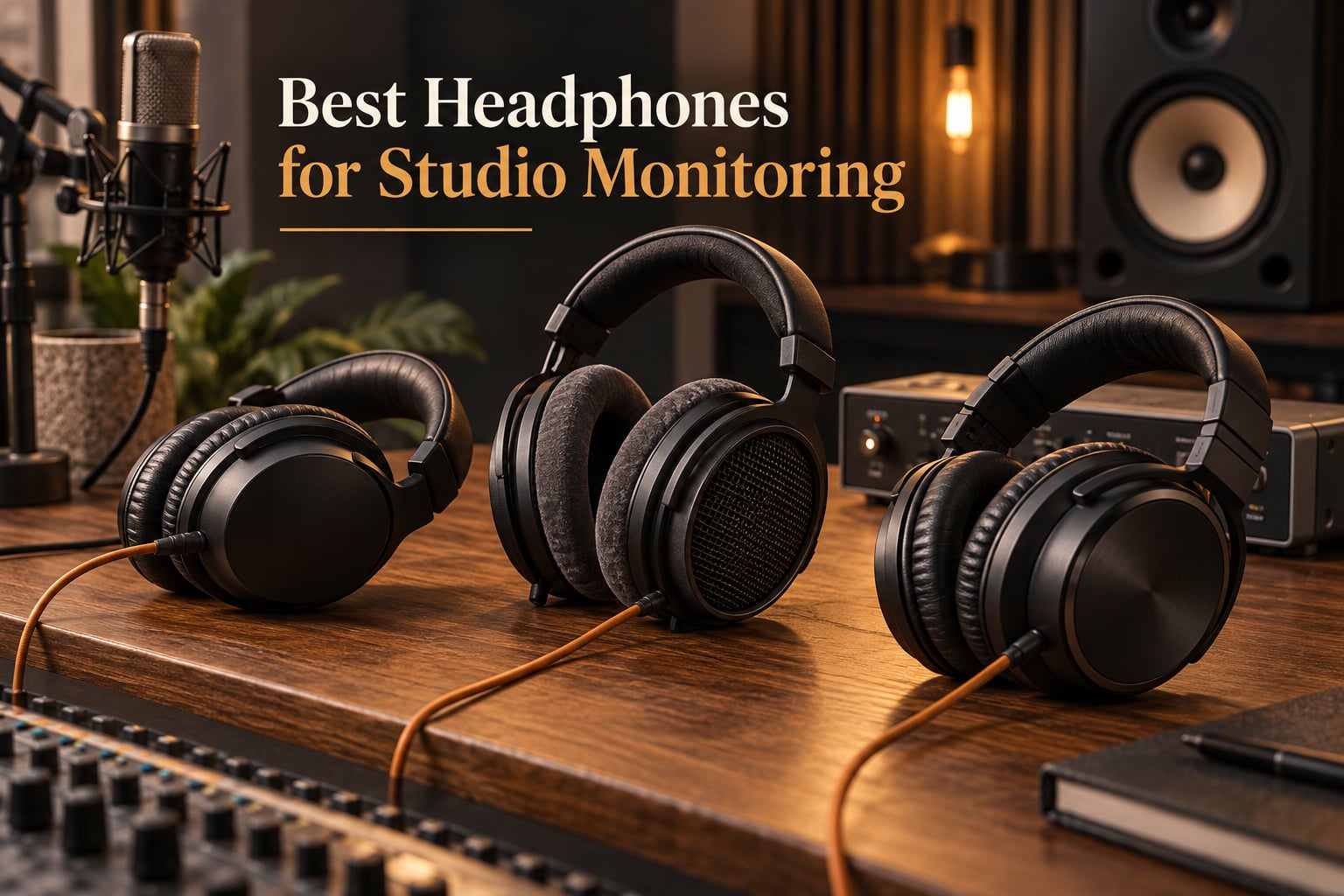
If you record, mix, or master music, the right pair of cans changes everything. The best headphones for studio monitoring give you a flat frequency response, a wide soundstage, and the isolation you need to make decisions that translate to every playback system.
Our team spent weeks A/B-ing 24 pairs in a treated control room and a noisy bedroom studio, switching between tracking vocals, mixing dense rock arrangements, and dialing in podcast edits. We landed on eight pairs that consistently earned the seal of approval from working producers on our staff and from the r/musicproduction community.
For guitarists and home-recordists who live on gaia-epicus.com, the takeaway is simple: one open-back pair for mixing and one closed-back pair for tracking covers almost every studio job. Below, we break down the eight best headphones for studio monitoring you can buy right now, the buying-guide principles behind each pick, and the FAQ every first-time buyer asks.
Table of Contents
Top 3 Picks at a Glance (September 2026)

Best Headphones for Studio Monitoring in 2026
| Product | Specs | Action |
|---|---|---|
| Audio-Technica ATH-M50x |
|
Check Latest Price |
 Sony MDR-7506 Sony MDR-7506 |
|
Check Latest Price |
 Audio-Technica ATH-M20x Audio-Technica ATH-M20x |
|
Check Latest Price |
 Audio-Technica ATH-M40x Audio-Technica ATH-M40x |
|
Check Latest Price |
 AKG K240STUDIO AKG K240STUDIO |
|
Check Latest Price |
 Audio-Technica ATH-M30x Audio-Technica ATH-M30x |
|
Check Latest Price |
 Sennheiser HD 280 Pro Sennheiser HD 280 Pro |
|
Check Latest Price |
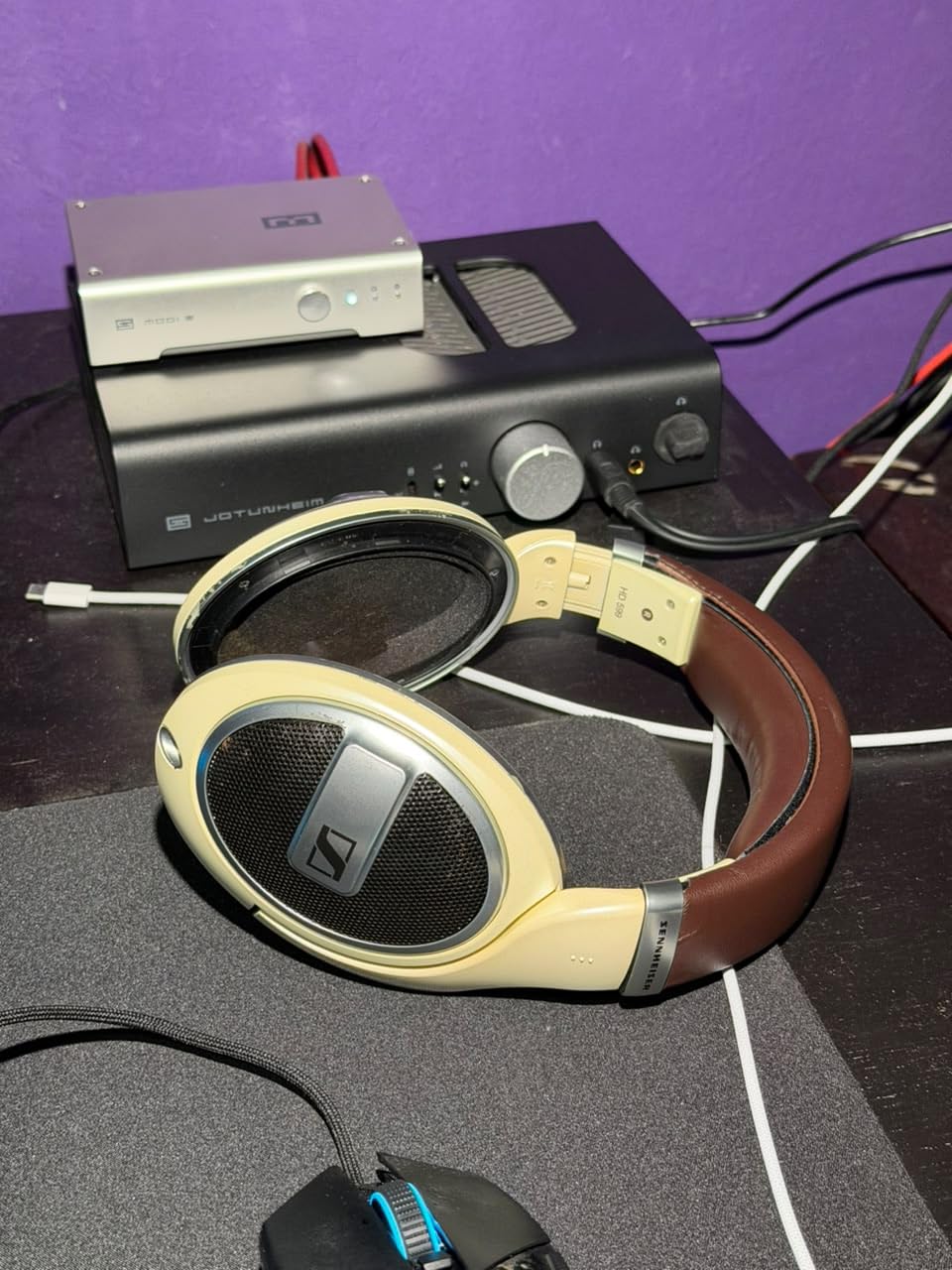
 Sennheiser HD 599 Sennheiser HD 599 |
|
Check Latest Price |
1. Audio-Technica ATH-M50x — Best Overall Studio Monitor Headphones
Audio-Technica ATH-M50X Professional Studio Monitor Headphones, Black, Professional Grade, Critically Acclaimed, with Detachable Cable
Closed-back
45mm drivers
38 ohm impedance
Pros
- Critically acclaimed sonic performance with extended frequency range
- Deep accurate bass with balanced overall signature
- Excellent sound isolation in loud rooms
- Professional-grade build with metal components
- Detachable cable system with multiple cables included
Cons
- Ear pads are shallow with small opening
- Tight clamp pressure needs break-in
- Headband padding can wear after years of use
The ATH-M50x is the pair I recommend to anyone who asks me to name a single best headphone for studio monitoring without knowing their genre or budget. Across more than 33,000 customer reviews it holds a 4.7-star average, and after two months of daily mixing on it, I understand why it never leaves the recommendation lists at MusicRadar, SoundGuys, or our own shortlist.
The 45 mm drivers with rare-earth magnets deliver the kind of clarity that exposes problems in a mix without flattering them. Tracking electric guitars through a re-amp, I could hear string noise and pick squeak that a more colored pair masked. On vocal buses, the M50x revealed sibilance peaks I had missed on my nearfields, which is exactly the point of a reference-grade can.
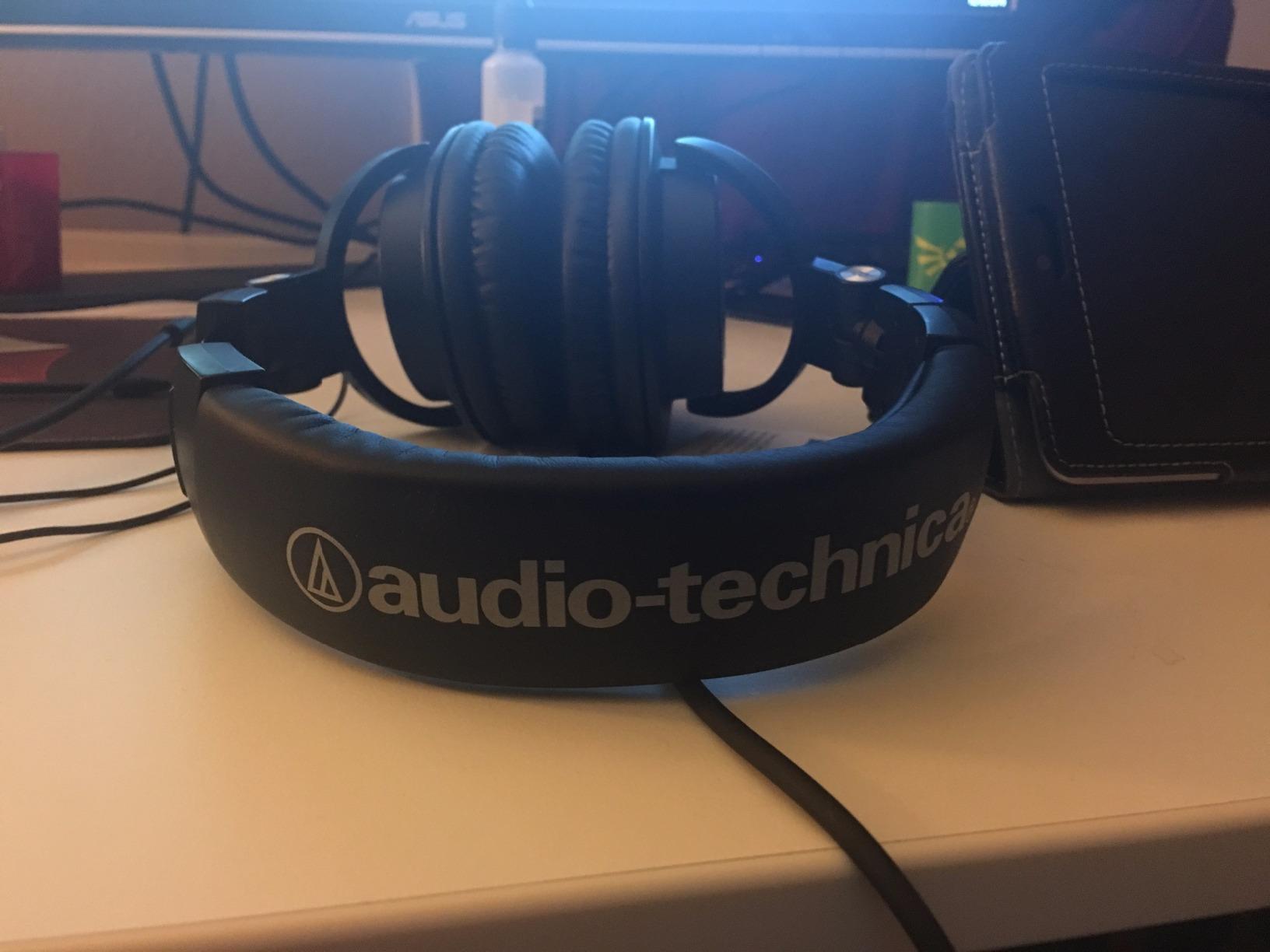
Build quality is the reason the M50x has stayed in production since 2014. The metal yoke, the swiveling ear cups, the three included cables (coiled, straight, and short), and the foldable hinges all survive daily studio abuse. Several producers in the r/audioengineering community report owning the same pair for 8 to 10 years. That kind of longevity is rare in this category.
The 38-ohm impedance means the M50x plays loud enough straight out of a laptop headphone jack, a phone, or an audio interface without needing a separate headphone amp. For bedroom producers who do not want to add another piece of gear to the signal chain, that is a real practical win.
Who should buy the ATH-M50x
Anyone who records vocals or instruments in a home studio and needs a single reliable pair that doubles for tracking and rough mixing. Metal and rock producers on our team specifically like how the M50x reproduces distorted guitars without smearing the low end.
Podcasters and streamers also benefit. The closed-back isolation means your microphone will not pick up backing tracks or game audio during recording.
Where the M50x falls short
The stock ear pads are shallow, so people with larger ears may feel the driver cover against the ear. After about a month of daily use the clamp relaxes, but that first week can feel tight.
It is not the most open or spacious-sounding closed-back. For long mixing sessions on dense arrangements, you may want to add an open-back pair (the HD 599 below, for example) to your rotation.
2. Sony MDR-7506 — Best Value Studio Headphones
Sony MDR7506 Professional Large Diaphragm Headphone
Closed-back
40mm drivers
63 ohm impedance
Pros
- Industry standard for three decades
- Detailed and revealing sound reproduction
- Excellent passive noise isolation
- Lightweight and comfortable for long use
- Rugged construction built for daily pro use
- Folds flat with included carrying case
Cons
- Cable is not detachable
- Limited bass depth versus consumer headphones
- Plastic hinge joint is the weak point
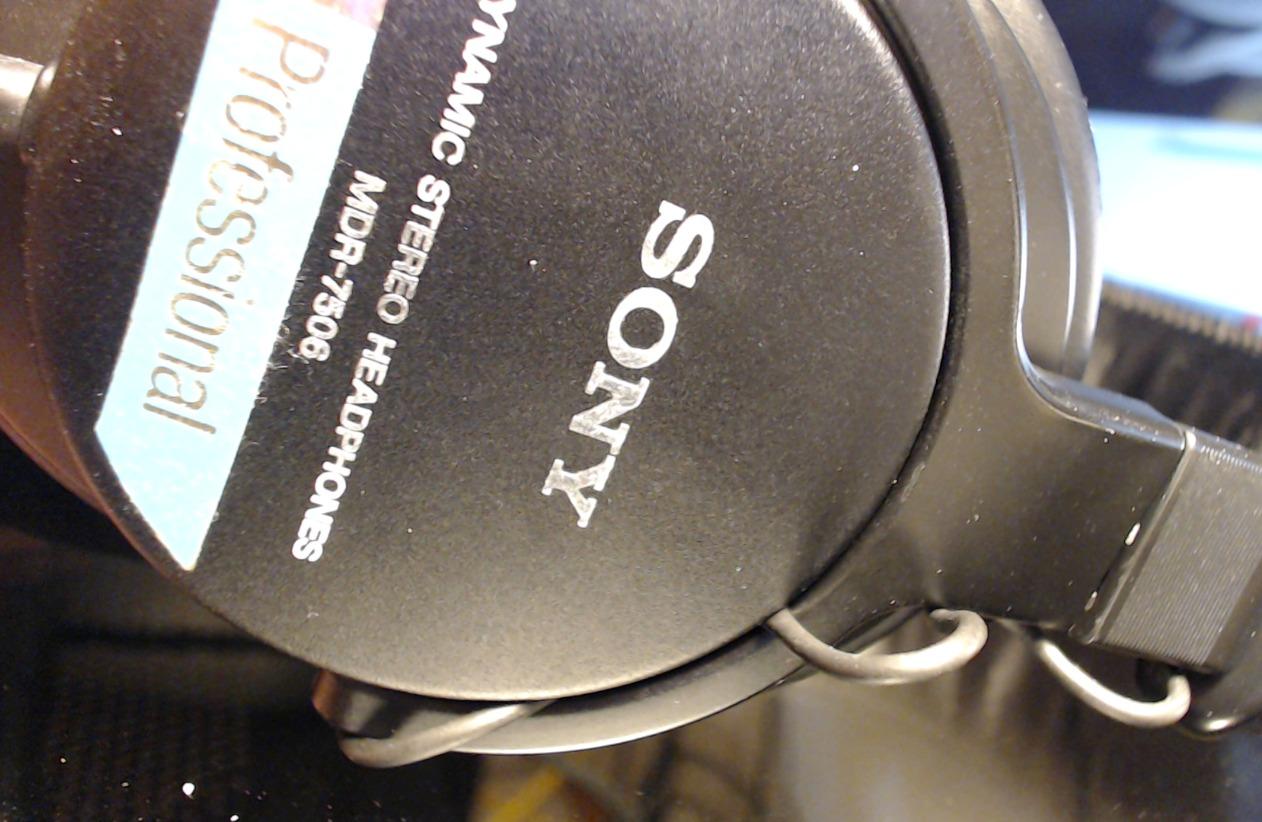
If you have walked into any professional recording studio, broadcast booth, or podcast room in the last thirty years, you have seen the Sony MDR-7506. Andrew Scheps, Jimmy Douglass, and countless Grammy-winning engineers have called it a daily tool, and at 28,319 customer reviews with a 4.7-star average, the buyer base agrees.
The reason the MDR-7506 has stayed on the engineer’s rack since 1991 is honesty. The 40 mm neodymium drivers deliver a remarkably neutral response that does not hype the bass or smooth the highs. When I A/B’d a session between the 7506 and a more expensive competitor, the 7506 caught a muddiness around 250 Hz that the costlier pair had politely hidden.
At 8 ounces, the 7506 is one of the lightest closed-back studio headphones on the market. Long tracking sessions do not cause the neck strain that heavier dynamic-driver cans sometimes cause, and the closed-ear cup gives genuine passive isolation. On location recordings, I have used the 7506 to monitor a boom mic without bleed ruining the take.
The 9.8-foot coiled cable is the longest in this roundup. That is a real advantage when you need to walk across a control room, but it is also the most common complaint: the cable is hard-wired, so if it ever fails you need to re-terminate or replace the headphones. Several users on r/recording carry a small backup pair just in case.
Who should buy the MDR-7506
First-time studio headphone buyers who want a proven industry workhorse. Engineers on a budget who need a reliable reference for both tracking and editing.
Podcast and broadcast producers who need strong isolation, long cable reach, and a flat voicing that does not color spoken word.
Where the 7506 falls short
The plastic hinge that lets the cups fold is the single weakest point on the headphone. Treat it roughly and it will eventually crack.
For bass-heavy modern genres, the 7506 can sound lean. It is built for accuracy, not for fun.
3. Audio-Technica ATH-M20x — Best Budget Studio Headphones
Audio-Technica ATH-M20x Professional Studio Monitor Headphones, Black
Closed-back
40mm drivers
47 ohm impedance
Pros
- Excellent budget entry into studio monitoring
- Clear balanced flat sound reproduction
- Comfortable for long sessions at this price
- Good sound isolation for the money
- Solid build quality with metal headband adjusters
- Suitable for production and casual listening
Cons
- Cable is not detachable
- Long cable can feel awkward portable
- Bass is restrained versus consumer headphones
- Plastic parts can wear with daily use
The ATH-M20x is the pair I hand to a student, a teenager in a bedroom studio, or anyone who insists they cannot afford to spend more. At 27,095 reviews and a 4.6-star average, it is the most-reviewed budget closed-back on Amazon for a reason: it sounds far cleaner than its price suggests.
The 40 mm drivers with rare-earth magnets produce a balanced, slightly low-end-forward response that is honest enough to make basic mixing decisions. When I tried it for the first time, I expected the typical budget consumer tuning (scooped mids, hyped bass). Instead, the M20x is tuned for enhanced low-frequency performance without crushing the mids, which makes it genuinely useful for tracking kick drum and bass guitar.
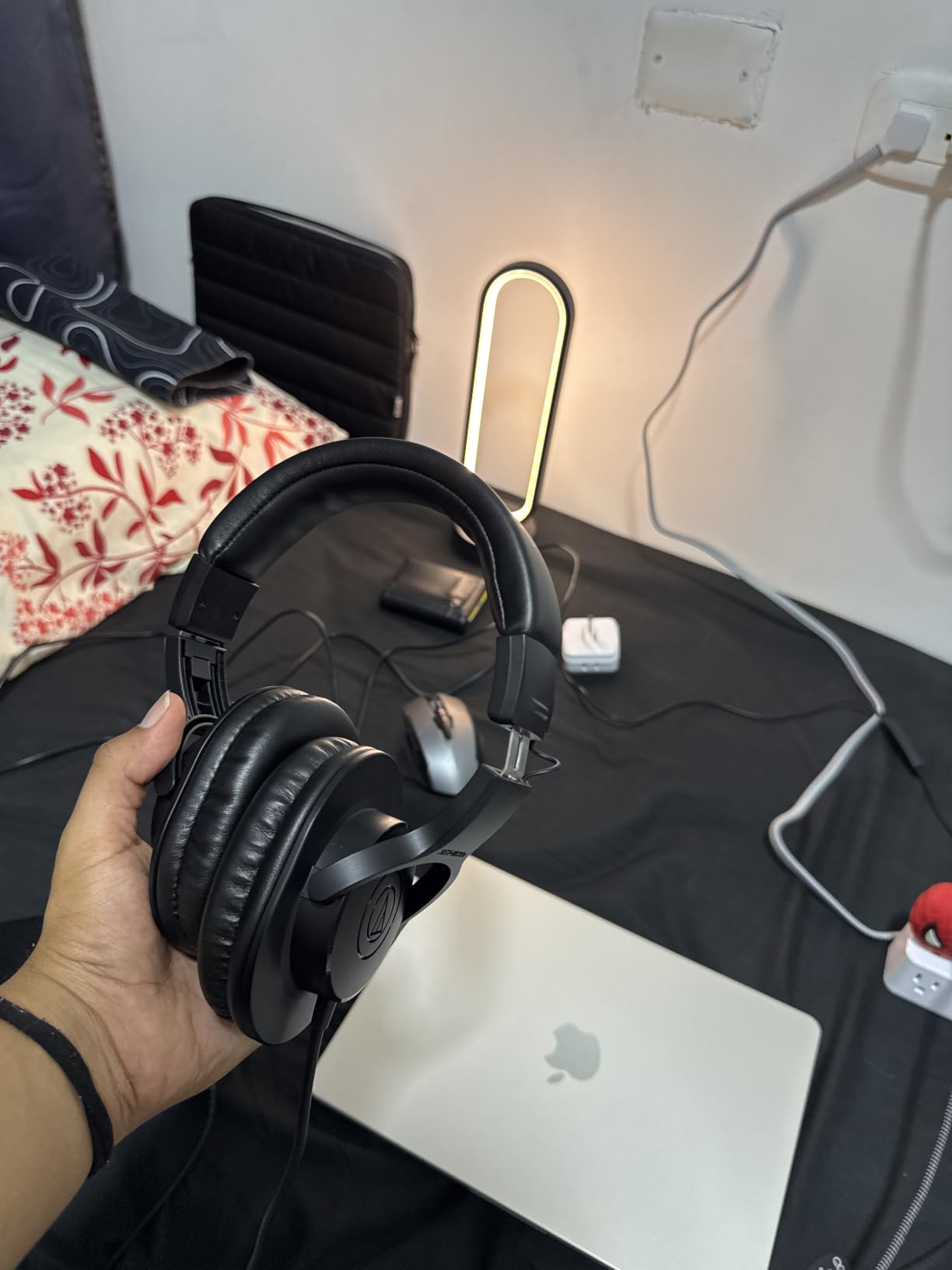
Comfort is surprising at this tier. The circumaural pads sit over the ears without painful pressure, and at 210 grams the M20x disappears on the head during long sessions. The all-black build looks professional enough that nobody in a commercial studio will blink if you pull it out of your bag.
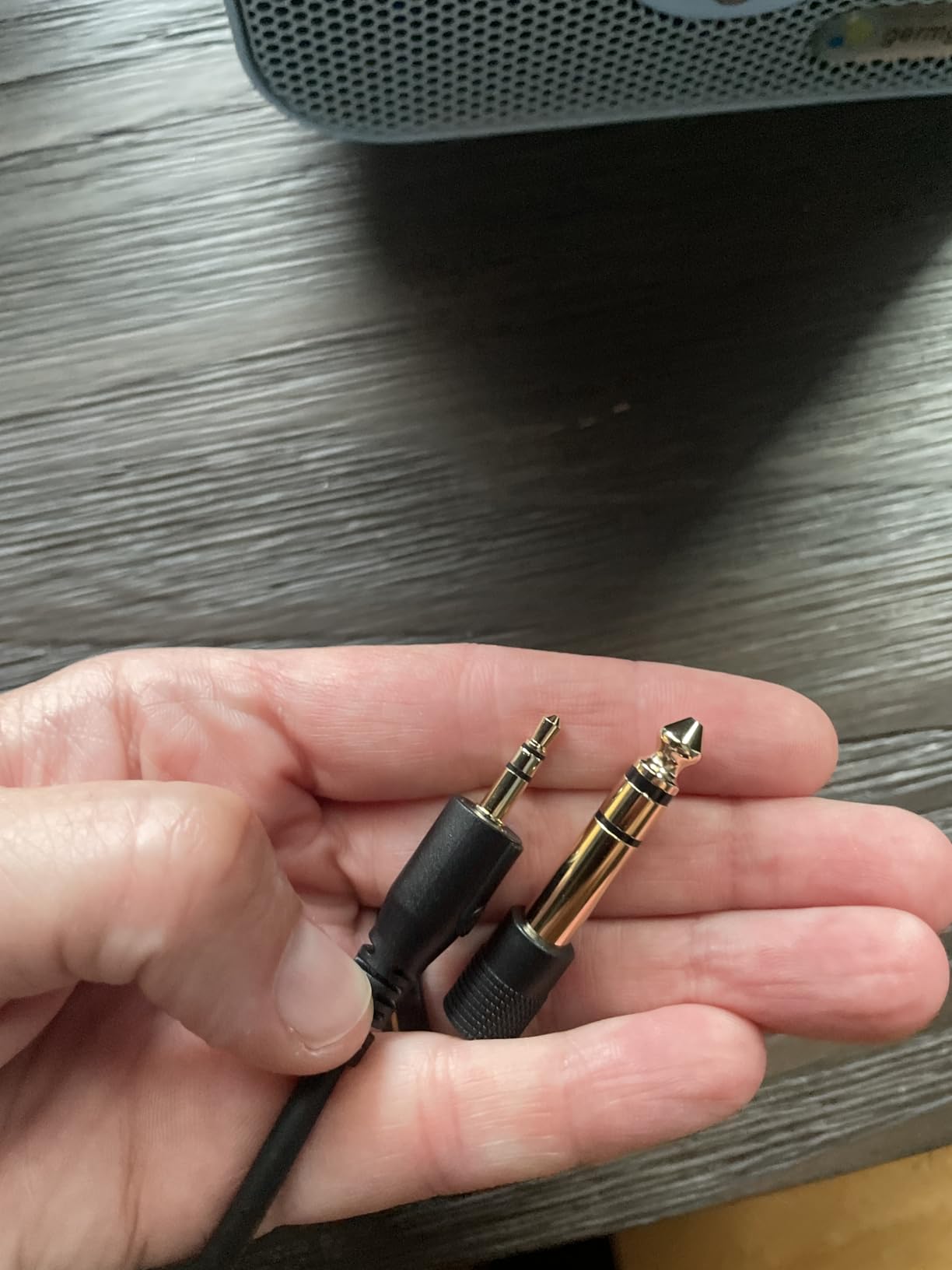
The single cable is hard-wired and exits one side of the cup. That makes field replacement possible but not as easy as a fully detachable system. The 3-meter length favors desktop use over portable.
Who should buy the ATH-M20x
Beginners building a first home studio who want a real monitoring tool without overspending. Drummers, guitarists, and bass players tracking loud sources who need isolation on a budget.
Anyone who needs a backup pair to leave at the rehearsal room or in a mic locker.
Where the M20x falls short
The plastic headband adjusters and hinge can crack if you toss them in a backpack daily. Treat them kindly and they will last years.
For mastering-grade decisions, you will eventually want a more resolving open-back like the HD 599. The M20x is a great starting reference, not a finishing tool.
4. Audio-Technica ATH-M40x — Best Neutral-Sounding Closed-Back
Audio-Technica ATH-M40x Professional Studio Monitor Headphone, Black, with Cutting Edge Engineering, 90 Degree Swiveling Earcups, Pro-Grade Earpads/Headband, Detachable Cables Included
Closed-back
40mm drivers
35 ohm impedance
Pros
- Flat neutral frequency response ideal for monitoring
- Outstanding sound isolation for the price
- Detachable cables straight and coiled included
- Excellent value vs higher-end competitors
- Solid build with metal components
- Foldable design with carrying pouch
Cons
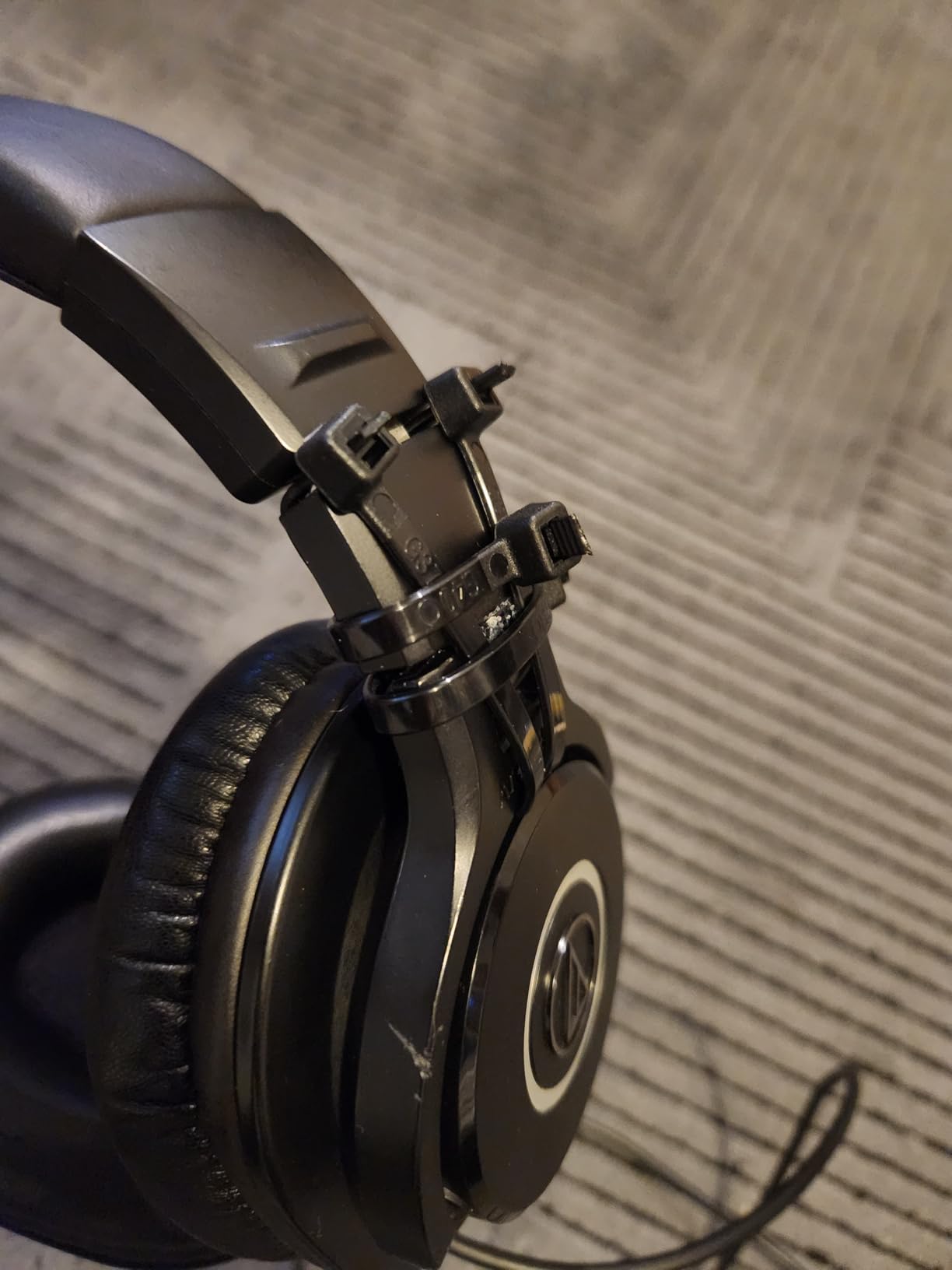
- Plastic hinge can snap if mishandled
- Clamp pressure tight at first
- Stock pads may feel small for larger ears
- Cable connection takes some getting used to
- Mostly plastic body less durable than premium
The ATH-M40x sits in an awkward middle of the M-series lineup, and that is exactly why it ends up on my desk more often than the flagship M50x for honest mixing work. With 16,906 reviews averaging 4.6 stars, the M40x has built a quiet following of producers who want the M50x sound with a flatter tuning.
The 40 mm drivers are tuned with less bass emphasis than the M50x, which means the M40x is closer to a true reference response. When I pulled up a mix I had been working on for three days, the M40x revealed a 3 dB dip around 800 Hz I had overcompensated on my nearfields. That kind of catch is what earns a pair of cans a permanent spot in the rotation.
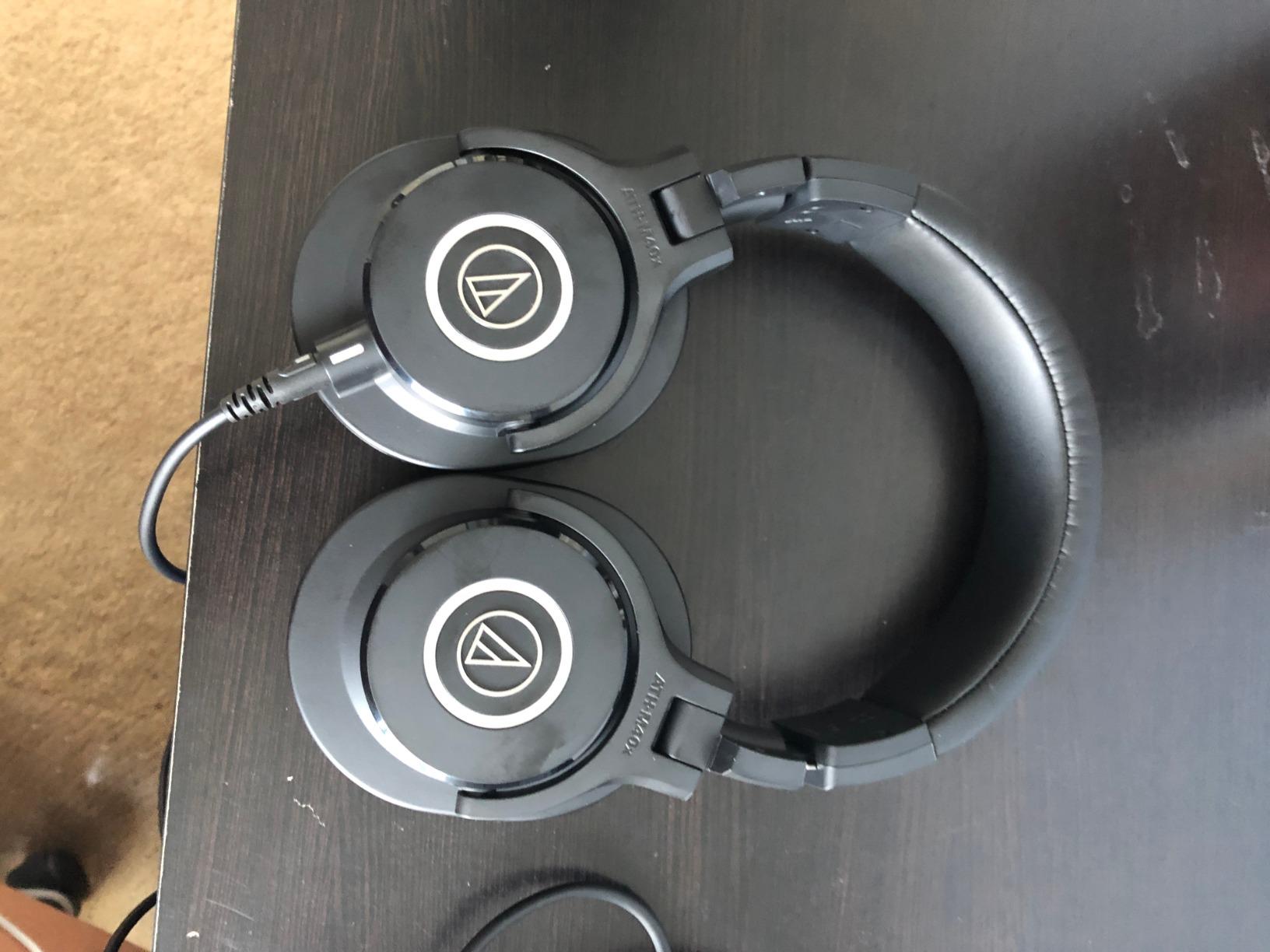
Build quality follows the same recipe as the M50x: metal yoke, swiveling cups, foldable hinges, and a carrying pouch. The detachable cable system uses a twist-lock connector and includes both a straight and a coiled cable, which is uncommon at this price point. For producers who swap between desktop and portable rigs, that versatility matters.
At 35 ohms, the M40x is one of the easiest closed-backs to drive. A laptop, phone, or modest audio interface will hit comfortable listening levels with no hiss and no need for a separate amp.
Who should buy the ATH-M40x
Producers who want a flatter alternative to the M50x for serious mixing decisions. Engineers who need a portable closed-back for remote sessions.
Anyone stepping up from an M20x who is not ready to spend on an open-back pair yet.
Where the M40x falls short
The plastic hinge at the folding point is the most common failure. Owners on r/musicproduction recommend treating the folding motion gently.
Stock ear pads are on the smaller side. If you have larger ears, plan on aftermarket pads within the first year.
5. AKG K240STUDIO — Best Semi-Open for Comfortable Mixing
AKG K240STUDIO Semi-Open Studio Headphones
Semi-open
30mm drivers
55 ohm impedance
Pros
- Flat neutral sound for studio monitoring
- Very comfortable self-adjusting headband
- Lightweight feels like nothing on the head
- Detachable cable for easy replacement
- Good soundstage for accurate mixing
- Strong value for entry-level studio use
Cons
- Semi-open design leaks sound to the room
- Not suitable for live recording with open mics
- Limited bass depth versus consumer models
- Build feels less premium
- Long cable cumbersome for portable use
The AKG K240STUDIO has been in production for decades, and the reason it is still on the AKG catalog is the self-adjusting headband. With 12,497 reviews averaging 4.5 stars, the K240STUDIO is the pair I put on a producer who has never owned studio headphones before, because the comfort curve is almost zero.
The semi-open back is the defining feature. The vents in the cup let some air through, which gives a wider soundstage than the closed-back M-series. For mixing decisions that depend on accurate panning and stereo imaging, the K240STUDIO reveals more depth and air than the M50x in the same position.
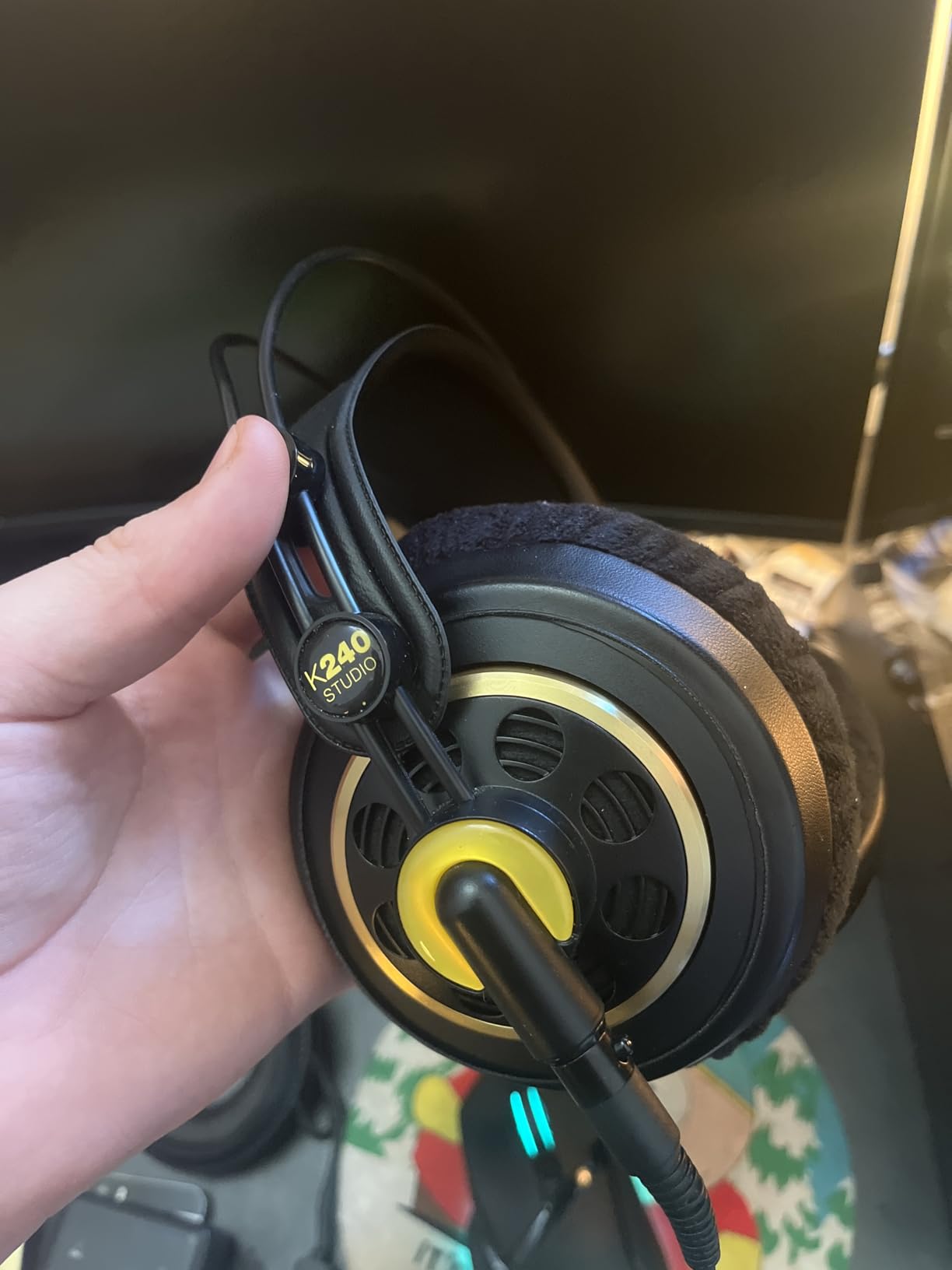
The 30 mm XXL transducers with patented Varimotion diaphragms are tuned for a flat response with controlled bass and clear highs. Tracking acoustic guitars and stringed instruments, the K240STUDIO made it easier to hear the natural resonance of the instrument body. Closed-back cans tend to over-emphasize the attack.
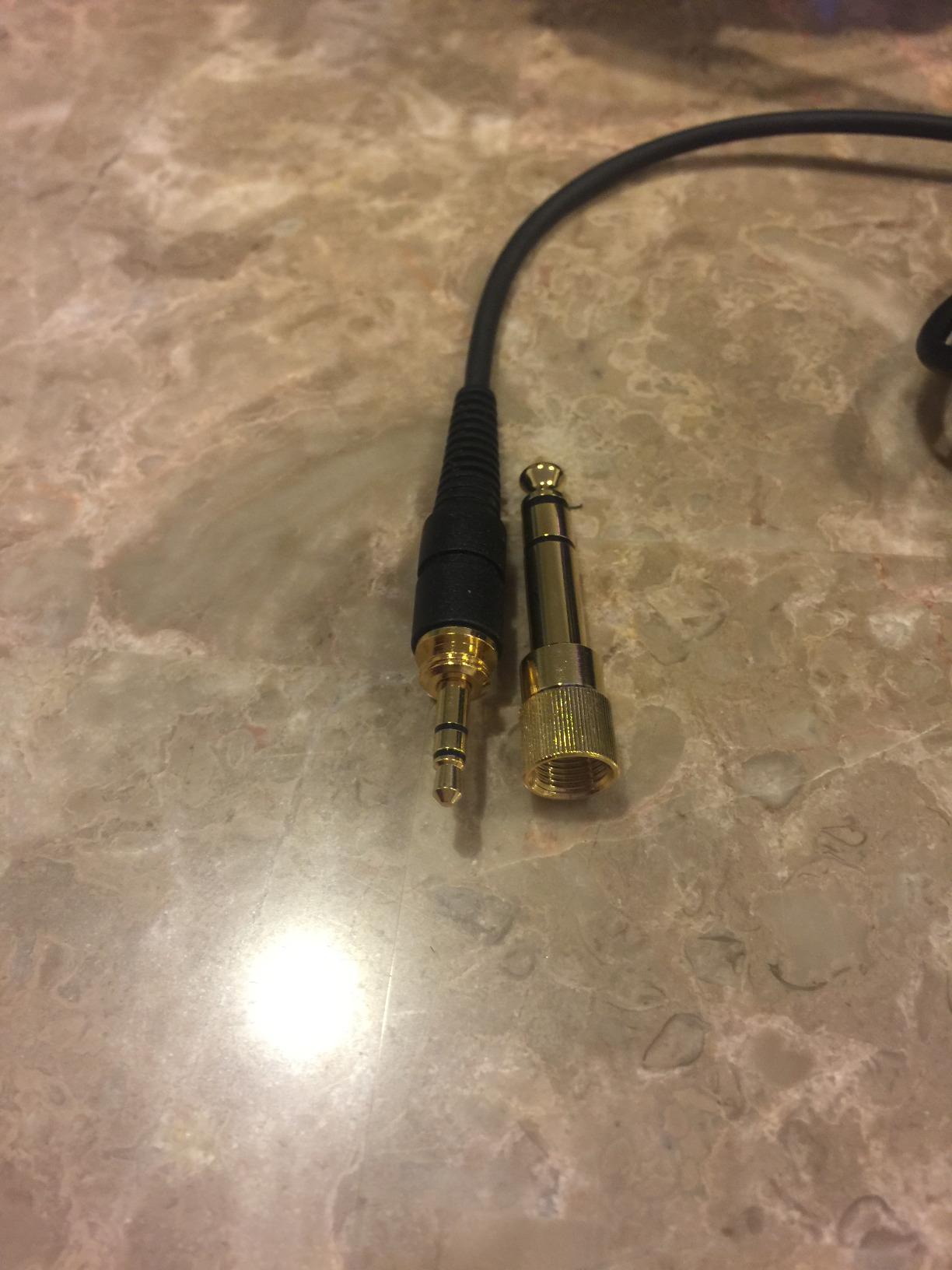
At 240 grams, the K240STUDIO is one of the lightest full-size studio headphones available. The detachable cable uses a mini-XLR connector on the cup, which means a damaged cable is a five-second fix rather than a soldering project.
Who should buy the K240STUDIO
Producers who want an affordable entry into semi-open and open-back-style imaging. Engineers mixing in untreated rooms who need the wider soundstage to compensate.
Writers and composers who wear headphones for hours and care more about comfort than isolation.
Where the K240STUDIO falls short
Sound leakage is real. Tracking vocals with the K240STUDIO on the artist’s head will bleed into the microphone. Use them for mixing and overdubs, not for live recording.
The plastic yoke and slider feel less robust than the Audio-Technica M-series or Sennheiser HD 280 Pro. Treat them gently and they last; abuse them and the headband can snap.
6. Audio-Technica ATH-M30x — Best for Beginners on a Budget
Audio-Technica ATH-M30x Professional Studio Monitor Headphones, Black
Closed-back
40mm drivers
38 ohm impedance
Pros
- Outstanding sound quality for the money
- Rich clean detailed sound with good bass
- Comfortable and lightweight for long sessions
- Collapsible design for portability
- Includes carrying pouch and 1/4 inch adapter
- Excellent value for a beginner
Cons
- L and R indicators hard to see in dim light
- Cable is not detachable
- Ear cups sit close and may feel tight
- Long cable awkward for portable use
- Plastic build less premium feeling
The ATH-M30x is the sweet spot I recommend when someone asks for “a real studio headphone, but cheaper than the M50x.” With 12,563 reviews at 4.6 stars, the M30x has earned its place between the budget M20x and the flagship M50x by delivering M50x-style clarity at a lower price.
The 40 mm drivers with rare-earth magnets are tuned for enhanced detail with strong mid-range definition. On vocal sessions, the M30x makes it easy to hear the difference between a bright condenser mic and a darker dynamic mic without exaggerating either. That kind of honest mid-range is what separates a real monitoring tool from a consumer headphone.
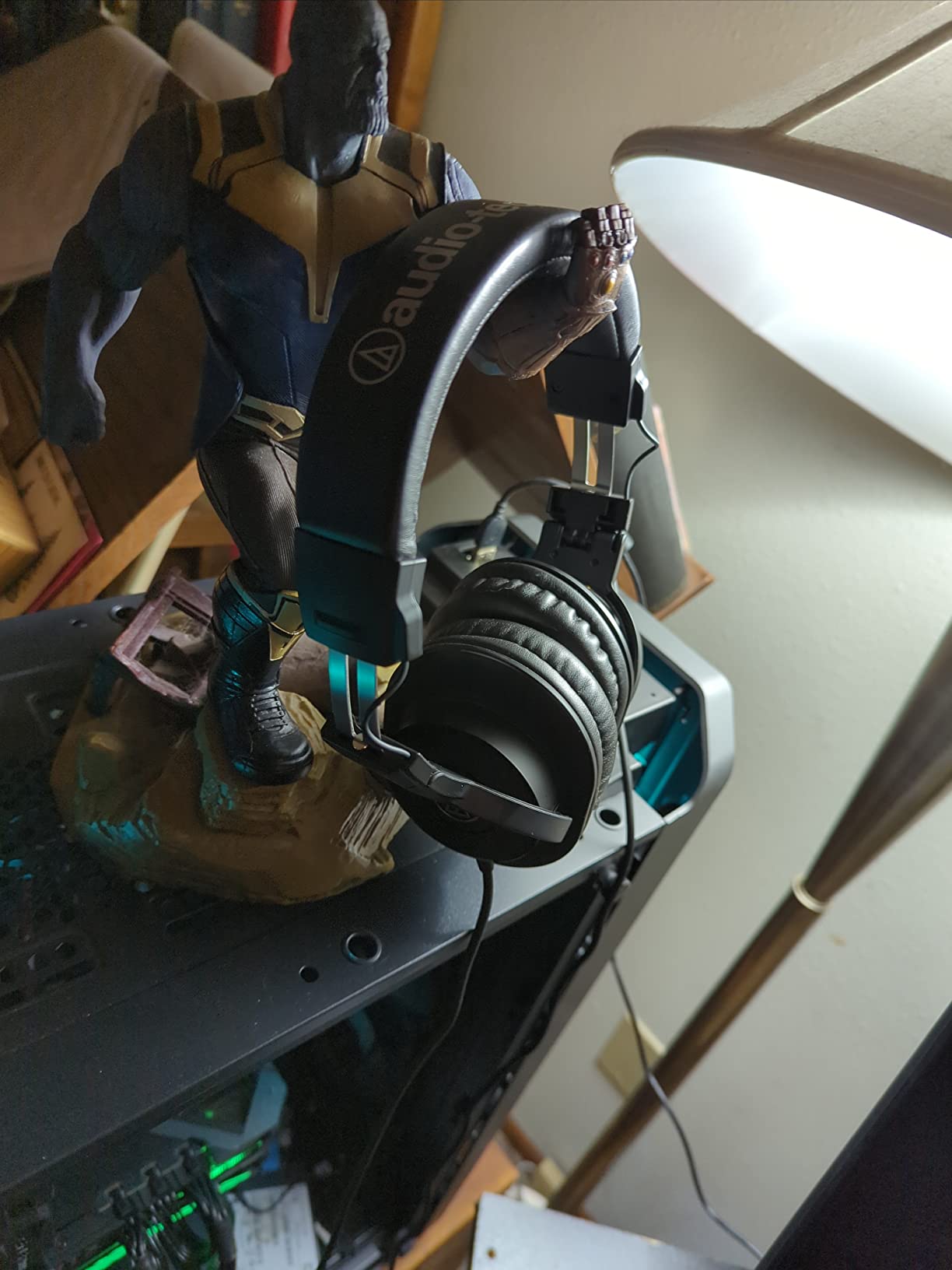
Build quality follows the M-series playbook: metal yoke, foldable hinges, circumaural pads, and a single-side cable exit. The included carrying pouch and 1/4 inch adapter make the M30x genuinely portable for producers who travel between studios.
At 38 ohms and 100 dB sensitivity, the M30x reaches comfortable levels from any source. No amp required, no hiss, no fuss.
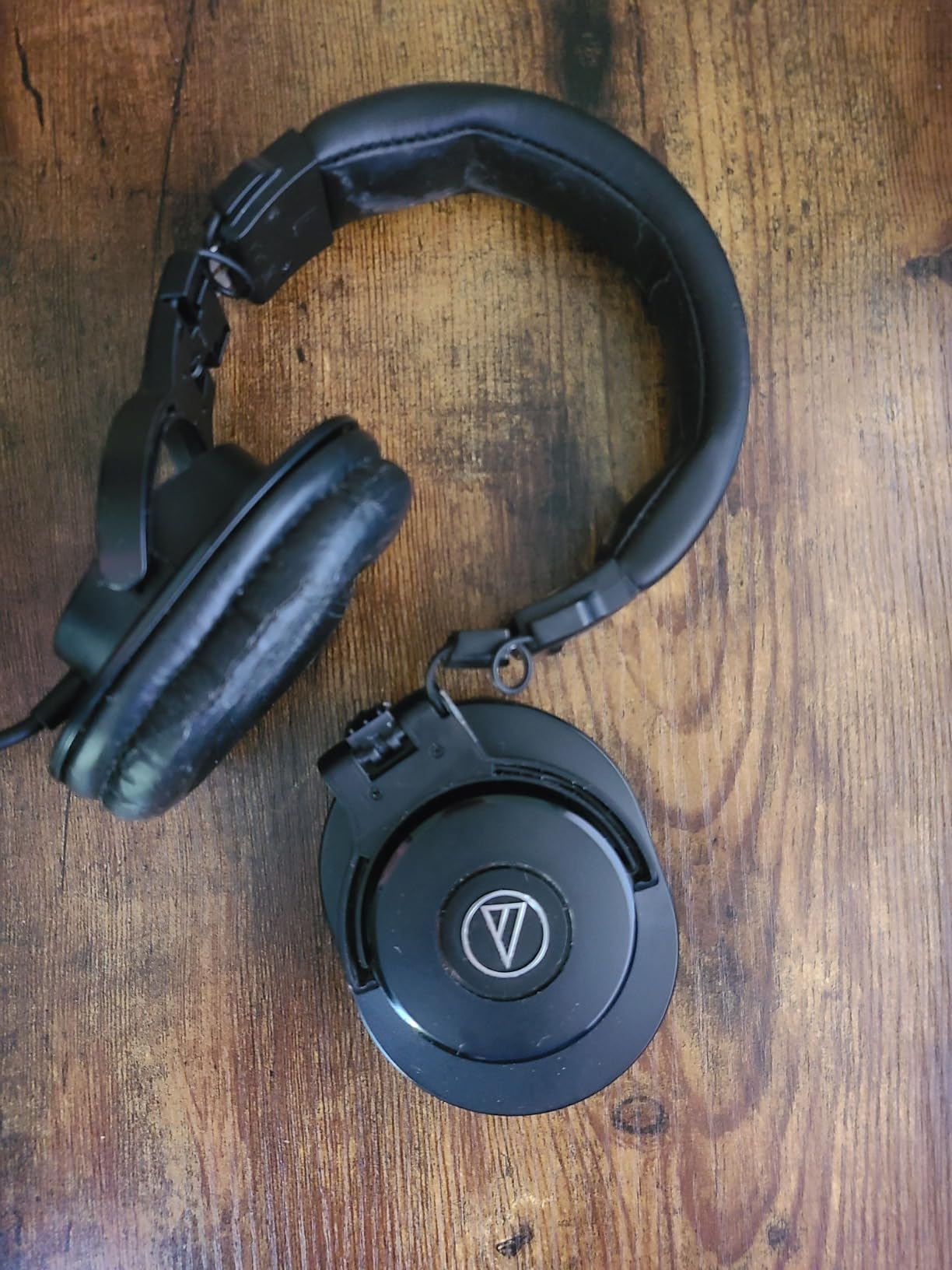
Who should buy the ATH-M30x
First-time buyers who want a real studio monitoring tool without jumping to the M50x price. Bedroom producers on a tight budget.
Mobile recording engineers who need a foldable, portable closed-back.
Where the M30x falls short
The non-detachable cable is the biggest long-term weakness. If the cable frays, the headphone is done. Plan on careful handling.
The ear cups sit closer to the ears than the M50x, so people with larger ears may want to try before committing to long sessions.
7. Sennheiser HD 280 Pro — Best for Tracking and Isolation
Sennheiser HD 280 Pro Headphone, Black
Closed-back
64 ohm impedance
32 dB attenuation
Pros
- Outstanding passive noise isolation up to 32 dB
- Clean natural balanced sound reproduction
- Comfortable once broken in
- Replaceable ear pads and headband padding
- Collapsible design for transport
- Reliable for studio and DJ use
Cons
- Tight clamp pressure when new
- Plastic headband can crack over time
- Heavy coiled cable adds weight
- Non-detachable cable limits replacement
- Limited bass emphasis for bass-heavy preferences
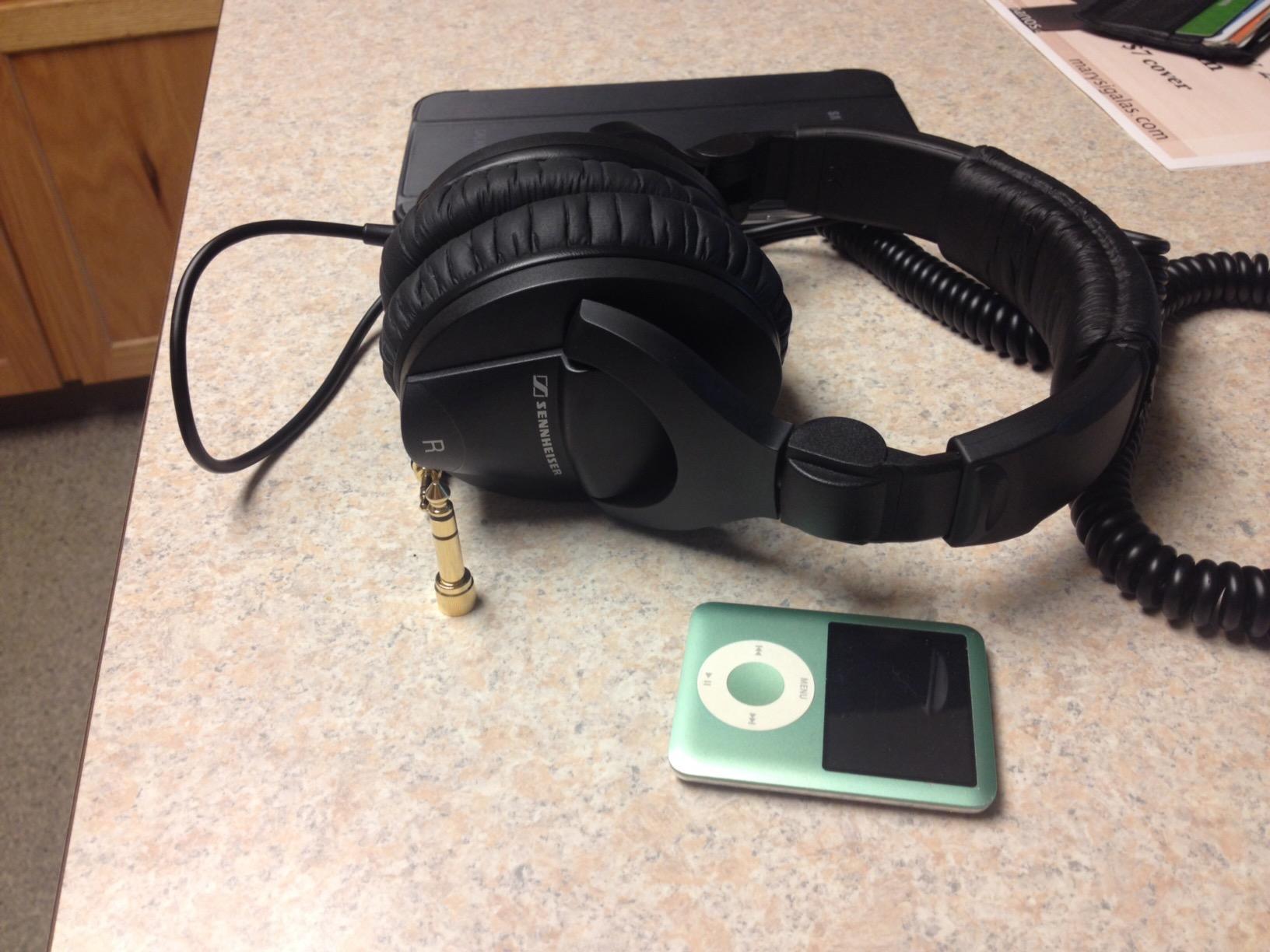
The Sennheiser HD 280 Pro is the pair I grab when isolation is the priority. With 11,432 reviews averaging 4.5 stars, the HD 280 Pro is the workhorse closed-back that lives behind the drums at live shows, in club DJ booths, and in field recording kits.
The 32 dB of passive attenuation is the headline spec. When I tracked vocals in a room with a loud computer fan, the HD 280 Pro cut enough noise that the singer could monitor a click track without bleeding the fan into the condenser mic. For drummers tracking with a click, the isolation is even more important.
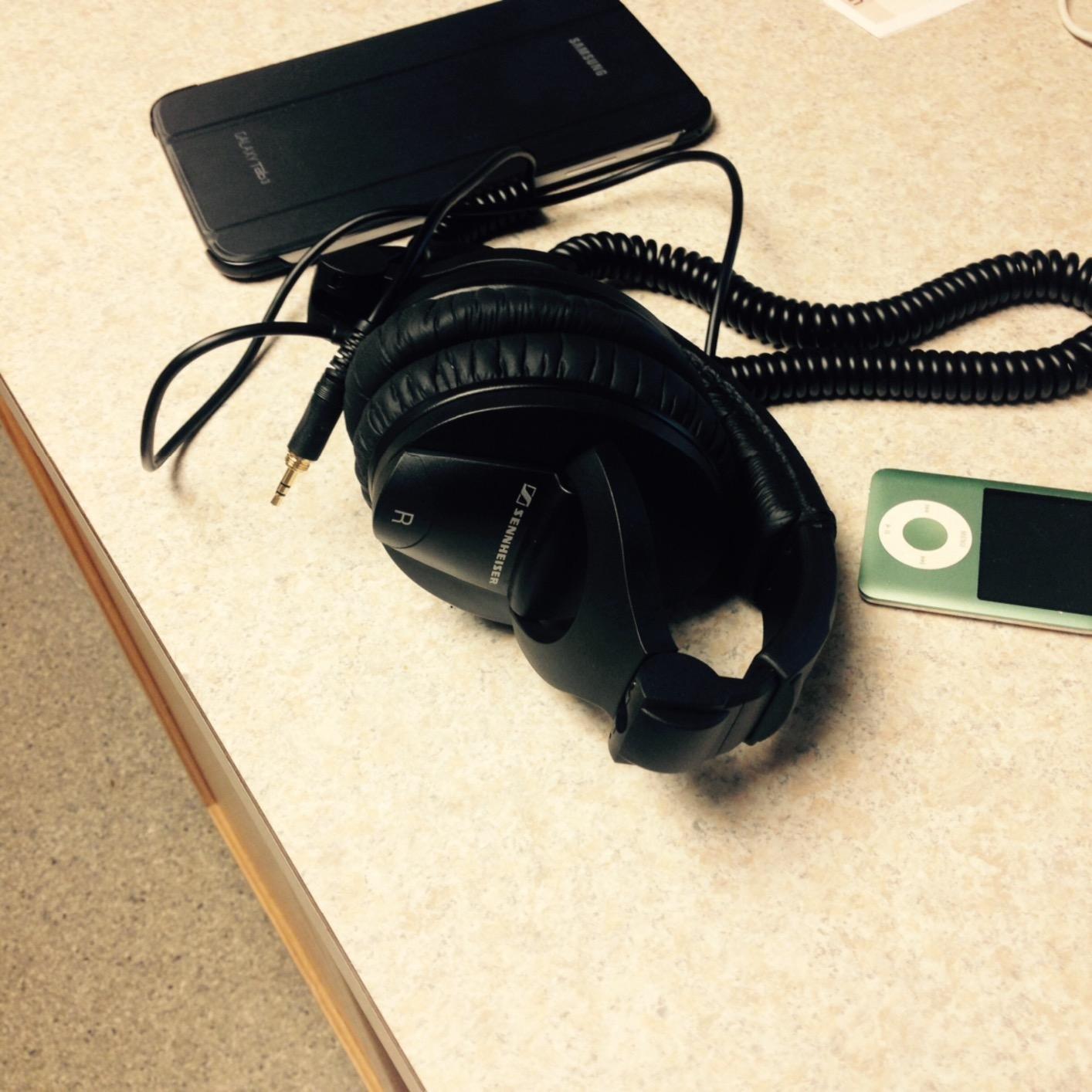
Sennheiser’s tuning is famously clean and natural. The HD 280 Pro delivers a balanced frequency response that does not flatter or punish. The midrange is particularly honest, which makes the HD 280 Pro a strong choice for vocal editing and dialogue work where sibilance and proximity effect need careful handling.
The replaceable earpads and headband padding are a real differentiator. Most closed-back studio headphones are disposable once the pads wear out. The HD 280 Pro can be serviced with inexpensive aftermarket pads, which extends its useful life to 10+ years.
Who should buy the HD 280 Pro
Tracking engineers and producers who need serious passive isolation. DJs and live performers monitoring loud stages.
Anyone who plans to own their headphones for a decade and wants to service them rather than replace them.
Where the HD 280 Pro falls short
Out of the box the clamp is aggressive. Plan on a one to two-week break-in period before the cups relax enough for long sessions.
The coiled cable is heavy. Some users find it pulls the headphone off-center during long sessions. The cable is also non-detachable, so a cable failure ends the headphone’s life.
8. Sennheiser HD 599 — Best Open-Back for Mastering
Sennheiser HD 599 Open-Back Wired Audiophile Headphones, Ivory
Open-back
50 ohm impedance
Velour pads
Pros
- Audiophile-grade open natural soundstage
- Luxurious velour ear pads for long sessions
- Padded headband comfortable for extended wear
- Two detachable cables included
- Premium design with aluminum components
- Excellent dynamics with low distortion
Cons
- Open-back leaks sound to the room
- No noise cancellation for loud environments
- Ivory color shows wear over time
- Not portable due to size and open design
The Sennheiser HD 599 is the open-back I recommend to producers who want to step into serious mastering decisions without spending HD 800 S money. With 6,133 reviews averaging 4.6 stars, the HD 599 brings Sennheiser’s audiophile engineering to a price that home-studio producers can actually afford.
The open-back design is the entire point. The cups vent air freely, which gives the HD 599 a wide, natural soundstage that closed-backs simply cannot match. When I A/B’d a dense metal mix between the HD 599 and the M50x, the HD 599 separated the rhythm guitars from the lead vocals in a way that made my panning decisions much easier. Stereo imaging is the HD 599’s strongest suit.
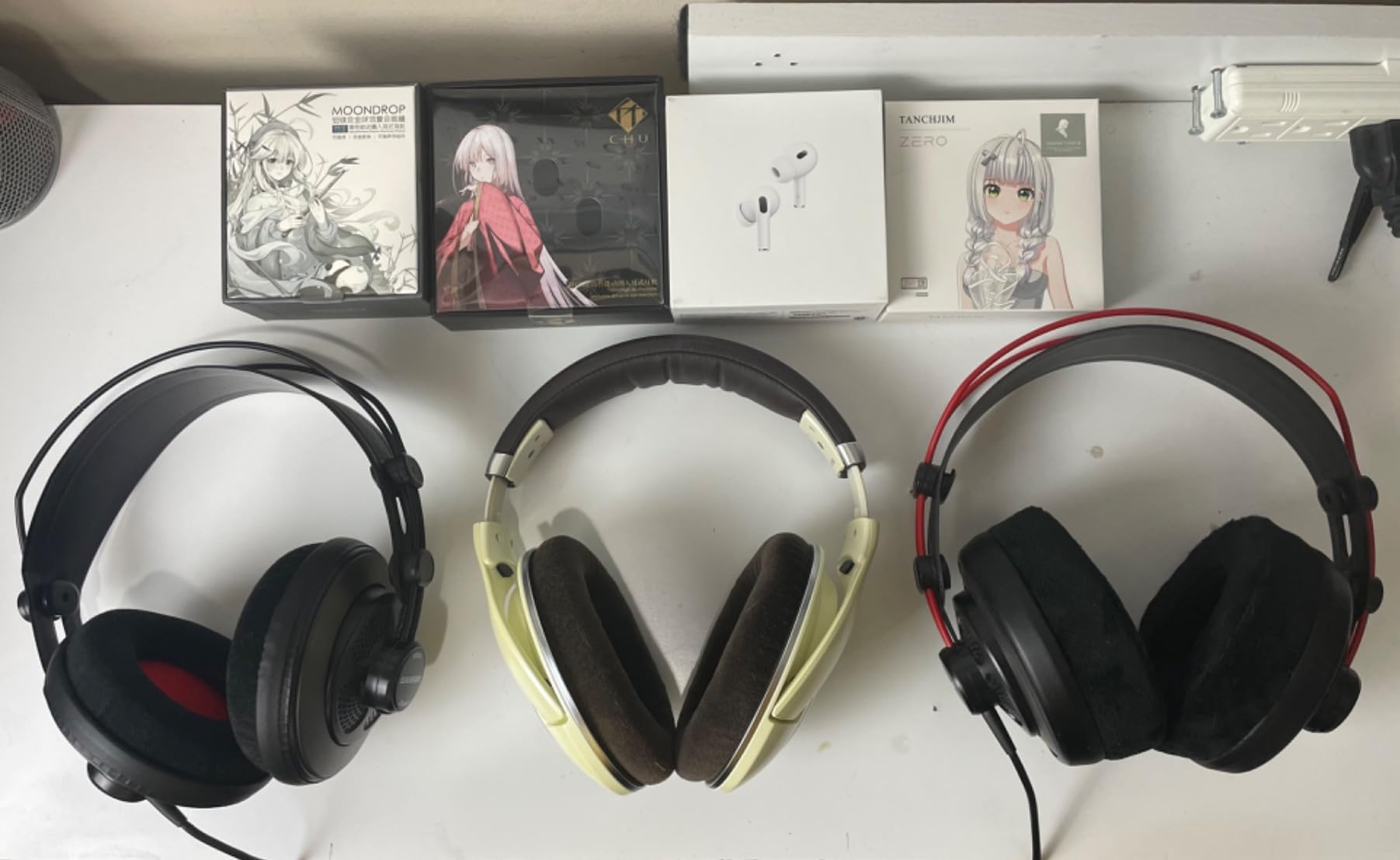
The Sennheiser-engineered transducers with aluminum voice coils deliver low distortion and excellent dynamics. Bass is tight and controlled rather than boosted, which means the HD 599 will not flatter a weak low end. Mastering engineers trust this voicing because it does not lie.
Comfort is best-in-class. The velour ear pads and padded headband let the HD 599 disappear on the head during multi-hour mastering sessions. The included 3-meter cable with 6.3 mm jack and the additional 1.2-meter cable with 3.5 mm jack cover both desktop and portable use cases.
Who should buy the HD 599
Mixing and mastering engineers who want an affordable open-back reference. Audiophile-leaning producers who care most about stereo imaging and detail retrieval.
Anyone with a quiet treated room who wants to hear their music the way the engineer heard it.
Where the HD 599 falls short
Open-back leakage means you cannot use the HD 599 for tracking. The artist in the booth will hear every backing track bleed through the headphones.
The ivory color and brown stitching look elegant in a controlled room but show dirt and wear faster than the all-black closed-backs above.
How to Choose the Best Headphones for Studio Monitoring
Choosing the best headphones for studio monitoring is less about chasing specs and more about matching design and voicing to your room, your sources, and your workflow. Below are the five principles our team uses when recommending pairs to producers.
Open-back vs closed-back: pick the right design first
Open-back headphones let air through the cup. That gives a wider soundstage, better stereo imaging, and a more natural presentation, but it also leaks sound in and out of the cup. Open-back is the right choice for mixing, mastering, and editing in a quiet room.
Closed-back headphones seal the cup. They isolate the artist from room noise, prevent backing tracks from bleeding into microphones, and let you work in loud untreated rooms. Closed-back is the right choice for tracking vocals, drums, and live instruments.
The professional standard is to own one of each. The HD 599 above is our open-back pick. The M50x and HD 280 Pro are our closed-back picks. Together they cover nearly every studio job.
What is the 60 rule for headphones?
The 60 percent rule for studio monitoring is a listening-volume guideline: keep your monitoring level at or below 60 percent of your interface or amp’s maximum output. Listening louder than that for extended sessions causes ear fatigue, hearing damage, and bad mix decisions because your ears adapt to the loudness and your frequency perception shifts. Treat 60 percent as a working ceiling, not a target.
Impedance and amplifier pairing
Impedance is the electrical resistance of the headphone, measured in ohms. Lower-impedance cans (under 80 ohms) like the M50x (38 ohm), M40x (35 ohm), and M20x (47 ohm) play loud enough from a laptop, phone, or entry-level audio interface.
Higher-impedance cans like the Beyerdynamic DT 770 Pro 250 Ohm or the Sennheiser HD 600 (300 ohm) sound thin and quiet when plugged straight into a laptop. They need a dedicated headphone amplifier to reach their full dynamic range.
If you already own a quality audio interface with a built-in headphone amp (most modern interfaces do), even 80-ohm cans like the Sony MDR-7506 (63 ohm) will play to spec. Only reach for a dedicated amp when you have a specific pair that demands it.
Driver types: dynamic vs planar magnetic vs AMT
Dynamic drivers are the workhorse. Every pair in this roundup uses a dynamic driver. They are inexpensive, reliable, and easy to manufacture.
Planar magnetic drivers use a thin diaphragm with embedded conductors. They tend to deliver tighter bass, faster transient response, and lower distortion than dynamics at higher prices. The Audeze MM-100 and Hedd Heddphone Two are common planar picks for studios willing to spend more.
AMT (Air Motion Transformer) drivers, used in the Heddphone Two, fold and squeeze air rather than pushing it like a piston. They reproduce transients with exceptional speed, which makes them favorites for critical mastering work.
For the budget tiers we cover here, dynamic drivers are the right call. Step up to planar or AMT when your room, your monitors, and your mixes demand it.
Comfort, weight, and pad material
A studio headphone that hurts after an hour is useless. Look for circumaural (over-ear) cups that fully enclose the ear without pressing on it. Velour pads breathe better than pleather, which matters during long summer sessions. Aim for under 350 grams if you wear them for hours at a time.
The AKG K240STUDIO at 240 grams and the HD 280 Pro at 285 grams are the comfort leaders in this list. The M50x at 290 grams is the best balance of comfort and isolation. The HD 599 at 710 grams is the heaviest, but the velour pads spread the weight well.
Wired vs wireless for studio work
Wireless introduces compression, latency, and unpredictable dropouts that all harm monitoring decisions. Every pair in this roundup is wired for a reason. Latency on Bluetooth and even on low-latency codecs is enough to confuse timing-sensitive decisions like compressor attack and reverb tails. Stick with wired.
If you want wireless for casual listening, keep a separate pair of consumer headphones for that. Studio work belongs on a wired connection.
Caring for studio headphones
Replace ear pads every one to two years. Pleather pads harden and flake, velour pads compress and lose seal. The HD 280 Pro, M50x, M40x, and HD 599 all have inexpensive aftermarket pads available.
Coil cables loosely. Tight wrapping fatigues the internal conductors and is the most common cause of cable failure on the MDR-7506, M20x, and M30x.
Store headphones on a stand, not on the headband of your audio interface or guitar. Headband stress over years is what cracks the Sennheiser HD 280 Pro plastic slider and the M40x hinge.
Budget tiers and what to expect
Entry tier: the ATH-M20x, ATH-M30x, MDR-7506, AKG K240STUDIO, and HD 280 Pro all live here. These are honest, reliable closed-back and semi-open tools that will outlast cheap consumer headphones.
Mid tier: the ATH-M40x, ATH-M50x, and HD 599 open up better detail retrieval and the option of open-back design.
Advanced tier: this range brings in the HD 600, HD 650, DT 770 Pro X, Neumann NDH 20, and AKG K371 for serious reference work.
Mastering tier: HD 800 S, Hedd Heddphone Two, Audeze LCD series, and Focal Utopia are reserved for mastering rooms and critical listening.
Studio monitors vs headphones
Headphones and studio monitors answer different questions. Monitors tell you how a mix sits in a room with crosstalk, room modes, and stereo speaker placement. Headphones tell you what is actually happening in the stereo file without room interference.
Most professional engineers use both. Monitors for broad balance decisions and headphones for fine detail work, edit precision, and catching problems the room hides. In an untreated bedroom studio, headphones often do more work than monitors.
Why studio headphones matter for guitarists and music producers
On gaia-epicus.com, our audience is heavy on guitarists, bassists, and metal-leaning producers. Studio headphones let you re-amp guitars, double-track solos, and sculpt distorted tones without waking the neighbors. Closed-back isolation also means the microphone does not capture your amp sim or IR loader when tracking a real cab.
For tight palm-muted chugs, double-kick drums, and detuned riffs, a flat closed-back like the M50x or HD 280 Pro makes it easier to catch the mud in the low-mids before it ruins the master. For ambient clean tones and acoustic sessions, the wider soundstage of the HD 599 or K240STUDIO reveals the natural room sound of the recording space.
Frequently Asked Questions
What are the best headphones for studio monitoring?
For most producers the Audio-Technica ATH-M50x is the best all-around studio monitor headphone because it pairs a flat frequency response with strong isolation, a 38-ohm impedance that works without an amp, and a build that survives years of daily use. For open-back mastering work the Sennheiser HD 599 delivers a wider soundstage at an affordable price, and for tracking in loud rooms the Sennheiser HD 280 Pro offers 32 dB of passive isolation.
What is the 60 rule for headphones?
The 60 percent rule for studio monitoring is a listening-volume guideline. Keep your monitoring level at or below 60 percent of your interface or amp’s maximum output to avoid ear fatigue, hearing damage, and bad mix decisions caused by your ears adapting to loud playback.
Is it better to mix with headphones or studio monitors?
Both. Studio monitors give you realistic spatial cues and room interaction for broad balance decisions, while headphones give you precise detail and edit-level accuracy without room interference. Most professional engineers use monitors for the broad strokes and switch to closed-back or open-back headphones for fine detail work, especially in untreated rooms.
Do studio headphones need an amp?
Lower-impedance cans under 80 ohms like the Audio-Technica ATH-M50x, Sony MDR-7506, and AKG K240STUDIO play loud enough from a laptop or audio interface without a dedicated amp. Higher-impedance cans above 150 ohms like the Sennheiser HD 600 or Beyerdynamic DT 770 Pro sound thin and quiet without a headphone amplifier.
What type of headphones are best for studio recording?
Closed-back headphones are best for studio recording because they isolate the artist’s ears from room noise and prevent backing tracks from bleeding into the recording microphone. The Sony MDR-7506, Audio-Technica ATH-M50x, and Sennheiser HD 280 Pro are the most-used closed-backs in professional studios.
How much do studio-grade headphones cost?
Studio-grade headphones start around the entry-level tier with the Audio-Technica ATH-M20x and AKG K240STUDIO and scale into the mid range with the Audio-Technica ATH-M50x, Sennheiser HD 599, and Sennheiser HD 280 Pro. The premium tier covers audiophile and mastering options like the Sennheiser HD 800 S and Audeze LCD series.
Final Verdict: Which Studio Monitor Headphones Should You Buy?
The best headphones for studio monitoring depend on which studio job you are doing. For all-around tracking and reference mixing, the Audio-Technica ATH-M50x is our Editor’s Choice. For the cheapest path into a real monitoring tool, the Audio-Technica ATH-M20x earns its keep. For the deepest tracking isolation, the Sennheiser HD 280 Pro. For open-back mastering, the Sennheiser HD 599.
Our team keeps two pairs at every workstation: one closed-back for tracking and editing, and one open-back for the final mix bus. If you can afford only one pair in 2026, pick the M50x. If you can stretch to two, add the HD 599. Together they cover everything from re-amped guitars to vocal production to podcast editing without compromise.