
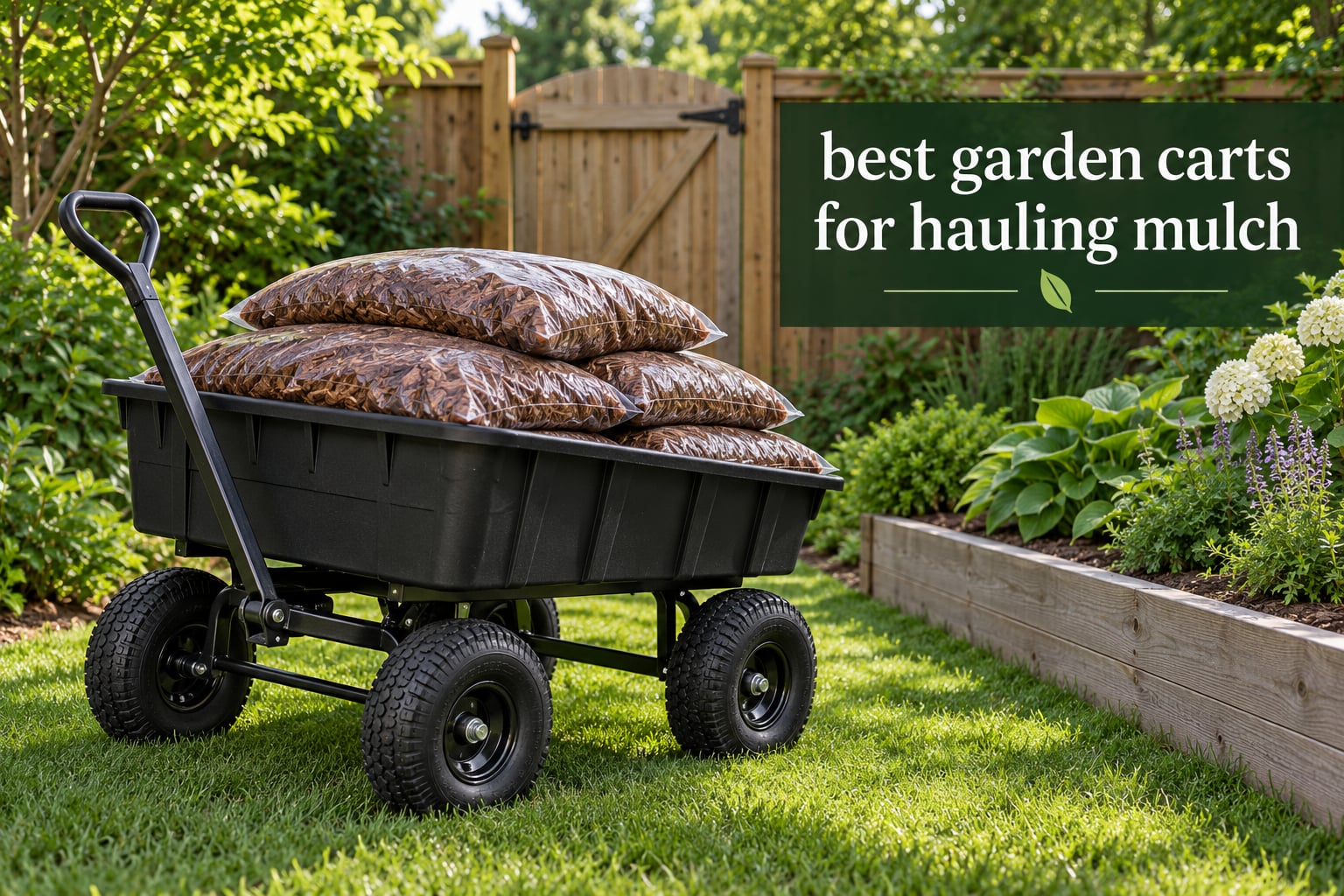
The best garden carts for hauling mulch are the ones sized by cubic feet, not by pound ratings, and the cart we keep coming back to is the Gorilla Carts Poly Dump Cart at 4 cubic feet, which carries two 2 cubic foot bags per trip and tips its bed with one hand. A 20 bag delivery is 40 cubic feet of material and roughly 780 pounds, which is ten cart pulls instead of an entire morning of wheelbarrow runs.
That volume-first rule is the whole reason most cart shopping goes wrong. Manufacturers rate carts for 600, 900, or 1200 pounds, but bagged mulch weighs about 19.5 pounds per cubic foot, so a 4 cubic foot tub fills long before it reaches any of those numbers. Shop by the bed size in cubic feet and count your bags in whole numbers.
We spent weeks with these ten carts across a mix of driveways, side gates, and lawn edges, loading them with bagged mulch, bagged topsoil, and compost to see how they behave when the load is real rather than theoretical. What follows is what we learned, ranked by how much mulch each one actually moves per trip and how well it survives being dumped.
Table of Contents
Top 3 Garden Carts for Hauling Mulch (October 2026)

Gorilla Carts Poly Dump…
- 4 cu ft poly tub
- 600 lb rated
- Patented quick-release dump
- Pneumatic tires

Gorilla Carts Dump Cart 7…
- 7 cu ft poly tub
- 1200 lb rated
- 13-inch flat-free tires
- 39.5 x 27 inch bed

VEVOR 900 lb Steel Garden Cart
- 900 lb rated
- 3.45 cu ft bed
- Removable mesh sides
- 10-inch rotating wheels
The Best Garden Carts for Mulch at a Glance in 2026
| Product | Specs | Action |
|---|---|---|
| Gorilla Carts Poly Dump Cart 4 Cu Ft |
|
Check Latest Price |
| Gorilla Carts Dump Cart 7 Cu Ft |
|
Check Latest Price |
 Gorilla Carts Steel Utility Cart Gorilla Carts Steel Utility Cart |
|
Check Latest Price |
 VEVOR 1200 lb Poly Dump Cart VEVOR 1200 lb Poly Dump Cart |
|
Check Latest Price |
| VEVOR 900 lb Steel Garden Cart |
|
Check Latest Price |
 BILT HARD 900 lb Poly Dump Cart BILT HARD 900 lb Poly Dump Cart |
|
Check Latest Price |
 VIVOHOME 880 lb Mesh Steel Cart VIVOHOME 880 lb Mesh Steel Cart |
|
Check Latest Price |
 BILT HARD 880 lb Garden Cart BILT HARD 880 lb Garden Cart |
|
Check Latest Price |
 WORX Aerocart 8-in-1 WG050 WORX Aerocart 8-in-1 WG050 |
|
Check Latest Price |
 HIKEMOON 34 Inch Folding Wagon HIKEMOON 34 Inch Folding Wagon |
|
Check Latest Price |
1. Gorilla Carts Poly Dump Cart 4 Cu Ft – Best Overall for Mulch
Gorilla Carts Poly Dump Cart, 600 lb. Capacity, 4 Cu ft, Quick Release Dump
4 cu ft poly bed
600 lb rated load
Pneumatic tires
30.2 lb empty
Pros
- Rust-resistant poly bed with a powder-coated steel frame
- Patented quick-release dump handle
- Four wheels stay balanced on uneven lawn
- Pneumatic tires roll over roots and gravel
Cons
- 600 lb rating is lower than several steel carts
- Poly bed scratches and flexes more than steel
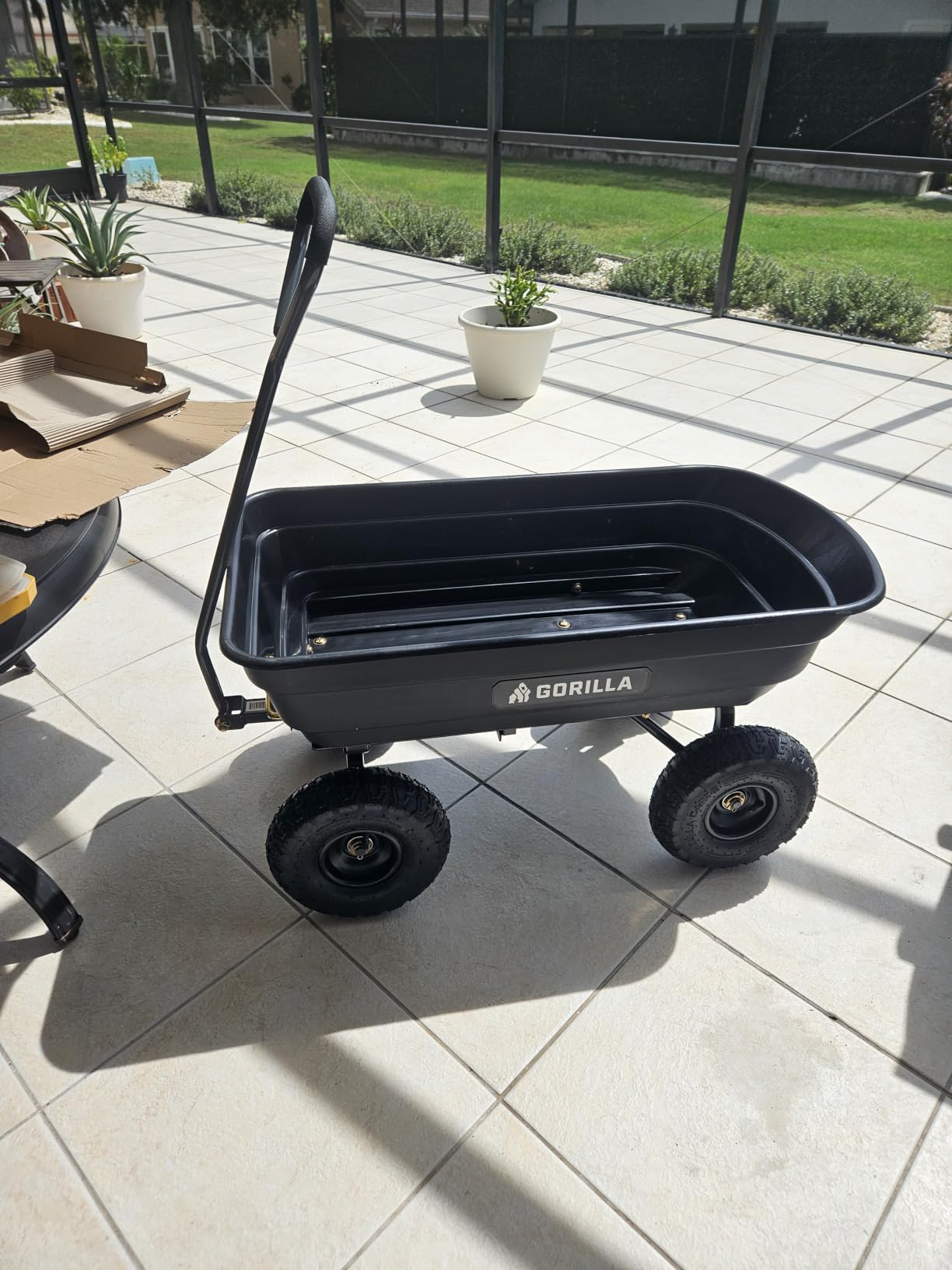
This is the cart we ended up using most, and the reason is the dump mechanism more than the bed. Two 2 cubic foot bags of mulch sit in the tub, you squeeze the release, and the load slides out at the bed edge without you lifting anything.
Over a month of pulling it between a driveway pile and a set of raised beds, the quick-release handle was the part that changed how the work felt. Nothing tipped, nothing spilled, and the poly tub wiped clean with a hose after a wet spring week.
The bed measures 36 inches long by 20 inches wide inside, and the whole cart stands 38.7 inches deep, 20 inches wide, and 19.5 inches high. That 20 inch width is the number to measure your side gate against before you buy anything in this roundup.
The 600 pound rating sounds modest next to the 900 and 1200 pound carts here, and with mulch it is genuinely more than enough. Two cubic feet of bagged mulch is about 39 pounds, so a full tub is under 100 pounds of load.
One caution worth repeating from owners who compared this cart against cheaper look-alikes: the poly bed is the weak point if you routinely drop round stones or bricks into it, since the sides flex outward. For mulch, topsoil, and compost we had no problems.
What this cart does well on a mulch job
It turns a 20 bag delivery into ten loads of two bags each, and every one of those loads sits well under the tire and frame limits. The four wheel layout means you can pull it backward through a tight gate without it swinging wide.
The 30.2 pound empty weight is light enough to lift into a truck bed or reposition across a yard without help, which matters when a job is only four bags.
Where it is the wrong choice
If your material is wet mulch by the pallet, topsoil, or yard debris by the ton, the 4 cubic foot tub means more trips than a 6 or 7 cubic foot bed. Buy the larger poly cart instead if your project is measured in dozens of bags.
The poly sides also will not survive years of rock and paver work. For mulch duty this is the right trade, and for someone hauling bricks weekly it is not.
2. Gorilla Carts Dump Cart 7 Cu Ft – Best for Large Mulch Loads
Gorilla Carts Dump Garden Cart, 7 Cu Ft,1200 lb Capacity, No-Flat Tires
7 cu ft poly tub
1200 lb rated load
13-inch flat-free tires
54.3 lb empty
Pros
- 7 cubic foot poly tub in a 39.5 by 27 inch bed
- 1200 lb rating handles wet mulch and soil
- 13-inch flat-free tires need no inflation
- Quick-release dump unloads without manual tilting
Cons
- Weighs 54.3 pounds empty
- so it takes real effort to pull
- Flat-free tires ride hard on very rocky ground
This is the one we reach for when a project is measured in more than 20 bags. The 39.5 by 27 inch bed holds three 2 cubic foot bags, and on a wet delivery the 1200 pound rating gives real headroom.
It carries the highest average rating of the ten carts we looked at, and after several full loads of wet bagged mulch and compost we did not see the frame flex or the bed deform. Empty, it takes real effort to pull, which is the honest trade for the extra volume.
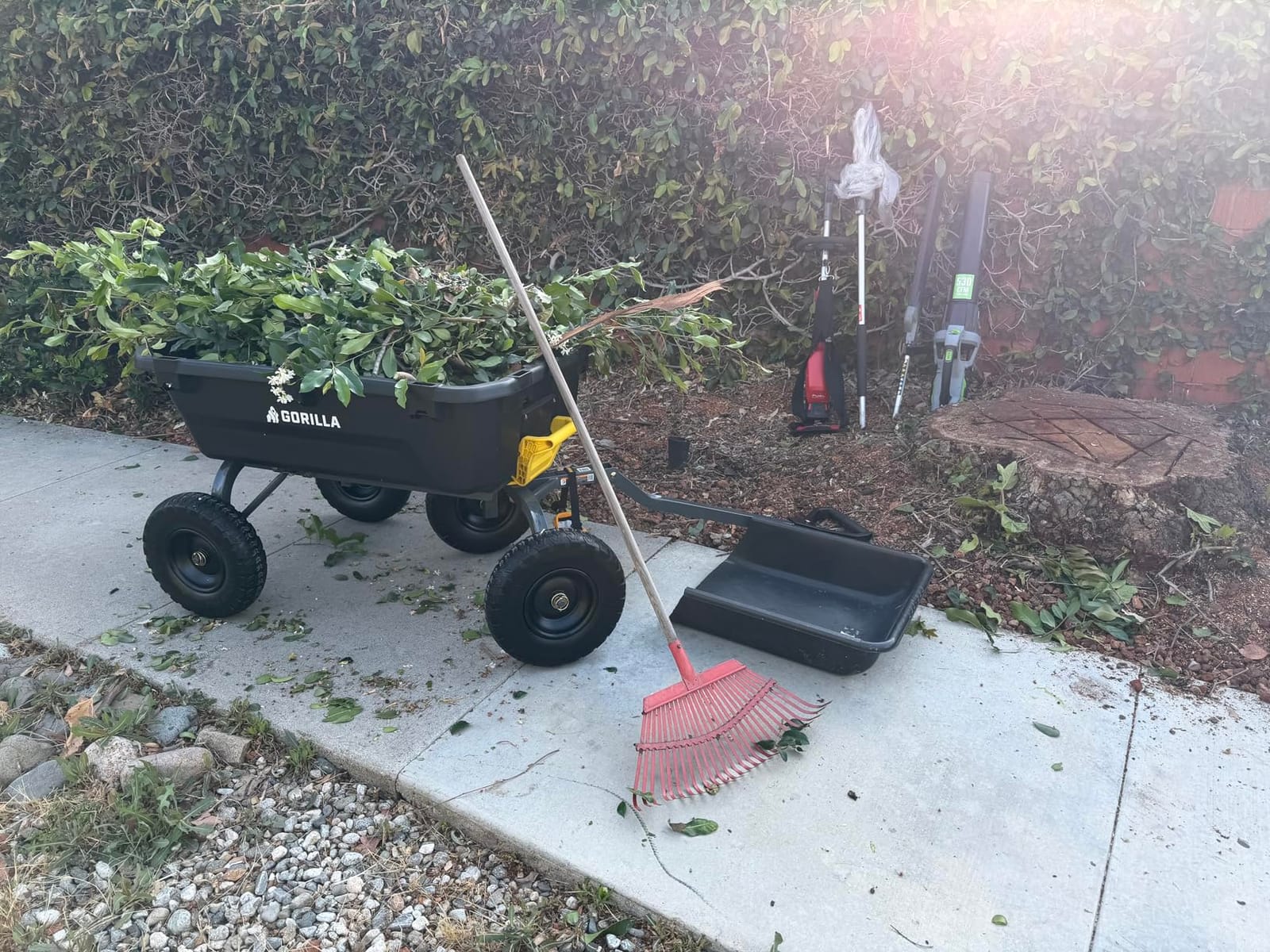
At 45.3 inches deep, 26 inches wide, and 28.7 inches high, this cart is wide. If your side gate is under 26 inches of clear width, this will not go through it and no amount of clever pulling will fix that.
The 13 inch flat-free tires are the biggest design choice. You will never find a nail in them, which suits a yard full of broken branches and dropped staples, at the cost of a harsher ride over roots and loose stone than a pneumatic tire gives you.
It comes with a 1-year limited warranty. Long-term owners of the poly dump carts in this line describe them as the most recommended brand in the category, and that durability reputation is about the design rather than one model, so the 4 cubic foot and 7 cubic foot tubs age similarly in our experience.
When the bigger cart earns its extra weight
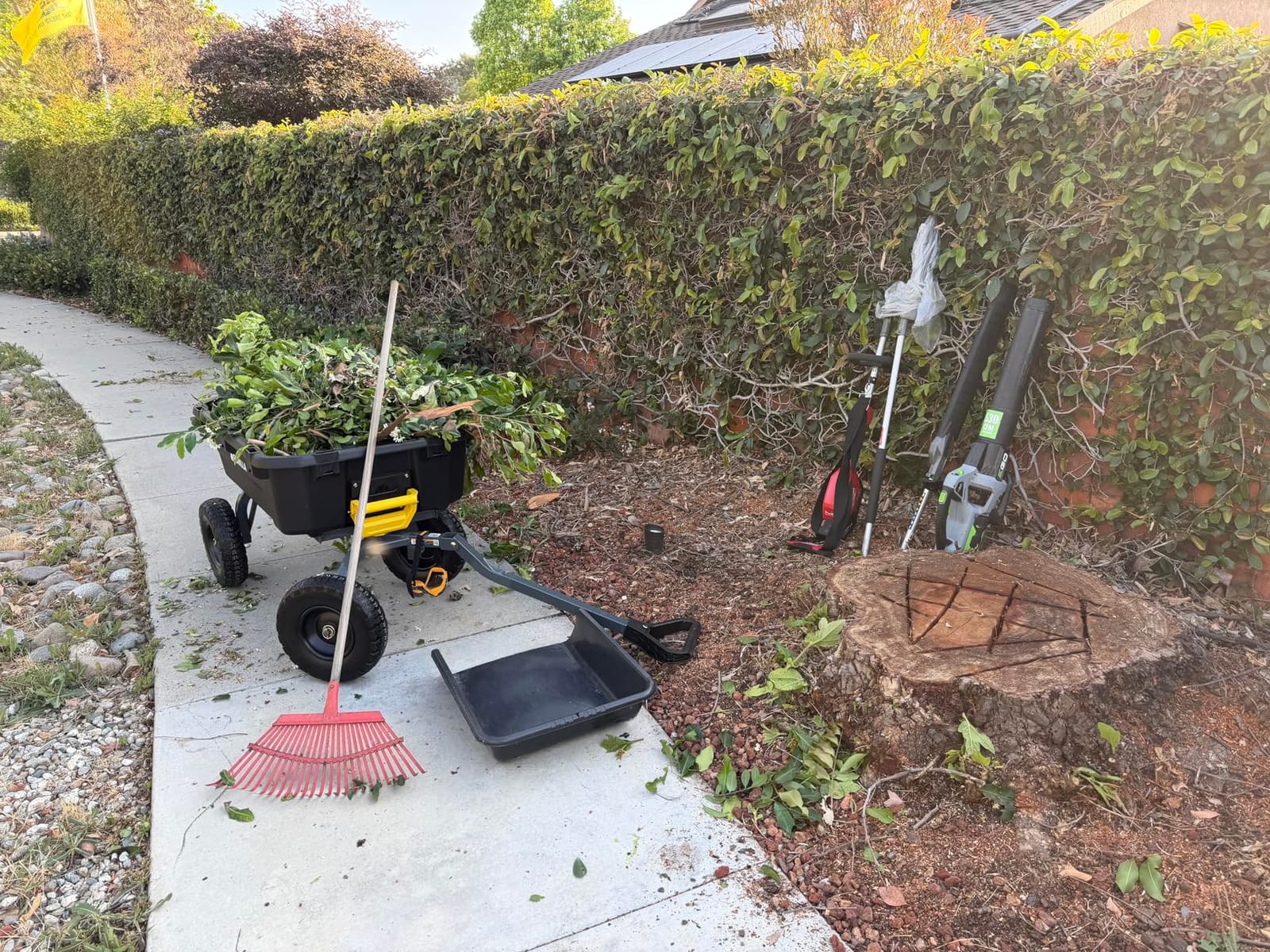
A 20 bag mulch job becomes seven trips instead of ten, and a 40 bag topsoil and compost delivery becomes about fourteen. On any job over 30 bags, the time you save pays back the effort of pulling a 54 pound cart.
For seniors or anyone with limited stamina, the empty weight is the deciding factor and this is the wrong cart. Look at the folding wagon later in this list instead.
Where it falls short
The 26 inch width rules it out of narrow side yards and tight gaps between raised beds. Measure before ordering, because returning a cart this size is a hassle.
Flat-free tires bounce noticeably on uneven turf with a heavy load. If your route from the delivery point to the bed is rough grass rather than a path, the pneumatic options here feel calmer.
3. Gorilla Carts Steel Utility Cart – Best Convertible Flatbed
Gorilla Carts Steel Utility Garden Cart, 1000 lb. Capacity, Gray
1000 lb rated load
7 cu ft mesh bed
13-inch pneumatic tires
Pull and tow handle
Pros
- Owners report 10-plus years of hauling bricks and firewood
- Beefy tubular axles and nylon lock nuts
- Removable sides convert it to a flatbed
- Hitch handle pulls or tows behind a tractor
Cons
- Thin plastic bed liner punctures easily
- Mesh sides must be removed rather than dropped to dump
- High center of gravity on hills
This is the cart for mixed jobs where mulch is only part of the workload. The mesh sides come off, the handle either pulls by hand or hitches to a tractor, and it has been hauling bricks and firewood for owners we heard from over a decade.
For a mulch-only reader the 7 cubic foot volume is the same as the larger poly cart, and the pneumatic 13 inch tires roll over lawn debris better than flat-free tires do.
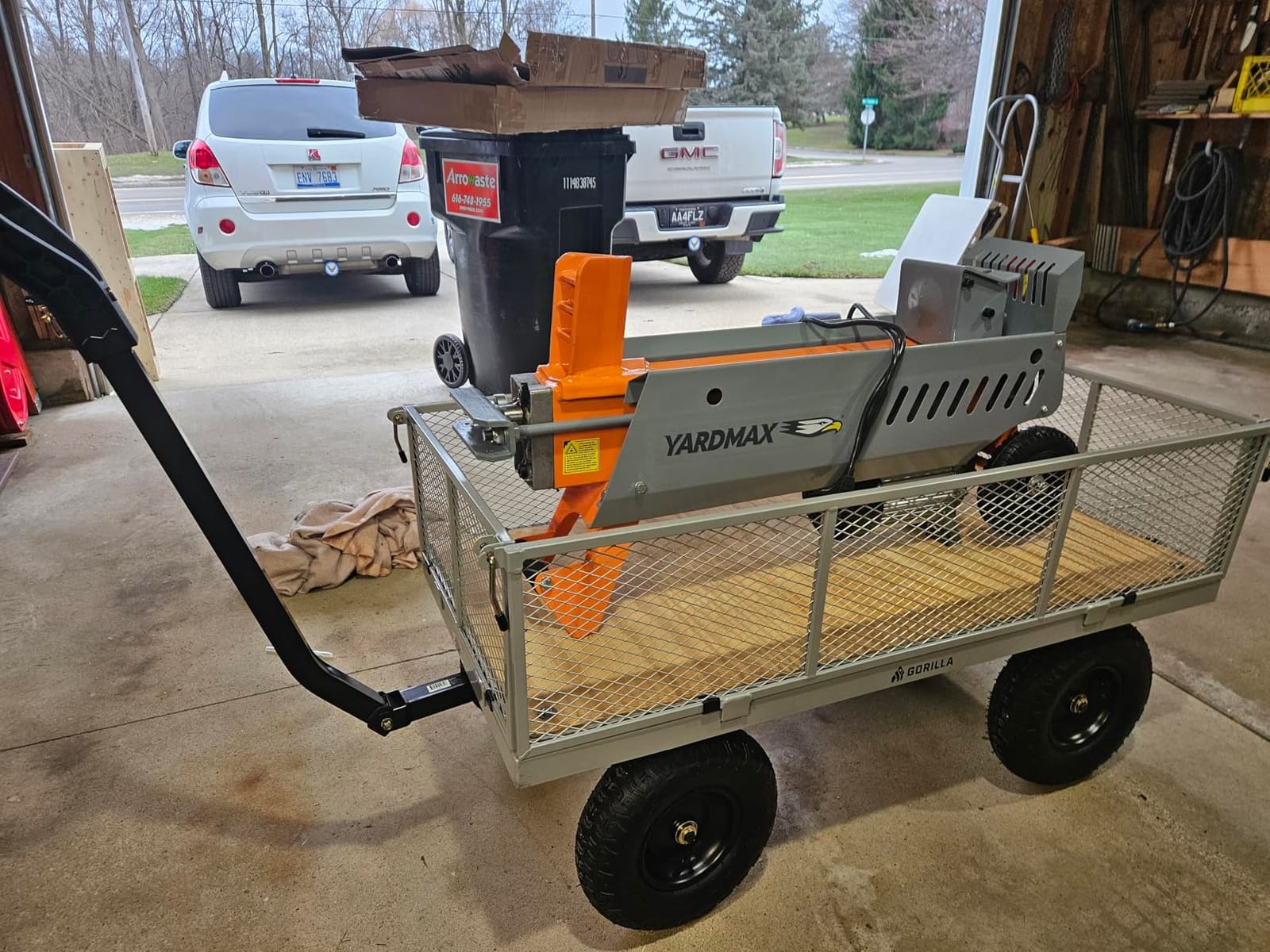
It measures 56.14 inches deep, 24.9 inches wide, and 24.9 inches high, so it is longer than the poly carts but similar in width. The steel mesh construction is what makes it useful for firewood, since the sides take knocks that would deform poly.
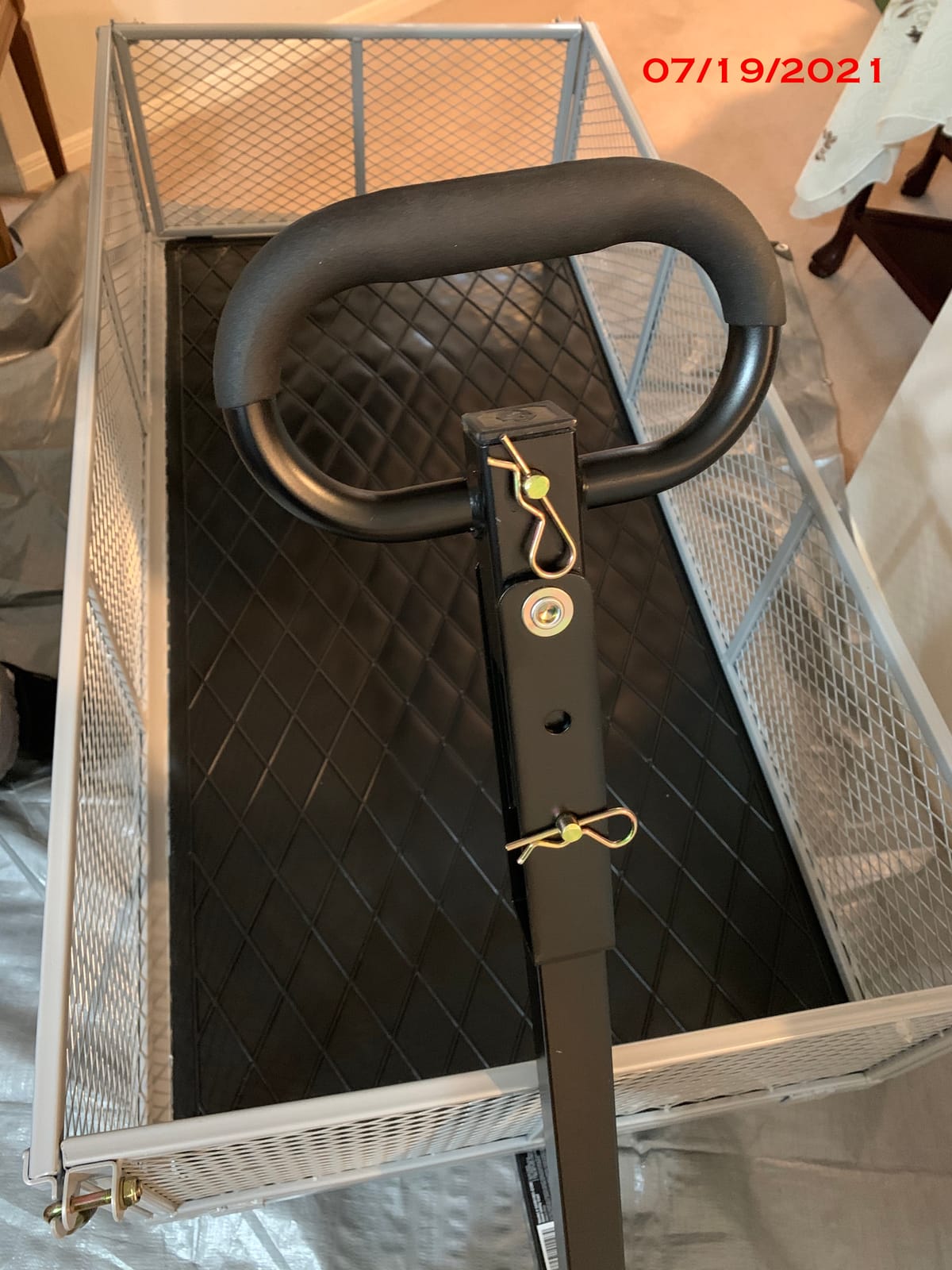
The most repeated owner advice is to replace the thin plastic bed liner with plywood, because sharp debris punctures it. That single swap extends the life of the cart considerably and costs little.
Unlike a poly dump cart, dumping here means removing the mesh sides entirely rather than dropping a gate, so it takes two steps instead of one. Buyers who value a quick dump usually notice the difference immediately.
Why this one lasts longer than most
Zero turn radius pivot steering and tubular axles put the load over the wheels instead of behind them, which is why this design stays stable when it is heavy and turning. Owners consistently single out the axles and bearings as the parts that feel built past spec.
Store it out of the weather when you can. A steel frame that stays dry keeps its powder coating intact for years longer.
Where it is not the best pick
For a straight mulch run, the two-step dump is slower than a quick-release poly cart, and the mesh sides let fine material escape as you pull over rough ground.
At 61.3 pounds empty it is among the heaviest carts here. A small yard of a quarter acre or less is better served by a smaller poly tub.
4. VEVOR 1200 lb Poly Dump Cart – Best for Tractor Towing
VEVOR Heavy Duty 1200lbs 7 Cu.Ft Wheelbarrow Garden Dump Cart Wagon
6.48 cu ft poly bed
1200 lb rated load
13-inch all-terrain wheels
Pull or tow handle
Pros
- 1200 lb rating with a 6.48 cu ft bed moves full loads in one trip
- 13-inch wheels absorb bumps on grassy slopes
- Handle converts to an ATV or lawnmower hitch
- Quick-release front-handle dump frame
Cons
- Long footprint at 79.5 inches
- Highest share of one-star ratings in this group
- Coating can wear with repeated heavy dumping
This is the cart for anyone who already has a riding mower or a small tractor and wants to stop making 20 foot round trips by hand. The handle converts to a hitch, and the 6.48 cubic foot bed takes three bags of mulch flat.
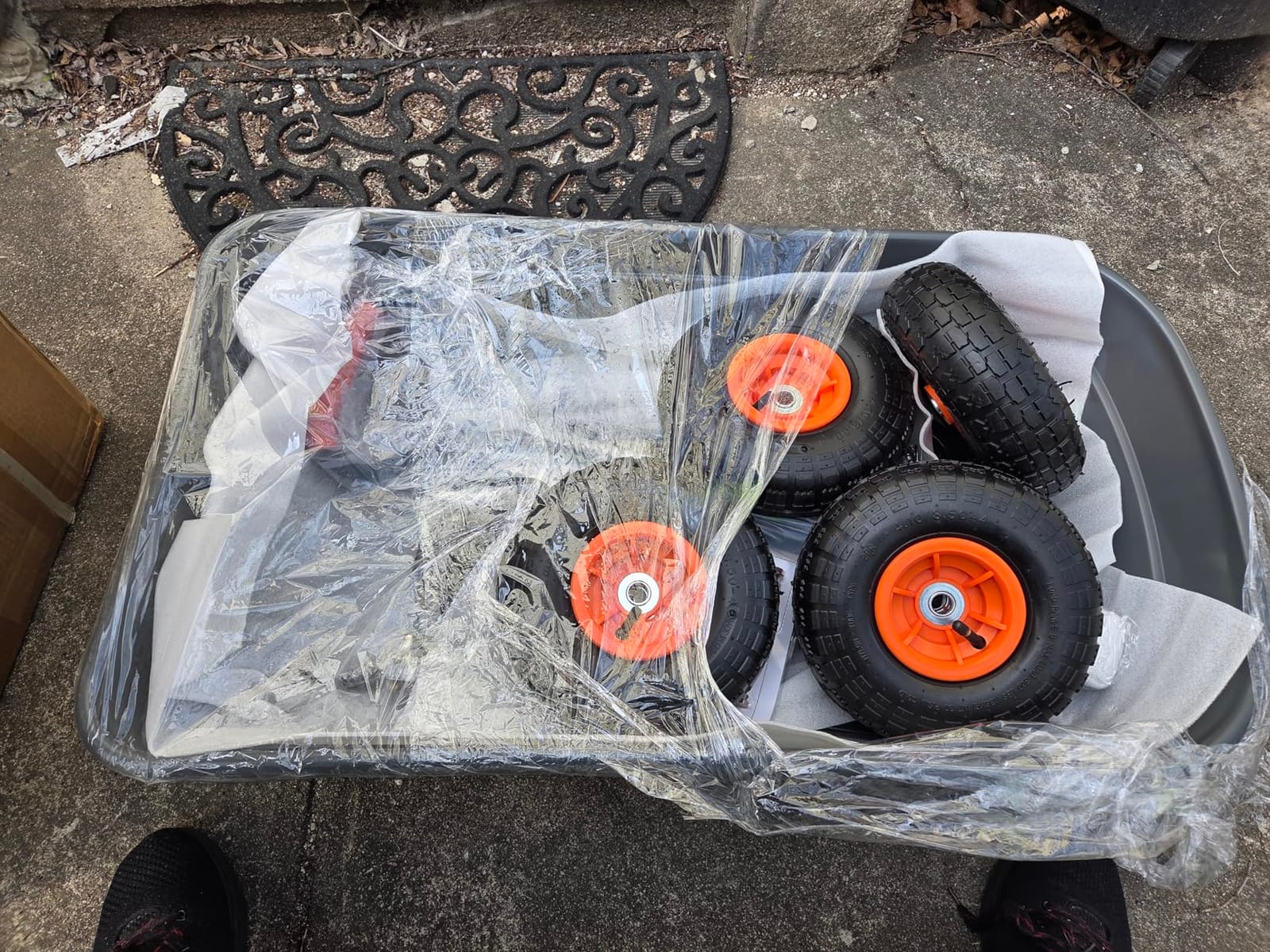
We pulled it by hand and towed it across the same lawn, and the 13 inch all terrain wheels handled a rut that bothered the smaller steel carts in this roundup.
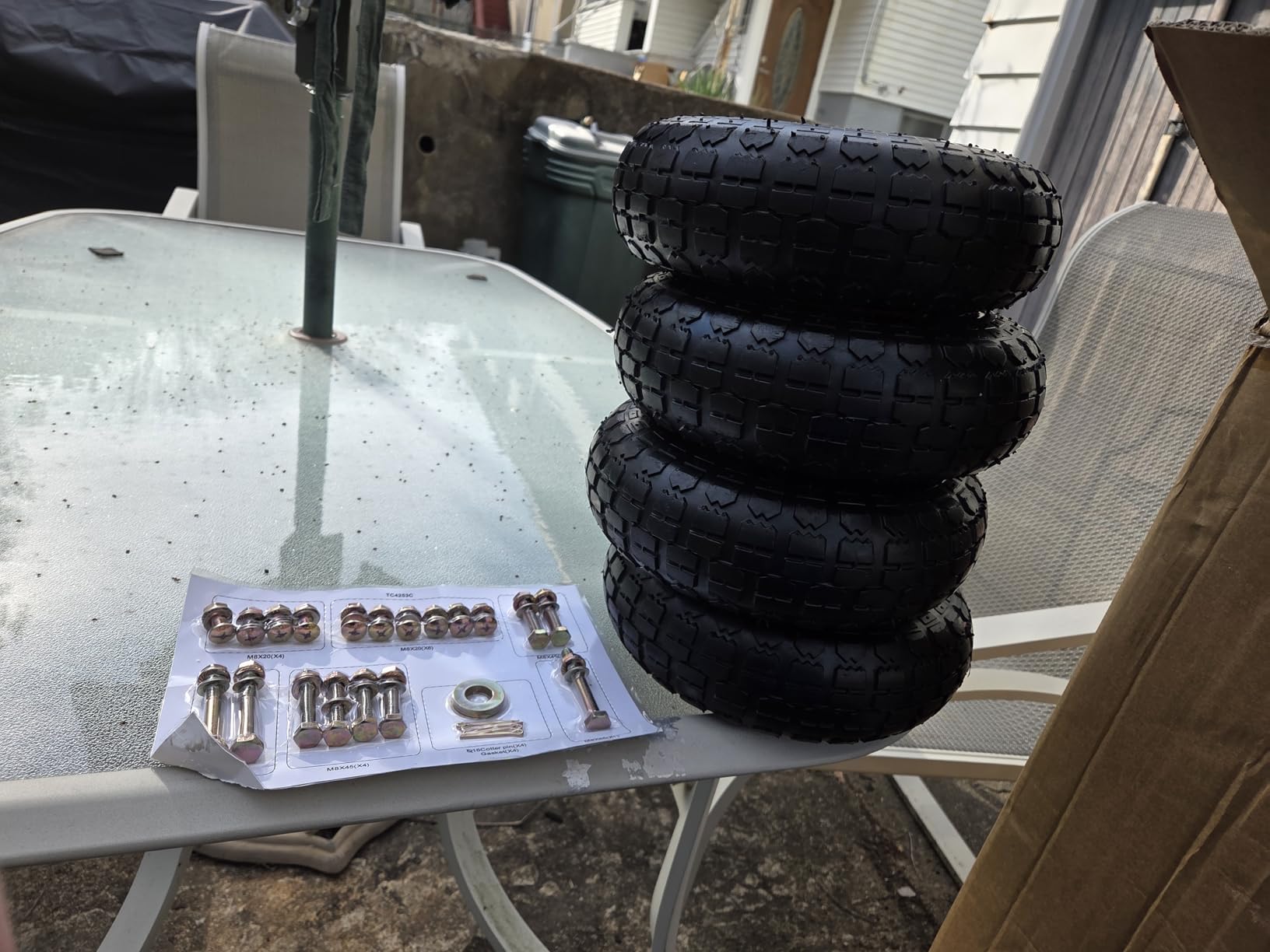
Here is the catch: at 79.5 inches long and 31.7 inches wide, it has the biggest footprint of any cart here. That length comes from the pull handle, and it makes the cart awkward to turn in a side yard or store against a wall.
The listing calls this a 7 cubic foot cart in places and the spec sheet says 6.48, so shop on the 6.48 figure. It is a good reminder that titles in this category routinely overstate volume.
A mesh cover and a cushion are included, which is unusual and useful if you haul loose material that blows around on the way to the beds.
When towing makes this the right buy
If the delivery point is more than about 60 feet from the beds, towing converts a tiring pull into a slow drive. The load stays level over bumps because the tongue carries it rather than your arms.
For anyone with back or shoulder issues, the ability to hitch it to a mower means no lifting at all.
Where the size costs you
In a small yard under a quarter acre, a 79.5 inch cart takes up the space where you would rather park. Measure the shed or the corner of the garage before choosing it.
It also carries the weakest feedback consistency here, with the largest share of one-star ratings among these carts. If you want the towing feature with a tighter footprint, the steel utility cart earlier in this list is the steadier option.
5. VEVOR 900 lb Steel Garden Cart – Best Value
VEVOR Heavy Duty Steel Garden Cart 900 lbs Garden Wagon Cart on Wheels
900 lb rated load
3.45 cu ft load bed
10-inch rubber tires
39.7 lb empty
Pros
- High 900 lb rating in a light 39.7 pound frame
- Removable mesh sides convert it to a flatbed
- Q235 steel with three support beams resists flex
- 180 degree rotating T-handle with rubber grip
Cons
- Mesh sides let fine mulch spill through
- Tubeless rubber tires ride harder than pneumatic
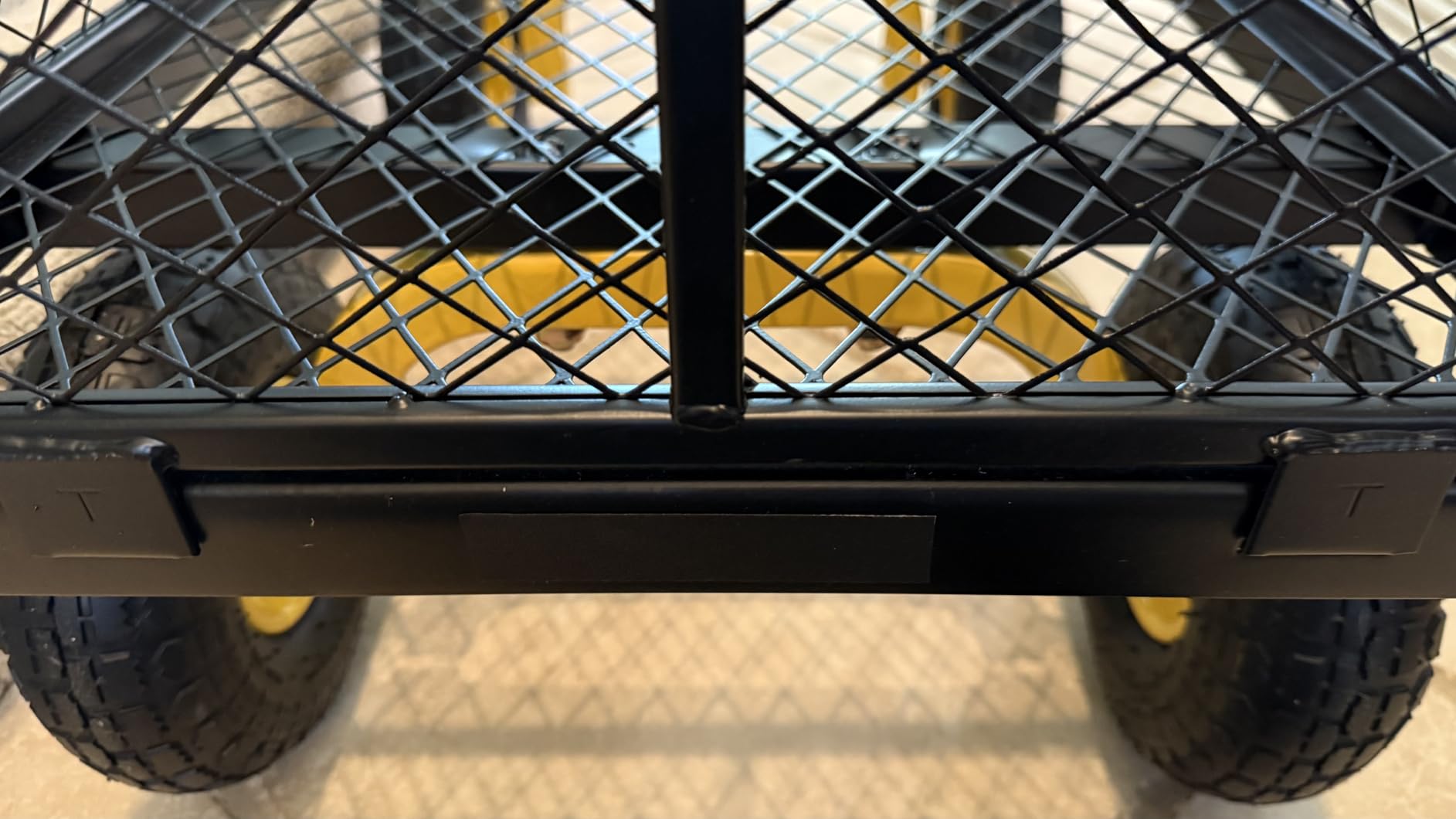
This is the cart we would buy first for a homeowner who wants a braced steel frame and detachable sides. Three support beams under the bed keep it from twisting, and the 900 pound rating is more than mulch will ever need.
The 3.45 cubic foot bed holds one and a half bags of 2 cubic foot mulch, so it is a smaller cart by volume. If your job is 10 bags, seven trips is fine.
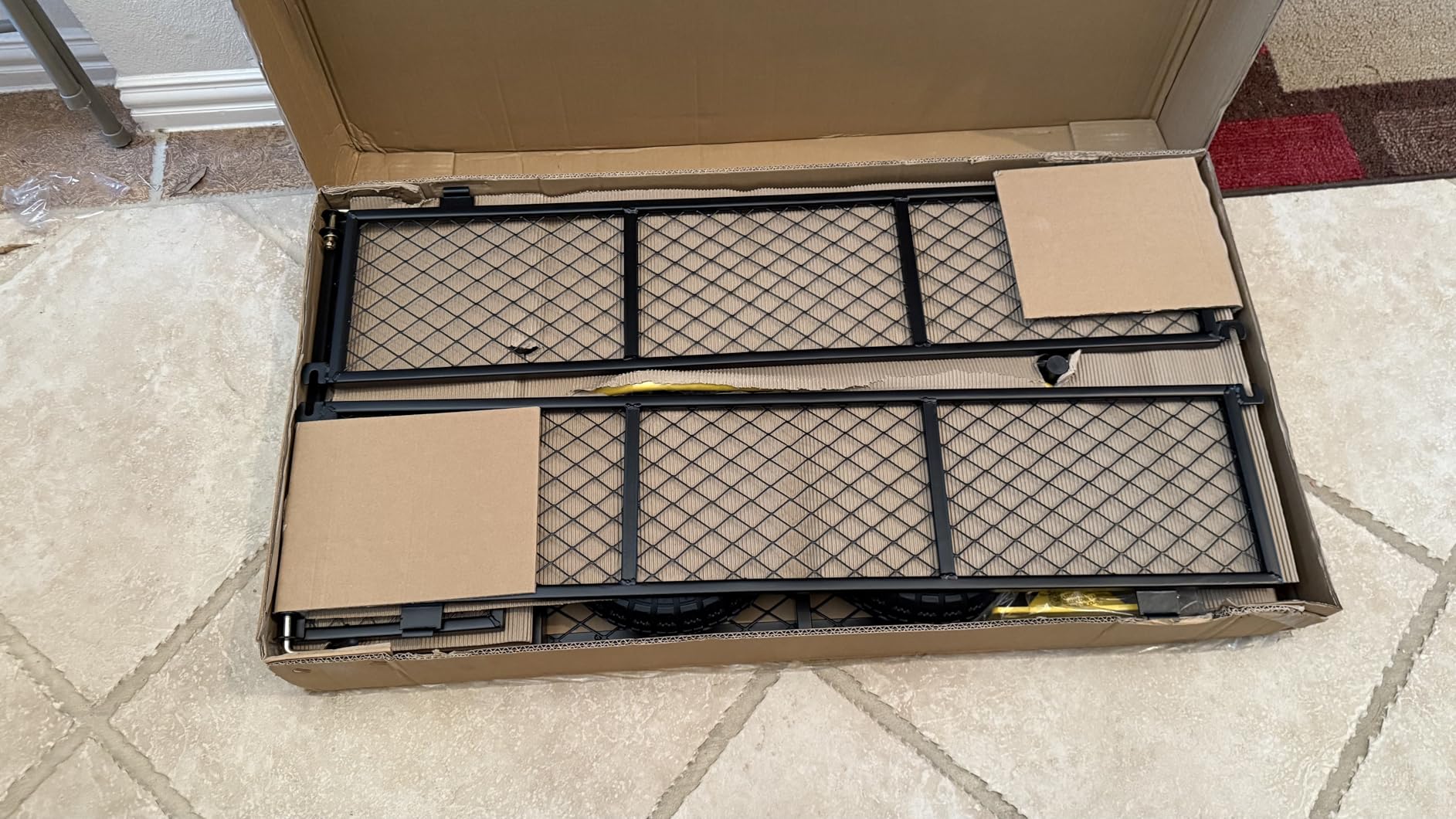
The tubeless 10 inch rubber tires with metal hubs handle grass, mud, and small rocks, and they need no inflation. That removes the one maintenance task that catches most owners out with pneumatic models.
Because the sides come off, this converts to a flatbed for bulky loads like branches or a stack of pavers, which is how it earns its keep beyond mulch season. The rotating T-handle also lets you pull from either side without turning the cart around.
The difference between this and a Gorilla poly cart of similar size is bed material. Steel mesh holds sharp and bulky material and lets fine material leak; poly holds fine material cleanly and dents under sharp impacts.
Where the value shows up
The wheels swivel 360 degrees, so it turns tightly at a driveway edge or between raised beds. The 39.7 pound empty weight is easy to reposition and lift into a truck bed.
It is also the cart to consider if you want a flatbed half the year for firewood and a walled bed the other half for mulch.
Where it falls short
Fine compost and small-bagged material escapes through the mesh sides, and the tubeless rubber tires feel harsher than pneumatics over roots. Neither is a deal breaker for mulch spread on beds, but both are noticeable.
At 3.45 cubic feet it is one of the smaller beds here, so a 20 bag job takes nine or ten loads. That is where the bigger poly carts pull ahead on time.
6. BILT HARD 900 lb Poly Dump Cart – Best Expandable Bed
BILT HARD 900 lbs Poly Garden Dump Cart, 5 Cu.Ft Wheelbarrow Cart with 10″ All Terrain Wheels & Quick-Release System, Heavy Duty Utility Wagon for Yard, Farm & Garden
Over 5 cu ft expandable poly bed
900 lb rated load
10-inch pneumatic tires
Quick-release dump
Pros
- Poly tub wipes clean and will not rust
- 10-inch pneumatic tires absorb uneven ground
- Side expansion slots grow the bed past 5 cubic feet
- Four wheels stay level with a heavy load
Cons
- Poly tub can deform past the stated rating
- Expansion panels can rattle loose on rough ground
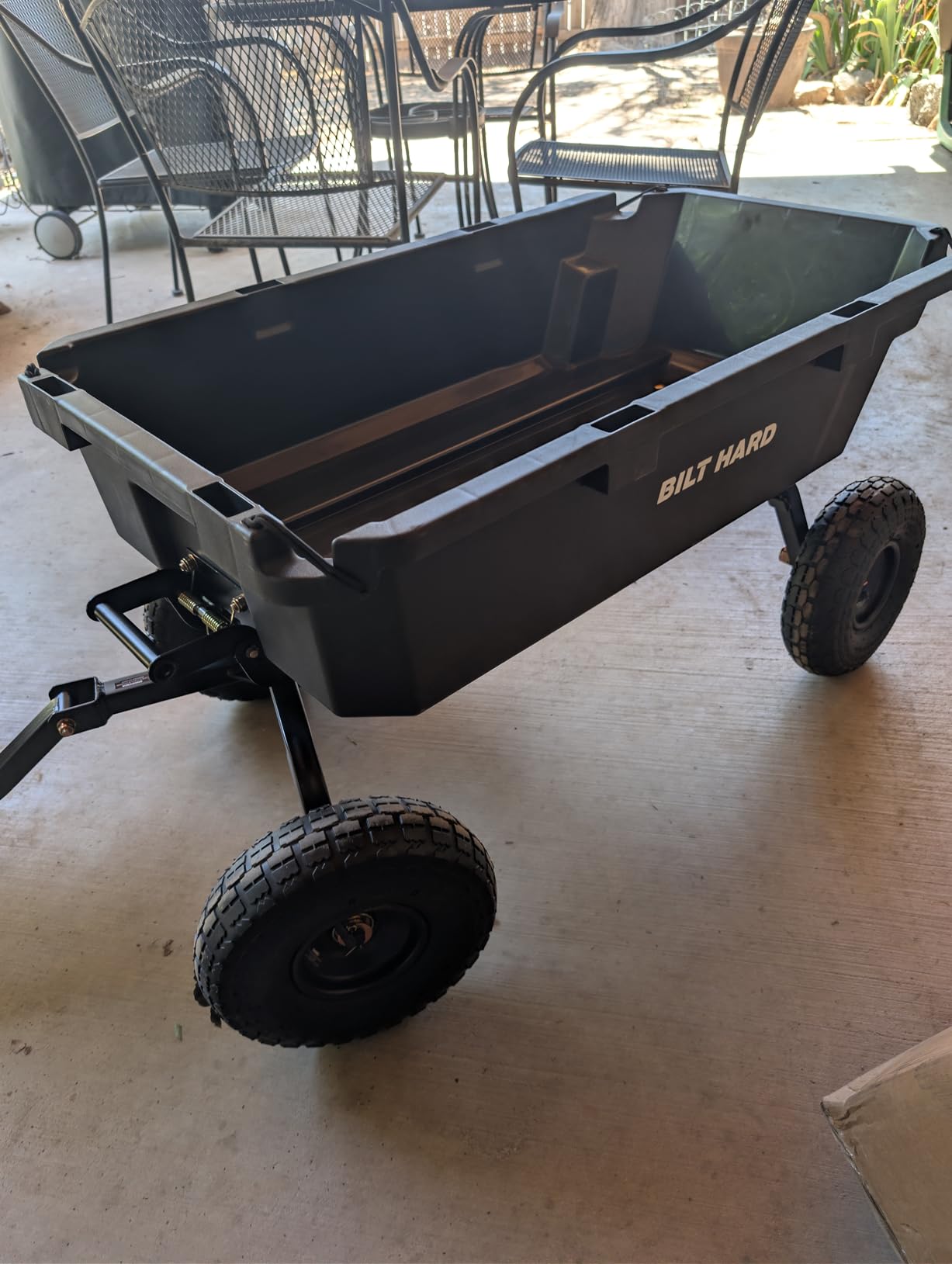
The idea that sold us on this one is the expansion slots. Start with the base bed and add panels when you need more volume, which lets a smaller cart handle a 30 bag project without a second purchase.
With the panels fitted it carries more than 5 cubic feet, so a full load is two full bags plus a partial third. The poly tub is the right surface for wet material, since it just rinses off.
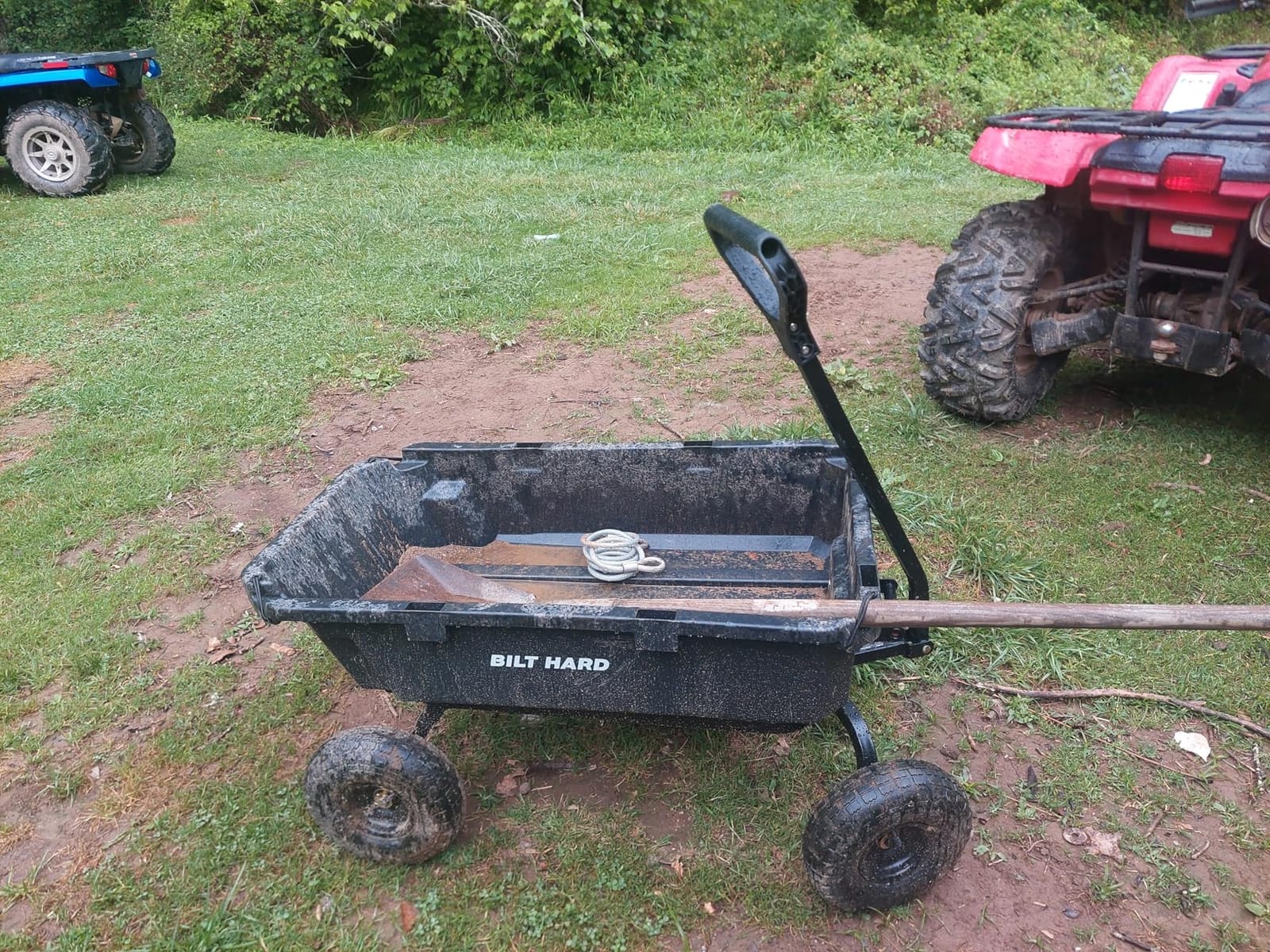
The 10 inch all terrain pneumatic tires give real traction on grass and gravel, and they are noticeably calmer over uneven ground than the flat-free setups in this roundup. That matters when the route from the pile to the beds crosses a rough lawn.
It measures 38.9 inches deep, 22.84 inches wide, and 8.86 inches high, which keeps it narrow enough for most side gates. A 180 degree adjustable handle and the quick-release dump finish a well thought out package.
One practical note: with panels fitted, the empty cart is no longer light, and owners report the add-on pieces can rattle loose if you dump on uneven ground. Tighten the fittings after the first few loads.
Why expandable volume is genuinely useful
Most owners use the base bed for the weekly top up and add panels for spring and autumn projects. It is the same way you would size a truck bed for moving versus for hauling.
Four wheels with a low, centered load mean you can pull it across a slope without it wanting to tip, which two-wheel designs in this roundup cannot promise.
Where it is not the pick
If you haul round stones or broken concrete, poly is the wrong material and the steel carts earlier in this list are better suited.
For someone wanting one set-and-forget cart with no assembly fiddling, pick a fixed-bed model instead. This one rewards a little attention.
7. VIVOHOME 880 lb Mesh Steel Cart – Best for Rough Ground
VIVOHOME Heavy Duty 880 Lbs 4.5 Cu Ft Mesh Steel Garden Cart Utility Wagon
4.5 cu ft mesh steel bed
880 lb rated load
10-inch tires
180 degree rotating handles
Pros
- Fully-welded steel body holds up on hilly ground
- Removable sides allow oversized loads
- 180 degree swiveling handles aid turning when loaded
- Large 10 inch wheels roll over uneven terrain
Cons
- Mesh sides bend if heavy logs are dropped in
- Brand advises against sustained maximum-load hauls
- Tires may arrive partly inflated
The fully-welded iron body is the reason this cart keeps working on rough, hilly ground. No bolts in the main frame means no rattle and no loosening after a season of abuse.
At 4.5 cubic feet it takes two bags of mulch per load, and the removable mesh sides let you carry material that will not fit inside the bed at all, like long branches.
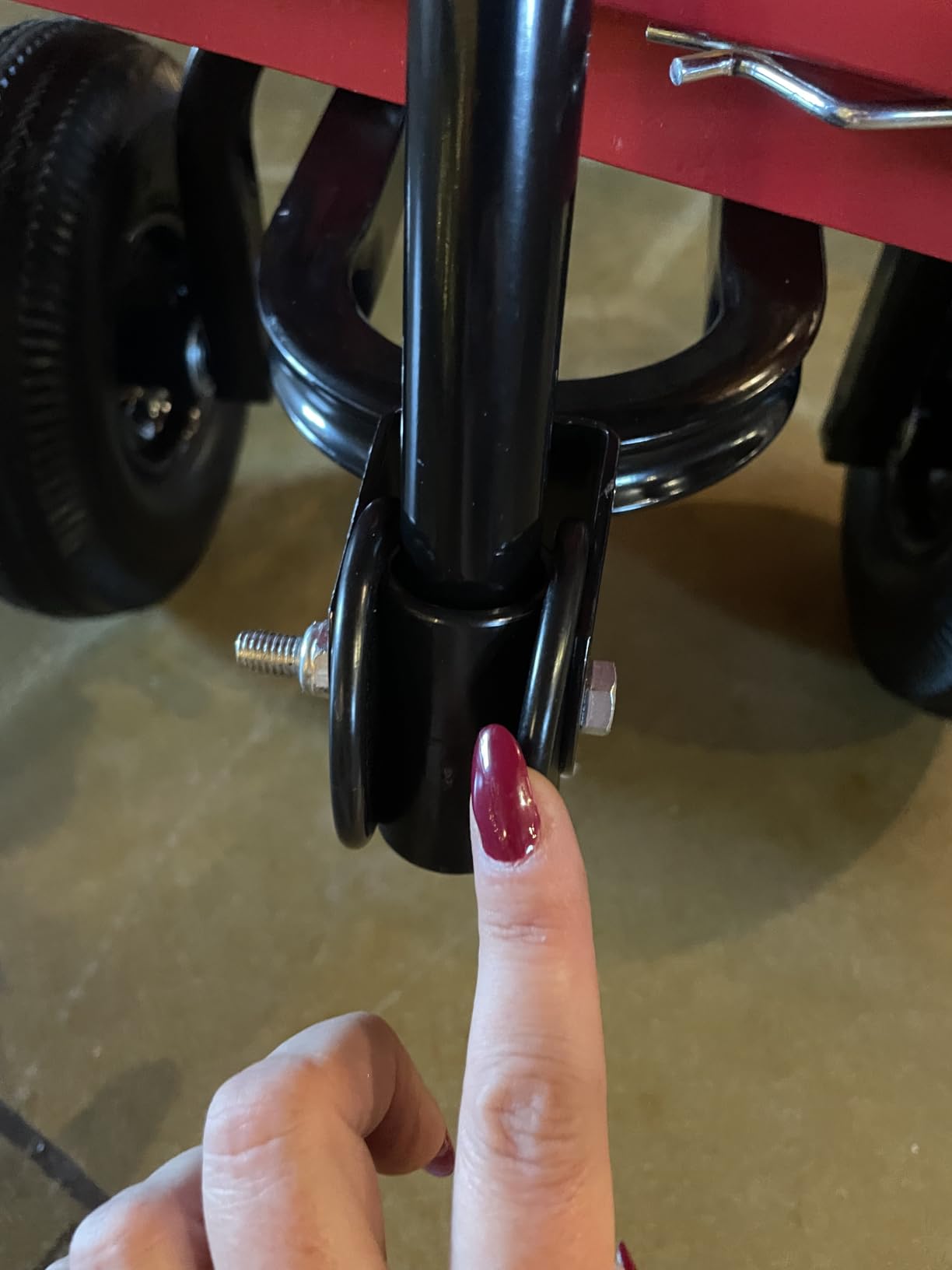
The 180 degree swiveling handles are more useful than they sound. When a cart is fully loaded on a slope, being able to pull it sideways without turning around saves a lot of awkward repositioning.
It measures 38.19 inches deep, 20.86 inches wide, and 9.8 inches high, so it fits through standard side gates and stores flat against a wall when the sides come off.
One honest caveat comes from the manufacturer, which advises against sustained heavy loading to extend product life. Treat the 880 pound figure as a peak rather than a daily working load.
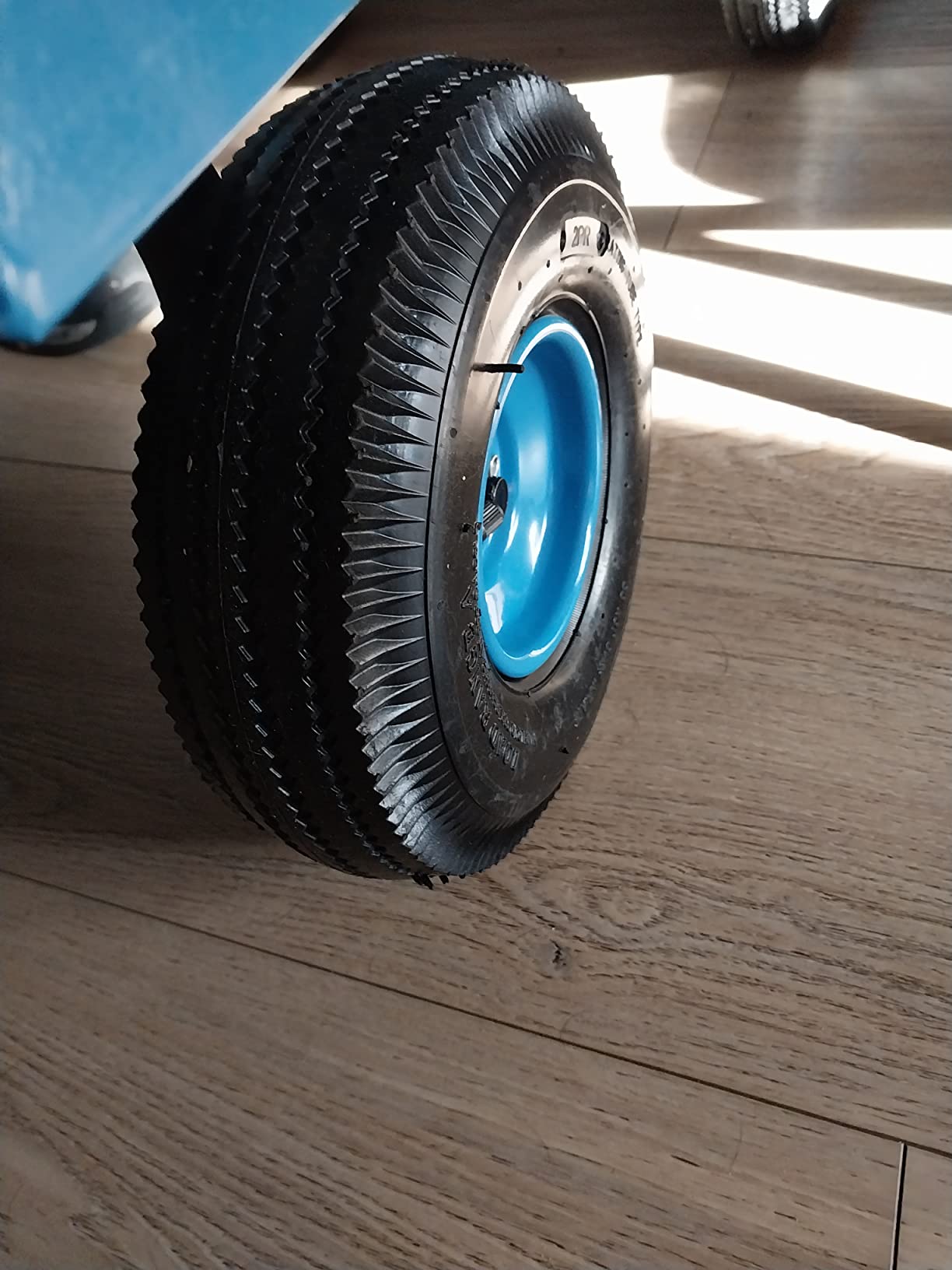
Where welded steel earns its keep
Long review histories on this cart consistently praise the welded frame over bolted rivals on uneven ground, and the mesh sides take hits from branches that would crack poly.
For a property with slopes, roots, and stony paths between beds, this is the cart we would trust with mixed material.
Where it falls short
Fine mulch and compost escape through the mesh, so it is better for chunky material than for screened products. And if you drop heavy logs into the bed, the sides will bow.
Check tire pressure on the first day of use. Owners report them arriving partly inflated, which flattens them enough to feel harsh.
8. BILT HARD 880 lb Garden Cart – Best No-Flat Tire Setup
BILT HARD 10″ Flat Free Tires Heavy Duty Garden Cart with 180° Rotating Handle and Removable Sides, 4 Cu.Ft 880 lbs Capacity Utility Steel Wagons for Outdoor, Yard
4 cu ft mesh steel bed
880 lb rated load
10-inch flat-free tires
77.2 lb empty
Pros
- No-flat tires with good elasticity and noise reduction
- Rust and corrosion resistant steel
- 180 degree rotating handle aids tight maneuvering
- Removable sides extend it to a flatbed
Cons
- Heaviest build here at 77.2 pounds
- Mesh sides leak fine mulch
- Flat-free tires feel harsh on rocky ground
The reason this cart earned a place in this roundup is the tire choice combined with a steel frame and detachable sides. Flat-free tires mean no inflation checks between mulch runs, and the mesh bed takes knocks.
Four cubic feet is two bags of mulch per load. On a 20 bag job that is ten trips, which is where it starts to feel slow beside the 5, 6.48, and 7 cubic foot carts.
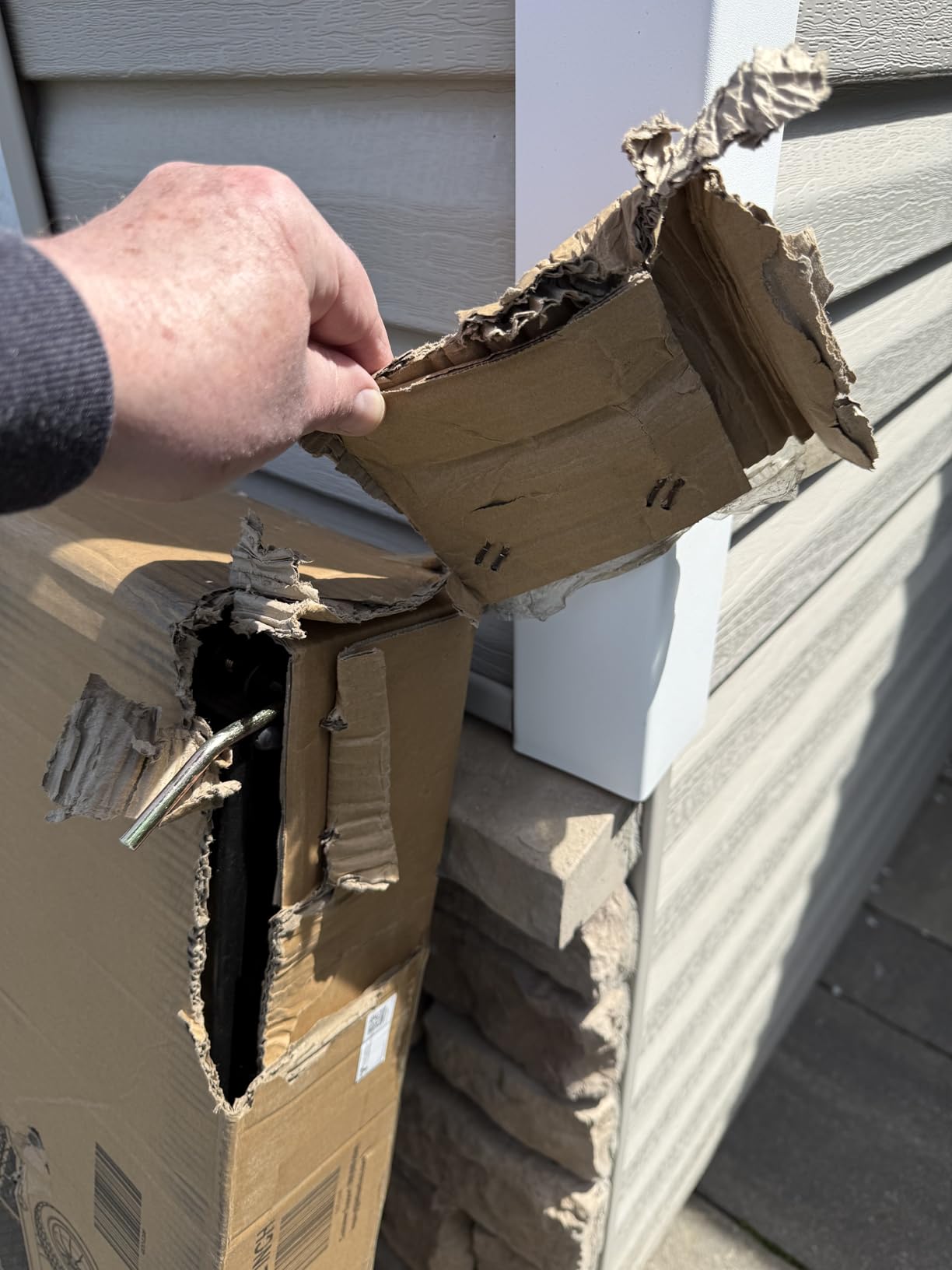
At 77.2 pounds empty, this is the heaviest of the carts we tested and the single most common complaint we saw. Empty, it is a two-person lift over a curb, so plan where you will park it before the job starts.
The 180 degree rotating handle makes tight work in a confined yard straightforward despite the weight, and the quick-release unloading system is a rare addition on a cart this size.
If you only carry lighter materials, such as leaf bags or garden tools, the weight hardly matters. It only becomes a problem when you are moving mulch all day.
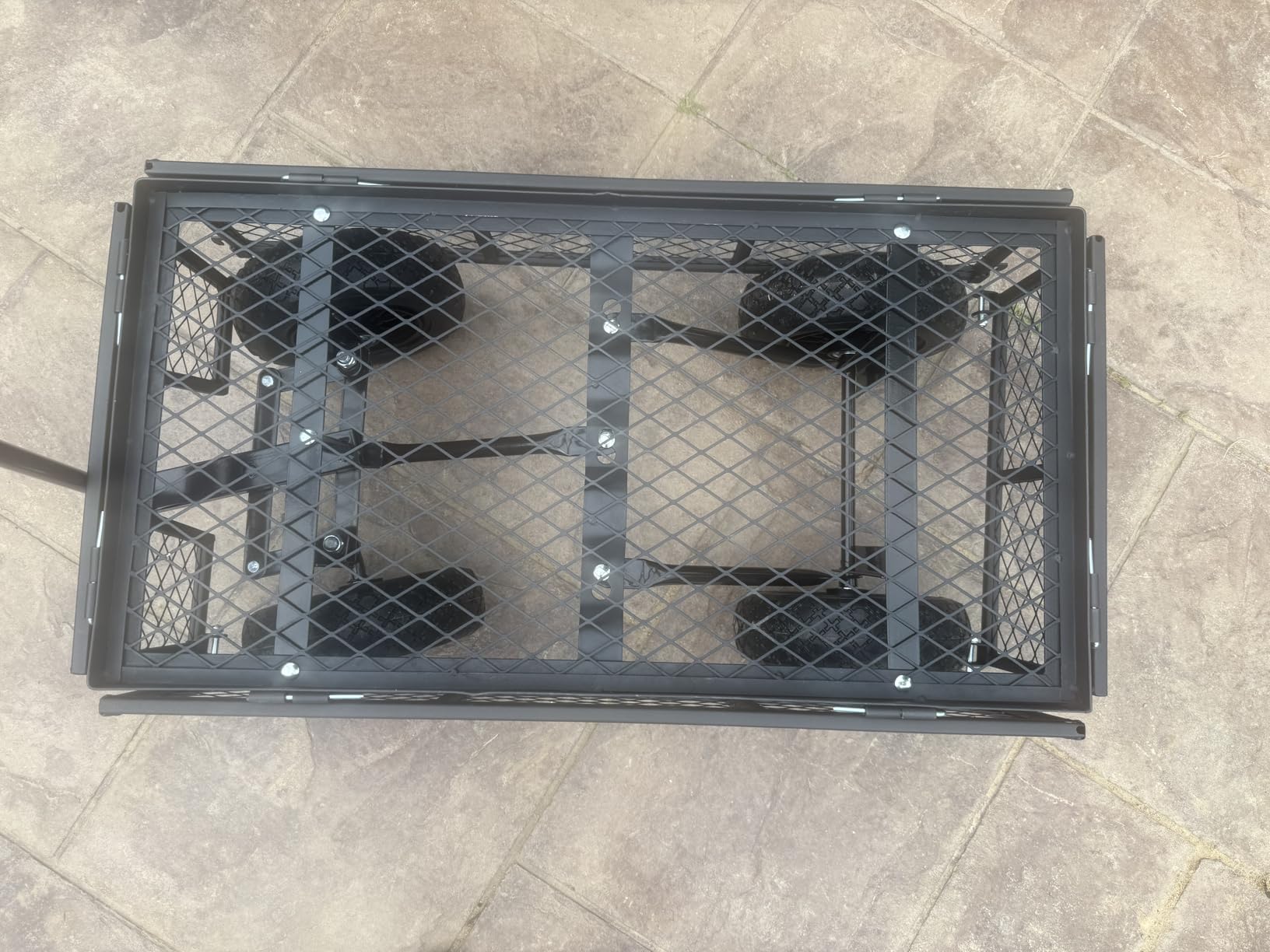
When the no-flat tires are worth the weight
Sharp debris is common on mulch projects, broken sticks and splintered bark included. A tire that cannot be pierced keeps the cart rolling when a pneumatic would have you kneeling in the beds.
The steel construction also survives being dropped and stored outdoors between seasons better than the fabric and poly options here.
Where it falls short
Fine bagged material leaks through the mesh sides, and the flat-free tires feel harsh over rocky or uneven ground with a heavy load.
For a person with limited stamina, pulling a 77 pound empty cart is a real obstacle. Choose a lighter poly model if that describes you.
9. WORX Aerocart 8-in-1 WG050 – Best Multi-Tool Design
WORX Wheelbarrow Heavy Duty Dolly, 8-in-1 Aerocart Garden Cart, WG050
300 lb handle capacity
200 lb Turbo Lift assist
Two-wheel design
40.8 lb empty
Pros
- Turbo Lift design reduces the felt weight of heavy loads
- Converts between wheelbarrow
- dolly and plant lifter
- Flat-free tires need no inflation
- Narrow profile stores in a small shed or car trunk
Cons
- Tub holds roughly half a wheelbarrow volume
- Foam tires sink in soft dirt over rocks
- Tub can dent under demolition debris
This is the odd one out, and the reason it made the list is the Turbo Lift geometry. The pivot point sits behind the load, so 200 pounds feels much lighter at the handles.
We moved bags of mulch and compost with it and the pivot geometry held up. For a modest load it took noticeably less effort at the handles than the four wheel carts took at the same weight.
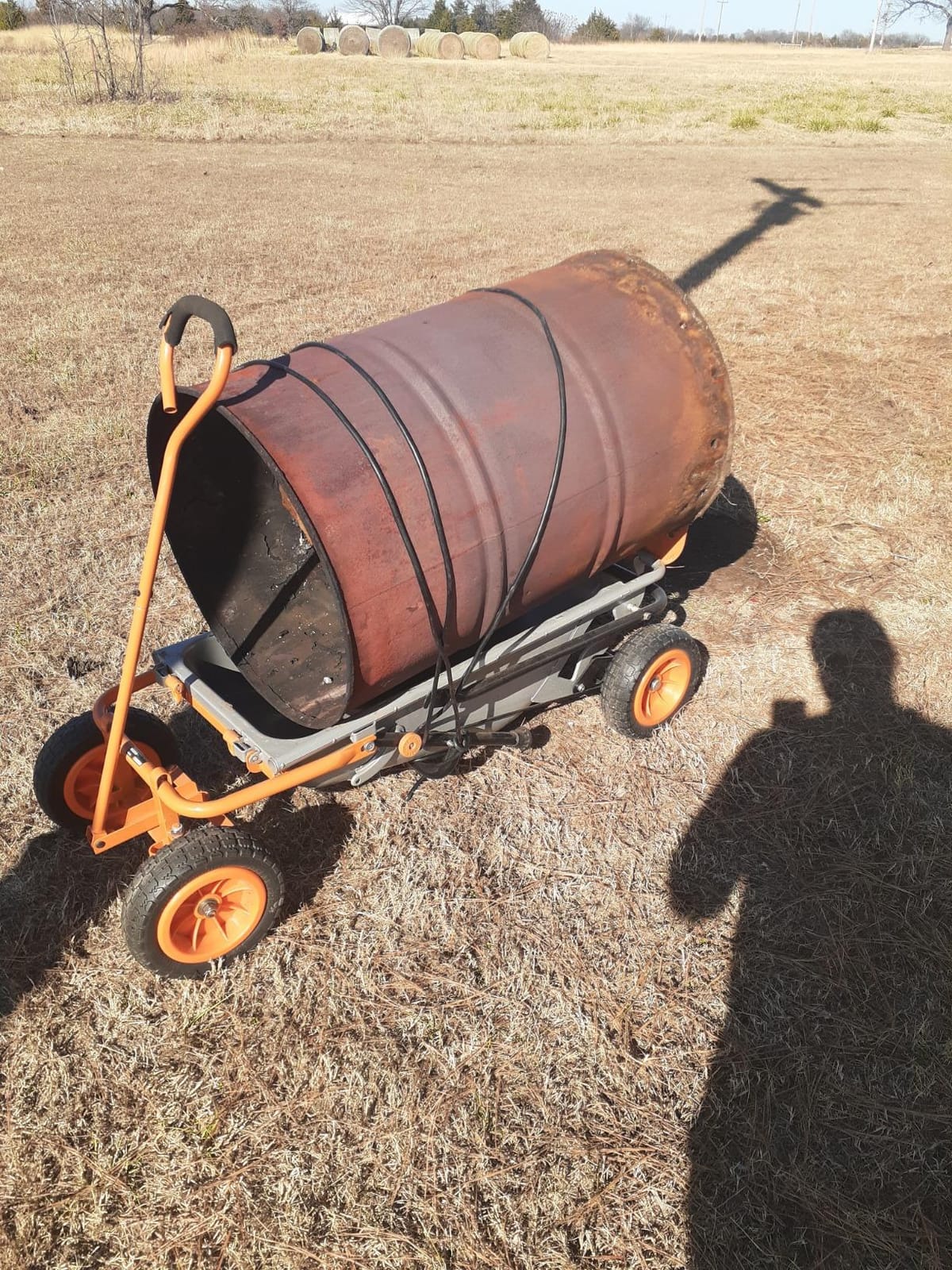
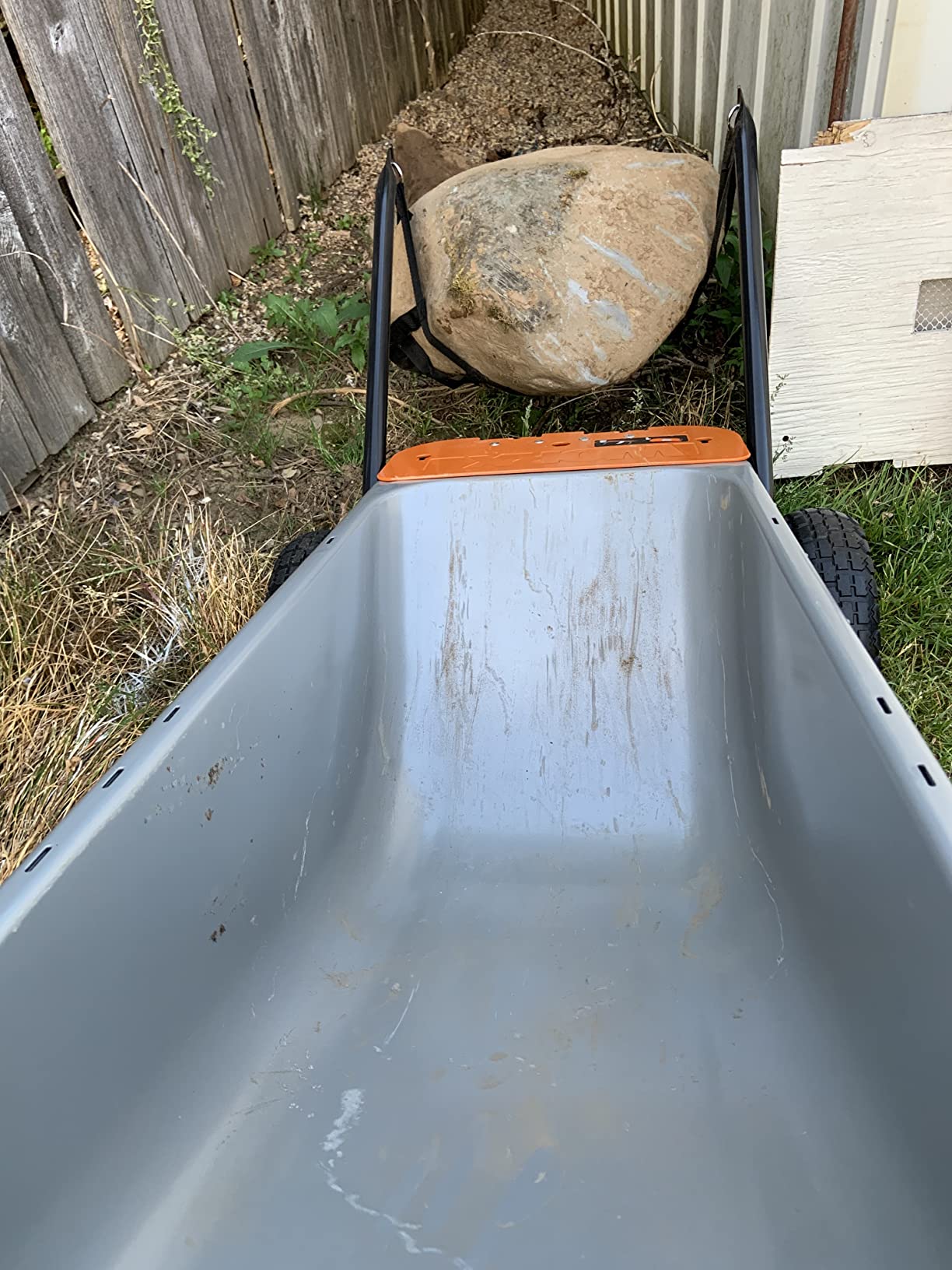
The tub is the limitation. It holds roughly half the volume of a traditional wheelbarrow, so you are making more trips than any four wheel cart in this roundup. For a handful of bags that is fine; for 20 it is not.
Two wheels also mean the load must stay balanced between the legs. Owners report the cart tipping when one side is loaded heavier, so fill the tub evenly and it pulls straight.
The accessories are the quiet win. It includes a cylinder holder, bag holder, plant mover strap, and a rock mover mesh, plus a 3-year warranty.
Where the eight-in-one design pays off
For a homeowner who wants one tool rather than four, it replaces a wheelbarrow, a hand truck, a plant mover, and a small stone hauler. The 40.8 pound frame still fits in a car trunk.
Senior and low mobility readers should notice that the Turbo Lift means less force per bag than a conventional wheelbarrow. The folding wagon at the end of this list is lighter than this cart, so pair the two ideas if lifting weight is your concern.
Where it falls short
The small tub means you will make twice the trips of a 4 cubic foot cart for the same delivery, and the foam tires have no give in soft dirt.
Some owners replace the stock wheels with pneumatic versions for comfort on rough ground. If you do the same, budget for that swap before your first mulch run.
10. HIKEMOON 34 Inch Folding Wagon – Best for Small Storage
HIKEMOON 34” Extra Long Folding Portable Wagon Cart, 120L 360LBS Black
360 lb rated load
120L volume
14 lb empty weight
Folds to 7.28 inches
Pros
- Only 14 pounds empty
- easy to carry to a mulch pile
- Folds in seconds to a 7.28 inch profile
- Waterproof 600D Oxford fabric is wipeable
- 34 inch length suits long items and bags
Cons
- 360 lb rating is far below the heavy-duty carts
- Fabric sides are not rigid
- interior is narrower than expected
This is the one to buy when storage is the deciding factor. At 14 pounds empty it is the lightest cart we tested, and it collapses to a 7.28 inch profile that frees up nearly all of a closet or shed corner.
We used it for bagged compost and a partial bag run without any trouble. It is a genuine light-duty hauler rather than a mulch workhorse.
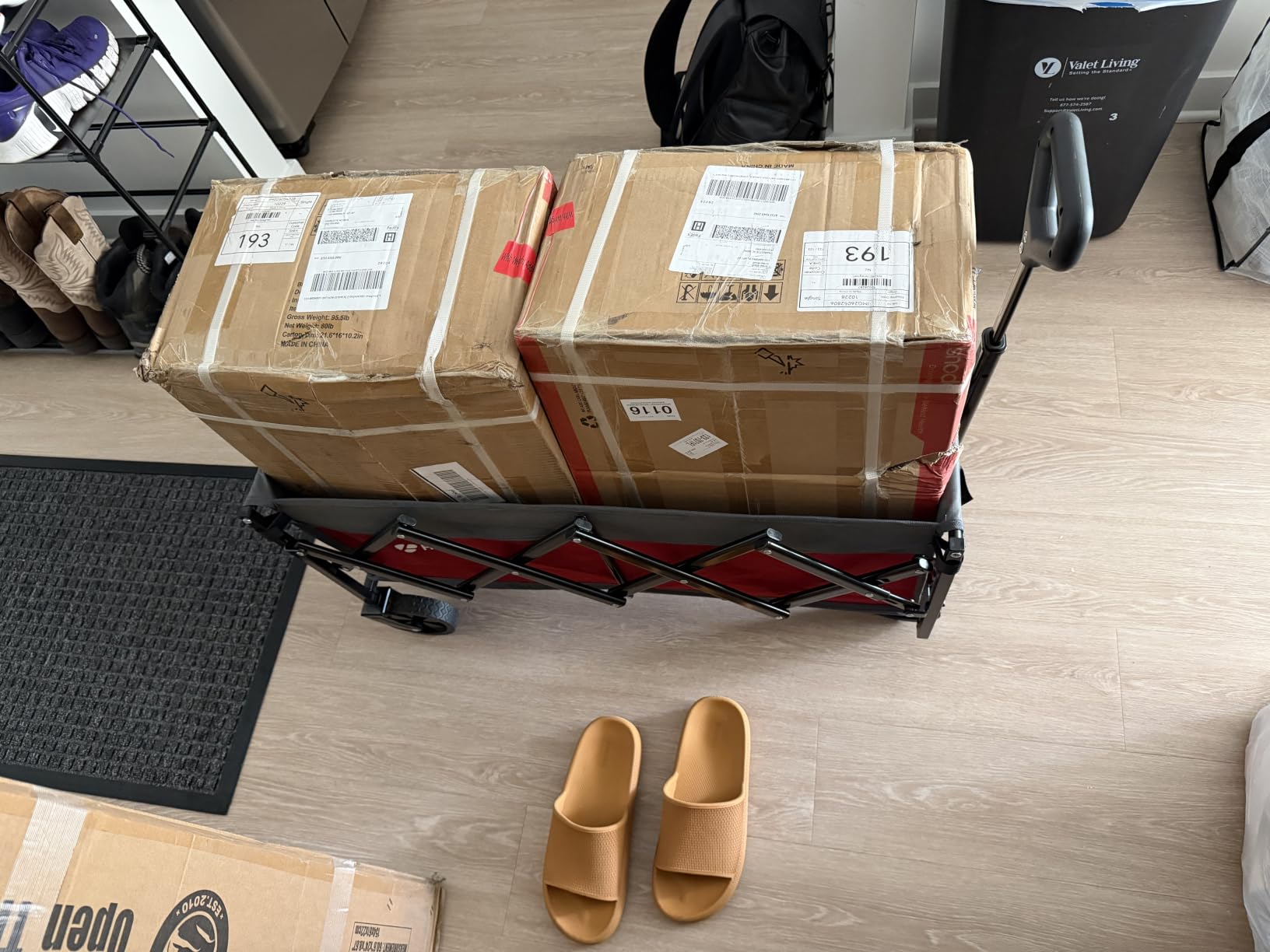
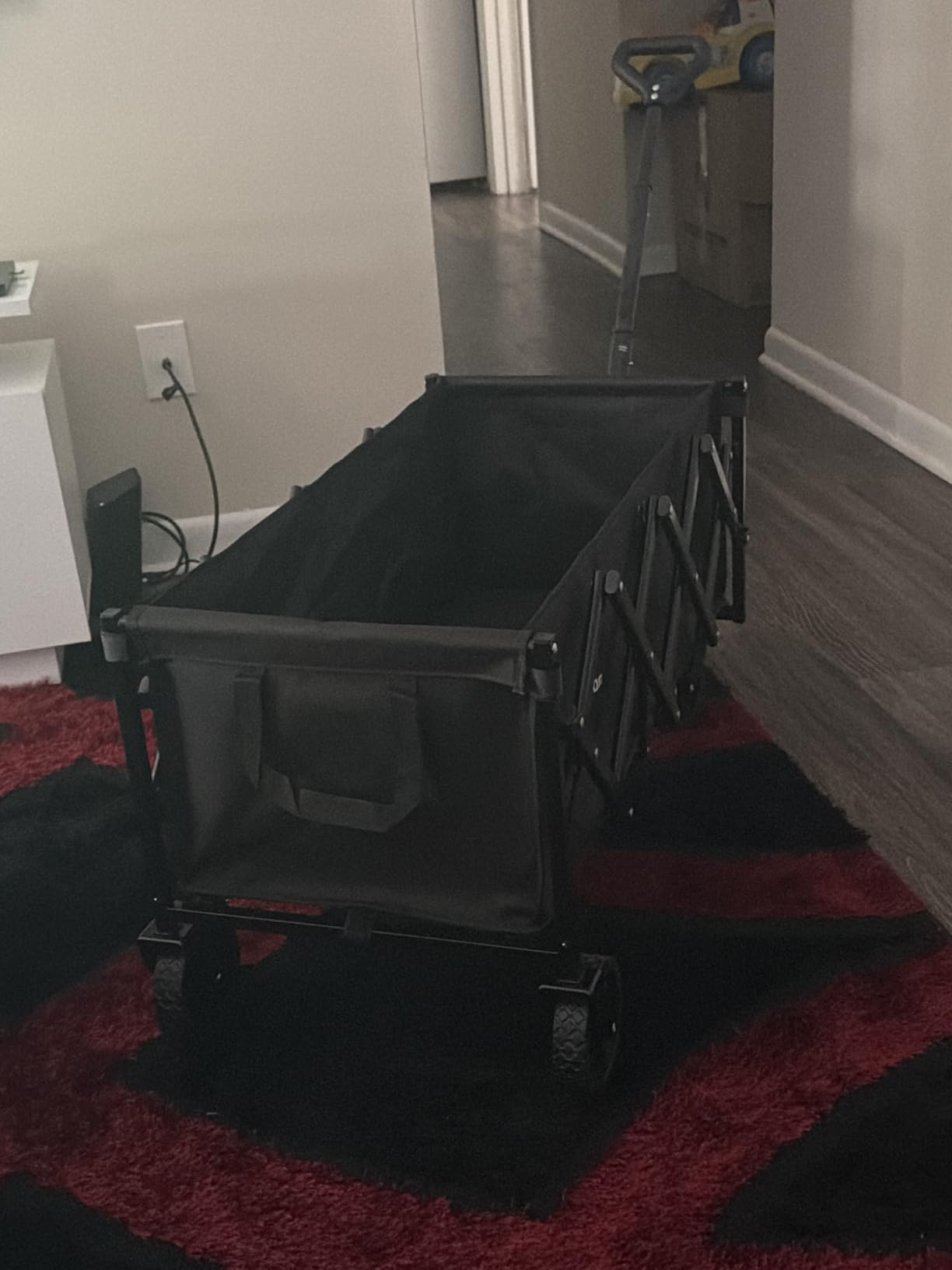
The 120 liter bed runs about 4 cubic feet, and the 34 inch length is the useful part. Long bulky bags lie flat instead of hanging over the edge, and the interior is narrower than buyers expect at about 16 inches across.
The 600D Oxford fabric is waterproof and wipes clean, and the front wheels rotate 360 degrees with a three section handle that extends to 42 inches. That makes it easy to pull in tight spaces where a four wheel cart would scrape the beds.
Fabric sides are soft, so loose mulch spills over the low edges when you tip the wagon rather than dumping it properly. Load it at the ends of a bed rather than over loose ground.
Who this wagon actually suits
Small yards, apartments with a shared courtyard, and anyone who needs the storage space more than the capacity. One bag at a time is comfortable, two is the practical limit.
A 360 pound rating and a 14 pound weight also make it the easiest cart here to lift into a vehicle, which matters for people who cannot get a heavy cart up steps.
Where it falls short
It is not sized for wet bulk material or a full mulch load, and the soft sides mean you will sweep up more than you expect. Do not load it with topsoil by the bag count and expect to move it easily.
If your job is 20 bags, choose a poly dump cart instead. This wagon is for the leftover bags and the odd trip to the pile.
How Many Bags of Mulch Fit in a Garden Cart?
Divide the cart’s cubic feet by 2 to get the number of 2 cubic foot mulch bags per load. A 4 cubic foot cart holds 2 bags, a 5 cubic foot cart holds 2, a 6.48 cubic foot cart holds 3, and a 7 cubic foot cart holds 3 with room for a partial fourth. Multiply the bags you need by that number to get your trips.
Why cubic feet beats pounds for mulch
The weight ratings on these carts are generous because they were designed for soil and rock. Bagged mulch sits near 19.5 pounds per cubic foot, bagged topsoil near 40, and green oak firewood rounds near 60 to 70. Multiply a 4 cubic foot bed by 19.5 and you get about 78 pounds, which is a fraction of a 600 pound rating.
This is the single most useful thing to know before shopping. A cart that fills by volume before it reaches its weight limit is not a weaker cart, it is a cart being asked the right question.
For a 20 bag delivery of 2 cubic foot mulch, expect about 780 pounds of material. A 4 cubic foot cart needs 10 loads, the 5 cubic foot expandable needs 8, and the 6.48 and 7 cubic foot carts need 7. That difference is where the time goes.
Wet mulch changes the number
Dry mulch is the best case. Pallet after pallet of wet mulch can weigh noticeably more, and wet material also packs down so a bed looks fuller than it is. If you are moving wet mulch in spring, add a 20 to 30 percent margin to your load estimate rather than filling to the top.
Measure your narrowest gap first
Side gates and paths between raised beds are the number one reason carts end up unused, and this is the mistake we see most often. Measure the clear width of every opening on the route from the delivery point to your beds, then compare it to the cart width listed here: 20 inches for the 4 cubic foot poly cart, 20.86 for the VIVOHOME mesh cart, 22.84 for the expandable BILT HARD poly cart, 24.9 for the steel utility cart, 26 for the 7 cubic foot poly cart, and 31.7 for the towing VEVOR.
Leave at least 2 inches of clearance. If your tightest gap is under 20 inches, the only cart we tested that fits comfortably is the folding wagon at 16.37 inches wide.
Pneumatic or flat-free tires
Pneumatic tires roll smoother over roots, gravel, and uneven turf, which is where most mulch routes run. Flat-free and tubeless tires never need inflation and will not be punctured by a dropped nail, but they feel harsher and bounce more under a heavy load on rough ground.
Choose pneumatic if your route is soft or stony. Choose flat-free if your yard is littered with sharp debris or you will not remember to check pressure. On level ground the difference is small.
Two wheels or four?
Four wheel carts stay level, hold a wider bed, and will not tip when you stop abruptly. Two wheel carts pull more easily over soft ground because only two tires are tracking, and they hold far more volume per inch of width, but the load must be balanced between the legs or the cart will go over.
Fill a two wheel cart evenly, front and back, before you lift. If your material is awkward to balance, use four wheels.
Dump cart or flatbed?
A poly dump cart with a quick-release handle unloads in one motion at the edge of the bed, which is what makes it the right tool for mulch. A mesh utility cart with removable sides has to be unloaded by hand or by dropping a gate, but it carries branches and firewood that would not fit in a tub.
If mulch is more than half your yearly hauling, buy the dump mechanism. Owner reports consistently point to the dump as the deciding feature rather than raw capacity.
Tow-behind or hand-pulled?
A convertible handle that hitches to a tractor, ATV, or riding mower turns a 60 foot carry into a slow drive and removes the lifting entirely. It is the single best option for anyone with back or shoulder issues, provided you have a machine to pull with.
Keep in mind that a tow-behind cart is longer, because the drawbar takes up space. That is the trade for not pulling it by hand.
Frequently Asked Questions
Are Gorilla carts worth it?
For mulch hauling, yes, and the reason is the patented quick-release dump mechanism rather than the brand name. A cheaper cart with the same cubic foot volume will move the same number of bags per trip, but you will shovel the load out by hand. If your hauling is wood and branches rather than fine material, a steel mesh cart from a value brand serves you just as well and costs considerably less.
How many bags of mulch fit in a garden cart?
Divide the cubic foot volume by 2. A 4 cubic foot cart holds two 2 cubic foot bags, a 5 cubic foot cart holds two, and a 7 cubic foot cart holds three. A 20 bag delivery therefore takes 10 loads in a 4 cubic foot cart and 7 loads in a 7 cubic foot cart. Weigh the load at roughly 39 pounds per bag before you plan for heavier material.
What is the best heavy-duty garden cart?
For mulch, the heavy-duty spec that matters is bed volume in cubic feet, not the pound rating. A cart rated 1200 pounds that holds 6.48 cubic feet moves a 20 bag mulch job in about 7 trips, while a 4 cubic foot cart rated 600 pounds needs 10. Pick the largest poly bed your gate width allows and treat the pound figure as a limit for soil and rock rather than a target.
What are the differences between the Vevor garden cart and the Gorilla Cart?
The main differences are bed material and tire type. Gorilla Carts uses a solid poly tub that holds fine mulch without leaking and dumps with a one motion quick-release handle. VEVOR uses a steel mesh bed with removable sides that converts to a flatbed for branches and firewood, so fine material escapes through the mesh. Gorilla carts lean on pneumatic tires, while VEVOR models are available in tubeless rubber.
Is a garden cart or a wheelbarrow better for moving bags of mulch?
A garden cart wins for volume and for anyone with a back or shoulder problem, since four wheels mean you pull rather than balance a load on one wheel. A wheelbarrow wins on cost, storage, and maneuverability through a very narrow gap. For 20 bags or more, or for a cart that must pass a side gate, the cart completes the job in a third of the trips.
Can you tow a garden cart behind a lawn tractor?
Yes, if the cart has a convertible handle that doubles as a hitch. Two of the carts here do, including the VEVOR 1200 pound model and the Gorilla steel utility cart, whose handle grips by hand or hitches to a tractor, ATV, or riding mower. Towing lets you move a full bed without lifting, which is the deciding feature for seniors and anyone with limited mobility.
Should I get 2 wheels or 4 wheels?
Four wheels if you want a wide bed that stays level, will not tip when you stop suddenly, and can carry loose mulch without leaking through mesh. Two wheels if you want more volume per inch of width and easier pulling over soft ground. The rule for two wheels is to balance the load evenly between the legs, since owners report tipping when one side is loaded heavier.
What is the best way to transport bulk mulch?
For bagged mulch, use a poly dump cart sized by cubic feet and haul it in whole 2 cubic foot bag counts, so you know exactly how many trips the job takes. For loose bulk mulch delivered by the truck, a tipping trailer or a bed liner in a pickup avoids bagging entirely. Either way, size the cart by volume and measure your narrowest gate before you buy.
The Bottom Line on Garden Carts for Mulch
Buy the Gorilla Carts 4 cubic foot poly dump cart if you want the best balance of volume, dump ease, and a bed that holds fine material. Step up to the 7 cubic foot poly cart for a 30 bag or larger project, and buy the steel utility cart when firewood and branches share the load.
Before any of them, measure the narrowest gap between your delivery point and your beds. A cart that cannot reach the far end of the bed is the most expensive mistake in this category, and every pick here is within a few inches of the width limit that trips people up.