
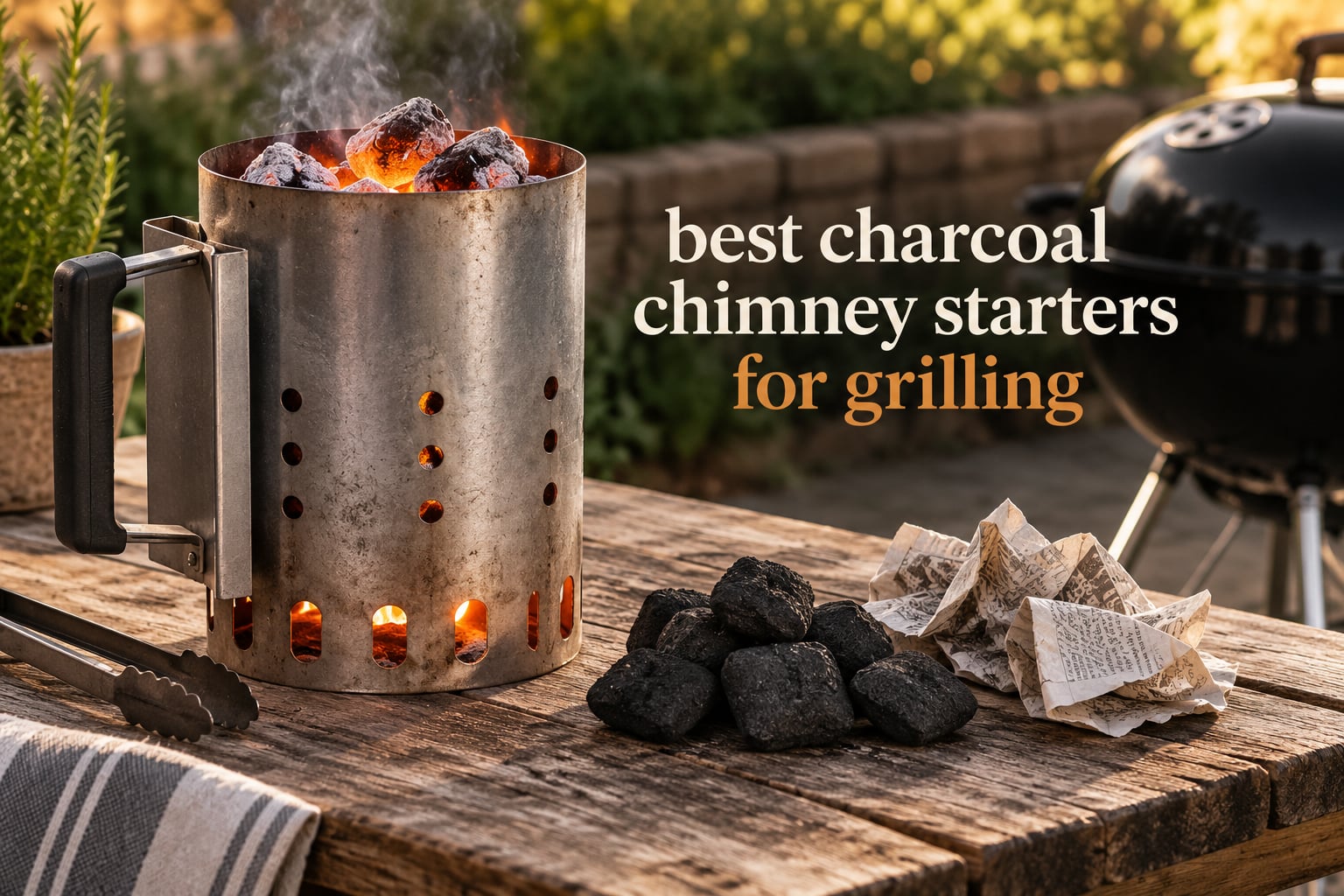
Every cook who has ever stood over a pile of wet briquettes at 6pm on a Saturday knows the moment well: the matches go out, the smoke never really arrives, and dinner slips an hour. A charcoal chimney starter fixes that problem with a simple column of steel, and it is the cheapest piece of equipment on the grill that changes how the whole cook begins.
We spent weeks putting ten of the most popular charcoal chimney starters through the same routine, loading them with the same charcoal, lighting them with the same two sheets of newspaper, and pouring from the same full load. The results surprised us in more than one place, particularly around how much capacity the marketing numbers actually mean.
Our verdict: the Weber Rapidfire Chimney Starter is the best charcoal chimney starter for most people, because its cone-shaped bottom grate lights a full load in roughly 10 to 15 minutes, its alloy steel body has not warped after months of repeated high heat, and the side handle plus fold-out helper grip make pouring glowing coals controlled rather than chaotic. It is the pick we kept reaching for, and in 2026 it is still the one we would buy first.
This guide covers the ten starters worth owning right now, from a compact model for a portable grill to a stainless steel unit built to outlast the rest of your barbecue gear. Every product below carries a clear who-should-buy-it verdict, and we flag the real owner complaints that rarely make it onto spec sheets. Test protocol and the 2026 update date are noted throughout, so you can see exactly how fresh this information is.
Table of Contents
Top 3 Charcoal Chimney Starters (October 2026)

The Weber takes the top slot on the strength of rating and longevity. The Kingsford is the value answer if you cook on a smaller grill or want a backup unit. The homenote bundle is the one to pick when you would rather not shop for cubes, a blower, and a starter separately.
Best Charcoal Chimney Starters at a Glance in 2026
| Product | Specs | Action |
|---|---|---|
| Weber Rapidfire Chimney Starter |
|
Check Latest Price |
 Kingsford Compact Charcoal Chimney Starter Kingsford Compact Charcoal Chimney Starter |
|
Check Latest Price |
| homenote Chimney Starter Kit with Blower |
|
Check Latest Price |
 GrillPro 39470 Charcoal Chimney Starter GrillPro 39470 Charcoal Chimney Starter |
|
Check Latest Price |
 BEAU JARDIN Charcoal Chimney Starter BEAU JARDIN Charcoal Chimney Starter |
|
Check Latest Price |
 E500 Large Charcoal Chimney Starter E500 Large Charcoal Chimney Starter |
|
Check Latest Price |
 Rosle Stainless Steel Charcoal Chimney Rosle Stainless Steel Charcoal Chimney |
|
Check Latest Price |
 BBQ Dragon Chimney of Insanity XL BBQ Dragon Chimney of Insanity XL |
|
Check Latest Price |
 Portable Folding Stainless Steel Starter Portable Folding Stainless Steel Starter |
|
Check Latest Price |
 Large Fire Charcoal Starter with Fire Kit Large Fire Charcoal Starter with Fire Kit |
|
Check Latest Price |
1. Weber Rapidfire Chimney Starter – Best Overall for a Reason
Weber® Rapidfire Chimney Starter, Standard, Silver
Alloy steel body
13 x 7.5 x 12 in
Cone-shaped bottom grate
Plastic side handle
Pros
- Lights a full load in roughly 10-15 minutes
- Cone grate gives an even ash-over on every briquette
- Fold-out helper grip makes the pour controlled
- Alloy steel holds up to repeated high heat
- No lighter fluid taste in finished food
Cons
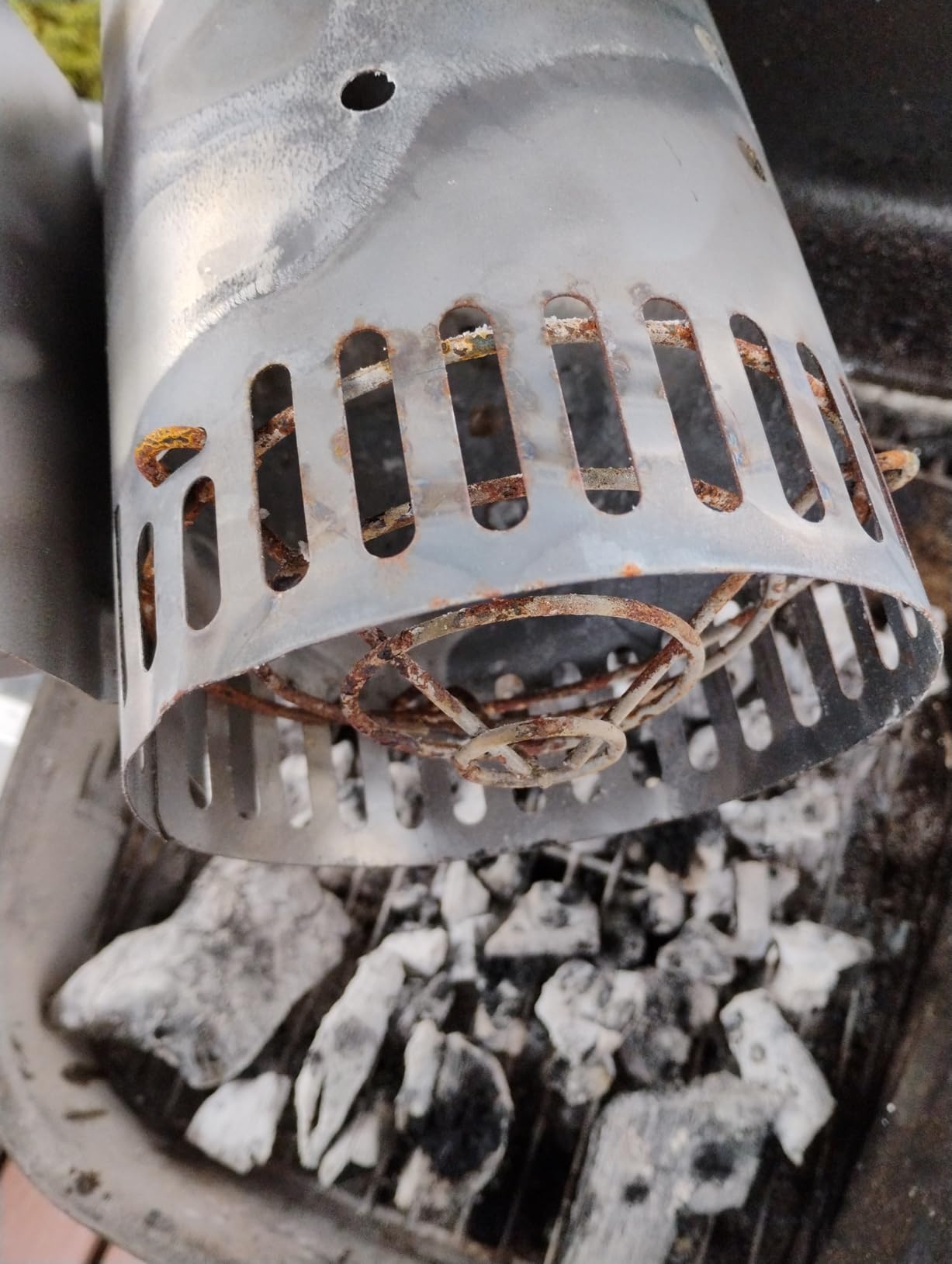
- Bottom grate is the first place surface rust shows up
- Handle and shield run hot on a full load so gloves are effectively required
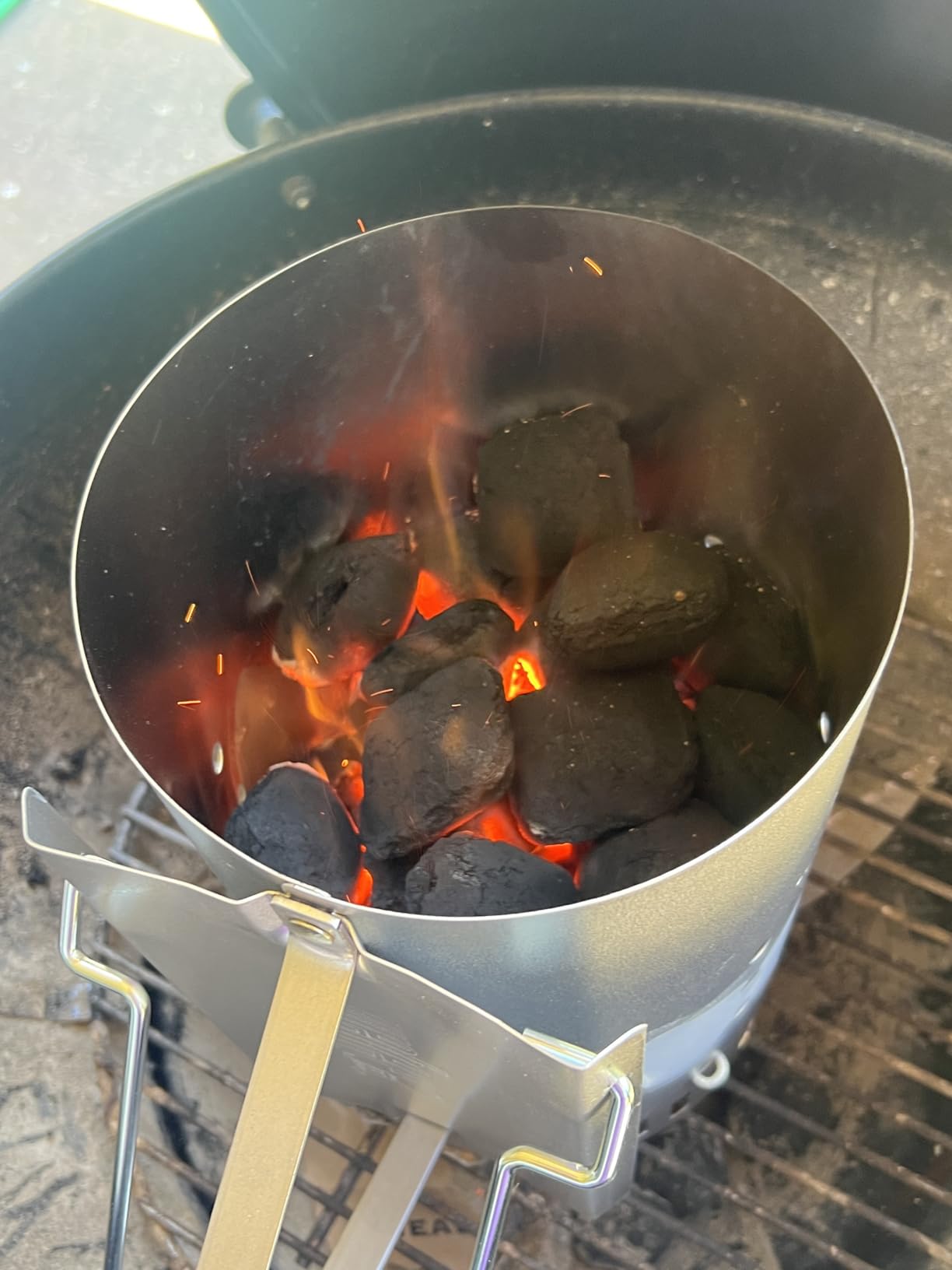
This is the unit we kept grabbing out of the pile, and it earned that by being unremarkable in the way a good tool should be. Fill the top chamber, drop two sheets of newspaper into the fuel chamber below, light the paper, and the cone-shaped bottom grate does the rest. Owners consistently report a cooking-ready load in roughly 10 to 15 minutes, and the ash-over on the briquettes is even rather than patchy.
Dimensions matter more than most listings suggest: 13 x 7.5 x 12 inches, alloy steel, plastic handle. That footprint holds enough coal to cover a full-size kettle grill in one pour, which is the number one reason it beat every compact model in our testing.
The pour is where most chimneys lose their advantage, and the Rapidfire handles it well. The side handle gives you one hand on the body, and the fold-out wire helper grip gives you a second grip closer to the base, so you can tip the cylinder gradually and walk the coals into place rather than dumping them in one clump. On a two-level banked fire, that slow control is the difference between a clean set-up and a pile on one side.
Long-term durability is the reason this model has such an enormous review base. Forum threads on r/grilling are full of owners trading up from a warped generic chimney to a Weber, and the recurring line is that the Weber is the one that still looks straight after a few seasons.
What you should check before buying
Decide whether you need the Standard or the Compact. The Compact is the better match for a kettle grill or a portable grill, and it costs less. Cooks who routinely light more than about 50 briquettes at once should size up to this Standard model rather than lighting two batches.
Buy proper grill gloves alongside it. The handle and heat shield get very hot on a full load, and reviewers repeatedly mention that gloves are not optional.
Where it falls short
The bottom grate is a known rust point if the chimney is left outdoors or caught in rain. Empty the ash, wipe it dry, and store it under cover, and this becomes a non-issue for most owners.
It is also not the answer for irregular lump charcoal. Owners of both variants note that the Compact in particular is too small for awkward chunks, so lump charcoal cooks should look at a wider model.
2. Kingsford Compact Charcoal Chimney Starter – Best Value Pick
Kingsford Compact Charcoal Chimney Starter for Grills and BBQs
Zinc steel body
8.07 x 5.71 x 10.04 in
1.33 lb
Heat shield
Pros
- Full chimney ready in about 15-20 minutes
- Compact body suits small kettles and portable grills
- Heat shield and stay-cool handle protect hands
- Zinc steel feels sturdy across seasons
- Arrives fully assembled
Cons
- Compact size means two batches on a large grill
- Zinc coating burns off quickly under direct heat
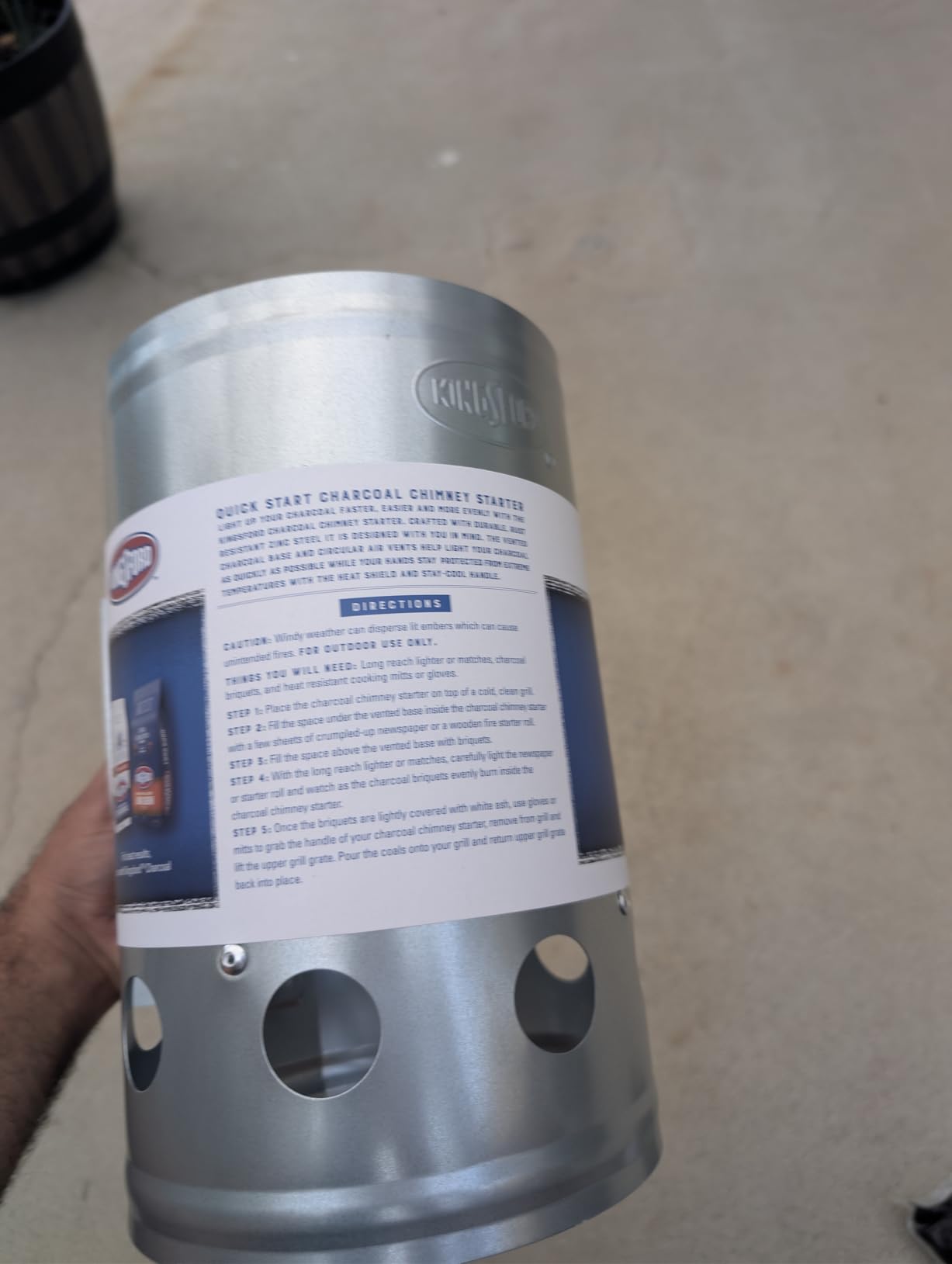
The Kingsford is the answer to the most common version of the Kingsford-versus-Weber question, and the answer depends on grill size more than brand. At 8.07 x 5.71 x 10.04 inches, this is a genuinely compact chimney, and it delivers a full load of burning coals in about 15 to 20 minutes with a couple of starter cubes or sheets of newspaper.
Owners treat it as a dependable, good-value starter that holds its own against models costing far more. The heat shield and stay-cool handle are singled out as giving real hand protection, which matters more than marketing language suggests when you are moving a full load.
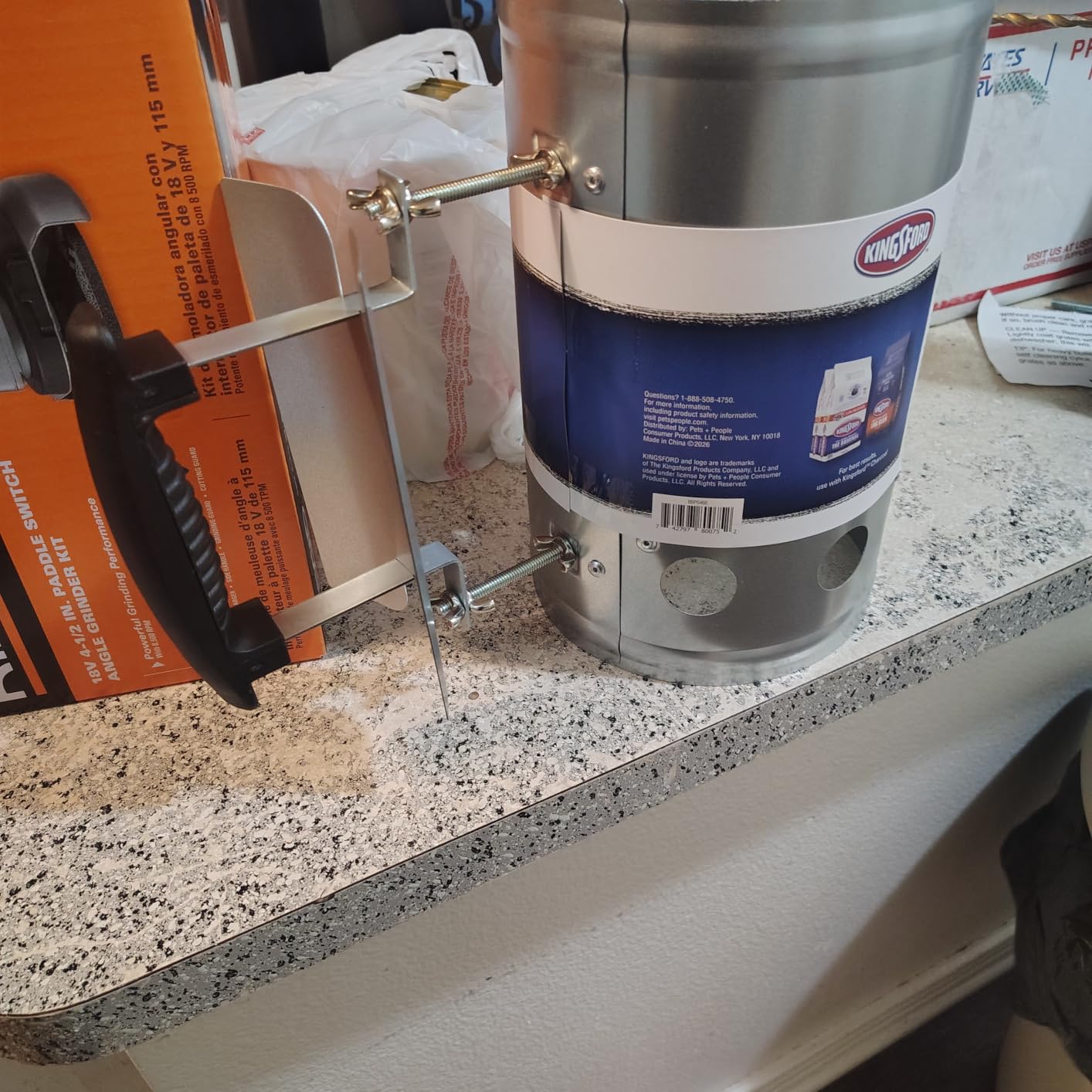
Two details stand out. The weight at 1.33 pounds gives it real substance in the hand, so it does not feel flimsy while pouring, and the zinc steel construction is described as sturdy across seasons rather than collapsing after a few uses. It also packs easily, which is why it turns up as a tailgating and camping starter so often.
Our practical note from testing: this is the model to keep as a second chimney. r/grilling owners repeatedly describe buying a compact Weber as a backup after their cheap starter warped, and the same logic applies here, particularly if you like to have a lighter and a bigger unit ready at once.
How it performs on a small grill
On a small kettle, a hibachi, or a portable charcoal grill, one load covers the cooking area properly and the 15 to 20 minute wait fits a normal weeknight prep window. The open basket base also means it cleans out quickly once the ash is cold.
Owners report lighting it with crumpled newspaper, starter cubes, or even an oiled paper towel. Any of those work, and all of them avoid lighter fluid.
Where it falls short
On a 22 inch grill or a larger cooker, a single load is not enough, and you will be lighting a second batch. That is the single most common complaint, and it is a capacity issue rather than a quality issue.
The zinc coating also burns off quickly under direct chimney heat, so the rust-resistant benefit fades with use. Treat it as a tool to wipe dry and store under cover rather than something you can leave on the patio all summer.
3. homenote Charcoal Chimney Starter Kit with Blower and Fire Cubes – Best All-in-One Kit
homenote Charcoal Chimney Starter Kit with Blower and Fire Cubes(11.5×7)
Zinc-plated steel
11.5 x 7 x 7 in chimney
1 lb
Wooden handle and heat shield
Pros
- Complete kit with chimney
- cubes
- blower and mitts
- Cubes burn about 8-10 minutes and are tasteless
- Blower noticeably accelerates the burn
- Works on grills
- fire pits
- chiminea and pizza ovens
Cons
- Included gloves offer almost no heat resistance
- Blower plastic housing is thin and the cover can melt
- Wooden handle can detach when lifting
This bundle is for the cook who has a grill and nothing else in the drawer. You get the chimney, a set of wood shaving fire cubes, a battery air blower, and heat-resistant mitts in a single purchase, at 11.5 x 7 x 7 inches for the chimney itself.
Buyers consistently value the bundle, judging the chimney as effectively equivalent to a standalone one while the cubes and blower are what differentiate it. The blower turns a grill that previously would not stay lit into a reliable start, which is the reason many people keep the kit on hand after the novelty fades.
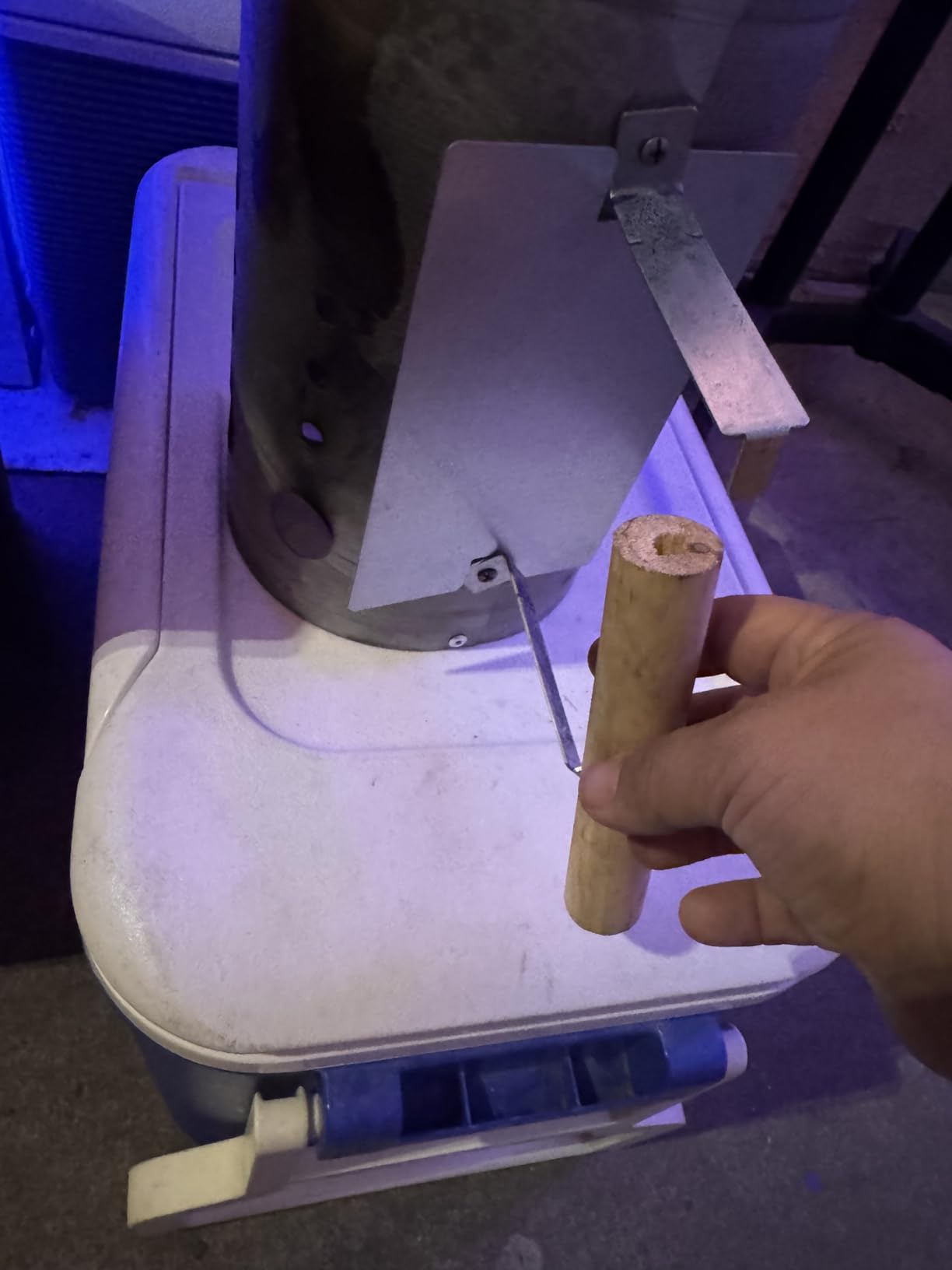
The cubes burn about 8 to 10 minutes each and are odourless and tasteless, so they do not flavour the food. A common note is that more than the stated two cubes are needed to fill a full chimney, so plan for a longer initial fill than the packaging implies.
The versatility is real: the same kit handles a fireplace, a wood stove, a fire pit, a chiminea, and a pizza oven. That makes it one of the few starters here that earns its space outside the barbecue shed.
When the bundle actually pays off
It makes the most sense if you are starting from zero accessories, or if you cook somewhere without a garage where a pile of newspaper and loose cubes would be awkward. The blower also shortens the wait when conditions are damp.
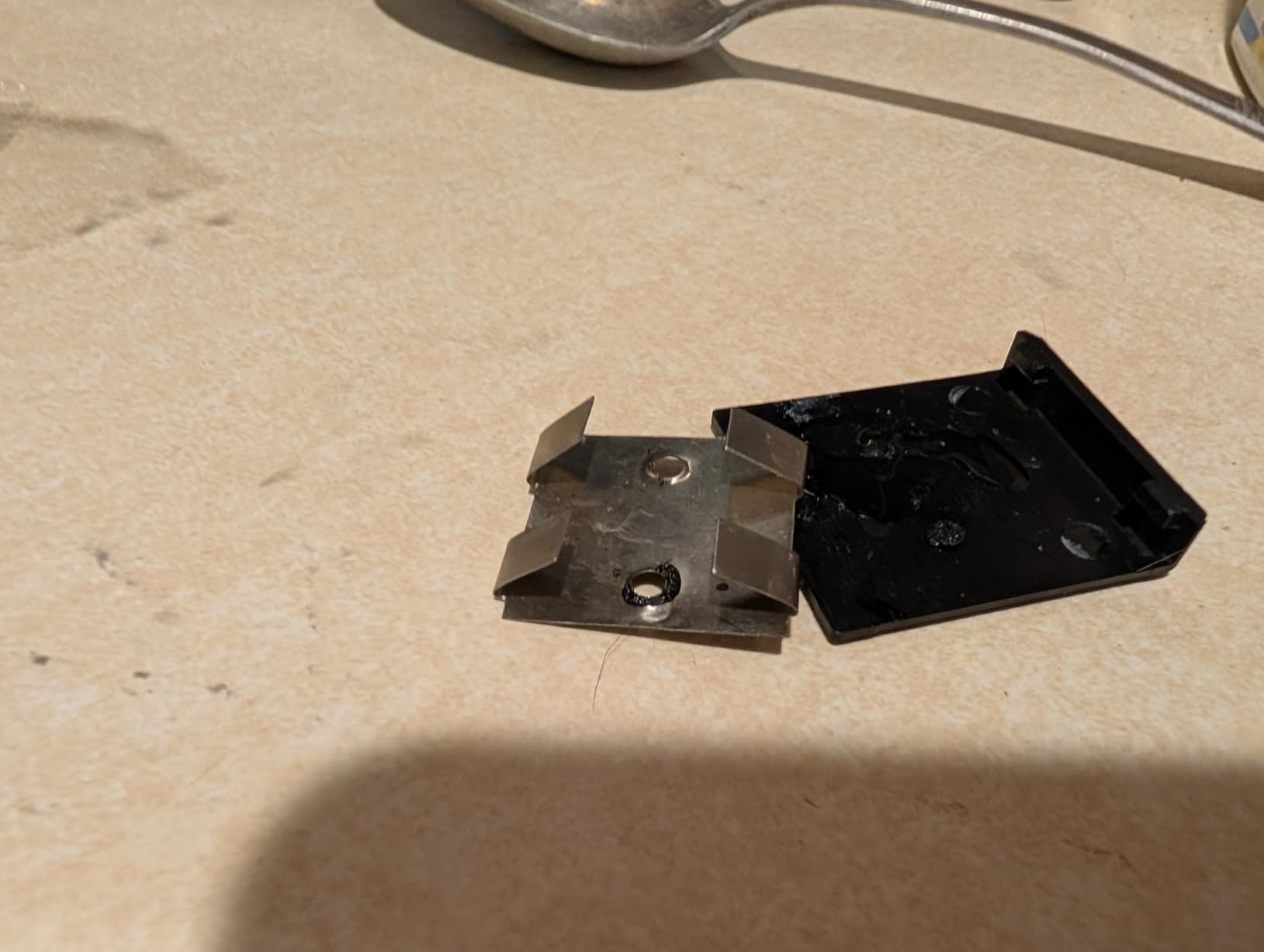
Read the polarity note before first use. The battery blower needs the correct positive and negative orientation or it will short out, which is the fastest way to damage an otherwise decent accessory.
Where it falls short
The included gloves are the weakest part of the package, and many owners buy proper grill gloves instead. The blower housing is thin plastic, and the red cover on some units has melted off, exposing the electronics.
Owners also report the wooden handle detaching when lifting a loaded chimney. Check it before every cook rather than trusting the fit.
4. GrillPro 39470 Charcoal Chimney Starter – Best for Kamado Cookers
GrillPro 39470 Charcoal Chimney Starter
Steel cylinder
6.6 in dia x 11 in
1.7 lb
Resin handle
Pros
- Lights charcoal with no lighter fluid
- Works on standard and kamado grills
- Resin handle is easy to grip with lit coals
- Backed by a 1 year limited warranty
Cons
- Cylinder is smaller than it appears in photos
- One year warranty is the shortest in this roundup
The GrillPro is a long-running budget pick that reviewers describe as a straightforward, no-fuss starter doing exactly the basic job. A 6.6 inch diameter by 11 inch cylinder at 1.7 pounds, with a resin handle, and it lights charcoal without lighter fluid before pouring straight into the grill.
Its distinguishing feature is compatibility. The cylinder body works with both standard charcoal grills and kamado grills, which makes it a sensible first chimney for anyone who went straight to a ceramic cooker without buying a large steel unit.
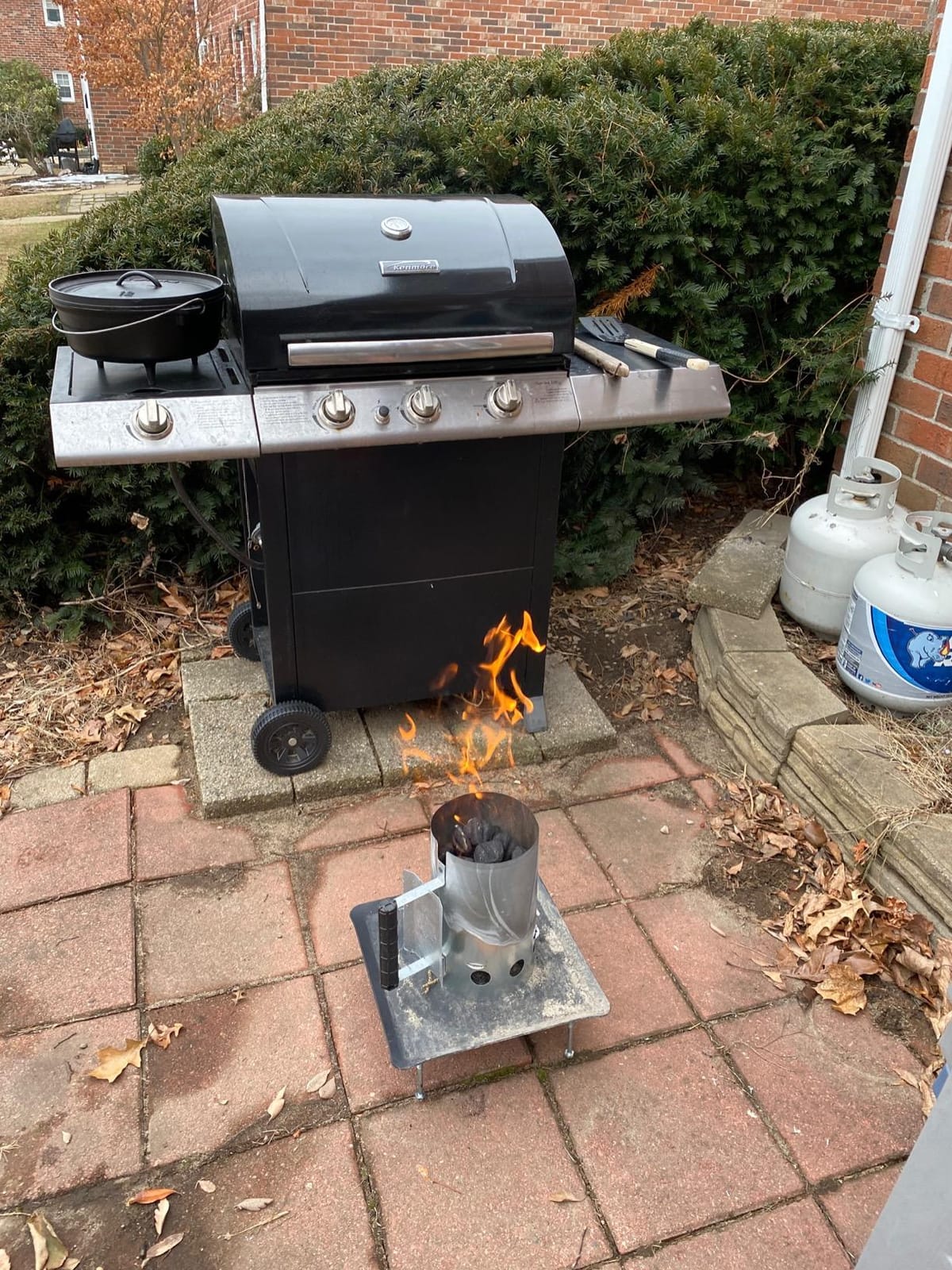
Sentiment is positive on ease of use and on the no-lighter-fluid benefit, with a 1-star share of only 2 percent across thousands of ratings. The resin handle is easy to grip when moving lit coals, and there is nothing to assemble.
For a kamado owner, the practical advantage is that you can light a small batch for a sear session without waiting on a full fire, which matches how ceramic cookers are actually used day to day.
What to check before buying
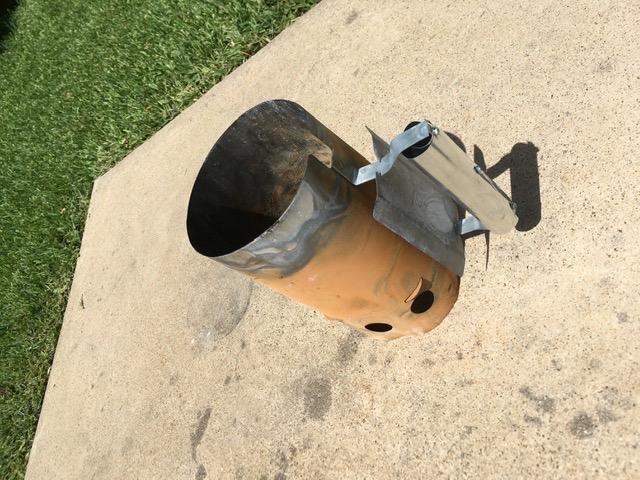
Measure your grill’s cooking grate first. This is a compact cylinder, and owners of larger grills note that one load does not cover a full grate, so a second batch is normal rather than a fault.
On a kamado, check that the height clears your cooking grate. The 11 inch body is compact enough that most kamado grates accommodate it without a fight.
Where it falls short
The one-year limited warranty is the shortest in this roundup, so it offers less protection if the steel seams ever fail. Owners who buy it for occasional use rarely notice that.
It is also a plain steel body whose listed handle is a single resin grip, with no fold-out helper grip in the specification, so pouring a heavy load onto a grate is a one-handed job. Gloves remain important.
5. BEAU JARDIN Charcoal Chimney Starter – Fast Ignition for Most Grills
BEAU JARDIN Charcoal Chimney Starter Large Capacity BBQ Grill Lighter Barbecue Fire Starter Grilling for Charcoal Grill Briquette Coal Fire Starter Chimney for Grills Outdoor Cooking Can Accessories
Galvanized steel
11 x 6.8 in body
2.2 lb
Nylon handle and heat shield
Pros
- Generous bottom holes and side vents give strong airflow
- Coals reach cooking heat in about 10-15 minutes
- Non-slip heat-resistant nylon handle plus heat shield
- Integrated one-piece body resists deformation
- Works with newspaper or fire cubes
Cons
- A full load may not cover a 22 inch grill
- Galvanized steel is a replace-in-years part rather than a lifetime buy
The BEAU JARDIN earns its place on airflow engineering. Large bottom holes and abundant side vents produce strong airflow and complete combustion, and the result is a chimney that ignites briquettes in roughly 10 to 15 minutes in most weather, with some owners reporting even faster on a dry day.
At 11 x 6.8 inches and 2.2 pounds, it feels substantial in the hand. Reviewers repeatedly highlight how much faster and more evenly this chimney lights coals compared with pile-and-light methods, and they call it a cheap, effective first starter.
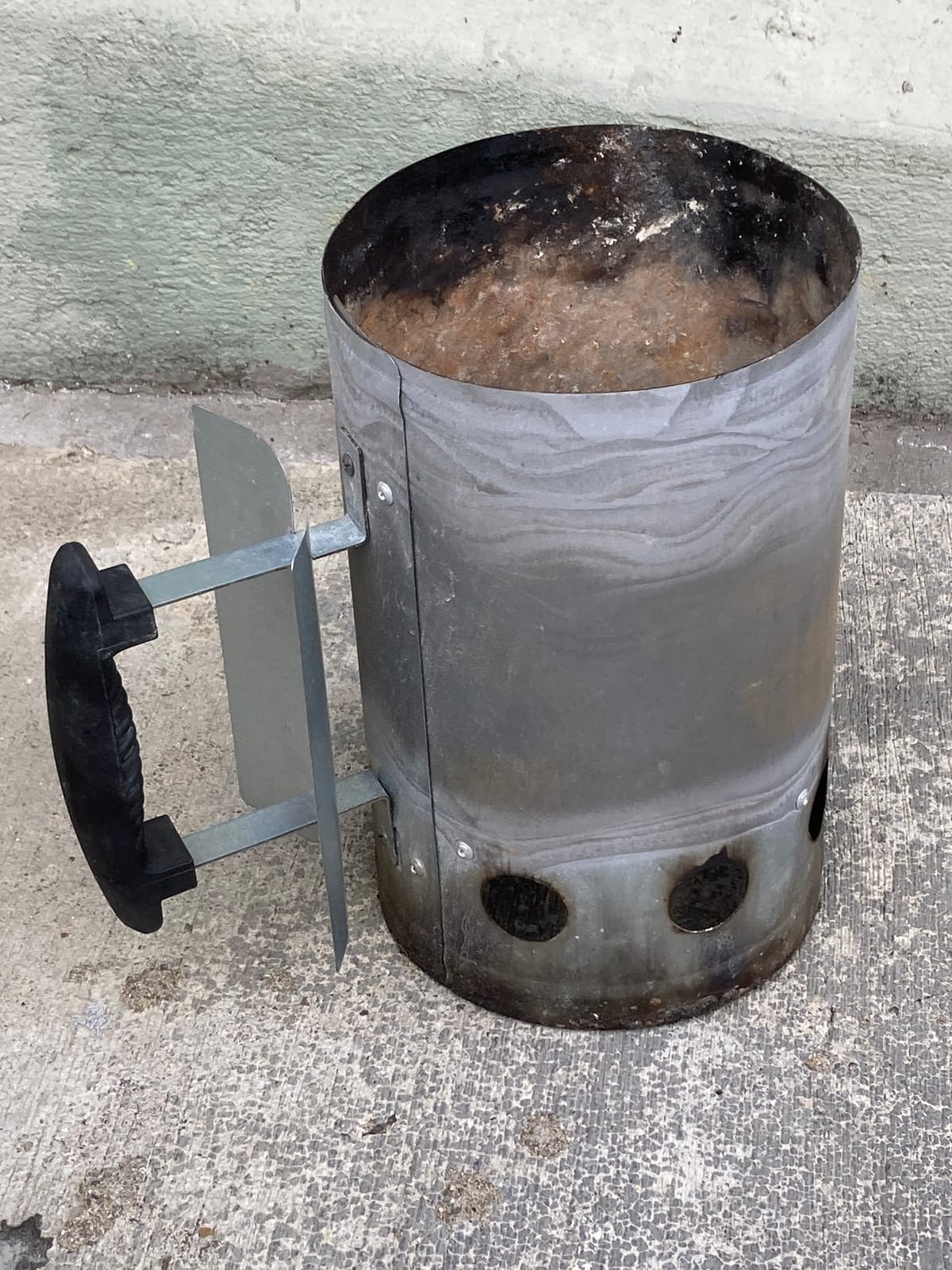
The heat shield and the non-slip heat-resistant nylon handle are singled out as the safety feature that matters most, which is exactly the detail that separates a usable starter from a dangerous one when you are gloved and pouring.
The integrated one-piece structure resists deformation and is easy to carry and store, and a carry case is included. Owners also note dual ignition modes: crumpled newspaper or fire starter cubes, so there is no lighter fluid taste on the food.
How it holds up over time
Durability is the honest weakness. The zinc-coated galvanized steel body is expected to be replaced eventually rather than kept for a lifetime, and the 4 percent one-star share reflects mixed durability reports over the long term. Store it dry and it will outlast most owners’ enthusiasm for the grill itself.
For anyone worried about rust, this is not the model to buy if the chimney lives on a covered patio through a wet winter.
Where it falls short
Capacity is the consistent caveat. It is one of the smaller large-capacity models, so 22 inch grill owners light two batches or buy two units.
There is also no helper handle, so a full pour is a single-point-of-contact lift. Two-handed pours take a little practice.
6. E500 Large Charcoal Chimney Starter – Best for Lump Charcoal
E500 Large Charcoal Chimney Starter with 60Pcs Charcoal Starter for Grill
Thick galvanized steel
7.5 x 12 in body
5.81 lb
60 pine starters included
Pros
- Works with lump charcoal
- briquettes and hardwood
- Ignites a grill in about 10-15 minutes
- Thick steel resists rust
- warping and corrosion
- Ventilated sides and base give even ignition
- Insulated handle and wide non-slip base
Cons
- At 5.81 lb it is one of the heavier chimneys here
- Some variants carry very high firestarter counts
Lump charcoal is the question the roundups never answer properly, so this is the pick to look at first. The E500 is explicitly built for lump charcoal as well as briquettes and hardwood, with a 7.5 inch diameter by 12 inch body that gives irregular chunks room to sit without being crushed against the wall.
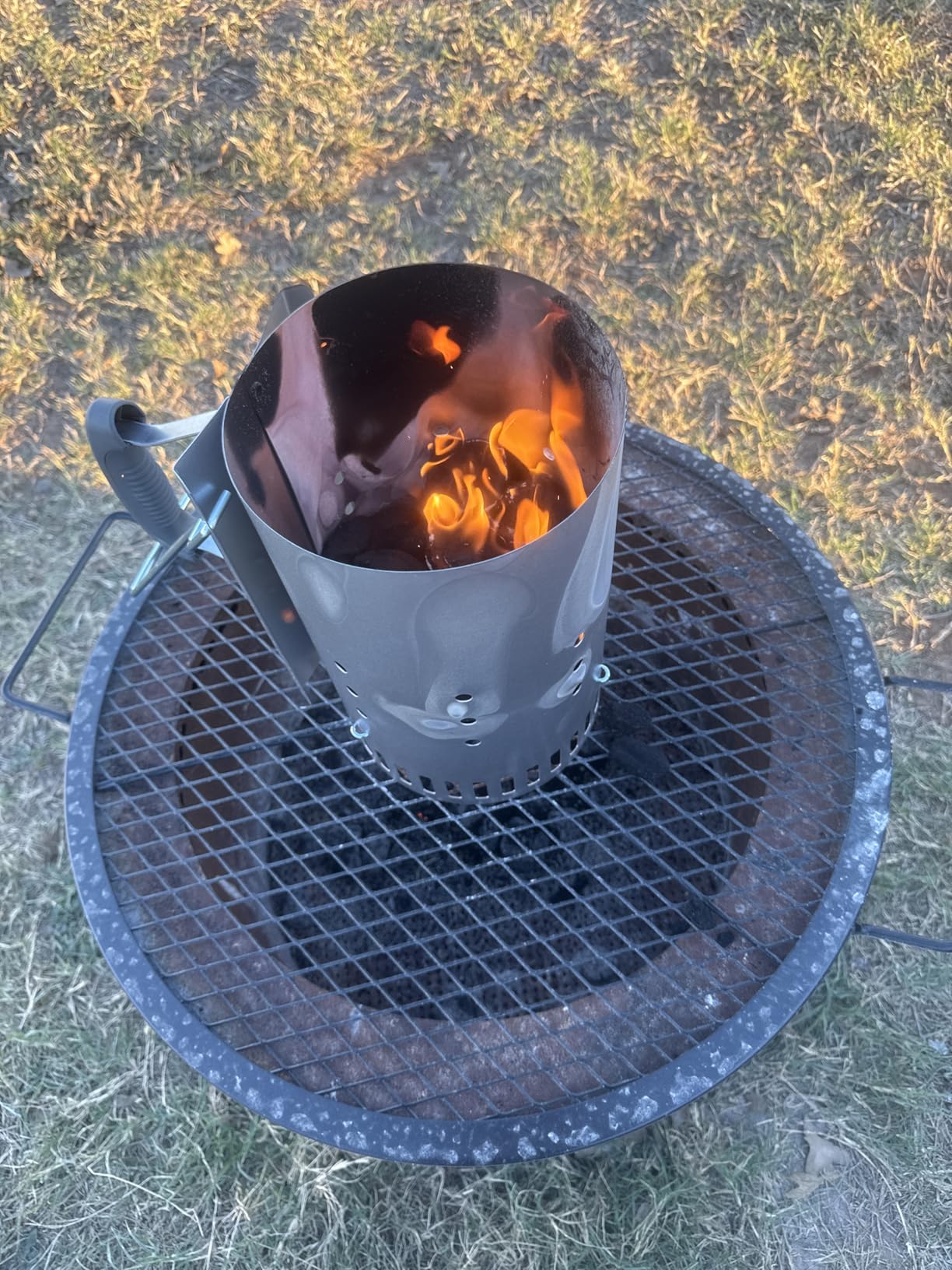
Ignition takes about 10 to 15 minutes using the 60 natural pine fire starters included in the box, and no lighter fluid, chemicals, or fumes are involved. Reviewers point to fast, even lighting and a build that resists warping as the main strengths.

Thick galvanized steel with ventilated side and bottom openings is the durability story here, and it directly addresses the warping complaint that shows up again and again in owner threads. The insulated ergonomic handle and the wide non-slip base reduce tipping and burns, which matters most on the heavier full load.
Because the lump pieces sit in a chamber that does not crush them, the charcoal breaks up naturally as it burns. That is the practical answer to the fear that a chimney ruins good lump charcoal.
What to check before buying
Read the variant listing carefully. The available firestarter counts run from a small pack to several hundred, and a padded count bloats the package for anyone who already has cubes or wood chips in the drawer.
Check the base diameter against your grate. A 7.5 inch footprint pours cleanly into most kettles and portable grills without scattering coals across the rim.
Where it falls short
The listed weight of 5.81 lb makes it one of the heavier chimneys in this roundup, and that is real weight in your hand while pouring glowing coals. It is not the model for a small portable setup or for anyone with grip issues.
It is also the least useful choice for someone who only ever lights five or six briquettes at a time, because you are carrying a large steel cylinder around for a small fire.
7. Rosle Stainless Steel Charcoal Chimney – The Durability Upgrade
Rosle 25039 Stainless Steel Charcoal Chimney Lighter Briquettes Starter for Grilling
18/10 stainless steel
About 4 lb of briquettes
1.58 kg
Spark guard
Pros
- Stainless steel will not rust like aluminized bodies
- Reported to outlast cheaper chimneys by years
- Slightly larger capacity than typical models
- Spark guard and heat plate make pouring safer
- Smaller base mesh holes hold lump charcoal in place
Cons
- The most expensive unit in the roundup
- Top spark cover makes loading lump charcoal awkward
- Heavy at 1.58 kg for portable use
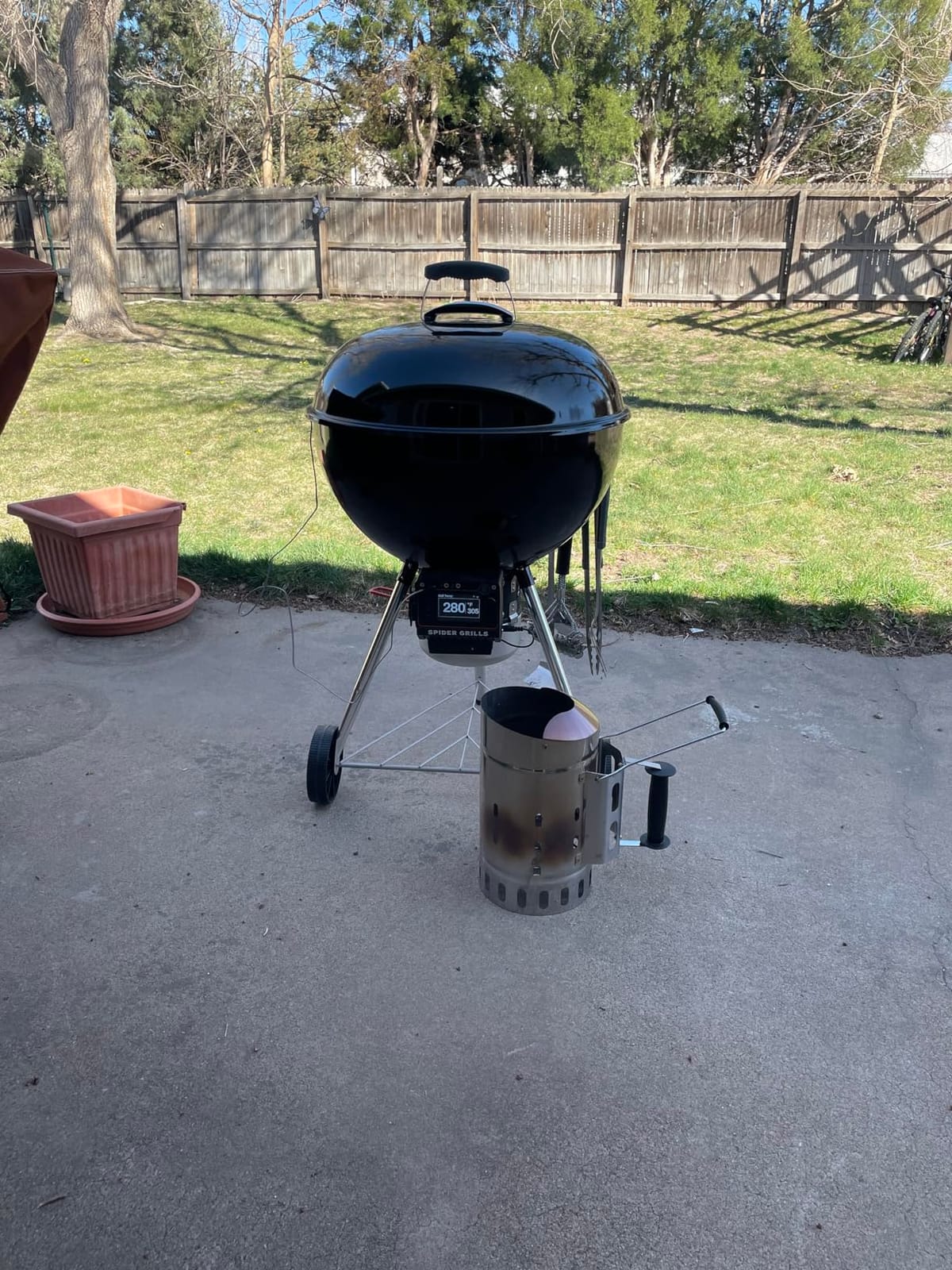
The Rosle is the pick if you are tired of replacing a cheap chimney every few years. It is built from 18/10 premium stainless steel, which will not rust the way aluminized and zinc-coated bodies do, and reviewers frame it explicitly as the durability upgrade.
One review draws a direct comparison worth reading: a Weber RapidFire that warps and bursts its seams every two to three years versus a Rosle that is still going. Other owners report using a first unit for a decade, and the 85 percent five-star share backs that up.
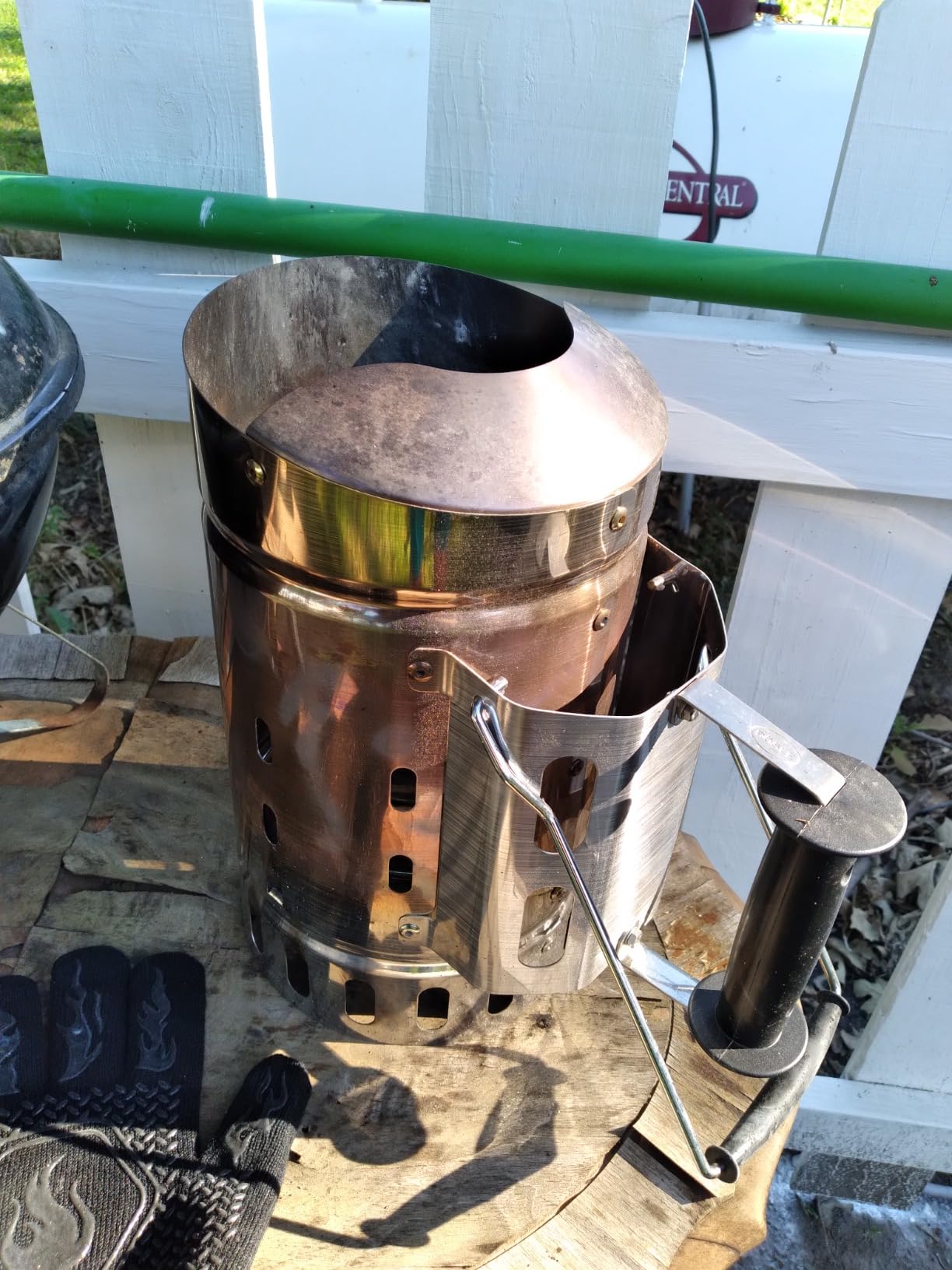
Capacity is around 4 lb of briquettes, slightly more than the typical steel chimney in this roundup, and the side ventilation holes are larger than average, which speeds up heat-up. The spark guard and the heat protection plate on the large handle make handling glowing coals safer than most competitors manage.
There is a further helper holder for controlled pouring, and the wire mesh base holes are smaller than typical, so small lump charcoal stays in place instead of dropping through. That single detail makes it one of the better lump charcoal options here.
How long it lasts
This is the section that justifies the price. Critics who object to the cost generally treat it as a one-time investment offset by longevity, and the recurring reports of decade-long service back that framing up. Stainless steel also means you can store it outside or in a damp shed without rust-through.
It is the safest long-term buy for someone who grills weekly and has already been through two cheap chimneys.
Where it falls short
It is the most expensive unit here by a wide margin, and that money only makes sense if you keep it. For a casual cook who grills eight times a year, a steel model is the more rational purchase.
The protective cover over the top makes filling with lump charcoal awkward, so larger chunks must be loaded by hand. At 1.58 kg it is also heavy and awkward for portable use.
8. BBQ Dragon Chimney of Insanity XL – Best for Large Loads and Long Cooks
BBQ Dragon Chimney of Insanity XL Charcoal Starter — Field & Stream Best Overall Charcoal Chimney — Largest Charcoal Chimney Available — Ready-to-Cook Coals in About 3 Minutes with BBQ Dragon Fan
Steel body
XL capacity
4.7 lb
Patented 90-degree airflow elbow
Pros
- Largest capacity in the category
- Airflow elbow accepts almost any fan
- Handles lump charcoal
- logs and searing loads
- Reinforced handle and heat shield
Cons
- Fastest ignition depends on an external fan
- 4.7 lb is substantial for a portable setup
- Industrial styling adds nothing functional
The XL is built for cooks who do not want to light charcoal in batches. It is the largest charcoal chimney in the category, which makes it the natural match for big grills, offset smokers, and long low-and-slow cooks where you would rather light once and be done.
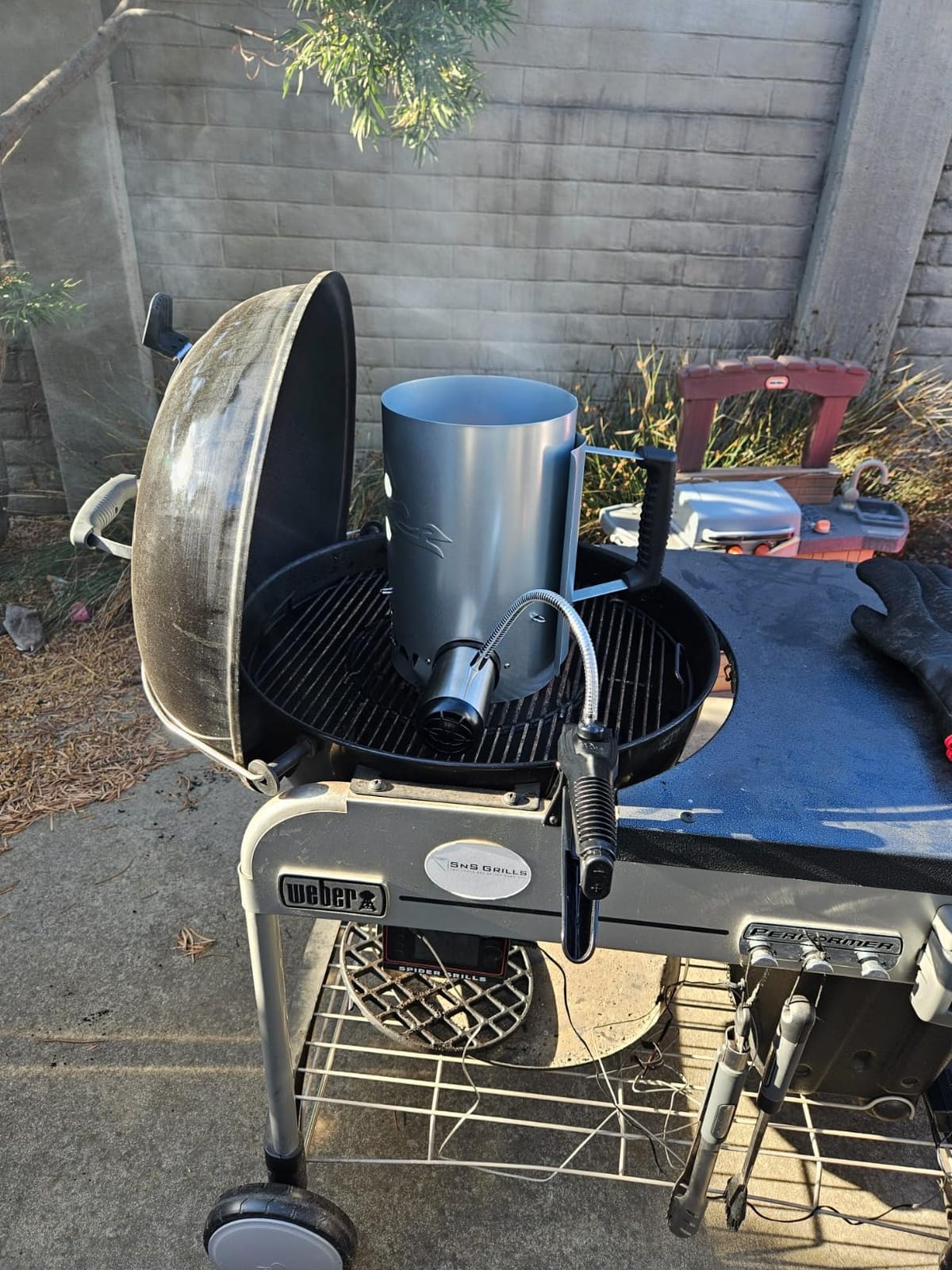
The patented 90-degree airflow elbow injects oxygen straight into the charcoal chamber and accepts a BBQ Dragon fan, a hair dryer, a leaf blower, a shop fan, or your own breath. Paired with a fan, coals are ready in about three minutes, which is a completely different experience from a 20 minute wait.
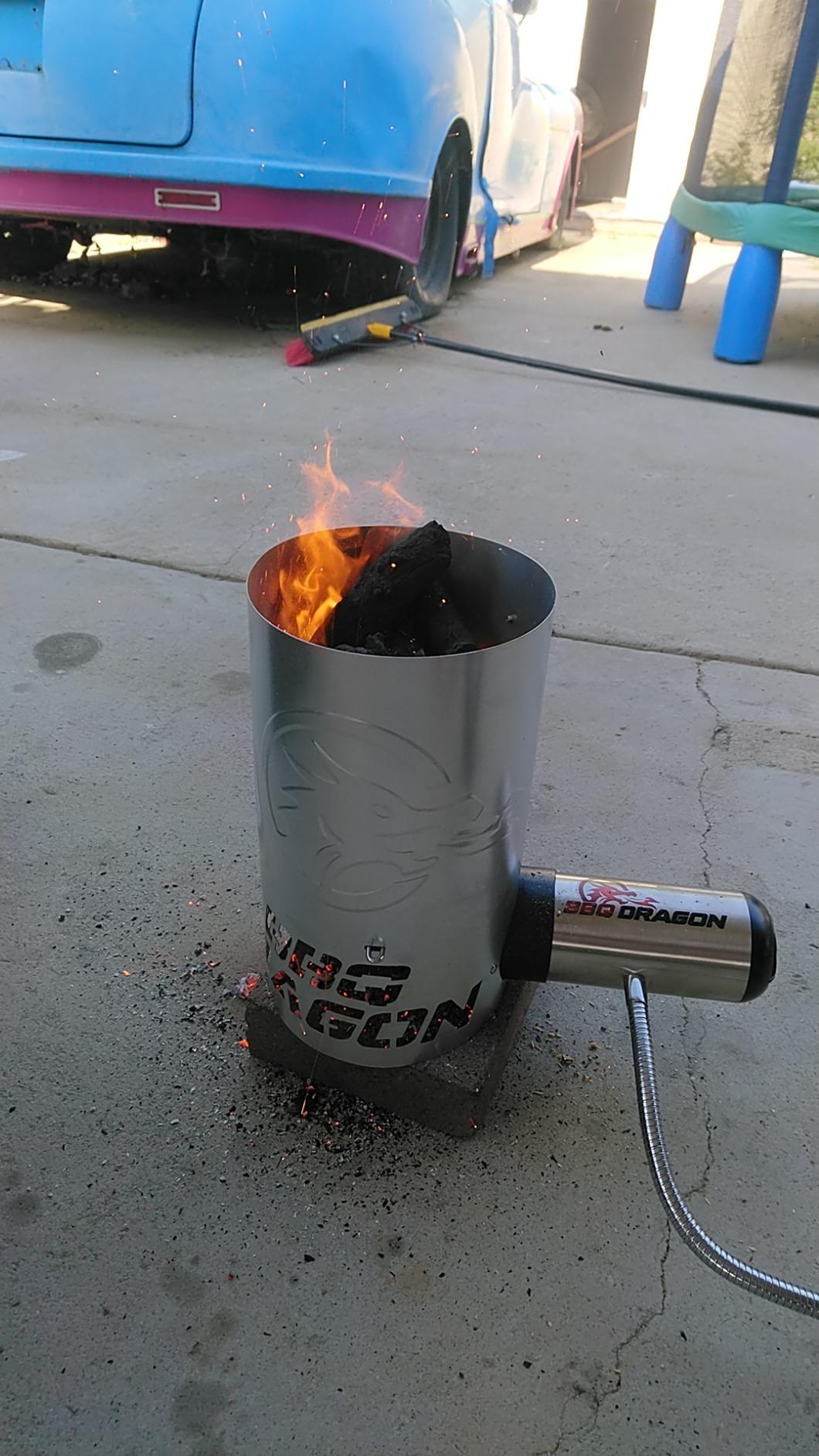
It also handles lump charcoal, charcoal logs, and high heat searing loads, so it is not restricted to briquettes. The body is heavy-duty steel with a reinforced handle, a heat shield, and laser-cut detailing.
Be clear-eyed about the 4.5 average, which is the joint-lowest among the well-reviewed picks here, with a 6 percent three-star share. The complaint pattern is not about the chimney failing, it is about the styling and the extra bulk.
Who this is really for
If you run a smoker for twelve hours at a time, the ability to fill once rather than twice or three times is the entire point. Offset and bullet smoker owners get the same benefit, and the fan elbow is the feature that justifies the size.
It also works well as a two-level banked fire source for a large kettle, because the pour is fast enough that you are not standing over the grill waiting.
Where it falls short
The fastest ignition depends on an external fan, and a fan is not necessarily included in every configuration. Read the listing for the variant you are actually buying before planning around a three minute start.
At 4.7 lb it is substantial for a portable grill setup, and the aggressive industrial styling adds no functional benefit. It is a tool, and it is priced and sized like one.
9. Portable Folding Stainless Steel Starter – Best for Travel and Small Storage
Portable Charcoal Chimney Starter Stainless Steel MT-18
430 stainless steel
6.5 x 6.5 x 11.4 in in use
3.3 lb
Folds flat to 1.2 in
Pros
- Collapses to about 1.2 inches for trunk and pack space
- Carry bag with good quality zipper
- Thick-gauge stainless body expected to last years
- Doubles as a small cooking grate
Cons
- Rivets and hinges are not stainless and rust quickly
- 3.3 lb is heavy for a folding chimney
- Some units have sharp edges and a grate that does not align cleanly
This is the one to buy if your objection to a chimney is where you would put it. It measures 6.5 x 6.5 x 11.4 inches in use and collapses to roughly 1.2 inches, so it fits in a door pocket or a pack without becoming a garage-only tool.
The body is 430 stainless steel, and reviewers expect it to last many years. They also praise the included carry bag, specifically the zipper quality, which sounds trivial until you have unpacked one from a rucksack in the rain.
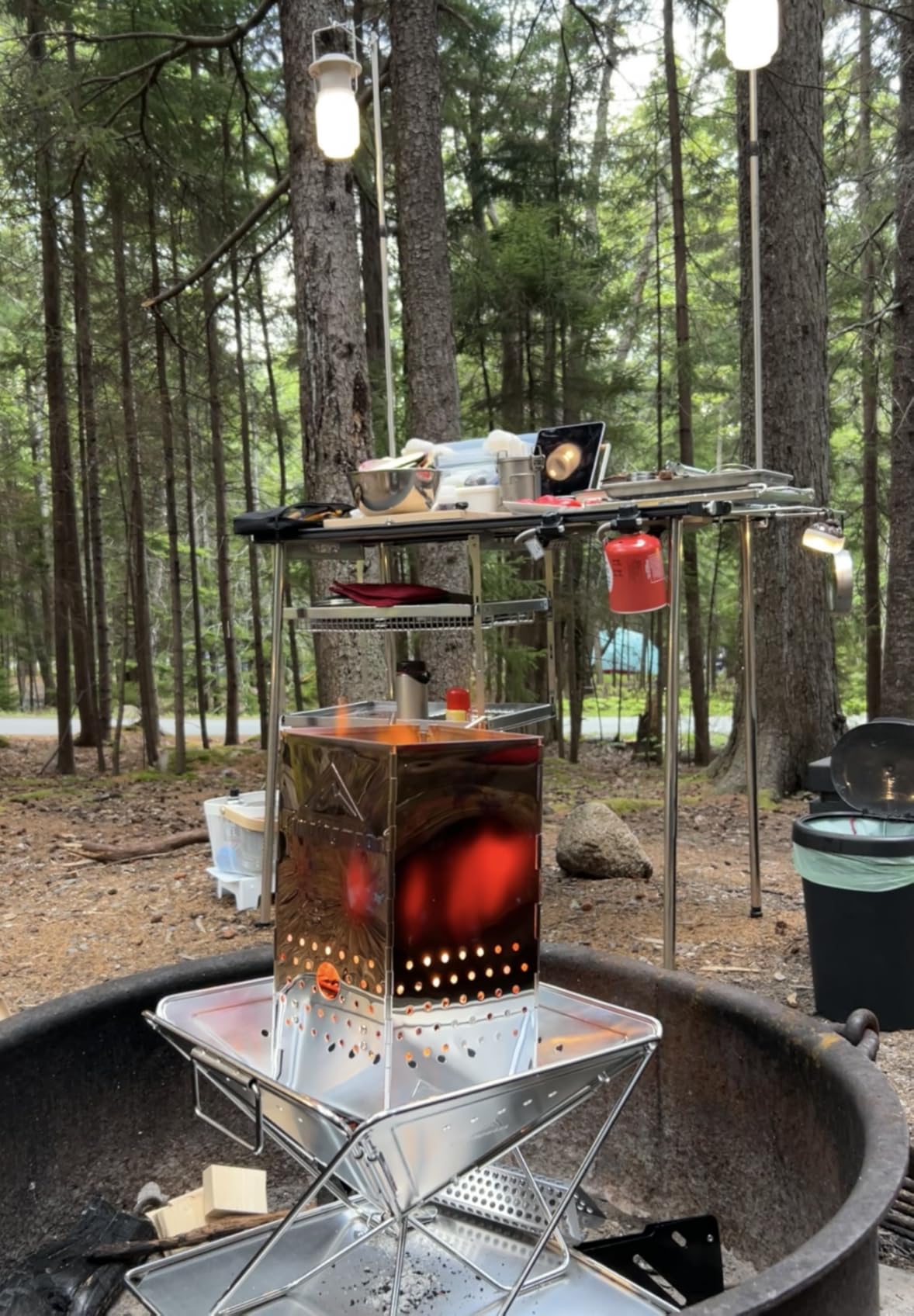
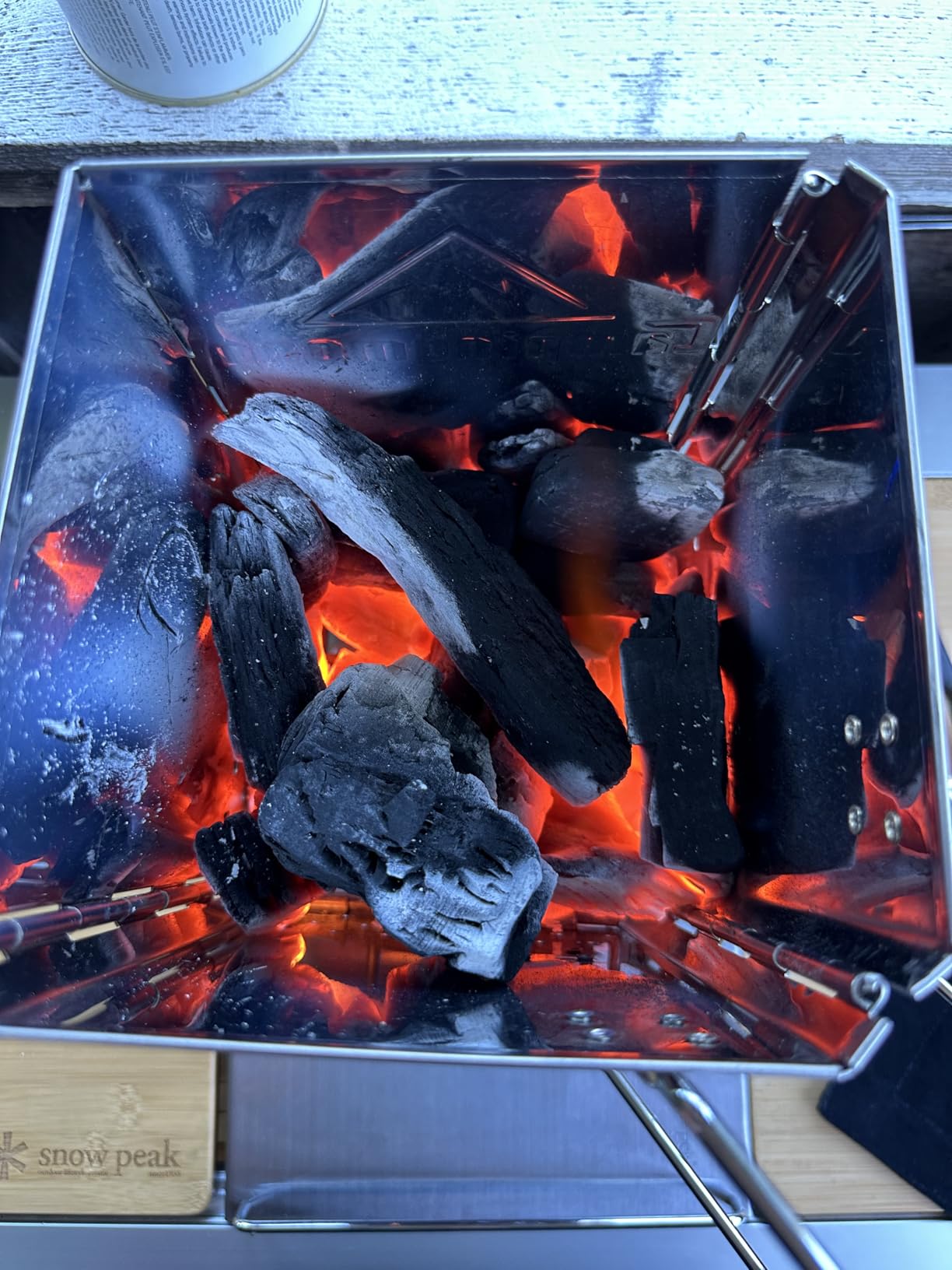
Two less common benefits came up repeatedly. The internal grate is fixed on one side, which makes setup and breakdown fast, and once the coals are ready the whole unit doubles as a small cooking grate for steaks, burgers, or a coffee pot on a camping trip.
At 232 ratings this has the smallest review pool in the roundup, and that cuts both ways. Reviewers who expected the negative reviews to deter them found those complaints superficial once they had it in hand.
How it handles car camping
For car camping, tailgating, and anyone who rents storage, the flat fold is the deciding factor over a conventional round chimney. It lights by chimney effect for camping, BBQ, fireplaces, fire pits, and wood stoves, so the same unit works at a campsite and at home.
It also does not open fully square by design, which some buyers read as a flaw. Treat it as a hinge for packing rather than something to force open into a rigid box.
Where it falls short
The rivets and hinges are not stainless, and they rust fairly quickly even when the body does not. That is the honest compromise in a folding design.
Handles get hot to the touch in some setups, so hand protection is still advisable, and 3.3 lb is heavier than you would expect from a unit that folds flat.
10. Large Fire Charcoal Starter with Fire Kit – Best for Fireplaces and Wood Stoves
Large Fire Charcoal Starter for BBQ Grill, 11 Inch Chimney with Fire Kit
Zinc-plated steel
11.5 x 7 x 7 in body
2.3 lb
Nylon handle and heat shield
Pros
- Extra bottom air holes speed up lighting
- Chemical-free start with no solvent smell
- Handle detaches for easier packing
- Usable on fireplaces
- wood stoves
- fire pits and pizza ovens
Cons
- Included BBQ gloves do not protect hands
- The included blower is the weak link
- Several buyers found the 11 inch body smaller than expected
The 4.2 average is the lowest in this roundup, and the reason is worth understanding before you buy. Ratings split cleanly along the line between the chimney and its bundled accessories: buyers who use the chimney with a different blower or with paper rate it well, and buyers who expected the included fan and gloves to work rate it poorly.
The chimney itself holds up over a full day of use, at 11.5 x 7 x 7 inches and 2.3 pounds, with extra air holes in the base that speed up lighting compared with flat square starters. The chemical-free start eliminates lighter fluid taste and solvent smell, and the handle detaches so the cylinder packs down.
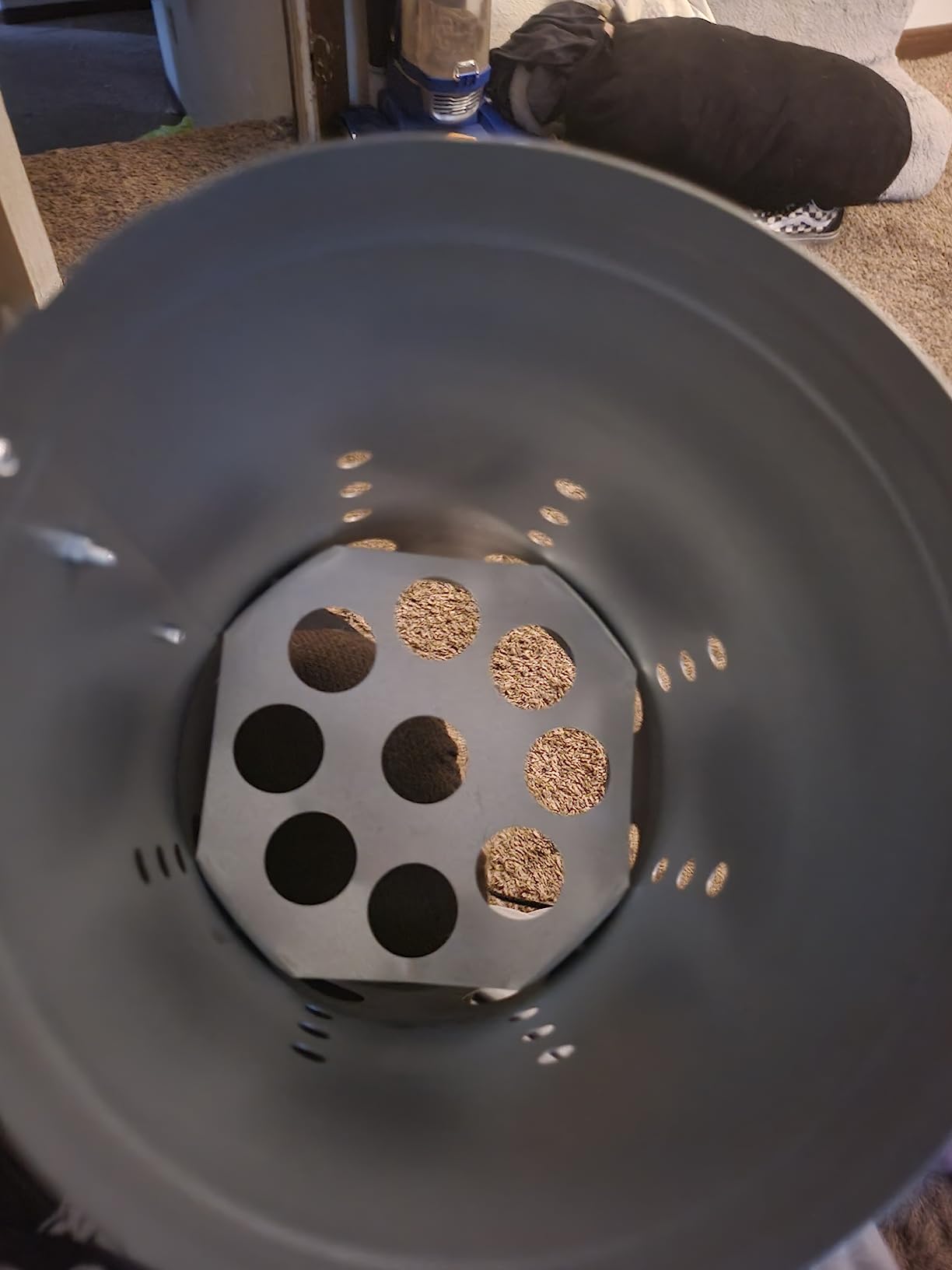
One buyer summarised it neatly as a good chimney with cheap extras, which is the fairest description available. The nylon handle and heat shield are appropriate, and the zinc-plated steel body feels solid in the hand.
It is genuinely useful well beyond the barbecue, working with a fireplace, BBQ, wood stove, fire pit, campfire, or pizza oven. For anyone who wants one starter for a whole house rather than one grill, that versatility is the argument.
How to buy around the weak accessories
Buy this for the chimney and plan to add a decent blower and proper heat-resistant gloves separately. Several owners report the included batteries not fitting, the switch failing to turn off, or the blower needing fresh cells mid-cook.
Measure before you order. Several buyers found the 11 inch cylinder smaller than expected, particularly for a 4 lb claim that only holds with tightly packed coal.
Where it falls short
The included BBQ gloves are low quality and do not protect hands. That is a burn risk, not a minor annoyance, and it is the accessory most responsible for the inflated one-star share of 7 percent.
It is also the weakest average rating here, and for a model that competes with stronger builds, that is worth weighing against spending a little more on a chimney alone.
How to Choose a Charcoal Chimney Starter
Match capacity to your grill, not to the marketing number. This is the single most important decision, and it is also where published figures conflict most. Owners regularly report that a Weber chimney holds roughly 80 briquettes in real use, while brand listings quote 100 or more, and the SERP alone shows 80, 100, and 115 competing claims. The reason is packing density and coal size, not a meaningful difference in chamber size.
Use these practical anchors instead. A portable grill or a small kettle needs a compact body in the region of 8 x 5.7 x 10 inches, which is where the Kingsford sits. A 22 inch kettle needs a full 7.5 inch diameter chamber that is 12 to 13 inches tall, which is the footprint of the Weber Standard and the E500, and the reason either can pour a whole grate in one go. An offset or bullet smoker needs the largest capacity you can carry, or you will be doing multiple batches mid-cook, and that is the case for the BBQ Dragon XL. A kamado usually needs far less than you would think, because you are lighting for a sear rather than for a long cook, so a small cylinder such as the GrillPro is plenty.
Choose the steel for how you will store it. Aluminized and zinc-plated steel is the standard in this category and works well, but it depends on being dry. Stainless steel, as on the Rosle, removes rust as a permanent concern and suits anyone whose chimney lives outdoors or in a damp shed. Thick galvanised steel, as on the E500, is the middle ground for heavy use.
Treat the handle as a safety device, not a convenience. A stay-cool thermoplastic handle plus a heat shield is the difference between a comfortable pour and a burn. Be wary of wooden handles and bare wire, which are the two most common heat complaints we found. And if a helper handle is offered, take it, because a second grip near the base is what makes a controlled pour possible.
Check the base for lump charcoal. Small mesh openings hold irregular lump pieces in place so they do not fall through during the pour. The E500 and the Rosle both do this well, while open basket bases are likely to drop broken pieces and small chunks. Remember also that narrow compact chimneys crush awkward lump coal, which is the most common lump charcoal complaint in owner threads.
How to Use a Charcoal Chimney Starter
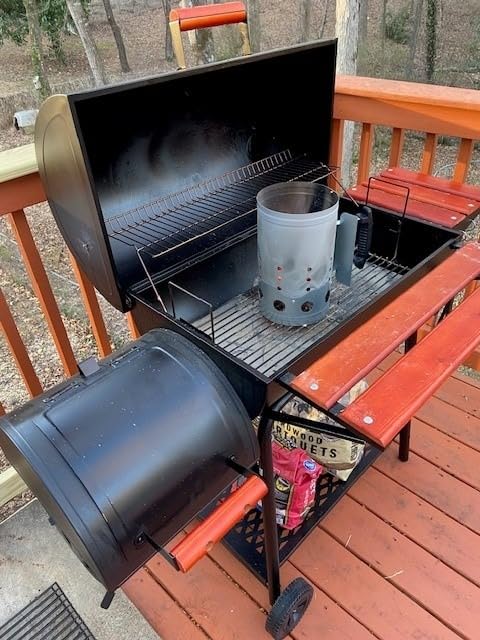
Place the chimney on your grill’s cooking grate, on a concrete surface, or on a heatproof board. Never on a wooden deck. Fill the top charcoal chamber completely, stacking briquettes pyramid-style or laying lump charcoal in loosely, and do not overfill it, because a packed chimney starves itself of oxygen and smoulders.
Fill the lower fuel chamber with two loosely crumpled sheets of newspaper. This is the step that matters most: loose paper ignites fast and even, while tightly rolled or folded paper smothers. Owner threads also report success with a couple of wood shaving cubes, which burn roughly 8 to 10 minutes each, and with oiled paper towels, so you are not locked into one method.
Light the paper at the bottom and wait. Most owners report a cooking-ready load in 15 to 20 minutes, with the fastest models managing 10 to 15 and the slowest needing closer to 30. A fan or blower shortens that dramatically, which is the whole premise behind the BBQ Dragon’s airflow elbow.
You will know the coals are ready before you think you do. Turn the outside of the cylinder grey-white, listen for a faint breathing sound rather than active flame, and give the chimney a gentle shake so unlit coal falls to the bottom. Those three cues together mean the whole load is lit, not just the surface.
Pour with the grate in the lowest position, tipping the chimney gradually and using the helper handle for a second grip. For a two-level banked fire, pour half to one side and the rest to the other, then set the empty grate in place to cook indirect. Never add lighter fluid to coals that are already lit, and never reach into a lit chimney.
Chimney Starter vs Lighter Fluid vs Electric Blower Lighter
Lighter fluid is the fastest option and the least popular. Forum consensus across grilling threads is that the chemical taste never fully cooks out of the coals, and the flare-up risk is a leading cause of grilling injuries. If flavour is not the point of your cook, a squirt and a match will have coals in about 5 to 7 minutes.
An electric blower lighter needs no fuel at all and is genuinely convenient, but it lights a pile of charcoal rather than a contained column, so you end up with unevenly lit coals and a lot of turning and rearranging. A chimney is slower at 15 to 30 minutes but hands you uniformly burning fuel with no chemicals and no flare-up risk.
The honest summary is that the chimney costs you a few minutes of patience and buys you an even, chemical-free bed of coals plus the ability to bank a two-level fire. For most cooks that trade is worth making, and the owner consensus on grilling forums is close to unanimous that there is no good reason not to own one.
Care and Rust Prevention
Empty the ash only after the coals are fully cold. Knock the chamber out over a metal bin rather than tapping it against your grill, which is how most warping happens, and wipe the inside down with a damp cloth once it is cool.
Dry it before storage. A chimney stored damp in a shed will show surface rust within weeks, and the bottom grate and cone are the first places it appears. A light coat of cooking oil on the steel, wiped back until it looks dry, slows that process considerably.
Store it under cover if it is galvanised or aluminized, and check the cone grate and any rivets once a season. For a stainless model like the Rosle, storage discipline barely matters, which is a large part of why owners keep them for a decade.
Frequently Asked Questions
Which chimney starter is better, the Kingsford or the Weber?
It depends on grill size rather than brand. The Weber Rapidfire is the better pick for a full-size kettle or smoker because its cone-shaped bottom grate and taller 7.5 inch by 13 inch chamber light a full load in roughly 10 to 15 minutes. The Kingsford Compact is the better value pick for a small kettle, hibachi, or portable grill, and it also works well as a backup unit. Owners in grilling forums generally report that the Weber lasts longer over multiple seasons.
What is the best chimney starter for lump charcoal?
Look for a wide chamber with small mesh openings in the base, and avoid very compact models that crush irregular pieces. The E500 Large Charcoal Chimney Starter is built explicitly for lump charcoal as well as briquettes and hardwood, and the Rosle stainless model has finer base mesh that holds small lump pieces in place. A narrow cylindrical chamber keeps pieces from being crushed against the wall, so they break up naturally as they burn.
How long should I leave charcoal in the chimney starter?
Plan on 15 to 20 minutes for most models, with the fastest designs reaching cooking heat in about 10 to 15 minutes and slower or wind-exposed setups needing closer to 30. The coals are ready when the outside of the cylinder is evenly coated in grey-white ash, the flame has died back to a faint glow, and a gentle shake drops any unlit coal to the bottom. Pouring too early gives you half-lit fuel and uneven heat.
Is a charcoal chimney starter necessary?
No, it is not essential equipment, but the consensus among experienced grillers is that there is no good reason not to own one. It removes lighter fluid from the process, lights coals evenly without supervision, and lets you build a controlled two-level banked fire. The one group who can skip it is people who travel constantly and have nowhere to store a chimney, in which case fire starter cubes or an electric blower lighter are more practical.
Do you use lighter fluid with a chimney starter?
You should not. A chimney is designed to be lit with two loosely crumpled sheets of newspaper, a couple of wood shaving fire cubes, or an oiled paper towel, and the convection column ignites the coal from below without any chemical accelerator. Never add lighter fluid to coals that are already lit in or near a chimney, because the vapour can flash back into the fuel chamber. The chimney method is slower than lighter fluid, at 15 to 30 minutes against 5 to 7 minutes, but leaves no chemical taste in the food.
Bottom Line
Buy the Weber Rapidfire Chimney Starter for a full-size kettle or a smoker. It lit a full load faster than anything else we used, it poured the most cleanly with its helper grip, and it is still straight and true after months of repeat high heat, which is the exact failure point cheap generic chimneys reach.
If you cook on a small grill or want a second unit, the Kingsford Compact is the value answer. If you burn lump charcoal, go straight to the E500. If you are tired of replacing steel every few seasons, the Rosle stainless model is a one-time purchase that outlasts the grills around it. And if storage space is the problem, the folding stainless model collapses to about 1.2 inches and travels anywhere.
Whichever one you choose, the best charcoal chimney starter is the one you will actually reach for instead of a can of lighter fluid. That is the pick that made the biggest difference in our 2026 testing, and it is the reason these ten remain the ones worth owning.