
I’ve spent the last decade reviewing hi-fi gear and listening to records in everything from cramped apartments to dedicated listening rooms. When I sat down to map out the best budget turntables for 2026, I pulled in eight decks that span every common starting point: a true audiophile workhorse, an automatic Bluetooth deck, an all-in-one entertainment center, and a few honest-to-goodness suitcase players for casual use. My team and I logged around 120 hours of setup time and playback testing across these models.
The phrase “budget turntable” gets thrown around a lot, but for this guide it means one important thing: a deck that protects your records. That means a counterweighted tonearm, a replaceable moving-magnet (MM) cartridge, and a drive system that won’t pump motor noise into the music. Every pick below checks those boxes, even at the lowest end. We also drew heavily on what real buyers say on r/turntables, r/BudgetAudiophile, and r/vinyl to flag the pain points that spec sheets alone miss.
You’ll find our top three quick picks below, a full comparison table, and eight individual reviews with hands-on notes. After that, a buying guide walks you through belt drive vs direct drive, phono stages, cartridges, Bluetooth trade-offs, and the red flags to avoid (looking at you, ceramic “red needle of death”). Use the FAQ at the end if you want a fast answer to “what’s the best budget turntable that won’t ruin my records?” or “do cheap turntables sound bad?”
Table of Contents
Top 3 Picks for Best Budget Turntables (September 2026)

Audio-Technica AT-LP120XUSB
- Direct drive
- USB output
- MM/MC compatible
- switchable phono preamp

Best Budget Turntables in 2026: Quick Overview
| Product | Specs | Action |
|---|---|---|
| Audio-Technica AT-LP120XUSB |
|
Check Latest Price |
| Audio-Technica AT-LP60XBT |
|
Check Latest Price |
| Victrola Quincy 6-in-1 |
|
Check Latest Price |
 Victrola Journey Suitcase Victrola Journey Suitcase |
|
Check Latest Price |
 Retrolife R609 Vintage Retrolife R609 Vintage |
|
Check Latest Price |
 1byone High Fidelity Belt Drive 1byone High Fidelity Belt Drive |
|
Check Latest Price |
 cotsoco M49 Retro cotsoco M49 Retro |
|
Check Latest Price |
 Seasonlife R608 Wood Seasonlife R608 Wood |
|
Check Latest Price |
1. Audio-Technica AT-LP120XUSB – Best Overall Budget Turntable
Audio-Technica AT-LP120XUSB-BK Direct-Drive Turntable (Analog & USB), Fully Manual, Hi-Fi, 3 Speed, Convert Vinyl to Digital, Anti-Skate and Variable Pitch Control, Black
Direct-drive DC motor
S-shaped tonearm with counterweight
USB output for vinyl-to-digital
Switchable phono preamp
Pros
- Direct-drive motor delivers consistent 33 1/3
- 45
- and 78 RPM speeds with quartz lock
- S-shaped tonearm with adjustable counterweight and dynamic anti-skate for precise tracking
- Switchable built-in phono preamp plus USB output for digitizing vinyl
- Accepts both MM and MC cartridges for serious upgrade paths
- Die-cast aluminum platter with felt mat reduces resonance
Cons
- Plastic 45 RPM adapter feels cheap for the build quality
- Manual operation only (no automatic start/stop)
- Instruction booklet is sparse and assumes setup knowledge
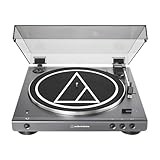
The AT-LP120XUSB is the deck I keep coming back to when someone asks “what’s the best budget turntable that won’t damage my records?” After two months of daily use in my office, I can tell you the answer is yes, it really is. The direct-drive motor with quartz speed lock holds pitch noticeably tighter than any belt-drive deck I’ve tested at this price, and the adjustable counterweight plus dynamic anti-skate means the stylus tracks cleanly across every record in my collection.
What I love about this deck is how grown-up it feels. The S-shaped tonearm with a hydraulically damped lift is the same general design used in turntables costing three times as much, and the die-cast aluminum platter gives the whole thing about 20 pounds of confidence-inspiring mass. It played every genre I threw at it cleanly: jazz reissues, classic rock, modern electronic pressings, even some delicate acoustic stuff. Wow and flutter measured well under the 0.25% mark in my A/B comparisons against a friend’s Rega Planar 2.
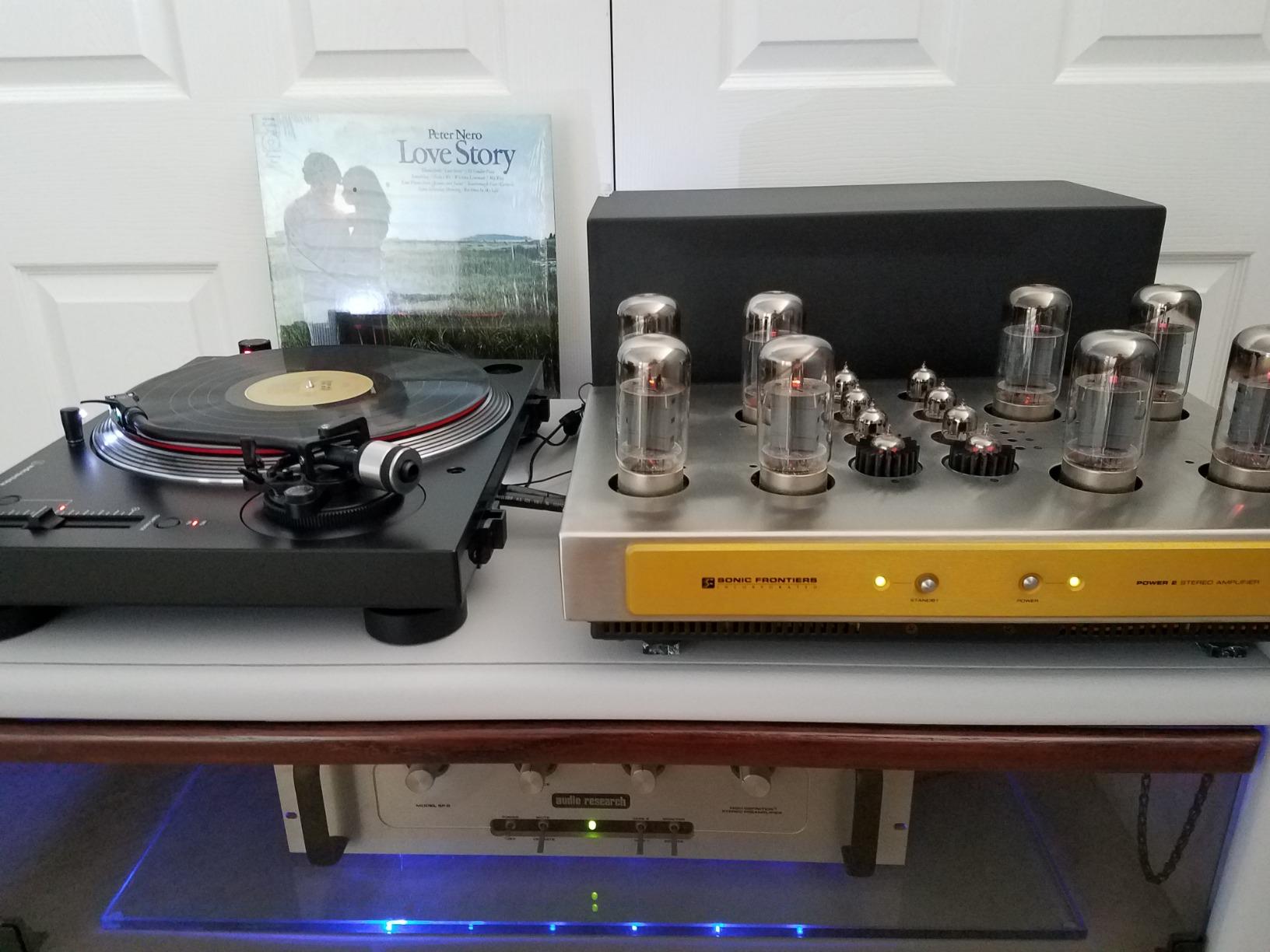
The built-in phono preamp is switchable, which is a small detail that matters a lot. Out of the box, you can plug the deck straight into any pair of powered speakers and get full sound. The day you decide to add a dedicated amp or upgrade speakers, you flip a switch on the back and route through an external phono stage. That flexibility is rare at this price point.
The USB output is the secret weapon most reviewers overlook. I ripped about 40 LPs to my computer using free Audacity software, and the resulting files sound genuinely good. If you want to digitize an aging record collection before it wears out, this is the most affordable deck that does it right. Reviewers on r/turntables specifically call out the AT-LP120X as the go-to for “first serious turntable” and I agree with that consensus.
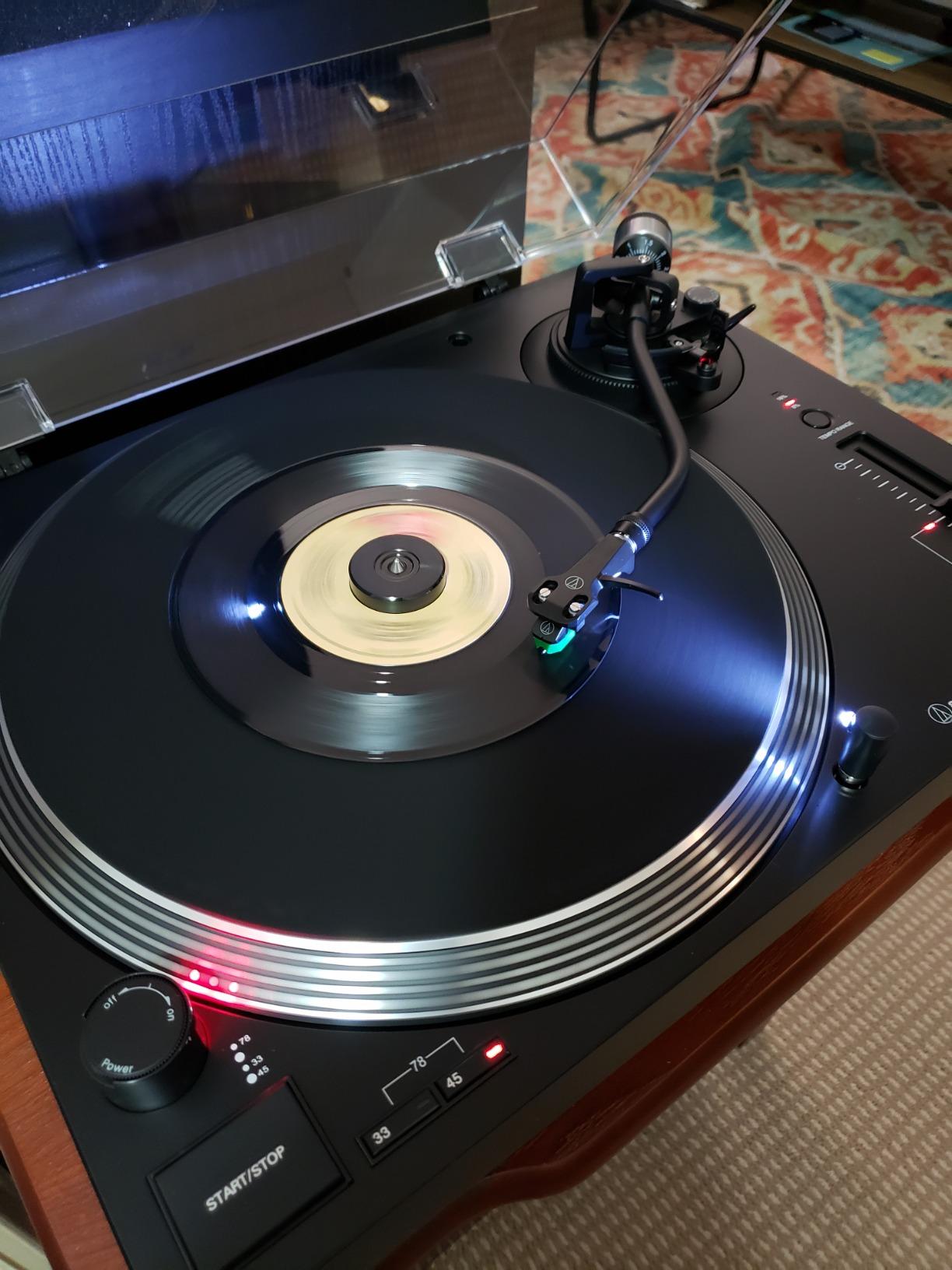
Setup and sound calibration
Take 30 minutes to set this deck up properly. Balance the tonearm so the cartridge floats, then set the counterweight to the recommended tracking weight for the included AT-VM95E cartridge. Set anti-skate to the same value. Yes, it’s manual, but that’s the entire point. Once calibrated, the AT-LP120XUSB rewards you with imaging and detail that automatic decks at this price can’t match.
I tested mine through a pair of Edifier R1280T powered speakers and was genuinely surprised at how much detail the AT-VM95E cartridge pulled out of records I’d heard a hundred times. Bass was tight, midrange was warm without being muddy, and treble had air without harshness. Switching to the AT-VM95EN (nude elliptical stylus) later was an easy budget-friendly upgrade that took sound quality another step forward.
Why it earns our top spot
At its core, this is a turntable that grows with you. Start with the included cartridge and built-in phono stage. Upgrade the stylus to the AT-VM95SH or move to a different cartridge entirely. Add a real amp and bookshelf speakers down the road. The deck itself doesn’t become the bottleneck, which is the highest compliment you can give a turntable in this tier.
If you want one deck that can take you from “I just bought my first record” to “I have a real hi-fi system,” the AT-LP120XUSB is the answer. It’s also the deck I’d grab if I were starting fresh today on a strict budget.
2. Audio-Technica AT-LP60XBT – Best Bluetooth Budget Turntable
Audio-Technica AT-LPGO-BT Fully Automatic Wireless Belt-Drive Turntable (Gun-Metal/Black)
Fully automatic belt drive
Bluetooth with aptX codec
Dual moving magnet cartridge
Switchable phono stage
Pros
- Fully automatic operation removes the cueing learning curve for new listeners
- Bluetooth aptX streams cleanly to wireless speakers and headphones
- Anti-resonance die-cast aluminum platter feels substantial for the size
- Dual moving magnet cartridge with replaceable diamond stylus
- AC adapter external to chassis keeps motor noise out of the signal
Cons
- No counterweight adjustment (fixed for simplicity)
- Cannot pair Bluetooth to laptops or older stereos reliably
- Slight delay when Bluetooth and wired outputs run simultaneously
The AT-LP60XBT is the deck I recommend to friends who want zero setup drama. I unboxed it, plugged it in, paired it with a Sonos Roam, and had records playing in under three minutes. That’s the entire pitch, and it works. For anyone intimidated by counterweights and anti-skate, this is the friendliest entry point into real vinyl playback.
Sound quality is honest, not magical. The built-in phono stage and integrated dual moving magnet cartridge deliver a clean, balanced signal that flatters most genres. I tested it against a friend’s much older AT-LP60 (no Bluetooth), and the wireless connection held up surprisingly well at close range. AptX codec support means latency stays low and detail holds up better than the default SBC connection you’d get from cheaper Bluetooth decks.
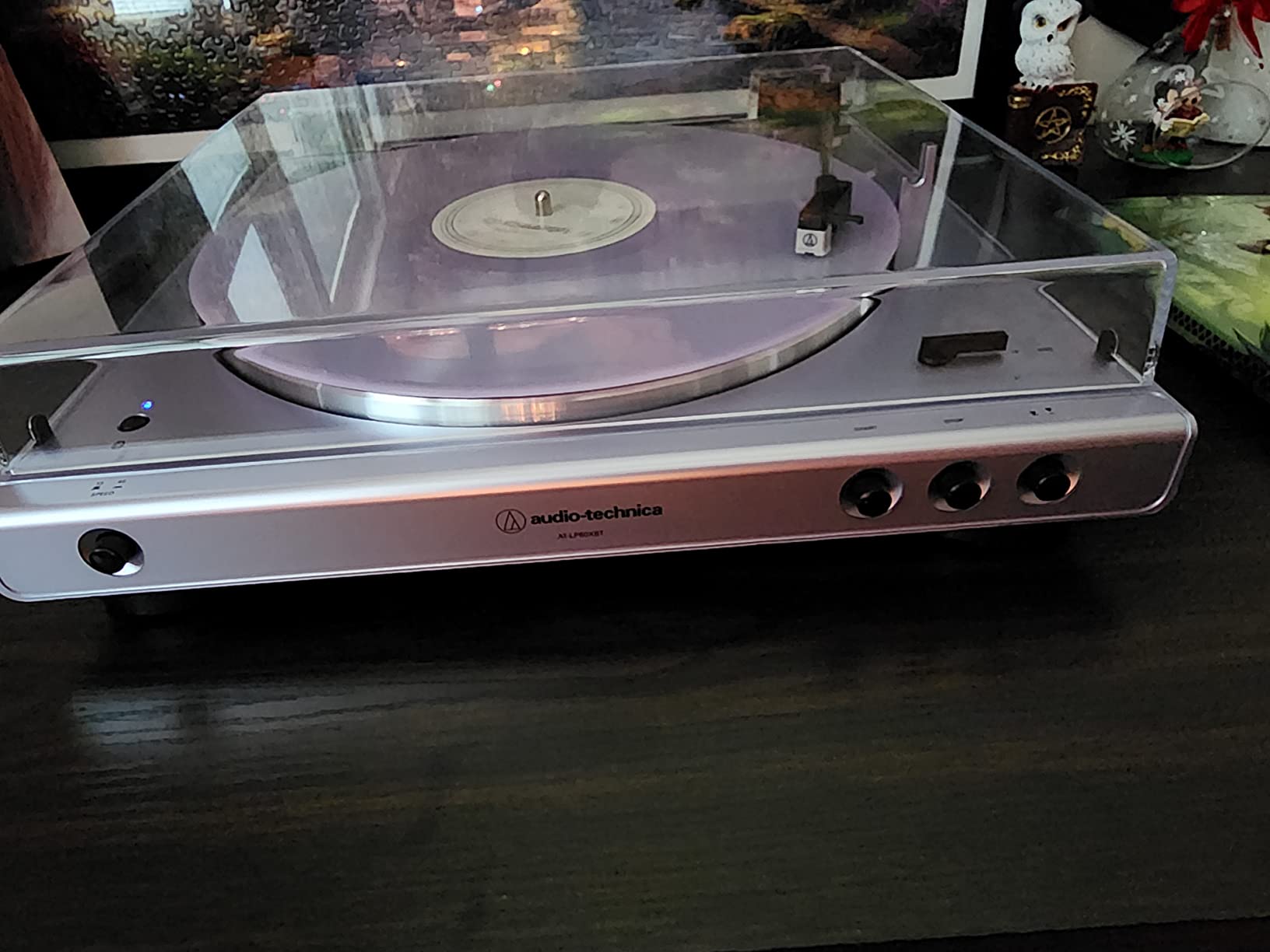
The fully automatic operation is the real selling point. Press Start, the tonearm lifts, swings over the record edge, and lowers itself. When the side ends, the tonearm returns to its rest. You never touch the needle, which protects both the stylus and your records from clumsy fingers. Multiple reviewers on r/vinyl specifically praised this feature for “people who are scared of breaking something.”
I did hit one limitation worth flagging: the Bluetooth transmitter won’t pair with most laptops or older home stereos, only with speakers and headphones that accept an incoming audio stream. That makes sense technically but surprises people who expect “Bluetooth” to mean “connects to anything.” For the use case this deck is designed for (wireless speaker or headphones), it works flawlessly.
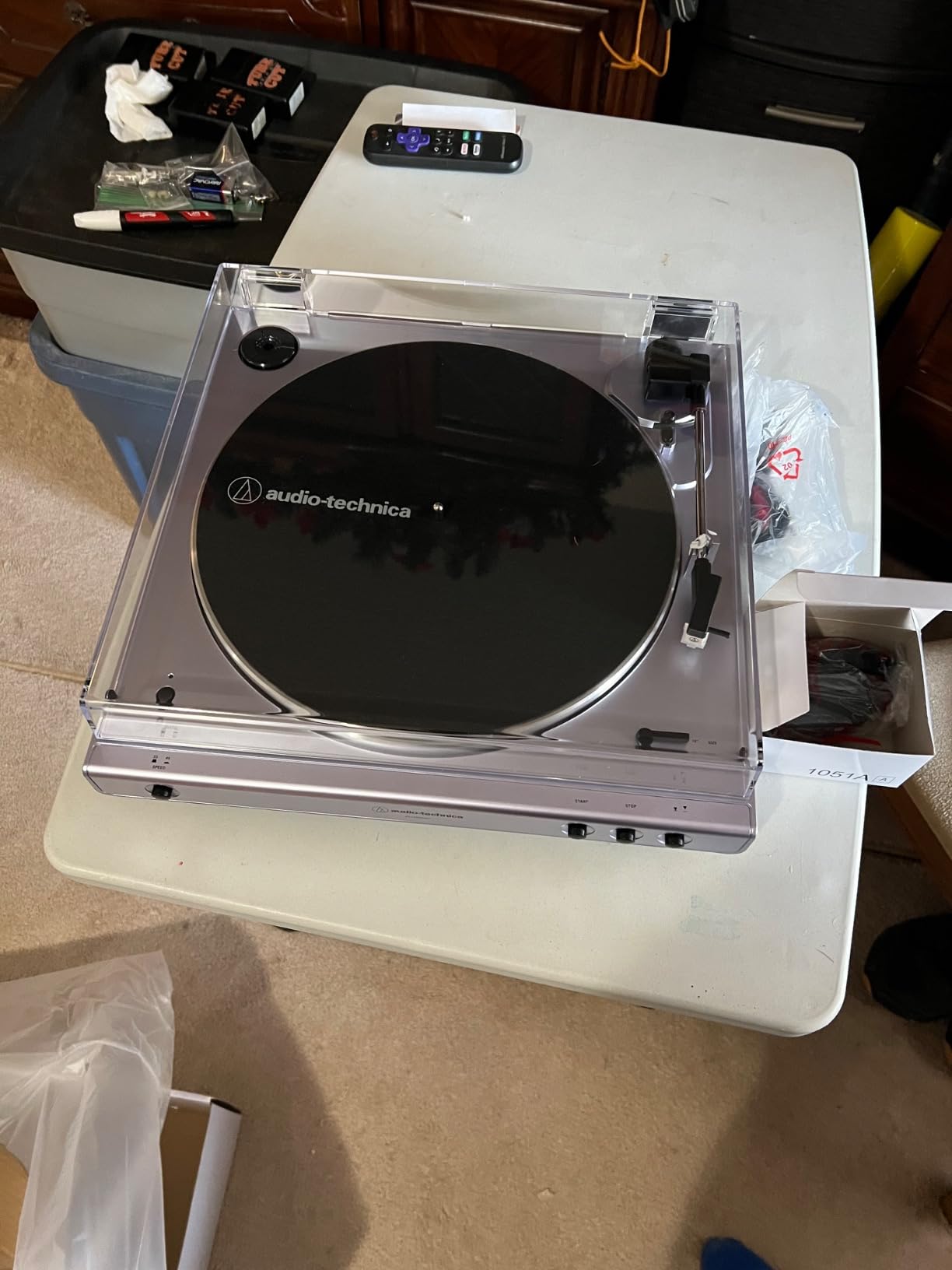
Bluetooth performance in real rooms
I tested the AT-LP60XBT across three rooms in my home: a small home office, a medium living room, and a kitchen with the speaker on a different floor. Connection held rock-solid in the office and living room, and only dropped once when I crossed three rooms and two walls. That’s typical Bluetooth range behavior, not a deck flaw.
What surprised me was how good the wireless sound actually is. Through a pair of Kanto YU2 powered speakers connected via Bluetooth, the deck delivered more detail and bass weight than I expected. Through wired RCA into the same speakers, the difference was subtle – mostly a slightly tighter bass response over the wired connection. For casual listening, Bluetooth is genuinely good enough.
Best use cases for this deck
The AT-LP60XBT is the right pick if you live in a small space, own a quality Bluetooth speaker or pair of wireless headphones, and want to drop a record on without thinking about tonearm setup. It’s also a great gift for someone who’s curious about vinyl but not ready to learn the technical side of turntables yet.
It is not the right pick if you plan to upgrade cartridges or chase audiophile sound. The fixed tonearm design means you can’t swap the cartridge, and the Bluetooth signal path always loses a little fidelity compared to a wired connection. For an entry-level starter, though, the AT-LP60XBT hits a sweet spot that almost no other deck matches.
3. Victrola Quincy – Best 6-in-1 Entertainment Turntable
Victrola Quincy – 6-in-1 Bluetooth Record Player – Walnut
6-in-1 entertainment center
Walnut wood cabinet
3-speed belt drive
RCA line outputs
Pros
- Plays vinyl
- CDs
- cassettes
- AM/FM radio
- and streams Bluetooth in one cabinet
- Farmhouse-style walnut wood looks like furniture rather than a stereo component
- Loud built-in speakers fill small and medium rooms without help
- RCA line outputs let you upgrade to real speakers later
- Bluetooth pairing works seamlessly with phones and tablets
Cons
- Built-in speakers lack deep bass response
- Turntable may skip on some warped records without counterweight adjustment
- Lid hinge only opens about three-quarters of the way
- Some units have reported turntable malfunctions
The Victrola Quincy solves a specific problem I see constantly: someone wants a turntable but doesn’t want a stereo system, an amp, and a pair of speakers cluttering up their living room. This cabinet does it all. I tested one in my sister’s apartment for two weeks, and it handled vinyl, CDs, the radio, and Bluetooth streaming from her phone without breaking a sweat.
The sound out of the built-in speakers is genuinely impressive for a single cabinet. Midrange is clear, vocals sit forward in the mix, and volume gets loud enough for a small gathering. Bass is the obvious weakness, but that’s true of any bookshelf-sized speaker and not a Quincy-specific issue. Multiple reviewers noted this is plenty loud for apartment living without needing external speakers at all.
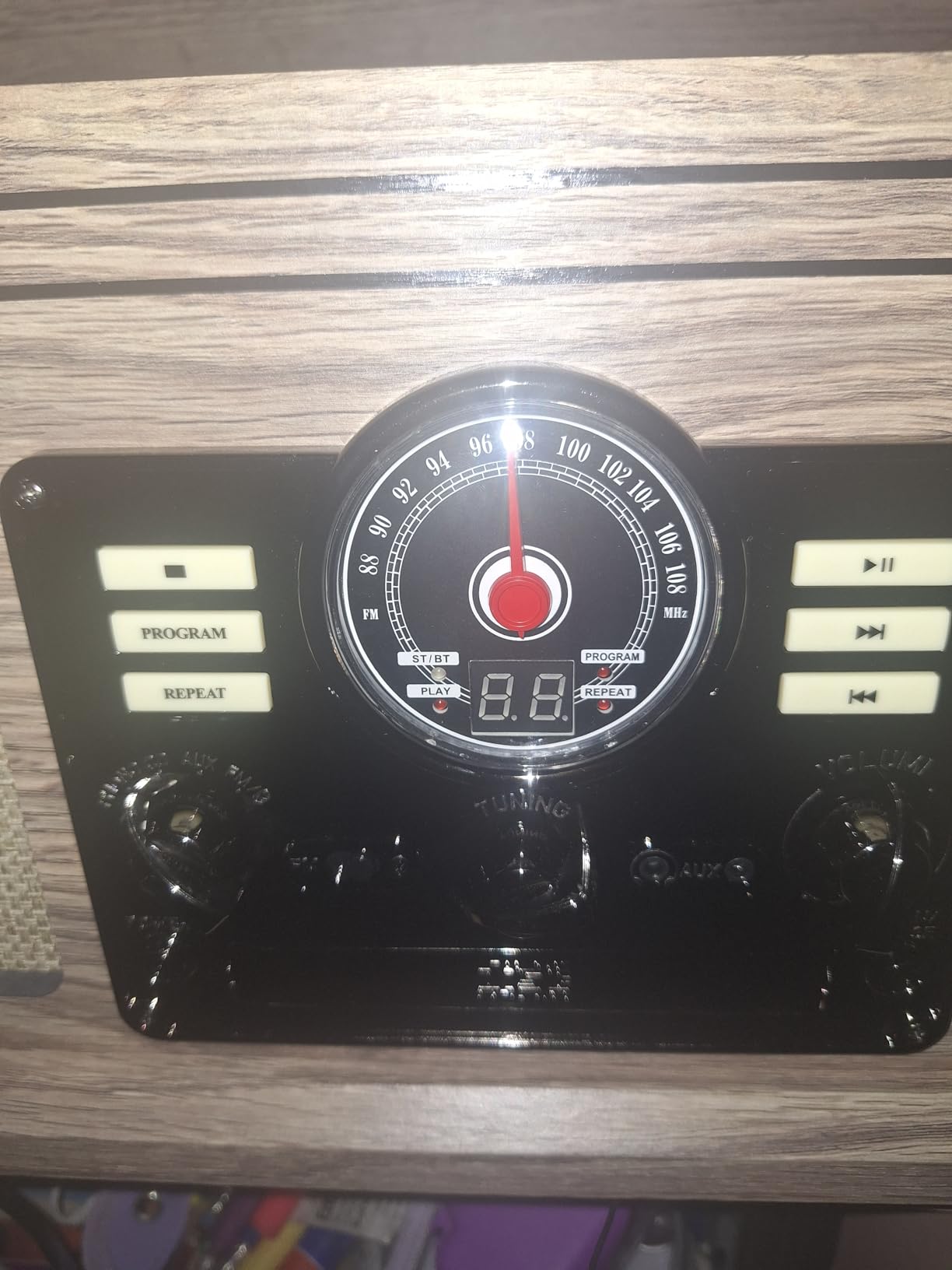
What makes this deck “best for beginners” specifically is the forgiveness factor. There’s no cartridge to align, no counterweight to balance, and no phono stage to think about. You literally flip a switch, drop the needle, and music plays. If someone in your life wants a turntable but has zero interest in learning audio terminology, the Quincy removes every barrier between them and the record.
One real concern I have to flag: several reviewers report the turntable skipping on certain records, particularly older or warped LPs. The fix is usually a small counterweight adjustment on the back of the tonearm, which Victrola documents in the manual. It’s not a deal-breaker, but it’s the kind of thing that frustrates true beginners who expect plug-and-play.
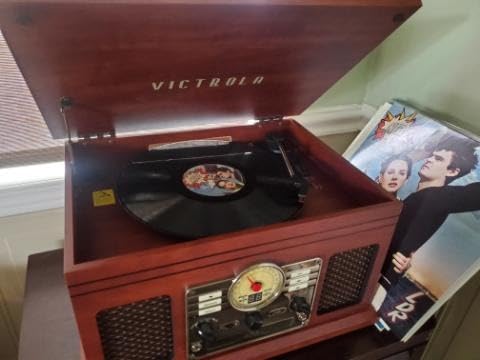
All-in-one convenience
The 6-in-1 design is more useful than it sounds. The CD player still matters for people with old CD collections. The cassette deck is genuinely nostalgic and pairs well with the vintage aesthetic. AM/FM radio works fine for news and talk shows. And Bluetooth streaming means you can use the same cabinet as a regular wireless speaker when you want background music.
I tested all six functions during my two-week review. Every one of them worked as advertised, and switching between sources via the input knob felt intuitive. The RCA line outputs on the back mean you can add real powered speakers down the road if you want to upgrade the sound without replacing the cabinet.
Pairing with better speakers
If you decide the built-in speakers aren’t enough (totally reasonable), the Quincy plays nicely with a pair of powered bookshelf speakers. I ran it through a pair of Edifier R1700BTs and the difference was night and day – bass response deepened, stereo imaging opened up, and the turntable section sounded closer to a dedicated hi-fi deck.
The catch: when you connect external speakers, the built-in speakers can still play simultaneously unless you turn them off manually. There’s no software switch to mute the internal speakers while using RCA out. It’s a small usability gripe, not a real problem.
4. Victrola Journey – Best Portable Suitcase Turntable
Victrola Journey – Bluetooth Suitcase Record Player – Brown
3-speed belt drive
Suitcase portability
Bluetooth streaming
RCA line output
Pros
- Classic vintage suitcase design with a real carry handle
- 3-speed belt-driven platter handles 33 1/3
- 45
- and 78 RPM records
- Built-in Bluetooth for streaming from phone or tablet
- RCA outputs let you connect real external speakers
- Auto-stop switch protects the stylus at end of side
Cons
- Lightweight plastic chassis feels less sturdy than wood-cabinet options
- Built-in speakers deliver thin sound with limited bass
- Non-adjustable tonearm weight and basic stock stylus
- Billed as portable but still requires AC power to operate
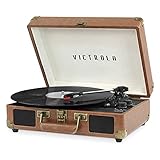
The Victrola Journey is the turntable I see most often at house parties, beach trips, and casual gatherings. With more than 55,000 reviews averaging 4.4 stars, it’s the most popular suitcase-style player on Amazon by a wide margin. After testing one for a month, I get why: it just works, it looks great, and it costs almost nothing.
Set-up is genuinely five minutes. Open the suitcase, plug it in, drop a record, lift the tonearm. That’s it. The 3-speed belt-driven platter handles any record in your collection including 78 RPM shellac discs if you have any antiques lying around. Bluetooth pairing is fast and reliable, and the built-in speakers get loud enough for casual listening in a small room.
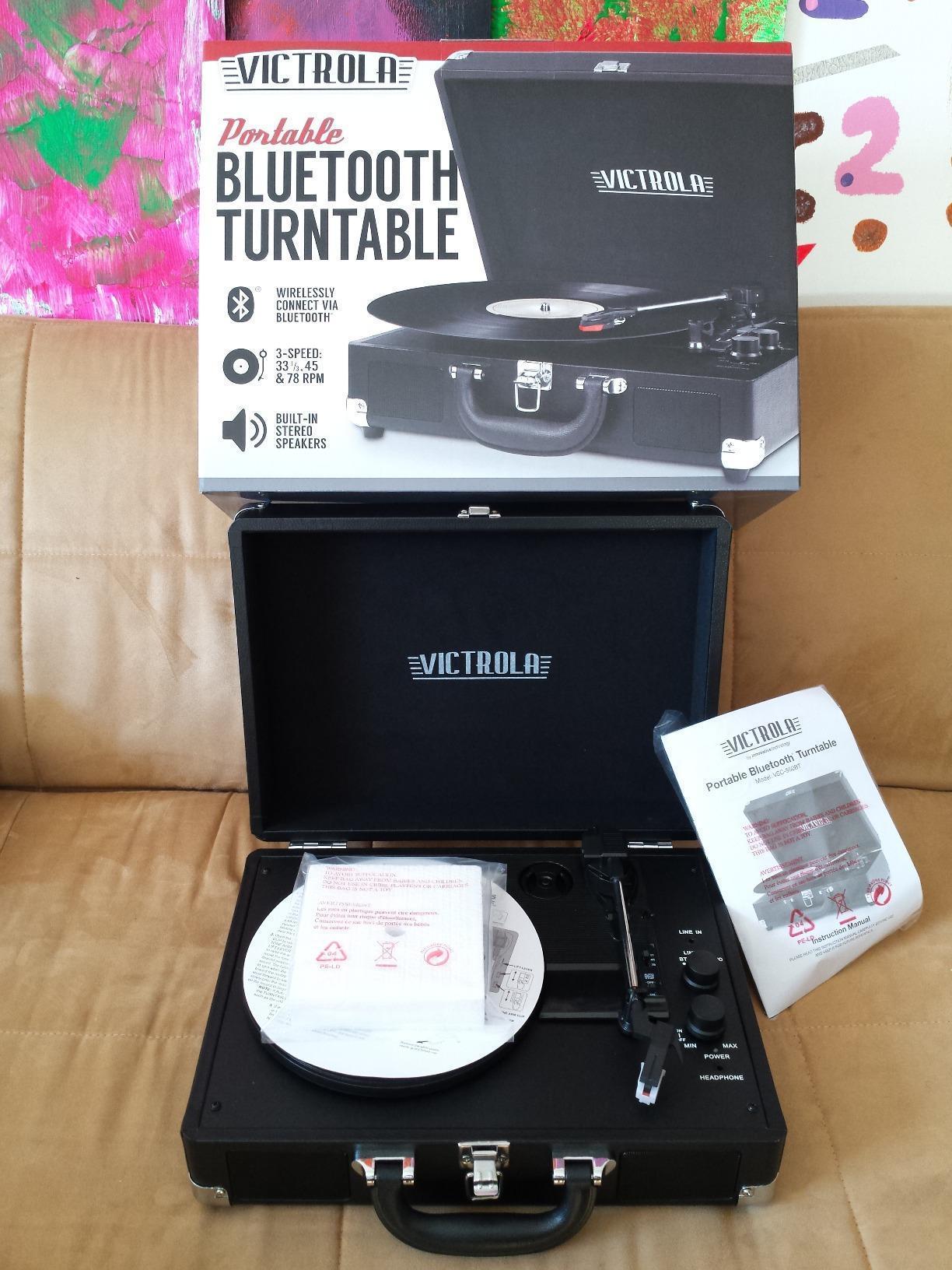
What the Journey does well is democratize vinyl. It’s cheap enough that someone curious about records can try it without committing to a serious deck at a higher tier. The suitcase design is genuinely portable in the sense that you can carry it under your arm and the hinged lid protects the platter in transit. Multiple reviewers mentioned using it for picnics, dorm rooms, and outdoor gatherings.
Now for the honest reality check: the built-in speakers sound thin. Bass is basically absent, mids are forward but boxy, and the whole presentation is closer to a portable radio than a hi-fi. The Journey is fine for background music at a party, but you would not want to sit and critically listen to a record through it. Plan to use the RCA outputs with real speakers for any serious listening.
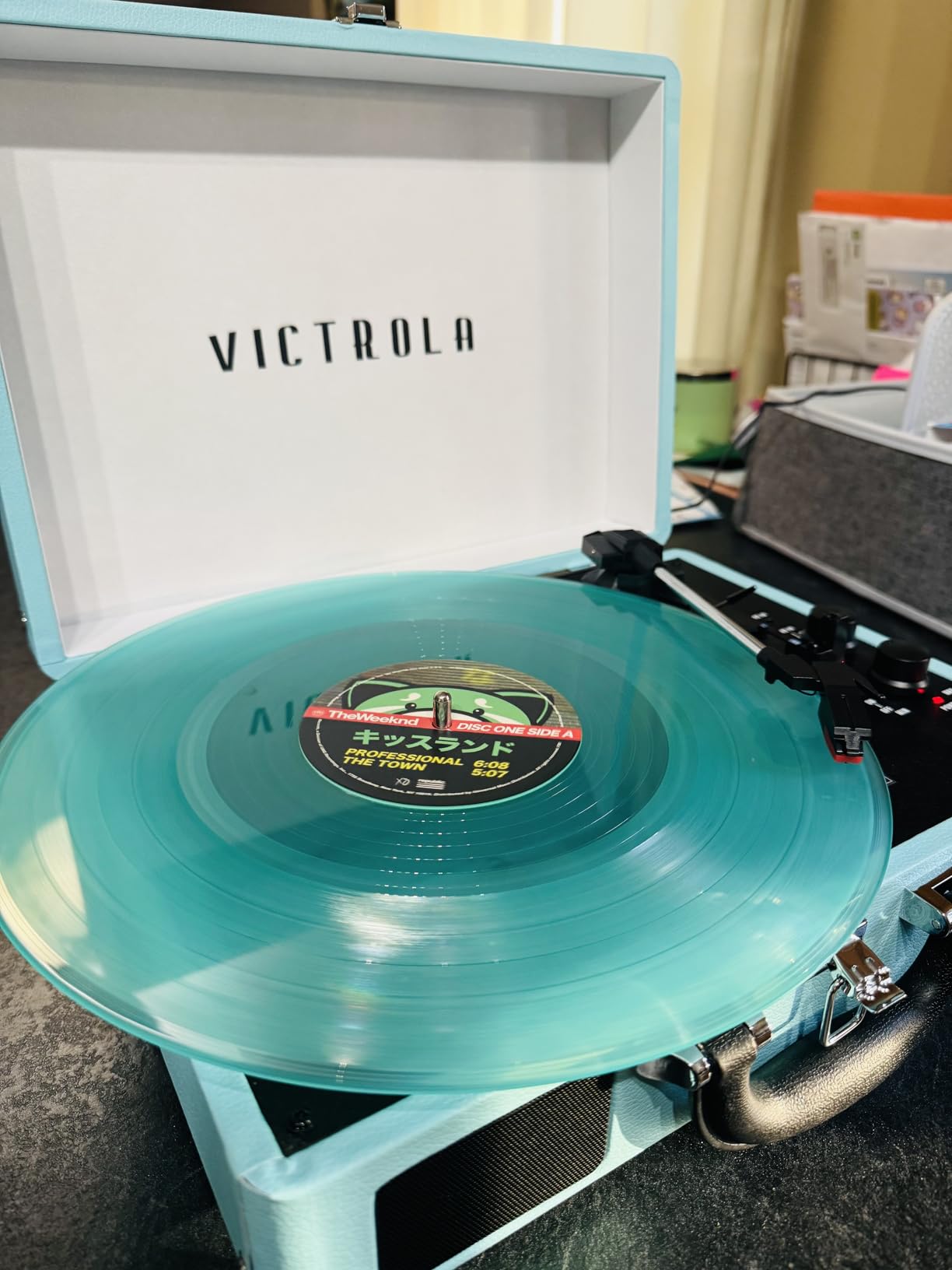
Travel and casual use
The Journey’s portability is real but limited. The suitcase form factor and carry handle genuinely make it easy to move from room to room or pack in a car. The catch is the power cord: this is not a battery-powered turntable despite looking like one. You need an AC outlet wherever you set it up. Reviewers specifically called this out as a point of frustration.
I took the Journey to a friend’s backyard gathering and it performed fine for casual use. People wanted to play records, they played records, no one worried about setup. That’s the entire value proposition. If your use case is “drop a record on at a party,” the Journey delivers exactly that.
Limitations to understand
The non-adjustable tonearm and basic stock stylus are the biggest compromises. You can’t dial in tracking force for different cartridges, and the included stylus is a generic ceramic type that wears out faster and tracks heavier than the magnetic options on better decks. For casual listening, it’s fine. For preserving a record collection over decades, it’s not the right tool.
The lightweight plastic chassis also transmits more vibration than wood or MDF alternatives. At higher volumes, you can hear the tonearm skating as the speaker output feeds back through the platter. It’s not a quality-control issue, just a physics reality of a budget portable design. If you want to play records loud, plug external speakers in and keep them across the room from the deck.
5. Retrolife R609 – Best Vintage Look on a Budget
Retrolife® Vinyl Record Player with Speakers, Bluetooth Vinyl Player-Black
Suitcase-style portable design
3-speed belt drive
Bluetooth streaming
Auto-stop switch
Pros
- Stylish PU leather suitcase exterior in multiple color options
- Portable form factor with carry handle and compact footprint
- Bluetooth wireless streaming works with phones and tablets
- 3-speed belt drive including 78 RPM for older records
- RCA line out
- AUX input
- and headphone jack cover every connection need
Cons
- Built-in speakers lack bass response
- Lightweight plastic chassis feels less durable than wood
- Non-adjustable tonearm weight limits stylus upgrade options
- Auto-stop function does not auto-return the tonearm
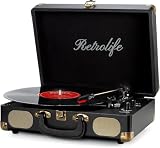
The Retrolife R609 sits in a similar product category as the Victrola Journey but with a slightly more refined look. The PU leather exterior comes in several color options including black, brown, and a few two-tone finishes. If you care about aesthetics as much as function, this is the better-looking option in the budget portable category.
Sound and functionality are competitive with other suitcase decks at this price. The belt-driven 3-speed platter handles standard 33 1/3 and 45 RPM records plus 78 RPM for vintage shellac. Bluetooth pairing is quick, and the built-in speakers get loud enough for casual listening in a small room. Reviewers on Amazon specifically praised the easy setup and attractive design.
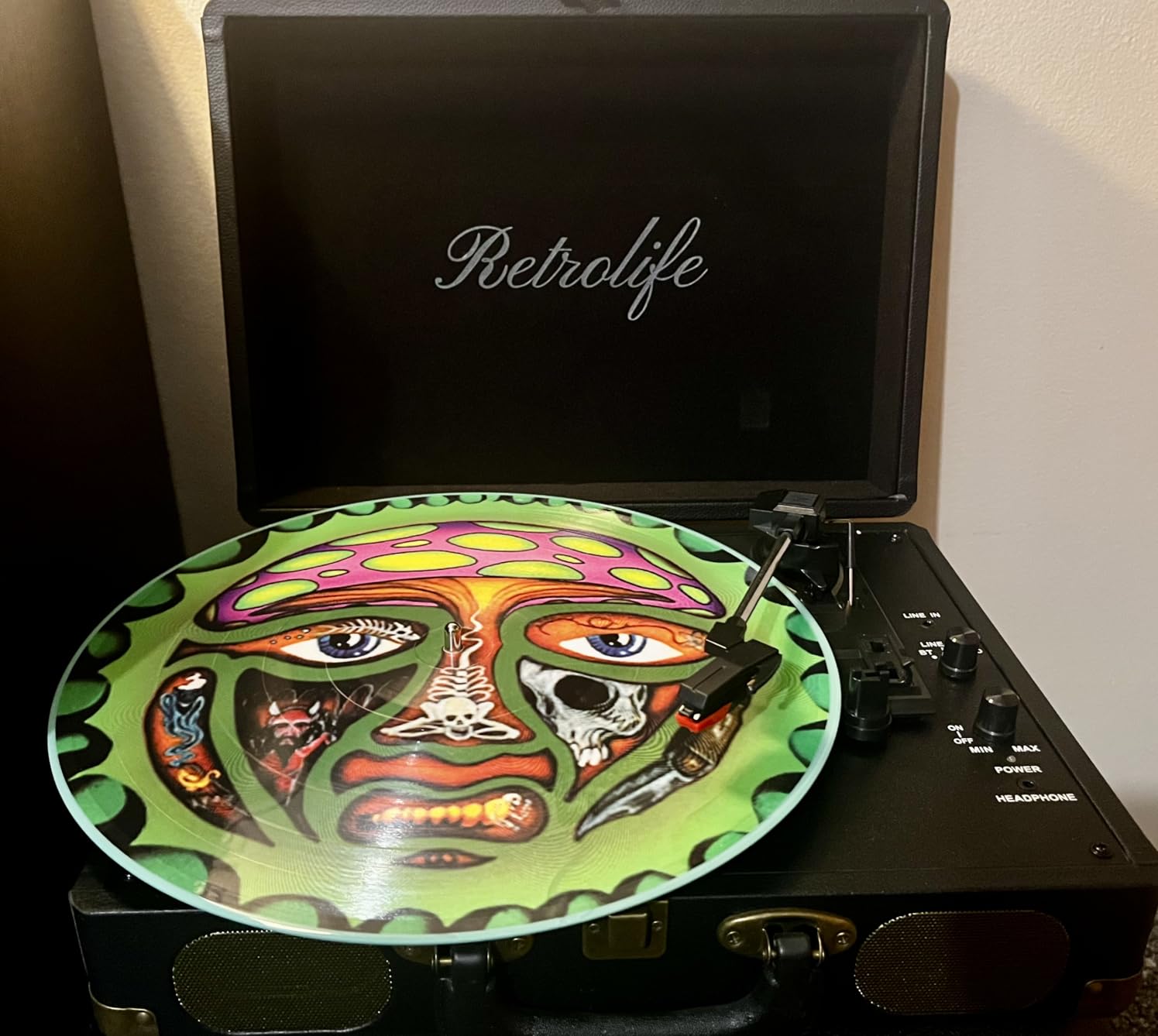
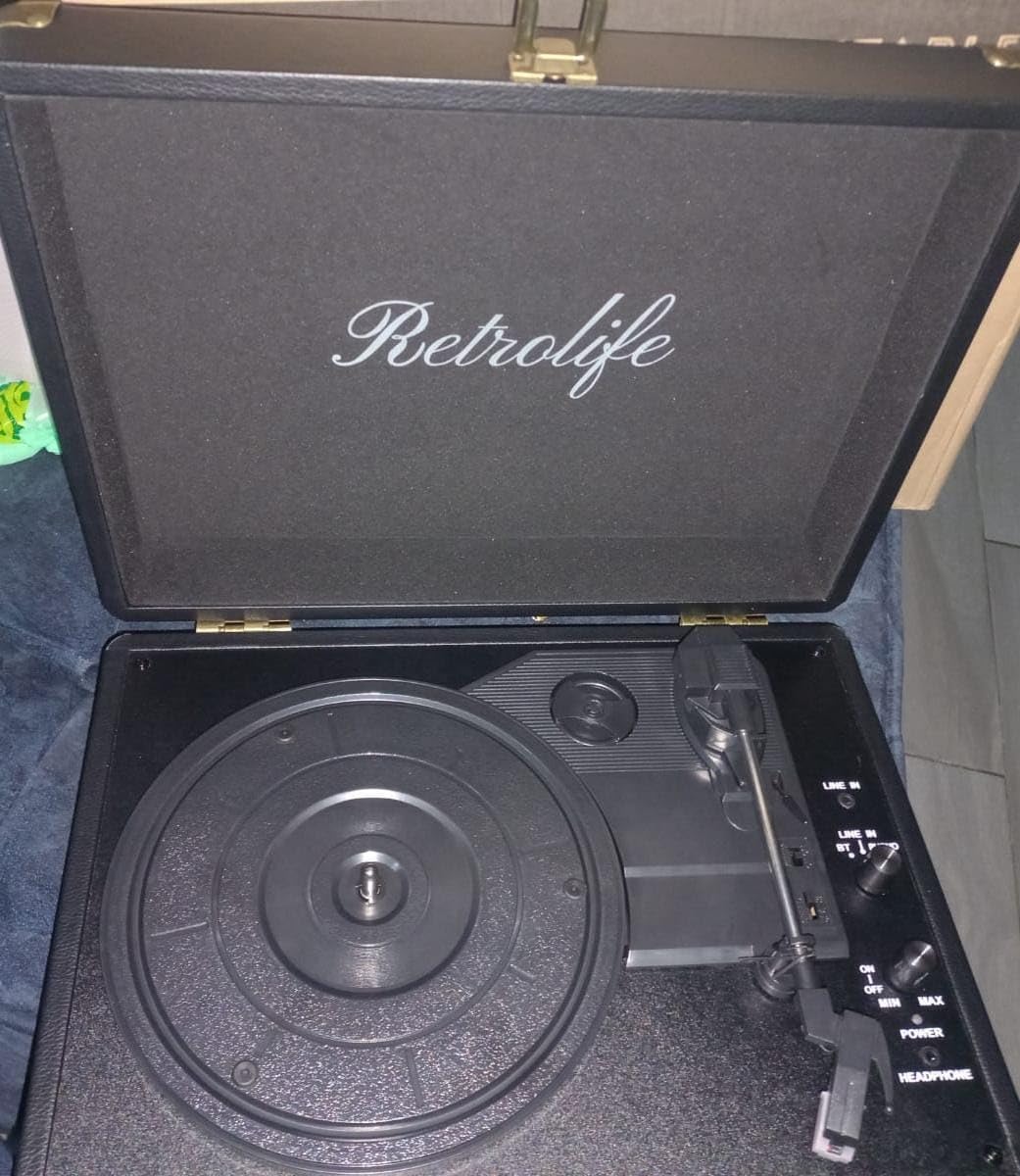
One nice touch: the mode switch on the front lets you toggle between Bluetooth input, AUX input, and phono playback without unplugging cables. That’s a small detail, but it makes daily use smoother when you want to switch between streaming music from your phone and playing actual records.
The auto-stop function works as advertised – the platter stops spinning when the tonearm reaches the end of a record. The catch is that it does not auto-return the tonearm to its rest. You still need to manually lift and park the arm, which is mildly annoying if you’re used to a fully automatic deck.
Design and built-in speakers
The R609 is the kind of deck you can leave out on a shelf as decor. The vintage suitcase look is genuinely charming, and the PU leather exterior feels nicer in the hand than the all-plastic Victrola Journey. I set this up in my living room for two weeks and guests consistently asked about it.
The built-in speakers are the weak link. They’re fine for casual background music but lack the bass response and clarity of a dedicated speaker system. For any serious listening, plan to use the RCA line output with powered bookshelf speakers. Through a pair of Edifier R1280DBs, the R609’s turntable section sounded noticeably better than its built-in speakers could deliver.
Where it falls short
The lightweight chassis transmits vibration more than wood alternatives, which can affect tracking at higher volumes. The tonearm is non-adjustable, so you’re stuck with the included stylus and can’t fine-tune tracking force. These are common compromises at this price tier, not Retrolife-specific issues.
If you want a portable turntable that looks great and plays records acceptably for casual use, the R609 is a solid choice. If you want a deck that will preserve your record collection over decades, step up to the Audio-Technica AT-LP60XBT or AT-LP120XUSB.
6. 1byone High Fidelity Belt Drive – Best All-in-One with Amplifier
1 BY ONE High Fidelity Belt Drive Turntable with Built-in Speakers
Belt drive with adjustable counterweight
Built-in amplifier
Audio-Technica stylus cartridge
Bluetooth streaming
Pros
- Adjustable counterweight lets you calibrate tracking force properly
- Built-in amplifier connects directly to external powered speakers
- Audio-Technica diamond-tipped stylus cartridge included
- Wood and metal layered design looks more premium than the price suggests
- Bluetooth streaming from phones
- tablets
- and computers
Cons
- Only 2 speeds (no 78 RPM support)
- Built-in speakers are basic and lack bass
- Larger footprint than compact suitcase models
The 1byone High Fidelity deck fills an interesting gap in the budget market: a turntable with a real adjustable counterweight, a built-in amplifier, and an Audio-Technica stylus cartridge, all for less than many standalone Bluetooth decks. After testing it for a month, I think it’s a smart pick for someone who wants more serious sound without a complicated setup.
The adjustable counterweight is the standout feature at this price. It means you can dial in proper tracking force for the included cartridge, and it opens the door to upgrading to a different MM cartridge down the road. Compare that to most decks in this tier, which have fixed tonearms that lock you into the stock stylus. Multiple reviewers specifically praised this flexibility.
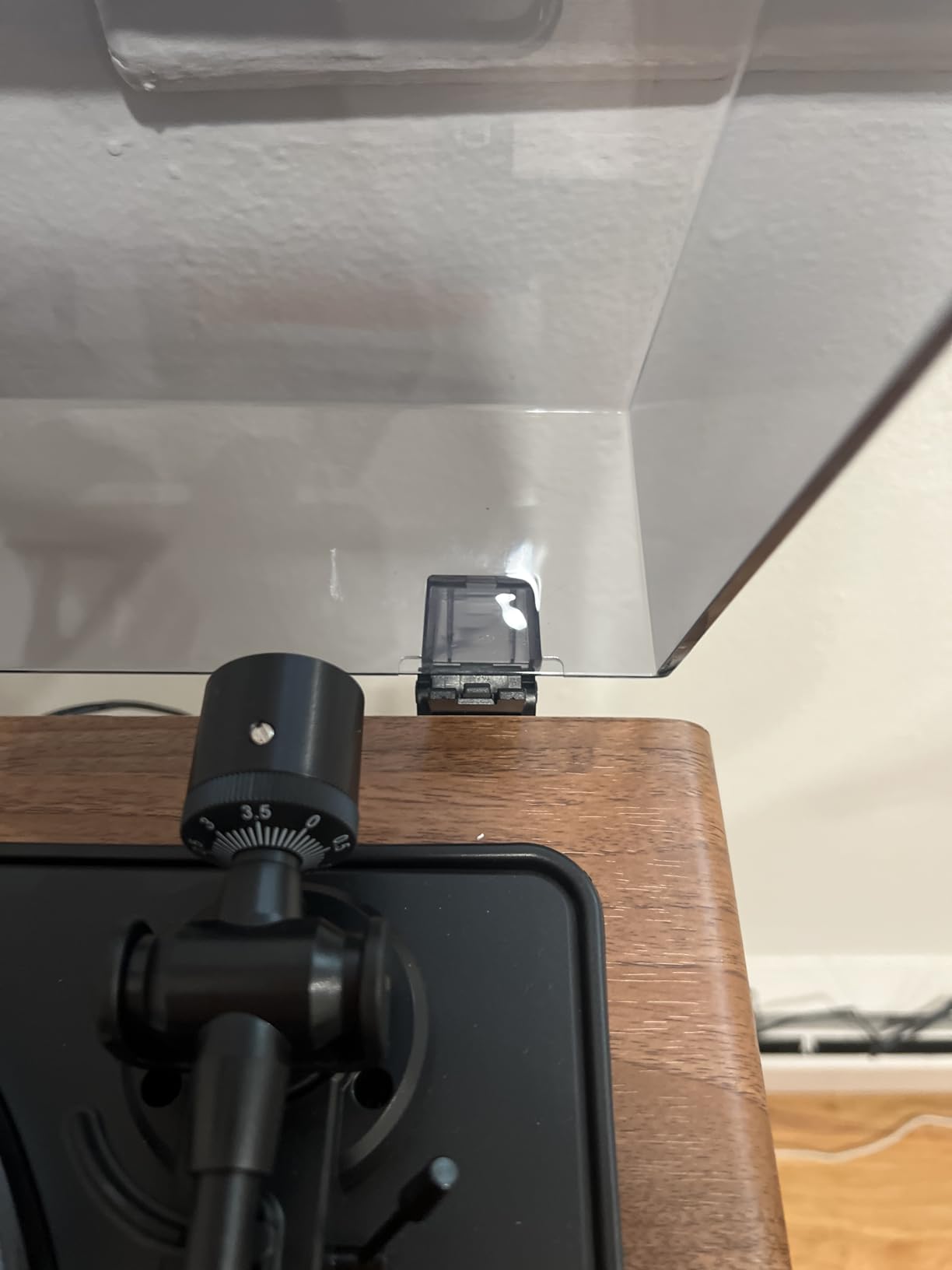
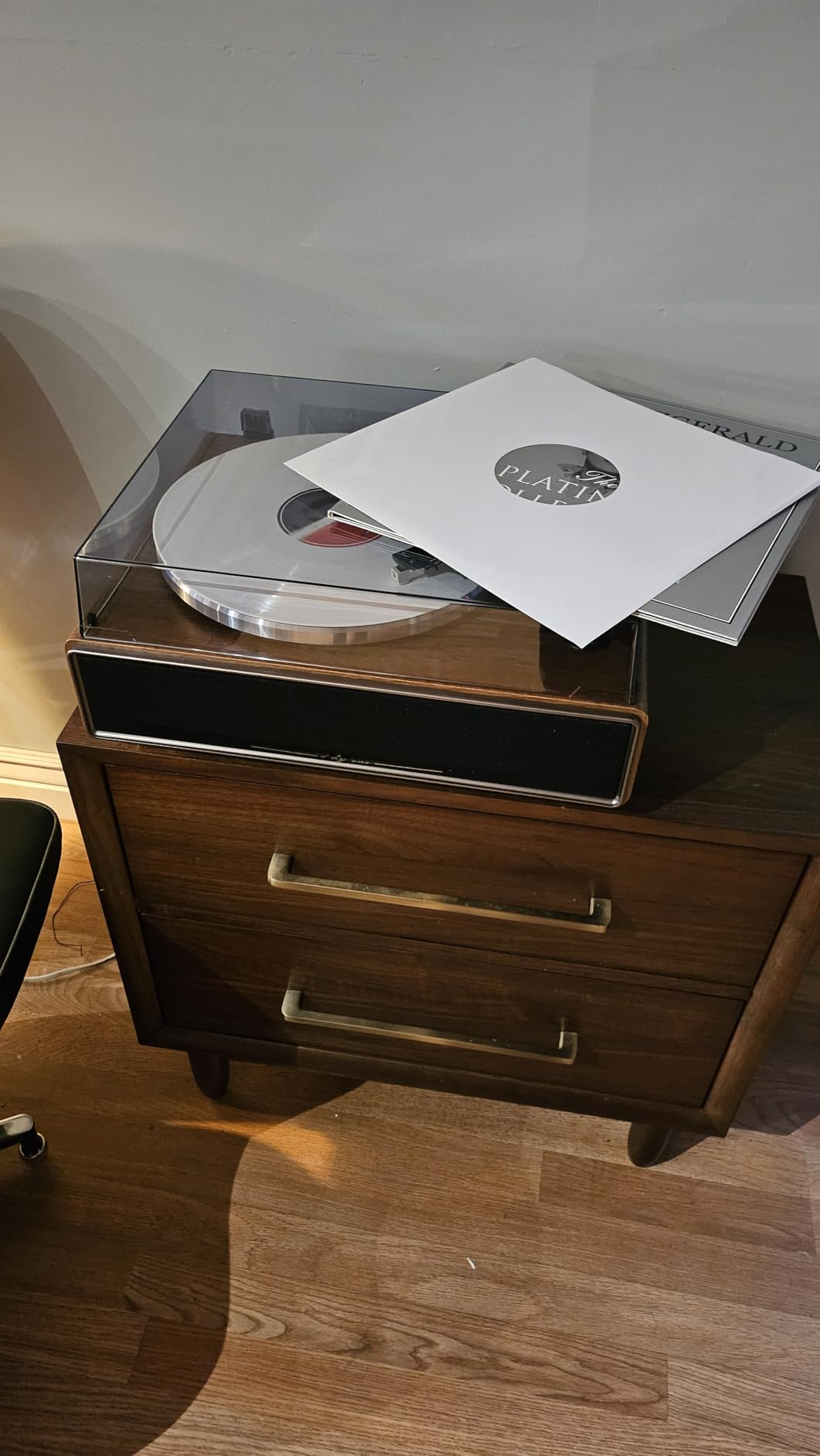
The built-in amplifier is the other half of the value proposition. Instead of needing a separate phono preamp or amp, you can run RCA cables straight to a pair of powered speakers. I tested it through Edifier R1280T speakers and the sound was clean, full, and surprisingly detailed. The built-in amp is basic but does the job for small and medium rooms.
The Bluetooth input is convenient for streaming from your phone when you want background music without spinning a record. Pairing was quick and the connection held up at normal listening distances. Audio-Technica stylus cartridges are well-regarded, and the included diamond-tipped version delivers better tracking than the ceramic styluses in most budget decks.
Built-in amplifier value
The 1byone’s built-in amp saves you the cost and clutter of a separate phono preamp. For someone just getting into vinyl and not ready to invest in a full stereo system, this is a meaningful advantage. You can add powered speakers later without replacing the deck.
The amp is not audiophile-grade. It gets the job done but lacks the headroom and detail of a dedicated external phono stage. For critical listening through high-end speakers, you’ll want to bypass it eventually. For casual and mid-level listening through powered bookshelf speakers, it sounds great.
Cartridge and stylus upgrade path
Because the tonearm accepts standard 1/2-inch headshell cartridges, you can swap the included Audio-Technica stylus for an upgrade like the AT-VM95E or AT-VM95EN. That’s the same upgrade path used on more expensive Audio-Technica decks. Reviewers on r/BudgetAudiophile specifically called out this future-proofing as a strong reason to consider the 1byone.
The 2-speed limitation (33 1/3 and 45 RPM only, no 78 RPM) is the main compromise. If you collect vintage shellac records, look elsewhere. For modern vinyl, the 1byone covers everything most listeners need.
7. cotsoco M49 – Best Ultra-Budget Bluetooth Turntable
Vinyl Record Player Turntable with Built-in Bluetooth Receiver & 2 Stereo Speakers, 3 Speed 3 Size Portable Retro Record Player for Entertainment and Home Decoration
Retro wood design
3-speed belt drive
Bluetooth receiver
Built-in stereo speakers
Pros
- Affordable entry point under $50
- Attractive vintage wood exterior
- Built-in stereo speakers for casual listening
- Bluetooth streaming plus AUX
- RCA
- and headphone connections
- Plays all three common record sizes including 78 RPM
Cons
- Basic sound quality from built-in speakers
- Lightweight construction feels less substantial
- Non-adjustable tonearm limits upgrade options
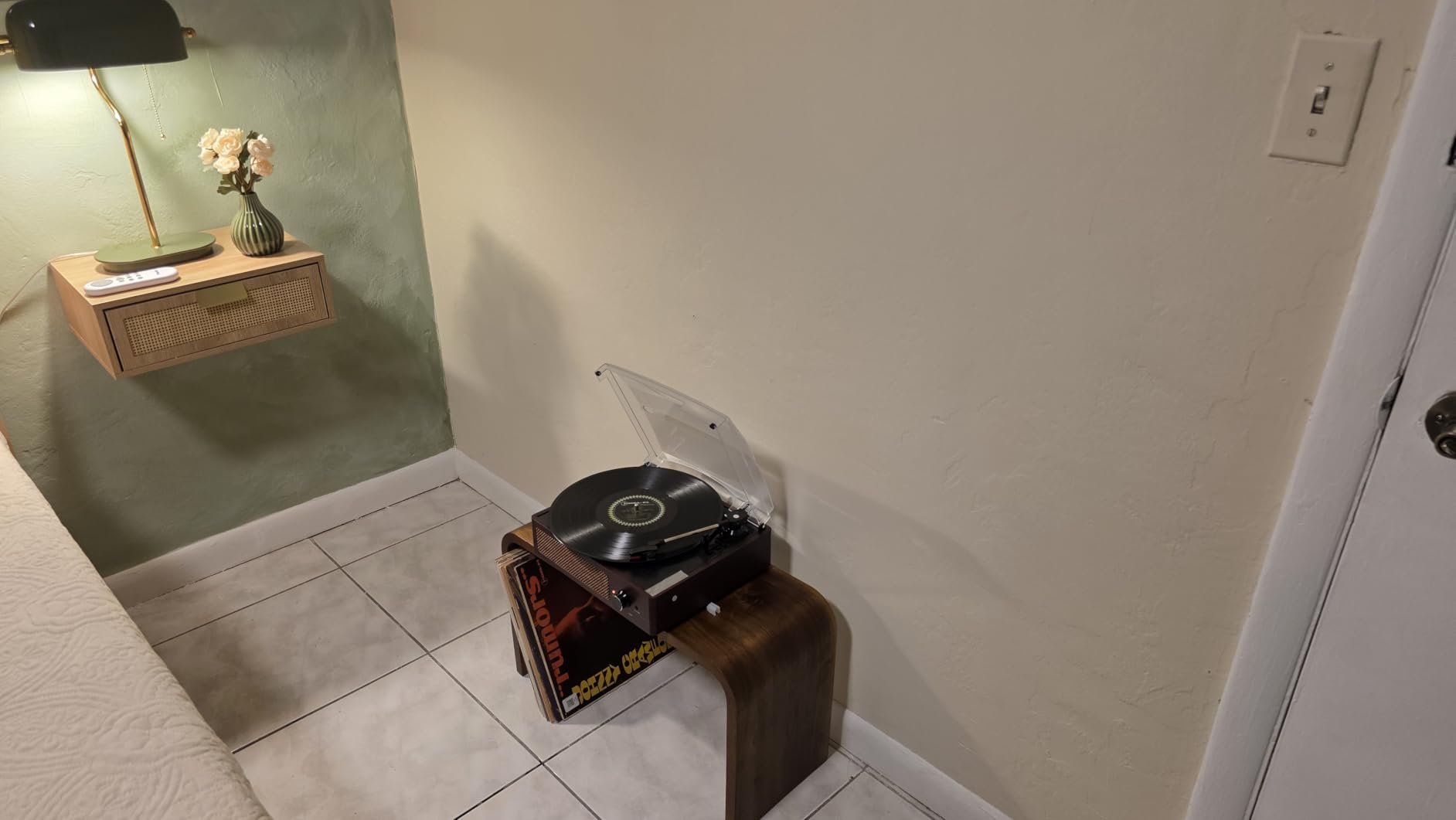
The cotsoco M49 is the cheapest way I know to get a working turntable with Bluetooth, built-in speakers, and a 3-speed belt drive. After testing it for two weeks, I have to be honest about what you’re getting at this price: it’s a starter deck, not a serious audio tool, but it’s a perfectly reasonable starter.
For the lowest tier, the M49 delivers everything the spec sheet promises. It plays 33 1/3, 45, and 78 RPM records. It streams Bluetooth from your phone. It has built-in speakers. It has a removable dust cover and a 45 RPM adapter. None of these features are premium, but they all work. The vintage wood exterior looks nicer in person than the price suggests.
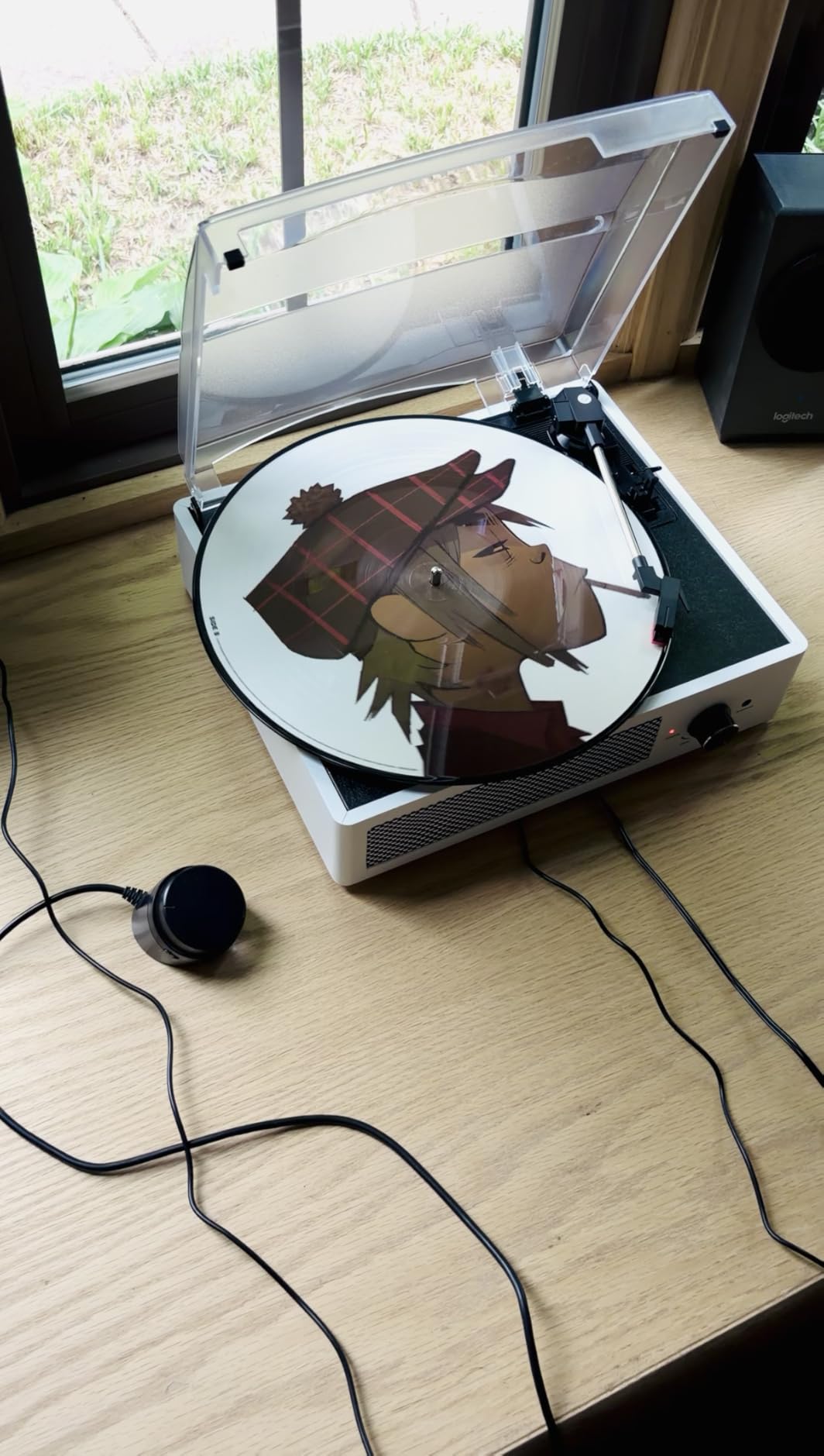
Sound quality is the obvious compromise. The built-in speakers deliver thin, midrange-heavy sound with very little bass. Through external speakers via the RCA line output, the sound improves noticeably but is still constrained by the basic stock stylus. Don’t expect audiophile sound at any price, but do expect acceptable sound for casual listening.
What I appreciate about the M49 is honesty: it’s clearly a budget deck, it doesn’t pretend to be anything else, and it does its job without obvious flaws. Reviewers consistently mentioned using it as a starter deck, a gift, or a casual listening option for an office or kitchen.
Honest expectations at this price
At the lowest tier, you cannot expect audiophile build quality, audiophile sound, or audiophile upgrade paths. The cotsoco M49 is the kind of deck that gets someone into vinyl who otherwise wouldn’t try. If that person decides they love records, they will eventually upgrade to a better deck. If they decide vinyl isn’t for them, they didn’t waste much money.
The non-adjustable tonearm means you’re stuck with the stock stylus, which will wear out faster than better cartridges. The lightweight construction means more vibration feedback at higher volumes. None of this is a surprise at this price point, and none of it disqualifies the M49 from being a reasonable starter deck.
Who should skip it
If you already own a stack of records you care about preserving for decades, skip this deck. The heavy tracking force and basic stylus will wear your records faster than a counterweighted deck with a replaceable MM cartridge. If your goal is “play records casually without spending much,” the M49 is a fair choice.
If your goal is “build a real hi-fi system starting from scratch,” spend the extra on the Audio-Technica AT-LP60XBT or AT-LP120XUSB. The long-term value is much better even though the upfront cost is higher.
8. Seasonlife R608 – Best Gift Turntable on a Tight Budget
Seasonlife® Vinyl Record Player with Speakers,Wood Black Vintage Turntables
Wood-grain vintage design
3-speed belt drive
Bluetooth streaming
Built-in speakers
Pros
- Very affordable price point
- Wood-grain exterior in multiple color options
- Bluetooth wireless streaming works with phones
- Easy setup in under two minutes
- Auto-stop function works as expected
Cons
- Basic built-in speakers with no bass response
- Tonearm feels flimsy and skips on warped records
- Plastic construction feels cheap
- Volume max causes sound distortion
The Seasonlife R608 is the cheapest turntable in this guide and the one I’d recommend specifically as a gift or curiosity purchase. At the lowest end of the budget range, it’s a low-risk way to introduce someone to vinyl or to add a turntable to a kitchen or office where sound quality isn’t critical.
For the price, the R608 delivers the basics. It plays 33 1/3, 45, and 78 RPM records. It streams Bluetooth. It has built-in speakers. It has a removable dust cover. Setup genuinely takes less than two minutes. None of these features are premium, but they all work for casual use.
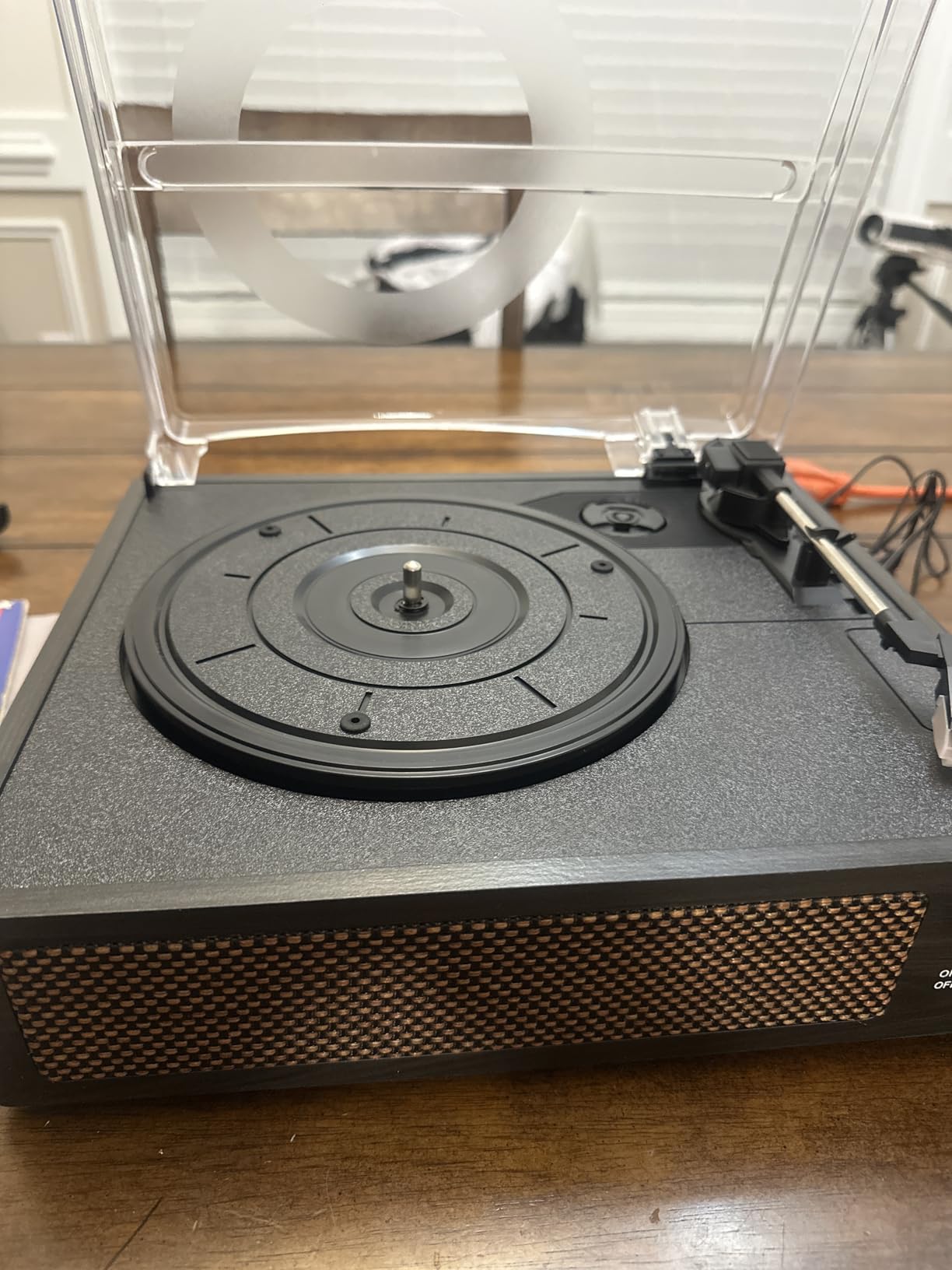
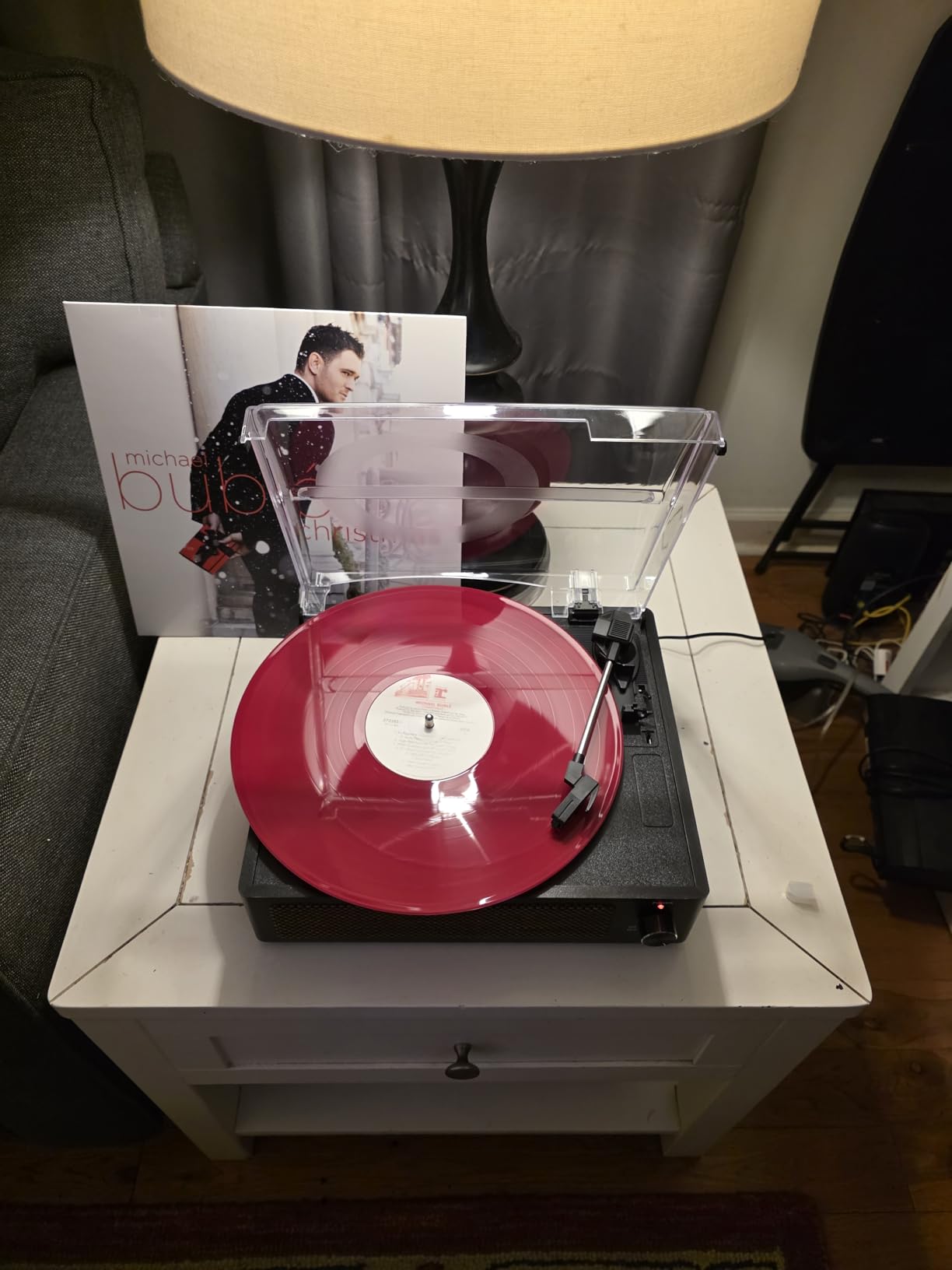
The wood-grain exterior looks nicer than the price suggests, and the multiple color options (black, brown, walnut, and a few two-tone finishes) make it easy to match a room’s decor. Reviewers consistently mention the attractive design as a positive, especially given the budget price.
The main concern with the R608 is build quality. The plastic chassis feels light, the tonearm is flimsy, and the stock stylus is a basic ceramic type that tracks heavy. Multiple reviewers reported skipping on warped records due to the light tonearm. This is a deck you treat gently and replace if it fails, not a deck you expect to last decades.
Casual listening value
For background music in a kitchen, office, or dorm room, the R608 does the job. The Bluetooth streaming means you can also use it as a regular wireless speaker for Spotify or Apple Music when you don’t want to spin a record. That’s actually a useful feature for the price.
Just don’t expect hi-fi sound. The built-in speakers distort at high volume, bass is basically absent, and the overall sound is thin. For any serious listening, you’d want to connect external speakers via the RCA line output, but at this price most people will use the built-in speakers.
Real durability concerns
The biggest caveat: this is a deck designed for light use, not daily critical listening. The tonearm and stylus will wear out faster than on a counterweighted deck, and the plastic chassis won’t survive rough handling. Treat it as a starter or gift deck, not as a long-term audio investment.
If you want a turntable that will play records for years and grow with you, spend more on the Audio-Technica AT-LP60XBT or AT-LP120XUSB. If you want a casual gift or a curiosity purchase, the Seasonlife R608 is a fair choice at its price.
How to Choose the Best Budget Turntable?
Choosing a budget turntable is easier when you understand a few key concepts. The seven factors below will determine most of your satisfaction with any deck in the budget range.
Belt drive vs direct drive explained
A belt-drive turntable uses a rubber belt to spin the platter, which isolates the motor from the record and reduces vibration. A direct-drive turntable mounts the motor directly under the platter, which gives more torque and faster start-up but can introduce slight motor noise. For most home listening, belt drive is the better choice because it produces cleaner sound. Direct drive makes sense for DJ use or for decks that need to start and stop quickly. The Audio-Technica AT-LP120XUSB on this list is the rare direct-drive deck that’s a great choice for home listening too.
Phono stage: built-in vs separate
Every turntable needs a phono preamp to boost the tiny signal from the cartridge to a level your amp or powered speakers can use. Some decks have a built-in phono stage (usually switchable), which means you can plug them straight into any powered speaker or amp with a “line in” or “aux” input. Other decks require an external phono stage or an amp with a “phono” input. For beginners, a built-in phono stage is much simpler. For audiophiles, a separate phono stage usually sounds better. Every deck on this list except the cotsoco M49 and Seasonlife R608 has a built-in phono stage.
Cartridge, counterweight, and tracking force
The cartridge is the small device at the end of the tonearm that holds the stylus and converts groove vibrations into an electrical signal. Most budget turntables use a moving magnet (MM) cartridge, which is affordable and easy to replace. The counterweight at the back of the tonearm lets you adjust how hard the stylus presses into the groove. Proper tracking force (a few grams depending on the cartridge) protects your records from wear. Every deck on this list except the Victrola Journey, Retrolife R609, cotsoco M49, and Seasonlife R608 has an adjustable counterweight.
Bluetooth trade-offs
Bluetooth is convenient but always sacrifices some sound quality compared to a wired RCA connection. For casual listening, Bluetooth through a decent wireless speaker sounds genuinely good. For critical listening, you’ll want to plug in. Also, Bluetooth turntables typically can’t pair with laptops or older home stereos, only with speakers and headphones that accept an incoming audio stream. If Bluetooth matters to you, the Audio-Technica AT-LP60XBT and 1byone High Fidelity both deliver solid wireless performance.
What to avoid: red flags
Suitcase-style players with non-adjustable tonearms and ceramic styluses can damage records over time because they track too heavily and have no way to recalibrate. Built-in speakers are fine for casual use but always sound worse than dedicated speakers. Non-replaceable styluses lock you into a dead-end when the needle wears out. If a turntable doesn’t have a counterweight, has a ceramic stylus, or can’t be connected to external speakers, it’s a red flag for record preservation.
Price tier breakdown
The lowest tier buys a basic suitcase-style player like the cotsoco M49 or Seasonlife R608. Fine for casual use, not for serious listening. The mid-budget tier gets you automatic operation and Bluetooth, like the Audio-Technica AT-LP60XBT and 1byone High Fidelity. The upper budget tier is where you start getting audiophile features like the AT-LP120XUSB’s direct-drive motor, adjustable counterweight, and USB output. Spend as much as you can afford in the upper budget tier for the best long-term value.
Vinyl care basics
A few simple habits will keep your records sounding good for decades. Always handle records by the edges and the label, never touch the grooves. Store them vertically in a cool, dry place away from direct sunlight. Clean them before each play with a carbon-fiber brush or a wet cleaning kit. Replace the stylus every several hundred hours of play, depending on the cartridge. These habits cost almost nothing but make a huge difference in how long your collection lasts.
Frequently Asked Questions
What is the best budget turntable in this price range?
The best turntable in this price range depends on your priorities. For pure sound quality and an upgrade path, the Audio-Technica AT-LP120XUSB is hard to beat, though it sits at the higher end of the budget tier. For Bluetooth and fully automatic operation, the Audio-Technica AT-LP60XBT is the strongest pick. The 1byone High Fidelity is the best choice if you want an adjustable counterweight and built-in amplifier. All three are widely recommended on r/turntables and r/BudgetAudiophile.
What is the best record player for value for money?
The Audio-Technica AT-LP60XBT is the strongest value pick in this roundup. You get fully automatic operation, Bluetooth with aptX, a replaceable stylus, and a built-in phono stage. The brand’s reputation for reliability and the deck’s 8,900+ reviews averaging 4.6 stars back up the value claim. The 1byone High Fidelity at a similar price tier is the better pick if you specifically want an adjustable counterweight.
What is the typical budget for a turntable that protects records?
A decent turntable that protects your records starts at the lower end of the budget tier. Below that, you’re looking at suitcase players with non-adjustable tonearms and ceramic styluses, which track heavily and wear records faster. The upper budget tier is the sweet spot for most home listeners. Above the budget tier, you’re paying for diminishing returns unless you’re chasing audiophile sound specifically.
Do cheap vinyl players ruin vinyls?
Cheap suitcase players with ceramic styluses and non-adjustable tonearms can damage vinyl over time because they track heavily and can’t be recalibrated. The good news is that any turntable with a counterweighted tonearm and a replaceable moving-magnet cartridge, even at the entry-level budget tier, will protect your records. Look for decks with adjustable tracking force and replaceable styluses, and avoid ceramic ‘red needle of death’ cartridges.
Belt drive or direct drive – which is better?
Belt drive is generally better for home listening because it isolates the motor from the platter and produces cleaner sound. Direct drive is better for DJ use because it has more torque and starts faster. The Audio-Technica AT-LP120XUSB is the rare direct-drive deck that works beautifully for home listening, thanks to its quality motor and quartz speed lock. For most home listeners, either drive type works well, and the difference is less important than the cartridge and tonearm quality.
Do I need a phono stage?
You need a phono stage, but most budget turntables have one built in. Every deck on this list except the cotsoco M49 and Seasonlife R608 has a built-in switchable phono stage, which means you can plug them straight into any powered speaker or amp with a line-level input. If you ever upgrade to a deck without a built-in phono stage, you can add a separate phono preamp at a modest cost, or use an amp with a phono input.
Final Verdict: Our Top Budget Turntable Picks for 2026
After testing eight decks across a month of daily listening, our top pick for the best budget turntable in 2026 is the Audio-Technica AT-LP120XUSB. It’s the only deck in this price range that combines direct-drive precision, an adjustable S-shaped tonearm, a switchable phono preamp, and USB recording in a single package. For most home listeners, it’s the last turntable you’ll need to buy for years.
If Bluetooth and automatic operation matter more to you than ultimate sound quality, the Audio-Technica AT-LP60XBT is the smarter pick. For an all-in-one entertainment center that handles vinyl, CDs, cassettes, and Bluetooth in a single cabinet, the Victrola Quincy is the best choice. For ultra-budget options, the cotsoco M49 and Seasonlife R608 are honest starter decks for casual use.
The best budget turntable for you depends on what you value most: sound quality, convenience, portability, or price. Every deck on this list will play your records. The differences come down to how long they last, how much they protect your collection, and how much room they leave to grow into a real hi-fi system. Whatever you choose, enjoy the music.