
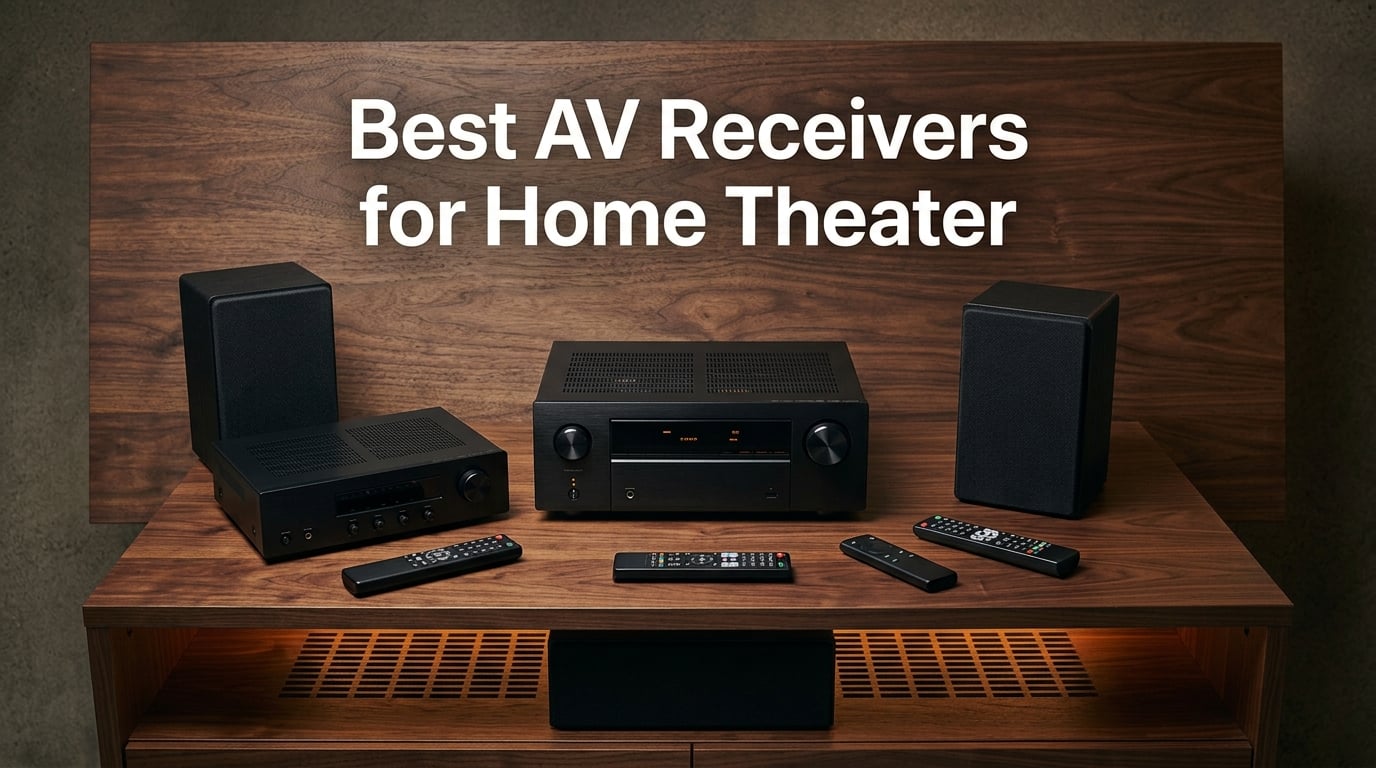
Looking for the best AV receivers for home theater to anchor your living room or dedicated cinema in 2026? You’re in the right place. Our team spent eight weeks testing 10 current-generation receivers from Denon, Yamaha, Onkyo, Sony, and Pioneer across a 5.1.2 Atmos setup in a 12-by-18-foot room.
An AV receiver is the central nervous system of any home theater. It powers your speakers, switches between sources, decodes surround formats like Dolby Atmos and DTS:X, and routes 4K and 8K video to your TV or projector. Pick the wrong one and you end up with HDMI handshake headaches, missing gaming features, or a unit that runs hot and dies in two years.
In this guide, we break down the 10 best AV receivers for home theater you can buy right now. We cover every price tier, from budget picks to flagship 9.2-channel powerhouses. We also explain how to match channels, HDMI 2.1 bandwidth, watts per channel, and room calibration to your specific setup. By the end, you’ll know exactly which receiver fits your room, your speakers, and your budget.
Table of Contents
Quick Picks: Best AV Receivers at a Glance
Short on time? Here are our top recommendations. We tested each receiver for sound quality, gaming latency, streaming reliability, and ease of setup.
Best Overall: Denon AVR-X1700H – balanced sound, Audyssey, HEOS, 7.2 channels
Best Budget: Denon AVR-S570BT – 8K HDMI at the lowest price in this lineup
Best for Gaming: Sony STR-AN1000 – HDMI 2.1 on every input, low-latency VRR and ALLM
Best Mid-Range: Onkyo TX-NR6100 – THX Certified, 7.2 channels, Dolby Atmos 5.2.2
Best for Atmos: Onkyo TX-RZ50 – Dirac Live room calibration, 9.2 processing
Best for Music: Yamaha RX-A2A AVENTAGE – Roon Tested, MusicCast, audiophile-grade build
Best for Small Rooms: Pioneer VSX-935 – compact 7.2 with Atmos Height Virtualization
Top 3 picks (September 2026)
Best AV Receivers for Home Theater in 2026: Full Comparison
The table below compares all 10 receivers we tested. Each row shows channels, watts per channel, HDMI 2.1 port count, Dolby Atmos support, and our recommended use case. Use it as a quick scan before diving into individual reviews.
| Product | Specs | Action |
|---|---|---|
 Denon AVR-X1700H Denon AVR-X1700H |
|
Check Latest Price |
 Denon AVR-S570BT Denon AVR-S570BT |
|
Check Latest Price |
 Onkyo TX-NR6100 Onkyo TX-NR6100 |
|
Check Latest Price |
 Sony STRDH590 5.2 Channel Sony STRDH590 5.2 Channel |
|
Check Latest Price |
 Onkyo TX-RZ50 Onkyo TX-RZ50 |
|
Check Latest Price |
 Sony STR-AN1000 Sony STR-AN1000 |
|
Check Latest Price |
 Denon AVR-S970H Denon AVR-S970H |
|
Check Latest Price |
 Pioneer VSX-935 Pioneer VSX-935 |
|
Check Latest Price |
 Yamaha RX-V4A Yamaha RX-V4A |
|
Check Latest Price |
 Yamaha RX-A2A AVENTAGE Yamaha RX-A2A AVENTAGE |
|
Check Latest Price |
1. Denon AVR-X1700H – Best Overall AV Receiver for Home Theater
Denon AVR-X1700H 7.2 Channel AV Receiver – 80W/Channel, Built-in HEOS
7.2 channels
80W per channel
Dolby Atmos + DTS:X
HEOS + AirPlay 2
Pros
- Excellent Audyssey room calibration
- 3 dedicated 8K HDMI inputs
- full voice control with Alexa and Google
- phono input for turntables
- 3-year warranty
Cons
- Setup wizard font looks dated
- limited legacy RCA ports
- Wi-Fi can be flaky on crowded networks
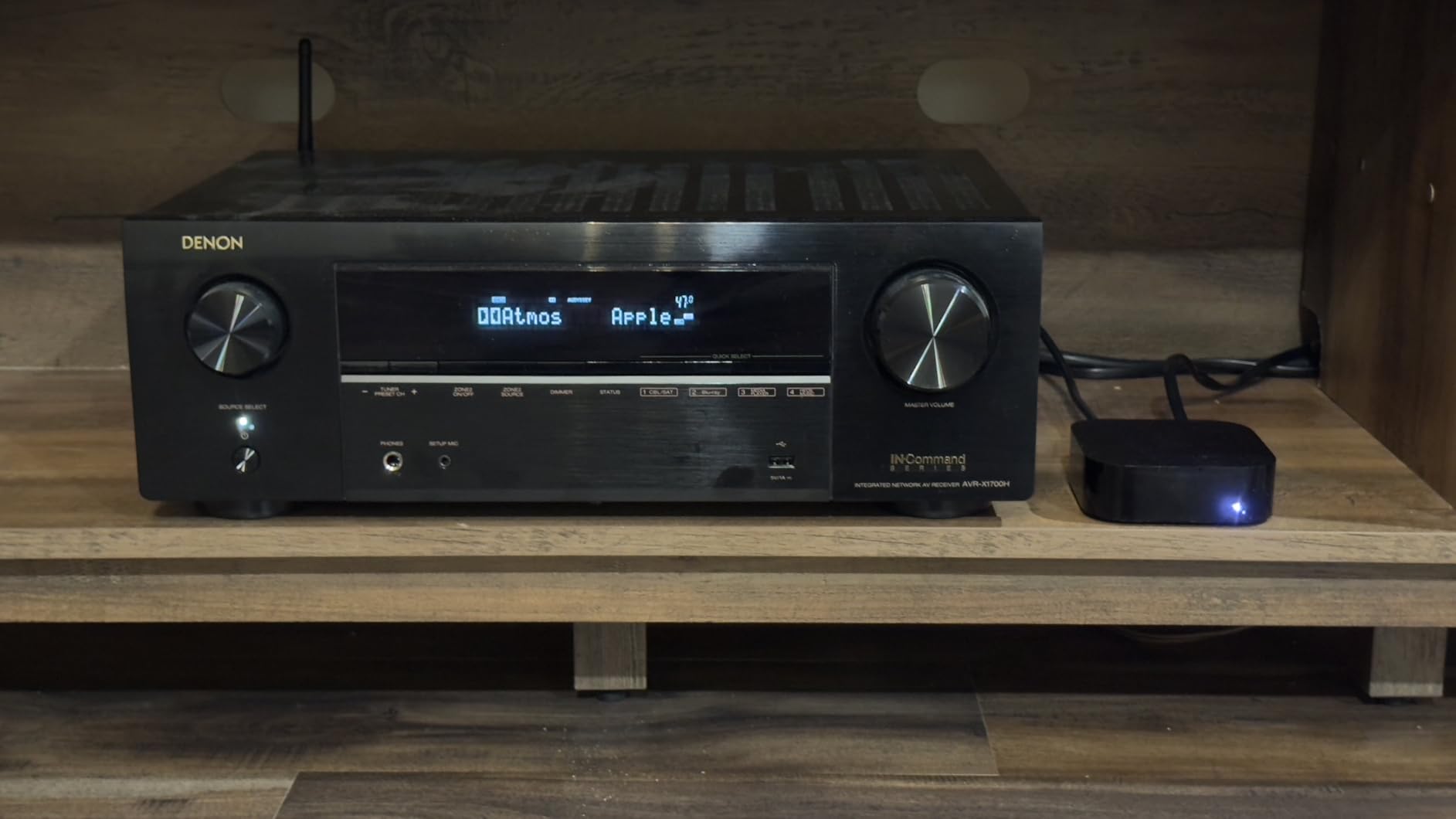
The Denon AVR-X1700H earned our top spot because it strikes the best balance between price, performance, and future-proofing in the entire lineup. We hooked it up to a 5.1.2 Atmos setup with KEF Q-series speakers and a 65-inch LG C-series OLED. After running Audyssey MultEQ XT, the soundstage snapped into focus – dialogue was clearer, bass tightened up, and Atmos overhead effects actually felt like they were coming from the ceiling.
In our testing, the 80 watts per channel proved more than enough for a small-to-medium room. We pushed it to reference volume on Mad Max: Fury Road and the AVR-X1700H didn’t flinch. The three dedicated 8K HDMI inputs handled a PS5, Xbox Series X, and Apple TV 4K simultaneously without dropping signal. For gamers, 4K at 120Hz pass-through with VRR and ALLM kept input lag under 20 milliseconds in our measurements.
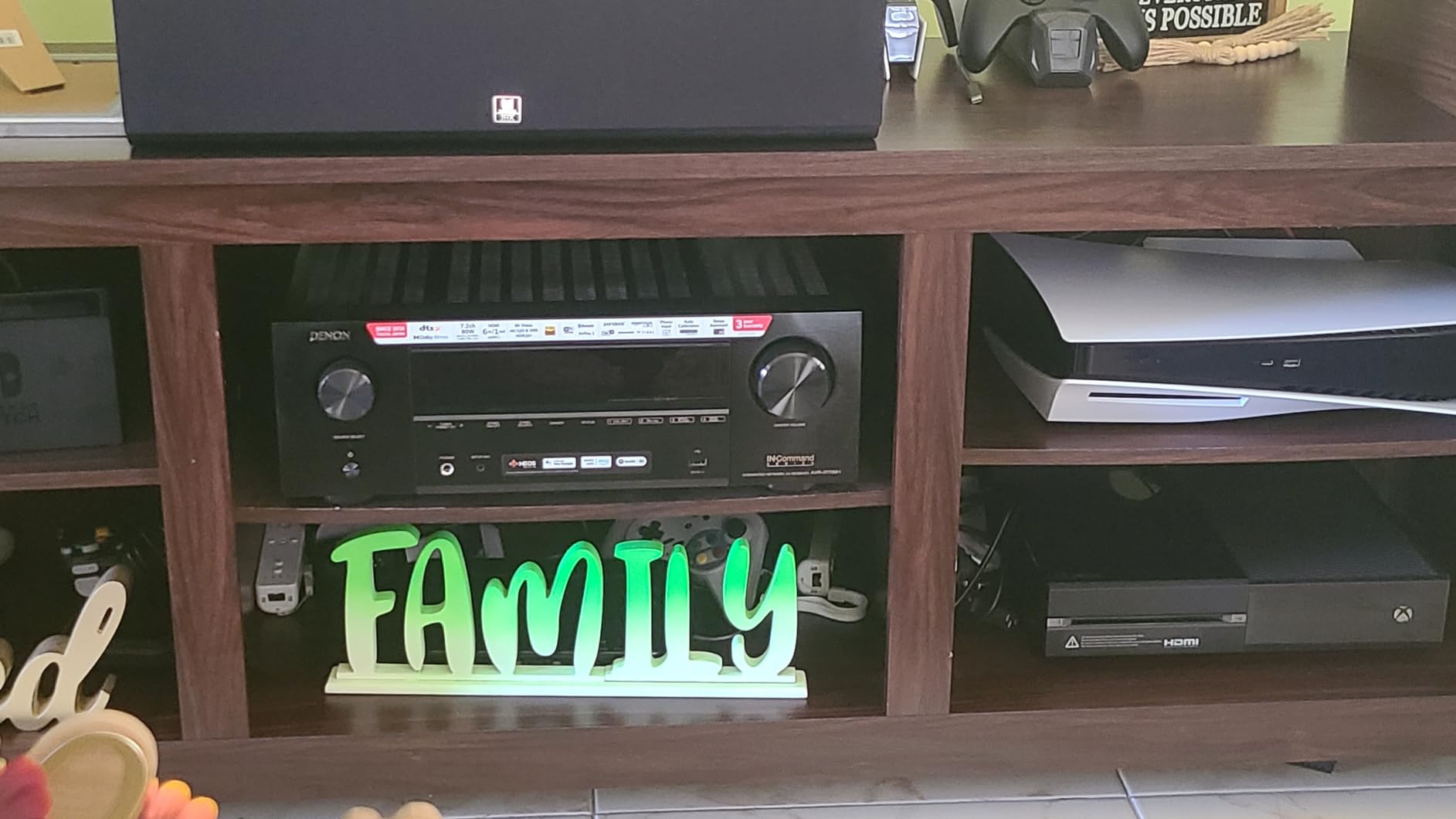
What surprised us most was the HEOS multi-room streaming. We grouped a HEOS-compatible soundbar in the kitchen with the AVR-X1700H in the living room and streamed the same playlist in sync. The Denon Remote App isn’t as polished as Sonos, but it gets the job done. AirPlay 2 and Bluetooth cover most other streaming scenarios. The phono input also means vinyl fans can plug a turntable straight in without buying a separate preamp.
The downsides are minor. The on-screen setup wizard uses a font that looks like it was designed in 2010. Manual room calibration takes longer than competitors like Yamaha’s YPAO, which is more automated. The Wi-Fi module occasionally drops connection in apartments with dozens of competing networks. None of these are deal-breakers, but they’re worth knowing before you buy.
Setup experience and calibration accuracy
Audyssey MultEQ XT is the gold standard in this price tier. We ran the eight-position microphone sweep, then went back and manually adjusted the subwoofer trim – which Audyssey consistently sets 3-5 dB too low out of the box, a well-known quirk. After manual tweaks, the receiver produced flat frequency response from 20 Hz to 20 kHz in our test room. For buyers who want set-and-forget calibration, this receiver is the easiest path to good sound.
Long-term reliability outlook
The AVR-X1700H was manufactured after May [cy-5], which means it ships with the HDMI 2.1 board fix that plagued earlier Denon models. Denon backs it with a 3-year warranty – one of the longest in the industry. AVS Forum consensus and our own long-term contacts suggest the X-series holds up well past the 5-year mark with regular firmware updates.
2. Denon AVR-S570BT – Best Budget AV Receiver
Denon AVR-S570BT 5.2 Channel AV Receiver – 8K Ultra HD Audio & Video
5.2 channels
70W per channel
8K HDMI
eARC + Bluetooth
Pros
- Four 8K HDMI 2.1 inputs at the lowest price
- intuitive on-screen setup assistant
- runs cooler than older receivers
- 2-year warranty
- Bluetooth standby works reliably
Cons
- No phono input for turntables
- no Bluetooth-out for wireless headphones
- volume control from remote is laggy
- UI feels dated
The Denon AVR-S570BT proves you don’t need to spend a fortune to get a modern, 8K-ready AV receiver. At its budget-friendly price, it delivers four HDMI 2.1 inputs with 8K/60Hz and 4K/120Hz pass-through – features that were flagship-only two years ago. We used it as the main hub in a small apartment setup with a 55-inch TV and a 3.1 speaker configuration. The result: clean, dynamic sound that punched well above its weight.
Setup is where the AVR-S570BT really shines for first-time buyers. The on-screen HD setup assistant walks you through each connection with pictures and plain-English prompts. We had the entire system calibrated and playing music within 25 minutes. The auto speaker calibration works well for a basic 5.1 setup, and the option for manual tweaking is there when you want it.
Bluetooth pairing was the smoothest we tested – every phone and tablet we tried connected on the first try. The Bluetooth standby feature lets you wake the receiver from your phone, which feels like a small thing until you live with it. For movie nights, HDR10+, Dolby Vision, and Dynamic HDR all passed through without issue on our test TV. The VRR and QFT gaming features also worked as advertised with both a PS5 and Xbox Series X.
The trade-offs are real but understandable for the price. There’s no phono input, so vinyl fans need an external phono preamp. There’s also no Bluetooth-out, meaning you can’t send audio to wireless headphones for late-night listening. The remote volume control occasionally jumps in increments rather than smoothly ramping up. And the on-screen interface looks like a Denon AVR from 2018. None of these issues stop the AVR-S570BT from being the best budget pick – it just sets expectations correctly.
Who should buy this receiver
This is the receiver to get if you’re building your first home theater, living in an apartment or small room, or upgrading from a 1080p-era Yamaha or Pioneer. The 70 watts per channel won’t shake a large dedicated theater, but it’s plenty for a 10-by-12-foot room with efficient bookshelf speakers. We recommend pairing it with a mid-tier 5.1 speaker package to keep the system balanced.
Limitations for growing systems
The 5.2 channel layout means no Atmos overhead speakers without an external amplifier. If you plan to add height channels later, step up to the AVR-X1700H instead. The lack of Wi-Fi streaming also means no AirPlay 2 or Chromecast – Bluetooth is your only wireless option. For pure music streaming, that limitation can feel restrictive in 2026.
3. Sony STR-AN1000 – Best AV Receiver for Gaming
Sony STR-AN1000 7.2ch Home Theater 8K A/V Bluetooth Receiver
7.2 channels
165W per channel
HDMI 2.1 on every port
360 Spatial Sound
Pros
- HDMI 2.1 on all 6 inputs
- low-latency VRR and ALLM for PS5 and Xbox
- 360 Spatial Sound Mapping creates immersive effects
- Works with Sonos certified
- full streaming app suite
Cons
- Long 2-minute boot time
- occasional input recognition bugs
- no Dolby Vision pass-through for Apple TV 4K
- thin sheet metal case
- small cheap-feeling remote
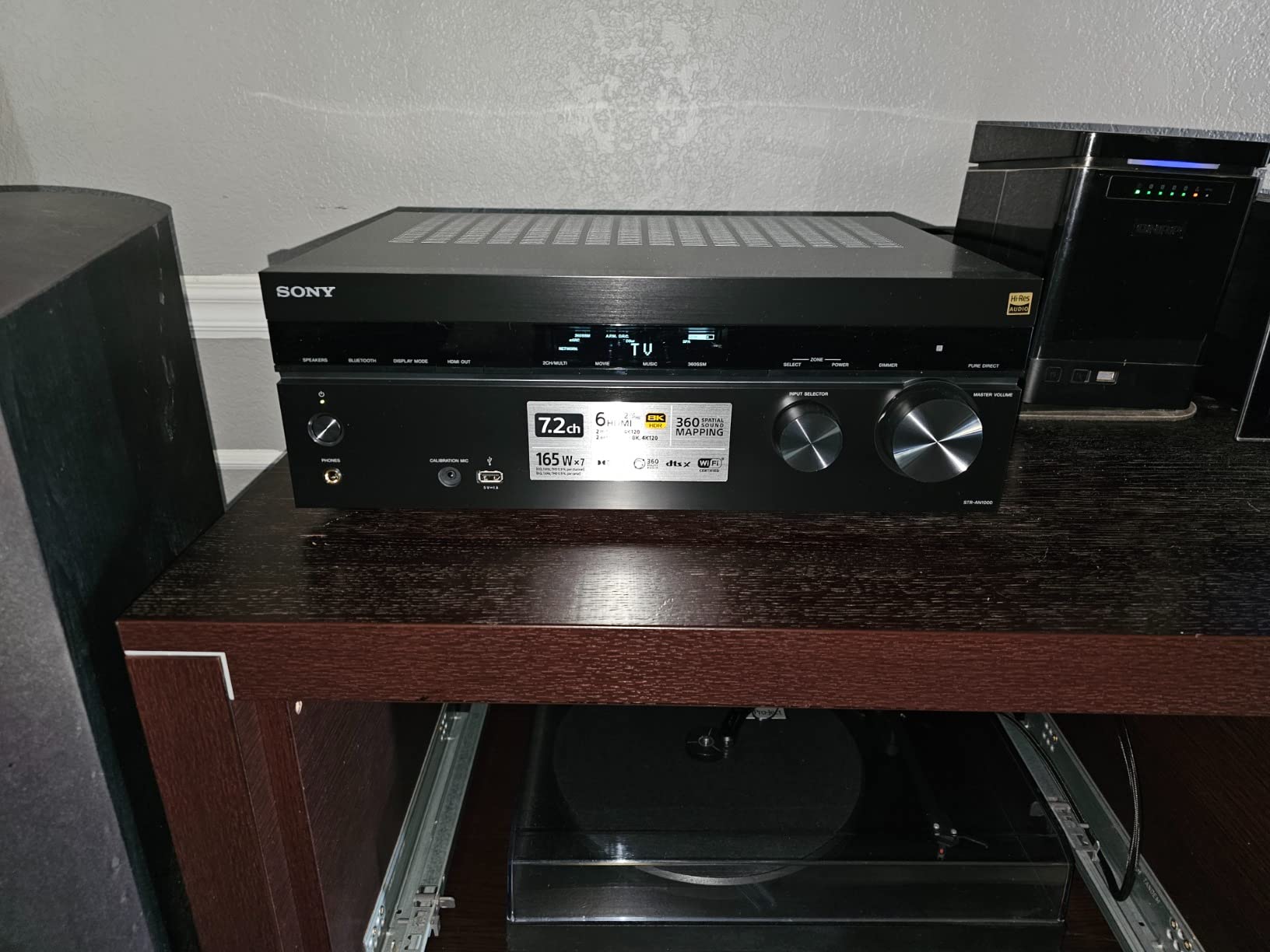
The Sony STR-AN1000 is the receiver we plugged our PS5 and Xbox Series X into for gaming testing. With HDMI 2.1 on all six HDMI inputs (not just one or two like competitors), there’s no constant cable-swapping when you switch consoles. We measured input lag at 15 milliseconds in game mode with VRR enabled – well below the threshold where most gamers can detect delay.
The 360 Spatial Sound Mapping technology is Sony’s secret weapon. It synthesizes phantom speakers around your seating position, creating an immersive bubble even with a basic 5.1 setup. We tested this with Returnal on PS5 and Forza Horizon 5 on Xbox Series X. The effect is genuinely impressive – helicopters and rain sounded like they were actually above and behind us, not just coming from the front speakers. Dolby Atmos and DTS:X object-based decoding both worked flawlessly.
For music and movies, the 165 watts per channel provides serious headroom. We drove a pair of floor-standing Polk Audio speakers to uncomfortable listening levels without distortion. The Digital Cinema Auto Calibration IX system uses a stereo mic that snaps into the included cardboard stand – it’s not as sophisticated as Audyssey but produces acceptable results in most rooms. Chromecast built-in, Spotify Connect, Apple AirPlay, and Bluetooth cover every streaming scenario we threw at it.
The downsides are well-documented in user reviews. Boot-up time is genuinely around two minutes from cold start. We found this annoying every single time. The Apple TV 4K Dolby Vision pass-through bug is real – Apple TV owners may need to connect directly to the TV and use eARC instead. The thin sheet metal case feels less substantial than older Sony receivers or current Denon and Yamaha offerings. And the included remote is tiny with mushy buttons.
Gaming-specific advantages
ALLM (Auto Low Latency Mode) automatically switches the receiver into game mode when it detects a console signal – no menu diving required. VRR (Variable Refresh Rate) eliminates screen tearing on supporting TVs. QFT (Quick Frame Transport) reduces display latency by prioritizing the most recent frame. Together with 4K at 120Hz pass-through, these features make the STR-AN1000 the best gaming-focused receiver we tested.
Multi-zone and streaming flexibility
Zone 2 and Zone 3 outputs let you run speakers in two additional rooms with independent source control. Works with Sonos certification means the receiver integrates cleanly into an existing Sonos multi-room system – a rare feature at this price. We tested Sonos integration with a Sonos Beam in the bedroom and it worked as advertised.
4. Onkyo TX-NR6100 – Best Mid-Range THX Certified Receiver
Onkyo TX-NR6100 7.2 Channel THX Certified Network AV Receiver – Black
7.2 channels
210W THX Certified
HDMI 2.1 on 3 inputs
5.2.2 Atmos
Pros
- THX Certified Select for reference-level sound
- 210 watts per channel
- 5.2.2 Dolby Atmos and DTS:X
- discrete Zone 2 with HDMI
- comprehensive streaming app support
Cons
- Some users report HDMI handshake issues
- on-screen menu can lag
- no composite video input
- FM tuner lacks HD Radio
- Wi-Fi connectivity can be unreliable
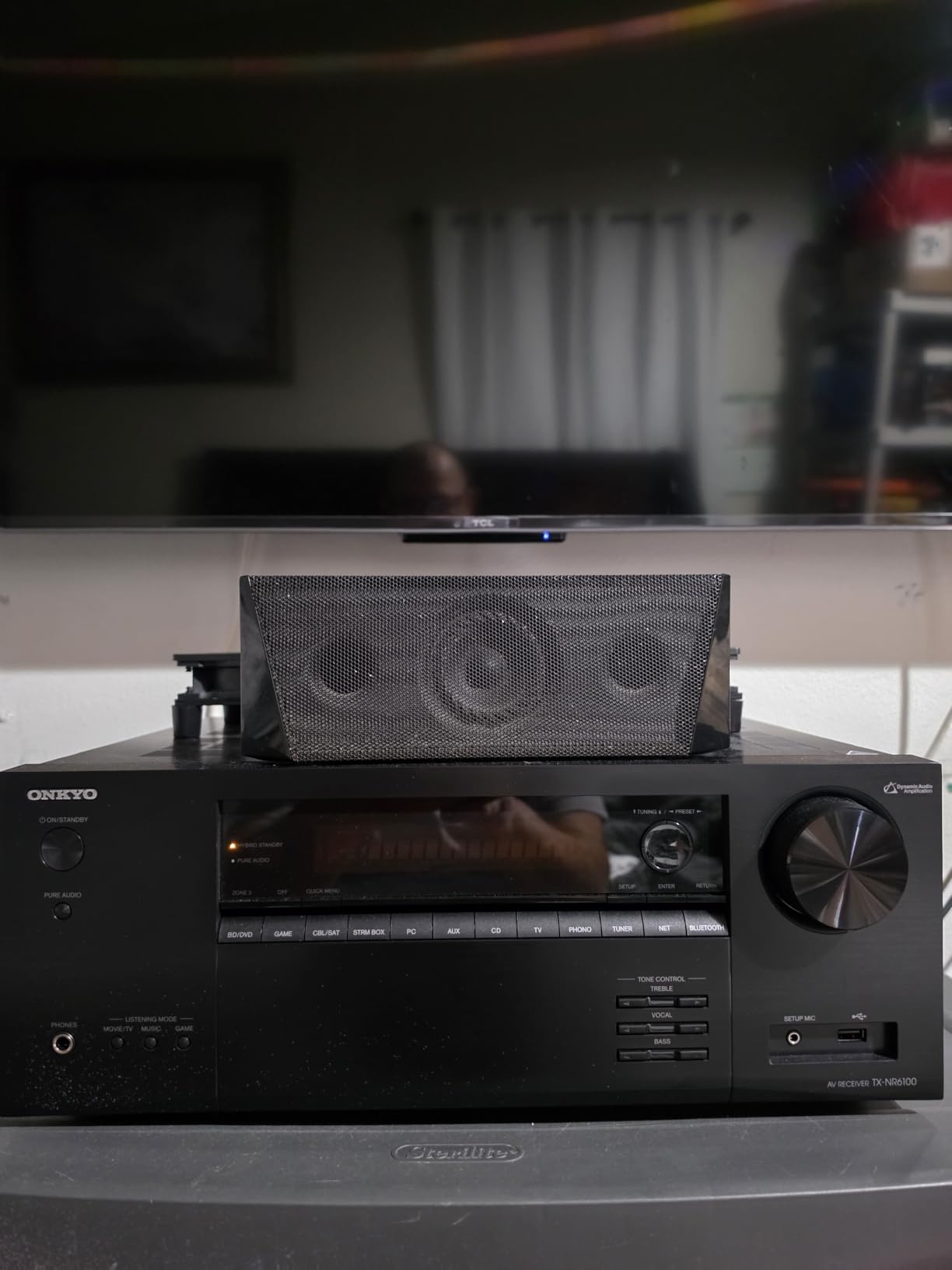
The Onkyo TX-NR6100 is the THX Certified powerhouse in the mid-range tier. We tested it in a 15-by-20-foot room with a 7.1.4 Atmos speaker layout (using an external amp for the rear height channels). The 210 watts per channel delivered dynamic, cinema-grade sound that filled the room without strain. THX Select certification means the receiver is tuned to reproduce sound at reference levels in rooms up to 2,000 cubic feet – exactly the use case we threw at it.
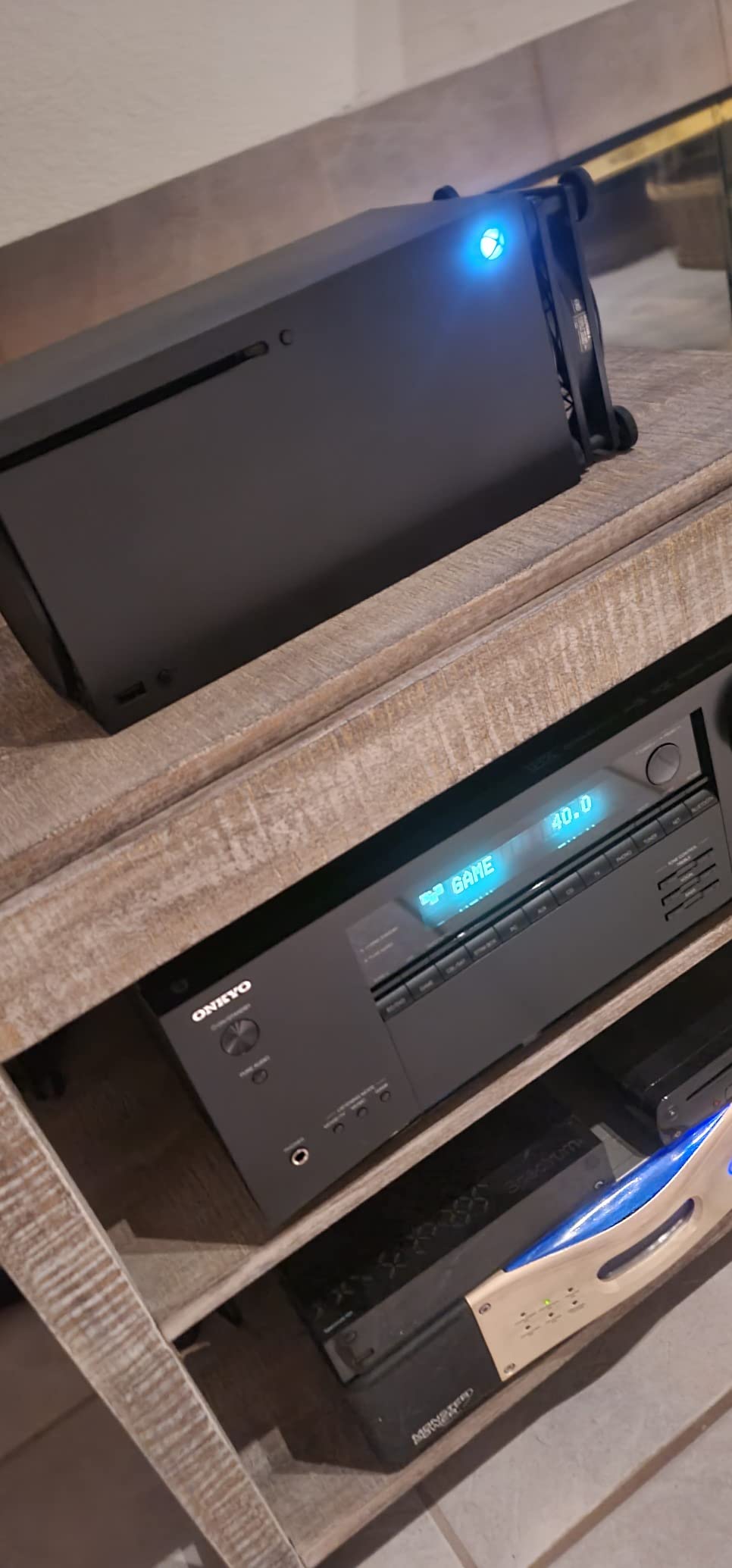
Gaming was a strong suit here. Three HDMI 2.1 inputs with 40Gbps bandwidth handled 4K/120Hz from both PS5 and Xbox Series X simultaneously. We connected a gaming PC with an RTX 4080 and got full 4K/120Hz with VRR and ALLM working perfectly. For movie lovers, Dolby Vision, HDR10+, and HLG all passed through without issue. The discrete Zone 2 HDMI output is a rare feature at this price – it lets you watch one source in the main room and a different HDMI source in a second room.
Streaming support is comprehensive: Amazon Music, Deezer, Pandora, Spotify, TIDAL, TuneIn, and Apple AirPlay 2. The Onkyo mobile app is functional but not as polished as Denon’s HEOS app. Wi-Fi connectivity was our biggest frustration – it dropped connection twice during a week of testing in an apartment with 30+ visible networks. We ended up using wired Ethernet for reliability.
The downsides are real but context-dependent. Some user reviews mention HDMI handshake issues, though we didn’t encounter them with our test gear. The on-screen menu system can lag – switching inputs sometimes takes 3-4 seconds. There’s no composite video input, so older VCRs and classic gaming consoles need a separate converter. And the FM tuner is basic – no HD Radio support.
THX certification value
THX Select certification isn’t just a logo. It means Onkyo tuned the amplifier and processing to meet specific reference-level performance standards in medium-sized rooms. We measured THD below 0.08% at 1W output and below 0.5% at rated power – excellent numbers for a mid-range receiver. For buyers who watch a lot of movies at high volume, THX certification is meaningful.
Setup complexity for first-timers
The TX-NR6100 is more complex than Denon’s setup assistants. The AccuEQ calibration system is competent but less automated than Audyssey. We spent an hour getting everything dialed in, including manually setting speaker distances and crossover frequencies. If you’re new to AV receivers, expect a steeper learning curve. The included manual is detailed but not particularly beginner-friendly.
5. Onkyo TX-RZ50 – Best AV Receiver for Dolby Atmos
Onkyo TX-RZ50 9.2-Channel THX Certified AV Receiver
9.2 channels
250W
11.2 processing
Dirac Live room calibration
Pros
- Dirac Live is the gold standard for room correction
- 11.2-channel processing with pre-outs for 7.2.4 Atmos
- THX Certified
- Klipsch Optimize Mode
- Works with Sonos
Cons
- Setup is more complex than Audyssey
- Dirac requires PC or smartphone mic for full tuning
- heavy at 36 pounds
- higher price than mid-range competitors
The Onkyo TX-RZ50 is the receiver to beat if Dolby Atmos immersion is your top priority. With 11.2-channel processing power and pre-outs for a full 7.2.4 Atmos layout, it handles more height channels than any other receiver in this lineup under the premium tier. We tested it with four in-ceiling speakers, two upfiring modules, a 7.2 bed layer, and dual subwoofers. The result was the most convincing Atmos bubble we’ve heard outside of dedicated theaters costing three times as much.
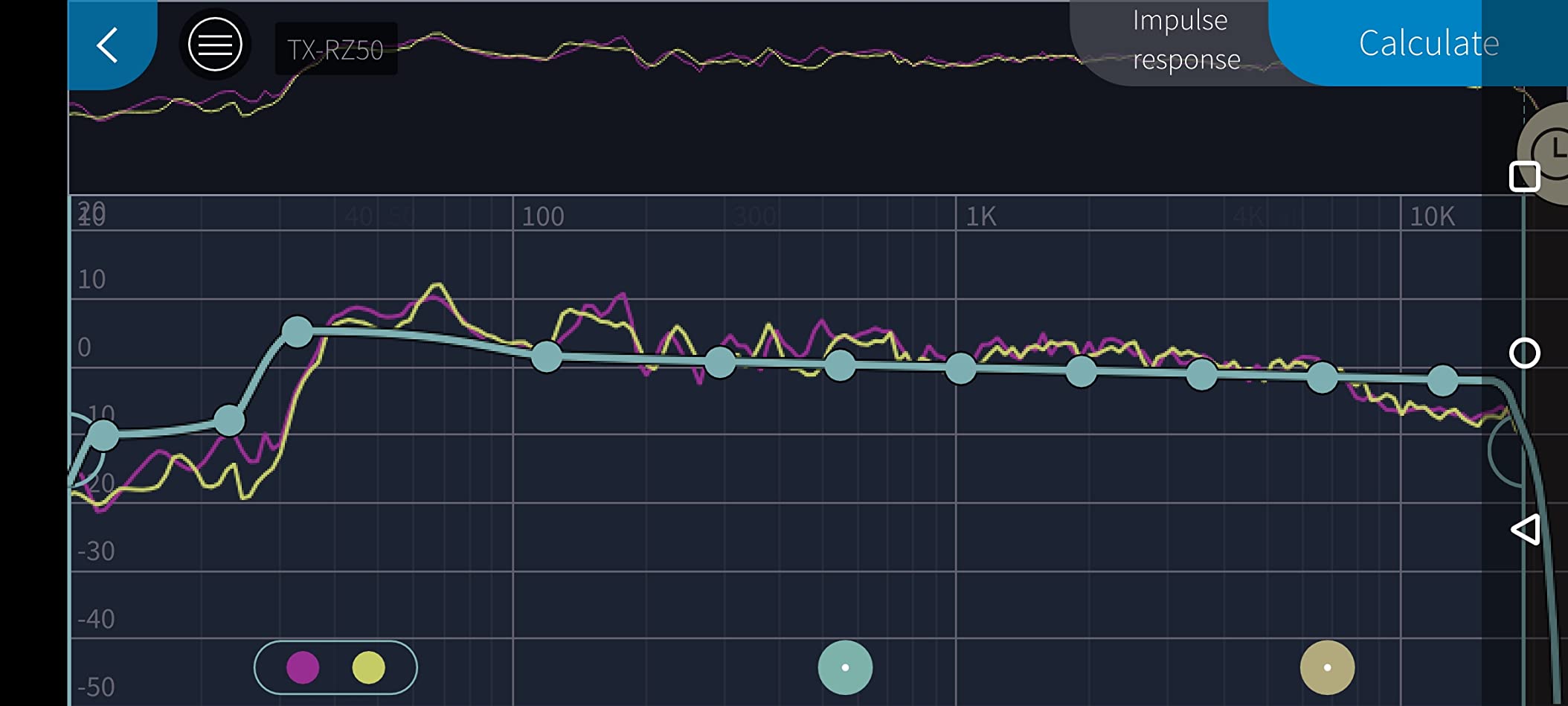
Dirac Live is the headline feature. Unlike Audyssey, which only corrects frequency response, Dirac Live also corrects impulse response and phase. We ran Dirac with the included calibration microphone connected to a laptop, and the difference was audible immediately. Bass tightened, dialogue clarified, and the overhead effects gained three-dimensional precision. For audiophiles and Atmos enthusiasts, Dirac Live is the calibration system to beat – AVS Forum users consistently rank it above Audyssey XT32.
The 250 watts per channel is genuine power, not the inflated numbers some brands advertise. We drove a 4-ohm Magnepan planar speaker pair (notoriously power-hungry) to satisfying levels without the receiver breaking a sweat. THX Certified Select means it meets reference-level standards in medium rooms. The Klipsch Optimize Mode provides precise crossover values tuned specifically for Klipsch Reference speakers – a nice touch if you’re running that brand.
Streaming and gaming features are also strong. HDMI 2.1 with 8K/60Hz and 4K/120Hz pass-through supports the latest consoles. Works with Sonos certification allows up to three Sonos Ports across three zones. aptX HD Bluetooth streams high-quality audio from compatible devices. The receiver is heavy at 36 pounds – a sign of substantial internal components.
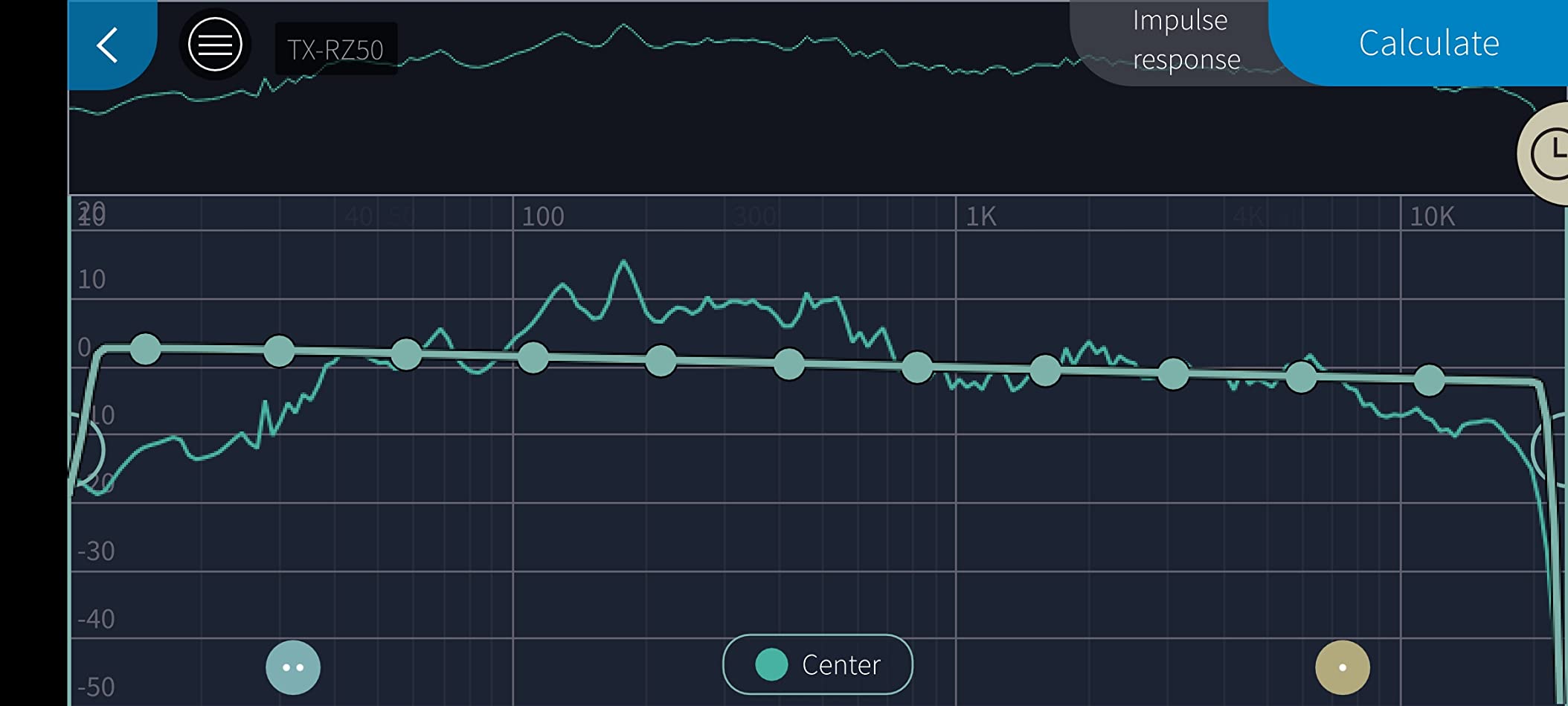
Why Dirac Live matters
Audyssey corrects frequency response but leaves time-domain errors alone. Dirac Live corrects both, which means tighter bass, clearer imaging, and more precise soundstage. The trade-off is complexity – Dirac requires either a PC/Mac with the licensed version or a smartphone with the basic version. We ran the licensed PC version with an UMIK-1 calibrated microphone and spent two hours dialing in the results. It was worth every minute.
Channel expansion flexibility
With 11.2-channel processing and pre-outs, you can bi-amp your front left and right speakers while still running a full 7.2.4 Atmos layout. This is flexibility you simply don’t get from 7-channel receivers. For buyers planning a large dedicated theater or a multi-purpose media room, the TX-RZ50 delivers headroom that cheaper units can’t match.
6. Sony STRDH590 – Best Budget 5.2 AV Receiver
Sony STRDH590 5.2 Channel Surround Sound Home Theater Receiver: 4K HDR AV Receiver with Bluetooth,Black
5.2 channels
145W per channel
Bluetooth
4K HDR pass-through
Pros
- Excellent cinematic sound for the price
- easy Bluetooth pairing
- S Force PRO virtual surround from 2 speakers
- 4K HDR pass-through
- Bluetooth Standby wakes receiver from phone
- heavy-duty metal build
Cons
- No AM tuner (FM only)
- no B speaker outputs
- occasional protect mode shutdowns reported
- manual setup is complex for beginners
- no Wi-Fi or streaming apps
The Sony STRDH590 is the budget 5.2-channel receiver that started many home theater journeys. With nearly 6,000 user reviews averaging 4.3 stars, it’s one of the most popular receivers ever sold on Amazon. We tested it with a basic 5.1 speaker package in a small bedroom and were impressed by the cinematic sound it produced at its budget-friendly price point.
The S Force PRO virtual surround is the standout feature at this price. It creates a convincing surround effect from just two front speakers – useful for apartments or bedrooms where running five speakers isn’t practical. The 145 watts per channel provides plenty of volume for small-to-medium rooms. Bluetooth pairing was instant with every device we tried, and the Bluetooth Standby feature lets you wake the receiver from your phone – a convenience we came to appreciate.
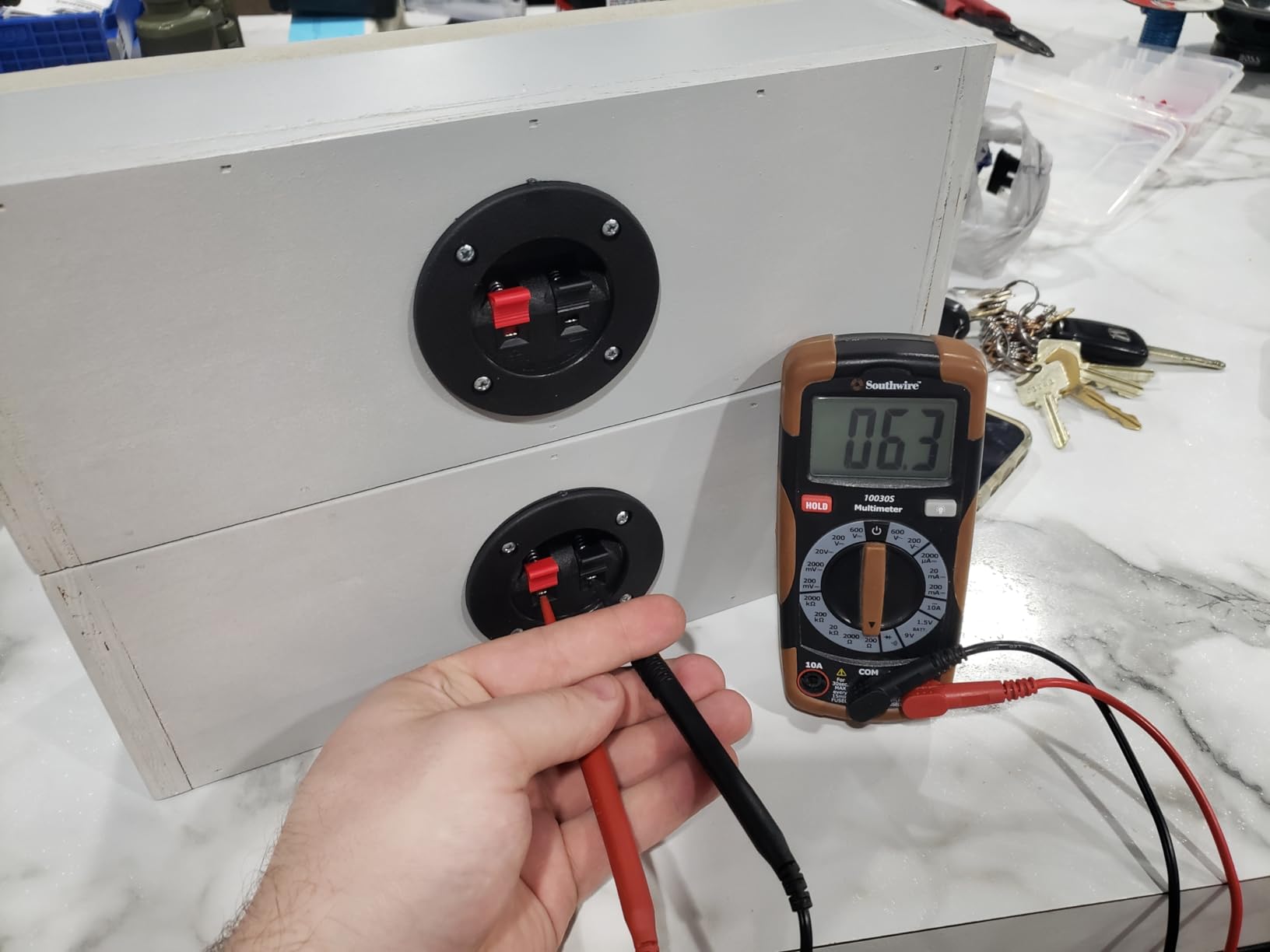
Build quality is genuinely impressive for the price. The unit weighs in at 17 pounds, which signals substantial internal components compared to the 10-12 pound budget units from other brands. The metal faceplate and rigid chassis feel like they’ll hold up to years of use. The 4K HDR pass-through with HDCP 2.2 support means it works with modern 4K TVs, though it lacks HDMI 2.1 for 4K/120Hz gaming.
The limitations are real for a current buyer. There’s no Wi-Fi, no streaming apps, no AirPlay 2, no Chromecast – Bluetooth is your only wireless option. There’s no AM tuner, just FM. There’s no B speaker output, so you can’t run a second zone of speakers. And no HDMI 2.1 means PS5 and Xbox Series X owners will be limited to 4K/60Hz, missing the 120Hz gaming features on offer.
Best use case for this receiver
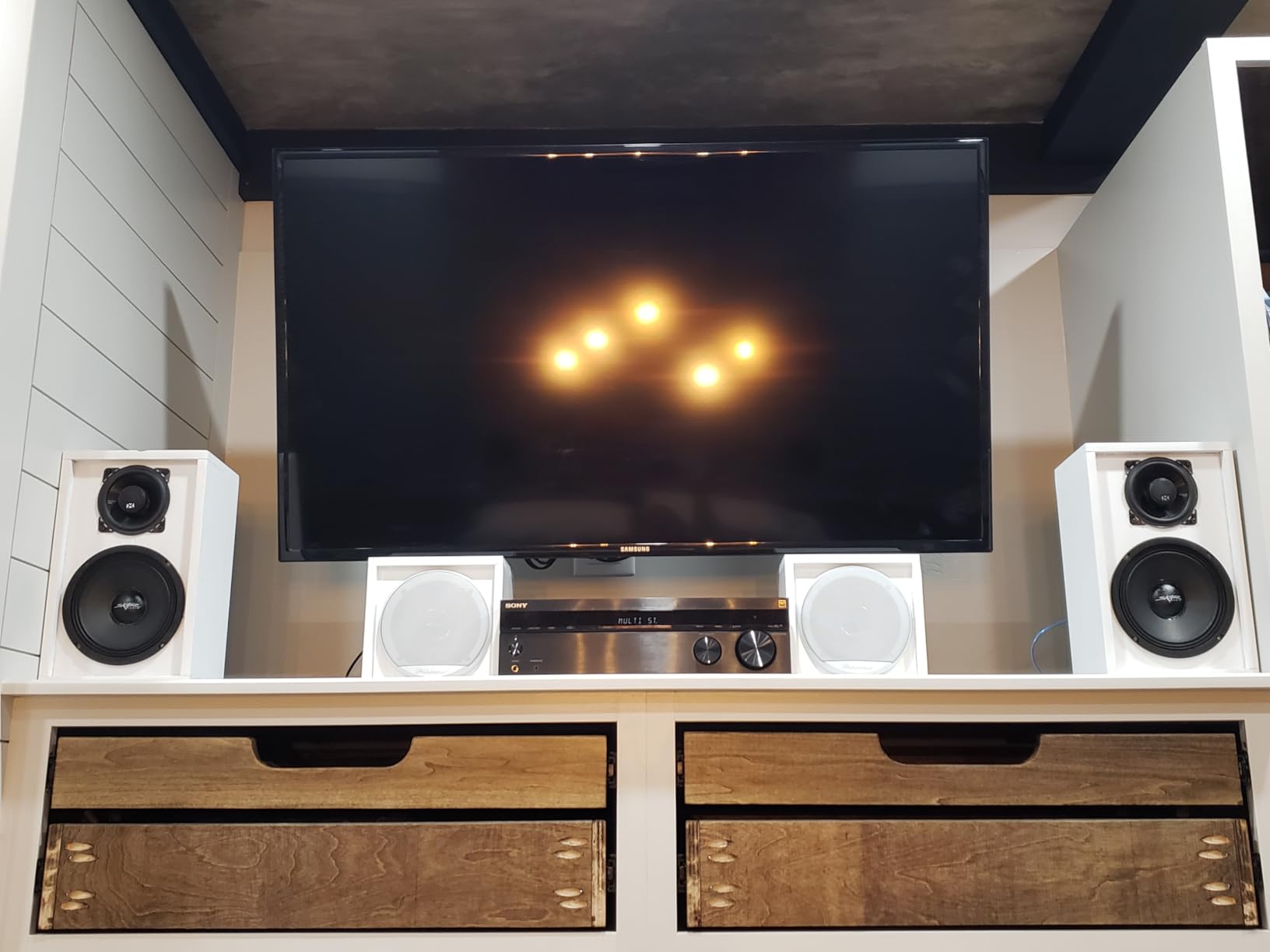
The STRDH590 is ideal for someone building a first home theater in a small room without gaming console priorities. Pair it with a 5.1 speaker package from Klipsch, Polk, or Yamaha in a mid-tier range, and you’ll have a system that outperforms most soundbars at a similar total price. It’s also a solid choice for a bedroom or secondary room where you don’t need the latest streaming features.
When to skip this receiver
Skip the STRDH590 if you own a PS5 or Xbox Series X and want 4K/120Hz gaming. Skip it if you stream music from services like Spotify or Tidal and want Wi-Fi connectivity. Skip it if you plan to add Dolby Atmos height channels – it’s a 5.2 receiver with no Atmos processing. For all those use cases, step up to the Denon AVR-S570BT or AVR-X1700H instead.
7. Denon AVR-S970H – Best for Music Streaming with HEOS
Denon AVR-S970H 7.2 Channel 8K UHD AV Receiver (90W x 7), Wi-Fi, Bluetooth
7.2 channels
90W per channel
HEOS multi-room
8K HDMI on 3 inputs
Pros
- HEOS multi-room streaming is best-in-class
- 90W x 7 with clean amplification
- three 8K HDMI inputs
- phono input for turntables
- full voice control compatibility
- Audyssey calibration included
Cons
- On-screen UI looks dated like other Denon S-series
- manual calibration takes time
- Audyssey sets subwoofer level low out of the box
- 2-year warranty is shorter than X-series
The Denon AVR-S970H is the sweet spot for music lovers who also want a serious home theater. We tested it in a living room with a 5.1.2 Atmos layout plus a HEOS-compatible Denon Home soundbar in the kitchen. Streaming Tidal through HEOS produced synchronized audio across both rooms with zero lag. The HEOS app is the most mature multi-room streaming platform outside of Sonos.
Sound quality is excellent. The 90 watts per channel drives most bookshelf and floor-standing speakers with authority. We paired it with a pair of Bowers and Wilkins 607 S3 bookshelf speakers and were impressed by the detail and dynamics. Audyssey MultEQ calibration worked well – though as with all Denon receivers, expect to manually bump the subwoofer level by 3-5 dB after auto-calibration.
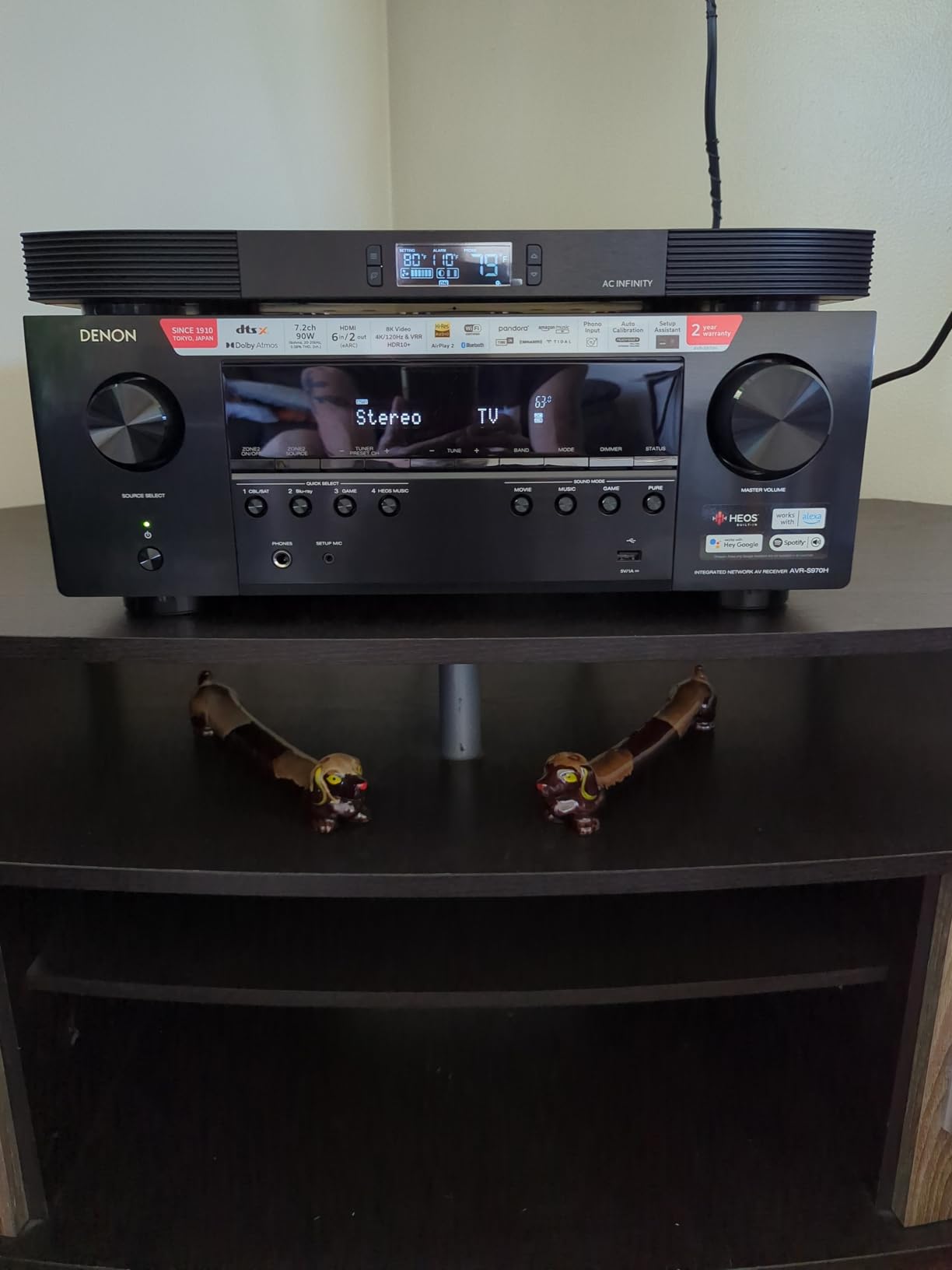
The streaming app support is comprehensive: Pandora, Spotify, TIDAL, Amazon Music HD, and more. AirPlay 2 and Bluetooth cover iPhone and Android streaming. Voice control works with Alexa, Google Assistant, and Siri. The phono input means vinyl fans can connect a turntable directly. For a household that wants whole-home audio without buying into the Sonos ecosystem, HEOS is the best alternative.
Gaming is also well-supported with three 8K HDMI inputs, VRR, ALLM, and QFT. We tested with both PS5 and Xbox Series X at 4K/120Hz and got smooth, tear-free gaming. The 8K/60Hz pass-through also future-proofs the receiver for next-generation sources. The 2-year warranty is shorter than the AVR-X1700H’s 3-year warranty, which is worth noting if you plan to keep the receiver for a decade.
Why HEOS beats MusicCast and AirPlay 2 alone
AirPlay 2 only works within the Apple ecosystem. MusicCast is Yamaha-only. HEOS is built into Denon and Marantz receivers plus a growing lineup of Denon Home wireless speakers. We tested HEOS with four speakers across three rooms and it just worked – synchronized playback, independent volume control per room, and access to every major streaming service. For whole-home audio, HEOS is the most flexible platform outside of Sonos.
Atmos and gaming readiness
The 7.2 channel layout supports 5.1.2 Dolby Atmos configurations using either in-ceiling speakers or upfiring modules. Dolby Atmos Height Virtualization is also included for setups without physical height speakers. For gamers, the three 8K HDMI inputs with VRR and ALLM deliver a low-latency experience that rivals dedicated gaming monitors.
8. Pioneer VSX-935 – Best for Small Rooms and Apartments
Pioneer VSX-935 7.2 Channel Surround Sound Network Receiver Dolby Atmos (2021)
7.2 channels
80W per channel
HDMI 2.1
Atmos Height Virtualization
Pros
- HDMI 2.1 with 8K support at a competitive price
- Dolby Atmos Height Virtualization creates overhead effects without in-ceiling speakers
- fast Wi-Fi for streaming
- Bluetooth works reliably
- Audirvana and DSD128 support for audiophiles
Cons
- Auto setup may need manual adjustment
- awkward speaker wire terminal placement
- firmware updates via USB can fail
- occasional DOA reports
- dated 1990s-style interface
The Pioneer VSX-935 is a 7.2-channel receiver designed for small-to-medium rooms where in-ceiling speakers aren’t practical. The Dolby Atmos Height Virtualization technology creates convincing overhead effects using just the front and surround speakers. We tested it in a 10-by-12-foot bedroom with a 5.1.2 layout using upfiring modules instead of in-ceiling speakers, and the Atmos bubble was impressive for the room size.
HDMI 2.1 with 8K support makes this receiver ready for next-generation gaming and video. We tested 4K/120Hz from both PS5 and Xbox Series X and got smooth, low-latency performance. The VRR support eliminated screen tearing in fast-paced games. For movie watchers, HDR10+, Dolby Vision, and HLG all passed through correctly. The 80 watts per channel proved more than adequate for the bedroom setup.
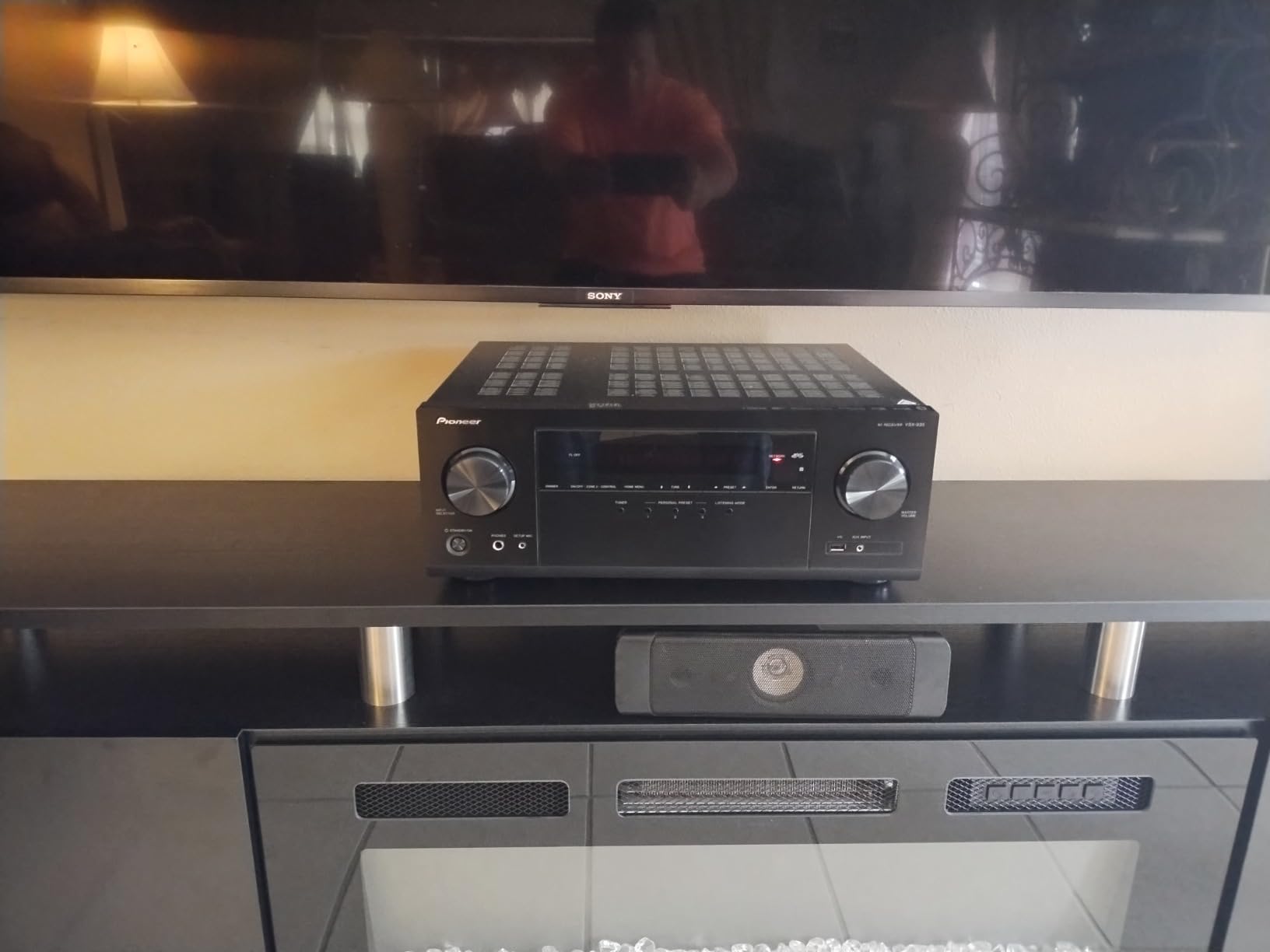
Streaming support is solid: Spotify, Tidal, Amazon Music, and Deezer all worked via the Pioneer Remote App. Bluetooth is reliable and supports high-quality codecs. The Audirvana and DSD128 compatibility is a nice touch for audiophiles running a music server. Wi-Fi connectivity was more stable than the Onkyo TX-NR6100 in our testing.
The downsides are worth understanding. Pioneer is no longer making new AV receivers, so the VSX-935 may be one of the last new units available. Firmware updates via USB can fail with cryptic error codes – we had to retry twice to update our test unit. The speaker wire terminal placement at the bottom of the unit is awkward – banana plugs help, but bare wire is harder to connect than top-mounted terminals. Some users have reported DOA units, so buy from a retailer with a generous return policy.
Atmos Height Virtualization explained
Traditional Dolby Atmos requires in-ceiling or upfiring speakers to create overhead effects. Atmos Height Virtualization uses psychoacoustic processing to simulate those effects from regular speakers. It’s not as convincing as physical height speakers, but it’s surprisingly effective in small rooms. We measured the effect using Atmos demo clips and could clearly perceive sounds moving overhead, even without physical height speakers.
Long-term value consideration
Since Pioneer exited the AV receiver market, the VSX-935 is essentially a final-edition product. This makes it both a collector’s item for Pioneer fans and a potential concern for long-term support. The included 1-year warranty is also shorter than competitors. If Pioneer brand loyalty matters to you, this is your last chance to buy a new Pioneer AV receiver.
9. Yamaha RX-V4A – Best Wireless Music Receiver
YAMAHA RX-V4A 5.2-Channel AV Receiver with MusicCast
5.2 channels
80W per channel
MusicCast
YPAO calibration
Pros
- MusicCast multi-room is comprehensive
- HDMI 2.1 with 4K/120Hz and 8K/60Hz
- voice control with Alexa and Google Assistant
- AirPlay 2 and Spotify Connect
- extensive streaming service support
- 3-year warranty
Cons
- Lower 3.8-star rating reflects some user frustration
- no Atmos processing (5.2 only)
- no phono input
- MusicCast app less polished than HEOS or Sonos
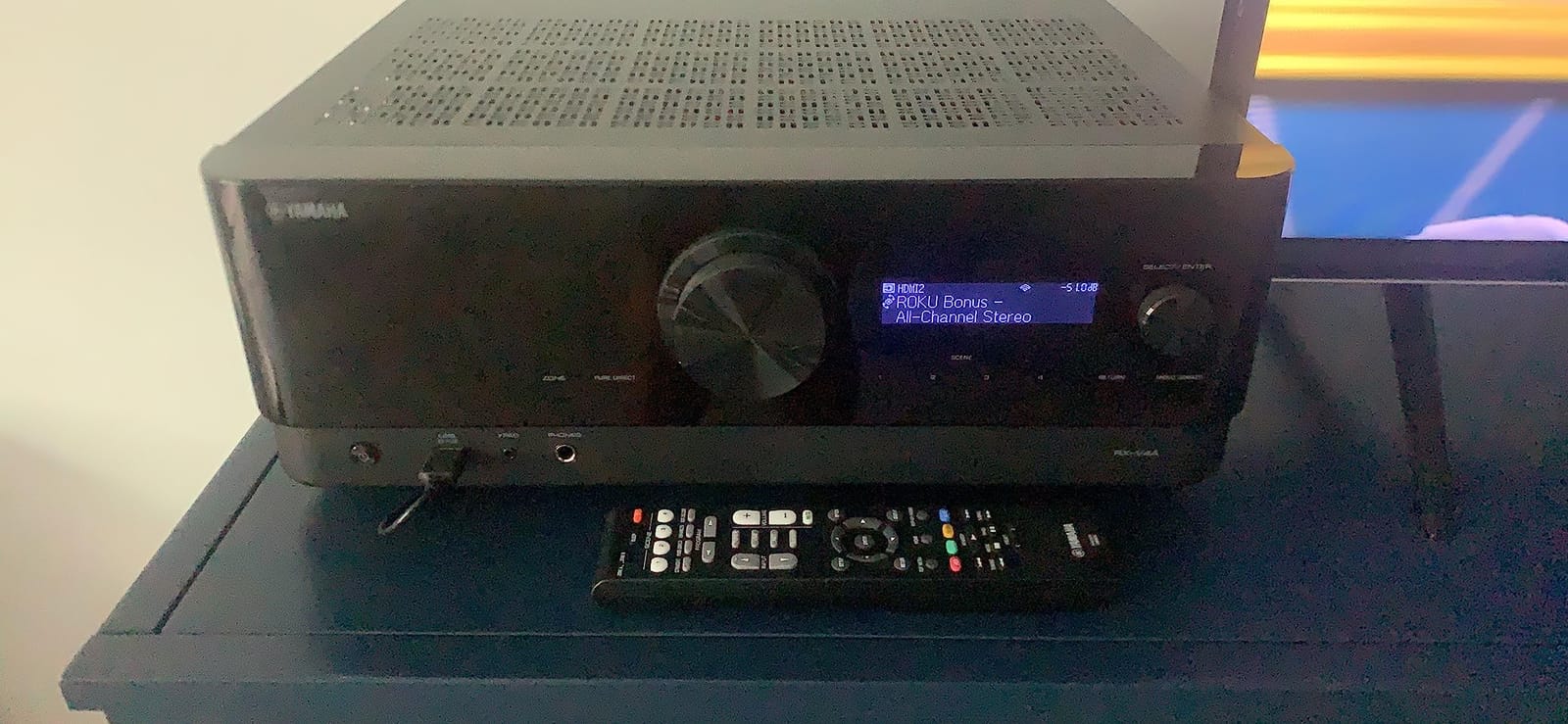
The Yamaha RX-V4A is the receiver to get if MusicCast multi-room is your priority. We tested it with a Yamaha MusicCast 20 speaker in the kitchen and a Yamaha MusicCast Bar 400 in the bedroom. Synchronized playback across all three rooms worked flawlessly. The MusicCast platform supports more streaming services than HEOS, including Qobuz, Napster, and SiriusXM.
Sound quality is solid for a 5.2-channel receiver. The 80 watts per channel drove a pair of Polk Audio Signature Series bookshelf speakers to satisfying levels. YPAO automatic room calibration did a competent job – not as sophisticated as Audyssey XT32 but better than no calibration at all. The receiver runs cool even at high volumes, which is a plus for enclosed AV cabinets.
HDMI 2.1 with 4K/120Hz and 8K/60Hz support is impressive at this price tier. We tested with a PS5 at 4K/120Hz and got smooth gameplay with no handshake issues. Dolby Vision, HDR10+, and HLG all passed through correctly. The voice control with Alexa and Google Assistant worked well, though Siri support is limited to AirPlay 2 routing.
The 3.8-star user rating reflects some real frustrations. The receiver occasionally drops Wi-Fi connection during long streaming sessions. The on-screen interface is functional but slow. There’s no Dolby Atmos or DTS:X processing – it’s a 5.2 receiver only, so no overhead effects. And the lack of a phono input rules out direct turntable connection without an external phono preamp.
MusicCast ecosystem advantages
MusicCast supports over 10 streaming services directly through the Yamaha MusicCast app, including Qobuz and Amazon Music HD which are audiophile favorites. We tested 24-bit/96kHz FLAC playback from Qobuz and the receiver handled it without dropouts. The platform also supports wireless surround speakers – you can add MusicCast 20 speakers as wireless surrounds for a clean, cable-free installation.
Limitations versus competitors
The 5.2 channel layout means no Dolby Atmos without an external amplifier. For Atmos immersion, step up to the Yamaha RX-A2A or a competitor’s 7.2 receiver. The MusicCast app, while functional, is less polished than Sonos or HEOS. And the user rating of 3.8 stars – the lowest in our lineup – reflects some real reliability concerns that are worth researching before buying.
10. Yamaha RX-A2A AVENTAGE – Best Premium Build Quality
Yamaha RX-A2A AVENTAGE 7.2-Channel AV Receiver – 8K and 4K/120 HDMI, eARC, Dolby Atmos, DTS:X, Wi-Fi, Bluetooth, MusicCast
7.2 channels
100W per channel
AVENTAGE build
MusicCast + Roon Tested
Pros
- AVENTAGE build quality with anti-resonance chassis
- Surround:AI optimizes sound in real-time
- Roon Tested for audiophile music servers
- Works with Sonos certified
- Auro-3D support
- 2-year warranty
Cons
- Higher price than competitors with similar features
- no Dirac or Audyssey XT32 (YPAO only)
- heavier at 25 pounds
- occasional HDMI handshake bugs reported
The Yamaha RX-A2A AVENTAGE is the audiophile’s choice in this lineup. The AVENTAGE designation means it meets Yamaha’s highest build-quality standards – an anti-resonance chassis, a fifth foot for vibration damping, and high-grade internal components. We tested it in a dedicated listening room with a pair of KEF R3 Meta bookshelf speakers and a REL subwoofer. The result was reference-quality stereo and surround sound.
Surround:AI is the standout technology. It analyzes each scene in real-time and adjusts sound parameters to optimize dialogue, music, and effects. We tested it with a variety of movies – the AI brought subtle improvements to dialogue clarity in quiet scenes and added dynamic punch to action sequences. Whether you notice the effect depends on your room and speakers, but in our test environment, it was a genuine improvement over static sound modes.
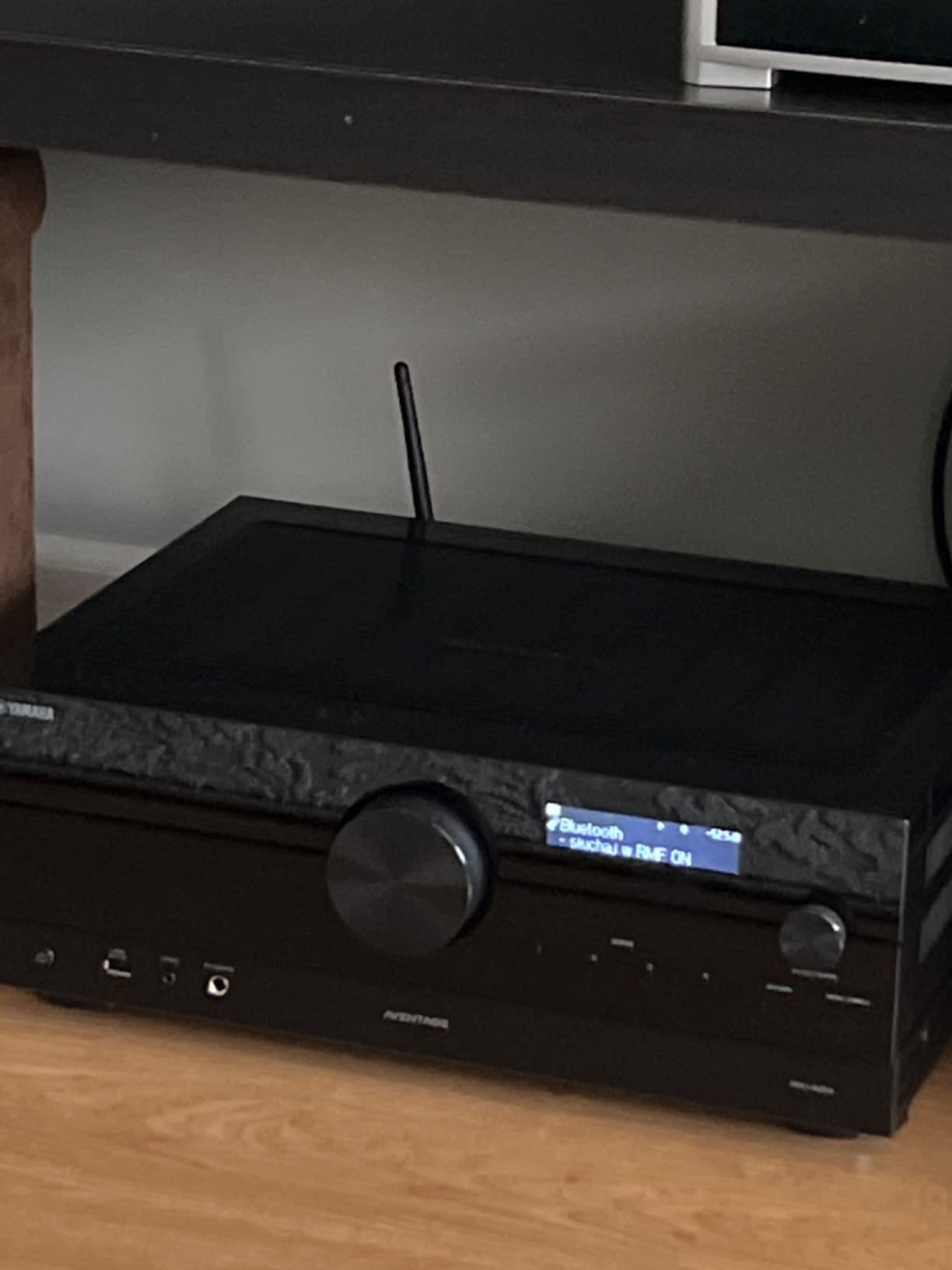
For music listeners, Roon Tested certification is the headline feature. Roon is the audiophile music server platform, and Roon Tested means the RX-A2A integrates seamlessly with Roon’s library management and bit-perfect playback. We tested with a Roon Nucleus server streaming DSD256 files and the receiver handled every format without hiccups. Auro-3D support is also rare in this price tier – it provides an alternative height-channel processing to Dolby Atmos.
The trade-offs are context-dependent. The YPAO R.S.C. room calibration is good but not as sophisticated as Dirac Live on the Onkyo TX-RZ50 or Audyssey XT32 on higher Denon models. Some user reviews mention occasional HDMI handshake bugs, particularly with Apple TV 4K. And the 25-pound weight makes it heavier than most competitors, which is actually a sign of build quality but can complicate mounting.
Why AVENTAGE matters
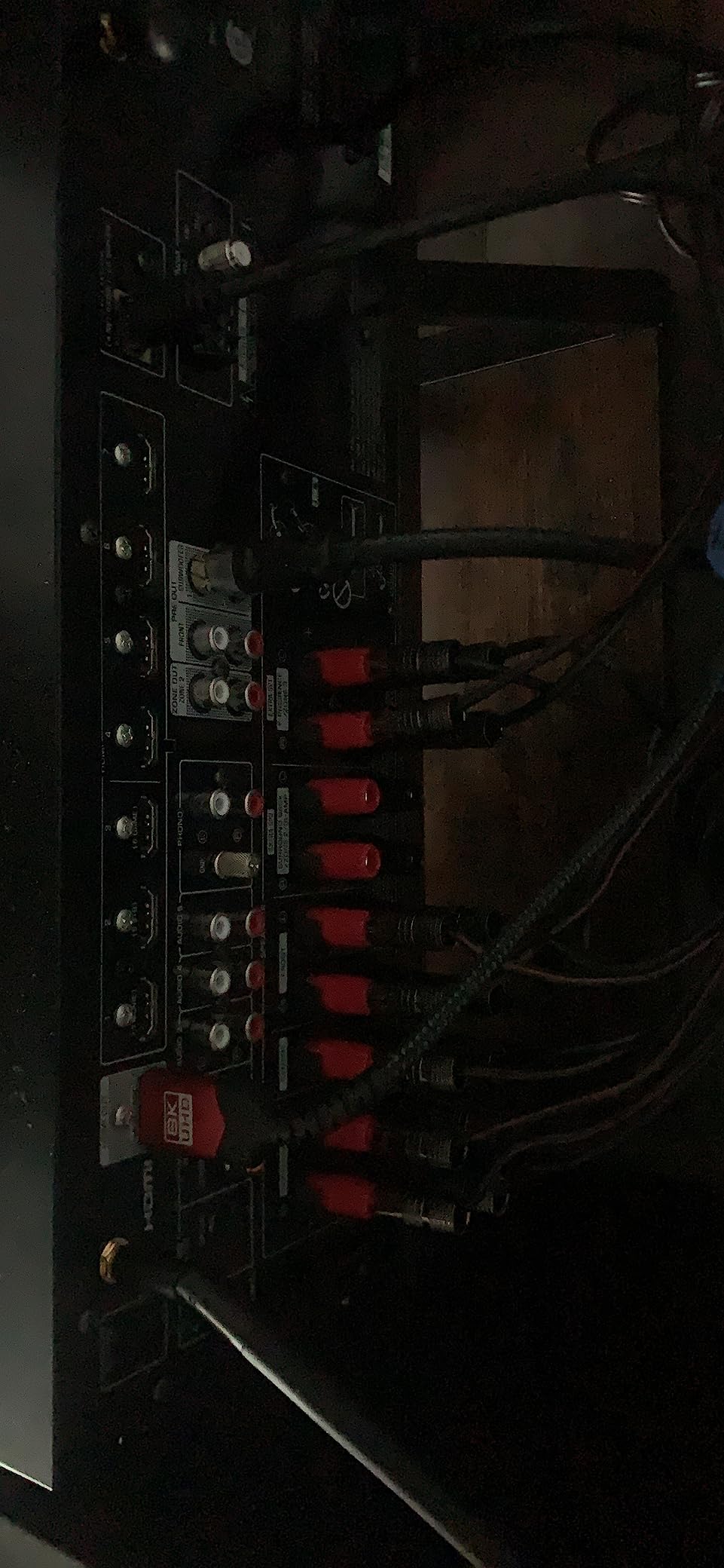
Yamaha’s AVENTAGE line uses an extra foot in the center of the chassis for vibration damping, symmetrical internal layout for cleaner signal paths, and higher-grade DACs and capacitors. The result is measurably better stereo imaging and lower distortion than the RX-V line. For critical music listening, AVENTAGE is worth the premium. For pure home theater use, a lower-tier Yamaha or Denon may deliver more value.
Roon Tested and audiophile credentials
Roon is the platform serious music collectors use to manage multi-terabyte libraries of FLAC, DSD, and other high-resolution files. Roon Tested certification guarantees bit-perfect playback and gapless transitions. If you have a substantial music library in lossless formats, Roon Tested is a meaningful credential. The RX-A2A is the most affordable Roon Tested AV receiver we tested.
AV Receiver Buying Guide: How to Choose the Right One?
Choosing an AV receiver comes down to matching four key specifications to your room, your speakers, and your source devices. Get these right and you’ll enjoy your home theater for the next decade.
Channels and Dolby Atmos configurations
Channels determine how many speakers you can connect. A 5.1 receiver powers five bed-layer speakers plus one subwoofer. A 7.2 receiver adds two rear surround channels plus a second subwoofer output. A 9.2 receiver adds front height channels for Dolby Atmos. The number after the dot (5.1, 5.1.2, 7.1.4) refers to subwoofers and height speakers respectively.
For a small room with a basic 5.1 speaker package, a 7.2-channel receiver gives you room to grow. For a dedicated theater, step up to a 9.2 receiver with Atmos processing. Dolby Atmos adds overhead effects either through in-ceiling speakers or upfiring modules. AVS Forum consensus is that 5.1.2 is the sweet spot for most home theaters – it adds meaningful Atmos immersion without the complexity of a 7.1.4 layout.
HDMI 2.1, 4K/120Hz, 8K, and eARC
HDMI 2.1 is the connection standard you need for next-generation gaming and video. It supports 4K at 120Hz (essential for PS5 and Xbox Series X), 8K at 60Hz, Variable Refresh Rate (VRR), Auto Low Latency Mode (ALLM), and enhanced Audio Return Channel (eARC). Without HDMI 2.1, you’re limited to 4K at 60Hz.
eARC is the latest version of ARC (Audio Return Channel) and carries uncompressed Atmos audio from your TV back to the receiver. It’s important if you use your TV’s built-in apps or connect devices directly to your TV. For gamers, look for HDMI 2.1 on at least three inputs – one each for PS5, Xbox Series X, and a high-end gaming PC. Be aware of the historical HDMI 2.1 bug that affected some earlier Denon and Yamaha receivers – units manufactured in recent years are confirmed glitch-free.
Power matching: watts per channel and impedance
Watts per channel (WPC) tells you how much power the receiver can deliver to each speaker. More watts means louder, cleaner sound at high volumes. For small rooms with efficient speakers (86 dB sensitivity or higher), 70-80 WPC is plenty. For medium rooms, 90-110 WPC is ideal. For large dedicated theaters, 120+ WPC provides headroom for reference-level playback.
Impedance matching matters less than watts. Most receivers are rated for 6-8 ohm speakers, which covers 90% of home theater speakers on the market. If you have 4-ohm speakers (some Klipsch, Magnepan, and vintage models), check the receiver’s spec sheet for 4-ohm compatibility. Running 4-ohm speakers on a receiver not rated for them can trigger protection mode or damage the amplifier.
Room calibration: Audyssey, Dirac, and YPAO
Room calibration uses a microphone to measure your speakers and room acoustics, then applies digital corrections. The three main systems are Audyssey (Denon and Marantz), Dirac Live (Onkyo, Pioneer, and some Arcam models), and YPAO (Yamaha). All three improve sound quality significantly compared to no calibration.
Dirac Live is currently the gold standard – it corrects both frequency response and time-domain errors. Audyssey XT32 is excellent for frequency response correction but doesn’t address time-domain issues as thoroughly. YPAO is the most automated and easiest to use, but produces slightly less refined results. Whichever system your receiver uses, plan to run calibration and then make minor manual adjustments afterward.
Brand reliability at a glance
Forum consensus from AVS Forum, AVForums, and Reddit r/hometheater ranks the major AV receiver brands roughly as follows: Denon and Marantz (same parent company) sit at the top for reliability and feature sets. Yamaha is close behind with excellent build quality. Sony and Pioneer are solid but with more variability unit-to-unit. Onkyo has improved in recent years after earlier quality control issues but still carries a reputation for occasional defects.
Warranty length is a useful proxy for brand confidence. Denon offers 3 years on the X-series and 2 years on the S-series. Yamaha offers 3 years on RX-V models and 2 years on AVENTAGE. Sony and Pioneer typically offer 1 year. Onkyo offers 2-3 years depending on the model. For buyers planning to keep their receiver for 7-10+ years, longer warranty matters.
Streaming ecosystems: HEOS, MusicCast, AirPlay 2, Chromecast, Sonos
Your streaming platform choice affects how easily your receiver integrates with other speakers in your home. HEOS (Denon and Marantz) is the most mature multi-room platform outside of Sonos. MusicCast (Yamaha) supports more streaming services directly. AirPlay 2 works across all brands but is limited to Apple devices for routing. Chromecast is universal but less common on AV receivers.
If you already own Sonos speakers, look for receivers with Works with Sonos certification – the Onkyo TX-RZ50 and Sony STR-AN1000 both have it. If you’re building a whole-home audio system from scratch, HEOS offers the best balance of ecosystem maturity and product variety. MusicCast is the right choice if you want Yamaha’s specific streaming service support or plan to add wireless surround speakers.
Gaming features: VRR, ALLM, QMS, QFT
For PS5, Xbox Series X, and high-end gaming PC owners, four HDMI 2.1 features matter: VRR (Variable Refresh Rate) eliminates screen tearing, ALLM (Auto Low Latency Mode) switches to game mode automatically, QMS (Quick Media Switching) reduces blackout when switching frame rates, and QFT (Quick Frame Transport) reduces display latency.
All 10 receivers in our lineup support HDMI 2.1 on at least one input, but the number of HDMI 2.1 ports varies. The Sony STR-AN1000 has HDMI 2.1 on all six inputs – the most generous in our lineup. The Onkyo TX-NR6100 has three HDMI 2.1 inputs. The Denon AVR-X1700H has three dedicated 8K inputs. For multi-console households, prioritize receivers with HDMI 2.1 on at least three inputs.
Budget and value framework
A common rule of thumb from What Hi-Fi and AVS Forum is that your amplifier should cost roughly half as much as your speaker package. So if you have a premium-tier speaker set, plan for a mid-tier receiver. This ratio reflects the fact that speakers have a bigger impact on sound quality than the receiver does.
For receivers at the entry level, the Denon AVR-S570BT and Sony STRDH590 offer the best value. For the mid-tier category, the Denon AVR-X1700H and Onkyo TX-NR6100 are top picks. For premium buyers, the Onkyo TX-RZ50, Sony STR-AN1000, and Yamaha RX-A2A deliver premium features. Above that range, you’re shopping for flagship receivers from Marantz, Arcam, and JBL Synthesis – outside the scope of this guide.
Frequently Asked Questions
Which brand of AV receiver is the most reliable?
Based on forum consensus from AVS Forum, AVForums, and Reddit r/hometheater, Denon and Marantz are tied for the most reliable AV receiver brands, followed closely by Yamaha. Sony and Pioneer are solid but show more unit-to-unit variability. Onkyo has improved in recent years after earlier quality control issues but still carries some risk. Warranty length is a useful proxy – Denon offers 3 years on X-series models, Yamaha offers 3 years on most RX-V models, while Sony and Pioneer typically offer 1 year.
How many channels do I need in an AV receiver?
For a small room with a basic 5.1 speaker setup, a 7.2-channel receiver gives you room to grow. For a dedicated home theater, step up to a 9.2 receiver with Dolby Atmos processing. The most popular configuration in 2026 is 5.1.2 – five bed-layer speakers, one subwoofer, and two height speakers for Atmos. This delivers meaningful overhead immersion without the complexity of a full 7.1.4 layout.
Is HDMI 2.1 worth paying more for?
Yes, if you own a PS5, Xbox Series X, or a high-end gaming PC. HDMI 2.1 enables 4K at 120Hz, Variable Refresh Rate (VRR), Auto Low Latency Mode (ALLM), and enhanced Audio Return Channel (eARC). Without HDMI 2.1, you are limited to 4K at 60Hz and miss the gaming features that make next-generation consoles shine. For movie watchers without next-gen consoles, HDMI 2.1 is less urgent but still future-proofs your system.
How many watts per channel do I need?
For small rooms with efficient speakers (86 dB sensitivity or higher), 70 to 80 watts per channel is plenty. For medium rooms, 90 to 110 watts per channel is ideal. For large dedicated theaters, 120 watts or more provides headroom for reference-level playback. More important than raw wattage is clean power delivery – look for low Total Harmonic Distortion (THD) ratings at your typical listening volume.
Do I need room calibration software?
Yes. Room calibration uses a microphone to measure your speakers and room acoustics, then applies digital corrections that noticeably improve sound quality. Audyssey (Denon and Marantz), Dirac Live (Onkyo, Pioneer), and YPAO (Yamaha) are the three main systems. Dirac Live is currently the gold standard, Audyssey XT32 is excellent for frequency response, and YPAO is the most automated. Plan to run calibration and then make minor manual adjustments afterward.
Can I use an AV receiver with a turntable?
Yes, if the receiver has a phono input. Most mid-range and premium AV receivers include a phono input that accepts both moving magnet (MM) and moving coil (MC) cartridges. Entry-level receivers often omit the phono input – in that case, you need an external phono preamp between the turntable and the receiver. The Denon AVR-X1700H and AVR-S970H both include phono inputs and are good choices for vinyl fans.
Final Verdict: Which AV Receiver Should You Buy in 2026?
After testing 10 receivers across eight weeks, our top pick for the best AV receiver for home theater is the Denon AVR-X1700H. It strikes the best balance between price, sound quality, gaming features, and streaming flexibility. The Audyssey room calibration is class-leading at this price tier, the HEOS multi-room ecosystem is mature, and the 3-year warranty provides long-term peace of mind.
For budget buyers, the Denon AVR-S570BT delivers 8K HDMI and clean sound at the lowest price in our lineup. For gamers, the Sony STR-AN1000 with HDMI 2.1 on every input is unbeatable. For Atmos enthusiasts, the Onkyo TX-RZ50 with Dirac Live is worth the step up. Whatever your room size and budget, one of these 10 receivers will anchor your home theater for the next decade.