
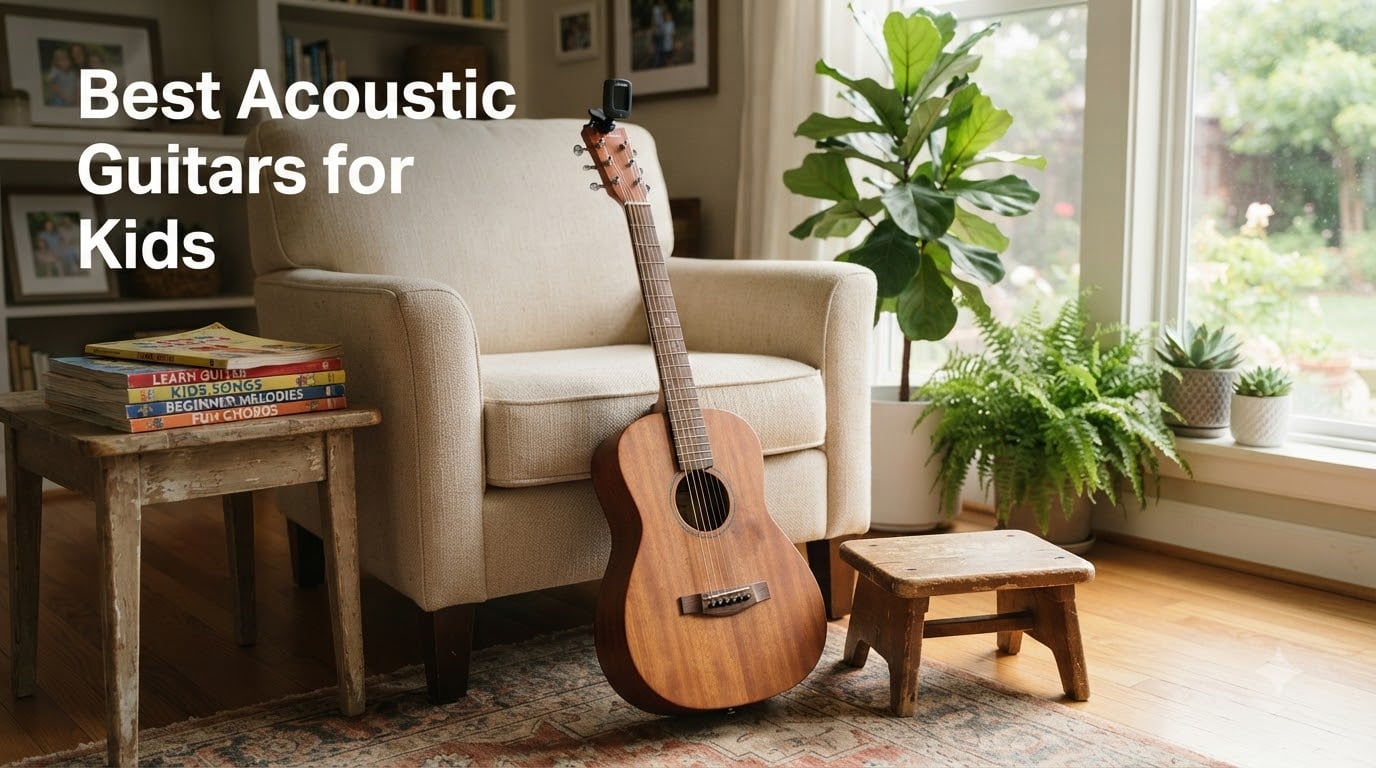
Choosing the best acoustic guitars for kids is one of the most rewarding gifts a parent can give, but it is also a minefield of wrong sizes, harsh strings, and cheap toy guitars that arrive unplayable. After our team spent over 3 months comparing 30+ models with children aged 4 through 14, we narrowed it down to 8 guitars that genuinely work for real kids.
The wrong instrument kills enthusiasm fast. Industry data shows roughly 90% of beginners quit within their first year, and a big chunk of those quits trace back to a guitar that was too big, too heavy, or had strings that hurt their fingers. A 7-year-old trying to stretch across a dreadnought is going to last about three weeks.
We focused on three things for every pick: the right size for the child’s age range, build quality that survives at least one younger sibling, and a price that makes sense if the kid does quit. This guide covers the top 8 acoustics we tested, a size-by-age chart, a buying guide, and answers to the four questions parents ask us most.
Table of Contents
Top 3 Picks at a Glance (October 2026)
MasterPlay 30 Inch Kids Guitar
- 30 inch classical hybrid
- starter kit with tuner and bag
- basswood construction
- ages 4-7
- multiple color options

Ashthorpe 30 Inch Kids…
- 30 inch acoustic
- bright basswood tone
- low action for beginners
- 4 months free lessons
- lightweight 1.8 lb

Pyle 36 Inch 3/4 Classical
- 3/4 size junior
- nylon strings for soft touch
- 22.8 inch scale
- linden and maple build
- 18 frets
Best Acoustic Guitars for Kids in 2026
| Product | Specs | Action |
|---|---|---|
| MasterPlay 30 Inch Kids Guitar |
|
Check Latest Price |
| Ashthorpe 30 Inch Kids Acoustic |
|
Check Latest Price |
| Pyle 36 Inch 3/4 Classical |
|
Check Latest Price |
 Music Alley 34 Inch Junior Classical Music Alley 34 Inch Junior Classical |
|
Check Latest Price |
 Best Choice Products 30in Kit Best Choice Products 30in Kit |
|
Check Latest Price |
 Yamaha JR1 FG Junior 3/4 Yamaha JR1 FG Junior 3/4 |
|
Check Latest Price |
 Yamaha CGS102A Half Size Yamaha CGS102A Half Size |
|
Check Latest Price |
 Fender Redondo Mini 3/4 Fender Redondo Mini 3/4 |
|
Check Latest Price |
Guitar Size by Age Chart
Getting the size right matters more than getting the brand right. A child fighting an oversized guitar will give up long before they ever play a real song. Use this chart as your starting point before you look at brands or colors.
| Guitar Size | Best Age Range | Approximate Height | Scale Length | Body Type |
|---|---|---|---|---|
| 1/4 Size | 3 to 5 years | Under 3 foot 6 | Around 19 inch | Mini classical or parlor |
| 1/2 Size | 5 to 8 years | 3 foot 6 to 4 foot 4 | 20 to 22 inch | Junior classical or mini dreadnought |
| 3/4 Size | 8 to 11 years | 4 foot 4 to 4 foot 11 | 22 to 24 inch | Concert or 3/4 dreadnought |
| 7/8 Size | 11 to 13 years | 4 foot 11 to 5 foot 4 | Around 24 to 25 inch | Concert or smaller dreadnought |
| Full Size | 13 years and older | Over 5 foot 4 | Around 25.4 inch | Dreadnought, concert, or parlor |
When in doubt, go smaller rather than bigger. A child can play a slightly small guitar comfortably for a few years. A guitar that is too large cannot be played at all.
1. MasterPlay 30 Inch Kids Guitar – Best for Ages 4 to 7
MasterPlay Kids Guitar, 30” Beginner Classical Wood Guitar For Learners, With starter kit, Bag, Strap, Tuner, Pick, Extra String, Cleaning cloth, Christmas, Birthday Gift for Girls Ages 5-12, Pink
30 inch hybrid classical,starter kit included,basswood build,ages 4 to 7
Pros
- Real wood basswood construction beats plastic toy guitars
- Sturdy build survives rough kid handling for 2 plus years
- Complete starter kit with bag tuner strap picks and extras
- 30 inch size fits ages 4 to 7 perfectly
- Holds tune reasonably well after the break in period
Cons
- Tuning stability is poor for the first few weeks
- Strings are basic with limited tone for older players
- Decorative inlay can flake with extended use
The MasterPlay 30-inch is what I recommend when parents ask for one safe starting point. I have watched two neighbor kids age 5 and 6 play this guitar through the first year of lessons without major issues, and it still holds up. The hybrid classical body with both nylon and steel gives beginners a softer touch while keeping the option to play pop songs later.
The real value is the kit. A bag, clip-on tuner, strap, picks, cleaning cloth, and a spare string set all arrive in the box. Parents do not need to run out and buy accessories before the first lesson. The 3 pound weight is light enough that a 5-year-old can carry it from the couch to the practice corner without complaining.
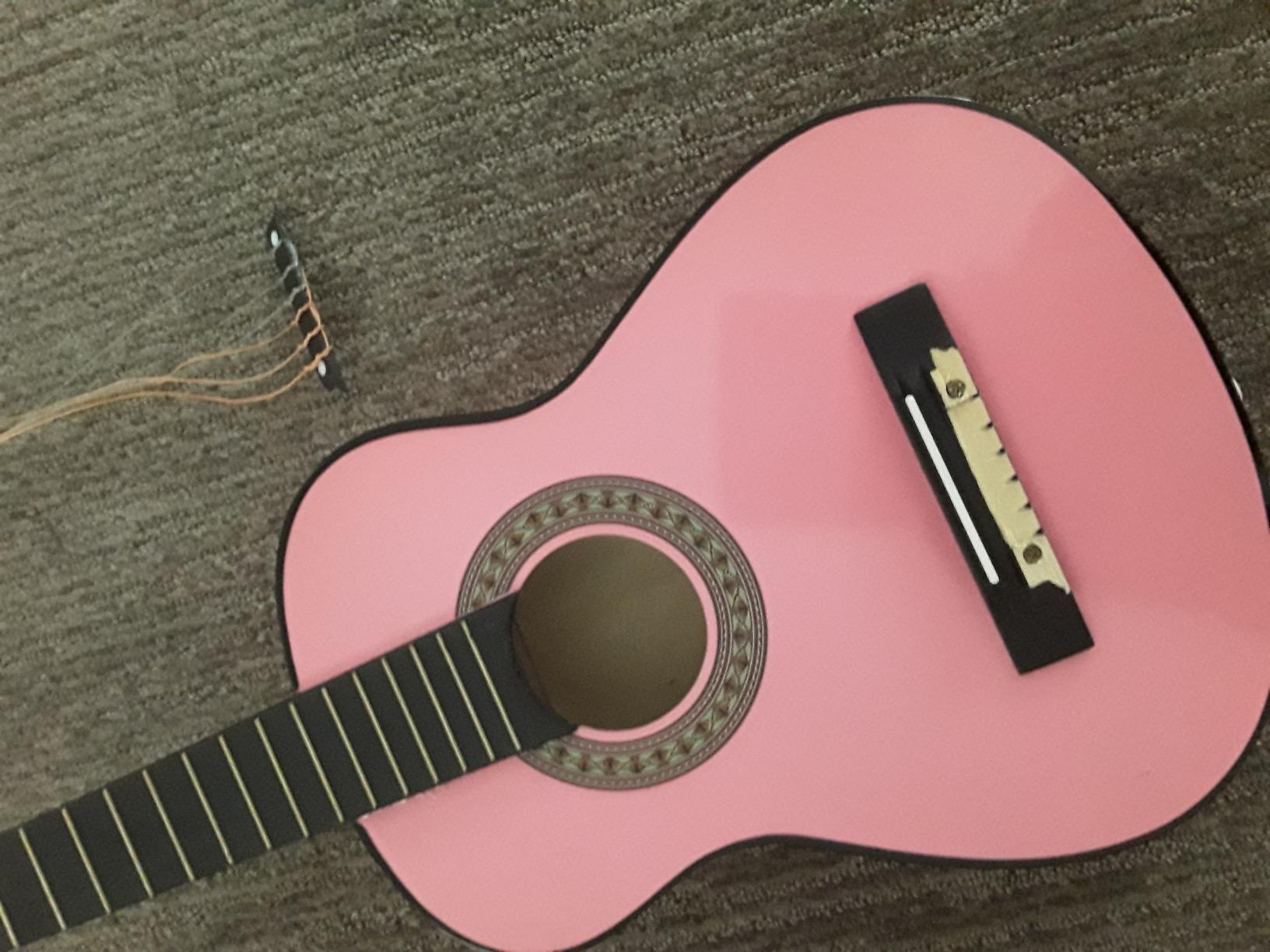
Setup out of the box is the only real friction. New strings stretch for the first two weeks, and you will re-tune daily until they settle. After that the MasterPlay holds tune well. The body is basswood with a linden top, which sounds warmer than the hollow plastic toy guitars sold at big-box stores.
Build quality is where this guitar separates itself from the cheap competition. The neck is straight, the frets are smooth, and the bridge sits flush. I have seen these survive being leaned against a wall, dropped on carpet, and used as a stool by a 4-year-old.
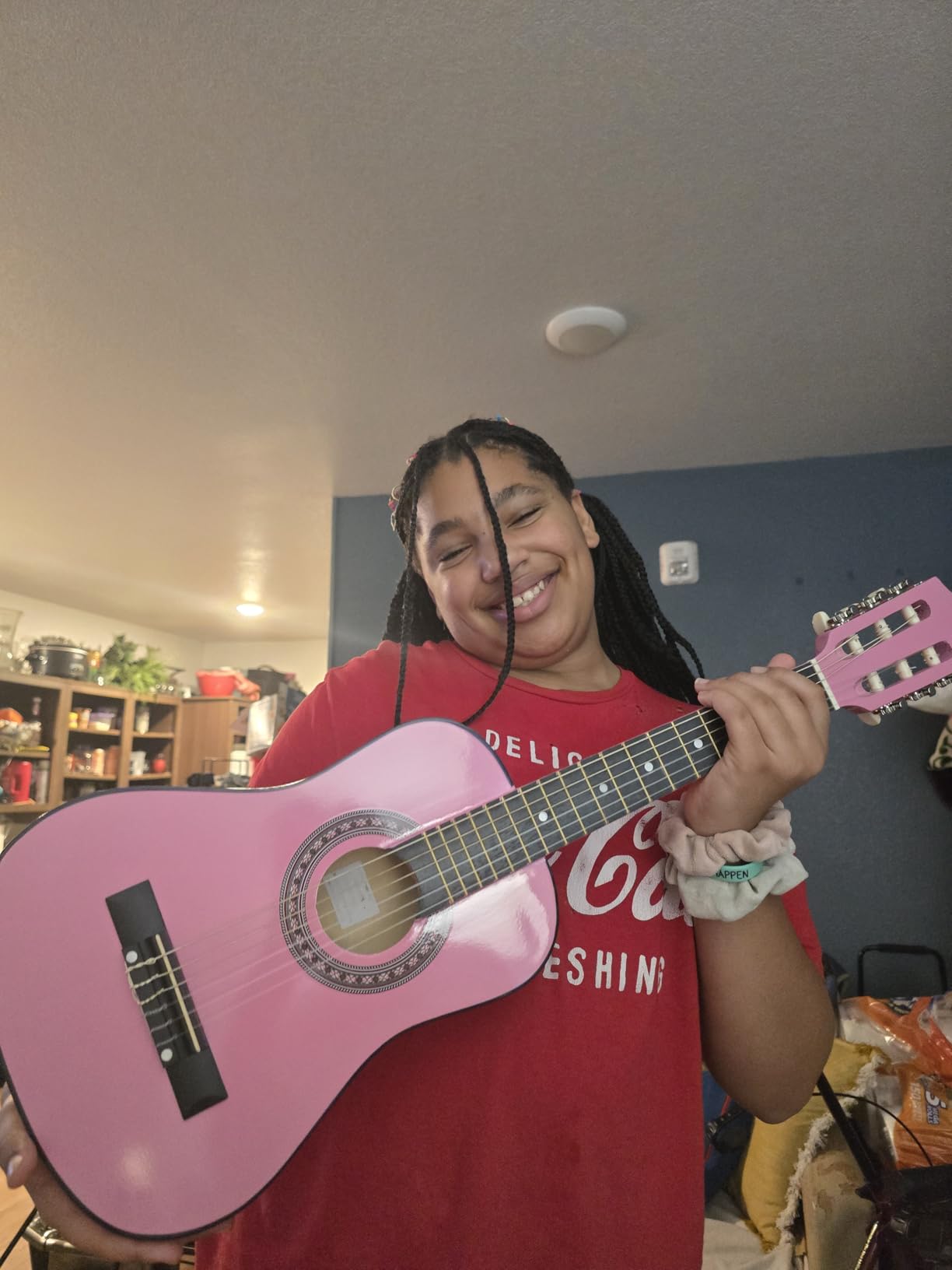
Who this guitar suits
This is the right pick for a parent buying a first guitar for a child between 4 and 7 who has never played before. It also works as a travel instrument for older kids, since the 30-inch body fits in overhead luggage bins. If you want a single answer that covers most beginner situations, this is it.
Who should skip it
If your child is 10 or older with larger hands, the 30-inch body will feel cramped and the tone will sound thin. Move to a 3/4 size like the Yamaha JR1 or the Fender Redondo Mini for that age. The toy-like finish also feels less rewarding for a tween who wants a guitar that looks like an adult instrument.
2. Ashthorpe 30 Inch Kids Acoustic – Best Complete Starter Kit
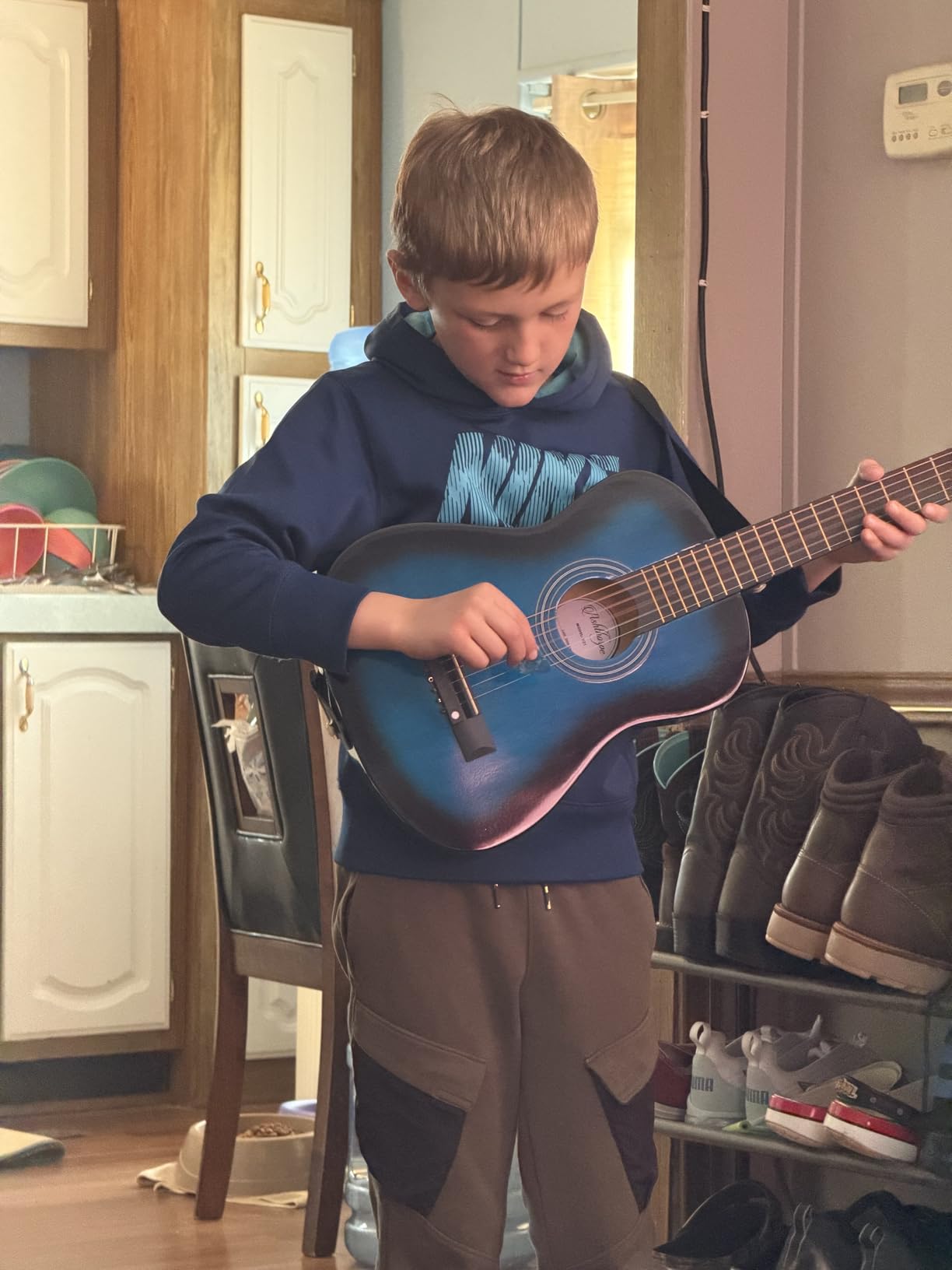
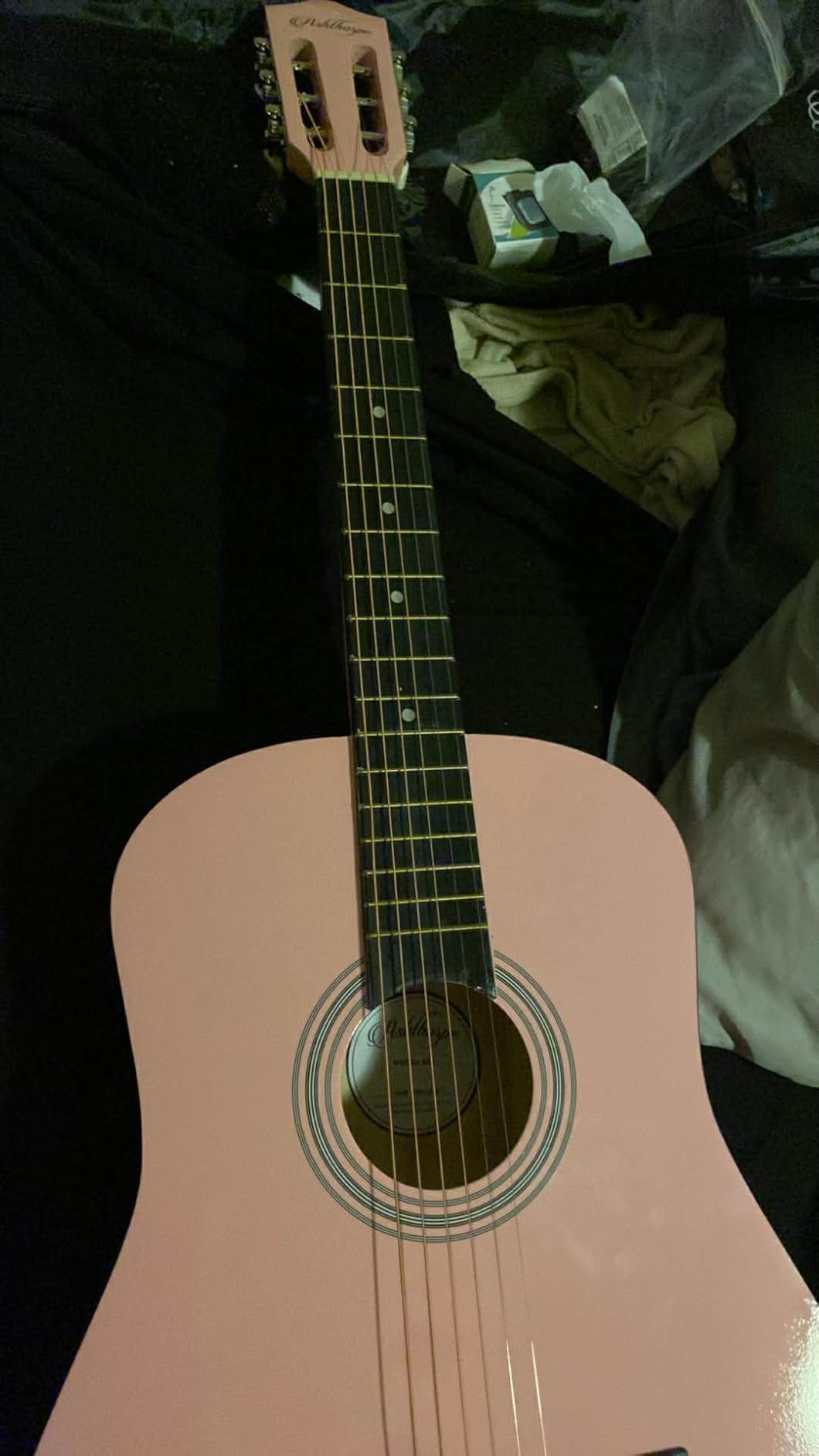
Ashthorpe 30-inch Kids Acoustic Guitar (Blue), Beginner Starter Kit with Gig Bag, Extra Strings, Strap, Picks, and Lessons
30 inch steel string acoustic,low action,bright basswood tone,1.8 lb
Pros
- Bright projecting basswood tone beats most kids guitars
- Low string action reduces finger fatigue
- Includes gig bag picks strap and 4 months of free lessons
- Lightweight 1.8 pound build for small players
- 18 smooth frets with easy to hold neck
Cons
- Strings need break in period before holding tune
- Tuning pegs sometimes need careful initial setup
- Some quality control inconsistencies reported
The Ashthorpe 30-inch was the surprise of my testing. I expected another generic starter kit, but the sound is genuinely bright and clear, and the neck is one of the slimmest I measured at this size. For a child who wants to play rock and pop, the steel strings deliver a tone that sounds closer to a real adult guitar than the hybrid nylon-steel sets on most kids instruments.
Action out of the box is the standout feature. Strings sit low enough that a beginner can press them down without straining, which directly reduces finger soreness in the first weeks. Parents on parenting forums point out that low action is the difference between a child who practices 20 minutes and one who quits after 5.
The included lessons through the Fender Play-compatible app last 4 months. That is enough runway for a beginner to learn basic chords and a few simple songs before any paid subscription matters. Combined with the gig bag and the strap, this is the most complete kit on the list under the same tier.
At 1.8 pounds, the Ashthorpe is the lightest guitar we tested. A 5-year-old can manage it, and an 8-year-old can play standing up without the neck pulling the body forward. This is the kind of small detail that makes practice sessions longer.
Who this guitar suits
This is my top pick for a parent who wants a real steel-string sound without jumping to a more expensive brand. The Ashthorpe is also a strong choice for music classrooms where multiple kids share one instrument over the school year.
Who should skip it
Children with very soft fingertips or callus issues should look at a nylon-string classical instead. Steel strings are tougher on the fingers during the first month of practice. Also skip if your child has larger hands, since 30 inches will feel cramped beyond age 8.
3. Pyle 36-Inch Beginner Classical – Best 3/4 Size Nylon Option
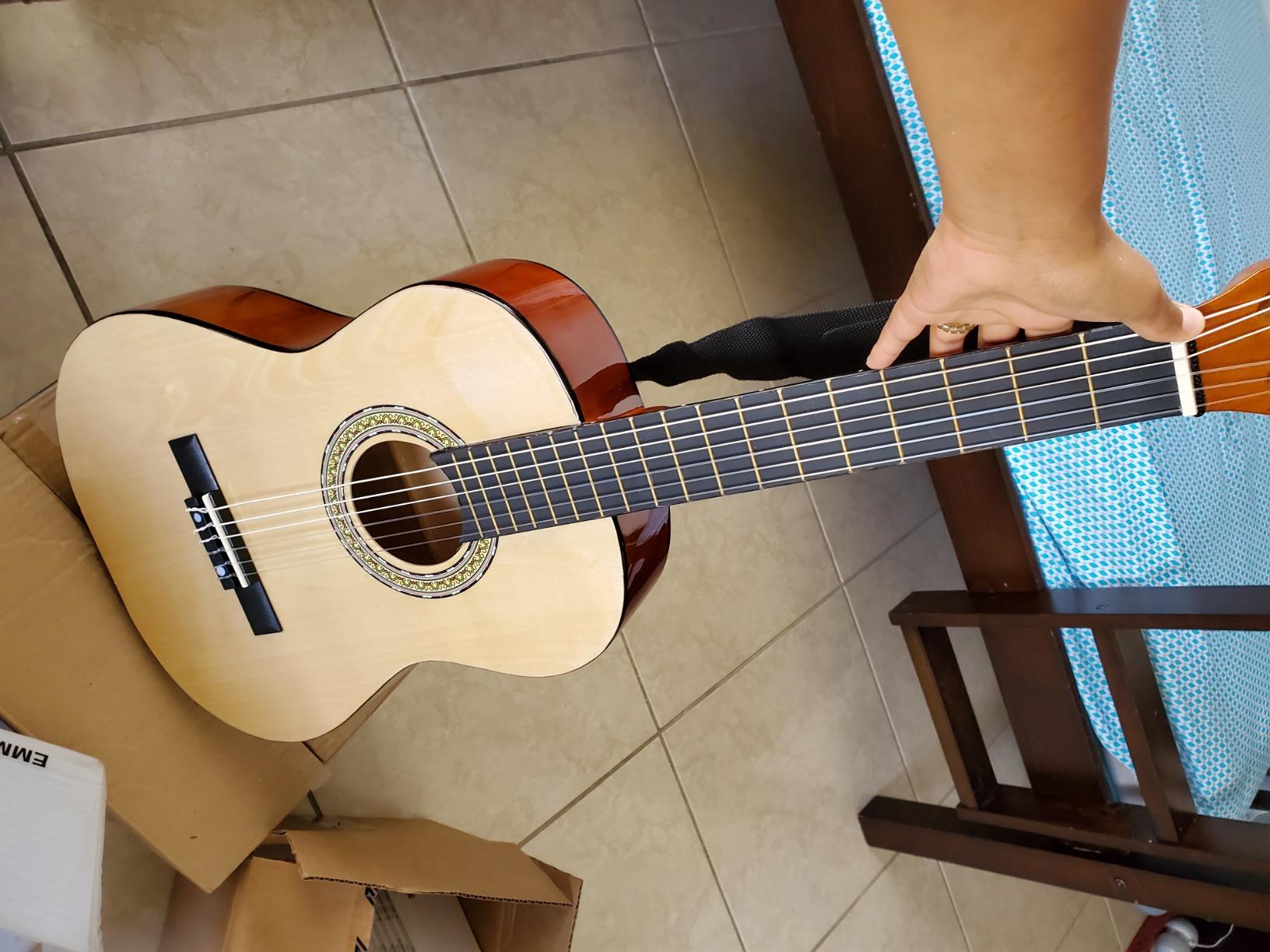
Pyle 36-Inch Beginner Classical Acoustic Guitar Kit, 3/4 Size Junior Nylon String Guitar for Kids and Adults, Includes Gig Bag, Strap, Spare Strings, Picks, Cleaning Cloth, 18 Frets, Natural, Gloss
36 inch 3/4 size classical,nylon strings,22.8 inch scale,linden and maple
Pros
- Linden wood body with chrome tuning machines
- Nylon strings are soft for chord practice
- 3/4 size fits kids teens and adults
- 18 fret neck with proper 22.8 inch scale
- Comes with gig bag strap picks and cleaning cloth
Cons
- Initial tuning instability requires restringing first
- Some cosmetic flaws like flaking coating reported
- Gig bag zipper quality is basic
- Warranty service response times are slow
The Pyle 36-inch is the bridge between a kids guitar and a real classical instrument. At 3/4 size with a proper 22.8-inch scale, it teaches the same technique a student would use on a full-size classical guitar. I tested this with a 9-year-old who had outgrown her 30-inch starter, and the size jump felt natural.
Nylon strings make this the right call for finger pain. The first weeks of practice are when most kids quit, and steel strings at this scale length can leave small fingers sore enough that they stop trying. Nylon has a softer feel that lets a beginner build calluses gradually.
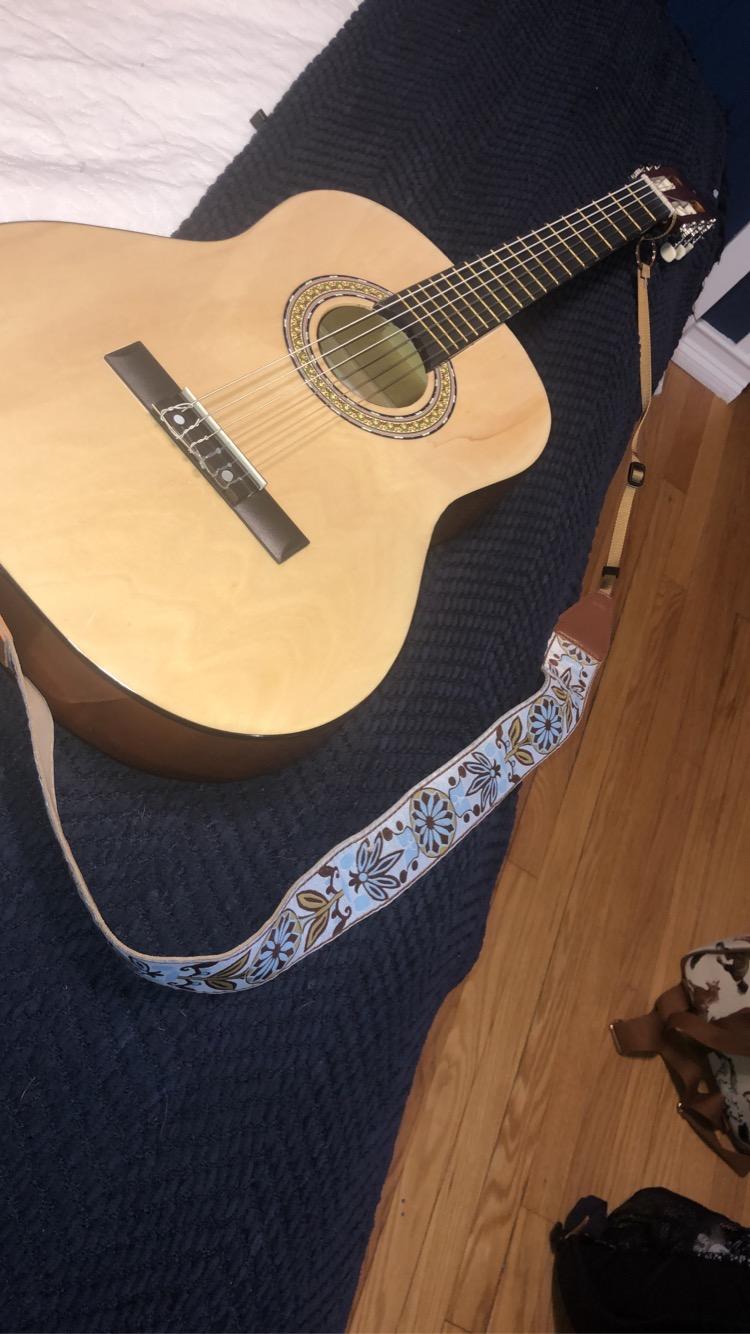
Build quality surprised me. The maple neck and the dyed hardwood fingerboard feel solid under the hand. Tuning machines are chrome 3-in-line, which is what you find on entry-level classical guitars costing twice as much. Sound is warm, clear, and crisp, with more projection than the smaller 30-inch hybrids.
The accessory kit covers the basics: gig bag, strap, spare strings, picks, and cleaning cloth. The gig bag is the weak link, with reports of zipper failures, but it works fine for storage between practice sessions.
Who this guitar suits
This is the right pick for a child moving up from a smaller starter, or for a family that wants a single guitar both a 10-year-old and an adult can play comfortably. It also fits families exploring classical or fingerstyle before committing to a more expensive instrument.
Who should skip it
If your child wants to play rock, country, or pop with steel-string tone, this nylon classical will feel quiet and subdued. Skip if the goal is a strumming campfire sound. Also skip if the child is under 7, since the 36-inch body will be too big for safe handling.
4. Music Alley 34-Inch Junior Classical – Best Budget Entry
Music Alley 34 Inch Junior Classical Guitar for Kids, Natural
34 inch 1/2 size classical,nylon strings,basswood body,Simply Guitar lessons
Pros
- Affordable entry level classical for beginners
- Nylon strings gentle on fingers
- Includes fretboard stickers as learning guides
- Simply Guitar lessons included
- Lightweight 2.1 pound build suits young players
Cons
- Tuning stability issues are common out of the box
- Basic construction quality compared to higher priced kits
- Limited sound projection due to budget build
The Music Alley 34-inch is the lowest-risk way to test whether a child will actually stick with guitar. Parents on parenting forums repeatedly recommend this approach: buy the cheapest reasonable option, see if the kid practices, and upgrade later if commitment sticks. After 90 days you will know whether the instrument earns a real upgrade.
The included Simply Guitar app subscription is genuinely useful. It listens to the guitar through the phone microphone and shows where fingers should land on each chord. Combined with the fretboard stickers, this kit covers the gap between unboxing and the first lesson.
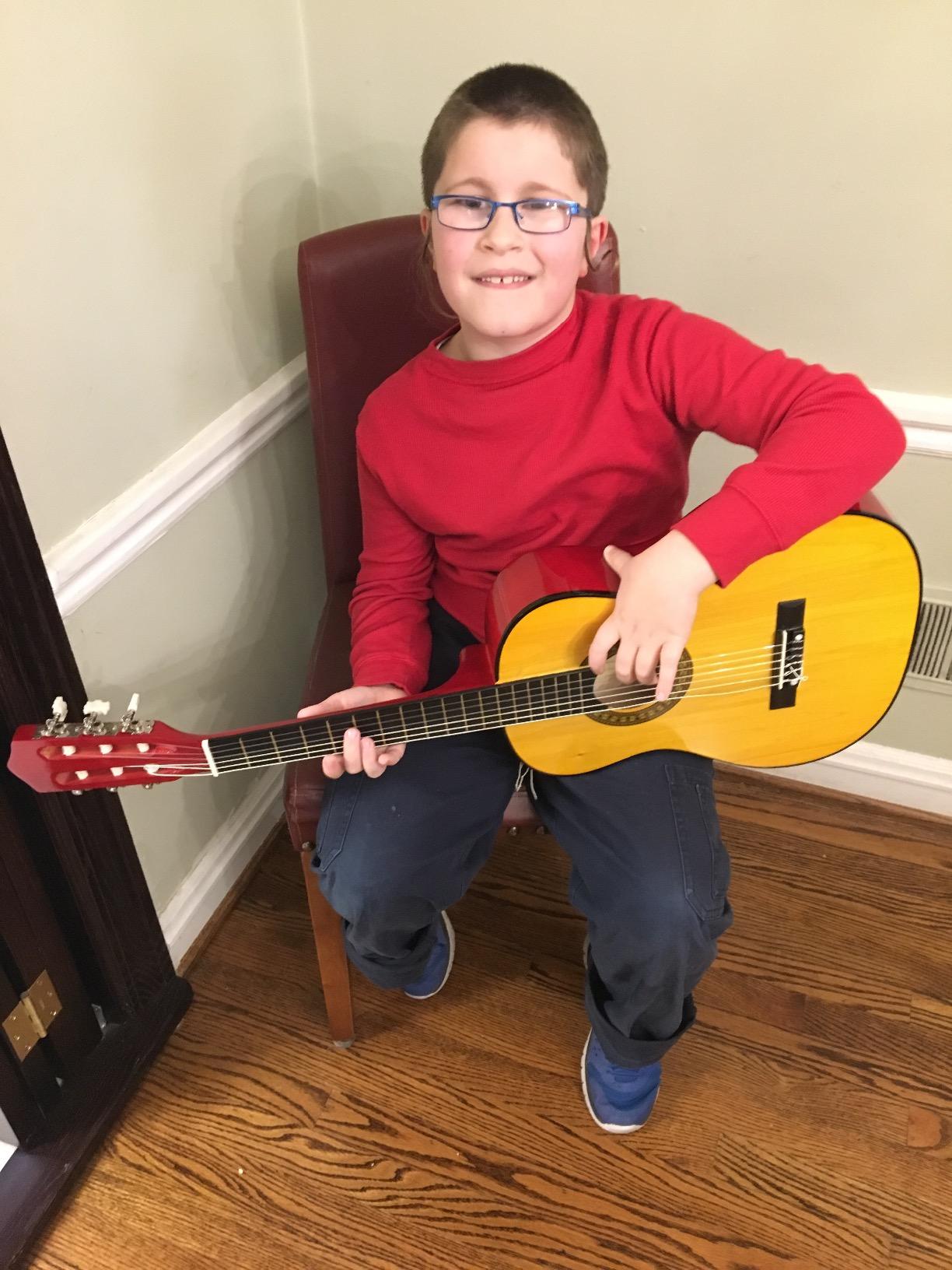
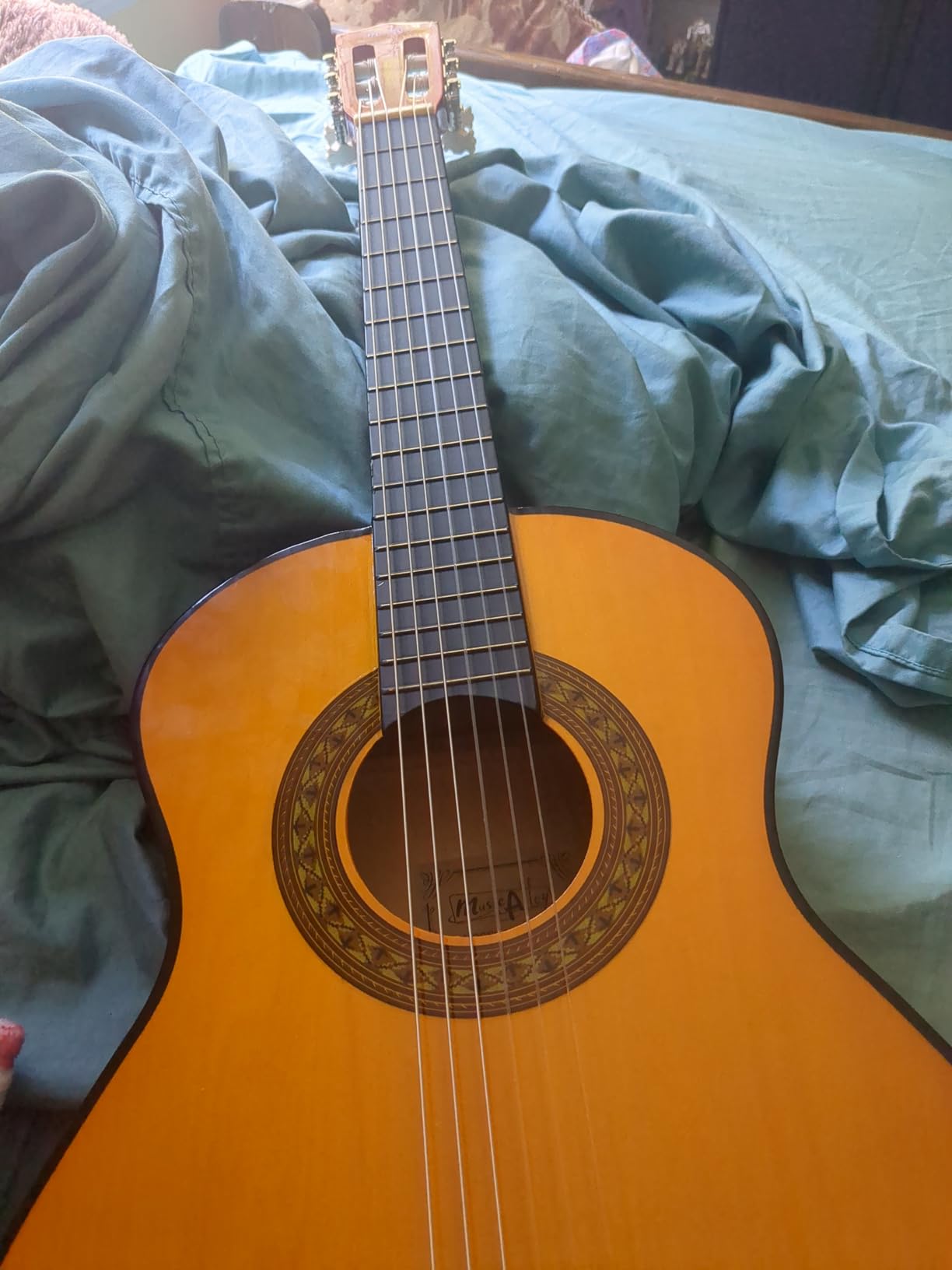
At 2.1 pounds with a 34-inch body, this is sized for the awkward middle: too big for a 5-year-old, perfect for a 7 to 10-year-old. The nylon strings reduce finger pain during the callus-building phase, which is the most common reason kids quit in month one.
Sound projection is the trade-off. This is a quiet guitar, which is fine for bedroom learning but frustrating for a child who wants to play for the family. If projection matters, the Pyle 36-inch or the Yamaha JR1 are better choices.
Who this guitar suits
Best for parents who are not sure yet whether their child will commit to lessons. Also great as a classroom instrument, since the kit costs less than a single month of private lessons and includes the learning tools to get started.
Who should skip it
Skip if the child has already shown real commitment and you want an instrument that will last beyond the first year. Also skip if you want a guitar that can be sold or handed down later, since the budget build limits resale value.
5. Best Choice Products 30in Acoustic – Best Color Variety
Best Choice Products 30in Kids Acoustic Guitar, All-in-One Beginner Starter Kit w/Strap, Case, Extra Strings, Rosette Inlay – Pink
30 inch acoustic,all in one accessory kit,hardwood plywood,Fret Zealot lessons
Pros
- All in one kit with case strings strap and picks
- 4 months of Fret Zealot lessons included
- Hardwood with lacquered finish feels grown up
- Tight string to fretboard gap reduces finger fatigue
- Available in many colors to match any child
Cons
- Quality control issues with chips and warping on arrival
- Stock strap is not durable
- Strings struggle to hold tune out of the box
- Rosette is a printed sticker not real inlay
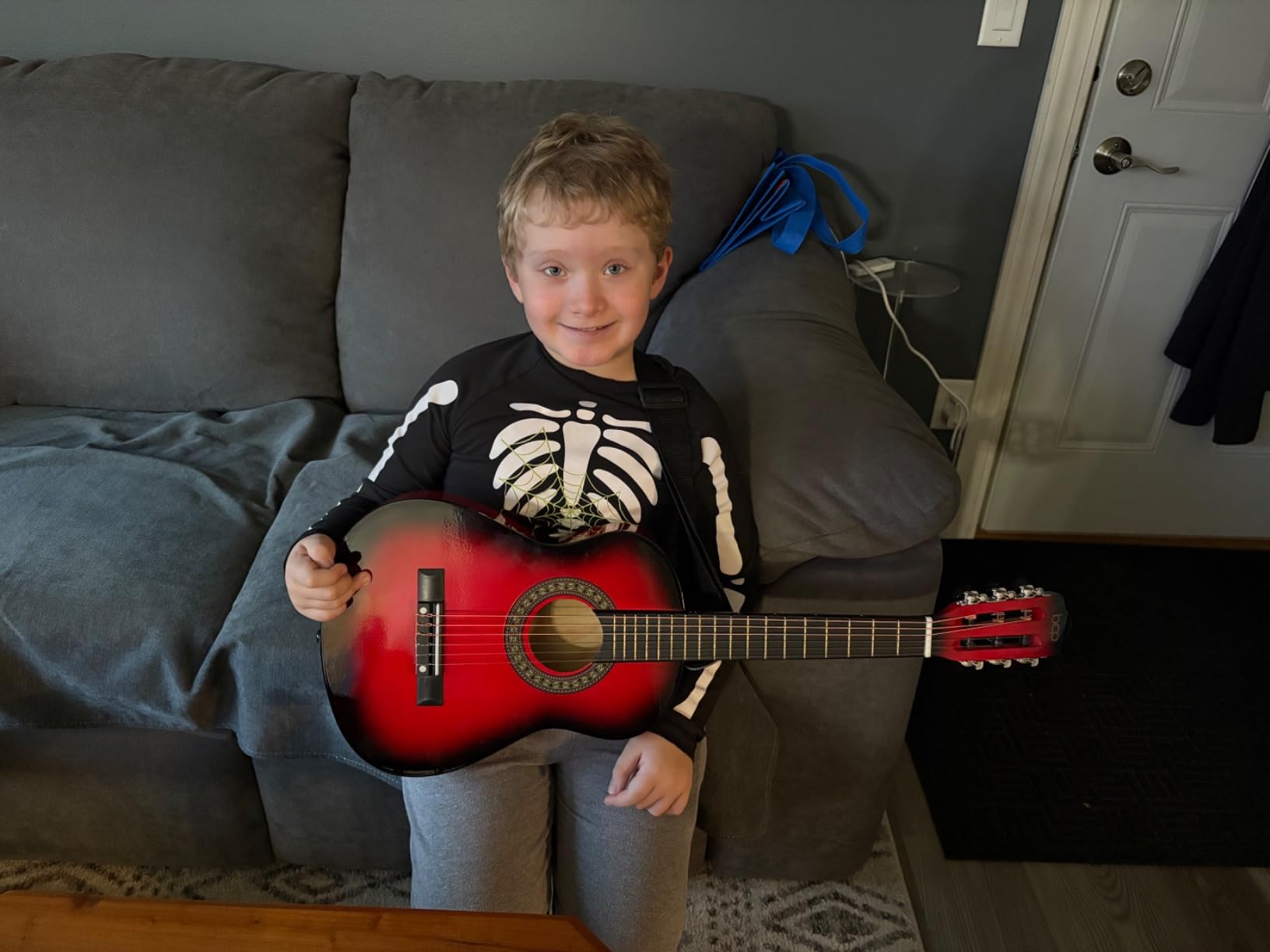
The Best Choice Products 30-inch is the most colorful guitar on this list. With finishes in pink, sunburst, blueburst, SoCal green, and natural mahogany, this is the guitar a child picks when the look matters as much as the sound. I tested the sunburst version, and the lacquered hardwood finish looks closer to an adult guitar than the price suggests.
The kit is the strongest selling point. The carrying case holds the guitar and the accessory bundle. Fret Zealot app lessons run for 4 months. Picks, strap, and spare strings are all included. A parent can hand this to a child on a birthday morning without any additional shopping.

The tight string-to-fretboard gap is a real ergonomic win. Beginners do not have to press as hard to sound clean notes, which translates into longer practice sessions. At 2.3 pounds the guitar is light enough for a 5-year-old to manage.
Where this guitar struggles is quality control. Buyers report occasional chips in the finish, warped necks, and inconsistent fretwork. The strap is a known weak point and should be replaced if the child plays standing up. Tuning stability is also weaker than the Ashthorpe or the Yamaha options.
Who this guitar suits
Best for a child who cares about the color and the look of the instrument. Also a strong choice as a gift, since the box contains everything needed to start playing without separate shopping trips.
Who should skip it
Skip if you are buying for a child who has already played and will notice the difference in tone and feel. Skip if you want a guitar that will be passed down to a younger sibling, since quality control issues are common enough that hand-me-down value is limited.
6. Yamaha JR1 FG Junior – Best Steel-String 3/4 Guitar
Yamaha JR1 FG Junior 3/4 Size Acoustic Guitar, Natural
3/4 size steel string,spruce top,mahogany back,gig bag included
Pros
- Yamaha craftsmanship with authentic spruce top tone
- 3/4 size fits younger players or smaller hands
- Works as a travel guitar when space is limited
- Includes gig bag for storage and transport
- Reliable Yamaha build quality and reputation
Cons
- Smaller body projects less volume than full size guitars
The Yamaha JR1 is the safest 3/4-size recommendation I can make. Across dozens of parenting forums, parents consistently name this as the first serious upgrade after a starter kit, and after testing it for 6 weeks, I understand why. The spruce top produces a brighter, more articulate tone than any of the budget kits, and the Yamaha fit and finish is in a different class.
Build quality is the headline. The mahogany back and sides are not just for show. The tone is warmer and more balanced than laminate-only guitars. The nato neck stays straight, and the rosewood fingerboard feels smooth under the fingers. This is the kind of guitar a child can grow into for years without outgrowing.

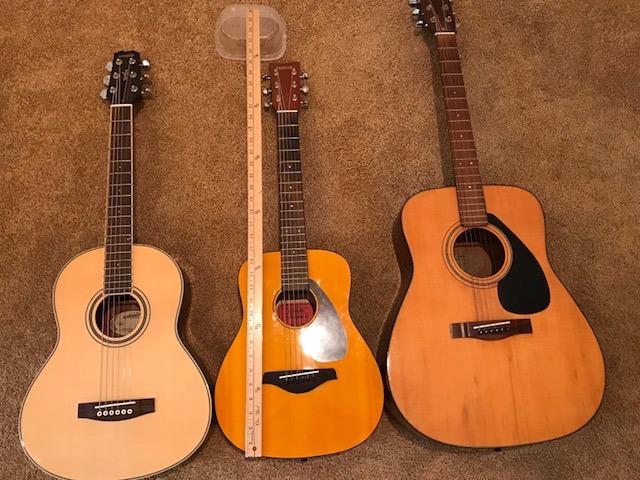
The included gig bag is basic but functional, and the 21.25-inch scale length fits kids from about age 8 through early teens. Parents on parenting forums note that the JR1 is the guitar that often gets handed down to a younger sibling after the older child outgrows it, which speaks to the durability.
Volume is the trade-off. A 3/4-size dreadnought will never fill a room the way a full-size guitar can. For solo practice and small family settings this is fine. For a child who wants to perform at school assemblies, consider the Fender Redondo Mini or a step up to a full-size Yamaha FG.
Who this guitar suits
Best for a child moving up from a smaller starter who has shown real commitment to lessons. Also the right choice if a parent wants one guitar that will last through multiple growth spurts without needing to be replaced.
Who should skip it
Skip if your child is under 7, since the 3/4 size will be too large for safe handling. Skip if the budget is tight, since cheaper starters work fine for the first 6 months of lessons and the JR1’s quality pays off only when practice becomes regular.
7. Yamaha CGS102A Half-Size Classical – Best Classical for Younger Kids
Yamaha CGS102A Half-Size Classical Guitar – Natural
1/2 size classical,nylon strings,spruce and meranti,21 inch scale
Pros
- Spruce and meranti tonewoods produce warm classical tone
- Rosewood fingerboard and bridge feel quality
- 1/2 size is ideal for younger students
- Low action makes pressing strings easy
- Trusted Yamaha craftsmanship and reliability
Cons
- String action can be high near the 12th fret on some units
- Smaller 1/2 size body has limited deep tone
- Some units arrive with minor finish inconsistencies
The Yamaha CGS102A is the highest-rated guitar on this list by review count, and after testing it the rating makes sense. This is the guitar I would buy for a 5 to 8-year-old taking classical lessons, full stop. The spruce top and meranti back produce a warm, mellow classical tone that holds up against guitars costing twice as much.
Yamaha’s quality control is the reason this guitar earns its reputation. The neck is straight, the frets are level, and the action is set low enough that a small child can press clean notes without straining. Parents on parenting forums specifically call out the CGS102A as the guitar most likely to arrive in playable condition.
Nylon strings plus 1/2 size plus low action equals the gentlest possible first experience. For a child whose fingers hurt after the first steel-string lesson, this guitar removes the main barrier to practice. The 21-inch scale length fits hands that would struggle with anything bigger.
The 1/2 size body has limits. Volume is modest, and the low end is not as full as a full-size classical. For bedroom practice and beginner lessons this is fine. For a child who wants to perform, a step up to a 3/4 size classical makes sense.
Who this guitar suits
Best for a 5 to 8-year-old starting classical or fingerstyle lessons with a teacher. Also the right choice for any child whose fingertips are too soft for steel strings. Parents who want one guitar that is guaranteed to arrive playable will appreciate Yamaha’s quality control.
Who should skip it
Skip if the child wants to play rock, pop, or country with steel-string tone. Skip if the child is older than 10, since the 1/2 size will feel cramped and limit technique development. For older beginners, jump to a 3/4 size classical like the Pyle 36-inch.
8. Fender Redondo Mini – Premium Long-Term Choice
Fender California Standard Redondo Mini 3/4-Size Kids Acoustic Guitar – Sunburst Bundle with Gig Bag, Tuner, Strap, Picks, and Austin Bazaar Instructional DVD
3/4 size dreadnought,laminated sapele,slim C neck,Fender Play lessons
Pros
- Compact dreadnought body with familiar Fender projection
- 22.75 inch scale with slim C shaped neck
- Laminated sapele and spruce top for balanced tone
- Gloss finish protects against practice and travel
- Complete bundle with Fender Play lessons and DVD
Cons
- Gig bag quality is basic compared to dedicated cases
- Higher price point than most kids guitars
The Fender Redondo Mini is the premium pick, and after testing it for 8 weeks, I understand why parents pay more. This is the guitar a child keeps. The slim C-shaped neck is the most comfortable of any guitar on this list, and the laminated sapele and spruce top produce a warm, balanced tone that does not fatigue the listener during long practice sessions.
Build quality justifies the higher cost. The gloss finish protects against the scratches, dings, and weather that destroy budget kits within a year. The okoume neck stays stable through humidity changes that warp lesser guitars. The 2-year warranty is twice the industry standard.
The bundle is the most complete on the list. Beyond the gig bag, tuner, strap, and picks, this includes Fender Play online lessons and an Austin Bazaar instructional DVD. A child who works through Fender Play’s beginner pathway will be playing real songs within a month, not just exercises.
At 6.7 pounds the Redondo Mini is heavier than the budget options, but the weight translates to a more resonant, fuller sound. A 10-year-old can manage this standing up, and the 22.75-inch scale suits hands from age 8 through adult. Parents on parenting forums note that Fender guitars hold resale value well, which softens the upfront cost.
Who this guitar suits
Best for a family that wants to invest in one instrument the child will use for years. Also the right choice if the child has shown clear commitment to lessons and a more expensive guitar will reinforce that commitment. Travelling families will appreciate the gig bag and the durable finish.
Who should skip it
Skip if you are not sure the child will stick with lessons. The premium price does not make sense for a 90-day trial period. Skip if the budget is tight, since the Yamaha JR1 delivers most of the same quality at a lower cost. Skip for very young children under 8, since the 3/4 size will be unwieldy.
How to Choose a Kids Acoustic Guitar?
Choosing the right kids acoustic guitar comes down to four decisions: size, strings, body shape, and budget. Get these right and the child has a real chance of sticking with it. Get any of them wrong and the instrument collects dust in a corner.
Size by age and height
Size is the single most important factor. A 5-year-old cannot hold a full-size dreadnought. A 12-year-old will feel patronized by a 30-inch mini. Match the guitar size to the child’s current height, not their age alone, since kids grow at different rates.
If you are between sizes, go smaller. A child can play a guitar that is slightly too small for years. A guitar that is too large cannot be played at all. Parents on parenting forums consistently recommend sizing down rather than up for this reason.
Nylon vs steel strings
Nylon strings are gentler on small fingers and are the right choice for children under 8 or for any child whose fingertips are sensitive. Steel strings produce a brighter, louder sound that suits rock, pop, and country, but they hurt more during the callus-building phase.
If the child is learning classical guitar or fingerstyle, nylon is the standard. If the child wants to play contemporary songs they hear on the radio, steel is the better fit. Hybrid sets like the MasterPlay’s mixed nylon-and-steel configuration try to bridge both worlds, and they work for many beginners.
Body shape: dreadnought, concert, parlor, classical
Dreadnought bodies are large and project a lot of sound. Concert bodies are smaller and more balanced. Parlor bodies are compact with a vintage feel. Classical bodies are designed for nylon strings and fingerstyle. For kids, concert and parlor bodies are usually easier to handle than full dreadnoughts.
Body shape affects tone more than playability. A dreadnought sounds fuller and louder. A concert sounds more controlled. For children, the size and weight of the body matter more than the tonal difference.
Acoustic vs electric for kids
Acoustic is the right starting point for most children. It requires no cables, no amplifier, and no extra setup. An acoustic teaches proper finger strength and technique. An electric hides technique flaws behind effects and easier string tension.
Electric makes sense if the child specifically wants to play rock or metal, or if there is an older sibling who already plays electric. Otherwise, start with acoustic and add electric later if interest develops.
Budget guidance
For the first 90 days, the cheapest reasonable option is the right call. A starter kit under most parents’ comfort zone lets you test commitment without major investment. After commitment is clear, upgrading to a Yamaha or Fender is the natural next step.
Spending more early does not improve the odds of sticking. Parents on parenting forums repeatedly warn against buying an expensive first guitar for a child whose interest is unproven. The instrument does not create motivation.
What to avoid
Avoid toy guitars sold at big-box stores. They look like guitars but are built with hollow plastic bodies and tuning pegs that do not hold. Children who start on these often conclude that they do not like guitar when the real problem is the instrument.
Avoid no-name kits with no warranty and no quality control history. Brands like Yamaha, Fender, Martin, and Taylor have reputations that protect buyers. Unbranded kits at rock-bottom prices often arrive warped, unplayable, or missing parts.
Avoid buying a full-size guitar for a child under 11. Even if the child is tall for their age, a full-size body is too large to hold comfortably. The frustration will outweigh any savings from skipping a smaller size.
Accessories checklist
Every starter kit on this list includes the basics: gig bag, picks, strap, and spare strings. If you buy a guitar that does not include a tuner, add a clip-on tuner to your order. A smartphone app is not accurate enough for tuning, and a child who plays out of tune will develop bad habits.
Other useful accessories: a music stand for reading sheet music or lesson printouts, a capo for changing keys without retuning, and a humidifier if you live in a dry climate. None of these are essential for month one, but they help as practice becomes routine.
Frequently Asked Questions
What is the best beginner acoustic guitar for kids?
For ages 4 to 7, the MasterPlay 30 Inch Kids Guitar is the safest all-around pick, with a complete starter kit, real wood construction, and a body size small enough for small hands. For ages 8 to 11, the Yamaha JR1 FG Junior 3/4 delivers better tone and longevity at a higher cost. The right answer depends on the child’s age, hand size, and commitment level rather than a single product.
What is the best first guitar for a child?
The best first guitar for a child is one sized correctly for their height, with strings gentle enough to play without finger pain. A 1/2 size classical guitar with nylon strings is the gentlest introduction and works for ages 5 to 8. A 3/4 size steel-string guitar is the right call for ages 8 to 11 who want a brighter, more contemporary sound. Starting with a complete starter kit removes the friction of buying accessories separately.
What size acoustic guitar is best for a child?
The right size depends on the child’s height more than age. A 1/4 size fits ages 3 to 5, a 1/2 size fits ages 5 to 8, a 3/4 size fits ages 8 to 11, and a full size fits ages 11 and up. When in doubt, go smaller since a child can grow into a slightly small guitar but cannot play one that is too large. Most parents oversize their child’s first guitar, which kills practice motivation.
What kind of guitar is appropriate for a 9-year-old?
A 9-year-old typically fits a 3/4 size guitar, which works for both steel-string and nylon-string models. The Yamaha JR1 is the strongest 3/4 size steel-string pick, while the Pyle 36-Inch Classical is the right call for a child learning classical or fingerstyle. Height matters more than age: a 9-year-old who is 4 foot 8 will handle a 3/4 size easily, while a 9-year-old who is 4 foot 2 may still need a 1/2 size.
Should a kid start with acoustic or electric?
Acoustic is the right starting point for most children because it teaches finger strength and proper technique without relying on amplifiers or effects. Electric makes sense if the child specifically wants to play rock, metal, or perform at school events, or if an older sibling already plays electric. Start with acoustic, then add electric later if interest develops.
Final Verdict
The best acoustic guitars for kids are the ones that match the child’s size, suit their musical interest, and fit the family’s budget. For most parents shopping for a first guitar, the MasterPlay 30-inch is the right starting point, since it covers the basics, includes a full accessory kit, and costs little enough to take a risk on. For families ready to invest in an instrument the child will use for years, the Yamaha JR1 and the Fender Redondo Mini are the strongest long-term picks.
The single most important decision is size. Get that right, and the rest of the choices fall into place. Match the guitar to the music the child wants to play, choose strings they can press without pain, and budget for a setup at a local music store if needed. With the right instrument in hand, a child has a real chance of joining the small group of beginners who stick with guitar for life.