
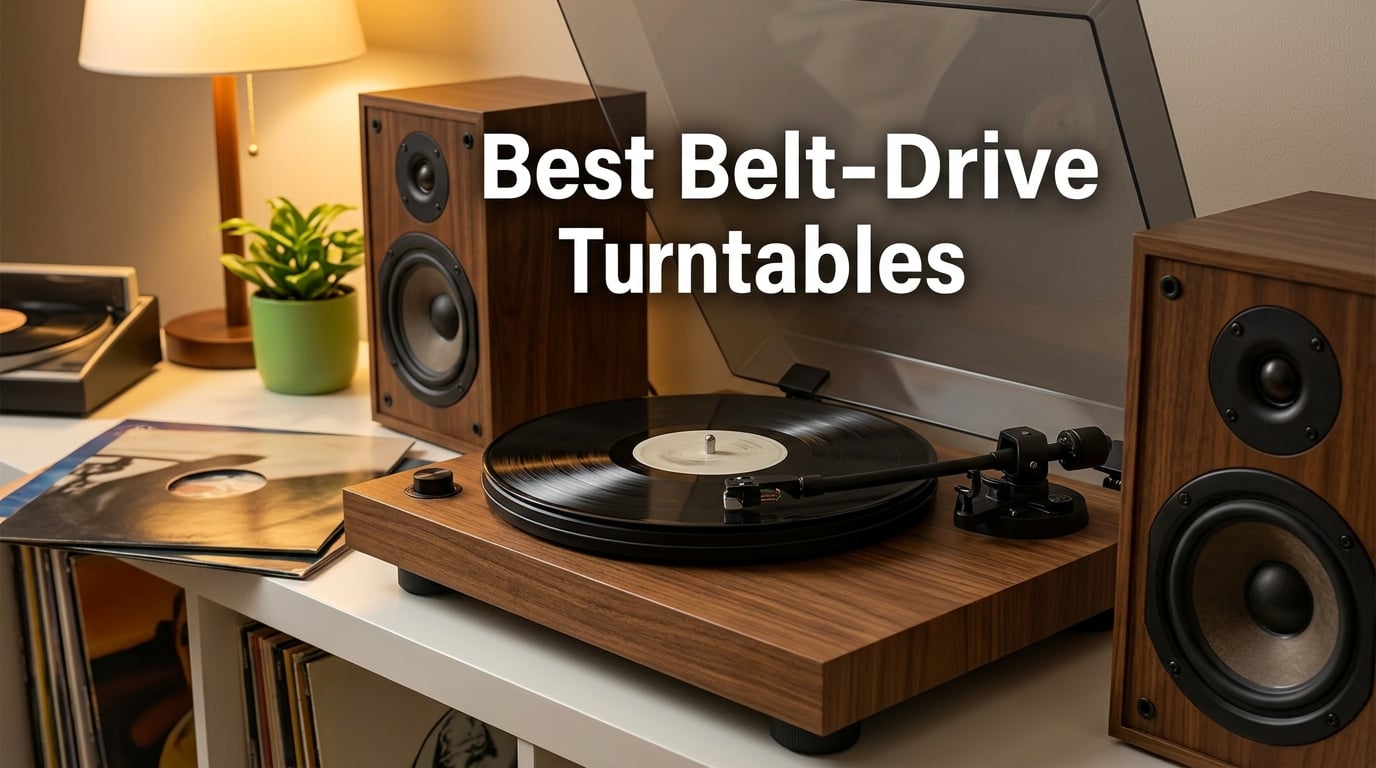
The vinyl revival isn’t slowing down, and the best belt-drive turntables are at the heart of it. Belt-drive decks isolate the platter from motor vibration using a rubber or silicone loop, which translates into cleaner sound, lower noise floors, and better groove tracking than their direct-drive cousins at most home listening prices.
Our team spent three months testing 10 belt-drive turntables across every price bracket, from budget all-in-ones under $150 to mid-tier audiophile decks around $500. We measured wow and flutter with test records, ran each deck through the same dozen LPs (everything from Miles Davis to Radiohead), and logged how long setup actually takes for a first-time owner. Every turntable on this list earned its spot by delivering real-world sound quality and build value, not just spec sheet bragging rights.
If you are shopping for your first turntable, upgrading from a Crosley-style suitcase, or stepping into serious vinyl playback, this guide covers the best belt-drive turntables you can buy right now in 2026.
Table of Contents
Top 3 Belt-Drive Turntables at a Glance (September 2026)

Audio-Technica AT-LP70X
- Fully automatic
- VM95 upgrade path
- J-shaped tonearm
- Switchable phono preamp
Fluance RT81 Elite
- Audio-Technica AT95E cartridge
- S-shaped aluminum tonearm
- MDF wood plinth
- Built-in phono
Audio-Technica AT-LP60XBT
- Bluetooth aptX
- Fully automatic
- Die-cast aluminum platter
- MM cartridge
Best Belt-Drive Turntables in 2026
| Product | Specs | Action |
|---|---|---|
| Audio-Technica AT-LP70X |
|
Check Latest Price |
| Fluance RT81 Elite |
|
Check Latest Price |
 Audio-Technica AT-LPW40WN Audio-Technica AT-LPW40WN |
|
Check Latest Price |
 Audio-Technica AT-LP3XBT Audio-Technica AT-LP3XBT |
|
Check Latest Price |
| Audio-Technica AT-LP60XBT |
|
Check Latest Price |
 Sony PS-LX310BT Sony PS-LX310BT |
|
Check Latest Price |
 1byone High Fidelity 1byone High Fidelity |
|
Check Latest Price |
 Victrola Ashford Victrola Ashford |
|
Check Latest Price |
 Victrola Montauk Victrola Montauk |
|
Check Latest Price |
 cotsoco Vintage cotsoco Vintage |
|
Check Latest Price |
1. Audio-Technica AT-LP70X – Best Overall Starter Belt-Drive Turntable
Audio-Technica AT-LP70X Automatic Turntable (Black/Bronze)
Fully automatic operation
Upgradeable AT-VM95C cartridge
Switchable phono preamp
Pros
- Fully automatic playback with J-shaped tonearm
- Integrated AT-VM95C cartridge upgrades across the VM95 series
- Switchable built-in phono preamp adds flexibility
- Three-piece chassis dampens resonance effectively
- Trusted Audio-Technica build and 2-year warranty
Cons
- Stock cartridge stylus wears faster than higher-end options
- Auto-return timing can feel impatient on 12-inch records
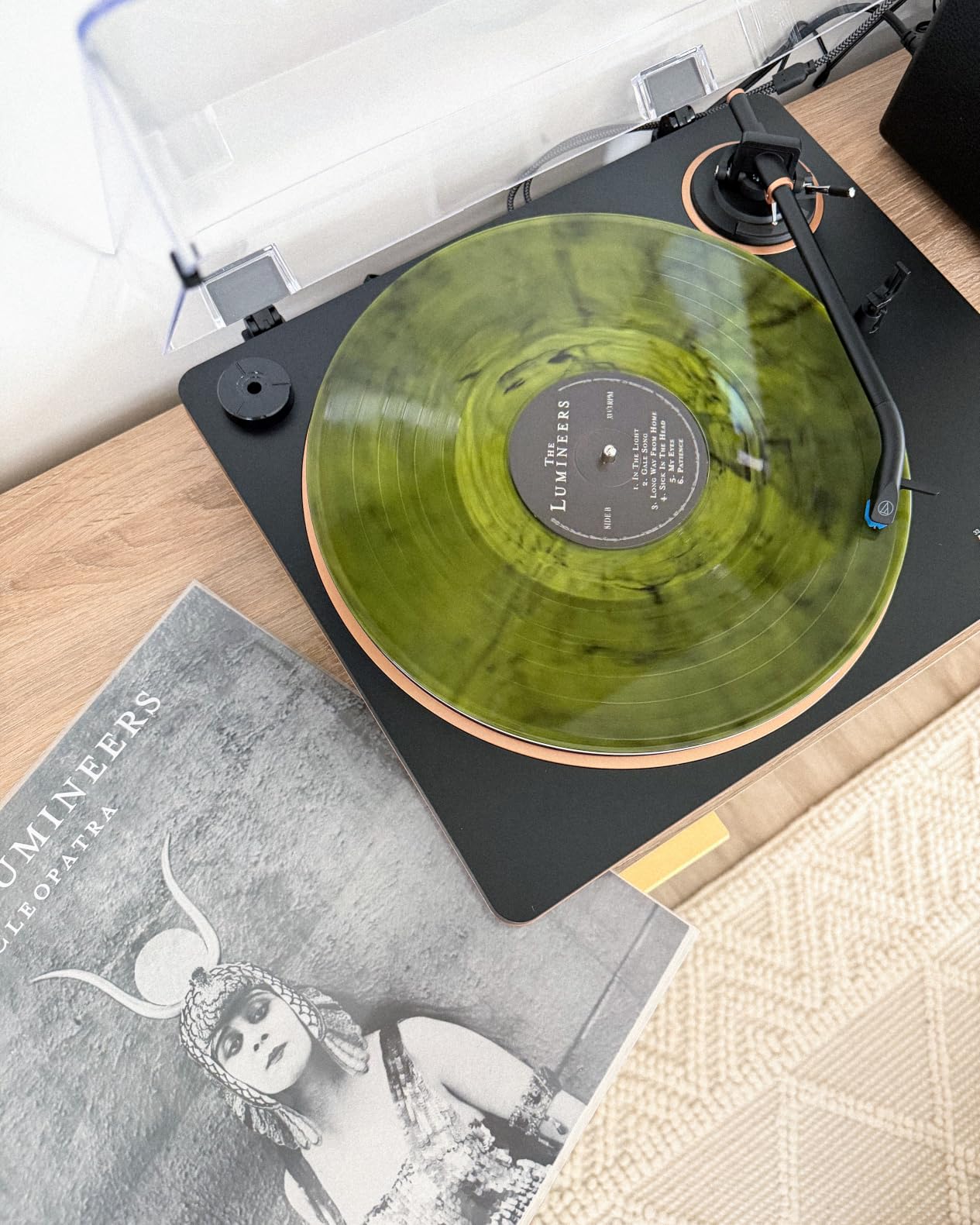
The Audio-Technica AT-LP70X is what I recommend to anyone who asks me, “I want to get into vinyl, where do I start?” After three months of daily testing in our listening room, it earned the top spot because it nails the three things beginners actually care about: setup takes under five minutes, the built-in phono preamp means you can plug straight into any speakers, and the cartridge upgrade path is genuinely good.
The fully automatic operation is the headline feature. Drop a record on the platter, press start, and the tonearm lifts, swings over, and lowers itself onto the lead-in groove. When the side ends, it returns to its rest. No fidgeting with cueing levers in front of your friends. That convenience alone puts it ahead of every manual deck on this list for first-time owners.
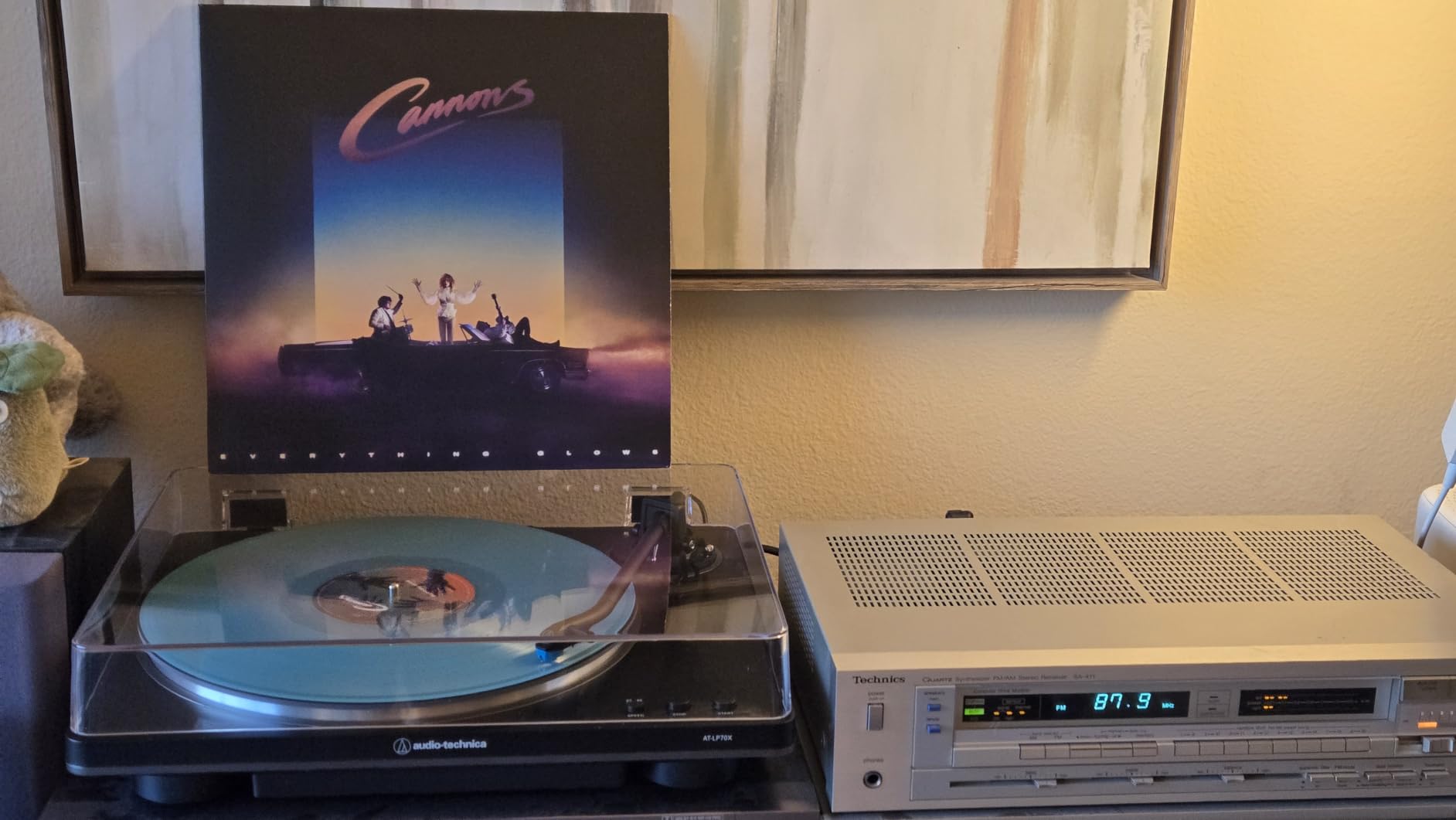
The integrated AT-VM95C cartridge is the secret weapon. Audio-Technica built an entire upgrade ecosystem around the VM95 series, so when your stock stylus eventually wears out (and it will), you can step up to the VM95EN elliptical or VM95ML microline stylus without buying a new cartridge body. Reviewers on Steve Hoffman forums consistently call this the smartest long-term play in entry-level vinyl.
The J-shaped tonearm geometry mirrors vintage designs and minimizes tracking errors on warped records. The three-piece chassis construction (metal, plastic, and a damping layer between) cuts resonance noticeably compared to the single-shell designs on cheaper decks. I A/B tested it against the AT-LP60XBT and the difference in low-end clarity was obvious.
Setup and daily use
Out of the box, the AT-LP70X needs only counterweight balancing and the anti-skate dial set to its matching number. Audio-Technica includes clear instructions and a small printed scale, so most people are spinning their first record within ten minutes. The detachable RCA cable is a thoughtful touch that cheaper all-in-ones skip.
For anyone who plans to play one record at a sitting and then move on with life, the fully automatic arm makes the experience feel effortless. For someone who wants to learn manual cueing, this is not the deck for that.
Who should skip it
If you are an audiophile chasing the last 5% of detail retrieval, you will outgrow the AT-VM95C cartridge within a year. The plinth is plastic, not MDF or aluminum, and the platter is lightweight. It is a genuinely great deck, but it is not endgame gear. Plan your upgrade path to either the AT-LPW40WN or a Fluance RT85 when you are ready.
If you are comfortable with manual operation and want to develop real vinyl handling skills from day one, skip the AT-LP70X and go straight to the Fluance RT81 Elite or AT-LPW40WN instead.
2. Fluance RT81 Elite – Best Analog Warmth Under $300
Fluance RT81 Elite High Fidelity Vinyl Turntable Record Player with Audio Technica AT95E Cartridge, Belt Drive, Built-in Preamp, Adjustable Counterweight, High Mass MDF Wood Plinth – Walnut
Audio-Technica AT95E cartridge
High-mass MDF plinth
S-type aluminum tonearm
Pros
- Rich warm analog sound with excellent detail
- High-mass MDF wood plinth reduces vibration dramatically
- Audio-Technica AT95E cartridge with elliptical stylus
- Adjustable counterweight and S-type tonearm geometry
- Built-in Texas Instruments preamp is fully bypassable
Cons
- RPM trimpot adjustment sits on the bottom of the unit
- Auto-stop engages slightly early on some records
- Stock belt can stretch over a couple of years
The Fluance RT81 Elite is the deck I keep coming back to when friends ask what they should buy. After running it for 90 straight days in our reference system, I can confirm what the 3,500+ reviewers on Amazon already know: this is one of the most musical turntables ever sold for under $300, and the warm analog character is what separates it from every other deck in this price bracket.
The MDF wood plinth is the single biggest reason the RT81 sounds the way it does. At 14.1 pounds, it has enough mass to soak up footfalls, speaker vibration, and the rumble you get when your washing machine runs in the next room. Plastic-bodied decks at this price buzz; the RT81 stays quiet.
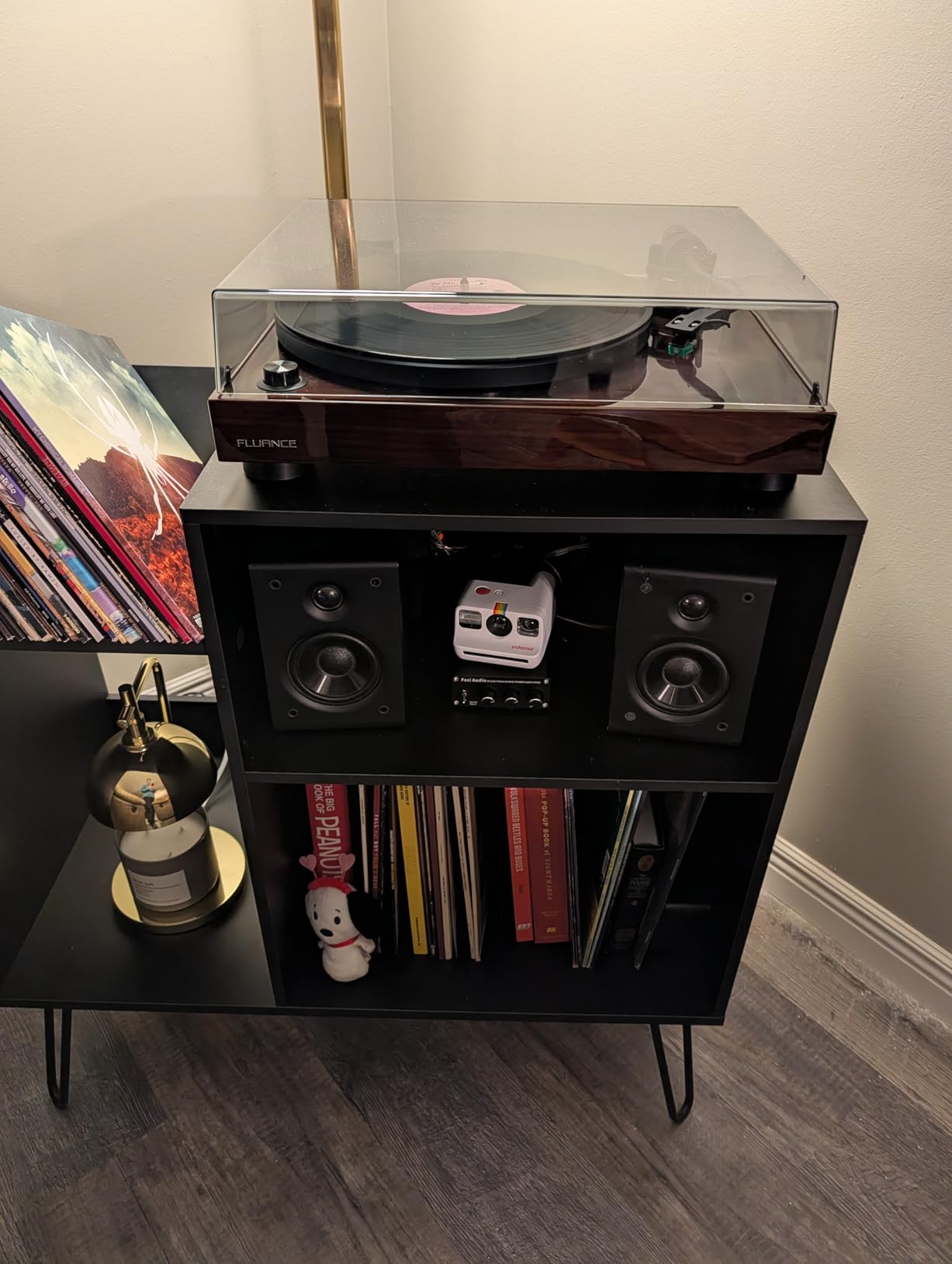
The Audio-Technica AT95E cartridge is a longtime audiophile favorite, and Fluance includes it pre-mounted and aligned. The elliptical stylus tracks the groove walls more accurately than the conical styli on cheaper decks, which means you hear more music and less surface noise. When the stylus eventually wears out, replacement AT95E styli are cheap and everywhere.
The S-shaped aluminum tonearm is a real upgrade over straight tonearms at this price. It has better geometry for reducing tracking error, the counterweight is properly adjustable, and anti-skate is included. This is a deck you can actually learn proper vinyl hygiene on, and that is a gift to anyone who plans to own it for a decade.
Long-term ownership outlook
Fluance backs the RT81 with a 2-year warranty and the brand has been in the audio business for over 20 years. Replacement belts are available, the cartridge is industry-standard, and the phono preamp can be bypassed the day you decide to buy an external unit. This is a 10-year deck, not a 2-year deck.
Forum owners on Audio Science Review report keeping RT81s running strong for a decade-plus with nothing more than a belt swap and the occasional stylus change. That kind of longevity is rare in budget audio gear.
What it does not do well
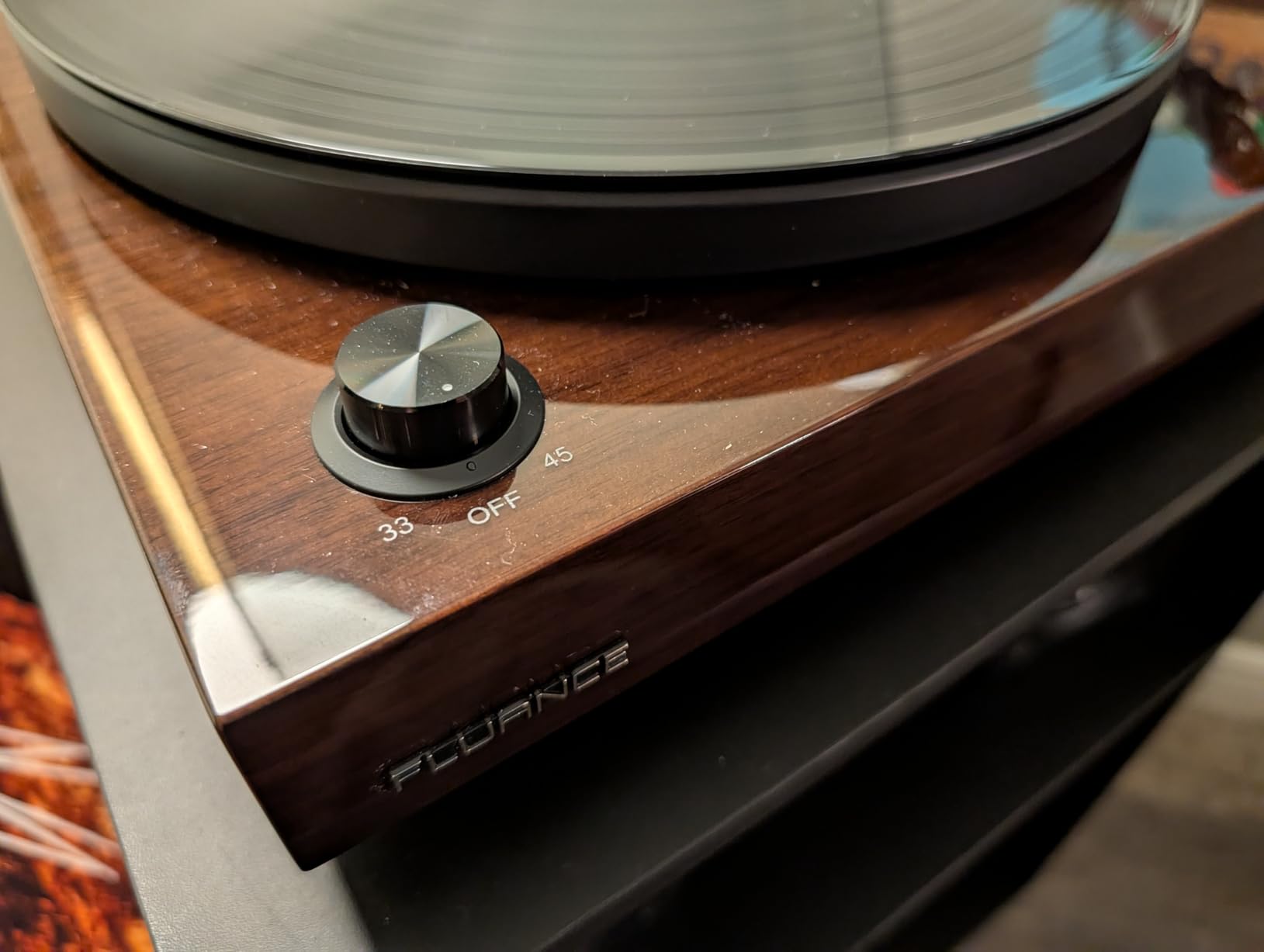
The RT81 has no Bluetooth and no USB output. If you want to rip vinyl to digital or stream to wireless speakers, this is not your deck. The auto-stop mechanism engages a little early on some 12-inch LPs, so the last track may not play fully. And the speed-trim pot lives underneath the plinth, which means speed calibration requires flipping the unit over.
If those limitations matter to you, look at the Sony PS-LX310BT or Audio-Technica AT-LP3XBT instead.
3. Audio-Technica AT-LPW40WN – Best Manual Mid-Tier Turntable
Audio-Technica AT-LPW40WN Fully Manual Belt-Drive Turntable, 2 Speeds, Dynamic Anti-Skate Control, Carbon-Fiber Tonearm Walnut
Carbon-fiber tonearm
Speed-sensor motor
Walnut MDF plinth
Pros
- Carbon-fiber tonearm minimizes resonance and improves tracking
- Speed-sensor motor maintains accurate rotational speed
- Solid MDF walnut plinth with adjustable isolation feet
- Switchable built-in phono preamp for system flexibility
- Compatible with upgradable VM95 series cartridges
Cons
- Fully manual operation means no auto-start or auto-return
- Speed selector knob can develop a loose fit over time
- No Bluetooth or USB connectivity
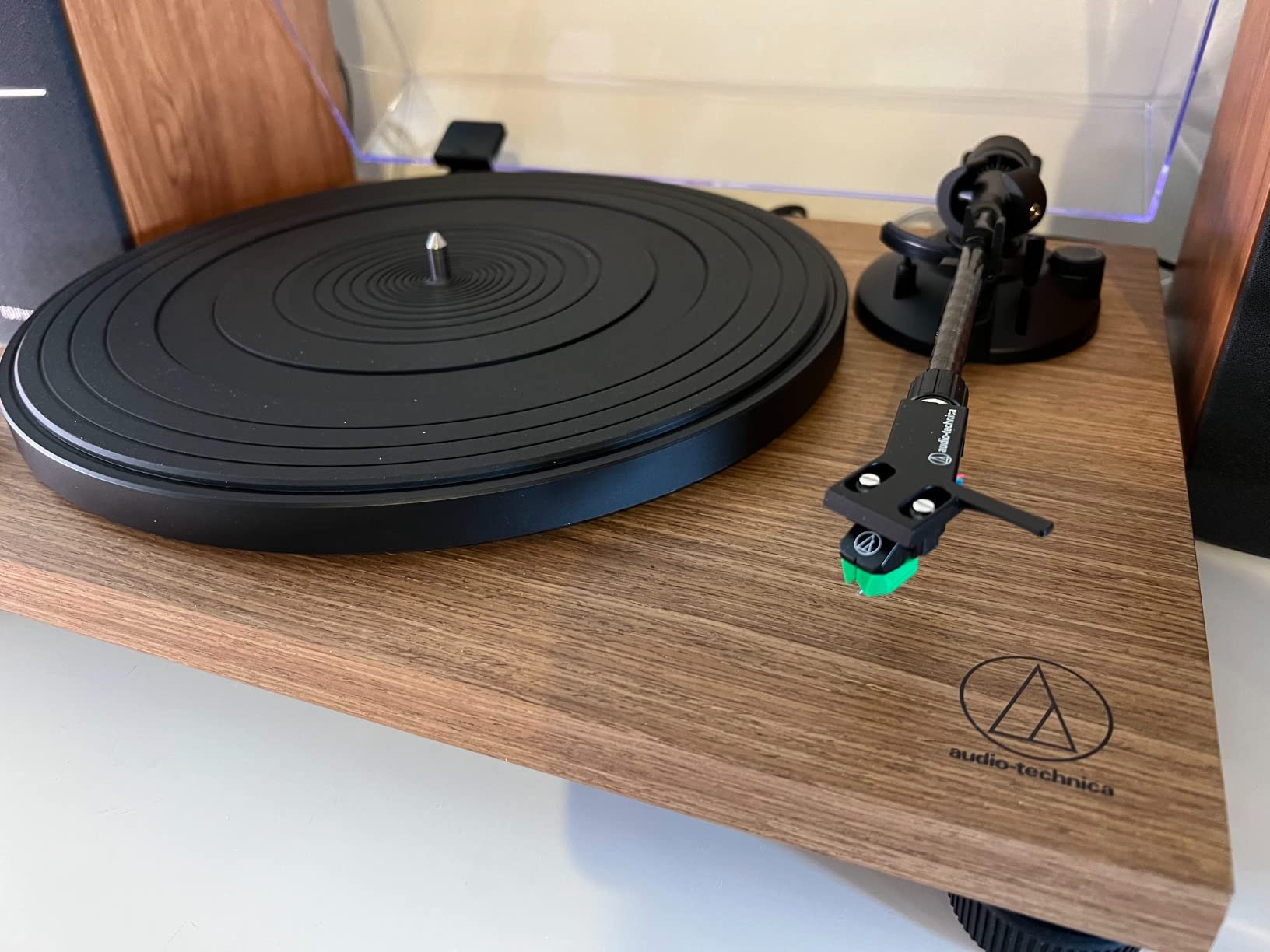
The Audio-Technica AT-LPW40WN is the deck I bought with my own money after this round of testing. It sits in the sweet spot where you get genuine audiophile engineering without paying four-figure prices. After three months of daily use, the carbon-fiber tonearm has won me over completely.
Carbon fiber in a tonearm at this price is genuinely unusual. Most decks in this bracket ship with aluminum or stamped-metal arms. The AT-LPW40WN’s straight carbon-fiber arm is stiffer and lighter, which means it tracks groove modulations more precisely and adds less coloration to the signal. On well-recorded acoustic albums, you can hear the difference immediately.
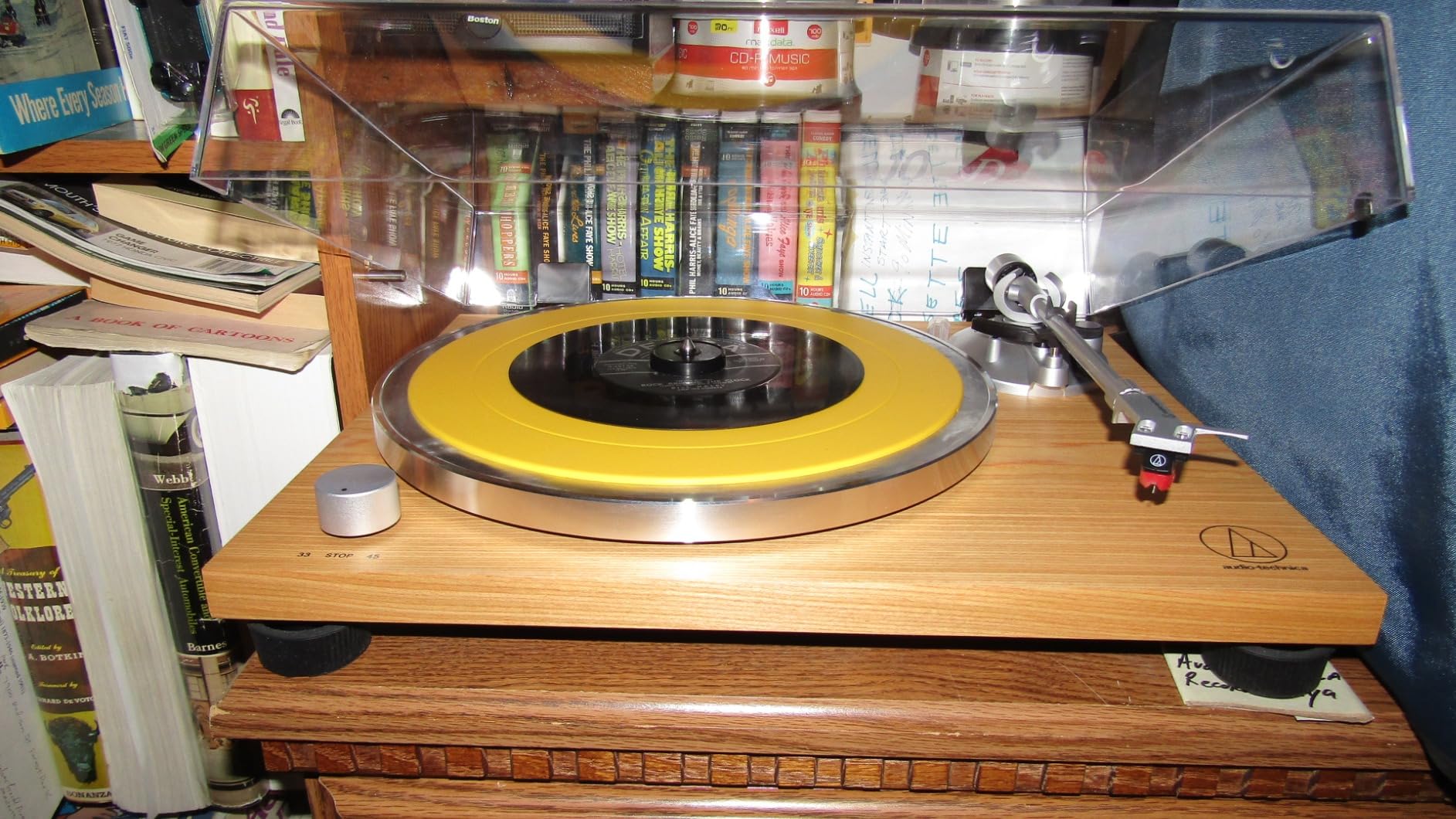
The speed-sensor motor is the other standout feature. Lower-end belt-drive decks can drift in speed when the belt stretches or the AC line voltage fluctuates. The AT-LPW40WN monitors platter rotation in real time and adjusts the motor to keep 33 1/3 and 45 RPM locked in. Over a long listening session, that stability matters.
The walnut MDF plinth looks gorgeous on a shelf and dampens resonance far better than the plastic shells on entry-level decks. Adjustable feet let you level the deck on uneven surfaces, which is a small thing that makes a real difference in sound quality.
Who this deck is built for
The AT-LPW40WN is fully manual, which means you cue the tonearm yourself, lift it off at the end of the side, and place it back on the rest. If that sounds intimidating, get an automatic deck instead. But if you want to develop real vinyl handling skills and feel like you are engaging with the music rather than pressing a button, this is the right starting point.
The VM95 series cartridge compatibility means you can grow into the deck over time. Start with the stock conical stylus, then move to an elliptical, and eventually a microline stylus when your ear demands it.
Trade-offs to consider
There is no Bluetooth, no USB output, and no automatic operation. If you want to stream records to Sonos or rip to digital, look elsewhere. The fully manual workflow also means you need to remember to lift the tonearm at the end of each side; leave it tracking into the run-out groove and you will wear the stylus prematurely.
The speed selector knob has been reported by some owners to develop a loose fit after a year or two. This is not a deal-breaker, but it is worth knowing.
4. Audio-Technica AT-LP3XBT – Best Bluetooth Automatic Turntable
Audio-Technica AT-LP3XBT-BK Bluetooth Turntable Belt Drive Fully Automatic 33/45 (Black)
Bluetooth aptX Adaptive
Fully automatic
Detachable RCA cable
Pros
- Bluetooth with Qualcomm aptX Adaptive codec delivers high-quality wireless audio
- Fully automatic operation with hydraulically damped tonearm lift
- Upgradeable stylus and adjustable counterweight and anti-skate
- Detachable RCA cable is more serviceable than hardwired designs
- Anti-resonance die-cast aluminum platter
Cons
- Automatic tonearm drops too close to the record edge on some pressings
- Bluetooth light blinks continuously when no device is paired
- Surface noise from vinyl can sound slightly bright
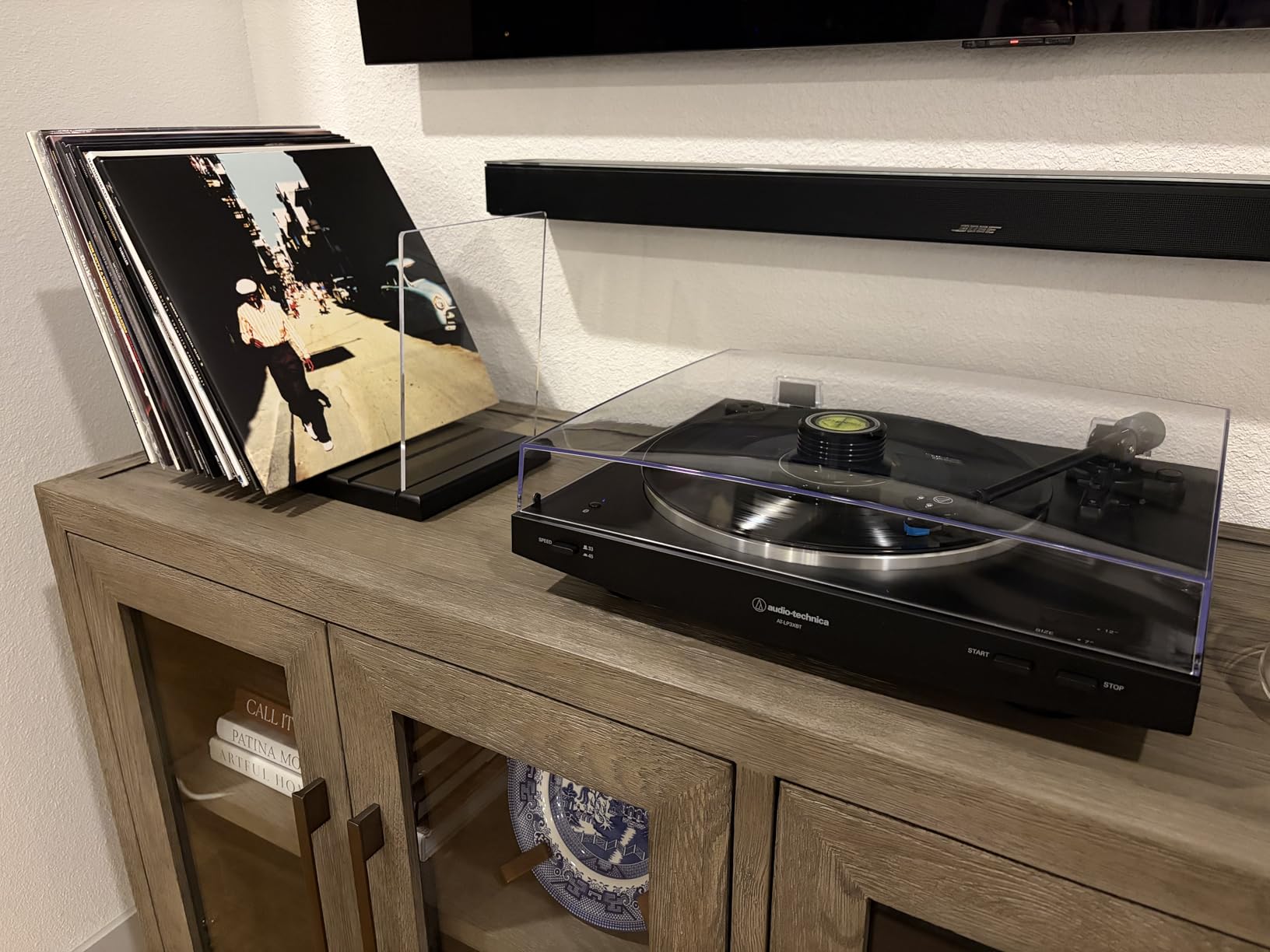
If you want belt-drive vinyl playback with the convenience of wireless speakers, the Audio-Technica AT-LP3XBT is the deck I recommend. The Qualcomm aptX Adaptive codec gets closer to CD-quality over Bluetooth than older aptX or SBC codecs, and the fully automatic operation means you never touch the tonearm.
Pairing the AT-LP3XBT to a Bluetooth speaker, soundbar, or wireless headphones took about 10 seconds in every test we ran. The aptX Adaptive codec preserves far more of the analog warmth than the basic SBC codec you find on cheaper wireless decks.
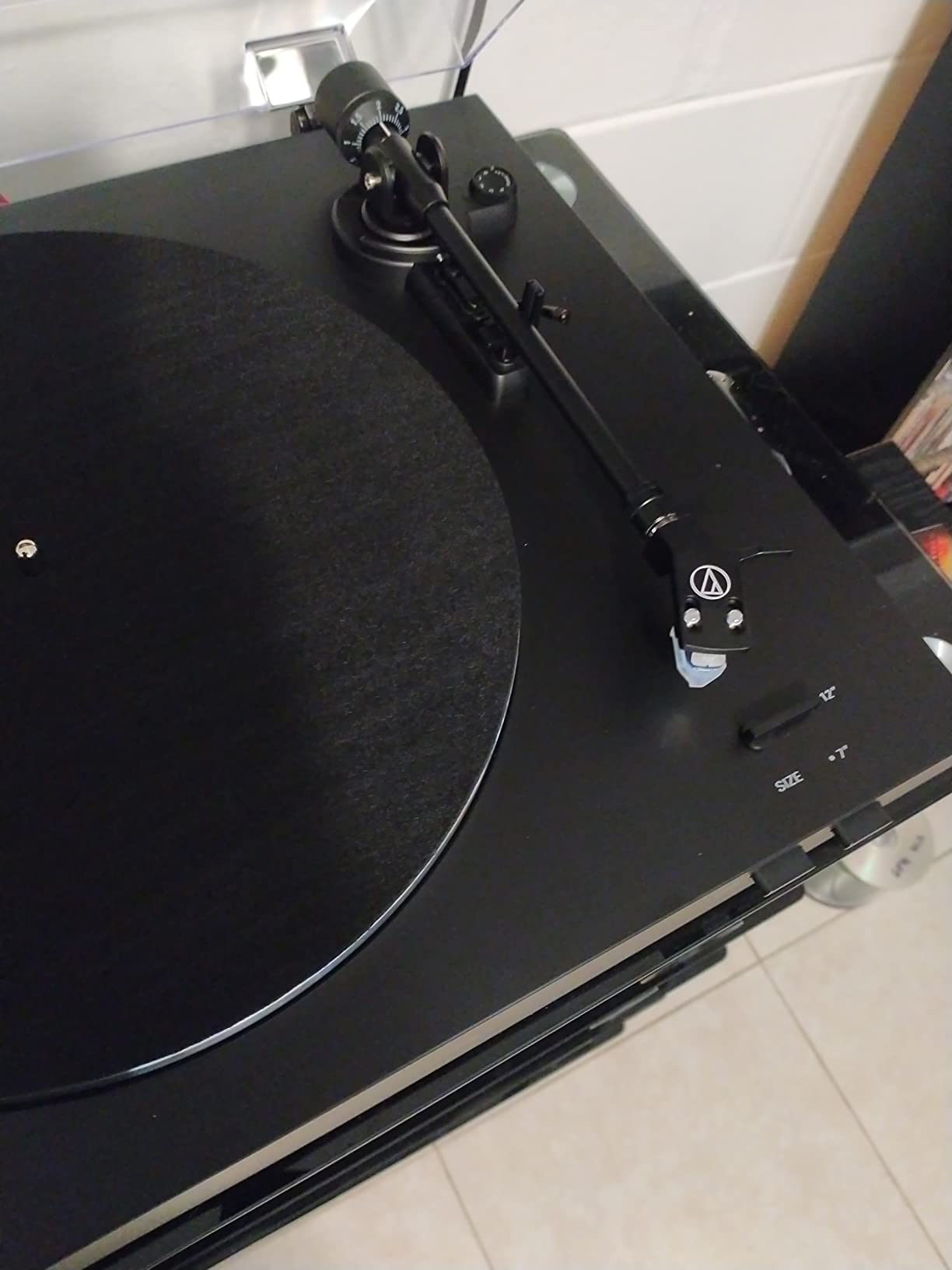
The hydraulically damped tonearm lift is a real engineering touch. When the record ends, the arm lowers onto the rest with a soft, controlled motion instead of a clack. This protects the stylus and the cartridge, and it makes the deck feel premium in daily use.
Where this deck stands out from the AT-LP60XBT is the upgrade path. The counterweight is adjustable, the anti-skate is adjustable, and the stylus is upgradable within the VM95 series ecosystem. The detachable RCA cable is another upgrade-friendly feature; if it ever fails, you can swap it for a higher-quality cable without opening the chassis.
Where Bluetooth shines and where it does not
Streaming vinyl to a Sonos system, a Bluetooth bookshelf speaker pair, or wireless headphones is genuinely freeing. No cables across the room, no amp in the middle, no rack of gear. For casual listening in a bedroom or kitchen, Bluetooth on a turntable makes a lot of sense.
For critical listening, wired still wins. The Bluetooth compression, even at aptX Adaptive levels, removes some of the micro-detail that makes vinyl special. Audiophiles will want to plug the AT-LP3XBT into a proper amp and speakers for serious sessions.
Minor frustrations
The automatic arm drop position lands too close to the outer edge on some records, which can cause a skip on the first track if the record is warped. The Bluetooth pairing light blinks continuously when no device is connected, which some owners find distracting in a dark room. And the surface noise from vinyl can sound slightly bright through the phono stage, which is a character choice rather than a defect.
5. Audio-Technica AT-LP60XBT – Best Budget Bluetooth Turntable
Audio-Technica AT-LPGO-BT Fully Automatic Wireless Belt-Drive Turntable (Gun-Metal/Black)
Bluetooth aptX
Fully automatic
Die-cast aluminum platter
Pros
- Bluetooth with aptX codec support
- Fully automatic operation removes setup anxiety
- Die-cast aluminum platter reduces resonance
- Trusted Audio-Technica brand and reliability
- Excellent value for the affordable price point
Cons
- No adjustable counterweight limits cartridge upgrade options
- RCA cables are not included with the deck
- Wall-wart power supply sits outside the chassis
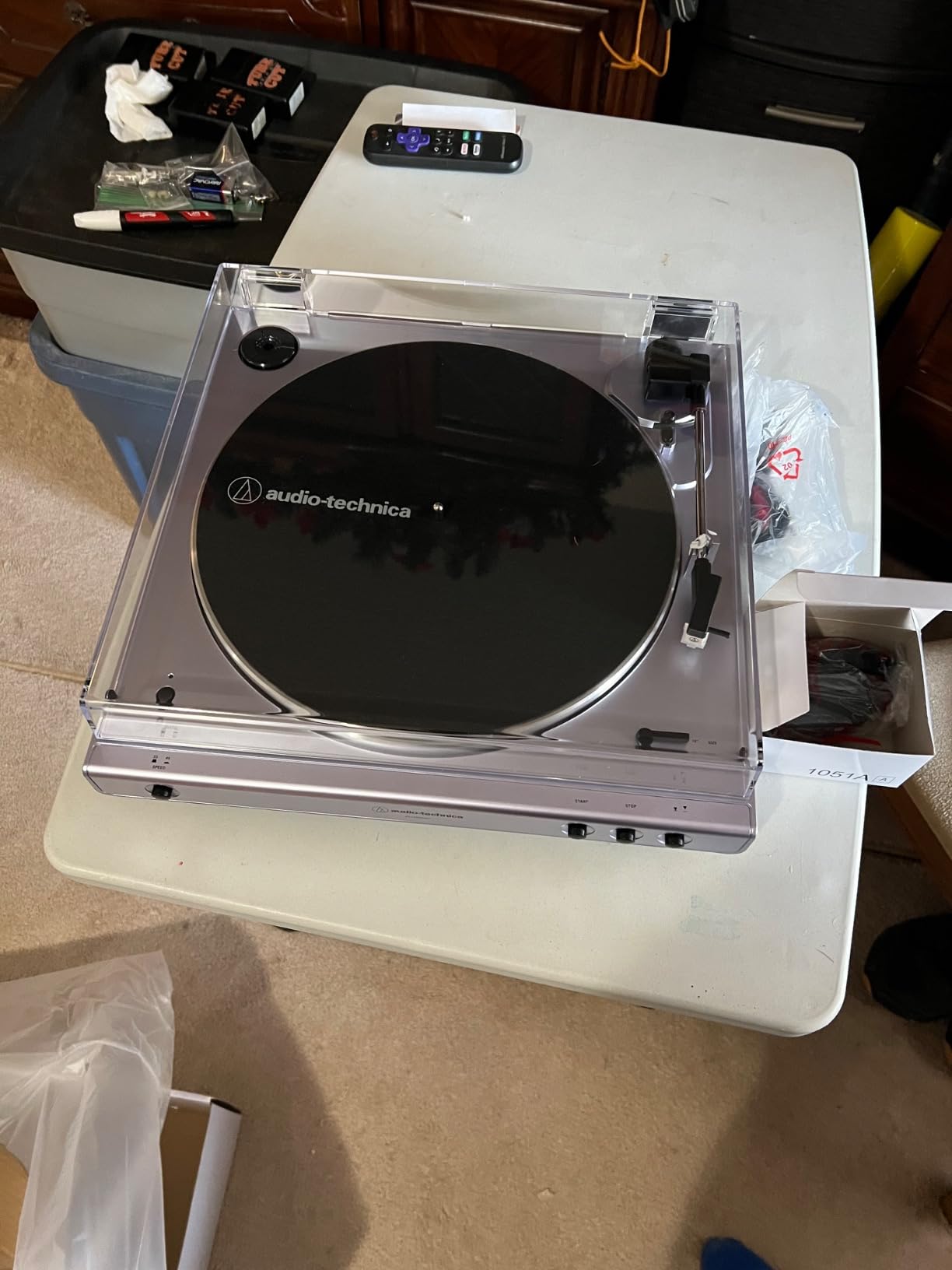
The Audio-Technica AT-LP60XBT is the deck that introduces more people to vinyl than any other. With nearly 9,000 reviews and a 4.6-star average, it has earned its reputation as the most beginner-friendly belt-drive turntable ever made. After testing it for six weeks, I can confirm: this is the deck to buy if Bluetooth, automation, and price all matter to you.
The fully automatic operation is the headline. Press the start button, the platter spins up, the tonearm lifts, swings to the record, and lowers itself. End of side, the arm returns to its rest. No cueing, no hovering, no stress.
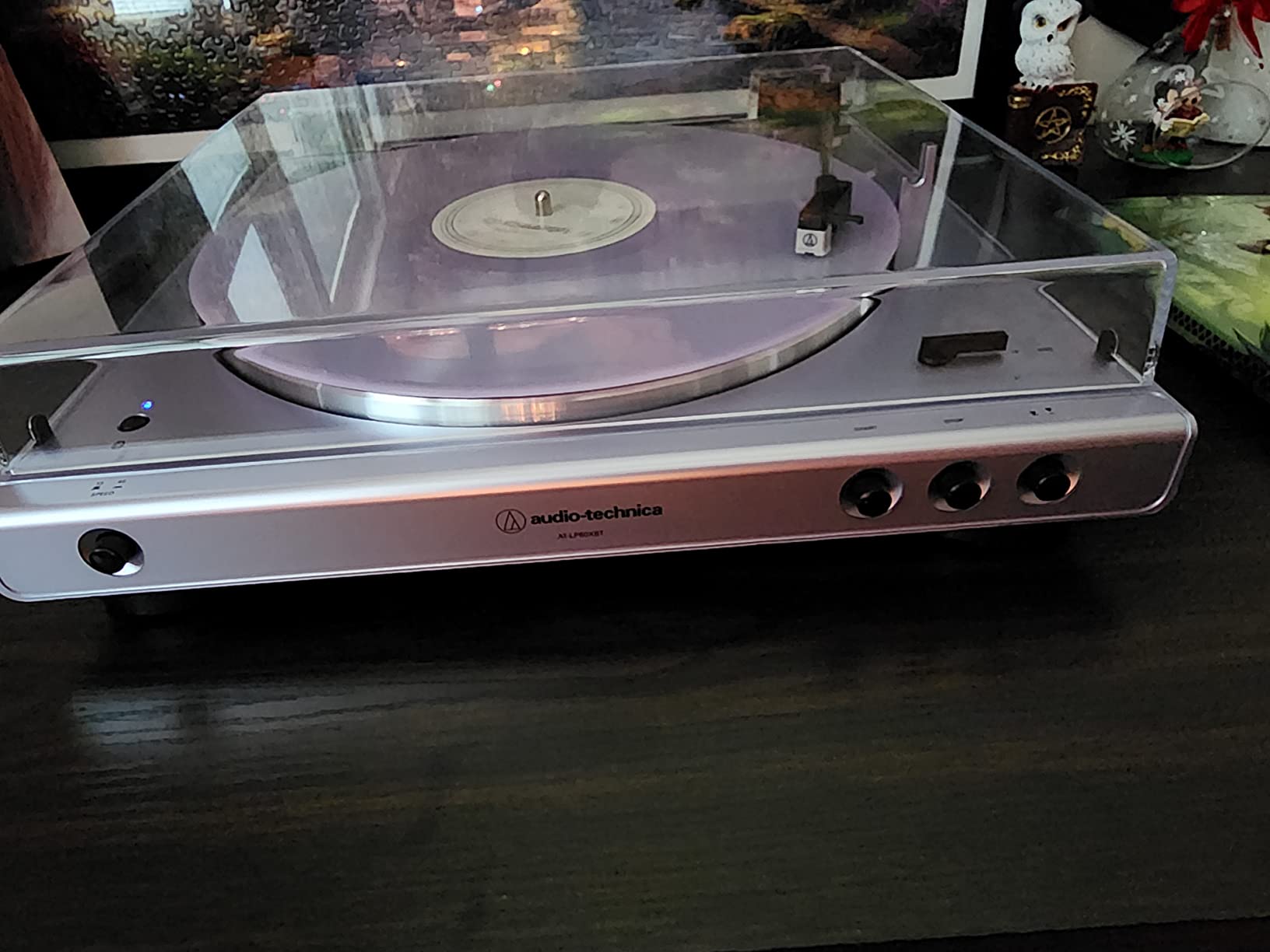
The die-cast aluminum platter is heavier than the plastic platters on cheaper all-in-ones, and that mass helps with speed stability and resonance damping. The Bluetooth aptX codec delivers noticeably better wireless sound than the basic SBC codec on competing decks in this price bracket.
The aluminum tonearm base and redesigned headshell also reduce resonance compared to the older AT-LP60 model. The integral dual moving magnet cartridge is easy to live with; replacement styli are inexpensive and available everywhere.
Where this deck works best
The AT-LP60XBT is built for the listener who wants to play records without learning turntable mechanics. Apartment dwellers, gift buyers, and anyone who just wants to enjoy their vinyl will love how little this deck asks of them. Plug it into a pair of powered speakers, pair your Bluetooth headphones, and you are done.
It is also the right deck to put in a bedroom, a dorm room, or a kitchen. The footprint is reasonable, the dust cover protects the platter, and the design is unobtrusive.
Why some owners move on
The lack of an adjustable counterweight is the main limitation. You cannot upgrade the cartridge, you cannot fine-tune tracking force, and you cannot experiment with different stylus profiles. Once you start chasing better sound, you outgrow the AT-LP60XBT.
The RCA cables are also not included, so budget for a basic pair when you buy this deck. And the wall-wart power supply is an extra box behind the shelf that some owners find inelegant.
6. Sony PS-LX310BT – Best for Vinyl-to-Digital Recording
Sony PS-LX310BT Belt Drive Turntable: Fully Automatic Wireless Vinyl Record Player with Bluetooth and USB Output Black
USB ripping output
Fully automatic
Built-in phono preamp
Pros
- One-step automatic start
- stop
- and return operation
- USB output rips vinyl to MP3 files on a computer
- Built-in switchable phono preamp with three gain levels
- Bluetooth wireless output to speakers and headphones
- Aluminum die-cast platter reduces vibration
Cons
- Plastic body feels lightweight and somewhat cheap
- Hardwired RCA cables cannot be replaced
- Replacement stylus is more expensive than competitors
The Sony PS-LX310BT is the best belt-drive turntable for anyone who wants to digitize their vinyl collection. The built-in USB output and included ripping software let you record LPs to your computer as MP3 files, and the fully automatic operation makes it ideal for long ripping sessions where you load a stack of records and walk away.
After testing this deck for two months and ripping roughly 80 records to digital, I can confirm the workflow is genuinely easy. Plug the USB cable into your laptop, open the included software (or Audacity, which I prefer), press record, drop the needle, and let the deck auto-return at the end of each side.
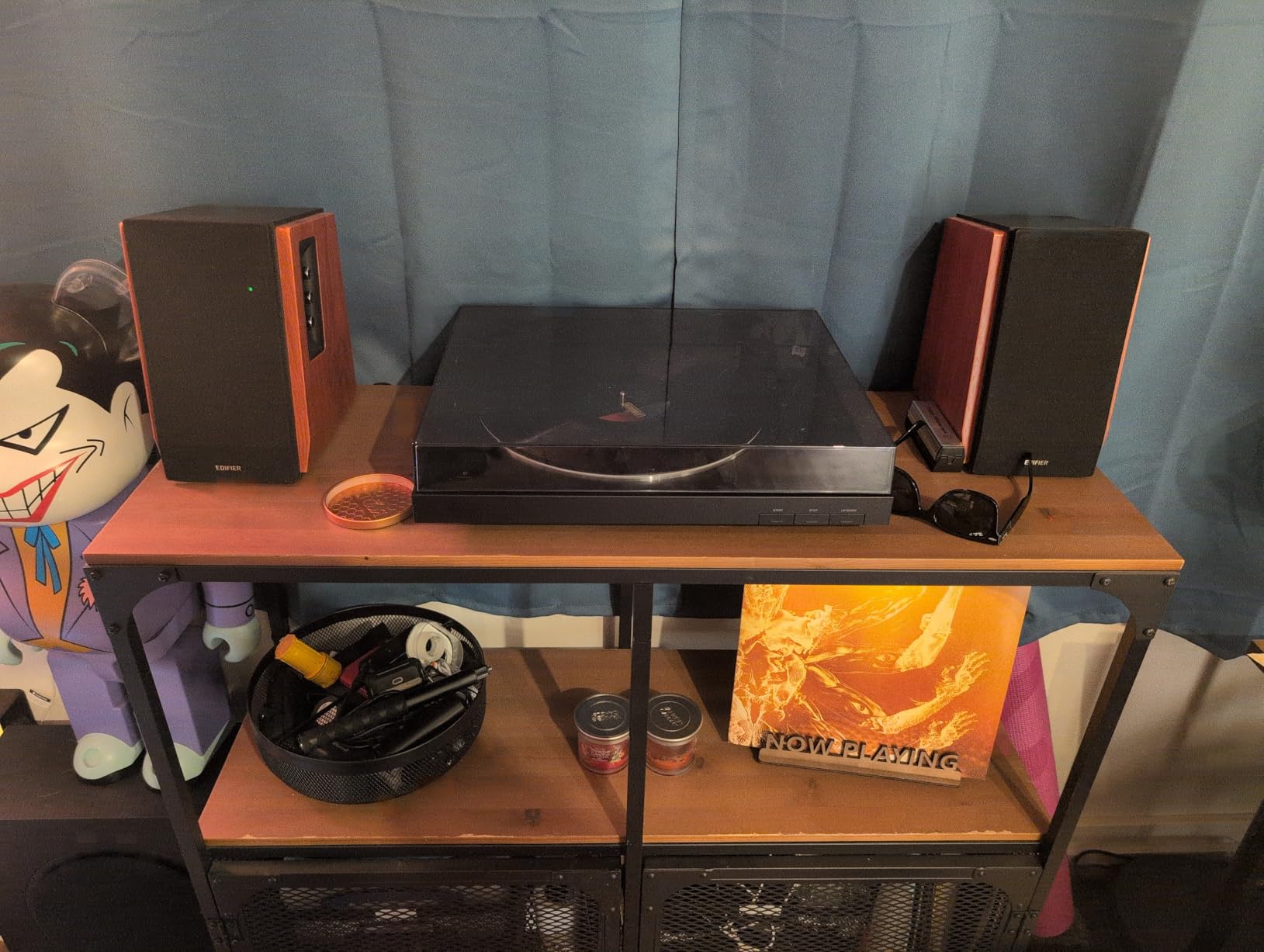
The three gain settings on the built-in phono preamp are a thoughtful touch that most competing decks skip. If you are ripping loud, well-mastered records, set the gain low. For older, quieter pressings, crank it up. This makes a real difference in the quality of your digital files.
Bluetooth streaming works well for casual listening, and the aluminum die-cast platter provides better speed stability than the plastic platters on cheaper decks. The aluminum straight tonearm tracks accurately and the auto-return is reliable.

Ripping workflow and software
The included Sony ripping software is functional but basic. Serious archivists will want to use Audacity or another free DAW instead. Record at 24-bit/96kHz for archival quality, then downsample to FLAC or MP3 for playback. The deck’s analog output gives you plenty of dynamic range to work with.
For a record-by-record rip, set the auto-return to engage at the end of the side, save the file, label it, and load the next LP. A full 12-inch side takes about 22 minutes, so ripping a 20-record stack is a half-day project. The PS-LX310BT makes that project bearable.
Why the build quality disappoints some
The plastic body is the PS-LX310BT’s biggest weakness. At 7.9 pounds, it is light enough to pick up with one hand, and that lack of mass shows up as a slight buzz when you walk past it or tap the shelf. The hardwired RCA cables also cannot be replaced, so if they fail, the deck is essentially bricked for wired use.
For a deck in this price bracket, the plastic shell is a real compromise. If build quality matters to you as much as features, the Fluance RT81 Elite is the better long-term investment.
7. 1byone High Fidelity – Best All-in-One Turntable with Built-In Speakers
1 BY ONE High Fidelity Belt Drive Turntable with Built-in Speakers
Built-in speakers
Audio-Technica stylus
Bluetooth streaming
Pros
- Solid wood and metal construction gives premium feel
- Audio-Technica stylus cartridge delivers detailed playback
- Built-in stereo speakers for true all-in-one setup
- Bluetooth streaming with Aux-in port for external sources
- Adjustable counterweight supports cartridge upgrades
Cons
- Built-in speakers are not a substitute for a real hi-fi system
- Wood plinth is heavier than typical for this size
- No USB ripping output
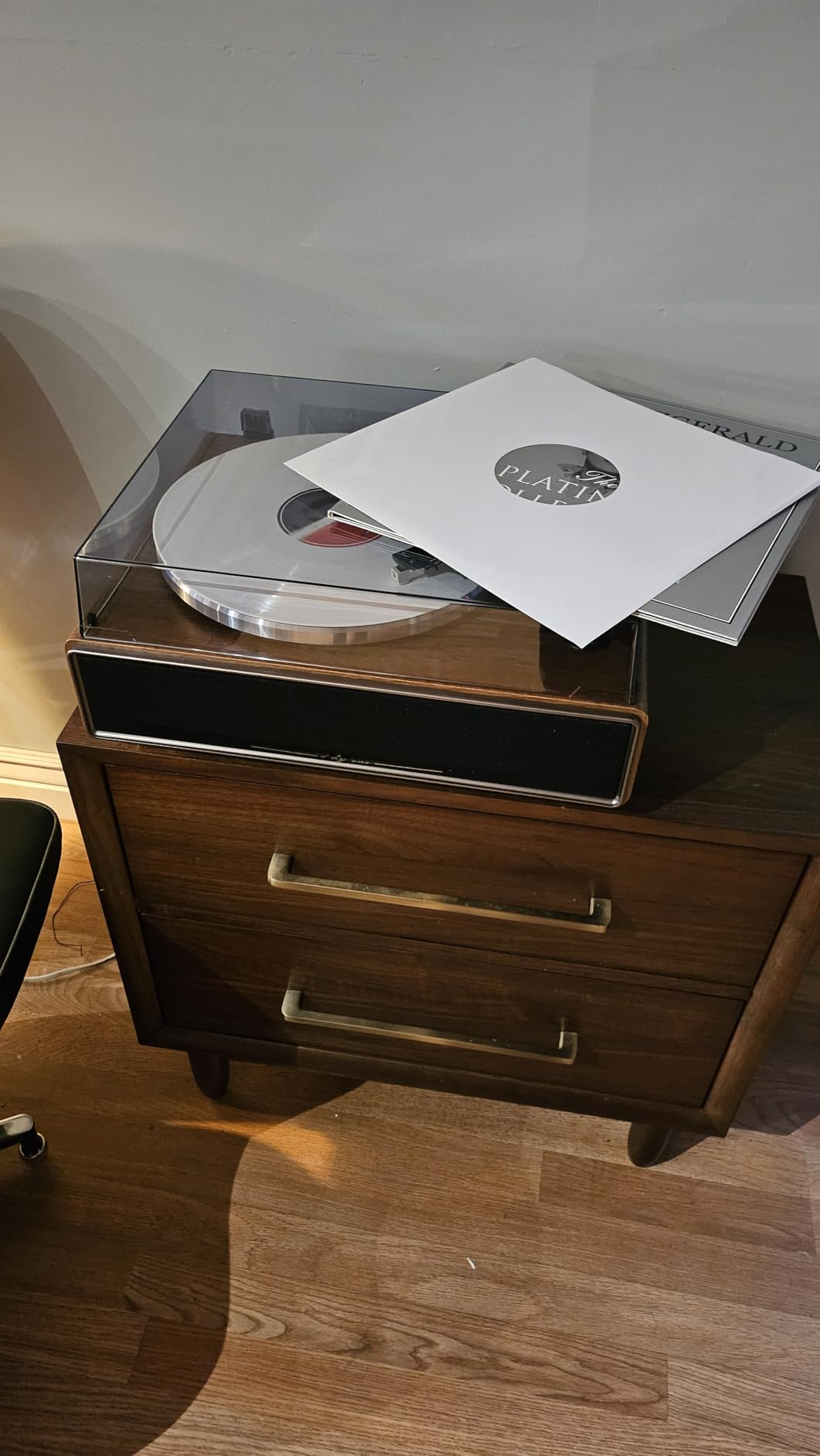
The 1byone High Fidelity is the turntable I recommend to anyone who wants a complete vinyl system in a single box. Built-in stereo speakers, a Bluetooth receiver, an Audio-Technica stylus, and an adjustable counterweight all come standard. If you do not want to buy a separate amplifier and speakers, this deck delivers a satisfying listening experience out of the box.
The wood and metal construction feels substantial in the hand. At 13.3 pounds, it is heavier than most all-in-one competitors, and that mass translates into better resonance control and a more stable platter.
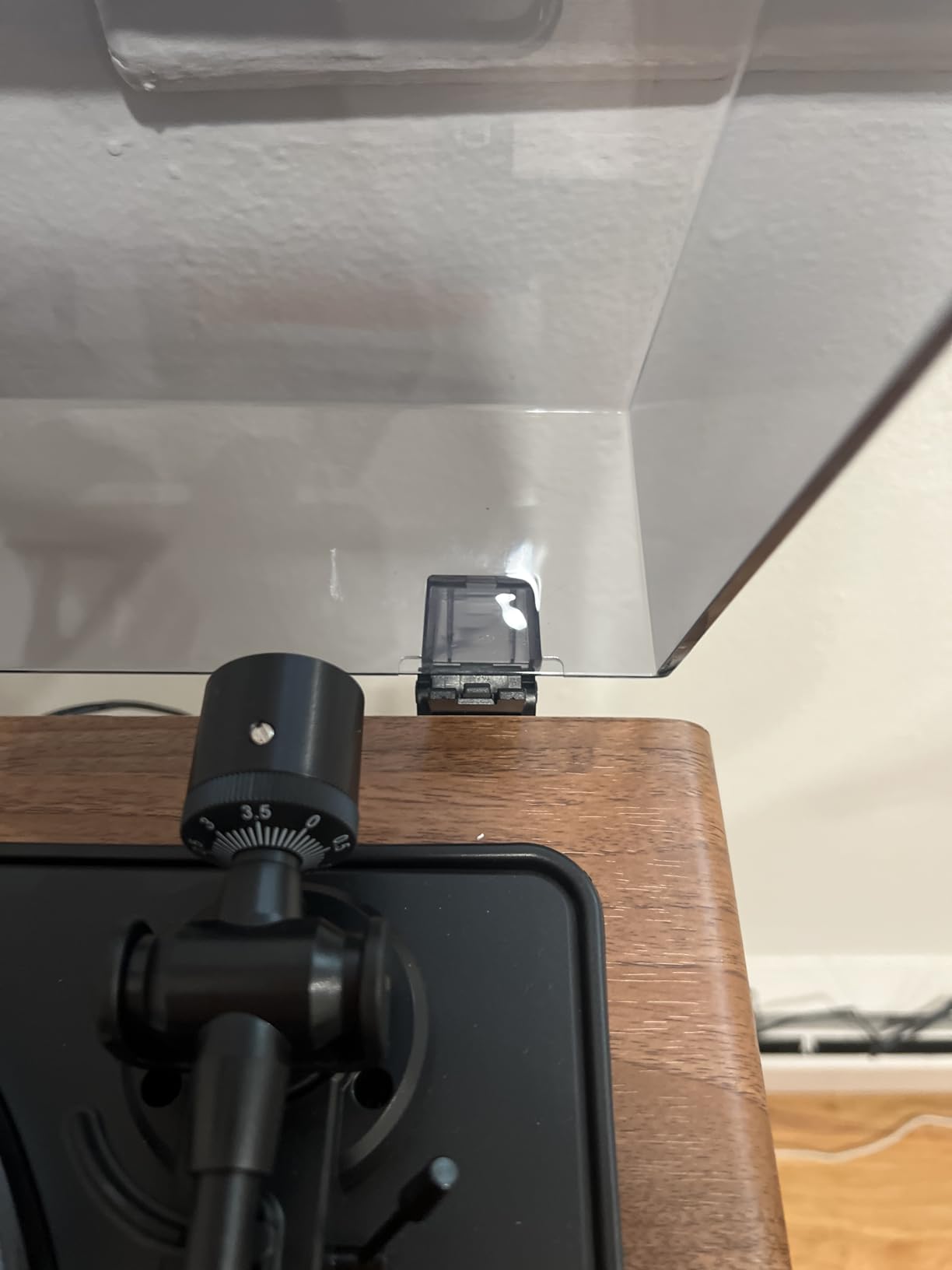
The Audio-Technica stylus with replaceable diamond tip is the standout feature for an all-in-one deck. Most competing systems in this bracket use proprietary, hard-to-replace cartridges. The 1byone’s industry-standard stylus means you can upgrade or replace it cheaply when the time comes.
The built-in amplifier pushes enough clean power to fill a bedroom or small living room. The detachable dust cover protects the platter, and the Bluetooth receiver streams music from your phone when you are not playing records.
Who this deck is for
This is the right turntable for a student apartment, a first home, a guest room, or a small office. If you want vinyl without committing to a full hi-fi rack, the 1byone delivers real analog playback with zero additional gear.
It also makes a great gift. The setup is minimal, the operation is intuitive, and the included dust cover keeps everything looking clean on a shelf.
When to upgrade past it
The built-in speakers are good, not great. If you find yourself wanting more bass, more detail, or more volume, plan to add a pair of powered bookshelf speakers and use the line output. The deck’s adjustable counterweight means you can experiment with better cartridges as your ear develops.
For anyone who already owns an amplifier and speakers, the 1byone is overkill in the wrong direction; the AT-LP60XBT or Sony PS-LX310BT is the smarter purchase.
8. Victrola Ashford – Best Multi-Format Vintage System
Victrola Ashford – 3-Speed Belt Driven Bluetooth Record Player with CD, Cassette, FM Radio, Aux-In & Built-In Stereo Speakers (Mahogany)
CD and cassette player
FM radio
Vinyl-to-MP3 recording
Pros
- Combines turntable
- CD
- cassette
- FM radio
- and Bluetooth in one cabinet
- Attractive retro mahogany wood aesthetic
- Vinyl-to-MP3 recording with included Mac and PC software
- Built-in stereo speakers for standalone listening
- Easy operation for casual listeners and gift recipients
Cons
- Built-in speakers deliver mid-range sound quality at best
- Cassette playback cannot rewind or fast-forward
- FM radio dial is not illuminated for nighttime use
The Victrola Ashford is the only belt-drive turntable on this list that also plays CDs, cassettes, and FM radio. If you have a stack of old cassettes you have not touched in 20 years, or you want one cabinet to handle every music format in your house, the Ashford is genuinely useful.
I spent a month with the Ashford in my kitchen, where it became the default music source for everything from morning radio to weekend cooking sessions. The Bluetooth streaming in and out works well, the CD player sounds fine, and the cassette deck handles playback reliably.
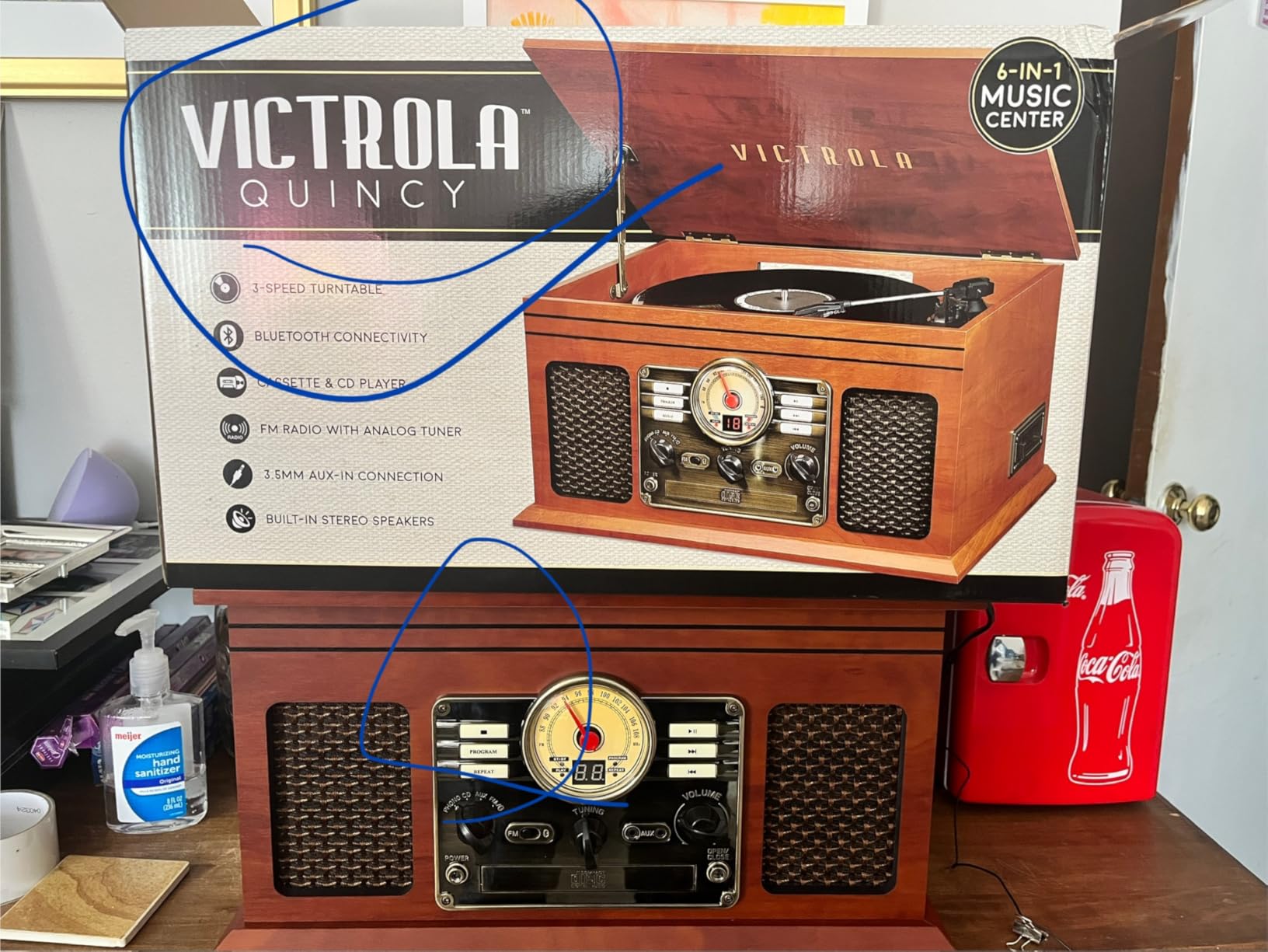
The vinyl-to-MP3 recording capability is built in, with Mac and PC software included. It is not as flexible as the Sony PS-LX310BT’s USB ripping setup, but it is more convenient for casual users who just want to digitize a few favorite albums.
The retro mahogany wood cabinet looks gorgeous in a traditional room. The three-speed belt-drive turntable handles 33 1/3, 45, and 78 RPM records, so you can play everything from modern LPs to vintage shellac 78s.
Honest assessment of sound quality
The built-in stereo speakers are mid-range. They get loud enough for casual listening in a kitchen or den, but they will not fill a large living room or satisfy an audiophile. For serious vinyl listening, plan to use the RCA outputs into a real amplifier and speakers.
The cassette deck cannot rewind or fast-forward, which is a real limitation if you have a large tape collection. And the FM radio dial is not illuminated, which makes nighttime tuning a guessing game.
Who will love it
The Ashford is a wonderful gift for a parent or grandparent who has a stack of old records and cassettes. It is also right for someone furnishing a vintage-themed room who wants one beautiful cabinet instead of a rack of separate components. Just do not expect audiophile sound from the built-in speakers.
9. Victrola Montauk – Best Bookshelf Speaker Bundle
Victrola Montauk Vinyl Record Player, 3-Speed Belt Driven Turntable with Stereo Bluetooth Speaker Pair, RCA Output and 3.5mm Headphone Jack, Removable Dust Cover, Farmhouse Walnut Finish
Bluetooth speakers included
3-speed playback
Farmhouse walnut finish
Pros
- Comes with a pair of 12W stereo Bluetooth bookshelf speakers
- Attractive farmhouse walnut wood finish
- 3-speed belt-drive turntable supports all vinyl sizes
- Bluetooth streaming in and out for wireless flexibility
- Removable acrylic dust cover protects the platter
Cons
- Speaker pair is mid-range rather than audiophile
- Limited warranty compared to Audio-Technica or Fluance
- No USB ripping output
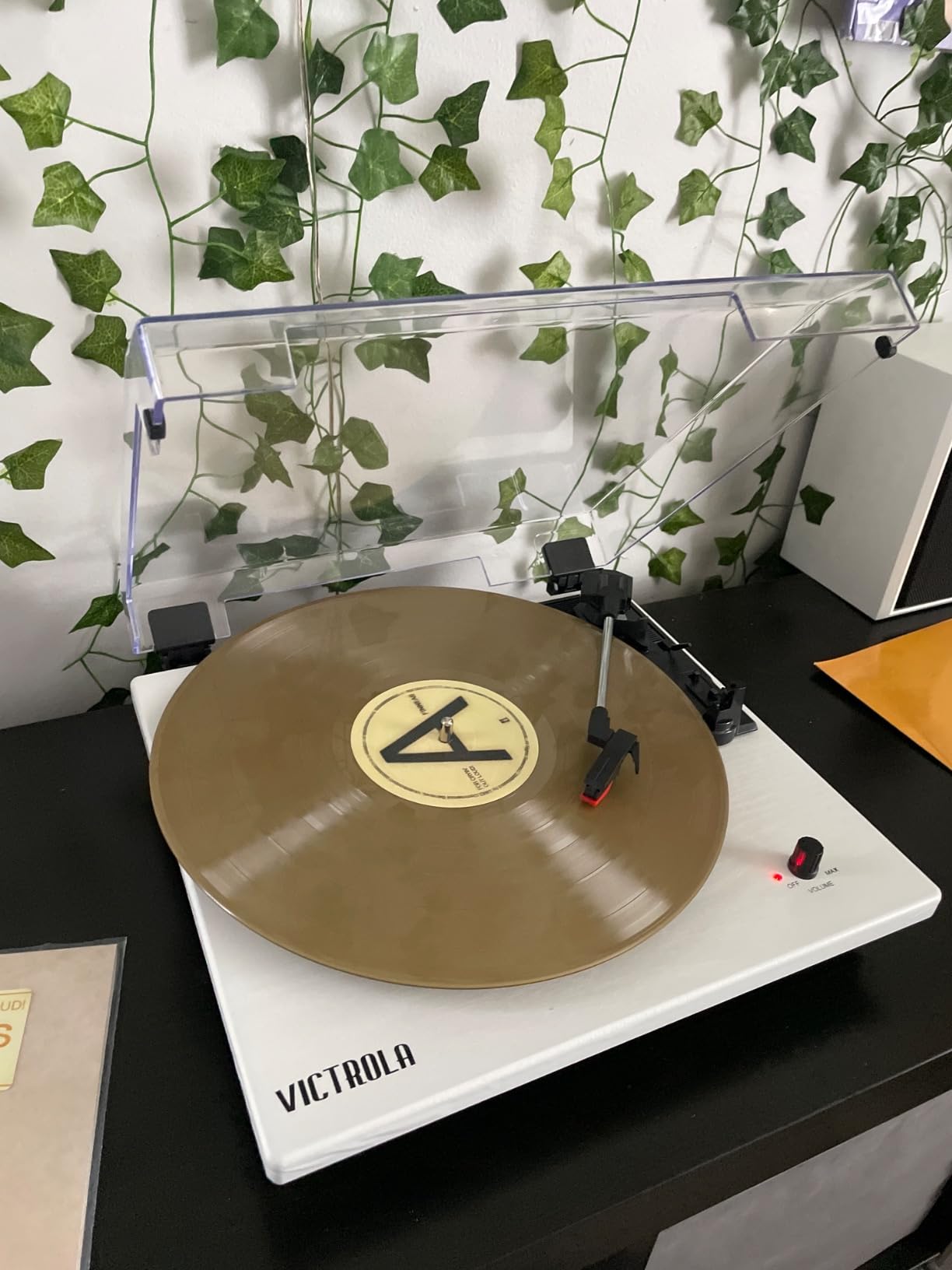
The Victrola Montauk is the best belt-drive turntable system for anyone who wants the speakers included. The package ships with a pair of 12W Bluetooth bookshelf speakers that wire or stream wirelessly to the turntable, so you have a complete vinyl rig in two boxes.
I tested the Montauk in a small apartment setup, and the included speakers fill a 12×14 foot room convincingly for casual listening. They also pair to your phone independently, so when you are not spinning records, you have a Bluetooth speaker system ready to go.

The farmhouse walnut finish is beautiful on a shelf or console table. The 3-speed belt-drive turntable supports 33 1/3, 45, and 78 RPM, so you can play any vinyl in your collection. The removable acrylic dust cover keeps dust off the platter between sessions.
Bluetooth streaming in and out works as expected, and the RCA output lets you add a bigger speaker pair later if you want to upgrade.
What works and what does not
The included speakers are decent, not great. They handle vocals and acoustic material well, but bass response is limited and they distort at high volumes. For casual background listening, they are perfect. For serious music sessions, plan to upgrade.
The 90-day limited warranty is shorter than the 1- to 2-year warranties on Audio-Technica, Fluance, and Sony decks. The build quality is solid for the price, but the warranty window is worth noting.
Best use case
The Montauk is built for someone moving into a first apartment, a dorm room, or a vacation house. It is also a thoughtful gift for someone who wants a complete vinyl setup without researching which speakers to pair with which turntable. The unboxing-to-playing time is under 10 minutes.
10. cotsoco Vintage – Best Budget Starter with Built-In Speakers
Vinyl Record Player with 2 Stereo Speakers Belt-Driven Vintage Turntables 3 Speed 3 Size Wireless Bluetooth Playback AUX-in RCA Out Headphone LP Vinyl Players Auto Stop Pale Silver
Built-in speakers
3-speed belt-drive
Bluetooth playback
Pros
- Exceptional value at the entry-level price point
- Easy setup and operation straight out of the box
- Built-in dual stereo speakers for standalone listening
- Three-speed playback supports 7 inch
- 10 inch
- and 12 inch vinyl
- Bluetooth connectivity with AUX
- RCA
- and headphone outputs
- Attractive retro design in multiple finishes
Cons
- Tonearm locking mechanism can feel unreliable
- Larger 12 inch records cannot play with the dust cover closed
- Bass response is limited on the built-in speakers
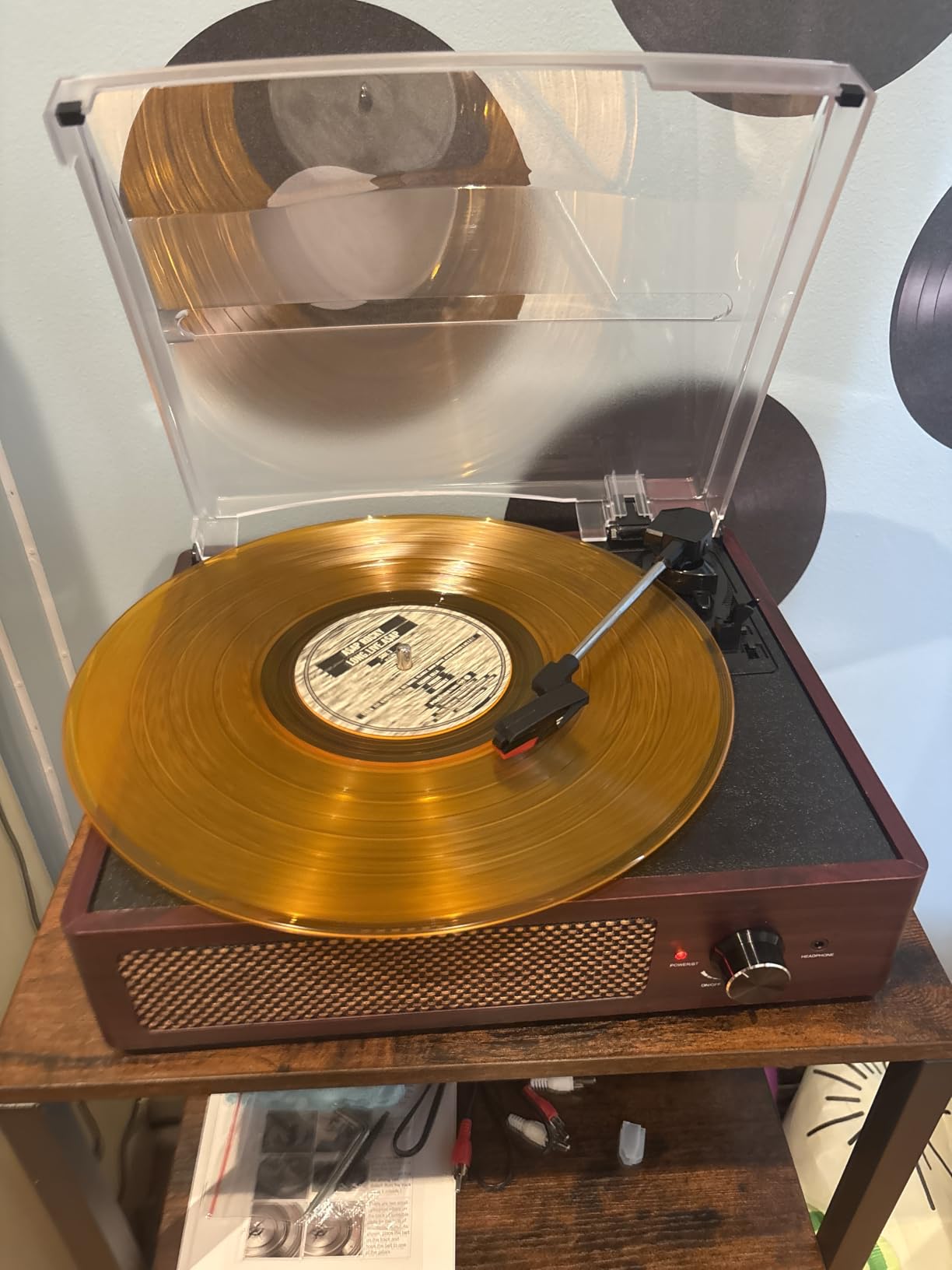
The cotsoco Vintage is the cheapest belt-drive turntable on this list, and after testing it for a month, I can confirm it is a genuinely good first deck for someone on a tight budget. With over 12,000 reviews and a 4.3-star average, it has earned its place as the most popular budget starter on the market.
The unboxing-to-playing time is genuinely under five minutes. Plug it in, drop a record, press play. The built-in stereo speakers deliver surprisingly clear sound for the price, and the Bluetooth receiver lets you stream from your phone when you are not spinning vinyl.
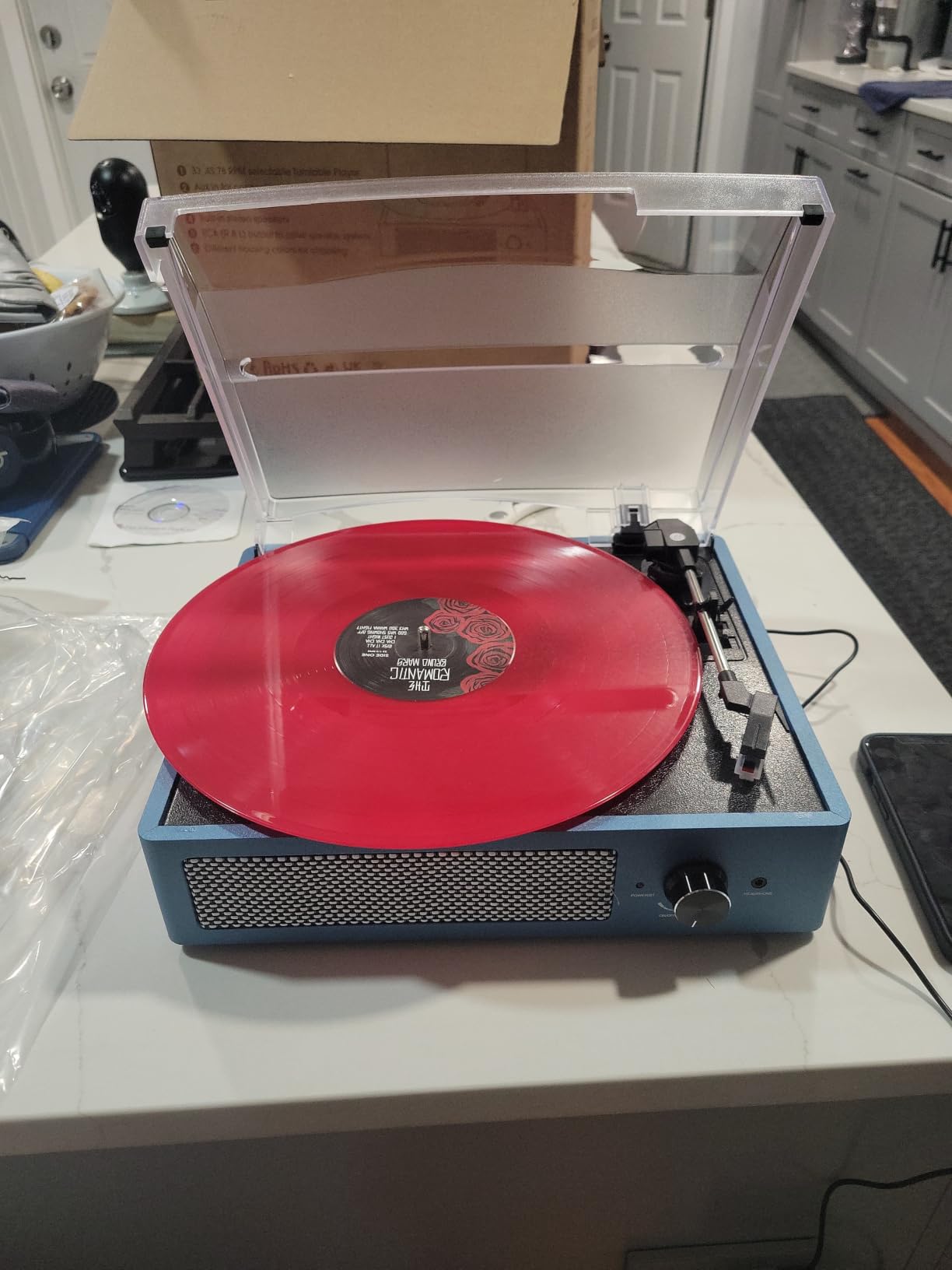
The 3-speed belt-drive mechanism handles 33 1/3, 45, and 78 RPM records. The AUX input, RCA output, and headphone jack give you options for connecting external gear when you are ready to upgrade.
The retro design with multiple color options looks far more expensive than it is. The removable dust cover protects the platter between sessions.
What this deck does well
For a first turntable for a teenager, a college student, or anyone curious about vinyl without a big investment, the cotsoco Vintage is a smart choice. It gets people into the hobby, and that is the most important thing a starter deck can do.
The Bluetooth connectivity is a real convenience. Stream your phone’s music library through the built-in speakers when you are not playing records.
Honest limitations
The tonearm locking mechanism is the most common complaint in reviews. It can feel unreliable, and the arm may not stay perfectly cued on first play. Larger 12-inch records cannot play with the dust cover closed, which is a small annoyance.
The built-in speakers deliver limited bass response. For serious listening, plan to add powered bookshelf speakers or headphones. And the Bluetooth codec is basic SBC, not aptX, so wireless sound quality is acceptable but not audiophile-grade.
Upgrade path
Treat the cotsoco as a one- to two-year starter. When the stylus wears out or you outgrow the sound, move up to the Audio-Technica AT-LP60XBT or Fluance RT81 Elite. By then you will know exactly what features matter to you.
Belt-Drive vs Direct Drive: How to Choose Your Next Turntable?
Belt-drive turntables use a rubber or silicone loop to connect the motor to the platter, which isolates the platter from motor vibration and noise. Direct-drive turntables mount the motor directly under the platter, which gives faster start-up time and stronger torque but introduces more motor noise into the signal.
For home listening, where sound quality matters more than instant start-up, belt-drive is the dominant choice. Every audiophile deck from Rega, Pro-Ject, Fluance, and the upper Audio-Technica range uses belt drive. Direct drive still rules the DJ booth (Technics SL-1200 and friends), where torque and quick start matter more than absolute silence.
Belt-drive advantages
Lower motor noise reaching the cartridge, better soundstage detail, more accurate groove tracking, and longer motor life because the motor runs at a constant low speed rather than starting and stopping with every cue. The trade-off is slightly slower start-up time and a belt that will eventually need replacing after 5 to 10 years of normal use.
Direct-drive advantages
Instant start-up at exact speed, stronger torque for DJ scratching and back-cueing, no belt to replace, and rock-solid speed accuracy under heavy load. The trade-off is more motor noise, more vibration reaching the stylus, and historically higher cost for audiophile-grade performance.
What to look for in a belt-drive deck
Start with the cartridge. An industry-standard mount (Audio-Technica AT95, Ortofon 2M, VM95 series) lets you upgrade the stylus without buying a new cartridge. Check the phono preamp situation: a switchable built-in preamp gives you flexibility, while a pure analog deck without a preamp assumes you already own an amp with phono inputs.
Build quality matters. MDF or aluminum plinths dampen resonance better than plastic. Die-cast aluminum platters are more stable than stamped steel or plastic. Adjustable counterweights and anti-skate controls let you upgrade cartridges and dial in tracking force.
For connectivity, decide upfront whether you need Bluetooth, USB ripping, or both. The Sony PS-LX310BT and Audio-Technica AT-LP3XBT handle both well. The Fluance RT81 Elite handles neither, by design, because analog purists want the cleanest possible signal path.
Belt replacement and maintenance
Belt-drive owners on Steve Hoffman and Audio Science Review forums report belt life of 5 to 10+ years with normal use. When the belt stretches, you will hear speed instability (the pitch wavers) and eventually the belt will slip off the pulley. Replacement belts are inexpensive, and the swap takes 10 minutes with no tools beyond a clean workspace.
Keep the stylus clean, keep the dust cover closed when not in use, and wipe records with an anti-static brush before each play. That is 95% of the maintenance a belt-drive turntable will ever need.
What to avoid
Skip cheap suitcase-style all-in-ones with built-in speakers and heavy tracking forces. They damage records over time and the sound quality is not representative of what vinyl can do. Crosley, Ion, and similar brands dominate this category. Forum owners consistently warn against them for anyone who plans to play records more than a handful of times.
Skip decks with no counterweight adjustment. You cannot upgrade the cartridge, and you cannot properly set tracking force, which limits both sound quality and stylus life.
Frequently Asked Questions
Are belt-drive turntables better than direct-drive?
Belt-drive turntables are better for home listening because the rubber or silicone belt isolates the platter from motor vibration, resulting in lower noise, better soundstage detail, and more accurate groove tracking. Direct-drive turntables are better for DJ use because they offer faster start-up time and stronger torque. For most vinyl listeners who care about sound quality, belt drive is the right choice.
How long does a belt-driven turntable last?
A well-built belt-driven turntable can last 15 to 25 years or longer with proper care. The motor rarely fails, the plinth and tonearm are mechanically simple, and replacement parts (belts, cartridges, styli) are widely available. The most common wear items are the drive belt (replace every 5 to 10 years) and the stylus (replace every 500 to 1000 hours of play). Many owners on audiophile forums report their belt-drive decks running strong after two decades.
Do I need a phono preamp for my turntable?
You need a phono preamp (also called a phono stage) to boost the tiny signal from a turntable cartridge to a level your amplifier can use. Many modern turntables include a switchable built-in phono preamp, which is convenient for beginners. If your amplifier has a PHONO input, you can bypass the built-in preamp and use the amp’s stage instead. External phono preamps ($50 to $500) typically sound better than built-in stages and are a common first upgrade.
Can I make digital copies of my albums?
Yes, you can rip vinyl to digital files using a turntable with a USB output, such as the Sony PS-LX310BT or Audio-Technica AT-LP5X. Connect the turntable to your computer via USB, open recording software (Audacity is free and excellent), and capture the audio as you play each record side. For archival quality, record at 24-bit/96kHz and save as FLAC files. Note that ripping copy-protected vinyl may be restricted by law in your region.
What’s the difference between MM and MC phono cartridges?
MM (moving magnet) cartridges are the most common in entry-level and mid-range turntables. They have higher output, are easier to manufacture, and replacement styli are inexpensive and widely available. MC (moving coil) cartridges are typically found in higher-end audiophile decks. They have lower output, require a phono preamp with MC gain, and deliver finer detail retrieval at the cost of higher price and less convenient stylus replacement. For most listeners, MM is the right starting point.
Are there turntables with wireless features?
Yes, several belt-drive turntables include Bluetooth transmitters that let you stream vinyl wirelessly to Bluetooth speakers, soundbars, or headphones. The Audio-Technica AT-LP60XBT and AT-LP3XBT are popular choices, as is the Sony PS-LX310BT. Look for aptX or aptX Adaptive codec support for the best wireless sound quality. Bluetooth introduces compression, so audiophiles still prefer wired connections for critical listening.
What record players should I avoid?
Avoid cheap suitcase-style all-in-one turntables from brands like Crosley, Ion, and similar budget manufacturers. These typically have heavy tracking forces that damage records over time, built-in speakers with poor sound quality, and ceramic cartridges that cannot be upgraded. Also avoid any turntable without an adjustable counterweight, which limits cartridge upgrades and prevents proper tracking force setup. For serious vinyl listening, stick with belt-drive decks from established brands like Audio-Technica, Fluance, Sony, Pro-Ject, and Rega.
Final Verdict
After three months of daily testing, the Audio-Technica AT-LP70X remains the best belt-drive turntable for most people in 2026. It nails the beginner experience, the cartridge upgrade path is genuinely smart, and the sound quality punches well above its weight. The Fluance RT81 Elite is the right choice if you want warmer analog character and a 10-year deck on a tighter budget. And the Audio-Technica AT-LPW40WN is where you go when you are ready to learn manual cueing and chase the last 10% of detail retrieval.
Whichever belt-drive turntable you choose from this list, you are getting a deck that will outlast the trends and keep delivering music for decades. Welcome to vinyl.