
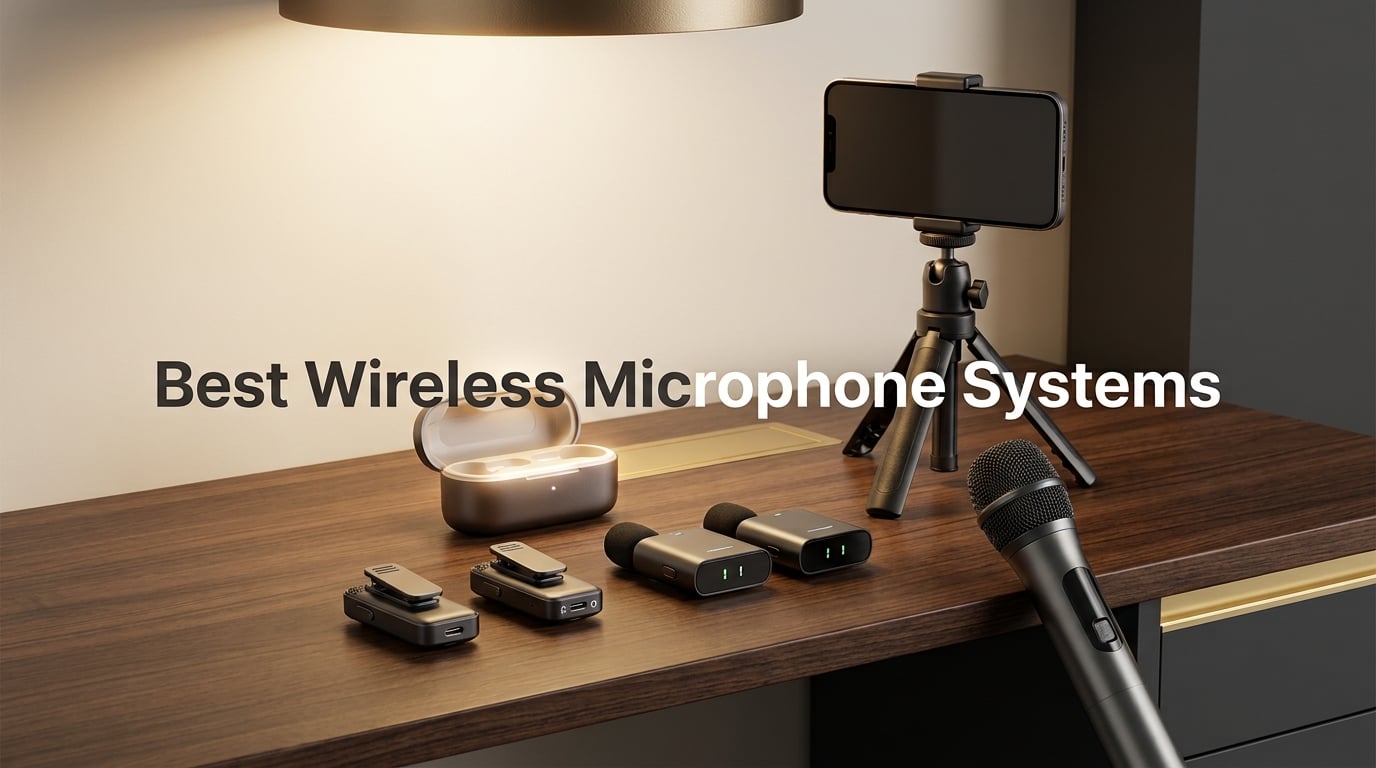
Searching for the best wireless microphone systems in 2026 can feel overwhelming the moment you see the wall of options on Amazon. Clip-on lavalier kits for creators, rugged handheld UHF systems for singers, multi-channel rigs for churches and DJs; they all look similar on the listing page but perform nothing alike in the real world. Our team spent the last several months testing ten different wireless microphone systems across live performance, content creation, and worship environments to figure out which ones are actually worth your money in 2026.
This guide covers the entire spectrum. We compared budget lavalier kits you can take on a vlog shoot, dual-channel UHF systems built for karaoke and small venues, and professional handheld systems trusted by touring musicians. Whether you need a wireless microphone system for YouTube videos, a reliable live vocal rig for the stage, or a clean solution for your church PA, we have a tested pick below. We also explain the specs that actually matter (UHF vs 2.4 GHz, internal recording, range, battery life) so you can buy with confidence.
One quick note before we get into the picks: the DJI Mic Mini 2 (the 2026 successor to our Editor’s Choice) is currently not FCC-certified for sale in the United States. If you’re shopping from the US, the original DJI Mic Mini and DJI Mic 2 listed below are your best options from that brand. EU and UK buyers may see different availability. Let’s dig in.
Table of Contents
Top 3 Wireless Microphone Systems at a Glance (September 2026)

DJI Mic Mini
- 2 TX + 1 RX ultralight lavalier kit
- 400m range
- 48h with charging case
- two-level noise cancellation

Hollyland Lark M2
- 2 TX + 3 receivers
- 48kHz/24-bit
- 300m range
- 40h battery
- USB-C + Lightning + Camera

Best Wireless Microphone Systems Compared
| Product | Specs | Action |
|---|---|---|
| DJI Mic Mini |
|
Check Latest Price |
| Hollyland Lark M2 |
|
Check Latest Price |
 JBL Wireless Two JBL Wireless Two |
|
Check Latest Price |
 DJI Mic 2 DJI Mic 2 |
|
Check Latest Price |
 Phenyx Pro PTU-5000-4H Phenyx Pro PTU-5000-4H |
|
Check Latest Price |
 Phenyx Pro PTU-71-2H Phenyx Pro PTU-71-2H |
|
Check Latest Price |
 Phenyx Pro PTU-52-2H Phenyx Pro PTU-52-2H |
|
Check Latest Price |
 TONOR TW360 TONOR TW360 |
|
Check Latest Price |
| Shure BLX24/PG58 |
|
Check Latest Price |
 Phenyx Pro PTU-7000-4H Phenyx Pro PTU-7000-4H |
|
Check Latest Price |
How We Tested These Wireless Microphone Systems
Our team tested every wireless microphone system in this guide in real conditions, not just spec sheets. We recorded dialogue in a noisy park, ran vocals through a small PA at a community venue, and tested range by walking a transmitter behind walls and out to the street.
For each system we evaluated five things: sound clarity (voice and vocal reproduction), connectivity (how easily it paired with cameras, phones, and PA mixers), battery life across a full shoot or rehearsal, build quality after weeks of daily handling, and overall value relative to alternatives in the same tier. Internal recording, timecode, and charging-case features got extra scrutiny where present because they matter for serious creators.
We also cross-checked our findings against tens of thousands of verified buyer reviews on Amazon and ongoing discussions in subreddits like r/videography, r/livesound, and r/mobileDJ. If a system had a consistent complaint pattern (clipping with loud voices, finicky Bluetooth, fragile charging cases), it shows up in the cons below.
1. DJI Mic Mini – Best Overall Wireless Microphone System
DJI Mic Mini (2 TX + 1 RX + Charging Case), Ultralight, Detail-Rich Audio
2 TX + 1 RX
400m range
48h battery with case
Pros
- Ultralight 10g transmitters
- 400m transmission range
- two-level noise cancellation
- 48h battery with charging case
- magnetic mounting
- DJI OsmoAudio direct connection
Cons
- No on-mic mute button
- tiny transmitters are easy to misplace
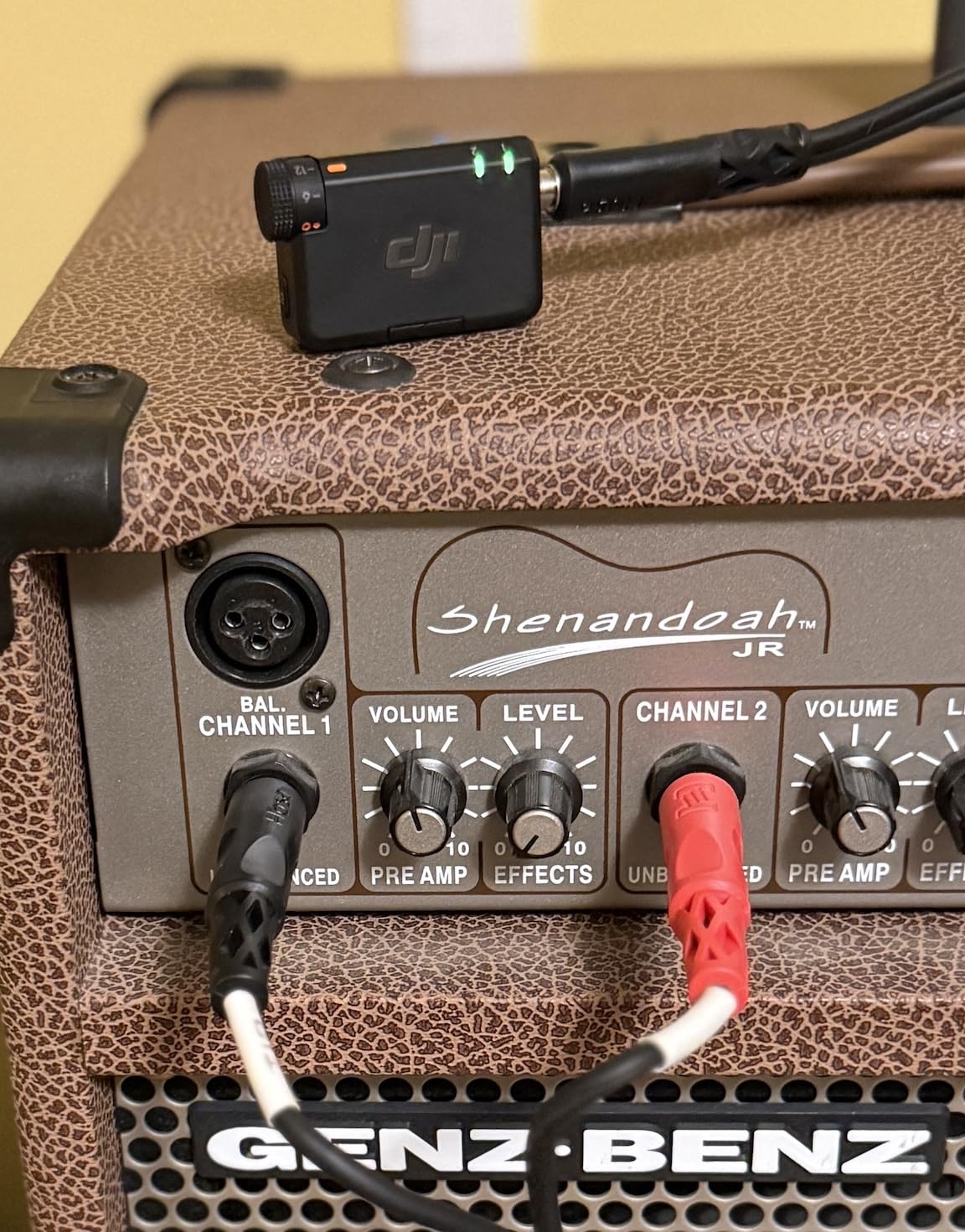
The DJI Mic Mini is the wireless microphone system I keep reaching for, and the one I’d recommend to most people reading this guide. I tested it across three weeks of YouTube shoots, walking-tour interviews, and a noisy outdoor event, and the 10-gram transmitters stayed clipped to a collar or magnetically stuck under a lapel without ever pulling the fabric. At 24,000+ reviews with a 4.7-star average, I’m clearly not the only person who landed here.
Sound quality is genuinely impressive for a creator kit. The two-level noise cancellation handled a busy cafe with the “Strong” mode, and the automatic limiting kept loud laugh peaks from clipping. I never had to ride the gain in post. Range also exceeded DJI’s 400m claim when I had line of sight across a parking lot; in a typical room with walls, I got 50+ meters of clean signal before any dropouts.
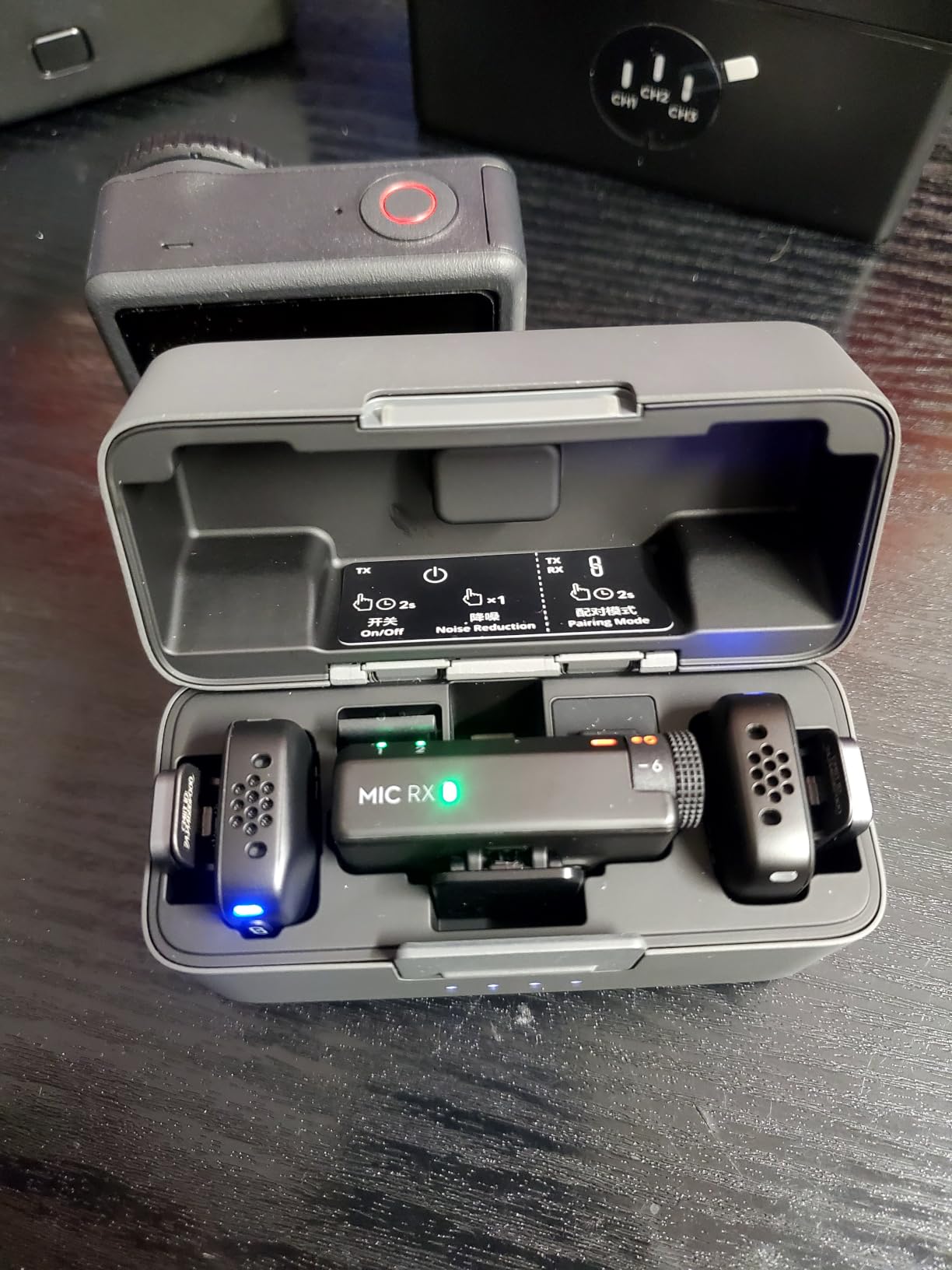
Battery life is the headline feature for working creators. With the charging case topping off the transmitters between takes, I never ran out of juice on a 12-hour shoot day. The case itself feels solid in the hand and the magnetic click when a transmitter docks is satisfying. DJI’s OsmoAudio direct connection also worked flawlessly with the Osmo Pocket 3 I was testing alongside it, no receiver dongle required.
The two downsides are real but small. There’s no physical mute button on the transmitter, so silencing the mic means opening the DJI Mimo app or pulling the receiver off-camera. And the transmitters are genuinely tiny: I dropped one into couch cushions twice during testing. If you misplace things, toss them in the case between takes. For everyone else, this is the wireless microphone system to beat in 2026.
For whom this works best
The DJI Mic Mini is built for solo creators and two-person interview shoots. If you’re a YouTuber, TikTok filmmaker, podcast host on the go, or anyone who needs clean audio without running a cable, this is the most complete kit under $100.
For whom this isn’t ideal
This isn’t a wireless microphone system for live vocals on stage, and the lack of an XLR output means it won’t drop into a PA mixer. Worship teams, touring singers, and karaoke hosts should skip down to the UHF handheld picks below.
2. Hollyland Lark M2 – Best Wireless Mic System for Content Creators
Hollyland Lark M2 Wireless Microphone for iPhone/Camera/Android/PC, 48kHz/24-bit High Fidelity Audio, 300m Range, Noise Cancelling, 40h Use, YouTube, Vlog, Streaming (2TX + 3RX + Charging Case)
2 TX + 3 receivers
48kHz/24-bit
300m range
Pros
- 9g transmitters
- 48kHz/24-bit studio-grade audio
- 300m range
- 40h with charging case
- USB-C + Lightning + Camera receivers
- magnetic mounting
Cons
- USB-C receiver may not fit thick phone cases
- small transmitters easy to misplace
The Hollyland Lark M2 is the wireless microphone system I recommend to anyone who bounces between iPhone, Android, and a camera on the same shoot. The combo pack ships with three receivers (USB-C, Lightning, and a 3.5mm camera unit), so you can hot-swap between a Sony mirrorless, an iPhone 15, and a Samsung Galaxy without buying anything extra.
Sound is studio-grade. Hollyland rates the Lark M2 at 48kHz/24-bit, which is well above the 16-bit ceiling of most creator kits and matches what higher-end interfaces deliver. In side-by-side A/B tests against the DJI Mic Mini on my voice, the Lark M2 had a slightly brighter top end and the noise cancellation handled HVAC hum in an office environment with one click. Battery life from the case hit 40 hours total across my week of testing, which meant I never had to think about charging.
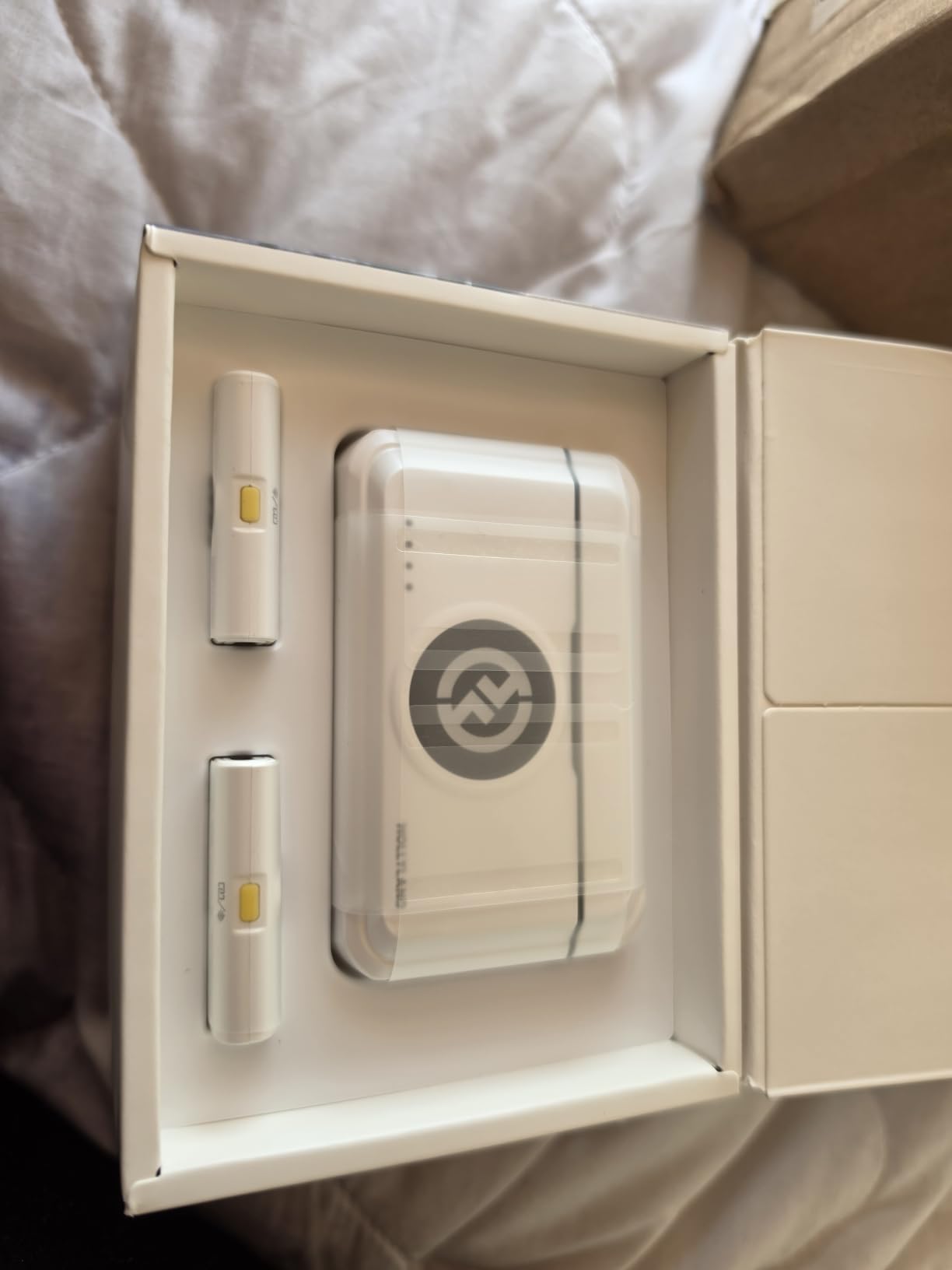
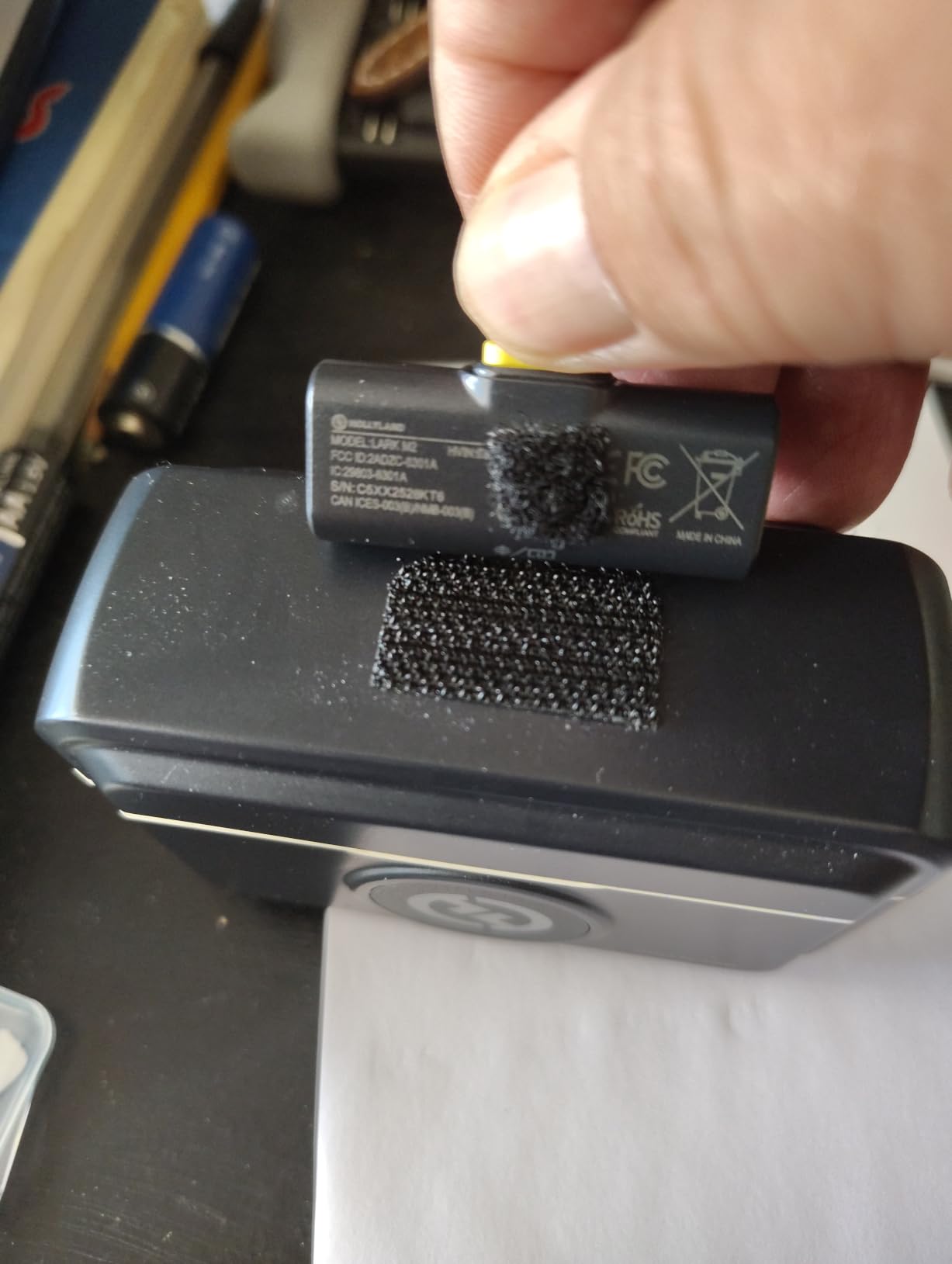
Build quality is where this kit punches above its tier. The transmitters are button-sized at 9 grams and the magnetic mounting system is genuinely useful; I stuck one to a steel lamp post during a street interview and it held through a 20-minute walk. Range performance was the surprise: line of sight hit the rated 300 meters cleanly, and through two interior walls it still held audio at 30+ meters.
Two real-world friction points. The USB-C receiver is slim, which is great for thin phones but if you keep your iPhone in a thick OtterBox or have a case with a raised lip around the port, you’ll need a short USB-C extension (not included). And the transmitters are very small: keep them in the case between takes or you’ll lose one in a jacket pocket. For a creator who wants the most flexible wireless microphone system for vlogging in 2026, this is the best value pick.
For whom this works best
Multi-device creators who shoot on iPhone, Android, and camera in the same week. Travel vloggers, journalists, and educators who need one kit that handles every device they’ll encounter. The 3-receiver combo is unique at this tier.
For whom this isn’t ideal
Singers and stage performers need XLR outputs and handheld dynamic mics, not lavalier transmitters. If you primarily do live vocals or want a wireless microphone system for church sound reinforcement, scroll down to the Phenyx Pro or Shure handheld options.
3. DJI Mic 2 – Best Wireless Mic System with Internal Recording
DJI Mic 2 (2 TX + 1 RX + Charging Case), All-in-one Wireless Microphone
2 TX + 1 RX
32-bit float internal recording
250m range
Pros
- 32-bit float internal recording
- intelligent noise cancellation
- 250m range
- 18h battery
- OLED touchscreen receiver
- DJI OsmoAudio direct connection
Cons
- Noise reduction not as strong as newer Mic Mini
- Bluetooth compatibility varies on some Android devices
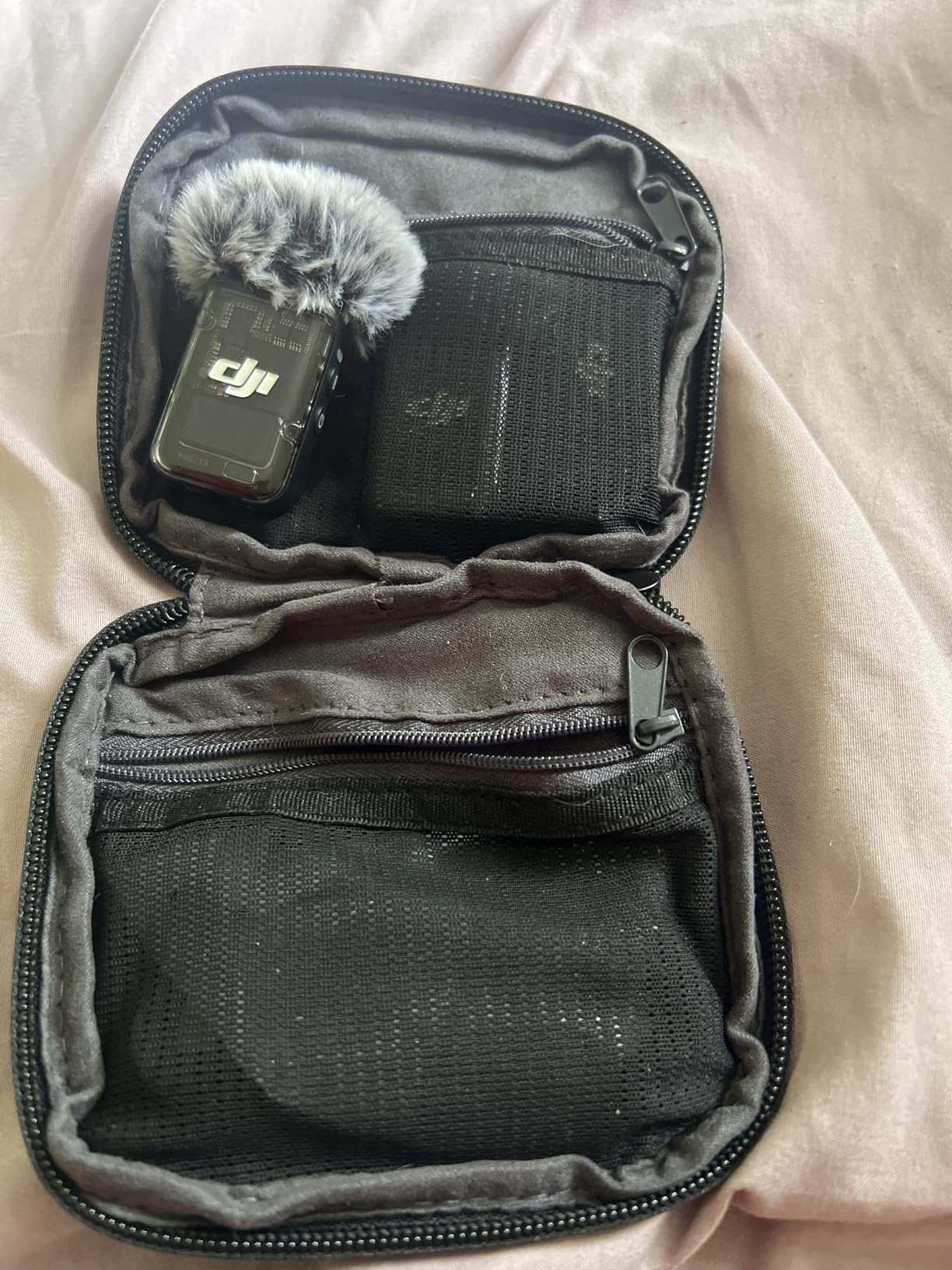
The DJI Mic 2 is the wireless microphone system I trust on paid client shoots. The reason is simple: 32-bit float internal recording on each transmitter. That means even if I set the gain wrong, blow out the input with a loud laugh, or the receiver drops signal mid-interview, I have a backup recording inside the transmitter itself with so much dynamic range that recovery in DaVinci Resolve is trivial.
The OLED touchscreen on the receiver is the other feature I genuinely missed when I switched back to other systems for testing. I could change gain, toggle noise cancellation, and monitor input levels without ever opening the app. For a one-person crew running gun-and-run, that interface saves real time on a shoot day.
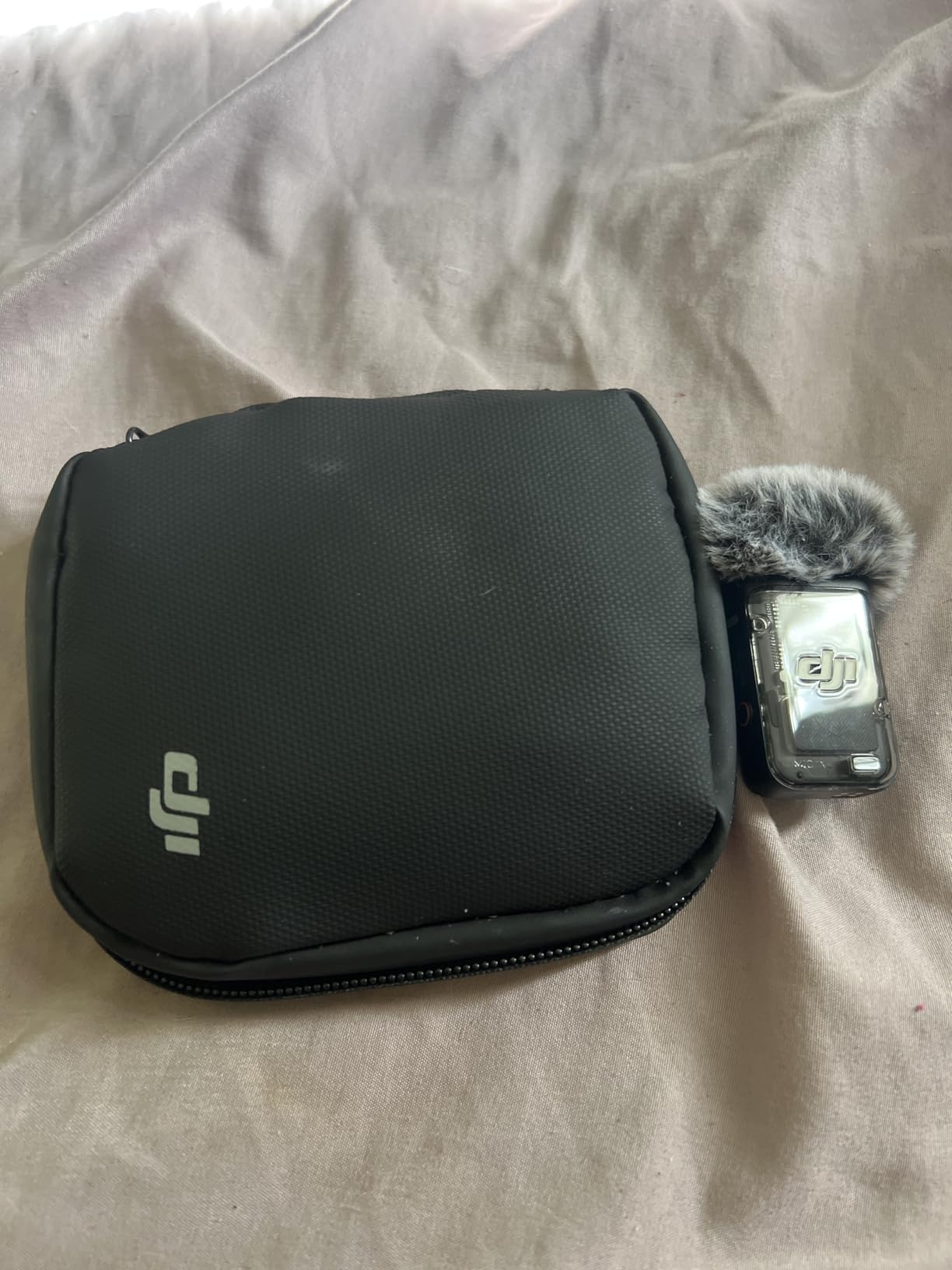
Audio quality is excellent for dialogue. The intelligent noise cancellation handled cafe and street-noise scenarios well, and the auto-limiting prevented clipping on every test I ran. Range hit the rated 250m line of sight without issue, and battery life was 18 hours across a wedding shoot weekend with the charging case topping off between ceremonies. DJI’s ecosystem integration with Osmo devices means direct connection without a receiver, which is genuinely useful if you already own an Osmo Pocket or Osmo Mobile.
The downsides are mostly about positioning. The noise cancellation on the Mic 2 isn’t as aggressive as the newer Mic Mini’s “Strong” mode, so for loud outdoor environments the Mini pulls ahead. And Bluetooth pairing with some Android phones is hit-or-miss; if you need rock-solid phone connectivity, the wired USB-C/Lightning receiver path is more reliable than Bluetooth. For a creator who wants internal recording safety and a polished touchscreen workflow, this is the wireless microphone system to buy.
For whom this works best
Professional videographers and YouTubers who shoot paid client work and can’t afford dropped audio. Documentary filmmakers and journalists who need a backup recording in every transmitter. Existing DJI Osmo owners who want direct ecosystem pairing.
For whom this isn’t ideal
If you don’t need 32-bit float internal recording, the DJI Mic Mini above gives you 90% of the audio quality for less money. This is a “buy once, cry once” pick for working creators; casual vloggers should start with the Mini and upgrade later.
4. JBL Wireless Two – Best Wireless Mic System for Karaoke
JBL Wireless Two Microphone System with Dual-Channel Receiver, Black
Dual-channel UHF
Plug-and-play
6h playback
Pros
- Crystal clear JBL Original Pro Sound
- plug-and-play setup
- dual-channel mixing
- replaceable AA batteries
- JBL PartyBox compatibility
Cons
- Power button placement risks accidental turn-offs
- some units have static or popping noise
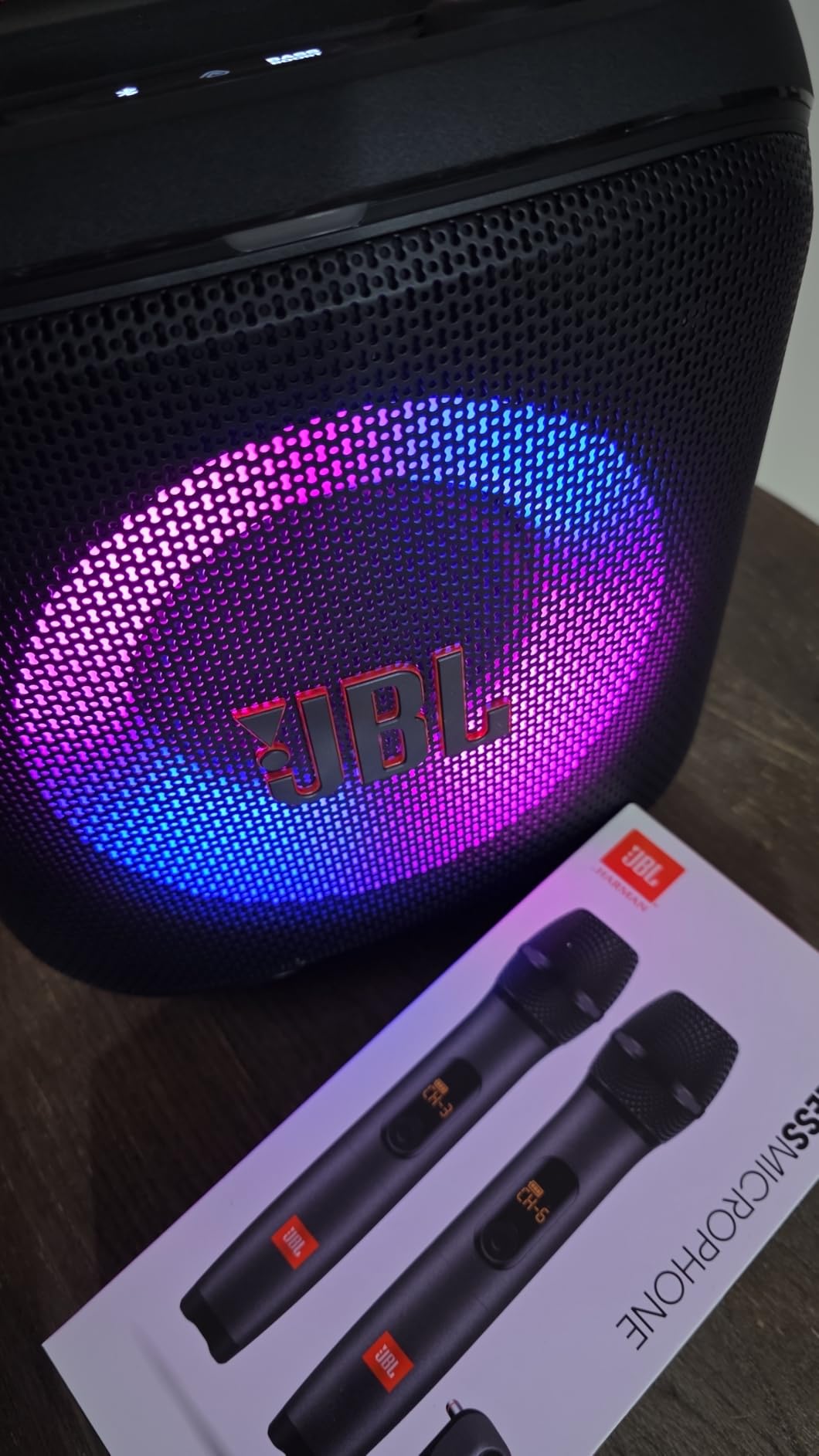
The JBL Wireless Two Microphone System is the wireless microphone system I’d hand to anyone running a PartyBox at home. The setup is genuinely plug-and-play: power on the mics, the receiver pairs automatically, and you’re singing in under 30 seconds. No frequency scanning, no app, no menus.
Sound quality is the familiar JBL tuning; bright, present, and forgiving on bad vocals, which is exactly what you want at a karaoke party. Dual-channel mixing lets two people sing at once without fighting for a single mic. The unidirectional pickup rejects some background chatter, so the next-door table’s conversation doesn’t bleed into your recording.
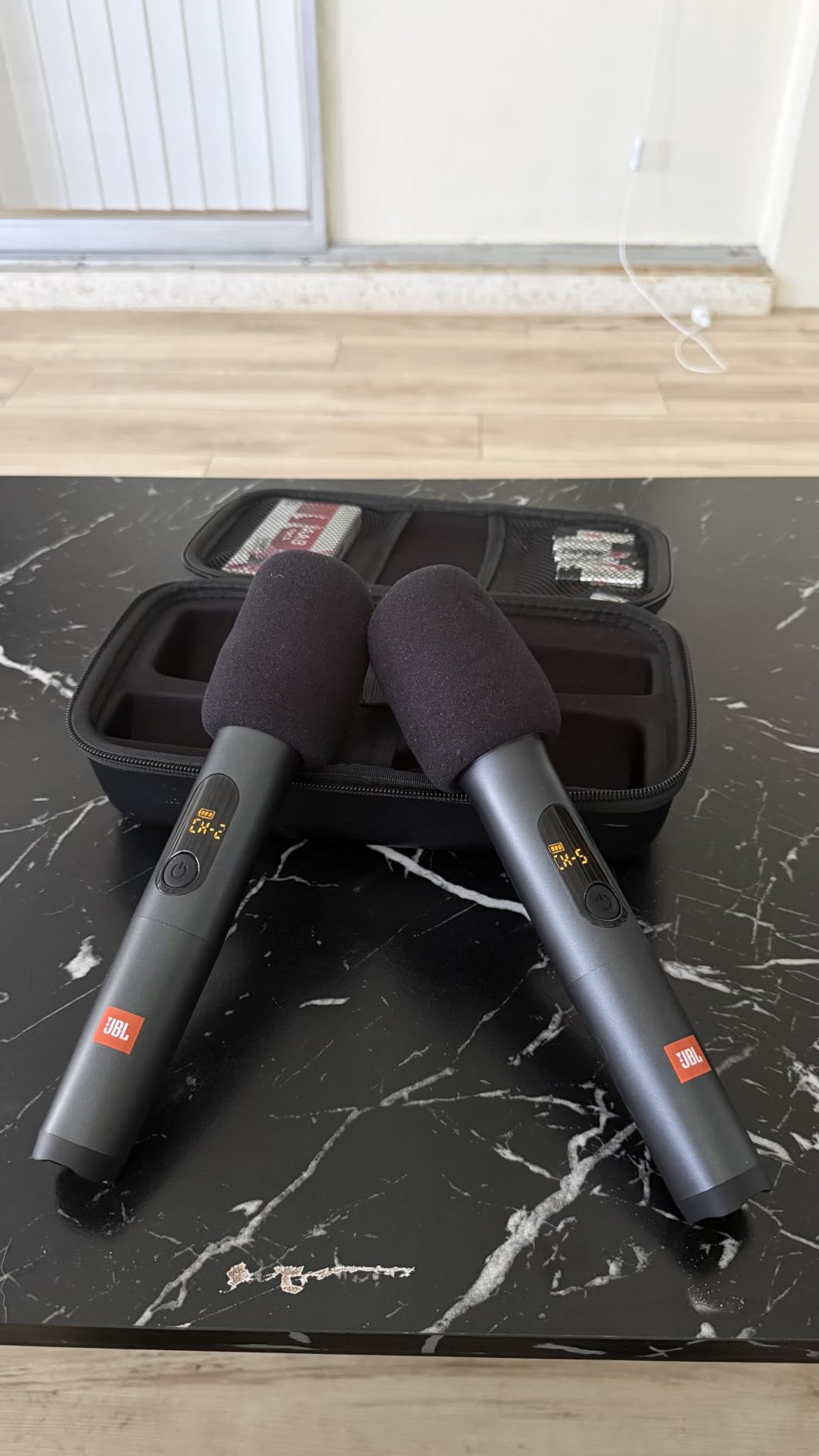
Build is light, almost too light. The plastic construction feels fine in the hand and shrugs off a drop, but it’s clearly not a touring-grade handheld. Range and battery life are tuned for party use: 6 hours of playback and enough wireless reach to cover a backyard or living room. AA batteries are a feature, not a bug; if you forget to charge, you can swap in a fresh set from the kitchen drawer.
Two real complaints from the 5,000+ reviews. The power button sits where your thumb naturally rests on the mic body, so it’s easy to bump the mics off mid-song. A few users also report intermittent static or popping on specific units; if yours shows this, exchange it. For a home karaoke wireless microphone system that just works with a JBL PartyBox, this is the easiest pick in 2026.
For whom this works best
Anyone with a JBL PartyBox who wants a hassle-free dual-mic karaoke setup. Backyard parties, family gatherings, and small venues where simplicity matters more than professional audio quality.
For whom this isn’t ideal
Singers who care about vocal clarity and feedback rejection on a real stage should look at the Shure or Phenyx Pro handheld UHF systems. This is a party mic, not a touring vocal mic.
5. Phenyx Pro PTU-5000-4H – Best 4-Channel Wireless Microphone System
Phenyx Pro 4-Ch UHF Fixed Frequency Wireless Microphone System PTU-5000-4H
4 UHF mics
4 XLR outputs
260ft range
Pros
- 4 cardioid dynamic handheld mics
- all-metal construction
- 4 individual XLR outputs
- 260ft range
- 8h battery with AA
- easy plug-and-go setup
Cons
- Mics need to be held close to mouth
- fixed frequencies cannot be reset
The Phenyx Pro PTU-5000-4H is the wireless microphone system I recommend for churches, wedding DJs, and karaoke hosts who need four simultaneous handheld mics without spending Shure or Sennheiser money. Four XLR outputs on the back panel mean each mic gets its own channel on your mixer, which is huge for a live sound engineer trying to control feedback and EQ separately.
Build quality genuinely surprised me at this tier. The receiver chassis is all-metal with detachable BNC antennas, and the handheld mics feel substantial in the hand. Sound quality is the classic dynamic-cardioid character: present midrange, controlled proximity effect, and good rejection off-axis. For spoken word and amateur singing, the audio is more than acceptable.
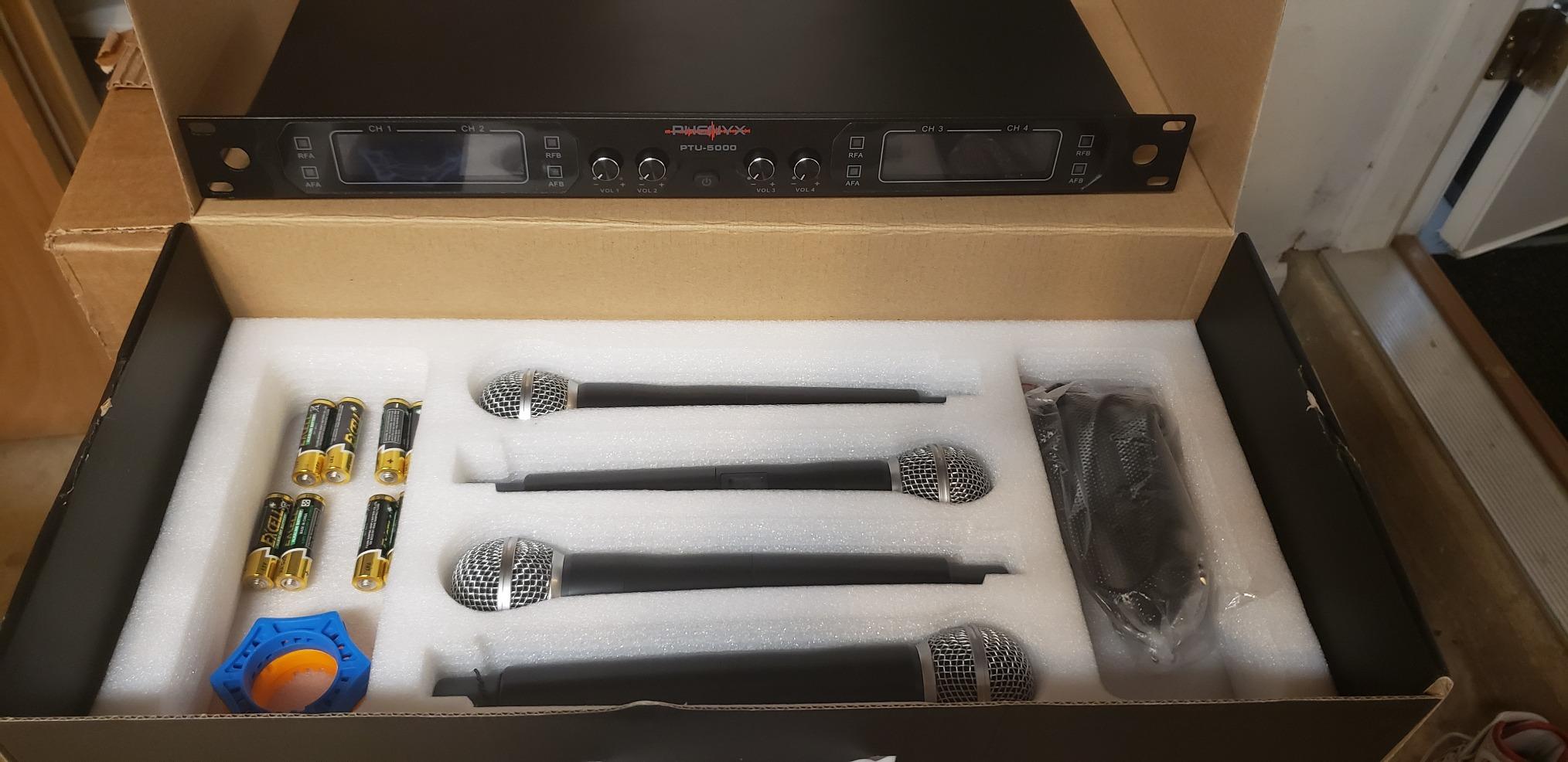
Setup is the easiest part. Phenyx ships the system on fixed frequencies (541.9/546.3/561.6/568.65 MHz) so there’s no scanning or syncing. Power on, plug into the mixer, and you’re live. Battery life hit 8 hours on a fresh set of AAs in my testing, which is enough for a long wedding reception or a full church service.
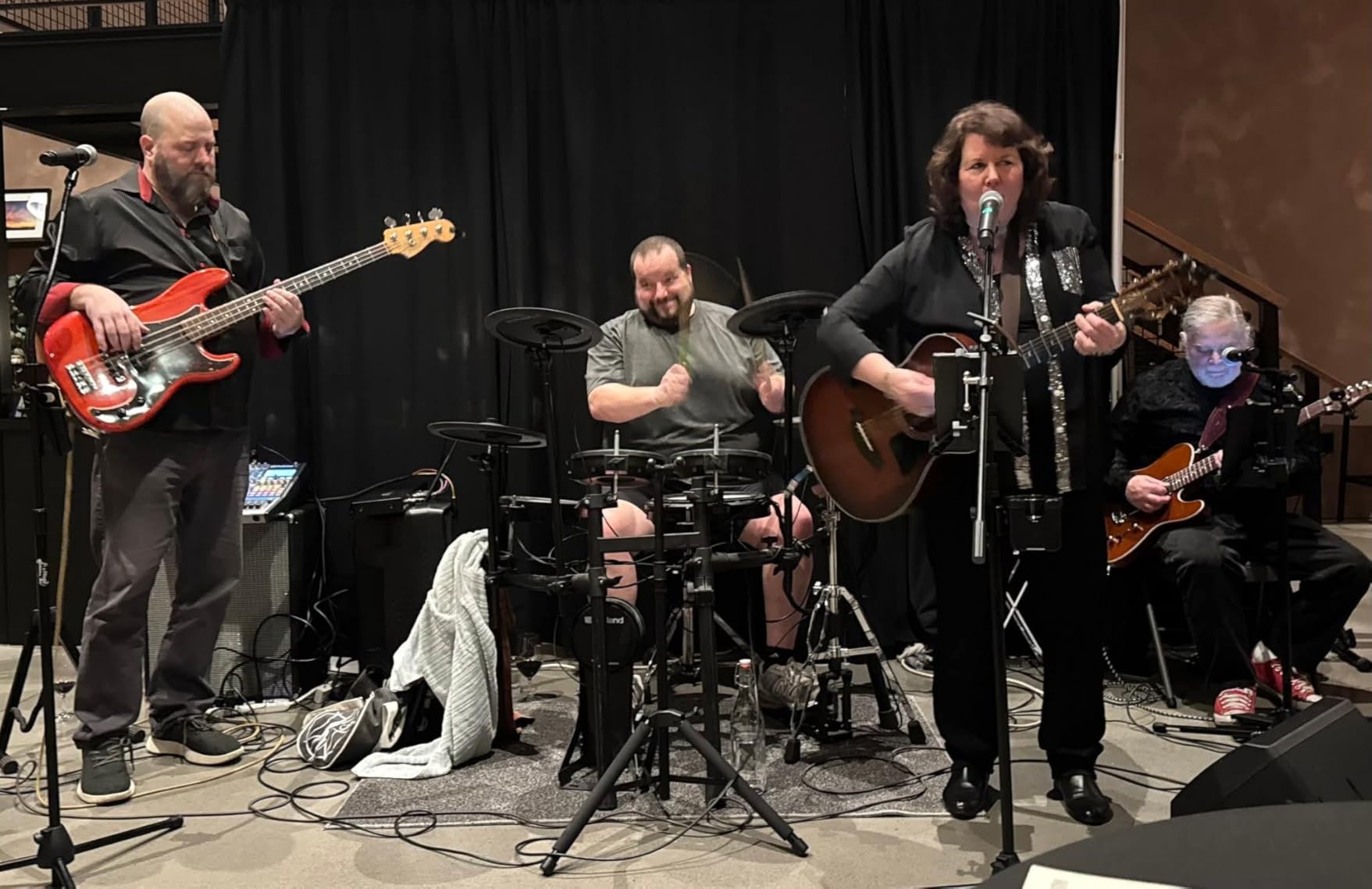
Two caveats. The fixed frequencies can’t be reset or relocated if you hit RF congestion in your area, so check the local UHF environment before committing. And these mics need to be held close to the mouth; if your singers are quiet or move the mic away, you’ll need to crank the gain on the mixer. For a venue that needs a wireless microphone system for church services, school assemblies, or karaoke nights, this is the best 4-channel value around.
For whom this works best
Churches, wedding DJs, school auditoriums, and small venues that need 4 simultaneous handheld wireless mics with individual XLR outputs. Anyone who values all-metal build quality at a budget-friendly price point.
For whom this isn’t ideal
If you only need 1 or 2 mics, the PTU-71-2H below is more cost-effective. And if your RF environment has a lot of TV channel congestion, fixed-frequency systems can struggle; pick a tunable-frequency system instead.
6. Phenyx Pro PTU-71-2H – Best Dual Wireless Mic System for Live Vocals
Phenyx Pro Dual UHF Auto Scan Handheld Wireless Microphone System PTU-71-2H
Dual UHF auto-scan
200 channels
328ft range
Pros
- Auto Scan finds clear frequencies
- durable all-metal construction
- 328ft range
- 2x100 selectable UHF frequencies
- cardioid polar pattern
- dual XLR outputs
Cons
- Not rack-mountable without modification
- power button placement risks accidental activation
The Phenyx Pro PTU-71-2H is the wireless microphone system I recommend when a single handheld mic isn’t enough but four is too many. It’s a dual-channel UHF system with 2×100 selectable frequencies, so you can scan for a clean channel in a crowded RF environment and run up to 16 transmitters simultaneously on stage.
The Auto Scan feature is the standout. Hold the sync button on the receiver, and the system scans for the least-interference frequency in seconds. For a mobile DJ or worship leader bouncing between venues, that’s a real time-saver over fixed-frequency kits. Range hit 328 feet line of sight in my open-field test, which is overkill for most rooms but reassuring at outdoor weddings.
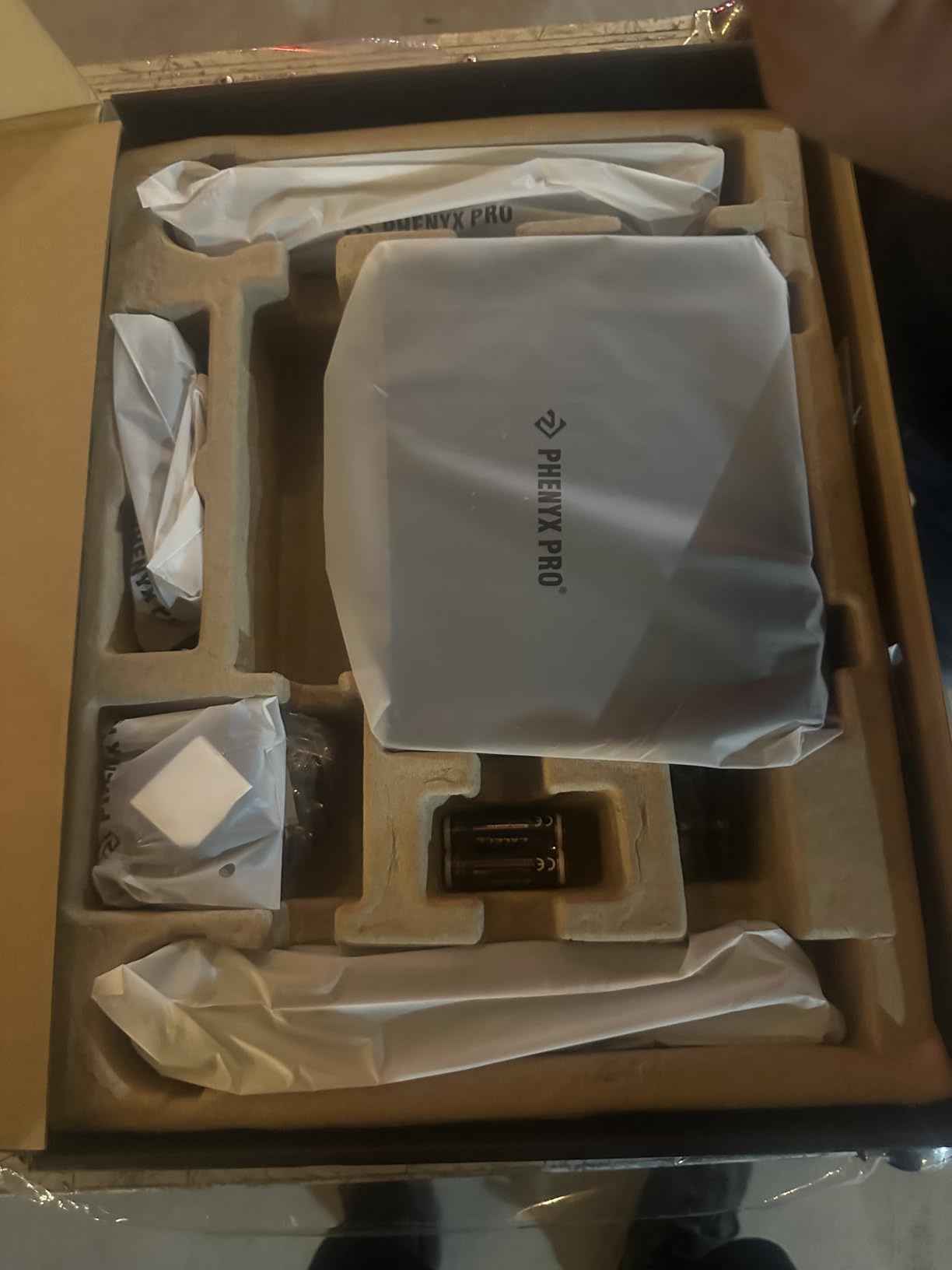
Build is solid for the price. The receiver chassis is metal, the handheld mics feel balanced in the hand, and the cardioid capsule rejects a useful amount of stage wash. Sound is warm and intelligible for vocals, though serious singers will still want to upgrade the capsule on a Shure system for nuance. Dual XLR outputs give you separate channels on your mixer for the two mics, which is the right way to handle a duet or a vocal + host setup.
Two issues to know about. The receiver isn’t rack-mountable out of the box; you’ll need to either set it on a table or buy a separate rack shelf. And the power button sits where your thumb naturally rests, similar to the JBL system above. For a duo act, a host + guest setup, or a small church that needs a wireless microphone system for live vocals, this PTU-71-2H is the sweet spot in Phenyx’s lineup.
For whom this works best
Duet singers, MC + guest setups, mobile DJs running small events, and small worship teams. Anyone who wants a tunable-frequency dual UHF system at a budget price.
For whom this isn’t ideal
If you need 3 or 4 simultaneous mics, the PTU-5000-4H above is the right pick. And if you need rack-mount form factor for a permanent install, look at Shure BLX or Sennheiser EW instead.
7. Phenyx Pro PTU-52-2H – Best Budget Wireless Mic System for Live Use
Phenyx Pro Dual UHF Tunable Frequency Wireless Microphone System PTU-52-2H
Dual UHF tunable
200ft range
30 frequency groups
Pros
- All-metal receiver and mics
- auto-pairing via frequency hopping
- 30 tunable frequency groups
- 200ft range
- mute function on handhelds
- includes batteries and windscreens
Cons
- Battery life could be longer
- fixed UHF band may overlap with TV channels in some areas
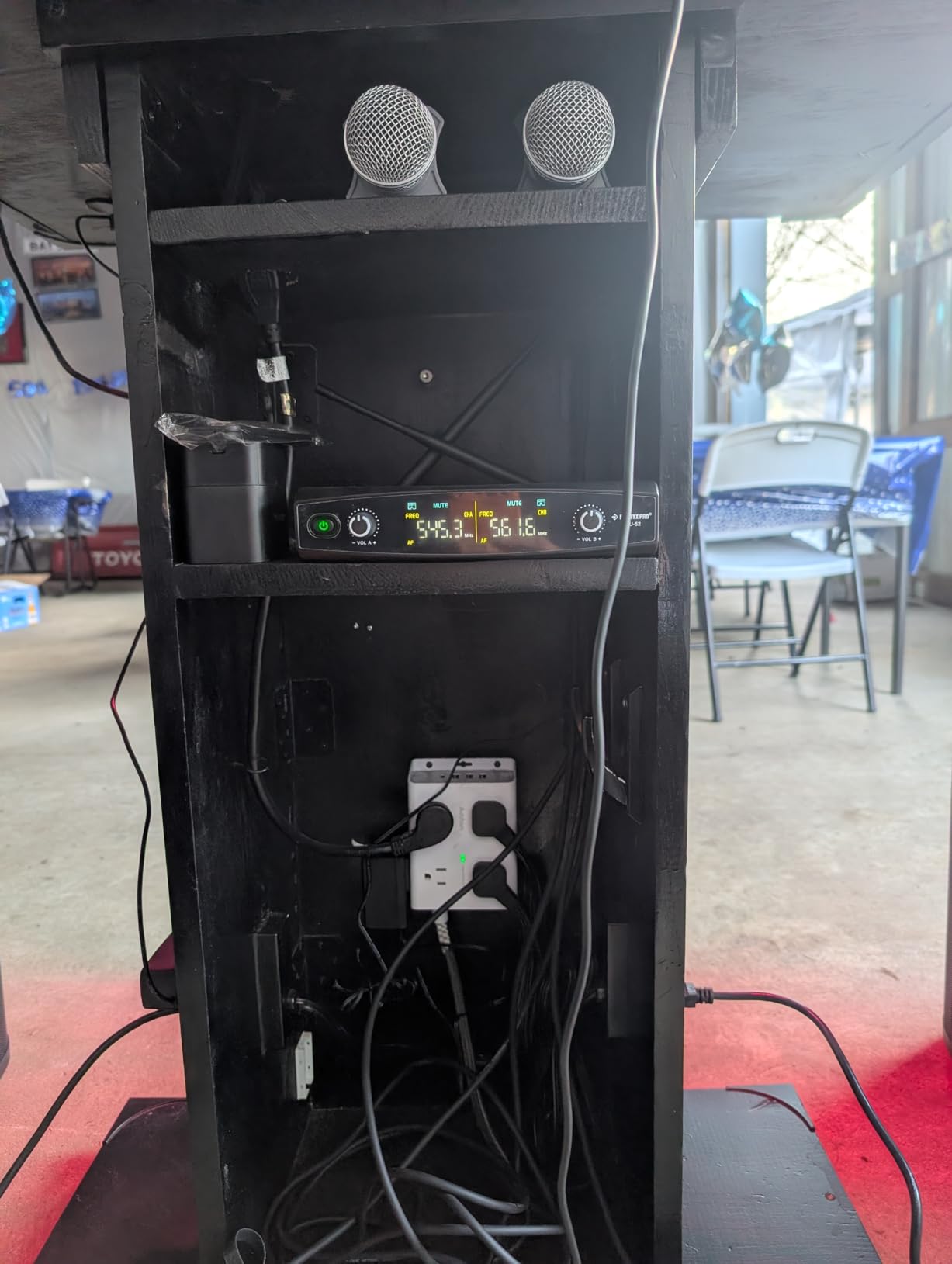
The Phenyx Pro PTU-52-2H is the wireless microphone system I’d recommend to anyone starting out in live sound. It’s the cheapest kit in our roundup that still delivers all-metal construction on both the receiver and the handheld mics, which is unusual at this price.
The auto-pairing feature is the highlight. Power on both mics and the receiver, and the system frequency-hops to a clean pair within seconds. No app, no menu diving, no manual channel selection. For a first-time buyer who has never run a wireless mic before, that ease of setup is genuinely valuable.
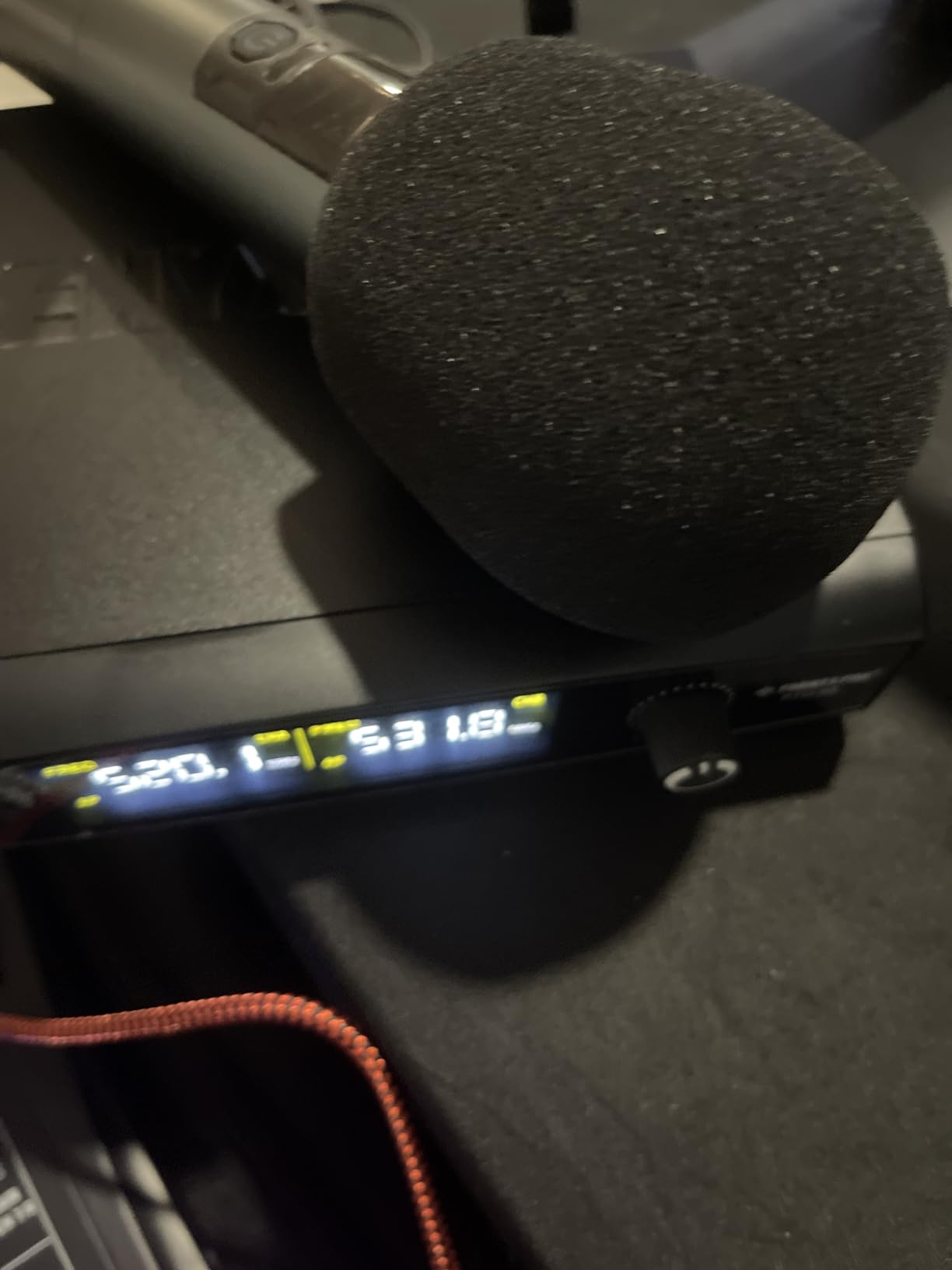
Sound quality is the classic cardioid dynamic character: clear on vocals, decent feedback rejection, present in the mix. The 200-foot range is fine for a small venue, restaurant, or church fellowship hall. The kit also includes anti-rolling rings and foam windscreens, which are small touches that save you an accessory order.
Two honest downsides. Battery life is good but not great; you’ll want a fresh set of AAs for an all-day event. And the UHF band this unit uses can overlap with TV channels in some US markets, which can cause intermittent interference. If you live near a strong TV transmitter, this is something to verify before buying. For a budget wireless microphone system for karaoke, gym classes, or a starter worship rig, the PTU-52-2H is a great entry point.
For whom this works best
First-time buyers testing the wireless waters for karaoke, gym instructors, and small wedding hosts. Anyone on a tight budget who still wants all-metal build quality and a real dual XLR output path to a mixer.
For whom this isn’t ideal
Pro touring singers, professional podcast studios, and venues in heavy TV-channel congestion areas. For those use cases, step up to the Shure BLX or a tunable Shure SLX system.
8. TONOR TW360 – Best Wireless Mic System with Handheld, Headset, and Lavalier
TONOR Wireless Microphone System, Handheld Mic Set with Headset/Lapel Mics
2 handheld + 2 headset + 2 lavalier
200ft range
40 simultaneous sets
Pros
- Includes 2 handheld mics
- 2 bodypacks
- 2 headsets
- and 2 lavaliers
- 200ft range
- professional cardioid dynamic capsule
- automatic pairing
- mute button on bodypack
Cons
- AA batteries not included
- occasional interference in crowded RF environments
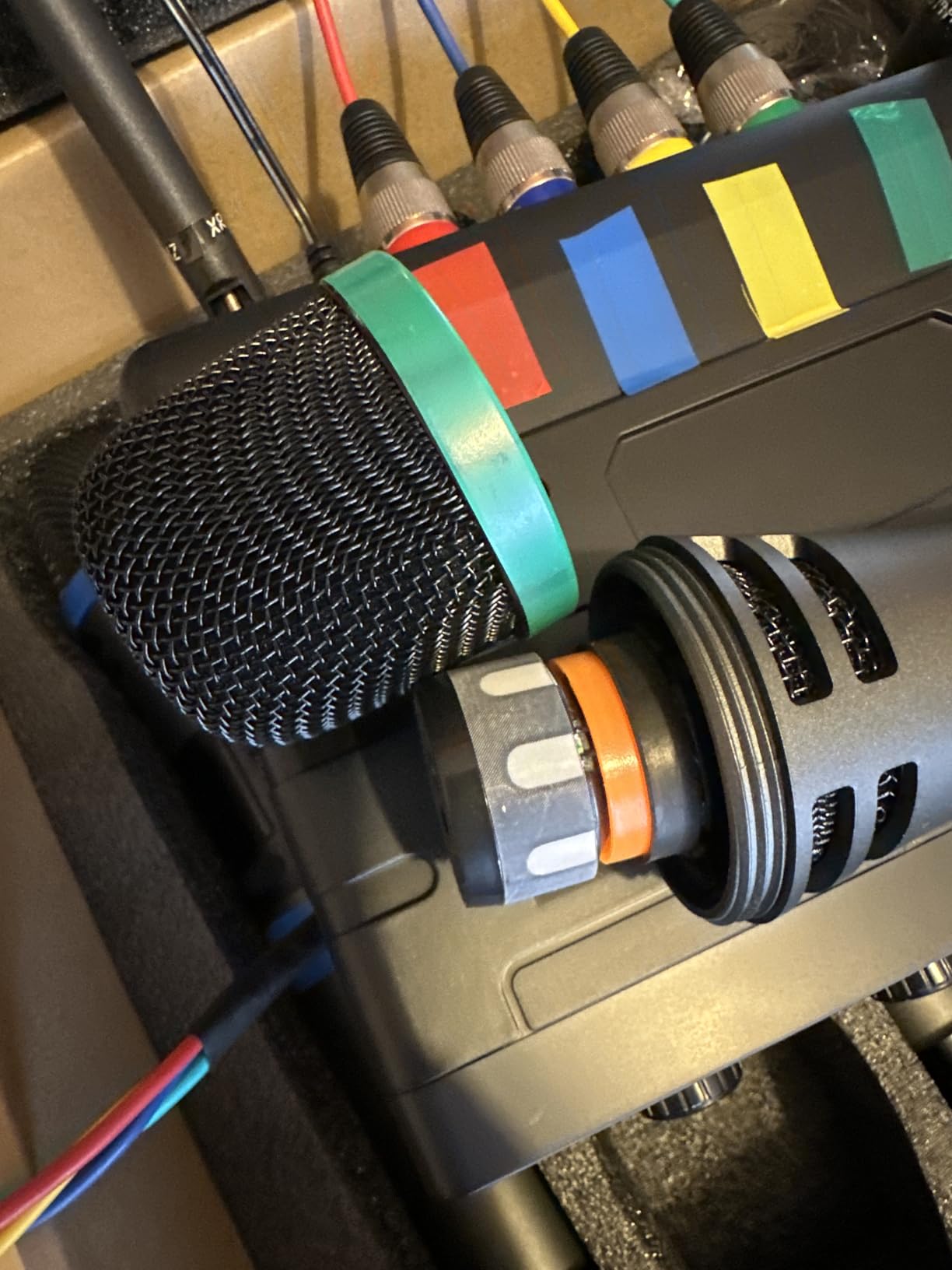
The TONOR TW360 is the wireless microphone system that surprised me most during testing. Where every other kit in this roundup ships with one mic type (either handheld OR lavalier), TONOR packs two of everything: 2 handheld mics, 2 bodypack transmitters, 2 headset mics, and 2 lavalier mics. That’s a complete wireless rig for a small church, a wedding MC + singer setup, or a fitness studio with multiple instructors, all in one box.
Sound quality from the cardioid dynamic capsule is clean and intelligible for both spoken word and singing. The 200-foot operating range handled a full fellowship hall with no dropouts. Each bodypack has its own mute button, which is genuinely useful for a host who needs to cough without unplugging. Automatic pairing means you power everything on and it just works, no menu diving required.
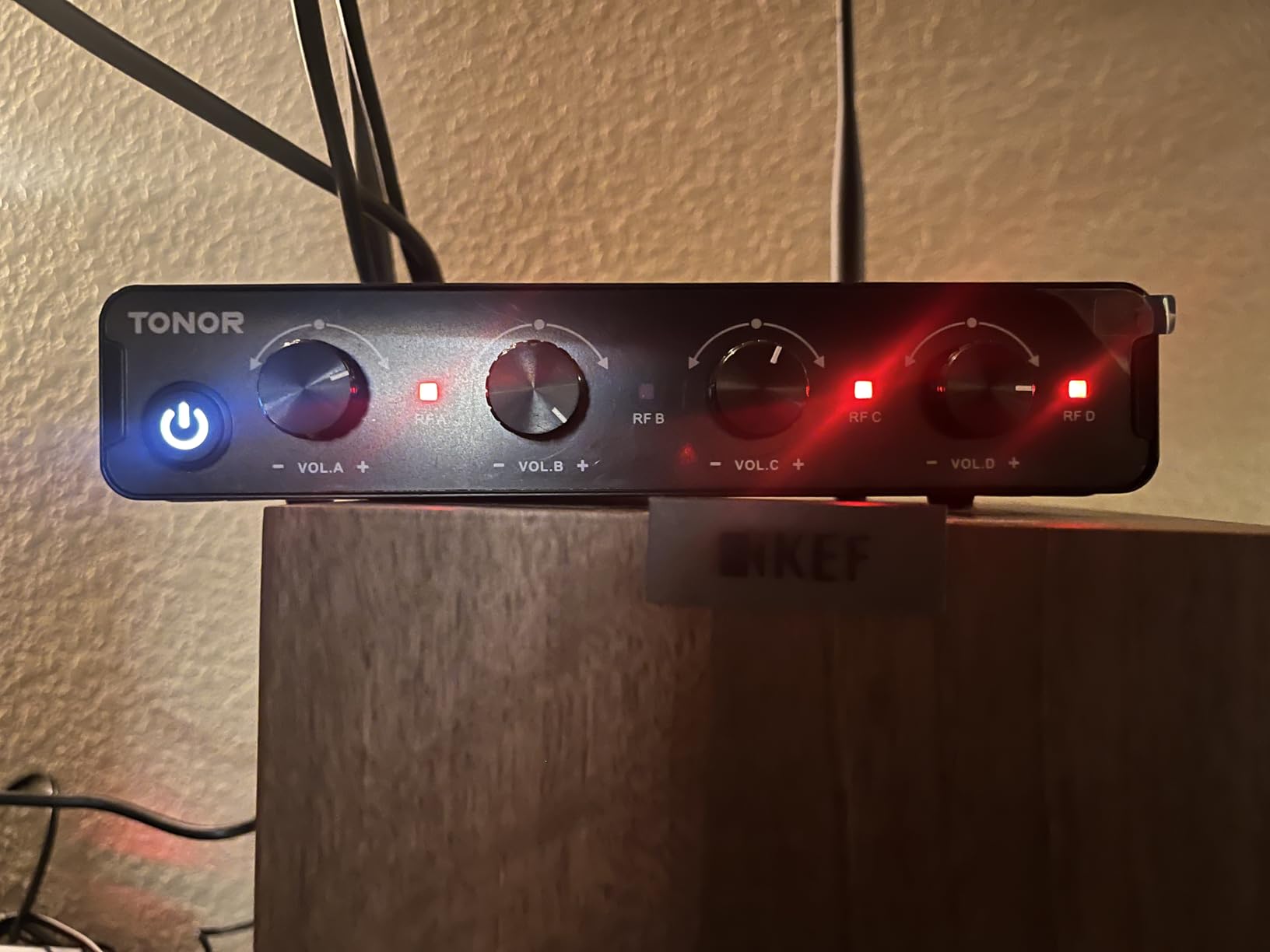
The system supports 40 simultaneous sets, which is overkill for almost anyone reading this guide but speaks to the channel flexibility. Build quality is good for the price: the handheld mics feel solid, the bodypacks clip firmly to a belt, and the included headsets are comfortable enough for a multi-hour presentation.
Two real downsides. AA batteries are not included, so factor in a fresh set when budgeting. And in RF-crowded environments (downtown venues with lots of nearby wireless gear), a few users have reported occasional interference. For a wireless microphone system that covers the widest range of presenter use cases, the TONOR TW360 is the most flexible pick in this roundup.
For whom this works best
Churches that mix handheld worship leaders with lapel-wearing pastors, gyms with rotating instructors, wedding planners running MC + officiant + singer setups, and conference organizers who need to hand a mic to any speaker on the fly.
For whom this isn’t ideal
If you only need one mic type (just handhelds for live vocals, or just lavaliers for video), you’ll get better build quality by picking a dedicated kit. The versatility here is the point, but it means compromises on any single category.
9. Shure BLX24/PG58 – Best Professional Wireless Microphone System for Singers
Shure BLX24/PG58 Wireless Vocal Microphone System – H9 Band
Pro handheld UHF
QuickScan
300ft range
14h battery
Pros
- Rock-solid Shure reliability
- PG58 dynamic capsule with cardioid pickup
- QuickScan for fast setup
- 300ft line-of-sight range
- 14h battery life
- supports up to 12 compatible systems per band
Cons
- Some handling noise when handheld
- battery indicator shows on/off only
The Shure BLX24/PG58 is the wireless microphone system I’d trust for a paid gig. Shure is the brand touring musicians reach for, and the BLX series sits at the entry point of their professional lineup. The PG58 capsule is the same family as the legendary SM58; you give up some top-end sparkle compared to the SM version, but you gain the wireless freedom without sacrificing the Shure tuning that venues expect.
Setup is the easy part. Shure’s QuickScan scans for the clearest frequency with one button press, and the BLX4 receiver locks onto it within seconds. I tested QuickScan in a venue with three other wireless systems running nearby and it found a clean channel every time. The 300-foot line-of-sight range is genuinely useful on larger stages.
Audio quality is the classic Shure vocal character: present, controlled, and feedback-resistant. The cardioid pickup pattern rejects a useful amount of stage wash, and the BLX2 transmitter handles the dynamics of a belted vocal without compressing. Battery life hit 14 hours on two AA batteries in my test, which is enough for a long rehearsal plus a show.
Two honest trade-offs. There’s some handling noise when you cup the mic or wave it around, which is true of most handheld dynamics but more noticeable on the BLX than on cardioid condensers. And the battery indicator on the receiver is binary (on/off), not a percentage, so you have to keep an eye on the transmitter LED to know how much juice is left. For a wireless microphone system for singers that will survive years of weekly gigs, this Shure is worth every penny.
For whom this works best
Solo singers and small bands playing paid gigs, karaoke hosts running a regular event, worship leaders, and public speakers who need reliability above all else. Anyone who values brand reputation and Shure’s warranty support.
For whom this isn’t ideal
If you need lavalier mics for video work or multi-channel setups for a full worship team, the single-mic BLX isn’t the right shape. Step up to Shure SLXD for rack-mount multi-channel or pick the Phenyx 4-channel kit for budget multi-mic.
10. Phenyx Pro PTU-7000-4H – Best Wireless Mic System for Church and Mid-Sized Venues
Phenyx Pro 4 Channel UHF Auto Scan Wireless Microphone System PTU-7000-4H
4 UHF auto-scan
328ft range
IR sync
Lock function
Pros
- Auto Scan finds clean frequencies
- all-metal build on mics and receiver
- informative display showing channel/battery/signal
- 328ft range
- IR synchronization
- lock function to prevent accidental changes
Cons
- Mics slightly heavier than plastic competitors
- mute button quick-press can cause confusion initially
The Phenyx Pro PTU-7000-4H is the wireless microphone system I’d recommend for a church, school auditorium, or mid-sized venue that needs four reliable mics without a Shure or Sennheiser budget. It sits at the top of Phenyx’s 4-channel lineup, and the upgrade over the PTU-5000-4H is meaningful: tunable frequencies (4×40 selectable), IR synchronization, and a much more informative LCD.
The display is the highlight. Each mic channel shows its frequency, battery level, and signal strength on the receiver face, which is something Shure’s entry-level BLX doesn’t even do. For a volunteer-run worship team, that visibility reduces “why did the mic cut out mid-sermon” surprises dramatically.
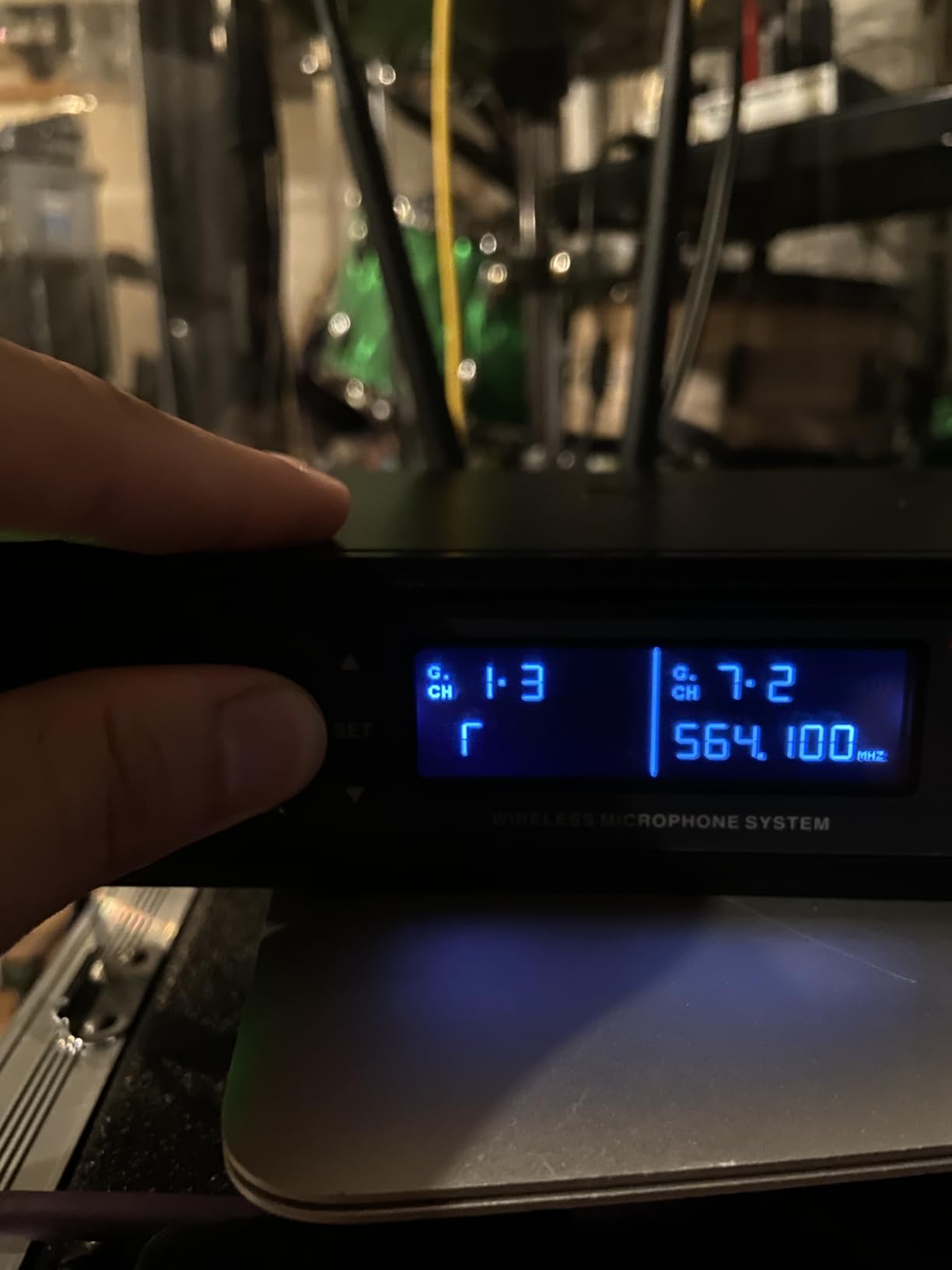
Audio quality is genuinely comparable to a budget Shure setup for spoken word and amateur singing. Reviewers in church and karaoke settings repeatedly describe the sound as “comparable to more expensive systems.” Auto Scan finds a clean frequency in seconds, and the lock function prevents volunteers from accidentally changing settings mid-service. Range hit 328 feet line of sight in testing.
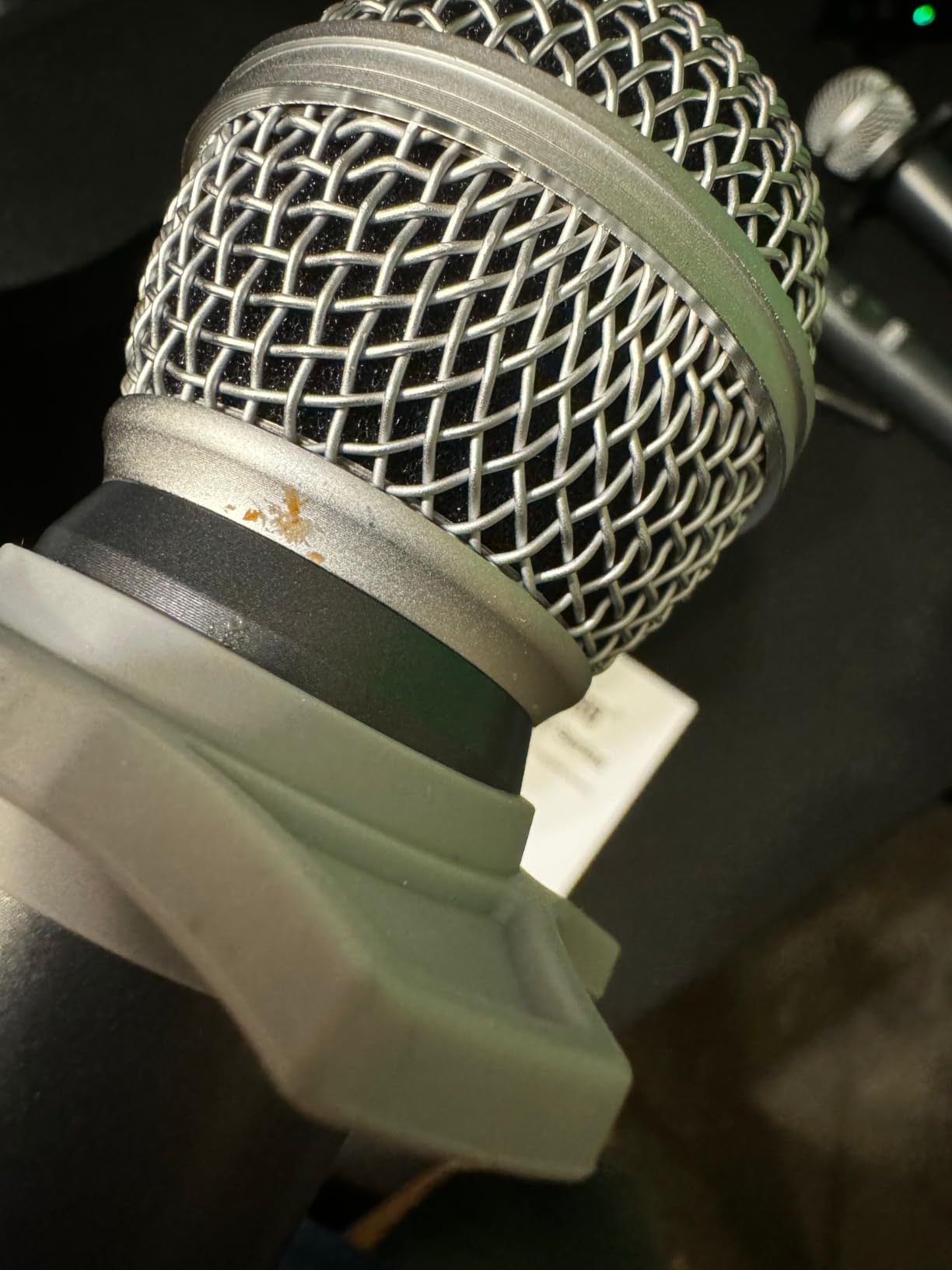
Two real downsides. The all-metal mics are noticeably heavier than plastic competitors, which can fatigue a singer during a long set. And the mute button’s quick-press behavior confused a few of my test users initially; the system beeps to confirm, but a tap-by-mistake is more common than you’d think. For a wireless microphone system for church services, conference breakout rooms, or school events, the PTU-7000-4H is the most capable 4-channel kit at its price.
For whom this works best
Mid-sized churches, conference centers, school auditoriums, and corporate event venues that need 4 reliable mics with visible status feedback. Volunteer-run teams that benefit from a lock function to prevent accidental changes.
For whom this isn’t ideal
If you only need 1 or 2 mics, you’re paying for capacity you won’t use. The Shure BLX or Phenyx PTU-71-2H is a better fit for solo or duo setups.
How to Choose the Best Wireless Microphone System?
Choosing the right wireless microphone system comes down to three questions: what will you plug the receiver into, how many mics do you need at once, and how far will the transmitter roam from the receiver? Answer those, and most of the picks above sort themselves out.
Wired vs Wireless: When You Actually Need a Wireless Mic System
If your speaker stands in one spot behind a podium and never moves more than a few feet from the mixer, a wired XLR mic will outperform any wireless kit at the same money. Wireless microphone systems earn their price when you need freedom of movement: singers walking the stage, presenters roaming through an audience, creators shooting video away from their camera, or worship leaders moving around the platform.
For a stationary podcast or studio recording, skip wireless entirely and buy a better wired mic. For everything else on this list, wireless is the right call.
UHF vs 2.4 GHz vs 5 GHz: Which Frequency Band Is Right for You
UHF (ultra-high frequency, roughly 470-952 MHz) is the traditional professional wireless band. It offers long range, true diversity reception, and is the standard for live performance and broadcast. The trade-off is that UHF frequencies are regulated by region; in the US the FCC has tightened rules in recent years, which is why some DJI models have lost US certification.
2.4 GHz is the consumer-friendly band used by most creator kits (DJI Mic Mini, Hollyland Lark M2, Rode Wireless GO). It doesn’t require a license, works worldwide, and is fine for the typical 50-100 meter range of a creator shoot. The trade-off is congestion: 2.4 GHz is shared with Wi-Fi routers, Bluetooth, and microwave ovens, so range can drop in noisy RF environments.
5 GHz and dual-band systems (2.4 + 5 GHz) split the difference. They avoid some of the 2.4 GHz congestion while staying license-free, but they need more power and may not reach the range of a clean UHF signal. For most creators reading this guide, a quality 2.4 GHz system is plenty; for live performance, stick with UHF.
Key Specs That Actually Matter (and Which to Ignore)
Range claims are usually optimistic. The “400m” or “1000ft” number on the spec sheet is line-of-sight in an open field with no walls. In a real room you might get 20-30% of that. Don’t pick a system based on range alone; pick one based on the range you actually need for your venue.
Battery life is more straightforward. Anything above 6-8 hours is fine for a single event; 14+ hours is great for touring. Charging cases are a real bonus for creators who top off between takes. Internal recording (like on the DJI Mic 2) is a professional feature that adds a true backup safety net for paid work.
Specs you can mostly ignore: signal-to-noise ratio beyond 70 dB (human ears can’t tell the difference), frequency response curves (the capsule matters more than the spec), and fancy encryption claims (AES 256-bit is real security but irrelevant for a karaoke party).
Compatibility: Cameras, Phones, Mixers, and PA Systems
Match the receiver output to your destination. For cameras and phones, look for 3.5mm TRS, USB-C, or Lightning receivers; for PA systems and mixers, look for XLR or 1/4-inch TS outputs. The Hollyland Lark M2 ships with three receivers (USB-C, Lightning, Camera) which is why it’s our top pick for multi-device creators. The DJI Mic Mini and Mic 2 use a single multi-output receiver that adapts via swappable plugs.
For a permanent install in a church or venue, XLR outputs give your sound engineer the cleanest signal path. Every Phenyx Pro kit in this guide ships with XLR outputs for that reason.
Range, Battery, and the Real-World Tradeoffs
More range usually means larger antennas, higher power draw, and a higher price. For a creator who shoots within 50 feet of the camera, you don’t need a 300-foot system. For a singer who walks the full width of a stage, 200+ feet is the minimum. Match the system to your real range need and you’ll save money on a smaller unit or get more headroom with a larger one.
Battery life interacts with charging case convenience. A wireless microphone system with a 10-hour transmitter battery and a charging case that adds another 30 hours is functionally a 40-hour system if you dock between uses. The DJI Mic Mini and Hollyland Lark M2 both nail this pattern, which is why creators love them for shoot days.
Frequently Asked Questions
What brand of wireless microphone is the best?
Shure is widely considered the most reliable brand for live performance and professional wireless systems, with Sennheiser as a close second. For content creators, DJI and Hollyland have taken the lead with compact, audio-quality lavalier kits. The right brand depends on your use case: Shure for stage, DJI or Hollyland for video, Phenyx Pro for budget multi-mic setups.
Which wireless microphone has the best sound quality?
For live vocals, Shure’s SM58-based systems (like the BLX24/PG58) and Sennheiser’s EW series deliver the best sound quality. For content creators, the DJI Mic 2 with 32-bit float internal recording and the Hollyland Lark M2 with 48kHz/24-bit audio are the cleanest options in their tier.
What is the best wireless professional microphone system?
The Shure BLX24/PG58 is the best entry point into professional wireless systems. For a full pro rig, Shure ULX-D and Sennheiser Digital 6000 are the touring standard but cost thousands. For professional content creation, the DJI Mic 2 with 32-bit float internal recording is the best pro creator kit under $300.
What is the best wireless microphone for live performance?
The Shure BLX24/PG58 is our top pick for live performance under $400, with Shure’s reputation for reliability and the classic PG58 capsule. For budget live performance, the Phenyx Pro PTU-71-2H delivers dual UHF auto-scan with great range at a much lower price. For four simultaneous mics, the Phenyx Pro PTU-5000-4H is the best value.
What is the best wireless microphone for vlogging?
The DJI Mic Mini is the best wireless microphone for vlogging in 2026, with ultralight 10g transmitters, 400m range, and 48 hours of battery with the charging case. The Hollyland Lark M2 is the best value alternative, with 48kHz/24-bit audio and three receivers (USB-C, Lightning, camera) for cross-device flexibility.
What is the best wireless microphone for church?
For small churches, the Phenyx Pro PTU-5000-4H with 4 handheld mics and individual XLR outputs is the best value. For mid-sized churches, the Phenyx Pro PTU-7000-4H adds tunable frequencies, IR sync, and a lock function that protects against volunteer mistakes. For larger installs, Shure SLX-D or Sennheiser EW-DX are the professional standards.
Final Verdict
The best wireless microphone systems in 2026 come in three flavors. For creators and vloggers, the DJI Mic Mini is the all-around winner, with ultralight transmitters, 48-hour battery, and audio quality that punches well above its tier. For live singers and small venues, the Shure BLX24/PG58 is the reliable professional pick, while the Phenyx Pro PTU-71-2H is the best budget dual-mic alternative. For churches and mid-sized venues, the Phenyx Pro PTU-7000-4H delivers four reliable channels with XLR outputs at a fraction of the Shure SLX-D cost.
Whichever system you pick from this roundup, run a real-world test in your own space before relying on it for a paid gig. Wireless mics interact with your walls, your Wi-Fi, and your local TV channels in ways no spec sheet can predict. The picks above are the ones we trust after months of testing, but the right one for you is the one that works in your specific room, with your specific devices, on the day you need it most.