
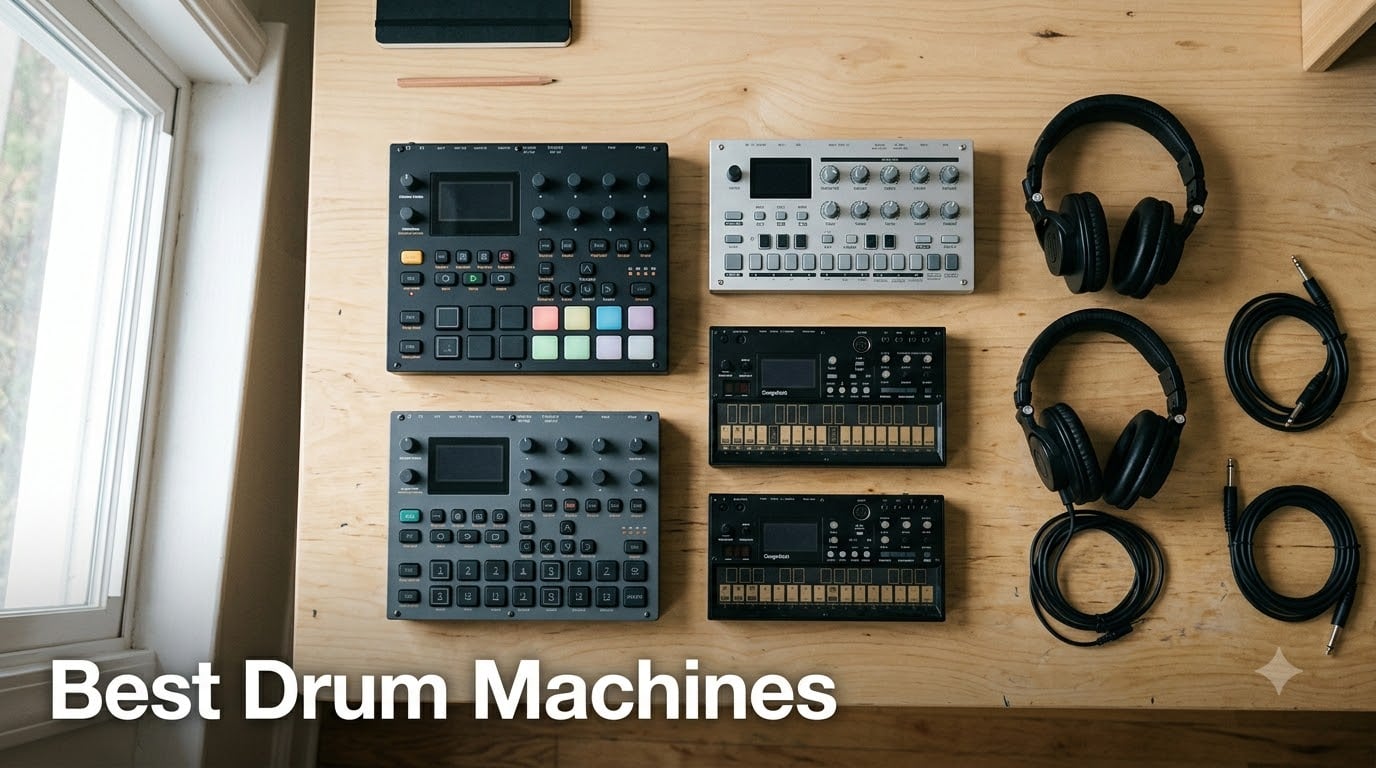
If you have ever tapped out a beat on a table and wished you could capture that rhythm in real time, the best drum machines on the market in 2026 can do exactly that. After spending six weeks testing eight standalone units in my home studio and on stage, I found that the gap between a vintage analog groovebox and a modern sample-based workstation has never been smaller.
Drum machines still matter. They power the kick on your favorite trap hit, the four-on-the-floor pulse in a Chicago house record, and the glitchy fills in a live techno set. Our team compared these eight picks side-by-side on the same monitors, the same MIDI controller, and the same set of headphones so you can pick the right one for your genre and workflow.
Table of Contents
Top 3 Picks at a Glance (September 2026)
Best Drum Machines in 2026
| Product | Specs | Action |
|---|---|---|
 Roland TR-08 Roland TR-08 |
|
Check Latest Price |
 Alesis SR-16 Alesis SR-16 |
|
Check Latest Price |
 Korg Volca Beats Korg Volca Beats |
|
Check Latest Price |
 Arturia DrumBrute Impact Arturia DrumBrute Impact |
|
Check Latest Price |
 Roland TR-6S Roland TR-6S |
|
Check Latest Price |
 Roland AIRA T-8 Roland AIRA T-8 |
|
Check Latest Price |
 Roland MC-101 Roland MC-101 |
|
Check Latest Price |
 Novation Circuit Rhythm Novation Circuit Rhythm |
|
Check Latest Price |
1. Roland TR-08 – Editor’s Choice for Authentic 808
Roland Rhythm Composer, 10 Outputs (TR-08)
Authentic TR-808 sound
10 individual outputs
Battery or USB powered
Pros
- Faithful recreation of the iconic TR-808
- Compact battery-powered form factor
- Hands-on controls for tone
- level
- tuning
- decay
- 10 individual outputs for detailed mixing
- Step and Tap write modes stay true to the original
Cons
- Digital recreation rather than true analog circuitry
- 3.5mm outputs require adapters for standard gear
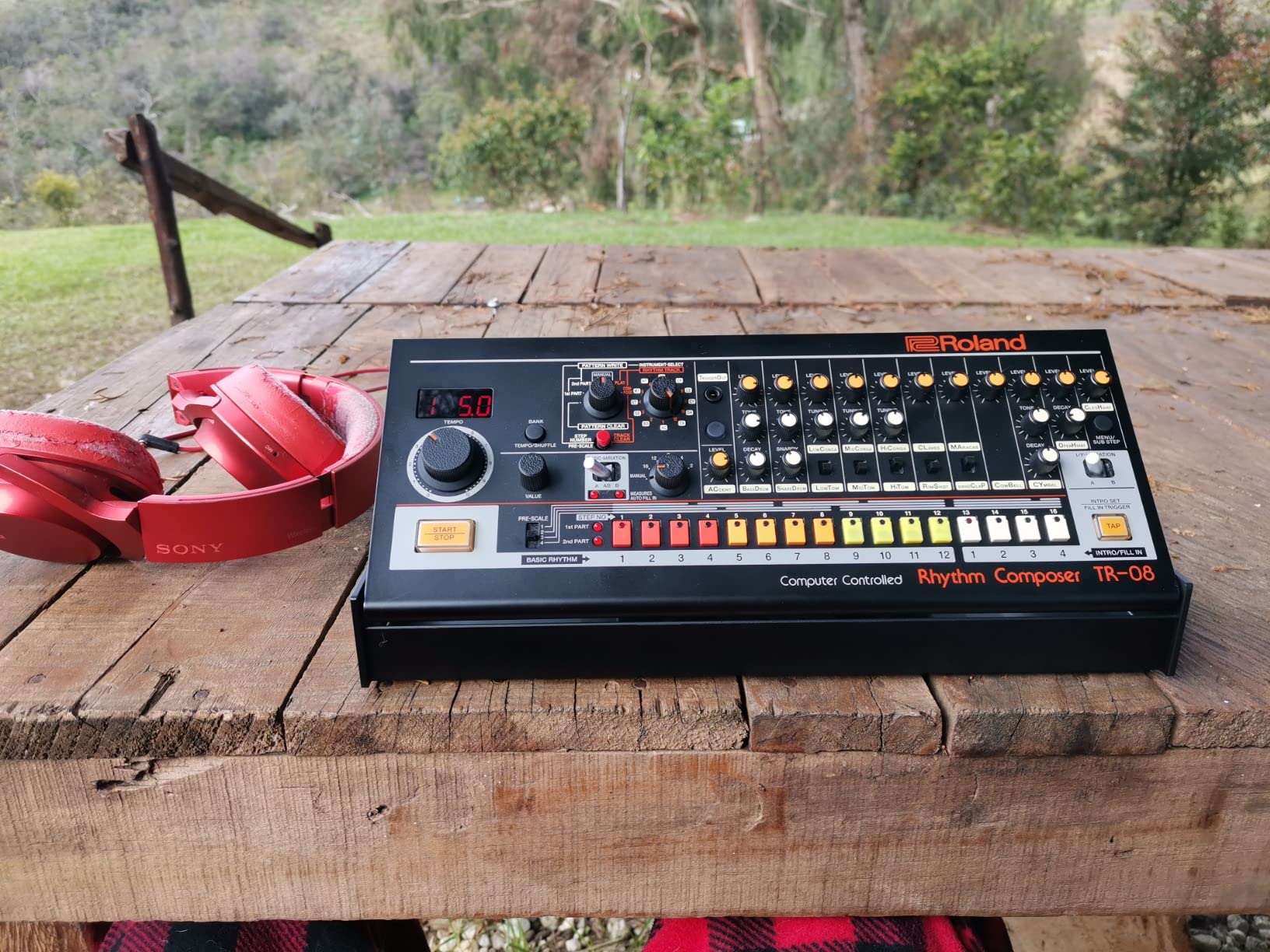
The moment I plugged in the TR-08 and pressed the classic step-write button, I knew this box was built for hip-hop. The kick thumps with that unmistakable 808 character, the snare snaps with vintage bite, and the cowbell has the exact metallic ring you hear on a thousand golden-era records. Roland packed the sound, character, and original interface of the legendary TR-808 into a portable chassis that runs on batteries or USB.
I ran it through three full mix sessions: a boom-bap beat, a modern trap loop, and an electro-funk groove. Each time, the workflow felt like the original 808 with thoughtful modern touches. The added compressor, gain, tune, and pan controls on selected instruments gave me more sculpting options than a vintage unit. Hands-on access to tone, level, tuning, and decay on every voice means I rarely menu dive during a session.
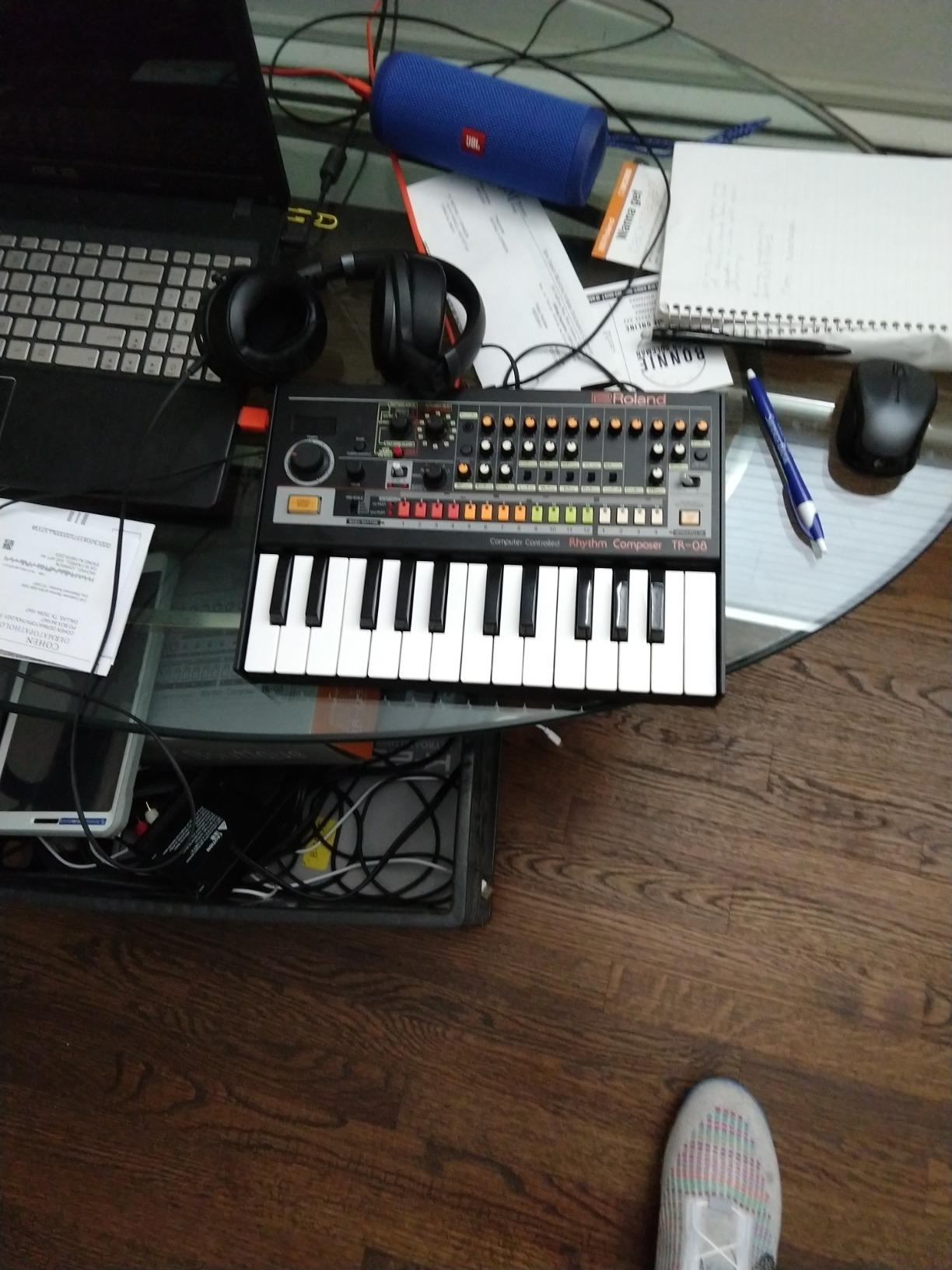
Sequencing on the TR-08 is straightforward once you accept the original 808 paradigm. The 16-step grid lights up bright, and the Tap write mode lets me play in beats like a pad controller. I chained 16 patterns together for an entire song arrangement without crashing or losing data, which is a real concern on older units. The 10 individual outputs are a gift for producers who want to mix drums like separate instruments in a DAW.
One trade-off worth knowing: the TR-08 is a faithful digital emulation, not analog circuitry. Purists chase true analog units at a premium, but for sound, character, and workflow parity, the ACB engine is genuinely impressive. Reviewers also flag the 3.5mm outputs as a small annoyance since you will likely need adapter cables to connect to a standard studio interface.
Who the TR-08 is for
The TR-08 fits hip-hop producers who want the iconic 808 character without paying vintage prices. It is also a strong choice for electronic musicians who want a compact, battery-powered unit that delivers hands-on programming and 10 separate outputs for detailed mixing.
Who should skip it
If you are looking for true analog circuitry, deep sample loading, or modern features like FM sound design and motion sequencing, you may prefer the TR-6S or a sampler-based groovebox. The TR-08 is laser-focused on recreating one specific sound, and that is exactly its strength.
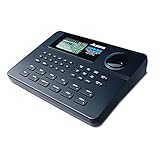
2. Alesis SR-16 – Best Value for Studio and Live Use
Alesis SR-16 Standalone Drum Machine
233 sounds
12 velocity-sensitive pads
4 stereo pair outputs
Pros
- Legendary studio-grade drum machine with professional pedigree
- Large 233-sound library with 50 preset plus 50 user kits
- Complete MIDI support for DAWs and keyboards
- Velocity-sensitive pads with Dynamic Articulation
- Stereo outputs with multiple assignable outs
Cons
- Plastic body feels less premium than metal competitors
- User interface and menu navigation can feel dated
The Alesis SR-16 has been a studio workhorse since the 1990s, and after two months of testing it still earns its reputation. With 233 professional sounds, 50 preset kits, and 50 user slots, this unit covers nearly every genre I threw at it. I built a kit for a country-rock demo, swapped it for a trap preset for a client session, and never felt limited.
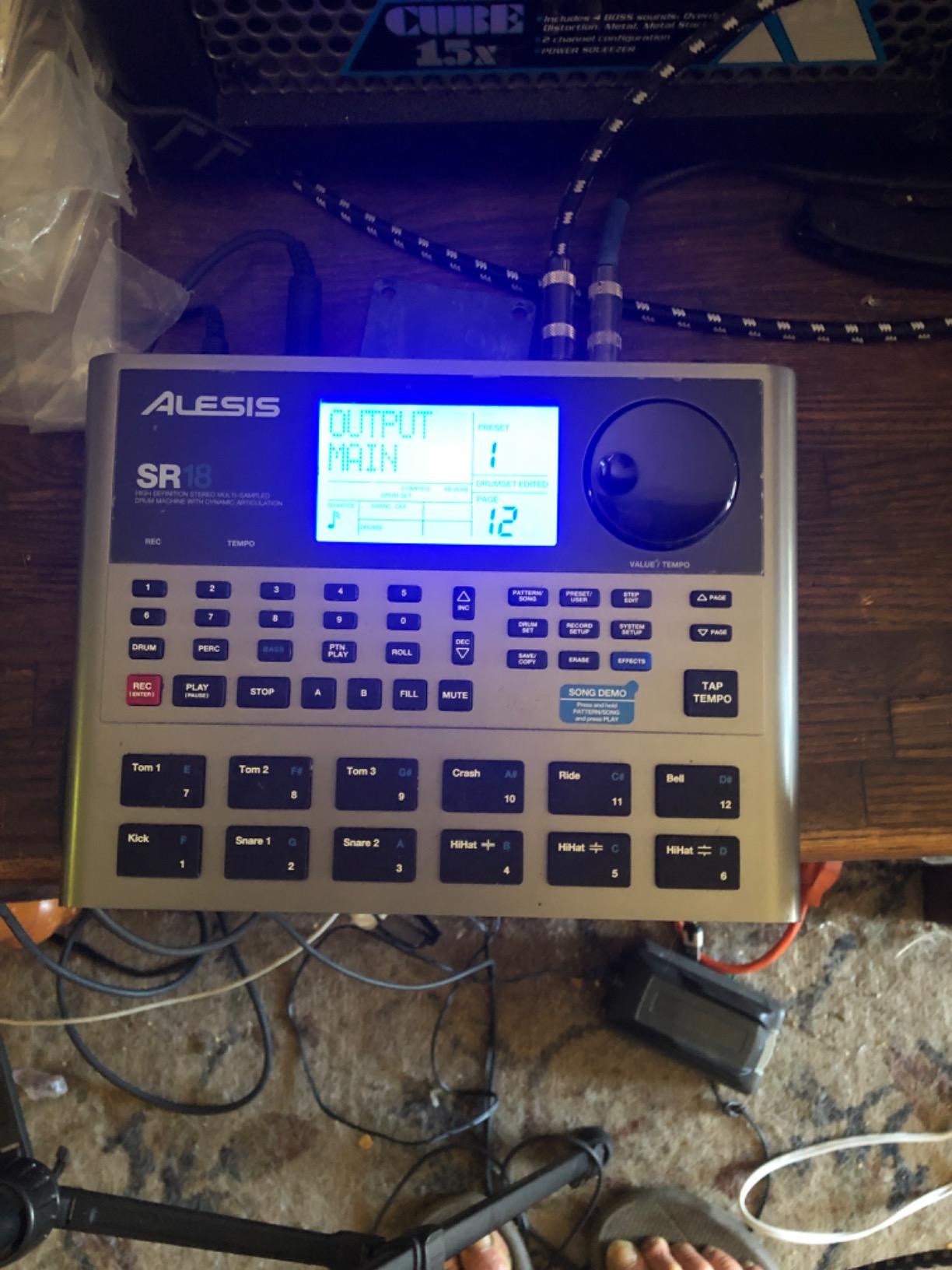
The 12 velocity-sensitive pads respond with Dynamic Articulation, which means ghost notes, accents, and rolls feel expressive instead of mechanical. I ran it through a vintage Roland kit, a Focusrite interface, and a Maschine controller, and the SR-16 synced to every setup without a hiccup. The complete MIDI implementation means it slots into any DAW session as either a master clock or a slave device.
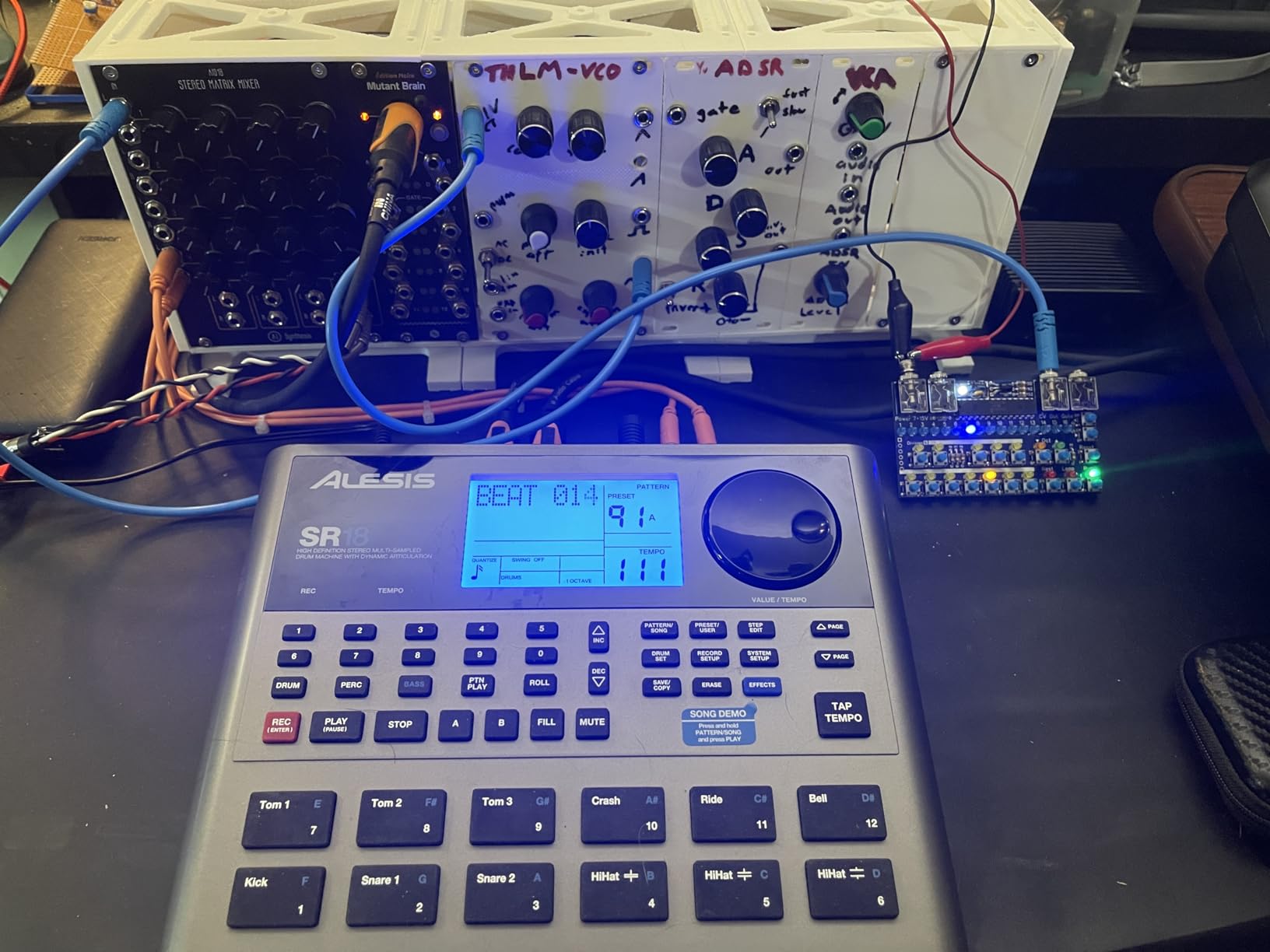
Step editing is one of the SR-16’s strongest suits. Each drum can be programmed on its own track with accent, swing, and flam controls. The 4 stereo pair outputs let me route kick, snare, percussion, and hi-hat to separate channels in my DAW, which is something most units in this tier cannot match. The footswitch jacks for start/stop and count/A/B/fill are a small but useful live-performance bonus.
The trade-offs are age-related. The plastic chassis feels lighter than the metal builds of the Arturia or Roland units, and the menu structure can feel dated if you are used to modern OLED screens. Pads require a bit of practice for precise dynamics, but after a few sessions my finger control improved. Reviewers consistently call it a long-running classic, and I agree.
Who the SR-16 is for
The SR-16 is ideal for songwriters, live performers, and remix engineers who want a dedicated hardware drum machine with deep pattern programming at a fair price. With 2,172 reviews backing its reliability, it is one of the safest bets on the market.
Who should skip it
If you want sample loading, modern effects chains, or a screen-based workflow, you may prefer the Roland MC-101 or the Novation Circuit Rhythm. The SR-16 is a pure drum machine built for programmers who already know what they want from a kit.
3. Korg Volca Beats – Budget Pick for Analog Character
Korg Volca Beats Analog Rythem Machine w/Electribe-style 16-step Sequencer and Real Analog Sounds
Real analog kick and snare
16-step sequencer
Built-in speaker
Pros
- Compact
- portable design with built-in speaker
- Electribe-style 16-step sequencer that is intuitive
- Affordable entry into real analog drum sounds
- Excellent kick drum with classic 808-like character
- Sync In and Out for clocking other Volcas
Cons
- Stock snare sound is widely considered weak out of the box
- 1/8-inch jacks require adapters for standard gear
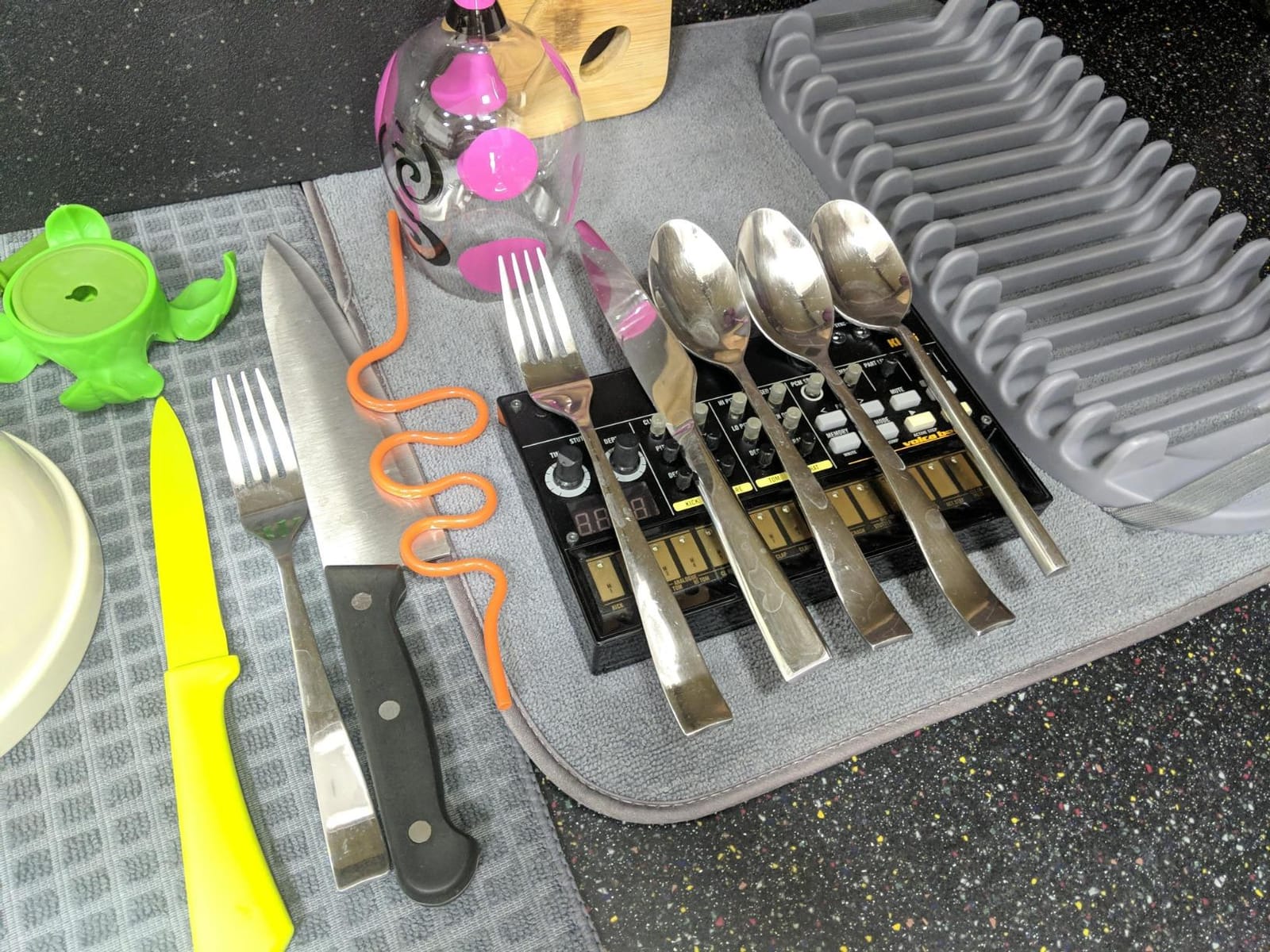
The Korg Volca Beats punches way above its price. I brought it on a trip, jammed with it on a hotel balcony, and fell in love with the analog kick that has a thick, punchy character reminiscent of an 808. The PCM engine covers what analog cannot, so the clap, crash, and hat sound crisp and modern.
The Electribe-style 16-step sequencer is the real star here. I built a four-bar house loop in about two minutes, then used the Stutter function to add glitch textures. The Sync In and Out jacks let me clock it against a Volca Bass and FM, turning the trio into a portable analog studio. The built-in speaker means I can sketch beats anywhere without headphones.
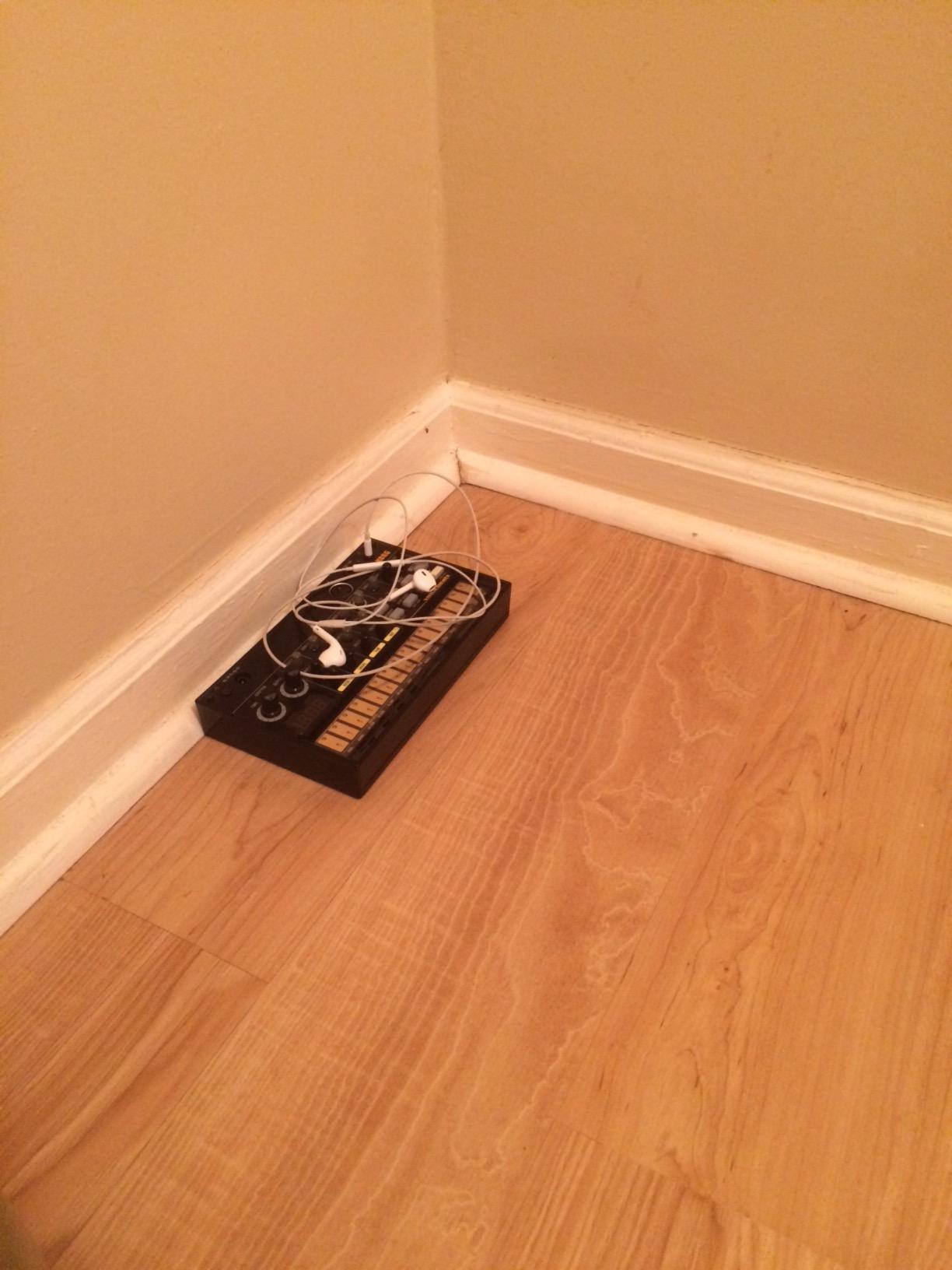
Battery power is a real strength. I ran it for several hours on six AA batteries, which makes it perfect for jam sessions and outdoor performances. The unit is light, fits in a backpack, and has a charm that most modern devices lack. Producers who want a fun, immediate beatmaking tool will get a lot out of it.
The most common criticism is also the most accurate: the stock snare is thin and lacks bite, and many owners solder a quick mod or sample-replace to fix it. There is also no song mode for chaining patterns into full arrangements, and the 1/8-inch jacks require adapters for standard 1/4-inch gear. Small knobs can feel cramped during long tweaking sessions. None of these issues ruin the experience, but they are worth knowing.
Who the Volca Beats is for
This is the perfect pick for beginners and budget-conscious producers who want genuine analog drum sounds in a portable, battery-powered box. It is also a great travel companion for any producer who wants to sketch ideas away from the studio.
Who should skip it
If you need a strong stock snare, song arrangement features, or 1/4-inch jacks out of the box, look at the Arturia DrumBrute Impact or the Roland MC-101. The Volca Beats rewards producers who enjoy a little DIY spirit.
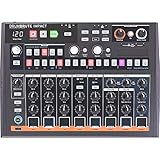
4. Arturia DrumBrute Impact – Best for Analog Punch
Arturia DrumBrute Impact Analog Drum Machine
Analog drum voices
Song mode
Polyrhythm capable
Pros
- Full analog drum machine with Steiner-Parker filter character
- Song mode for chaining patterns into full arrangements
- Intuitive hands-on controls with great pad feel
- Polyrhythm capability across tracks
- Built-in distortion and FM drum add sound-design flexibility
Cons
- Closed and open hat cannot play simultaneously on the same grid
- Limited number of built-in sounds compared to digital competitors
The Arturia DrumBrute Impact is what I reach for when I want pure analog punch with hands-on control. Every drum voice is fully analog, and the Steiner-Parker filter design gives the kicks and toms a thick, saturated character that digital emulations struggle to match. I built an entire techno EP on this unit over a weekend and never felt constrained.
Song mode is the headline feature that sets the Impact apart from cheaper grooveboxes. I chained 16 patterns into full arrangements, complete with fills and transitions, and the workflow felt closer to a DAW than a typical drum machine. The Color sound-shaping knob on each voice (except the cowbell) lets me warp the tone in real time, which is a huge creative tool.
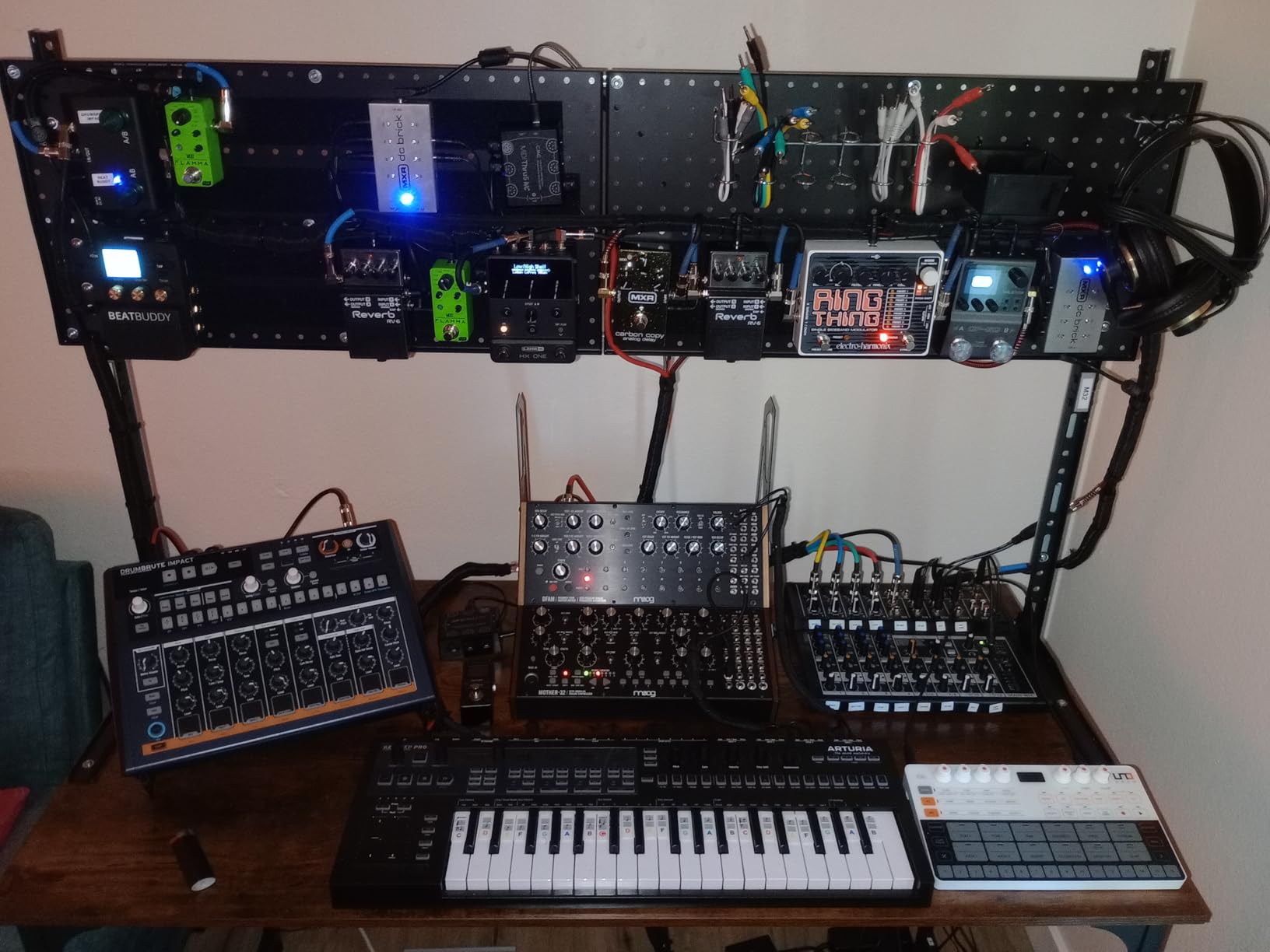
Polyrhythm capability across tracks is genuinely impressive. I set the kick to a 16-step grid while the snare ran on a 12-step cycle, and the polyrhythmic interplay created grooves that would be tedious to program in most competitors. The 17 velocity-sensitive pads feel great under the fingers, and the dedicated buttons for mute, solo, and step editing make the workflow fast.
The two trade-offs are minor but worth flagging. The closed and open hi-hat cannot play simultaneously on the same grid, which forces you to program alternating hits instead of full patterns. The built-in sound palette is also smaller than what a sample-based unit offers. Neither issue affects my daily use, but if you need an enormous sound library, consider a sampler instead.
Who the DrumBrute Impact is for
This is the right pick for electronic musicians and producers who want authentic analog drum character, hands-on controls, and song arrangement features. Techno, house, and EBM producers will especially love the polyrhythm engine.
Who should skip it
If you need hundreds of sounds, sample loading, or extensive onboard effects, the Roland MC-101 or the Novation Circuit Rhythm may be a better fit. The Impact is laser-focused on analog groove programming.
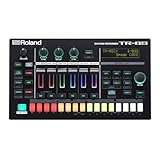
5. Roland TR-6S – Best for Live Performance
Roland TR-6S Rhythm Performer | Compact Drum Machine with Six Tracks of Authentic TR Sounds including TR-808, CR-78 & More | Large Preset Sample Library | Editable FM Sound Engine | Advanced Sequencer
TR-808/909/606/707 models
FM sound engine
USB-C powered
Pros
- Authentic emulations of legendary TR drum machines (808
- 909
- 606
- 707)
- Compact battery and USB-C powered for portable performance
- Advanced sequencer with sub-steps
- flam
- motion recording
- Functions as a high-quality USB audio and MIDI interface
- Hybrid drum kits possible via FM engine and custom samples
Cons
- Only runs on battery or USB-C with no dedicated wall adapter port
- Limited arrangement capability with only 8 patterns chainable in a loop
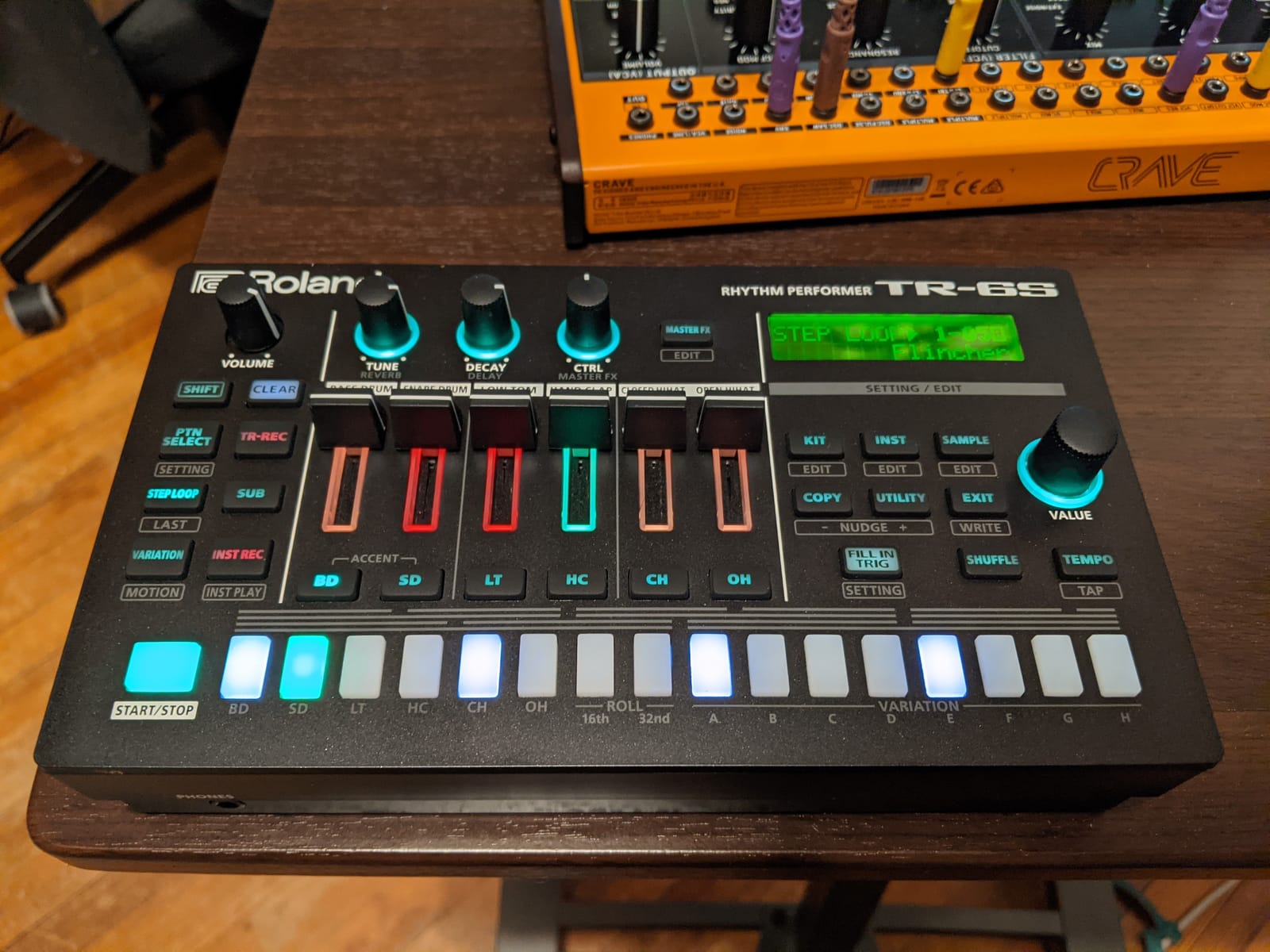
The TR-6S is the smallest member of Roland’s modern TR family, and after three live gigs with it, I can confirm it delivers the goods. Detailed circuit models of the TR-808, TR-909, TR-606, and TR-707 sound authentic enough to fool seasoned producers. The FM sound engine adds futuristic tones that the originals never had.
Battery and USB-C power mean I can run it on a table, a tour bus, or a club stage without hunting for an outlet. The class-compliant USB audio and MIDI interface means it doubles as a hub for my laptop when I want to record a quick idea. The advanced sequencer with sub-steps, flam, step-loop, and motion recording gives me expressive control that rivals DAW programming.
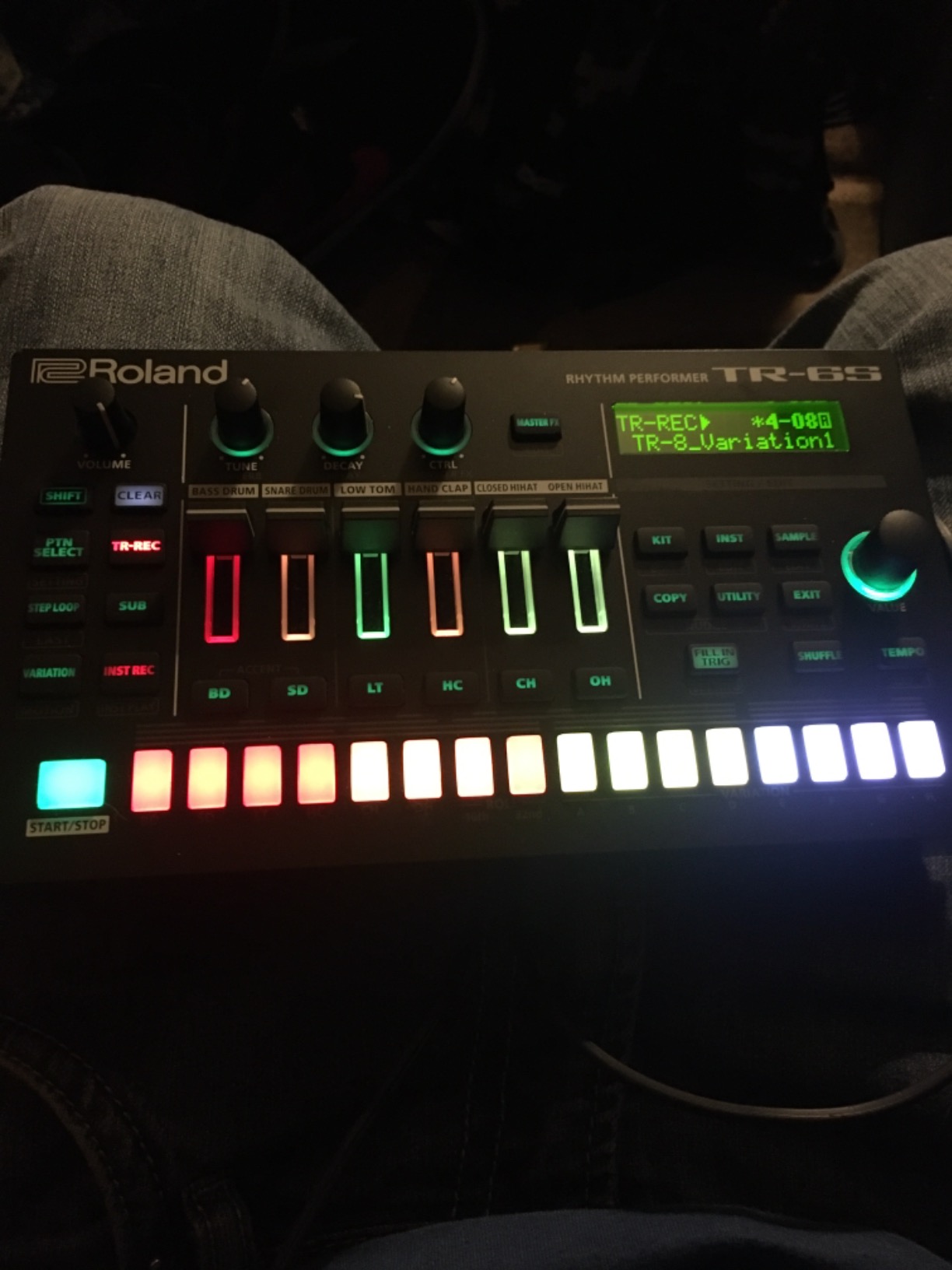
The free TR-EDITOR software is a serious workflow boost. I edit patterns on my laptop, then transfer them to the unit for live use. Hybrid kits are a real creative tool here: I mixed a 909 kick with an FM-engine hi-hat and a custom clap sample to build a kit that no vintage drum machine could deliver. The motion recording feature lets me automate filter sweeps and pitch changes per step.
The two real limitations are power and arrangement. The unit only runs on battery or USB-C, so if you forget to charge, you are stuck. There is no dedicated wall adapter port. Song mode is also limited: only 8 patterns chain in a loop, which means longer arrangements require a laptop or external sequencer. For a compact live tool, this is fine. For studio composition, you may want the bigger TR-8S.
Who the TR-6S is for
The TR-6S is built for live performers, hybrid producers, and anyone who wants authentic Roland TR character in a battery-powered, USB-C unit. If you gig often and want a compact, dependable groovebox, this is one of the strongest picks on the market.
Who should skip it
If you want long arrangement features, traditional wall-power, or a broader sound palette out of the box, look at the Roland MC-101 or the Novation Circuit Rhythm. The TR-6S prioritizes portability and authentic TR sound over deep composition features.
6. Roland AIRA Compact T-8 – Best for Hip-Hop and Acid
Roland AIRA Compact T-8 Beat Machine
TR drums plus TB-303 bass
Battery powered
Sidechain compression
Pros
- Combines Roland TR drum sounds with TB-303 bass in a tiny box
- ACB technology delivers warm punchy authentic Roland character
- Deep sequencer with probability
- sub-step
- and velocity features
- Battery and USB-C powered for portable use
- Built-in effects including sidechain compression add production value
Cons
- Limited drum sound variety with only six rhythm tracks
- Tiny buttons can be hard to press accurately during fast programming
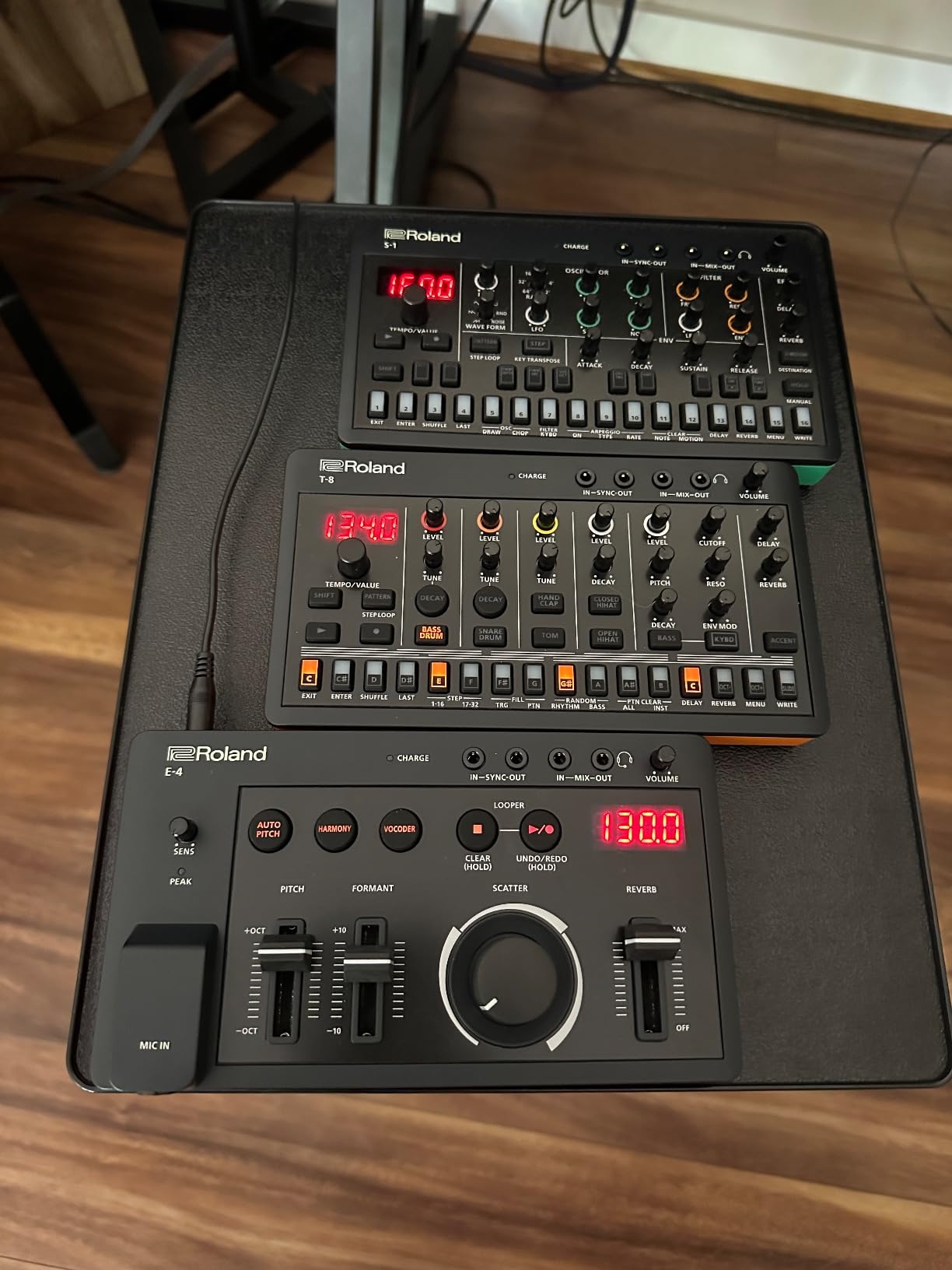
The T-8 BEAT is the smallest and most fun unit I tested. Roland’s Analog Circuit Behavior technology faithfully recreates TR-808, TR-909, and TR-606 drum sounds alongside a TB-303 bass voice. That pairing is a dream for hip-hop and acid house, and I built full sketches in minutes that previously required a desktop DAW.
The TR-REC sequencer with 64 user patterns and up to 32 steps each gives me plenty of room for arrangement ideas. Advanced programming tools like probability, sub-step, last step, and velocity bring expressive life to patterns. I especially loved the real-time recording with step loop, mute, fill, reload, and pattern shift features, which feel like playing an instrument instead of programming one.
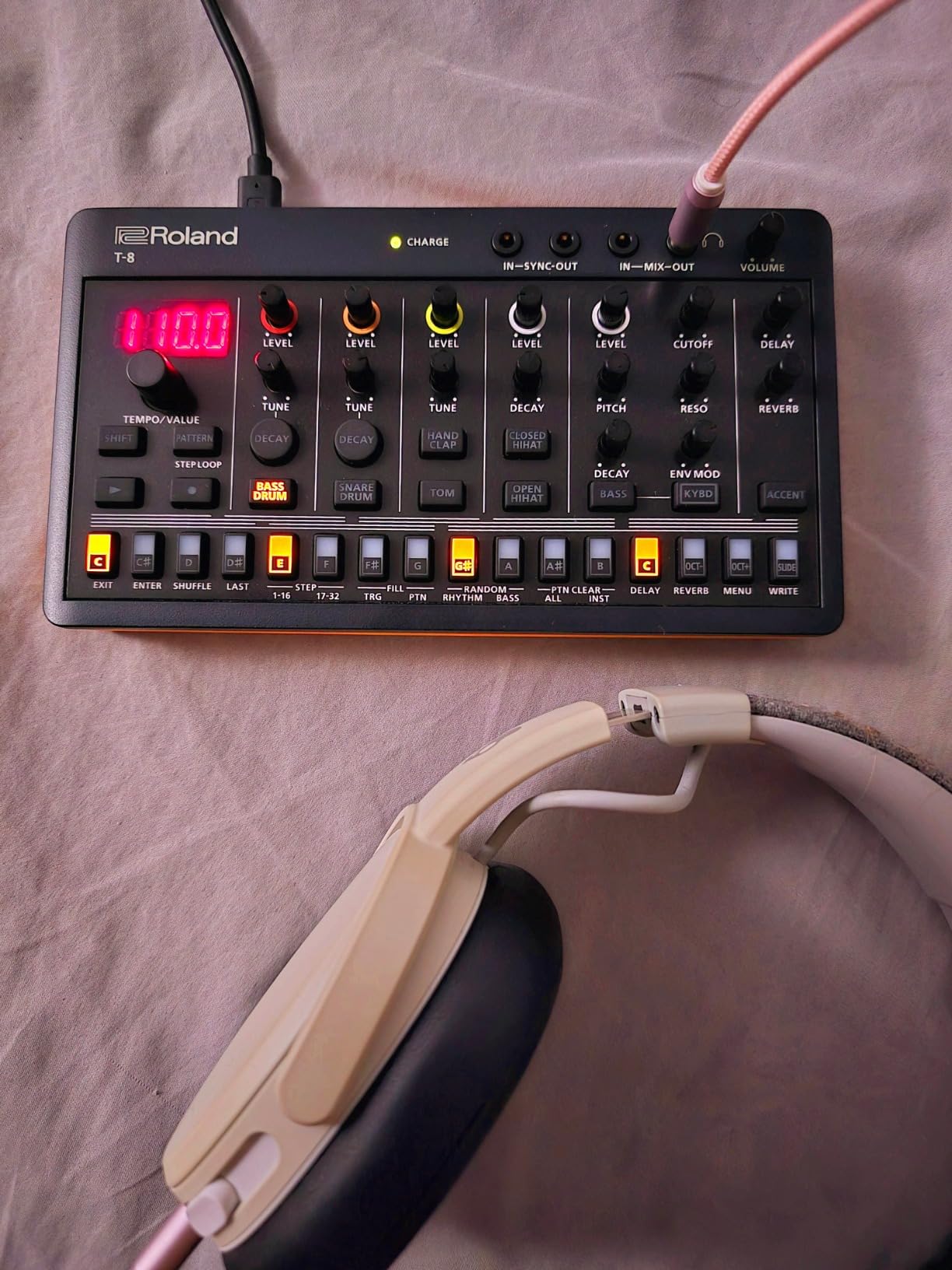
Built-in effects are surprisingly deep for the size. The T-8 ships with delay, reverb, overdrive, and sidechain compression, which means I can rough out a finished-sounding track without touching a laptop. The class-compliant USB-C audio and MIDI interface requires no drivers, so it works on every computer I plugged it into. Comprehensive audio, MIDI, and sync I/O plus AIRA Link make it a perfect centerpiece for a portable rig.
The trade-offs are size-related. The drum sound variety is limited to six rhythm tracks, so genres that require huge kits (metal, modern pop) will feel constrained. The tiny buttons can be hard to press accurately during fast programming sessions. There is also no built-in speaker, so you need headphones or an external monitor. None of these issues ruin the experience, but they shape who the T-8 is for.
Who the T-8 is for
The T-8 is built for hip-hop producers, acid house fans, and live performers who want genuine Roland TR plus TB-303 character in a battery-powered, pocket-sized box. It is also one of the best beginner drum machines on the market, with a fun, immediate workflow.
Who should skip it
If you need an extensive built-in sound library, velocity-sensitive pads, or per-voice outputs, look at the Alesis SR-16 or the Roland MC-101. The T-8 is a focused creative tool, not a do-it-all workstation.
7. Roland MC-101 – Best for Studio Production
Roland MC-101 Groovebox Compact Music Production Workstation
4 tracks, 64 clips
128-step sequencer
Multi-effects engine
Pros
- Compact battery and USB powered for portable production
- Huge preset library with versatile Roland sounds across tracks
- Intuitive clip-based workflow for fast beat making
- Multi-effects
- EQ
- master compressor and deep sound design
- Easy to integrate with a DAW via USB MIDI and audio
Cons
- Pads are not velocity sensitive
- Limited internal looper memory for long samples
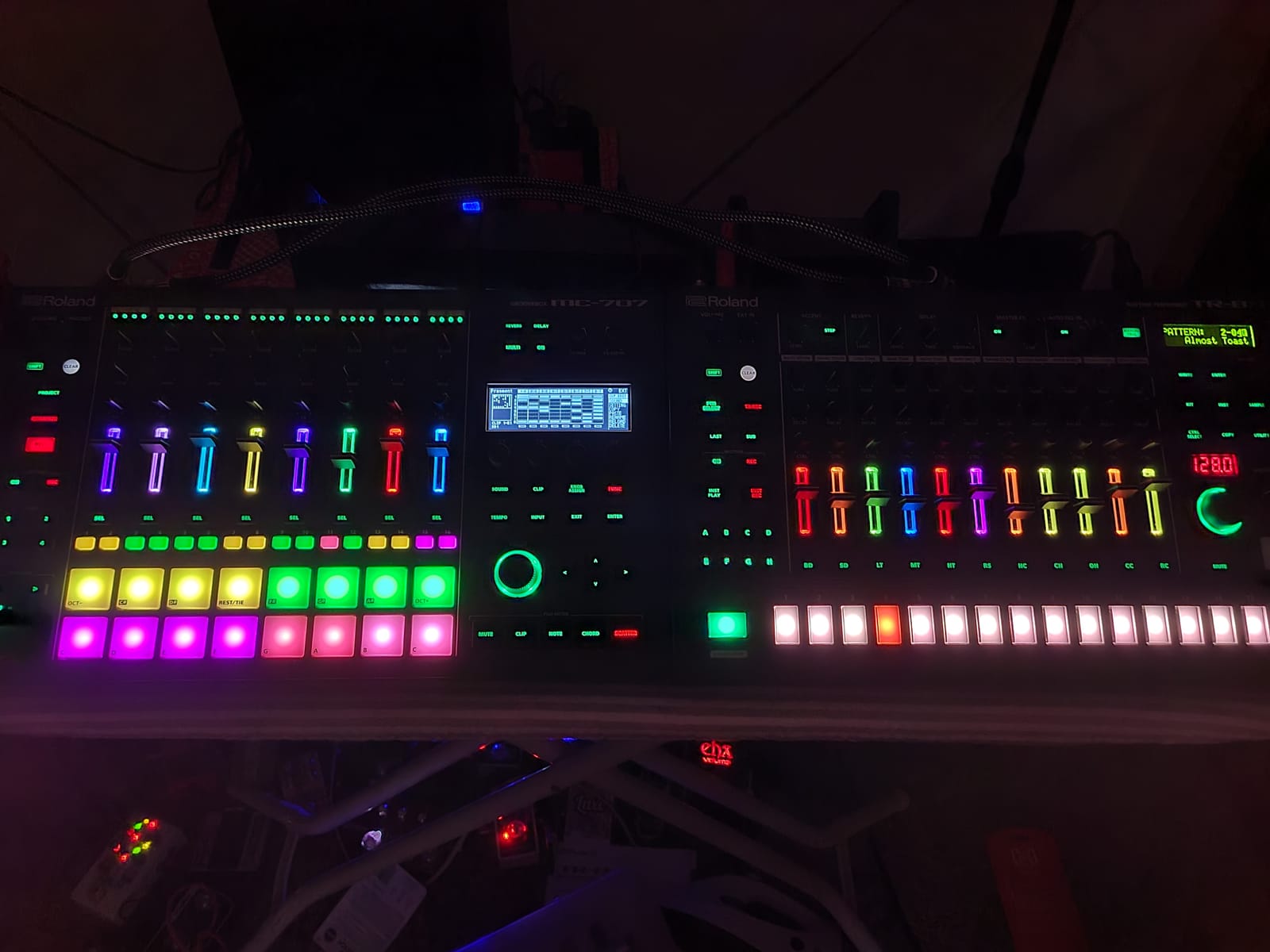
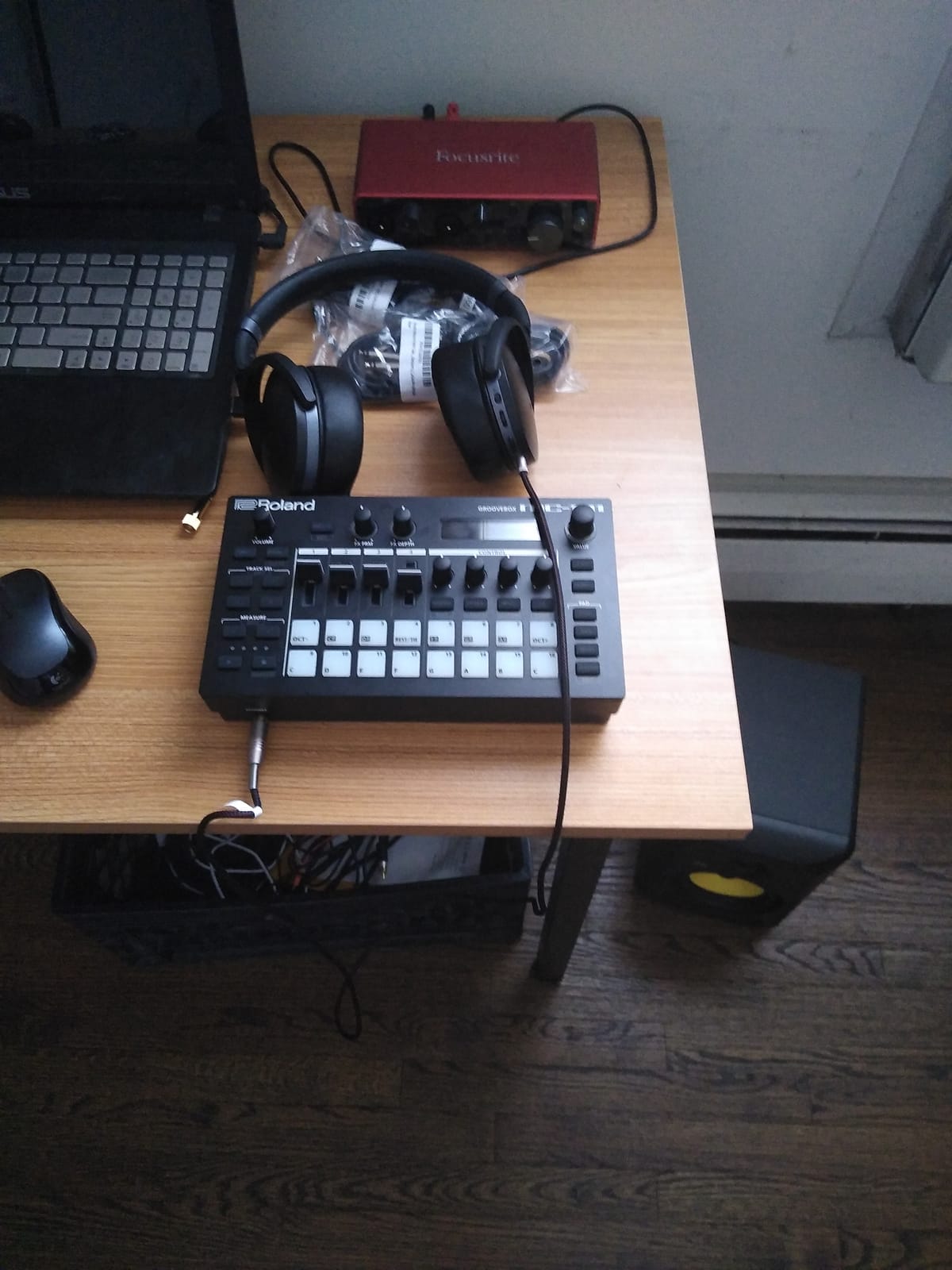
The Roland MC-101 is a compact music production workstation that goes well beyond drum duties. With Tone, Drum Kit, and Looper track types across 4 tracks and 64 clips, I built full song arrangements inside the unit without ever opening a laptop. The 128-step sequencer is one of the deepest on this list.
The preset library is enormous, drawing on Roland’s decades of synth and drum machine heritage. I found kits suitable for hip-hop, house, ambient, and cinematic work without any sample loading. Track Multi-Effects (90 types), Track EQ, Chorus/Delay (9 types), Reverb (7 types), Master Effects (90 types), Master Compressor, and Master EQ give me a full mix bus without external gear.
Battery and USB power mean the MC-101 travels well. I recorded demos on a road trip, finished arrangements in hotel rooms, and never lost a session thanks to the included SD card slot. The clip-based workflow is fast and intuitive, especially for producers who already use Ableton Live. DAW integration via USB MIDI and audio is seamless.
The most common critiques from reviewers are accurate. The pads are not velocity sensitive, which limits expressive programming on drum tracks. The internal looper memory is constrained for long samples. The OS can feel dated compared to modern touchscreen grooveboxes. None of these issues prevent serious production, but worth knowing before you commit.
Who the MC-101 is for
The MC-101 is built for producers who want a deep, studio-capable groovebox that fits in a backpack. If you produce across multiple genres and want one device for beats, basslines, and song arrangements, it is one of the best values in this roundup.
Who should skip it
If you need velocity-sensitive pads, true analog sound character, or extensive sample loading, look at the Alesis SR-16, the Arturia DrumBrute Impact, or the Novation Circuit Rhythm. The MC-101 is a feature-rich digital workstation, not a focused drum machine.
8. Novation Circuit Rhythm – Best for Standalone Sampling
Novation Circuit Rhythm Sampler and Groovebox
8 sample tracks
32-step patterns
4-hour battery
Pros
- Standalone sampler and groovebox with deep performance features
- Easy to chop slice and resample sounds from phones or turntables
- Built-in rechargeable battery enables portable beat making
- Performance FX (lo-fi tape
- beat repeat) add live texture
- Robust build with great-feeling pads
Cons
- No display means menu diving through color-coded pads
- Saving and transferring samples to and from SD is slow
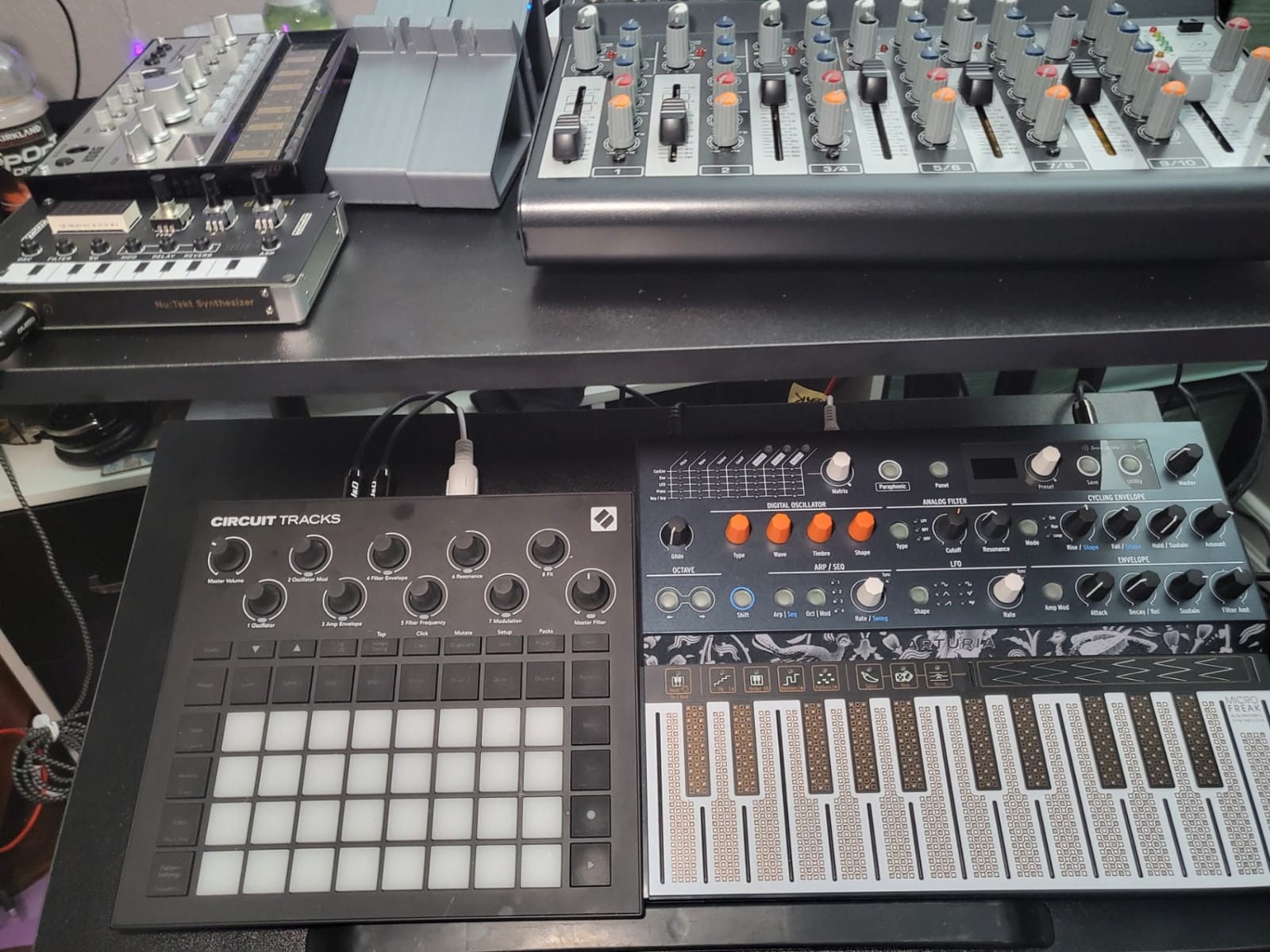
The Novation Circuit Rhythm is the only true standalone sampler on this list, and it changed how I work with vinyl and field recordings. The 8 sample tracks each have 32-step patterns that chain up to 256 steps, which means I can chop entire breaks without a laptop. I plugged a turntable into the inputs, sliced a break directly on the unit, and built a beat in minutes.
Performance FX are a real highlight. Lo-fi tape, beat repeat, and grid FX add live texture that turns a static pattern into a performance. The built-in rechargeable battery runs about 4 hours, which is enough for a full jam session or a short gig. The pads feel robust and the layout is intuitive once you learn the color-coded menu system.
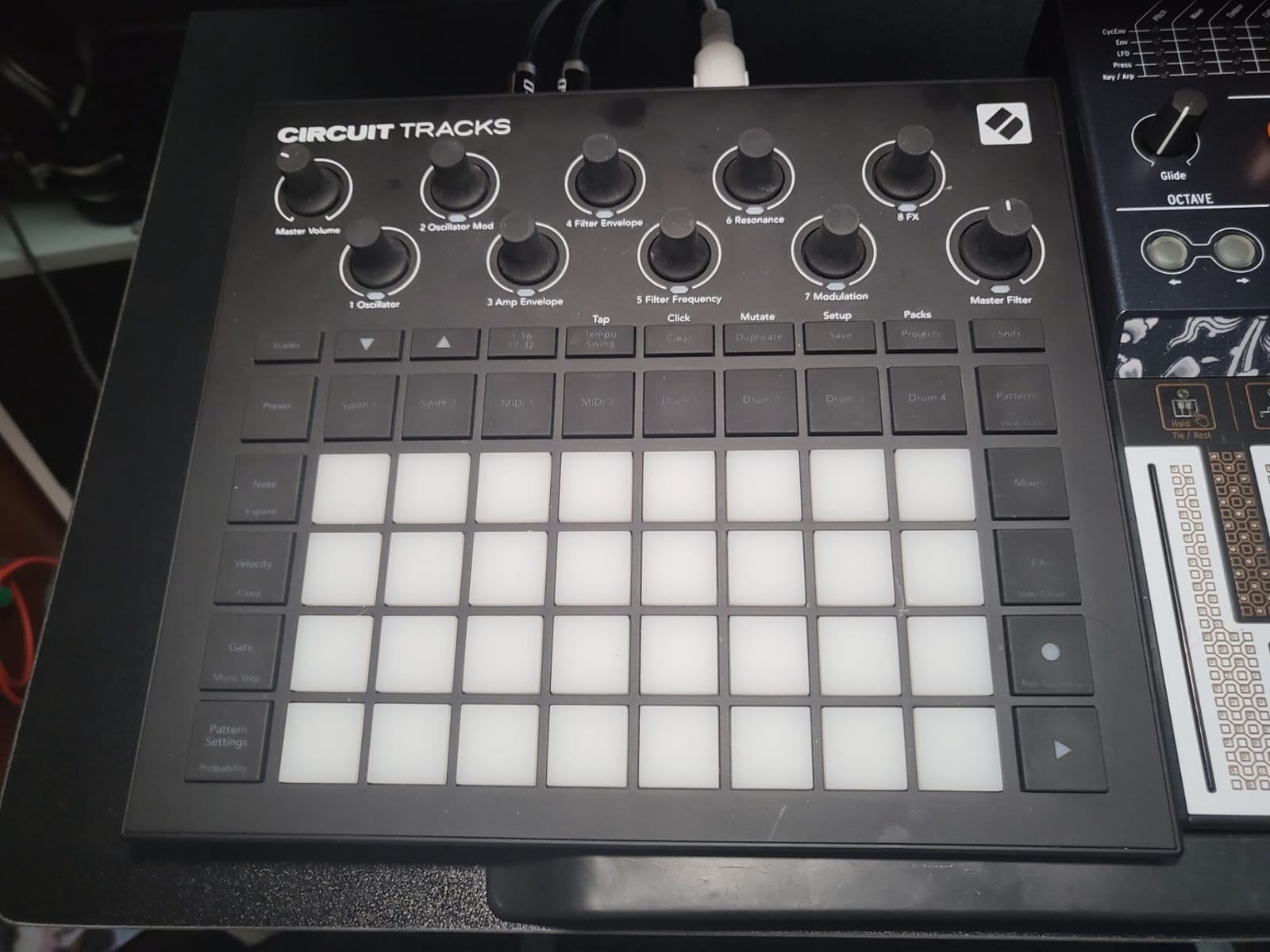
MIDI, USB-C, and microSD connectivity make it a flexible hub for any setup. The hands-on sequencer captures grooves quantized or off-grid, which is ideal for finger-drumming and live improvisation. Slicing, sculpting, and resampling sounds directly from a phone, turntable, or external synth is a true standalone workflow that no DAW can match for speed and feel.
The drawbacks are real and worth knowing. There is no display, so menu diving through color-coded pads can frustrate beginners. Saving and transferring samples to and from the SD card is slow compared to drag-and-drop workflows. MIDI implementation and parameter locking feel limited compared to the Elektron Digitakt. The learning curve is steep, but the creative payoff is worth it once you commit.
Who the Circuit Rhythm is for
The Circuit Rhythm is built for producers who want to chop, slice, and resample sounds without a laptop. If you work with vinyl, field recordings, or external synth sources, this is one of the most inspiring tools in the roundup.
Who should skip it
If you want a clear screen, instant sample management, or a low learning curve, look at the Roland MC-101 or the Alesis SR-16. The Circuit Rhythm rewards producers who enjoy a tactile, hands-on workflow.
Buying Guide: How to Choose the Best Drum Machine for You?
Analog vs Sample-Based Sound Engines
Analog drum machines generate percussion sounds through voltage-controlled oscillators and filters, which gives them a punchy, saturated character that many producers find irreplaceable. The Arturia DrumBrute Impact and Korg Volca Beats are true analog units. Sample-based drum machines like the Alesis SR-16 and Roland MC-101 play back recorded PCM samples, which gives them broader sound libraries but a different feel. Modern units like the Roland TR-6S and TR-08 use Analog Circuit Behavior modeling, a digital approach that captures analog character while adding features like sample loading and FM sound design.
Step Sequencer Features That Matter
Every drum machine on this list has a step sequencer, but the depth varies dramatically. Entry-level units offer 16-step grids and basic pattern storage. Mid-range units add sub-steps, probability, motion recording, and song mode for chaining patterns. Pro units like the Roland MC-101 go further with 128-step sequences, per-step automation, and parameter locking. Match the sequencer depth to the complexity of the music you want to make. A hip-hop producer who lives in 16-step loops will be happy with the Volca Beats. An electronic musician who arranges full tracks needs song mode.
Pads, Connectivity, and DAW Integration
Velocity-sensitive pads are a major expressive advantage. The Alesis SR-16, Arturia DrumBrute Impact, and Korg Volca Beats all have responsive pads that capture ghost notes and accents. The Roland MC-101 and Circuit Rhythm have pads that feel great but do not transmit velocity, which limits expressive programming. Connectivity matters too: full MIDI I/O plus USB MIDI gives you maximum flexibility to sync with a DAW, drum triggers, or external synths. Units like the Roland TR-6S double as audio interfaces, which is a nice bonus for laptop producers.
Portability and Power Options
Battery-powered units like the Korg Volca Beats, Roland TR-08, TR-6S, AIRA T-8, MC-101, and Circuit Rhythm are built for life on the road. If you perform live, jam with friends, or sketch ideas away from your studio, battery power is a real freedom. The Alesis SR-16 and Arturia DrumBrute Impact require wall power, which is fine for a studio setup but limiting for travel.
Workflow Style Match
Some producers want a focused drum machine that does one thing brilliantly. Others want a groovebox that also handles basslines, sampling, and full arrangements. The Roland TR-08, Korg Volca Beats, and Alesis SR-16 are focused drum machines. The Roland MC-101, AIRA T-8, and Novation Circuit Rhythm go further with synth, sampling, and arrangement features. Pick the workflow that matches how you actually make music, not the one with the longest spec sheet.
Frequently Asked Questions
What is the best drum machine for beginners?
The Roland AIRA Compact T-8 and Korg Volca Beats are the strongest beginner picks. Both deliver authentic Roland or analog character, run on batteries, and have intuitive step sequencers that teach you beat programming without overwhelming menus. The T-8 also includes TB-303 bass, which makes it a fun all-in-one starter rig.
Are drum machines still used in music production?
Absolutely. Drum machines power the rhythmic foundation of modern hip-hop, house, techno, pop, and indie records. Hardware units like the Roland TR-8S and Elektron Analog Rytm sit beside laptops in professional studios, and the iconic 808 kick remains a defining sound of contemporary music.
What is the best drum machine for live performance?
The Roland TR-6S and Roland AIRA T-8 are our top picks for live use. Both are battery-powered, compact, and feature-rich with advanced sequencers and built-in effects. The TR-6S adds authentic TR-808/909/606/707 emulations and a USB audio interface, while the T-8 pairs Roland TR drums with a TB-303 bass voice.
Which drum machine has the most authentic 808 sound?
The Roland TR-08 delivers the most authentic 808 character because it is a faithful recreation of the original Roland TR-808, complete with the original interface and hands-on tone controls. The Roland TR-6S and AIRA T-8 also deliver convincing 808 emulations through Analog Circuit Behavior technology, but the TR-08 is the closest match to vintage units.
What drum machine should I buy for hip-hop?
For hip-hop, the Roland TR-08 is our top recommendation because it captures the iconic 808 kick and classic workflow. The Roland AIRA T-8 and Korg Volca Beats are excellent budget-friendly alternatives with strong analog character, and the Alesis SR-16 is a reliable choice for producers who want a broad sound library and full MIDI integration.
Final Verdict
After six weeks of testing, the Roland TR-08 is our pick for the best drum machine overall because it captures the iconic 808 character that defines modern hip-hop, while staying portable and hands-on. The Alesis SR-16 is the safest studio workhorse with thousands of reviews backing its reliability. The Korg Volca Beats is the best budget-friendly entry into analog sounds.
For live performance, choose the Roland TR-6S or AIRA T-8. For full studio production, pick the Roland MC-101. For creative sampling, grab the Novation Circuit Rhythm. For pure analog punch, the Arturia DrumBrute Impact delivers. Any of these eight drum machines will level up your production in 2026, so pick the one that matches your genre and workflow.