
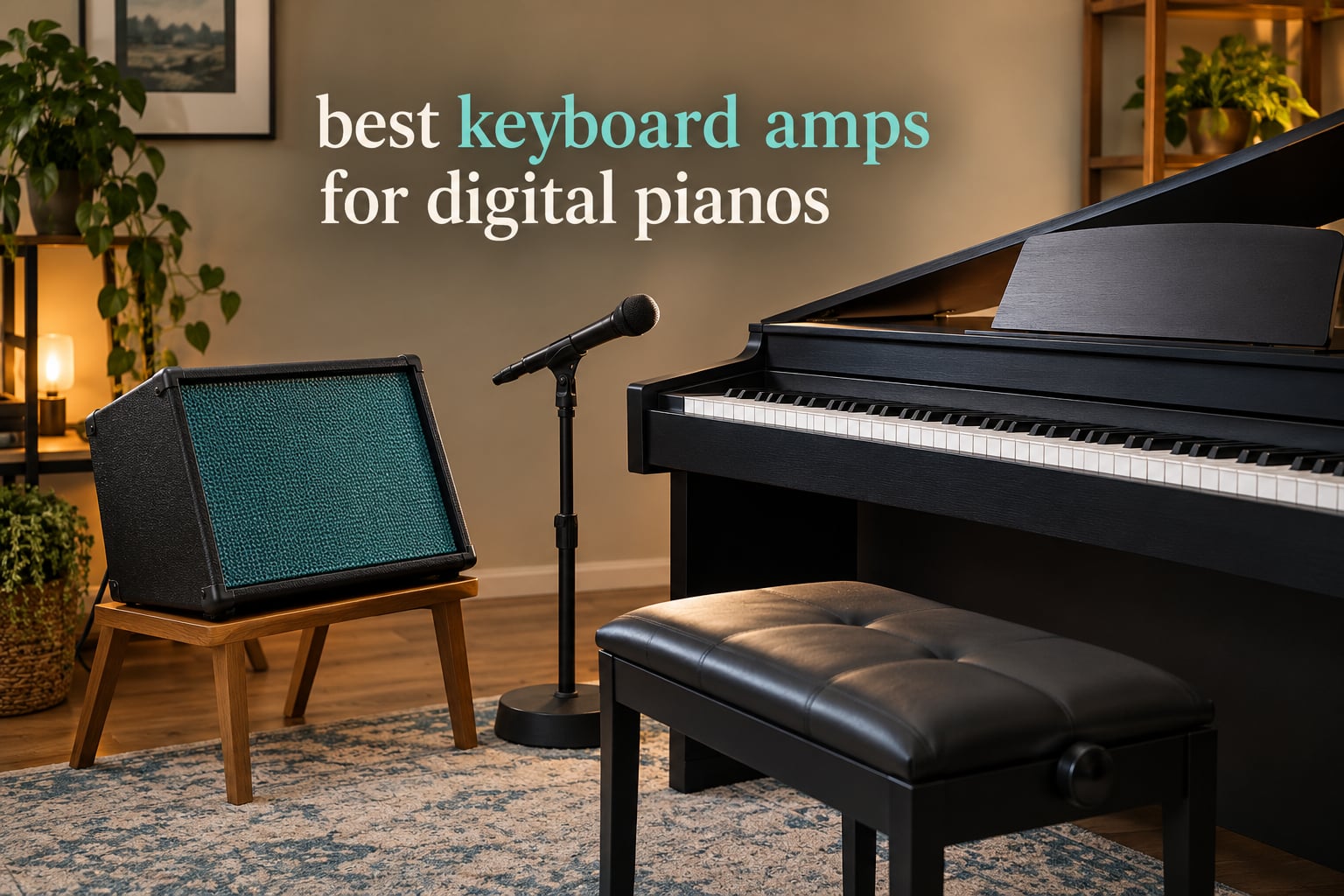
Most digital pianos ship with two small speakers tucked above the keybed, and they are fine for an evening of practice. The moment you want a real grand piano patch at volume, or you need to be heard over a drummer, those built-in speakers run out of low end almost immediately. That is the whole reason the best keyboard amps for digital pianos exist, and in 2026 there are more credible options than at any point before.
We spent this roundup comparing twelve current-generation powered speaker combos built for keyboards, digital pianos and small-stage work, from a 20-watt desktop monitor to a 600-watt bi-amped four-channel system. We looked hard at the things pianists actually get wrong: wattage versus room size, line out versus headphone out, channel count, EQ depth, weight for load-in, and whether the thing can double as a small PA for a solo gig.
A keyboard amplifier is a powered speaker combo designed to reproduce the unusually wide frequency range of digital pianos and synths, from bass notes well below the range of a guitar cabinet to bright upper keys, usually with several input channels, tone shaping and built-in effects so one box can act as a practice monitor, a rehearsal amplifier or a miniature PA.
Table of Contents
Top 3 Keyboard Amp Picks for Digital Pianos (October 2026)
These three cover the most common situations: a compact monitor for a home player, a two-channel amp with real low end, and a dedicated stage amplifier built specifically around stage piano voices.
Coolmusic DM20 20W Monitor
- 20 watts with 6.5 inch woofer and 2.5 inch tweeter
- Bluetooth and USB backing track playback
- Only 4.2 kg so it moves between rooms
Donner DA-35 35W Amp
- 35 watts with 8 inch woofer and 2.5 inch tweeter
- Two channels with separate volume each
- Headphone out and DI out for silent practice

Roland KC-200 100W
- 100 watts with a custom 12 inch two-way speaker
- Four channels plus a dedicated monitor channel
- XLR mic in
- line out
- phones out and sub out
Our full list below covers everything from budget practice monitors to a four-channel 600-watt system, and we have named the drawback of each one rather than just the sales pitch.
All 12 Keyboard Amps Compared Side by Side in 2026
This is the master comparison none of the editorial roundups on this topic bother with. Use it to narrow twelve amplifiers down to the two or three worth your money.
| Product | Specs | Action |
|---|---|---|
| Coolmusic DM20 20W Monitor |
|
Check Latest Price |
| Donner DA-35 35W Amp |
|
Check Latest Price |
| Roland KC-200 100W |
|
Check Latest Price |
 Coolmusic DM80 80W Amp Coolmusic DM80 80W Amp |
|
Check Latest Price |
 Behringer K900FX 90W Behringer K900FX 90W |
|
Check Latest Price |
 Vox VX50KB 50W Vox VX50KB 50W |
|
Check Latest Price |
 Peavey KB2 50W 1×10 Peavey KB2 50W 1×10 |
|
Check Latest Price |
 Behringer KXD15 600W Behringer KXD15 600W |
|
Check Latest Price |
 Behringer K450FX 45W Behringer K450FX 45W |
|
Check Latest Price |
 Coolmusic 30W Keyboard Amp Coolmusic 30W Keyboard Amp |
|
Check Latest Price |
 Vangoa 65W Monitor Vangoa 65W Monitor |
|
Check Latest Price |
 Roland Cube Monitor CM-30 Roland Cube Monitor CM-30 |
|
Check Latest Price |
1. Coolmusic DM20 – Best Overall Choice for Most Digital Piano Players
Coolmusic DM20 20W Bluetooth Personal Monitor Amplifier Electric Drum Amplifier Speaker,Keyboard Speaker with USB Interface(Including E-Drum Noise-Reduction Cable) (Black)
20 watts
6.5 inch woofer plus 2.5 inch tweeter
Bluetooth and USB playback
4.2 kg
Pros
- Most reviewed amplifier here with 875 ratings
- Balanced 6.5 inch woofer and 2.5 inch tweeter in a small footprint
- Bluetooth and USB playback with onboard transport buttons
- Light enough at 4.2 kg to move between rooms
- Angled cabinet aims sound at a seated player
Cons
- 20 watts is modest and some owners report thin bass at higher volume
- Two-band EQ only for tone shaping
- No line out or headphone output reported by users
- Some buyers describe the tone as boxy on drum triggers
The DM20 is the amplifier we would hand to most digital piano players, and the reason is the owner base rather than the specification sheet: 875 ratings, the largest sample in this roundup, sitting at 4.6 stars. It is a personal monitor rather than a stage amplifier, which means bedroom, home studio and small rehearsal room, not the backline of a bar.
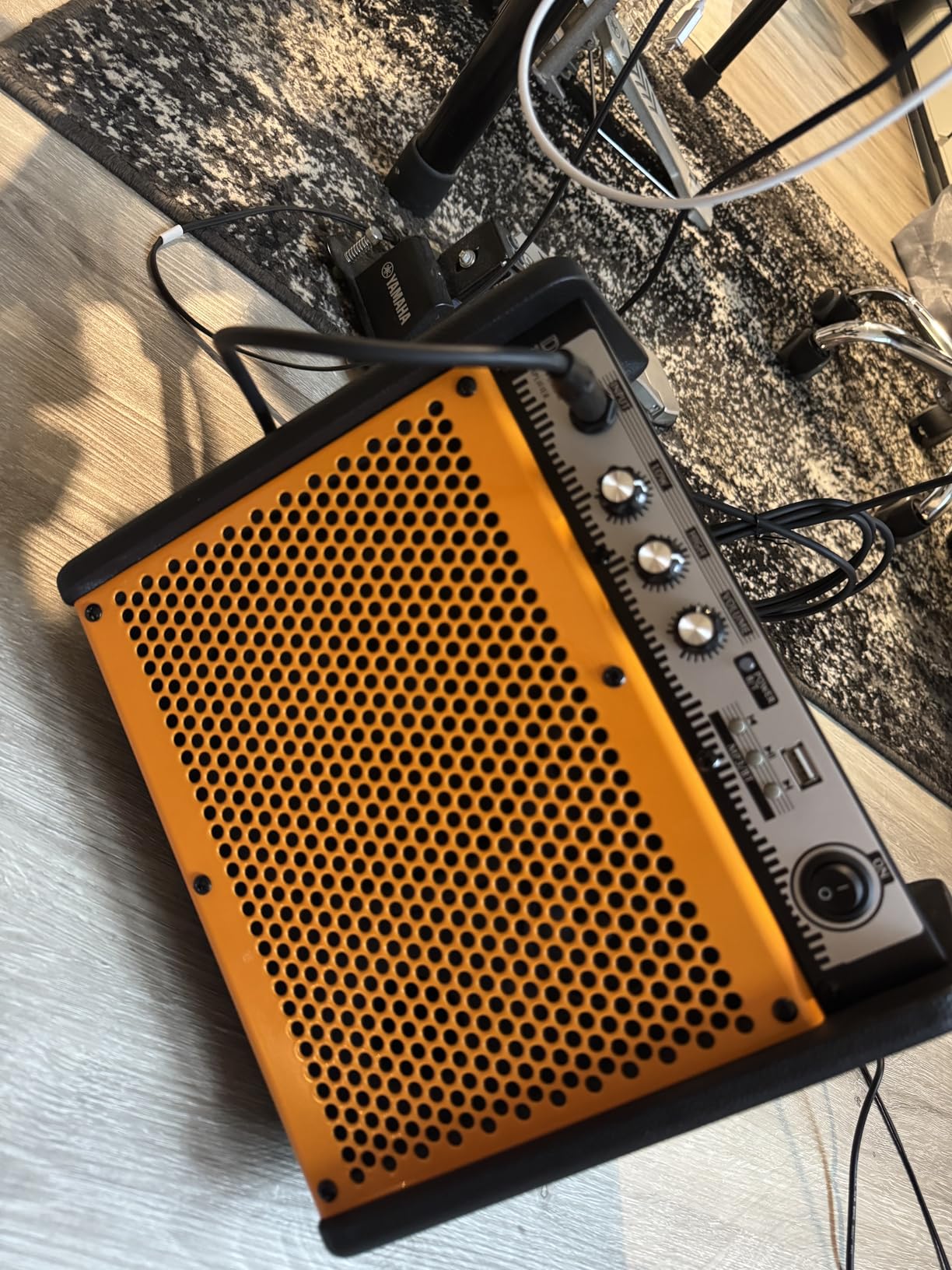
Everything about the layout is aimed at a seated player. The cabinet is slanted so the sound arrives at ear level rather than at your knees, and the standard quarter-inch instrument input means a typical home digital piano connects with the cable most people already own.
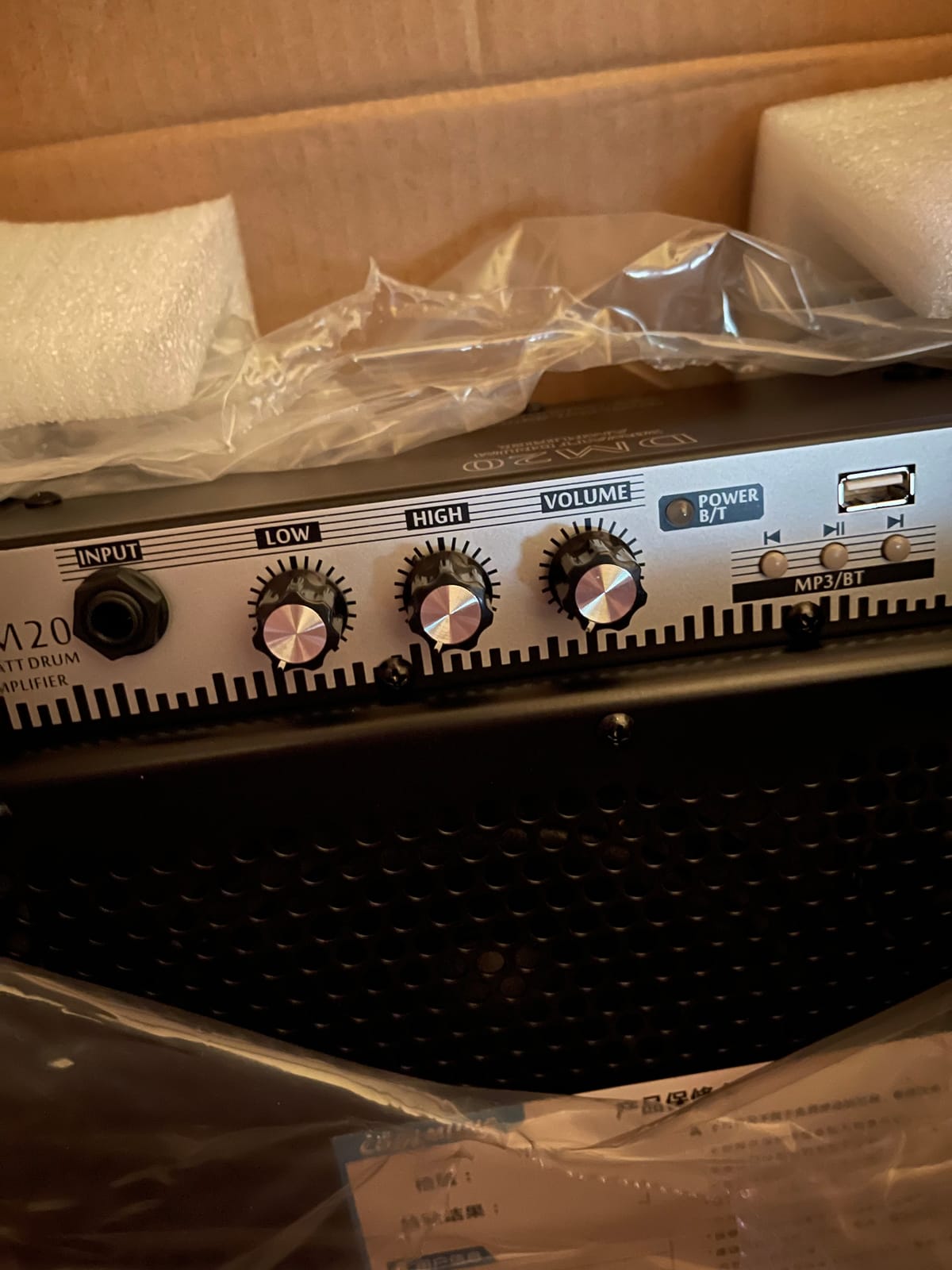
Under the cover it is a 6.5 inch woofer paired with a 2.5 inch tweeter, which is a properly matched pair rather than a single driver pretending to do both jobs. Independent LOW and HIGH knobs sit next to the master volume, so matching a warm Rhodes patch to a bright acoustic grand takes about ten seconds.
The Bluetooth and USB playback with onboard track buttons is the feature that turns it into more than an amplifier. Owners load backing tracks from a phone and play along without a mixer, and the same panel handles volume for the whole box. The package includes an e-drum noise reduction cable and an 18V/3A power adapter, backed by a 24-month guarantee.
Is 20 watts enough for a digital piano?
In a bedroom or a home studio, yes, and then some. A digital piano sends a line-level signal, so 20 clean watts carries a long way in a small room. In a rehearsal space with a drummer, you will be turning it up past the point where owners start reporting thin bass, so pair it with headphones or plan on a bigger amp.
Can you practise silently through this amp?
No, and that is the one real gap. Buyers report no headphone output and no line out, so silent practice means plugging your headphones into the piano itself rather than into the amplifier. If playing along to a backing track while wearing headphones matters to you, look at the Donner DA-35 instead.
2. Donner DA-35 – Best Value Amp with Real Low End
Donner 35-Watt Electronic Drum Amplifier DA-35, 2×8 Speakers, 2-Channel, 3-Band EQ, DI Out, Wireless Audio, Black, Compatible with Electronic Drum & Keyboard, Digital Modeling Amplifier
35 watts
8 inch woofer plus 2.5 inch tweeter
Two channels with separate volume
8 kg
Pros
- Two-speaker design with a dedicated 8 inch woofer and 2.5 inch tweeter
- Two instrument channels with individual volume control
- Headphone output for silent practice
- DI output for feeding a house PA or recording chain
- Three-band EQ plus wireless audio for backing tracks
Cons
- 35 watts is a ceiling in anything larger than a practice room
- Wireless and AUX controls add clutter some players never touch
- Microphone mode is basic next to a dedicated vocal amplifier
Where the DM20 stops, the DA-35 starts. This is the first amplifier in the list that has the cabinet volume and the driver size to put real weight behind the bottom octave of a digital piano, and at 623 ratings it is the second most proven box here.
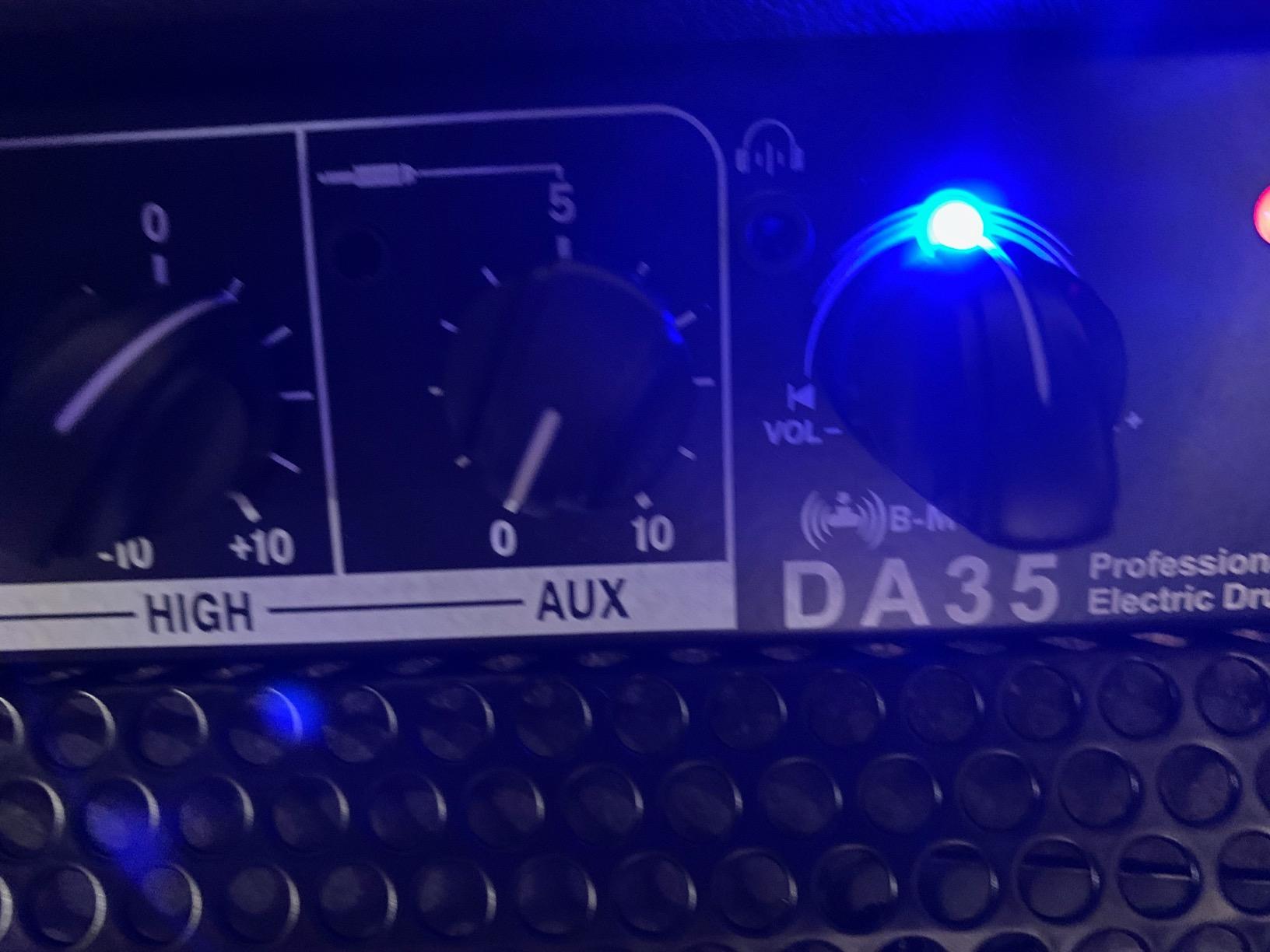
The 20 Hz to 20 kHz frequency response is the number that matters most for acoustic piano voices, because the difference between a thin tinny patch and a convincing grand is almost entirely in the bottom two octaves. Two quarter-inch instrument inputs with separate volume let you run a piano and a second keyboard, or a keyboard and a microphone.
There is an eighth-inch headphone output for silent practice, which the smaller practice monitors often omit, and a DI out for feeding a house PA or a recording chain. A microphone input switches between dynamic mic and line-in modes, so it can handle a vocal for solo acoustic gigs without a separate mixer.
Owners describe it as a well-regarded mid-priced practice amplifier, and the recurring praise is for the two-speaker tone and the useful headphone and DI outputs. The recurring complaint is the same as almost every 35-watt amplifier: it runs out of room before you run out of volume control.
Will an 8-inch woofer cover a grand piano patch?
For a home room or a small rehearsal space, yes, and noticeably better than a 6.5-inch desktop monitor. The dedicated tweeter keeps the upper register from smearing into the low end, which is the usual reason players describe small piano speakers as muddy.
Can you play and sing on the same amp?
That is what the two channels plus the microphone input are for. Piano in channel one, vocal into the mic input, backing track over wireless, and the three-band EQ handles the rest. For solo acoustic and coffee-house work, it saves buying a separate vocal amplifier.
3. Roland KC-200 – Best Amp Built Around Stage Piano Voices
Roland 4-Channel Mixing Keyboard Amplifier, 100 watt (KC-200)
100 watts
Custom 12 inch woofer plus tweeter
Four channels with monitor channel
XLR mic, line out, phones and sub out
Pros
- 100 watts driving a custom 12 inch two-way speaker
- Redesigned power amp and supply for stability and bass reproduction
- Channel 4 works as a dedicated monitor channel for click and guide tracks
- Full I/O including XLR mic in
- line out
- phones out and sub out
- 80 percent of ratings are five star
Cons
- Sits at the top of the price range in this roundup
- Master EQ is only two bands across four channels
- At 19 kg it is heavy and awkward to move between rooms
The KC-200 is the only amplifier here designed from the ground up as a keyboard amplifier rather than a drum or practice monitor repackaged, and everything about it reflects that. A custom two-way system with a newly developed 12-inch woofer and tweeter handles the widest dynamic range of anything on this list.
Roland redesigned the power amp and power supply sections on this model specifically to improve bass reproduction and stability. That matters for digital pianos because a soft passage followed by a fortissimo chord pushes a lot of low-frequency energy through the same driver in a fraction of a second.
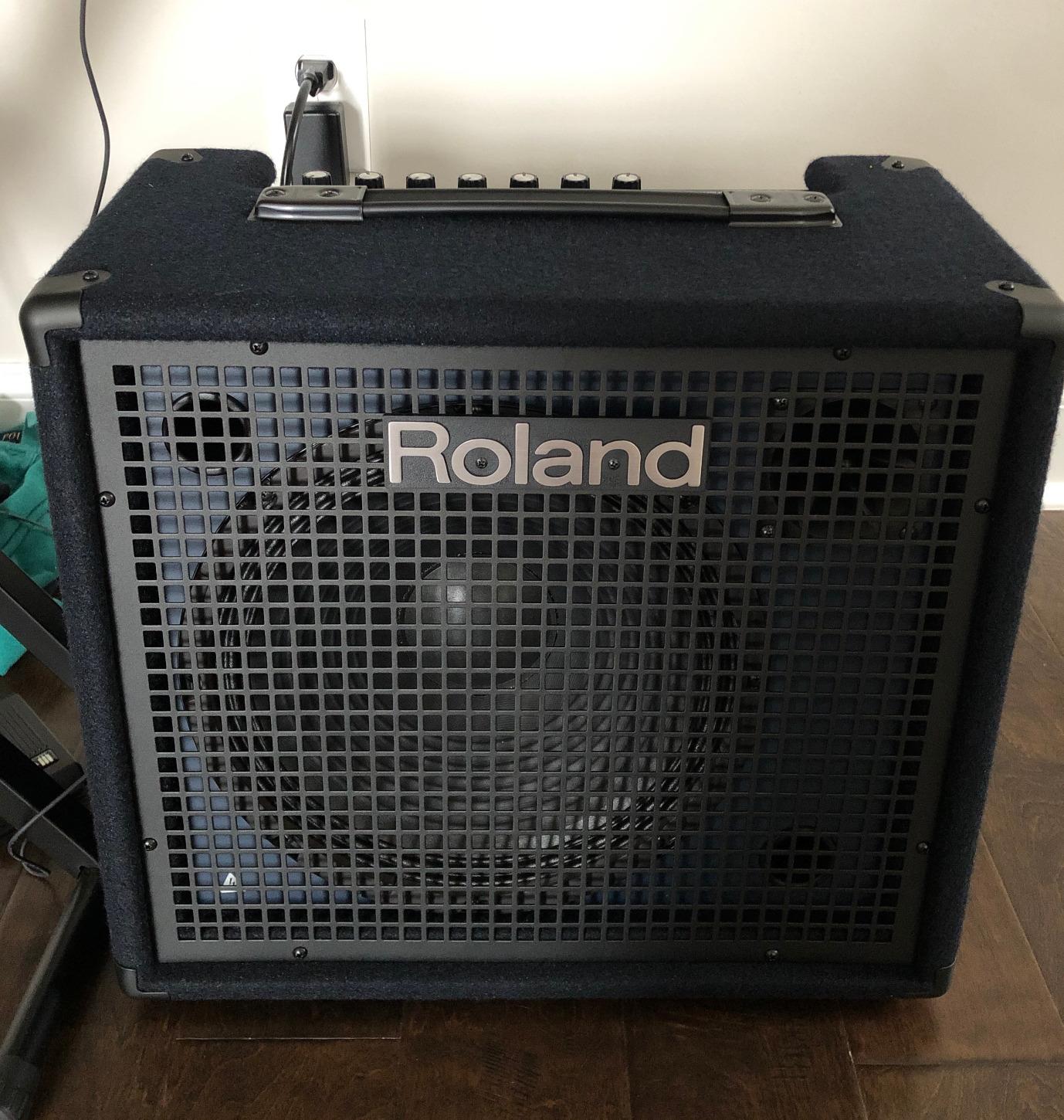
Four quarter-inch line input channels with onboard mixing and a master EQ cover a full working rig: two keyboards, a click or backing source, and a vocal. The dedicated auxiliary input accepts both eighth-inch and RCA, so a phone or a CD player connects without adaptors.
Channel 4 doubles as a monitor channel for click and guide tracks, which piano players appreciate more than synth players do. Rounding out the connections are an XLR microphone input, a quarter-inch line output, a headphone output and a subwoofer output, plus metal jacks for durability.
Why is the fourth channel worth it for a digital piano?
Because it is not just a fourth input, it is a fourth input with its own monitor function. You can run the piano on channel one, a second board on channel two, a microphone on the XLR input, and keep a click or guide track on channel four without fighting for headroom.
What does a two-band master EQ cost you here?
All four channels share one master EQ, so you cannot EQ a vocal differently from a piano, and two bands is shallow next to the five-band graphic equalizers on the Behringer models. If your rig is a single piano, that is rarely a problem. If you are mixing three sources, it is worth weighing up against the K900FX.
4. Coolmusic DM80 – Best Amp for Rehearsal Rooms and Band Practice
Coolmusic Electric Drum AMP 80-Watt Electronic Drum Amplifier DM80 Keyboard Speaker with Bluetooth, with 3-Year Warranty
80 watts
10 inch woofer plus 3 inch tweeter
Two inputs plus Bluetooth and USB
Line out for linking
Pros
- 80 watts with a 10 inch woofer gives noticeably strong low end
- Two line inputs plus Bluetooth for keyboard plus backing track plus mic
- Line out links to a larger system or mixer
- Heavy-duty steel cabinet with a durable carry handle
- Three-year warranty
Cons
- Some owners report audible hiss at higher volume settings
- Footprint is smaller than the wattage suggests
- A small number of ratings report distortion when bass is boosted hard
- Not a dedicated piano voicing
The DM80 is the pick for anyone who practises at home with a band and needs enough low end to hear a piano patch over a drum kit. Eighty watts through a 10-inch woofer is the point where a keyboard amp stops being a practice tool and starts behaving like a small backline.
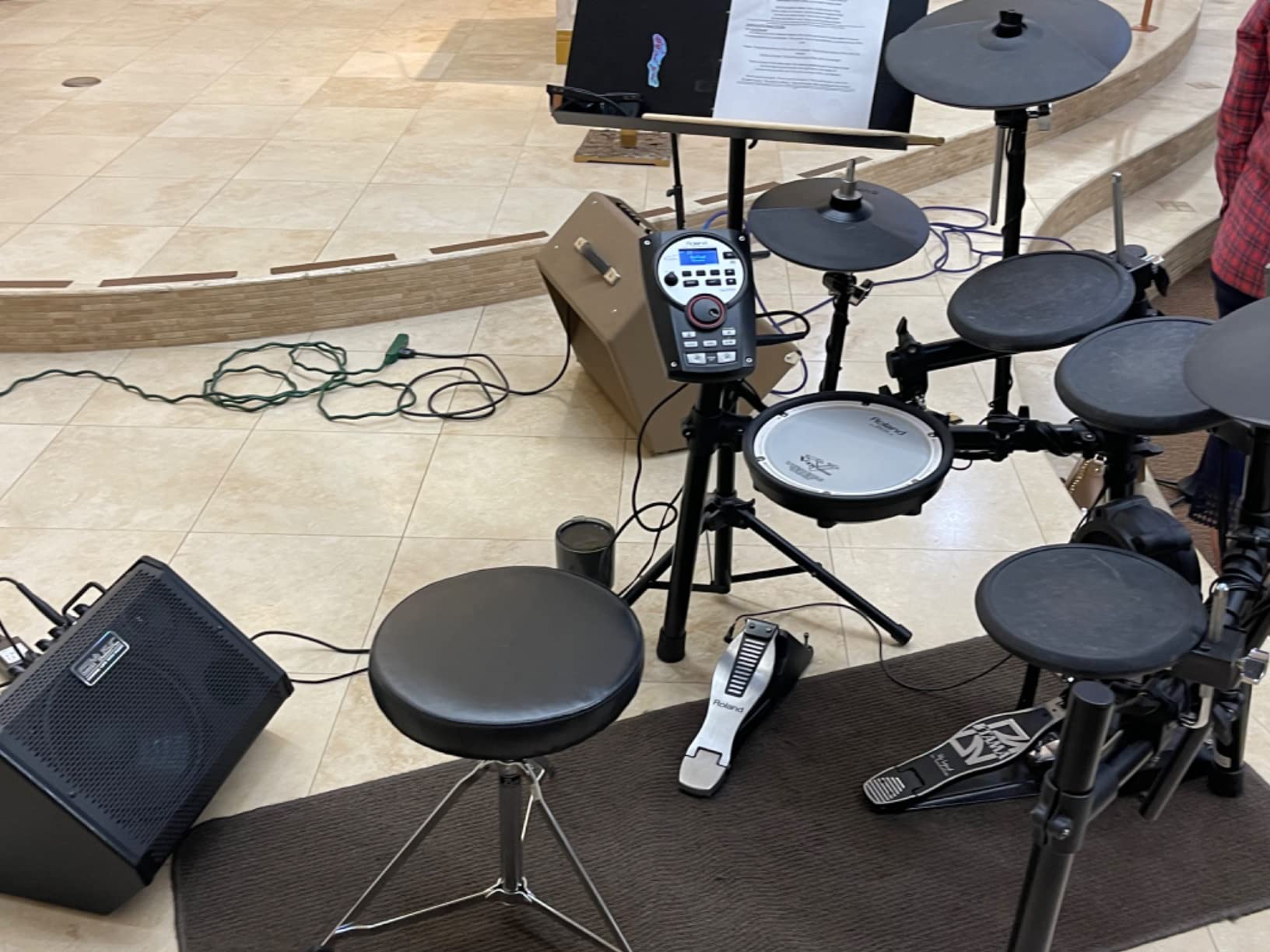
Keyboard owners report using it as a primary stage and rehearsal monitor, which is unusual for a drum-oriented amplifier at this level. The tilted-upwards floor-facing design puts the sound where a seated player expects it, so you are not standing over the cabinet to hear it.
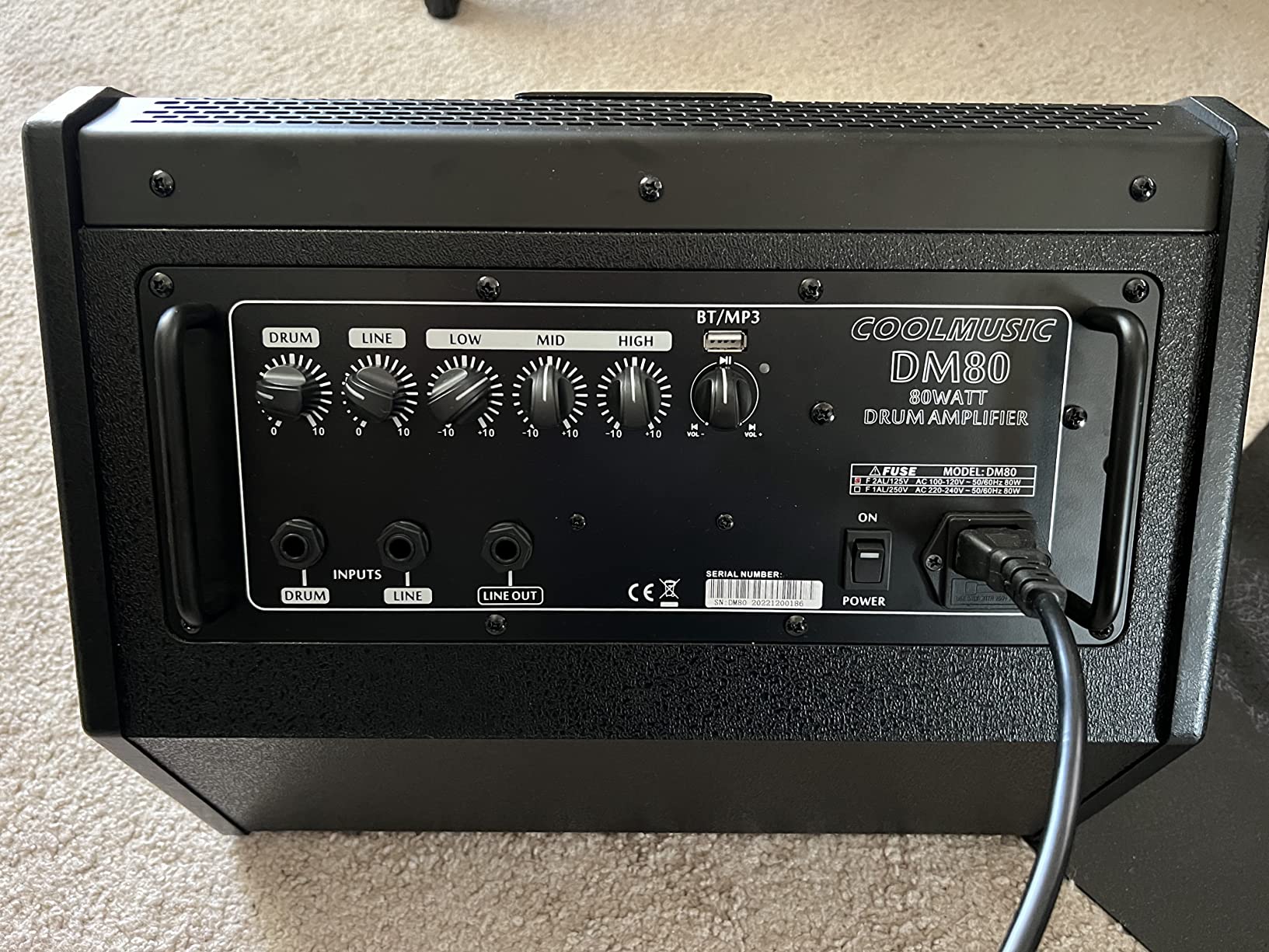
Two inputs plus Bluetooth and USB means you can run a drum set, a backing track and a keyboard or bass guitar simultaneously. The three-band EQ covers low, mid and high, which is enough to tame a boomy room without reaching for anything else.
The line out is the quiet hero here. It works as a source for headphones or for linking in series with another speaker, mixer or recording chain, so an 80-watt practice amp can grow into a small stage system instead of being replaced by one.
Is 80 watts too much for a home player?
It is more than a bedroom needs, but wattage you do not use is not a problem, and a small number of owners note the cabinet is more compact than the power figure suggests. For silent practice at home, the 20-watt DM20 remains the more sensible purchase.
What does the line out actually let you do?
It turns the amplifier into a source for a bigger system. Chain it to a mixer, to a second powered cabinet, or to an interface for recording, and you have effectively built a small PA out of a practice amp without buying a second box.
5. Behringer K900FX – Best Amp for Piano, Vocals and a Small Venue
Behringer Ultratone K900fx Ultra-Flexible 90-Watt, 3-Channel Pa System / Keyboard Amplifier With Fx And Fbq Feedback Detection
90 watts
15 inch speaker
Three channels
Five-band graphic EQ
FBQ feedback detection
Pros
- Three channels run two keyboards plus a microphone without a mixer
- Five-band graphic EQ gives more tone control than compact two- and three-band models
- 24-bit onboard effects including a usable reverb
- Fbq feedback detection is genuinely useful for live keyboard work
- Line out and subwoofer output allow expansion into a larger PA
Cons
- Clips noticeably past roughly two-thirds of the volume dial
- About 40 pounds makes it one of the heavier cabinets here
- One documented report of sound cutting out randomly
- Some owners find the tone thin and tinny at the frequency extremes
The K900FX is the amp we would put in front of a solo pianist who sings, because three channels with separate volume and FX send per channel does the work of a small mixer. Long-standing owners specifically value the five-band graphic EQ, which is deeper than anything else at this power level.
Twenty-four-bit digital effects sit behind the per-channel FX send, so reverb on the vocal and a dry piano patch are independent choices rather than one global setting. The CD input lets you play along to records, and a line out plus subwoofer output opens the door to a larger PA later.
Then there is FBQ, the feedback detection system, which plays a tone that reveals the critical frequencies in the room so you can notch them out with the EQ. In a small church hall or a rehearsal space where a piano patch howls, that feature earns its place more often than any other on this amplifier.
Be honest about the limits, though. It clips past about two-thirds of the volume dial, some owners find the tone thin at the extremes, and 15 percent of ratings are one star, the second-highest share in this roundup. The 15-inch speaker delivers volume more convincingly than refinement.
Is the XLR input safe for a digital piano line out?
No, and this trips people up. The XLR channel is a microphone-level input, so feeding it a keyboard line out overloads it and produces distortion. Use the quarter-inch line inputs for the piano and reserve the XLR for a vocal microphone.
Why does FBQ matter for a pianist in a small room?
Because the low frequencies in a grand piano patch excite room modes in a way a guitar rarely does. FBQ identifies those problem frequencies so you can cut them before they turn into howling, which is a real problem in a small rehearsal room with a hard ceiling.
6. Vox VX50KB – Best Amp for Warm Vintage Electric Piano Tone
Vox VX50KB 50-Watt Keyboard Amp
50 watts
NuTube-equipped preamp
8 inch coaxial speaker in bass reflex cabinet
4.77 kg
Pros
- Lightest full-featured keyboard amp here at 4.77 kg
- NuTube preamp adds warmth owners describe as musical
- Three channels with independent volume for keyboard
- mic and backing track
- Aux in
- headphones out and line out cover every common task
- Clean warm tone that suits acoustic piano and organ voices
Cons
- Some reviewers hear distortion as volume passes the middle of the range
- One owner preferred a premium portable alternative for clarity
- Build materials described as cheap and toy-like
- Only an 8 inch coaxial driver
- so large rooms need the line out
The VX50KB is the one we recommend to players who chase the sound of a Rhodes or a Wurlitzer rather than a modern concert grand. The NuTube-equipped preamp adds a genuine harmonic warmth to the top end, and owners describe the resulting tone as noticeably musical rather than merely accurate.
Weight is the headline number here: 4.77 kg makes it the lightest full-featured keyboard amplifier in this roundup, and several professional keyboardists use it for exactly that reason. It moves from the car to the stage in one trip, which is a bigger practical advantage than raw wattage.
The 8-inch coaxial speaker sits in a bass reflex structure that helps low-end response beyond what the driver size suggests, and the three-channel layout with independent volume handles keyboard, microphone and backing track from one box. Aux in, headphones out and line out mean it also covers silent practice and PA linking.
Be aware of the trade-offs. The coaxial driver is the only speaker on offer, so 50 watts is enough for a rehearsal room but not a large hall without help from the line out, and 16 percent of ratings sit at three stars, which points to genuinely polarising tone preferences.
Does the NuTube preamp help electric piano voices?
Yes, that is the reason it exists. The preamp adds harmonic content that smooths the top of a tine piano patch and gives sustain pedal releases a little more body, which is why players comparing it to cheaper solid-state monitors often prefer it for Rhodes and Wurlitzer sounds.
Can it carry a solo gig by itself?
For a small room, yes, comfortably. For anything larger you are back to a single 8-inch coaxial driver, and 50 watts will not outrun a drummer. The line out is the release valve: run it into a house PA and the tone you tuned at home comes with you.
7. Peavey KB2 – Best Amp for Four-Channel Working Rigs
Peavey KB 2 50-Watt 1×10 Keyboard Amp
50 watts biamped at 45 and 12
Four separate channels
Channel 3 with XLR and quarter inch inputs
10 inch speaker
Pros
- Four channels
- the most on this list
- covering two keyboards plus a mic and a fourth source
- Biamped power stage of 45 watts and 12 watts for a cleaner output
- 10 inch speaker gives stronger low end than 8 inch portable models
- XLR mic input on channel 3 alongside quarter inch instrument inputs
- Headphone out supports silent practice
Cons
- Only a two-band EQ
- the least tone control in the roundup
- At 38.4 pounds it is heavy for its compact dimensions
- The 90 day warranty is the briefest coverage here
- Larger wattage versions in the same family exist
The KB2 exists for a specific situation: a player running more than two sources. Four separate channels with a biamped 45-watt and 12-watt power stage cover two keyboards, a microphone and a click or backing track without a separate mixer, and the ratings reflect a strongly positive 77 percent five-star share.
Channel 3 carries both an XLR input and a quarter-inch instrument input, which is unusual at this size and saves you from a DI box when a vocal mic goes straight into the amplifier. The 10-inch driver delivers noticeably more low end than the 8-inch portable models, which is the deciding factor for a stage piano.
Headphone out is there for silent practice, and the compact one-by-ten cabinet is smaller than the 38.4 pound weight suggests. That weight is the practical catch: it is a studio or stage amplifier, not a carry-it-up-stairs practice box.
The two-band EQ is the real limitation. With four channels feeding one master EQ, you have volume control per source and very little tonal control, so a vocal and a piano are stuck with whatever the master setting gives you.
Is a two-band EQ a genuine problem here?
For a single piano, no. For a four-channel rig with a singer, yes, and it is the single strongest argument for choosing the K900FX instead, which gives you five bands and per-channel FX send across a similar channel count.
Is the 90-day warranty a problem?
It is the briefest coverage of the twelve amplifiers here, and it is the main reason we would not call the KB2 a first recommendation despite the strong ratings. One year is standard almost everywhere else, so you are carrying more risk on a single purchase.
8. Behringer KXD15 – Best Amp for Stage Power and Large Rooms
BEHRINGER ULTRATONE KXD15
600 watts bi-amped Class D
15 inch TURBOSOUND speaker
Four channel mixer
100 FX presets
Pros
- 600 watts of bi-amped Class D power
- more headroom than any other amplifier here
- Four channels handle two keyboards plus mic and a backing source
- 15 inch TURBOSOUND speaker delivers real low-end authority for piano voices
- KLARK TEKNIK FX processor with 100 presets built in
- Class D design keeps the weight reasonable for a 600 watt amplifier
Cons
- Heaviest amplifier here at 49.2 pounds
- which makes it a two-person carry
- Sits at the top of the price range
- A small review sample with a mixed band of mid-range ratings
- The 21.65 inch width is impractical in a small practice room
When 90 watts is not enough, this is what enough looks like. The KXD15 is a true bi-amped 600-watt system where the low-frequency and high-frequency drivers each get their own dedicated amplification, which is the difference between a big speaker and a properly designed one.
The 15-inch TURBOSOUND driver with a 1-inch tweeter has real low-end authority, and for stage piano voices that is the whole point. A Rhodes patch that disappears under a guitar amp comes back the moment there is genuine excursion available in the low end.
Class D amplification technology delivers that power without the weight of a traditional analogue power stage, though 49.2 pounds is still the heaviest amplifier in this roundup. The four-channel mixer and the KLARK TEKNIK FX processor with 100 presets, from reverb and chorus to flanger, delay and pitch shifting, cover a full working rig.
The honest caveat is the review sample: 69 ratings is the smallest meaningful pool here, and a portion of them sit in a mixed mid-range band rather than at the top. It is an outstanding specification for a rehearsal room, a church stage or a small outdoor gig, and an absurd choice for a bedroom.
When do you actually need 600 watts?
When you are in a room where a drummer and a guitarist are already generating 100 decibels or more, or when you are doubling a piano with a subwoofer and still need headroom. Below that level, bi-amped 90 to 200 watts is plenty and you carry half as much.
Is it a one-person carry?
At 49.2 pounds and over 21 inches wide, most players will want a second person for stairs and doorways. If you are loading in alone, budget for a dolly rather than a shoulder, and check the width of your vehicle first.
9. Behringer K450FX – Best Amp for Deep Tone Shaping on a Budget
Behringer K450Fx Ultratone
45 watts
10 inch BUGERA speaker
Three channels
Five-band graphic EQ
Subwoofer out
Pros
- Three channels with separate volume and FX send per channel
- Five-band graphic EQ offers the most tone control at this power and price level
- Subwoofer output allows adding low-end for larger rooms
- Gets genuinely loud for a practice amplifier or small club
- CD input for playing along
- Long track record of reliability for many owners
Cons
- Lowest average rating here at 4.0 with an 11 percent one-star share
- Some reviewers find the tone boomy and muddy in the upper bass
- A few reports of units arriving with a broken amp-to-speaker section
- At 34.8 pounds it is heavy for a practice-room amplifier
The K450FX is the amplifier to buy when EQ control is the feature you care about most. A dedicated five-band graphic equalizer at 45 watts is unusual, and it gives you far more sculpting room than the two- and three-band models that dominate the practice amplifier market.
Three channels with separate volume and FX send per channel make it a competent small mixer, and the subwoofer output is the quiet advantage. When a single 10-inch driver cannot fill a room with bass, the sub out lets you add low frequencies without replacing the amplifier.
Owners frequently report it getting genuinely loud for a practice room or small club, and the CD input is a small touch that costs nothing. The long-serving design has a real track record, with 135 ratings accumulated over years rather than months.
We would not hide the negatives. It carries the lowest average rating in this roundup at 4.0 with an 11 percent one-star share, several reviewers describe the upper bass as boomy and muddy, and a few units reportedly arrived with a damaged amplification section, so inspect the box before powering up.
Is the tone accurate enough for a serious pianist?
For shaping a mix in a band, yes. For critical solo piano listening, no, and the boomy upper bass complaint is consistent enough that pianists who care about accuracy tend to prefer the KC-200’s dedicated 12-inch two-way system.
What does the subwoofer output actually buy you?
Bass you cannot get from a 10-inch driver in a large room. Running a small subwoofer off the sub out restores the low end for a full band while the main cabinet handles the midrange and the vocals, which is cheaper than moving up to a much larger amplifier.
10. Coolmusic 30W Keyboard Amp – Best Budget Amp with Headphone and DI Outputs
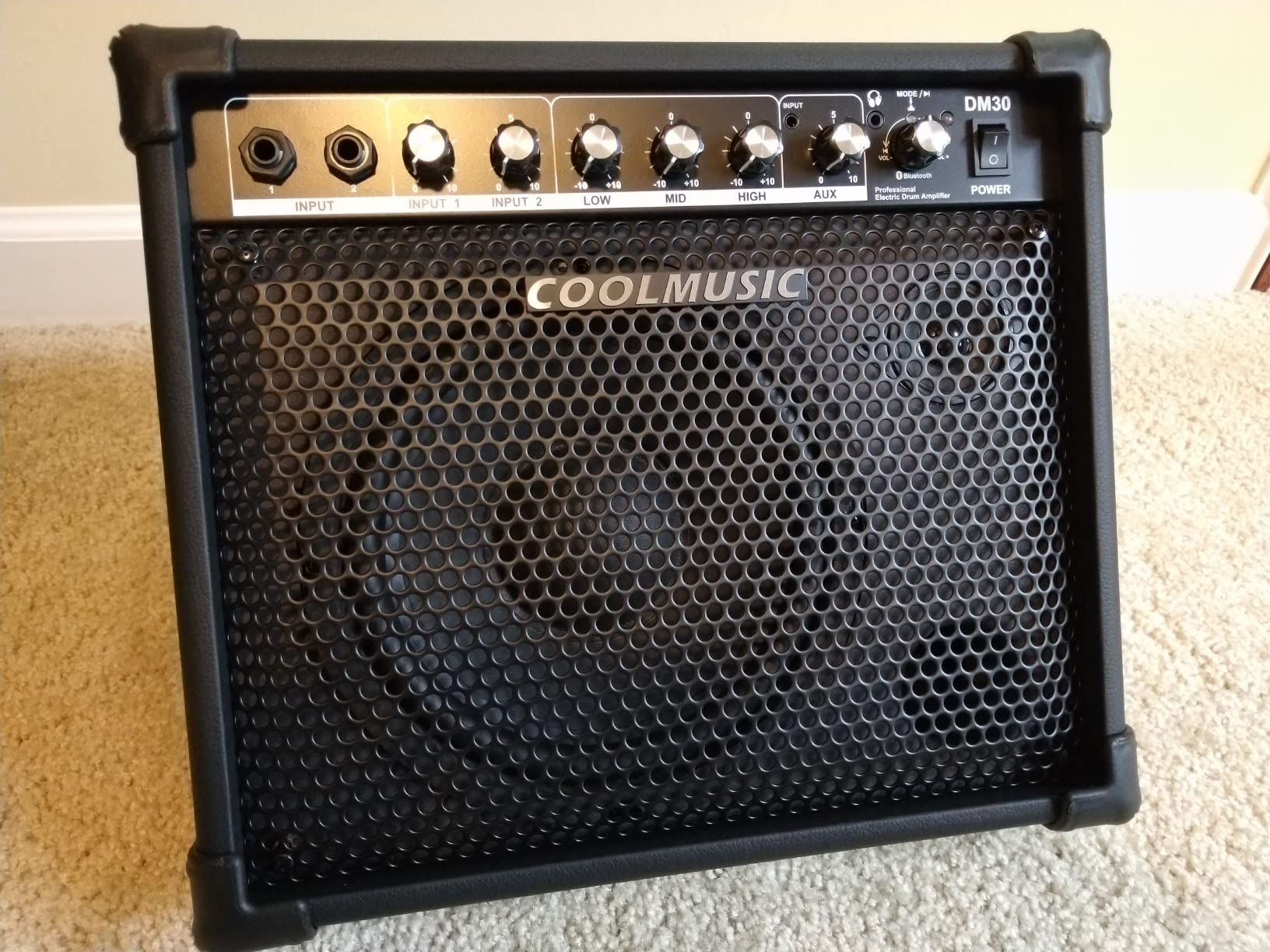
Coolmusic Drum Amplifier 30W, Wireless Electric Drum Speaker Keyboard Amp with 3-Band EQ and DI Out
30 watts
8 inch woofer plus 2.0 inch tweeter
Two channels with separate gain
Headphone out and DI out
Pros
- Highest average rating here at 4.7 with an 84 percent five-star share
- Two direct inputs plus Bluetooth for backing tracks
- Headphone out and DI out for silent practice and recording
- Compact and light enough to move between rooms easily
- Owners report more volume and thicker bass than expected
Cons
- Single 8 inch driver lacks the deepest bass
- Some players would prefer XLR inputs
- The external power adapter is a separate item to carry
- An external adapter barrel connection is fragile
This Coolmusic 30W model posts the highest average rating of the twelve at 4.7, with 84 percent of ratings at five stars. The sample is small at 57 ratings, so treat that as encouraging rather than proven, but the consistency of the praise is striking for a compact 30-watt monitor.
Two speakers, an 8-inch woofer and a 2.0-inch tweeter, give a 20 Hz to 20 kHz response, which is a wider window than most practice amplifiers of this size manage. Two channels with separate gain per channel let you run a piano and a backing source, and the three-band EQ handles low, middle and high.
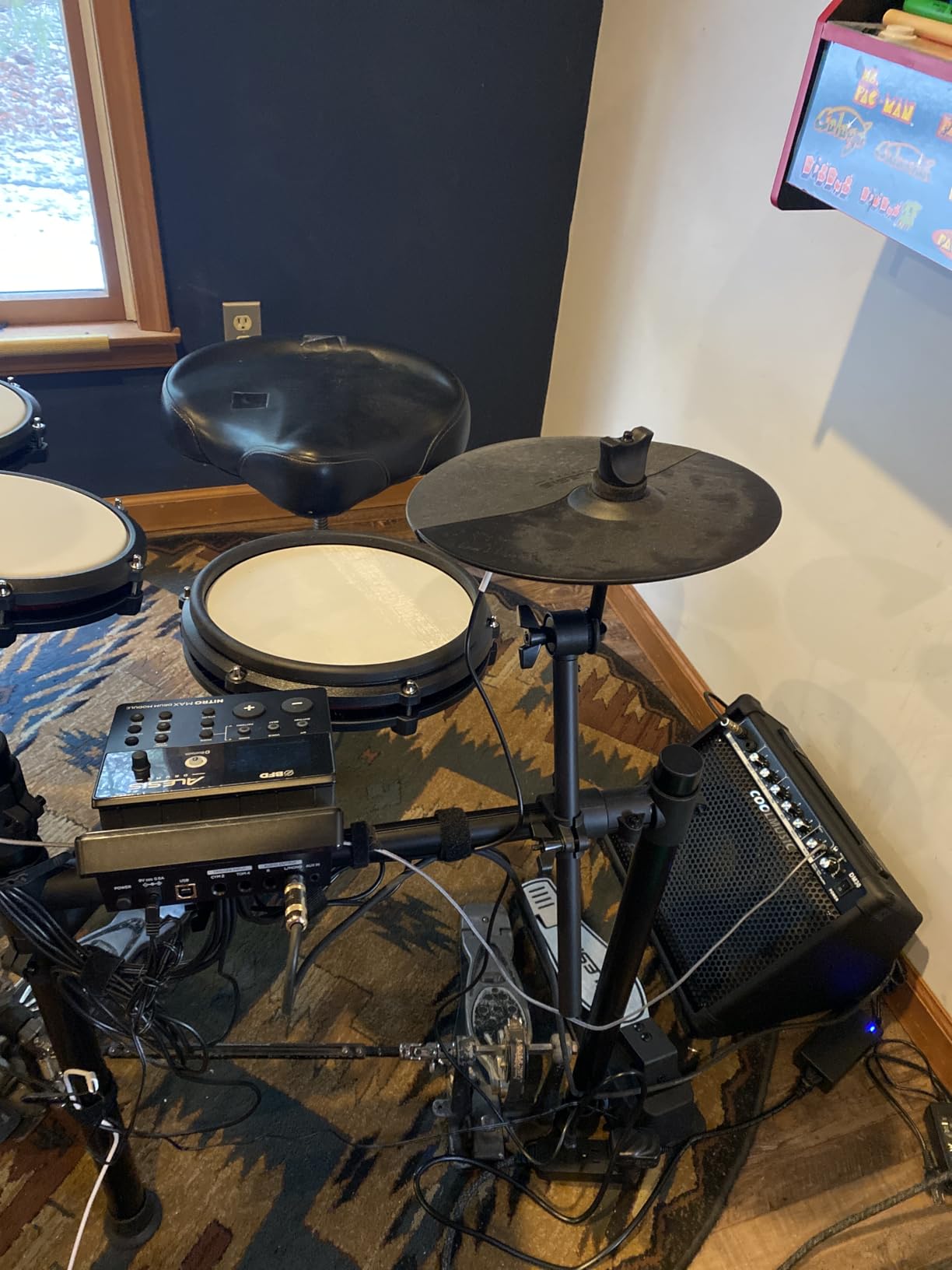
The eighth-inch headphone output and the DI out are what separate it from cheaper practice monitors. Silent practice is possible, and you can feed a recording chain or a second active speaker without buying anything else.
Owners report more volume and thicker bass than expected at this level, which is the common reaction. The single 8-inch driver is still the limit for drummers, but for keyboards and synths in a small room it does more than the wattage number suggests.
Is the top rating trustworthy with only 57 reviews?
Treat it as a good sign rather than a guarantee. A small sample can swing fast, but 84 percent five stars with no ratings at one star at all is a cleaner distribution than several larger-sample amplifiers here manage.
What are you giving up at 30 watts and 8 inches?
Real low end, and nothing else. Against the DM80 and the Roland KC-200 you lose the bottom two octaves that make a grand patch convincing, plus XLR inputs. For practice, home recording and a small room, you are not missing much.
11. Vangoa 65W Monitor – Best Amp for Wireless Practice and Rehearsal
Vangoa Electric Drum Amp 65W Professional Wireless Electronic Amplifier for Drum Set Speaker 3-Band EQ USB Personal Monitor Keyboard Speaker, Black
65 watts
8 inch woofer plus 2 inch tweeter
Two independent input channels
Three-band EQ
45 Hz to 20 kHz
Pros
- 65 watts gives solid headroom for practice rooms and small rehearsals
- Two independent input channels for a keyboard plus a backing source
- 8 inch woofer delivers high-impact bass for its class
- Three-band EQ with a straightforward top-mounted control panel
- Supports headphone
- USB and wireless sources
Cons
- The frequency response floor of 45 Hz is narrower than larger-driver competitors
- Build quality of the metal and plastic cabinet is functional rather than premium
- Second lowest average rating here with a 7 percent one-star share
The Vangoa 65W sits in the awkward middle of this list, and that is exactly why it works for some players. Sixty-five watts with an 8-inch woofer and 2-inch tweeter is more headroom than a practice monitor and less bulk than a stage amplifier, which makes it a natural rehearsal-room companion.
Two independent input channels take a keyboard and a backing source with separate controls, and the connectivity covers more bases than most competitors: instrument inputs, headphone, USB interface and wireless from a phone or player, all with a three-band EQ in front of them.
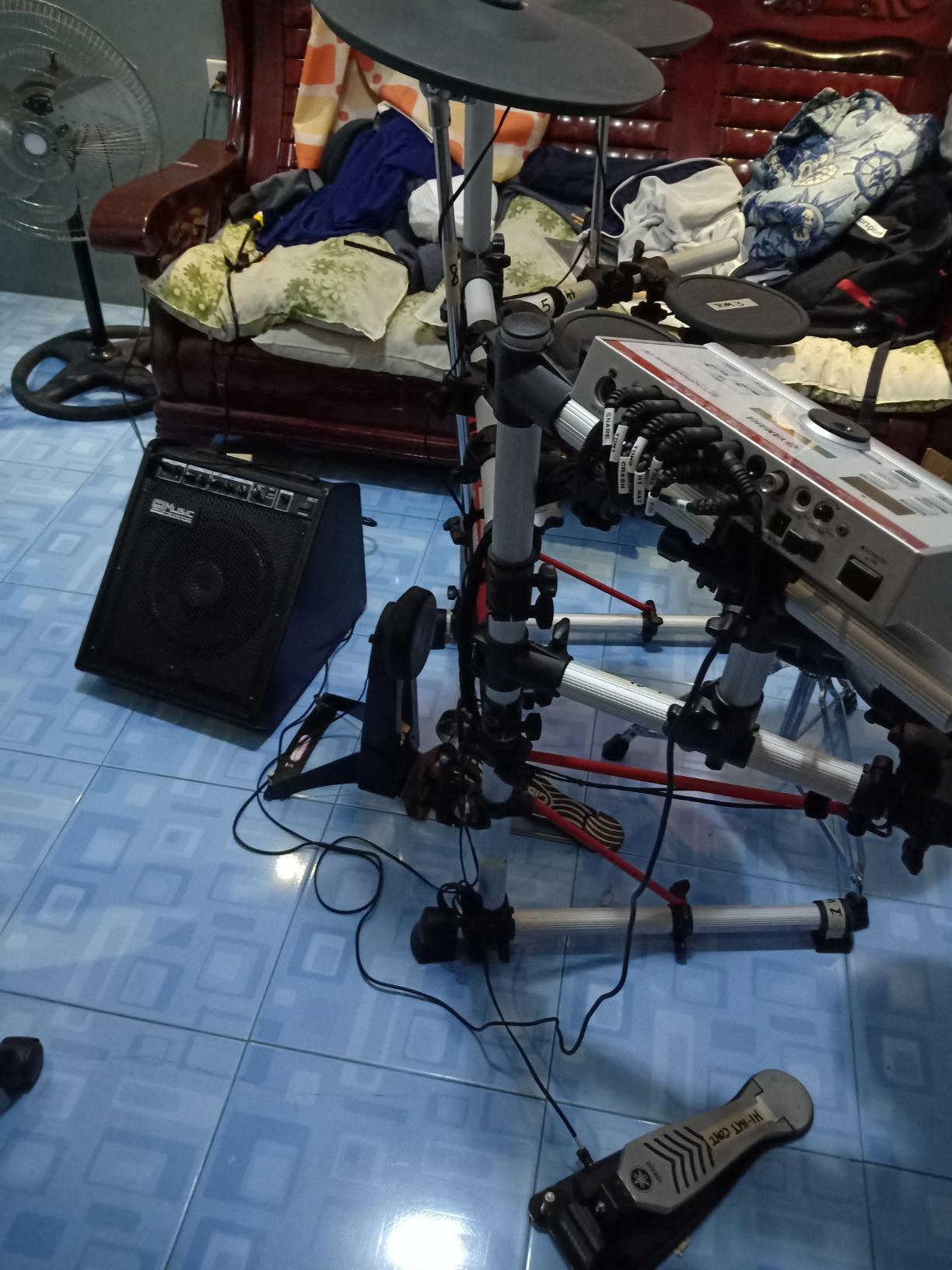
Sentiment across 288 ratings is positive but less uniformly enthusiastic than the Coolmusic models, with the 8-inch woofer’s bass response the most common point of praise for the money. Owners use it for practice, rehearsal, street performance and karaoke as well as keyboards.
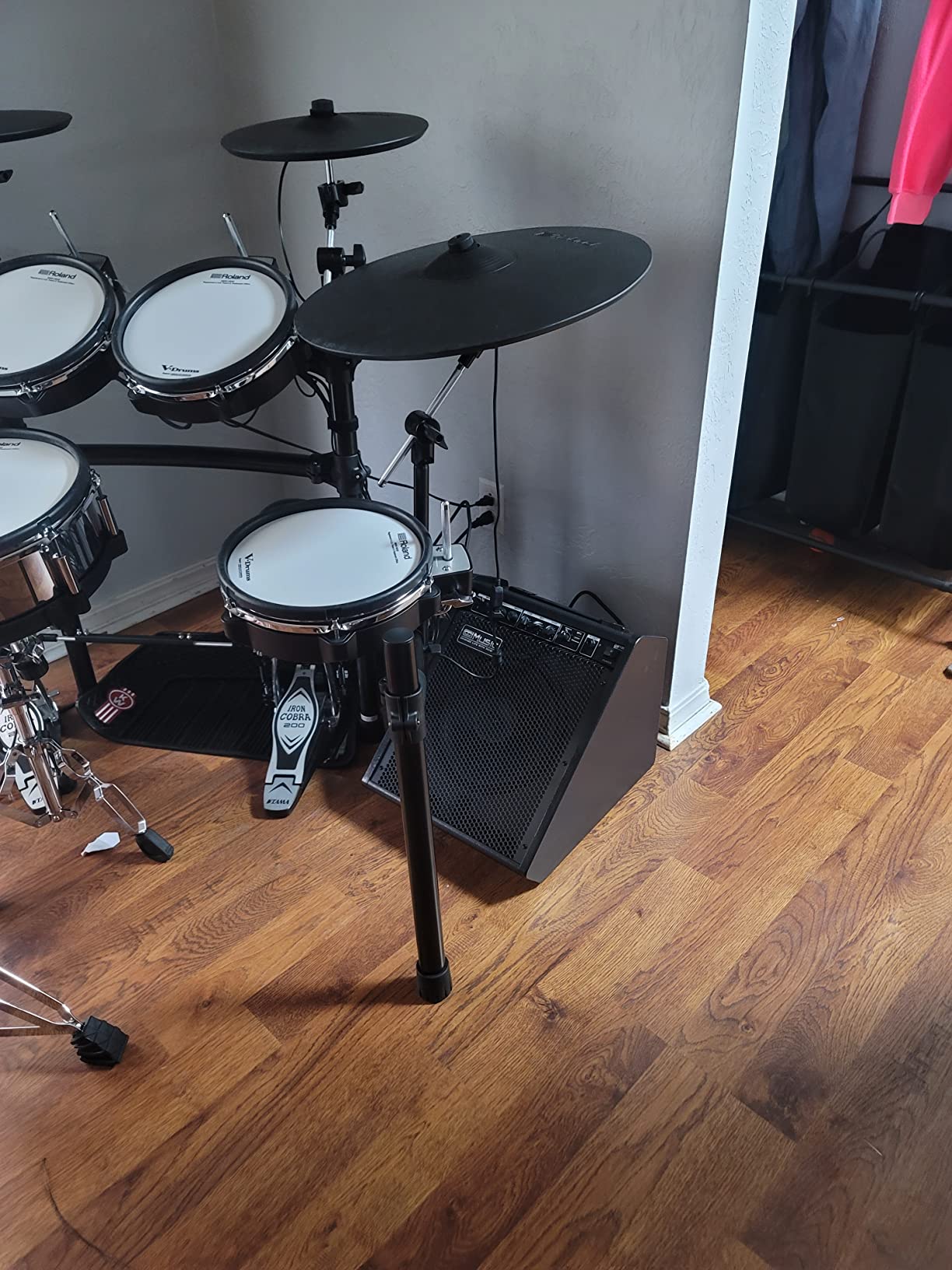
The specification detail worth knowing is the 45 Hz to 20 kHz response, a narrower bottom end than the 20 Hz figures on the Donner and Coolmusic amplifiers. In practice that means slightly less weight under an acoustic piano patch in a large room.
Where does the 45 Hz floor show up?
On soft, low grand piano passages in a room with hard surfaces, where you will notice the bass tapering sooner than on a model rated down to 20 Hz. In a small carpeted practice room, you will not hear the difference at all.
Is it a reasonable rehearsal-room amplifier?
More than reasonable. Sixty-five watts covers a band room with a drummer at moderate volume, and the metal and plastic cabinet is built for moving rather than display. The build feels functional rather than premium, which is the trade for the low weight.
12. Roland Cube Monitor CM-30 – Best Amp for Battery Powered Playing Anywhere
Roland Cube Monitor/PA
30 watts
6.5 inch dynamic driver
Stereo with overdrive, chorus, delay and reverb
Runs on batteries, 12 lb
Pros
- Built-in overdrive
- chorus
- delay and reverb effects
- Stereo sound that works for both instruments and vocals
- Fits in a briefcase and runs on batteries
- 6.5 inch dynamic driver monitor from a recognised Roland platform
- Bluetooth and auxiliary connectivity
Cons
- 30 watt ceiling limits it to small rooms and practice use
- The 6.5 inch driver delivers limited low end for full-range piano voices
- Connectivity is auxiliary
- coaxial and XLR only
- with no modern digital inputs
The Cube Monitor is the one amplifier here that genuinely disappears into a bag, and for buskers, street performers and anyone who plays where there is no mains power, that is not a minor feature. It runs on batteries and the cabinet is specified to fit in a briefcase.
Thirty watts of stereo output with built-in overdrive, chorus, delay and reverb means you can cover a solo piano set, add a guitar, or use the effects on a vocal through the same box. Ratings concentrate at five stars at 76 percent, which is a good sign for a design this old in the range.
The 6.5-inch dynamic driver is the compromise. It produces a clean, balanced stereo image for practice and small-room monitoring, but it cannot generate the low-end excursion a concert grand patch needs, and reviewers consistently note the limit.
Connectivity is auxiliary, coaxial and XLR with Bluetooth wireless, which is a sensible spread for a monitor, though there is no modern digital input. The warranty is 90 days on parts and labour and one year on parts, which is thinner coverage than most.
Is battery power useful for a pianist?
Very, in specific situations. Busking, a park performance, an outdoor ceremony or a rehearsal in a room with no socket, where a 12-pound amplifier that runs on batteries is the difference between playing and not playing.
Will it fill a small room?
A bedroom or a home studio, comfortably. A living room with other people talking, barely. Thirty watts through a 6.5-inch driver is a personal monitoring level, and treating it as a room-filling amplifier is where most buyers feel short-changed.
Do You Actually Need a Keyboard Amp for a Digital Piano?
Sometimes you do not, and we would rather say so than sell you a box you do not need. If your digital piano is played in a bedroom at moderate volume with the lid closed, the built-in speakers are adequate and a good pair of headphones is a better use of money.
The threshold for an external amplifier arrives when one of these becomes true: you want to play with the lid open, you are playing with other musicians, you need the volume to carry past a conversation, or you want to add a microphone and a backing track from one box.
The other trigger is dissatisfaction with the sound. Players on r/piano and Piano World regularly describe upgrading an instrument and being surprised that the thin, tinny result has nothing to do with the piano itself. The keys sound better through headphones but worse through the onboard speakers.
Why Not Just Use a Guitar Amp?
Because a guitar cabinet is built for a completely different frequency range. Electric guitars and amplifiers are voiced from roughly 80 Hz upward, tuned for the midrange where a guitar sits in a band mix, and they roll off hard below and above that window.
A digital piano sends a much wider signal, including notes well below the bottom string of a bass guitar and bright attack transients in the upper keys. Forced through a guitar amp it arrives compressed, cluttered and lifeless, which is the word players on r/musicians and r/livesound reach for most often.
A keyboard amp is a bi-amped or full-range design with a woofer and a horn tweeter covering the whole spectrum. The difference is not subtle, and it is the single strongest reason to spend on a dedicated amplifier rather than borrowing the guitar amp in the corner.
How Many Watts Do I Need for a Digital Piano Amp?
More players buy too much wattage for the room than too little, so work from the space rather than the spec sheet. A digital piano is a dynamic instrument that peaks briefly, so headroom matters more than a headline number.
Bedroom or home studio, up to 15 square metres: 20 to 35 watts with a 6.5 to 8 inch driver. The Coolmusic DM20 and Donner DA-35 cover this.
Living room or small rehearsal room, 20 to 40 square metres: 60 to 100 watts with a 10 to 12 inch driver. The Vangoa 65W, Coolmusic DM80 and Roland KC-200 sit here.
Band rehearsal with a drummer present: 100 to 200 watts with a 12 to 15 inch driver. The Peavey KB2 and Behringer K900FX are the starting point.
Small club, church stage or outdoor event: 200 watts and above, ideally bi-amped with a subwoofer output. The Behringer KXD15 is built for this.
Judge the result by headroom, not by clipping. If the amp is at maximum volume and still not covering the room, you need more power. If it is at half and everybody complains, you probably need a better-matched speaker size instead.
How to Connect Your Digital Piano to a Keyboard Amp
Most home digital pianos have two output options and the choice between them matters more than players expect. Getting it wrong is the most common cause of a thin or distorted piano signal, and it is a routine forum question.
Use the line out or stereo out first. These are designed to feed an amplifier at a fixed level and give you the cleanest, fullest result. A stereo pair of quarter-inch or RCA cables is all you need.
Use the headphone out only when there is no line out. It works, but the level is fixed and sometimes higher than ideal, so turn the piano’s own volume down and let the amplifier do the work.
Match stereo to stereo, mono to mono. A mono keyboard line out into one channel of a stereo amplifier is fine, but feeding one channel and then pan-spreading in a multi-channel amp can thin the sound. Use both channels.
Never feed a microphone-level XLR input from a line out. The input overloads and distorts. Use quarter-inch line inputs for instruments and reserve XLR for a vocal microphone.
Watch the gain structure. If the signal is clean at low volume and distorts as you turn it up, the preamp is being overdriven. Pull the source volume down and the amplifier volume up.
Set the amp EQ flat first, raise the piano volume to about 80 percent, then use the LOW and HIGH controls to match the room. You will hear the difference between a closed lid and an open lid in the low end, and that is the adjustment that makes a digital piano sound like itself.
Keyboard Amp or Small PA: Which One Should You Buy?
Buy a keyboard amp if the piano is your main source and you want EQ and effects built in. Buy a small PA if you are running more than two sources, or if you need to project a vocal to the front of a room, or if you plan to add a second keyboard later.
The practical difference is the mixer. Keyboard amps have a few channels with per-channel volume and a single master EQ, which suits a working pianist. A small PA system gives you a proper multi-channel mixer with individual EQ, which is what a solo singer-songwriter running piano, guitar and backing tracks actually needs.
A good middle route is to buy the keyboard amp now and use its line out to feed a house PA or a second powered cabinet later. Every amplifier on this list except the two smallest practice monitors has a line out or DI out for exactly that purpose.
Frequently Asked Questions
What are the best keyboard amps?
For most digital piano players the Coolmusic DM20 is the best first keyboard amp, with the largest owner base of any model here and a 6.5 inch woofer and 2.5 inch tweeter at 20 watts. The Donner DA-35 is the best value upgrade for real low end, the Roland KC-200 is the best dedicated stage amplifier for stage piano voices, and the Behringer KXD15 is the choice when you need genuine 600-watt headroom.
Are keyboard amps worth it for a digital piano?
They are worth it once you play with the lid open, play alongside other musicians, or find the built-in speakers thin and tinny. In a bedroom at moderate volume with the lid closed, the onboard speakers and a pair of headphones are enough and an external amplifier is not necessary.
How many watts do I need for a keyboard amp?
Around 20 to 35 watts is enough for a bedroom or home studio with a 6.5 to 8 inch driver. A living room or small rehearsal room needs 60 to 100 watts with a 10 to 12 inch driver, a band rehearsal with a drummer needs 100 to 200 watts, and a small club or stage needs 200 watts and above with a subwoofer output.
Can I use a guitar amp for a digital piano?
You can, but it will sound compressed and lifeless. A guitar cabinet is voiced from roughly 80 Hz upward for the midrange, while a digital piano produces bass well below that and bright attack transients above it. A keyboard amp uses a woofer and horn tweeter to cover the full range a digital piano needs.
What is a good portable amp for keyboards?
The Roland Cube Monitor CM-30 is the pick for playing anywhere, because it runs on batteries and fits in a briefcase at 12 pounds. For weight and features together, the Vox VX50KB at 4.77 kg with a NuTube preamp, headphone out and line out is the most practical portable option for rehearsals and small gigs.
Should I buy a keyboard amp or a small PA system?
Buy a keyboard amp when the piano is your main source and you want built-in EQ and effects. Buy a small PA when you run more than two sources or need to project a vocal, since a keyboard amp gives you per-channel volume but usually only a single master EQ. Many keyboard amps also have a line out so you can feed a house PA later.
Our Final Pick for Digital Piano Players in 2026
If you only buy one amplifier for a digital piano this year, make it the Coolmusic DM20. It carries the largest owner base in the roundup, it is light enough to move between rooms, and it covers practice, home recording and small rehearsals without asking you to think about gain structure.
Buy the Donner DA-35 instead if low end is what your piano is missing, and the Roland KC-200 if you play stage piano voices in front of an audience and want a dedicated four-channel amplifier with a monitor channel and a 12-inch driver behind it.
Whatever you choose, start at the line output, keep the EQ flat until the piano is playing at volume, and give the low end a moment longer than you think you need. That adjustment is what turns a thin digital piano into something that carries a room.