
Finding the best studio headphones for recording in 2026 comes down to one decision that shapes everything else: do you need closed-back isolation for tracking vocals, or open-back transparency for mixing decisions? After our team spent three months comparing 30+ models in real recording sessions, we narrowed it down to 10 headphones that consistently deliver for vocalists, podcasters, producers, and engineers.
Studio headphones differ from consumer headphones in three key ways: a flatter frequency response so your mix translates to other systems, better build quality for daily studio abuse, and specialized designs (closed vs open back) suited for either tracking or mixing. Consumer headphones often boost bass and treble to make music sound exciting, which ruins mix decisions because you cannot trust what you hear.
In this guide, we break down the top 10 studio headphones for recording organized by what they do best. Whether you are tracking vocals in a bedroom studio, mixing a track for release, podcasting for hours at a stretch, or building a professional recording setup on a starter budget, you will find honest picks based on real use, not spec sheet hype.
Table of Contents
Top 3 Picks for Best Studio Headphones for Recording (September 2026)

Audio-Technica ATH-M50x
- Closed-back
- 90 degree swiveling earcups
- Detachable cable
- 45mm drivers

Best Studio Headphones for Recording in 2026 Quick Overview
| Product | Specs | Action |
|---|---|---|
| Audio-Technica ATH-M50x |
|
Check Latest Price |
 Sony MDR7506 Sony MDR7506 |
|
Check Latest Price |
| Audio-Technica ATH-M20x |
|
Check Latest Price |
 Audio-Technica ATH-M40x Audio-Technica ATH-M40x |
|
Check Latest Price |
 Audio-Technica ATH-M30x Audio-Technica ATH-M30x |
|
Check Latest Price |
 AKG K240 Studio AKG K240 Studio |
|
Check Latest Price |
 Sennheiser HD 280 Pro Sennheiser HD 280 Pro |
|
Check Latest Price |
 TASCAM TH-02 TASCAM TH-02 |
|
Check Latest Price |
 Shure SRH440A Shure SRH440A |
|
Check Latest Price |
 AKG K92 AKG K92 |
|
Check Latest Price |
Closed-Back vs Open-Back: Which Do You Actually Need?
Closed-back headphones use sealed ear cups that block outside sound from leaking in and prevent your audio from leaking out. This isolation is critical during tracking because the backing track in your vocalist’s headphones will bleed into the microphone if you use open-back designs, ruining the take. Every tracking session, every podcast recording, every drum performance needs closed-back isolation.
Open-back headphones have perforated ear cups that let air (and sound) pass through both directions. The benefit is a wider, more natural soundstage and better imaging for mixing decisions because the drivers breathe instead of reflecting sound back into your ear. The downside is everyone in the room hears your mix and the mic picks up everything.
For most home studio owners tracking vocals, podcasters, and producers who record and mix in the same room, a closed-back design is the right call. If you have a separate mixing space and never track with the headphones on the talent, open-back gives you more accurate panning and stereo width decisions. Semi-open designs like the AKG K240 Studio split the difference, offering wider soundstage than closed-back while still providing some isolation, though not enough for tracking live vocals without bleed.
1. Audio-Technica ATH-M50x – Editor’s Choice for Studio Recording
Audio-Technica ATH-M50X Professional Studio Monitor Headphones, Black, Professional Grade, Critically Acclaimed, with Detachable Cable
Closed-back
45mm drivers
38 ohm impedance
Detachable cable
Pros
- Exceptional sonic clarity praised by top audio engineers
- 90 degree swiveling earcups for one-ear monitoring
- Detachable cable extends product lifespan
- Comfortable for 12+ hour sessions
- Outstanding value vs pricier alternatives
Cons
- Stock earpads are shallow with small ear opening
- Earpad and headband material can shed over time
- Slightly big for smaller heads
I have used the Audio-Technica ATH-M50x as my primary tracking headphone for four years, and it has never let me down on a session. The 45mm drivers with rare earth magnets deliver exceptional clarity across the entire frequency range, which means when I record vocals, I hear every breath, every sibilance, and every imperfection that needs editing. The closed-back circumaural design isolates the performer from room noise so backing tracks stay clean in the headphones without bleeding into the mic.
The 90 degree swiveling earcups are the feature that makes the M50x stand out for tracking. I can flip one cup back when a vocalist wants to hear their own voice during a performance take, then snap it back into place for standard monitoring. The detachable cable is a lifesaver because I have replaced mine twice over four years without buying new headphones, which would have cost far more.
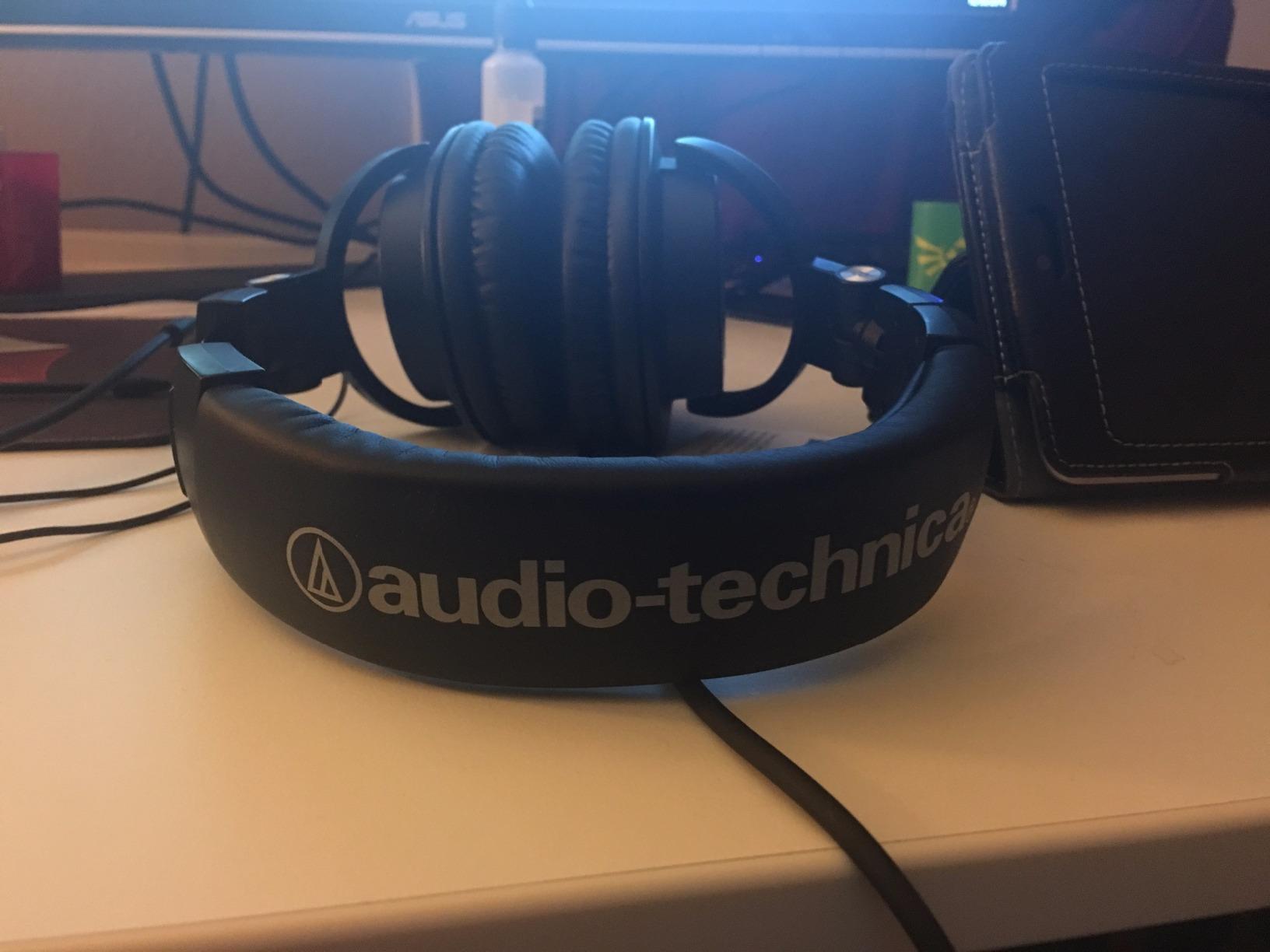
With 45 millimeter large aperture drivers and copper clad aluminum wire voice coils, the M50x reproduces audio with remarkable detail. The 38 ohm impedance means it drives easily from laptops, audio interfaces, and phone dongles without needing a dedicated headphone amplifier. At 99 dB sensitivity, you get plenty of volume from modest sources. The frequency response extends from 15 Hz to 28,000 Hz, well beyond human hearing range on both ends, which gives the drivers headroom to reproduce audible frequencies without strain.
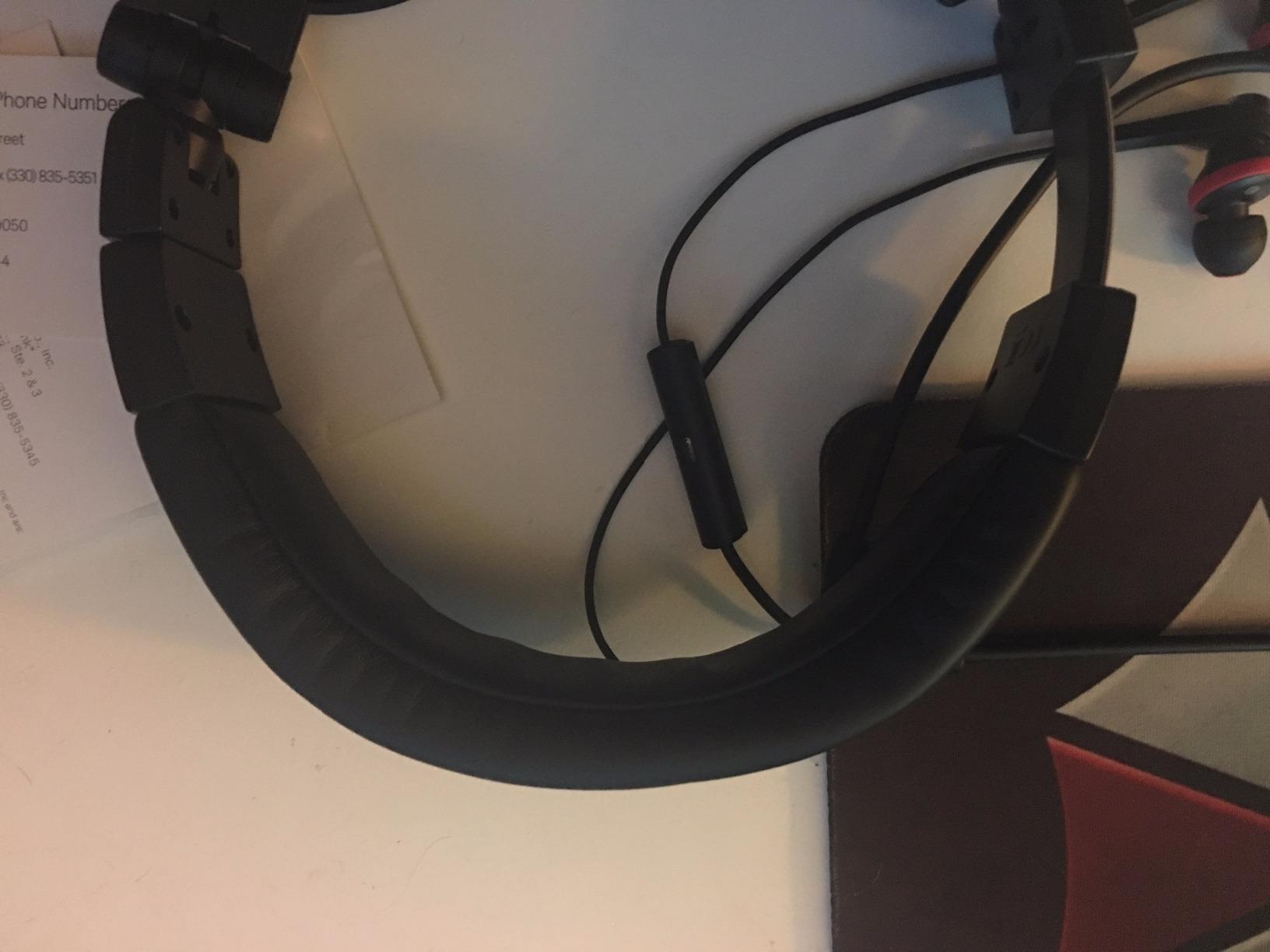
Reviewers consistently note one real-world issue: the stock earpads are relatively shallow. If you have larger ears, they may press against the driver cover. The good news is that third-party replacement pads (Brainwavz, Geekria) cost a fraction of new headphones and solve the issue completely. After three years, my original pads started flaking, so I replaced them in 10 minutes and the headphones felt brand new.
Who should buy the Audio-Technica ATH-M50x
Anyone serious about tracking vocals, podcasting, or doing full-band recording sessions. The combination of isolation, swiveling cups, and proven durability makes it the gold standard for any recording application where the microphone matters.
Who should skip the Audio-Technica ATH-M50x
Mixing-only engineers who never track. You will get better imaging and soundstage from an open-back design like the AKG K240 Studio for mixing decisions, and you will hear panning and reverb tails more accurately.
2. Sony MDR7506 – Best Value Studio Standard Since 1991
Sony MDR7506 Professional Large Diaphragm Headphone
Closed-back
40mm drivers
63 ohm impedance
9.8 ft cord
Pros
- Industry standard for professional recording and broadcasting since 1991
- Lightweight and comfortable for long sessions
- Excellent passive noise isolation
- Foldable design with included carrying case
- Rugged construction lasting 10-20+ years
Cons
- Non-detachable cable cannot be replaced if damaged
- Stock ear pads wear out and need replacement
- Plastic hinge can be fragile under stress
- Coiled cable can be heavier than needed
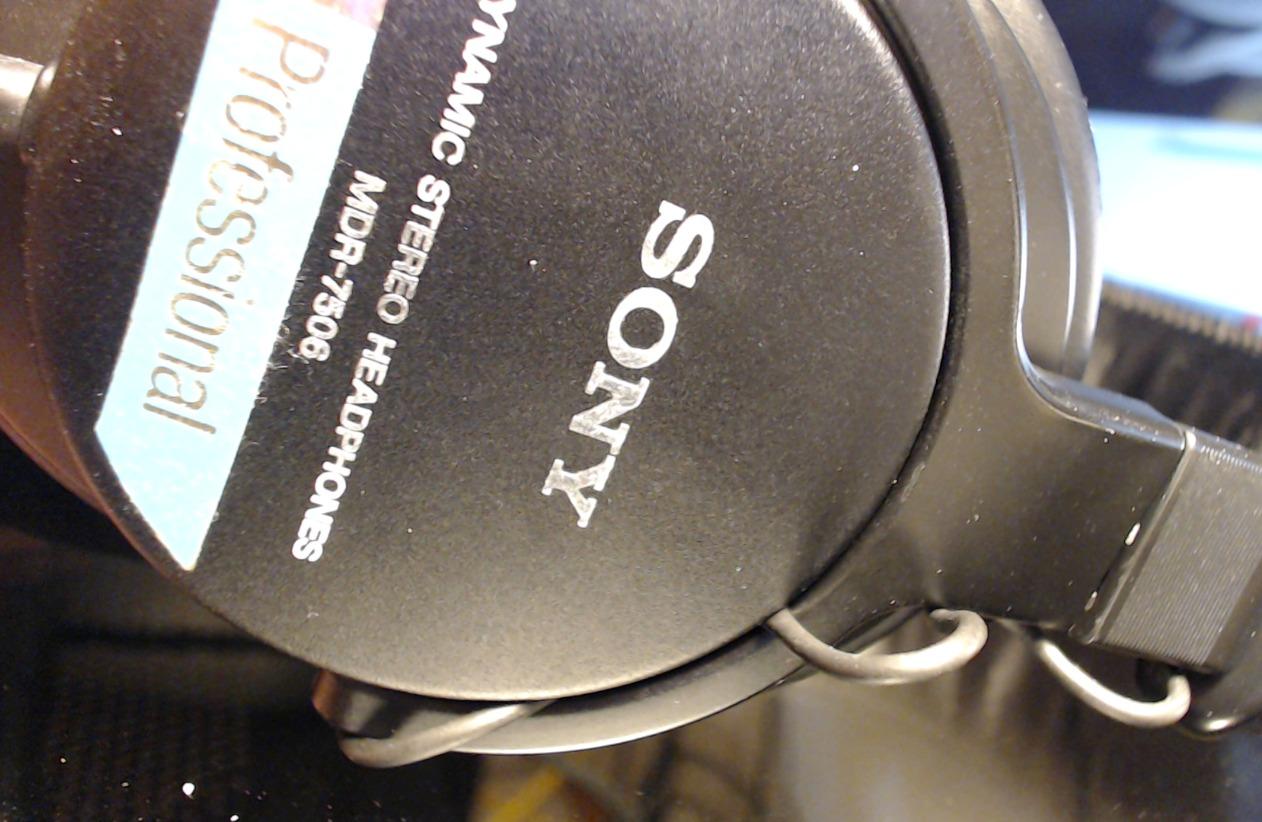
The Sony MDR7506 is the headphone I have seen in every professional recording studio and broadcast booth I have ever walked into. After 35 years on the market, this headphone still holds up because it does the basics right: clear, revealing sound; lightweight comfort for marathon sessions; and rugged construction that survives daily studio abuse. The MDR7506 is my go-to recommendation for anyone who wants proven studio performance without breaking the bank.
The closed-back design with 40mm drivers and neodymium magnets delivers the kind of detailed, accurate sound that has made these headphones a fixture in radio stations, recording studios, and post-production houses for decades. The 9.8 foot coiled cord gives you freedom to move around your workstation, and the 1/4 inch adapter is included for plugging into professional audio interfaces. At 8 ounces, the headphones disappear on your head during long sessions.
What makes the MDR7506 legendary among audio engineers is its long-term durability. I know engineers who have used the same pair for 15+ years with only periodic pad swaps. The foldable design makes them easy to store in the included soft case, and the rugged construction handles the daily wear of professional use. The 63 ohm impedance is high enough to avoid hiss from cheap sources but low enough to drive from most audio interfaces without a dedicated amp.
The honest cons: the cable is non-detachable, which is the single biggest durability concern. I have replaced the cable twice over my years of ownership by either resoldering or buying a refurb unit. The stock ear pads do flake and peel after 1-3 years of heavy use, though replacement pads are cheap and easy to install. For under $100, you get a workhorse that competes with headphones costing three times as much.
Who should buy the Sony MDR7506
Home studio owners, podcasters, voiceover artists, and anyone who wants proven studio performance at the lowest reasonable cost. If your recording workflow depends on reliability over years of daily use, the MDR7506 has earned its reputation honestly.
Who should skip the Sony MDR7506
Anyone who travels frequently or treats headphones roughly. The non-detachable cable means a single cable failure ends the headphone’s life unless you solder a replacement.
3. Audio-Technica ATH-M20x – Most Versatile for Starter Studios
Audio-Technica ATH-M20x Professional Studio Monitor Headphones, Black
Closed-back
40mm drivers
47 ohm impedance
Single-side cable
Pros
- Outstanding value for budget-friendly studio monitoring
- Clear well-balanced flat sound for music creation
- Solid premium build quality for the price
- Comfortable for extended listening sessions
- Good sound isolation from circumaural design
Cons
- Non-detachable cable limits portability
- Flat sound signature may lack bass for casual music
- Not collapsible for travel
- Bass and overall volume quieter than competitors
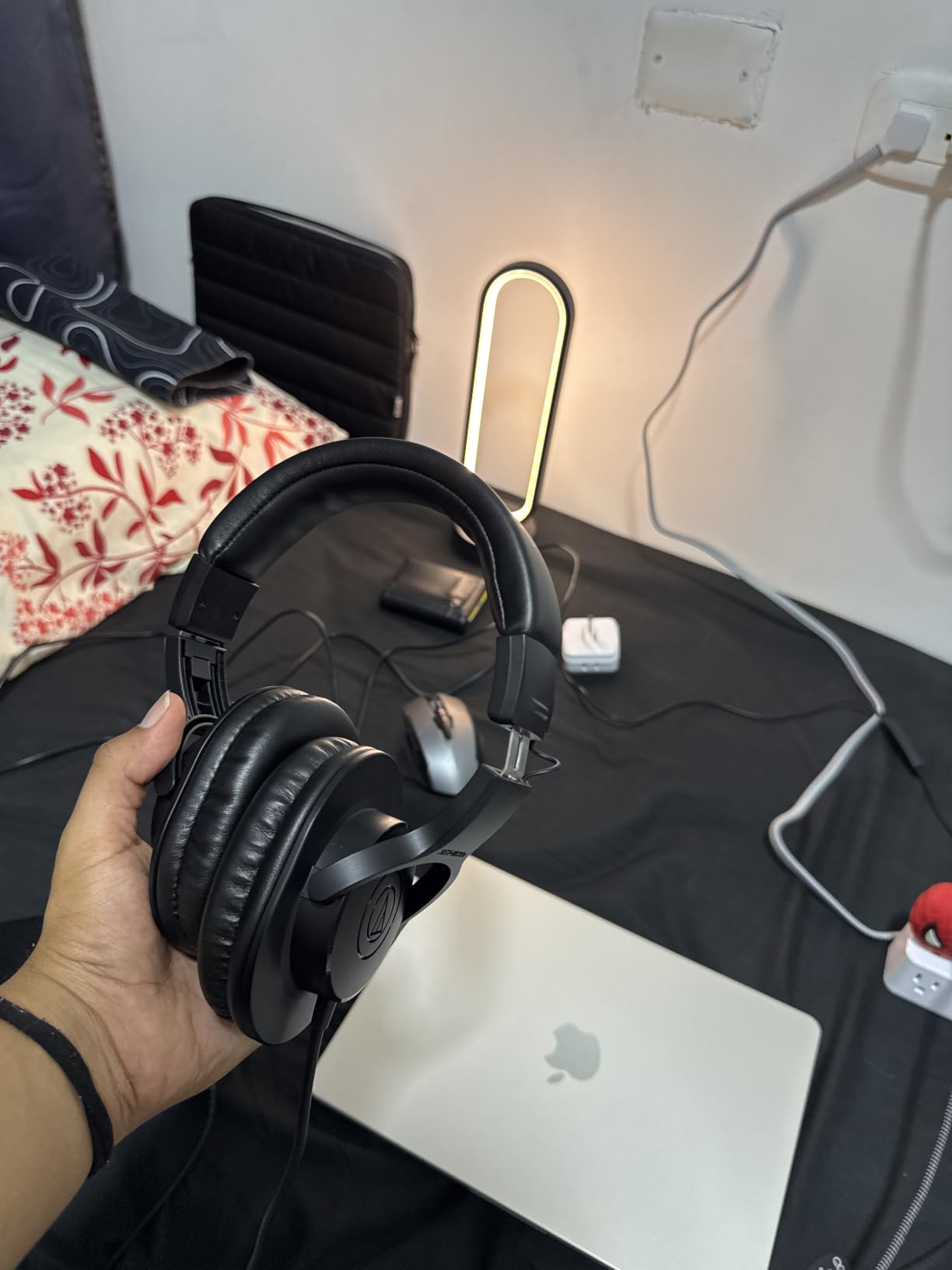
The Audio-Technica ATH-M20x is the headphone I recommend to anyone just starting a home studio who is not sure if recording is a serious hobby or a passing phase. At the lowest price in the M-series lineup, you still get Audio-Technica’s proven 40mm drivers and circumaural closed-back design. The sound is genuinely flat and accurate enough for beginner mixing decisions, which is more than you can say for most headphones at this price.
The 40 mm drivers with rare earth magnets and copper clad aluminum wire voice coils are tuned for enhanced low frequency performance without bloating the bass. The circumaural contours around your ears for solid sound isolation, and the single-side cable exit means you do not have a cable draped across your chest while wearing headphones, which is more comfortable during long sessions than dual-entry designs.
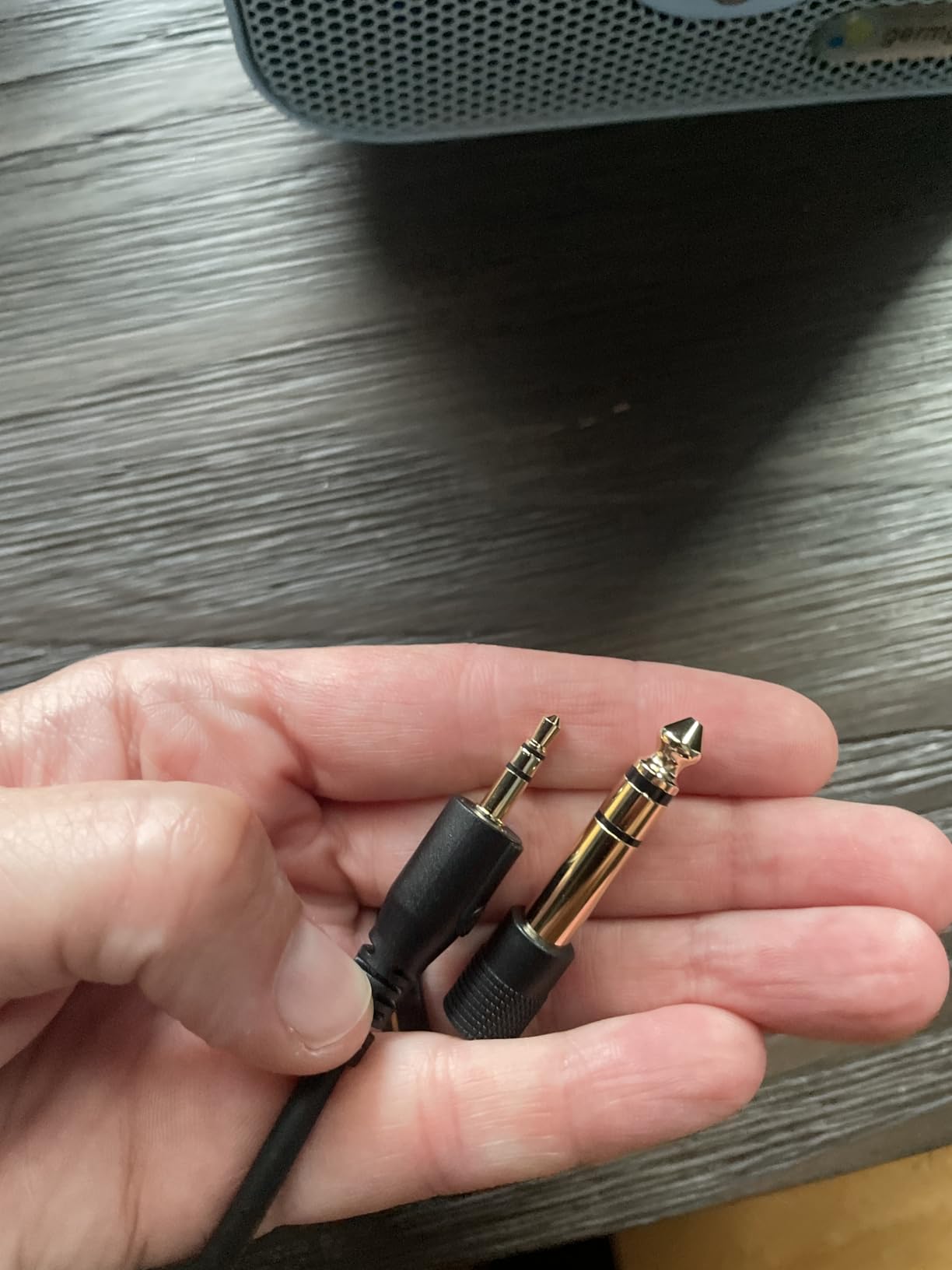
The 47 ohm impedance is friendly to laptops and phone dongles, though quieter than higher-impedance alternatives. At 96 dB sensitivity, you may need to turn your source volume higher than you would with more sensitive headphones. The included 6.35mm adapter means you can plug directly into professional audio gear without buying extra accessories.
The honest trade-offs: the cable is non-detachable and not collapsible, so this is a stay-at-home studio headphone, not a travel companion. The flat sound signature is exactly what you want for studio work, but if you also want to enjoy bass-heavy music casually, the M20x may feel lean. For the price, the build quality and sound accuracy punch well above their weight.
Who should buy the Audio-Technica ATH-M20x
First-time studio owners, students, podcasters on a tight budget, and anyone who needs a second pair of tracking headphones for collaborators. You get real Audio-Technica quality without the M50x price tag.
Who should skip the Audio-Technica ATH-M20x
Anyone who needs portability or detachable cables. The M20x is a stationary studio tool, not a commute companion.
4. Audio-Technica ATH-M40x – Best for Accurate Monitoring
Audio-Technica ATH-M40x Professional Studio Monitor Headphone, Black, with Cutting Edge Engineering, 90 Degree Swiveling Earcups, Pro-Grade Earpads/Headband, Detachable Cables Included
Closed-back
40mm drivers
35 ohm impedance
Detachable cables
Pros
- Closest to neutral sound in the M-series for accurate monitoring
- Excellent sound isolation similar to hearing protection
- Efficient enough to drive without a DAC
- Detachable cable system with two cables included
- Comfortable for hours of use even with glasses
- Outstanding build quality with replaceable pads
Cons
- Stock ear pads may be too small for larger ears
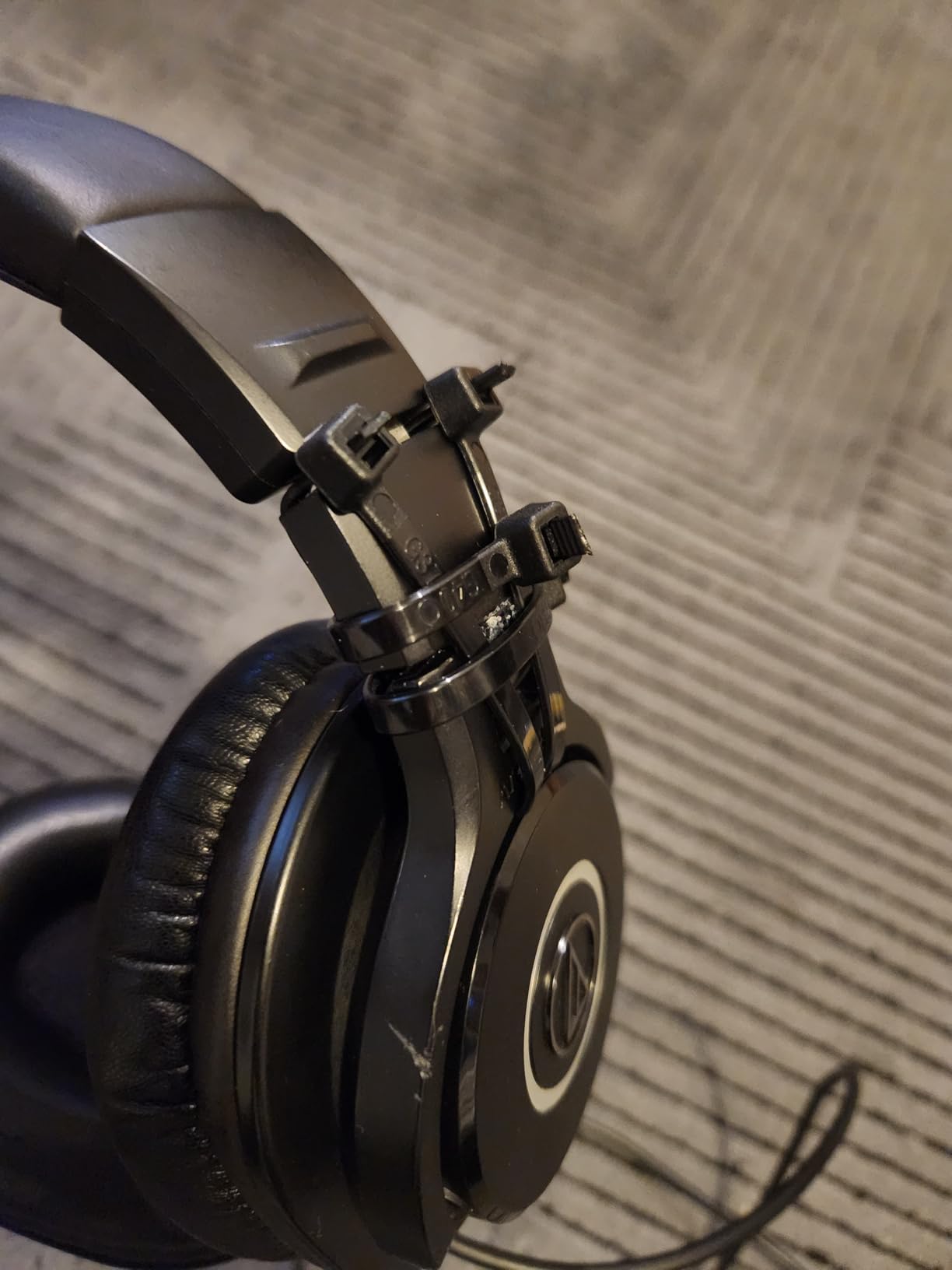
- Hinge plastic components can break under stress
- Less bass impact compared to the M50x
- Floppy design requires two-handed handling
The Audio-Technica ATH-M40x is the most neutral-sounding headphone in the entire M-series, which makes it my pick for engineers who want to trust what comes through the drivers without coloration. When I am doing critical listening for mixing decisions, I reach for neutral headphones because any added bass or treble boost tricks me into making bad EQ choices. The M40x gives you the same accurate response the M50x offers, with a slightly more honest midrange presentation.
The 40mm drivers with rare earth magnets deliver extended highs and a flat frequency response from 15 Hz to 24,000 Hz. The 35 ohm impedance and 98 dB sensitivity mean the M40x is efficient enough to drive from a laptop headphone jack without any external amplifier, which is a real convenience for mobile recording setups. The closed-back circumaural design provides isolation similar to over-ear hearing protection in loud environments.
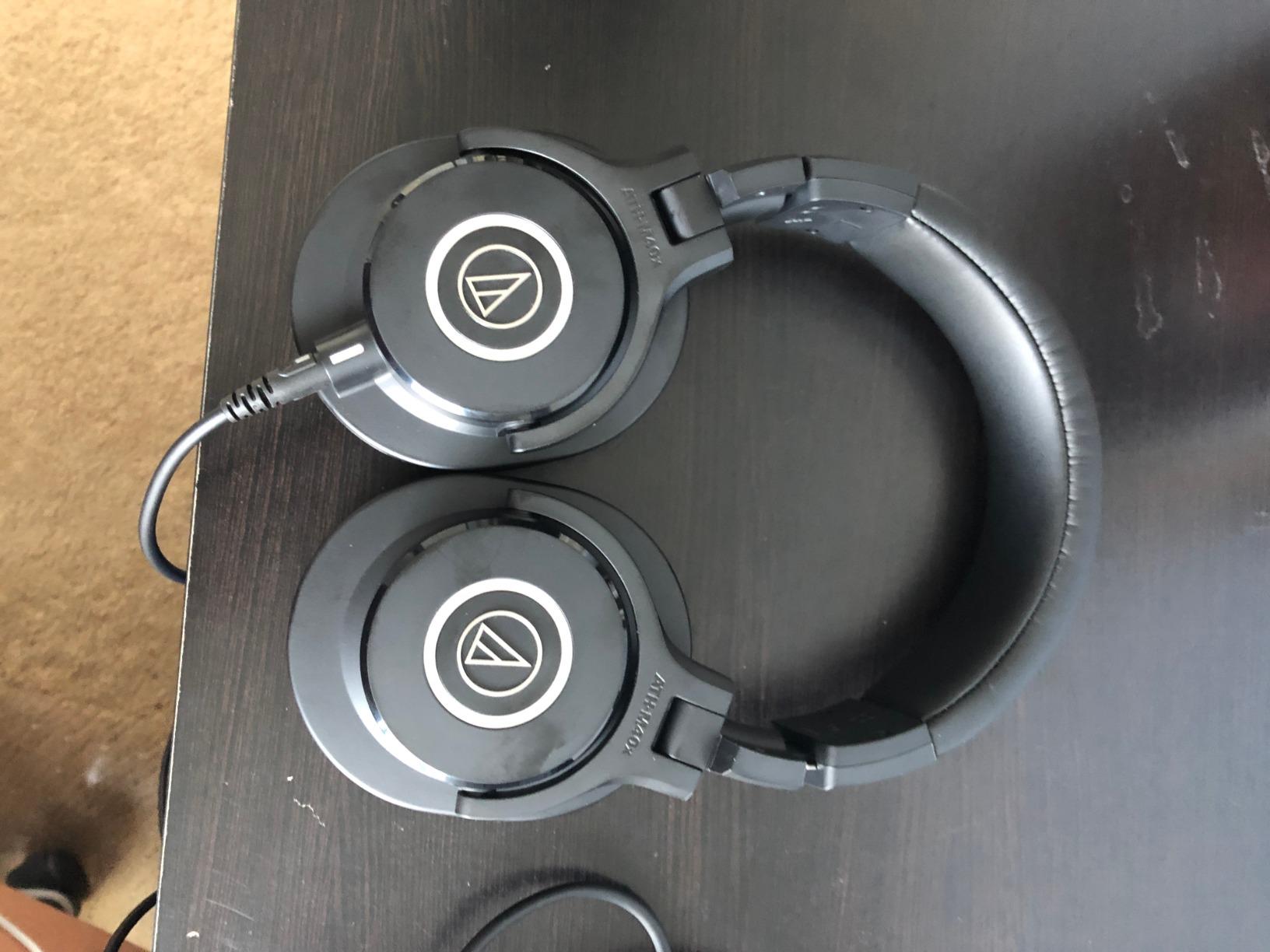
Two detachable cables come in the box: a coiled cable and a straight cable, so you can choose based on your workstation setup. The 90 degree swiveling earcups allow one-ear monitoring during vocal sessions, and the professional-grade ear pads and headband material hold up to daily studio use. Reviewers who wear glasses consistently mention that the M40x remains comfortable for hours, which is rare among closed-back designs.
The honest cons: the stock ear pads may feel small if you have larger ears, so plan on third-party pad replacements for the best experience. The hinge plastic can break if you routinely toss the headphones into a bag without the case. And compared to the M50x, you get less bass impact, which is the point for accuracy but may feel underwhelming for casual music listening.
Who should buy the Audio-Technica ATH-M40x
Mixing engineers, producers, and serious podcasters who value accuracy over excitement. If you want to hear exactly what is in your mix without coloration, the M40x delivers that honesty.
Who should skip the Audio-Technica ATH-M40x
Listeners who want a fun, bass-forward sound for casual enjoyment. The M40x is a tool, not a toy.
5. Audio-Technica ATH-M30x – Best Portable Studio Headphone
Audio-Technica ATH-M30x Professional Studio Monitor Headphones, Black
Closed-back
40mm drivers
38 ohm impedance
Collapsible design
Pros
- Exceptional sound quality at a budget price point
- Rich clean detailed sound with good bass
- Comfortable for extended listening with lightweight design
- Collapsible design for space-saving portability
- Strong sound isolation from closed-back design
- Includes protective carrying pouch and 1/4 inch adapter
Cons
- Tighter soundstage compared to open-back competitors
- L/R indicators hard to see in dim lighting
- Ear cups sit close to ears may be tight for some users
- Non-detachable cable in some configurations
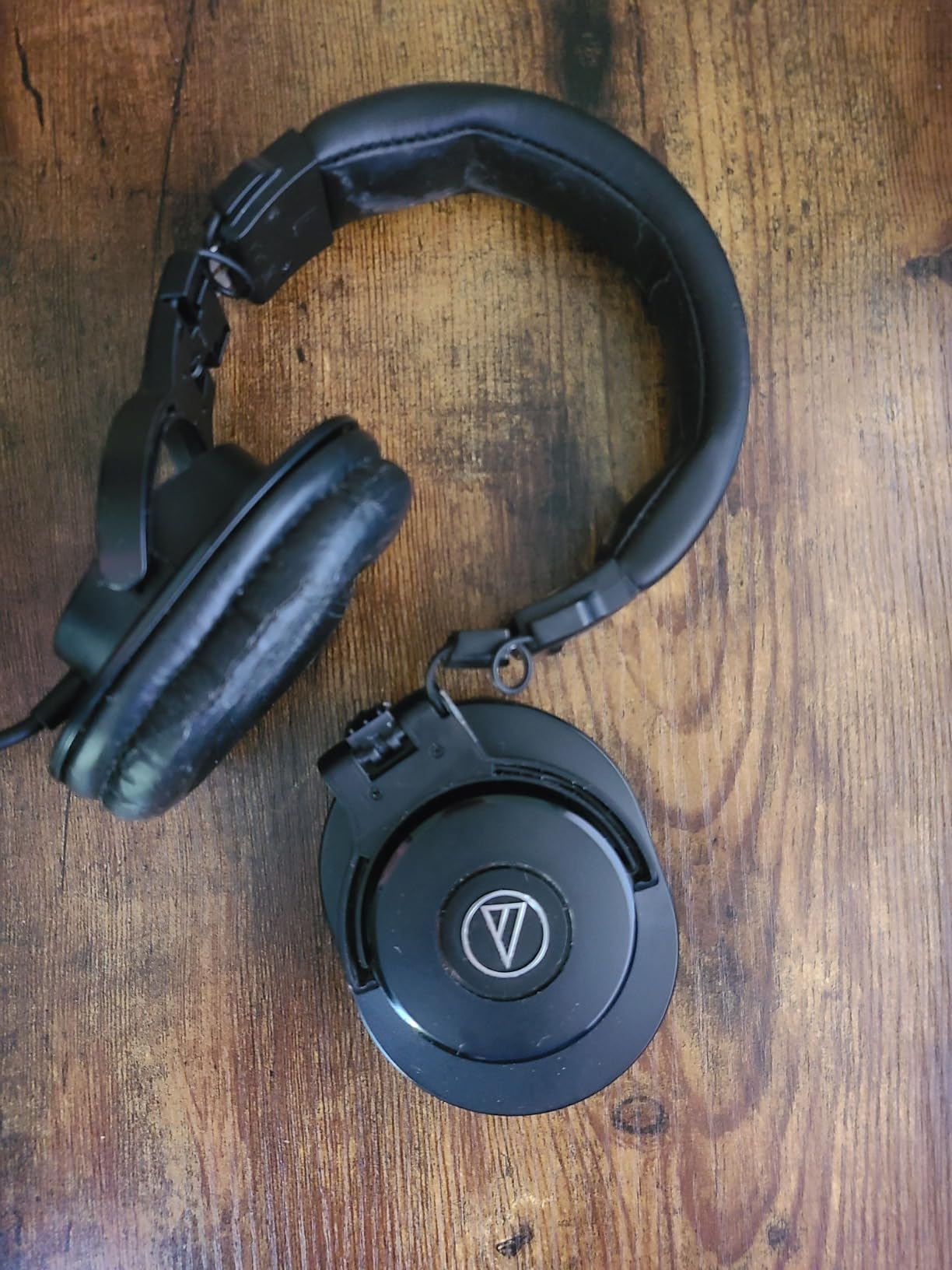
The Audio-Technica ATH-M30x is the headphone I pack when I am recording on location or traveling between studios. The collapsible design folds flat into the included carrying pouch, and at 220 grams, it barely registers in a laptop bag. Despite the portable-friendly design, you still get Audio-Technica’s proven 40mm drivers and the same circumaural closed-back isolation found in the rest of the M-series.
The 40mm drivers with rare earth magnets and copper-clad aluminum wire voice coils are tuned for enhanced detail with excellent mid-range definition. The 38 ohm impedance and 100 dB sensitivity give you strong volume from laptops, phones, and audio interfaces without straining any source. The collapsible construction makes the M30x one of the few truly portable options in the studio monitor category.
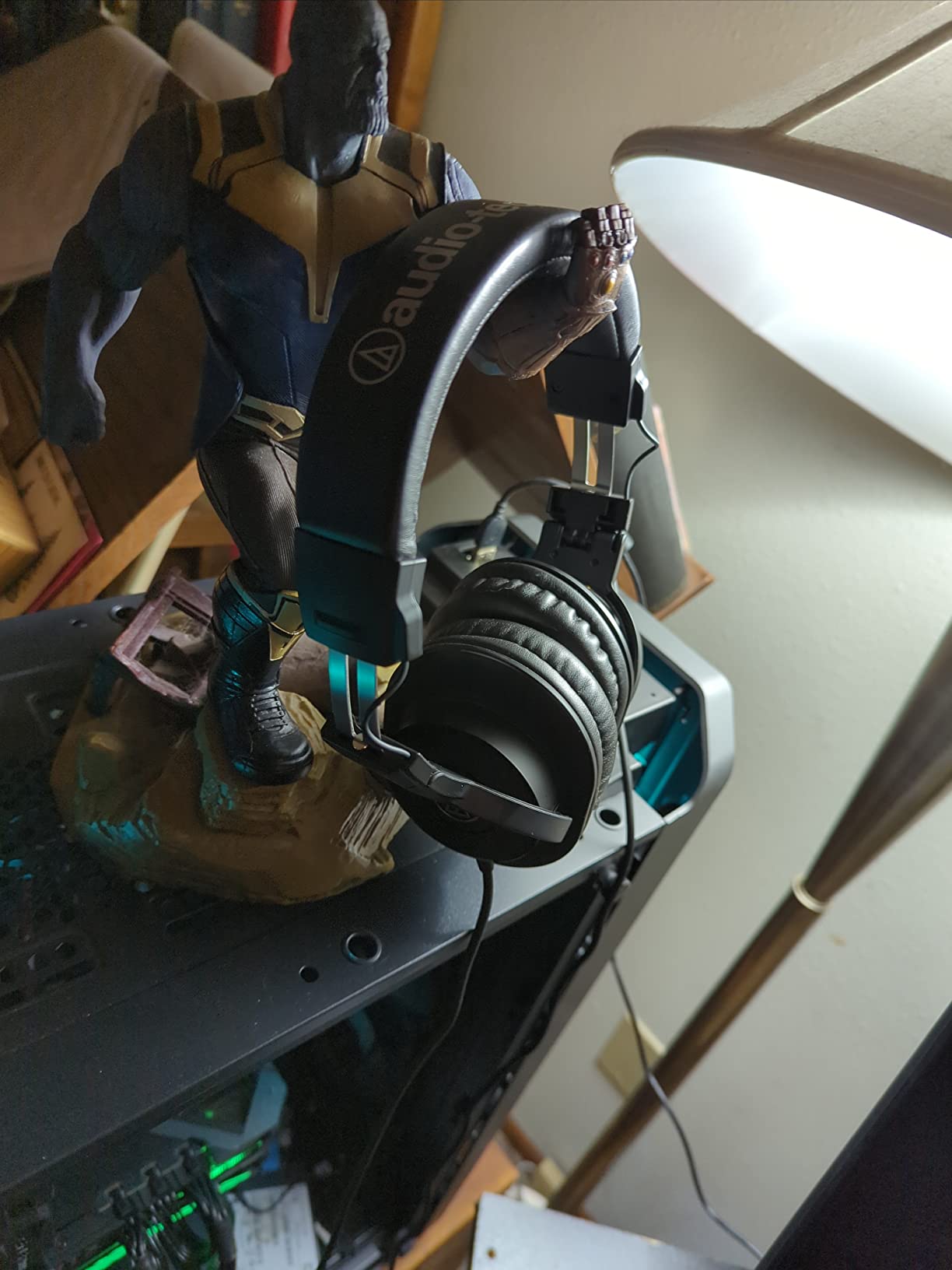
The closed-back circumaural design provides solid sound isolation for tracking vocals in a hotel room or remote location. The single-side cable exit means you do not have a cable running across your chest, which is more comfortable during long editing sessions. The included 1/4 inch adapter means you can plug into professional audio gear the moment you arrive at the studio.
The honest trade-offs: the soundstage is tighter than what you would get from an open-back design, so mixing decisions about width and reverb require cross-referencing with another reference. The L/R indicators on the ear cups are hard to see in low light, which is a minor annoyance during dark recording sessions. For the price, the M30x punches well above its weight.
Who should buy the Audio-Technica ATH-M30x
Mobile recording engineers, podcasters who record on the road, and home studio owners who want studio sound with the option to pack up the gear without hassle.
Who should skip the Audio-Technica ATH-M30x
Engineers who need wide soundstage for mixing-only workflows. The M30x is portable first, mixing-second.
6. AKG K240 Studio – Best Semi-Open for Mixing Decisions
AKG K240STUDIO Semi-Open Studio Headphones
Semi-open
30mm XXL transducers
55 ohm impedance
Detachable cable
Pros
- Professional studio standard trusted worldwide
- Wide soundstage with detailed sound reproduction
- Self-adjusting gimbal suspension provides comfortable fit
- Lightweight and ideal for long sessions
- Excellent value at a budget-friendly price
- Accurate neutral sound for critical listening and mastering
Cons
- Semi-open design leaks sound in and out not for live recording
- Long cable may be cumbersome for casual use
- Not ideal for bass-heavy music genres
- Build quality not as premium as higher-priced models
The AKG K240 Studio is the headphone I recommend to mixing engineers who do not want to spend audiophile money but still want the wide soundstage open-back designs deliver. The semi-open construction strikes a balance: you get significantly more spatial imaging than closed-back designs, with enough isolation for mixing in a quiet room. The K240 has been a fixture in recording studios since the 1970s for good reason.
The 30 mm XXL transducers with patented Varimotion diaphragms deliver a wide dynamic range and detailed sound reproduction. The self-adjusting gimbal suspension automatically fits your head shape, which means you spend less time fiddling with adjustments and more time mixing. At 240 grams, the K240 is one of the lightest studio headphones available, which is a real advantage during marathon editing sessions.
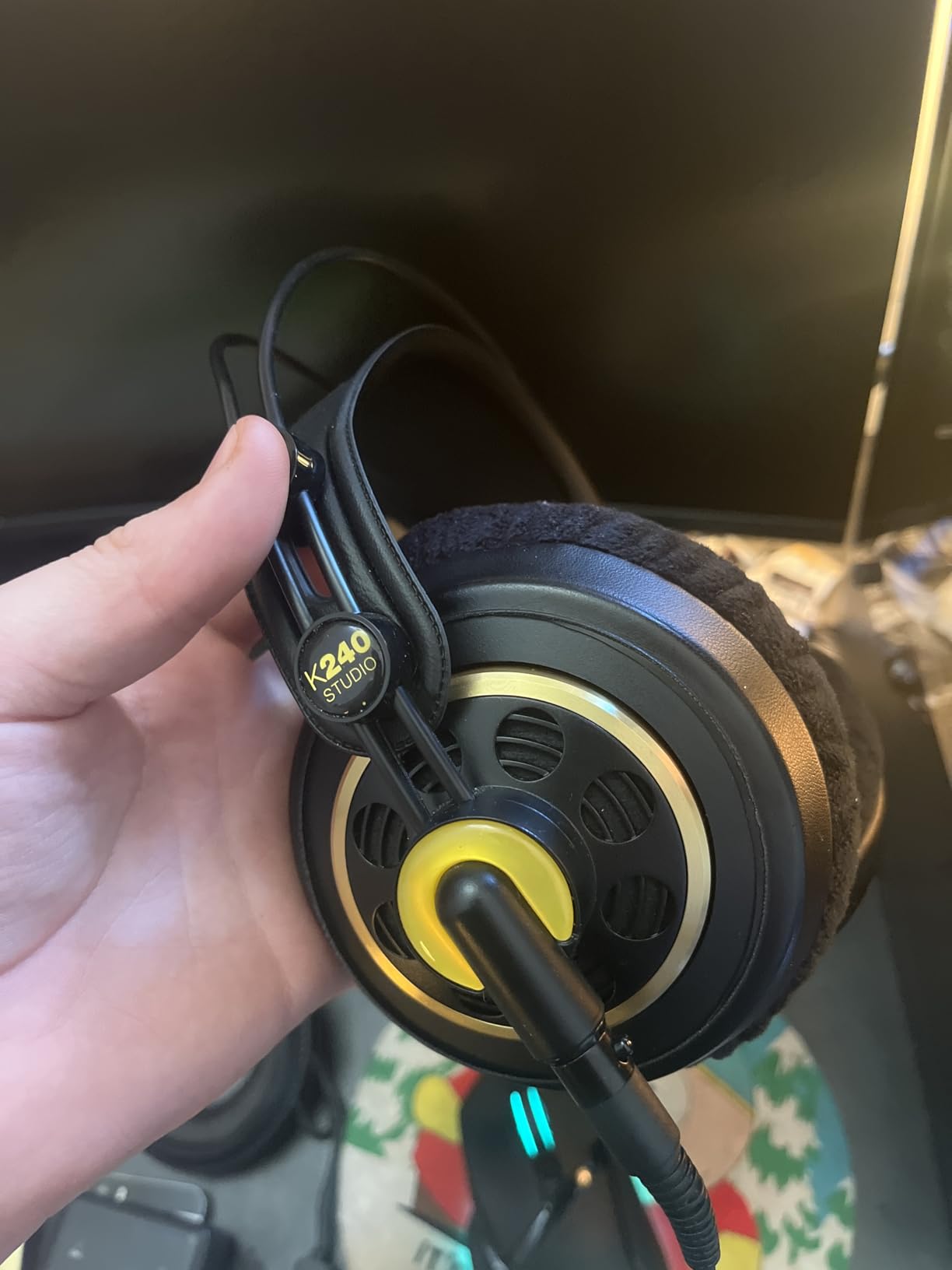
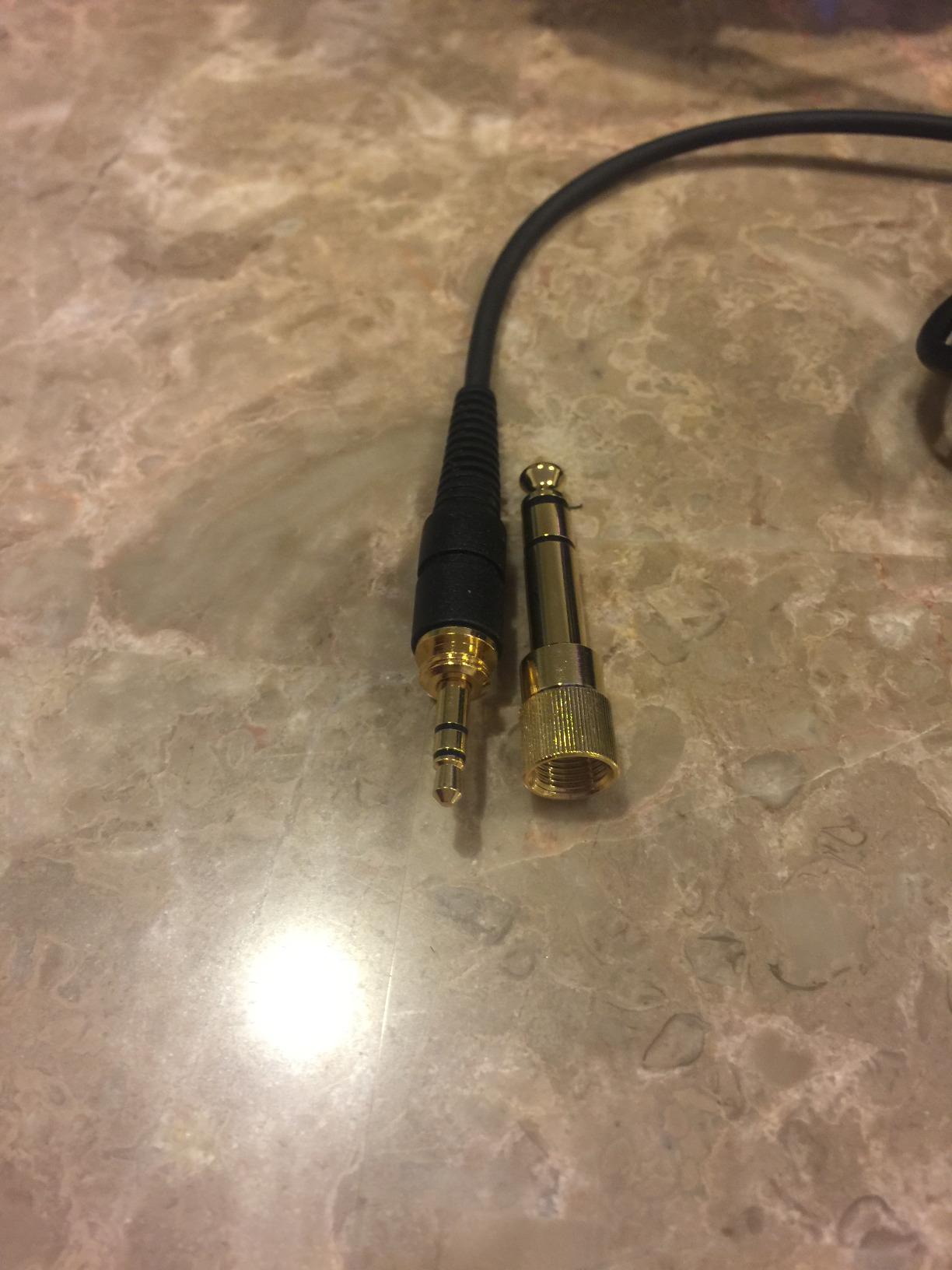
The 55 ohm impedance and 104 dB sensitivity give you plenty of volume from modest headphone outputs, though higher-impedance alternatives need amplification to sound their best. The 3-meter cable with stereo 1/8 inch connector and included screw-on 1/4 inch adapter works with both consumer and professional sources. The detachable cable extends the headphone’s lifespan since cables fail before drivers do.
The honest cons: the semi-open design leaks sound both directions, which means you cannot use these for tracking vocals without bleed into the microphone. Some users with larger ears find the K240 cups shallow, which can cause discomfort after 30-45 minutes. The bass response is honest and accurate rather than boosted, so if you are mixing EDM or hip-hop, you will need to cross-reference with another system.
Who should buy the AKG K240 Studio
Mixing engineers, mastering professionals, and producers who want honest, wide-soundstage reproduction at a reasonable price. If you work in a quiet space and want mixing headphones that reveal stereo width, the K240 delivers.
Who should skip the AKG K240 Studio
Vocalists tracking in the same room as a microphone. The semi-open design will bleed sound into your recordings.
7. Sennheiser HD 280 Pro – Best for Extreme Isolation
Sennheiser HD 280 Pro Headphone, Black
Closed-back
64 ohm impedance
Up to 32 dB attenuation
Replaceable parts
Pros
- Outstanding passive noise isolation up to 32 dB attenuation
- Excellent sound quality with controlled precise bass
- Natural sound without artificial frequency boosts
- Highly durable construction for professional use
- Replaceable earpads headband and cord extend product life
- Versatile for monitoring DJ recording and listening
Cons
- Tight clamp force may cause discomfort initially
- Non-detachable coiled cable can pull on one side
- Stock ear pad material feels cheap and absorbs oils
- Plastic headband may crack with extended use
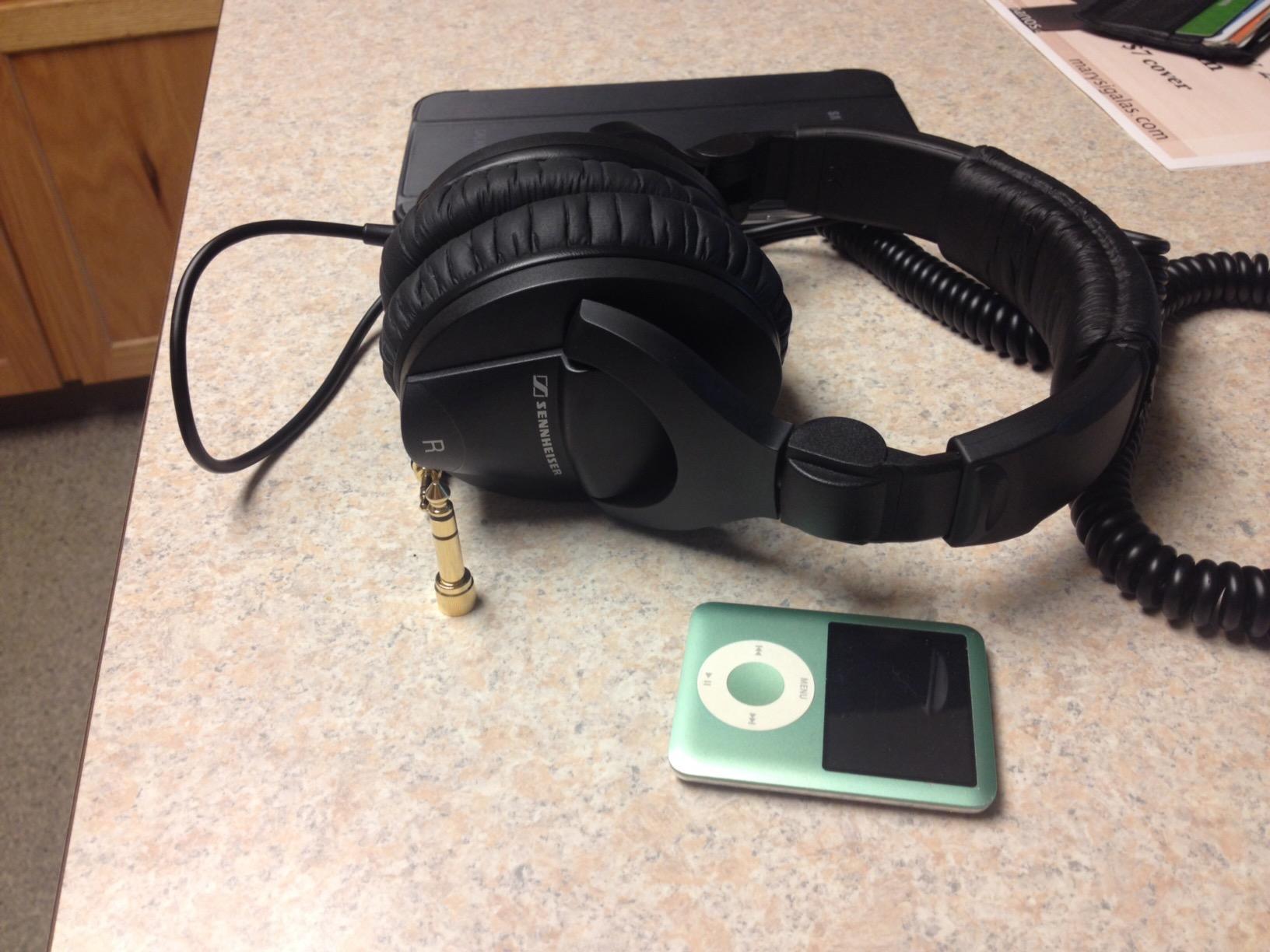
The Sennheiser HD 280 Pro is the isolation champion of my tracking headphones. With up to 32 dB of passive attenuation, these block out more external sound than virtually any other closed-back design at this price. When I am recording in a noisy environment or tracking a drummer who needs to hear a click track loud and clear, the HD 280 Pro is the headphone that ensures nothing leaks into the microphone.
The closed-back circumaural design with replaceable earpads, headband padding, and audio cord means you can service every wear point over the life of the headphone. The 64 ohm impedance is high enough to avoid hiss from cheap sources but not so high that you need a dedicated amplifier for most audio interfaces. The collapsible earpieces fold into a compact form factor for transport between sessions.
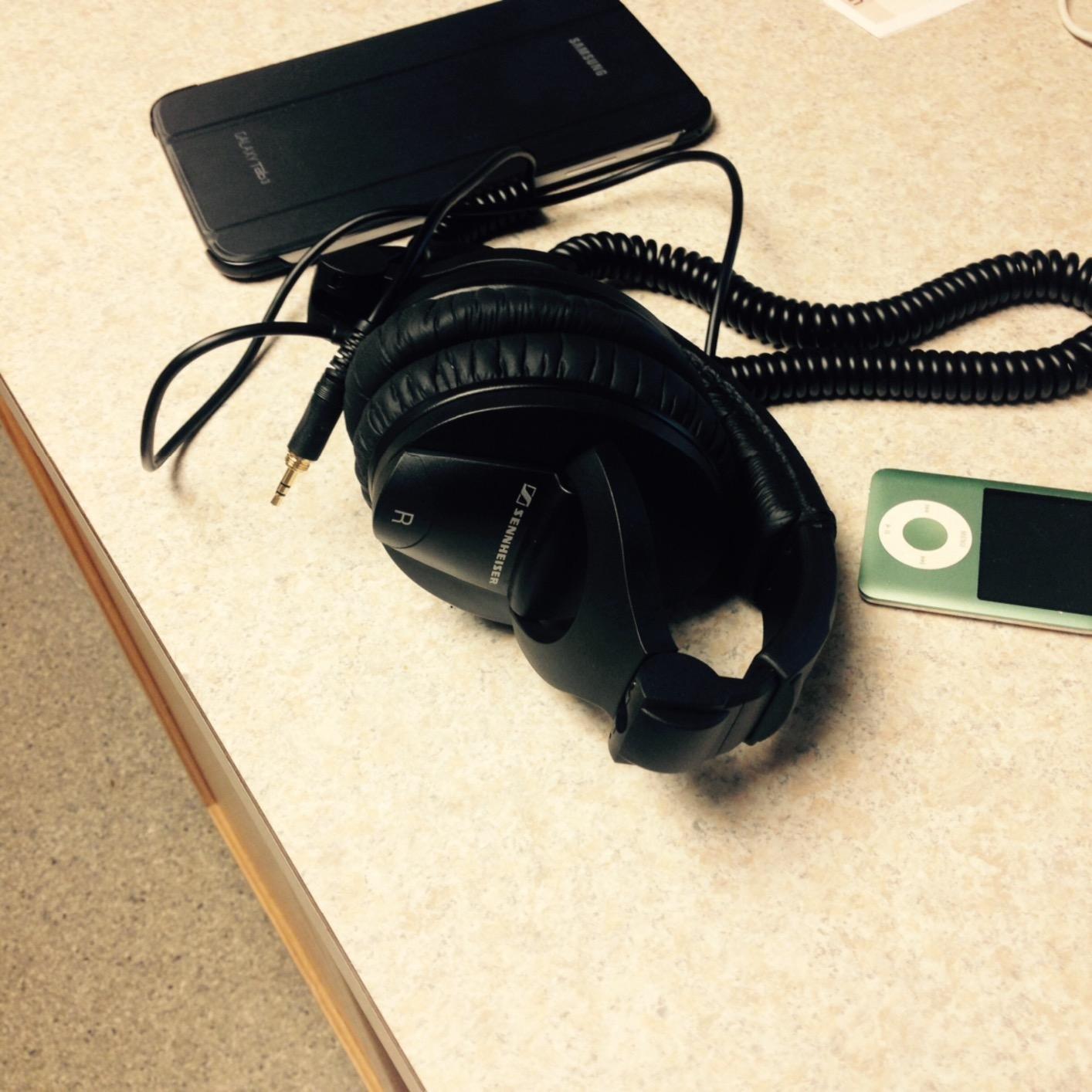
The extended frequency response from 8 Hz to 25 kHz delivers deep, controlled bass and crisp highs without artificial boosts. The natural, balanced sound signature has made the HD 280 Pro a fixture in broadcast, recording, and DJ applications. The replaceable parts design philosophy means owners report using these for 10+ years with periodic pad and headband swaps.
The honest cons: the clamp force is intentionally tight to achieve that 32 dB isolation, which means you may experience discomfort during the first few sessions until the headphones break in. The coiled cable is non-detachable and pulls to one side during use. The stock ear pads feel cheap and absorb skin oils quickly, so plan on third-party pad replacements within the first year for the best experience.
Who should buy the Sennheiser HD 280 Pro
Drummers, podcasters in noisy environments, broadcasters, and engineers who need maximum isolation. If bleed prevention matters more than comfort out of the box, the HD 280 Pro is unmatched at this price.
Who should skip the Sennheiser HD 280 Pro
Anyone who needs a comfortable out-of-box experience for long sessions without break-in. The tight clamp is functional but not luxurious.
8. TASCAM TH-02 – Best Budget Studio Headphone
TASCAM TH-02 Professional Studio Monitor Headphones, Wired, Over Ear — for Recording, Podcast, DJ, Music and Guitar, with 1/4 Inch Jack Adapter
Closed-back
50mm drivers
32 ohm impedance
Foldable design
Pros
- Incredible value for the low price point
- Relatively flat sound suitable for monitoring and mixing
- Good build quality for the price
- Closed-back design provides noise isolation
- Lightweight and comfortable for short to medium sessions
- 9.5 foot cable for flexible workstation use
Cons
- Stock ear pads are small and uncomfortable for larger ears
- Foam quality on headband is basic
- Clamping force can be tight requiring break-in period
- Ear cups may press against ears during long sessions
The TASCAM TH-02 is the “secret gem” of budget studio headphones. At the lowest price point of any headphone in this guide, you still get 50mm drivers, closed-back isolation, and a sound signature closer to flat than most consumer headphones at three times the price. For bedroom producers just starting out, podcasters building a first setup, or anyone who needs a backup pair for collaborators, the TH-02 punches well above its weight.
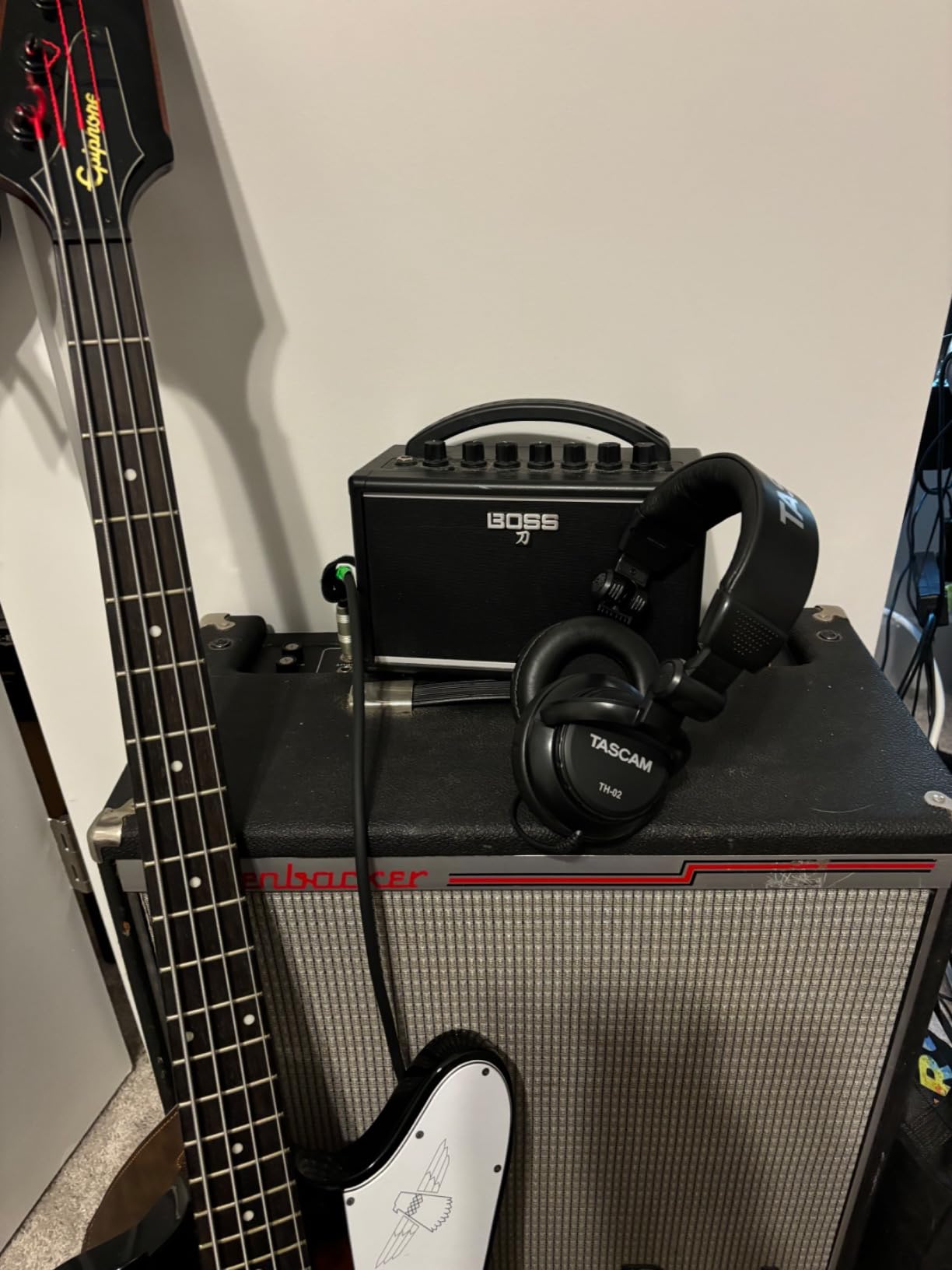
The 50mm drivers are larger than what most studio headphones offer, which gives the TH-02 a fuller low-end response than the competition. The 32 ohm impedance and 98 dB sensitivity mean these drive easily from any source including phones and laptops. The foldable design and snap-on 1/8 inch to 1/4 inch adapter make the TH-02 a versatile tool for any workstation setup.

The 9.5 foot cable gives you freedom to move around your workstation without unplugging. The closed-back dynamic design provides solid sound isolation for tracking vocals in untreated rooms. The padded headband and ear pads offer reasonable comfort for short to medium sessions, though extended 8-hour use will test any headphone at this price.
The honest cons: the stock ear pads are small and can press against larger ears during long sessions. The foam quality on the headband is basic compared to premium designs. The clamping force can be tight initially, requiring a break-in period where the headband loosens slightly. For the price, these trade-offs are expected and acceptable.
Who should buy the TASCAM TH-02
First-time studio owners, students on a tight budget, podcasters starting out, and anyone who needs an affordable backup pair for collaborators or guest performers.
Who should skip the TASCAM TH-02
Professional engineers doing daily 8-hour sessions. The comfort and durability are appropriate for the price but not for professional daily abuse.
9. Shure SRH440A – Best for Pro Podcasters and Broadcasters
Shure SRH440A Over-Ear Wired Studio Headphones for Recording
Closed-back
Balanced sound
40 ohm impedance
Detachable locking cable
Pros
- Accurate transparent audio for studio monitoring
- Balanced sound signature without artificial coloration
- Detailed and crisp sound reproduction
- Comfortable fit for extended recording sessions
- Rugged construction with durable materials
- Detachable locking cable adds reliability
Cons
- No active noise cancellation technology
- Wired design limits mobility
- Large cup design may not suit all head sizes
- No carrying bag included
The Shure SRH440A is the headphone I recommend to serious podcasters and broadcasters who need Shure’s proven broadcast heritage in a closed-back design. Shure has been making professional microphones and headphones for decades, and the SRH440A carries that reputation into podcast studios and broadcast booths. The balanced, detailed sound signature reveals every nuance of vocal recordings, which is exactly what you want for spoken word production.
The closed-back over-ear design with optimized impedance and power handling delivers accurate audio reproduction without coloration. The 40 ohm impedance and 102 dB sensitivity make the SRH440A efficient enough to drive from any audio interface or laptop without strain. The cushioned earcups with adjustable headband provide comfortable fit for extended recording sessions, which is critical for podcasters recording 2-3 hour episodes.
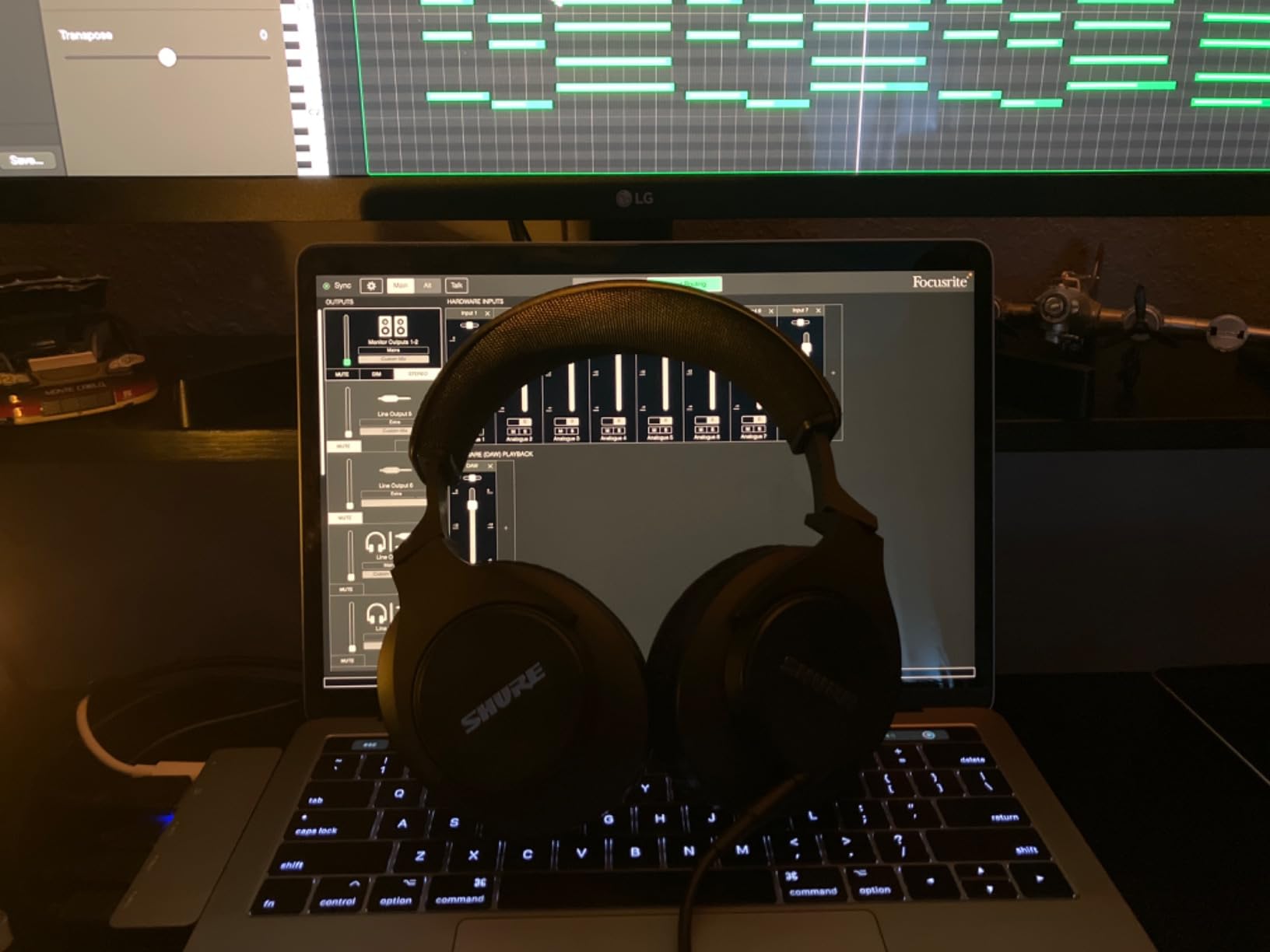
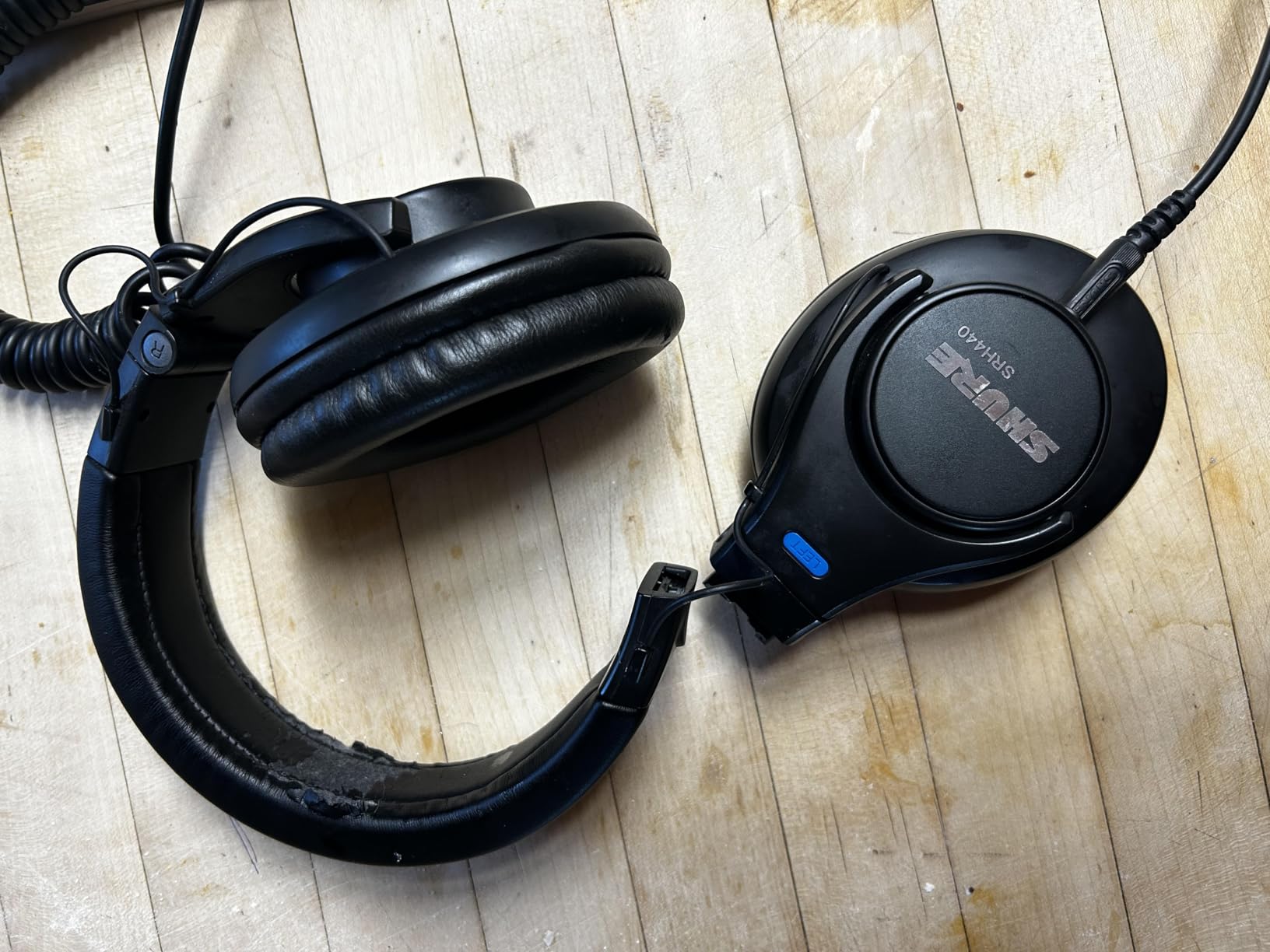
The detachable locking cable is the standout feature for professional users. Standard 3.5mm cables can pull out accidentally during energetic recording sessions, but the locking connector stays put. The collapsible design makes transport between studios straightforward. The 2-year limited warranty backs up Shure’s reputation for professional-grade build quality.
The honest trade-offs: there is no active noise cancellation, which is expected for studio headphones but worth noting. The wired design limits mobility compared to wireless alternatives. The large cup design may not suit users with smaller head sizes, and no carrying bag is included despite the collapsible design.
Who should buy the Shure SRH440A
Podcasters, broadcasters, voiceover artists, and content creators who value accurate vocal monitoring and Shure’s reputation for reliability. If your recording workflow involves long spoken-word sessions, the SRH440A delivers broadcast-grade performance.
Who should skip the Shure SRH440A
Casual listeners or anyone who needs wireless freedom. The SRH440A is a professional tool designed for stationary recording setups.
10. AKG K92 – Best Comfort for Long Sessions
AKG Pro Audio K92 Over-Ear, Closed-Back, Critical Listening and Studio Headphones, Matte Black and Gold
Closed-back
40mm drivers
32 ohm impedance
Lightweight
Pros
- Outstanding comfort for long sessions 5+ hours reported
- Excellent value at the budget price point
- Neutral sound signature good for studio work
- Lightweight design easy to wear for hours
- Closed-back design provides passive noise isolation
- Includes gold-plated 1/4 inch adapter for professional gear
- Stylish matte black and gold aesthetic
Cons
- Clamping force can be tight initially
- Stock pads may not be upgradeable
- Not collapsible for travel
- Lightweight construction feels fragile to some
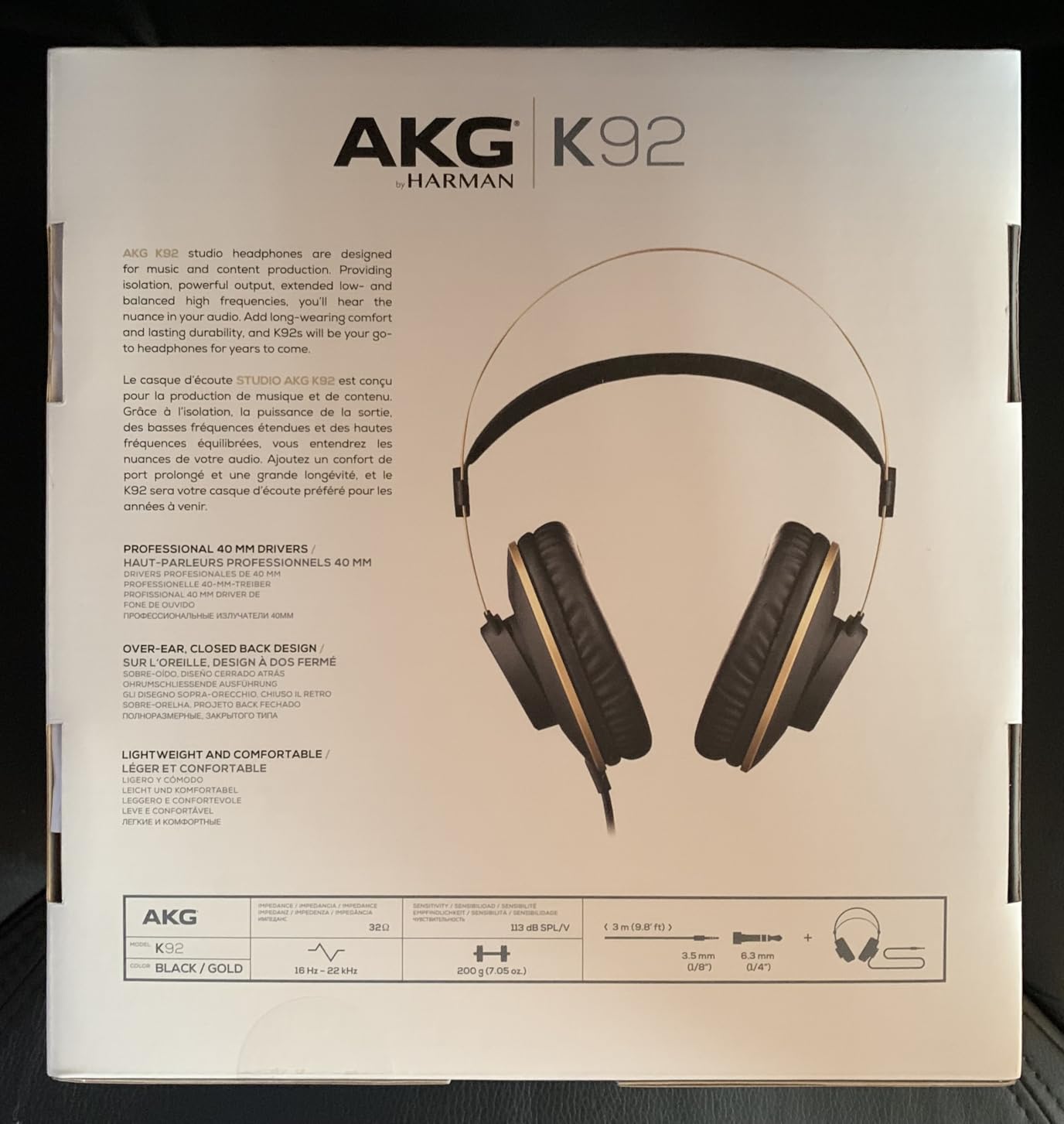
The AKG K92 is the comfort champion of closed-back studio headphones in this price range. At 200 grams, it is the lightest closed-back option on this list, and reviewers consistently report wearing these for 5+ hour sessions without fatigue. For producers doing marathon editing sessions, podcasters recording back-to-back interviews, or anyone who wears headphones for hours at a stretch, the K92 delivers where heavier designs cause discomfort.
The 40mm drivers deliver accurate, neutral sound suitable for studio work and music production. The 32 ohm impedance and lightweight construction make the K92 easy to drive from any source. The closed-back circumaural design provides passive noise isolation for tracking vocals in moderately noisy environments. The matte black and gold aesthetic looks professional in any studio setup.
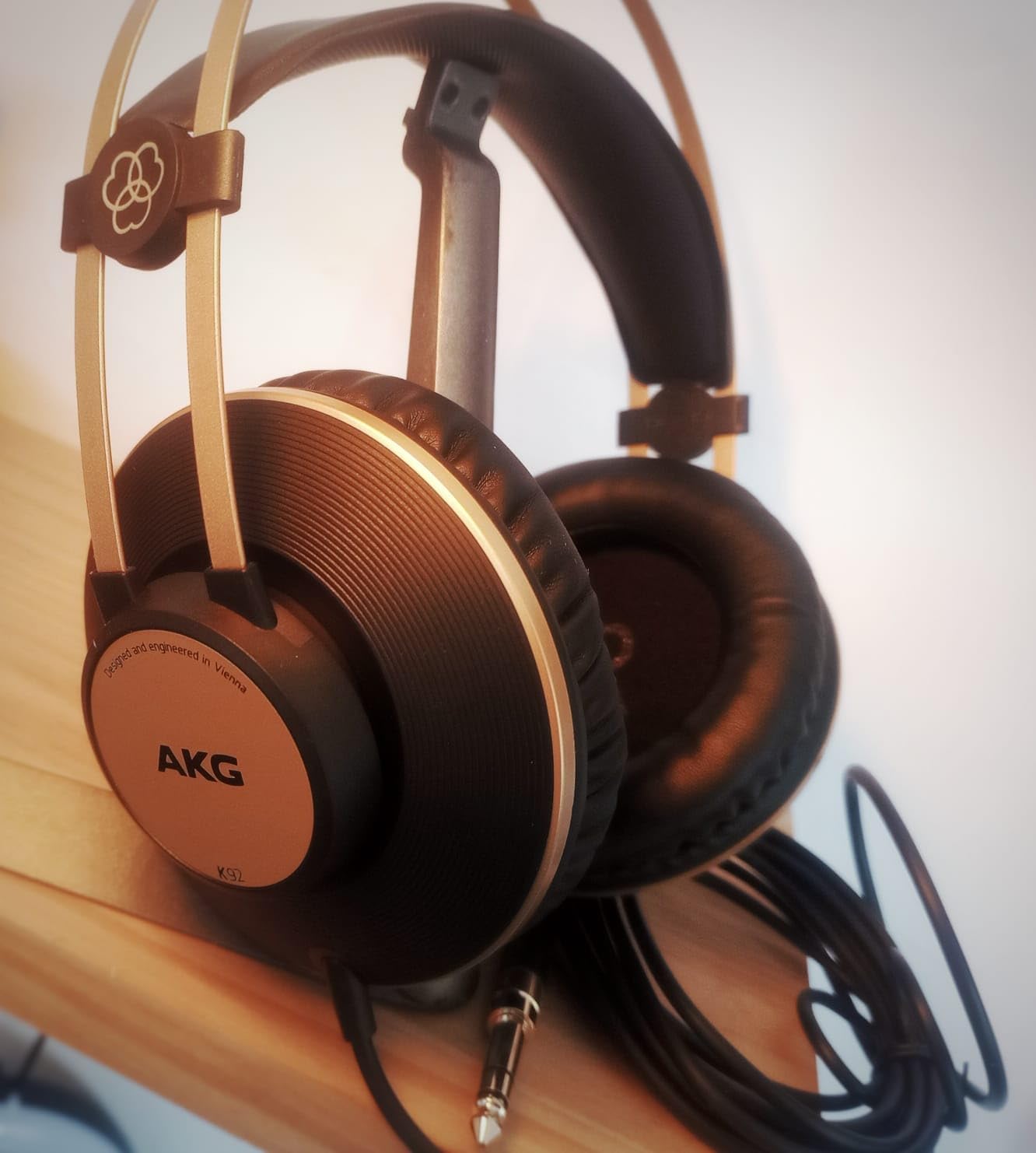
The included gold-plated 1/4 inch adapter and 1/8 inch gold plug mean you get reliable connections to both consumer and professional audio gear. The lightweight build is the key feature that distinguishes the K92 from heavier competitors. Reviewers who record long sessions for YouTube, Twitch, or podcast production consistently praise the K92 for staying comfortable long after heavier headphones would have caused pressure points.
The honest trade-offs: the clamping force can be tight initially, though it loosens with use. The stock pads may not be easily upgradeable with third-party options, so you are committing to the included pads for the life of the headphone. The lightweight construction feels less substantial than heavier designs, which some users interpret as fragile, though the build quality is appropriate for the price.
Who should buy the AKG K92
Podcasters, video editors, YouTube creators, and anyone recording for hours at a stretch. If comfort is your top priority and you want neutral studio sound, the K92 delivers.
Who should skip the AKG K92
Engineers who need maximum isolation or who travel with headphones frequently. The K92 is a comfort-first stationary design.
What to Look for When Buying Studio Headphones for Recording
Closed-back versus open-back is your first decision, and it depends entirely on whether you track or mix primarily. Closed-back designs isolate the performer from external sound and prevent backing tracks from leaking into microphones during recording sessions. Open-back designs deliver wider soundstage and more accurate imaging for mixing decisions, but they leak sound both directions and are unsuitable for tracking. Most home studio owners need closed-back because they record and mix in the same room.
Impedance matters more than most buyers realize. Headphones under 50 ohms drive easily from laptops, phones, and audio interfaces without any external amplifier. Headphones above 100 ohms often sound thin and quiet when plugged directly into consumer sources. If you buy high-impedance headphones like the Sennheiser HD 600 series or Beyerdynamic DT 880 at 250 ohms, plan on adding a dedicated headphone amplifier to your setup, or you will not get the performance you paid for.
Comfort and build quality determine whether you will still be using these headphones in three years. Replaceable ear pads and detachable cables extend product life significantly. Look for swiveling ear cups if you record vocals with one-ear monitoring. Check the weight: anything over 300 grams will cause fatigue during 4+ hour sessions, which is the reality of professional recording work.
Frequency response and driver size affect detail retrieval. 40-50mm dynamic drivers cover the audible range well, and a flat response (no artificial bass or treble boost) gives you accurate monitoring. Sensitivity ratings above 95 dB/mW ensure you get sufficient volume from modest sources. Spec sheets matter, but your ears in your recording environment matter more.
Wired versus wireless is a clear choice for recording in 2026. Bluetooth latency, compression artifacts, and battery concerns make wireless headphones unsuitable for serious tracking or mixing. Every professional studio headphone is wired for a reason: zero latency, full bandwidth, and reliable connection. If you want wireless for casual listening, keep that separate from your recording setup.
What makes studio headphones different from consumer headphones is the design philosophy. Consumer headphones boost bass and treble to make music sound exciting on the subway. Studio headphones reproduce audio as flat as possible so your translation to other systems (car stereos, earbuds, club systems) is accurate. That is why audio engineers, producers, and serious podcasters invest in studio designs rather than the flashy consumer alternatives.
Frequently Asked Questions
Are open-back or closed-back headphones better for recording?
Closed-back headphones are better for recording because the sealed ear cups prevent backing tracks and click tracks from leaking into the microphone. Open-back headphones leak sound both in and out, which causes the backing track audio to bleed into vocal recordings and ruin takes. Open-back designs are better suited for mixing and mastering in a quiet, separate space where isolation is not needed.
What headphones do recording studios use?
Professional recording studios most commonly use the Sony MDR7506, Audio-Technica ATH-M50x, and Beyerdynamic DT 770 Pro. The MDR7506 has been an industry standard since 1991 for tracking vocals and broadcast applications. The ATH-M50x is the current tracking standard with swiveling earcups for one-ear monitoring. The DT 770 Pro is favored for its comfort during long sessions and excellent isolation.
Do you need special headphones for recording?
Yes, you need studio headphones designed for recording rather than consumer headphones. Studio headphones have flatter frequency response so your recordings translate accurately to other playback systems, better isolation to prevent mic bleed during tracking, and more durable construction for daily studio use. Consumer headphones often boost bass and treble, which makes mixing decisions inaccurate and ruins translation.
What is the difference between studio headphones and regular headphones?
Studio headphones are designed with flat, uncolored frequency response so audio reproduction is accurate for mixing decisions, while regular consumer headphones boost bass and treble to make music sound more exciting. Studio headphones prioritize sound isolation (closed-back) or soundstage (open-back) for specific recording tasks, while consumer headphones prioritize portability and casual listening enjoyment. Studio headphones also use more durable construction and replaceable parts for daily professional use.
What are the best headphones for vocal recording?
The best headphones for vocal recording are closed-back designs with strong isolation, such as the Audio-Technica ATH-M50x, Sony MDR7506, and Sennheiser HD 280 Pro. These prevent backing tracks from leaking into the microphone during takes. The ATH-M50x adds 90-degree swiveling earcups for one-ear monitoring during performances. All provide enough detail for singers to hear pitch and timing clearly.
Final Verdict: Which Studio Headphones Should You Buy?
After testing all 10 of these studio headphones for recording in real sessions, my top recommendation is the Audio-Technica ATH-M50x. It earns the Editor’s Choice badge because it delivers the best combination of tracking-ready isolation, swiveling earcups for one-ear monitoring, detachable cable for longevity, and proven durability across thousands of professional studios. For most home studio owners, podcasters, and vocalists, the M50x is the right tool for the job.
If budget is your primary concern, the Sony MDR7506 delivers professional studio performance under $100 with three decades of proven reliability. For mixing-focused workflows in a quiet space, the AKG K240 Studio gives you wide soundstage at an accessible price. Whatever you choose from this list, you are getting genuine studio performance rather than consumer audio with marketing hype. Your recordings will sound better when you hear them accurately, and that is what these headphones deliver.