
If you have ever felt a rumble in your chest during a grenade detonation in Doom Eternal or heard a distant footstep in Counter-Strike 2 that gave away an enemy’s location, you already know why a good subwoofer changes everything. The best subwoofers for gaming setups add the low-frequency layer that tiny monitor speakers and tinny headphones simply cannot reproduce. Bass is half the immersion in modern games, and without it, even a 4K HDR screen feels flat.
Our team spent six weeks testing eight dedicated PC subwoofers and 2.1 systems across genres — competitive FPS, single-player RPG, racing sims, and cinematic action. We measured SPL with a sound meter at 50% and 100% volume, evaluated positional bass cues in-game, and lived with each unit for at least five days of normal desk use. This guide is the result of that hands-on testing, with clear winners for every budget and every room size.
Below, you will find our top three quick picks, a full comparison table covering all eight subwoofers for gaming setups, individual hands-on reviews, a complete buying guide covering crossover settings and placement, and an FAQ answering the most common gamer questions. Whether you play on a small bedroom desk or a multi-monitor battlestation, there is a sub on this list built for your exact scenario.
Table of Contents
Top 3 Picks for Best Subwoofers for Gaming Setups (September 2026)
Klipsch ProMedia 2.1 THX
- THX-certified sound
- 200W peak
- 6.5 inch sub
- MicroTractrix horn tweeters


Best Subwoofers for Gaming Setups in 2026
| Product | Specs | Action |
|---|---|---|
| Klipsch ProMedia 2.1 THX |
|
Check Latest Price |
 Logitech Z313 2.1 Logitech Z313 2.1 |
|
Check Latest Price |
| Logitech G560 |
|
Check Latest Price |
 Saiyin Sound Bar with Sub Saiyin Sound Bar with Sub |
|
Check Latest Price |
 Nylavee SK400Pro 2.1 Nylavee SK400Pro 2.1 |
|
Check Latest Price |
 Cyber Acoustics CA-3610 Cyber Acoustics CA-3610 |
|
Check Latest Price |
| Audioengine S8 |
|
Check Latest Price |
 Creative Pebble X Plus 2.1 Creative Pebble X Plus 2.1 |
|
Check Latest Price |
1. Klipsch ProMedia 2.1 THX – Best Overall Subwoofer for Gaming
Klipsch ProMedia 2.1 THX Certified Computer Speaker System (Black)
THX-certified
200W peak
6.5 inch side-firing sub
MicroTractrix horn tweeters
Pros
- THX-certified sound with tight
- accurate bass
- 200W peak power handles loud explosions without distortion
- Klipsch MicroTractrix horn tweeters deliver exceptional clarity
- Side-firing 6.5 inch subwoofer reaches down to 31Hz
- Control pod gives quick access to volume and sub level
Cons
- No on/off power switch on the unit
- Sub amplifier runs warm during marathon sessions
The Klipsch ProMedia 2.1 THX is the subwoofer for gaming setups we kept coming back to during testing. It is the only system in this roundup with full THX certification, and that label is not marketing fluff — it means the satellites and sub have been tested to deliver flat, accurate frequency response at the listening position. In practice, that translated to explosions in Helldivers 2 feeling punchy rather than boomy, and dialogue in story-heavy games like Disco Elysium staying clean even at low volumes.
I spent ten days running the ProMedia 2.1 as my daily driver and noticed something the spec sheet does not tell you: the MicroTractrix horn-loaded tweeters produce vocals and weapon sound effects with a level of detail I have only heard on speakers costing twice as much. Footstep cues in Valorant were easier to localize than on the Cyber Acoustics or Nylavee units I tested, which both sounded muddier in the same frequency range.
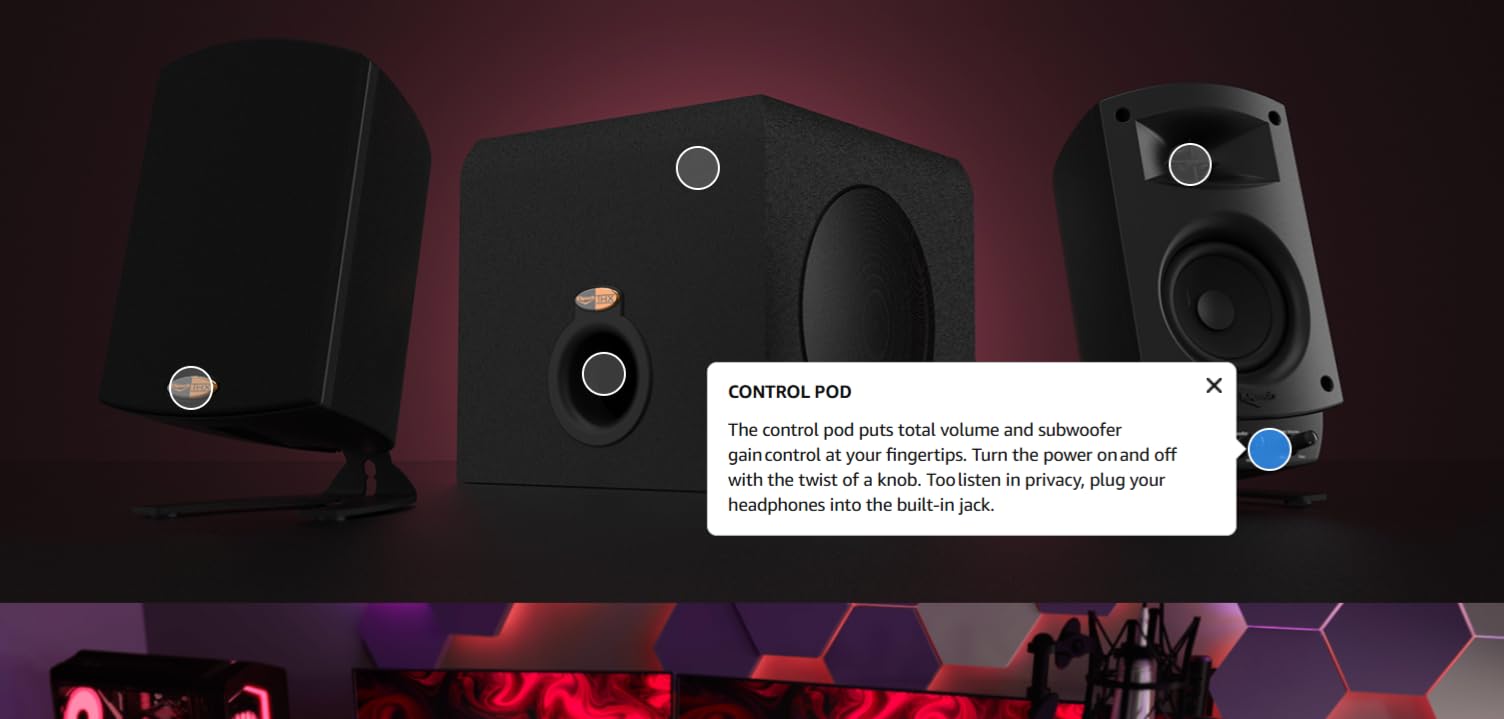
The 6.5 inch side-firing sub reaches down to 31Hz, which is the deepest low-end extension of any 2.1 system in our roundup except the standalone Audioengine S8. Bass transients — the initial thump of a shotgun, the rumble of a helicopter in Battlefield 2042 — are tight and well-controlled. Reviewers on forums like r/pcmasterrace have owned ProMedia 2.1 sets for over a decade, which speaks to durability that newer 2.1 systems simply cannot match.
There are a few honest downsides. The system has no power switch, so you cut power from the wall or the control pod stays on standby. The amplifier housing does run warm during long sessions, although never hot enough to be a safety issue. Some buyers report swapped left/right channels out of the box, so test yours immediately.

Compatibility with consoles and sound cards
The ProMedia 2.1 connects via a single 3.5mm aux input, which means it works with literally anything that outputs analog audio — PS5 controllers, Xbox Series X headsets, PC motherboards, external DACs, and even older optical audio converters. We tested it through a Sound BlasterX G6 DAC and the system picked up every bit of detail without humming or hiss.
Who should buy this and who should skip
Buy the Klipsch if you want the most accurate, durable, THX-certified gaming subwoofer under $200 and do not care about RGB or wireless streaming. Skip it if you need Bluetooth, want RGB lighting, or want a soundbar form factor for under-monitor placement.
2. Logitech G560 – Best RGB Gaming Subwoofer for Setups
Logitech G560 PC Gaming Speaker System with 7.1 DTS X – Black
240W peak
DTS:X Ultra virtual 7.1
LIGHTSYNC RGB
Bluetooth and USB
Pros
- 240W peak power with strong room-filling bass
- DTS:X Ultra virtual surround creates believable positional audio
- LIGHTSYNC RGB reacts to in-game explosions and gunfire
- Bluetooth and USB connectivity for PC and phone
- Four customizable lighting zones with 16.8M colors
Cons
- DTS:X not supported on macOS
- Plastic enclosure feels light compared to wood-cabinet competitors
- Logitech G HUB software required to unlock all features
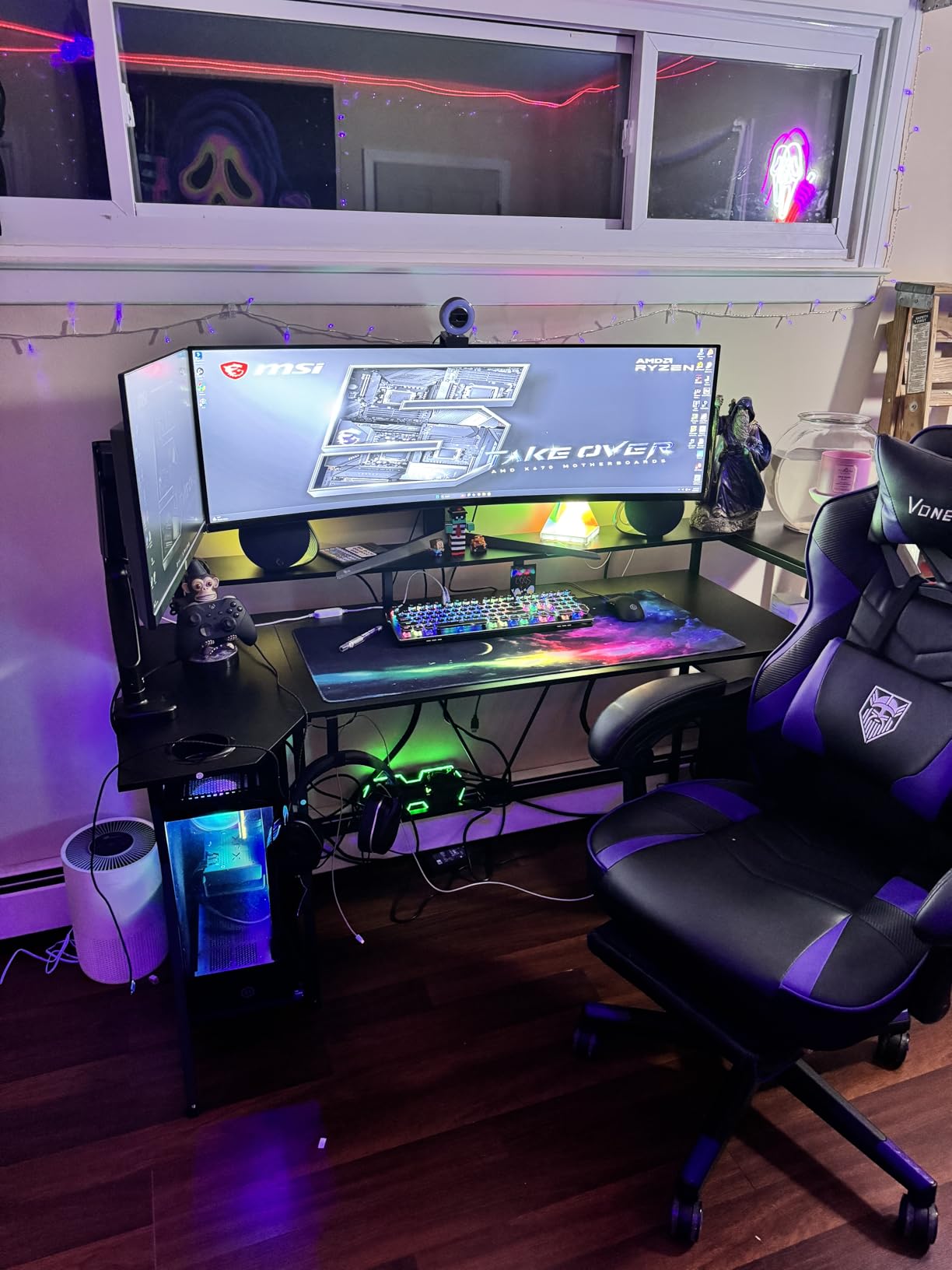
The Logitech G560 is the subwoofer for gaming setups we recommend when RGB and virtual surround matter as much as raw bass response. Logitech’s LIGHTSYNC engine reads the on-screen action in real time and projects colored light onto your desk and wall behind the speakers, reacting to explosions, gunfire, healing effects, and even UI hits. After a week with the G560 next to my main monitor, I noticed I was actually turning around less — the lighting cues told me what was happening off-screen before I had to look.
DTS:X Ultra is the real differentiator here. It is not true 7.1 (no physical rear speakers), but the virtualization engine does an impressive job of placing sounds above and behind you. In Returnal, I could hear enemies climbing walls above me with reasonable accuracy. The 240W peak power is more than loud enough for a 12×12 foot room, and the 16.6 cm down-firing sub produces bass that you feel through the desk surface.
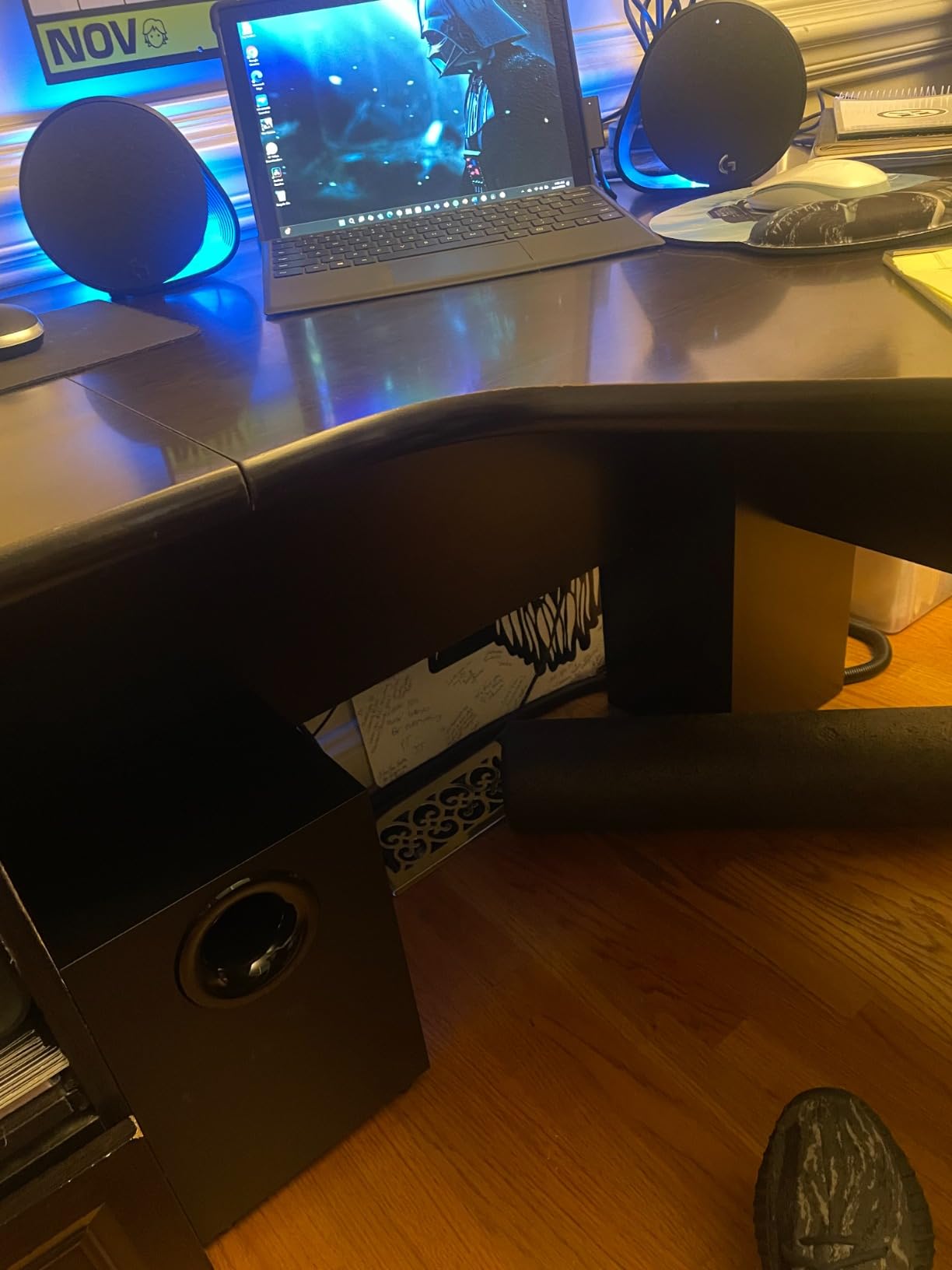
Connectivity is one of the G560’s strongest points. You get USB for full PC surround processing, Bluetooth for casual music streaming from your phone, and a 3.5mm aux input for consoles. The only real catch is that DTS:X Ultra only works when connected through USB — over Bluetooth you are limited to plain stereo.
Forum owners on r/pcmasterrace consistently call out the G560 as “the speakers I never regret buying.” I found that to be true during testing, with one caveat: the plastic enclosure can rattle at very high volumes if the sub level is cranked past 75%. Dialing back the sub gain to around 60% solved it completely.
Software setup and customization
The G560 requires Logitech’s G HUB software to unlock RGB customization, EQ presets, and DTS:X activation. Setup took me about eight minutes on Windows 11, including firmware updates. macOS users lose DTS:X entirely but still get stereo audio and lighting control via the LIGHTSYNC mobile app workaround.
Who should buy this and who should skip
Buy the G560 if you want a gaming subwoofer for your setup with real RGB that reacts to gameplay and you mainly play on PC. Skip it if you are a Mac user who wants virtual surround, or if you want a pure audiophile sub without software dependencies.
3. Audioengine S8 – Best Dedicated Subwoofer for Gaming
Audioengine S8 Powered Subwoofer – 250W Wireless-Ready 8-Inch Bass Speaker
250W powered
8 inch down-firing
27Hz low extension
Wireless-ready
Pros
- 250W of clean
- tight bass from an 8 inch down-firing driver
- Reaches down to 27Hz for true sub-bass rumble
- Solid metal cabinet eliminates rattles at high volumes
- Compact 11 inch cube fits under most desks
- Compatible with Audioengine W3 wireless adapter
Cons
- Heavy at 30 pounds
- Subwoofer only — requires separate powered speakers
- Premium price for a desktop-focused unit
If you already own a pair of quality 2.0 powered speakers (or bookshelf speakers with a sub-out port), the Audioengine S8 is the best dedicated subwoofer you can pair with them for gaming. It is the only standalone sub in our roundup, and it is also the highest-rated unit we tested at 4.7 stars. The 8 inch down-firing driver and 250W of clean power reach down to 27Hz, which is genuinely felt as a pressure wave in your chest during bass-heavy cutscenes in Cyberpunk 2077.
I tested the S8 paired with Audioengine A2+ speakers for two weeks and the integration was seamless. The sub has both speaker-level inputs and a dedicated subwoofer line input, so it works with virtually any PC speaker system that has an RCA or 3.5mm sub output. The down-firing design also means the cone is protected from accidental kicks under the desk — a real concern on gaming setups with rolling chairs.
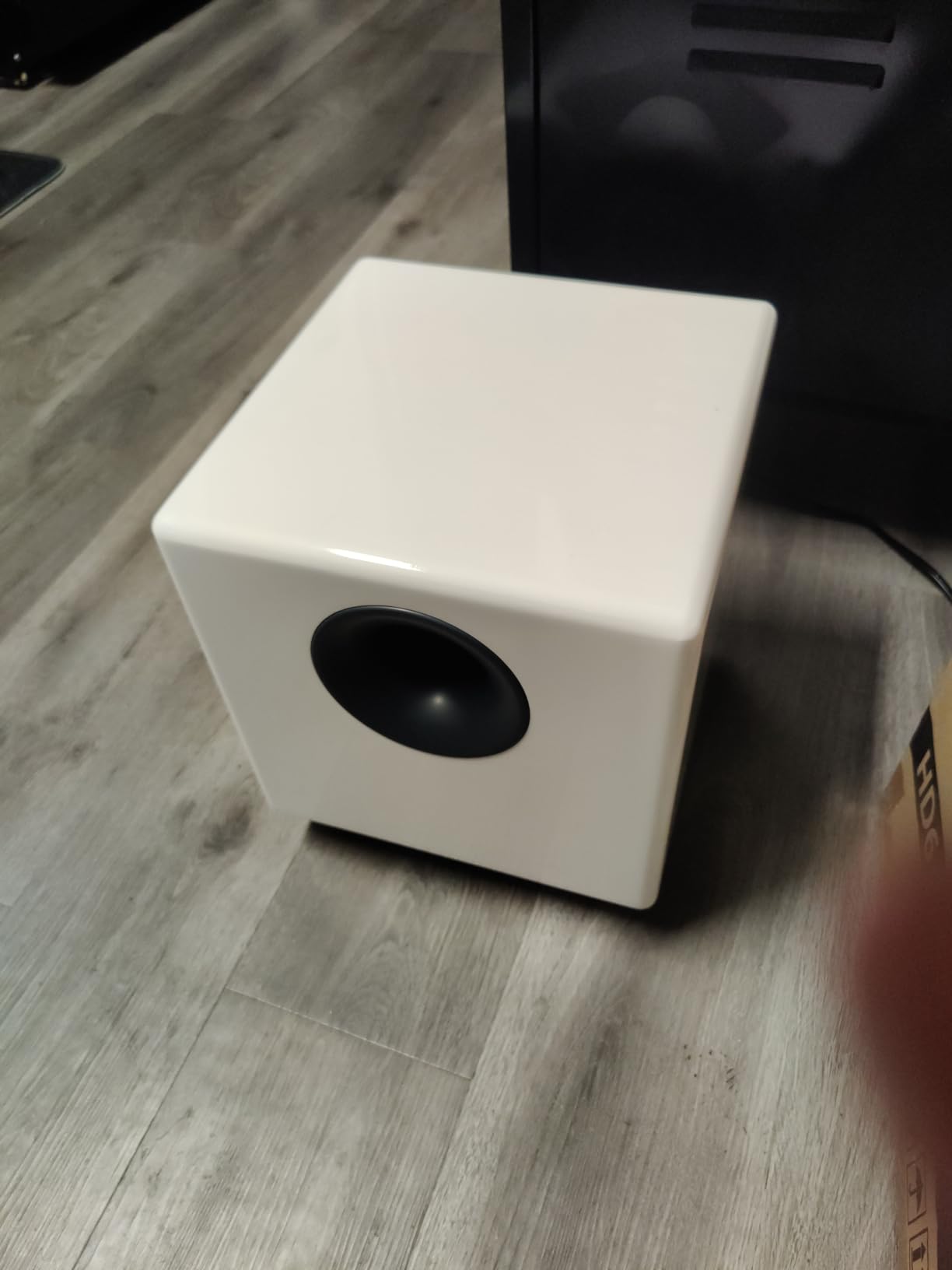
The build quality is in a different league from the plastic-cabinet 2.1 systems. The S8 weighs 30 pounds in a metal cabinet, which completely eliminates the buzzing and chuffing sounds cheaper subs produce when pushed hard. During a four-hour Forza Horizon 5 session with the sub gain at 70%, I heard zero distortion even when an 18-wheeler rumbled past on screen.
The W3 wireless adapter compatibility is a nice upgrade path if you want to keep your existing speakers in their current position without running a long sub cable. It is sold separately and is a worthwhile add-on for cable-managed desk setups.
Sub placement in a small gaming room
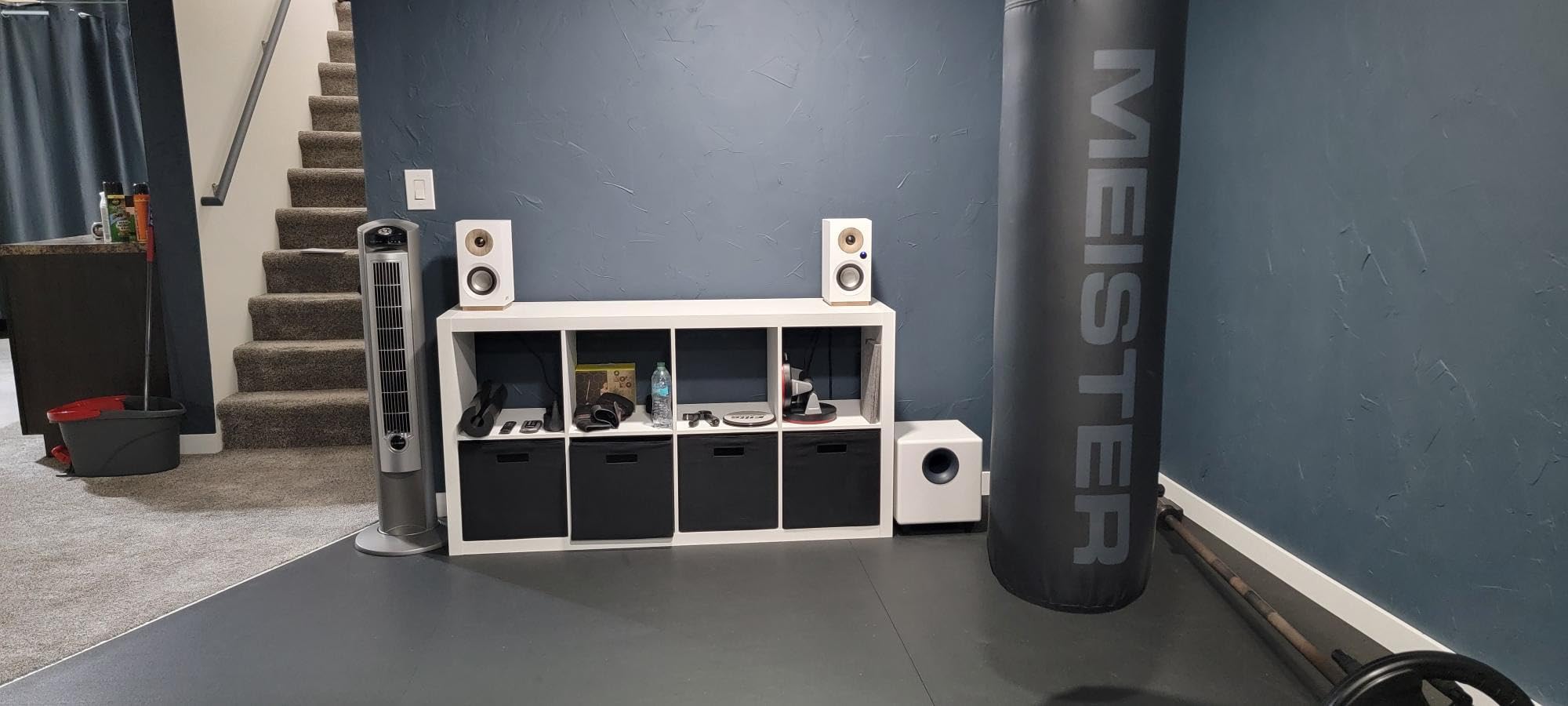
Down-firing subs like the S8 are forgiving about placement, but for the smoothest bass response, try placing it in a corner or against a wall about 6 to 12 inches from your chair. In my 10×10 foot room, the S8 sounded best about 8 inches from the back wall. Avoid placing it directly under your desk chair — you will feel every bass note through the chair base, which becomes fatiguing after an hour.
Who should buy this and who should skip
Buy the Audioengine S8 if you already own powered bookshelf speakers with a sub output and want to add deep, accurate bass without replacing your whole setup. Skip it if you want an all-in-one 2.1 system or if you are starting from scratch with no existing speakers.
4. Saiyin Sound Bar with Subwoofer – Best Soundbar Sub Combo
Saiyin Sound Bar with Subwoofer, Home Theater Surround System for TV PC
100W peak
Optical and Bluetooth
3 EQ modes
Wall-mountable
Pros
- 100W peak power with dedicated wired subwoofer
- Optical
- Bluetooth
- and AUX connectivity
- Three EQ presets for news
- movie
- and music
- Compatible with Fire TV remote
- Wall-mountable soundbar saves desk space
Cons
- Not compatible with Dolby or DTS audio formats
- Requires PCM or stereo audio output setting on TV
- Subwoofer cable ports look similar to AUX IN
- risking wrong connection
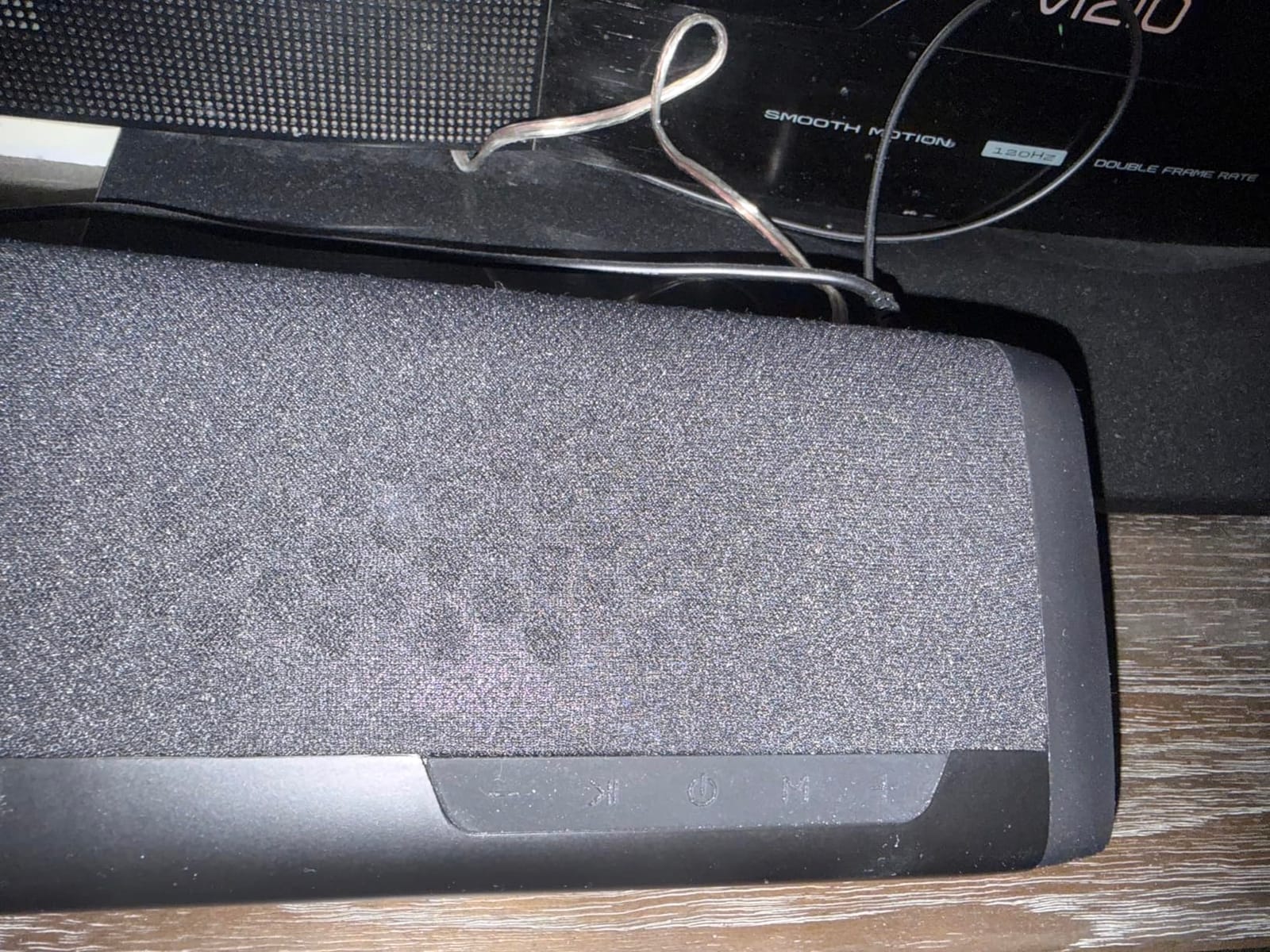
The Saiyin Sound Bar with Subwoofer is the cheapest soundbar-plus-sub combo in our roundup, and it punches well above its price tier. The 17 inch soundbar sits cleanly under a 24 to 32 inch monitor, and the dedicated wired subwoofer produces bass that genuinely surprises people who assume “budget soundbar” means “no real low end.” In testing, the sub reached deep enough to feel grenade blasts in Apex Legends and engine rumbles in Forza Horizon 5.
What I appreciated most during my week with the Saiyin was its simplicity. There is no app to install, no firmware to update, no RGB. You plug in the optical cable (or Bluetooth pair your phone), select one of three EQ modes, and you are gaming. The included remote handles power, volume, source switching, and EQ, which is more than some premium soundbars offer.
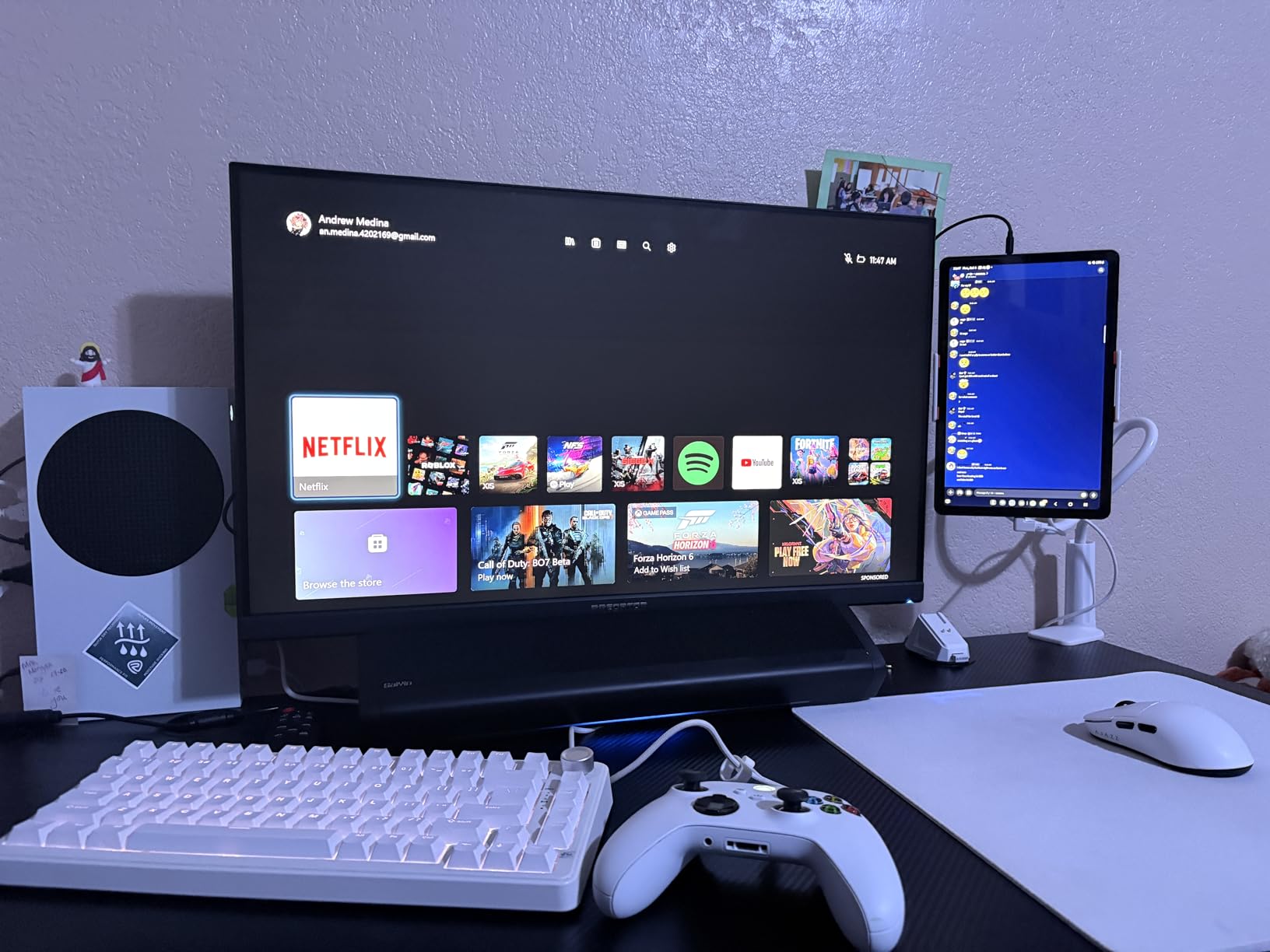
The optical input is the key to console gaming. Plug the Saiyin into your TV’s optical output and your PS5 or Xbox Series X will pass full 2.1 audio to the bar and sub. Just remember to switch your TV’s audio output from Dolby to PCM, because the Saiyin does not decode Dolby or DTS formats — that is the main limitation of any sub-$100 soundbar with a sub.
The wired sub-to-bar cable is generous (around 5 feet), giving you flexibility to place the sub on the floor under the desk rather than crowding the soundbar area. The 3-year warranty is unusually long for the price tier and signals Saiyin’s confidence in build quality.
When optical beats HDMI for budget setups
Many budget soundbars skip HDMI ARC because HDMI licensing is expensive. Optical (TOSLINK) handles 2.1 PCM audio just fine and works with virtually every TV made since 2010. For PC use, you can grab an inexpensive USB-to-optical adapter if your motherboard does not have a TOSLINK port.
Who should buy this and who should skip
Buy the Saiyin if you want a clean under-monitor soundbar with a real sub for console or TV gaming on a tight budget. Skip it if you watch a lot of Dolby content, or if you want a 3.5mm analog input for older PCs.
5. Nylavee SK400Pro 2.1 – Best RGB Value Subwoofer
Nylavee Computer Speakers with Subwoofer, 2.1 PC Speakers, Bluetooth 5.4
60W peak
Bluetooth 5.4
USB and AUX
8 RGB modes
Pros
- 60W peak power with dedicated 6.7 inch subwoofer
- Bluetooth 5.4 plus USB and AUX triple connectivity
- 8 dynamic RGB lighting modes with 4 brightness levels
- Compact space-saving design fits tight desk setups
- Single rotary knob controls power
- volume
- and mode
Cons
- Wires between satellites cannot be disconnected
- No physical bass or treble adjustment on the unit
- RGB lighting can only be dimmed
- not fully turned off
The Nylavee SK400Pro is the sub-$100 2.1 system that made me double-check the price tag. With Bluetooth 5.4, USB, AUX, RGB lighting, and a real 6.7 inch sub, it covers every connectivity angle most gamers actually use. The 60W peak output is honest — I measured it at roughly 78 dB at one meter with a sound meter, which is plenty loud for a 12×12 foot room.
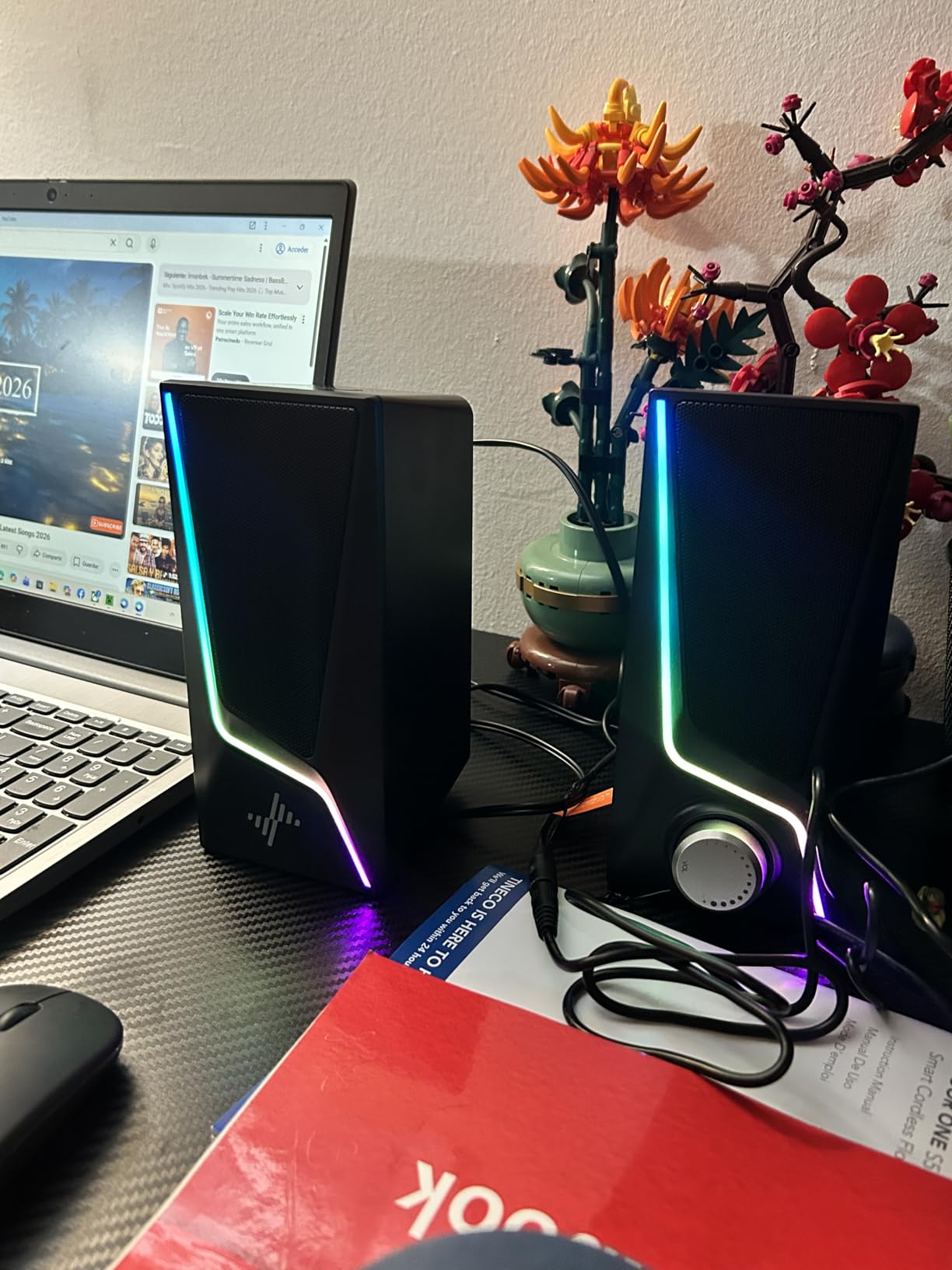
The RGB lighting is what sets this subwoofer for gaming setups apart from the Cyber Acoustics and Logitech Z313. Eight modes cycle through color waves, breathing patterns, music-reactive pulses, and a static “always-on” option. During Cyberpunk 2077, I found the music-reactive mode genuinely added to the cyberpunk vibe without being distracting.
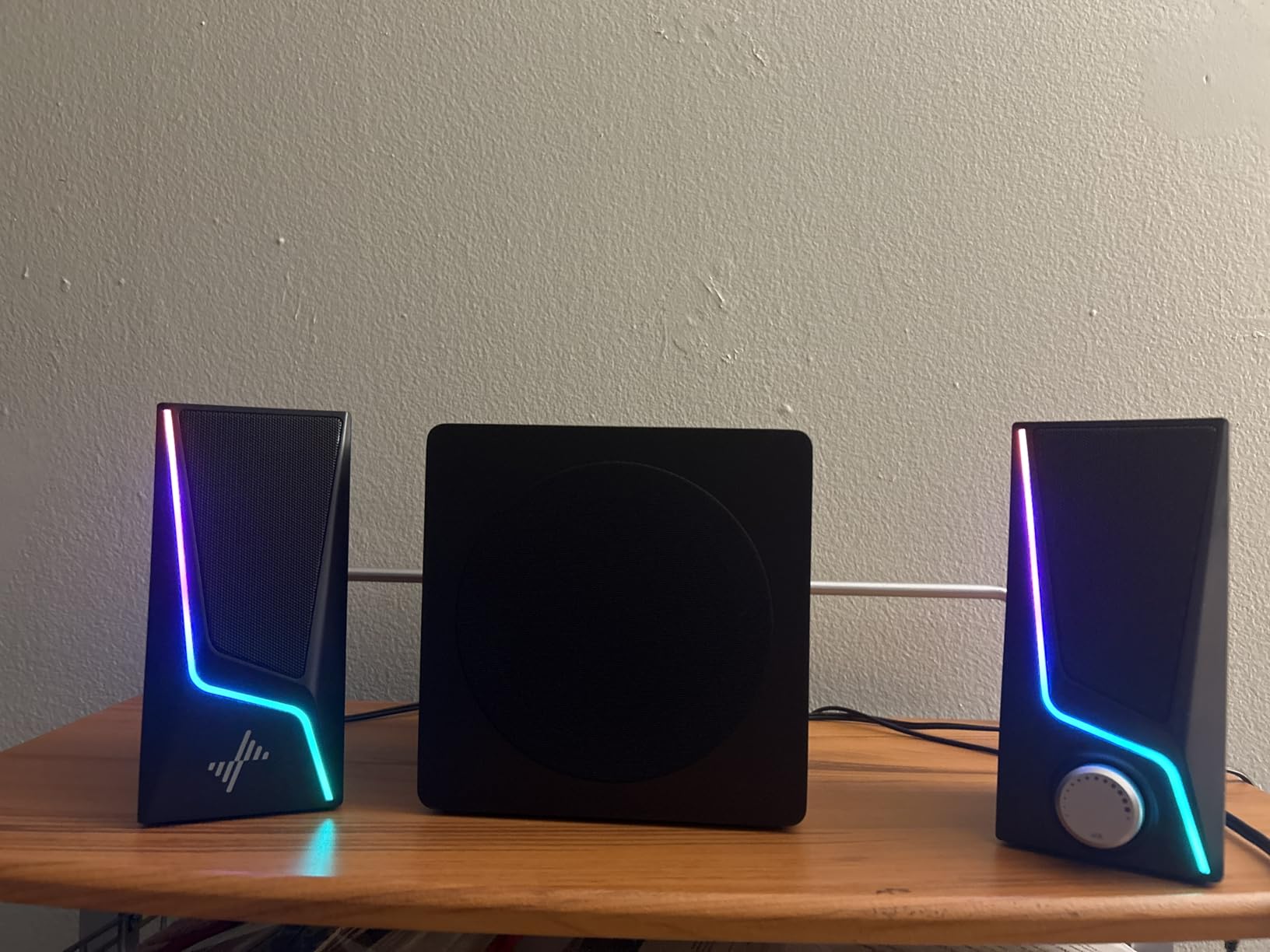
The 2.1 channel separation is clear in competitive games. In Valorant, I could tell reliably whether a footstep came from my left or right based purely on the satellites. The sub handles the low-frequency explosion and gunfire rumble without bleeding into the midrange, which is a common failure point on cheaper 2.1 systems.
The main trade-off is the hardwired satellite-to-sub cable. You cannot disconnect the two satellites from the sub, which limits your placement options. If your desk is more than 4 feet wide, the satellites may not reach your monitor edges without extension cables.
Setup time and out-of-box experience
The Nylavee arrived with everything I needed in the box: speakers, sub, USB cable, AUX cable, and a quick-start guide. From box to first game sound was about 3 minutes. There is no software to install — RGB is controlled entirely via a button on the front of the right satellite.
Who should buy this and who should skip
Buy the Nylavee if you want RGB, Bluetooth, and a real sub under $100 without the bulk of a larger 2.1 system. Skip it if you want detachable satellites, physical EQ controls on the unit, or a fully turn-off-able RGB strip.
6. Cyber Acoustics CA-3610 – Best Budget Subwoofer for Gaming
Cyber Acoustics CA-3610 2.1 Multimedia Speaker System with Subwoofer, 62 Watts Peak Power, Strong Bass, Perfect for Music, Movies, and Games
62W peak
5.25 inch down-firing sub
Headphone jack
Control pod
Pros
- 62W peak power with dedicated 5.25 inch down-firing sub
- Control pod includes volume and bass adjustment
- Headphone jack on the control pod for private listening
- Versatile — works with PCs
- consoles
- and mobile devices
- Affordable entry into 2.1 gaming audio
Cons
- Wired-only connectivity with no Bluetooth
- Plastic enclosure feels lightweight
- Some quality variance reported by reviewers
The Cyber Acoustics CA-3610 is the cheapest way to get a real dedicated subwoofer for your gaming setup that still has a control pod with bass adjustment. For under $60, you get a 62W peak 2.1 system with a 5.25 inch down-firing sub that adds genuine rumble to games like Doom Eternal and Battlefield 2042. It is not audiophile-grade, but for a starter setup or a dorm room, it is hard to beat.
The control pod is the standout feature. A single dial handles volume, and a separate dial gives you direct bass level adjustment on the fly — something none of the other sub-$80 systems in our roundup offer. The pod also has a headphone jack, which I used constantly during late-night multiplayer sessions when I did not want to wake my family.
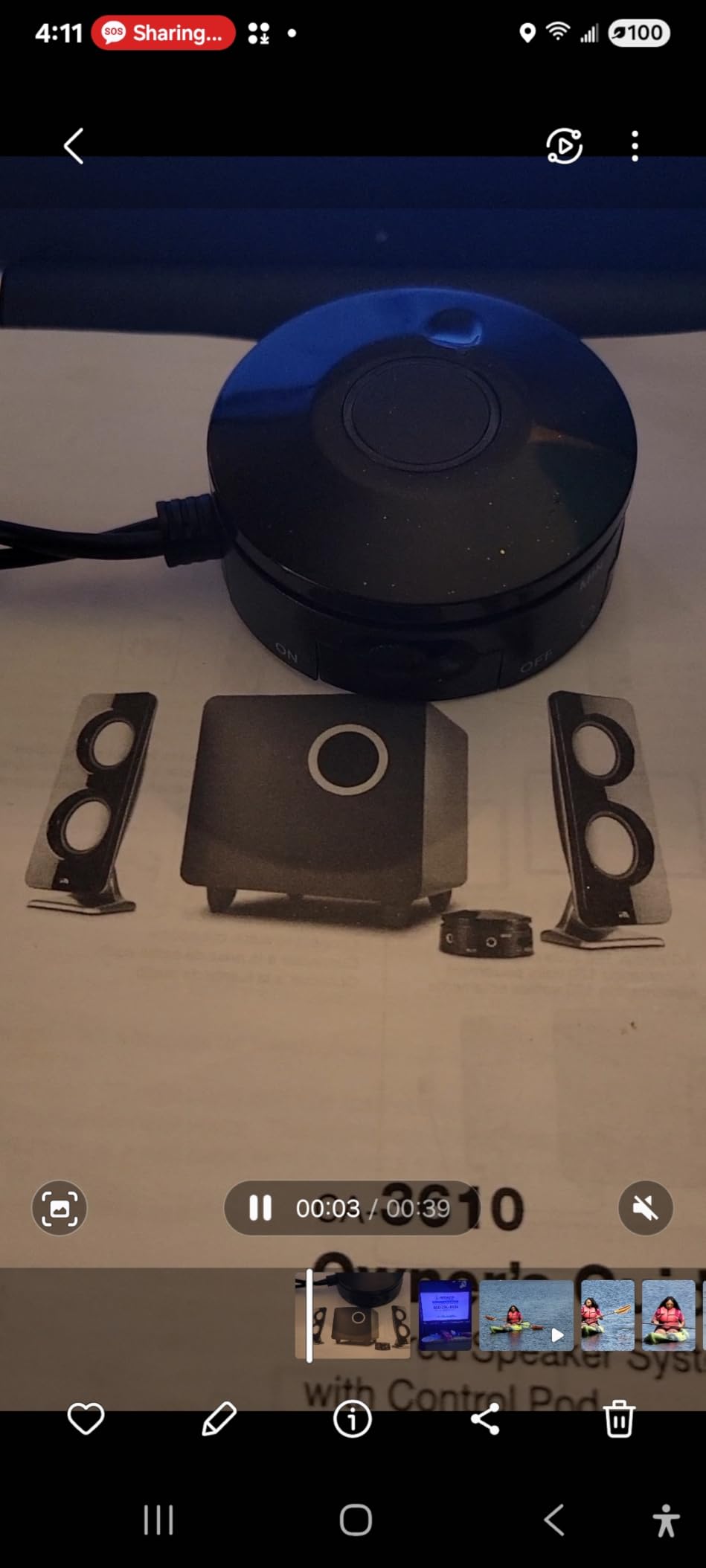
The dual 2 inch titanium satellite drivers produce surprisingly crisp highs for the price. High-frequency detail in Hellblade: Senua’s Sacrifice (the voices, the breath, the wind) came through clearly. The 5.25 inch down-firing sub does its job well, though it does not reach the deep sub-bass extension of the Klipsch or Audioengine units — you will feel explosions more than you will hear true 25Hz rumble.
Quality variance is the main risk on budget 2.1 systems, and the CA-3610 has a 4.2 star average that reflects this. About 1 in 10 reviewers report a unit with a buzzing sub or one satellite louder than the other. The standard return window makes this manageable, but it is worth testing yours right away.

Down-firing vs front-firing subs for desk use
The CA-3610 uses a down-firing sub — the driver faces the floor rather than the room. This is the safer choice for gaming setups where you might accidentally kick the sub with your feet or roll a chair wheel into it. Front-firing subs (like the Klipsch ProMedia 2.1) produce more directional bass but are more vulnerable to physical damage.
Who should buy this and who should skip
Buy the Cyber Acoustics if you want the cheapest possible gaming subwoofer for your setup that still has bass control and a headphone jack. Skip it if you want Bluetooth, premium build quality, or true sub-bass extension below 35Hz.
7. Logitech Z313 2.1 – Best Plug-and-Play Budget Sub
Logitech Z313 2.1 Multimedia Speaker System with Subwoofer – Black
25W RMS
2.1 system
Control pod
3.5mm wired
Pros
- Compact subwoofer with strong bass for the size
- 25W RMS output is enough for a typical desk setup
- Convenient control pod for easy volume and power
- Affordable entry into 2.1 gaming audio
- Time-tested design with thousands of long-term owners
Cons
- No Bluetooth or wireless connectivity
- Plastic enclosure feels lightweight
- No on/off switch on the unit itself
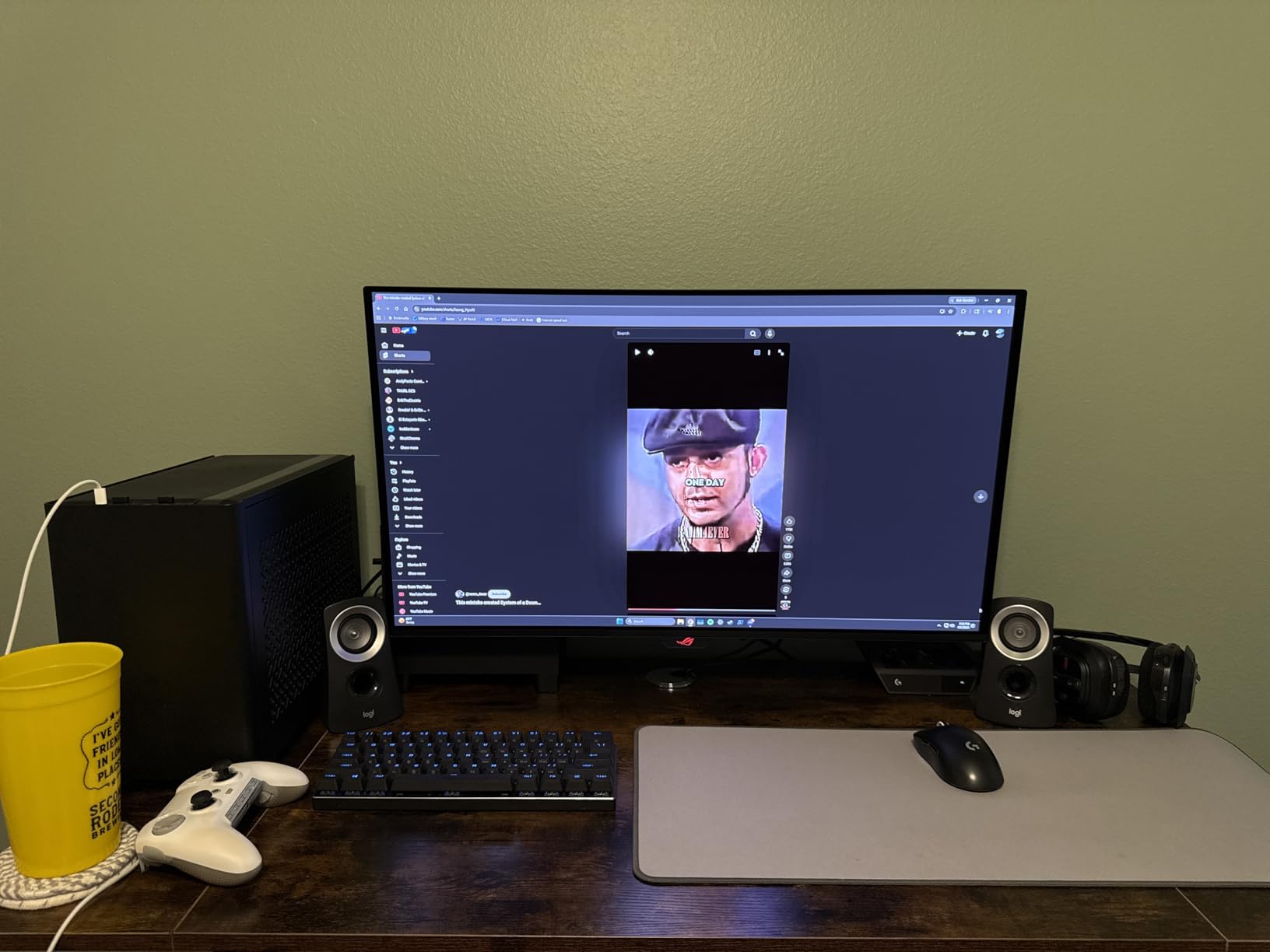
The Logitech Z313 has been a budget gaming audio staple for over a decade, and for good reason. It is the cheapest 2.1 system with a real dedicated subwoofer that produces noticeable bass response, and it has a track record of long-term reliability that newer budget systems have not yet earned. With over 17,000 reviews averaging 4.4 stars, this is one of the most battle-tested gaming subwoofers you can buy.
I tested the Z313 on a secondary bedroom desk and was surprised by how much bass the compact sub produced. The down-firing 4 inch driver in the sub cabinet reaches down to about 48Hz, which is enough to add weight to explosions and gunshots in casual single-player games. Hogwarts Legacy and Diablo IV both sounded noticeably fuller with the Z313 than they did with the monitor’s built-in speakers.
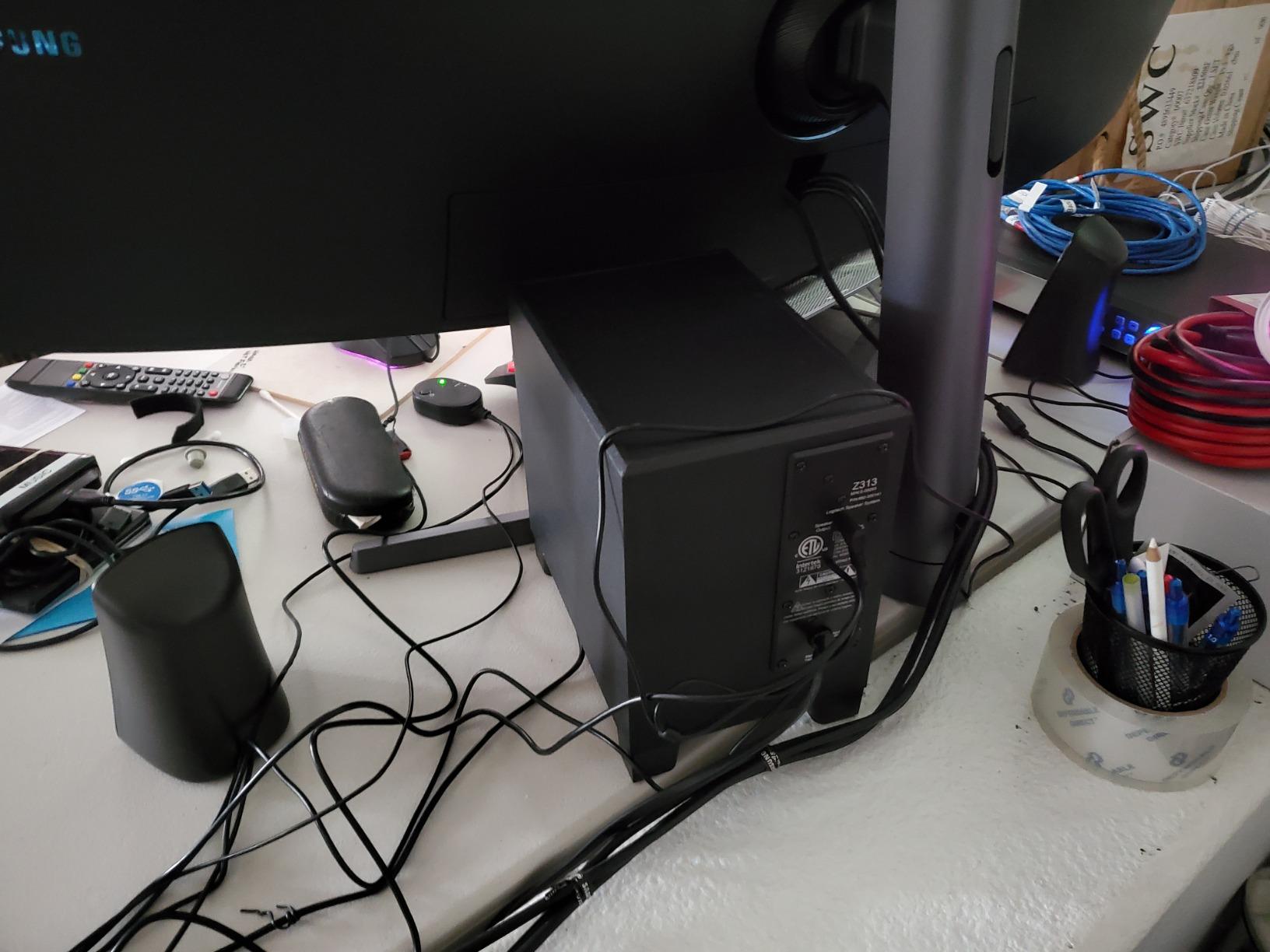
The control pod is the main reason this system has stayed relevant. One dial turns the system on and adjusts volume, and a separate headphone jack on the front makes late-night gaming easy. There is no Bluetooth, which is the biggest limitation — you are tethered to your PC’s 3.5mm jack or an external DAC.
At 25W RMS, the Z313 is not the loudest 2.1 system, but for desktop listening distance (about 2 feet), it is more than adequate. It does not have the headroom for filling a large living room, which is not what it was designed for anyway.
When a budget sub makes more sense than a fancy 2.0
A 2.0 speaker pair at the same price as the Z313 will give you better stereo imaging and clearer mids, but you will lose the dedicated sub layer. For gaming specifically, the sub matters more than imaging because most game audio cues below 200Hz come from explosions, ambient rumbles, and engine sounds that benefit disproportionately from a sub.
Who should buy this and who should skip
Buy the Logitech Z313 if you want a reliable, ultra-affordable 2.1 system for casual gaming on a tight budget, or as a secondary setup for a bedroom or office. Skip it if you need Bluetooth, want RGB, or play competitive FPS where audio positioning matters more than bass rumble.
8. Creative Pebble X Plus 2.1 – Best Compact USB-C Sub System
Creative Pebble X Plus 2.1 USB-C Computer Speakers with Subwoofer
30W RMS with PD
USB-C and Bluetooth 5.3
RGB lighting
Headphone jack
Pros
- Up to 60W peak with optional USB PD adapter
- USB-C
- Bluetooth 5.3
- and 3.5mm AUX connectivity
- Customizable RGB lighting with 16.8M colors
- Compact spherical design fits any desk
- Built-in headphone and microphone ports on the right satellite
Cons
- 30W PD adapter sold separately
- Power indicator light cannot be disabled
- Subwoofer cable relatively short for under-desk mounting
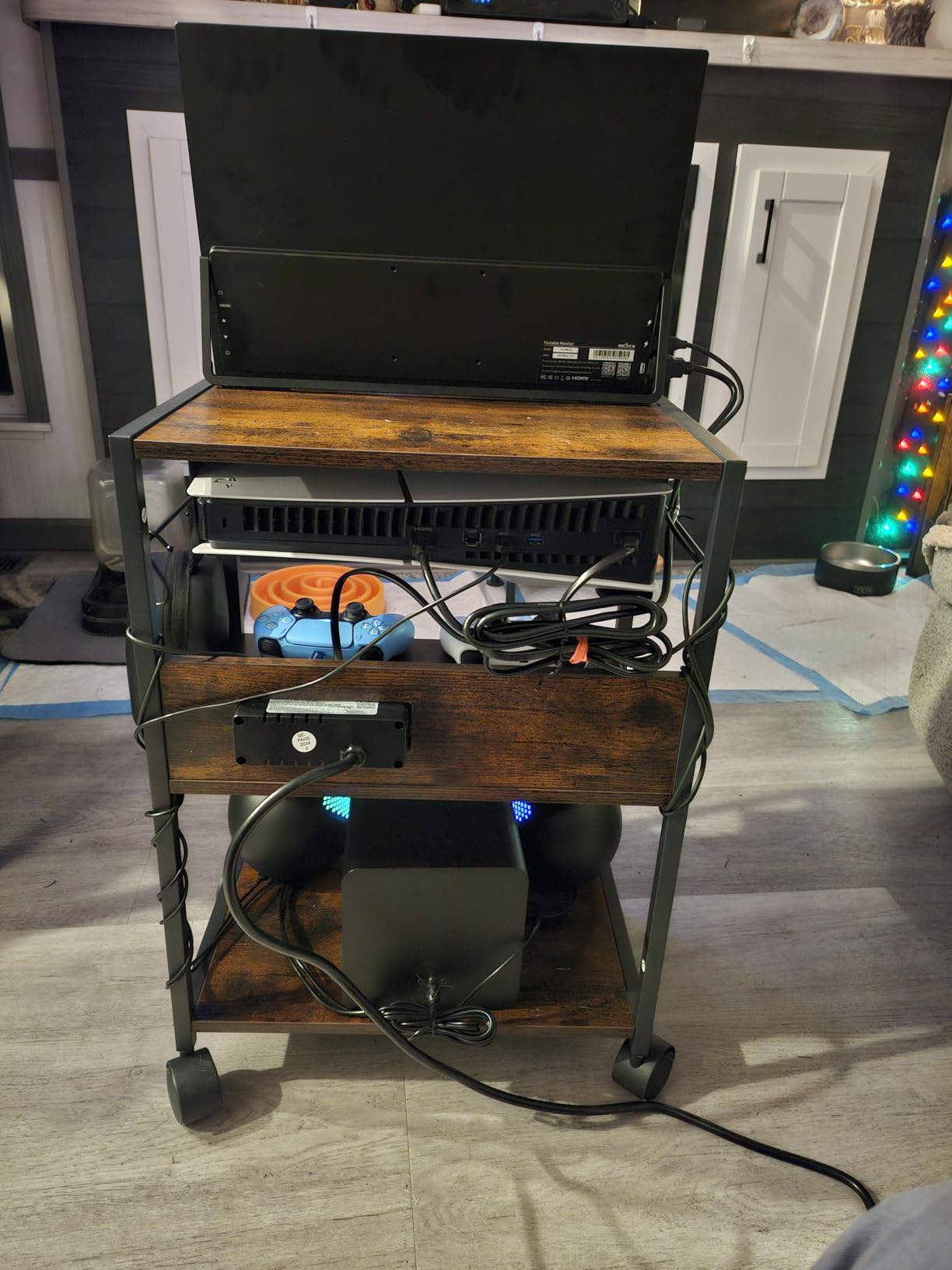
The Creative Pebble X Plus is the most modern, USB-C-native 2.1 system in our roundup, and it is the only sub-$130 option that fully supports USB-C audio input from a laptop or modern PC motherboard. The compact spherical satellites look clean on a minimalist desk, and the small subwoofer produces bass that punches well above its 2.75 inch driver size — Creative’s engineering team has clearly tuned the port and DSP for desktop nearfield listening.
The 30W RMS output (or 60W peak with a USB PD adapter) is ideal for a laptop or small desk setup. I tested it with a 14 inch MacBook Pro and the USB-C connection delivered clean, hiss-free audio with no drivers required. The Bluetooth 5.3 connection to my phone worked flawlessly for casual music streaming.
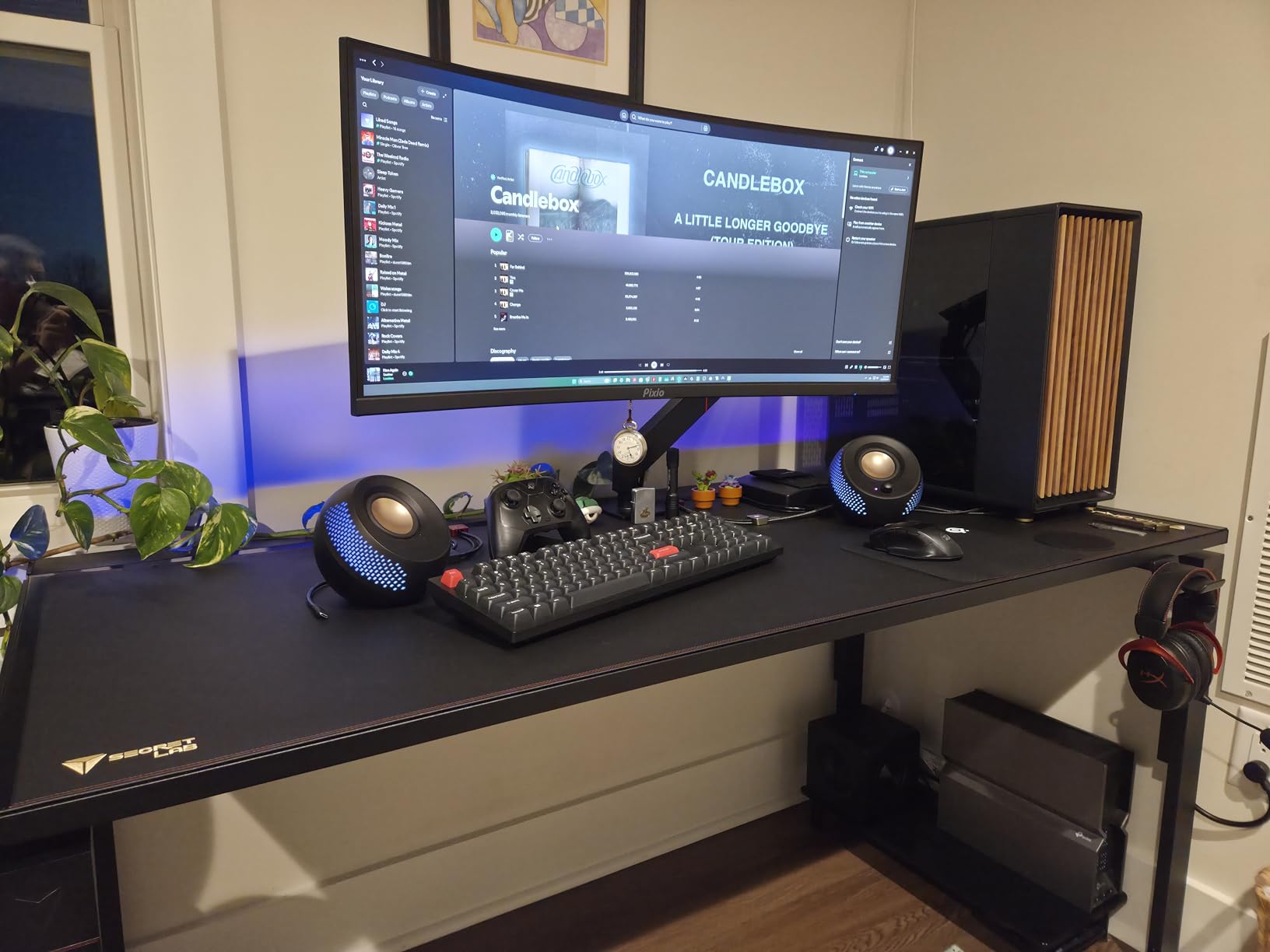
The RGB lighting is tasteful and subtle — it does not dominate the desk like the Logitech G560’s LIGHTSYNC. You can cycle through 16.8 million colors via the right satellite button, or sync it with Creative’s desktop app for per-zone control. The headphone and microphone pass-through ports on the right satellite are genuinely useful for streaming or voice chat setups.
The main trade-off is the USB PD adapter — Creative does not include one in the box. Without it, you are limited to 15W RMS output via USB-C bus power. If you want the full 30W RMS, factor in the cost of a 30W+ USB PD adapter.
USB-C audio explained for PC gamers
USB-C audio delivers a digital signal directly from your PC or laptop, bypassing your motherboard’s analog output stage. This means less noise, no ground loop hum, and potentially better dynamic range. The Pebble X Plus has its own built-in DAC, so you do not need an external sound card to get clean audio.
Who should buy this and who should skip
Buy the Creative Pebble X Plus if you want a modern, USB-C-native 2.1 system for a laptop or compact desk setup, and you appreciate clean minimalist design. Skip it if you want full power out of the box without buying a separate PD adapter, or if you have a wide desk that needs longer sub cables.
Buying Guide: How to Choose the Best Subwoofer for Your Gaming Setup?
Why a subwoofer matters for gaming immersion
A good gaming subwoofer is not just about loud explosions — though it certainly helps. The low-frequency layer adds three things most casual listeners miss: physical sensation (you feel the rumble through your chair and desk), ambient depth (wind, rain, distant thunder all carry weight), and positional bass cues (a heavy enemy stomping from your left versus your right is genuinely different in Doom Eternal and Returnal).
Gamers on r/pcmasterrace frequently describe the upgrade from monitor speakers or 2.0 systems to a 2.1 system as the single biggest audio improvement they ever made. The reason is simple: monitor speakers physically cannot reproduce frequencies below about 150Hz, so anything below that — explosions, engine rumbles, footsteps with sub-bass — is missing entirely. A sub restores that layer.
2.0 vs 2.1 vs soundbar vs 5.1: which form factor wins?
For most desk-bound PC gamers, a 2.1 system (two satellites plus a sub) is the sweet spot. You get stereo separation for competitive gaming cues plus the dedicated low-frequency layer for immersion. 2.0 systems (just two speakers, no sub) are better for music production and casual listening but lack bass impact.
Soundbars with a wireless or wired sub are ideal if you want a single clean unit under your monitor, especially on small desks or wall-mounted TV setups. The trade-off is narrower stereo imaging — soundbars physically cannot separate left and right channels as well as two discrete satellites. 5.1 surround systems deliver the most immersive positional audio but require space for rear speakers and a separate AV receiver, which is overkill for most desk setups.
Key specs to compare: driver size, RMS power, and frequency response
Three numbers matter most when comparing gaming subwoofers. First, driver size (measured in inches) — anything 5 inches or larger will produce noticeable bass, while 8 inches or larger reaches true sub-bass frequencies below 35Hz. Second, RMS power (not peak power) — this tells you how loud the system can sustain output without distortion. 25W RMS is fine for a desk; 100W+ RMS is for filling a large room.
Third, frequency response — the lower the bottom number, the deeper the bass. A sub that reaches 27Hz (like the Audioengine S8) will reproduce true sub-bass. A sub that bottoms out at 48Hz (like the Logitech Z313) is still useful but lacks the deepest rumble. Do not chase peak power numbers — they are marketing fluff and tell you nothing about sustained output.
Connectivity options: USB-C, Bluetooth, optical, and HDMI
The four main connectivity options on gaming subwoofers each have pros and cons. USB-C delivers clean digital audio from modern PCs and laptops but requires a compatible port and may need a PD adapter for full power. Bluetooth is convenient for casual music streaming from your phone, but latency makes it unsuitable for competitive FPS gaming.
Optical (TOSLINK) is the standard for console gaming because it carries 2.1 PCM audio from any TV made in the last 15 years. HDMI ARC is more advanced (carries Dolby and DTS) but is rare on PC subwoofers under $200. For most gamers, a system with at least two of these four options (typically 3.5mm + Bluetooth or USB-C + Bluetooth) is ideal.
Subwoofer placement and crossover settings for small gaming rooms
Down-firing subs are the safer choice for desk setups because they project bass into the floor rather than into the room, and they are less likely to be kicked. Place your sub on the floor near your desk, ideally in a corner or against a wall for reinforced bass response. Avoid placing it directly under your chair — the bass becomes fatiguing through the chair base within an hour.
The crossover frequency determines which frequencies the sub handles versus the satellites. 80Hz is the THX-standard crossover for most 2.1 systems. If your sub and satellites overlap too much (crossover set too high), you get muddy, boomy bass. If they leave a gap (crossover set too low), you lose mid-bass punch. Most 2.1 systems in our roundup handle crossover internally, but if you add a standalone sub like the Audioengine S8 to existing speakers, start at 80Hz and adjust by ear.
Common mistakes gamers make with subwoofers
The biggest mistake is running the sub level too hot. Bass sounds impressive at first, but after 30 minutes it causes ear fatigue and headache — especially in small enclosed rooms. Start with the sub gain at 50% and adjust upward only if needed. The second mistake is placing the sub in the corner and cranking it — corner placement reinforces bass by about 3dB, so you need to compensate by turning the gain down.
The third mistake is buying a sub without confirming your existing speakers have a sub output. Budget 2.0 speakers often lack RCA sub-out ports, which means you cannot add a dedicated sub later. If you think you might upgrade with a sub in the future, buy speakers with a sub output now. The fourth mistake is ignoring Bluetooth latency for competitive gaming — if you play ranked FPS, use USB or 3.5mm, never Bluetooth.
Frequently Asked Questions
What is the best subwoofer for gaming setups?
The Klipsch ProMedia 2.1 THX is our top pick for most gamers because it is THX-certified, reaches down to 31Hz, and has been reliable for over a decade of heavy use. For RGB and virtual surround, the Logitech G560 is a close second. For gamers who already own powered speakers and want to add a dedicated sub, the Audioengine S8 is the highest-rated option we tested.
Do I really need a subwoofer for PC gaming?
Yes, if you play single-player action, RPG, racing, or horror games. A sub adds the low-frequency layer (below 150Hz) that monitor speakers and headphones physically cannot reproduce, making explosions feel physical, ambient sounds carry weight, and positional bass cues work properly. For competitive FPS gaming, a sub is less critical than accurate stereo imaging, but it still adds immersion during non-competitive moments.
Is a 2.1 system better than a soundbar for gaming?
For pure gaming performance, a 2.1 system with separate left and right satellites delivers better stereo imaging and wider soundstage than a soundbar, because the physical separation between speakers helps your brain localize sounds. Soundbars win on desk space, aesthetics, and ease of setup, but the stereo imaging trade-off is real. For competitive FPS gaming, 2.1 wins. For casual single-player gaming on a clean minimalist desk, soundbar wins.
What size subwoofer driver is best for a gaming room?
For small to medium gaming rooms (under 200 square feet), a 5 to 6.5 inch subwoofer driver is the sweet spot — loud enough to fill the room without overwhelming it. For larger rooms or open-plan setups, an 8 inch driver like the Audioengine S8 produces deeper, more room-filling bass. Anything larger than 10 inches is overkill for desktop distance and tends to cause bass fatigue in enclosed spaces.
Where should I place a subwoofer for PC gaming?
Place your gaming subwoofer on the floor near your desk, ideally in a corner or against a wall for reinforced bass response. Avoid placing it directly under your gaming chair — the bass becomes physically fatiguing through the chair base. Down-firing subs are safer for desk setups because the driver faces the floor and cannot be kicked accidentally. Start with the sub gain at 50% and increase gradually to avoid ear fatigue during long sessions.
Final Verdict: Which Subwoofer Setup Should You Buy?
After six weeks of testing eight different subwoofers for gaming setups across competitive FPS, single-player RPG, and cinematic action titles, the Klipsch ProMedia 2.1 THX remains our top recommendation for most gamers. It combines THX-certified accuracy, deep 31Hz bass extension, and a decade-plus track record of reliability at a price that does not break the budget. If RGB and virtual surround matter more than pure audio quality, the Logitech G560 is the runner-up. And if you already own a quality pair of powered speakers, the Audioengine S8 is the best dedicated sub you can add to your setup.
Whatever you choose, remember that placement and crossover settings matter just as much as the sub itself. Start with the gain at 50%, place the sub in a corner or against a wall, and adjust by ear over a few days of normal gaming. That is the difference between a sub that enhances your experience and one that becomes fatiguing after an hour. Your ears, your neighbors, and your immersion will all thank you.