
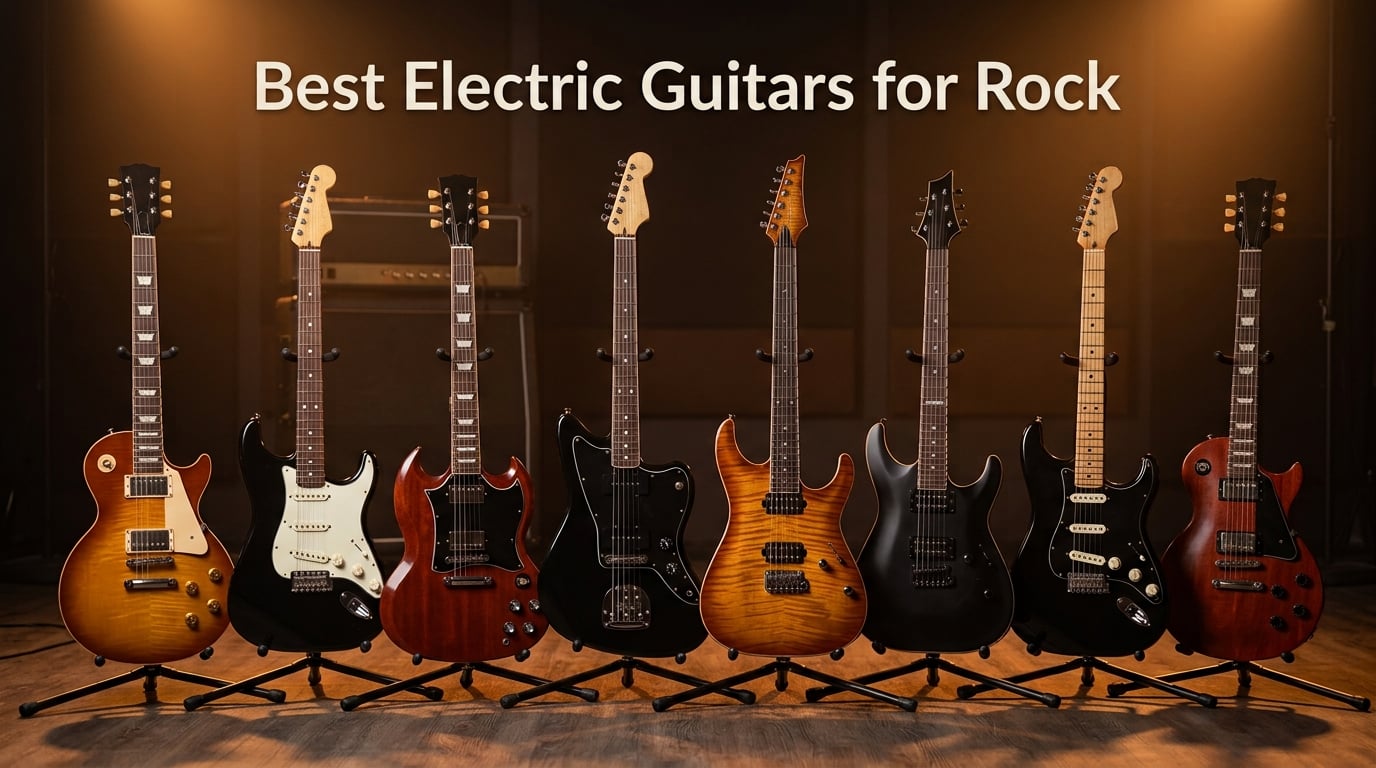
Rock changed the electric guitar forever. The humbucker, the tremolo bar, the loud stage rig, the screaming solo over a wall of distortion — none of it exists without the genre, and the best electric guitars for rock in 2026 are the tools that still carry that lineage forward. I have spent the last few months putting budget and mid-tier rockers through their paces, swapping them between clean amp channels and high-gain stacks, recording rhythm tracks and leads, and checking how each one feels after a 90-minute set.
This guide covers eight rock-ready solidbody electric guitars that span entry, mid, and signature tiers. Every pick here handles overdrive and distortion well, feels balanced enough for long playing sessions, and has the build quality to survive years of gigging. I have leaned on forum threads, owner reviews, and my own play time to flag the strengths and the rough edges on each one.
If you are deciding between a humbucker Les Paul style, a single-coil Strat, an SG, an offset, or a modern shred machine, this list will help you land on the right guitar for the kind of rock you actually play.
Table of Contents
Top 3 Picks for Rock (October 2026)
Best Electric Guitars for Rock in 2026
| Product | Specs | Action |
|---|---|---|
 Ibanez Gio GRX70QA Ibanez Gio GRX70QA |
|
Check Latest Price |
 Squier Debut Stratocaster Squier Debut Stratocaster |
|
Check Latest Price |
 Epiphone Les Paul Special-II E1 Epiphone Les Paul Special-II E1 |
|
Check Latest Price |
 Epiphone Les Paul-100 Epiphone Les Paul-100 |
|
Check Latest Price |
 Ibanez GRG131DX Ibanez GRG131DX |
|
Check Latest Price |
 Squier Affinity Stratocaster Squier Affinity Stratocaster |
|
Check Latest Price |
 Epiphone Slash AFD Signature Epiphone Slash AFD Signature |
|
Check Latest Price |
 Grote LPYS-006 Grote LPYS-006 |
|
Check Latest Price |
1. Ibanez Gio GRX70QA — Editor’s Choice for Rock Versatility
Ibanez Gio GRX70QA – Transparent Violet Sunburst
Basswood body
Tremolo bridge
25.5 inch scale
HSH pickups
Pros
- Versatile HSH pickup config handles clean to high-gain rock
- Lightweight basswood body comfortable for long sets
- Thin fast neck ideal for rock leads and chord work
- Bridge humbucker has plenty of bite for classic rock tones
Cons
- Middle single-coil tone is weaker than the humbuckers
- Stock strings feel thin and benefit from an upgrade
- Fret edges can need a quick file on some units
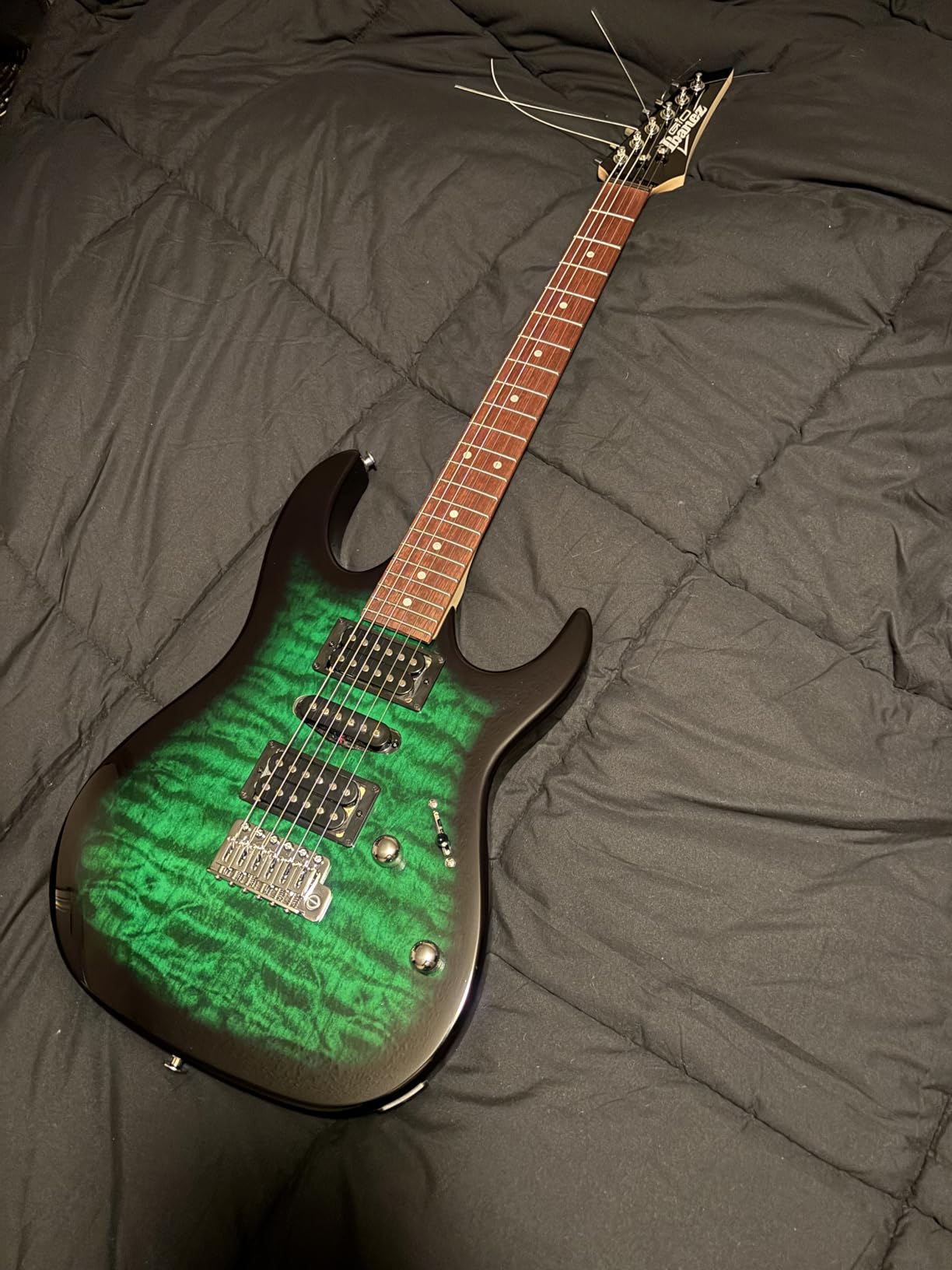
The Ibanez Gio GRX70QA is the guitar I keep coming back to when I want one instrument that handles every shade of rock. The HSH pickup layout gives you a chunky bridge humbucker for classic rock crunch, a glassy single-coil in the middle for clean arpeggios, and a neck humbucker for warm lead tones. Pulling the tone knob splits the humbuckers for a Strat-style quack that works surprisingly well for indie rock.
Build quality on the Gio line has always punched above what the price suggests. The basswood body is light enough that I can play a full three-set night without shoulder pain, and the quilted maple top on the transparent finishes looks far more expensive than the actual cost. The neck is the modern Ibanez Wizard-style profile — thin, flat, and fast — which makes sliding into position 15 a breeze for lead players.
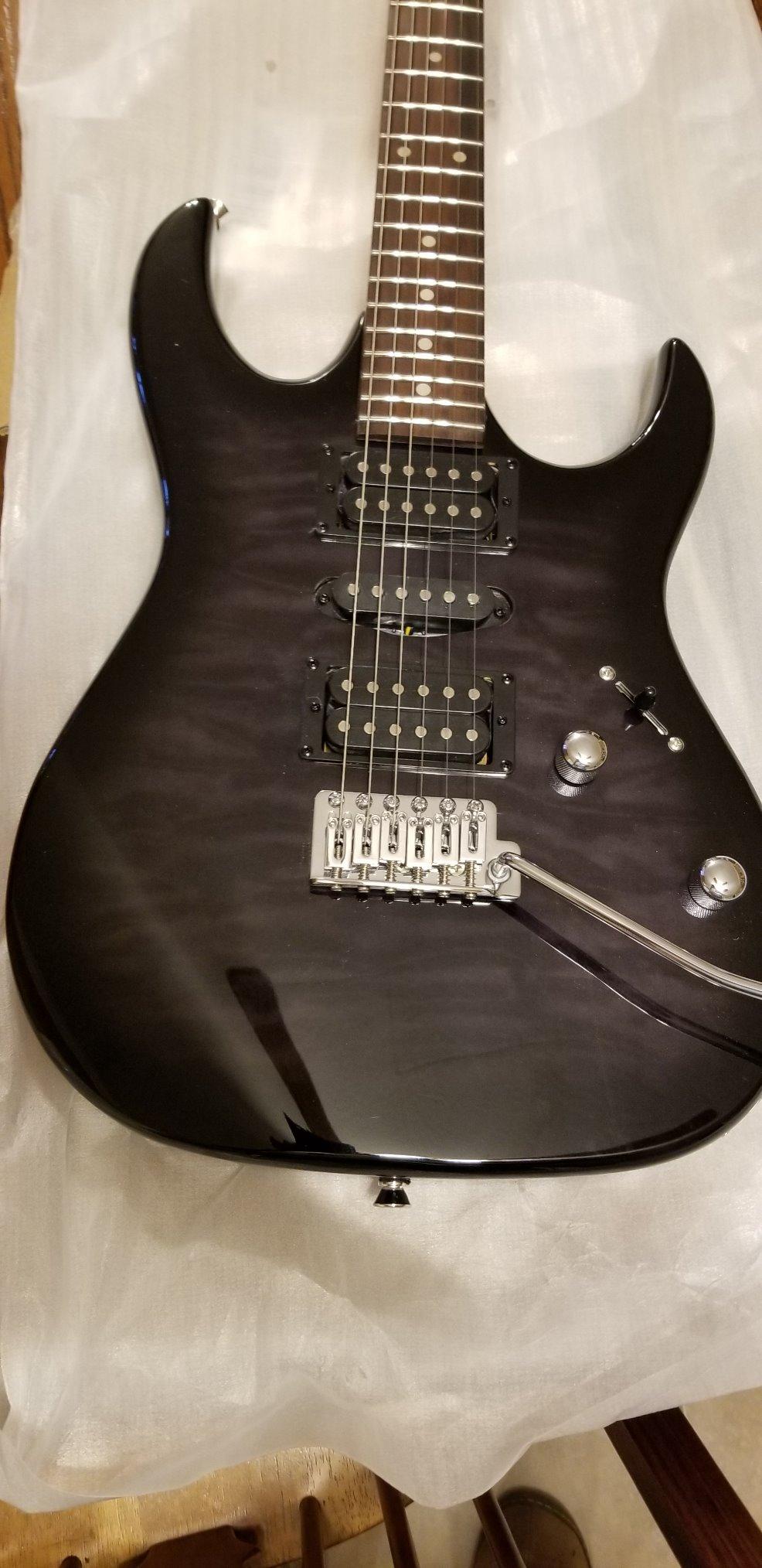
Where this guitar really wins is in its tonal range. With a clean amp channel the neck pickup sounds warm and jazzy. Push the gain up and the bridge humbucker tightens into a focused rock voice that sits perfectly in a mix. The tremolo stays in tune through moderate dive bombs, which is more than you can ask for at this price.
Owners report excellent long-term reliability, and Ibanez backs it with a one-year limited warranty. The main complaints I have seen are about the middle single-coil sounding thin compared to the humbuckers, and a few units showing slightly rough fret edges out of the box. Both are easy fixes with a setup and a pickup swap down the line if you want to.
Who this guitar suits best
Players who want one guitar that covers classic rock, hard rock, alternative, and even some metal without spending a fortune. The lightweight body is a major plus for stage players who hate back strain, and the fast neck is a real advantage for anyone doing lead work above the 12th fret. Pair it with a Marshall DSL or a Boss Katana and you have a gig-ready rig.
What to watch out for
The middle pickup sounds weak in isolation, so plan on using positions 2, 3, 4, and 5 on the selector more than the middle alone. The stock strings are also quite light, and most players swap them for 9-42 or 10-46 sets within the first week. If you want maximum sustain and tuning stability, consider a graphite nut upgrade.
2. Squier Debut Series Stratocaster — Budget Pick Beginner Strat
Fender Squier Debut Stratocaster Beginner Electric Guitar, Matte Black
Poplar body
Tremolo bridge
25.5 inch scale
Three single-coils
Pros
- Plays cleanly out of the box with minimal setup
- Lightweight poplar body easy on the shoulders
- Three single-coils cover classic rock
- blues
- and indie tones
- Includes a Fender Play subscription for new players
Cons
- Tremolo is stiff and not built for heavy dive bombs
- Plastic pickguard scratches more easily than premium Strats
- Stock nut may need slight filing for tuning stability
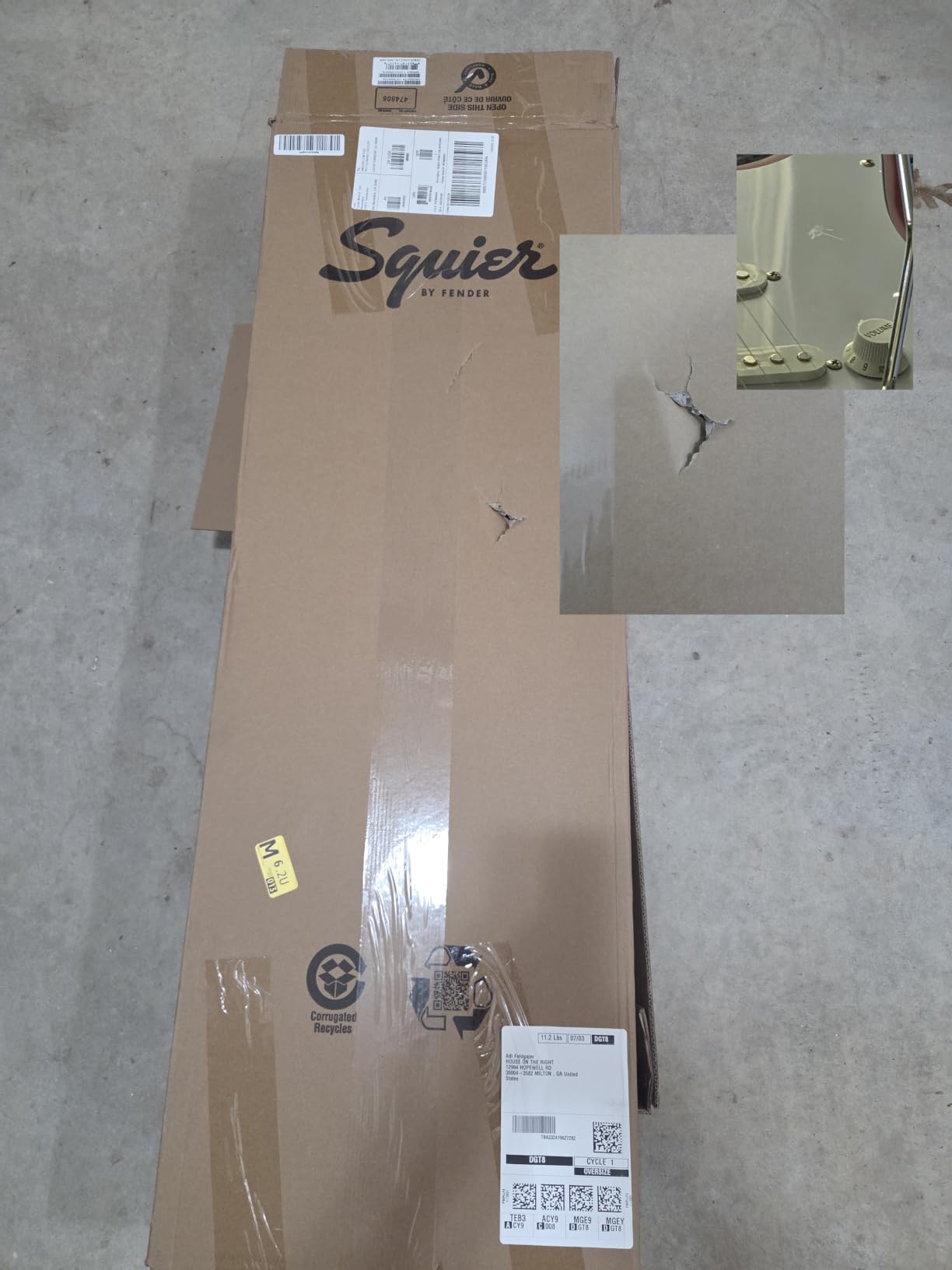
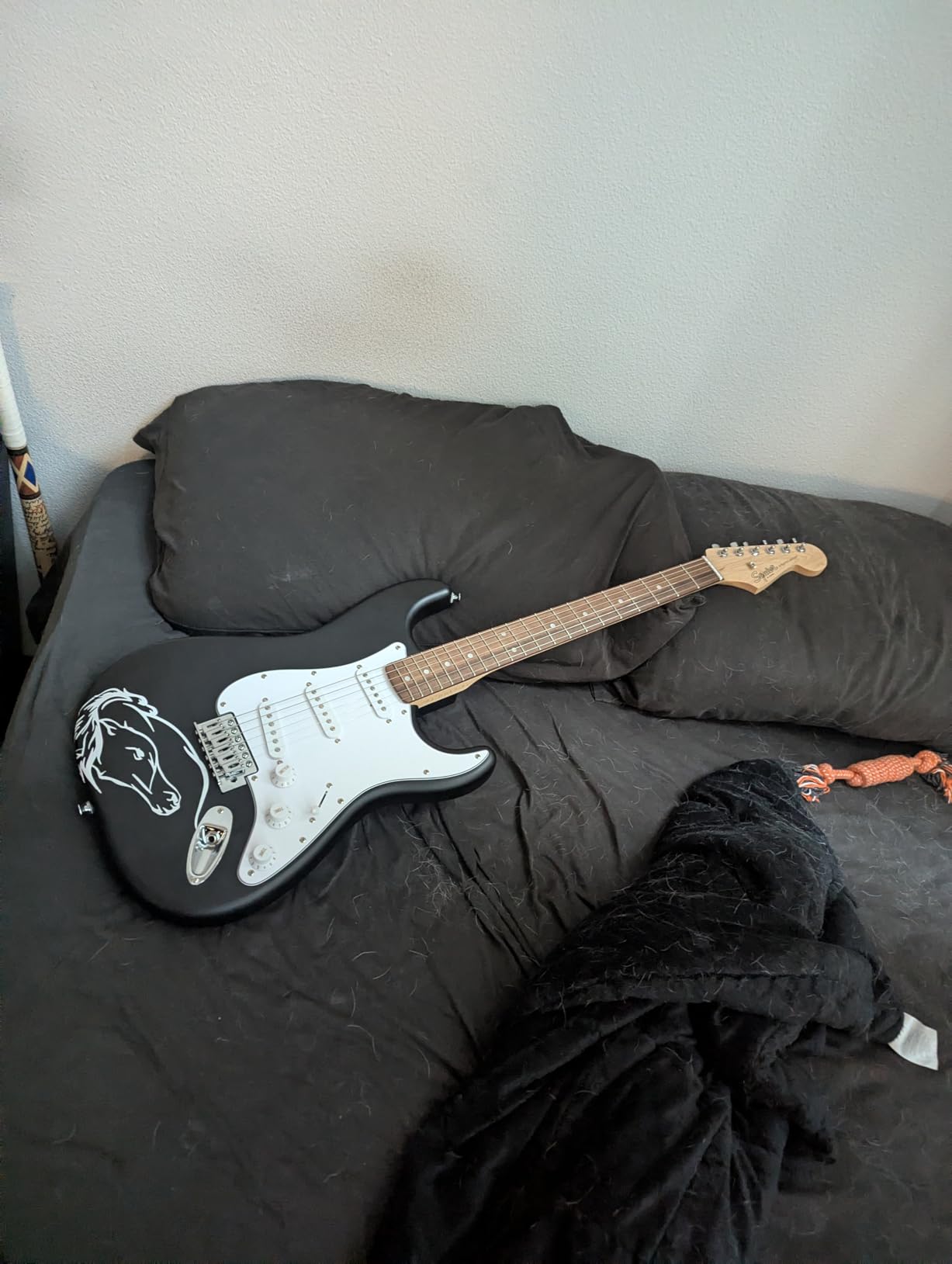
The Squier Debut Series Stratocaster is the guitar I recommend to anyone who asks where to start with rock. You get the iconic double-cutaway shape, three single-coil pickups, a 5-way switch, and a tremolo bridge for under what most people spend on a pair of effects pedals. For a first electric, this is hard to beat.
In actual use, the Debut feels comfortable for smaller hands and the slim C-shaped neck is friendly to beginners working on their first barre chords. The body is genuinely thin and light, so younger players and anyone who finds a Les Paul uncomfortable will appreciate the difference. I have handed this guitar to first-timers and watched them play clean chords within minutes.
Tonally, you get the classic Strat sound — glassy bridge pickup for chicken-pickin’ country and indie, warm neck pickup for blues and classic rock leads, and a quacky middle position that works perfectly for everything from Tom Morello rhythms to David Gilmour-style clean passages. Push the front pickup into a clean amp with a touch of overdrive and you get the famous “in-between” Strat cluck that defined 70s rock.
Fender includes a 30-day Fender Play subscription, which is a nice bonus for players learning the instrument. The two-year warranty is also longer than most beginner guitars. The trade-offs are real but minor — the tremolo is stiff and not made for stadium dive bombs, and a few owners report sharp fret edges that need filing after delivery.
Who this guitar suits best
Total beginners, younger players, and anyone on a tight budget who wants a real Strat experience without compromise. It also works as a travel or backup guitar for more experienced players who want the classic single-coil sound without risking a USA-made instrument on the road. Pair it with a Fender Frontman or Boss Katana practice amp and you have a full starter rig.
What to watch out for
The stock tremolo arm is stiff and the plastic nut may need attention for tuning stability. If you want to do heavy tremolo work, plan a budget for an aftermarket bridge or a hardtail conversion. The pickguard plastic is thinner than on US Strats and will scratch more easily if you are rough with the guitar.
3. Epiphone Les Paul Special-II E1 — Best Value for Classic Rock Tone
Epiphone Les Paul Special-II E1 Electric Guitar, Ebony
Mahogany body
Fixed bridge
24.75 inch scale
700T humbuckers
Pros
- Mahogany body delivers authentic Les Paul warmth and weight
- 700T humbuckers handle overdrive with strong rock tone
- Comfortable neck profile suitable for beginner hands
- Lifetime limited warranty provides long-term value
Cons
- Stock tuners are basic and benefit from an upgrade
- Bolt-on neck construction affects sustain slightly
- Pickup selector switch can be stiff on some units
The Epiphone Les Paul Special-II E1 is the guitar that proves you do not need to spend a fortune to get genuine Les Paul character. The mahogany body has the warmth and weight that defines the Les Paul sound, and the 700T humbucker in the bridge delivers the thick, sustaining crunch that built rock music.
I have played this guitar through a 15-watt practice amp and a 50-watt tube stack, and it holds its own in both settings. The neck pickup cleans up nicely for jazzy chord work, and the bridge humbucker screams when you push it into a Marshall or a high-gain pedal. If you want to sound like Slash, Angus Young, or Jimmy Page without the price tag of a Gibson, this is the closest shortcut.
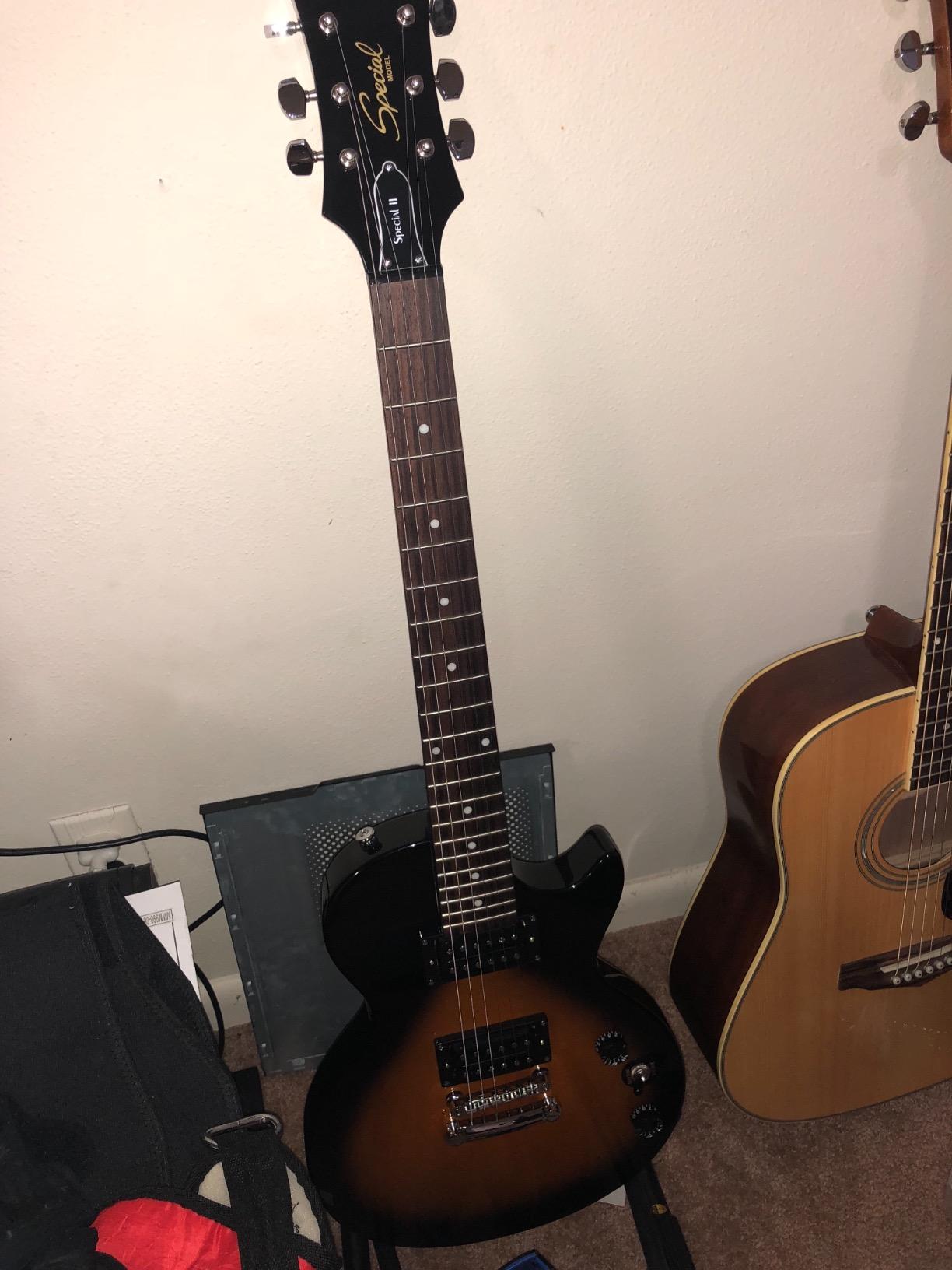
The neck profile is comfortable and the scale length matches a true Les Paul at 24.75 inches. Strung with 10s, the guitar feels substantial and stays in tune through aggressive rhythm playing. The lifetime limited warranty is one of the best in the budget tier — Epiphone will stand behind the instrument for as long as you own it.
Forum users consistently note that the Les Paul weight is the real consideration. At around 10 pounds, this guitar is heavy, and players with back or shoulder issues should consider an SG or a Strat instead. The bolt-on neck construction (instead of the traditional set neck on a Gibson) slightly reduces sustain, though most players will not notice in a band mix.
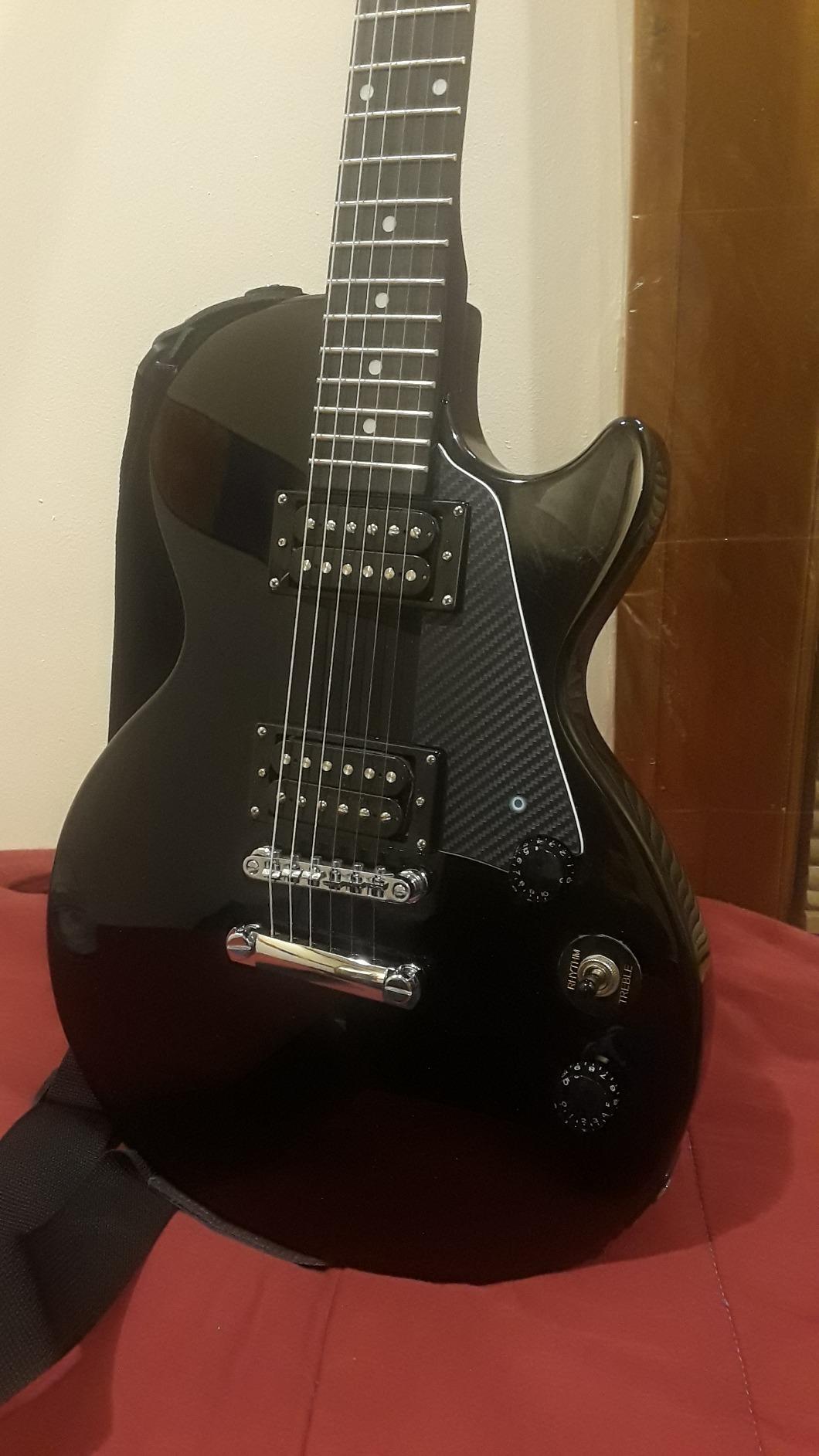
Who this guitar suits best
Beginners who want the Les Paul sound without the Les Paul price, players who mostly play at home or in studios where weight is not a deal-breaker, and anyone building a classic rock or hard rock rig on a budget. Pair it with a Marshall Code or a Boss Katana and you have a complete rock rig.
What to watch out for
Plan to upgrade the tuners and nut within the first year if you play hard. The stock hardware works fine for practice but will limit your tuning stability during aggressive live use. If neck dive is a problem, swap to lighter tuners or use a wider strap.
4. Epiphone Les Paul-100 — Best for Classic Rock and Vintage Look
Epiphone Les Paul-100, Heritage Cherryburst
Mahogany body with maple top
Tune-O-Matic bridge
24.75 inch scale
700T humbuckers
Pros
- Maple-topped mahogany body for traditional Les Paul aesthetic
- Tune-O-Matic bridge improves sustain and tuning stability
- Heritage Cherryburst finish captures vintage 60s look
- Versatile across jazz
- blues
- rock
- and metal
Cons
- Some units arrive needing a professional setup
- Input jack can be loose on certain examples
- No accessories included like cable or case
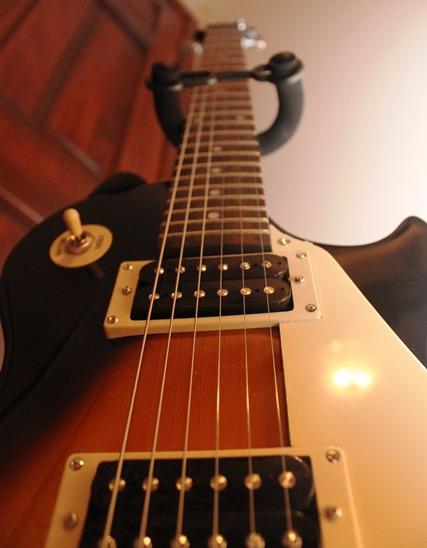
The Epiphone Les Paul-100 is the step-up option for players who want a closer-to-Gibson Les Paul experience. The carved maple top on a mahogany body gives you the traditional look that defined rock in the 60s and 70s, and the Tune-O-Matic bridge with stopbar tailpiece provides noticeably better sustain than fixed-bridge alternatives.
In playing tests, the Les Paul-100 feels like a more grown-up version of the Special-II. The neck is slightly slimmer and the four-knob control layout mimics a Standard Les Paul, giving you more tonal options with independent volume and tone for each pickup. The 700T humbuckers deliver the thick, harmonically rich tone that works for everything from jazz fusion to classic rock leads.
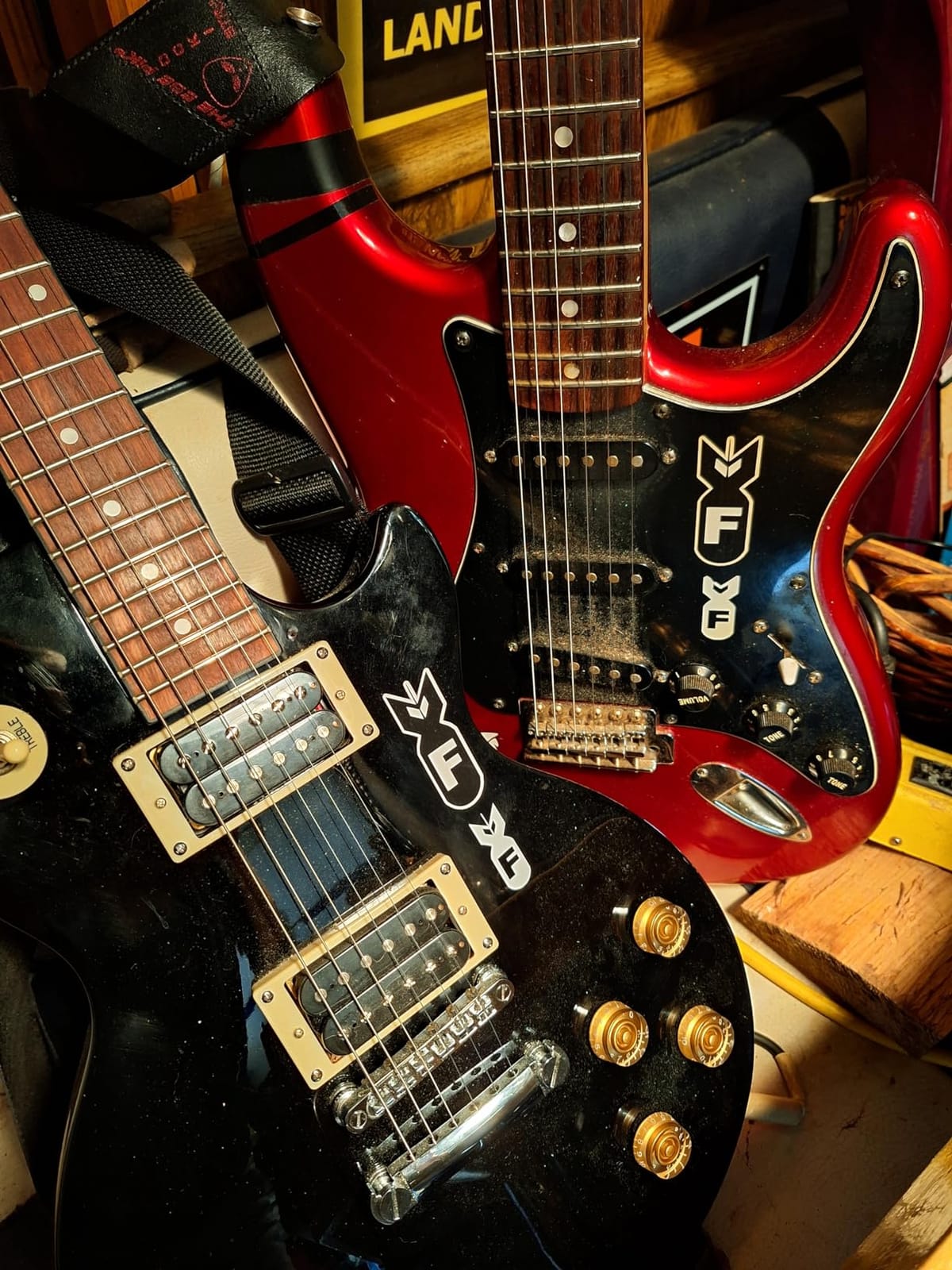
Heritage Cherryburst is the iconic finish, but the guitar also comes in ebony and other traditional colors. The maple top is a thin veneer rather than a thick carved cap, but from a playing standpoint that does not matter — what you get is the Les Paul look, the Les Paul weight, and the Les Paul voice at a price that does not require a second mortgage.
Quality control is the main issue to watch for. Some units arrive with high action or rough frets that need a professional setup. The input jack on certain examples can also be loose from the factory. None of these are deal-breakers — a 30-minute setup at your local tech will sort out most issues — but be ready to budget for that initial visit.
Who this guitar suits best
Players who want the closest-to-Gibson experience at a budget price, intermediate rockers ready to invest in a Les Paul-style instrument they will keep for years, and anyone who values the traditional look and weight of a classic single-cut guitar. The Tune-O-Matic bridge makes this guitar a stronger choice for recording and gigging than fixed-bridge alternatives.
What to watch out for
Budget for a professional setup out of the box — most Les Paul-100s benefit from it. The lack of included accessories means you will need to buy a cable, gig bag, and tuner separately. If you want the absolute cleanest out-of-box experience, consider paying a few hundred more for a higher-tier model.
5. Ibanez GRG131DX — Best for Hard Rock and Metal
Ibanez GRG131DX – Black Flat
Poplar body
Tremolo bridge
25.5 inch scale
HH Infinity R pickups
Pros
- Fast thin maple neck built for lead playing and shred
- Lightweight poplar body stays comfortable for long sets
- High-output Infinity R pickups handle heavy distortion well
- Striking Black Flat finish with red sharktooth inlays
Cons
- Stock Infinity R pickups can sound muddy with extreme gain
- Tuning stability is average without a nut upgrade
- Tone control range is somewhat limited
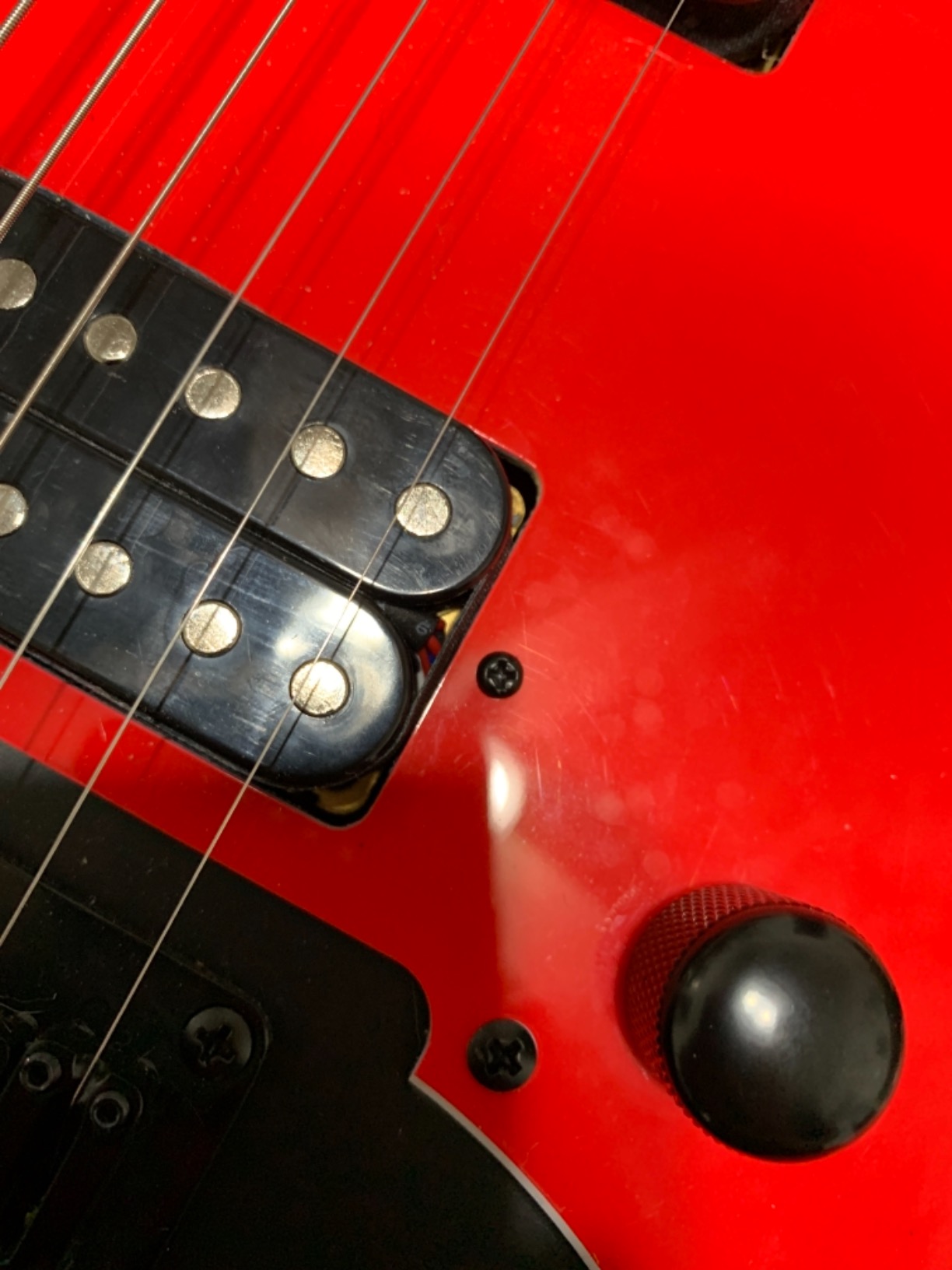
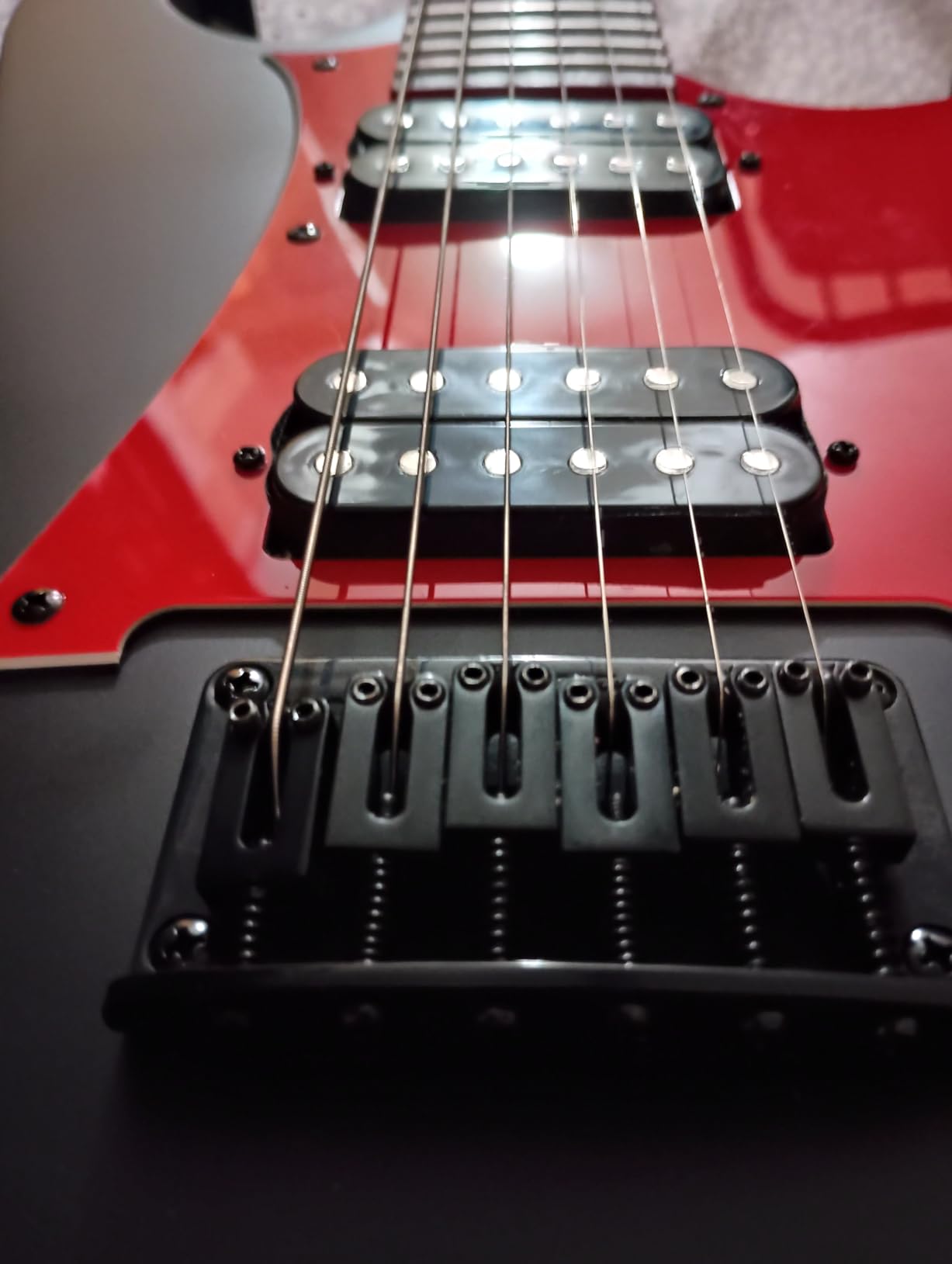
The Ibanez GRG131DX is the guitar I reach for when I want a dedicated hard rock and metal machine without spending premium money. The fast, thin maple neck is what Ibanez is famous for, and the 24-jumbo-fret fingerboard lets you rip leads all the way to the top without the fretting-out issues you get on shorter-scale guitars.
The Black Flat finish with red sharktooth inlays gives this guitar serious stage presence. It looks like a metal instrument, plays like a metal instrument, and responds like a metal instrument. The HH pickup configuration delivers thick, high-output tone that pairs perfectly with a high-gain amp or distortion pedal for hard rock and metal riffs.
In actual play, the GRG131DX shines for rhythm work and fast lead runs. The thin neck profile makes position shifts effortless, and the lightweight poplar body means I can play two-hour sets without the back pain that plagues heavier Les Pauls. The tremolo bridge handles dive bombs adequately for a hardtail-style player.
The main criticism from owners is that the stock Infinity R pickups can sound muddy with extreme gain. Most players swap them out for DiMarzio or Seymour Duncan pickups within the first year, which is an easy upgrade that transforms the guitar. The tone control is also somewhat limited in range, but the volume and pickup selector give you plenty of tonal variety.
Who this guitar suits best
Hard rock and metal players who want a fast, lightweight instrument built for the style. Intermediate rockers looking to specialize in shred and lead work will appreciate the 24-fret neck and Ibanez playability. Pair it with a Mesa/Boogie or Peavey 6505 for true metal tones.
What to watch out for
Plan a pickup upgrade budget — the stock Infinity R humbuckers are functional but limiting for high-gain playing. The nut may need attention for tuning stability, especially if you use the tremolo aggressively. If you want a guitar that is gig-ready straight out of the box without mods, look at the Ibanez RG series one tier up.
6. Squier Affinity Series Stratocaster — Best for Alternative Rock and Indie
Squier Affinity Series Stratocaster Electric Guitar, with 2-Year Warranty, 3-Color Sunburst, Laurel Fingerboard
Poplar body
2-point tremolo
25 inch scale
Three single-coils
Pros
- Authentic Stratocaster tone and feel at a budget price
- Plays cleanly out of the box with minimal setup needed
- Lightweight thin body easy on shoulders during long sets
- 2-year warranty protects your investment
Cons
- Stock tuners have low gear ratio limiting fine-tuning precision
- Body is thinner than a standard Stratocaster
- Polyester finish feels less premium than nitro
The Squier Affinity Series Stratocaster is the upgrade path for players who started on a Debut Strat and want something a step closer to a Fender USA instrument. The Affinity line has been around for years and consistently delivers genuine Strat character at a price that does not break the bank.
What makes this guitar special for alternative rock is the classic single-coil sound. The bridge pickup has the bright, cutting tone that defined 80s and 90s alternative, the neck pickup gives you the warm, round voice for melodic lead lines, and the in-between positions give you that famous Strat quack that works for everything from clean arpeggios to chorused clean rhythms.
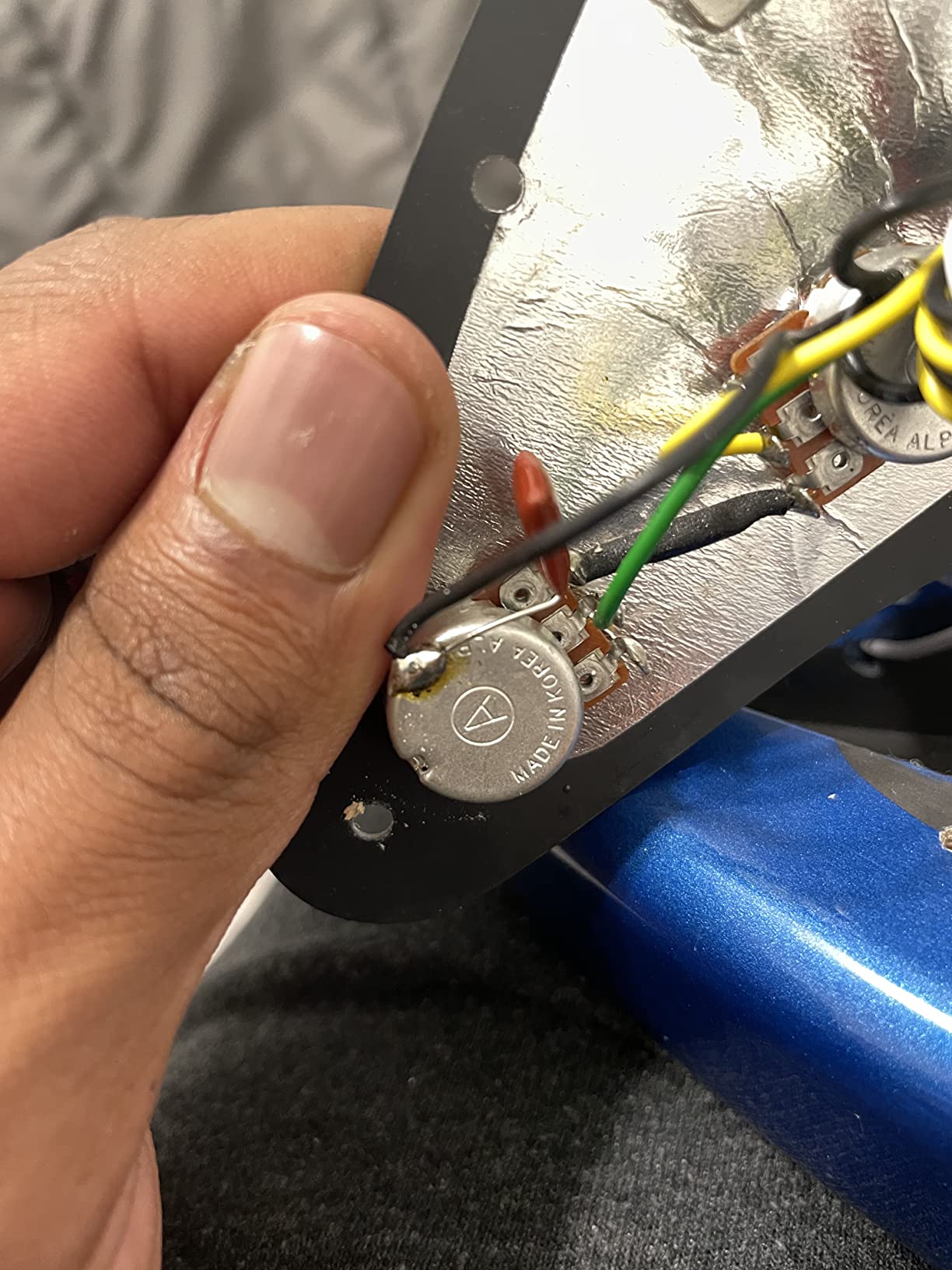
The 3-Color Sunburst finish is the classic look, and the laurel fingerboard provides a smooth playing surface that feels much more expensive than the actual cost. The slim C-shaped neck profile is comfortable for most hand sizes, and the 25-inch scale length is slightly shorter than the standard 25.5, which makes bends a touch easier.
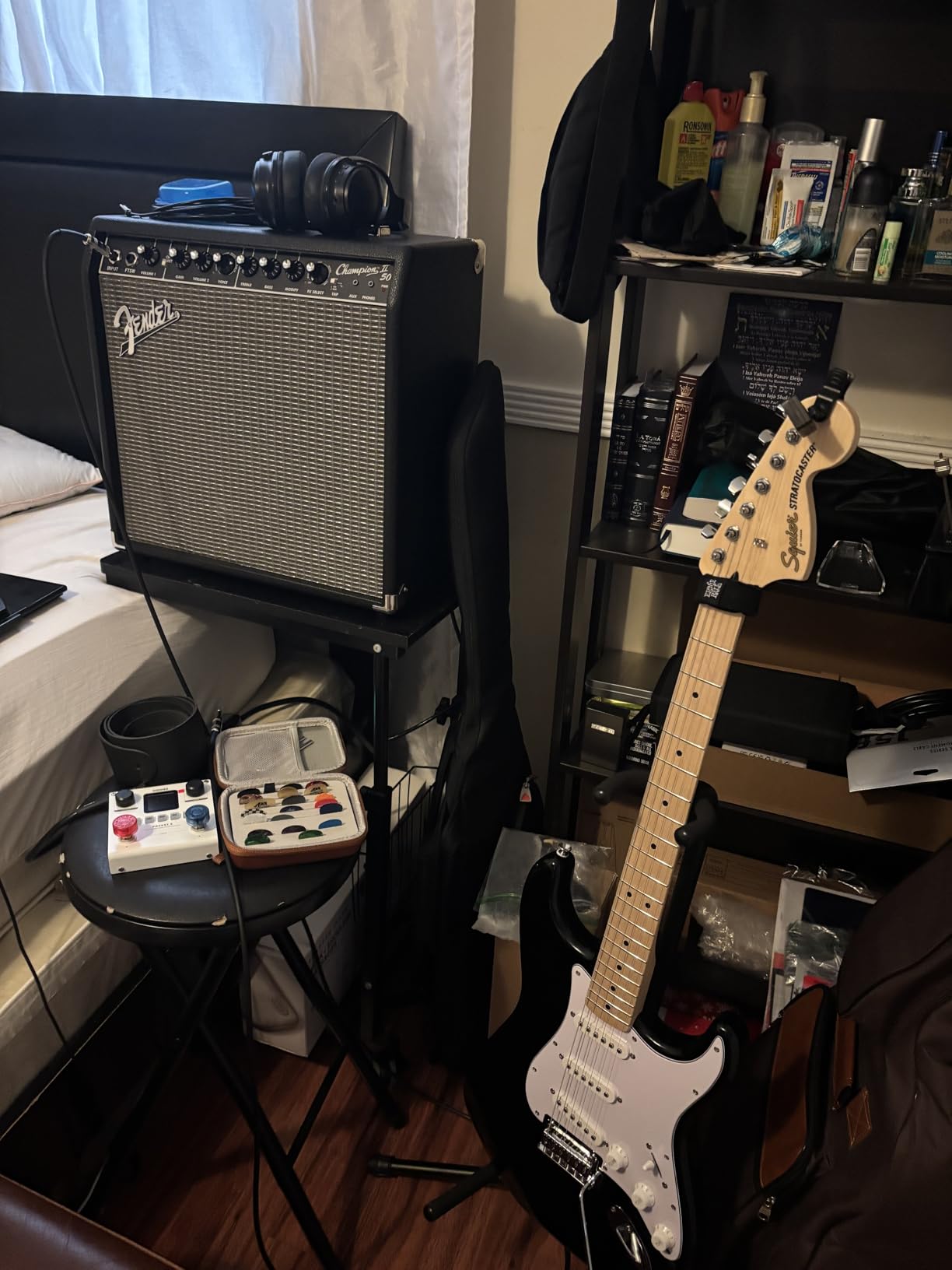
Owners consistently praise the playability straight out of the box. The 2-point tremolo handles moderate use without major tuning issues, and the 2-year warranty protects your investment. The main trade-off is the stock tuners — their low gear ratio makes fine-tuning harder than on premium models, and many players swap them for higher-ratio aftermarket tuners.
Who this guitar suits best
Players looking for a step up from a beginner Strat, anyone focused on alternative rock, indie, jangle, and pop-rock styles, and experienced players who want a low-risk backup or modding platform. The classic Strat tone covers a huge range of rock styles beyond just alternative, making this a versatile choice.
What to watch out for
Budget for tuner upgrades if you play in alternate tunings or use the tremolo aggressively. The thinner body construction feels less substantial than a USA Strat, though many players actually prefer the lighter weight. The polyester finish is more durable than nitro but does not age the same way.
7. Epiphone Slash AFD Signature — Best Signature Model for Guns N’ Roses Fans
Epiphone Slash “AFD” Signature Les Paul Special-II, with Gig Bag
Mahogany body with AAA flame maple veneer
LockTone Tune-O-Matic
24.75 inch scale
Ceramic humbuckers
Pros
- Slash signature Appetite Amber finish with iconic look
- Ceramic humbuckers deliver authentic Slash-style rock tone
- Built-in pickup ring tuner adds convenience
- Includes gig bag for transport
Cons
- Quality control inconsistencies reported on some units
- Bolt-on neck affects sustain compared to set-neck designs
- Basic gig bag and accessories included
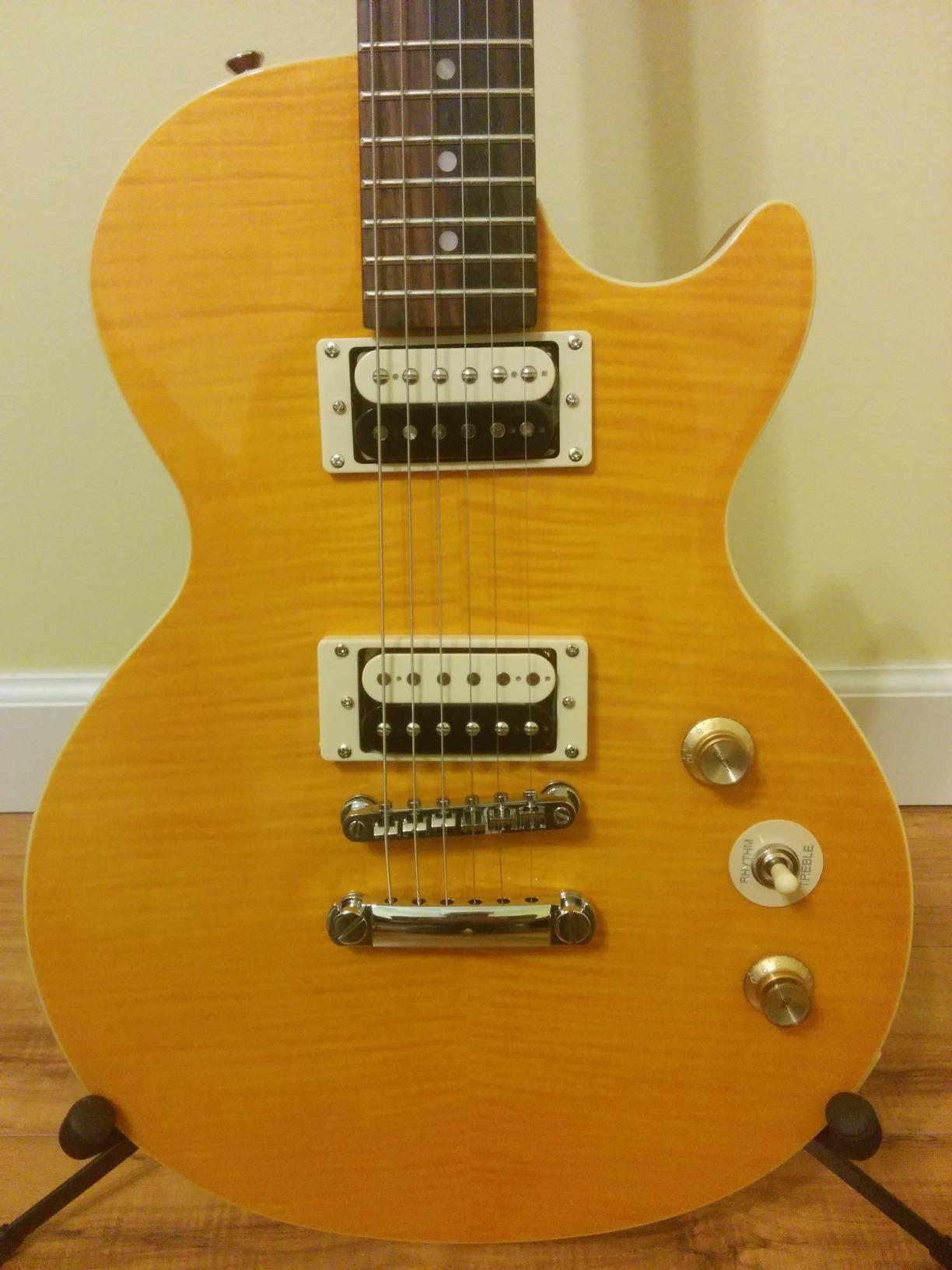
The Epiphone Slash AFD Signature Les Paul Special-II is the budget ticket to Slash’s tone. The Appetite Amber finish is instantly recognizable from the GN’R era, the ceramic humbuckers are voiced to deliver that thick, midrange-heavy rock crunch, and the built-in pickup ring tuner is a unique feature you will not find on most other guitars.
For players who grew up on Appetite for Destruction and want to capture some of that tone, this guitar is genuinely appealing. The mahogany body with the AAA flame maple veneer top looks stage-ready, and the 24.75-inch scale length gives you the string tension and feel that Slash is known for.
In actual playing, the ceramic humbuckers have a darker, thicker voice than the 700T pickups on the standard Epiphone Les Pauls. That is exactly what you want for Slash-style riffs — think Sweet Child O’ Mine opening, November Rain solo, and Paradise City rhythm work. Push the guitar into a Marshall or a high-gain amp and the tone cuts through the mix exactly the way a Slash record does.
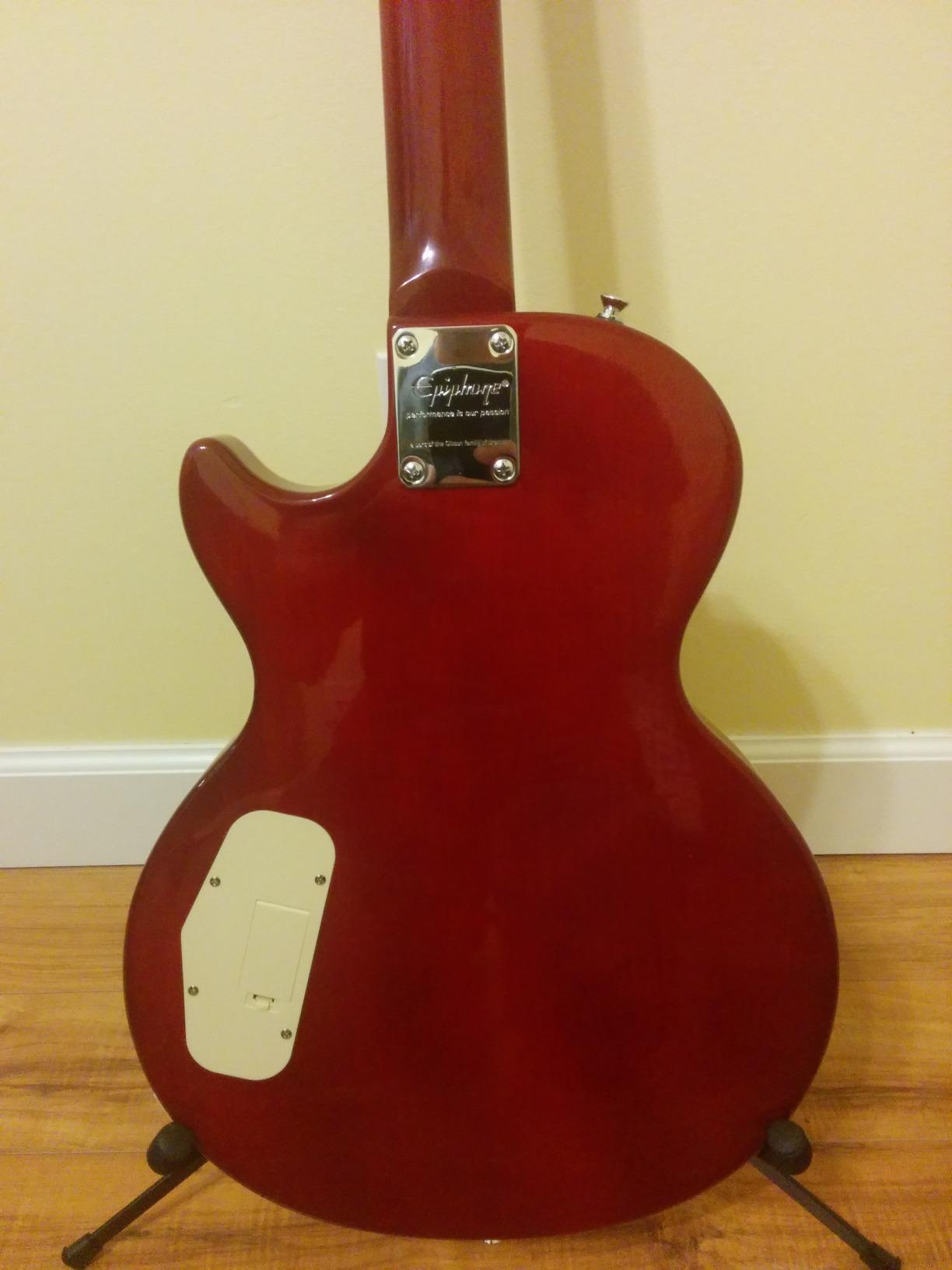
Quality control is the main concern. Some units arrive with cosmetic flaws, neck alignment issues, or inconsistent pickup mounting. The bolt-on neck construction also affects sustain compared to set-neck designs, though most players will not notice in a band context. The included gig bag is basic but functional.
Who this guitar suits best
Guns N’ Roses fans, players who want to channel classic 80s hard rock tone, and anyone who appreciates the Slash aesthetic and wants the Appetite Amber finish at an accessible price. Intermediate players who want a signature guitar without the premium price tag will find this a fun choice.
What to watch out for
Inspect the guitar carefully on arrival for any cosmetic or setup issues, and have a local tech on standby in case adjustments are needed. The bolt-on neck is a cost-saving measure that affects sustain slightly. If you want the absolute best Slash experience and can stretch the budget, the Gibson Slash Standard is the next step up.
8. Grote LPYS-006 — Best for Budget Modders and DIY Players
Grote Electric Guitar Solid Body LPYS-006 Maple Neck, Stainless Steel Frets, Ideal for All Levels, with Gigbag(Red)
Maple body
Fixed bridge
HH humbuckers
Stainless steel frets
Pros
- Stainless steel frets rare at this price point
- Exceptional build quality and finish for the budget tier
- Includes gig bag right out of the box
- Comfortable neck profile suitable for modding projects
Cons
- Some units have short frets at positions 1-3
- Maple top is printed graphic rather than real veneer
- Stock strings are basic and need replacing
- Limited warranty coverage
The Grote LPYS-006 is the dark horse of this list. Grote is not a household name like Fender or Gibson, but this Les Paul-style guitar punches well above its price tier. The standout feature is the stainless steel frets — a premium touch you typically only see on guitars costing several times more — which means the playing surface will stay smooth and shiny for years without the fret wear you get on nickel frets.
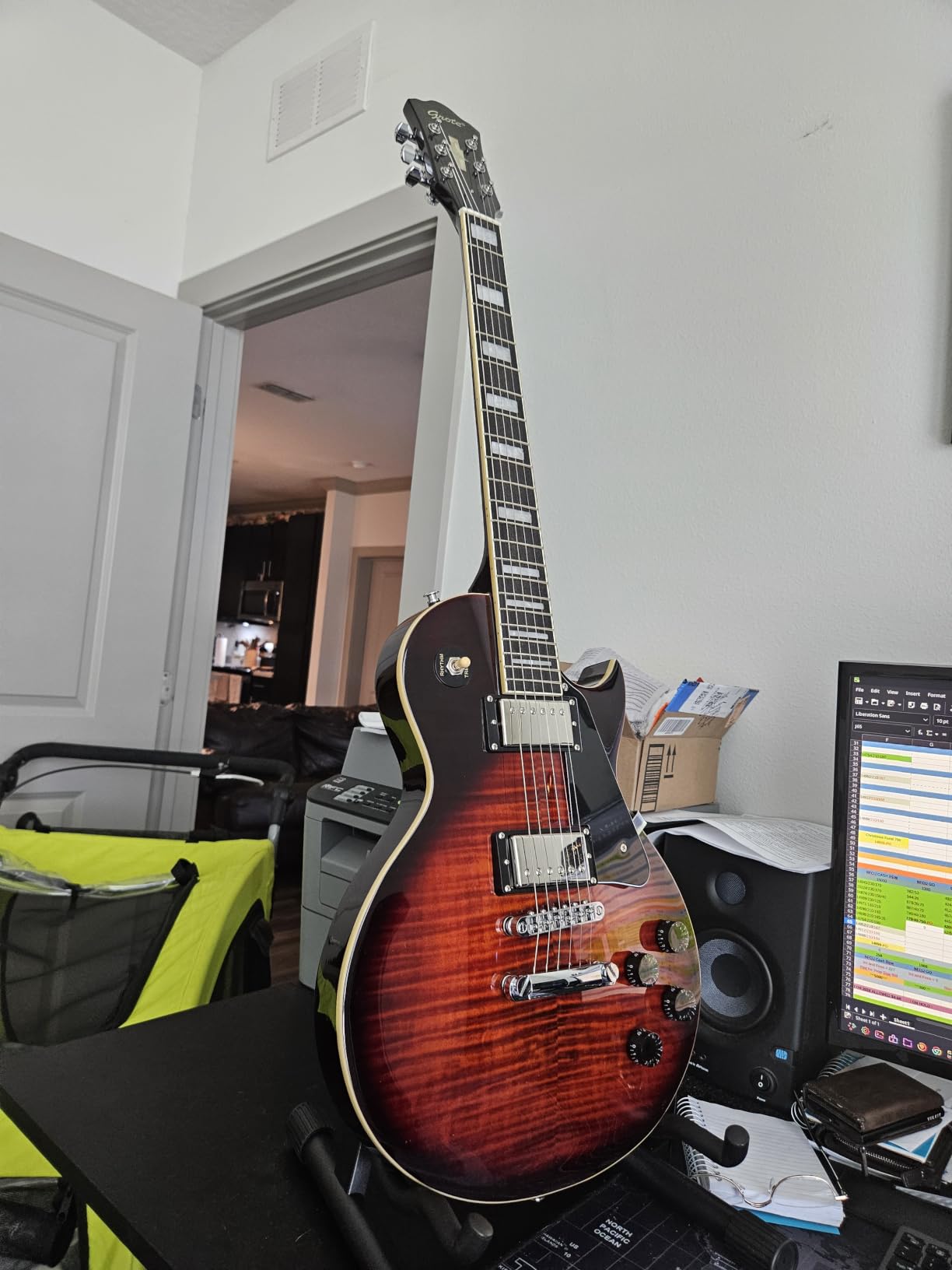
The build quality surprised me the first time I picked one up. The body is solid, the neck joint is clean, and the red finish with the maple-look top looks much more expensive than the actual cost. For a beginner or a player who likes to tinker, this is an ideal modding platform.
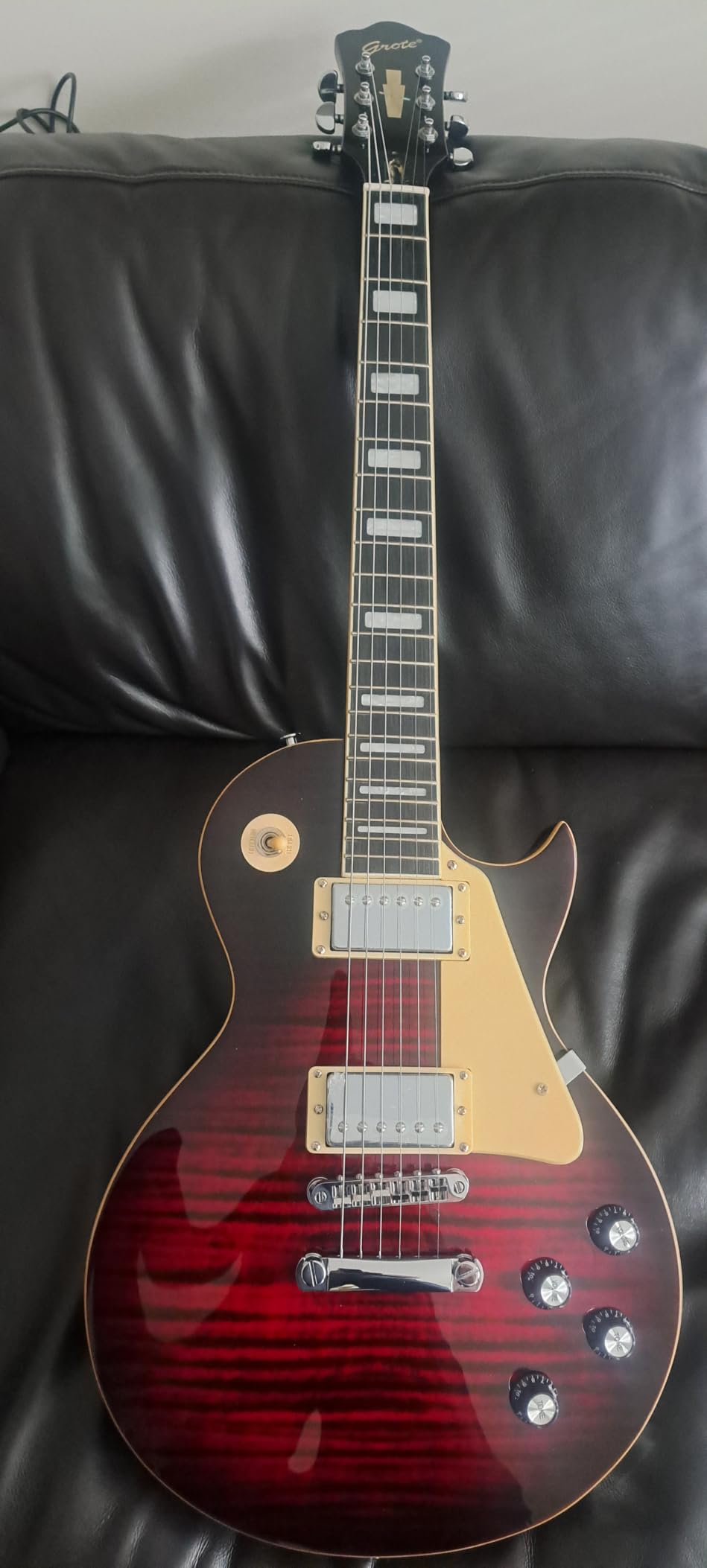
The HH pickup configuration delivers classic rock humbucker tone, and the fixed bridge keeps tuning stable through heavy playing. The maple neck feels fast and the action comes low on most units straight out of the box. At 3.4 kg, it is also noticeably lighter than a traditional Les Paul, which makes it a great option for players who want the LP look without the LP weight.
The trade-offs are real but minor. Some units have short frets at the first three positions that affect pull-offs. The maple top is a printed graphic rather than a real wood veneer, though from a playing standpoint that does not matter. The limited warranty is the main drawback — if something goes wrong, you are relying on the seller rather than a major manufacturer.
Who this guitar suits best
Modders and DIY players who want a solid platform to swap pickups, tuners, and bridges on. Beginners who want a real Les Paul-style guitar without the weight of a traditional Les Paul. Budget-conscious players who appreciate premium touches like stainless steel frets at an entry-level price.
What to watch out for
Inspect the lower frets carefully before buying if you do a lot of pull-offs and bends at positions 1-3. Plan a string upgrade — the stock strings are basic and you will want 9s or 10s for rock playing. The lack of a real warranty means buying from a reputable seller with a good return policy is important.
How to Choose the Right Rock Guitar?
Buying a rock guitar is about matching the instrument to the style you play, the stage you play it on, and the amp you push it through. Here are the four factors that matter most when narrowing down your choice.
Pickup configuration
Humbuckers are the rock standard because they reject hum under high gain and deliver thick, sustaining tone. Single-coils cut more clearly through a mix and give you the classic Strat quack and Tele twang. P-90s sit in between — fatter than single-coils, grittier than humbuckers. For classic rock, hard rock, and metal, humbuckers win. For indie, alt-rock, blues-rock, and country-rock, single-coils are more versatile. The Squier Debut and Affinity Strats give you single-coil flexibility, while the Ibanez and Epiphone Les Paul models give you humbucker power.
Scale length and neck feel
Scale length affects string tension and tonal character. A 25.5-inch scale (Fender, Ibanez, Squier) feels slinky and tight, with more snap on the low end. A 24.75-inch scale (Gibson, Epiphone Les Paul, SG) feels looser and warmer, with more midrange focus. Neck profile matters too — slim C necks (Ibanez, Squier) are fast for lead work, while thicker necks (Les Paul Standard) feel chunkier and more substantial in the hand.
Body weight and comfort
This is the deal-breaker that forum users complain about most. A traditional Les Paul weighs 9 to 11 pounds, and that adds up over a two-hour set. SGs, Strats, and Ibanez RG-style guitars are noticeably lighter and easier on the back. If you have any shoulder or back issues, prioritize weight over aesthetic. The Grote LPYS-006 and Ibanez GRG131DX are both notably lighter than traditional Les Pauls.
Amp pairing for rock tone
The best electric guitars for rock come alive through the right amp. Humbucker Les Pauls and SGs love Marshall and Mesa/Boogie high-gain circuits for classic and hard rock. Single-coil Strats shine through Fender-style clean and break-up amps for indie and alternative. The Ibanez GRG131DX pairs well with Peavey 6505 or Boss Metal Core for hard rock and metal. If you have to pick one practice amp that handles everything, the Boss Katana series is the most versatile option on the market right now.
Frequently Asked Questions
What is the best electric guitar for rock music?
The best electric guitar for rock music pairs humbucker or hot single-coil pickups with a comfortable neck, solid build quality, and genre-appropriate tone. Top picks include the Gibson Les Paul Studio Session for classic rock, the Fender Stratocaster for indie and alt-rock, and the Ibanez Gio GRX70QA as our Editor’s Choice for budget versatility across every rock style.
Are Strats harder to play than Les Pauls?
Strats and Les Pauls feel quite different but neither is objectively harder to play. Strats have a 25.5-inch scale with a bolt-on neck that feels slim and slinky, while Les Pauls have a shorter 24.75-inch scale with a set neck that feels chunkier. Beginners often find Strats easier because of the lighter body and slimmer neck, but Les Pauls are easier for players with shorter fingers because the shorter scale means less string stretch for bends.
Can an SG sound like a Les Paul?
An SG can get close to Les Paul tone but is not identical. Both guitars use mahogany bodies and humbucker pickups, so the tonal foundation is similar. The SG has a lighter, more contoured body that resonates differently, giving it a slightly brighter and more biting character. Players often describe the SG tone as a brighter, more aggressive version of Les Paul warmth — great for hard rock and classic rock but with its own personality.
What electric guitar do most rock guitarists use?
Fender Stratocasters and Gibson Les Pauls are the two most-played guitars in rock, based on forum discussions and player surveys. Stratocasters dominate alt-rock, indie, blues-rock, and classic rock, while Les Pauls lead classic rock, hard rock, and metal. PRS guitars, SGs, and Ibanez RG-style instruments round out the top five for players exploring harder genres.
Is a Telecaster good for rock music?
Telecasters are excellent for rock, especially country-rock, indie rock, blues-rock, and alternative styles. The bridge single-coil has a bright, cutting tone that works well for chicken-pickin rhythm and clean arpeggios. The neck pickup delivers warm, jazzy tones suitable for rock ballads. Many classic rock players use Telecasters for the unique character they bring to a mix, though they are less common in hard rock and metal than humbucker-equipped guitars.
Final Verdict
The best electric guitars for rock in 2026 come down to the style you play and the budget you have. For all-around versatility and our top pick, the Ibanez Gio GRX70QA delivers genuine rock tone, fast playability, and value that is hard to match. If you want a Strat-style sound for indie and alt-rock, the Squier Debut Series Stratocaster is the smartest starting point. And if you want classic Les Paul warmth on a budget, the Epiphone Les Paul Special-II E1 proves you do not need to spend a fortune to get genuine rock tone.
Try to play at least two or three of these guitars before you commit — feel matters as much as specs. Your local music store, a friend who plays, or a guitar shop with a generous return policy will all help you find the one that disappears in your hands. Once you find it, you will know.