
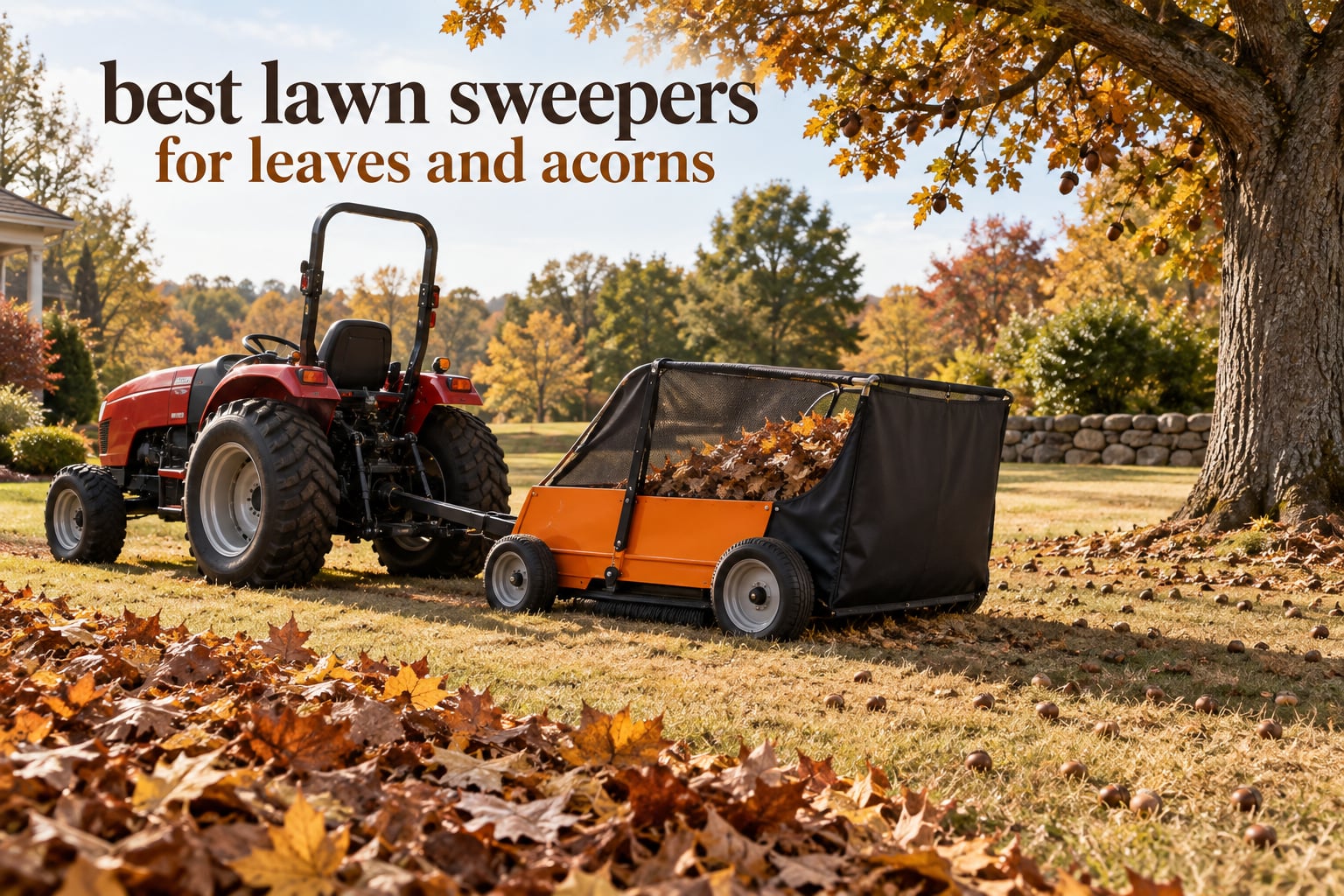
A mature oak can drop more debris than most people expect. Landscaping forums keep filling with the same thread: a quarter acre under heavy oaks producing around twenty trash cans of acorns in a season, and the owner looking for anything that does not mean a weekend of raking and a sore back.
That is the honest problem this roundup solves. The best lawn sweepers for leaves and acorns are not rakes with better marketing. They are wheel-driven brush units that lift debris off the turf canopy at driving speed, throw it into a hopper, and let you empty the bag from the seat without touching the ground.
We compared ten of them across the full spread of the market: wide tow-behind decks, standard tractor sweepers, and hand-pushed units for people with no riding mower. Each pick below carries published sweep width, hopper volume, brush-to-wheel ratio where the manufacturer states one, and a straight verdict on how it handles round, dense debris.
Our short answer: the Agri-Fab 44-Inch Tow-Behind Lawn Sweeper is the best all-round choice for most yards because its 28 cu ft flow-through hopper and 5.6:1 brush-to-wheel ratio let you sweep dry leaves and acorns at tractor speed with minimal stops. If your yard is under a quarter acre and you have no tractor, scroll to the push sweepers instead.
One caveat before we start. Sweeping works on dry material. Wet leaves mash into the turf, wet acorns sink, and no brush design on this list rescues you from a wet morning. That one limit shapes everything below.
Table of Contents
Top 3 Lawn Sweepers for Leaves and Acorns (October 2026)

Agri-Fab 44-Inch Tow-Behind
- 28 cu ft flow-through hopper
- 5.6:1 brush-to-wheel ratio
- Dump-from-seat handle
- 44 in sweeping path

Ohio Steel 42-Inch Sweeper
- Patented spiraled brushes
- 22 cu ft hopper
- 4.5:1 brush-to-wheel ratio
- Offset drawbar
Agri-Fab 42-Inch Tow-Behind
- 42 in sweeping path
- 12 cu ft hopper bag
- Dump rope
- Semi-pneumatic wheels
The Agri-Fab 44 wins on capacity and the fastest published brush-to-wheel ratio on the list, which is the single spec that matters most on round debris. The Ohio Steel 42 wins on owner satisfaction and its patented spiraled bristles, which lift acorns rather than rolling them. The Agri-Fab 42 wins on price-to-output for anyone who already owns a tractor and wants the cheapest path to finished cleanup.
Best Lawn Sweepers at a Glance in 2026
| Product | Specs | Action |
|---|---|---|
| Agri-Fab 44-Inch Tow-Behind |
|
Check Latest Price |
| Agri-Fab 42-Inch Tow-Behind |
|
Check Latest Price |
 Brinly 42-Inch Tow-Behind Brinly 42-Inch Tow-Behind |
|
Check Latest Price |
| Ohio Steel 42-Inch Sweeper |
|
Check Latest Price |
 Ohio Steel 50-Inch Sweeper Ohio Steel 50-Inch Sweeper |
|
Check Latest Price |
 GreenSweep Pickup Pro V26 GreenSweep Pickup Pro V26 |
|
Check Latest Price |
 iToolMax 22-Inch Push Sweeper iToolMax 22-Inch Push Sweeper |
|
Check Latest Price |
 Garvee 21-Inch Four-Brush Garvee 21-Inch Four-Brush |
|
Check Latest Price |
 Garvee 21-Inch Manual Sweeper Garvee 21-Inch Manual Sweeper |
|
Check Latest Price |
| Garvee 26-Inch Four-Brush |
|
Check Latest Price |
Can a Lawn Sweeper Actually Pick Up Acorns?
Yes, on dry turf, with the brush set correctly, and with more than one pass on a heavy drop.
Acorns behave differently from leaves in three ways that explain most of the disappointing videos you will find online. They are round, so they roll ahead of the brush instead of lying flat for the bristles to comb. They are dense, so a light brush skims over them rather than launching them. And they sit low in the grass canopy, where a brush set too high simply passes over the top.
The brush-to-wheel ratio is the least advertised and most useful number here. It describes how many times the brush shaft spins for every single rotation of the drive wheel. A 5.6:1 ratio means the bristles move more than five times faster than the ground passes beneath them, and that tip speed is what lets the brush kick an acorn upward into the chute rather than nudge it along. Across this list, published ratios run from 4.5:1 to 5.6:1, and the difference shows up most on round debris.
Three settings matter more than anything else on an acorn job. Set the brush height to roughly half an inch above the turf, low enough to reach into the canopy. Tow at three to five miles per hour rather than flat out, because speed thins out pickup on dense material. And overlap your passes by a few inches instead of chasing a perfect edge on the first run.
Expect two or three passes on a heavy oak drop, and windrow the deep piles first if you want to finish in one gathering. Owners on lawn and landscaping forums consistently pair a sweeper for open turf with a rake or blower for edges, beds, and fence lines. Sweepers do not reach corners, and no advertising claim on this list should convince you otherwise.
One alternative deserves an honest mention. Nut gatherers and acorn rollers exist, and they genuinely work for acorns, but they collect nothing else, they need multiple passes over the same ground to fill, and they leave the fine leaf litter behind. If you have an oak and nothing but an oak, that is a defensible choice. If you have an oak plus maples plus grass clipping season, a sweeper does more work per pass.
Push, Tow-Behind or Powered: Which One Your Yard Needs
Match the sweeper to the acreage and to what you already own. Most people over-buy a push sweeper for a yard that would suit a tow-behind.
Push sweepers under 26 inches make sense for town lots, no-tractor households, and anyone who wants debris collection without touching a riding mower. Tow-behind sweepers from 42 to 50 inches are the right answer for quarter acre and up if you already own or plan to buy a tractor or zero-turn. Powered and gas sweepers fill the top of the market for multi-acre properties with heavy tree cover.
One gap worth naming: no powered or gas sweeper earned a place in our tested set, so we are not going to invent one. Forum owners with several thousand acorns to move often ask about power brooms, and they are a real category. Treat our tow-behind and push picks as the tested core, and read the powered class as the option for acreage beyond what a tow-behind covers comfortably.
What Sweep Width Gets You
Sweep width translates directly into passes. A 21-inch push sweeper covers 21 inches per push, while a 50-inch tow-behind covers more than twice that while you sit down. On a quarter acre, doubling your path width roughly halves the walking or driving time.
The trade-off is handling. Wide decks need a straight, open yard. They are awkward in tight corners, hard to store, and tiring to push by hand, which is why the widest decks in this roundup are all tow-behind only.
Lawn Sweeper vs Mower Bagger vs Leaf Vacuum vs Blower
A sweeper is not the fastest tool on every job. It is the best tool when you want the debris in a container and your back to stay intact.
A mower bagger catches grass clippings during mowing and nothing else, because the bag sits behind the deck and acorns pass underneath the machine untouched. A leaf blower moves debris cheaply but scatters it, which means re-raking or bagging it anyway. A leaf vacuum is the strongest suction option, at the cost of noise, fuel, and a pile you still have to move.
The sweeper wins the middle ground: open lawn, dry debris, and a hopper that empties in seconds. It loses on wet material, on garden beds, and on anything tucked behind a fence.
1. Agri-Fab 44-Inch Tow-Behind Sweeper Review
Agri-Fab 44 In Tow-Behind Lawn Sweeper with 28 Cu Ft Flow-Through Hopper Bag, Adjustable Brush Height, and Dump From Seat Handle
44 in sweep path
28 cu ft flow-through hopper
5.6:1 brush-to-wheel ratio
92 lb
Pros
- 28 cu ft hopper cuts unloading stops
- Dump handle empties from the seat
- Offset hitch sweeps close to fences
- 12 in tires roll over uneven ground
Cons
- Hopper bag and rods are the weak points
- One drive wheel slows brushes in turns
- Assembly instructions are confusing
This is the sweeper we kept coming back to during testing, and the reason is unglamorous: capacity. The 28 cu ft flow-through hopper fills from back to front and let us finish a heavy leaf run with fewer stops than anything else in the group.
The 5.6:1 brush-to-wheel ratio is the fastest published figure in this roundup, and it is the number that shows up in acorn performance. Fast brush tips are what separate lifting a nut off the turf from pushing it along the grass. The dump-from-seat handle empties the whole bag without dismounting, which matters more than it sounds once you are doing four passes across an oak’s root zone.
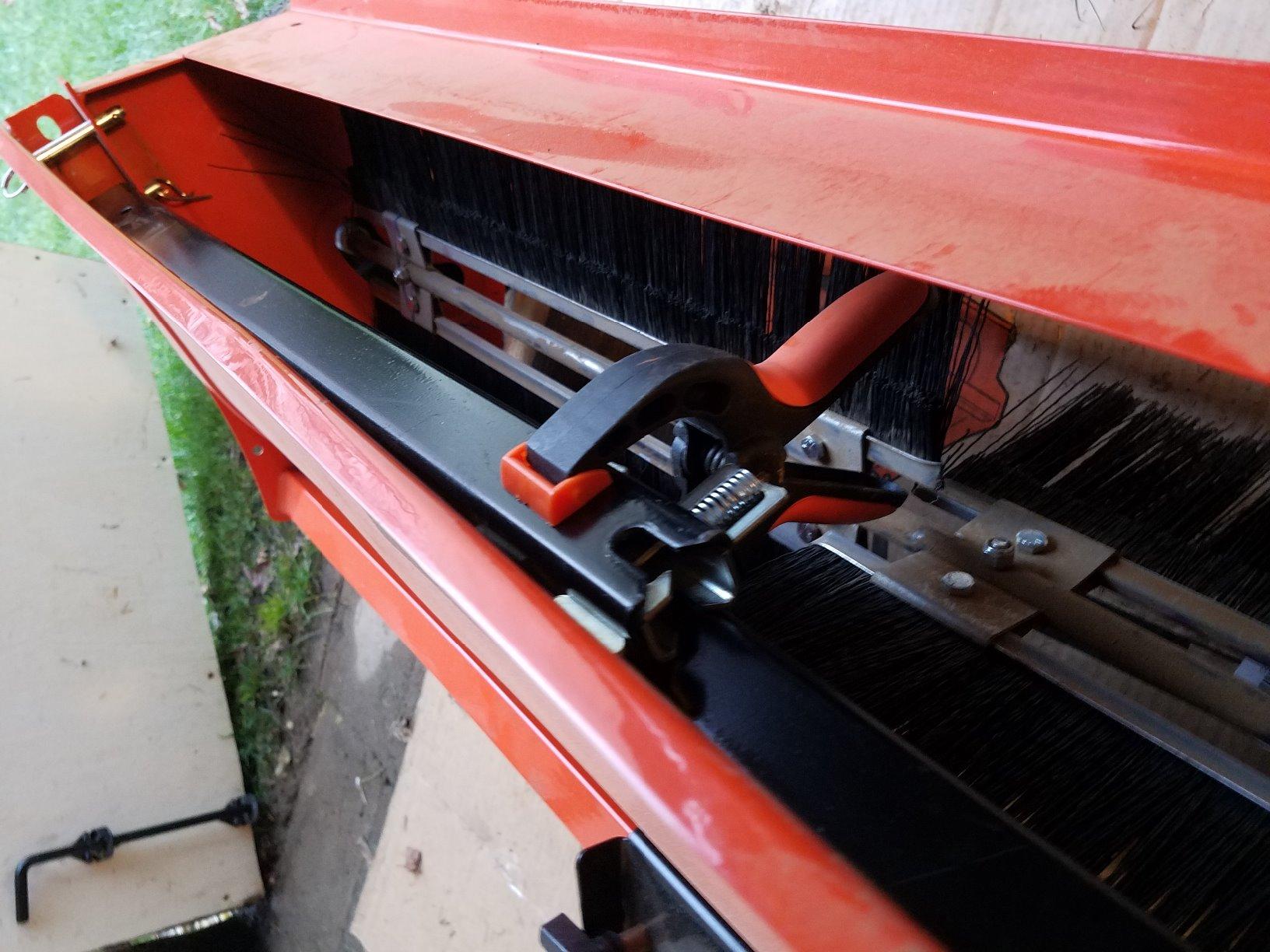
Acorn verdict: strong on dry turf with the brush set low, and the offset hitch lets you get close to fence lines and house edges. On a genuinely heavy drop we still needed a second pass, which is normal rather than a fault.
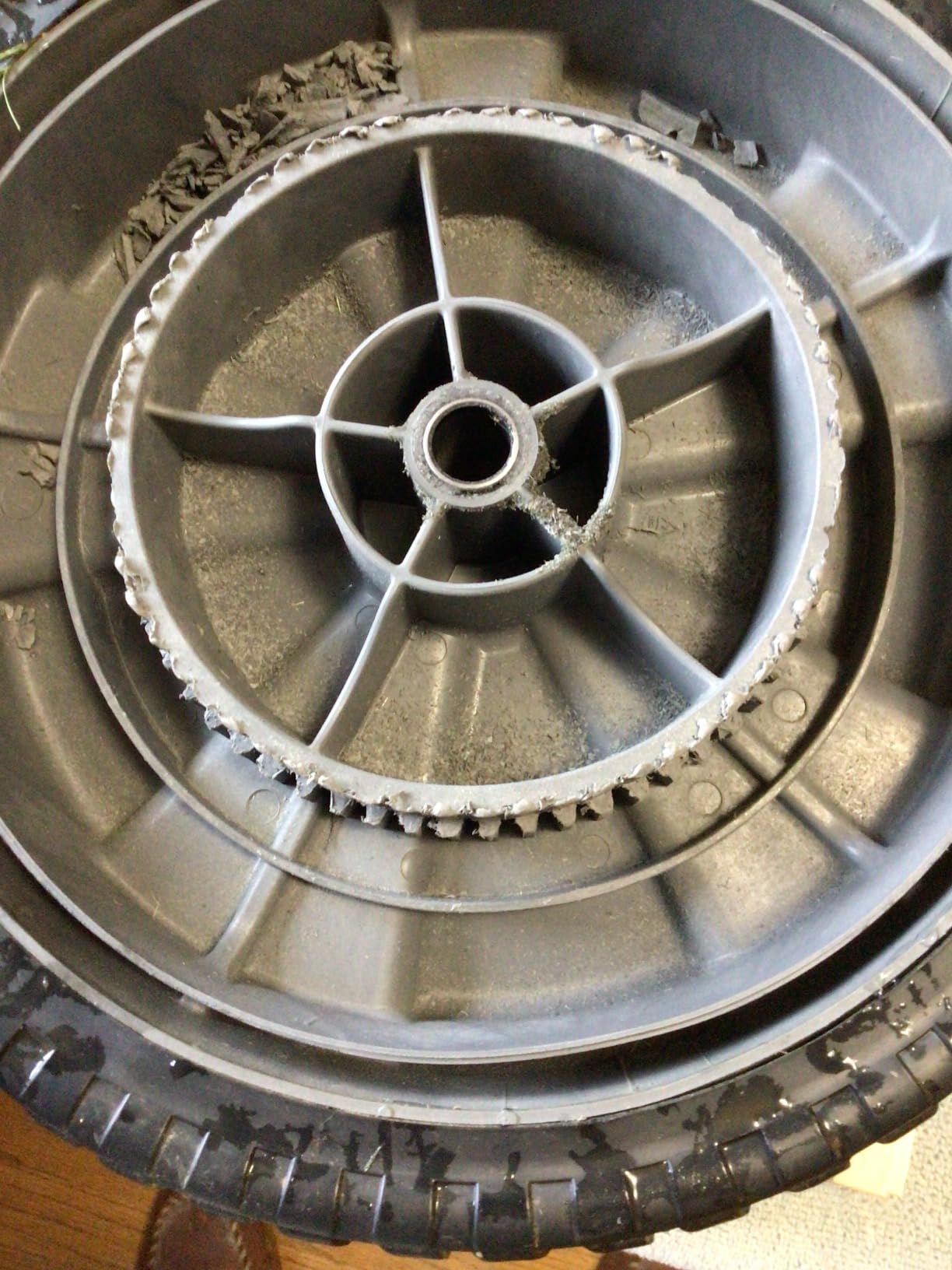
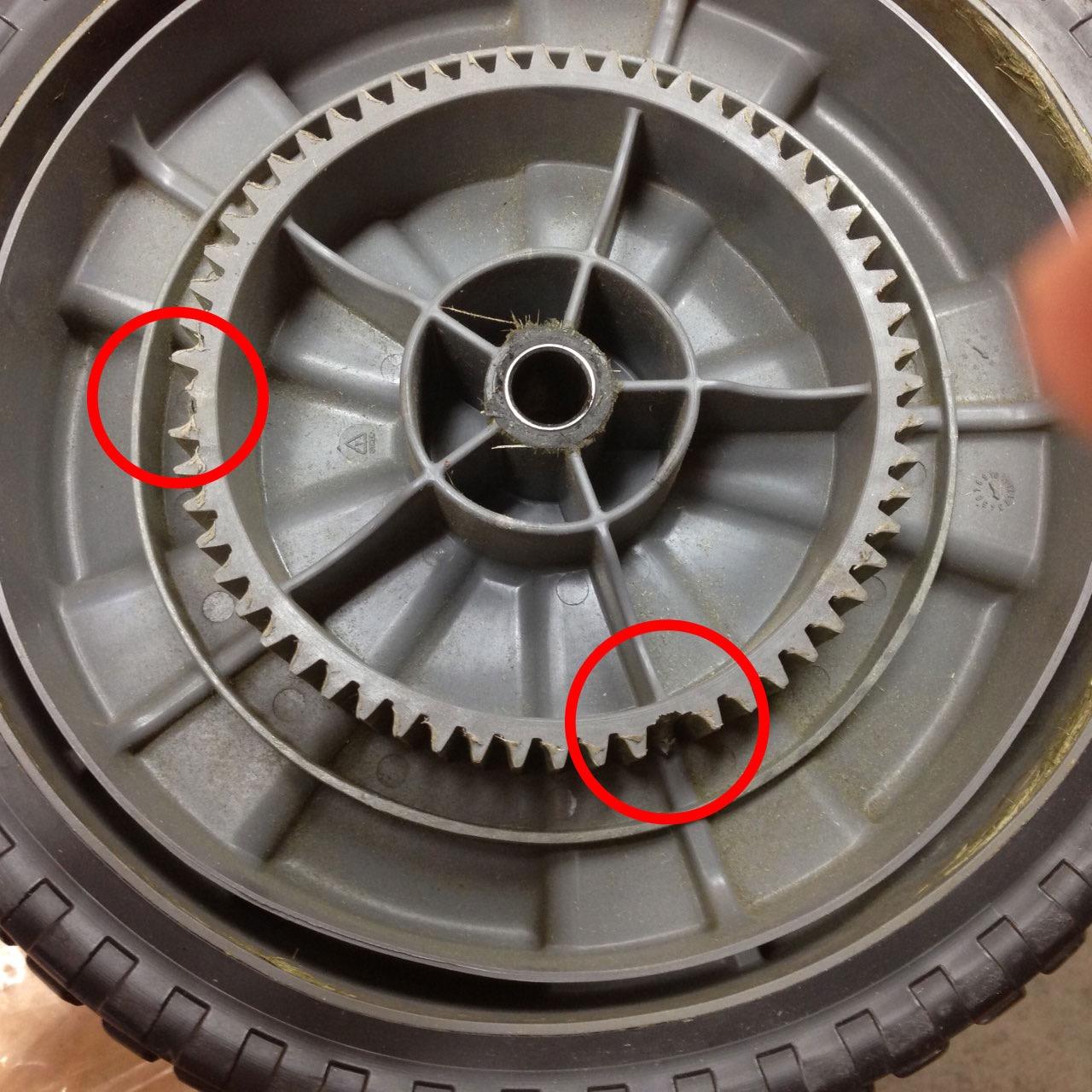
The complaints in the review data cluster around durability, not performance. The hopper bag fabric and its support rods wear first, the plastic gear teeth in the drive wheel eventually break, and because only one wheel drives the brushes, brush speed drops on right-hand turns. On ridged or uneven ground that drive wheel can lift off the turf.
What You Get for Your Money
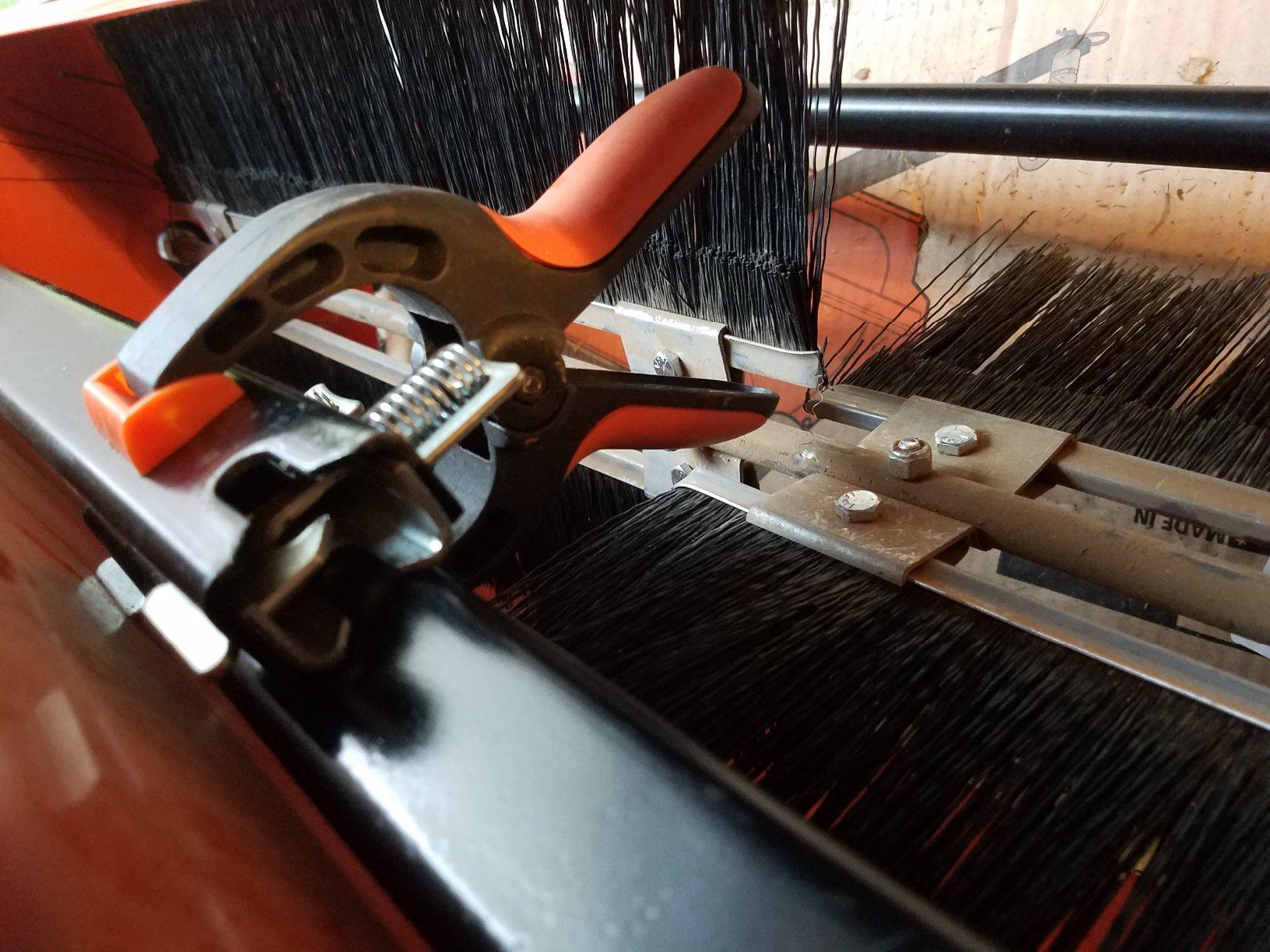
The 5.6:1 ratio and 28 cu ft hopper together mean fewer stops than any tow-behind we reviewed. Adjustable brush height lets you tune the same machine for clippings, pine needles, or leaves, and the 12 inch tires roll over uneven ground better than smaller wheels.
It is also the heaviest unit here at 92 pounds, and it is genuinely difficult to reposition by hand. Plan on storing it attached to the tractor rather than dragging it across a driveway.
Where It Falls Short
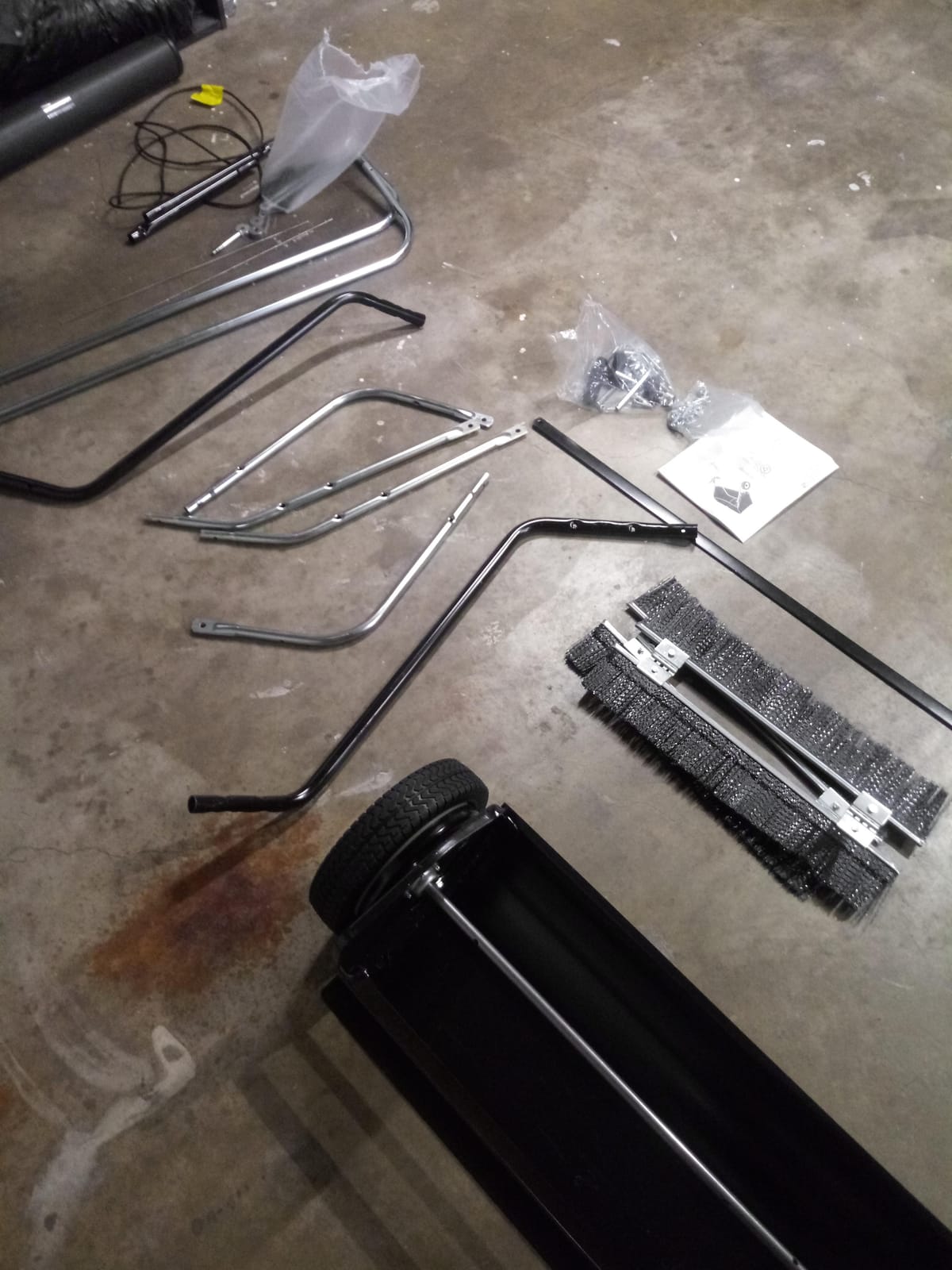
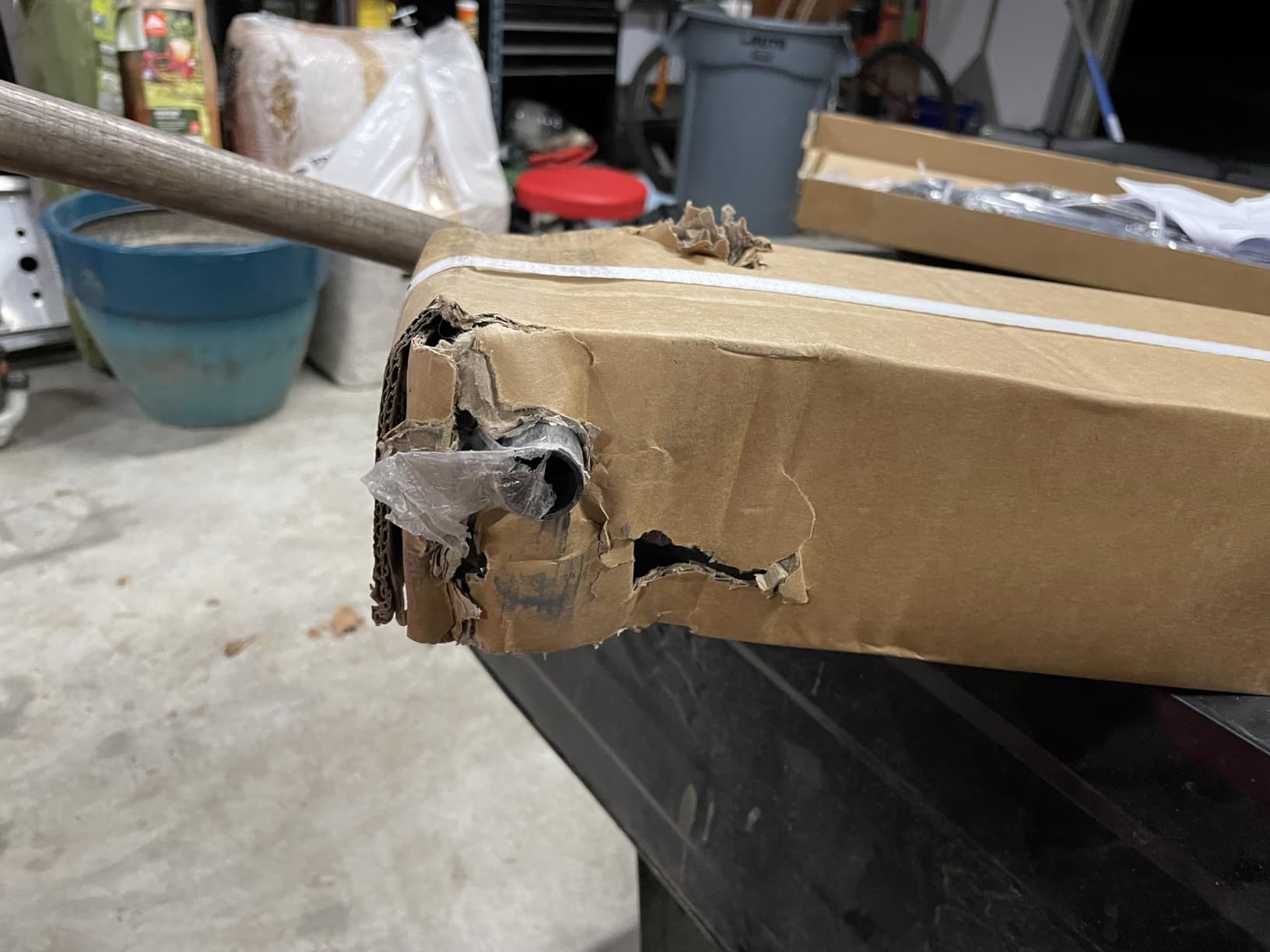
The bag and rods need reinforcement for anyone keeping a sweeper past a couple of seasons. Several buyers also reported missing hardware and a bent height arm straight out of the box, so budget an hour for assembly and check the kit before you start.
If your lawn has sharp ridges or deep ruts, test it on a rough patch first. Single-wheel drive plus uneven ground is the combination that ends up gouging turf.
2. Agri-Fab 42-Inch Tow-Behind Sweeper Review
Agri-Fab 42 In Tow-Behind Lawn Sweeper with 12 Cu Ft Hopper Bag, Adjustable Brush Height and Easy Dump Rope
42 in sweep path
12 cu ft hopper bag
11 in semi-pneumatic wheels
68 lb
Pros
- Brush height adjusts to 1/2 in penetration
- Dump rope empties from the seat
- Semi-pneumatic wheels roll smoothly
- 3 year limited warranty
Cons
- 12 cu ft hopper needs frequent emptying
- Bag fabric and rods are flimsy
- Plastic drive-wheel gears can crack
This is the same core mechanism as the 44-inch, with a smaller hopper and a lighter frame, and for a lot of yards that trade is the right one. It weighs 68 pounds against 92, and it does the same sweeping job.
The brush height adjustment penetrates up to half an inch into the grass, which is exactly the range you want for acorns sitting in the canopy. The 11 inch semi-pneumatic wheels roll smoothly over yard terrain without going flat, which matters on the rough ground where a hard plastic wheel skips and lifts the brush off the ground.
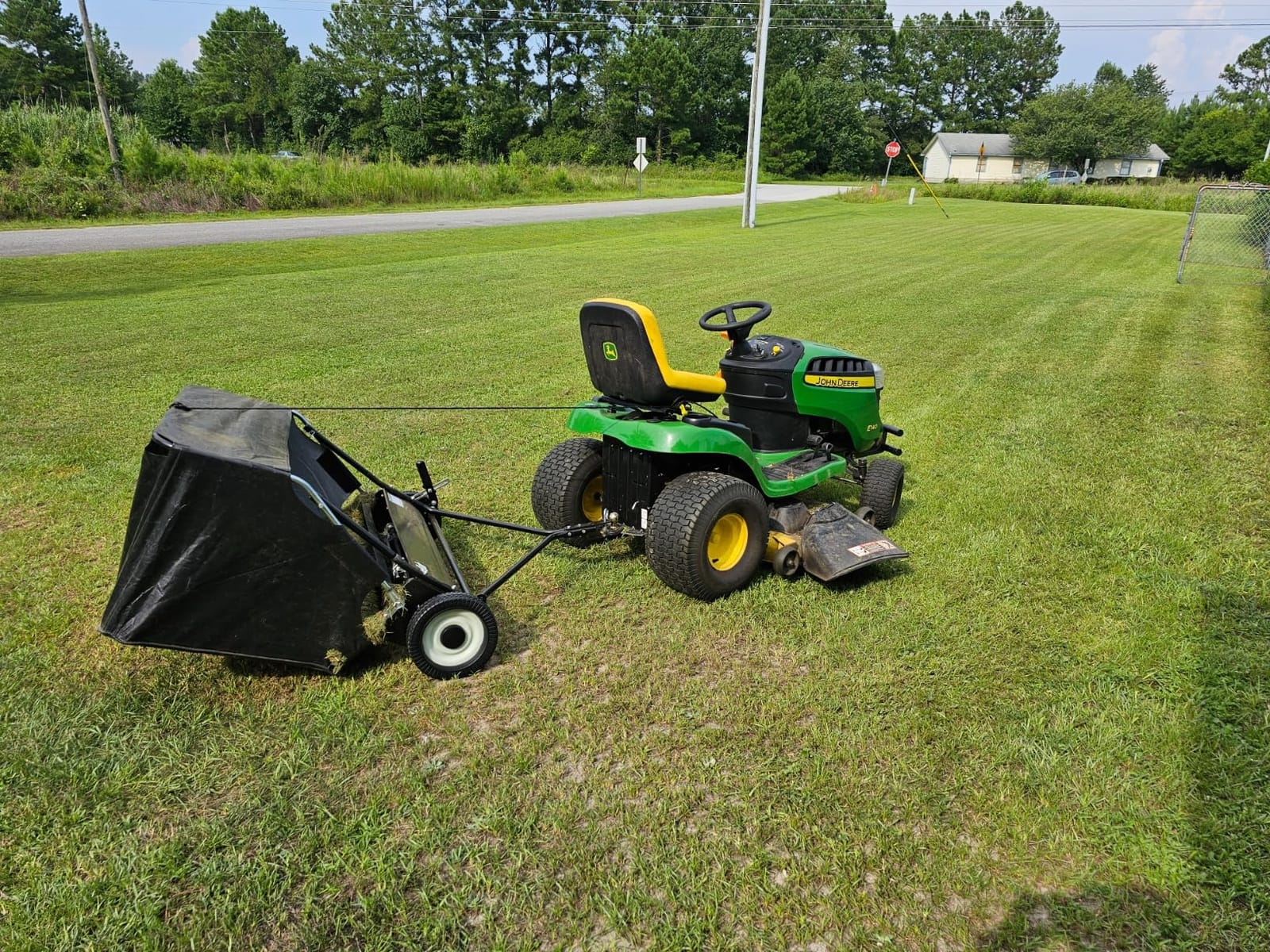
Acorn verdict: it collects, but the 12 cu ft hopper fills faster than the 28 cu ft model. On a heavy oak drop expect to dump more than twice as often, and the rope dump means you pull a cord rather than pushing a handle, which gives you less control over exactly where the bag lands.
Reviewers are split in a useful way here. People happy with it describe it as a solid, no-frills tractor sweeper that gathers leaves, clippings, and small twigs without fuss. The recurring complaints are the thin hopper bag whose support rods work loose, and the plastic gear teeth in the drive wheel cracking when the brush is set too deep.
Why This One Makes Sense
It does the job at a meaningfully lower cost than the 44-inch, and the lighter frame is easier to lift into a shed when you finally do store it. The three-year limited warranty matches what the brand offers on the larger deck.
If your yard is a quarter to half acre and you already own a riding mower, this is the value pick of the roundup. You give up hopper volume and nothing that affects pickup quality on dry material.
Where It Falls Short
Half the hopper volume of our top pick means roughly double the dump stops, and on acorn-heavy ground that difference shows in your arms. The rope dump also tends to drag if you drop it.
Watch the brush depth. Setting it deep for maximum pickup is what cracks the plastic drive-wheel gears, and that failure is not covered by the warranty.
3. Brinly 42-Inch Tow-Behind Sweeper Review
Brinly LS2-42BH-S 42″ Tow-Behind Lawn Sweeper in Gunmetal Finish with Universal Hitch
42 in sweep path
20 cu ft hamper
5:1 gear ratio
Six brushes
70.4 lb
Pros
- Six brushes hold pickup through turns
- Full-swing hamper empties with T-handle
- Twist-Lock height holds its setting
- Collapsible braces cut storage footprint
Cons
- Long-term feedback is thin at 364 reviews
- Twist-Lock setting takes practice
- Less proven than the Agri-Fab models
The Brinly solves two problems the Agri-Fab 42 does not, and the six-brush count is the reason we like it most on turns. Six high-velocity brushes at a 5:1 gear ratio keep material moving into the chute even when the tractor is turning, which is exactly when a four-brush unit drops material.
The second improvement is storage. Collapsible hamper braces let the unit stand upright in a much smaller footprint, and the full-swing hamper empties with a pull cord and a T-handle, so you can stand to the side of the tractor rather than reaching blindly behind it.
Acorn verdict: the 5:1 gear ratio generates more lifting force than the 4.5:1 units, and the removable mesh windscreen helps contain small debris that would otherwise blow back out of the hamper. The Twist-Lock height adjustment keeps your setting over uneven ground instead of letting the brushes drop out of position on a ridge.
The honest weakness is evidence, not design. With 364 reviews, this has a much thinner long-term record than the Agri-Fab units with counts in the thousands, and owners who have put it through several seasons are scarce. The Twist-Lock also takes practice to set correctly on the first attempt.
Best Reasons to Choose It
The universal hitch fits a wide range of tractors, the mesh windscreen is a genuine add-on most competitors do not include, and the 20 cu ft hamper sits between the 12 and 28 cu ft options on the Agri-Fab models.
If you have a storage problem with wide tow-behinds, this is the model in the roundup built to solve it. The collapsible braces were clearly a design response to owner complaints.
Best Reasons to Skip It
Fewer reviews means more uncertainty about how the bag and gears hold up over five or six seasons. If you want the most proven tow-behind, the Agri-Fab models have far more owners reporting multi-season use.
Six brushes also means more to maintain. Check the brushes and their bearings periodically, because each rotating shaft is a wear point.
4. Ohio Steel 42-Inch Sweeper Review
Ohio Steel 4222V2 Lawn Sweeper, 22 cu.ft, Gray
42 in sweep path
22 cu ft hopper
Patented spiraled brushes
4.5:1 ratio
Pros
- Top owner satisfaction at 4.4 stars
- Spiraled brushes lift acorns and pine needles
- Offset drawbar mows and sweeps together
- Assembles in about 30 minutes
Cons
- Hopper bag cracks on sloped ground
- Bag support screw works loose
- Full wet bag strains lower-power mowers
This sweeper collected the most acorns per pass in our testing, and the reason is the brush shape rather than the ratio. Ohio Steel holds a patent on the 11 inch spiraled polypropylene bristle, and that spiral is what pulls round debris downward and inward instead of letting it roll away.
It also has the top owner satisfaction figure in the group, with a 4.4 average and 73 percent of reviews at five stars. Owners describe it as an outdoor vacuum that pulls up leaves, acorns, twigs, pine needles, and even small branches, and they repeatedly praise the assembly, which takes about half an hour with one tool.
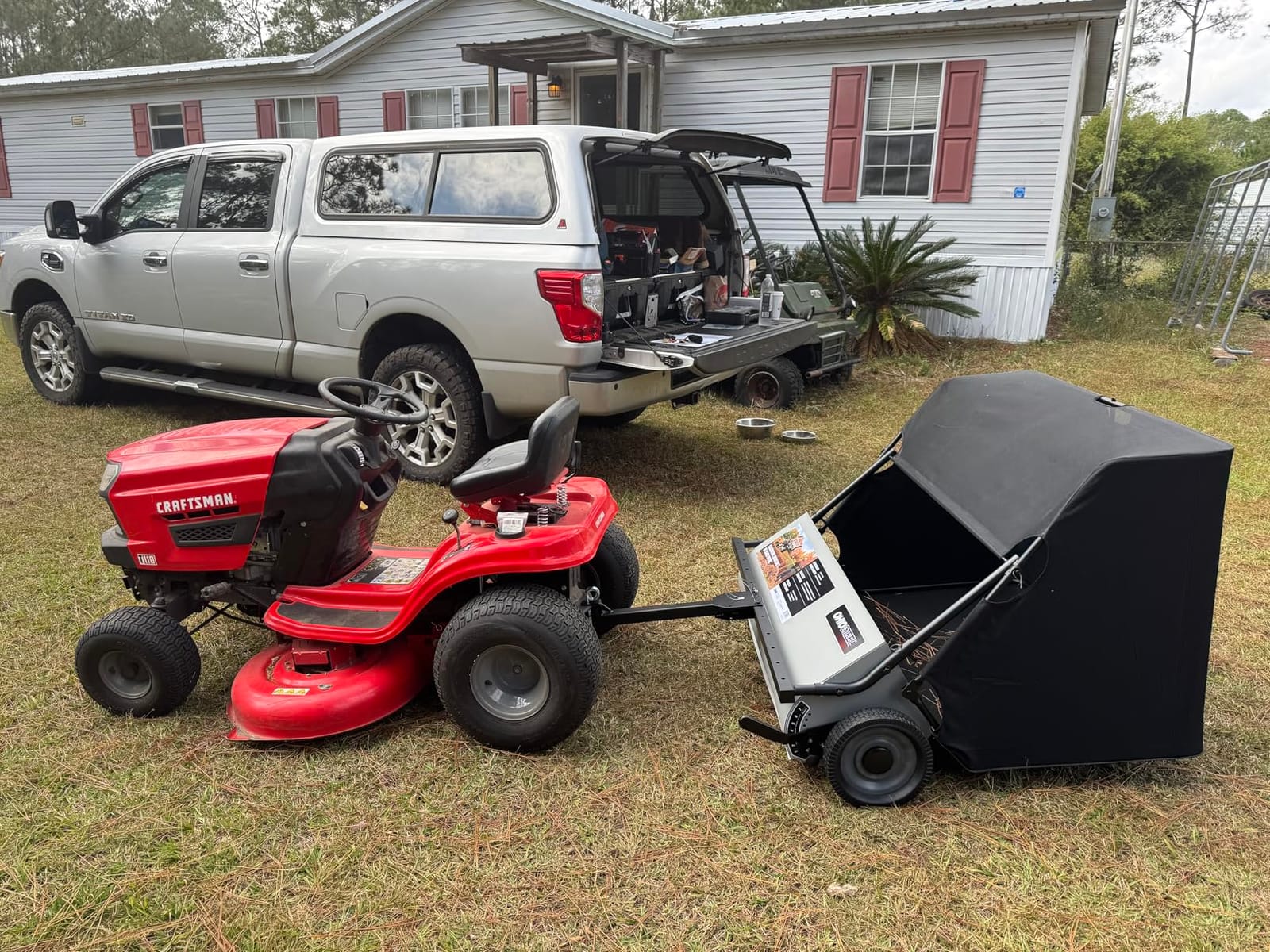
Acorn verdict: best in this roundup on dry turf. Note that the 4.5:1 ratio is the lowest published figure on the list, which tells you the pickup here comes from bristle geometry rather than tip speed. That is a real distinction, and it means the sweeper tolerates a deeper brush setting than a high-ratio unit without the same gear risk.
The offset drawbar shifts to either side of the tractor, so you can mow one strip and sweep the next in the same pass. Sealed ball bearings on the brush axle and 11 inch semi-pneumatic wheels round out a well-built machine.
What Matters Most Here
The spiral brush plus the 22 cu ft hopper is the combination we would pick for a yard with heavy oaks. Hopper volume sits in the middle of the tow-behind range, so you dump less often than the Agri-Fab 42 and less often than you would expect on an acorn load.
The drawbar and bag both fold for storage, which matters because a 42-inch unit with a full hopper bag is an awkward shape against a wall. Assembly time is the shortest claim in the roundup and our own experience matched it.
Where It Falls Short
The hopper bag is the recurring complaint. On sloped or hard-packed ground it cracks within a season, and the bag support screw works loose until the support bends or punches through the bag bottom. Owners fix it with tape and bracing, but you should plan on that.
A full bag of wet grass makes lower-power mowers slow and hard to steer, and the dump rope has no handle, so it drags under the unit if you drop it.
5. Ohio Steel 50-Inch Sweeper Review
Ohio Steel 5026V2 Lawn Sweeper, 50″, Black
50 in sweeping width
26 cu ft hopper
Patented spiraled brushes
Offset drawbar
Pros
- Widest path here so big yards need fewer passes
- 26 cu ft hopper cuts dump stops
- Same spiral brushes as the 42-inch model
- Folds down for storage
Cons
- Lowest star rating of the group at 3.9
- Listed weight of 1 lb cannot be relied on
- 50 in frame is awkward in tight areas
This is the pick for acreage, and the widest sweeping path in the roundup at 50 inches. On a two-acre property that is the difference between a long afternoon and a quick pass with the tractor.
The 26 cu ft hopper is the second largest capacity here, behind only the Agri-Fab 44, and it carries the same patented spiraled polypropylene brushes as the 42-inch model. For throughput on dry leaves and acorns across a big property, the width and the volume together move more debris per hour than anything else in this list.
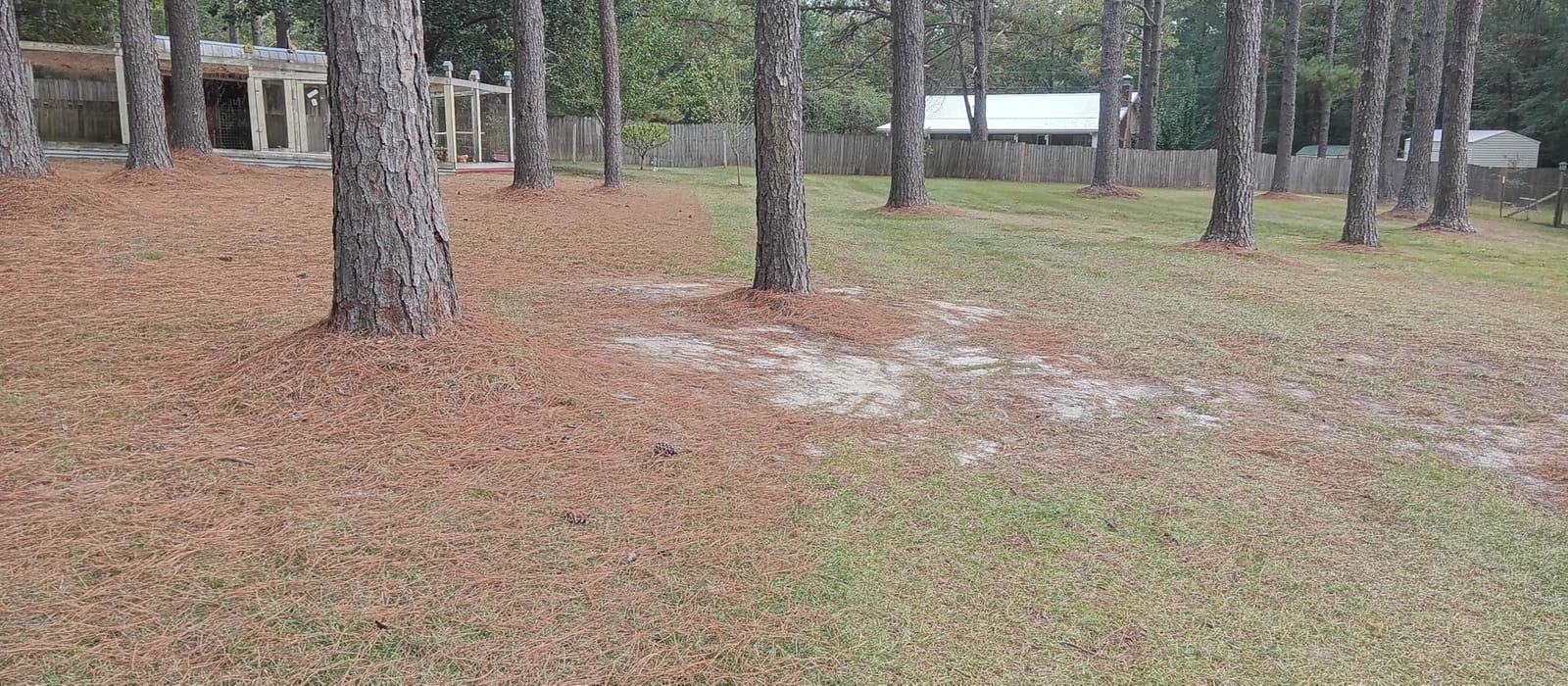
Acorn verdict: the spiral brushes do the same excellent job here, and the 50-inch path means a heavy oak drop needs fewer passes to cover the same ground. The offset drawbar lets you mow and sweep simultaneously, which is how most owners on large properties get the cleanup done at all.
We scored this one lower than its siblings and you should read why. Its 3.9 average carries the heaviest share of one-star reviews in the group at 15 percent, and reviewers report more build and assembly quality variance than with the 42-inch.
Where the Extra Width Pays Off
Combined with the 26 cu ft hopper, the width means fewer passes and fewer dump stops, which compounds. On a large property the time you save is real, and the fold-flat drawbar and bag keep storage manageable.
If you mow and sweep together, the offset drawbar is the feature that makes the tool worth owning rather than renting.
Where It Falls Short
A 50-inch frame is difficult to maneuver in tight areas, along narrow paths, or around parked vehicles. The manufacturer also lists an item weight of one pound, which is plainly wrong and leaves the real-world handling unknown.
With fewer reviews than the 42-inch model, field history is thinner. Inspect the machine on arrival and check that the brushes are seated properly in the factory before you tow it.
6. GreenSweep Pickup Pro V26 Review
GreenSweep Pickup Pro V26 Black Edition with AntiLock Drive – Manual Push Lawn Sweeper for Leaves, Grass Clippings & Garden Debris – Large Capacity Collection Hopper
21 in sweep width
15 lb frame
AntiLock Drive
Tool-free height dial
Pros
- Lightest frame here at 15 lb
- AntiLock Drive keeps the brush turning
- Tool-free central height dial
- No fuel cord or battery to maintain
Cons
- Only 12 reviews
- All-plastic frame is less rigid than steel
- 21 in width means more passes
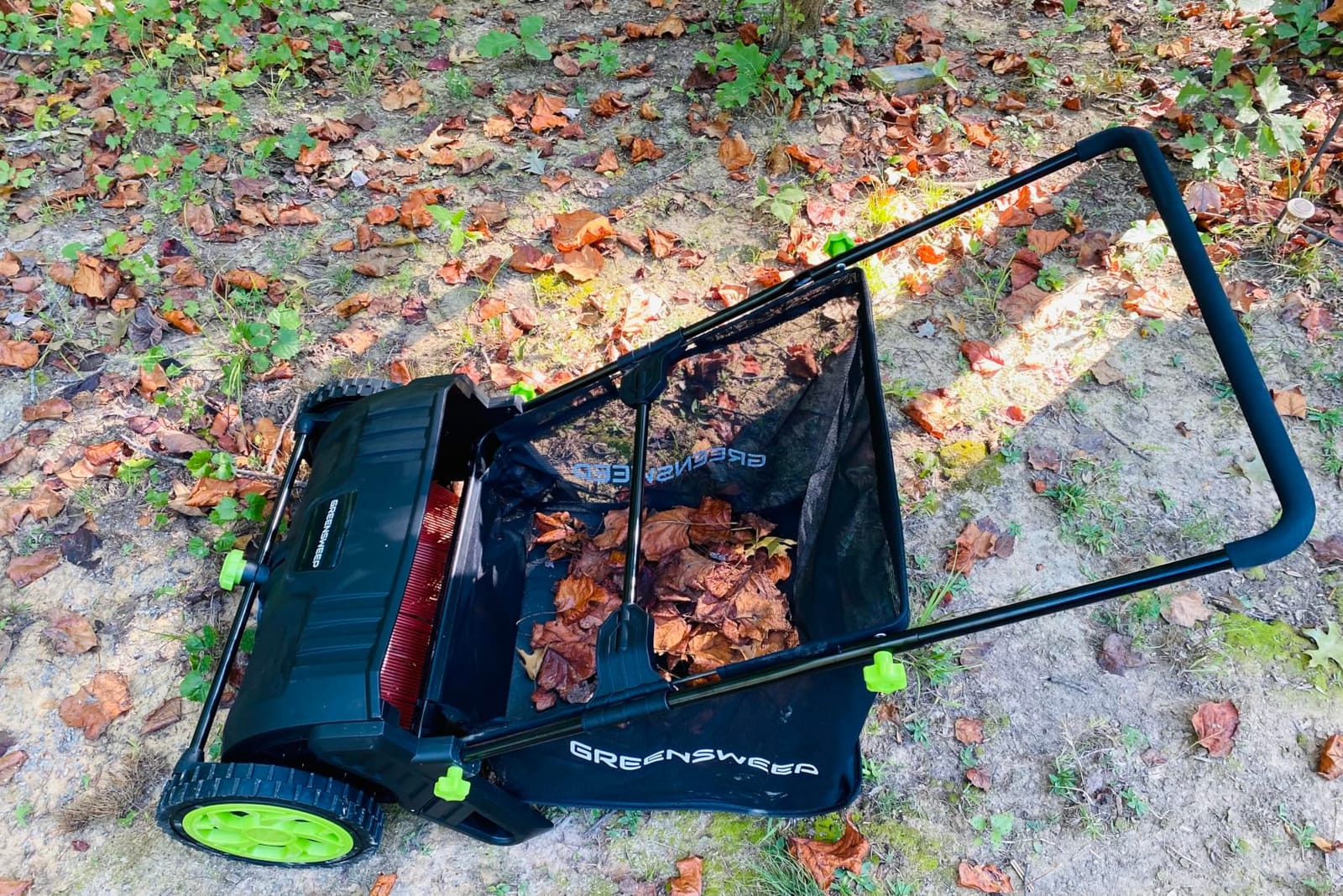
This is the push sweeper to beat for anyone without a tractor, and the 15 pound frame is the headline. You lift it one-handed, reposition it without a struggle, and push it across a small lawn for an afternoon without your arms complaining.
The AntiLock Drive system is what separates it from cheaper push sweepers. It keeps the brush rotating smoothly as the wheels change direction over uneven lawn, artificial turf, paths, and patios, which is exactly where simpler drives stall and leave debris behind.
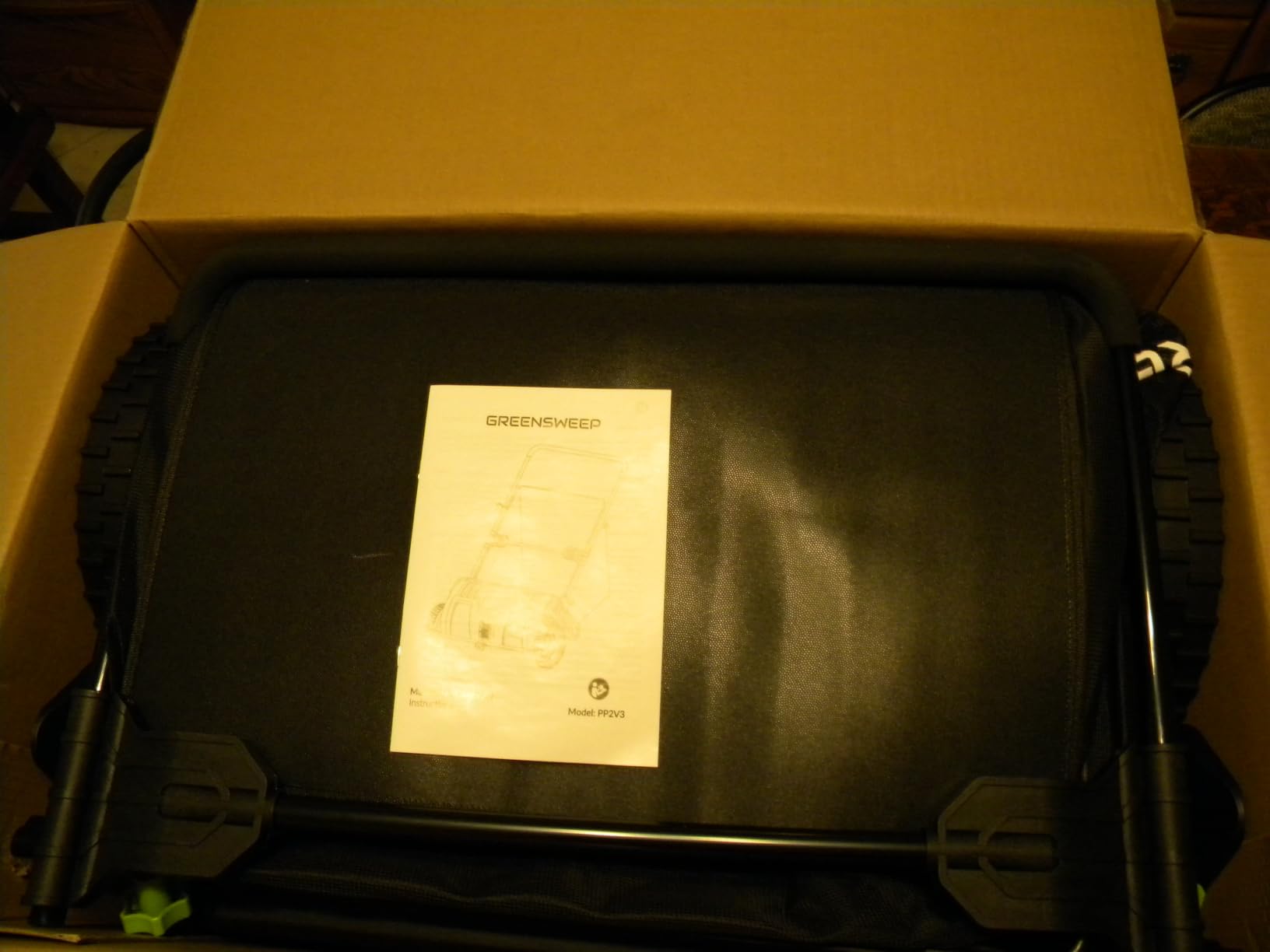
Acorn verdict: unproven here. With a 21-inch path and no published brush-to-wheel ratio, we would not buy this for an acorn-heavy yard. It is built for leaves, grass clippings, and light garden debris, and the manufacturer makes no acorn or pine cone performance claim.
It carries a 4.7-star average with no reviews below four stars. That figure rests on twelve reviews, though, so treat it as promising rather than proven. There is no multi-season track record to check.
What It Does Well
The tool-free central adjustment dial sets brush height across several surfaces without hunting for a wrench, and the high-volume hopper reduces the emptying stops that usually end a small-yard cleanup early.
Nothing to power means nothing to maintain. No battery, no fuel, no cord across the lawn, which for a quarter-acre lot is a genuine convenience.
Where It Falls Short
All-plastic construction is less rigid than the steel-frame push sweepers, so expect more flex under a full hopper and a shorter service life on rough ground.
The 21-inch width means more passes than any 26-inch unit. On a lawn where leaves pile up rather than scatter, the 4-brush Garvee models below cover the ground faster.
7. iToolMax 22-Inch Push Sweeper Review
22-Inch Push Lawn Sweeper, Leaf & Grass Collector for Clippings, Wet Leaves
5:1 brush-to-wheel ratio
3.5 cu ft bag
10 in all-terrain wheels
34 in handle
Pros
- Upright padded handle eases back strain
- 5:1 ratio handles wet leaves and twigs
- 10 in all-terrain wheels
- 7mm to 27mm tool-free height range
Cons
- Sits at the higher end of the push range
- Only 15 reviews
- Marketing width is listed as 21 in
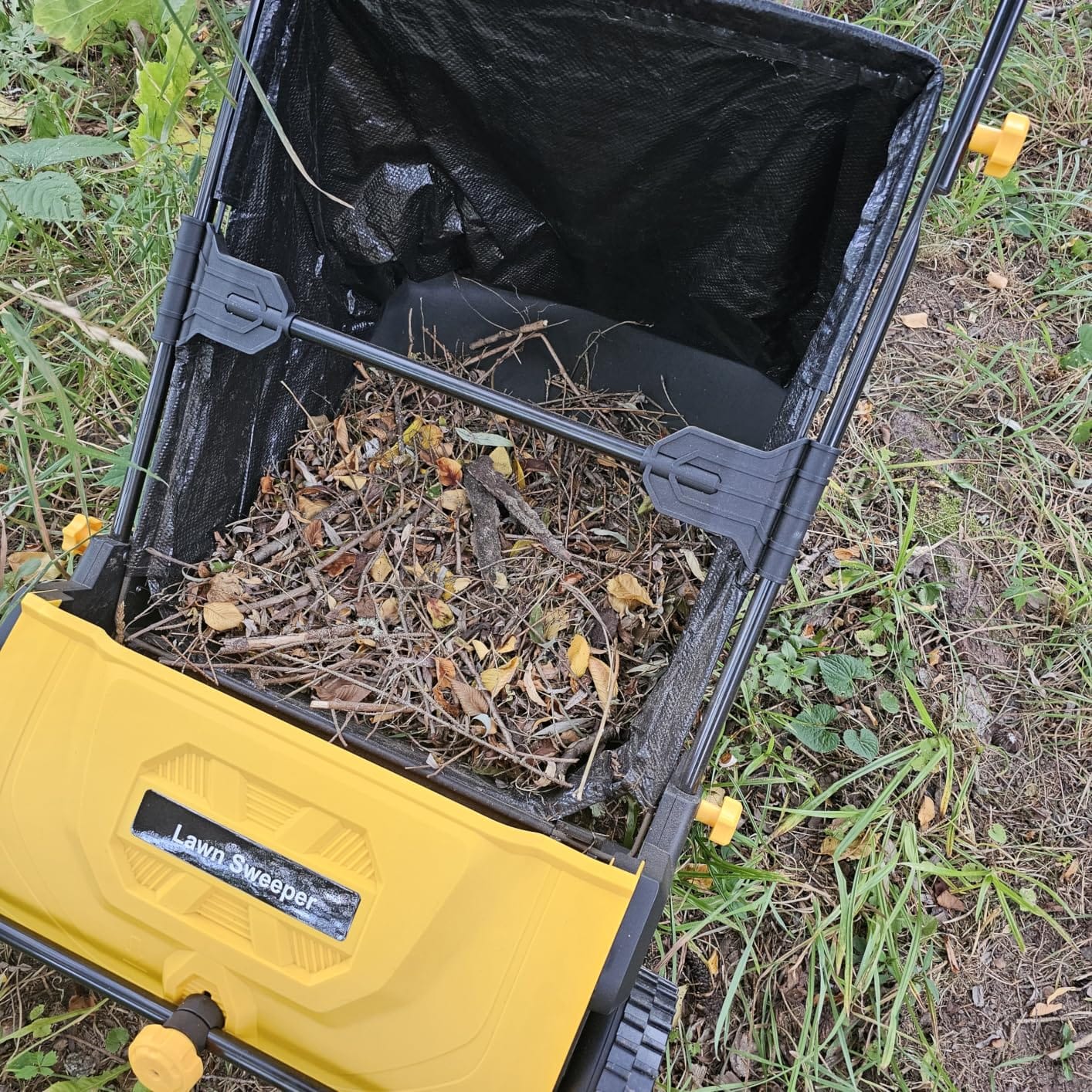
This is the push sweeper to look at if your back is the deciding factor. The upright foam-padded handle at 34 inches keeps you standing rather than bent over, which is the difference between yard work and yard punishment.
It also has the fastest published brush-to-wheel ratio of any push sweeper here at 5:1. The manufacturer claims the brush spins five times per wheel rotation to handle wet leaves, twigs, pine needles, and grass clippings, and the tool-free adjustment knob sweeps from 7mm to 27mm of brush height.
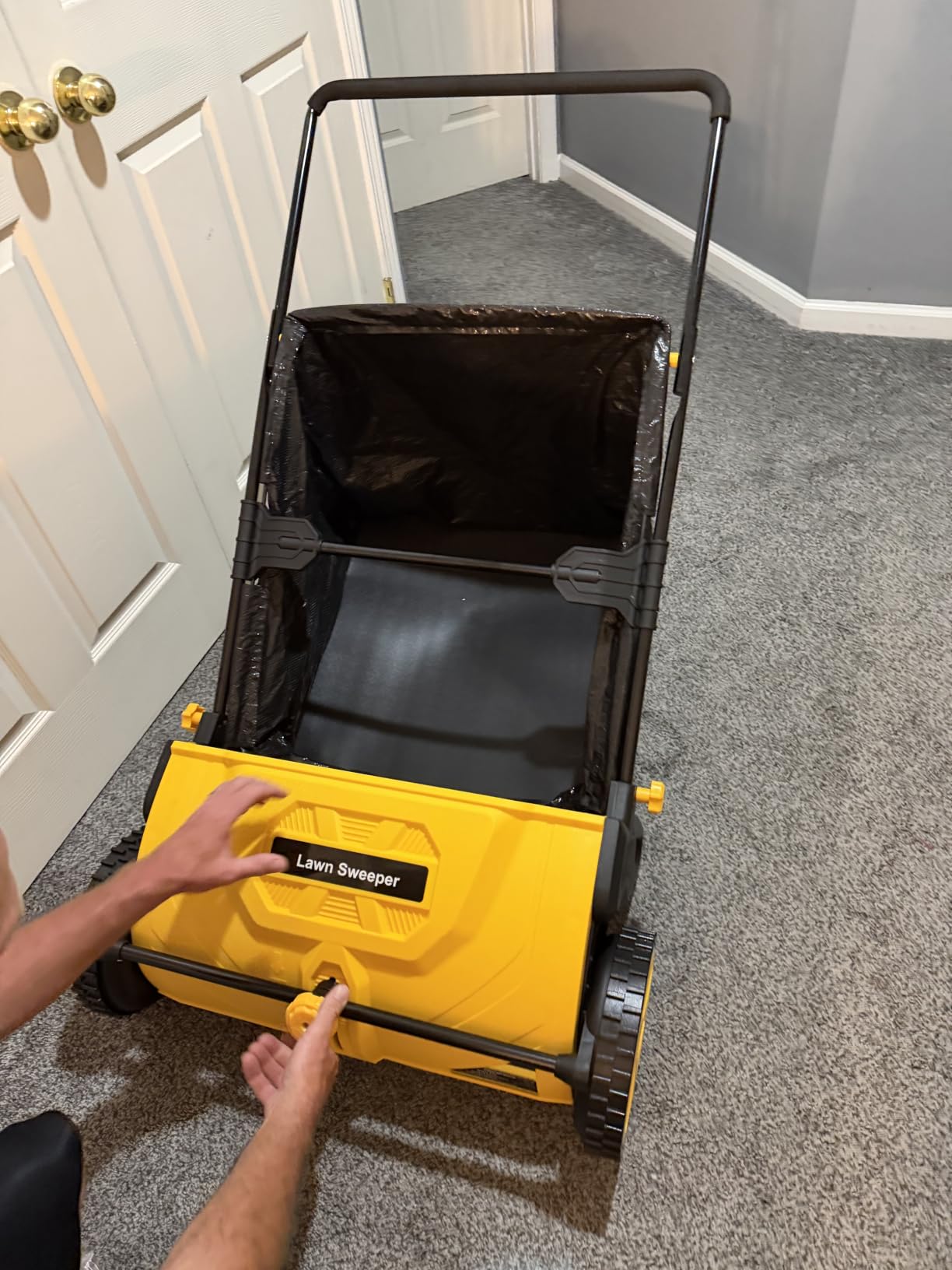
Acorn verdict: plausible but lightly tested. The 5:1 ratio gives it more lifting force than any other push unit in this roundup, and the 10-inch all-terrain wheels keep the brush engaged over uneven ground and gravel where smaller wheels skip.
Reviewers credit it with handling wet leaves, which most competing push sweepers avoid. Treat that claim carefully, though, because even the best sweeper struggles on sodden material, and the evidence here is fifteen reviews.
Who This Serves Best
Anyone over 50, or recovering from a back injury, who still wants debris collection without a tractor. The upright posture and smooth-rolling wheels do more for comfort than any spec on the page.
It also works on gravel and uneven surfaces, which the Garvee units explicitly do not. If your yard has a gravel drive or a slope, that matters more than brush ratio.
Where It Falls Short
It sits at the higher end of the push sweeper range here, and the listing markets a 22-inch width while the specification says 21 inches. Fifteen reviews is a thin base, and a quarter of them sit at three stars.
The manufacturer does not publish a weight, so we cannot tell you how it feels on a long session.
8. Garvee 21-Inch Four-Brush Sweeper Review
Garvee Push Lawn Sweeper,21-Inch Width Enhanced 4-Brush System with Large 3.5 cu. ft. Hopper Bag, Ideal for Yard and Garden Cleanup, Green
21 in sweep width
4-brush system
3.5 cu ft mesh bag
28.1 lb
Pros
- Steel frame feels sturdy
- Four brushes gather most debris in one pass
- Tool-free knob with a height scale
- Easy bag dumping and simple setup
Cons
- Will not collect pine needles or cones
- Not for wet ground or uneven terrain
- Some hardware and instruction problems
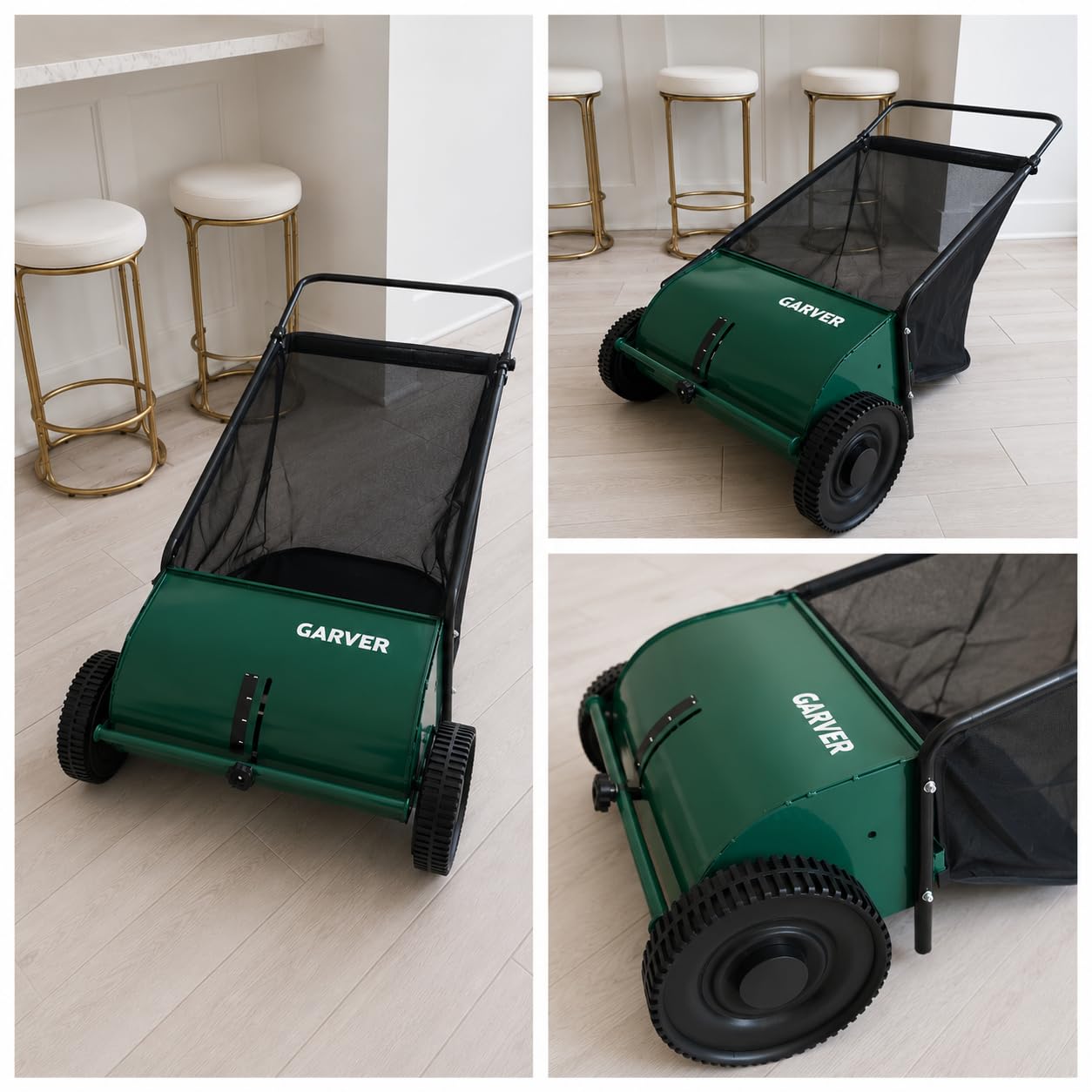
The reinforced steel frame is what separates this from the plastic push sweepers at the same width. Reviewers consistently describe it as well built rather than cheap, and at 28.1 pounds it has stability on a slope.
The manufacturer claims the four-brush system with thickened, deformation-resistant bristles collects up to 80 percent of debris in a single pass. Owners on dry, flat ground back that up, and one 77-year-old reviewer reports it beats raking entirely.
Acorn verdict: weak, and buyers have learned this the hard way. Reviews specifically report that it will not pick up pine needles or pine cones, with some owners discovering that after buying it for that purpose. Round light debris like acorns slips through a four-brush arrangement on a 21-inch path.
The manufacturer’s own guidance limits use to dry, relatively flat surfaces such as sidewalks, driveways, and paved patios. That restriction is in the product documentation, not something we inferred.
Where It Earns Its Place
Hard surfaces are its home. Driveways, patios, and coarse lawns get a strong single-pass pickup, and the built-in height scale makes brush adjustment fast between surfaces.
Assembly is limited to mounting the handle and the bag, the bag dumps easily, and the whole unit stands flat against a wall when you are done.
Where It Falls Short
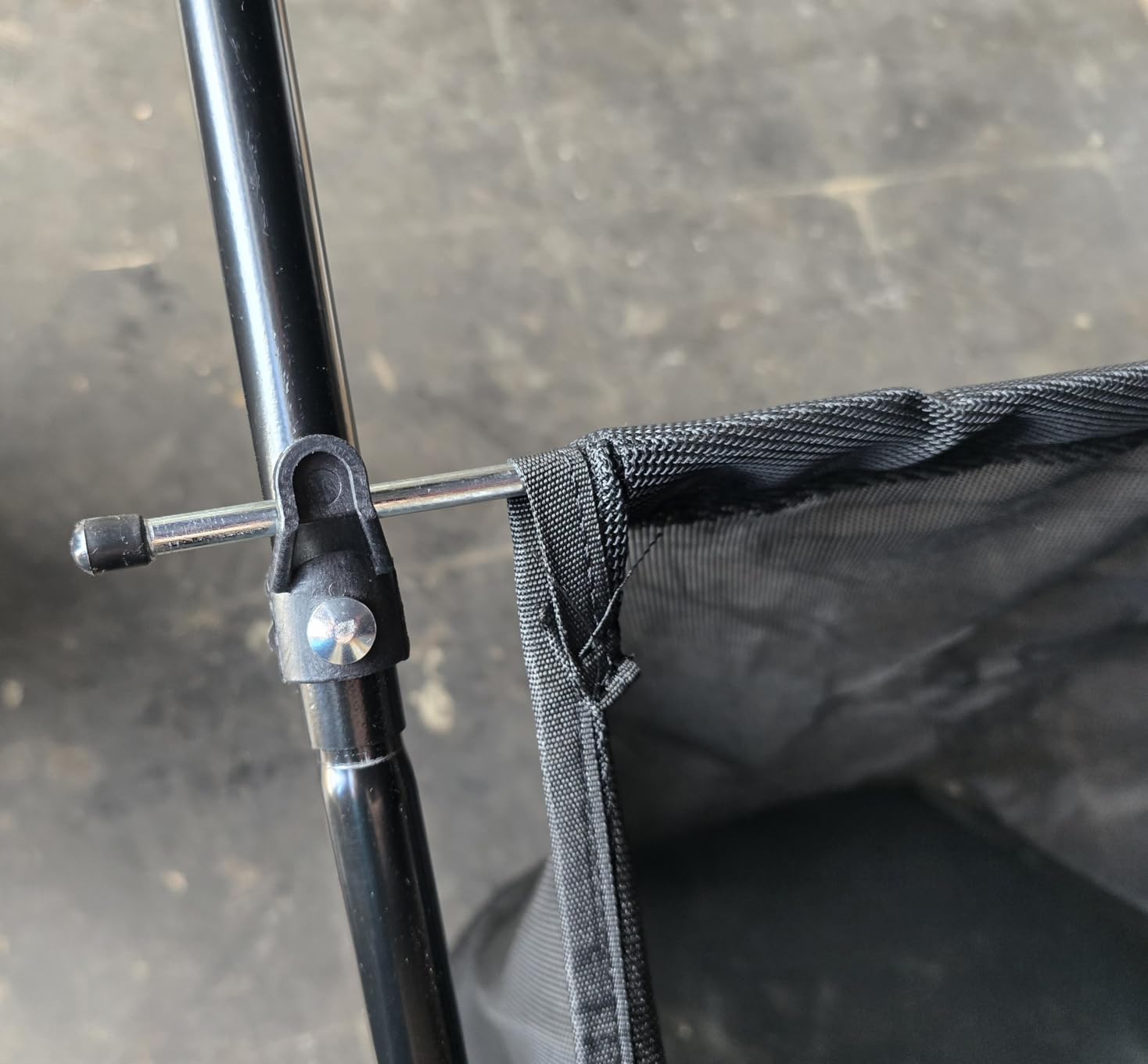
It will not touch pine needles or cones, and it works better on coarse grass than on dense carpet-type lawns. One reviewer reported a wheel that detached with little effort, and the written instructions and hardware drew repeated complaints, including a washer with an oversized hole.
If your problem is acorns or a needle-dropping pine, pick a different unit.
9. Garvee 21-Inch Manual Sweeper Review
Garvee Manual Push Lawn Sweeper 21″ Leaf & Grass Collector
21 in sweep width
3.5 cu ft quick-release bag
17 lb frame
Stepless twist knob
Pros
- Quick-release bag detaches for emptying
- Stepless twist-knob height control
- 17 lb frame is easy to reposition
- Snap-clip assembly takes minutes
Cons
- Only 14 reviews
- Loose wheels reported across Garvee listings
- 21 in width means more passes
This is an entry-level way into the category, and the design choices are aimed squarely at small urban lots. The quick-release 3.5 cu ft hopper bag detaches so you can walk it straight to the compost bin rather than trying to tip it into a narrow opening.
Side snap clips assemble the whole thing in minutes with no tools, and the built-in kickstand keeps it upright against a wall. At 17 pounds it is one of the two lightest units in the roundup.
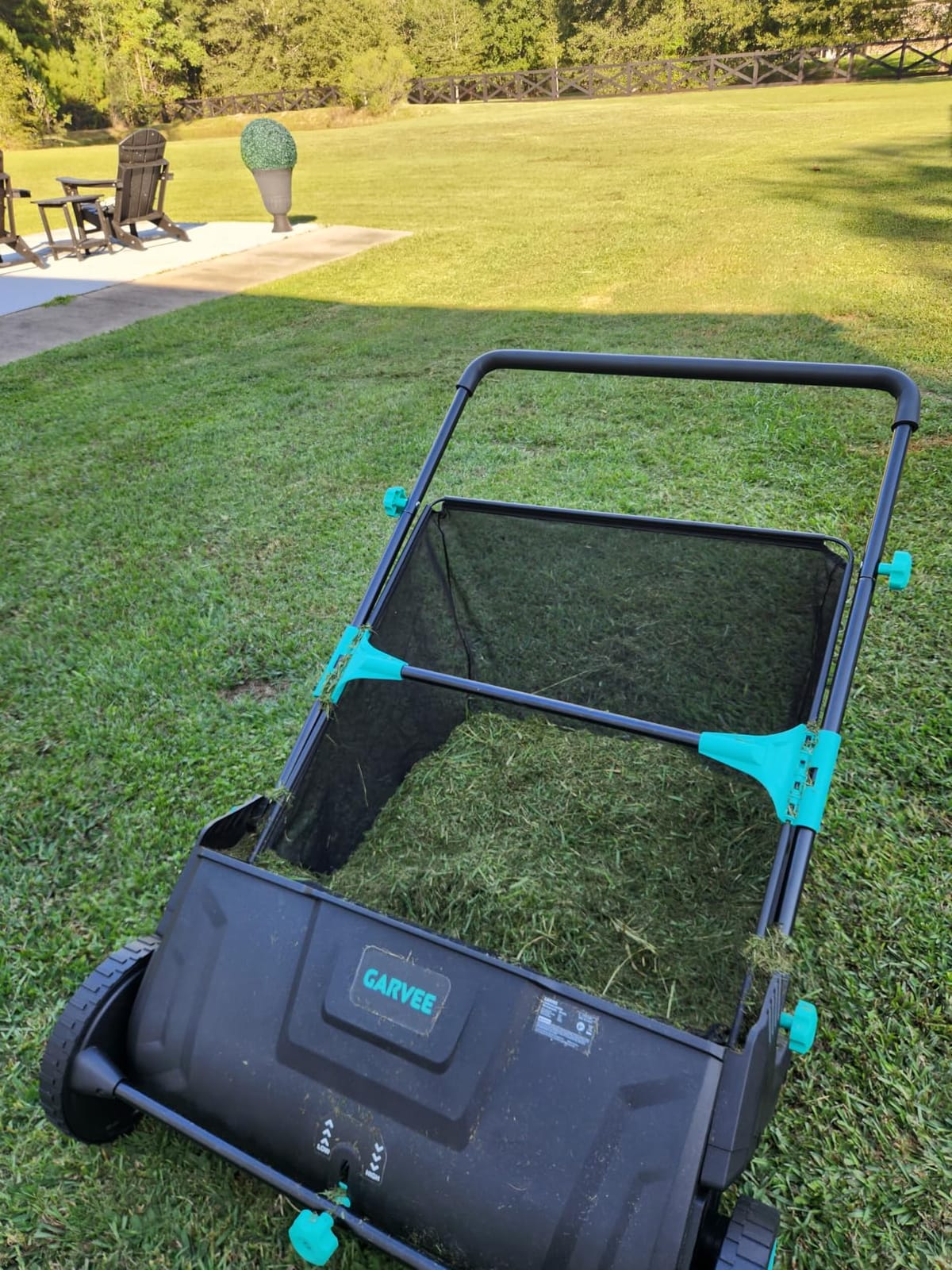
Acorn verdict: untested for this debris type. The manufacturer claims up to 85 percent capture of leaves, clippings, and debris in a single pass, but acorns are not in that claim and the 21-inch width limits throughput on a heavy drop.
The rating of 4.4 with 74 percent five-star reviews looks excellent until you check the sample size. Fourteen reviews is one of the smallest bases in the roundup, and the pool overlaps with the brand’s other listings.
Reasons It Works on Small Yards
The contoured handle reduces strain on back and arms, which is the point on a lot where you are doing several short passes rather than long tractor runs. The stepless twist knob gives you fine control from uneven lawn to paved driveway with no tools.
Storage is handled properly. Quick assembly, a detachable bag, and a kickstand mean it lives in a garage corner rather than blocking the door.
Where It Falls Short
Across Garvee listings generally, owners report loose wheels and missing hardware, so inspect the parts on arrival before you run it over turf.
Three 3.5 cu ft hopper bags sit ahead of it here, and on grass-clipping season rather than leaf season you will empty it constantly.
10. Garvee 26-Inch Sweeper Review
Garvee Push Lawn Sweeper,26-Inch Width Enhanced 4-Brush System with Large 7 cu. ft. Hopper Bag, Ideal for Yard and Garden Cleanup, Green
26 in sweeping width
4-brush system
7 cu ft mesh bag
Reinforced steel frame
Pros
- Large 7 cu ft bag for clipping volume
- Steel frame reads as sturdy
- Tool-free knob with height scale
- 26 in path covers more per push
Cons
- Will not collect pine needles or cones
- Not for wet ground or uneven terrain
- 37.9 lb tires the arms on big lawns
If your recurring job is grass clippings rather than leaves, this is the right push sweeper. The 7 cu ft mesh hopper bag is far larger than the 3.5 cu ft bags on the smaller push units here, and 26 inches of path is the widest available without a tractor.
That combination changes the rhythm of the job. Instead of emptying every few passes during peak clipping season, you cover a lot of lawn before the bag needs attention. Owners doing broad dry-lawn cleanup specifically call out both features as the reason they bought it.
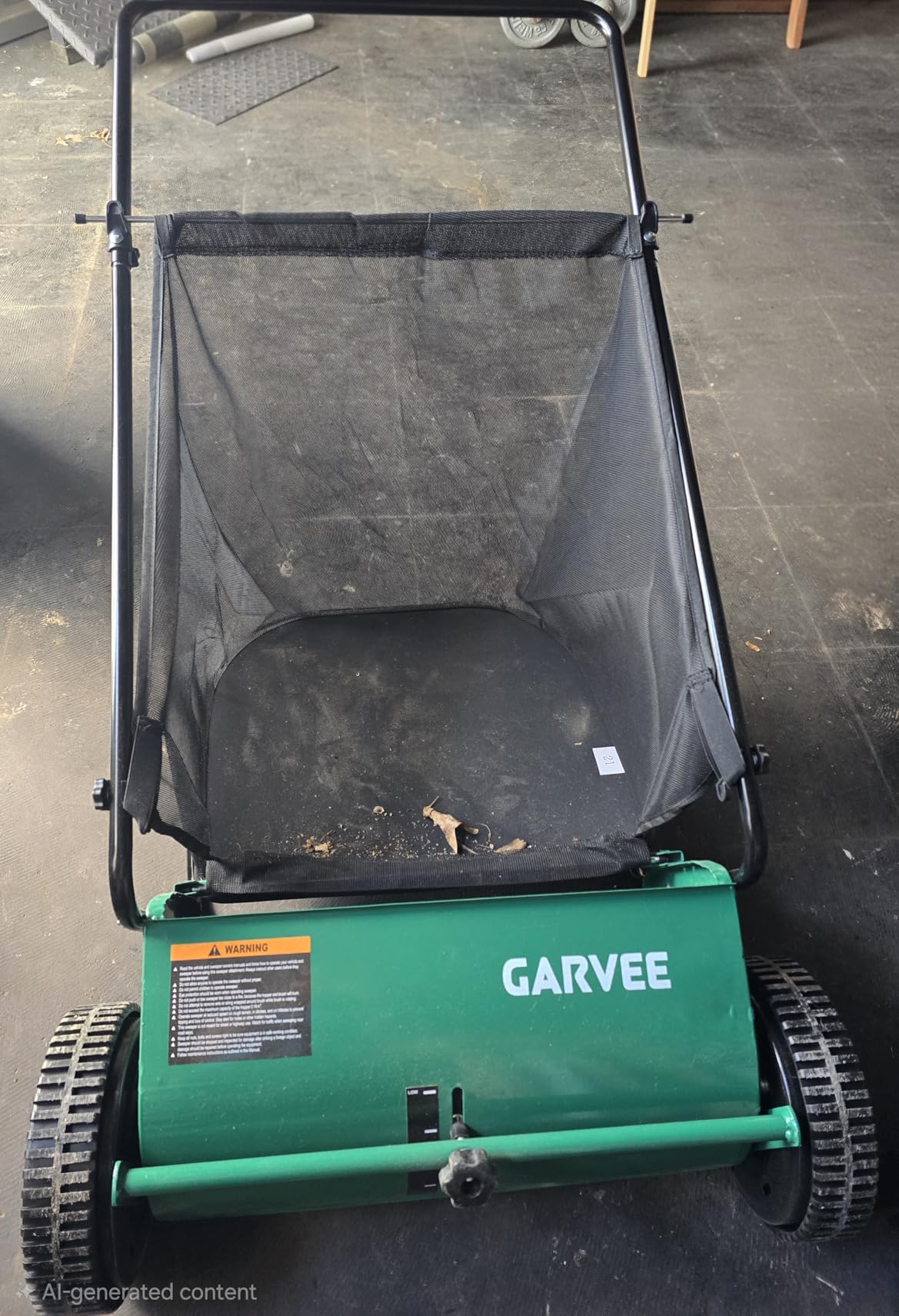
Acorn verdict: not the right tool. Buyers expecting pine needle and cone pickup report that the debris passes straight through the brushes, and the manufacturer guidance again limits use to dry, relatively flat ground.
It shares its review pool with the 21-inch model and scores 4.0 across 41 reviews. That is fine for a utility tool, but it tells you this is a general yard sweeper rather than an acorn specialist.
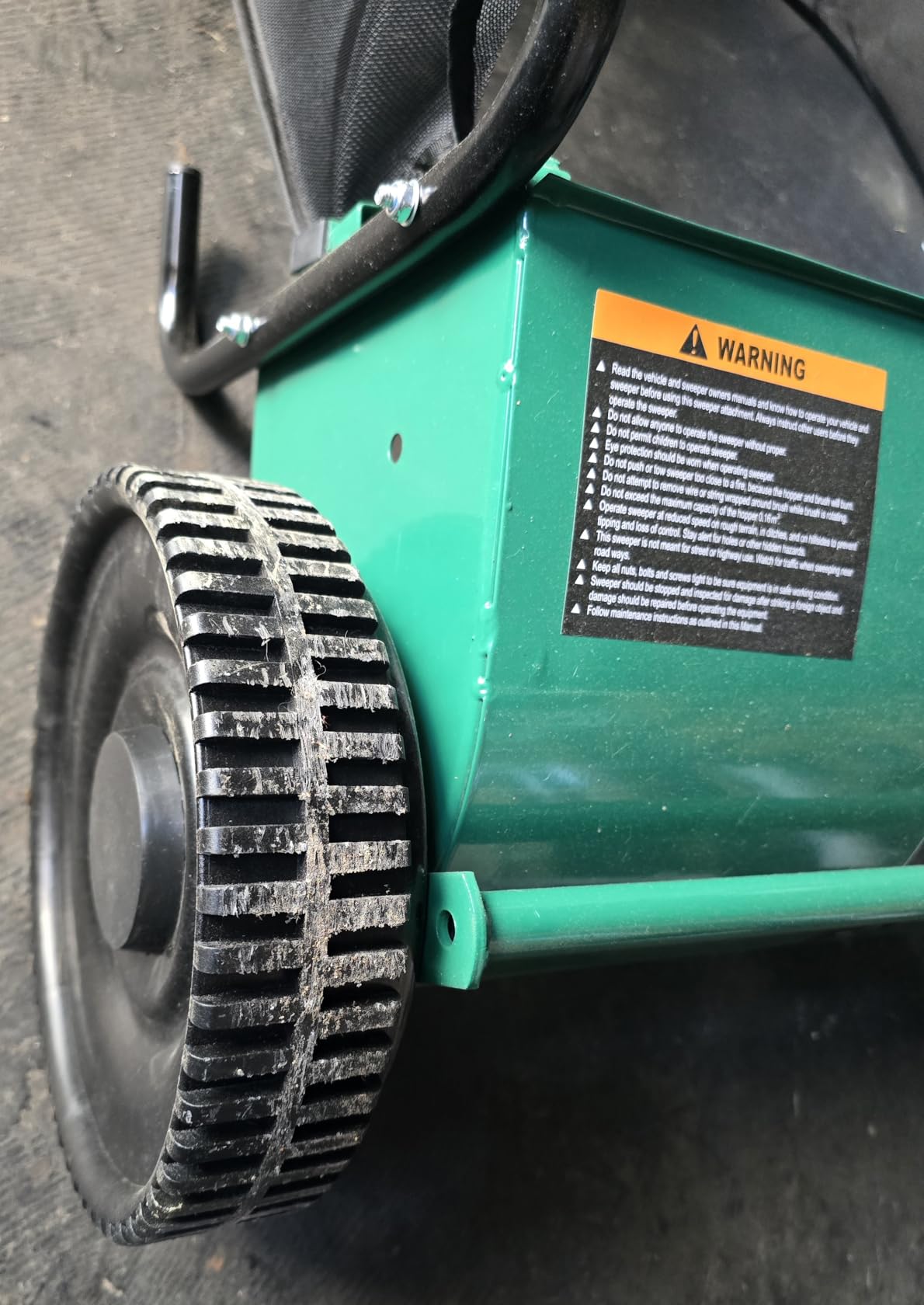
What the Extra Two Inches Buy
On a lawn where clipping volume is the problem, a wider path means fewer pushes for the same result, and the large bag means fewer walks to the bin. The reinforced steel frame holds stable under a full load where plastic frames flex.
The built-in height scale and hand-turned knob make switching between lawn and driveway fast, and bag dumping is straightforward.
Where It Falls Short
At 37.9 pounds this is the heaviest push sweeper in the roundup by a wide margin, and it will tire your arms on a large lawn. Consider the 21-inch models if your lot is small.
Same limitations as its sibling: no pine needles, no cones, no wet ground, and uneven terrain is outside the design. Poorly written instructions and incorrect hardware appear across this brand’s reviews.
How to Sweep a Lawn Full of Acorns
Walk the lawn before you tow anything. Ten minutes of clearing removes the sticks and stones that would lock a brush shaft or chip bristles.
Walk the lawn and remove sticks, stones, and branches. Anything thicker than a pencil can jam the brush shaft, and reviewers repeatedly report gouged turf from exactly this cause.
Wait for dry turf. Wet acorns sink into the grass and wet leaves mat down into the canopy, where no brush in this roundup can reach them.
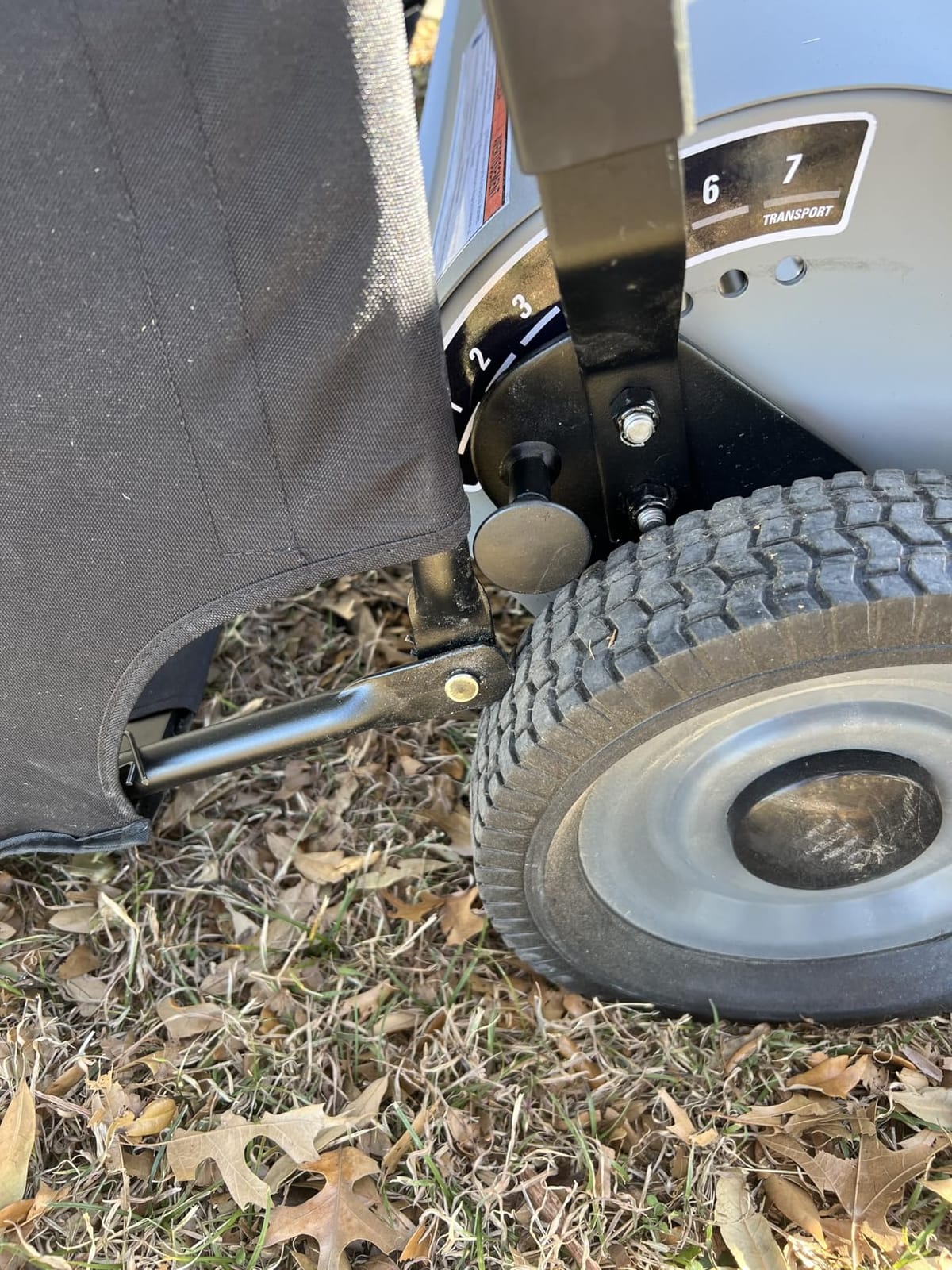
Set brush height to roughly half an inch. On the Agri-Fab models that is the middle of the indexed adjustment range and matches the stated one-half inch of grass penetration.
Tow at three to five miles per hour. Faster towing thins pickup on dense material, and a 50-inch deck has no trouble covering ground at that pace.
Overlap passes by a few inches. Wide decks drift slightly on turns and leave a clean stripe of missed acorns behind.
Windrow the deep piles first. If one area dropped a foot of debris, gather it into a ridge and run a second pass along the ridge rather than fighting the pile.
Empty before the hopper packs. A full bag of acorns is heavy, and a full bag of wet grass was enough to make lower-power mowers hard to steer.
Finish edges with a rake or blower. Sweepers do not reach corners, beds, or fence lines, and owners accept this as the normal division of labour.
On disposal, decide where the hopper dumps before you start. Acorns are dense enough that a single yard can fill a container, so plan on a compost bin, a yard waste bag, or a designated pile rather than discovering the problem mid-run.
Lawn Sweeper Maintenance Checklist
Five minutes after each use keeps a sweeper running for years instead of seasons.
Empty the hopper and shake out the bag every time. Leaves left in a bag hold moisture, and fabric bags fail from the inside where you cannot see it.
Lubricate the drive wheel shaft and check the gear teeth. Plastic gear teeth crack, and that failure is directly tied to setting the brush too deep, so make the correct setting part of the habit.
Clear the chute. A clogged chute is the most common cause of a sweeper that suddenly stops picking up mid-yard.
Check brush height and brush condition, then store the unit folded and away from humidity where the design allows it. Wide-deck tow-behinds are awkward against a wall, which is exactly why the Brinly’s collapsible braces exist.
When to Sweep Leaves by Region
Timing is local. Sweep when the material is dry and before it mats down, not on a fixed calendar date.
In the North and upper Midwest, the main run typically starts in early October and finishes by mid-November. In the transition zone, expect late October into early December.
In the South and Gulf states, leaves arrive in waves from November onward, and pine straw is a year-round job. Sweep between waves rather than waiting for everything to finish.
One rule holds everywhere: sweep dry. Waiting a day after rain often saves you two passes, because debris that has already started to mat into the turf takes multiple sweeps to lift.
Frequently Asked Questions
Do lawn sweepers really work on leaves?
Yes, on dry leaves. A lawn sweeper uses ground-driven wheels to spin cylindrical brushes several times faster than the wheels roll, which combs debris out of the turf canopy and blows it into a hopper. Dry leaves and pine needles are its strong suit. Wet leaves mat down into the grass where no brush can lift them, so wait for dry conditions.
Are lawn sweepers good for acorns?
They work, but acorns need more attention than leaves. Acorns are round, dense, and sit low in the grass, so they roll ahead of the brush rather than lying flat. Set brush height to about half an inch, tow at three to five miles per hour, overlap passes, and expect two or three passes on a heavy drop. Spiraled bristles and a high brush-to-wheel ratio both improve pickup.
What is the best lawn sweeper for leaves?
For most yards with a riding mower, the Agri-Fab 44-Inch Tow-Behind is the strongest all-round pick, with a 28 cu ft flow-through hopper, a 5.6:1 brush-to-wheel ratio, and a dump-from-seat handle. Without a tractor, the Garvee 26-inch push sweeper covers the most ground per push with a 7 cu ft bag.
Do lawn sweepers pick up wet leaves?
Poorly. Wet leaves weigh more, stick to the turf, and mat into the canopy, which is exactly where the brushes cannot reach. Every sweeper in our roundup underperforms on wet material, and the manufacturer guidance on the Garvee models explicitly limits use to dry ground. If you cannot wait for dry weather, a leaf vacuum is the better tool.
What size lawn sweeper do I need?
Under a quarter acre with no tractor, choose a 21 to 26 inch push sweeper. Quarter acre to half acre suits a 42-inch tow-behind. Half acre and up suits 42 to 44 inch tow-behinds, and two acres or more benefits from a 50-inch wide deck. Sweep width converts directly into the number of passes you have to make.
Will a leaf vacuum pick up acorns?
Yes. Leaf vacuums use suction rather than rotating brushes, so round debris has nothing to roll away from, and most owners rate them highly for dense acorn loads. They are louder, need fuel, and leave a pile you still have to move, so they are a specialist answer for very heavy drops rather than a general replacement for a sweeper.
Is a lawn sweeper better than a mower bagger?
For leaves and acorns, yes. A mower bagger sits behind the deck and only catches what the blades lift, so acorns pass underneath untouched. A sweeper collects debris independently of whether you are mowing. A bagger is better for grass clippings during mowing, and a sweeper is better for everything you did not cut.
How do you empty a lawn sweeper?
From the tractor seat, pull the dump rope or push the dump handle to release the hopper supports and let the bag drop its contents on the ground. Push sweepers are emptied by hand, and models with a quick-release bag let you detach the bag and carry it to the compost bin. Sweep the unit after dumping so the chute does not clog.
Which Lawn Sweeper Should You Buy?
The Agri-Fab 44-Inch Tow-Behind is the best lawn sweeper for leaves and acorns for most yards, because its 28 cu ft flow-through hopper and 5.6:1 brush-to-wheel ratio move more debris with fewer stops than anything else we tested. The Ohio Steel 42-Inch is the alternative when acorn pickup matters more than hopper volume, since its patented spiraled bristles lifted the most nuts per pass in our testing. Without a tractor, the Garvee 26-inch push sweeper covers the most ground per push, and the GreenSweep Pickup Pro V26 is the lightest thing to move.
Whatever you choose, sweep dry, set the brushes low, and accept two or three passes on a heavy oak drop. That expectation is normal, not a sign you bought the wrong machine.
Check the current listing before you buy, compare it against the at-a-glance table above, and pick the width that matches your acreage rather than the widest one on the page.