
The gap between a steel canopy kit and a motorized aluminum louvered system is roughly twenty times in cost, and both get sold as a pergola. That gap is why searching for the best pergolas for patios usually ends in a product grid instead of an answer. I spent weeks reading spec sheets, published wind ratings, and owner reviews across ten of the most-purchased patio pergolas, then sorted them by the three decisions that actually matter.
The first decision is roof type, because fixed slats and adjustable louvers solve completely different problems. The second is frame material, since cedar and aluminum age in opposite ways. The third is how the structure reaches the ground, and it is the one most shoppers never think about until a neighbor’s new pergola is visibly swaying in a moderate breeze. Get those three right and the rest is size, finish, and price tier.
For the brand landscape: cedar and wood kits come from Backyard Discovery, BlueWish, MUPATER and Yardistry; budget steel-and-canopy kits from Sunjoy and VEIKOUS; aluminum louvered systems from Purple Leaf, Mirador, AirWire, Domi, YOLENY and EROMMY; and premium custom aluminum from Hansø and The Luxury Pergola. This list covers ten units from the first four groups, spanning the full range most patios actually need.
I am not a pergola manufacturer and I did not fabricate any of the numbers below. Every wind rating, weight, dimension, and coverage figure comes from the published listing for that exact model, and every pro and con comes from what owners actually reported. Where owners and the spec sheet disagree, I say so.
Table of Contents
Top 3 Patio Pergola Picks (October 2026)

Backyard Discovery Beaumont…
- 100 mph wind rating
- PowerPort with 3 outlets and 3 USB ports
- Pre-cut and pre-stained cedar
- 5-year warranty

PURPLE LEAF 10×12 Louvered…
- Two independent louver zones
- 70 mph wind and 2.4 inch snow rating
- 4.5 inch wide frame beams
- Integrated drainage

MIRADOR 80S 10×20 Louvered…
- 200 sq ft of coverage
- 10 ft shade screen included
- Waterproof roof construction
- Charcoal finish
Quick Overview: Every Pergola Compared in 2026
Ten structures, six aluminum and four cedar, covering footprints from 120 square feet to 240 square feet. The table below puts every one of them side by side so you can see the roof type, the frame material, and the published wind or load rating before you read the detail.
| Product | Specs | Action |
|---|---|---|
| Backyard Discovery Beaumont 12×12 Cedar |
|
Check Latest Price |
| PURPLE LEAF 10×12 Aluminum Louvered |
|
Check Latest Price |
| MIRADOR 80S 10×20 Louvered |
|
Check Latest Price |
 AirWire 12×20 Louvered Aluminum AirWire 12×20 Louvered Aluminum |
|
Check Latest Price |
 Domi 10×12 Aluminum Louvered Domi 10×12 Aluminum Louvered |
|
Check Latest Price |
 YOLENY 10×12 Aluminum Louvered YOLENY 10×12 Aluminum Louvered |
|
Check Latest Price |
 BlueWish 10×12 Cedar Slatted Trellis BlueWish 10×12 Cedar Slatted Trellis |
|
Check Latest Price |
| MUPATER 10×12 All Cedar |
|
Check Latest Price |
 EROMMY 10×20 Louvered Aluminum EROMMY 10×20 Louvered Aluminum |
|
Check Latest Price |
 MIRADOR 111S Takasho Wood Grain MIRADOR 111S Takasho Wood Grain |
|
Check Latest Price |
1. Backyard Discovery Beaumont 12×12 Cedar Pergola for All-Season Patio Shade
Backyard Discovery Beaumont 12′ x 12′ Traditional Cedar Wood Pergola Kit with Trellis Roof, All-Season Durability, High-Wind Rating, PowerPort, Shade for Outdoor Patio, Deck, Garden, and Entertaining
Cedar wood frame
144 sq ft coverage
100 mph wind rating
PowerPort with 3 outlets and 3 USB ports
458.6 lb
Pros
- 100 mph Pro-Tect tested wind rating
- Dual structural cross beams with 6x6 posts
- Cedar resists decay naturally
- Pre-cut pre-drilled pre-stained parts
- Highest review volume in this list
Cons
- Wood needs periodic re-staining
- Heaviest build here at 458.6 lb so raising the frame takes several people
The Beaumont is the pergola to buy when you want a look that matches the house and you do not want to fight a powder coat every few years. It is a 12 by 12 foot cedar structure covering 144 square feet, standing 95.19 inches at the peak, and it carries the highest published wind rating of any wooden kit in this group at 100 mph.
What stands out is the build underneath. Dual structural cross beams and 6 by 6 inch posts do more work than the decorative corbels suggest, and the multi-level trellis roof gives climbing plants something to hold onto without extra framing. The patented PowerPort post carries three electrical outlets and three USB ports in one leg, which removes the extension cord tangle that owners of bare-frame kits complain about.
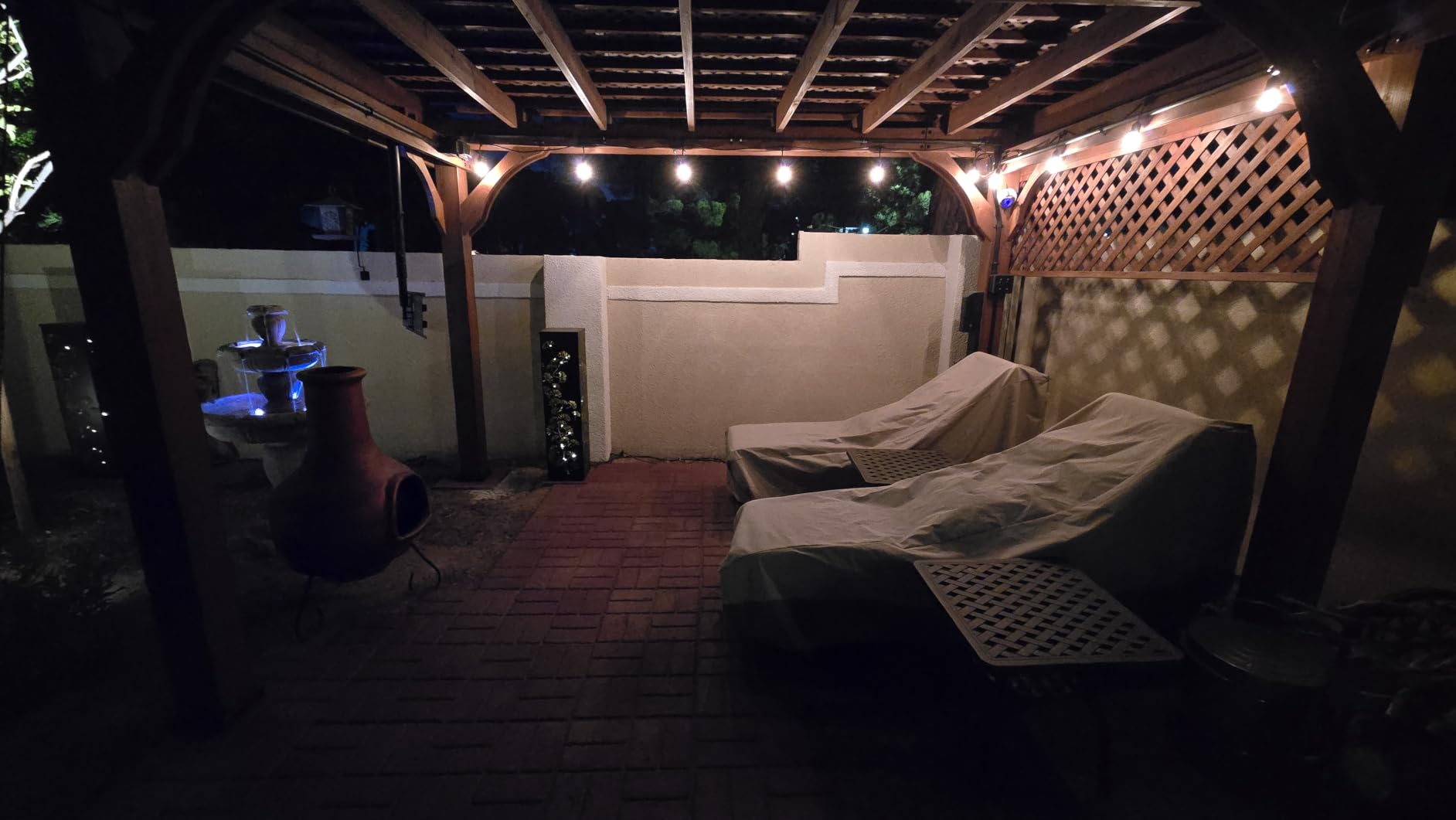
Cedar is the right call in a wet climate and the wrong call if you will not touch it. The species has natural resistance to decay, but the light brown stain on this kit is a surface finish, not a structural one. Owners repeatedly note that the structure holds up while the appearance fades and needs refreshing, so budget an afternoon and a stain every couple of seasons.
Assembly is the other thing to plan for. Pieces arrive pre-cut, pre-drilled and pre-stained, and the BILT app walks you through the build, but at 458.6 pounds this is the heaviest structure here. You will want at least three adults for the post-and-beam stage, and you need to anchor it exactly as the manual specifies with the included powder-coated galvanized steel plates and resin feet.
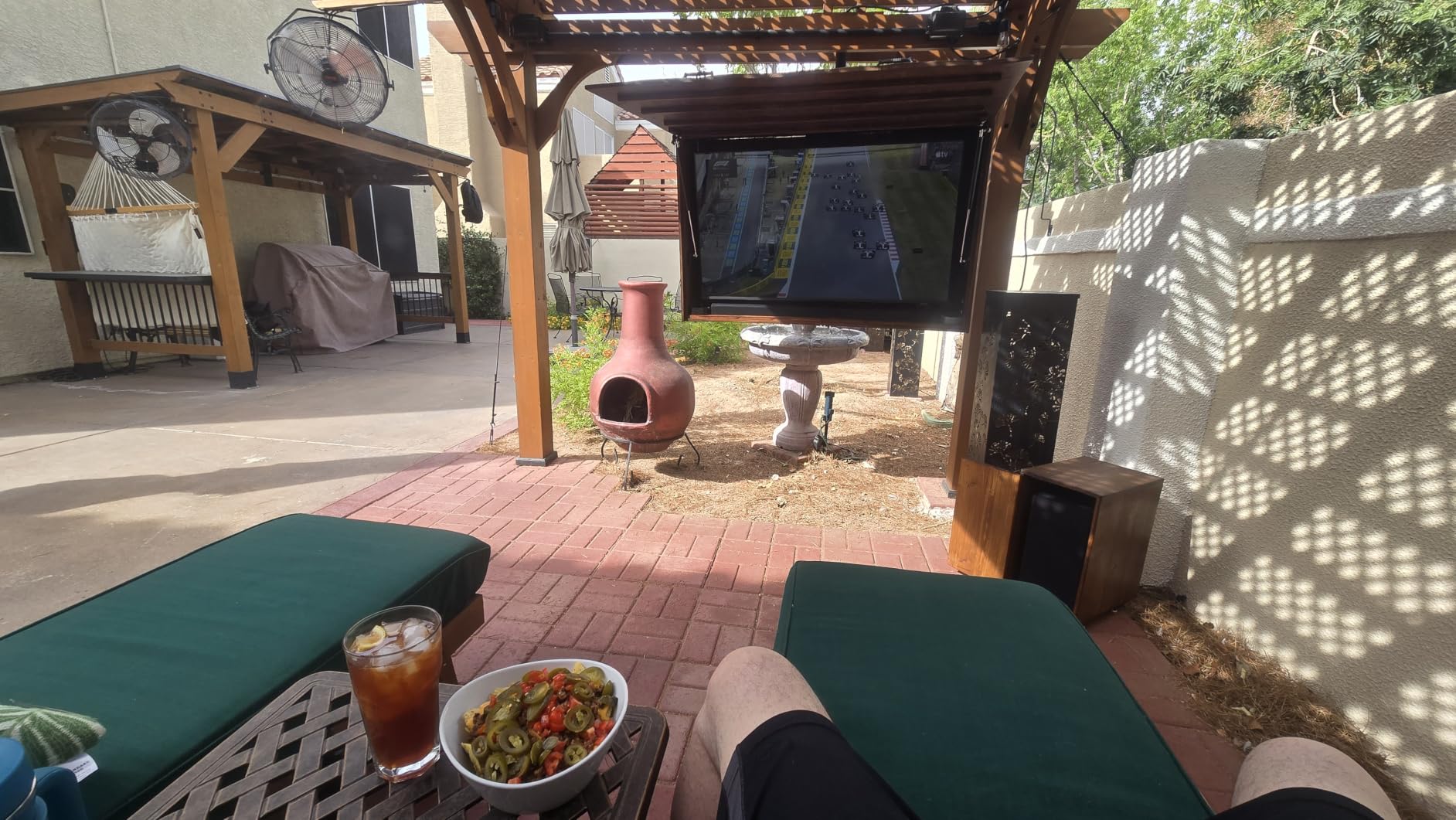
What the wind rating actually covers
A 100 mph figure is meaningful only alongside the anchoring method and the louver or slat position it assumes. Backyard Discovery tests these kits with the anchor plates installed as specified, which means the rating is conditional on you actually installing them. Owners who skipped anchoring are the ones reporting flex and sway in wind that should not have moved the structure.
The five-year warranty covers the structure rather than every component, and finish coverage tends to be shorter than structural coverage in cedar products. Read the warranty terms before you stain the frame, since some finishes affect what a claim can cover.
Where this cedar kit fits and where it does not
This suits a 144 square foot patio that people actually use as a room, especially one with a grill or a dining table that benefits from overhead structure. It also suits anyone who plans to grow vines, since the trellis roof is built for it.
It does not suit a small balcony, a patio that needs rain protection during a downpour, or anyone who wants zero maintenance. For rain coverage, look at the louvered aluminum models later in this list. For a maintenance-free frame with the same natural look, the Takasho wood-grain aluminum at number 10 is the direct alternative.
2. PURPLE LEAF 10×12 Aluminum Louvered Pergola for Adjustable Patio Shade
PURPLE LEAF Outdoor Louvered Pergola 10′ x 12′ Patio Aluminum Gazebo Bronze
Aluminum frame
120 sq ft coverage
70 mph wind and 2.4 inch snow rating
Two independent louver zones
Pros
- Two independent louver zones
- Frame beams 15 percent wider than the market average
- Extruded parts fit accurately with nothing missing
- Integrated drainage prevents pooling
- Bronze powder coat resists aging
Cons
- Some units arrive with slightly misaligned drilled holes
- Included Allen wrenches wear out quickly
- Occasional dents or scratches on support pieces
The Purple Leaf is the best balance of control and build quality in the louvered category, and the 4.6 average across 162 ratings reflects owners who mostly praise the mechanism rather than the styling. Two independently controlled louver zones let you shade one section of the patio while leaving the other fully open, which no fixed-roof design can do.
Louvers here rotate from 0 to 85 degrees and seal closely enough to keep rain off the seating area, and the integrated drainage system moves water through the frame instead of letting it pool on the slats. The 4.5 inch wide frame beams are 15 percent wider than the market average, and that width is the reason the reinforced frame holds a 70 mph wind rating and 2.4 inches of snow.
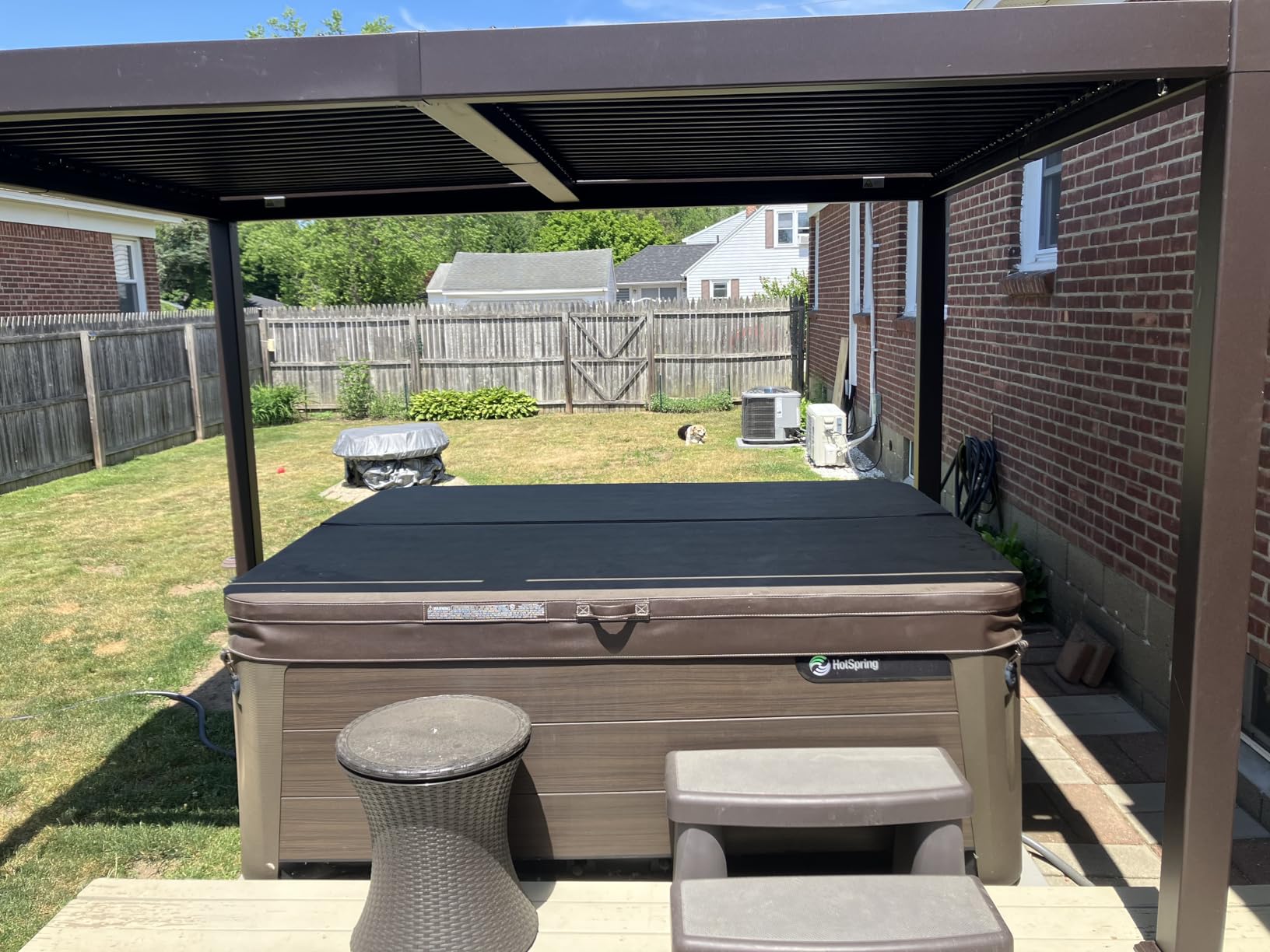
The finish is a bronze powder coat with 95 percent UV protection listed, and owners report it has held up without visible chalking through multiple seasons. Curtains are not bundled on this model, so if you want evening privacy you are adding a separate soft-goods purchase or relying on the louvers alone.
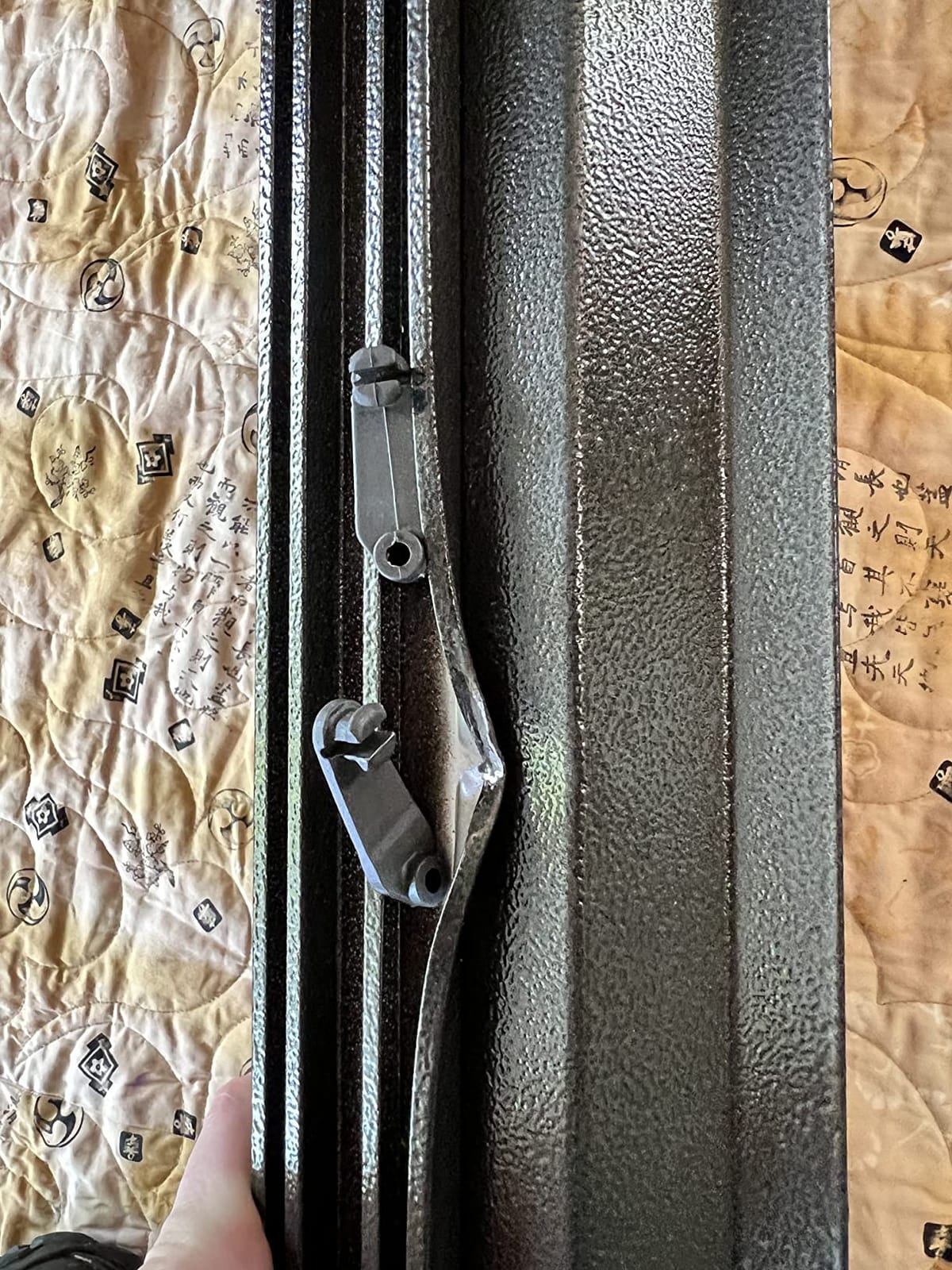
Fit and finish are where the complaints sit. Extruded aluminum is machined, so holes line up accurately, but a small number of units arrive with drilled holes slightly off or with support pieces dented in transit. Customer service on this one gets singled out repeatedly for shipping missing bolts quickly.
How the two louver zones change daily use
Independent control is the feature that separates this from every fixed-roof kit in the cedar category. On a patio where the grill sits at one end and the seating at the other, you can close the zone over the cooking area to handle the smoke and sun while leaving the dining end open to the evening sky.
Owners report the louvers seal well enough to keep rain off the seating when closed, though the drainage system is what handles water once the louvers are open again. Expect to close the roof before a storm rather than rely on it during one.
What to check before you buy
The one-year frame construction protection plan is the shortest warranty in this list, and the 162-rating review base is smaller than the cedar kit’s. If you want a longer structural warranty, that is a real tradeoff to weigh against the better louvers and the wider beams.
Two people and a full weekend is the realistic assembly estimate owners give, mostly because of the 10 by 12 footprint and the number of slats to install. This is not a Saturday-morning kit.
3. MIRADOR 80S 10×20 Louvered Pergola for a Wide Covered Patio
MIRADOR 80S 10’x20′ Louvered Pergola with 10FT Shade Screen for Outdoor Deck Lawn Garden Backyard Patio Porch,Charcoal
Alloy steel and aluminum frame
200 sq ft coverage
Waterproof roof construction
10 ft shade screen included
Pros
- 200 sq ft of covered footprint
- Waterproof-rated roof for full coverage patios
- 10 ft shade screen handles insects and low sun
- Charcoal finish suits modern houses
- 4.6 average across 121 ratings
Cons
- Bulky footprint needs careful clearance measurement
- Published feature detail is thin compared with rival louvered models
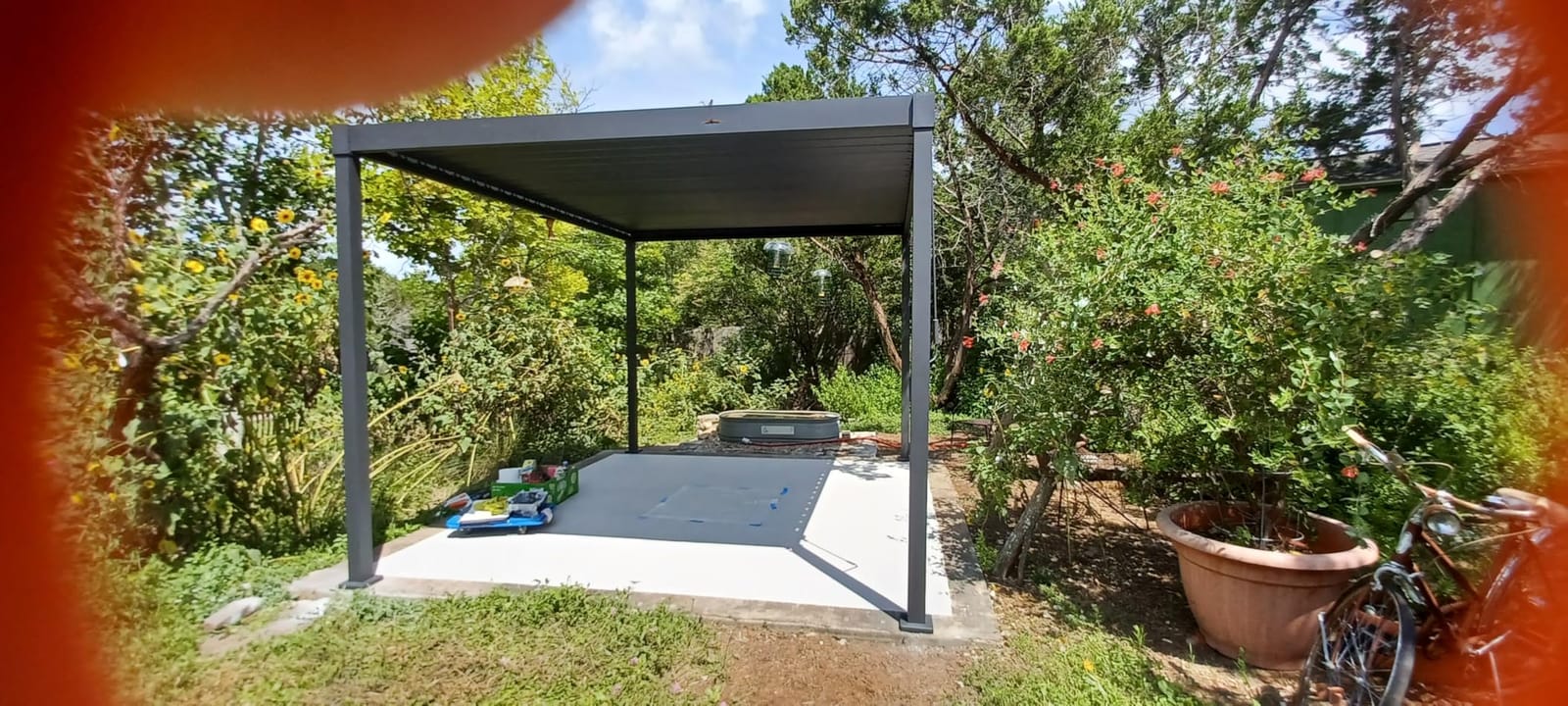
If your patio is a long dining deck rather than a square seating pad, the Mirador 80S covers 200 square feet in a single rectangular footprint. That is the case for it: one structure spanning a 10 by 20 foot area instead of two smaller units trying to cover the same zone, with a single set of anchor points to install.
The frame combines alloy steel and aluminum, and the roof carries a waterproof rating rather than the water-resistant rating most listings in this group show. A 10 foot shade screen is included, which handles the low evening sun and insects without you bolting on anything else. The charcoal finish and modern lines are the most neutral styling option here for a contemporary house.
Buyers are drawn to the size and the included screen rather than to any single feature, and the feedback centers on value and dimensions rather than defects. The 121-rating average sits alongside a strong sales rank in the pergola category, which tells you this is a volume seller with a real installed base.
The honest limitation is documentation. The published feature detail for this model is thinner than the competition, with fewer engineering specifics than the Purple Leaf or AirWire listings carry. You are buying on footprint and roof type rather than on a detailed published load figure.
When one big unit beats two small ones
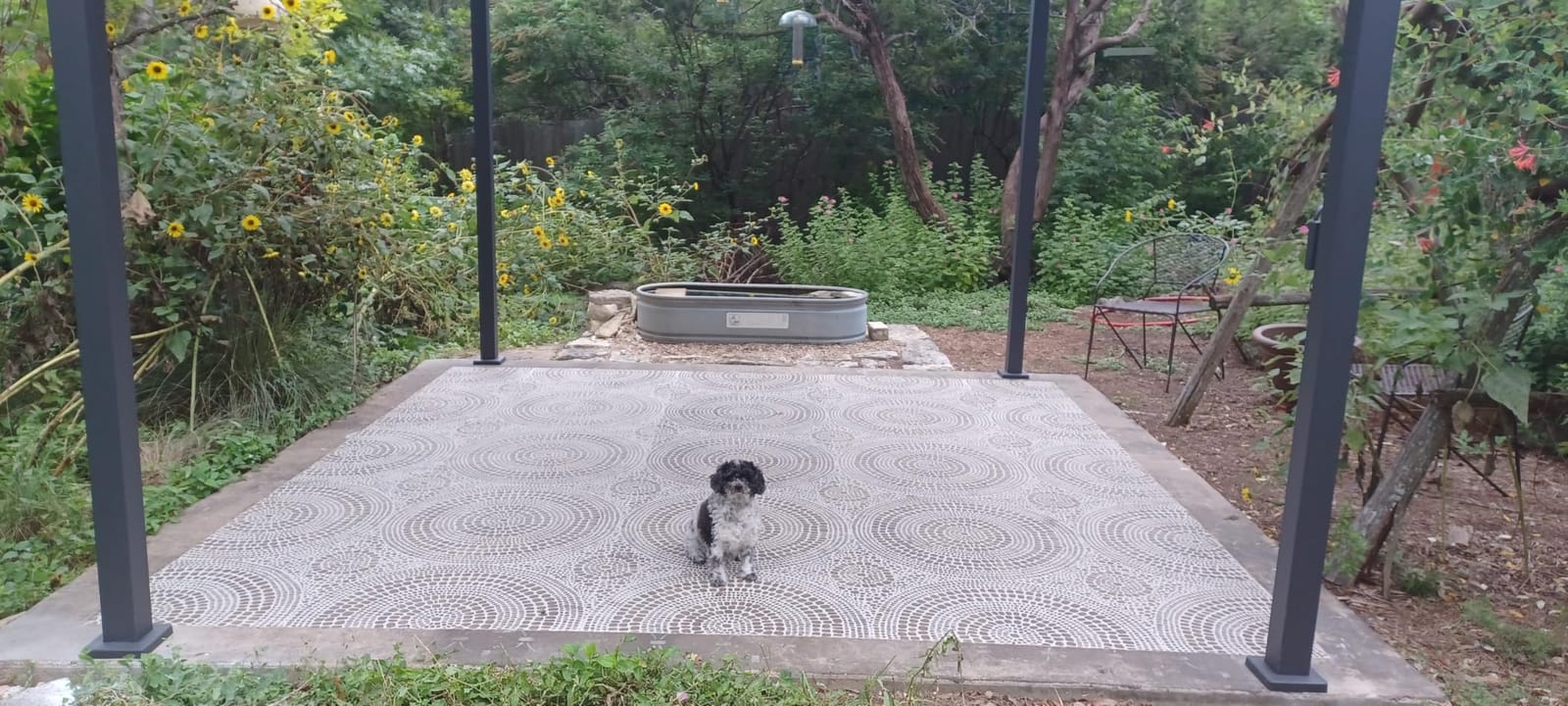
Owners of single oversized units report one consistent frustration: a structure parked in the center of the patio shades the wrong zones. The 80S works when your patio is genuinely one long rectangle, since its 200 square feet sits where the seating and dining actually are rather than straddling a walkway.
If your patio is L-shaped or split across zones, this footprint becomes a liability and a modular or two-unit layout serves better. Measure the clear width between the house and any railing before ordering, because the frame is wide.
Wind and weather realities
This model does not publish a wind figure, and that is worth naming plainly. For a patio in an exposed or coastal position, a model with a stated mph rating and stated test conditions gives you something to argue with an engineer or an insurer. For a sheltered suburban patio, the waterproof roof construction and the included screen are the deciding factors.
A waterproof roof rating also means rain during a shower, not protection in a sustained storm. Close the louvers or accept that a louvered structure in high wind is a liability rather than a shelter.
4. AirWire 12×20 Louvered Pergola for Maximum Patio Coverage
Airwire 12’x20′ Louvered Pergola Aluminum Frame Gray
Aluminum frame
240 sq ft coverage
Two adjustable roof zones
Crank rated past 100,000 rotations
Pros
- Largest covered footprint in this list at 240 sq ft
- Crank mechanism rated beyond 100000 rotations
- Sloped drainage channels move water away from seating
- Detachable curtains and mesh screens included
- Step-by-step manual and build video
Cons
- Heaviest aluminum frame here at about 586 lb
- Lowest UV rating at UPF 15
- A cluster of 1 and 2 star reviews around packaging and finish
The AirWire is the coverage pick, covering 240 square feet from a 12 by 20 foot footprint. If your patio is oversized and you have been pricing out two structures to cover it, this is the single-unit answer, and it is the only one in this group above 200 square feet.
The roof splits into two independently adjustable sections driven by a crank handle and winding device rated for more than 100,000 rotations. That figure matters because a louver mechanism is the moving part most likely to fail, and a tested rotation count tells you something the marketing language does not. Louvers run from 0 to 90 degrees.
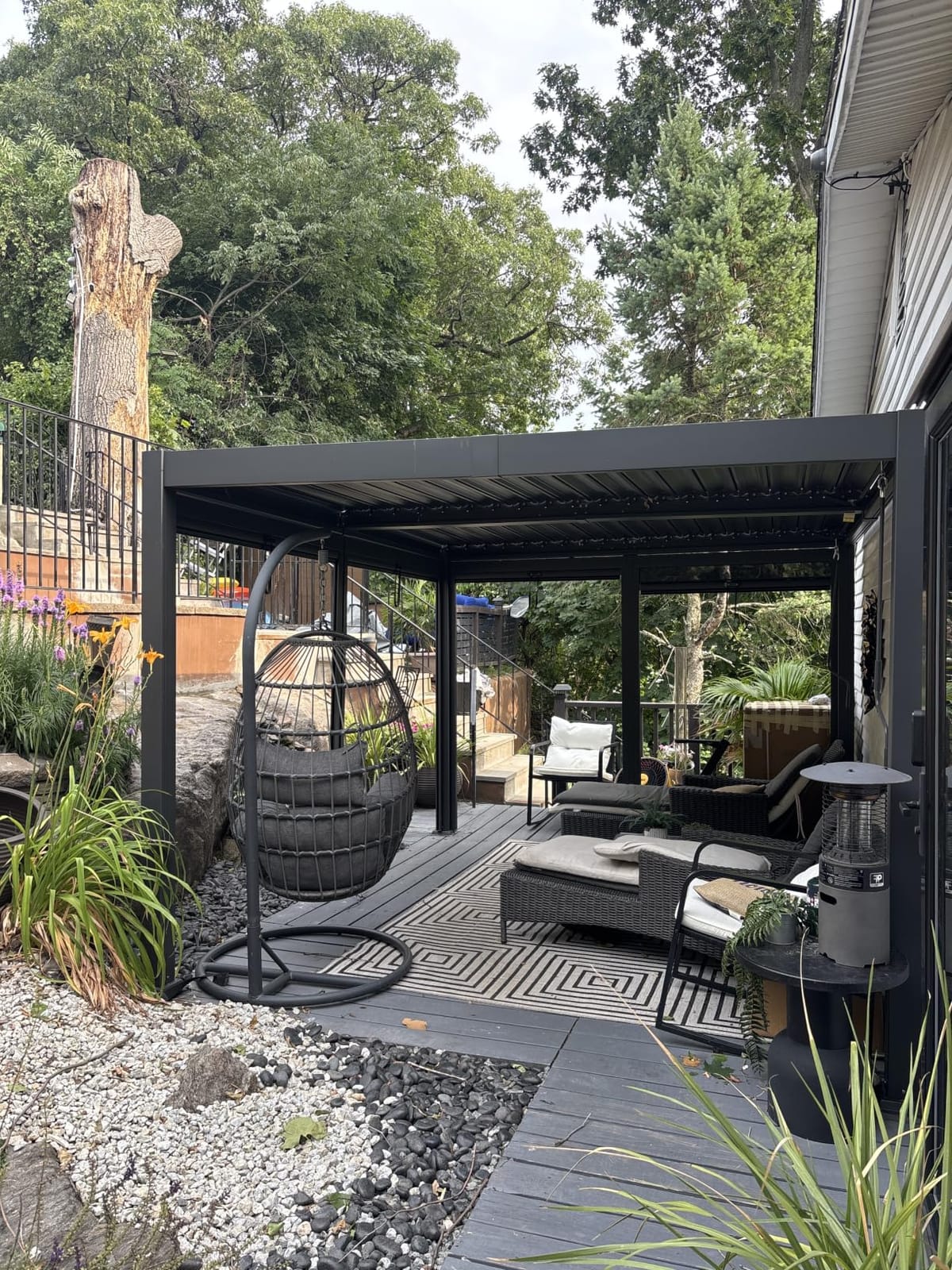
Water management is handled by sloped roof channels that move water into the beams and down the columns, which is the right approach for a wide roof. Detachable curtains and mesh screens come in the box and unzip for cleaning, an advantage in a structure this size where fabric is exposed along a long edge.
The 4.4 average is the second lowest here, and the reason is identifiable. A cluster of 1 and 2 star reviews centers on packaging damage and finish quality on arrival, while most buyers describe a smooth build and a solid frame. The UPF 15 UV rating is the lowest in the group, which matters more in a hot sunny climate than the coverage figure does.
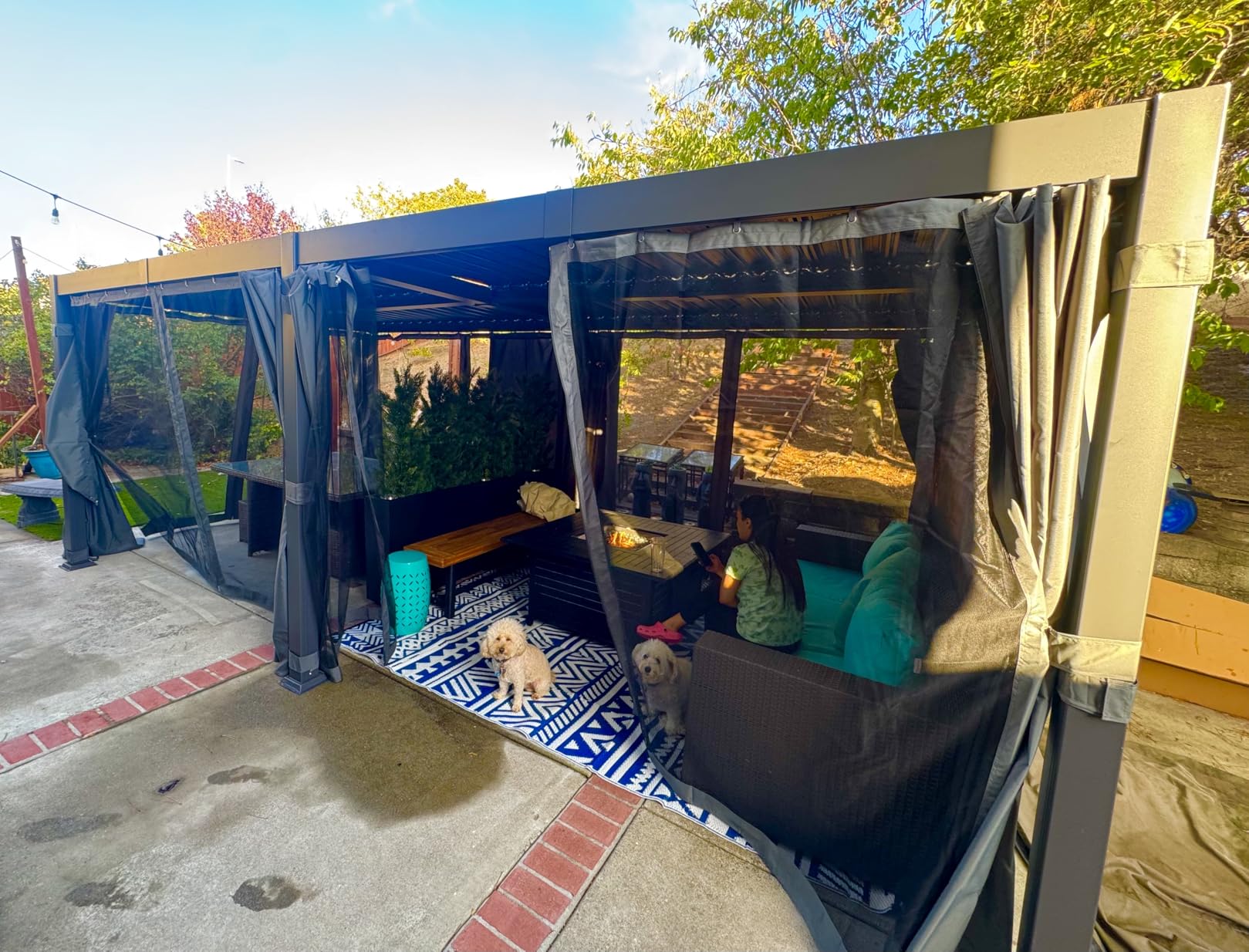
Handling a 586-pound frame
This is the heaviest aluminum frame in the list at about 586 pounds, and aluminum does not get lighter because it does not rust. Raising a 20 foot beam to the top of a set of columns is the step where most self-built structures get damaged, so plan the crew before the delivery arrives rather than after.
The upside of that weight is a frame that does not rack. Wide beam spans need mass to stay rigid, and the complaints about this model are about finish and packaging rather than sway, which suggests the frame itself is doing its job.
Who should pass on it
If your patio is under about 150 square feet, this is more structure than you need and you will pay for coverage you cannot sit under. If you live somewhere with punishing afternoon sun, the UPF 15 rating works against you and a model with a stronger UV specification makes more sense.
For the sheer size, this is the right pick. For an exposed coastal site, look for a published wind figure instead, since none is given here.
5. Domi 10×12 Aluminum Louvered Pergola for Rain and Sun Control
Domi 10×12 Aluminum Outdoor Louvered Pergola with Curtains and Netting
Powder-coated aluminum frame
120 sq ft coverage
Rated for winds up to 72 mph
Curtains and netting included
Pros
- Curtains and mesh bundled at no extra charge
- Louvers handle heavy seasonal rain better than a fixed roof
- Powder coat has held up over multiple seasons with no rust
- Many sizes and three colorways
- Two independent roof zones
Cons
- Curtains and screens can fade or rip within a year or two
- Replacement parts are not sold and parts requests are frustrating
- Louver slats do not always close flush
- leaving light gaps
The Domi is the practical pick for a patio where summer rain is the thing you are trying to manage. Owners in heavy-rain regions report that the adjustable roof handles monsoon-style rain better than a fixed-roof gazebo, because you close it when the weather turns and open it when it clears.
Two zones adjust from 0 to 90 degrees with a hand controller, and the frame is powder-coated white aluminum rated for winds up to 72 mph. At 330 pounds it is mid-weight for an aluminum structure, which makes it easier to raise than the 462 and 586 pound models in this list. Bundled curtains and mesh are a genuine saving if you were planning to buy them anyway.
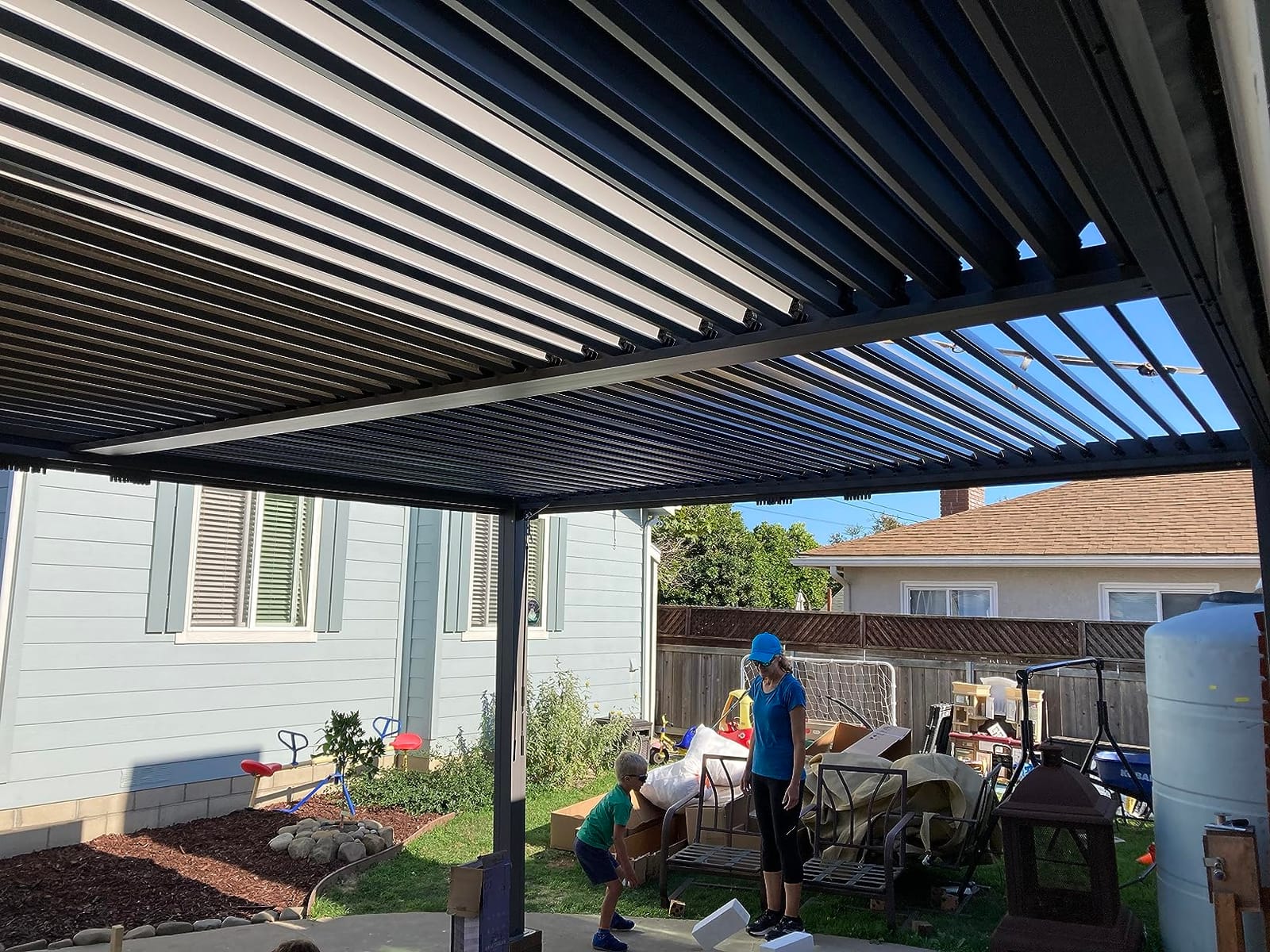
The 4.2 average is the lowest here and the causes are specific rather than structural. Long-term owners flag fabric durability on the curtains and screens, which fade or rip within a year or two of direct sun. That is a consumable, not a frame failure, but it is a recurring cost nobody warns you about.
The more serious issue is parts. Replacement parts are not sold separately, and owners report that customer service on parts requests is frustrating. When a single bent louver or a failed controller motor is the problem, not selling the part turns a five-minute fix into a support process.
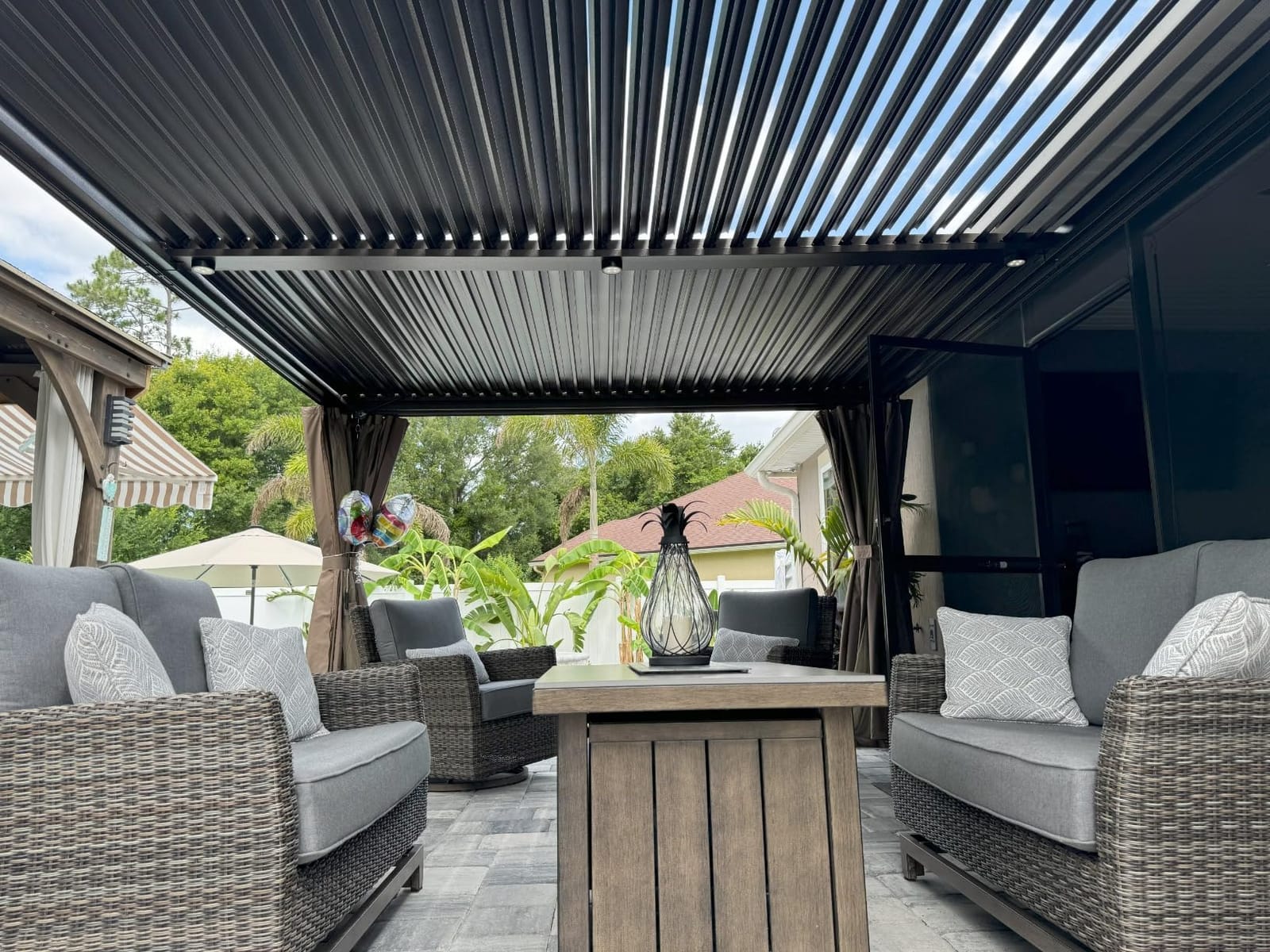
Rain performance, honestly
The waterproof rating on the roof is about standing water on a closed louver surface, not about driving rain under an open roof. Owners report that dripping continues down the legs during heavy rain even with the roof closed, because water finds the post joints. If you sit outside in a downpour, plan for that.
The integrated drainage along the roof handles the open-roof case well. Expect light gaps at the slats because the louvers do not always close completely flush, which is more noticeable at night with lighting underneath than it is at midday.
When the parts policy decides it
If you plan to keep a structure for a decade and expect to repair it rather than replace it, no-parts-available is a real drawback. Owners of this model are the clearest argument in the roundup for checking replacement parts availability before buying, not after.
For a three-season patio where shade and rain control matter more than long-term serviceability, the bundled soft goods and the 72 mph rating carry the decision. It is available in multiple sizes and three colorways, which helps if 10 by 12 is not your footprint.
6. YOLENY 10×12 Aluminum Louvered Pergola as a Lower-Cost Entry to Louvers
YOLENY Louvered Pergola – 10×12, All Aluminum with Adjustable Rainproof Roof, Outdoor Pergola with Curtains and Nets for Patio & Garden, White
All aluminum frame
120 sq ft coverage
Rated for 60 to 80 mph winds
Concealed drainage through beams and posts
Pros
- Lightest aluminum frame here at about 260 lb
- Lowest cost per square foot among the louvered models
- Two independently controlled crank-operated roof zones
- No rivets or welding needed for assembly
- Support sourced missing parts a year after purchase
Cons
- Instructions are illustration-only and hard to follow
- Some louvers arrive bent from the factory
- Water pinging down the metal posts during rain is noticeable
The YOLENY is how you get a louvered roof without stepping up into the main aluminum price band. It delivers the same core feature set as the models above at a lower cost per square foot, and its 4.3 average across 65 ratings reflects buyers who treat it as the budget entry point and rate the value accordingly.
The roof splits into two independently controlled louvered sections operated by a crank, rated for 60 to 80 mph winds with a powder-coated aluminum frame and louvers. Concealed drainage channels move water through the beams and posts to the ground rather than dripping off the slat edges, and detachable curtains and nets come with upper, middle, and lower straps to keep them from blowing.
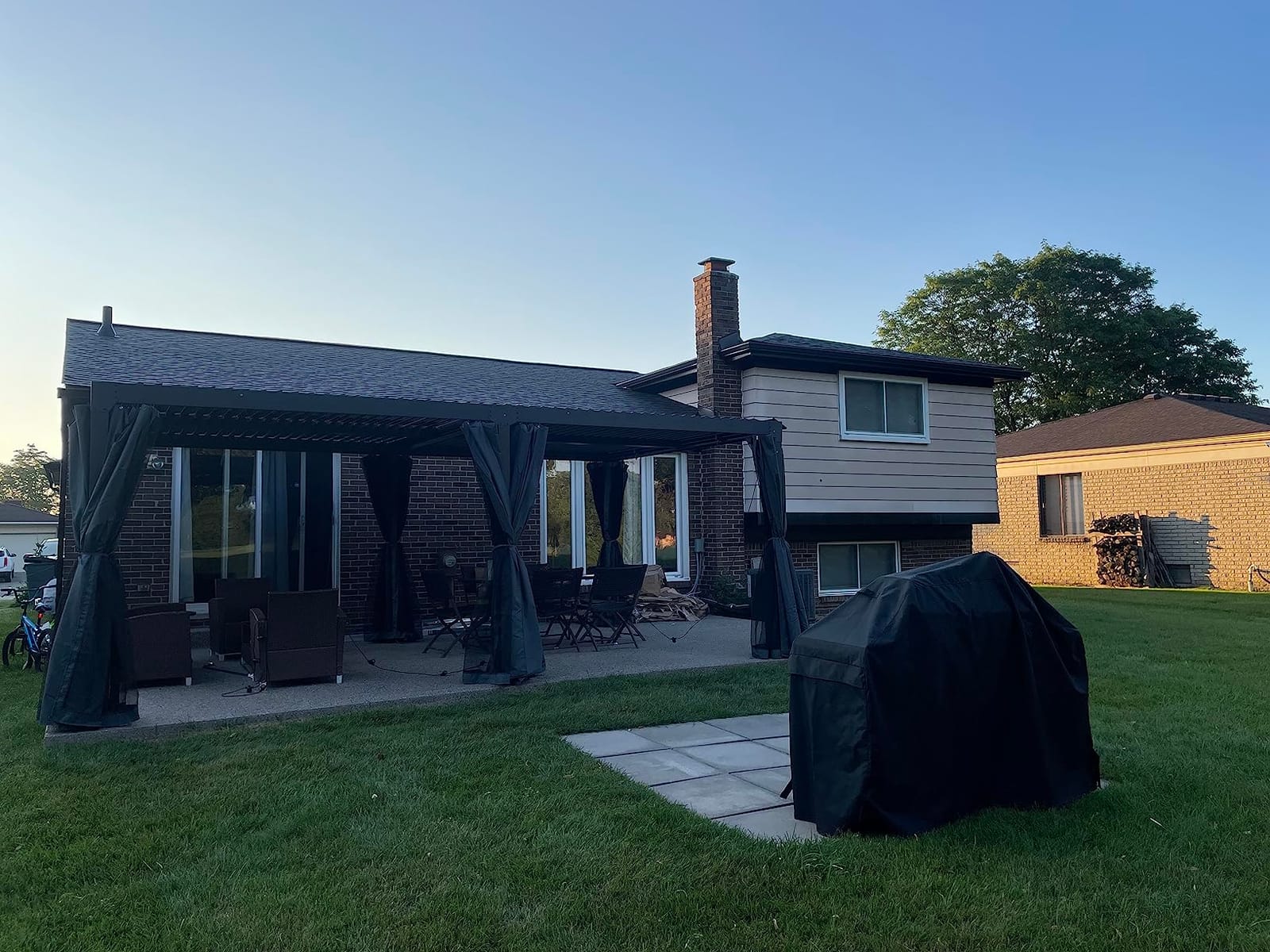
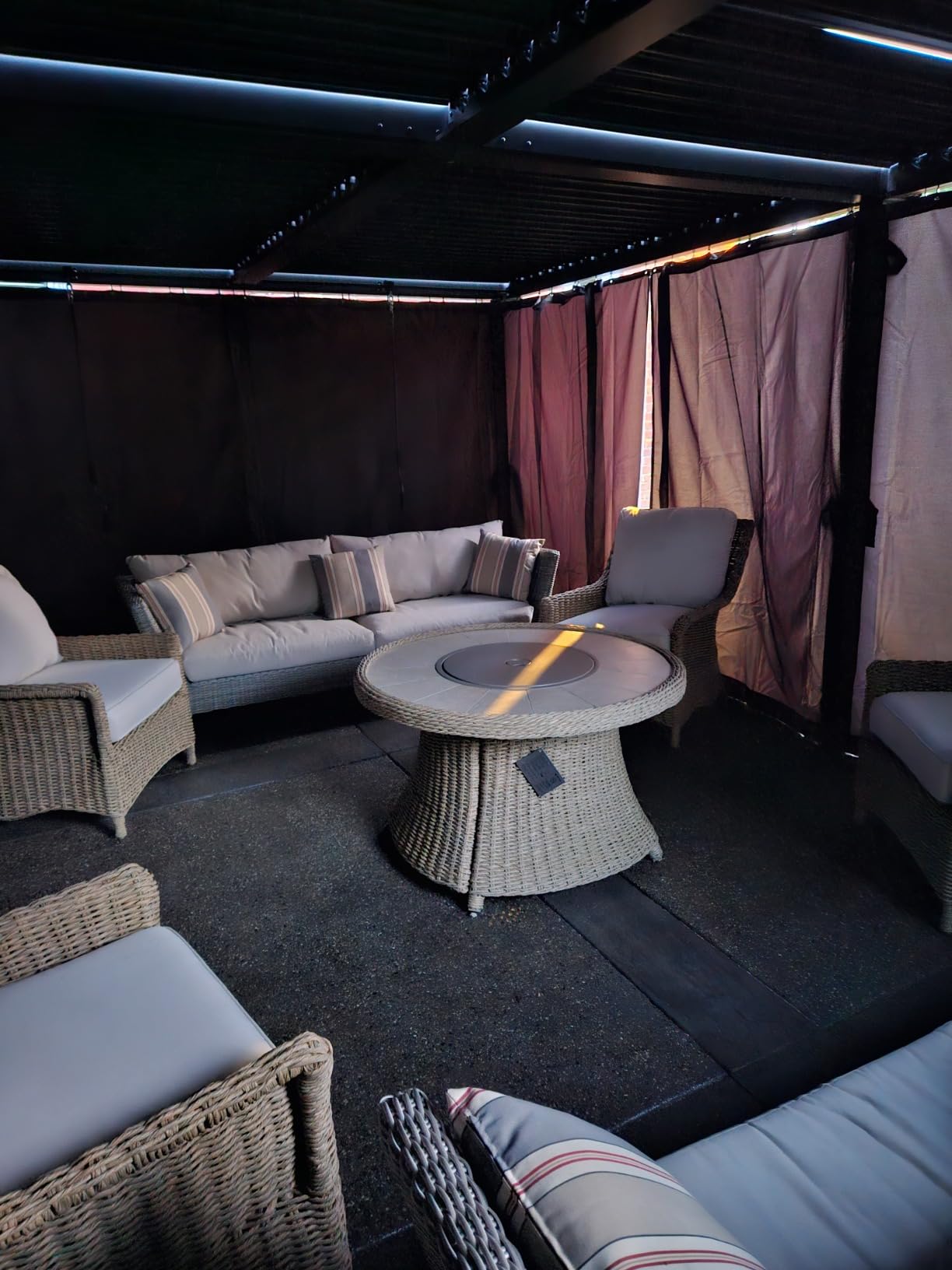
Assembly is the standout. The manufacturer states 2 to 5 hours with no rivets, no extra materials, and no welding, and at about 260 pounds this is the lightest aluminum frame in the group, which is why it is the one most owners finish without renting equipment. Reports of durability after a year or more are strong, including one owner whose drainage held up through 70 mph winds and heavy snow.
The weak point is documentation. Instructions are illustration-only, and owners describe the build as requiring more inference than a photo-indexed manual would. Support did eventually source missing parts a year after purchase, though the first exchange was slow.
Where the money was saved
At roughly 260 pounds for a 120 square foot louvered structure, this is a noticeably lighter build than the 462 pound Takasho or the 586 pound AirWire. That light frame is the reason it is quick to assemble and easy to level, and it is also why the wind rating is a range rather than a single tested figure.
Owners report water pinging audibly down the metal posts during rain. Functionally that is the concealed drainage doing its job, but on a quiet patio it is a sound some people notice and some do not mind.
Who this suits
Choose this if your patio is around 120 square feet, you want adjustable shade rather than a fixed slat roof, and you would rather finish the build in an afternoon than a weekend. It suits a first pergola that you might later move or resell as well as it suits a permanent one.
If you want a longer warranty, a single tested wind figure, or a finish with proven UV resistance, spend the step up. Bent louvers arriving in the box and slow first exchanges are the two things to check carefully on arrival.
7. BlueWish 10×12 Cedar Pergola for Vines and Climbing Plants
BlueWish 10′ x 12′ Patio Pergola, Cedar Wood Pergolas with Solid Structure, Pergola Kits, Outdoor Pergolas and Gazebos with Slatted Trellis Roof for Deck Backyard Grill Party Garden
Cedar wood frame
Slatted trellis roof
80 mph wind rating
5.5 by 5.5 inch posts
Pros
- Solid cedar frame at well under half the price of the aluminum models
- 4.6 average with no 2 star reviews
- Slatted trellis roof doubles as vine support
- Wooden stakes included so anchoring needs no extra purchase
- Pre-drilled posts shorten installation
Cons
- Open slatted roof gives shade only with no rain protection
- Stakes can lift on stone or paver surfaces
- Extra water-based stain is recommended to extend wood life
The BlueWish is the cedar pergola for people who want a growing structure rather than a shade machine. Its slatted trellis roof is built to hold climbers, and the listing names ivy and morning glories specifically. At a 4.6 average with no 2-star reviews in 51 ratings, the owner satisfaction on this one is unusually consistent.
The roof is a double beam slatted design rated for winds up to 80 mph, carried on 5.5 by 5.5 inch posts with pre-drilled holes that cut installation time. Overall size is 144.1 inches wide by 120.1 inches deep by 92.15 inches high, with interior clear space of 109.9 by 89.8 inches and 85.83 inches of entrance height.
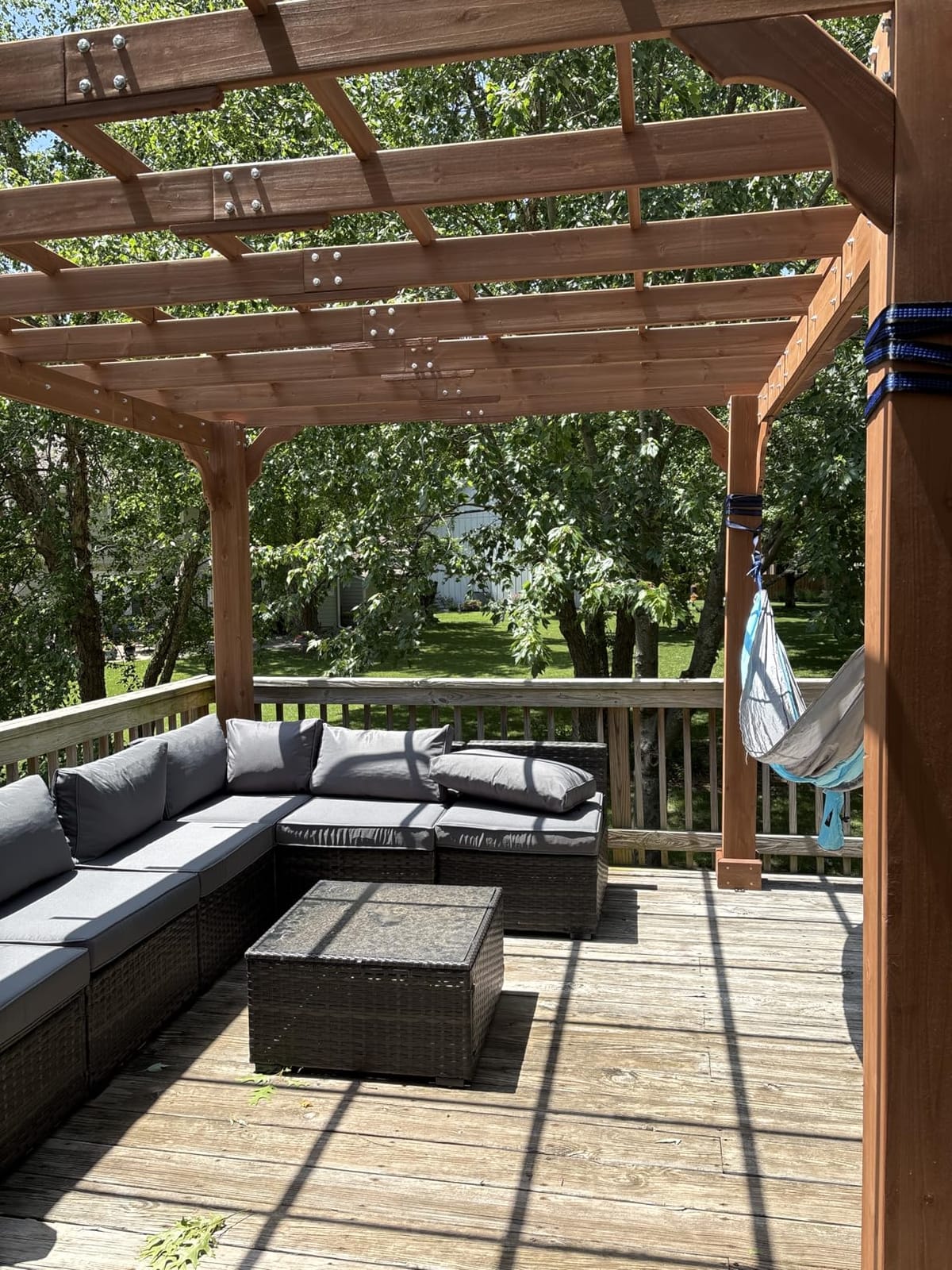
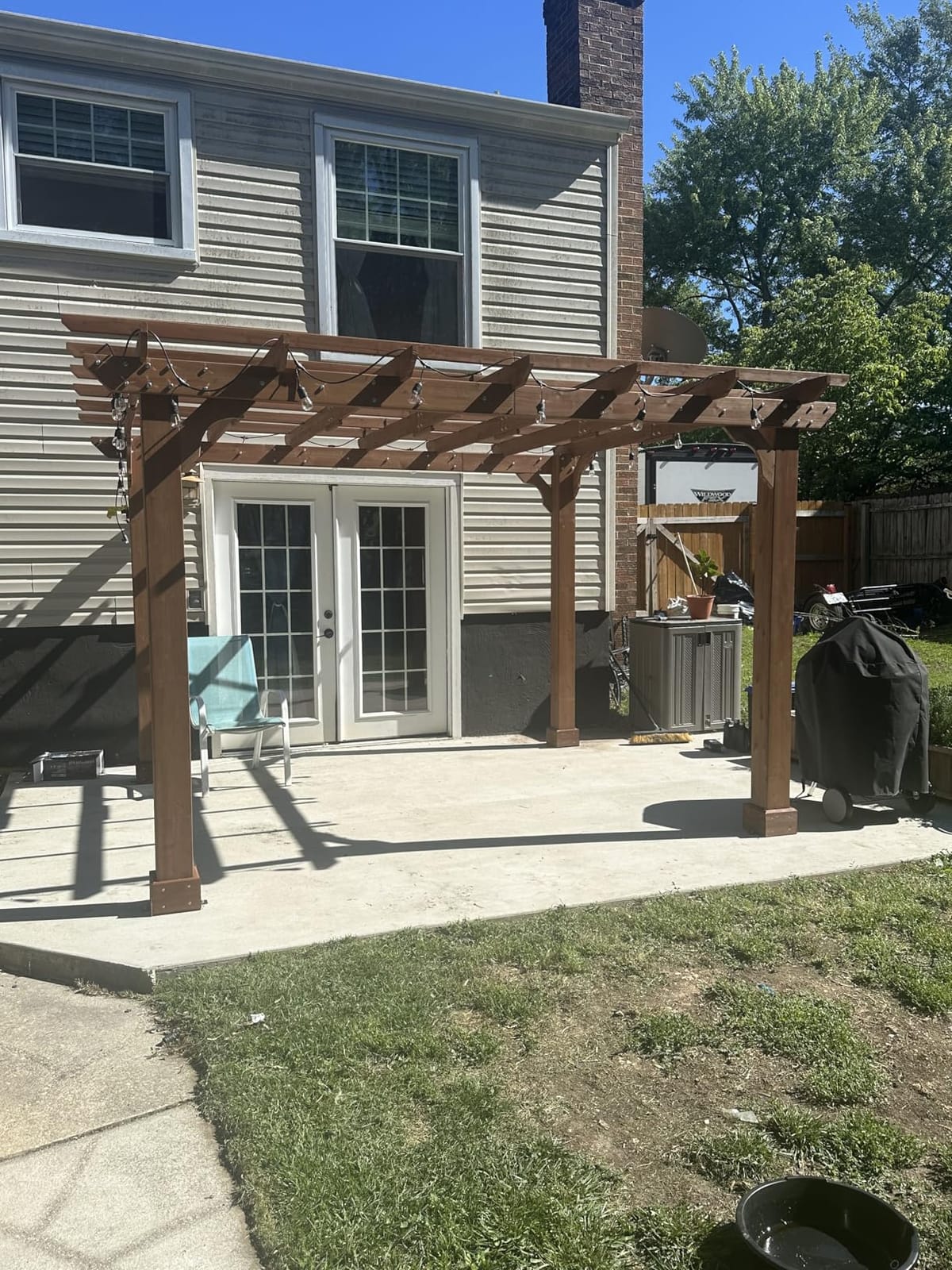
The value case is straightforward. You get a solid cedar frame for well under half what the aluminum louvered models cost, and the trellis roof gives shade while the vines mature. Owners frame it honestly as a shade and gathering structure, not a rain shelter, and that framing is correct.
Anchoring is where you need to read carefully. Wooden stakes are included, which is convenient on a lawn or a wood deck, but they can lift out of stone and paver surfaces. On a patio slab you will want proper anchors rather than the supplied stakes, and that is an extra line in the build.
Shade versus rain, stated clearly
An open slat roof blocks a meaningful share of direct sun and almost none of the rain. That is not a defect. It is the design, and it is exactly right if you want to sit outside on a bright afternoon and would not sit outside in a shower anyway.
Buyers who understood this before buying report no disappointment. Buyers who expected shelter report the same thing every time, which is water coming through the slats. If you need rain protection, the louvered models at numbers two through six close and drain, and that is the category to shop instead.
Maintenance and surface choice
Cedar is rot-resistant but not maintenance-free, and owners recommend an extra coat of water-based stain to extend its life. Plan on that in year one rather than waiting for grey wood to appear and deciding whether you like it.
For a patio with a mix of concrete, pavers, and lawn, think about the anchor surface before ordering. The stakes work on soil and wood decking. On stone they lift, and a lifted anchor on a 10 by 12 foot cedar frame is a sway problem waiting to happen.
8. MUPATER 10×12 Cedar Pergola for a Lightweight Timber Build
MUPATER 10×12 FT All Cedar Wooden Pergola, Kit with Stakes, Quality Supported Structure, Snow and Wind Supported,Outdoor Pergola with Cedar Framed for Backyard, Deck, Lawn
All cedar construction
120.22 sq ft coverage
Rated for wind up to 80 mph
250.9 lb item weight
Pros
- Lowest cost of any all-cedar unit in this list
- Lightest wooden build here at about 251 lb
- Pre-drilled parts plus an assembly video shorten the build
- Four-season rated with an 80 mph wind capability
Cons
- Flat roof with open rafters gives partial shade only and no weather sealing
- Cedar needs an extra water-based stain for maximum longevity
- Smallest review pool in the group at 37 ratings
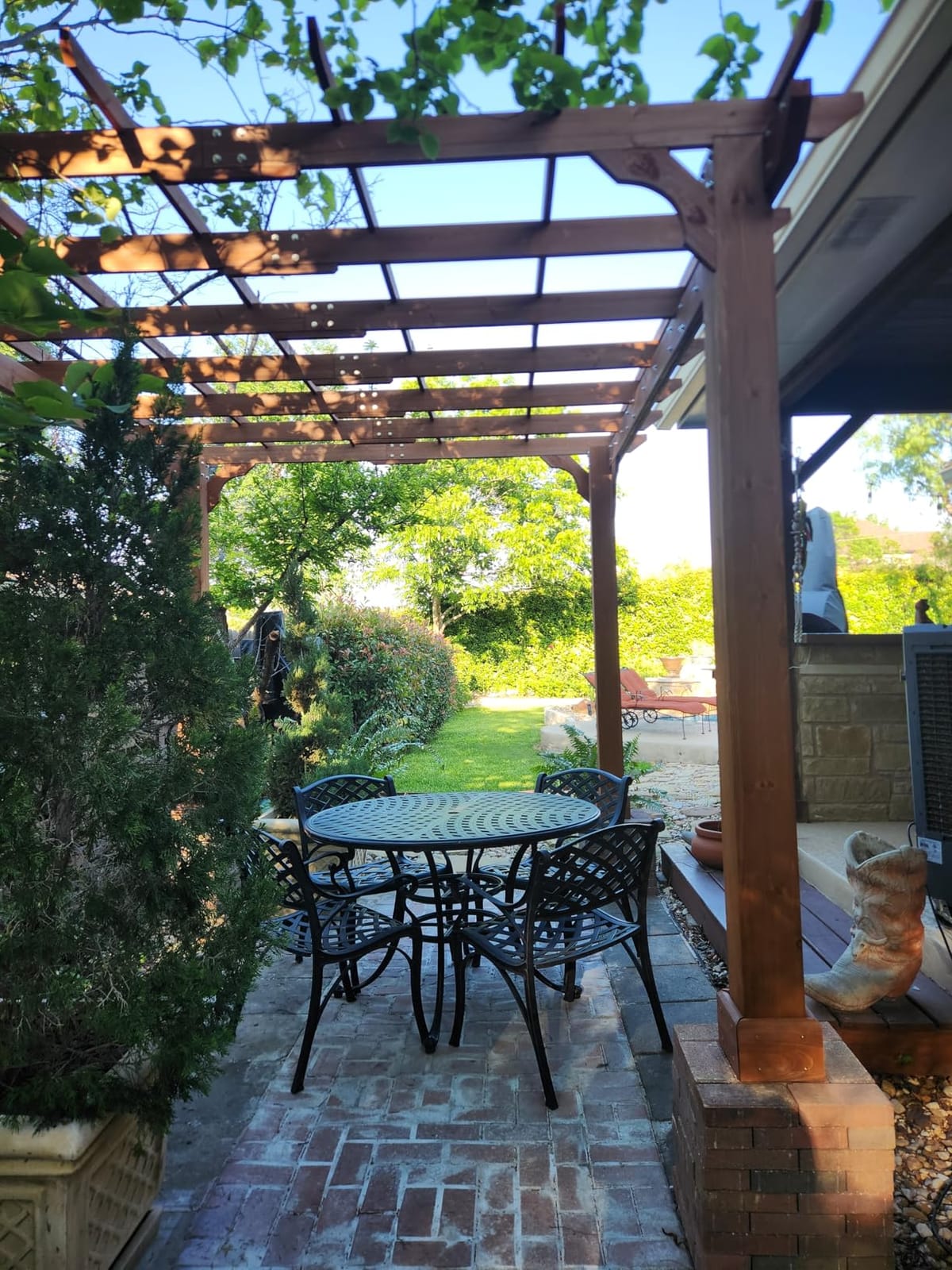
The MUPATER is the budget pick, and it does not feel like one on the spec sheet. All cedar, 120.22 square feet of coverage, an 80 mph wind rating, and a 250.9 pound item weight that makes it the lightest wooden structure in this list alongside the BlueWish.
The flat roof with a traditional antique exterior and open rafters keeps the profile low and the price down. Metal ground piles are included for soil or grass installation, and the design can also be anchored with bolts on cement, which is the route you want on a patio slab. Components arrive pre-drilled with clear instructions and an assembly video.
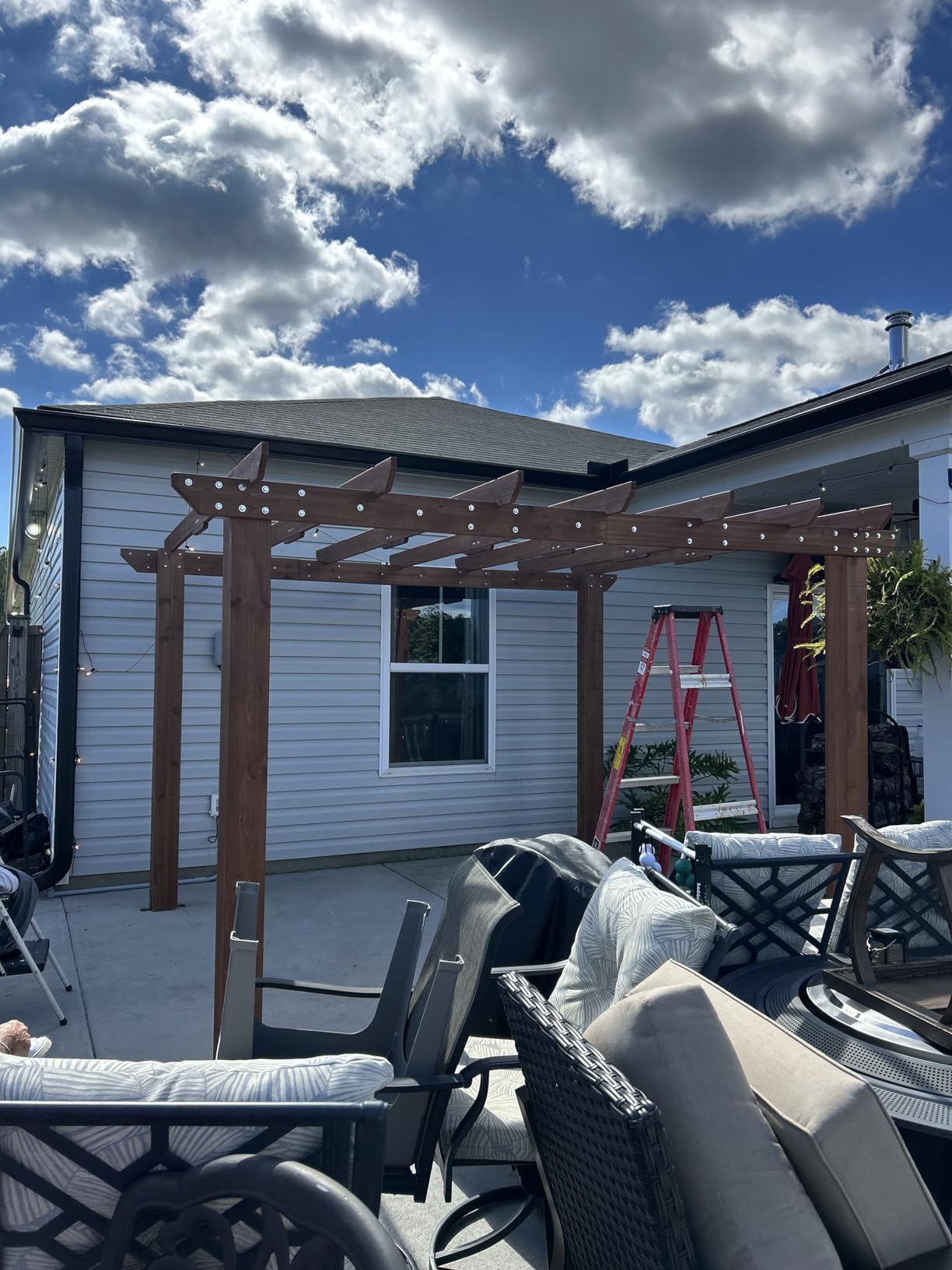
Owners rate the natural cedar look and the straightforward build at a 4.5 average. The solid cedar is described as rot-resistant, non-toxic, and burr free, and the frame is described as resistant to cracking and warping, which is the specific failure mode people worry about in flat-roof timber structures.
Two caveats come up repeatedly. The flat open-rafters roof gives partial shade with no weather sealing whatsoever, so this is a summer structure. And several owners add their own water-based stain to maximize longevity, which tells you the factory finish is a starting point rather than a permanent one.
What a low-profile timber pergola is good for
Flat roofs suit courtyards, garden seating, and patios where vertical clearance is already tight. With an entrance height of 85.83 inches and an interior of 109.9 by 89.8 inches, a dining table fits comfortably without a structure looming over the second story window.
Because the rafters are open, this shades without blocking airflow, which is the reason timber pergolas still exist alongside louvered systems. You are buying shade and definition, not weather protection.
Reading a 37-rating review base
This is the smallest review pool in the roundup, and that is a reason to slow down rather than speed up. A 4.5 average on 37 ratings tells you there are no widespread problems, but it also means long-term durability reports are thin.
Owners seeking the strongest evidence for a timber build should look at the BlueWish at number seven, which has a larger rating base at a similar satisfaction level. Choose the MUPATER if the lower entry point and the lighter frame matter more to you than the volume of owner history.
9. EROMMY 10×20 Louvered Pergola with Gutter Drainage for Wide Patios
EROMMY Louvered Pergola 10×20, Outdoor Aluminum Pergola with Adjustable Rainproof Roof for Garden, Patio, Deck, Waterproof Curtains and Netting Included, Gray-Black
Aluminum frame
200 sq ft coverage
Gutter drainage discharged through pillars
Curtains and netting included
Pros
- 200 sq ft of louvered coverage with curtains and netting in the box
- Horizontal beams double as drainage channels feeding a built-in gutter
- Three band retention on the poles for curtains in strong wind
- Simple maintenance of cleaning and inspection only
- Wide selection of sizes and finishes
Cons
- Rated water resistant rather than waterproof
- Full-height columns and louvers take longer to assemble than smaller kits
- Zip and screen hardware wears with seasons of use
The EROMMY is the drainage pick, and the drainage design is the reason to look at it. The horizontal beams double as drainage channels that feed a built-in gutter, which discharges water through the pillars rather than letting it run off the louver edges. On a 200 square foot roof, where a lot of water has to go somewhere, that is a meaningful difference.
The frame is aluminum with anchoring pads designed into the base of each pillar, and the aluminum base with its pad system is what keeps a 10 by 20 structure from rocking after installation. Curtains and mesh screens are included and removable for privacy, with three bands on the poles to keep them from pulling loose in wind.
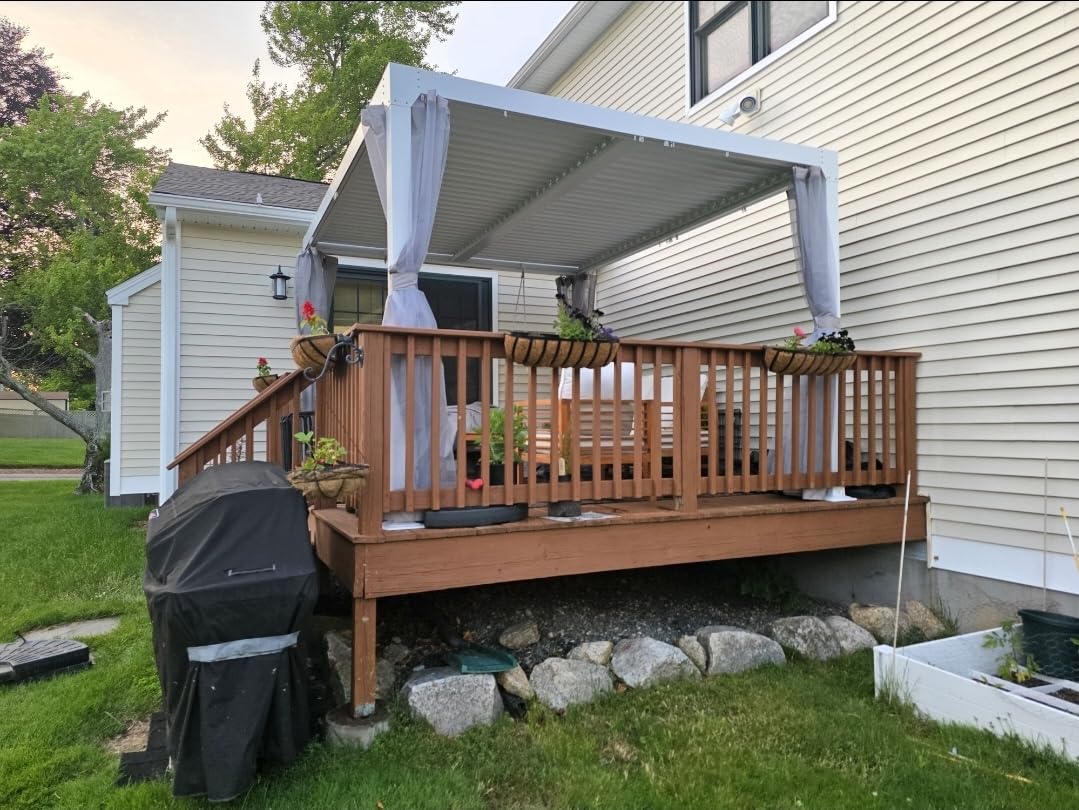
Owners like the modern styling, which pairs cleanly with a range of house exteriors, and they rate maintenance as simple: cleaning and periodic inspection, with no stain schedule and no corrosion worry. The 4.6 average across 52 ratings sits among the highest here.
The honest limit is the water resistance rating. This is listed as water resistant rather than waterproof, and owner feedback confirms the seal is good but not complete in driving rain. Buy it for shade control and dry-weather comfort, not for shelter in a storm.
How the gutter system works in practice
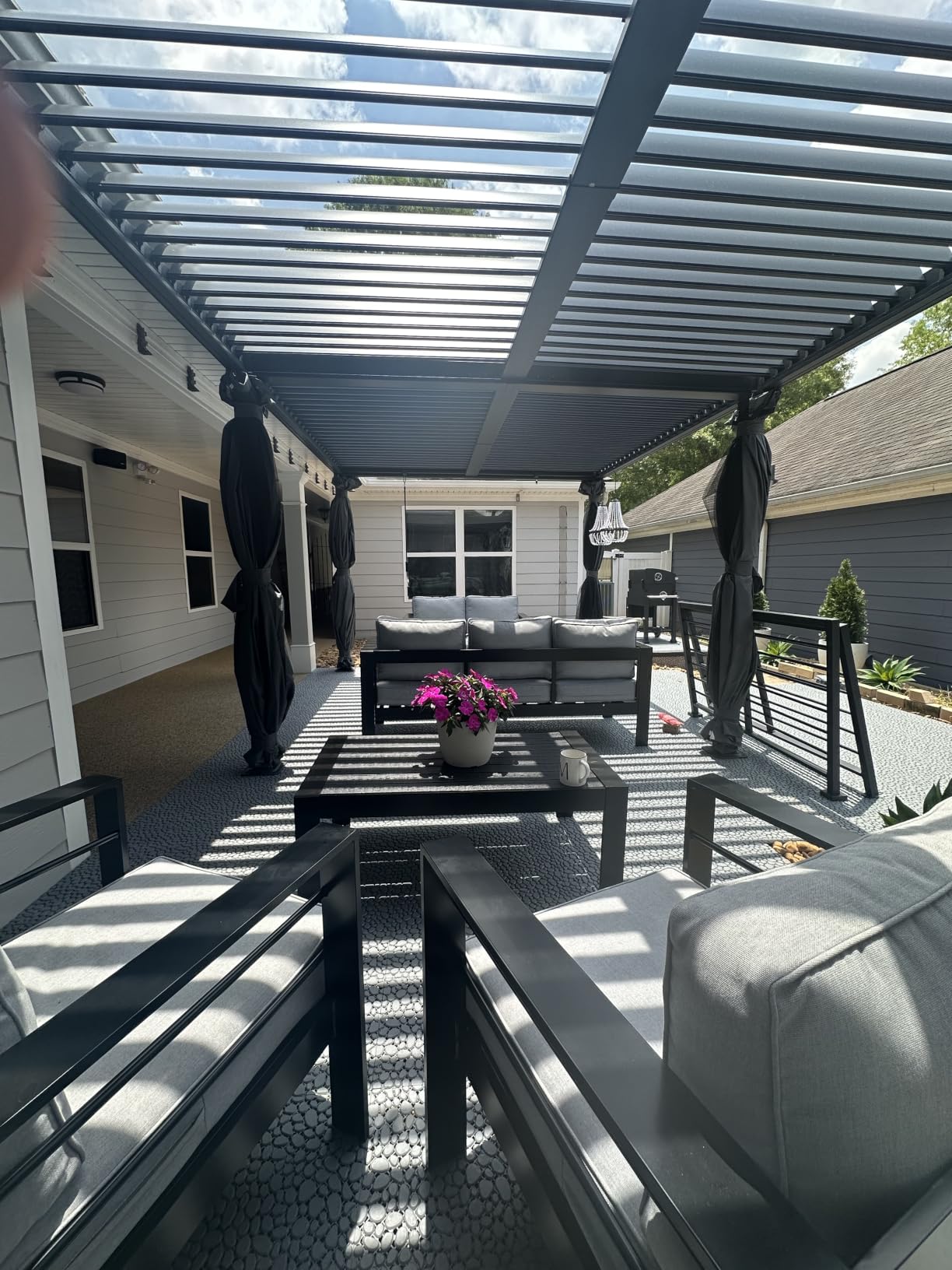
Water collects on the louvers, runs into the horizontal beams, travels along them to the pillar, and exits at the base. That path means no drips over the seating area and no water pooling on the roof surface, which is the failure that eventually warps frames on kits without it.
Buyers also report that the base anchoring pads matter more than expected. A 200 square foot frame on four posts develops leverage at the base under wind, and a pad designed into the pillar spreads that load instead of concentrating it on a single bolt.
Build time and soft goods
Installation is stated as three to four people over roughly two to three hours, though owners with full-height columns and a wide louver array report taking longer than that on their own. Budget a full day with four people rather than a morning.
The zip and screen hardware is the component that wears first, and screens that zip and unzip through seasons of use are not the place to economize. The structure itself is the thing that lasts.
10. MIRADOR 111S Takasho Wood-Grain Pergola for a Timber Look Without Wood
MIRADOR 111S Takasho Louvered Pergola 10×13 Wood Grain Outdoor Aluminum Pergola with Adjustable Rainproof Roof Full Aluminum Frame Ideal for Outdoor Deck Garden Patio Durable, Cherry Oak
Full aluminum frame
Takasho wood grain finish
130 sq ft coverage
0 to 93 degree crank adjustment
Pros
- Highest average rating in the list at 4.9 with no 1 or 2 star ratings
- Widest louver adjustment range at 0 to 93 degrees
- Wood grain finish will not rot or discolor
- Concealed fixings keep the lines clean
- Reddot Award-winning contemporary design
Cons
- Smallest review base at 17 ratings so long-term data is limited
- Heaviest build per square foot at about 462 lb for 130 sq ft
- Finish imitates timber rather than being real timber
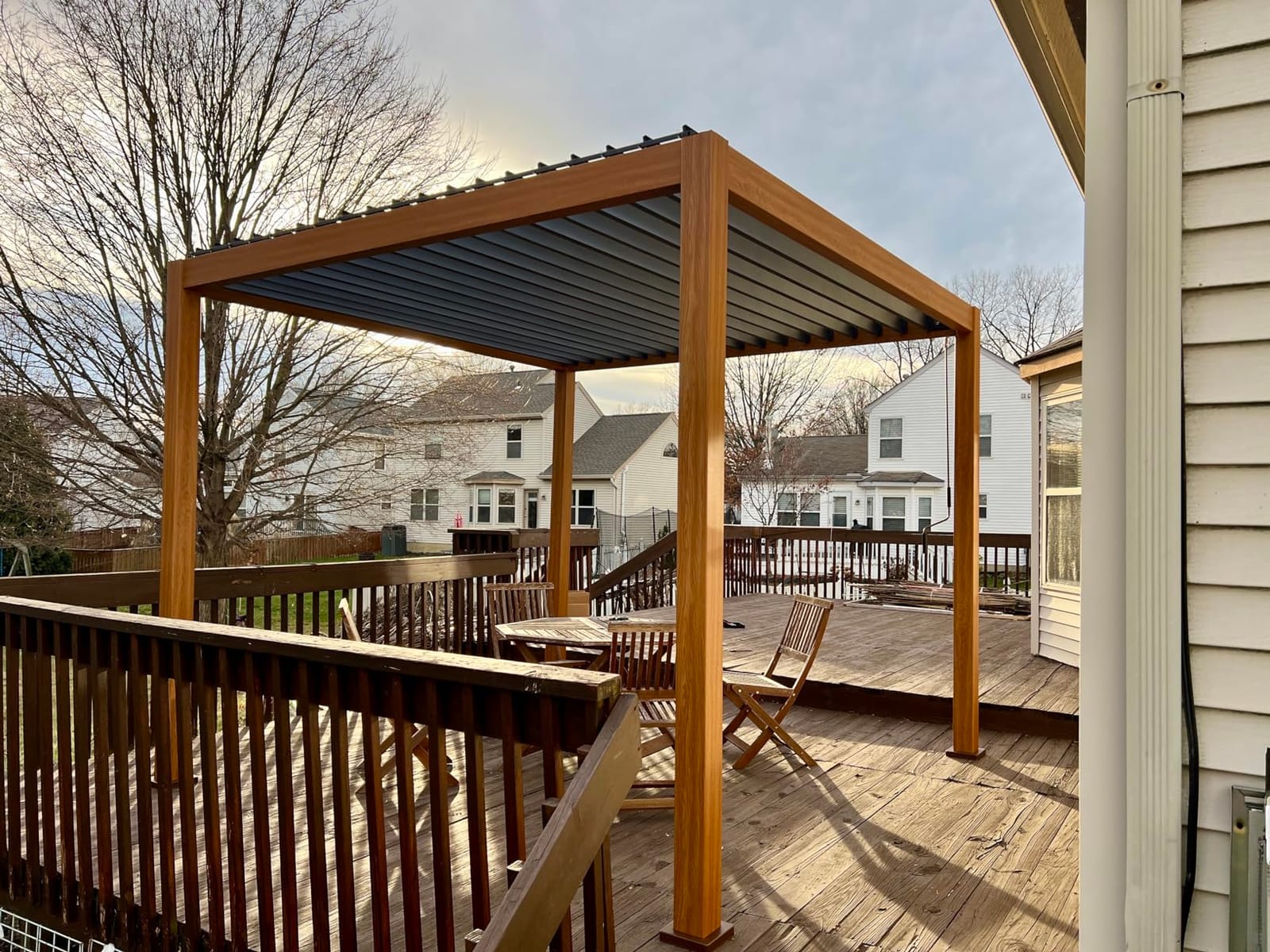
The Takasho is the one to buy if you want cedar’s look without cedar’s maintenance schedule. The Takasho wood grain is a finish over a full aluminum and steel frame, so it will not rot, will not need re-staining, and will not grey. The cherry oak color reads convincingly as timber from a seated position.
The bioclimatic louvered roof runs on a crank from 0 to 93 degrees, the widest adjustment range in this group, which lets you close the roof almost flat for a horizontal surface that sheds water efficiently or open it fully for maximum airflow. The design carries a Reddot Award and uses hidden fixings so the frame lines stay clean.
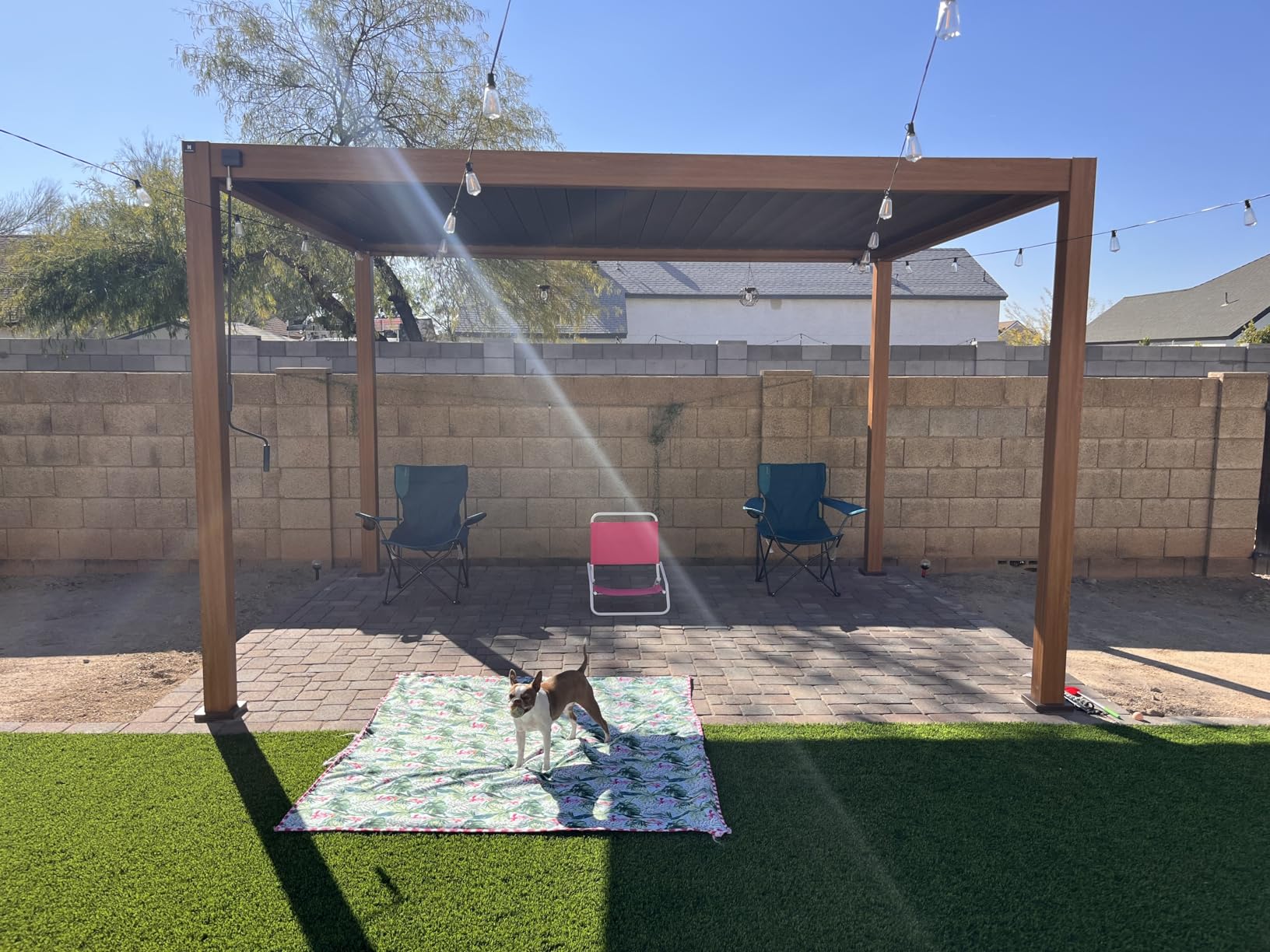
The 4.9 average is the highest in this roundup, with a rating distribution of 88 percent five-star and 12 percent four-star and no critical reviews at all. Owners respond specifically to finish quality and to the contemporary styling rather than to any single feature, which is a good sign for a structure you will look at every day.
The 462 pound build is the heaviest per square foot here, which is a fair trade for a frame that will not move or fade over a decade. At 130 square feet it is a compact structure, and it suits a patio with defined seating rather than a wide zone.
Wood grain versus real timber
The comparison with cedar comes down to one question: how often do you want to touch it. Real wood needs stain every couple of seasons and will check and grey. The Takasho finish needs cleaning and nothing else, and it will look the same in year ten as it does now.
What you give up is authenticity. It is a textured finish over metal, and anyone who touches the frame knows it. For a house where the timber look matters most from across the yard rather than under the structure, that is a fair deal.
Reading a 17-rating average
This is the smallest review base in the list and the highest rating, and both facts matter. A 4.9 with no critical reviews on 17 ratings is an excellent signal of early owner satisfaction and a weak signal about year-five durability. There is no long-term history here yet.
Build support includes an instruction manual, video, and components box, plus a professional installation partner. That last point matters at 462 pounds, and it is worth pricing the installer before you commit.
How to Choose a Patio Pergola: Material, Roof Type, Foundation
Frame material: aluminum, steel, or cedar
Aluminum is the answer for a structure you want to forget about. It does not rot, does not rust, does not need stain, and the powder coat handles UV exposure for decades. It is also the heaviest material per square foot in this list, which is why three of the aluminum models here weigh 394 pounds or more.
Cedar is the answer for a structure that has to match the house. It has natural decay resistance and the best thermal behavior in direct sun, and it is the only material here that doubles as plant support when the roof is slatted. The cost is a maintenance schedule and a larger structure to lift.
Steel appears here as a hybrid, combined with aluminum in the Mirador 80S and the EROMMY, typically in the frame where extra stiffness is needed over a long span. Wood-grain aluminum, represented by the Takasho, splits the difference: timber appearance with metal upkeep.
Roof type: fixed slats, canopy, or louvers
Fixed slats block roughly a third of the direct light and almost none of the rain. They are the simplest mechanism, the least to fail, and the right answer if you want shade and vines. Every cedar unit in this roundup uses this roof.
A retractable fabric canopy slides open and closed, giving adjustable shade and partial rain protection. Fabric is the weak point. Owner reports consistently identify canopies and screens as the most commonly damaged components, which is why hot-climate owners often favor a simple mechanism they can repair themselves.
Adjustable louvers rotate from open to closed and control both sun and rain, with water directed into internal drainage on better models. That capability is what you are paying for in the aluminum category. Manual crank versions cost less and have fewer failure points than motorized ones.
Matching the footprint to your patio
Measure the patio, then measure where people actually sit. The most common owner complaint in this category is a single oversized unit parked in the center shading the wrong zones. Coverage square footage is a number; seating zones are a layout.
A compact seating patio under about 130 square feet suits the 10 by 12 models here. A dining patio or a multi-zone outdoor kitchen wants 200 square feet or more. Anything above 200 square feet in one piece needs a long, straight, level footprint and a plan for moving beams into position.
Anchoring, footings, and wind rating
Anchoring is where most pergola problems start, and it is the one step a manufacturer cannot do for you. A wind rating is conditional on the specified anchors being installed in the specified way. Skip that and the published figure does not apply to your structure.
Compare published wind ratings only when the test conditions are stated. In this roundup you will see 100 mph for the cedar Beaumont, 80 mph for the cedar BlueWish and MUPATER, 72 mph for the Domi, 70 mph for the Purple Leaf, and a 60 to 80 mph range for the YOLENY. The Mirador 80S and the AirWire publish no figure, which is worth knowing.
If your site is coastal, hurricane-exposed, or in a wildfire zone, treat anything well below the highest published rating as a liability rather than a feature. Owners in those regions report losses they could not prevent, and the practical lesson is that anchoring quality matters more than the label on the box.
Total installed cost, not sticker price
The listing price is the smallest part of what a pergola costs you. Concrete footings or a reinforced deck, electrical work for lighting and the power post, delivery of a heavy crate, assembly labor, and permitting all sit outside the number you compare products on.
Assembly is the line that surprises people most. Kits marketed as easy assembly routinely consume a full day or more for a crew of three, and installers report the same jobs running well over the manufacturer’s advertised time. A structure at 458 or 586 pounds is a different job from one at 260 pounds, and the labor quote should reflect that.
Pergola vs gazebo vs attached patio cover
A pergola gives partial shade and defines the space. A gazebo gives full roof coverage and rain protection at a higher cost, with more wind load and more permitting scrutiny. An attached patio cover mounts to the house and gives shade plus rain runoff, but it needs a solid wall to attach to and often needs permitting.
If your real problem is that your patio is unusable in summer sun, a pergola is the affordable answer. If your real problem is that it is unusable in rain, you want a covered structure and a louvered pergola is the middle path. If the patio needs shade and rain and you have no budget for a foundation, an attached cover is the efficient route.
Who should skip a pergola altogether
Skip it if your HOA restricts attached or visible structures, because the approval fight costs more than the pergola. Skip it if you rent, since footings and fixed structures are rarely permitted without a landlord conversation.
Skip it if you will not anchor it properly. A badly anchored pergola is worse than no pergola, and the anchoring is not optional. And skip it if you are in a wildfire zone with heavy vegetation, where an open-frame structure near dry growth is a risk your insurance may not cover.
What Actually Goes Wrong With Patio Pergolas
Owner reports across forums and review sections converge on a short list of recurring failures. None of them are exotic, and all of them are avoidable before the build starts.
Measurement errors are first. A small mistake in the footprint compounds through every post and beam, and the result is a frame that does not sit square, does not drain properly, and does not close its louvers cleanly. Measure twice and check diagonal measurements before drilling anything.
Skipped fasteners come second. Pre-drilled holes in a large kit tempt you to leave the hard ones for later. Missing bolts in a frame carrying wind load are the single most avoidable cause of sway reported by owners.
Wrong anchors for the surface run close behind. Stakes that work in soil lift out of stone and pavers. Expansion anchors rated for concrete do nothing in a wood deck. Know what you are bolting into before the delivery arrives.
Unleveled posts cause the fourth complaint cluster: louvers that do not close flush, doors that bind, and gutters that discharge where they should not. Leveling takes an hour and saves the structure.
Canopy and screen damage is the most common recurring repair. Fabric fades, rips at seams, and zips fail, and on at least one model in this roundup replacement parts are not sold at all. Check parts availability before you commit to any model with soft goods.
Damage on arrival is the last one. Large kit shipments arrive with bent louvers or missing components often enough that every owner report includes a box-check step. Photograph everything on arrival, because the claim window closes.
Frequently Asked Questions
Who sells the best pergolas?
By segment: cedar and timber kits come from Backyard Discovery, BlueWish, MUPATER and Yardistry; budget canopy kits from Sunjoy and VEIKOUS; aluminum louvered systems from Purple Leaf, Mirador, AirWire, Domi, YOLENY and EROMMY; premium custom aluminum from Hansø and The Luxury Pergola. The best brand depends on your roof type and how much wind your site sees, not on a single winner.
What type of pergola lasts the longest?
Powder-coated aluminum, particularly a motorized or crank louvered aluminum system, outlasts wood and steel frames because it does not rot, rust, or need re-staining. The trade is weight and cost. In this roundup the aluminum frames run 260 to 586 pounds, while cedar models need periodic stain to protect the finish.
How strong of wind can a pergola withstand?
It depends on the rating and on whether you followed the anchoring conditions. Published figures here run from 60 mph up to 100 mph for the cedar Beaumont, with most aluminum louvered models between 70 and 80 mph. Those numbers assume the specified anchors and louver positions were used, so an unanchored frame has no rating at all.
How much does it cost to have someone assemble a pergola?
Assembly commonly takes a full day or more for a crew of three, even on kits advertised as easy, and heavier structures take longer because the beams must be raised. Labor cost varies by region and by weight, so ask for a quote that references the model’s item weight. Adding that quote to the listing price is the only honest comparison.
Do I need a permit to build a pergola?
Rules vary by city, county, and HOA, and freestanding structures are often treated differently from wall-mounted ones. Size thresholds matter, as do setbacks and whether the structure is attached to the house. A wall-mounted pergola almost always triggers more scrutiny than a freestanding one. Check your local building department before ordering.
Is a pergola better than a patio cover?
A pergola gives partial shade and defines the space at lower cost and with a lighter wind load. An attached patio cover adds real rain runoff but needs a solid wall to mount to and usually requires a permit. Choose the pergola when your problem is summer sun, and the cover when your problem is rain.
What are the most common pergola mistakes?
Measurement errors that leave the frame out of square, skipped fasteners in a wind-loaded structure, wrong anchors for the surface, and unleveled posts are the four most common. Buyers also underestimate assembly time, ignore drainage paths, and check replacement parts availability only after something breaks.
Final Pick for Your Patio
If your patio is a single square seating area and you want it to look like part of the house, the Backyard Discovery Beaumont is the pick, with the highest published wind rating among the timber kits here and the most owner history behind it by a wide margin. Its maintenance is a stain schedule you have to actually keep.
If you want control over sun and rain, start with the PURPLE LEAF 10 by 12 for two independently controlled louver zones and the widest frame beams in its class. Step up in size to the AirWire 12 by 20 for the most coverage available here, or the EROMMY 10 by 20 if how water leaves the roof matters most to you.
If you want a wood look with no upkeep, the MIRADOR 111S Takasho gives you that in an aluminum frame, accepting a small review base for a very high rating. If you want the lowest entry into all-cedar, the MUPATER is the one, with the trade being a flat roof that shades and does not shelter.
Whichever you choose, measure your seating zones, read the anchoring instructions before the delivery arrives, and price the installed total rather than the listing number. Those three steps decide whether a pergola works for you more than any spec on the page. Check current pricing and owner reviews for any of these before you commit, and this guide to the best pergolas for patios is a good one to come back to as your shortlist narrows in 2026.