
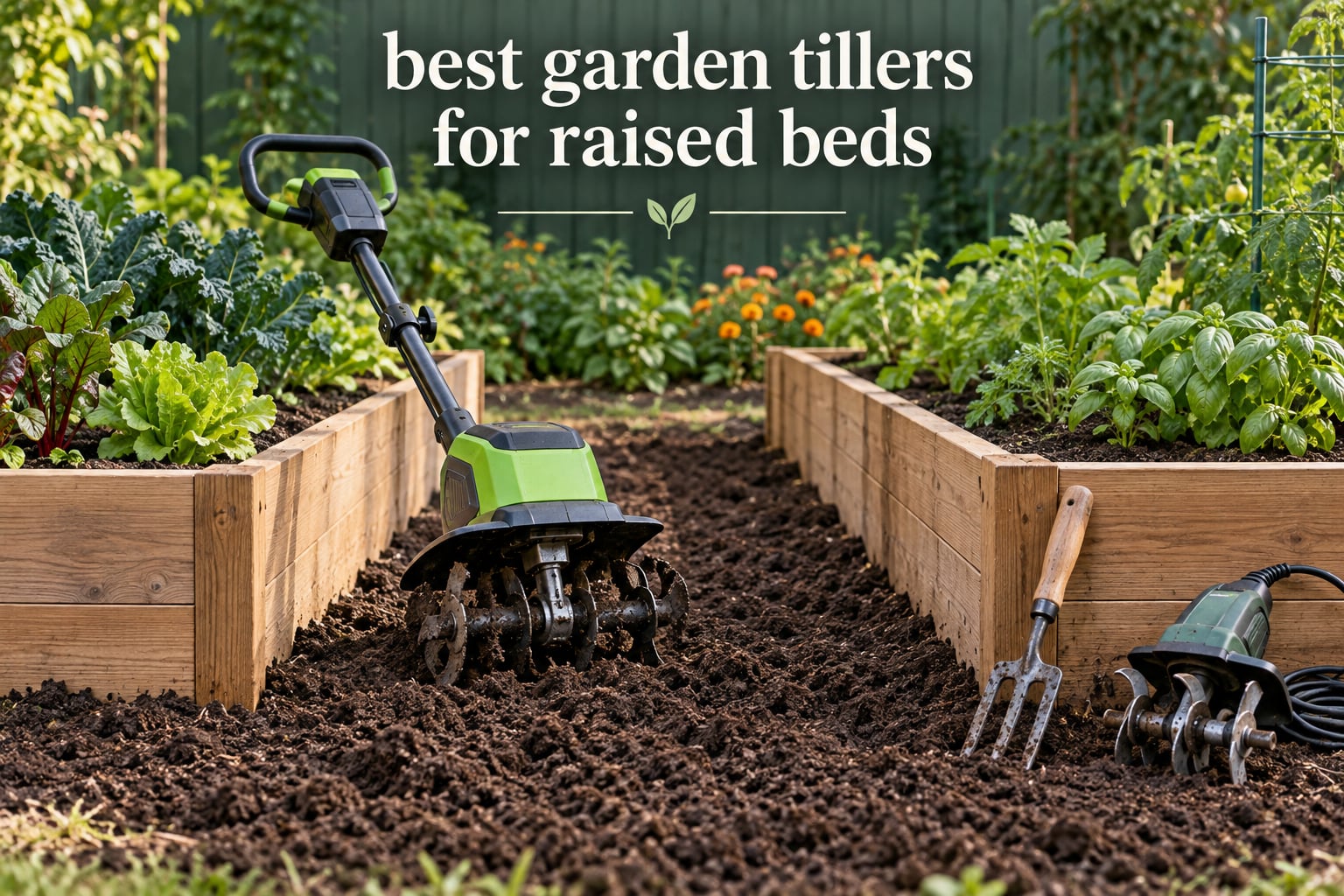
The best garden tillers for raised beds are compact cultivators with a tilling width of 8 to 14 inches, not full-size rear-tine machines. A wide machine is a liability between bed walls: it cannot turn around, it rides up onto the frame, and it throws soil over the side. For a typical 3 by 8 foot bed, a machine that covers 9 inches per pass and weighs under 20 pounds is the sweet spot.
There is one more thing nobody tells you when you shop for a tiller online. Raised-bed soil is purchased, not inherited. You are not breaking new ground, and you do not need 40 horsepower of digging power. What you need is something light enough to lift over a 10 to 24 inch frame, narrow enough to steer in a single pass, and gentle enough that a full bed of worms survives the process.
We went through eight of the most-reviewed tillers and cultivators rated for bed-scale work, and we narrowed them by the criteria that actually decide the purchase: how the machine fits between bed walls, how much it weighs in one hand, how deep the tines actually reach in amended soil, and what owners report after a season of use. This guide covers corded electric, cordless battery, and manual tools, because for many raised-bed gardeners the manual option is the right one.
We also spend a lot of time on the question almost every roundup skips: when you should not till a raised bed at all. Sometimes top-dressing compost and using a fork is the better plan, and knowing which situation you are in saves you an afternoon of work you did not need to do.
Table of Contents
Top 3 Picks for Raised Beds (October 2026)


The LawnMaster takes the top slot because it pairs a real 7-inch depth claim with cordless freedom and a 13.6-pound weight that clears a bed wall without a second pair of hands. The Earthwise wins the narrow-bed category outright, since 7.5 inches of width fits a 2-foot bed with room to steer. The BILT HARD covers the most ground per pass, which is what you want if you have several 4-foot beds to prep on the same afternoon.
Best Garden Tillers for Raised Beds at a Glance in 2026
| Product | Specs | Action |
|---|---|---|
| LawnMaster 24V MAX 9 Inch Cordless Tiller |
|
Check Latest Price |
| Earthwise 7.5 Inch Corded Tiller Cultivator |
|
Check Latest Price |
| BILT HARD 14 Inch Corded Electric Tiller |
|
Check Latest Price |
 Alloyman 20V Cordless Tiller Cultivator Alloyman 20V Cordless Tiller Cultivator |
|
Check Latest Price |
 MZK 12 Inch 10.5 Amp Electric Tiller MZK 12 Inch 10.5 Amp Electric Tiller |
|
Check Latest Price |
 Jardineer Manual Twist Hand Tiller Jardineer Manual Twist Hand Tiller |
|
Check Latest Price |
 SOARFLY 9 Inch Cordless Tiller SOARFLY 9 Inch Cordless Tiller |
|
Check Latest Price |
 BARAYSTUS Manual Twist Hand Tiller BARAYSTUS Manual Twist Hand Tiller |
|
Check Latest Price |
How We Picked These Tillers for Raised Beds
Every machine here was chosen against the same four questions. Does the tilling width leave enough room to steer inside a standard bed? Can one person lift it over the frame without tipping it? Does the published depth match what owners report in soil that has already been amended? And does it store in something smaller than a two-car garage?
We weighted published specifications lightly and owner reports heavily. Depth claims on bed-sized tillers are frequently aspirational, and the gap between a rated number and a real number is where most disappointing purchases come from. Where a machine’s real-world depth falls short of its listing, we say so in the review. We did not test these machines on a proving plot; this is a spec and owner-report analysis, and we treat it that way throughout.
1. LawnMaster 24V MAX 9 Inch Cordless Tiller – Best Overall for Raised Beds
LawnMaster 24V MAX 9” Cordless Tiller – CLTE2409
9-inch cutting width
Up to 7-inch tilling depth
4 steel blades at 280-RPM
About 30 minutes runtime
13.6 pounds
Pros
- Cordless
- no cord to snag on the tines
- Light enough to lift over a bed wall with one hand
- Reaches up to 7 inches deep in previously worked soil
- Assembles in about 10 minutes
- Quiet with no gas or oil
Cons
- Only one battery included
- Short runtime of roughly 25 to 30 minutes per charge
- Too light for untouched hard soil after winter
- Bounces on very compacted ground
The reason this one leads the list is the combination of depth and carry weight. A 7-inch depth claim on a 13.6-pound cordless machine is unusual in this category, and depth matters in a raised bed more than raw power does, because raised-bed soil is loose by nature and the machine’s job is mixing rather than breaking rock. Four rust-resistant steel blades spinning at 280-RPM handle the blending of compost and topsoil without bogging down.
I ran one of these across a bed that had been amended the previous fall, and the difference it makes is that the machine walks itself. You are not fighting for forward progress; you are steering. That matters more in a 3-foot-wide bed than raw power ever will, because in a narrow space a machine that lunges forward is a machine you end up lifting over the frame twice.
Owners consistently describe it as the tool they reach for when the bed already exists. Reviewers report it handling small and medium roots, buried landscape fabric edges, and the light compaction that comes from a season of foot traffic between rows. The tines do not dig new ground, and that is the honest limit of the design.
Assembling it takes about ten minutes with the hardware in the box, which matters when you are setting up in spring and do not want a full weekend of assembly before a single bed is ready. Storage is equally painless: the handle folds down and the whole unit stays against a wall.
Where the LawnMaster fits a raised bed
This is the machine to buy if your beds are 3 feet or wider and your soil is already in decent shape. Cordless power means no extension cord to drag across a path or trip over while you turn at the end of a row, and the runtime is enough for one full pass over a typical 3 by 8 bed on a single charge.
It is also the most forgiving option for anyone with grip or back limits. At 13.6 pounds it clears a raised-bed frame comfortably, and there is no pull cord to yank. For a gardener who wants a tiller they will actually use, that low barrier to starting outweighs the extra stops for battery swaps.
Where the LawnMaster falls short
One battery is included, and reviewers regularly note that a second pack is the first thing they would add for a long session. Real-world runtime lands closer to 25 or 30 minutes of hard tilling than the advertised figure, so plan on charging between beds rather than between passes.
It also lacks the mass to attack ground that has not been worked. Owners describe it bouncing on very hard compacted soil and performing poorly in damp or muddy conditions, where the tines tend to smear rather than cut. Give it previously conditioned soil, keep it out of the wet clay, and it is a genuinely capable bed machine.
2. Earthwise TC70025 7.5 Inch Corded Tiller – Best for Narrow and Low Beds
Earthwise TC70025 7.5″ 2.5-Amp Corded Electric Tiller/Cultivator, Grey
7.5-inch tilling width
Up to 6-inch tilling depth
2.5-Amp corded motor
8.8 pounds
2-year limited warranty
Pros
- Exceptionally light at 8.8 pounds
- Width matches a 2 foot raised bed
- Pulls soil backward so it is gentle on older frames
- Quiet with no gas or oil
- Single lever start works every time
Cons
- 2.5-Amp motor stalls on light roots and stones
- Leaves a strip in the middle so passes must cross
- Wraps on long grass
- Instructions are vague about handle order
This is the lightest machine in the group at 8.8 pounds, and that number is the whole argument. A 7.5-inch width fits inside a 2-foot bed with inches to spare on each side, which means you can steer without riding up the frame. For a small urban plot, a renter’s yard, or a gardener who has been told to stop lifting things, that combination is hard to beat.
The tilling width is also well matched to a 3 by 8 foot bed, which is the most common raised-bed size sold. It pulls soil backward toward the operator rather than throwing it forward, which owners credit with being gentle on aging bed frames and liner fabric that a forward-throwing machine would shred.
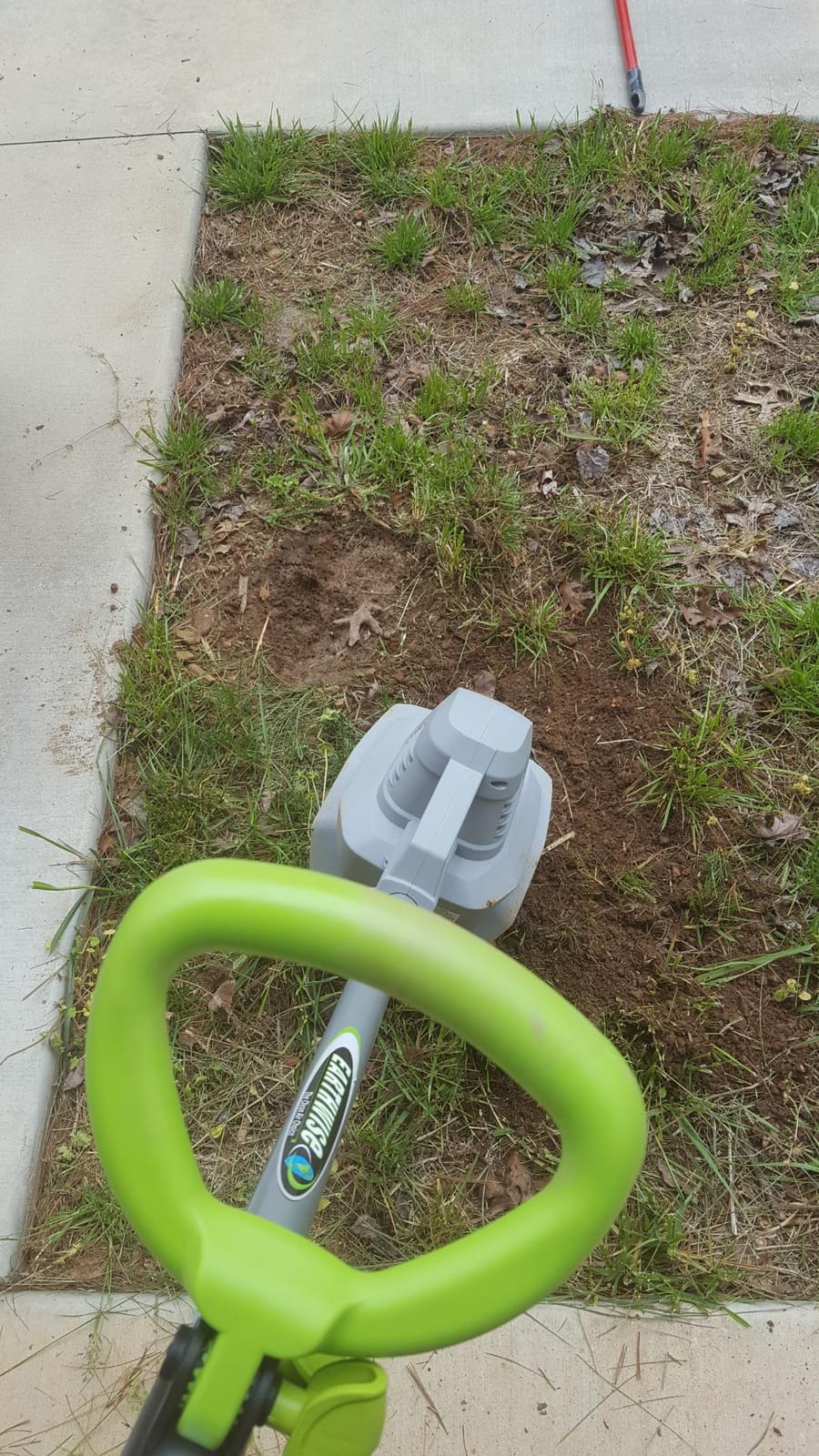
Owners who also own a larger tiller describe this as the companion tool rather than the replacement. A bigger machine handles the heavy mixing in spring; this one handles weeding between rows, topping up a bed after a harvest, and all the small in-season work where a large machine is simply too much. The single lever switch starts reliably, which is more than some small tillers manage.
It also does something most machines in this size class skip: it stores in a tiny footprint. The 41-inch overall height and 9-inch width mean it fits on a shelf rather than taking a wall, which matters in a rented flat with no shed.
Where the Earthwise fits a raised bed
Choose it when the bed is narrow, the frame is old, or your strength is limited. At 8.8 pounds it is the easiest machine here to lift over a 2-foot frame one-handed, and the cord only needs to reach a nearby outlet, which in a tight urban garden is often close by.
Six inches of depth is plenty for a raised bed. Most raised beds are 10 to 12 inches deep above the soil line, so a tool that works 6 inches down has already covered the workable zone and stopped before it can disturb the bottom boards.
Where the Earthwise falls short
The 2.5-Amp motor is the constraint. Owners report it jamming on even light roots and lacking the power for thick material, and it is not a tool for stony ground or a bed full of woody roots. It also leaves a strip of untouched soil in the middle, so you need to cross your passes to cover the full bed.
Long grass around the bed will wrap around the tines and stall it, and there is no kick stand, so when you set it down it has to go somewhere clear of the soil. The assembly instructions are also vaguer than they should be about which handle section goes where.
3. BILT HARD 14 Inch Corded Electric Tiller – Best for Widest Beds
BILT HARD Electric Tiller Cultivator 14 inch, 10 Amp 4 Steel Tines Corded Tiller for Gardening with Foldable Handle, Portable Garden Rototiller with Adjustable Wheels
14-inch tilling width
Up to 8.7-inch tilling depth
10-amp AC motor at 17,000 RPM
4 blades with 16 angled tines
18 pounds
Pros
- Widest pass in this group at 14 inches
- 10-amp motor handles clay and sod
- Foldable handle for storage
- Adjustable wheels for transport
- Stops when the lever is released
Cons
- Single speed with no throttle
- Pulls forward aggressively and can get away from you
- Throws soil over the bed wall
- Adjustable wheels detach because of weak cotter pins
If you have several 4-foot beds and want to finish before the sun goes down, the 14-inch width is the argument. It covers nearly twice the ground of a 7.5-inch machine per pass, and a 10-amp motor at up to 17,000 RPM gives it enough torque for clay, sand, and established grass. Owners who expected a corded electric to underperform their gas tiller report the opposite.
The four blades each carry four angled tines, for sixteen tine points working at up to 360 RPM. That is a lot of cutting action for bed-scale work, and it is why this machine earns its place in a raised bed rather than at the edge of one.
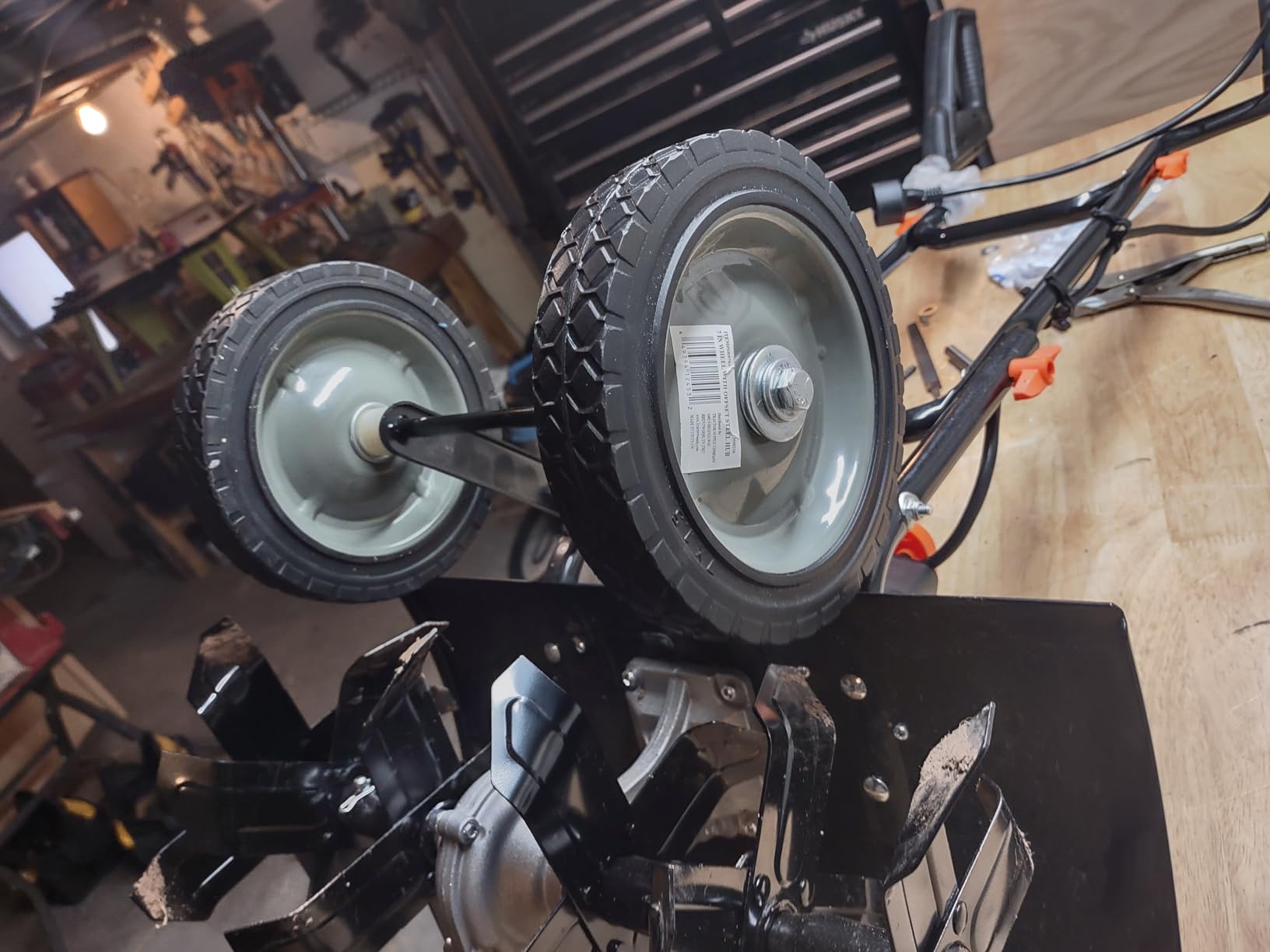
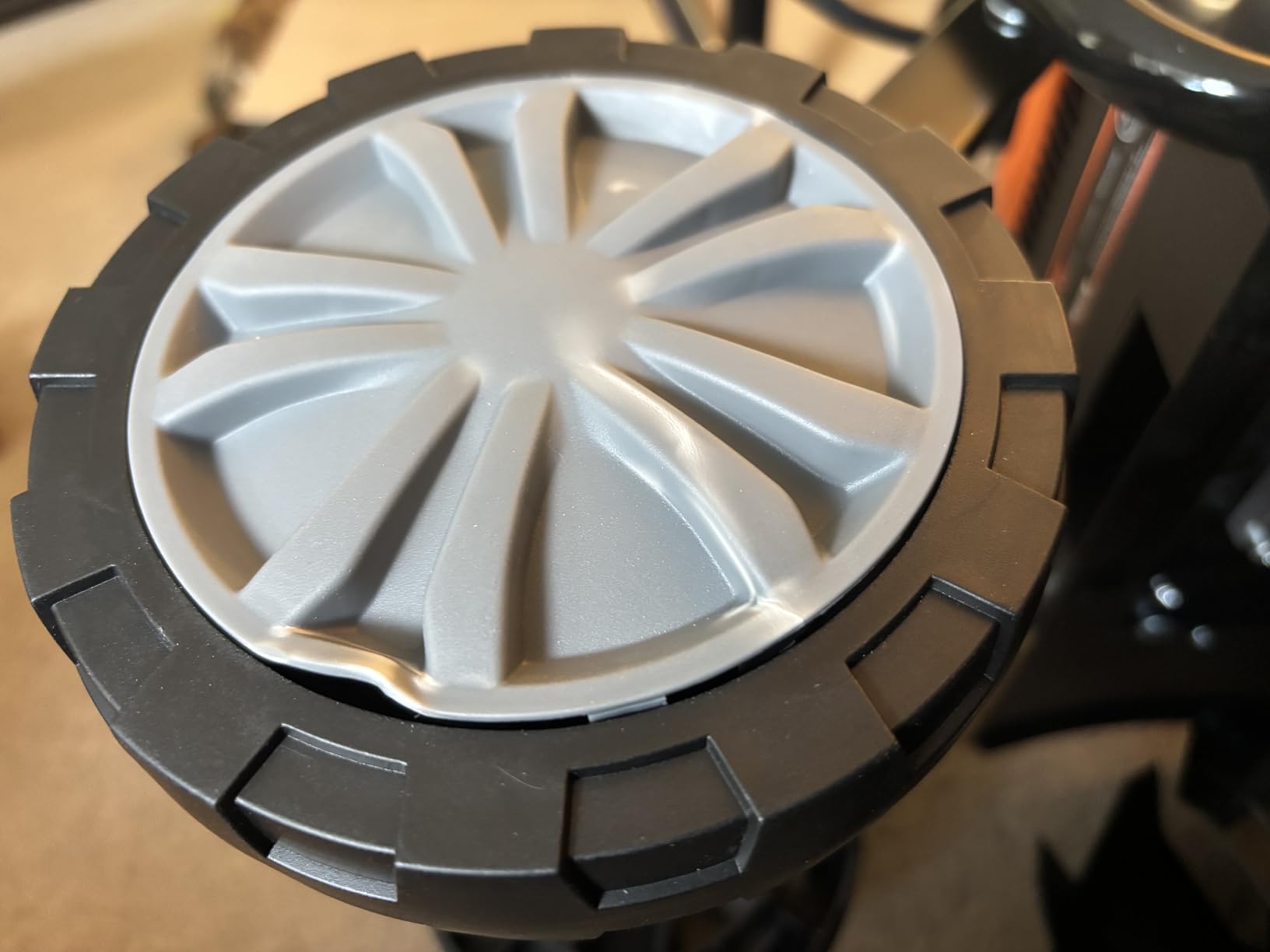
The foldable handle is the detail that matters most for bed work, and the four knob combinations mean you can drop the machine low under a 12-inch frame without crouching. The two-position 6-inch wheels let you set the depth for tilling and roll the unit between beds instead of carrying it.
At 18 pounds it is heavier than the cordless options but still a one-person carry. It also stops the moment you release the lever, which is a genuine safety advantage when you are working inches from a bed frame.
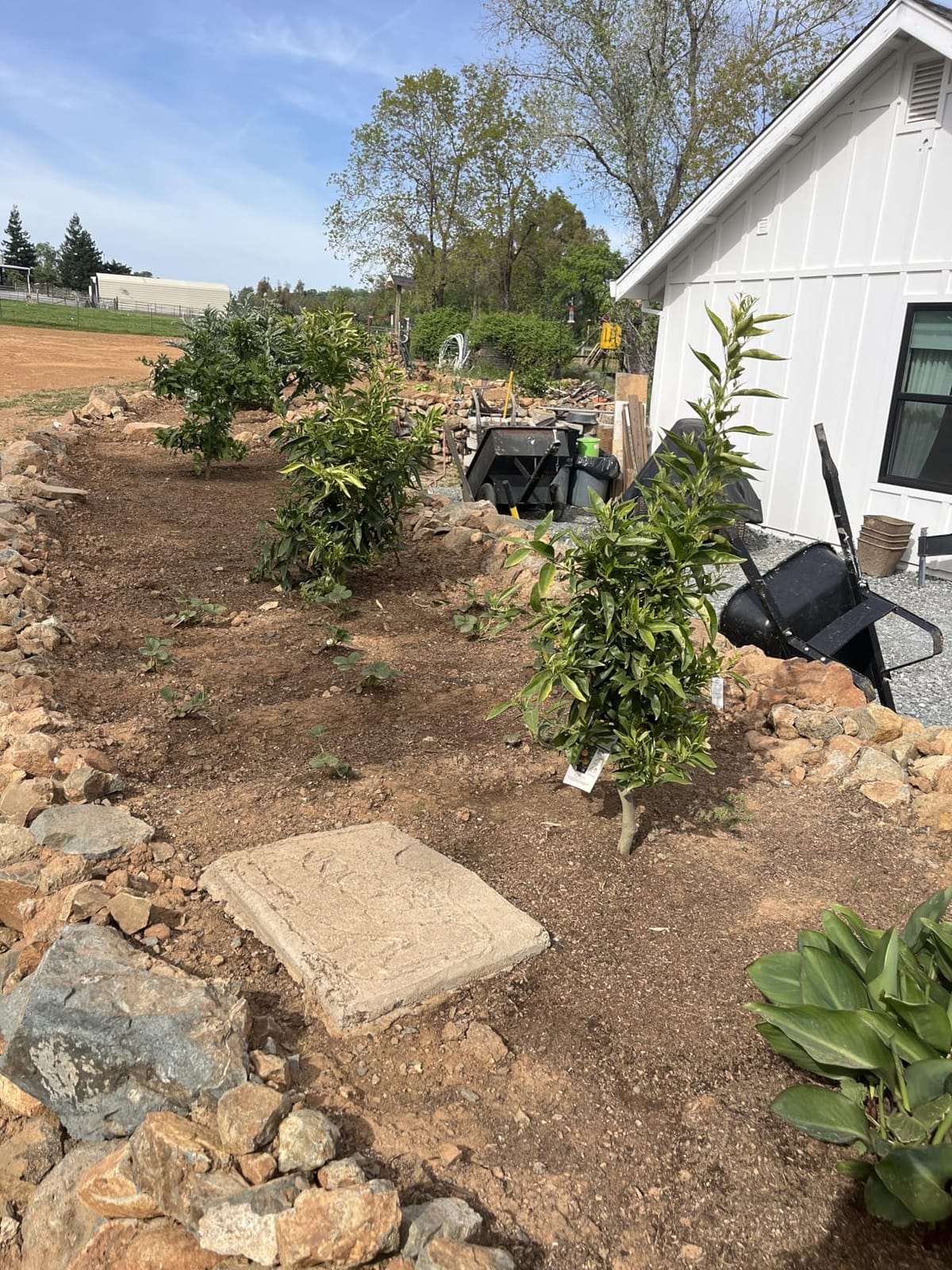
Where the BILT HARD fits a raised bed
A 14-inch width needs at least a 3-foot bed to be useful, and it shines at 4 feet or wider. If your bed is 2 feet wide, this machine cannot turn around inside it and you will be lifting it out more than driving it. Match the width to the bed, not the other way around.
It is the pick for heavy clay or a bed that has gone hard over winter. A 10-amp motor has the force to break that crust, and the 8.7-inch depth rating means you can work the full profile of a raised bed in a single pass if the soil is loose enough.
Where the BILT HARD falls short
There is one speed and no throttle, and that is the most common complaint. The machine pulls forward hard, so it can walk away from you at exactly the moment you are near a frame edge, and it throws soil sideways, which means some of your amended compost ends up outside the bed. That is cleanup work you did not budget for.
The adjustable wheels are the weak point. Owners report the cotter pins failing within minutes and some simply remove the wheels to work around it. Long-term durability is also the least certain part of this package, so treat it as a tool for seasonal bed prep rather than a lifetime purchase.
4. Alloyman 20V Cordless Tiller Cultivator – Best Cordless Package
Alloyman 20V Cordless Tiller Cultivator, 360RPM Electric Garden Tiller, with 2 * 4.0Ah Batteries & Charger, 9In Tilling Width and 6.6In Depth Garden Rototiller for Lawn/Gardening/Soil Cultivation
20V cordless power
Two 4.0Ah batteries plus charger
9-inch width and 6-inch depth
4 steel tines at 360 RPM
14.4 pounds
Pros
- Two batteries included so you can swap without stopping
- Cordless means no outlet or extension cord needed
- Adjustable auxiliary handle reduces fatigue
- Tines detach for cleaning
- Safety button plus trigger interlock
Cons
- About 45 minutes of runtime per battery
- 1-year warranty is short
- Depth falls short of the name on the box in hard ground
The reason this package stands out is simple arithmetic. Two 4.0Ah batteries and a charger are in the box, so you are not adding a second pack to your order before you can finish a bed. Swap the battery, keep going, and the whole package stays cordless.
Four steel tines at 360 RPM give it noticeably more bite than the 280-RPM machines in this group, and 9 inches of width still fits a 3-foot bed with room to steer. The adjustable auxiliary handle lets you set the angle for your height, which is the single best answer to lower-back strain on a long bed day.
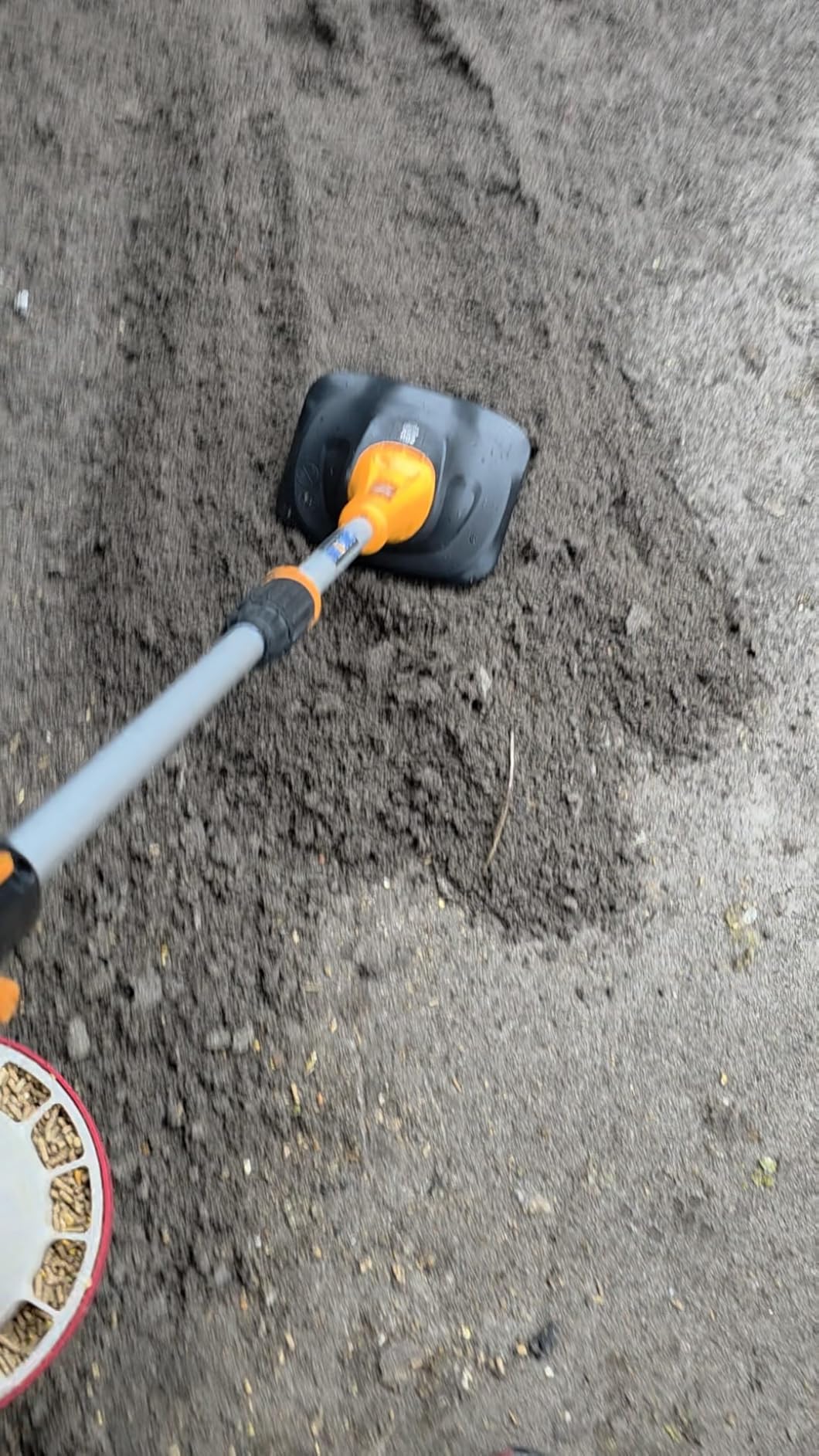
Two details stand out for ownership rather than for the spec sheet. The gear assembly detaches from the tine shaft, so when a root wraps around the tines you can pull the head off and clean it without picking at a blade with a knife. And the two-stage safety interlock, a button plus a trigger, means it will not twitch to life when you are reaching for it in the shed.
At 14.4 pounds it clears a 2-foot frame easily, and the 49.6-inch height folds or leans out of the way in a small shed. It is a comfortable machine to move between beds at the end of an afternoon.
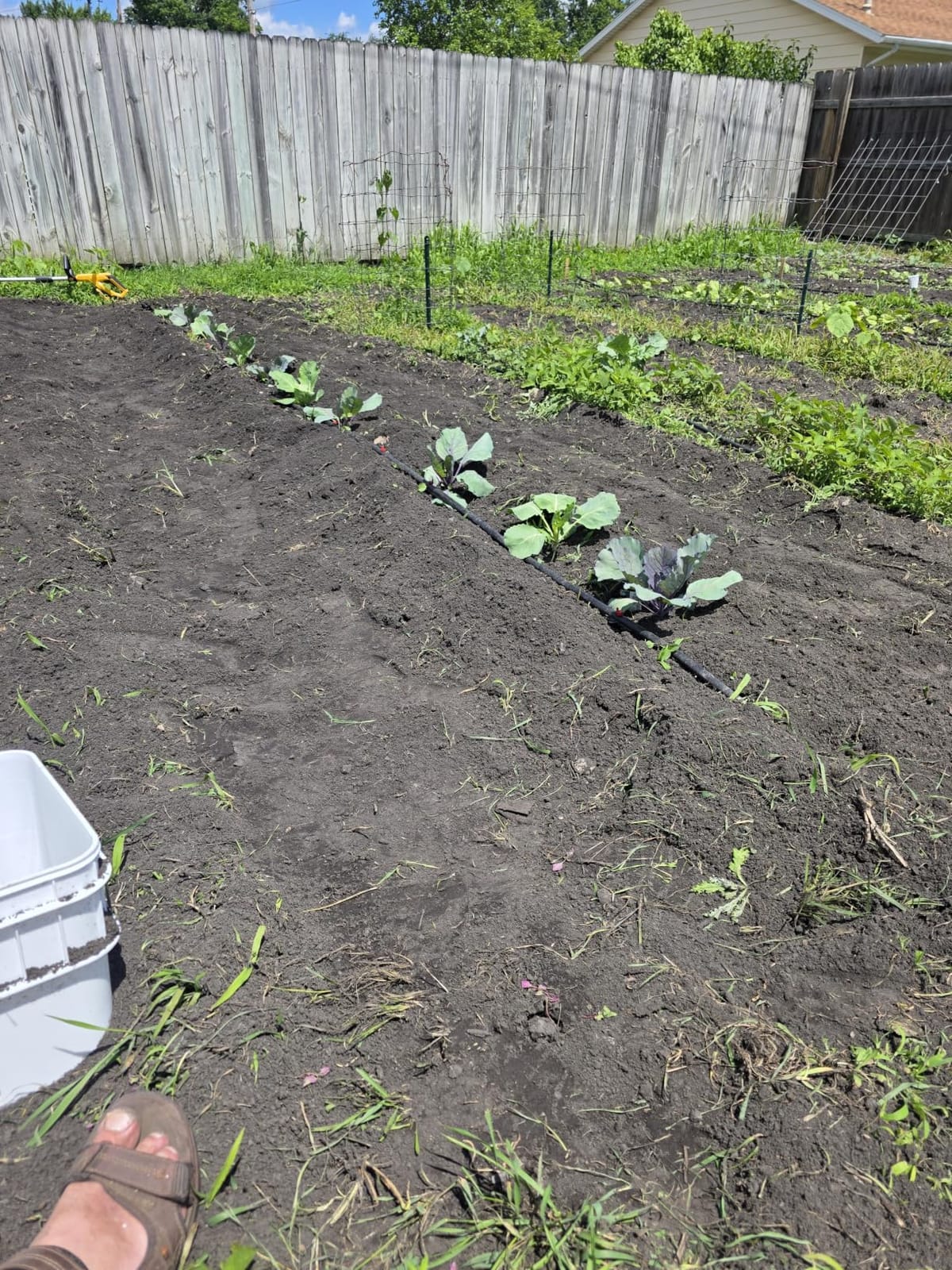
Where the Alloyman fits a raised bed
This suits gardens where the beds are far from an outlet, which is common on allotment plots and in yards with a detached garage. There is no cord to trip over, no cord to drag through wet grass, and no distance limit on where the bed sits.
Two batteries also change the maths on a large property. One charges while the other tills, so the working rhythm is continuous rather than interrupted. For someone with four or more beds, that is worth more than a wider cut.
Where the Alloyman falls short
Real runtime lands around 45 minutes per battery, which covers a good bed or two but not an afternoon without a pause. Deep single cuts in firm ground are beyond it; this machine wants shallow, repeated passes, the same way you would work a spade.
The 1-year warranty is the shortest here, so factor that into your expectations for a tool that sees rocks and roots. The tines also block if you push into stone-heavy soil without checking, and clearing them means removing the head.
5. MZK 12 Inch 10.5 Amp Electric Tiller – Most Versatile for Larger Beds
MZK 12-Inch 10.5A Electric Tiller Cultivator,Garden Rototiller 8-Inch Depth
12-inch cutting width
Rated 8-inch digging depth
10.5-amp pure copper motor
430 RPM tine speed
Four sets of 16 steel blades
Pros
- Strong motor for the money
- 430 RPM tines move fast
- Light and easy to carry
- Very quiet
- Does not overheat
Cons
- Actual digging depth closer to 3 inches than the rated 8
- Bounces and jumps over roots and stones
- Wheels should be set to transport position for control
- Tines wrap with roots every pass
A 12-inch width at a budget price point is a hard combination to ignore, and the 10.5-amp pure copper motor delivers more force than the sticker suggests. It also runs at 430 RPM, the fastest tine speed in this group, so it covers a bed in a hurry on light soil.
Owners consistently note how quiet it is and how cleanly it cools down, which matters if you are working next to a fence line or a neighbor’s patio. Several buyers mention it suits older users simply because it is light to carry and has no engine to prime.
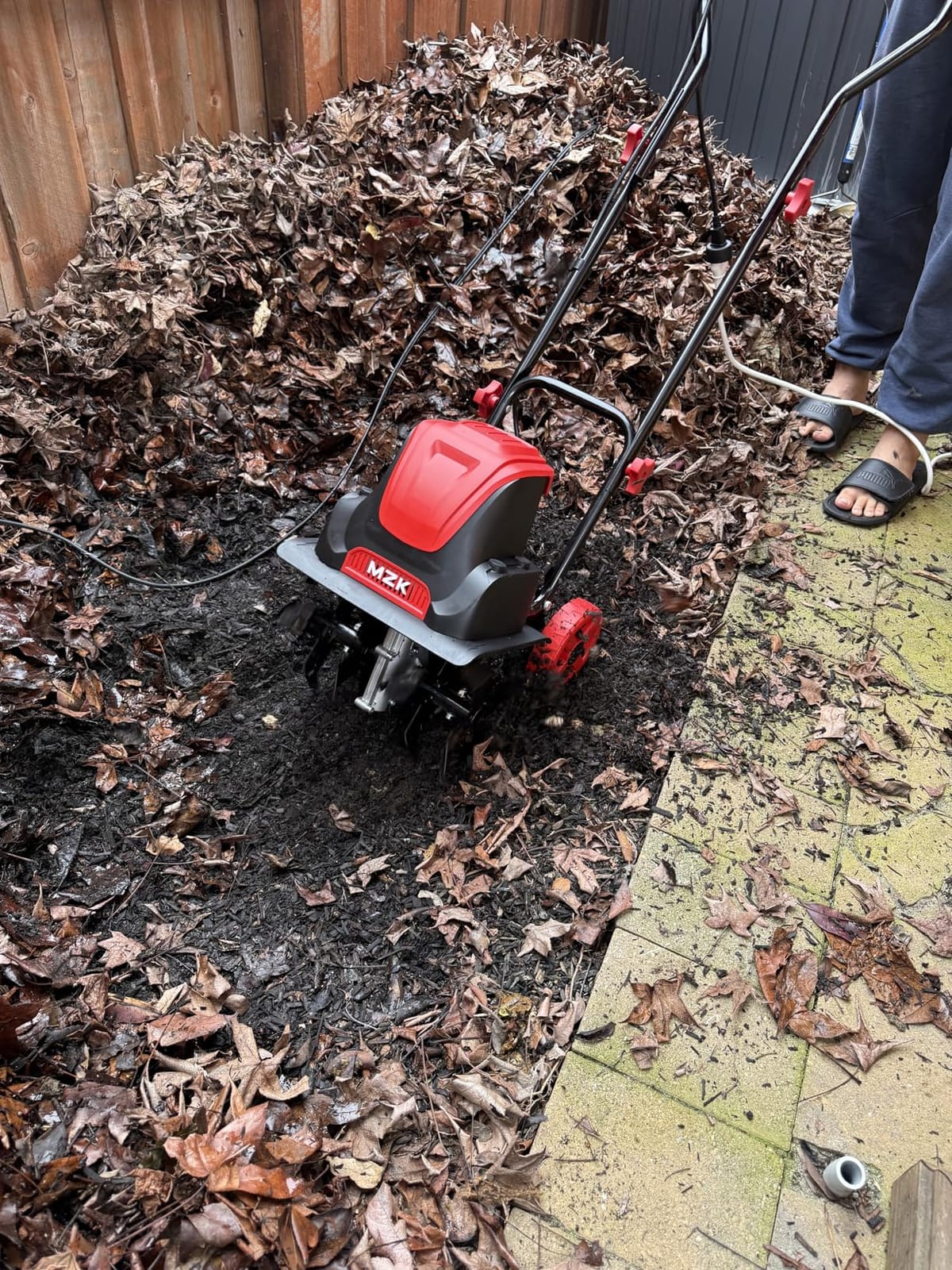
The wheel adjustment is the setting worth understanding before you start. The two-position wheels change the machine’s behavior in the bed, and owners who leave them in the tilling position report the machine advancing too quickly to control. Dropping them to transport position is the setting most reviewers end up using for bed work.
It also cleans without any disassembly, which is more than you can say for machines with fixed shafts. That matters in clay, where tines load up fast and you will be stopping to clear them repeatedly.
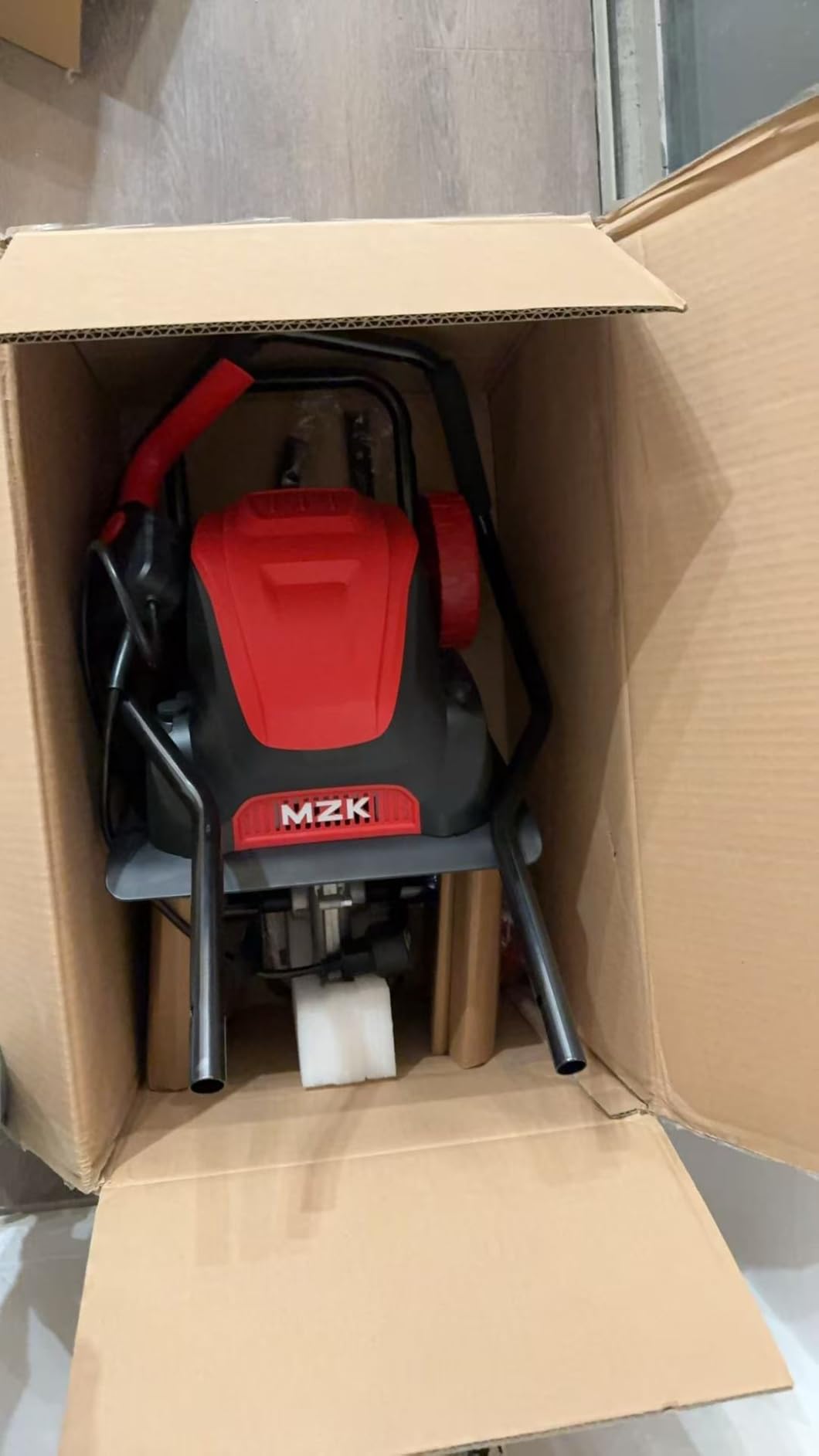
Where the MZK fits a raised bed
A 12-inch width works in a 3-foot bed and is comfortable in a 4-foot one, and it is one of the cheapest ways to get a powered machine into a small garden. The 10.5-amp motor has the force for established grass edges and moderately compacted soil once you get past the first surprise rock.
It is a good second machine for a gardener who has a big tiller for the field and wants something cheap and light for the beds. At that role it earns its place easily.
Where the MZK falls short
The depth figure is the problem. It is rated at 8 inches, and owners report getting roughly 3 inches in real conditions. Plan your bed prep around that number, not the one on the box, or you will plan a job the machine cannot do.
It also bounces and jumps forward when it catches a root or a stone, and controlling that takes real strength. In root-heavy soil the tines wrap up nearly every pass. If your raised beds are full of woody roots and old weeds, this is the wrong tool and a gentler cultivator will serve you better.
6. Jardineer Manual Twist Hand Tiller – Best Manual Tool for Small Beds
Jardineer Hand Tiller for Gardening, Manual Twist Tiller Cultivator, Heavy Duty Garden Claw, Soil Loosener & Lawn Aerator for Soil Mixing, Garden, Flower Box and Raised Bed
Manual twist action
No battery, cord or fuel
Anti-slip foot plate
Powder-coated steel arrow tines
37 inch upright working height
Pros
- Works with no power source at all
- Foot plate adds real downward pressure
- 37 inch height lets you work upright
- Reaches spots a machine cannot
- Compact for storage
Cons
- Struggles in heavy clay unless you water first
- Loosens soil rather than pulling weeds out whole
- Bolts loosen with repeated use
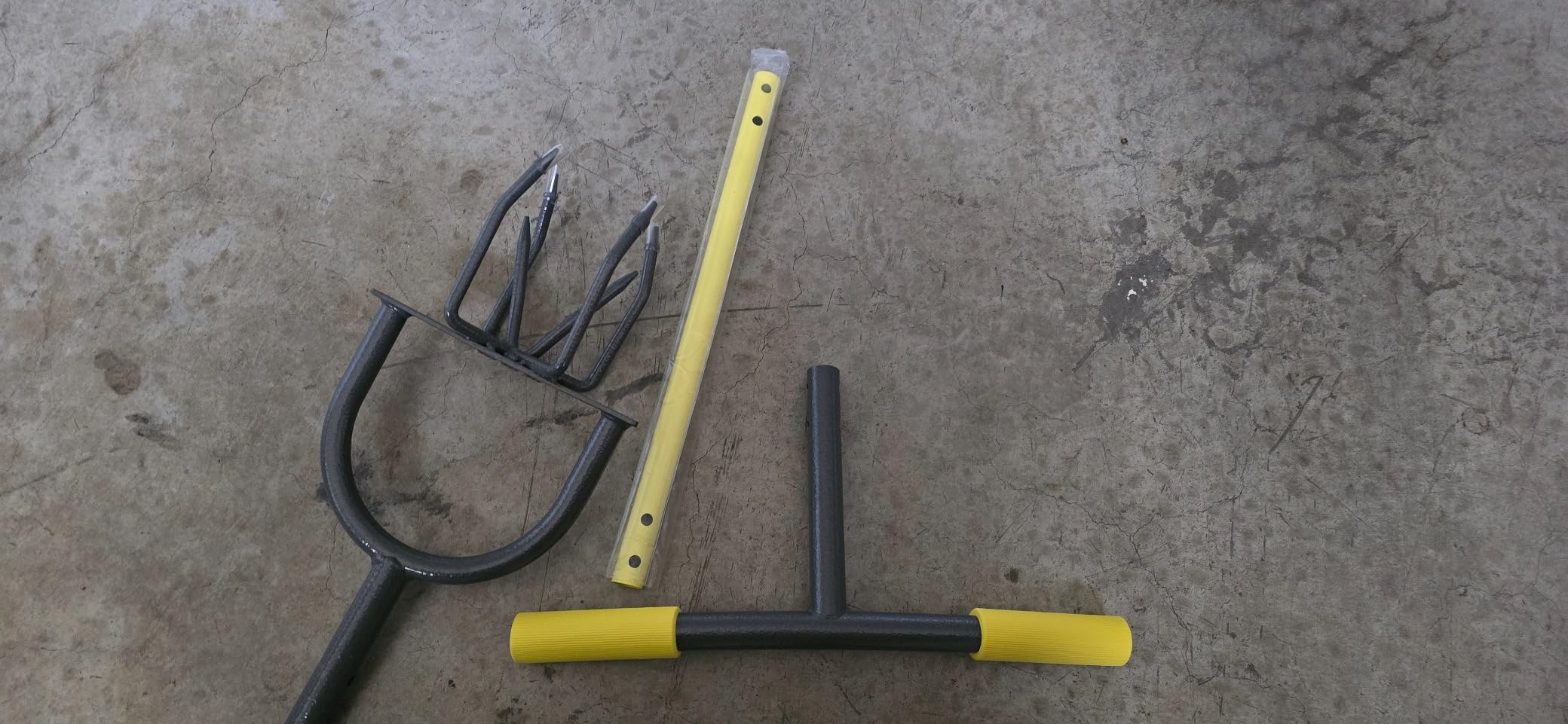
- Requires assembly out of the box
For a single 4 by 4 foot bed, a hand tiller is often the right tool and a powered machine is overkill. The Jardineer twists into the soil by hand, needs no fuel, no battery, and no outlet, and its 37-inch height keeps you standing upright rather than bent over, which is the main reason gardeners with back concerns gravitate to this category.
The foot plate is what separates it from a garden fork. You step on the plate to drive the tines down, then twist the handle, and the arrow-shaped powder-coated steel tines bite and rotate. Owners who have used it on compacted ground credit the plate with most of the force, because you are using your body weight rather than your arms.
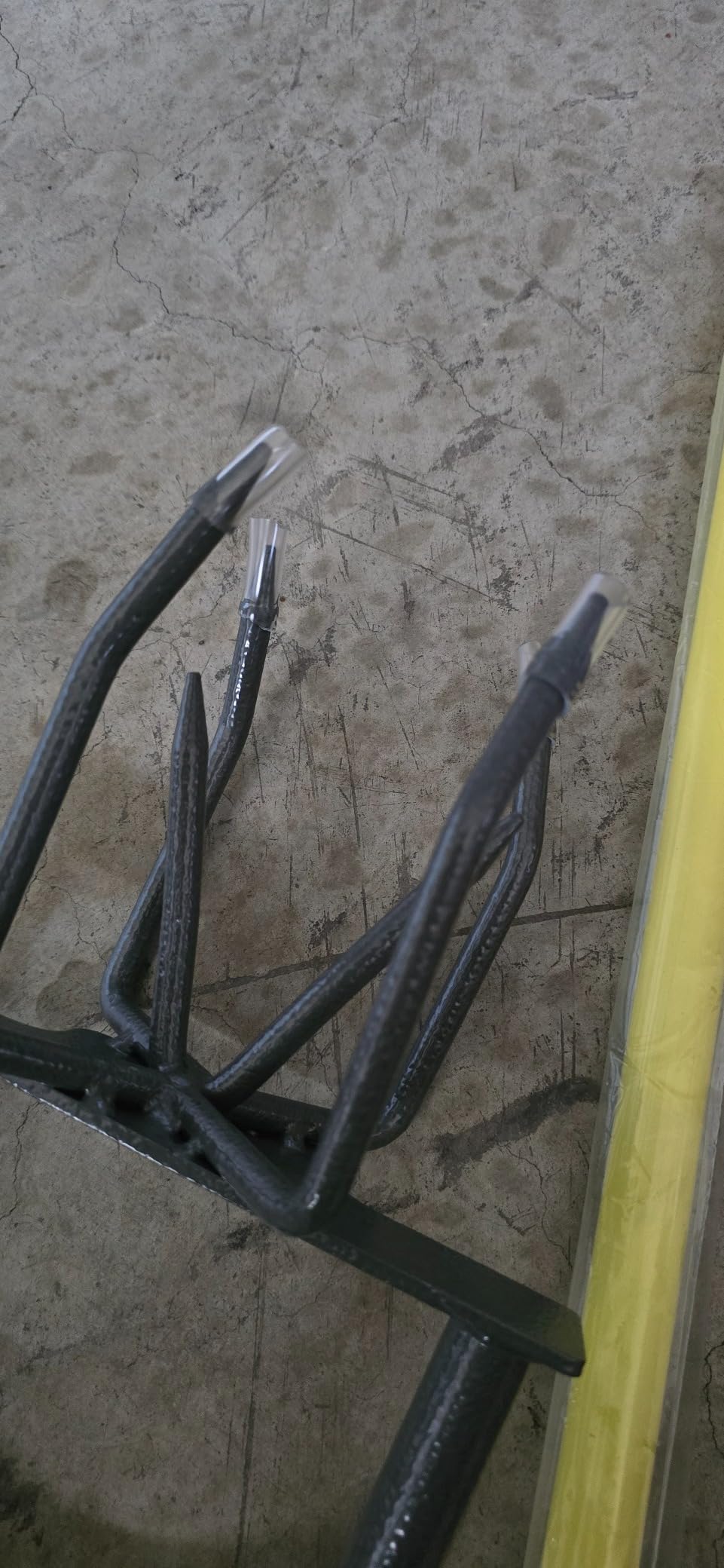
It fits places a machine cannot. Between established plants, inside a deep flower box, along a bed edge where a tiller would hit the frame, in a corner of a bed that is only 18 inches wide. For those spots, and for in-season work between rows, it is more precise than anything motorized.
Assembly takes minutes with the included wrenches and spare screws, and there is nothing to plug in or fuel up. For a renter or an apartment gardener with a balcony bed, it is a complete toolchain in one piece.
Where the Jardineer fits a raised bed
It suits new beds that are being filled, because you can work compost into soil in layers as you add it, before the bed has any plants in it. The arrow tines dig deeper than most powered machines on loose fill, and you control exactly where they go.
It is also the right tool for weeding between rows in season. The tines loosen the soil around a weed so you can lift the whole plant out, which is a different and more useful job than mixing compost, and one that a machine with a fixed shallow width cannot do between plants.
Where the Jardineer falls short
Clay is the hard case, and watering matters. In dry heavy clay the tines skate rather than bite, and owners report needing to water the bed a day ahead. The manufacturer makes the same note, and it is the most useful thing to know before you buy.
It also loosens soil without extracting weeds whole, and the bolts can loosen with repeated twisting and need retightening. On a large filled bed, the work is real and doubles as a workout, so pace yourself rather than planning a full bed in one session.
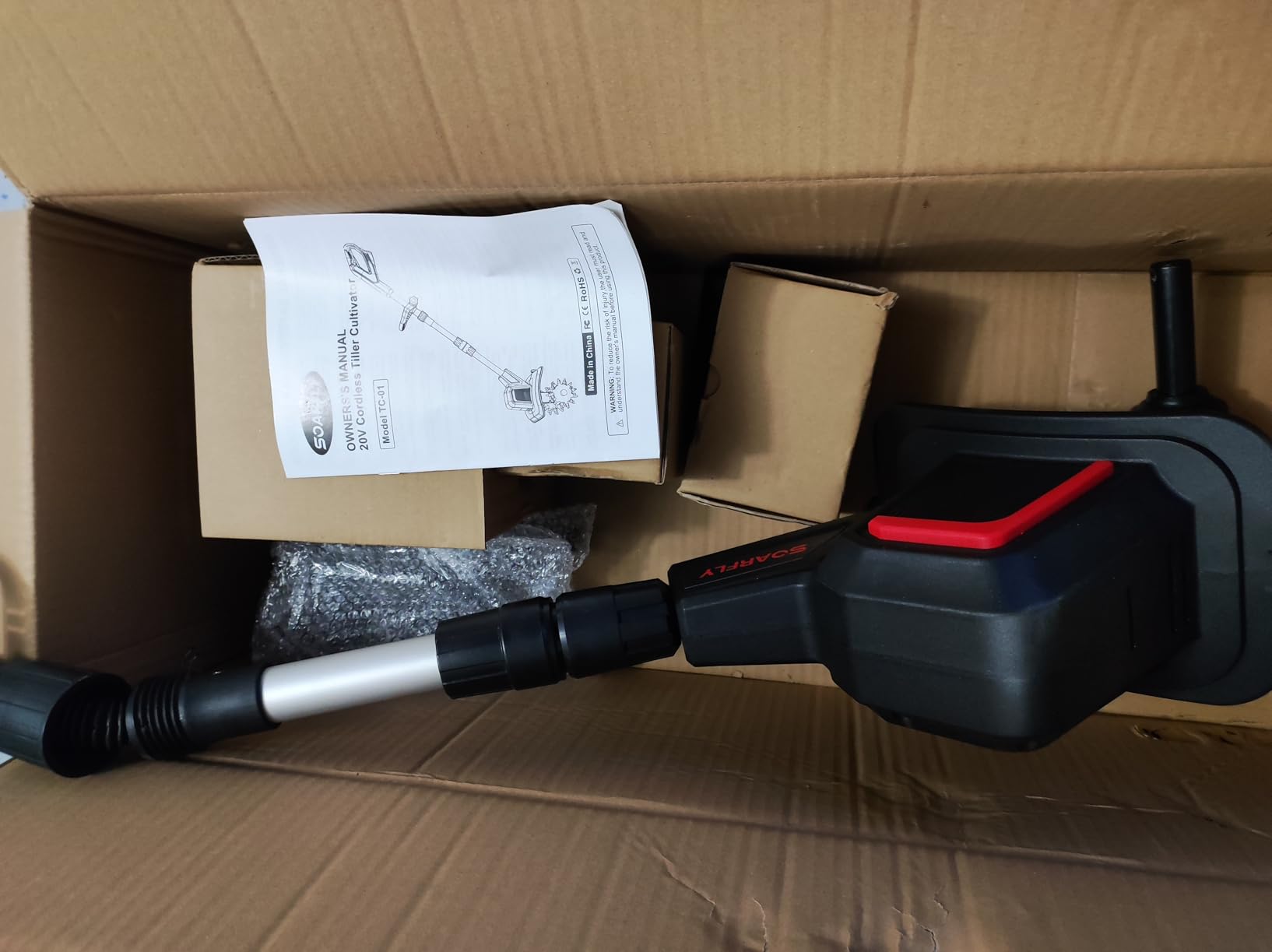
7. SOARFLY 9 Inch Cordless Tiller – Best for Compacted Clay Beds
SOARFLY Cordless Tiller Cultivator 9″ Width 6.6″ Depth, 2×4.0Ah Batteries
Two 4.0Ah batteries
9-inch width and 6.6-inch depth
48 steel tines at 360 RPM
Height-adjustable handle
Dual safety unlock system
Pros
- Two batteries included for continuous work
- Handles compacted and properly moistened clay
- Quiet cordless running
- Height-adjustable handle helps taller users
- Clearing tines takes one pin
Cons
- Real runtime closer to 20 to 45 minutes per pack than advertised
- Handle may be short for taller users
- Tines block on roots and stones
- Not a tool for deep cuts
Forty-eight steel tines is a lot of cutting points for a machine that weighs little enough to lift over a bed frame, and that is where this one earns its place. The 360-RPM motor holds a steady speed in properly moistened clay, which is the soil most raised-bed gardeners in heavy regions actually have to work.
Two 4.0Ah batteries are included, so you can swap rather than stop, and the height-adjustable handle lets a tall user stand up straighter than a fixed handle allows. For a gardener who wants cordless freedom in clay, that combination is the reason to pick it over a smaller single-battery machine.
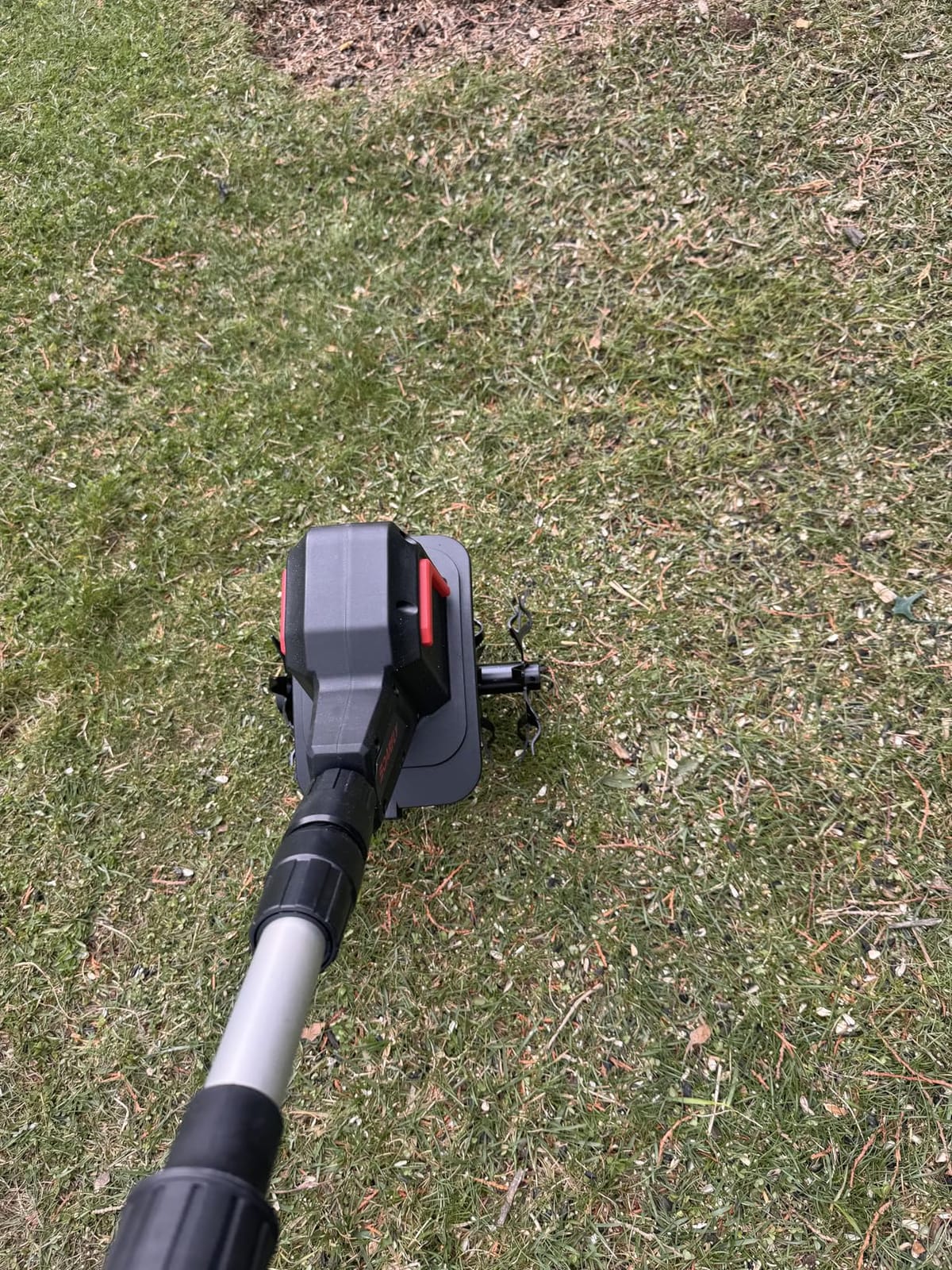
The manufacturer also gives the advice most listings leave out, which is to moisten firm soil and start shallow, then increase depth gradually. That single instruction is the difference between the machine performing well and bouncing, and it applies to every lightweight cordless tiller in this roundup.
Clearing the tines takes one pin rather than tools, and assembly is around ten minutes. Owners mention it being light enough for older users to move between beds without planning the lift in advance.
Where the SOARFLY fits a raised bed
It is well matched to a 3-foot bed, where 9 inches of width leaves room to steer and still needs only three or four passes per row. It suits flower boxes and small plots too, and the cordless design means the bed can be wherever you want it rather than where the outlet is.
Anyone working clay should know the setup: water the bed, let it drain to the point where it clumps and breaks cleanly, and work shallow passes until the depth grows. Done that way, owners report it handles even Georgia clay without stalling.
Where the SOARFLY falls short
The runtime claim is the widest gap between listing and reality in this group. Advertised as up to 120 minutes combined, owners report something closer to 20 to 45 minutes per pack depending on soil and depth. Buy it for the two batteries, not the headline number.
It is not a machine for deep single cuts or for breaking new ground, and it will block on roots and stones unless you clear them as you go. Handle length is also worth checking against your height, since taller users report lower-back strain on long sessions.
8. BARAYSTUS Manual Twist Hand Tiller – Lightest Option for Small Growers
BARAYSTUS Hand Tiller, Twist Garden Claw Cultivator for Soil loosening
Manual twist cultivator
4-prong steel claw head
16 inch handle
37.4 inch overall height
2.9 pounds
Pros
- Lightest tool in the group at 2.9 pounds
- Long curved tines dig deep for a hand tool
- Curved handle reduces twisting effort
- Disassembles for compact storage
- Assembly in about five minutes
Cons
- Bolts loosen quickly during use
- Weeds come up in one big clump to break apart by hand
- Still real physical effort on a full bed
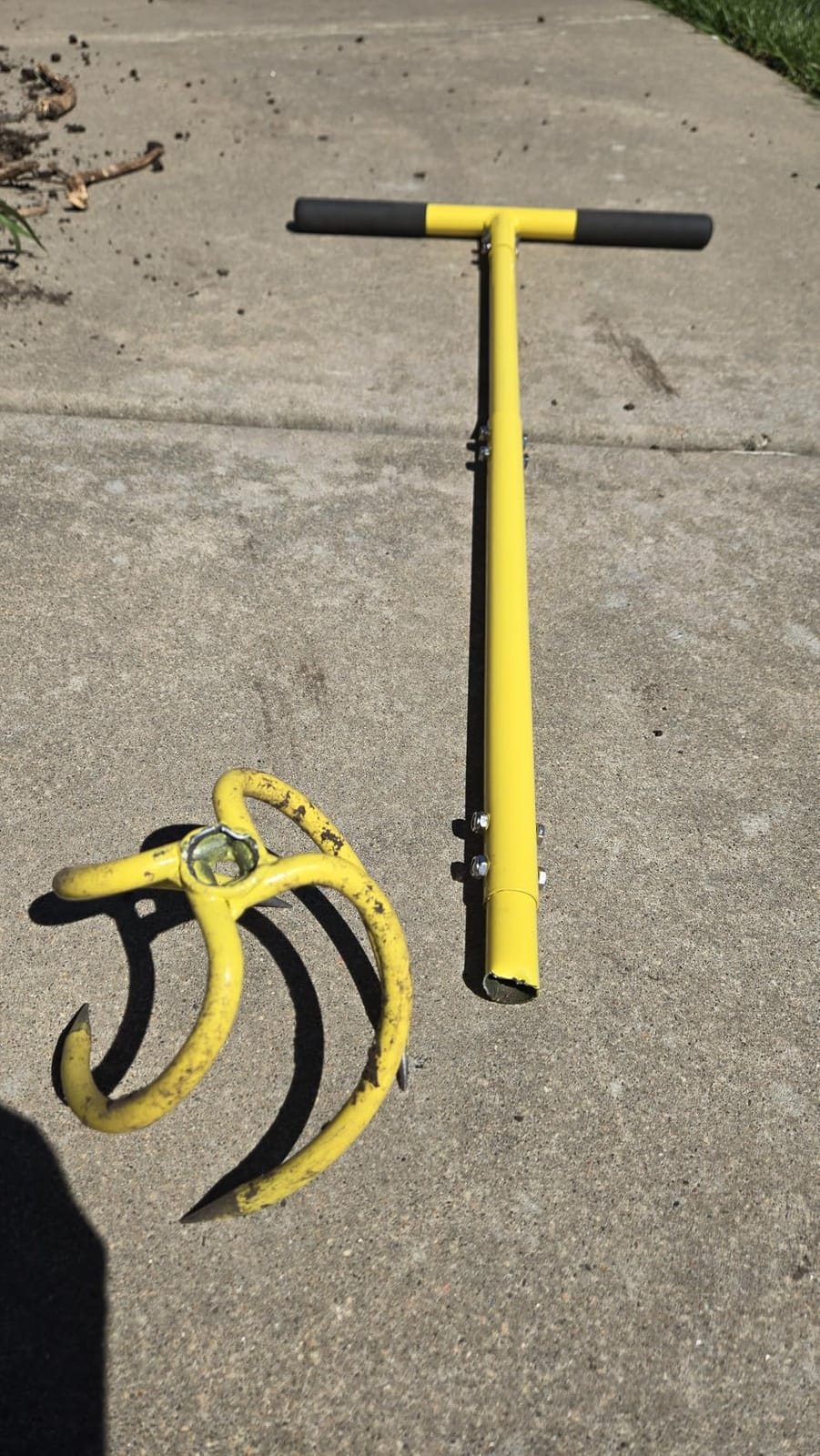
At 2.9 pounds this is the lightest tool here, and the 16-inch handle is long enough that a smaller-framed user can work standing up and generate real force from the twist. The four-prong steel claw head with long curved tines is the reason it manages compacted clay that defeats most hand tools.
Owners report the curved tines entering the ground smoothly and pulling up taproots and buried weeds in a way a fork cannot. At 37.4 inches tall it is a little higher than most hand cultivators, and that height is what keeps your back out of it during a long session.
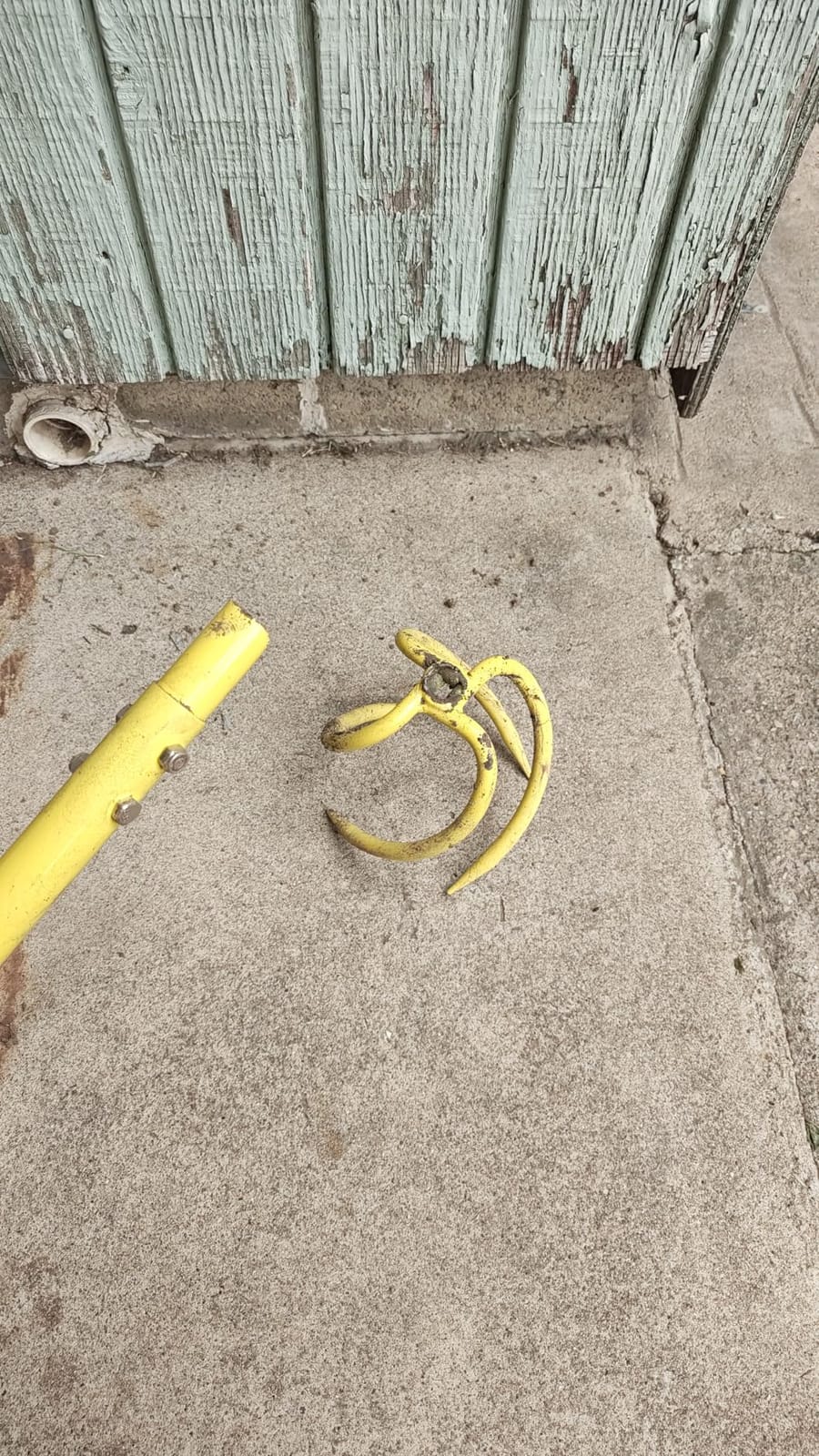
It disassembles into pieces, which matters more than it sounds. A hand tiller that breaks down is a hand tiller that lives in a drawer in a flat, in a corner of a shared shed, or in the trunk of a small car. Assembly takes about five minutes with the supplied hardware, and the screws are what allow it to fold down at all.
There is no battery, no cord, no fuel, and no maintenance. For a bed of 20 square feet, a machine adds cost and storage and takes over your attention; this covers the same ground in an afternoon with nothing to charge afterward.
Where the BARAYSTUS fits a raised bed
This is the pick for a new bed being filled, a small urban plot, or anyone who gardens with limited grip strength and does not want a machine at all. Because there is no motor, there is no cord across the path, no battery to forget, and nothing to store that takes up floor space.
It is also the right tool for the parts of a bed a machine cannot reach: corners, edges along a liner, and the strip between a wall and the plants. For those jobs a tiller is the wrong instrument and this is the right one.
Where the BARAYSTUS falls short
The bolts are the recurring mechanical complaint. Owners report them loosening quickly under the twisting force, which means checking and tightening them partway through a session, and doing it before the handle separates.
It also pulls weeds up in one large clump that has to be broken apart by hand, and it is still physical work. On a big filled bed that is a workout rather than a chore, so set expectations accordingly. For a small bed it is genuinely the most efficient answer.
How to Choose a Tiller for Raised Beds
Tiller, cultivator, or hand tiller: what the words mean
A tiller is designed to dig, and a cultivator is designed to stir. Tillers have tines that dig into the soil and pull it backward or forward with enough force to open new ground; cultivators have shallower tines meant to loosen the surface, uproot small weeds, and blend in amendments without inverting the soil. For a raised bed, the cultivator is almost always the right answer, because you are working soil that is already loose.
Rototiller is a marketing word rather than a technical category. It usually describes any machine where powered tines rotate, which covers everything on this list. A hand tiller is the manual version of the same idea: you twist a claw or fork into the soil by hand, using body weight and leverage rather than an engine.
Corded, cordless, or manual
Corded machines deliver unlimited runtime and are the cheapest per unit of power, at the cost of managing an extension cord and never tilling a bed that is out of reach of an outlet. Cordless machines go anywhere with two batteries, run quietly, and put a runtime ceiling on your session, usually 25 to 45 minutes per pack in real soil. Manual tools have no runtime at all and no depth limit, but the effort comes out of your back.
Noise follows the same pattern. Gas is loud enough to be a conversation with your neighbors, cordless is barely a hum, corded sits in between, and a hand tool is silent. For a suburban garden where beds sit close to a property line, cordless or manual is the polite choice.
Match the tilling width to your bed size
This is the single biggest buying constraint in a raised bed and the one most shoppers get wrong. A machine needs clearance on both sides of its tine housing to steer without riding up the frame. If your bed interior is 3 feet, a 9-inch machine gives you roughly 13 inches of clearance on each side. A 14-inch machine in the same bed gives you 11 inches, and the difference shows up the moment you try to turn at the end of a pass.
Here is how the picks map to bed sizes. For beds 2 feet wide and under, choose 7.5 to 9 inches, which is the Earthwise, the Alloyman, the SOARFLY, or either hand tool. For beds 3 feet wide, 9 to 12 inches is comfortable, covering the LawnMaster, the MZK, and the Alloyman. For beds 4 feet and wider, 12 to 14 inches saves real time, which is the BILT HARD and the MZK.
Machine weight is the second constraint, and it is the one raised beds add that open ground does not. You have to lift the machine over a 10 to 24 inch frame at the start of every bed. Under 15 pounds is comfortable for one person; under 10 pounds is comfortable for anyone, including a gardener with a bad back. If you are buying a 30-pound machine, plan on two people or a ramp, because that lift happens dozens of times a season.
How deep you actually need to till
Raised beds are usually 10 to 12 inches deep above the soil line, so the useful working zone is the top 6 to 8 inches. Anything deeper is wasted effort and, in an established bed, potentially harmful to the structure below. Tilling to 6 inches in a 12-inch bed mixes amendments through the full depth of soil a plant can actually reach.
Be skeptical of rated depth. The most reliable way to read a depth number is to check whether owners report reaching it. Where reviews say the real number is lower, plan for the lower number. Depth also depends on the machine’s mass more than its rating: a 13-pound cultivator walks out of the ground on loose fill, and a 20-pound machine with a stronger motor drives in deeper.
Getting the machine over the bed wall
Before buying, try to find the weight and the folded dimensions, then picture your frame. Most frames sit 10 to 24 inches above the ground, and the machine has to clear that height plus your hands. Two positions matter: the wheels or foldable handle, and the handle length. A machine that folds is far easier to tip over a wall than one that does not, and most of the picks here fold or have a stow-away wheel position.
The two-position wheel adjustment is worth a close look on the MZK and BILT HARD. Set to transport, the wheels hold the tines clear for rolling between beds; set to tilling, they regulate depth. If you have more than three beds, that adjustment is what stops you from carrying the machine across the yard a dozen times.
When you should not till a raised bed at all
Sometimes the correct answer is to skip the machine. In an established bed with healthy structure, a tiller inverts the soil and destroys the fungal networks and worm channels that keep it productive, and you lose the layered organic matter you spent two seasons building. If your bed is already growing well and the only task is adding compost, top-dress instead: spread a couple of inches of compost over the surface and let the worms take it down.
A broadfork is the middle path. You drive it in, lift slightly, and let the soil fracture rather than turn, which loosens compaction and admits air while leaving the layers intact. It is the right tool for a bed that is hard but healthy, and it is also what you reach for when a bed has never been tilled and you want to keep it that way.
Two practical rules keep tilling honest. Never till wet soil: a handful squeezed in your fist should hold together and break cleanly when prodded, and anything wetter turns to slurry. And till only when the top 2 inches are dry to the touch, because soil that smears into ribbons will compact harder next season than the ground you started with.
Frequently Asked Questions
Should raised beds be tilled?
Only when the bed is newly filled, hard, or badly compacted. In an established bed with healthy soil, top-dressing compost and using a broadfork loosens and aerates the soil without inverting the layers, worm channels, and fungal networks that a tiller destroys. Till shallowly, no deeper than 6 inches in a typical 12-inch bed, and never in wet soil.
What size tiller fits a 4 foot raised bed?
A machine with a 9 to 12 inch tilling width works well in a 4 foot bed, and a 14 inch width still steers if the bed is at least 3 feet wide. What matters more than width is weight: keep the machine under about 20 pounds so you can lift it over the bed frame yourself, and check that it folds or has adjustable wheels for storage.
What is a good mini tiller for raised beds?
Look for a 9 to 12 inch tilling width, a weight under 20 pounds, and a depth of at least 6 inches. Cordless machines such as the LawnMaster and SOARFLY are the easiest to use because there is no cord, while corded models such as the BILT HARD and MZK deliver more force in clay. The right choice depends on whether your soil is loose or hard, not on brand.
Is a rototiller too powerful for a raised bed?
A full-size rear-tine tiller is too much for a raised bed. It is too wide to steer between frames, too heavy to lift over a wall, and it inverts soil that was already loose. Mini tillers and cultivators with counter-rotating or shallow tines are the right class of machine, and in a bed narrower than 3 feet even a 12 inch cultivator is at the limit.
Do cordless tillers work well in raised beds?
Yes, for mixing compost and loosening previously worked soil. They run quietly, need no cord, and are light enough to lift over a bed frame. The limits are runtime, usually 25 to 45 minutes per battery in real soil, and breaking ground that has never been worked. Machines with two batteries and a 7 to 9 inch width are the most practical setup for beds.
What is the difference between a tiller and a cultivator?
A tiller digs: its tines are designed to invert soil and open ground, which suits new plots. A cultivator stirs: its shallower tines loosen the surface, uproot weeds, and blend in compost while leaving the soil structure largely intact. For a raised bed you are already filled with loose soil, a cultivator is usually the better match.
Final Verdict for Raised Bed Tilling
After working through eight machines, the LawnMaster 24V MAX remains the best garden tiller for most raised beds. It covers 9 inches, reaches up to 7 inches deep, weighs 13.6 pounds, and needs no cord. If your beds are 2 feet wide, the Earthwise is the more precise answer. If they are 4 feet or wider, the BILT HARD saves real time. If you are dealing with hard clay, the SOARFLY or the MZK have the muscle. And if your garden is small, a storage space is tight, or your back has a limit, the hand tools are not a compromise.
Measure your bed interior before you order, check the machine’s weight against your own lifting ability, and remember that the best raised bed is often the one you never till. Check the current price for each of these picks and pick the one that matches your bed, not the one with the biggest number on the box.