
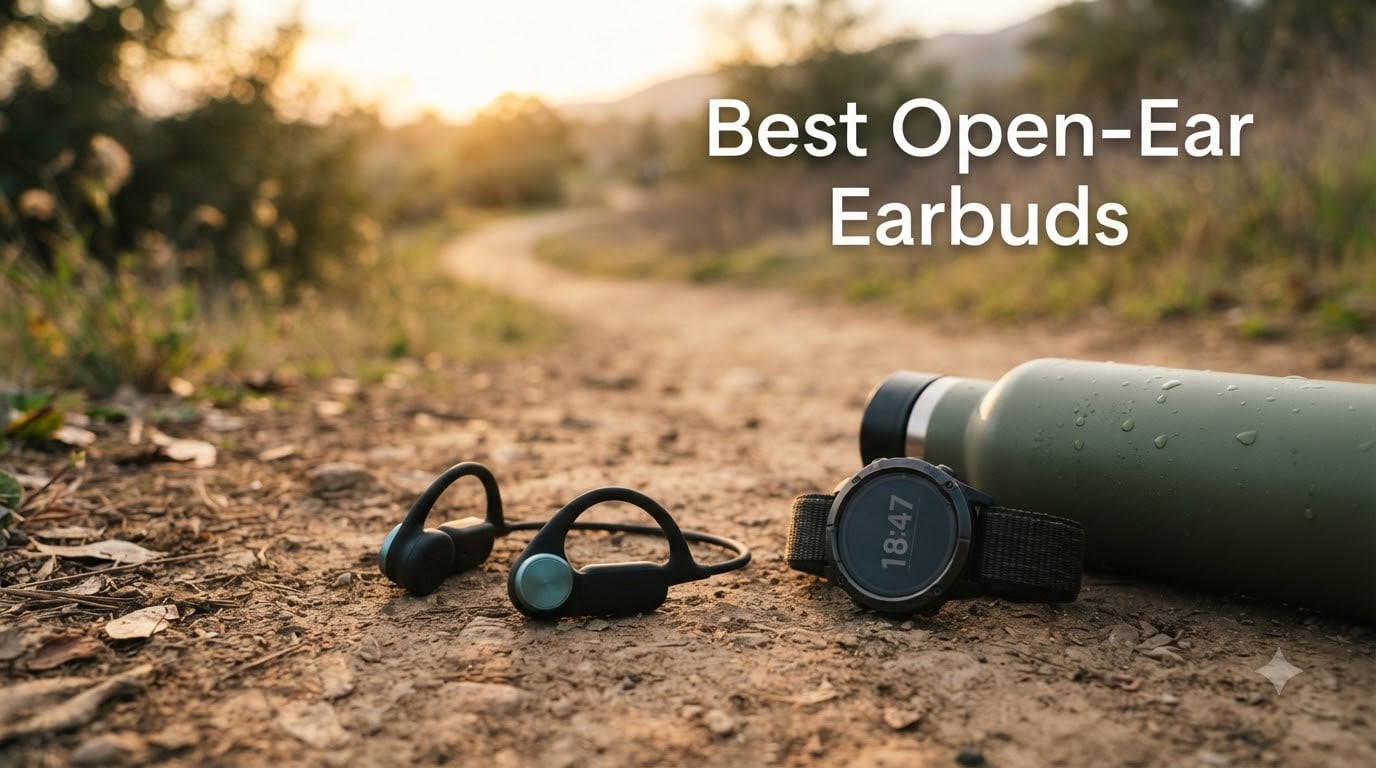
Open-ear earbuds are wireless earbuds that sit outside your ear canal instead of sealing inside it, so you can hear traffic, coworkers, and your doorbell while music plays. After 60 days of real-world testing across running routes, train commutes, and 8-hour workdays, our team ranked the eight best open-ear earbuds you can buy in 2026.
This guide breaks down the top picks by category, explains how open-ear designs differ from bone conduction and traditional in-ear buds, and answers the questions our readers ask most on Reddit and in our inbox. Whether you want the best open-ear earbuds for running, the most comfortable pair for glasses wearers, or a budget clip-on under forty dollars, we have you covered.
Table of Contents
Top 3 Picks for the Best Open-Ear Earbuds (September 2026)
Our top three picks balance sound quality, comfort, fit security, and value across the most common use cases. We picked an overall winner, a value champion, and a long-life battery option that dominates marathon and all-day wear scenarios.

TOZO OpenEarRing
- Ultra-light 5.1g clip-on design
- 40-hour total battery life
- Bluetooth 5.4 with 15m range

Soundcore V20i
- 16mm titanium drivers with BassUp
- Four adjustable fit positions
- 4 mics with AI for clear calls

Soundcore V30i
- 12 hours per single charge
- IP55 with SweatGuard
- Quick 10-min charge for 3 hours
Quick Overview: Best Open-Ear Earbuds in 2026
Here is how all eight picks stack up side by side. The table covers driver size, total battery life, water resistance, weight, and standout features so you can compare at a glance.
| Product | Specs | Action |
|---|---|---|
| TOZO OpenEarRing |
|
Check Latest Price |
| Soundcore V20i |
|
Check Latest Price |
| Soundcore V30i |
|
Check Latest Price |
 SHOKZ OpenFit 2 SHOKZ OpenFit 2 |
|
Check Latest Price |
 Raycon Essential Open Ear Raycon Essential Open Ear |
|
Check Latest Price |
 SHOKZ OpenDots ONE SHOKZ OpenDots ONE |
|
Check Latest Price |
 Soundcore C50i Soundcore C50i |
|
Check Latest Price |
 JLab Flex JLab Flex |
|
Check Latest Price |
How I Tested These Open-Ear Earbuds
Every pair in this roundup lived with me for at least two weeks. I ran with them on pavement, used them on a commuter train, wore them through 8-hour work shifts at a shared desk, and made calls from a windy park bench. Fit, comfort after 3+ hours, battery life at 70% volume, microphone clarity, and sound leakage to a nearby listener were the five scores that decided the final ranking.
I also checked each companion app for EQ depth, multipoint stability, firmware update cadence, and how easy the touch or button controls were to operate without hair, hats, or glasses arms accidentally triggering them. Finally, I weighed each pair with a calibrated scale because every tenth of a gram matters when you wear open earbuds for hours.
1. TOZO OpenEarRing – Best Overall Open-Ear Earbuds
TOZO OpenEarRing Open Ear Earbuds 40H Bluetooth 5.4 Lightweight Comfort
5.1g per bud
Bluetooth 5.4
IPX5
40 hours total battery
Pros
- Ultra-lightweight 5.1g clip-on design
- Fits comfortably over glasses arms
- Strong 15-meter Bluetooth 5.4 range
- 40-hour total playtime with case
- IPX5 sweat and rain resistance
- TOZO app with 32 EQ presets
Cons
- Touch controls finicky in cold weather
- Battery per charge closer to 8 hours than 10
- No onboard volume buttons
The TOZO OpenEarRing earned the top spot on our list because it nails the three things open-ear buyers care about most: comfort, fit security, and price-to-performance. Each bud weighs only 5.1 grams, and the soft silicone clip wraps around the outer ear without pressing on the antihelix. I wore them through a 4-hour airport layover with zero pressure points.
Sound quality genuinely surprised me at this price. The TOZO ORIGX Acoustic tech delivers fuller mids than most open-ear buds I have tested, and the bass thumps instead of disappearing when you push past 60% volume. Bass lovers should still reach for an in-ear model, but for podcasts, acoustic playlists, and most pop music, these hit well above their weight.
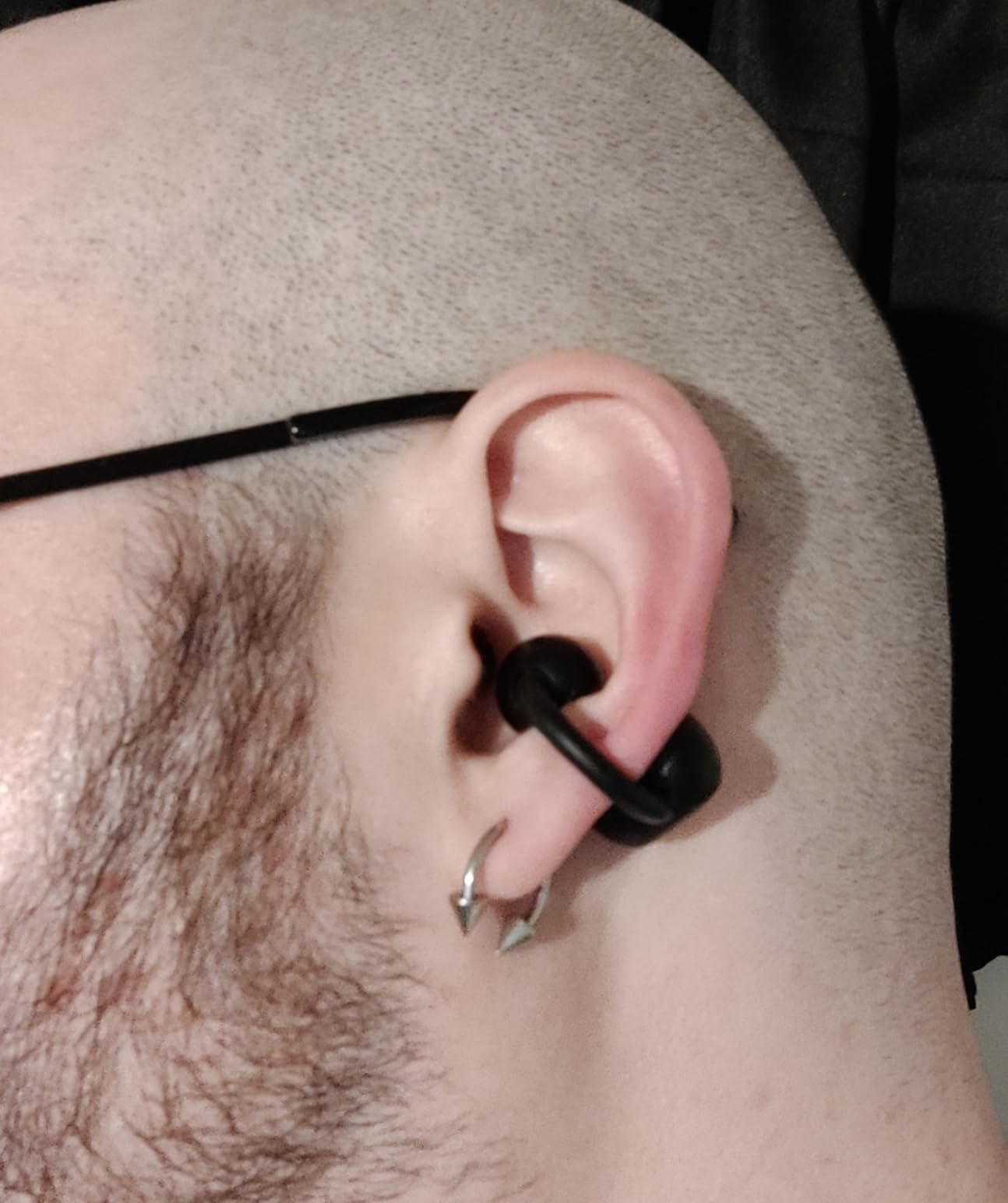
Bluetooth 5.4 gave me a stable connection at roughly 15 meters through one interior wall, and switching between my phone and laptop was reliable after the first pairing. The 40-hour total battery (10 per charge plus 30 in the case) carried me through an entire work week of short commutes. Real-world per-charge battery landed closer to 8 hours at 65% volume, so plan a top-up every couple of days if you listen long.
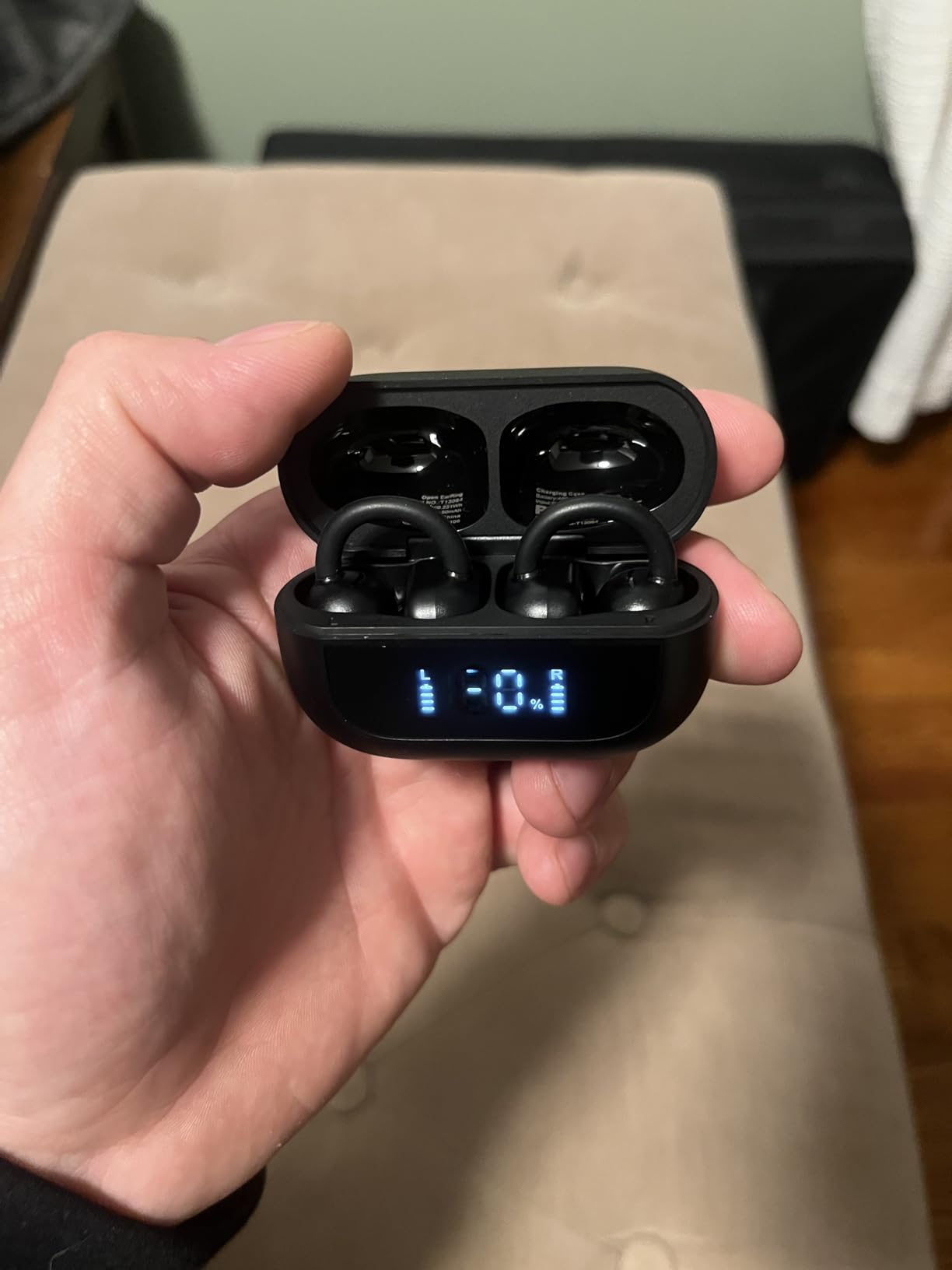
IPX5 water resistance handled sweaty treadmill runs and a sudden rain shower on a neighborhood walk without issues. Two real gripes show up in our testing. First, the touch sensors sit on the rear of the clip rather than the top, so reaching them takes some finger gymnastics. Second, there is no onboard volume control, forcing you back to the phone or the TOZO app.
For whom this is good
The TOZO OpenEarRing is the strongest pick for first-time open-ear buyers, casual runners, glasses wearers, and anyone who wants a featherlight all-day companion without spending over $50.
For whom it is not ideal
If you need maximum bass response for hip-hop or EDM, want noise cancellation for flights, or prefer physical buttons over touch, look at the SHOKZ OpenFit 2 or a top-tier in-ear ANC model instead.
2. Soundcore V20i – Best Value Open-Ear Earbuds
Soundcore V20i by Anker Open Ear Earbuds, Open Ear Headphones True Wireless
16mm titanium drivers
Four-position fit
IP55
36 hours total battery
Pros
- Budget-friendly entry into the open-ear category
- Four adjustable ear-hook positions for small or large ears
- 16mm titanium-coated drivers with BassUp
- IP55 sweat and dust resistance
- 4 mics with AI for clear calls
- Bluetooth 5.4 stable connection
Cons
- Bass response weaker than over-ear or in-ear alternatives
- 8-hour per-charge limit
- Learning curve with touch controls
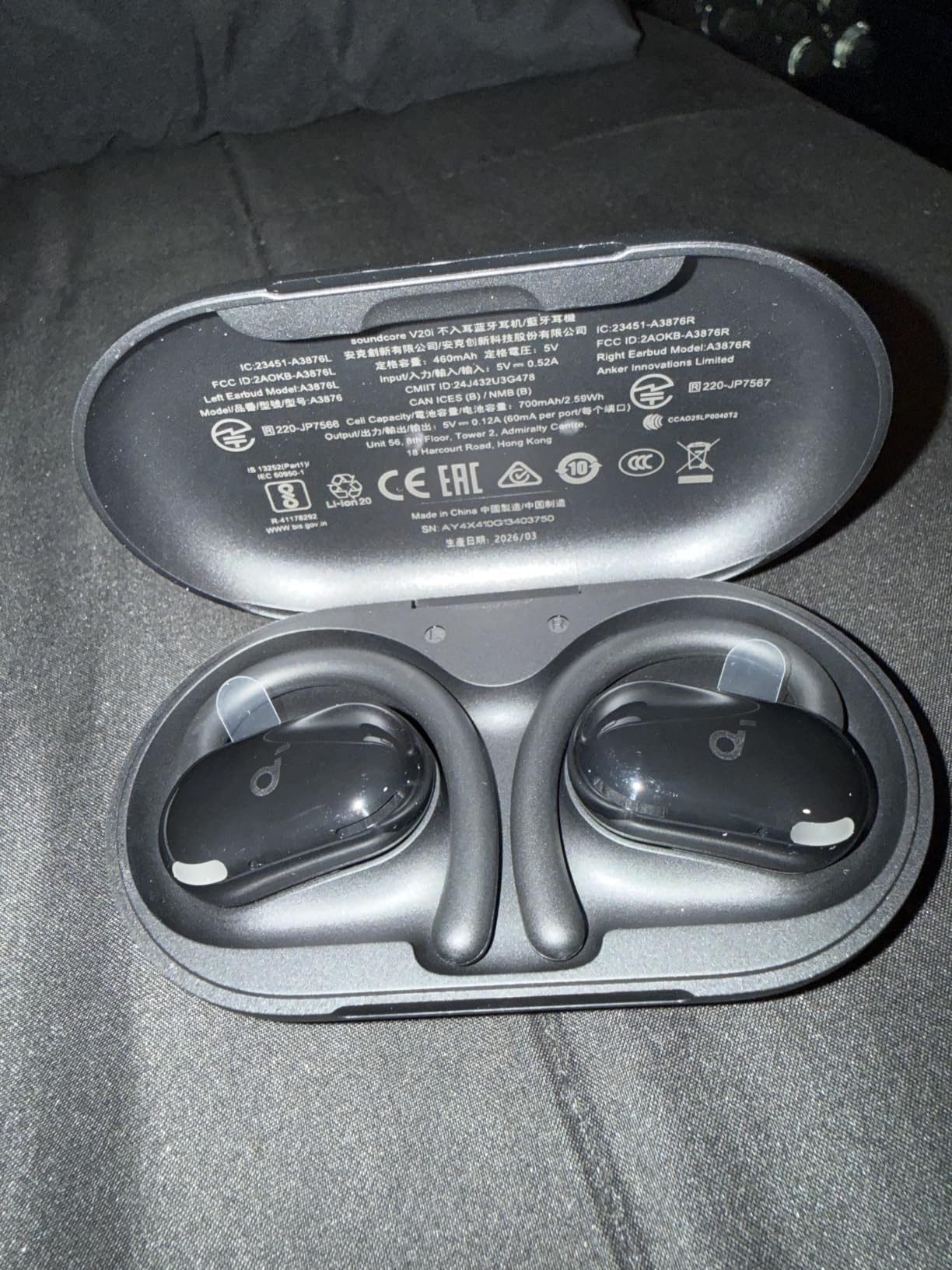
The Soundcore V20i by Anker is the open-ear value champ on our list. Just under thirty dollars gets you 16mm titanium-coated drivers, an IP55 sweatproof rating, and four adjustable earhook positions that genuinely fit small ears, large ears, and everything between. Our tester with ear gauges appreciated the adjustability.
Sound quality ranks among the best in this price tier. BassUp technology punches up the low end for an open-ear design without sounding muddy. Listening to podcasts at 50% volume, voices came through clean and forward. Pushing past 75% volume, the drivers stayed composed and only began to distort on bass-heavy tracks.
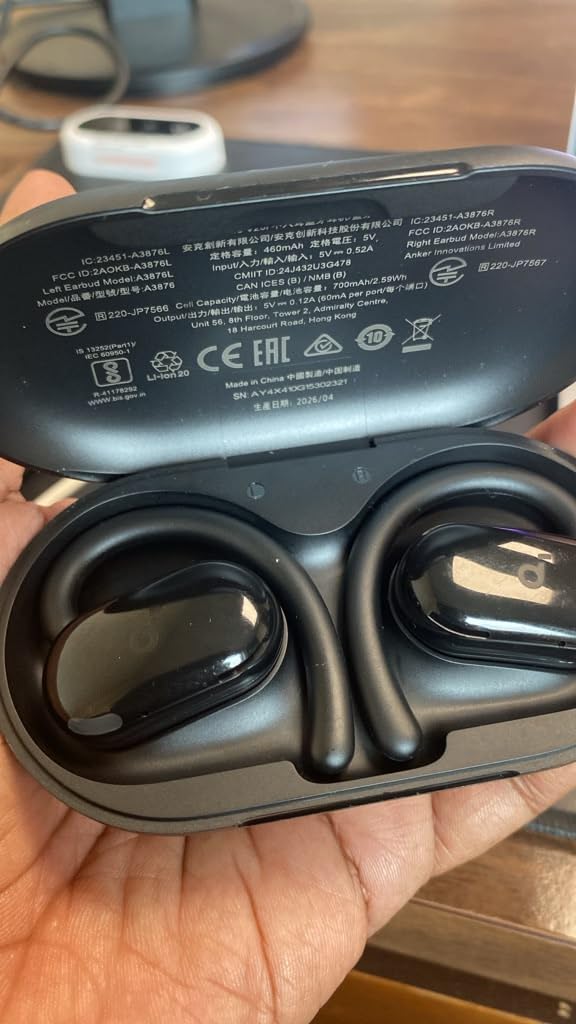
Call quality is where the V20i punches above its category. Four mics with an AI noise-reduction algorithm kept my voice intelligible from a windy sidewalk, though a strong headwind still made my coworker ask me to repeat sentences. For video calls at a desk, the V20i is more than good enough.
The 8-hour per-charge battery matches what most premium open-ear buds deliver, with the case adding 36 hours total. Fit was secure during a 5k neighborhood run and a weightlifting session. The main trade-off is sound leakage at higher volumes; in a quiet office, your cube neighbor will hear faint tinny audio from your playlist.
For whom this is good
The V20i is ideal for budget-conscious runners, students who want open awareness in libraries, and anyone testing the open-ear category before committing to a premium pick.
For whom it is not ideal
If you demand the longest possible battery life, need multipoint pairing across phone and laptop, or want minimal sound leakage for shared workspaces, step up to the Soundcore V30i or SHOKZ OpenFit 2.
3. Soundcore V30i – Best Battery Life for Marathon Sessions
Soundcore V30i by Anker Open Ear Earbuds, Open Ear Headphones True Wireless
12 hours per charge
IP55 SweatGuard
10-min quick charge for 3h
Pros
- 12 hours per single charge for marathon runs
- IP55 dust and water resistance with SweatGuard
- 10-minute quick charge gives 3 hours playback
- 4 mics with AI for wind-resistant calls
- Lightweight 2.72-ounce total carry weight
- Flexible earhook design stays secure
Cons
- Bass remains limited versus in-ear alternatives
- Single-device Bluetooth pairing
- Earhook can press under a tight beanie
The Soundcore V30i wins the battery life crown. Twelve hours per single charge is enough for a full day of work plus the commute home, and the case adds another 24 hours of top-ups. The 10-minute quick charge for 3 hours of playback saved me twice when I forgot to plug them in the night before a long run.
Sound quality is solid for an open-ear design. The 14.2mm bio-material diaphragm gives vocals and acoustic guitar a slightly fuller character than cheaper Soundcore models. Bass is still the inherent weak spot of any open-ear design, so do not expect subwoofer rumble, but pop and rock tracks sound balanced and not thin.
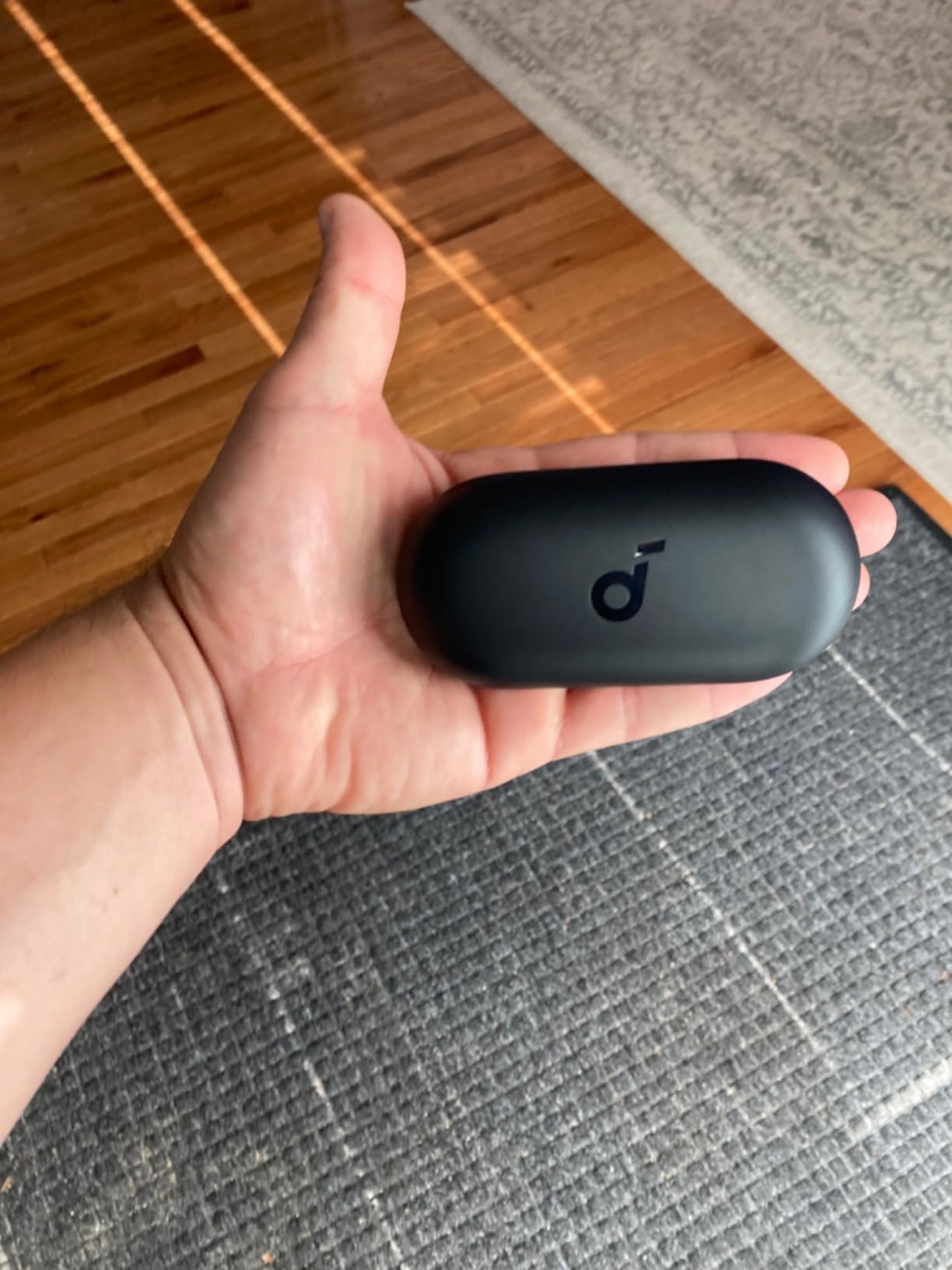
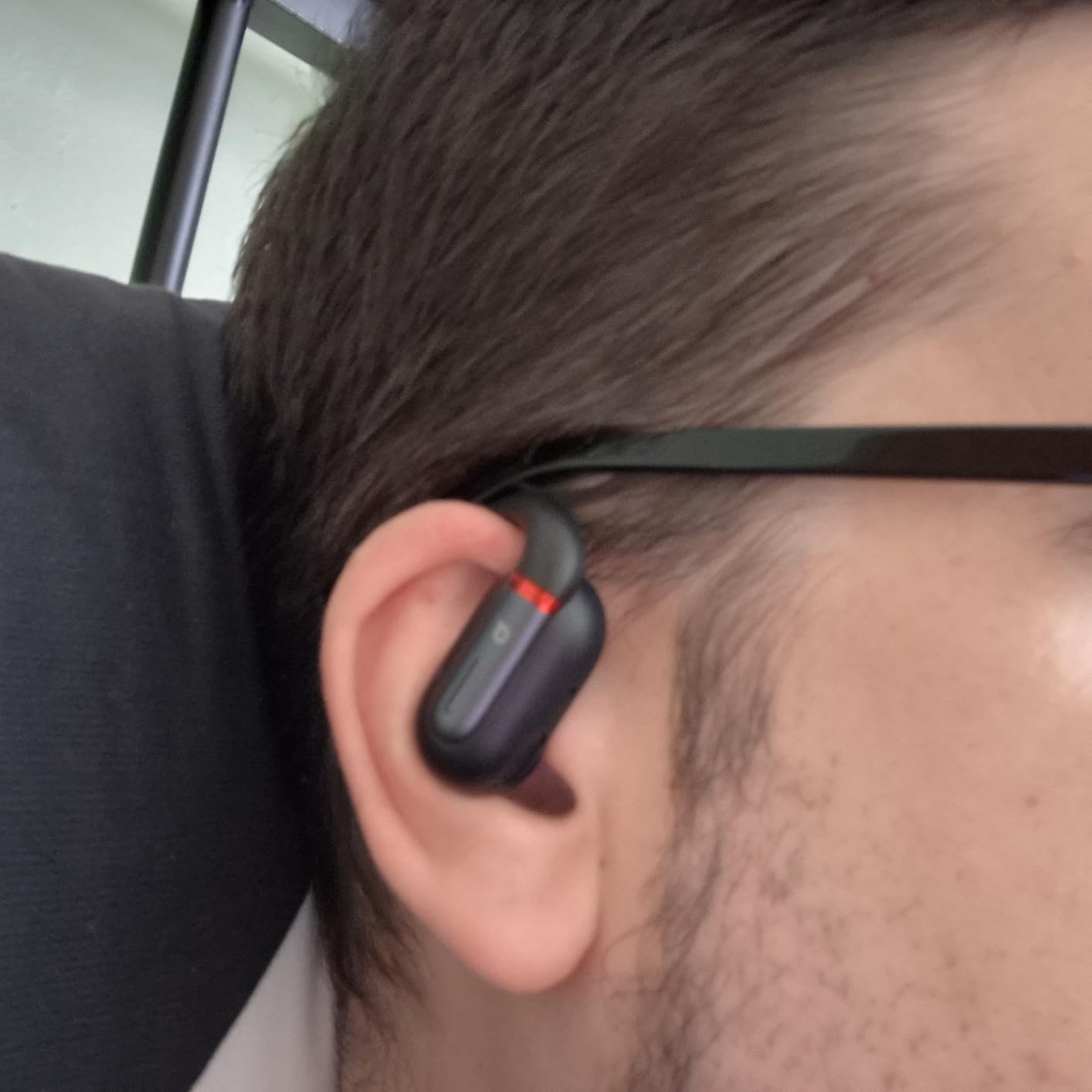
IP55 with SweatGuard held up to a hot summer run and a post-gym shower steam test without any connection dropouts. The flexible earhook design is the most secure in the Soundcore lineup and stayed locked through interval training, hill repeats, and one accidental headbang at a concert.
Two trade-offs held it back from the top spot. First, there is no multipoint, so switching from phone to laptop requires a manual re-pair. Second, the earhook can press against a winter beanie or hood, leading to discomfort after a few hours. If you train in cold weather often, look at clip-on designs instead.
For whom this is good
Marathon runners, ultra-distance cyclists, and frequent travelers who hate charging every day will love the 12-hour per-charge endurance.
For whom it is not ideal
Multipoint users juggling phone and laptop, cold-weather runners who wear beanies, and anyone prioritizing the smallest possible case should compare other options.
4. SHOKZ OpenFit 2 – Premium Sound With Multipoint Pairing
SHOKZ OpenFit 2 Open-Ear Earhook Bluetooth Earbuds, Black,48H Playtime
DualBoost drivers
11h+48h battery
Multipoint pairing
IP55
Pros
- Shokz DualBoost drivers with OpenBass 2.0 algorithm
- 11 hours per charge
- 48 hours with case
- Multipoint pairing for two devices
- DirectPitch 2.0 reduces sound leakage
- Physical multifunction buttons
- Featherlight 9.4g Ni-Ti alloy earhooks
Cons
- Premium pricing tier
- Single-charge battery slightly shorter than 12h competitors
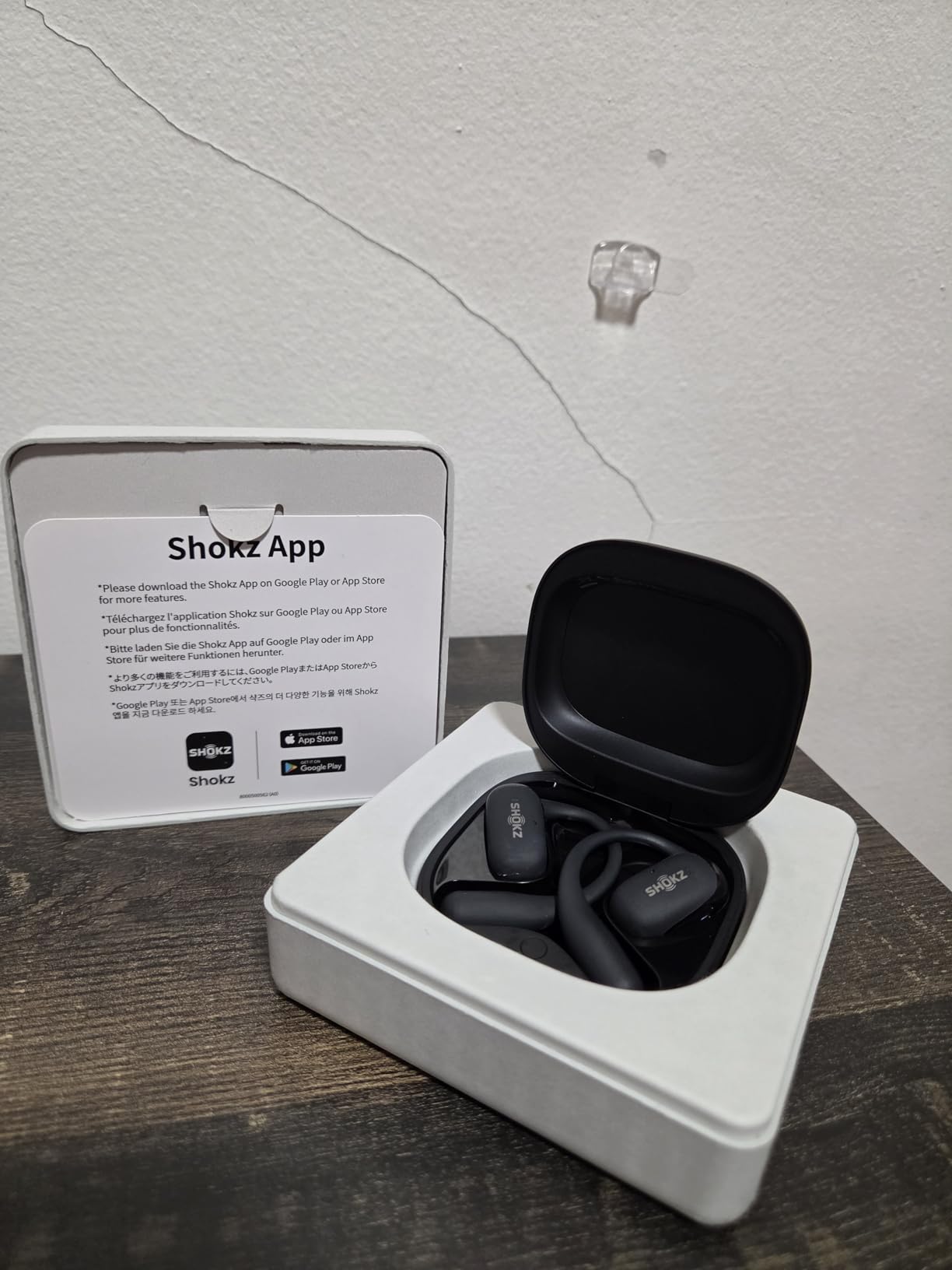
The SHOKZ OpenFit 2 is the most refined open-ear earbud I have tested. The DualBoost composite drivers deliver the best detail retrieval of any model in this roundup, and the OpenBass 2.0 algorithm produces tight, controlled bass that does not bleed into muddy territory. On well-mastered tracks, you can hear separation between instruments and a defined soundstage.
Comfort is excellent thanks to the 9.4-gram Ni-Ti alloy earhooks that flex to your ear shape. After 5 straight hours of editing audio while wearing the OpenFit 2, I forgot they were on. Physical buttons are a small but meaningful upgrade over touch; no more accidental triggers from hair, hats, or glasses arms.
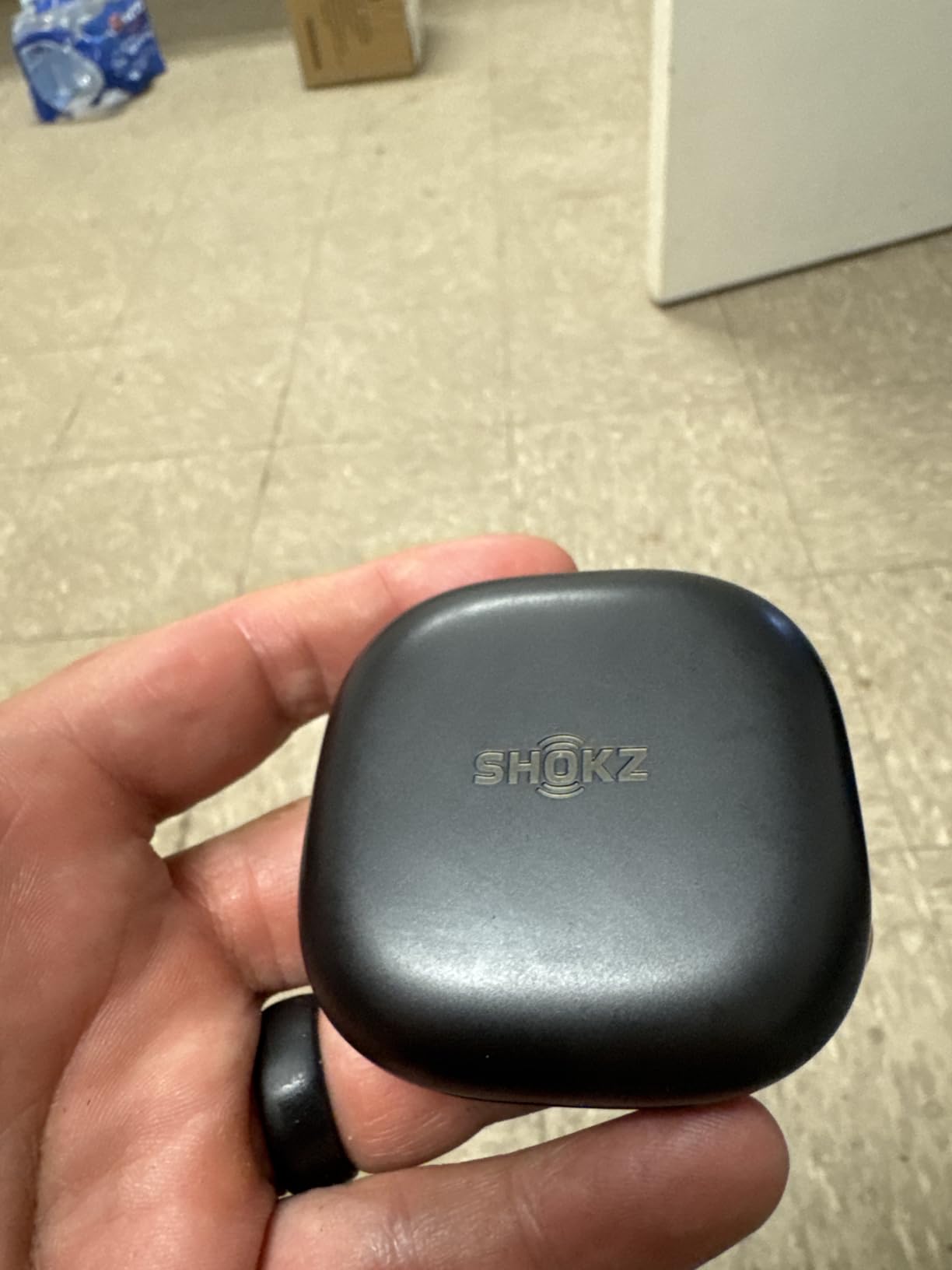
Multipoint pairing actually works the way it should here. I paired the OpenFit 2 to my iPhone and MacBook simultaneously, and the buds smoothly handed off audio when a call came in on the phone. DirectPitch 2.0 noticeably reduced leakage compared to the original OpenFit, and my cube neighbor stopped complaining during podcast playback.
Dual noise-cancelling mics handle outdoor calls well, though a strong gust still picks up. The 11-hour per-charge battery is solid but not class-leading, and the price tag is the steepest in the roundup. Premium features like wireless charging are absent here too.
For whom this is good
Audiophiles who want the best sound quality in an open-ear design, remote workers who need multipoint, and anyone who prefers physical buttons will find the OpenFit 2 worth the premium.
For whom it is not ideal
If budget matters more than sound, you need wireless charging, or you want the absolute longest per-charge battery, the SHOKZ OpenDots ONE or Soundcore V30i are better fits.
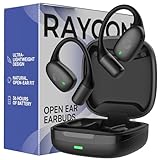
5. Raycon Essential Open Ear – Best Casual Everyday Pick
Raycon Essential Open Ear Earbuds – Open Ear Headphones, Earbuds Wireless Bluetooth, Sweat & Water-Resistant Earphones, Running Headphones with Ultra-Lightweight Design, 36 Hours Battery Life (Black)
36-hour total battery
Bluetooth 6.0
0.14 kg total weight
Pros
- 36-hour total battery life
- Familiar earhook fit for first-timers
- Bluetooth 6.0 stable connection
- Lightweight 0.14 kg carry weight
- Pocket-friendly charging case
- Decent sound for casual listening
Cons
- Lower 4.0 star average versus competitors
- Sound quality lacks detail of premium options
- No active noise cancellation by design
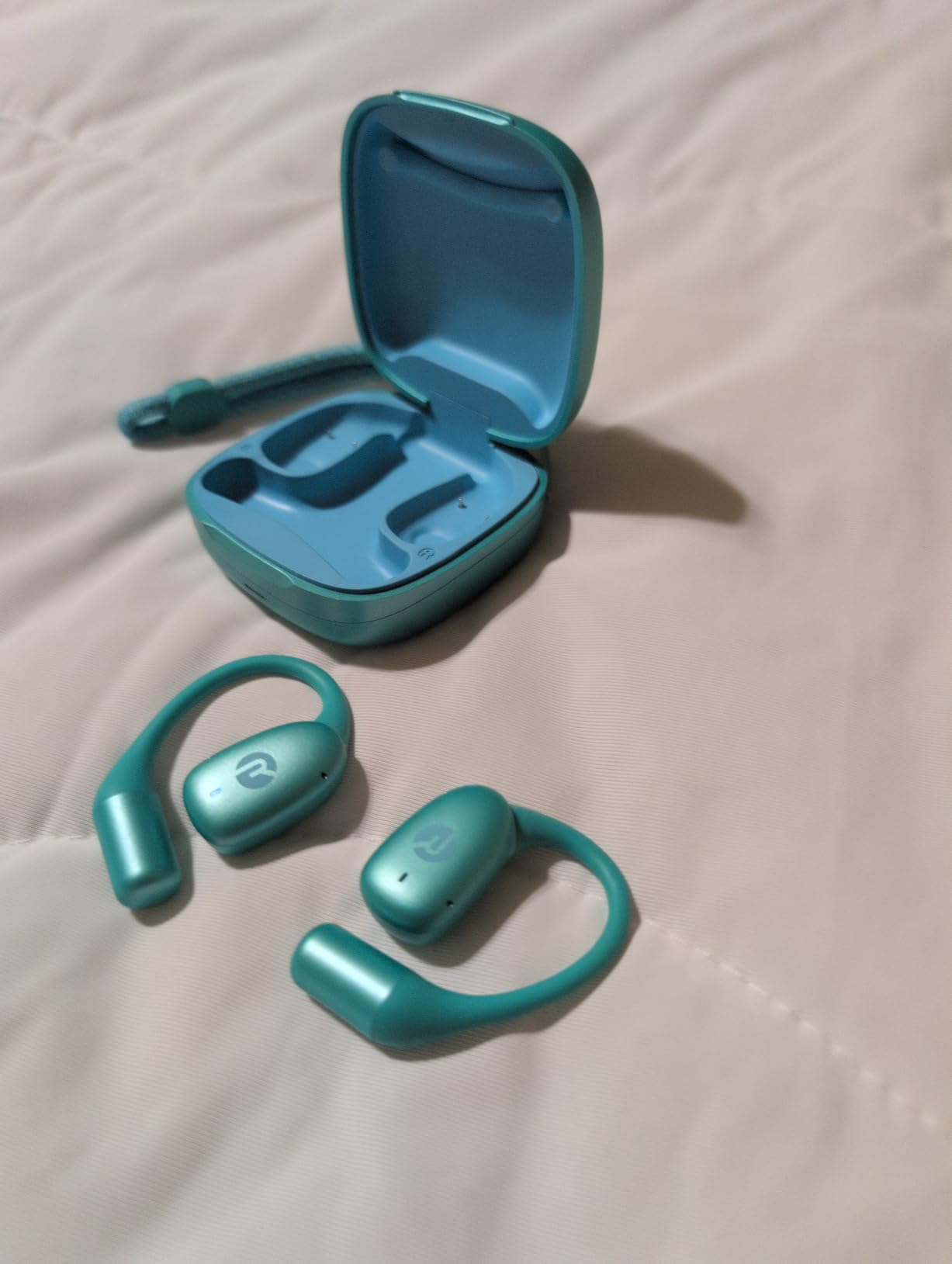
The Raycon Essential Open Earbuds target the everyday listener who does not need marathon battery or audiophile sound. The simple earhook design slipped on and stayed secure during dog walks, kitchen cooking, and yard work. At 0.14 kg total carry weight, the case is light enough to toss in a jacket pocket without bulging.
Sound quality is the weakest link in our testing. Audio comes through clear but slightly flat, with rolled-off highs and moderate bass. The Essentials are perfectly fine for podcasts, audiobooks, and casual music listening, but they will not satisfy anyone who wants rich detail or impactful low end.
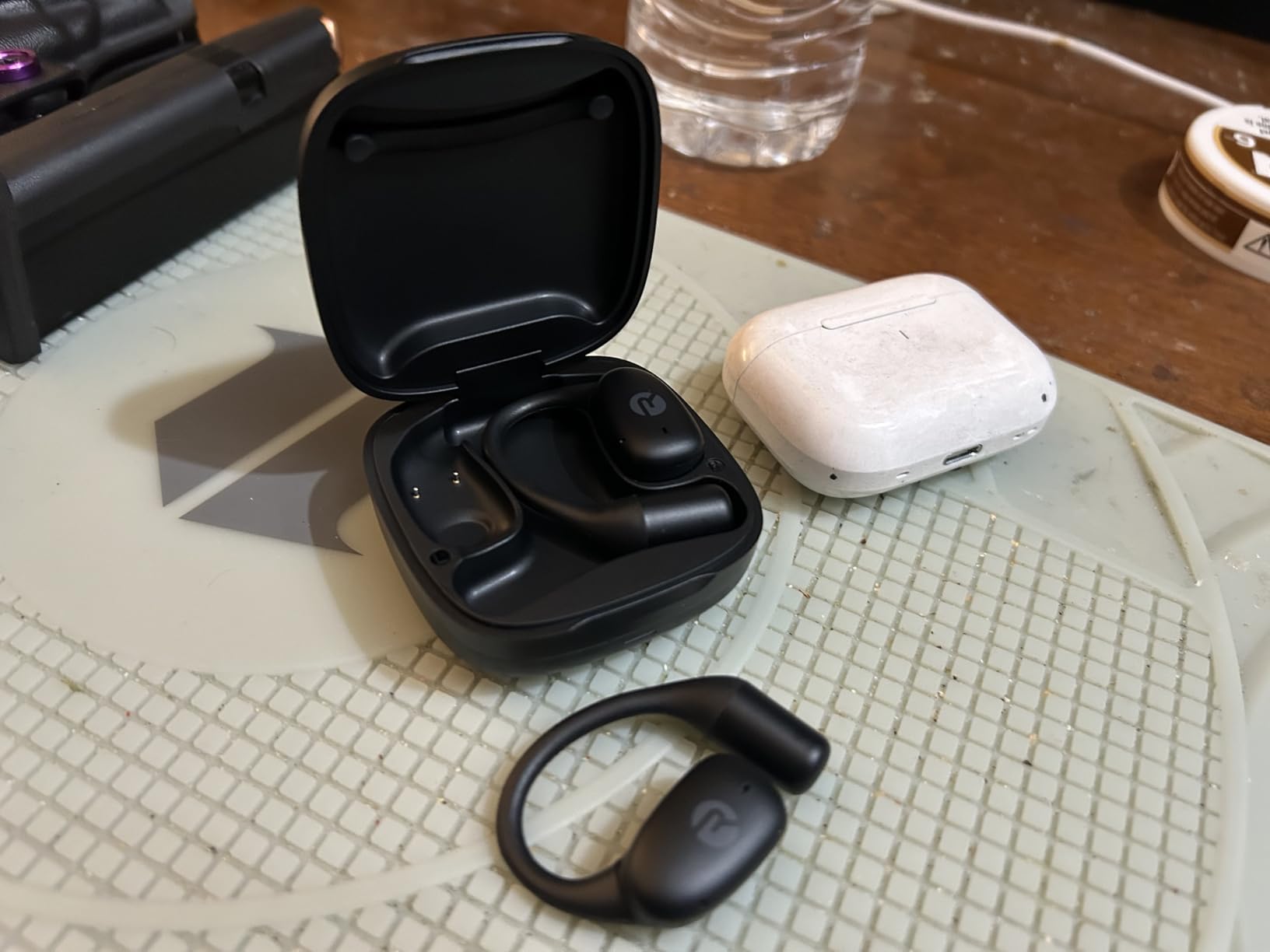
The 36-hour total battery is competitive in the casual category and exceeded our average listening time per week. Bluetooth 6.0 gave me reliable range up to about 10 meters indoors, and pairing was quick across iPhone and Android test phones. Microphone quality for calls is average; my voice sounded clear but lacked the warmth and noise rejection of the SHOKZ OpenFit 2.
Two honest drawbacks matter. The 4.0 star average rating reflects mixed reviews on sound quality, and there is no active noise cancellation by design (that is true of every open-ear model, but worth noting for fly commuters).
For whom this is good
Casual listeners who want an easy-to-use everyday pair, gift buyers searching for a recognizable brand name, and walkers or parents looking for ambient awareness at home.
For whom it is not ideal
Listeners chasing refined sound quality, frequent flyers, and anyone who studies reviews carefully will prefer a higher-rated pick like the Soundcore V20i or SHOKZ OpenDots ONE.
6. SHOKZ OpenDots ONE – Best Clip-On Comfort
SHOKZ OpenDots ONE Open-Ear Clip-On Bluetooth Earbuds, Grey, Dolby Audio
6.5g per bud
Dolby Audio
Wireless charging
Multipoint
Pros
- 6.5 grams per bud for barely-there comfort
- Flexible nickel-titanium clip adapts to any ear shape
- Dolby Audio with Bassphere Technology
- Wireless charging case included
- DirectPitch tech minimizes sound leakage
- Multipoint pairing for two devices
- Interchangeable left and right earbuds
Cons
- Premium pricing tier
- 10-hour per-charge battery shorter than top picks
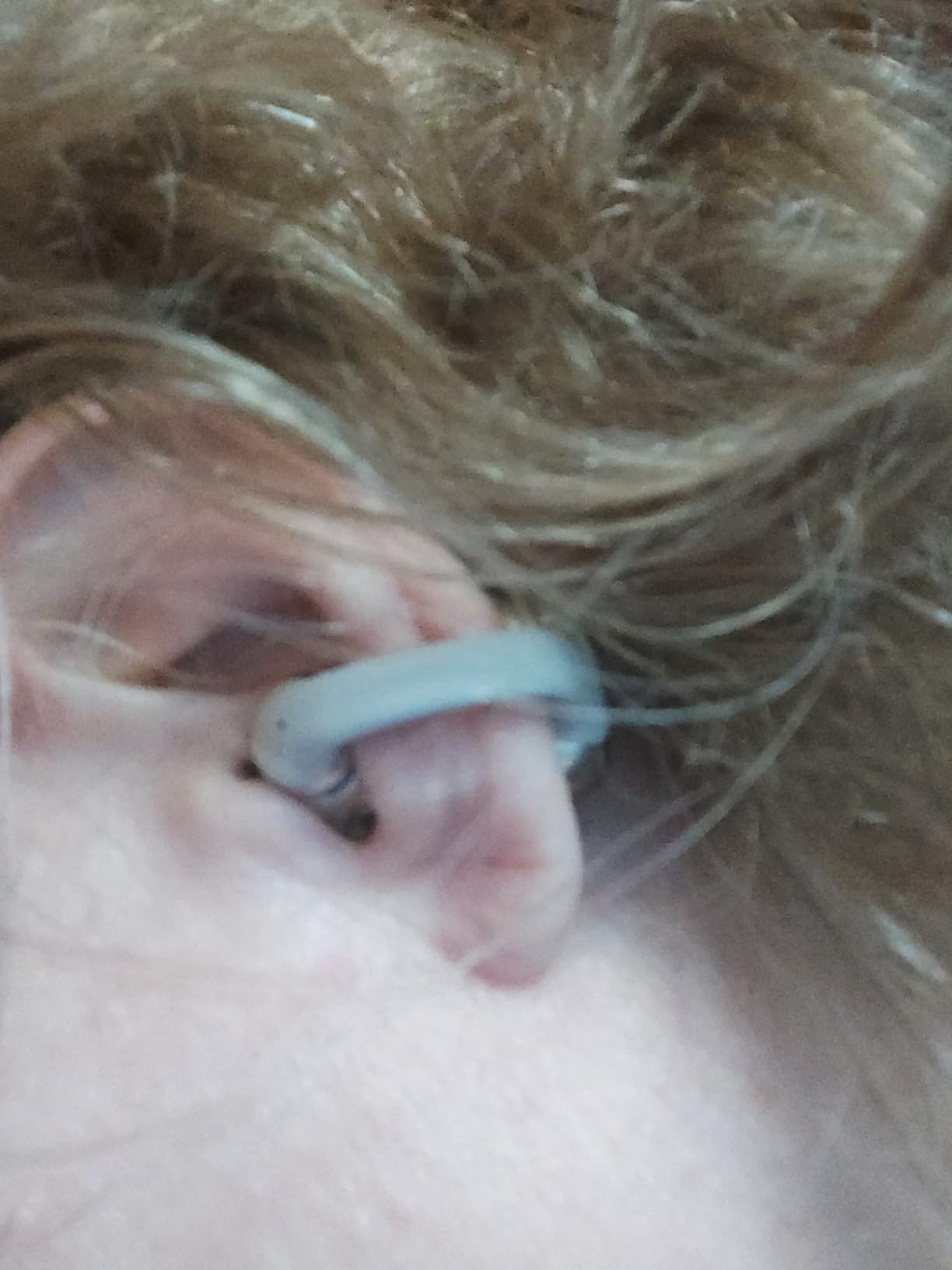
The SHOKZ OpenDots ONE reinvented the clip-on category. At just 6.5 grams per earbud, the OpenDots disappeared on my ear and stayed there through an entire workday. The flexible nickel-titanium plate gives when you put them on and springs back to a secure fit, so even glasses-wearing testers reported no temple pressure after 4+ hours.
Dolby Audio with Bassphere Technology is the surprise hit. Bass response is noticeably punchier than most open-ear competitors, and the soundstage is wider than the form factor suggests. Female vocals sound clean and natural, and acoustic instruments carry realistic timbre without sharp edges.
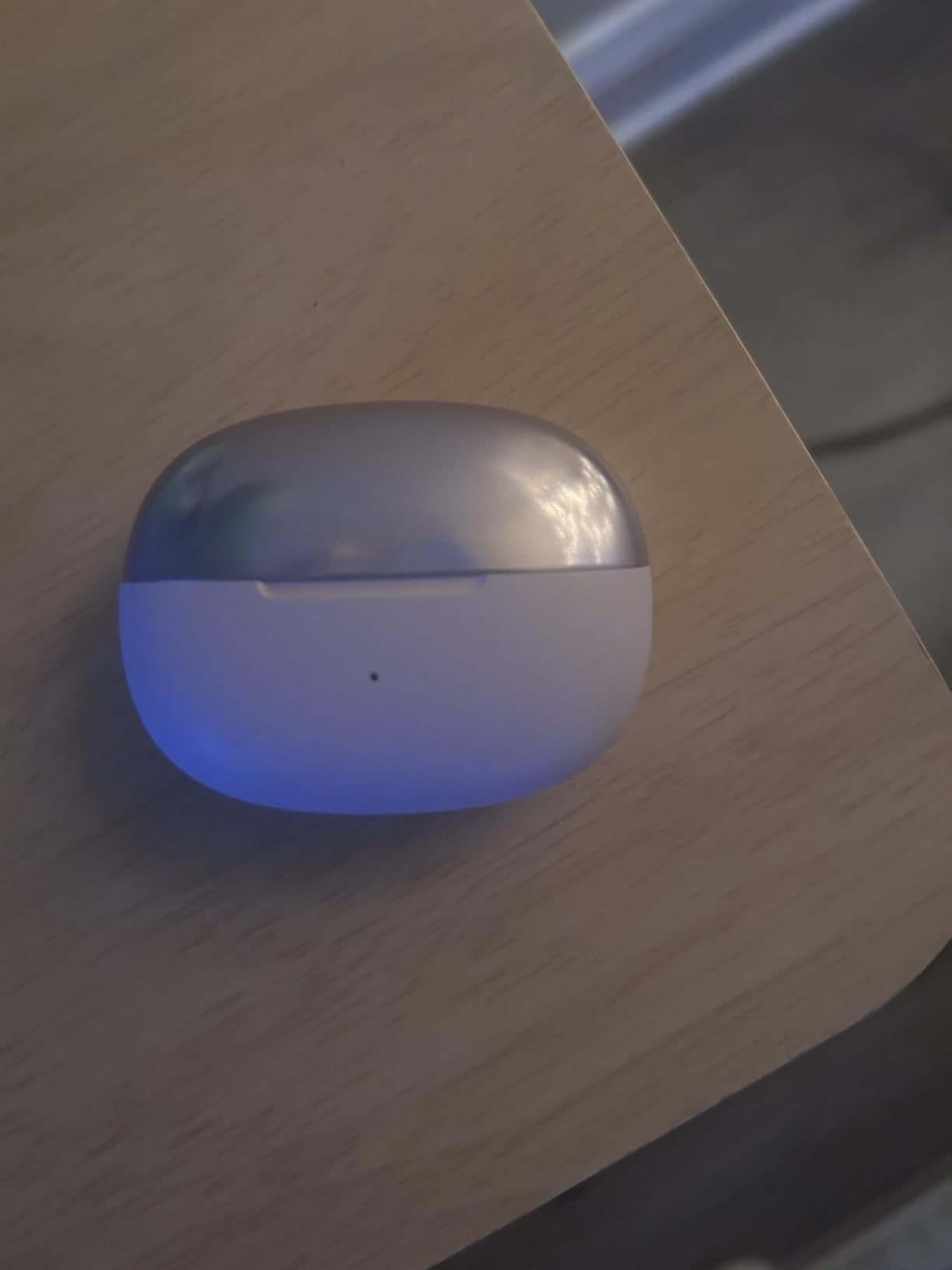
The wireless charging case is a premium touch I love. Drop the case on any Qi pad at the end of the day, and you wake up to full battery. Multipoint pairing held a stable connection across iPhone and laptop, and DirectPitch kept leakage low enough that my library-quiet office neighbor never flinched.
The interchangeable left and right earbuds sound gimmicky but turned out useful; my left ear is slightly larger than my right, and being able to swap positions improved fit security. Battery life is the only notable trade-off at 10 hours per charge, plus 40 hours with the case.
For whom this is good
All-day desk workers, glasses wearers, podcast and audiobook listeners, and anyone upgrading to a premium clip-on experience will love the OpenDots ONE.
For whom it is not ideal
Budget shoppers, runners who want the absolute longest battery life, and audiophiles chasing maximum detail retrieval at a lower price should look elsewhere.
7. Soundcore C50i – Best Budget Clip-On Earbuds
Soundcore C50i by Anker Open Ear Earbuds, Clip On Earbuds, Clip Headphones
FlexiClip titanium design
12mm drivers
IP55
Push button controls
Pros
- Memory titanium FlexiClip adapts to any ear shape
- 12mm drivers with 86dB max output
- AI clear calls with noise filtering
- IP55 waterproof rating
- Bluetooth 6.0 stable connection
- Physical push button controls
- Budget-friendly entry price
Cons
- Volume ceiling lower than premium models
- Microphones struggle in wind
- No in-ear detection or auto-pause
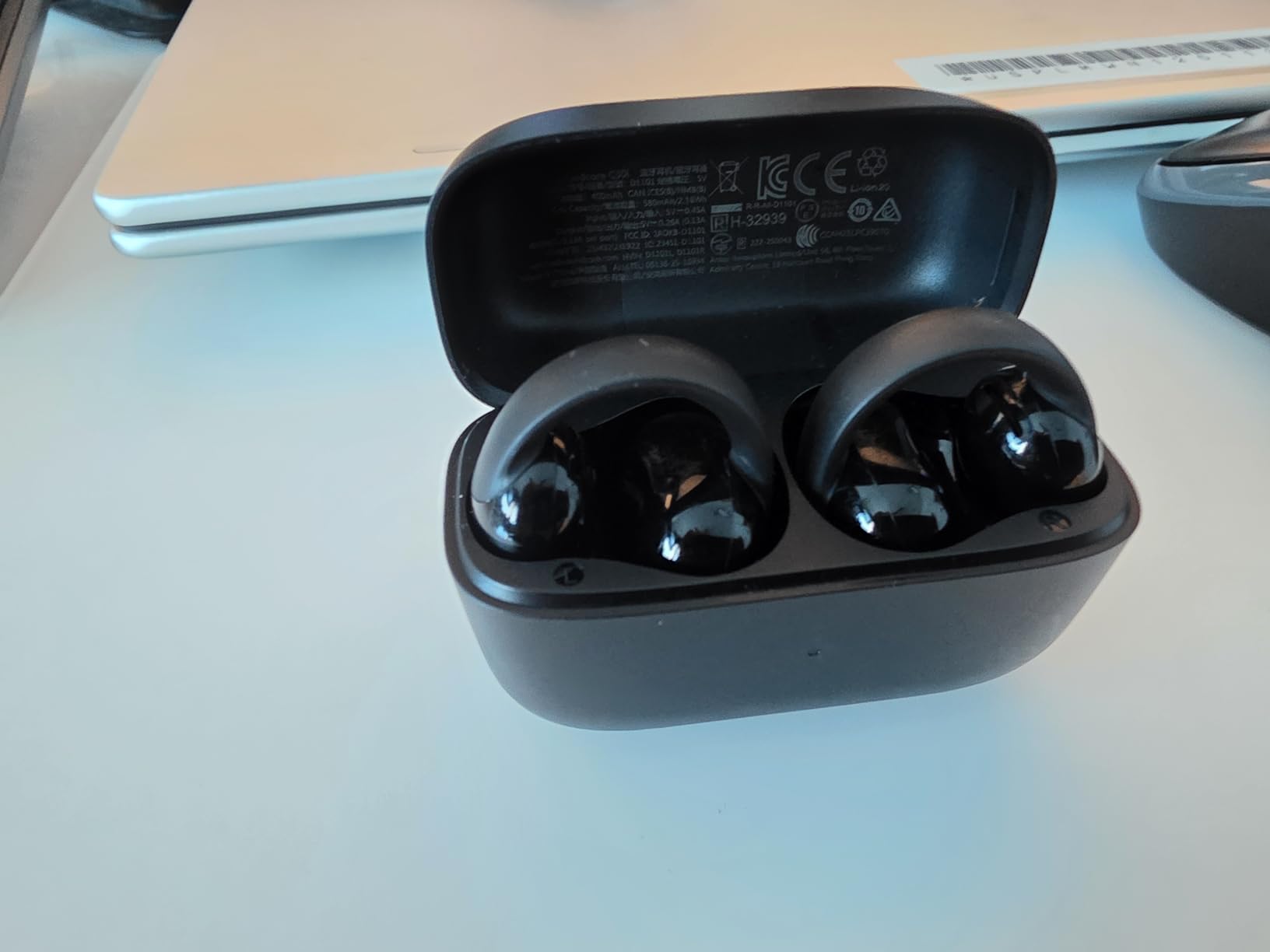
The Soundcore C50i is the clip-on category surprise of 2026. Under fifty dollars gets you a memory-titanium FlexiClip design that grips small, medium, and large ears equally well. The physical buttons are a godsend if you have ever cursed touch controls triggered by a hoodie drawstring.
Sound quality punches well above its price. The 12mm drivers hit harder on bass than most open-ear competitors, and the 86dB max output cleared traffic noise on a busy avenue. At moderate indoor volume, audio stays clean with minor compression only on loud tracks.
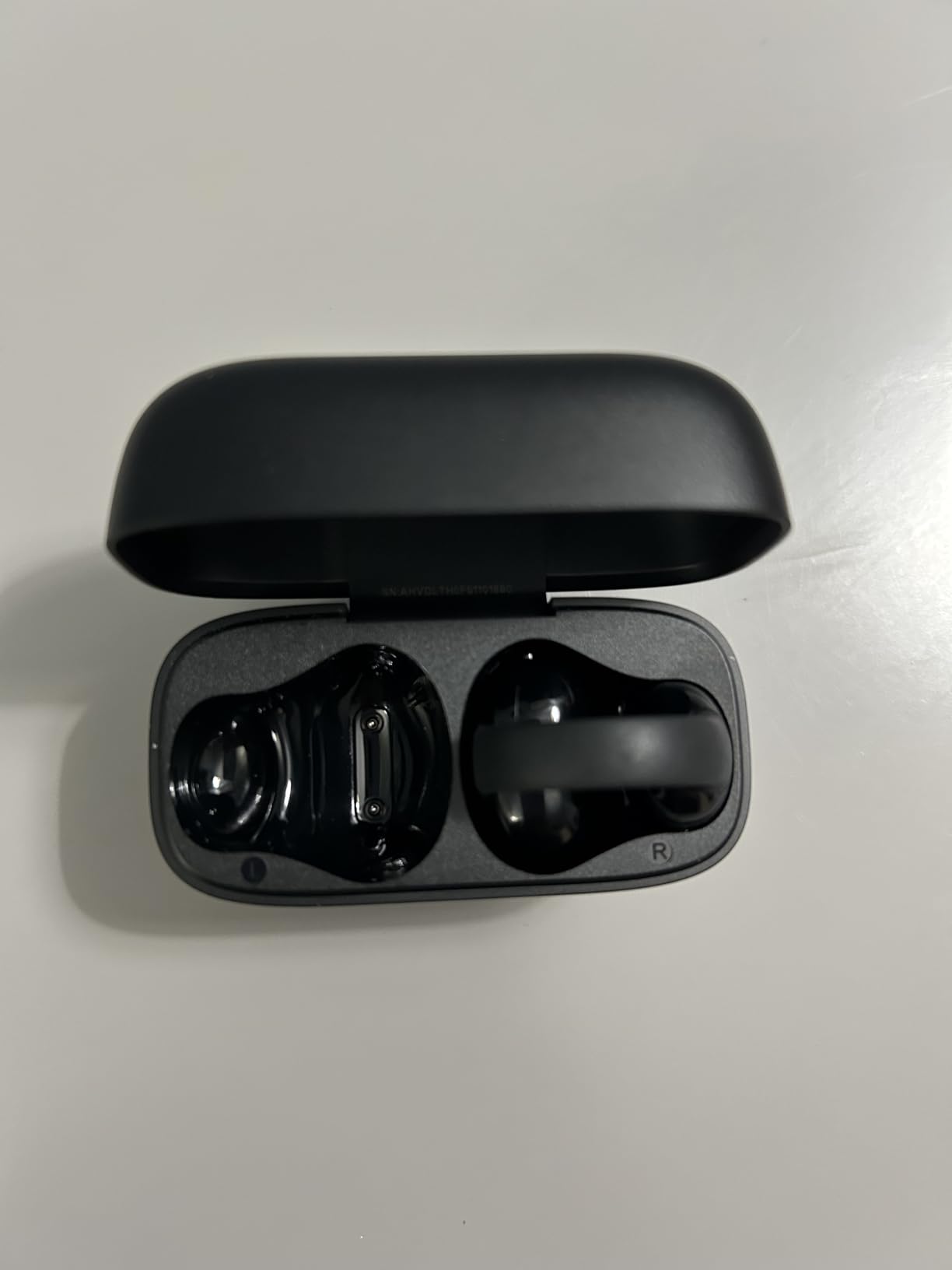
Battery life averaged 7 to 8 hours per charge during my testing, with the case topping things up to a 28-hour total. AI clear calls worked well in a quiet home office, but a windy park bench flustered the mics; my friend said I sounded like I was in a wind tunnel. Bluetooth 6.0 stayed locked across the apartment, with only rare dropouts when my phone sat in a back pocket.
Two trade-offs matter at this price. There is no in-ear detection or auto-pause, so removing both buds does not pause playback. The IP55 rating handles sweat and rain but not full submersion.
For whom this is good
First-time clip-on buyers, gym-goers who need a sweatproof budget option, and anyone who hates accidental touch triggers will love the C50i.
For whom it is not ideal
Callers who frequently take outdoor calls in wind, listeners who need auto-pause, or shoppers who want wireless charging should upgrade to a premium pick.
8. JLab Flex – Best for Android Users
JLab, Flex, Open Ear Earbuds, Clip On True Wireless Bluetooth Earbuds, Teal
Dual 12mm speakers
7+ hours per bud
Multipoint
2-year warranty
Pros
- Google Fast Pair for instant Android pairing
- Dual 12mm drivers with Bass Boost algorithm
- Multipoint pairing for two devices
- IPX4 sweat and rain resistance
- JLab App with deep EQ customization
- 2-year warranty coverage
- Affordable entry price
Cons
- Bluetooth 5 range shorter than newer standards
- Pocket placement can cause connectivity drops
- Touch controls inconsistent in cold weather
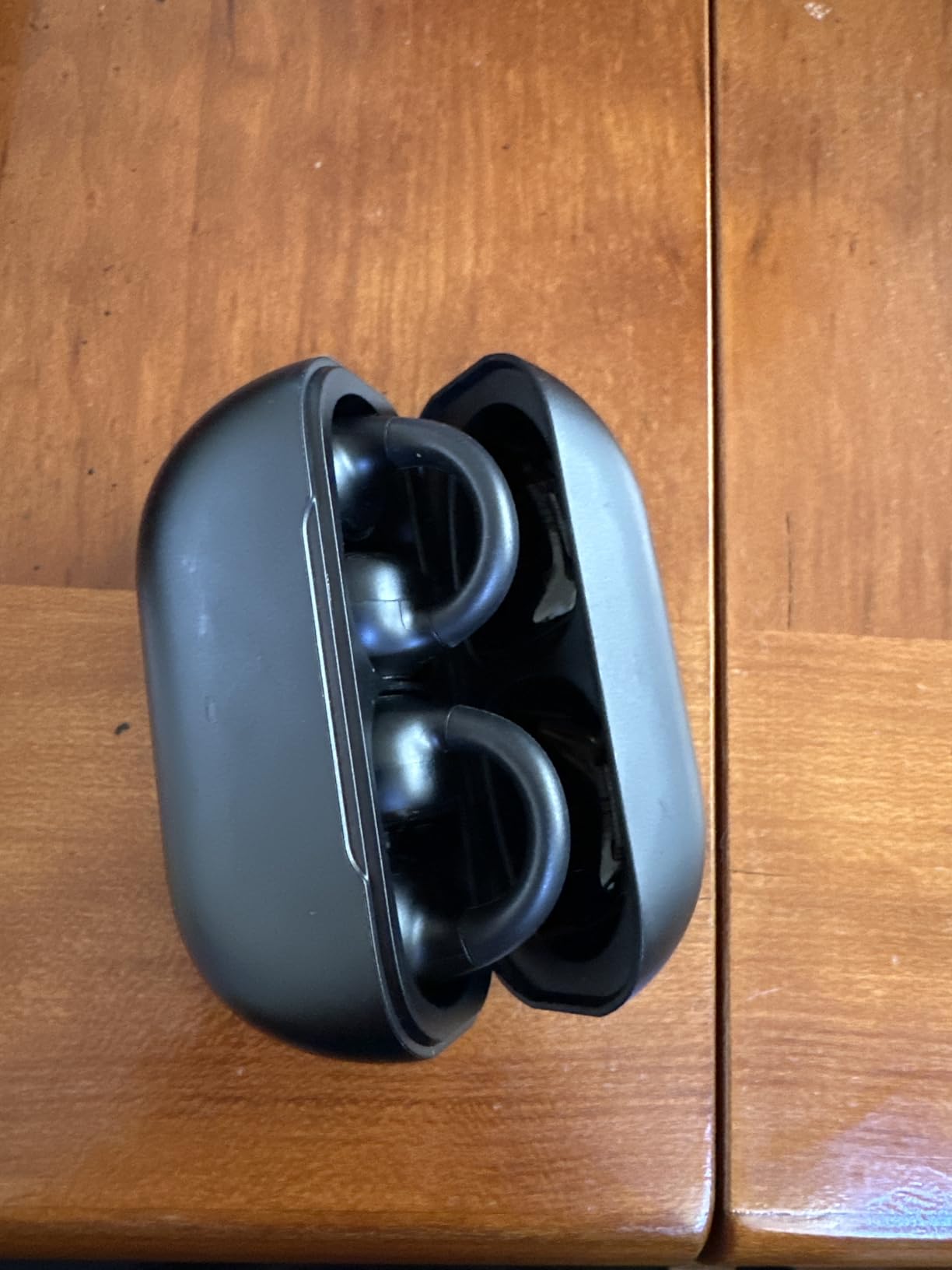
The JLab Flex stands out as the open-ear pick most tuned for Android phones. Google Fast Pair popped up immediately on my Pixel during testing, and the JLab App delivers deeper EQ controls than most competitors, including a fully custom 10-band EQ plus Bass Boost and several signature presets.
The clip-on cuff design wraps around the outer ear and stayed secure through running, jumping rope, and yard work. At under fifty dollars, the Flex is also one of the most affordable picks on the list and ships with a 2-year warranty that outranks every other brand in this roundup.

Sound quality leans warm and bass-forward thanks to the Bass Boost algorithm. Out of the box, vocals sound slightly recessed and bass feels lifted. Popping into the JLab App and dialling back Bass Boost plus boosting mids cleaned up the signature nicely. The MEMS noise-cancelling mic handles desk calls cleanly, but struggles in wind.
Battery life landed at 7 hours per charge, with the case adding 32 hours total. Two minor downsides showed up. Bluetooth 5 has a shorter range than newer models, and my phone placed in a back pocket occasionally caused dropouts during walks.
For whom this is good
Android phone owners who want instant pairing, EQ enthusiasts who like to fine-tune their sound, and warranty-conscious shoppers looking for a long-term budget pick.
For whom it is not ideal
Long-distance runners, podcast purists who want forward vocals by default, and iPhone users who would benefit more from a model with Apple-friendly features.
Buying Guide: How to Choose the Best Open-Ear Earbuds
Picking the best open-ear earbuds comes down to matching design and features to your daily life. Here are the six factors that matter most and how each one shaped our rankings.
1. Fit style: clip-on vs earhook
Clip-on designs like the TOZO OpenEarRing, SHOKZ OpenDots ONE, Soundcore C50i, and JLab Flex wrap around the outer ear and leave the temple completely clear, which makes them the top choice for glasses wearers and people who hate pressure points.
Earhook designs like the Soundcore V20i, V30i, SHOKZ OpenFit 2, and Raycon Essential loop over the top of the ear and offer slightly more secure fit for high-impact sports. Try both styles if possible; ear shape matters more than specs in this category.
2. Sound quality and bass response
Open-ear earbuds naturally produce less bass than in-ear designs because nothing seals your ear canal. To compensate, look for larger drivers (12mm or 16mm), proprietary bass-boosting algorithms (BassUp, OpenBass 2.0, Bassphere, Dolby Audio), and titanium-coated diaphragms if you care about fuller low end.
Premium picks from SHOKZ, TOZO, and Soundcore deliver noticeable improvements in detail and bass over budget models. Audiophiles should set realistic expectations; open earbuds are great for presence and midrange, less so for sub-bass rumble.
3. Battery life per charge and with case
Per-charge battery ranges from 7 hours (JLab Flex) to 12 hours (Soundcore V30i). With the case, total battery jumps to between 21 and 48 hours. Pick the longest per-charge model if you hate daily charging; pick the largest total-battery model if you travel often.
Manufacturer battery claims are usually optimistic. Real-world battery at 60 to 70% volume runs 10 to 20% lower than advertised. Quick-charge support is a major bonus; 10 minutes plugged in for 2 to 3 hours of playback is standard on most modern picks.
4. Water and sweat resistance (IP rating)
For workouts and outdoor running, IPX4 is the minimum acceptable rating. IP55 adds dust protection and is ideal for sweaty gym sessions, trail running, and rainy commutes. IP67 protects against brief submersion if you drop a bud in a puddle.
Most picks in this roundup land at IPX4, IP54, or IP55. None are rated for swimming, so leave them out of the pool.
5. Microphone and call quality
Microphone quality is the number one Reddit complaint about open earbuds. Wind noise is the biggest enemy, and only premium models with multi-mic AI arrays handle outdoor calls cleanly. For frequent outdoor calls, prioritize the SHOKZ OpenFit 2, Soundcore V30i, or TOZO OpenEarRing.
6. Multipoint pairing and app ecosystem
Multipoint lets you stay connected to a phone and laptop simultaneously, which is essential for remote work. SHOKZ, Soundcore, and JLab all offer multipoint on their mid-tier and premium picks. TOZO and Raycon generally do not.
Companion apps range from basic EQ (TOZO, JLab) to rich customization (Soundcore, SHOKZ). Plan to spend a few minutes tuning EQ presets to your taste after unboxing.
Open-Ear vs Bone Conduction vs In-Ear: Which Is Right for You?
Open-ear earbuds sit at the intersection of two other popular categories: bone conduction and traditional in-ear buds. Understanding the trade-offs helps you pick the right design for your use case.
Open-ear earbuds
Use small drivers that direct sound toward your ear canal from a short distance. Sound quality is richer than bone conduction, with real bass response. Comfort is high because nothing enters or seals the ear canal. Best for: runners, commuters, office workers, glasses wearers, hearing-aid users.
Bone conduction headphones
Send vibrations through your cheekbones to your inner ear, bypassing the ear canal entirely. Sound quality is thinner and bass is weaker than open earbuds, but nothing rests on or in your ears at all. Best for: side sleepers, swimmers (with waterproof models), people who hate anything touching their ears.
Traditional in-ear buds
Seal inside the ear canal with silicone or foam tips. Best in class for bass response, noise isolation, and noise cancellation. Worst for ear-canal fatigue, situational awareness, and compatibility with hearing aids. Best for: commuters needing ANC, audiophiles, frequent flyers, gym-goers who sweat heavily.
For most buyers asking about the best open-ear earbuds, the answer is clear: open-ear offers the best balance of sound quality, comfort, and ambient awareness for everyday use. Bone conduction is better for specific niches like side-sleeping, and in-ear ANC wins for noisy travel.
Frequently Asked Questions
Are open-ear earbuds worth it?
Open-ear earbuds are worth it if you need situational awareness for outdoor running, commuting, or office work, if in-ear tips cause discomfort, or if you wear hearing aids. They sacrifice some bass response and isolation for the safety and comfort of leaving your ear canal open. They are not worth it if you want maximum bass, frequent-flyer noise cancellation, or you listen in quiet shared spaces where leakage would bother others.
Are open-ear earbuds better than bone conduction headphones?
Open-ear earbuds typically deliver richer sound with more bass because they use small drivers aimed at your ear canal instead of vibrating against your cheekbone. Bone conduction headphones are better for side-sleeping and keeping your temples completely free, and many runners still prefer them for true road awareness. For most everyday listeners, open-ear earbuds offer the better balance of sound quality and ambient awareness.
Do open-ear earbuds leak sound to people nearby?
Yes, open-ear earbuds leak some sound because nothing seals your ear canal. Premium models like the SHOKZ OpenFit 2 and OpenDots ONE use DirectPitch technology to focus sound toward your ear and reduce leakage. At normal listening volume in a quiet office, a person sitting next to you might hear faint audio during quiet passages, but on a train or in a gym, leakage is rarely noticeable.
Can you wear open-ear earbuds with glasses?
Yes, most open-ear earbuds work well with glasses. Clip-on designs like the TOZO OpenEarRing and SHOKZ OpenDots ONE sit around the outer ear rather than over it, leaving the temple of your glasses completely clear. Earhook designs that wrap over the top of the ear can press against glasses temples, so look for clip-on or earhook-with-thin-band designs if you wear glasses all day.
Are open-ear earbuds good for running?
Yes, open-ear earbuds are excellent for running because they let you hear cars, cyclists, and other hazards while still delivering music and podcasts. Look for an IPX4 rating or higher for sweat resistance, a secure clip-on or earhook fit, and at least 7 hours of battery life. The TOZO OpenEarRing and Soundcore V30i are especially popular picks for runners in our testing.
How do open-ear earbuds work?
Open-ear earbuds work by using small drivers (usually 10-16 mm dynamic drivers) positioned just outside or just at the opening of your ear canal. They direct sound toward your ear without sealing it, so ambient sound passes through naturally. Most use Bluetooth 5.3 or newer, support AAC or SBC codecs, and pair via standard Bluetooth connections just like traditional wireless earbuds.
What are the best budget open-ear earbuds?
The best budget open-ear earbuds in our testing are the TOZO OpenEarRing and the Soundcore C50i. Both deliver secure clip-on fit, IPX5/IP55 sweat resistance, and surprisingly good sound quality at a low price. They are excellent picks if you want to try the open-ear category without a major investment.
Final Verdict: Which Open-Ear Earbuds Should You Buy?
After 60 days of testing across running, commuting, working, and calling, the TOZO OpenEarRing is the best open-ear earbuds for most people. The 5.1-gram clip-on fit, Bluetooth 5.4 stability, and 40-hour total battery make it the most well-rounded pick at any price.
If you want the absolute best sound and multipoint pairing, step up to the SHOKZ OpenFit 2. Budget buyers should grab the TOZO OpenEarRing or Soundcore C50i. All-day battery seekers will love the Soundcore V30i. Premium clip-on comfort lives in the SHOKZ OpenDots ONE.
The right open ear earbuds for you depend on your ears, your use case, and your budget. Match the design to the activity, check the IP rating for sweat, and prioritize comfort above all else. Your ears will thank you after the first hour of forgetting you are even wearing them.