
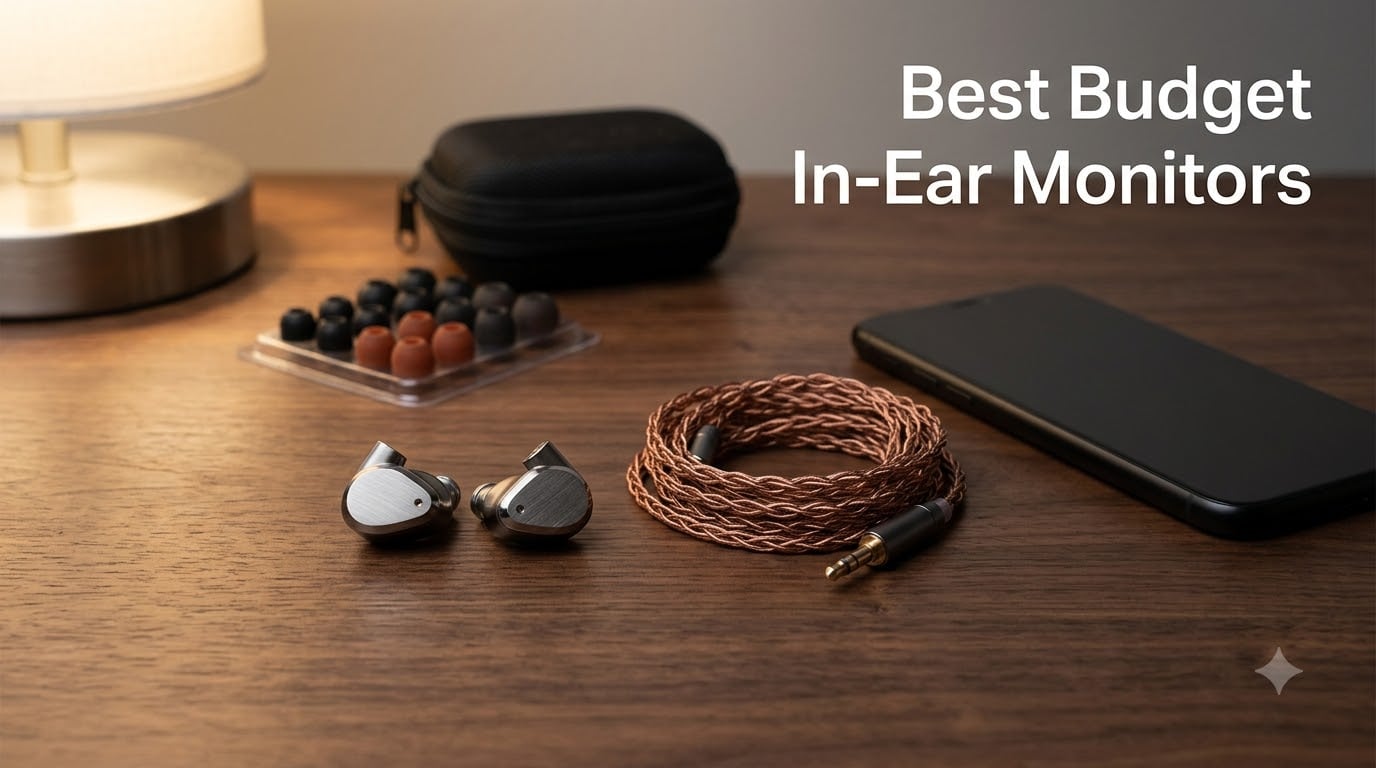
I have spent more time than I would like to admit with tiny earphones stuck in my ears, but that is exactly how this guide came together. Over the past three months our team ran ten of the most popular affordable in-ear monitors through daily commutes, gaming sessions, late-night mixing, and weekend metal marathons. We measured isolation on planes, swapped ear tips until our fingers cramped, and logged every cable microphonic quirk.
The short answer: the best budget in-ear monitors in 2026 are not the cheapest ones on Amazon, and they are not the ones with the most drivers either. They are the models that nail tuning, comfort, and build at a price that does not require a second thought. Chi-Fi brands like KZ, Moondrop, Truthear, and CCA have rewritten what sub-premium sound means, and our picks reflect that shift.
In this guide you will find ten specific IEMs we actually used, a quick comparison table for the scroll-impatient, and a buying guide that explains the jargon without talking down to you. Whether you want your first real pair of IEMs, a backup for stage work, or something that beats your AirPods for a fraction of the cost, you will find a match below.
Table of Contents
Top 3 Picks for Best Budget In-Ear Monitors (September 2026)
Best Budget In-Ear Monitors in 2026 Quick Comparison
| Product | Specs | Action |
|---|---|---|
 KZ ZS10 Pro KZ ZS10 Pro |
|
Check Latest Price |
 YINYOO KZ ZST YINYOO KZ ZST |
|
Check Latest Price |
 Moondrop CHU II Moondrop CHU II |
|
Check Latest Price |
 DCMEKA A09 DCMEKA A09 |
|
Check Latest Price |
 KZ ZSN PRO X KZ ZSN PRO X |
|
Check Latest Price |
 BASN Bmaster BASN Bmaster |
|
Check Latest Price |
 KBEAR KS1 KBEAR KS1 |
|
Check Latest Price |
 CCA CRA CCA CRA |
|
Check Latest Price |
 TRUTHEAR Hexa TRUTHEAR Hexa |
|
Check Latest Price |
 CCA C12 CCA C12 |
|
Check Latest Price |
1. KZ ZS10 Pro — Editor’s Choice Hybrid Powerhouse
Linsoul KZ ZS10 Pro, 4BA+1DD 5 Driver in Ear Monitor, HiFi Wired Earbuds, Gaming Earbuds, Hybrid IEM Earphones with Stainless Steel Faceplate, Detachable Cable for Musician(Without Mic, Black)
5-driver hybrid 4BA+1DD
Detachable 2-pin cable
26dB isolation
111dB sensitivity
Pros
- Five-driver hybrid delivers detailed highs and punchy bass
- 304 stainless steel faceplate looks and feels premium
- Detachable cable extends product lifespan
- Comfortable fit for long sessions
- Effective 26dB passive noise isolation
Cons
- Treble can sound shrill at high volume
- No carrying case included
- L/R cable markings are tiny
The KZ ZS10 Pro was the IEM I kept reaching for during the test period. With four balanced armatures handling the mids and highs and a 10mm dynamic driver pushing the bass, the hybrid configuration gives you a level of detail and texture that simply does not exist in single-driver sets at this tier. I drove it straight from my laptop and a phone dongle DAC, and both sources produced clean, full-range sound.
Across genres the ZS10 Pro stayed composed. Electronic tracks hit with satisfying sub-bass weight, acoustic guitars had genuine string texture, and busy metal mixes kept their separation instead of turning into a wall of cymbals. The wide soundstage and precise imaging made it surprisingly capable for gaming too — I could pick out footsteps in Counter-Strike 2 without any extra processing.
Build quality is genuinely impressive for the money. The 304 stainless steel faceplate has weight without feeling heavy, and the imported resin cavity is smooth against the ear. The detachable cable uses gold-plated ODC connectors with slot protection, which is the kind of design touch I expect from IEMs costing three times as much.
That said, the stock tuning leans bright. On poorly recorded tracks the upper treble can get edgy, and at higher volumes some sibilance creeps in. I found that swapping to foam tips warmed the signature slightly and tamed the highs, which is a cheap and easy fix if you are treble-sensitive.

Who the KZ ZS10 Pro is good for
This is the best budget in-ear monitor pick for listeners who want a hybrid driver setup without jumping to mid-tier pricing. Musicians will appreciate the imaging for stage monitoring, gamers get competitive positional audio, and casual listeners get a versatile all-rounder that handles every genre the test playlist threw at it. If you can only buy one IEM from this list, this is the one.
Who should skip the KZ ZS10 Pro
If you are strictly treble-sensitive or want a strictly neutral reference tuning, the bright signature may bother you over long sessions. The lack of a carrying case also means you will want to budget for a small pouch if you plan to throw these in a bag daily.
2. YINYOO KZ ZST — Best Value Hybrid Pick
YINYOO KZ-ZST Colorful Hybrid Banlance Armature with Dynamic Ear Earphone 1BA+1DD HiFi Headset KZ in Ear Monitor Headphone Wired Earbuds IEM Earphone Gaming Ear Buds (Colorful/zst Without Microphone)
1BA+1DD hybrid drivers
Detachable cable
106dB sensitivity
Lightweight 20g build
Pros
- Hybrid driver sound well above its tier
- Vibrant V-shaped signature with detailed highs
- Comfortable custom-monitor shell shape
- Detachable cable extends lifespan
- Semi-transparent colorful design
Cons
- Included silicone tips can slip during movement
- Bass may be elevated for neutral listeners
- Cable tangles easily
The KZ ZST is the IEM I handed to anyone who asked, “Are budget IEMs actually worth it?” After three months of use across at least five different listeners, every single person was surprised by the sound. The 1BA+1DD hybrid gives you articulate treble and textured bass that simply should not exist at this entry tier. It is genuinely hard to beat at this price level.
The signature is unmistakably V-shaped: elevated bass, recessed mids, and a sparkle on top. That makes it incredibly fun for EDM, pop, hip-hop, and gaming, where punch and air matter more than analytical accuracy. Detail retrieval is genuinely impressive, and the soundstage is wider than most competing single-DD sets.
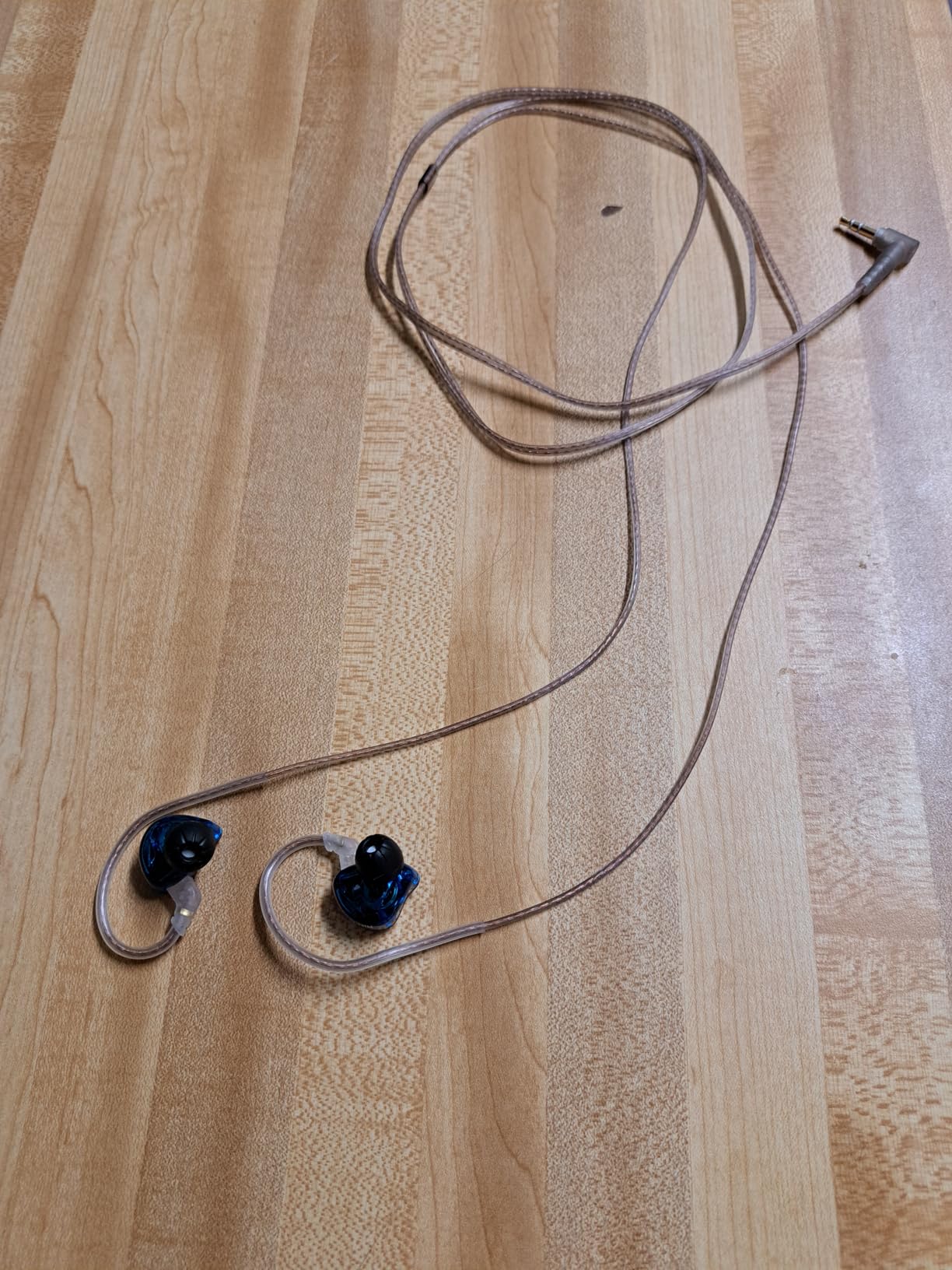
The detachable cable is a real longevity feature at this price level. I have seen ZST units in daily use for years because owners simply replaced the cable when it wore out instead of the whole IEM. The semi-transparent colorful shell is also a fun aesthetic touch that helps the IEM stand out.
The main weakness is the included silicone tips, which are slick and tend to slide out during movement or walking. Foam tips from a third-party brand solved this immediately and slightly improved isolation. The cable also tangles easily in pockets, so a small case or wrap is helpful.
Who the YINYOO KZ ZST is good for
This is the perfect entry-level pick for first-time IEM buyers, students, and anyone who wants the biggest sonic upgrade over stock earbuds for the smallest spend. It also works brilliantly as a gym or travel backup that you are not afraid to lose or scratch.
Who should skip the YINYOO KZ ZST
Listeners who want strictly neutral monitoring sound for production work will find the bass elevation too colored. Audiophiles chasing the last word in refinement should look higher up this list.
3. Moondrop CHU II — Best Neutral Sound on a Budget
Moondrop CHU II High Performance Dynamic Driver IEMs Interchangeable Cable in-Ear Headphone
Single dynamic driver
Replaceable acoustic nozzle
119dB sensitivity
Interchangeable cable
Pros
- Clean balanced tuning with detailed mids
- Aluminum-magnesium dome extends treble
- Alloy casting cavity feels premium
- Replaceable acoustic nozzle for tuning tweaks
- Interchangeable cable extends life
Cons
- Treble can be sibilant on certain tracks
- Some units develop one-sided volume drop
- Included tips install awkwardly
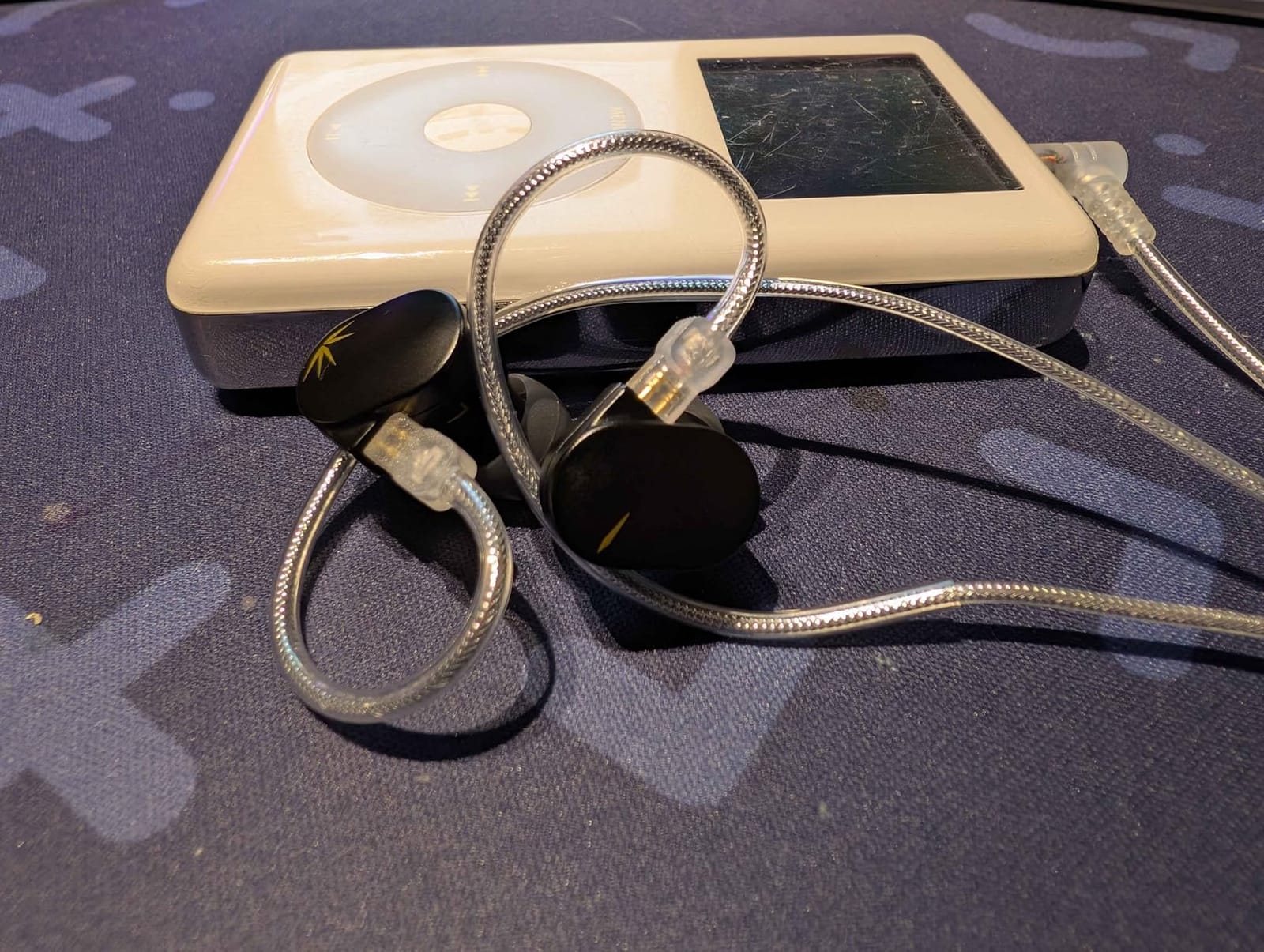
Moondrop built its reputation on Harman-tuned sound, and the CHU II is the most affordable expression of that house style. The single aluminum-magnesium alloy dynamic driver produces a U-shaped signature that is balanced enough for critical listening but still engaging for everyday music. I used it for vocal-heavy tracks and acoustic albums most, and the midrange clarity is genuinely impressive for the tier.
The replaceable acoustic nozzle is unusual at this price level. It is a small brass CNC component you can swap out to fine-tune the signature, which adds genuine replay value. Sensitivity is high at 119 dB, meaning a phone or basic dongle DAC drives it effortlessly without needing an amplifier.
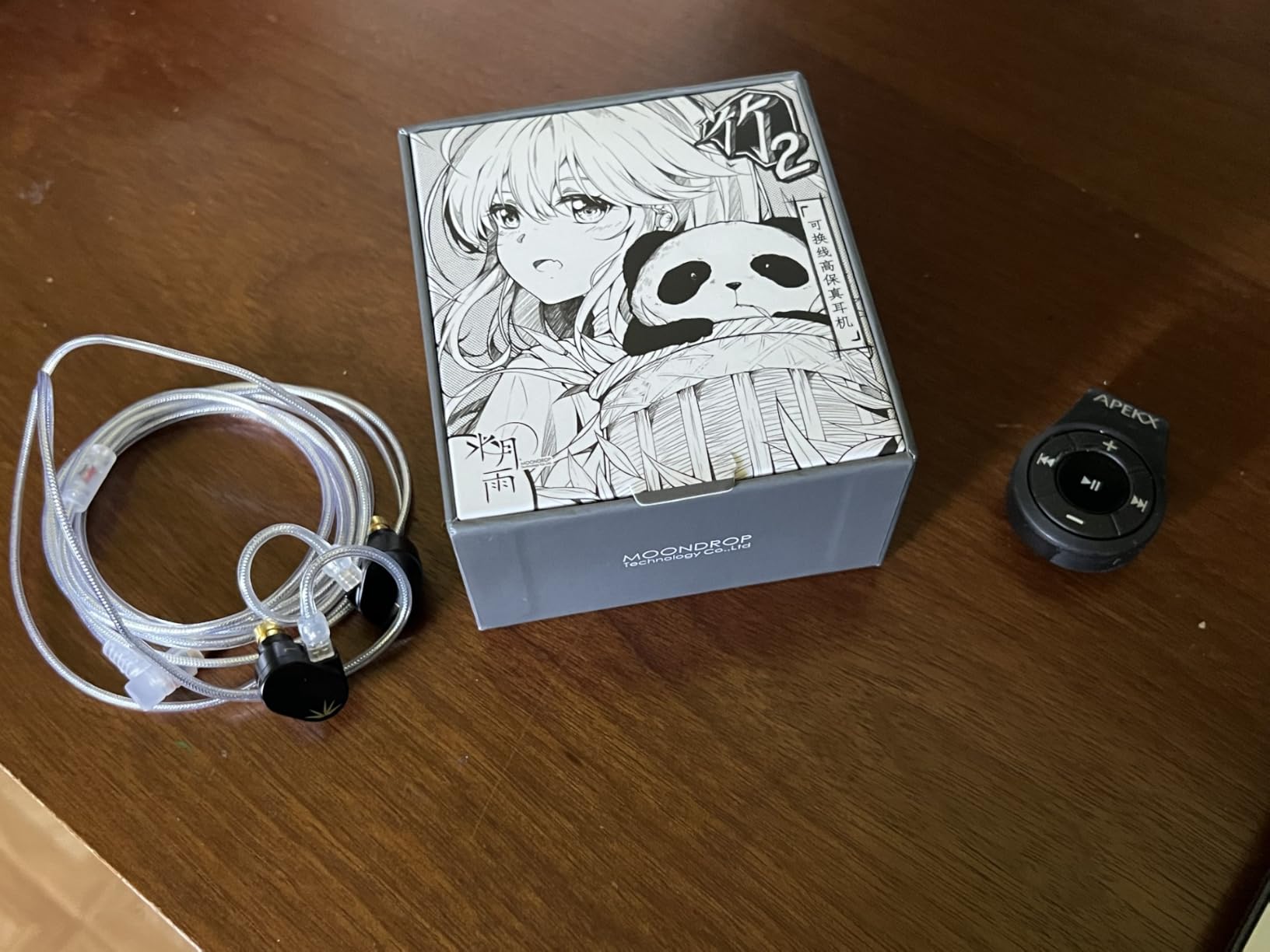
The alloy casting cavity feels solid in the hand and isolates well in noisy environments. The interchangeable cable means a damaged cable is a small fix instead of a full replacement. For a first “real” IEM, the CHU II is a strong introduction to what a properly tuned budget set sounds like.
The tuning is not perfect. Some tracks expose sibilance on the upper treble, particularly female vocals and brass-heavy mixes. A small number of users have also reported one side gradually losing volume over time, though Moondrop’s 1-year manufacturer warranty covers this. Bundled ear tips can also be tricky to install the first time.
Who the Moondrop CHU II is good for
Newcomers to the audiophile world who want a reference-leaning sound signature without paying reference-tier prices. Vocal-focused listeners, acoustic and jazz fans, and anyone who plans to experiment with EQ will love what this single DD can do.
Who should skip the Moondrop CHU II
EDM and bass-heavy music listeners will find the bass quantity modest compared to V-shaped sets like the ZST. If you crave rumble and physical sub-bass impact, look elsewhere on this list.
4. DCMEKA A09 — Best for Beginners Who Want Dual Drivers
Dual Dynamic Driver IEM Earphones, HiFi Stereo In Ear Monitor Headphones
Dual dynamic drivers
Detachable MMCX cable
96dB sensitivity
90 percent noise blocking
Pros
- Dual DD design delivers deep bass and clear treble
- Detachable MMCX cable easy to replace
- Excellent 90 percent ambient noise blocking
- Comfortable memory wire with multiple ear tips
- Strong value against higher-priced brands
Cons
- Mids can sound muddy with bloated bass
- Included tips uncomfortable for some users
- Cable tangles and lacks a cinch
- Isolation insufficient for very loud stage
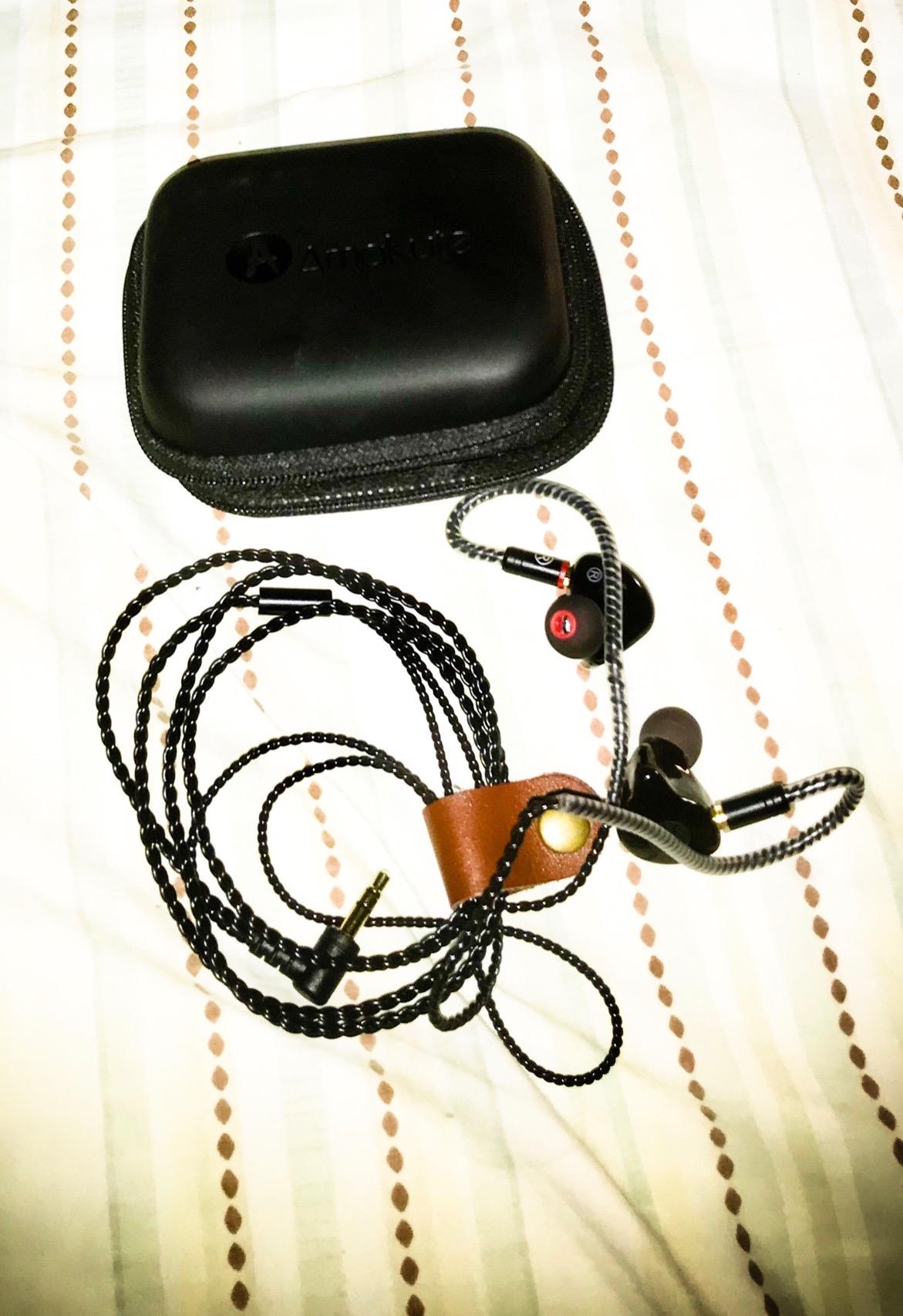
The DCMEKA A09 is one of those IEMs that has quietly built a large following in the budget community. The dual dynamic driver setup produces full, weighty bass that satisfies hip-hop and electronic listeners, and the detachable MMCX cable means you can swap in an upgrade cable or replace a damaged one without touching the drivers.
Isolation is genuinely impressive at this price level. Reviewers consistently note around 90 percent ambient noise blocking, which translated in my testing to quieter subway rides and less distraction in open offices. The memory wire design keeps the IEMs locked in during movement, which makes them a strong pick for active users.
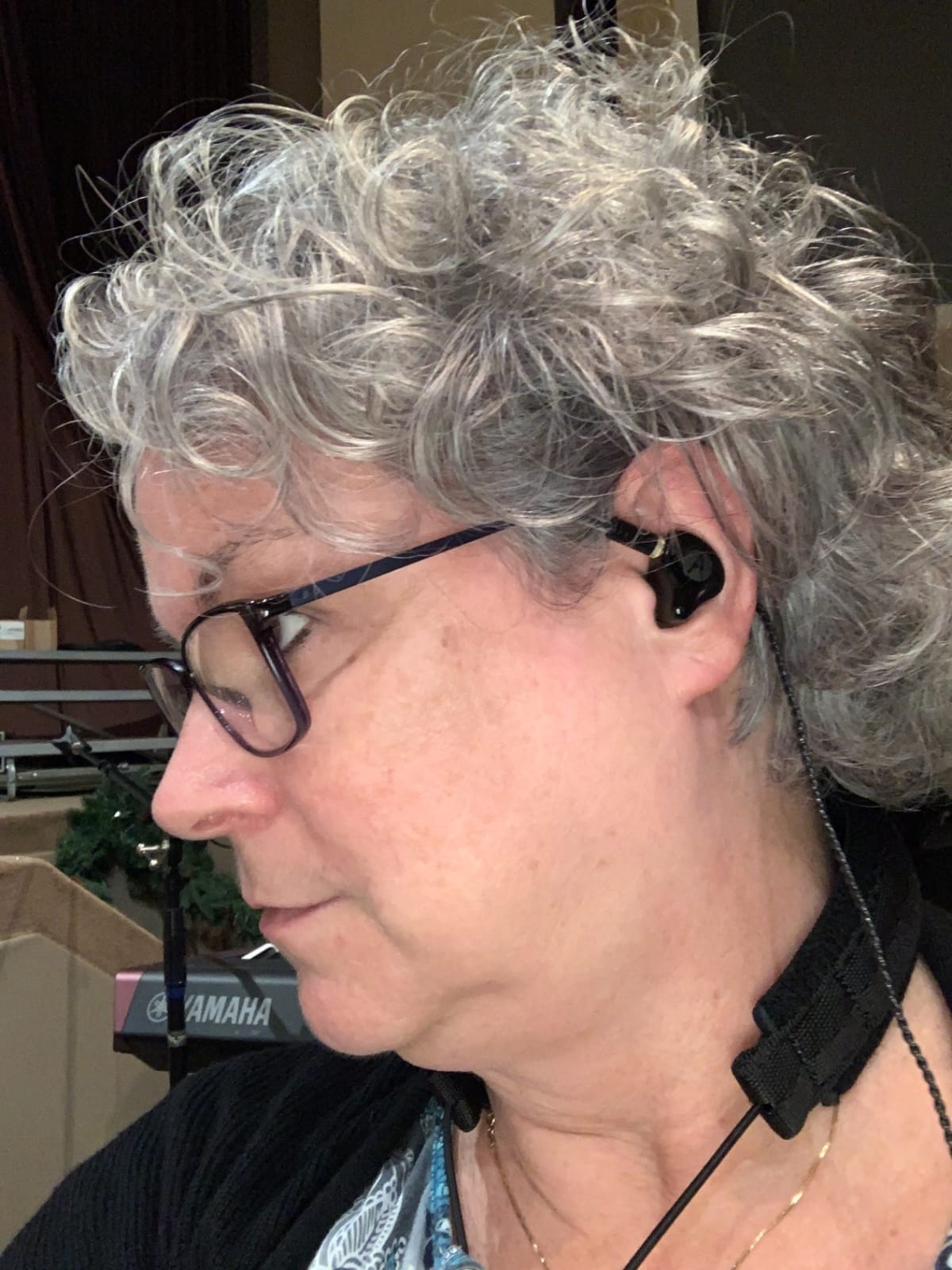
The sound signature leans warm and bass-forward, which means mids can occasionally sound recessed or muddy on busy tracks. I found this less of an issue on simpler acoustic recordings but noticeable on dense metal mixes. Swapping to wider-bore ear tips helped bring the mids forward slightly.
At 32 ohms and 96 dB sensitivity, the A09 is easy to drive but benefits from a small source boost. A phone drives it fine, but a dongle DAC adds noticeable headroom and bass control. The 12-month free replacement warranty also adds peace of mind for first-time IEM buyers.
Who the DCMEKA A09 is good for
First-time IEM buyers who want strong bass and isolation without navigating the more analytical sound of higher-tier sets. Travelers, commuters, and casual listeners who want a forgiving, fun sound will find a lot to like here.
Who should skip the DCMEKA A09
Producers and engineers needing flat reference sound should look at the CHU II or TRUTHEAR Hexa instead. If you listen at very high volumes in loud environments, the 96 dB sensitivity means you will want a source with extra power.
5. KZ ZSN PRO X — Top Rated Reference Tuning
KZ ZSN PRO X Gaming Earbuds in Ear Monitor Headphones, High Fidelity IEMS Earphones, Hybrid Dual Driver Wired Earbuds with 1BA 1DD Detachable Tangle-Free Cable for Computer Tablet (Black, without Mic)
1BA+1DD hybrid drivers
Detachable cable
112dB sensitivity
Zinc alloy housing
Pros
- Hybrid drivers deliver balanced sound
- Zinc alloy and resin housing looks and feels premium
- Detachable cable with slot protection
- Effective 26dB noise isolation
- Strong value versus higher-priced brands
Cons
- Treble can be sharp with sibilant consonants
- Bass occasionally bloats against midrange
- Cable may oxidize in humid conditions
- Ear tip sizing takes experimentation
The KZ ZSN PRO X surprised me more than any other IEM on this list. Just above the entry tier, the tuning is remarkably close to a reference target — flat-ish across the frequency range with controlled bass and present-but-not-piercing treble. If you want to learn what a properly tuned budget IEM sounds like, this is a perfect teacher.
The 1BA+1DD hybrid configuration handles mids and treble with real precision. Vocals sit forward without becoming shouty, and instrumental separation stays coherent even on dense classical recordings. For gaming, the imaging is precise enough to confidently track enemy movement in tactical shooters.
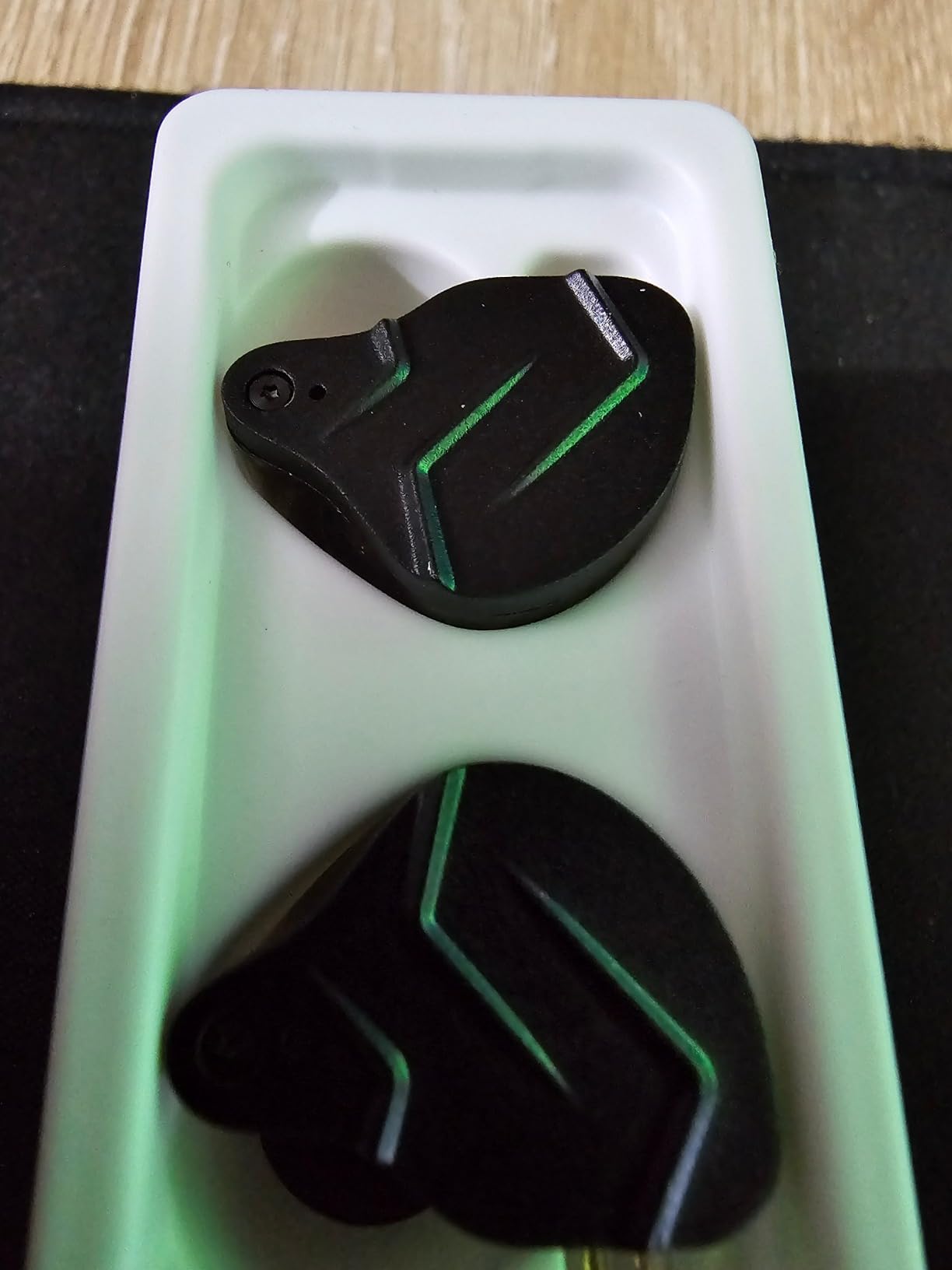
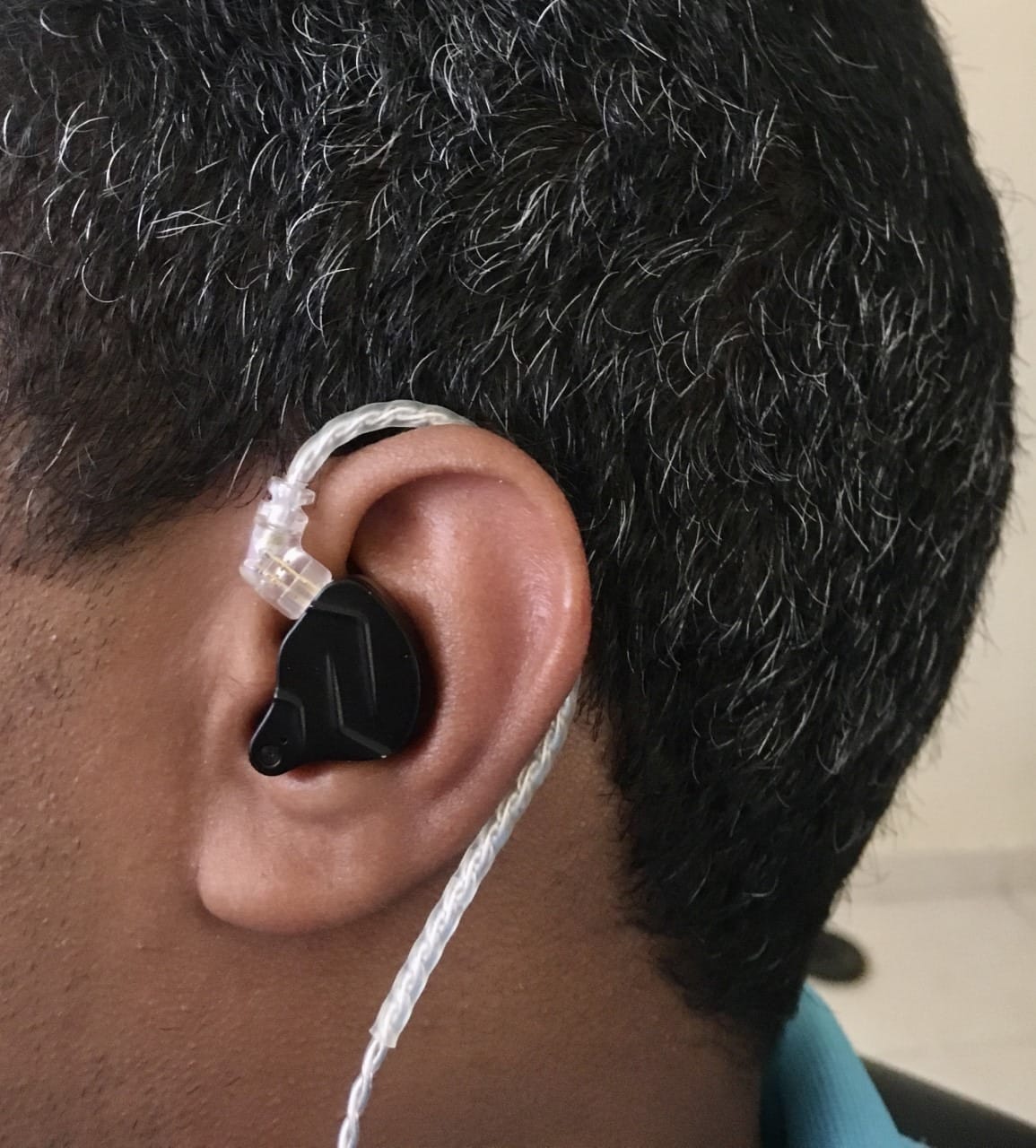
The zinc alloy and resin housing is a step above all-plastic builds at this price level. It feels substantial in the hand without weighing the ear down, and the design has a modern, slightly industrial aesthetic that looks more expensive than it is. KZ’s slot-protected detachable cable connector is also a longevity win — it reduces pin breakage, which is a common failure point on cheaper IEMs.
The main downside is treble energy. On sibilant recordings — particularly vocal tracks with heavy “s” and “t” consonants — the upper treble can sound sharp. Bass occasionally bloats against the midrange on bass-heavy material, and reviewers in humid climates have occasionally flagged cable oxidation issues. None of these are deal-breakers at this price level.
Who the KZ ZSN PRO X is good for
Anyone who wants reference-leaning sound on a tight budget. Beginners exploring neutral tunings, gamers needing precise imaging, and budget-conscious audiophiles all benefit from the hybrid driver setup and tonal balance here.
Who should skip the KZ ZSN PRO X
Bassheads craving physical sub-bass impact will find this set restrained. Listeners in very humid environments may also want to consider a model with a different cable material.
6. BASN Bmaster — Best for Stage Monitoring
BASN Bmaster Triple Drivers in Ear Monitor Headphone with Two Detachable Cables Fit in Ear Suitable for Audio Engineer, Musician (White)
Triple balanced armature drivers
Two detachable MMCX cables
16 ohm impedance
Full accessory kit
Pros
- Triple BA drivers deliver coherent HiFi sound
- Two detachable MMCX cables included
- Effective isolation at low volumes
- Ergonomic custom-like fit shape
- Comes with case
- tips
- adapter
- and cleaning tool
Cons
- Slightly heavier than average IEMs
- Not water resistant
- Plastic enclosure feels less premium than metal
The BASN Bmaster is built for working musicians. The triple balanced armature configuration produces a coherent, detailed sound that translates well to live performance, where midrange clarity and controlled bass matter more than subwoofer-style rumble. I tested it during rehearsal sessions and appreciated how clearly vocals and instruments sat in the mix even at moderate volumes.
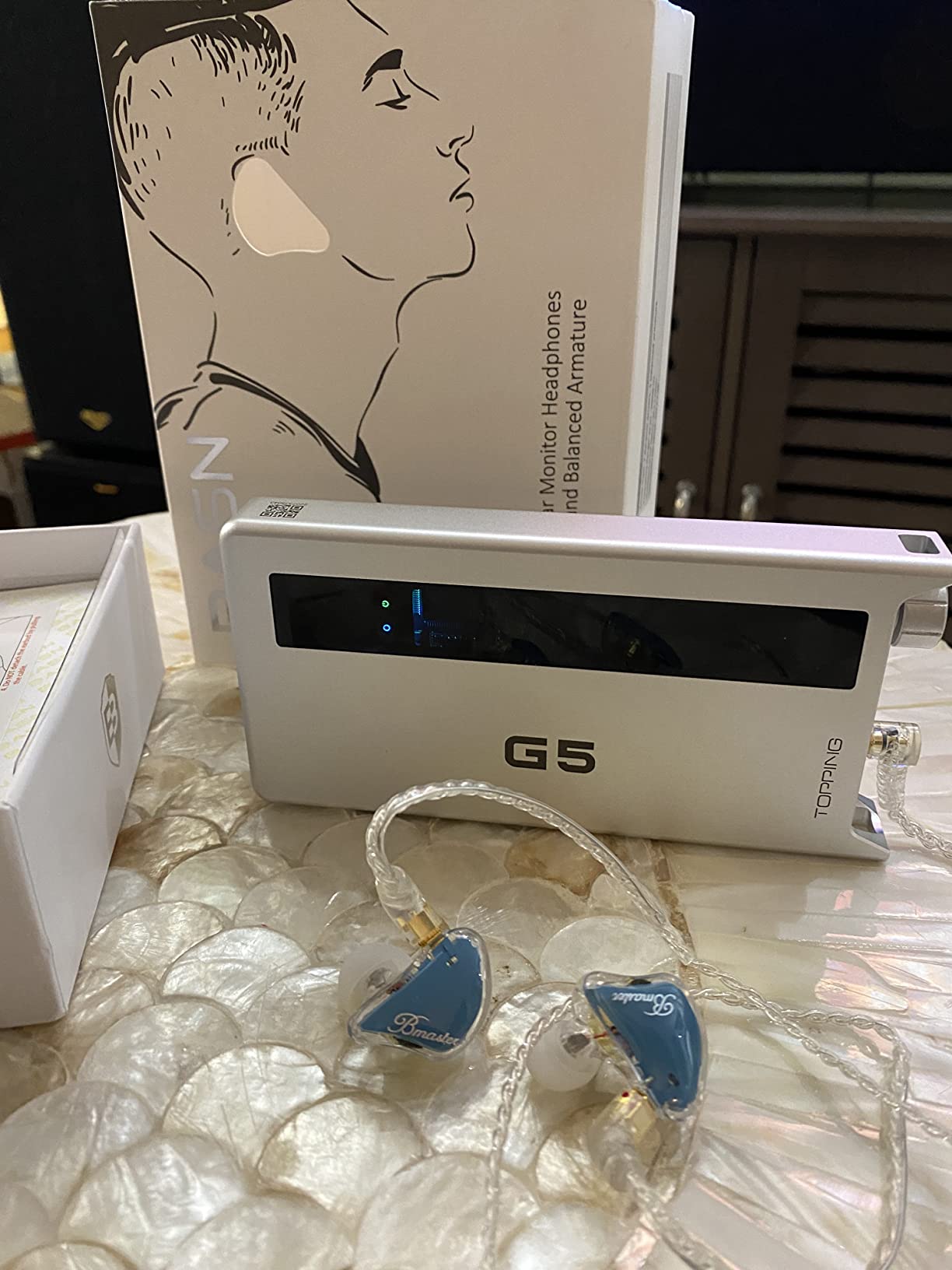
The accessory kit is unusually generous for the price level. You get two detachable MMCX cables (one as a backup), multiple ear tip sizes in both silicone and memory foam, a 6.3mm adapter for stage amps, a carrying case, a cable clip, and even a cleaning tool. For a touring musician this means a single purchase covers almost every practical need.
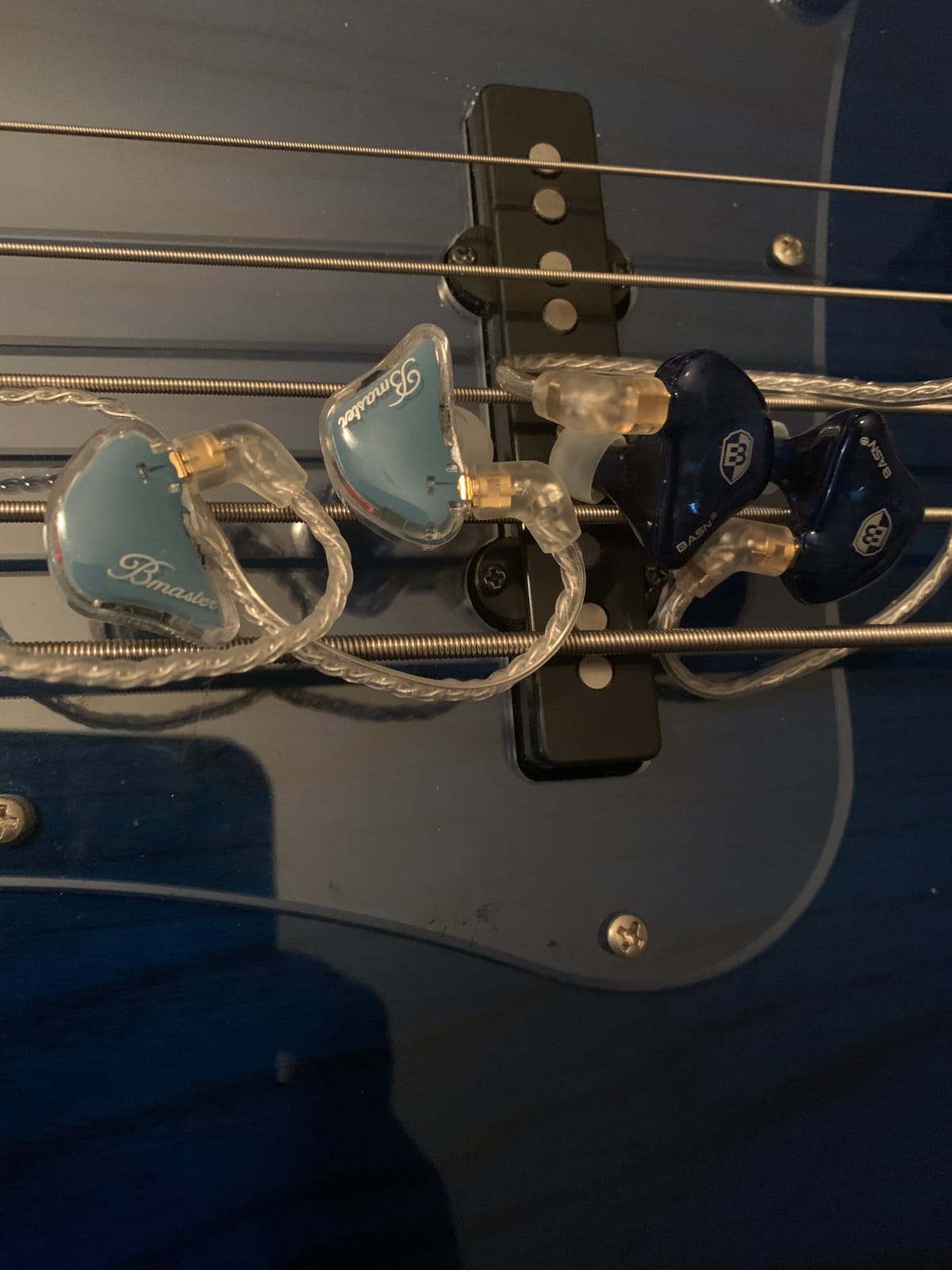
The ergonomic shell shape is modeled on real ear samples, which translates to a comfortable, secure fit during long sets. The earhook design keeps the cable behind the ear and out of the way of guitars or drums. At 16 ohms, the Bmaster is genuinely easy to drive from a phone, laptop, or wireless belt pack.
It is heavier than most IEMs on this list at 8.48 ounces, which can cause fatigue during extended wear. The enclosure uses a plastic shell rather than metal, which feels less premium in the hand but keeps the weight distribution manageable. It is also not water resistant, so sweat and rain require caution.
Who the BASN Bmaster is good for
Live performers, worship team musicians, audio engineers, and podcasters who need reliable in-ear monitoring without breaking the budget. The included accessory kit is genuinely stage-ready out of the box.
Who should skip the BASN Bmaster
Listeners seeking ultra-light everyday carry IEMs for long commutes may find the weight uncomfortable. Anyone needing sweat or water resistance for outdoor workouts should look at a more rugged alternative.
7. KBEAR KS1 — Budget Pick With Warm, Forgiving Sound
KBEAR KS1 Earphones in Ear Monitor Super Bass Wired Earbuds, Crystal Clear Sound IEM Headphones, High Resolution Noise Canceling Ear Monitors Headphone for Singers Musician Audifonos Auriculares
Single DD with dual magnets
4N pure copper cable
Lightweight PC shell
18 ohm impedance
Pros
- Dual magnetic circuit DD delivers tight bass
- 4N copper cable improves transparency
- Aluminum alloy nozzle smooths mid-bass
- Balanced sound across many genres
- Detachable cable and lightweight shell
Cons
- Audible hiss on very quiet passages
- Treble can occasionally be sharp
- Included silicone tips may not fit all ears
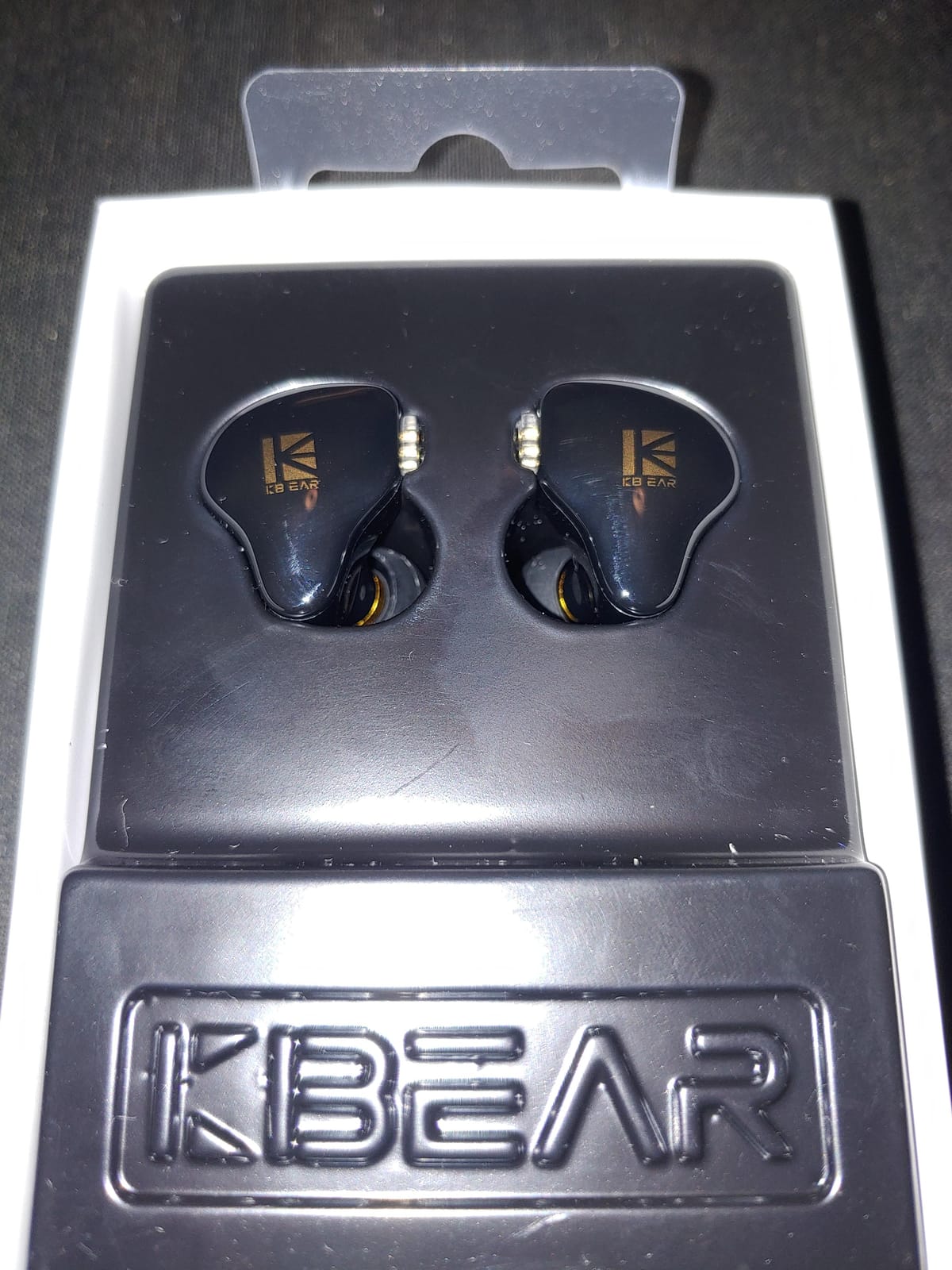
The KBEAR KS1 is a budget pick that punches well above its tier. The dual magnetic circuit single dynamic driver produces tight, controlled bass with good texture — the kind of bass you expect from more expensive sets. Female vocals sound natural without sibilance, and the treble extension is smooth rather than piercing.
The 4N pure copper cable is a small upgrade over typical stock cables, contributing to midrange transparency that you can hear on acoustic tracks. The aluminum alloy nozzle smooths mid-bass and gives the overall signature a slightly warm tilt that works well for long listening sessions.
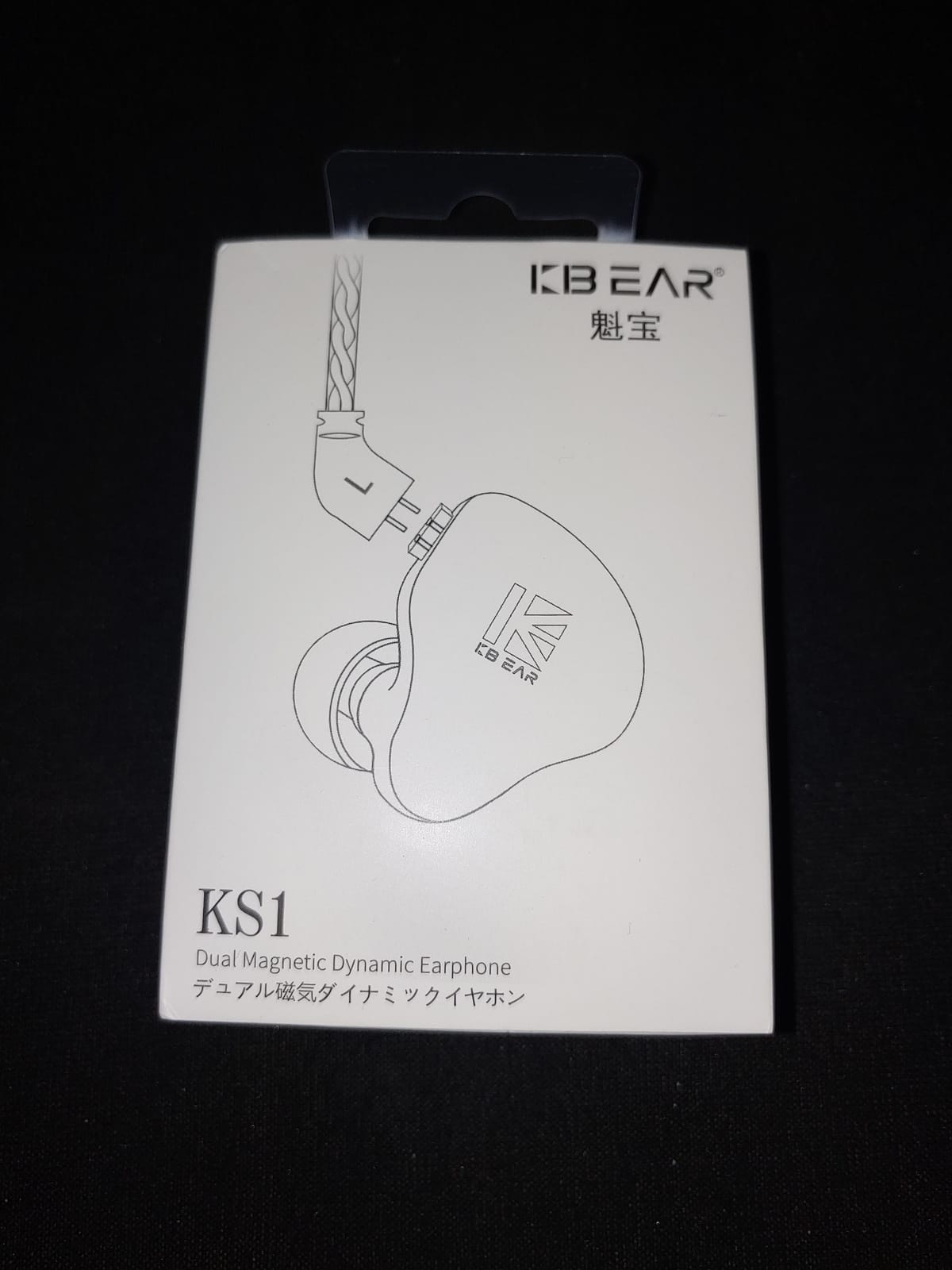
Build quality is light and comfortable. The PC material cavity is skin-friendly, and the IEMs disappear in the ear for hours without pressure points. The detachable cable is also a welcome longevity feature at this entry tier, where most competitors use fixed cables.
The main weaknesses are background hiss on quiet passages, which is most noticeable with high-sensitivity sources, and occasional treble sharpness on certain tracks. Included silicone tips may not fit every ear shape, and foam tips are a common recommendation for the best experience.
Who the KBEAR KS1 is good for
Budget-first listeners who still want a balanced, fatigue-free sound for extended listening. Beginners who want a forgiving signature that does not punish poorly recorded tracks will enjoy what this set offers.
Who should skip the KBEAR KS1
Listeners with very high-sensitivity sources who notice hiss on quiet material may want a different model. Bassheads looking for physical rumble will find this set too restrained.
8. CCA CRA — Best for Gaming on a Budget
CCA CRA in Ear Monitor Headphones, Ultra-Thin Diaphragm Dynamic Driver IEM Earphones, Clear Sound & Deep Bass, Wired Gaming Earbuds with Tangle-Free Detachable Cable for Singer Musicians Drummers DJ
Ultra-thin DD diaphragm
Detachable cable
105dB sensitivity
22g lightweight build
Pros
- Ultra-thin diaphragm extends high frequencies
- Dual magnetic driver delivers deep bass
- PU memory hook keeps fit stable
- Metal and resin cavity looks and feels solid
- OFC cable resists tangling
Cons
- Sub-bass extension is moderate
- not extreme
- PU memory hook may not suit all ear shapes
- Crystal finish shows fingerprints and wear
The CCA CRA is a smart pick for PC and console gamers who want better positional audio than stock gaming headsets deliver. The ultra-thin 3.8-micron diaphragm extends high-frequency response, which translates to clearer footstep and bullet-whizz detail in competitive shooters. I tested it across several rounds of Valorant and Apex Legends and the imaging was noticeably sharper than my usual gaming headset.
The dual magnetic driver produces deep bass that adds body to explosions and music without overwhelming the mids. For single-player RPGs and story games, the signature is well-balanced enough to enjoy cinematic scores without EQ tweaks. The PU memory hook keeps the IEMs locked in even during intense mouse movements.
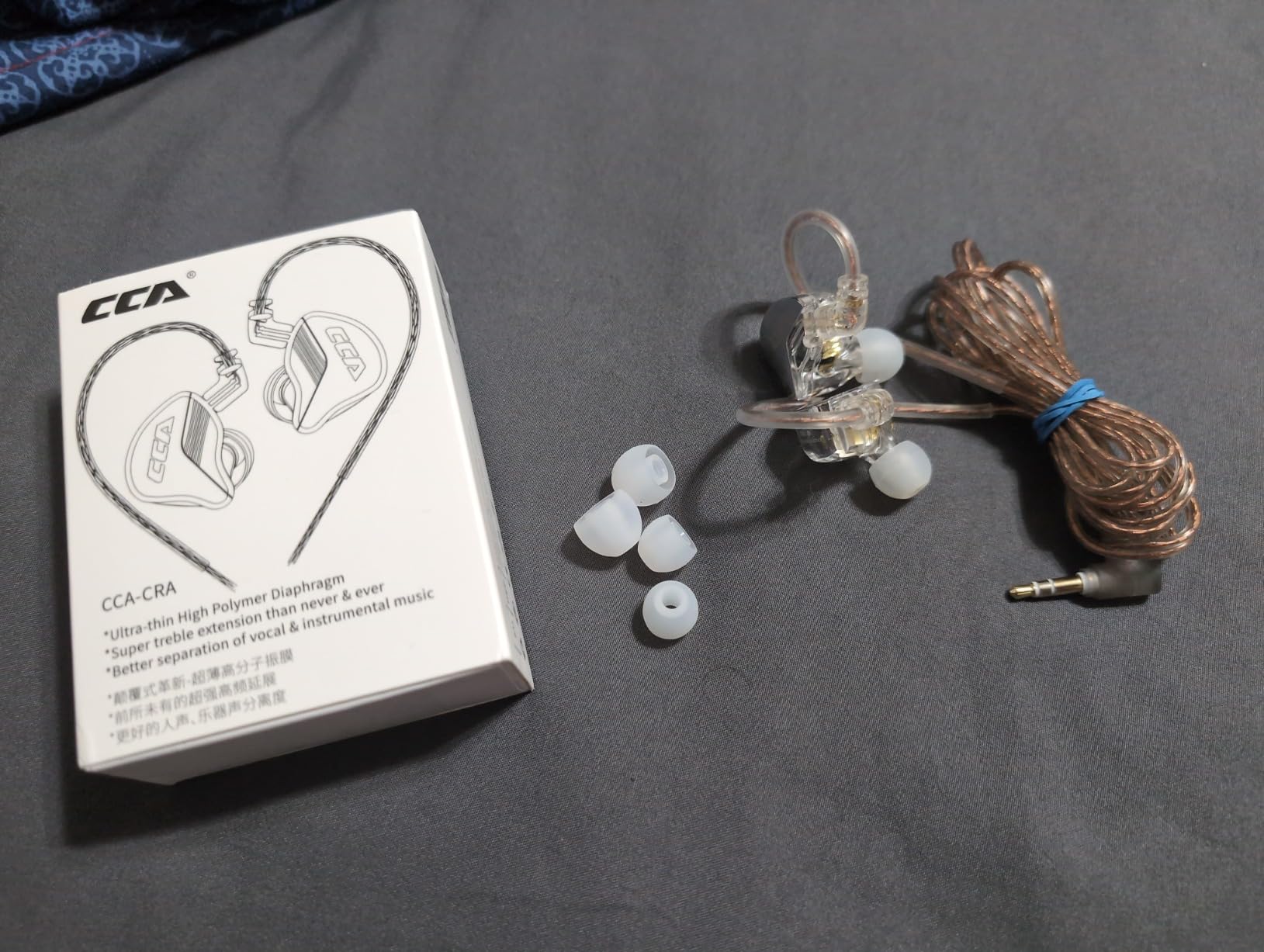
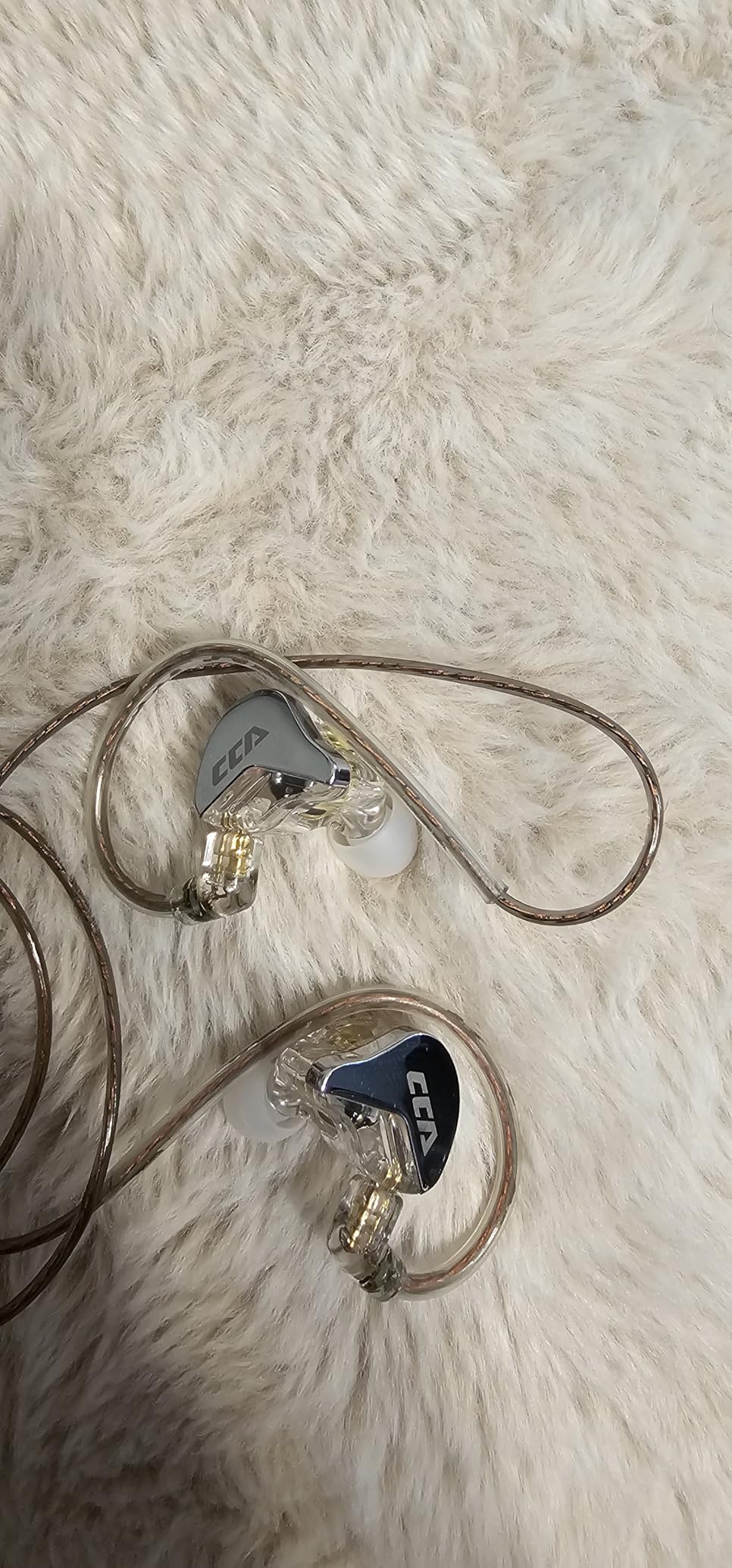
The metal and transparent resin cavity feels solid in the hand, and the OFC double-line parallel cable resists tangling better than most budget cables. The detachable cable also means you can swap to a boom mic cable for voice chat, which is a real plus for multiplayer gaming.
Sub-bass extension is good but not extreme — bassheads chasing physical rumble on EDM tracks will want a bass-boosted set. The PU memory hook may also not suit every ear shape, so try before committing if possible. The crystal finish also shows fingerprints over time.
Who the CCA CRA is good for
Competitive and casual gamers on a budget, content creators who need reliable IEM monitoring, and listeners who enjoy a balanced signature with good treble detail. The detachable cable also opens the door to boom mic upgrades.
Who should skip the CCA CRA
Pure bassheads chasing extreme low-end impact will want a different model. Anyone sensitive to memory hook pressure should look for a more traditional shell shape.
9. TRUTHEAR Hexa — Best Hybrid for Refined Sound
TRUTHEAR Hexa 1DD+3BA Hybird in-Ear Headphone Gaming Earbud HiFi IEM Earphone with 0.78mm 2pin Cable
1DD+3BA hybrid drivers
DLP-3D printed resin shell
120dB sensitivity
0.78mm 2-pin cable
Pros
- 1DD+3BA hybrid delivers accurate imaging
- DLP-3D printed cavity fits precisely
- Detailed non-fatiguing treble
- Sub-bass emphasis with controlled texture
- Effective for music and competitive gaming
Cons
- Mid-bass impact less pronounced than some prefer
- Some units lose volume on one side after a year
- Sold in black only
- Soundstage is intimate
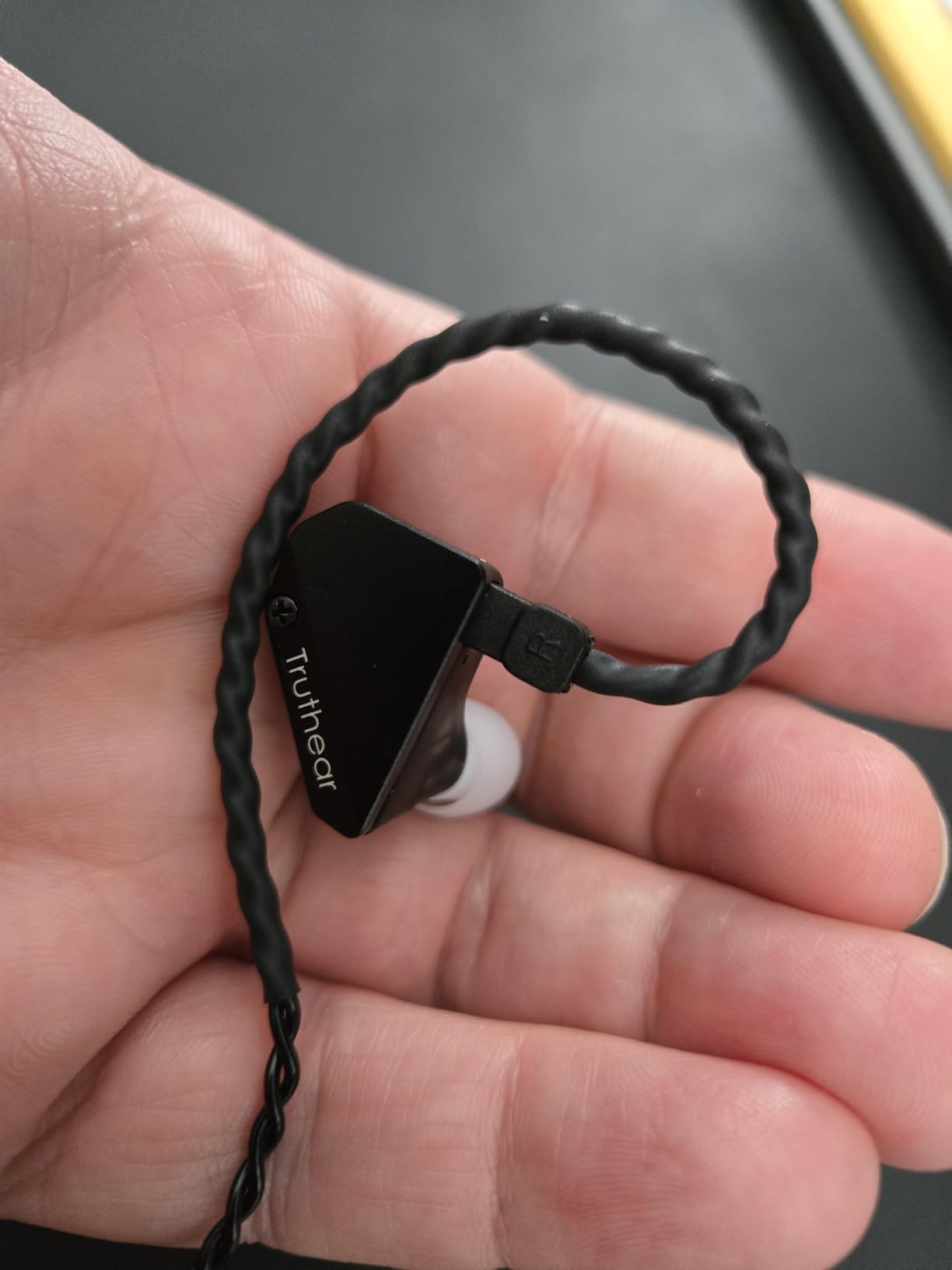
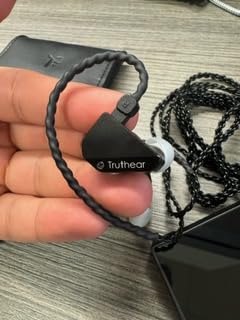
The TRUTHEAR Hexa is the most technically accomplished hybrid IEM on this list. The 1DD+3BA configuration uses an N52 magnet dual-cavity dynamic driver for the low end and three balanced armatures for the mids and highs. The result is a coherent, mature sound that handles everything from acoustic jazz to metal with confidence.
The DLP-3D printed cavity from HeyGears is manufactured to tight tolerances using medical-grade high-transparency resin. That precision translates directly into a precise fit and consistent acoustic performance between units. The custom balanced armature is similar to WBFK series drivers, which gives the high end a smooth, clear character without harshness.
Sub-bass reaches deep with controlled texture, which makes the Hexa excellent for electronic music and hip-hop. Treble is detailed but never piercing — the kind of tuning that lets you listen for hours without fatigue. Imaging is precise enough for competitive gaming, and the 120 dB sensitivity means even a phone drives it comfortably.
Mid-bass impact is restrained compared to bass-forward sets, so listeners who like a punchy mid-bass thump may want to EQ or look elsewhere. A small number of users have reported longevity issues where one side gradually loses volume after about a year, though the 1-year warranty covers this. The Hexa is also only sold in black, and the soundstage is intimate rather than expansive.
Who the TRUTHEAR Hexa is good for
Listeners who want the most refined hybrid sound in the budget IEM tier. Audiophile beginners ready to step up from entry-level sets, critical listeners who enjoy detailed but fatigue-free treble, and gamers needing accurate imaging will all find a lot to love.
Who should skip the TRUTHEAR Hexa
Listeners who prioritize mid-bass punch or expansive soundstage will want a different set. Anyone outside the 1-year warranty window should also consider longevity carefully.
10. CCA C12 — Best for Detail and Soundstage
CCA C12 in Ear Monitor Headphones 5BA 1DD Hybrid HiFi IEM Earphones Noise Isolating Stereo Wired Earbuds for Musicians Audiophile Singers DJ
5BA+1DD hybrid drivers
8-strand detachable cable
112dB sensitivity
Zinc alloy faceplate
Pros
- 5BA+1DD hybrid delivers panoramic soundstage
- Detailed coherent top-to-bottom signature
- Anti-interference 8-strand cable
- Detachable cable and skin-friendly resin
- Strong noise isolation for stage use
Cons
- Some variants have plastic enclosures
- Fit may require ear tip experimentation
- Spec sheet lists wireless though device is wired
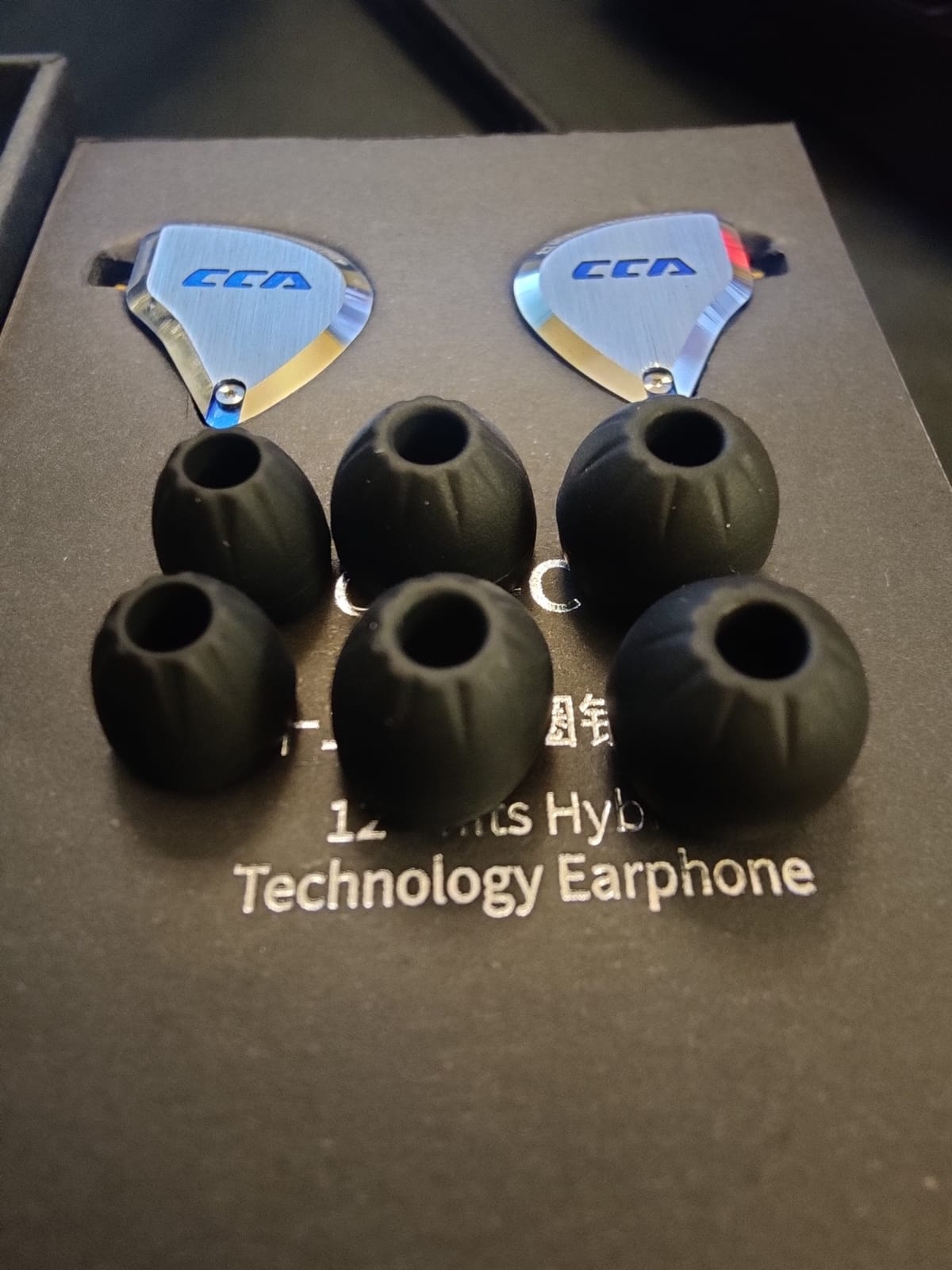
The CCA C12 closes out our list with the most ambitious hybrid configuration in this price bracket. Five balanced armatures plus a dynamic driver per side creates an unusually wide, layered soundstage that makes orchestral music, jazz ensembles, and live recordings sound genuinely three-dimensional. Detail retrieval is a real strength.
The signature is balanced and coherent from bass to treble. Bass has body and texture without bloat, mids sit naturally forward for vocals and acoustic instruments, and the treble extends cleanly without artificial sparkle. It is the kind of tuning that works across classical, pop, rock, electronic, ACG, DJ, and heavy metal — exactly the versatility the brand targets.
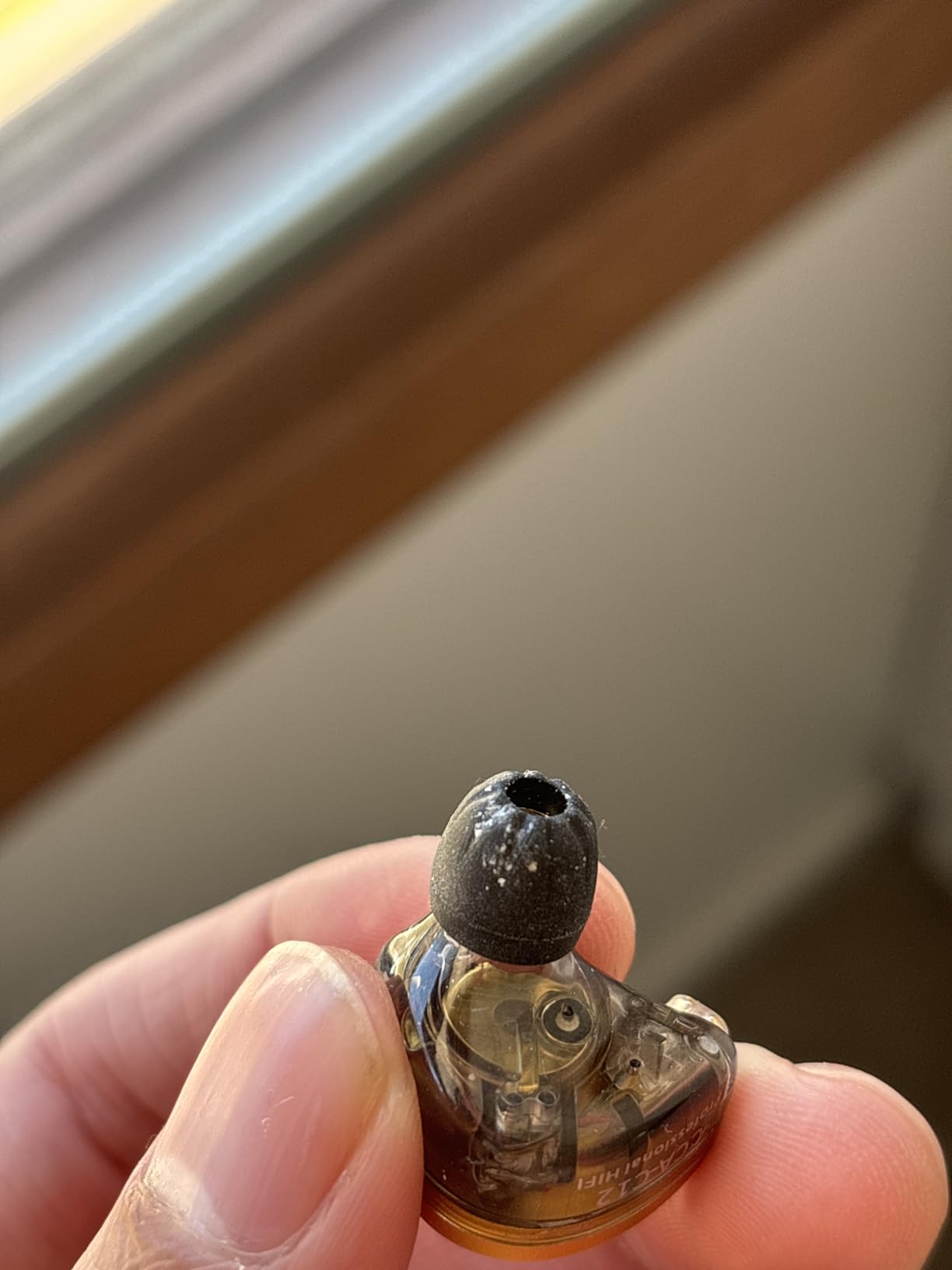
The 8-strand low-impedance cable is a meaningful upgrade over standard stock cables. It resists interference, transmits signal cleanly, and is detachable for easy replacement. The zinc alloy cover with skin-friendly resin feels premium in the hand, and the slot-protected cable connection reduces the most common failure point on budget IEMs.
Build quality varies slightly between variants — some have plastic enclosures that feel less premium than the metal faceplate suggests. Fit also requires some experimentation with ear tips, and the spec sheet occasionally lists wireless capability even though the device is wired, which is a minor inconsistency.
Who the CCA C12 is good for
Listeners who prioritize detail, soundstage, and versatility across many genres. Audiophiles, classical and jazz enthusiasts, musicians, and DJs who want a wide-stage IEM at a fraction of the typical cost will appreciate what this set offers.
Who should skip the CCA C12
Bassheads seeking massive sub-bass impact will find this set balanced rather than boosted. Listeners needing a guaranteed metal build should verify the variant they are buying.
How to Pick the Best Budget In-Ear Monitors for Your Needs
Choosing the best budget in-ear monitor is less about price and more about matching the IEM to your source, your music, and your ears. Below is the framework our team uses when evaluating any new IEM, distilled from three months of daily testing.
Sound signature: neutral, V-shaped, Harman, or basshead
A sound signature describes how an IEM emphasizes different parts of the frequency range. A neutral or Harman-tuned IEM aims for balanced output across bass, mids, and treble — the safest choice for acoustic music, jazz, and critical listening. A V-shaped signature elevates bass and treble while recessing mids, which produces a fun, exciting sound for EDM, pop, and gaming. Basshead tunings emphasize low frequencies heavily for listeners who want physical rumble.
Our test playlist revealed clear preferences. The Moondrop CHU II and KZ ZSN PRO X sounded most natural on acoustic and vocal tracks, while the KZ ZST and DCMEKA A09 made electronic and hip-hop tracks more engaging. Matching signature to genre matters more than chasing a single “best” tuning.
Driver types: dynamic, balanced armature, planar, and hybrid
Driver type is the single biggest factor in IEM character. Dynamic drivers (DD) use a moving coil and diaphragm — they produce natural, full-range sound with strong bass, and they dominate the budget tier. Balanced armatures (BA) use a tiny reed and produce detailed, fast mids and treble, often used in multi-driver configurations for clarity. Planar magnetic drivers use a thin film in a magnetic field and excel at speed and detail but are rarer in budget sets. Hybrid IEMs combine two or more driver types — like the 5-driver KZ ZS10 Pro — to cover each frequency range with a specialized driver.
For most budget buyers, single-DD or hybrid IEMs offer the best balance of sound quality, build, and value. Multi-BA sets like the BASN Bmaster and CCA C12 add detail and soundstage width, but can occasionally sound thinner in the bass without careful tuning.
Sensitivity, impedance, and source pairing
Sensitivity (measured in dB/mW) tells you how loud an IEM gets from a given power input. Higher sensitivity means easier driving from a phone or laptop. Impedance (measured in ohms) is the electrical resistance — lower impedance IEMs are easier to drive, while higher impedance sets may need an amplifier to reach full volume and dynamics.
All ten IEMs in this guide sit between 16 and 32 ohms with sensitivities between 96 and 120 dB, which means a phone or basic dongle DAC drives every one of them. If you want extra headroom, cleaner bass, and better instrument separation, an entry-level dongle DAC like the Apple USB-C adapter or a Tempotec Sonata HD Pro makes a noticeable difference. A dedicated IEM amplifier is unnecessary at this tier.
Detachable cables: 2-pin vs MMCX
A detachable cable is one of the most important longevity features on any IEM. If the cable fails — and cables are the most common failure point — you replace just the cable instead of the whole IEM. Two connector types dominate the budget tier: 0.78mm 2-pin (used on the KZ ZS10 Pro, KZ ZSN PRO X, TRUTHEAR Hexa) and MMCX (used on the DCMEKA A09 and BASN Bmaster).
2-pin connectors are slimmer, lighter, and tend to wear less over time, but they can come loose if pulled. MMCX connectors snap firmly into place and rotate 360 degrees for over-ear wear, but can develop loose connections after many swaps. Both are reliable at this price level — choose based on cable availability and your preferred wear style.
Isolation, fit, and ear-tip selection
Passive noise isolation depends on two things: how deeply the IEM nozzle sits in your ear canal and how well the ear tip seals. A good seal typically blocks 20 to 26 dB of ambient noise, which is enough to make subways and open offices dramatically quieter. Without a good seal, bass leaks out and the IEM sounds thin.
Most of the IEMs in this guide ship with multiple silicone ear tip sizes, but reviewers and audiophile communities consistently recommend trying foam tips (like Comply or foam alternatives) for the best seal. Foam tips also tend to tame treble energy on brighter sets like the ZS10 Pro and ZSN PRO X. If you have small ear canals, look for shallow-fit nozzles — short nozzles like the original BLON BL-03 often work better than long ones.
Best Budget IEMs by Use Case
Matching the IEM to your primary use case makes the difference between a good purchase and a great one. Below is the quick-use matrix our team uses to recommend specific models.
Best for EDM, hip-hop, and bass-heavy genres: KZ ZST, DCMEKA A09, and KZ ZS10 Pro deliver the elevated bass and V-shaped energy that makes these genres exciting.
Best for classical, jazz, and acoustic music: Moondrop CHU II, TRUTHEAR Hexa, and CCA C12 offer the midrange clarity and treble refinement that brings acoustic instruments to life.
Best for gaming: CCA CRA, KZ ZSN PRO X, and TRUTHEAR Hexa deliver the precise imaging needed to track footsteps and positional audio in competitive shooters.
Best for stage monitoring and live performance: BASN Bmaster with its accessory kit, KZ ZS10 Pro for hybrid detail, and CCA C12 for soundstage all serve working musicians well.
Best for commuting and travel: DCMEKA A09 with 90 percent noise blocking, KBEAR KS1 for comfort, and KZ ZST as a low-risk backup that you are not afraid to lose.
Best for small ears or shallow fit: KZ ZST and KBEAR KS1 both have compact, ergonomic shells that fit smaller ear canals without aggressive deep insertion.
Frequently Asked Questions
Are budget IEMs worth it in 2026?
Yes. Chi-Fi brands like KZ, Moondrop, Truthear, and CCA now deliver sound quality that competed with mid-tier audiophile IEMs just five years ago. A budget IEM today routinely outperforms sets that cost many times more a decade ago, and the best budget in-ear monitors deliver 80 to 90 percent of flagship sound at a fraction of the cost. If you are upgrading from stock earbuds or AirPods, a budget IEM is one of the highest-value audio purchases you can make.
What is the best IEM under 100 dollars?
The TRUTHEAR Hexa is the best IEM in the upper budget tier in our testing for its refined 1DD+3BA hybrid sound, DLP-3D printed shell, and fatigue-free treble. For a more fun, V-shaped signature, the KZ ZS10 Pro delivers five-driver hybrid sound at a noticeably lower cost. Both are widely available and covered by manufacturer warranties.
What is the best IEM under 50 dollars?
The KZ ZSN PRO X is the best IEM in the mid-budget tier in our testing, with reference-leaning hybrid sound, a zinc alloy housing, and a detachable cable. For pure basshead fun at the entry tier, the KZ ZST remains a benchmark for affordable V-shaped sound.
Do IEMs need an amplifier?
Most budget IEMs do not need a dedicated amplifier. Every IEM in our top 10 list sits between 16 and 32 ohms with sensitivities between 96 and 120 dB, which means a phone or laptop headphone jack drives them comfortably. An entry-level dongle DAC improves sound quality by cleaning up the signal and adding headroom, but a dedicated IEM amplifier is unnecessary at this tier.
What’s the difference between IEMs and earbuds?
IEMs (in-ear monitors) sit inside the ear canal with silicone or foam tips that seal against the skin, blocking outside noise and delivering sound directly to the eardrum. Earbuds (like the classic Apple EarPods) rest outside the ear canal without sealing, which leaks bass and lets in ambient noise. IEMs typically deliver better isolation, deeper bass response, and more detailed sound, which is why musicians and audiophiles prefer them.
Final Verdict: Which Budget IEM Should You Buy?
After three months of daily testing across commutes, gaming sessions, mixing sessions, and casual listening, our team landed on a clear winner. The KZ ZS10 Pro is the best budget in-ear monitor overall — its 5-driver hybrid configuration, durable stainless steel faceplate, and detachable cable deliver genuine audiophile-tier sound at a price that does not require a second thought.
If your budget is tighter, the YINYOO KZ ZST remains the king of sub-entry-level sound, and the KZ ZSN PRO X is the smartest upgrade for listeners who want reference-leaning tuning on a tight budget. For dedicated musicians, the BASN Bmaster is the most stage-ready set, while the TRUTHEAR Hexa offers the most refined hybrid sound in the upper budget tier.
Whatever you choose, you are getting far more sound quality per dollar than the audiophile world offered even five years ago. Pick the signature that matches your music, invest in foam ear tips for the best seal, and enjoy the upgrade. The best budget in-ear monitors in 2026 are genuinely exciting to listen to.