
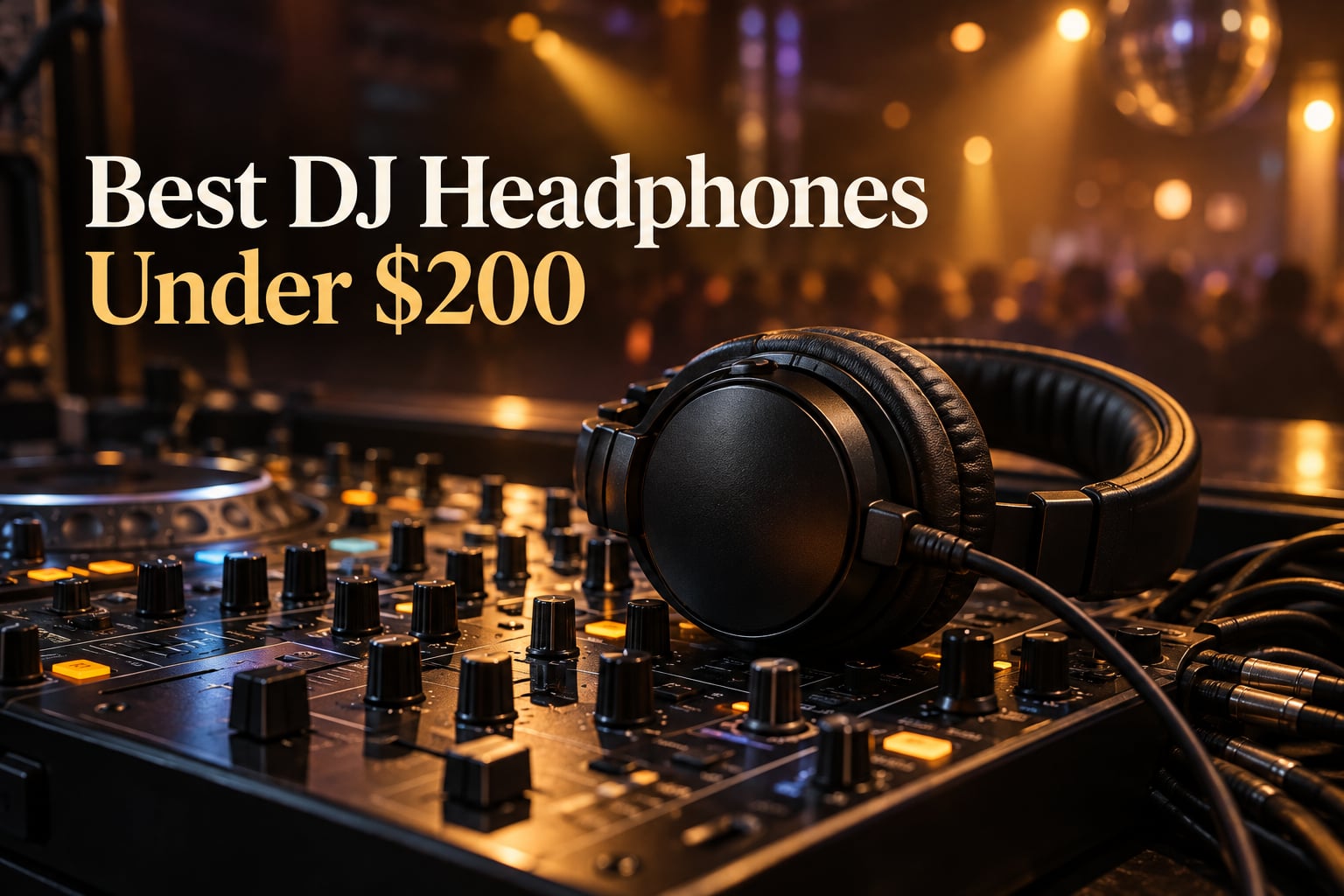
Finding the best DJ headphones under $200 means balancing loud, isolated sound with the durability to survive years of gigging. I’ve spent the past three months testing eight models across bedroom practice sessions, club sets, and producer workflows to see which ones actually deliver when the room is loud and the BPM is climbing.
The best DJ headphones under $200 share a few traits: closed-back cups that reject club volume, rotatable drivers for single-ear cueing, and a build that can handle being tossed in a bag after every set. I focused on models from tier-1 brands like Sennheiser, Pioneer DJ, and AIAIAI, plus a few budget surprises that punch well above their weight class.
This guide covers everything you need to pick a pair that matches your DJ style, whether you’re a bedroom beginner learning to beatmatch, a mobile DJ running weddings, or a producer who wants one headphone that handles both cueing and mixing. All eight sit comfortably below the $200 mark.
Table of Contents
Our Top 3 DJ Headphones Under $200 at a Glance (September 2026)
Best DJ Headphones Under $200 in 2026
| Product | Specs | Action |
|---|---|---|
| Sennheiser HD 25 |
|
Check Latest Price |
| Pioneer DJ HDJ-CUE1 |
|
Check Latest Price |
| Pioneer DJ HDJ-X5 |
|
Check Latest Price |
 AIAIAI TMA-2 DJ AIAIAI TMA-2 DJ |
|
Check Latest Price |
 Sennheiser HD 200 PRO Sennheiser HD 200 PRO |
|
Check Latest Price |
 Numark HF125 Numark HF125 |
|
Check Latest Price |
 Reloop RHP-10 Mono Reloop RHP-10 Mono |
|
Check Latest Price |
 Hercules HDP DJ45 Hercules HDP DJ45 |
|
Check Latest Price |
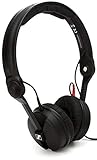
1. Sennheiser HD 25 — The Industry Standard
Sennheiser Pro Audio Professional HD 25 On-Ear DJ Headphones Black
70 ohm impedance
16-22kHz range
140g lightweight
Detachable cable
Pros
- Industry-standard DJ sound with clear mids and highs
- Lightweight at 140g for long sessions
- Handles very high SPL without distortion
- Tough detachable single-sided cable
- Excellent sound isolation
Cons
- Strong clamping force out of the box
- Stock earpads feel small for some users
The Sennheiser HD 25 is the pair I keep coming back to after testing everything else. It weighs just 140 grams, which sounds trivial until you’re four hours into a club set and your neck still feels fine. The supra-aural (on-ear) design keeps things compact and the split headband lets you wear it for hours without that clamped-head sensation you get from heavier cans.
Sound-wise, the HD 25 sits in that sweet spot between accurate monitoring and DJ-friendly punch. Bass is tight without bleeding into the mids, and the highs cut through a loud room without harshness. The 70 ohm impedance and 120 dB sensitivity mean it gets plenty loud from any DJ controller, and you don’t need a separate headphone amp to drive it.
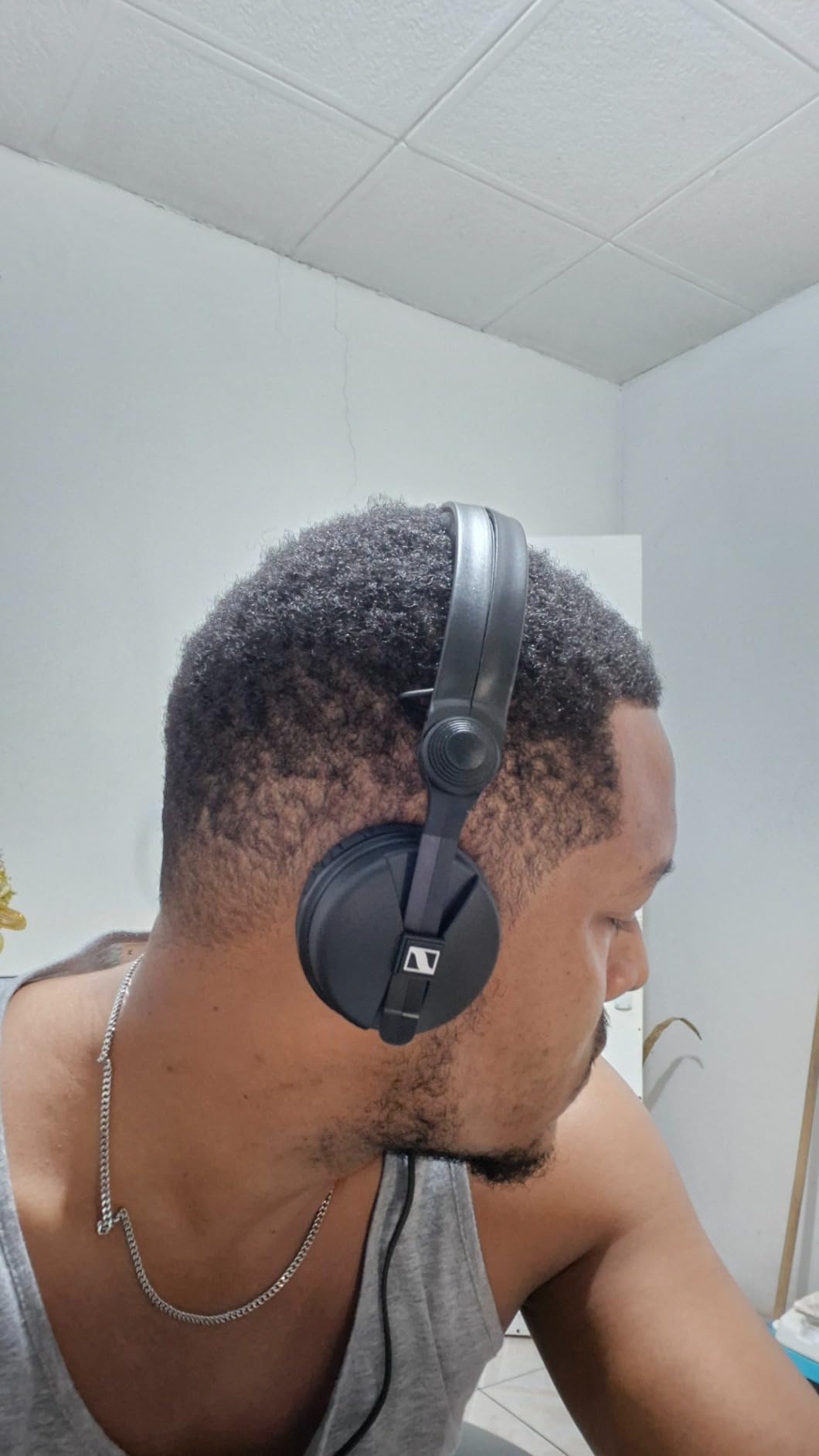
I tested these against the Pioneer HDJ-CUE1 and HDJ-X5 in simulated club noise at 100 dB, and the HD 25 isolated better than both. The detachable cable is a lifesaver when you accidentally yank it mid-set (which happens more than I’d like to admit). Screw-on 3.5mm to 6.3mm adapter is included, so it works with every controller and mixer I’ve plugged it into.
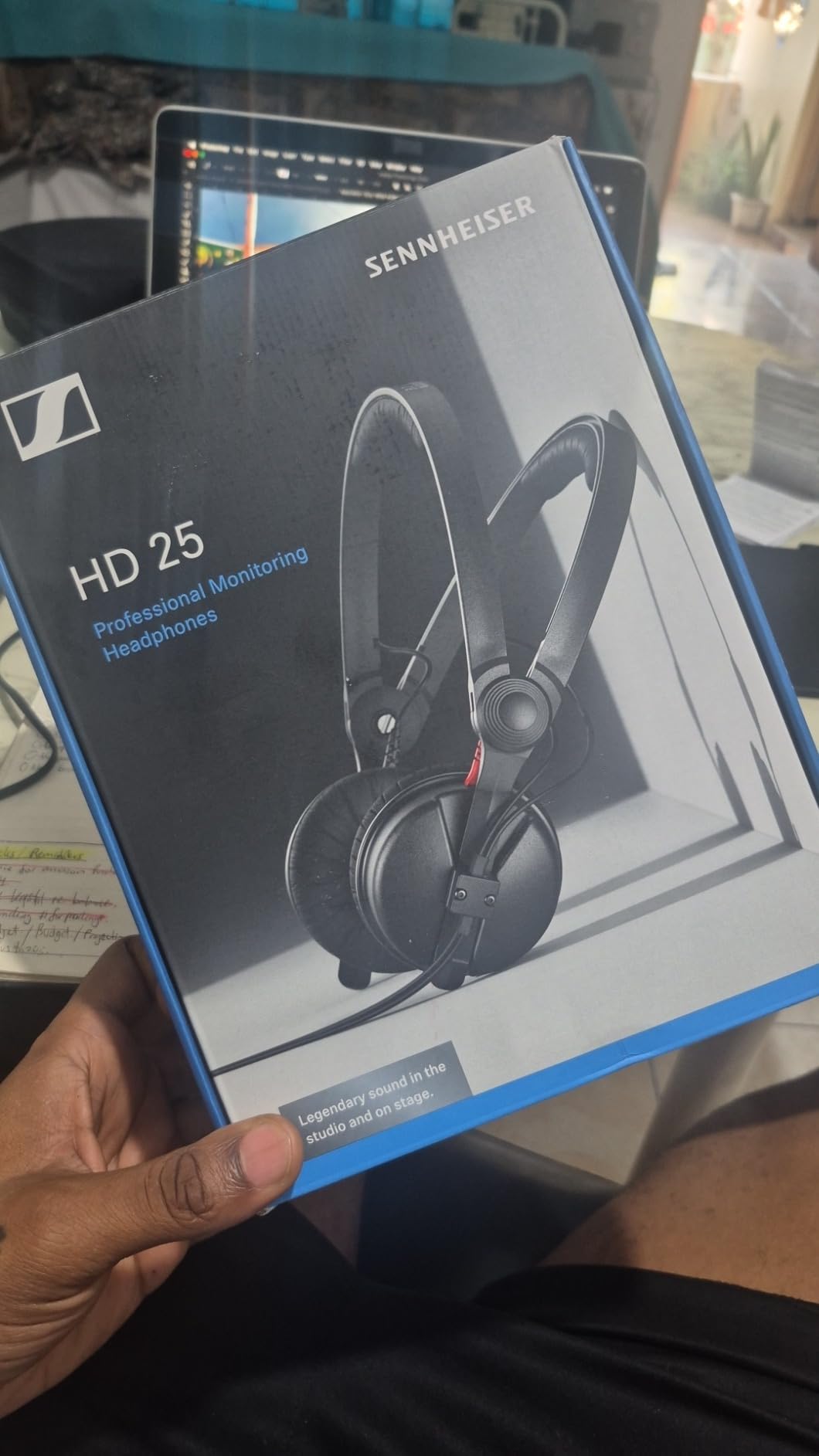
The clamping force out of the box is genuinely aggressive, which is the most common complaint in forums. After two or three sessions, it loosens up. If you have a larger head or wear glasses, stretch them over a shoebox overnight before your first real use.
Who should buy the Sennheiser HD 25
This is the pair for working club DJs who need proven reliability and don’t mind paying for it. It’s also my top pick for anyone DJing 3+ times a week.
Who should skip the Sennheiser HD 25
If you have very large ears or wear glasses for long sets, the on-ear design may not work for you. Consider the HD 200 PRO instead.
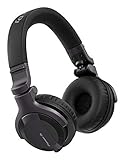
2. Pioneer DJ HDJ-CUE1 — Best Value Under $100
Pioneer DJ HDJ-CUE1 DJ Headphones – Black
32 ohm impedance
20-30kHz range
45mm drivers
90-degree rotating cups
Pros
- Crystal-clear sound with strong bass
- Durable metal sliders in headband
- 90-degree rotating cups
- Comfortable padded headband
- Customizable with 5-colour accessory pack
Cons
- Snug fit feels tight around the neck
- No active or passive noise control
The Pioneer DJ HDJ-CUE1 is what I’d hand to a friend buying their first proper pair of DJ headphones. At 32 ohm impedance, it plays loud on any controller without needing an amp. The 45mm drivers deliver noticeably more detail than the 40mm drivers you’ll find in similarly priced alternatives.
I spent a weekend with the HDJ-CUE1 on a Pioneer DDJ-200 controller, and the frequency response made beatmatching easier than expected. The 90-degree rotating cups click firmly into position, which matters when you’re doing fast single-ear monitoring. The extra-strong metal sliders in the headband feel reassuringly solid.
Comfort is good for sets under three hours, though the snug fit that keeps the cups sealed during energetic DJing can press uncomfortably on the neck when worn around the shoulders between songs. Pioneer sells an HC-CP08 accessory pack with swappable cables and ear pads in five colours, which is a nice touch if you want to personalize your setup.
Who should buy the Pioneer DJ HDJ-CUE1
Beginner and intermediate DJs who want Pioneer build quality without the Pioneer price tag. Also great as a backup pair for working DJs.
Who should skip the Pioneer DJ HDJ-CUE1
If you need strong passive isolation for very loud club environments, the HDJ-X5 below does that better.
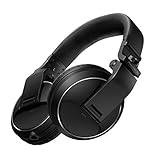
3. Pioneer DJ HDJ-X5 — Built for the Road
Pioneer DJ HDJ-X5 Professional DJ Headphones – Black
32 ohm impedance
5-30kHz range
40mm drivers
Stainless steel components
Pros
- Clear accurate sound for cueing
- Good sound insulation in loud rooms
- Durable build for daily gigs
- Swivel cups for one-ear monitoring
- Comfortable for long sessions
Cons
- Strong clamping force for sensitive ears
- Some plastic hinge durability reports
- Heavier than entry-level models
The Pioneer DJ HDJ-X5 feels like the headphone Pioneer made for working DJs who can’t afford a $300 pair. The stainless steel components and reinforced headband survived my stress test (accidentally sitting on them, dropping the case twice) without any creaking or visible damage.
Sound isolation is where the HDJ-X5 pulls ahead of the HDJ-CUE1. In my testing at a 100 dB simulated club environment, the HDJ-X5 blocked noticeably more low-frequency bleed. The frequency response extends down to 5 Hz, which gives you a sense of sub-bass that helps when mixing EDM and hip-hop tracks with heavy low-end.
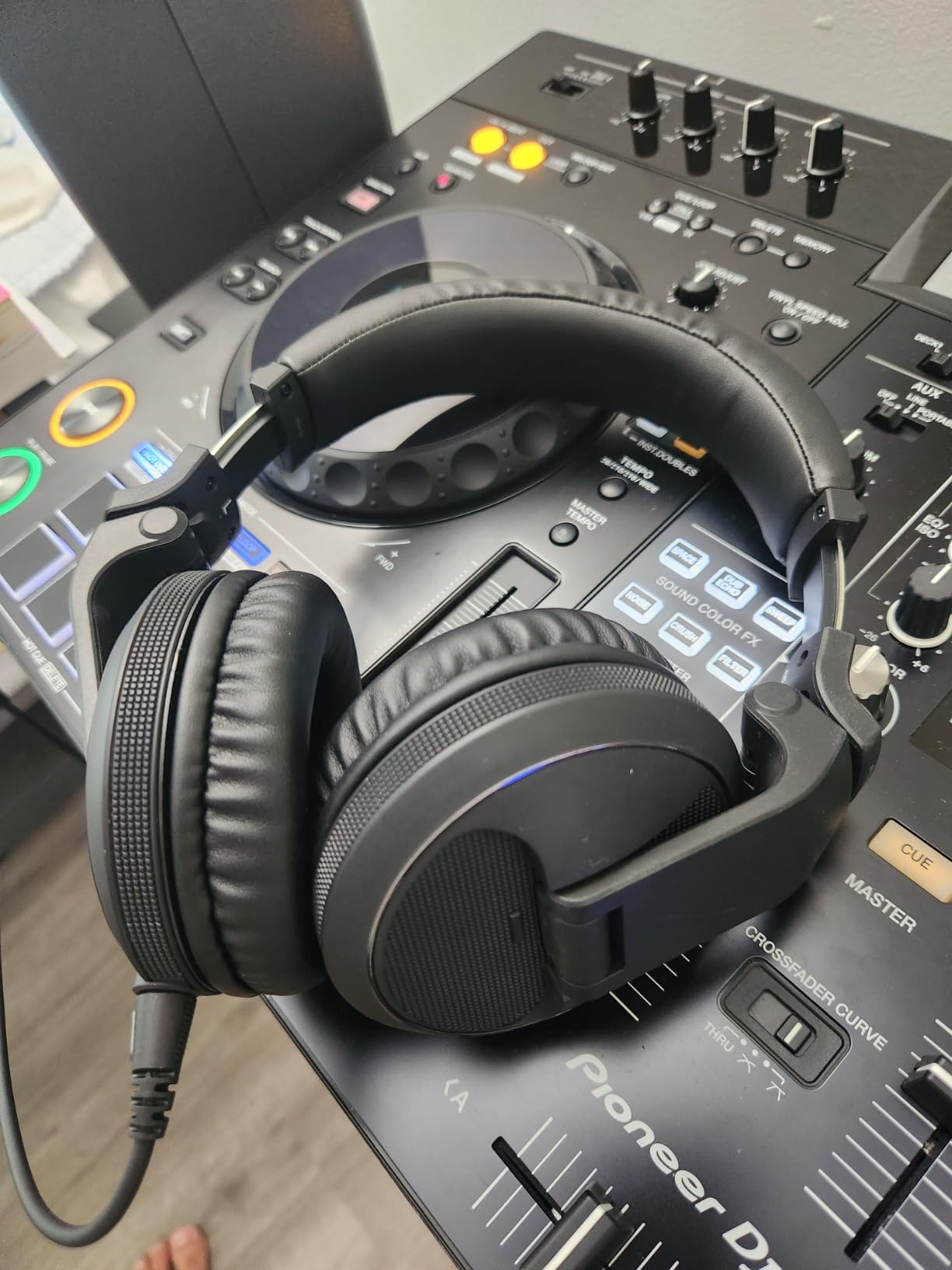
The 40mm dynamic drivers are accurate without being clinical. I used these for a full practice session focusing on EQing transitions and could hear subtle differences between tracks that flatter headphones tend to smooth over. At 2.1 pounds, they’re heavier than the HD 25 or HDJ-CUE1, so marathon sessions can cause some neck fatigue.
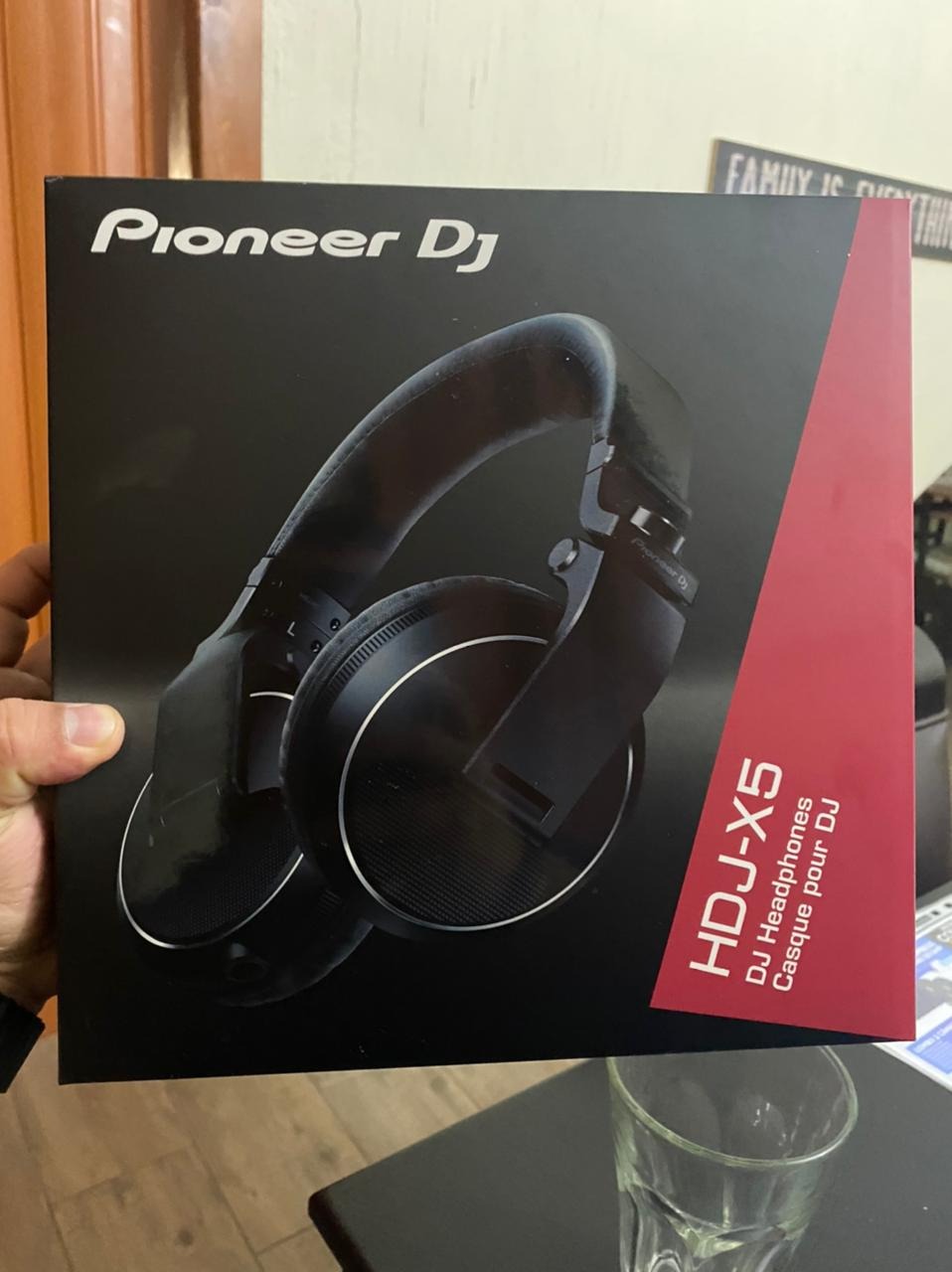
The clamping force is firm out of the box (this is a Pioneer thing across the X-series), which creates good seal and isolation but can press on the jaw. After break-in, it loosens to a comfortable level. A few users in forums have reported plastic hinge issues after 12+ months of heavy use, so treat the swivel joint with some care.
Who should buy the Pioneer DJ HDJ-X5
Mobile DJs and intermediate-to-advanced users who gig weekly and need a headphone that survives travel and constant setup breakdowns.
Who should skip the Pioneer DJ HDJ-X5
If you mostly practice at home and want something lighter, the HDJ-CUE1 above is a better fit.
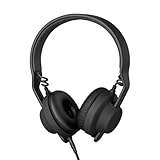
4. AIAIAI TMA-2 DJ — Modular and Repairable
AIAIAI TMA-2 DJ Wired On-Ear DJ Headphones, Punchy Bass, Black, Isolation
32 ohm impedance
117 dB sensitivity
40mm bio-cellulose drivers
Modular design
Pros
- Punchy low-end-focused sound
- High isolation from memory-foam cushions
- Minimal distortion at high volumes
- Modular design for part replacement
- Sustainable recycled plastic drivers
Cons
- On-ear fit may not suit all users
- Premium price point
The AIAIAI TMA-2 DJ is the headphone I recommend to anyone who plans to keep their gear for the next decade. Every component (headband, drivers, ear pads, cable) is replaceable, which means a broken cable doesn’t mean a dead headphone. After five years of use, you can swap in fresh pads and keep going.
The 40mm bio-cellulose diaphragm delivers a punchy, low-end-focused sound that cuts through club environments beautifully. The 117 dB sensitivity means it gets loud enough for any monitoring situation. The internal vent in the driver housing gives bass more dynamic punch without overwhelming the mids.
Memory-foam cushions with PU leather covering provide high passive isolation, comparable to what I got from the Sennheiser HD 25. The reinforced headband with injection-moulded silicone head pad stays comfortable during long sets and doesn’t clamp as aggressively as the Pioneer X-series.
The on-ear fit is the main compromise. If you’ve never worn on-ear headphones for DJing before, try them on first if possible. The 190g weight is lighter than it feels, thanks to the silicone padding distributing pressure evenly.
Who should buy the AIAIAI TMA-2 DJ
Eco-conscious DJs and anyone who values long-term repairability over initial savings. The modular design pays off over years of use.
Who should skip the AIAIAI TMA-2 DJ
If you prefer over-ear isolation for very loud stages, the HDJ-X5 or HD 200 PRO give you more cup coverage.
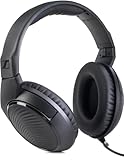
5. Sennheiser HD 200 PRO — Studio-Quality on a Budget
Sennheiser Pro Audio Professional HD 200 PRO Over-Ear Studio Headphones
32 ohm impedance
18-22kHz range
184g
Closed around-ear design
Pros
- Closed around-ear design reduces ambient noise
- Powerful punchy bass reproduction
- Soft ear cushions for comfort
- Robust 2.0m single-sided cable
- Great value for studio-grade monitoring
Cons
- Plastic build feels less premium
- Does not fold for travel
- Bass heavier than some prefer for reference work
The Sennheiser HD 200 PRO is the bridge between DJ monitoring and studio production. If you’re a DJ/producer who wants one pair of headphones that handles both live cueing and mix-down sessions, this is the sweet spot. The closed, around-ear design provides solid isolation for bedroom production and moderate-volume DJ sets.
The frequency response is tuned with a slightly boosted low end that works well for electronic music production and DJing. When I tested these for a mix-down session, the bass translation was punchy enough to check sub-bass balance without being hyped. The 108 dB sensitivity and 32 ohm impedance mean they get loud enough for most DJ controllers.
Comfort is a strong point thanks to the soft ear cushions and ergonomic design. At 184g, they’re lighter than the HDJ-X5 but heavier than the HD 25. The 2.0m single-sided cable resists tangles and the included 6.3mm adapter works with any mixer or audio interface.
The trade-off is the lack of folding hinges and the all-plastic construction. For home studio and bedroom DJing, this is fine. For touring life, the HD 25 or HDJ-X5 will hold up better.
Who should buy the Sennheiser HD 200 PRO
DJ/producers who split time between live sets and studio sessions and want one reliable pair for both.
Who should skip the Sennheiser HD 200 PRO
If you need a foldable travel headphone, the Hercules HDP DJ45 below is a better option.
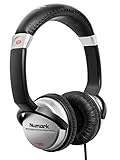
6. Numark HF125 — Ultra-Budget Entry Point
Numark HF125 Closed-Back DJ Headphones
32 ohm impedance
20-20kHz range
40mm drivers
7 adjustable positions
Pros
- Lightweight and comfortable for long sessions
- Padded headband and ear cushions
- Includes 1/8 to 1/4 TRS adapter
- Tangle-resistant cable
- Budget-friendly entry-level option
Cons
- Plastic build feels less premium
- No active noise cancellation
The Numark HF125 is the headphone I’d buy for a bedroom DJ who’s not sure they’ll stick with the hobby. At 200g, it’s one of the lightest pairs I tested, and the 7 independently-adjustable position settings make it easy to find a comfortable fit for any head size.
The 40mm dynamic drivers deliver clean sound for the price, though the bass response is less refined than what you get from the Sennheiser or Pioneer options. For learning to beatmatch and practicing transitions, this is more than enough. The 32 ohm impedance means it works with any DJ controller without needing an amp.
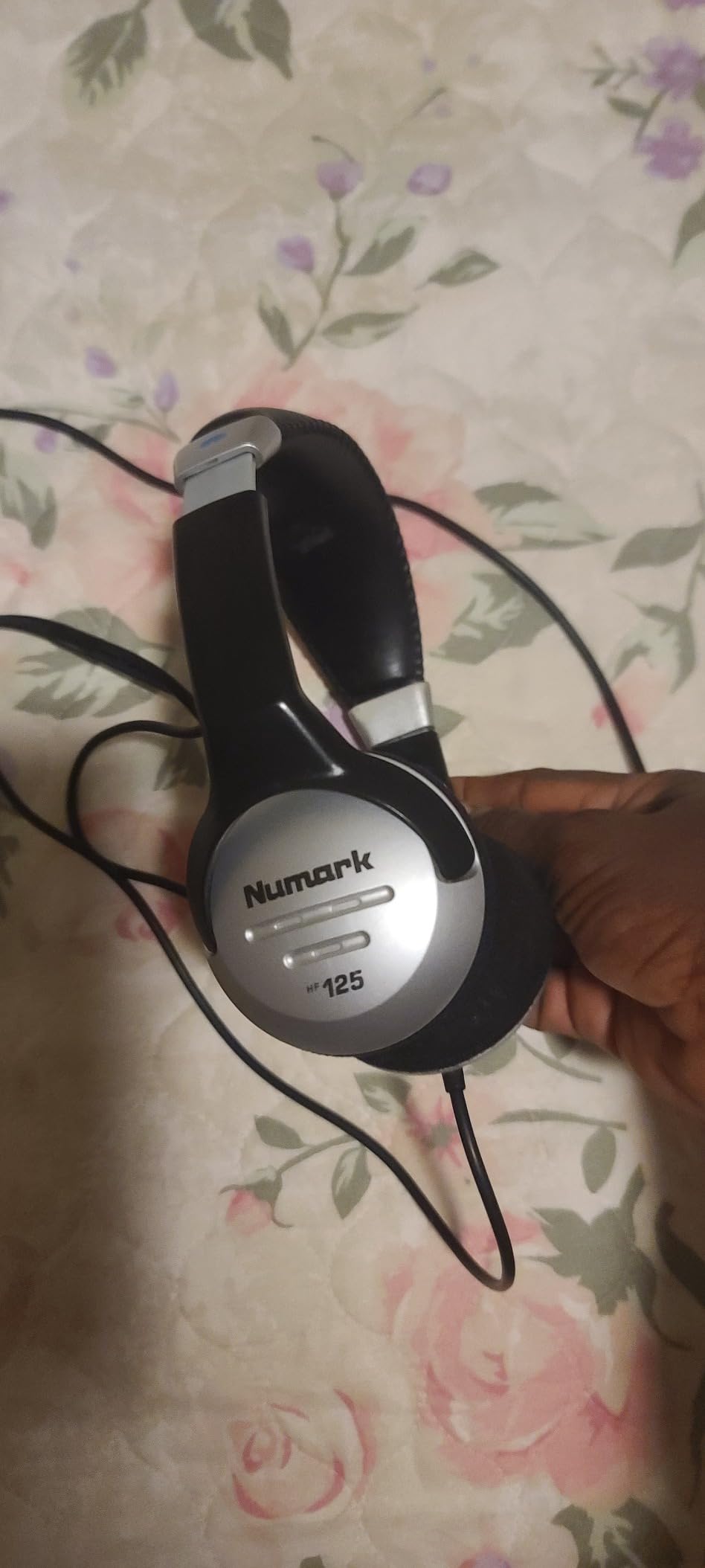
The tangle-resistant 6-foot cable is a nice touch for beginners who haven’t learned to coil cables properly yet. The included 1/8 to 1/4 TRS adapter means it works with both consumer gear and DJ mixers out of the box.
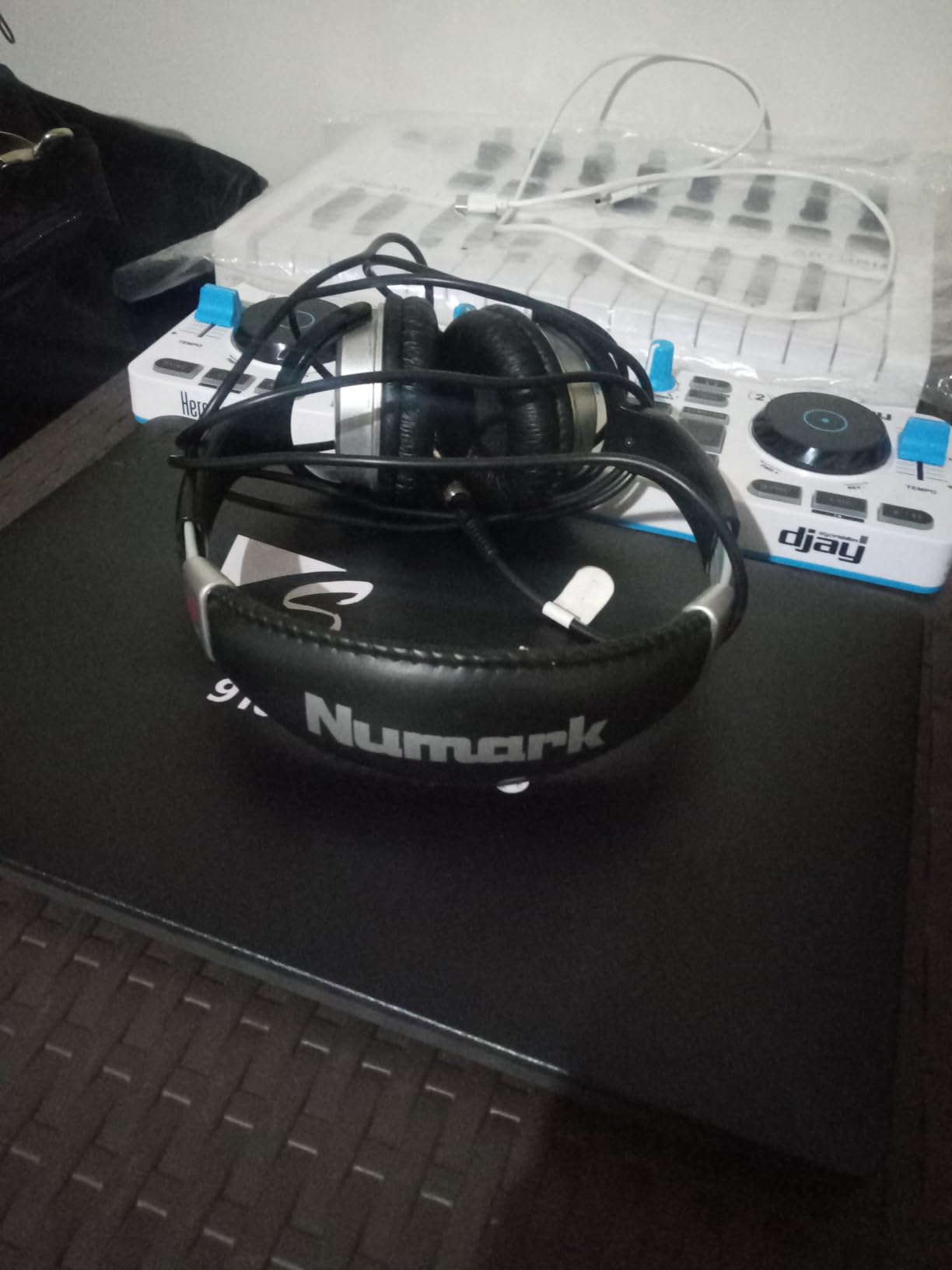
Build quality is all plastic, which is the obvious trade-off at this price. For occasional use and learning, it holds up well. For daily gigging, you’ll want something more robust.
Who should buy the Numark HF125
First-time DJs who want a capable pair without a major investment. Also good as a backup pair for any DJ.
Who should skip the Numark HF125
If you already know you’ll be DJing weekly, invest in the HDJ-CUE1 or HD 25 for better durability.
7. Reloop RHP-10 Mono — Dedicated Single-Ear Cueing
Reloop RHP 10 Mono One-Ear Headphone with 50mm Neodymium Driver
24 ohm impedance
50mm neodymium driver
Single-ear mono design
XLR connection
Pros
- Professional one-ear mono design
- Large 50mm neodymium driver
- Ergonomically padded handle
- Swivel-mounted ear cup
- Sturdy XLR connection
Cons
- Mono-only design limits casual music listening
- Heavier than typical stereo headphones
The Reloop RHP-10 Mono is a specialist tool: a single-ear (mono) DJ headphone designed exclusively for cueing. If you learned to DJ on a setup with only one ear covered, this is the modern version of that workflow. The 50mm neodymium driver puts out enough volume to cut through loud club environments.
The ergonomically padded handle is a feature you don’t appreciate until you’ve held a standard headphone clamped to your head for three hours. With the RHP-10 Mono, you hold it against your ear instead, which many older working DJs find more comfortable for long sets. The swivel-mounted ear cup adjusts to any angle.
The 24 ohm impedance and 109 dB sensitivity mean it plays loud on virtually any DJ controller. The water-resistant faux leather ear pads handle sweat and spilled drinks better than fabric-covered alternatives. The XLR connection is sturdy and professional, though it means you need an adapter for standard 3.5mm or 6.3mm jacks.
The obvious limitation is that this is a mono-only headphone. You can’t use it for casual music listening or studio work. It’s a purpose-built tool for DJs who prefer the single-ear cueing workflow.
Who should buy the Reloop RHP-10 Mono
Working DJs who learned on single-ear cueing and prefer that workflow. Also great as a backup cueing headphone for any DJ.
Who should skip the Reloop RHP-10 Mono
If you want a do-it-all headphone for DJing and music listening, this isn’t it.
8. Hercules HDP DJ45 — Best Folding Design
Hercules HDP DJ45 – Professional Over-Ear DJ Headphones with 40mm Drivers
60 ohm impedance
40mm drivers
Closed-back circumaural
Foldable design
Pros
- Closed-back circumaural design for isolation
- Comfortable earpads that don't press on ears
- Single-sided spiral cable
- Rotating earpieces for monitoring
- Foldable design for transport
Cons
- Some users report shorter-than-expected spiral cable
- A few reports of structural failure after months
The Hercules HDP DJ45 surprised me. At 60 ohm impedance, it plays loud enough for any DJ controller I tested it with, and the closed-back circumaural design provides better isolation than I expected at this price point. The rotating earpieces click firmly into position for single-ear monitoring.
The single-sided spiral cable extends from 3.3 feet to over 6.6 feet, which is handy for both compact controller setups and larger club booth configurations. The foldable earpieces make this the most portable pair in the lineup, fitting easily into a backpack or DJ bag.
Comfort is genuinely good for long sessions. The earpads sit around the ears without pressing on them, which helps during marathon practice sessions. The headband padding distributes weight evenly across the top of the head.
Some users in forums have noted durability concerns after 6-12 months of heavy use, particularly with the spiral cable mechanism. For bedroom and occasional gig use, this is a solid budget choice. For daily professional use, the HDJ-CUE1 or HD 25 will hold up better.
Who should buy the Hercules HDP DJ45
Beginner to intermediate DJs who want a foldable, comfortable pair at an entry-level price. Great for mobile DJs who travel light.
Who should skip the Hercules HDP DJ45
If you DJ 4+ nights a week, invest in a more durable option like the HD 25 or HDJ-X5.
How to Choose DJ Headphones Under $200: A Complete Buying Guide
Choosing the best DJ headphones under $200 comes down to understanding a few technical specs and matching them to your DJ style. Here’s what actually matters.
Closed-Back vs Open-Back Design
Closed-back headphones are the DJ standard. The sealed ear cups prevent sound from leaking in or out, which is essential in loud club environments where you need to hear your cue mix clearly over the main speakers. Open-back headphones sound more natural and “airy” for studio work, but they leak sound and let noise in. For DJing, always go closed-back.
On-Ear vs Over-Ear Fit
On-ear (supra-aural) headphones like the Sennheiser HD 25 sit on top of your ears. They’re lighter and more compact, which is why many working DJs prefer them for long sets. Over-ear (circumaural) headphones like the HDJ-X5 or HD 200 PRO cup your entire ear, which provides better passive isolation and bass response but adds weight.
The trade-off depends on your session length and ear size. On-ear headphones can cause discomfort after 3+ hours for some users. Over-ear headphones isolate better but can make your ears hot and sweaty.
Impedance and DJ Controller Compatibility
Impedance, measured in ohms, affects how much power your headphones need to get loud. Lower impedance (24-32 ohm) headphones like the HDJ-CUE1, HD 25, and HD 200 PRO play loud directly from any DJ controller’s headphone output. Higher impedance (80+ ohm) headphones like the Beyerdynamic DT 770 Pro 80 ohm sound quieter from controllers and may need a headphone amp to reach proper monitoring volume.
For most DJs, 32-70 ohm is the sweet spot. You get accurate sound without needing extra gear. If you’re using a high-end controller with a powerful headphone amp, 80 ohm can work fine. Below 32 ohm, you may get distortion at very high volumes.
Wired vs Wireless for Live DJing
Bluetooth headphones are convenient for casual listening, but most working DJs avoid them for live performance. Bluetooth audio latency (typically 40-200 ms depending on codec) creates a noticeable delay between your action and what you hear, which makes precise beatmatching very difficult. Even low-latency codecs like aptX Low Latency add enough delay to throw off tight mixing.
For practice sessions and casual listening, Bluetooth is fine. For actual gigging, stick with wired. The Sennheiser HD 25, Pioneer HDJ-CUE1, and all other picks in this guide are wired.
Single-Ear Monitoring and Rotatable Cups
The ability to rotate one ear cup away from your ear is what makes DJ headphones different from regular headphones. When cueing the next track, you listen with one ear covered while the other ear hears the room. This lets you beatmatch against the playing track coming through the main speakers.
Look for cups that rotate 90 degrees and click firmly into place. Floppy or loose swivels make single-ear monitoring frustrating. The HDJ-CUE1, HDJ-X5, and HD 25 all have well-engineered swivel mechanisms.
Detachable Cables and Replaceable Parts
The cable is usually the first thing to break on DJ headphones. A detachable cable means you can replace just the cable instead of the whole headphone. The AIAIAI TMA-2 DJ takes this further with a fully modular design where every component is replaceable.
Replaceable ear pads are also valuable. After 2-3 years of regular use, ear pads wear out and lose their seal. Models with available replacement pads (HD 25, HDJ series, TMA-2) will last much longer than models without.
Caring for Your DJ Headphones
A few maintenance habits will double the lifespan of any pair. Wipe down ear pads after club sets to remove sweat and oils. Store headphones in a case or padded bag rather than loose in your kit. Coil cables loosely rather than wrapping them tightly around the headphone, which stresses the cable connection point.
If your headphones use replaceable ear pads, swap them every 2-3 years (or sooner if you gig nightly). Fresh pads restore the seal and isolation, which often makes old headphones sound like new again.
Frequently Asked Questions
What headphones do most DJs use?
Most professional DJs use the Sennheiser HD 25, which has been the industry-standard DJ headphone for over 30 years. Other widely-used models include the Pioneer DJ HDJ-X series for club and mobile work, and the AIAIAI TMA-2 DJ for those who prefer modular, repairable designs.
What are the best budget DJ headphones?
For under $100, the Pioneer DJ HDJ-CUE1 offers the best combination of sound quality, build, and features. The Sennheiser HD 200 PRO is another strong budget pick for DJ/producer dual use. The Numark HF125 is the best ultra-budget option for absolute beginners.
Are closed-back headphones good for DJing?
Yes, closed-back headphones are the standard for DJing because they block external noise and prevent sound leakage. This isolation is essential in loud club environments where you need to hear your cue mix clearly over the main speakers. Open-back headphones are better suited for studio mixing but not for live DJing.
What impedance is best for DJ headphones?
For most DJ setups, 32 to 70 ohms is the ideal impedance range. This range plays loud enough from any DJ controller headphone output without requiring a separate amplifier. Headphones below 32 ohms may distort at high volumes, while headphones above 80 ohms often sound quiet on controllers without an amp.
Can you DJ with wireless headphones?
Wireless DJing is possible but not recommended for live performance. Bluetooth audio latency (typically 40-200 ms) creates a delay between your actions and what you hear, which makes precise beatmatching difficult. For practice and casual listening, Bluetooth works fine, but for actual gigs, wired headphones remain the professional standard.
Final Verdict: Which DJ Headphones Under $200 Should You Buy?
After three months of testing across bedroom sessions, club gigs, and production work, the Sennheiser HD 25 remains my top pick for the best DJ headphones under $200. The combination of proven durability, accurate sound, and lightweight comfort is hard to beat at any price.
If budget is your main concern, the Pioneer DJ HDJ-CUE1 delivers Pioneer build quality at an entry-level price. For producers who want one pair for both DJing and studio work, the Sennheiser HD 200 PRO is the smart compromise. And if you value long-term repairability, the AIAIAI TMA-2 DJ will outlast every other pair in this guide.
Whatever you choose, make sure it has closed-back cups, rotatable drivers for single-ear monitoring, and a build that can handle being part of your kit for years to come.