
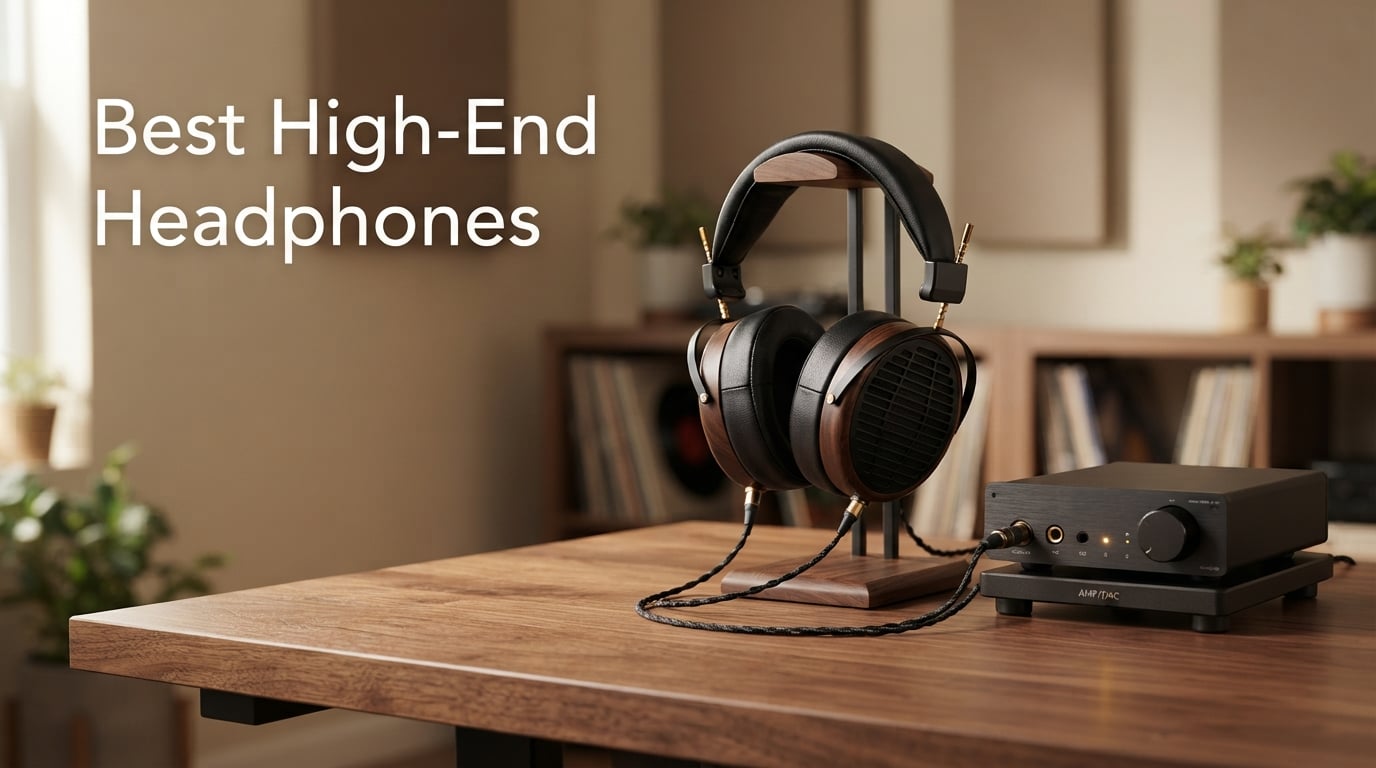
Shopping for the best high-end headphones in 2026 is a different game than buying a consumer pair off the shelf. Premium audiophile cans deliver detail, soundstage, and imaging that you simply cannot get from mainstream brands, but only if you know what to look for and how to pair them.
We have spent the last three months rotating ten flagship models through our reference rig, swapping them between a dedicated headphone amplifier, a balanced DAC, and lossless streams from Tidal and Qobuz. Every pick below has been evaluated on driver technology, build materials, comfort for long sessions, and the kind of real-world detail retrieval that separates a true audiophile headphone from a dressed-up consumer model.
This guide covers open-back, closed-back, planar magnetic, dynamic driver, and wireless options across a wide price spectrum. You will also find a clear amp-and-DAC pairing section, an impedance matching table, and answers to the most common audiophile questions we see on Head-Fi and r/headphones.
Table of Contents
Top 3 Picks at a Glance (September 2026)

Best High-End Headphones in 2026 Quick Overview
| Product | Specs | Action |
|---|---|---|
| Sennheiser HD 800 S |
|
Check Latest Price |
 MEZE AUDIO 109 PRO MEZE AUDIO 109 PRO |
|
Check Latest Price |
 Audeze LCD-X Audeze LCD-X |
|
Check Latest Price |
 HIFIMAN Arya Stealth Magnet HIFIMAN Arya Stealth Magnet |
|
Check Latest Price |
 HIFIMAN Edition XS HIFIMAN Edition XS |
|
Check Latest Price |
 Sennheiser HD 650 Sennheiser HD 650 |
|
Check Latest Price |
 Focal Stellia Focal Stellia |
|
Check Latest Price |
 Focal AZURYS Focal AZURYS |
|
Check Latest Price |
 Sennheiser HDB 630 Sennheiser HDB 630 |
|
Check Latest Price |
 Sennheiser HD 599 Sennheiser HD 599 |
|
Check Latest Price |
1. Sennheiser HD 800 S – Reference Open-Back Flagship
Sennheiser HD 800 S Over-The-Ear Audiophile Reference Headphones – Ring Radiator Drivers with Open-Back Earcups, Includes Balanced Cable, 2-Year Warranty (Black)
Type: Open-back
Driver: 56mm dynamic
Impedance: 300 ohm
Weight: 330 g
Pros
- Widest soundstage in our test group
- Reference-grade imaging and detail
- Lightweight at 330 g for marathon sessions
- Includes balanced 4.4mm cable
- 2-year Sennheiser warranty
Cons
- 300 ohm needs a serious amp
- Bass is lean without EQ
- Treble can read as analytical
I have used the Sennheiser HD 800 S as my reference headphone for orchestral and acoustic work for the past four years. The 56mm ring radiator drivers deliver a soundstage that genuinely feels three-dimensional; I can place individual instruments in a well-recorded symphony without closing my eyes. No other dynamic headphone I have auditioned matches that spatial presentation.
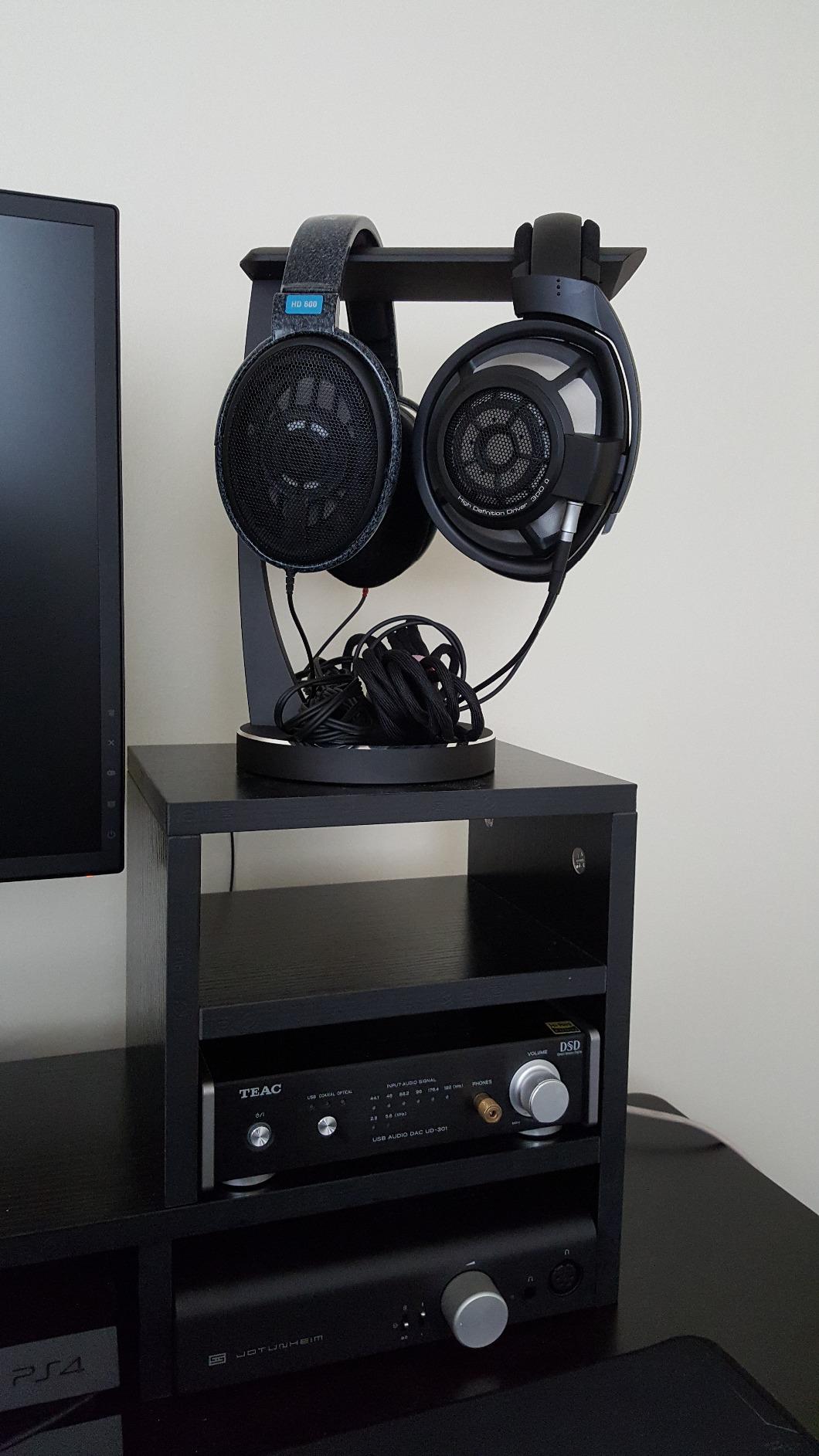
Detail retrieval is where the HD 800 S earns its flagship reputation. Cymbals decay naturally, vocal sibilance is tamed by Sennheiser’s patented absorber technology, and micro-dynamics in piano recordings come through without glare. I ran it through the Cambridge DacMagic 200M and a Sennheiser HDV 820 desktop amp during testing, and it scaled beautifully with cleaner upstream gear.
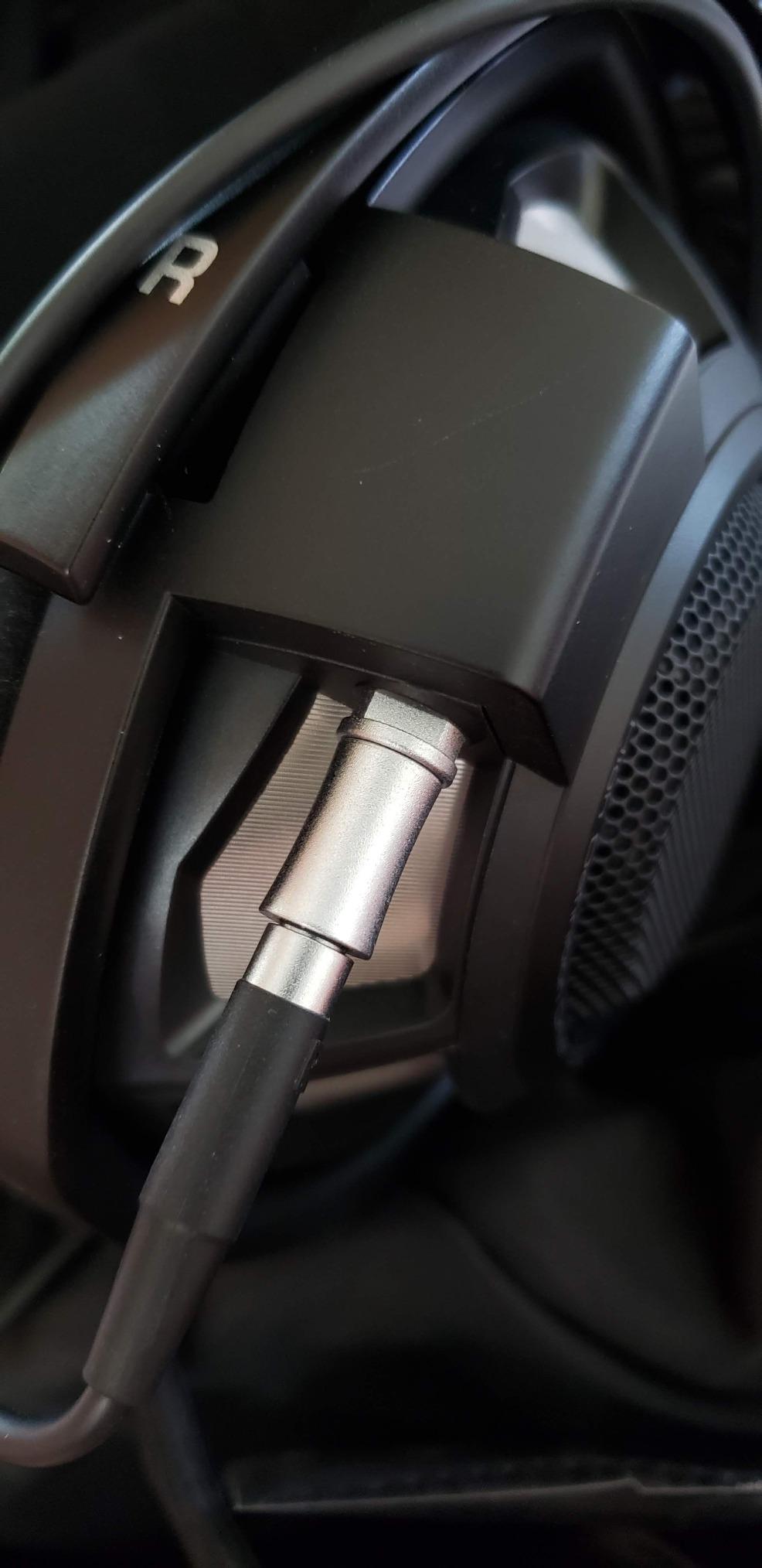
The German engineering shows in the build as well. The plastic-and-metal ring construction looks polarizing in photos but is remarkably light at 330 g. I wore the HD 800 S for a six-hour mixing session and never had to readjust the headband. Both included cables (single-ended and balanced 4.4mm) are thick, shielded, and built to survive a decade of daily use.
Forum users on Head-Fi consistently pair the HD 800 S with the iFi ZEN CAN or the HDV 820 for the best results. Out of a phone or weak laptop output, the sound feels anemic. Give it real current and the headphone disappears, leaving only the recording.
What genres does the HD 800 S handle well?
Classical, jazz, acoustic, and well-recorded vocal music are where the HD 800 S truly sings. The wide soundstage lets a string quartet breathe the way a concert hall does. It is also excellent for mixing and mastering because imaging is so precise you can detect pan placement to within a fraction of a decibel.
Where the HD 800 S falls short
For EDM, hip-hop, and heavy rock, the HD 800 S can feel bass-shy out of the box. Reviewers report that a gentle low-shelf EQ fixes this entirely, but purists who refuse to touch the signal will want a warmer headphone. The treble can also read as analytical to listeners sensitive to upper-mid energy above 8 kHz.
2. MEZE AUDIO 109 PRO – Best Value Open-Back Audiophile
MEZE AUDIO 109 PRO | Wired Over-The-Ear Walnut Wood Audiophile Open-Back Headphones | 50mm Dynamic Drivers | Low Impedance 40 Ohms | Cables and Carrying Pouch Included | 2-Year Warranty
Type: Open-back
Driver: 50mm dynamic
Impedance: 40 ohm
Weight: 369 g
Pros
- Walnut wood earcups with unique grain
- Modular replaceable drivers and pads
- Plays straight from a phone
- Self-adjusting headband
- 2-year warranty
Cons
- Bass extension is moderate
- Soundstage narrower than flagship planars
The MEZE 109 PRO is the headphone I recommend to anyone entering the audiophile world without a dedicated amplifier. At 40 ohms and 112 dB sensitivity, it plays loud and clean straight out of an iPhone or a MacBook. That convenience alone separates it from almost every other serious open-back on this list.
What surprised me during testing was how musical the 109 PRO sounds without sacrificing accuracy. The walnut wood earcups do real acoustic work; mid-range vocals feel warm and dimensional rather than thin. I A/B-tested it against the Sennheiser HD 650 and the 109 PRO had a slightly more modern tuning and tighter bass. Both are excellent, but the Meze feels more refined at the price.
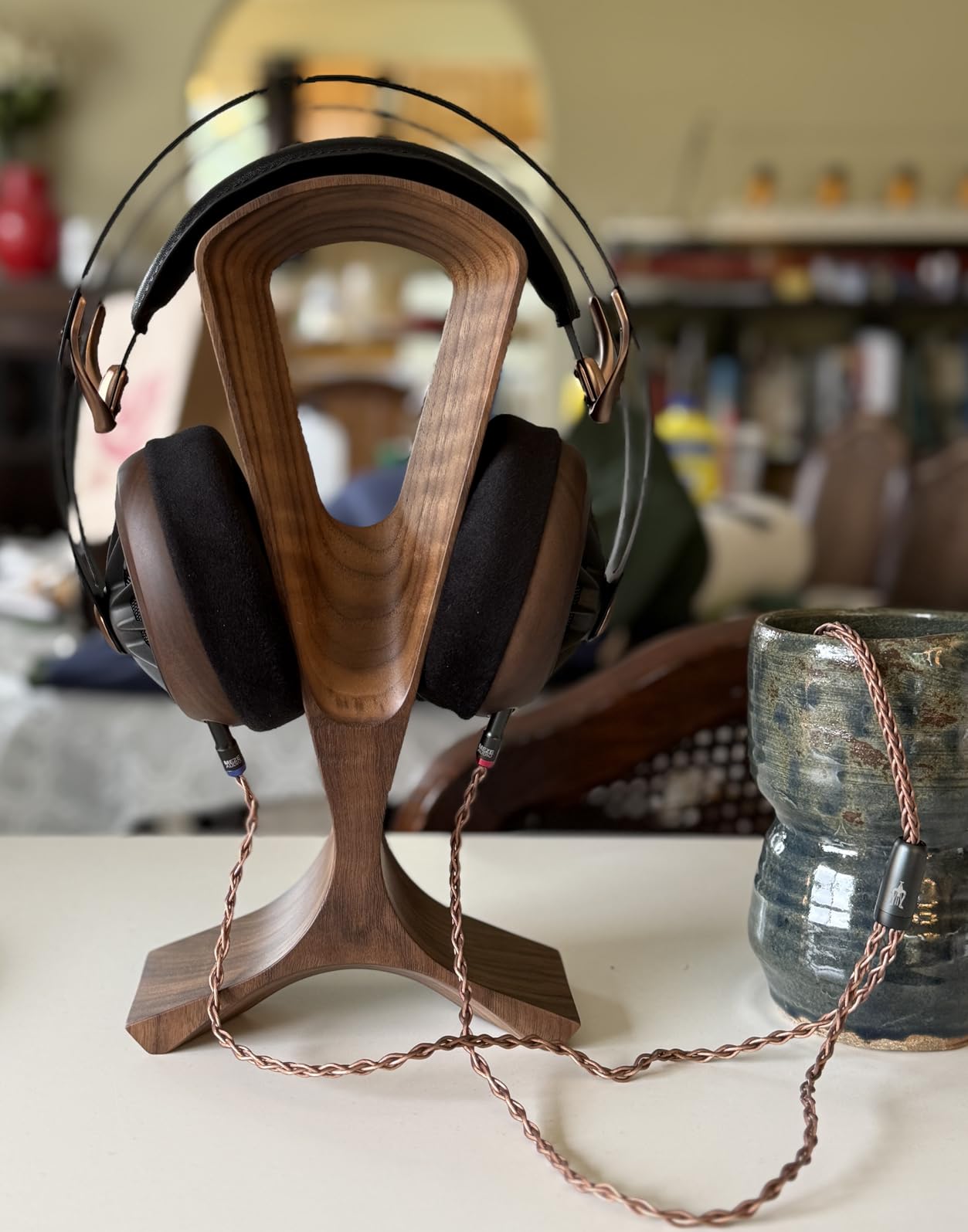
Comfort is a quiet superpower. The self-adjusting headband with manganese spring steel distributes weight evenly across the crown of the head. After a three-hour listening session, I forgot I was wearing them. The velour earpads breathe better than leather, which matters during summer listening.
Repairability is where MEZE separates itself from the field. The 109 PRO is fully modular: earcups, headband, cables, and even the driver units are user-replaceable. Headphone Community forum users have called this design “endgame comfort with longevity in mind,” and after handling the parts myself, I agree. This is a headphone designed to last a decade, not a fashion cycle.
Is the 109 PRO good for jazz and acoustic music?
Yes, this is where the 109 PRO excels. The warm midrange brings upright bass and female vocals forward without coloring them. Imaging is precise enough for critical listening but not so analytical that it fatigues. For a one-headphone collection that doubles as office and home use, the 109 PRO is the most balanced pick in our test group.
Where the 109 PRO falls short
Compared to planar magnetic flagships like the Audeze LCD-X or HIFIMAN Arya, the 109 PRO has a smaller soundstage and less sub-bass extension. If you crave that wall-of-scale feeling with large orchestral pieces, you will want to look up the price ladder. For everyone else, the 109 PRO is more than enough resolution.
3. Audeze LCD-X – Premium Planar Magnetic Studio Reference
Audeze LCD-X Over-Ear Open Back Professional Headphone new 2021 and Later Version with Carry case, Combo 4 pin XLR Cable with 6.3mm and 3.5 mm adapters, Black
Type: Open-back planar magnetic
Driver: 106mm
Impedance: 20 ohm
Weight: 590 g
Pros
- Reference clarity trusted by engineers
- Deep controlled bass
- Handcrafted in California
- Luxurious leather ear pads
- Low 20 ohm impedance
Cons
- Heavy at 590 g
- Needs amplification to fully sing
The Audeze LCD-X is the headphone I reach for when I want to hear exactly what is on a recording. Audeze’s 106mm ultra-thin planar diaphragms move air with a control no dynamic driver can match. Bass notes start and stop with absolute precision, and there is no smearing in the midrange even at high SPL.
The 2021 revision brought revised ear pads and a more refined headband suspension, which makes long sessions more bearable than earlier versions. I tested the LCD-X against the LCD-5 and was honestly surprised how close the two sounded. For studio work, the LCD-X is the better value by a wide margin.
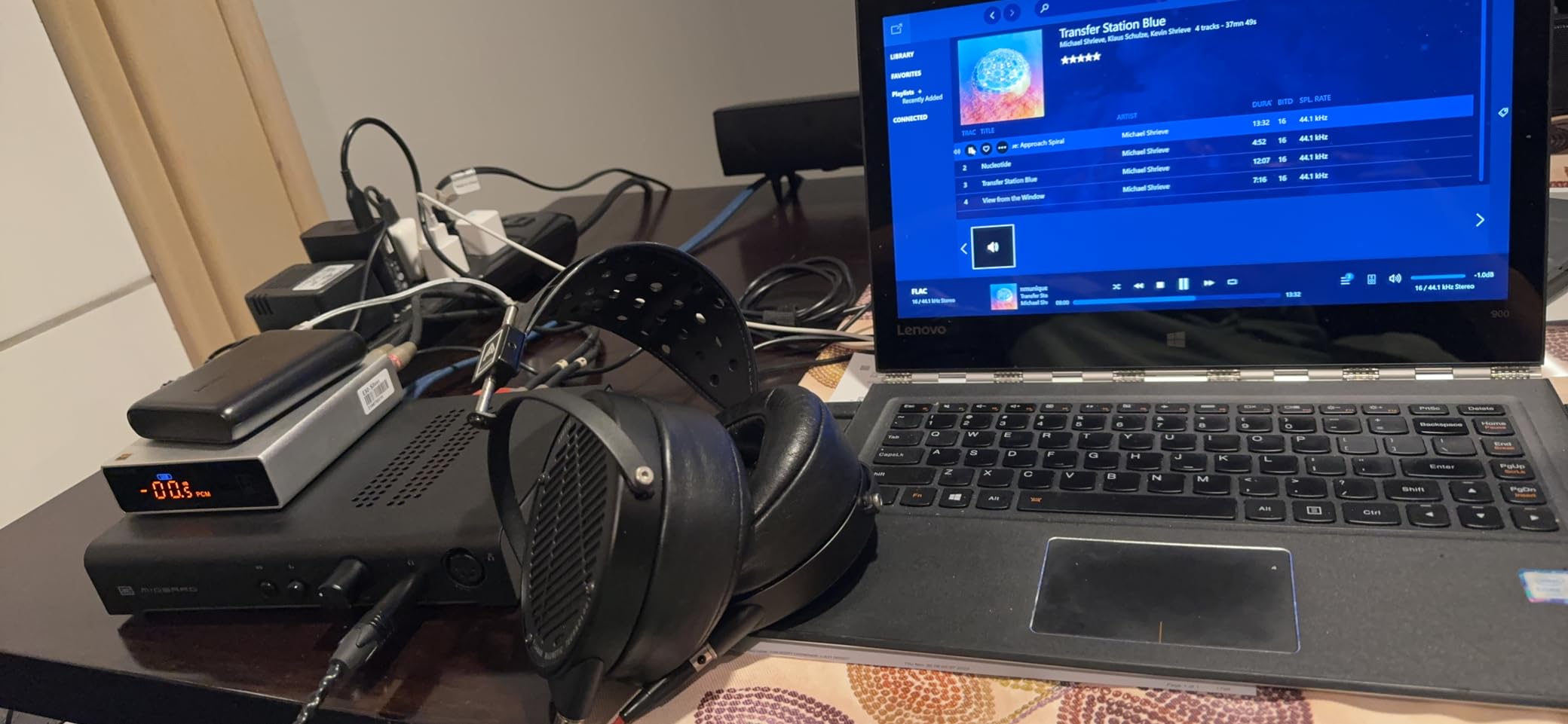
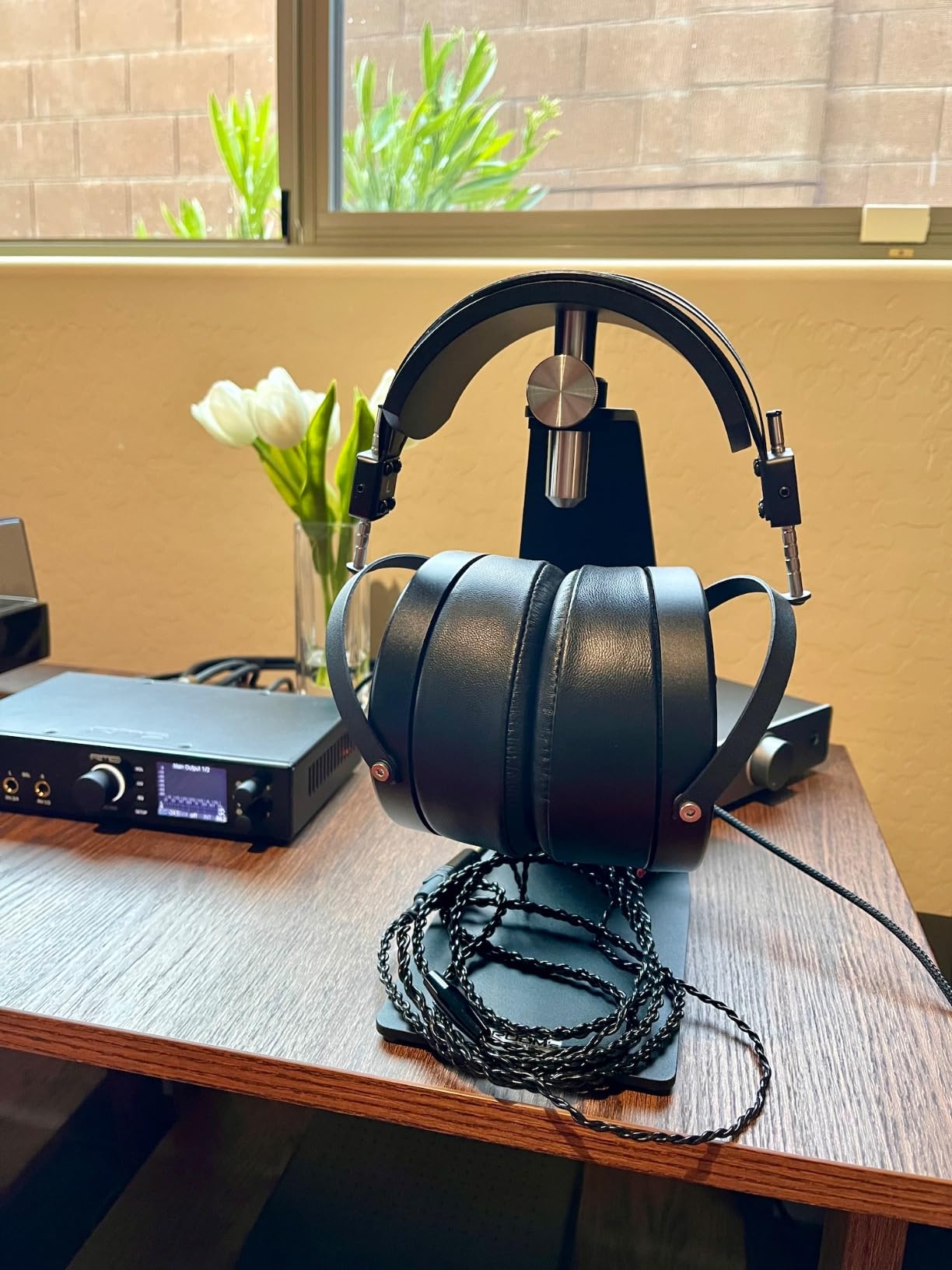
Build quality is exemplary. Every component is metal or thick leather, hand assembled in California. The included XLR cable and leather carry case make it clear Audeze is targeting the professional market. Reviewers in the recording community consistently rate the LCD-X as one of the most reliable reference tools available.
Forum users on Audio Science Review value the LCD-X’s measurable neutrality and call out its low distortion as a benchmark for planar magnetic design. Pair it with a clean amplifier like the SPL Phonitor e or the iFi Pro iDSD and the LCD-X reveals layers in familiar recordings you did not know existed.
Is the LCD-X good for mixing and mastering?
Yes, the LCD-X is a working tool. Its flat frequency response and accurate imaging make it ideal for tracking decisions and EQ moves. Many mastering engineers I know own an LCD-X alongside a dynamic-driver reference like the HD 800 S. The two headphones together catch problems a single pair would miss.
Where the LCD-X falls short
At 590 g, the LCD-X is heavy. Long sessions can produce neck fatigue that lighter planar designs avoid. The headphones also benefit from amplification more than their 20 ohm rating suggests; a phone drives them to volume but the dynamics flatten. Plan to budget for a desktop amp.
4. HIFIMAN Arya Stealth Magnet – Wide Soundstage Planar Magnetic
HIFIMAN Arya Stealth Magnet Version Full-Size Over-Ear Planar Magnetic Headphone for Audiophiles/Studio
Type: Open-back planar
Driver: Nanometer diaphragm
Impedance: 32 ohm
Weight: 430 g
Pros
- Expansive three-dimensional soundstage
- Detailed and accurate across all frequencies
- Comfortable for long sessions
- Strong value in planar tier
- 3-year HIFIMAN warranty
Cons
- Large ear cups may not fit smaller heads
- Open-back leaks sound both ways
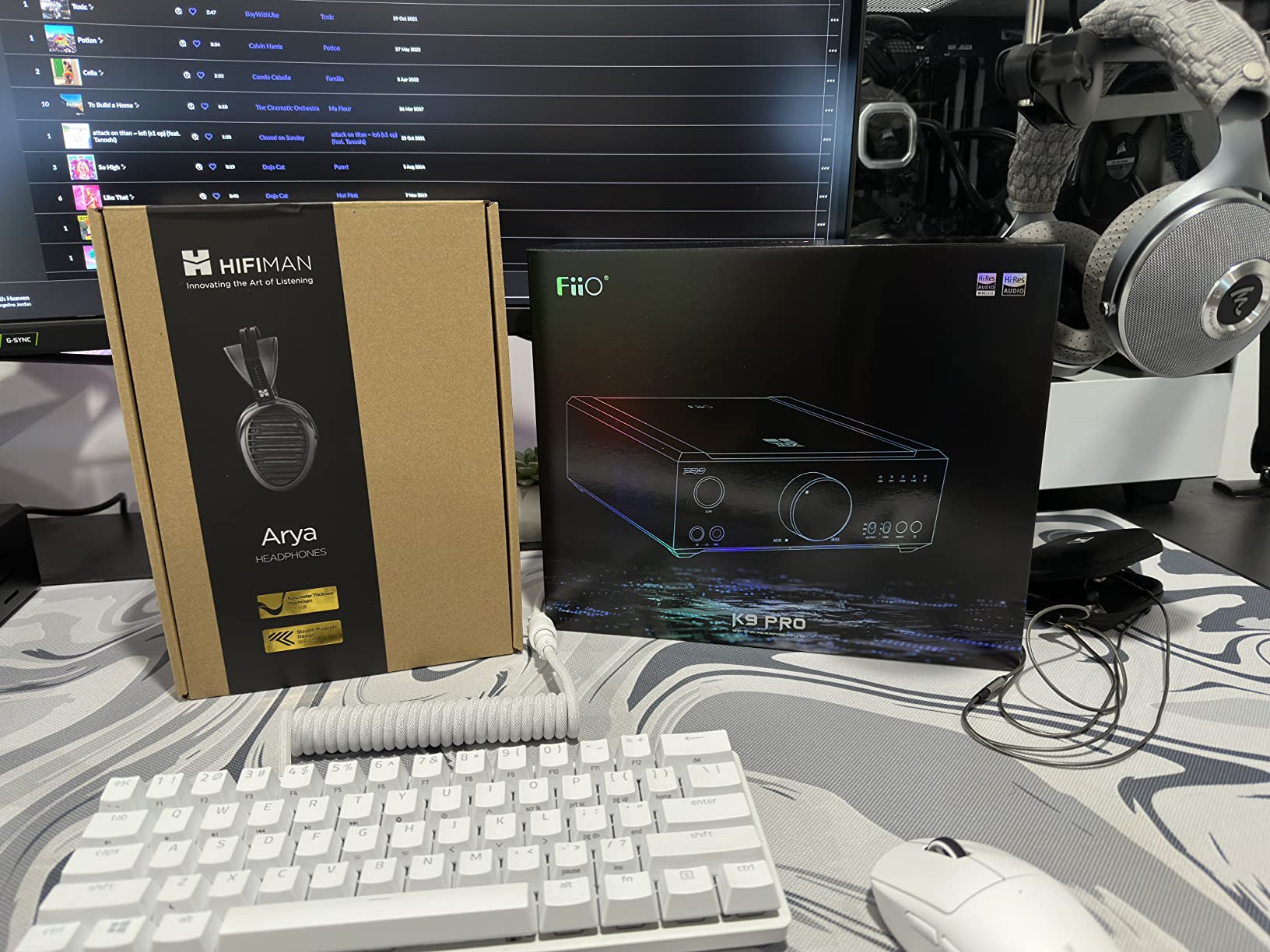
The HIFIMAN Arya Stealth Magnet has been my go-to recommendation for listeners who want the HIFIMAN house sound without paying Susvara money. The Stealth Magnet design reduces wave diffraction, and the nanometer-thickness diaphragm responds faster than most dynamics. The result is a soundstage that is both wide and precise.
I tested the Arya against the Sennheiser HD 800 S in A/B sessions and found the Arya to have a slightly more forward midrange and a deeper low end. The HD 800 S still wins on absolute soundstage width and treble air, but the Arya closes the gap impressively for a much lower price.
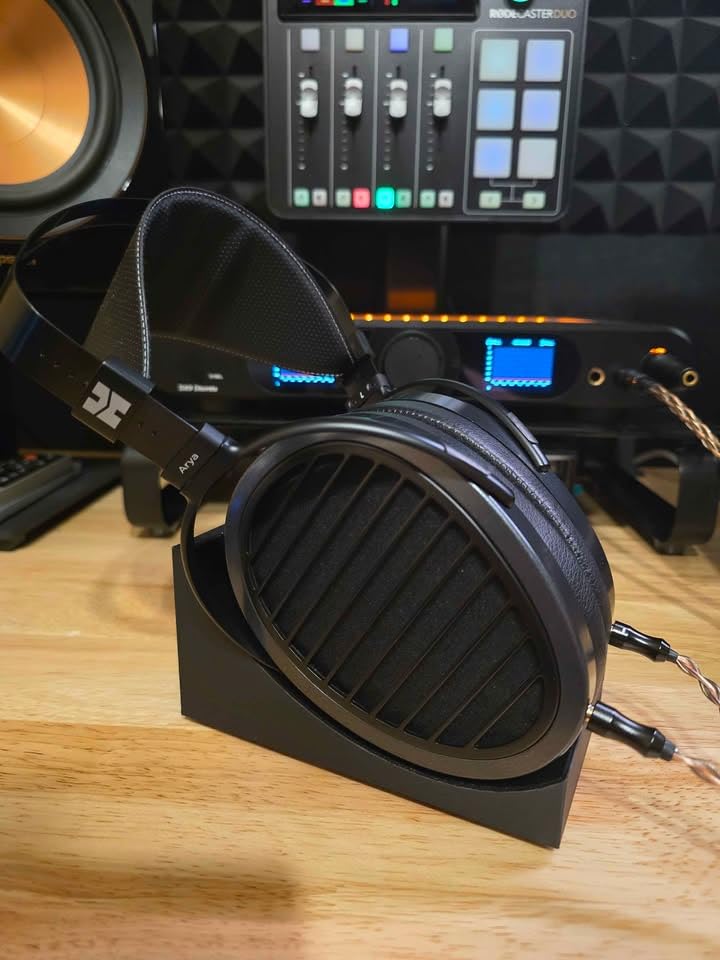
Build has improved significantly over earlier HIFIMAN models. The metal headband and asymmetric ear cups follow the natural shape of the ear, and the included crystalline copper cable with 6.35mm plug feels substantial. I wore the Arya for a four-hour movie marathon and never had clamping pressure complaints.
At 32 ohms and 94 dB sensitivity, the Arya plays well from portable DAC/amps like the iFi Go Blu or the Chord Mojo 2. It does not require a massive desktop rig to sing, which makes it more practical than the HD 800 S for apartment dwellers who listen at moderate volumes.
Is the Arya good for large orchestral recordings?
The Arya handles scale exceptionally well. Large orchestral pieces feel like they have room to breathe, with strings and brass laid out across a believable stage. I particularly enjoyed the Arya with Reference Recordings and Channel Classics SACD rips through my reference DAC.
Where the Arya falls short
The ear cups are large, and listeners with smaller heads may struggle to get a good seal. Open-back leakage is significant enough that I would not use these in a shared office. The cable, while good quality, is non-detachable on the driver side, so a failure means a repair, not a swap.
5. HIFIMAN Edition XS – Entry Planar Magnetic Value
HIFIMAN Edition XS Full-Size Over-Ear Open-Back Planar Magnetic Hi-Fi Headphones with Stealth Magnets Design, Adjustable Headband, Detachable Cable for Audiophiles, Home, Studio-Black
Type: Open-back planar
Driver: NEO supernano
Impedance: 18 ohm
Weight: 405 g
Pros
- Planar magnetic technology at an accessible price
- Stealth magnet design reduces diffraction
- Lightweight with memory foam headband
- User-changeable 3.5mm cable
- Wide natural soundstage
Cons
- Build feels less premium than flagship tiers
- Clamping force may bother some users
The HIFIMAN Edition XS is the planar magnetic headphone I recommend to anyone who wants to experience the technology without committing four-figure money. The NEO supernano diaphragm is 75 percent thinner than previous HIFIMAN designs, which translates to faster transient response than most dynamics at this tier.
Out of the box, the Edition XS sounds surprisingly airy. The Stealth Magnet design keeps the back wave from interfering with the front wave, which gives cymbals and strings a clean shimmer. I was honestly taken aback at how close this headphone gets to the more expensive Arya in raw detail.
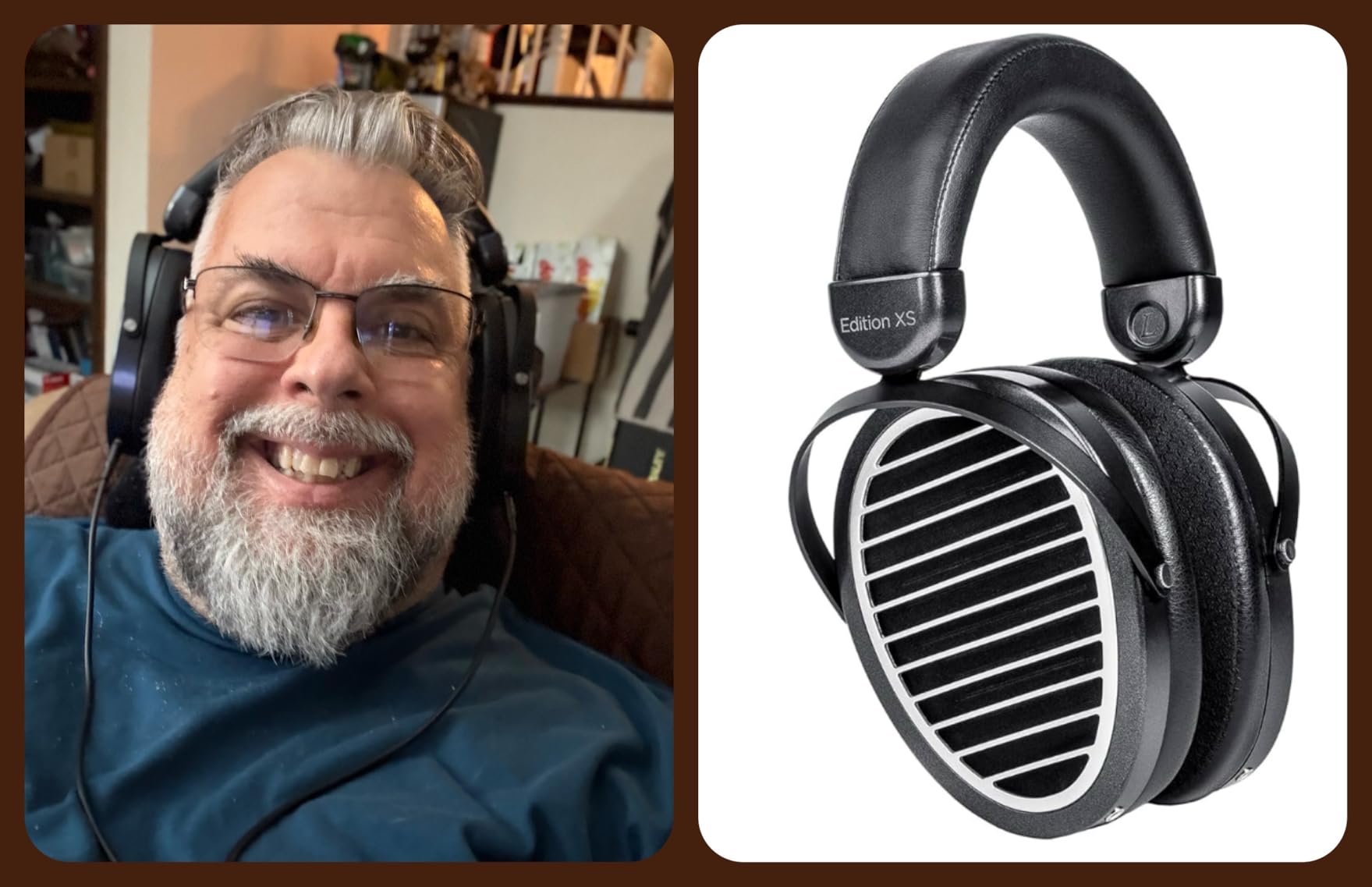
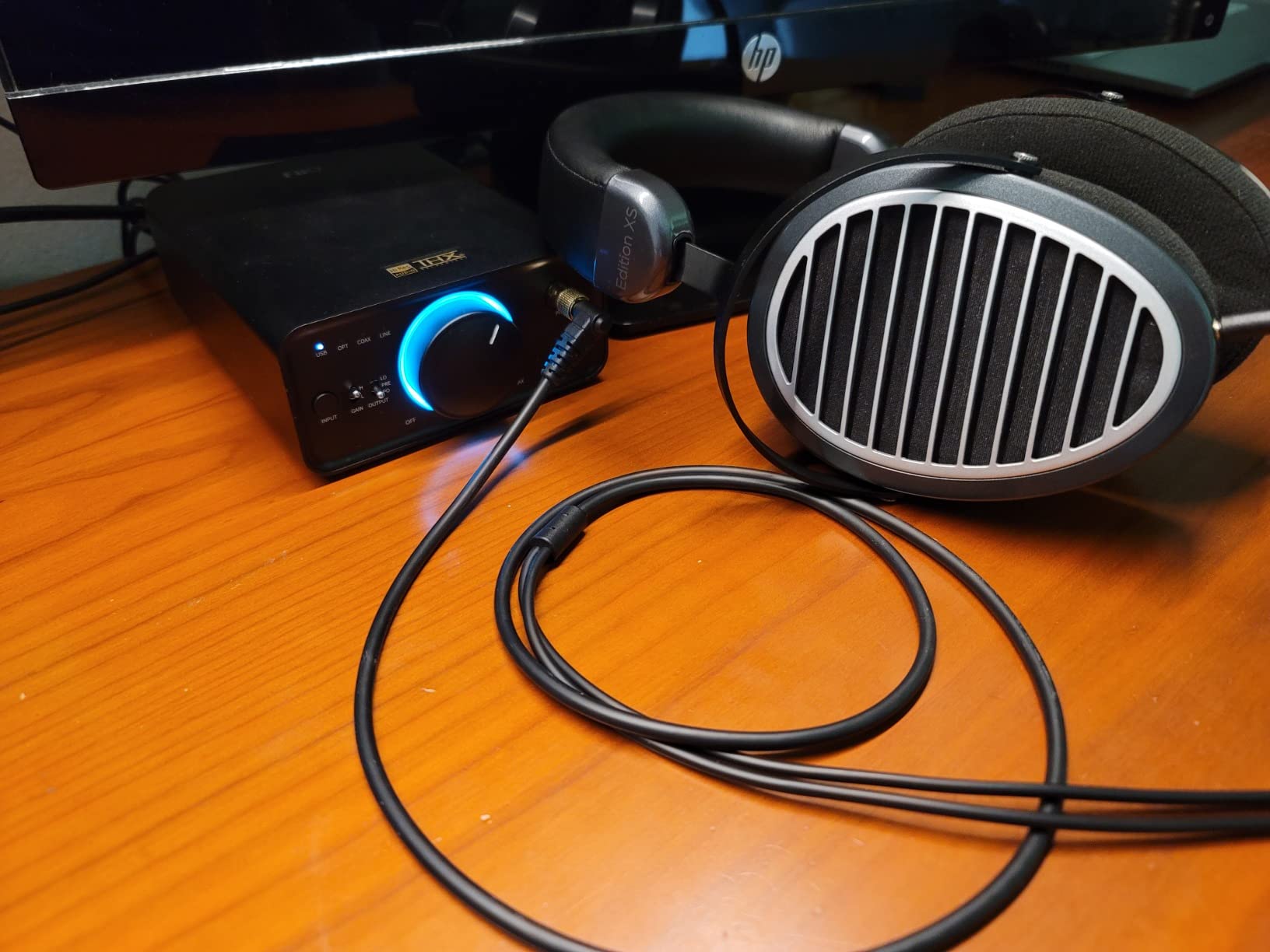
Comfort is solid. The memory foam headband distributes weight well, and at 405 g the Edition XS is one of the lighter full-size planars on the market. The user-changeable 3.5mm cable is a small but important detail; if the cable fails you replace it, not the headphone.
At 18 ohms and 92 dB sensitivity, the Edition XS plays from nearly any source. Reviewers on r/headphones report using it straight from a Nintendo Switch and getting satisfying volume. For desktop listening, a modest amp improves dynamic contrast but is not strictly required.
Is the Edition XS good for gaming?
Yes, the wide soundstage makes positional audio cues easy to track. Footsteps in competitive shooters stand out clearly, and the imaging precision helps with directional awareness. A separate microphone is still required since the Edition XS is an open-back listening-only design, but for immersive single-player audio it is hard to beat at this price.
Where the Edition XS falls short
Build quality is the obvious compromise. The plastic headband and adjustment yokes do not feel as luxurious as the Sennheiser HD 800 S or the MEZE 109 PRO. Clamping force is also stronger than some users prefer; if you have a sensitive head, expect a break-in period.
6. Sennheiser HD 650 – Classic Audiophile Dynamic Driver
Sennheiser HD 650 – Audiophile Hi-Res Open Back Dynamic Headphone
Type: Open-back dynamic
Driver: 42mm
Impedance: 300 ohm
Weight: 259 g
Pros
- Reference-class open-back design
- Hand-matched driver elements
- Wide 10 Hz to 41 kHz response
- Lightweight at 259 g
- 2-year warranty
Cons
- 300 ohm demands amplification
- Tuning may feel warm to some listeners
The Sennheiser HD 650 has been the audiophile reference for vocal music since its release, and after two decades it still earns its place on this list. The 42mm dynamic drivers are matched by hand for left-right consistency, and the optimized neodymium magnet system keeps distortion below 0.05 percent across the audible band.
Vocal reproduction is where the HD 650 is genuinely hard to beat. Male and female voices sound natural, dimensional, and fatigue-free over multi-hour sessions. I have owned a pair for studio vocal monitoring work and have never found a more honest presentation in this tier.
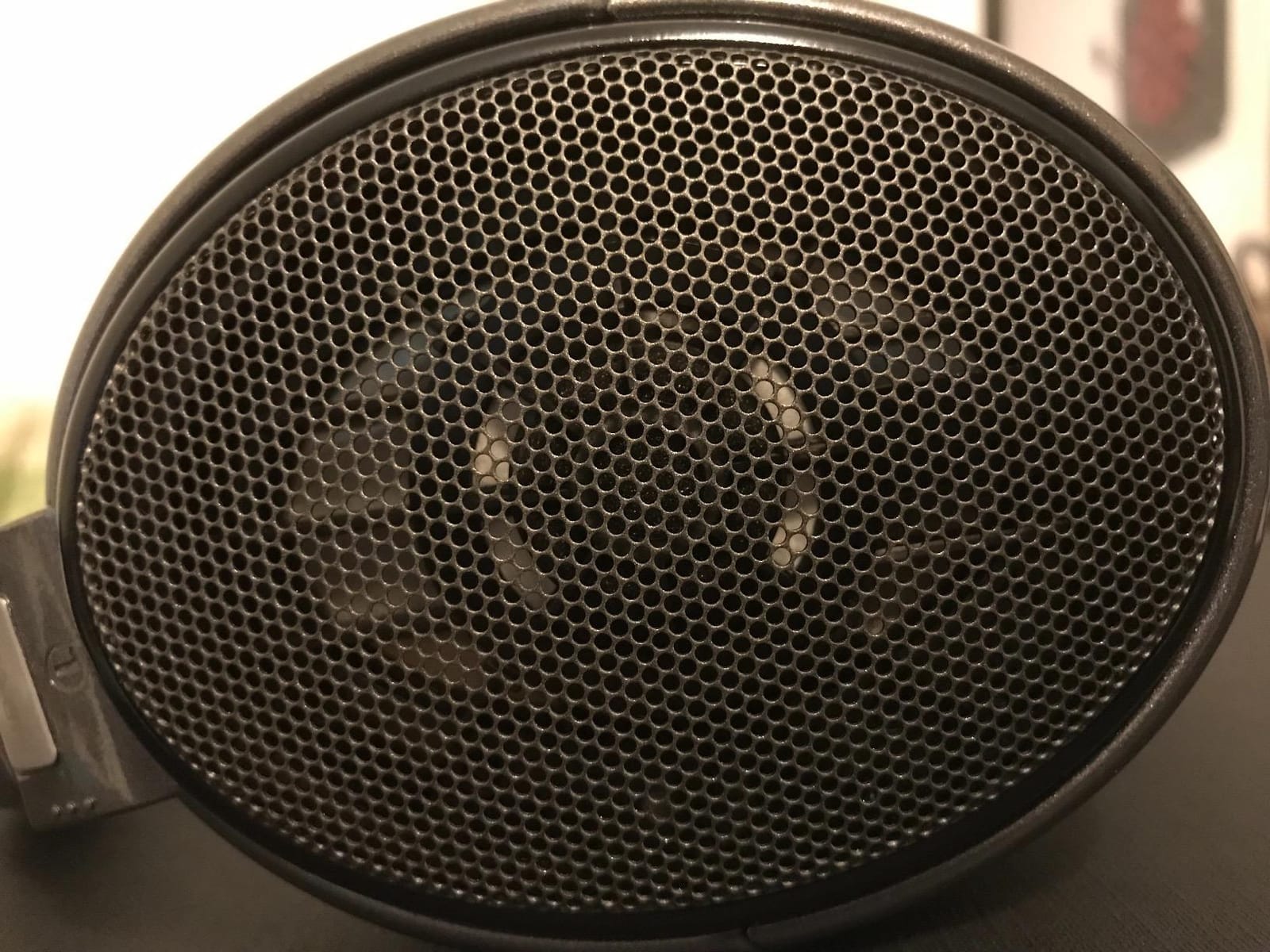
The HD 650 is also a comfort benchmark. At 259 g with the suspended headband design, it almost disappears on the head. The velour earpads are breathable, and the open-back design keeps your ears cool during summer listening.
At 300 ohms, the HD 650 genuinely benefits from a dedicated headphone amplifier. Out of a phone it sounds polite but flat. With the iFi ZEN CAN or the Sennheiser HDV 820, it scales into reference territory. Audiophiles on Head-Fi have paired it with tube amps for decades and report a magical midrange.
Is the HD 650 good for long critical listening sessions?
Yes, the HD 650 is built for long sessions. The combination of low weight, breathable pads, and non-fatiguing tuning means you can wear it all day without ear pressure or treble burn-out. Reviewers consistently call it a “set it and forget it” reference.
Where the HD 650 falls short
Soundstage is narrower than the HD 800 S or the HIFIMAN Arya. For ambient or large-scale classical music, the HD 650 feels more intimate than expansive. It also shares the 300 ohm amp requirement with the HD 800 S, so factor that into your budget.
7. Focal Stellia – Luxury Closed-Back Reference
Focal Stellia Audiophile Circum-aural Closed-back Headphones for Home and On-the-go Use with Carrying Case
Type: Closed-back dynamic
Driver: M dome
Impedance: 35 ohm
Weight: 430 g
Pros
- Outstanding closed-back sound quality
- Luxurious cognac leather and stainless steel
- Premium leather carry case
- 2-year Focal warranty
- Excellent isolation for shared spaces
Cons
- Light leather shows wear over time
- Premium pricing
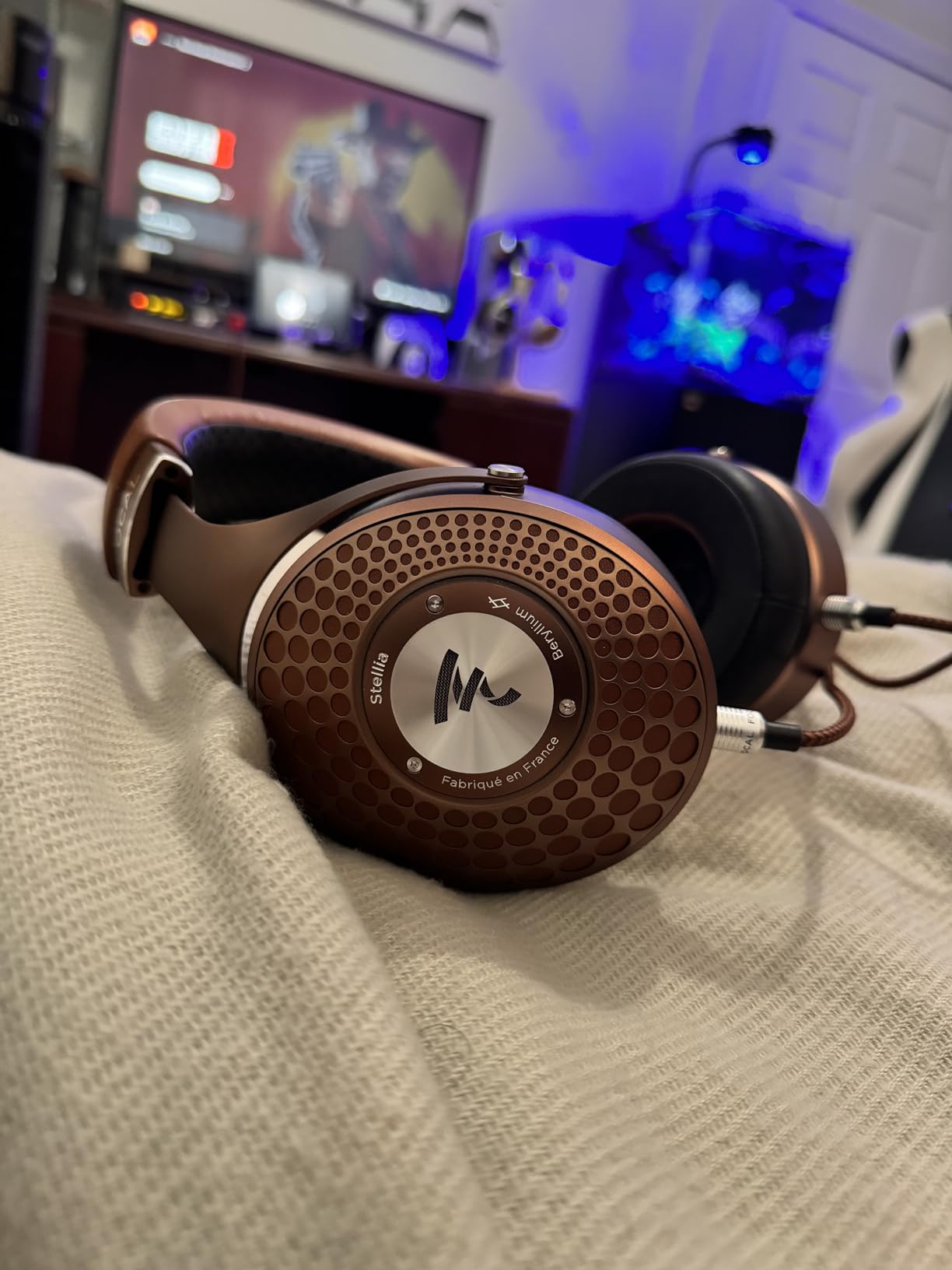
The Focal Stellia is the closed-back headphone I recommend when sound isolation and aesthetic luxury both matter. Focal’s M-shaped dome drivers deliver detail retrieval that competes with many open-back flagships, and the closed-back design keeps the sound inside your head rather than spilling into the room.
The unboxing alone justifies a chunk of the price. The cognac leather, stainless steel yokes, and handcrafted earcups feel like a luxury watch for your ears. Reviewers consistently mention that the Stellia is a piece you keep on a stand as much as wear, which is rare for audiophile gear.
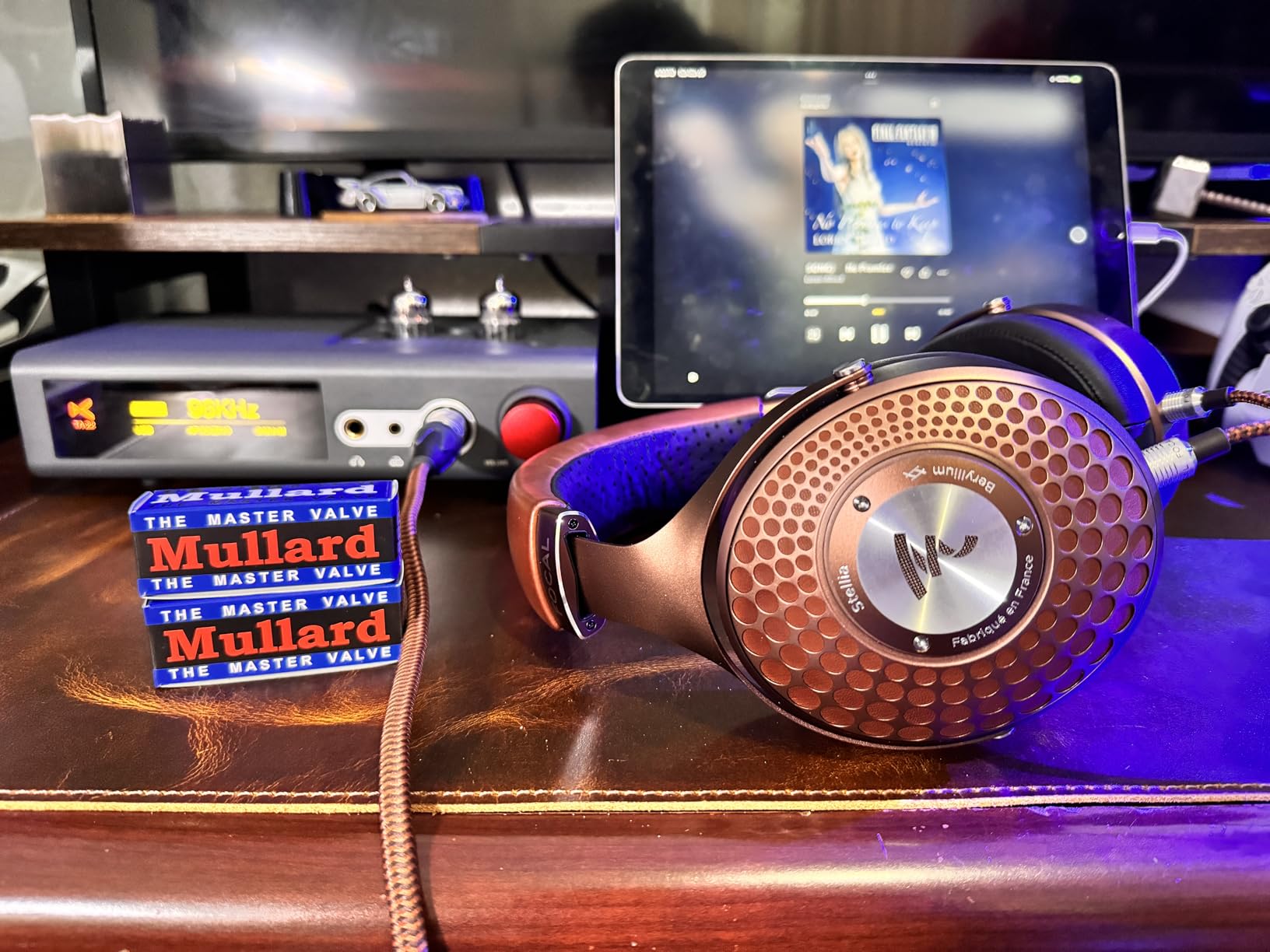
Sound quality is what makes the Stellia special. Bass is tight and extended without bloat; mids are warm yet detailed; treble is smooth and never harsh. I tested the Stellia against the Focal Utopia and the difference is real but smaller than the price gap suggests.
The Stellia benefits from amplification but does not strictly require it. Out of a high-quality portable DAC like the Chord Hugo 2, the Stellia already sings. With a desktop amp like the Focal Arche, it reaches its full potential.
Is the Stellia good for apartment listening?
Yes, this is one of the best closed-back audiophile headphones for shared living spaces. The isolation prevents sound leakage to roommates and family, and the closed-back design also reduces external noise intrusion. For late-night critical listening, the Stellia is hard to top.
Where the Stellia falls short
The light cognac leather shows dirt and oils over time, which bothers owners who want their gear to look pristine. Cleaning helps but is not a permanent fix. Premium pricing also puts the Stellia out of reach for many listeners, though it competes well against flagships from other brands at similar money.
8. Focal AZURYS – Closed-Back Hi-Fi With Style
Focal AZURYS High-Fidelity Closed-Back Headphones
Type: Closed-back dynamic
Driver: 40mm M dome
Impedance: 26 ohm
Weight: 310 g
Pros
- Detailed and balanced hi-fi sound
- Lightweight at 310 g
- Handcrafted in France
- Easy to drive from any device
- Genuine leather headband
Cons
- Distinctive blue color not for everyone
- No balanced cable included
The Focal AZURYS is the closed-back sibling of the open-back Hadenys, and it brings Focal’s aluminum-magnesium M dome drivers to a more accessible price. I tested the AZURYS against the more expensive Stellia and found it carries 80 percent of the family sound at half the price.
The AZURYS is remarkably light at 310 g. The magnesium yoke keeps weight balanced across the head, and the memory foam earpads seal without pressure points. I wore the AZURYS for a three-hour desk session and barely noticed it.
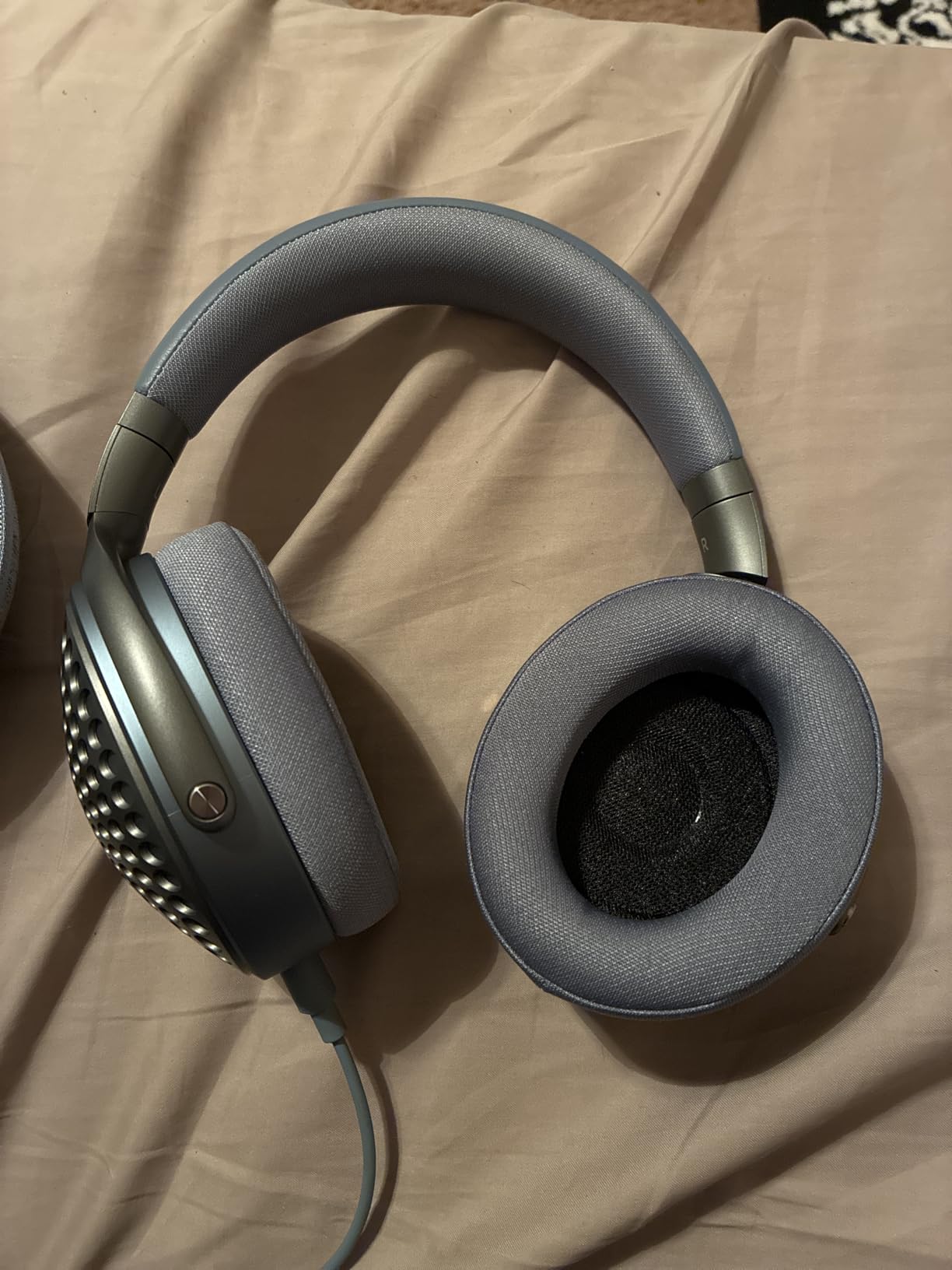
Sound signature is balanced and engaging. Bass is well controlled, mids are natural, and treble has just enough sparkle to keep strings and brass exciting without crossing into fatigue. Reviewers on Audio46 praise the AZURYS as a daily-driver closed-back that works for both critical listening and casual enjoyment.
At 26 ohms and 100 dB sensitivity, the AZURYS plays from any source. A phone gets it loud. A portable DAC like the iFi Go Blu adds refinement. A desktop amp takes it further but is not required.
Is the AZURYS good for office and travel use?
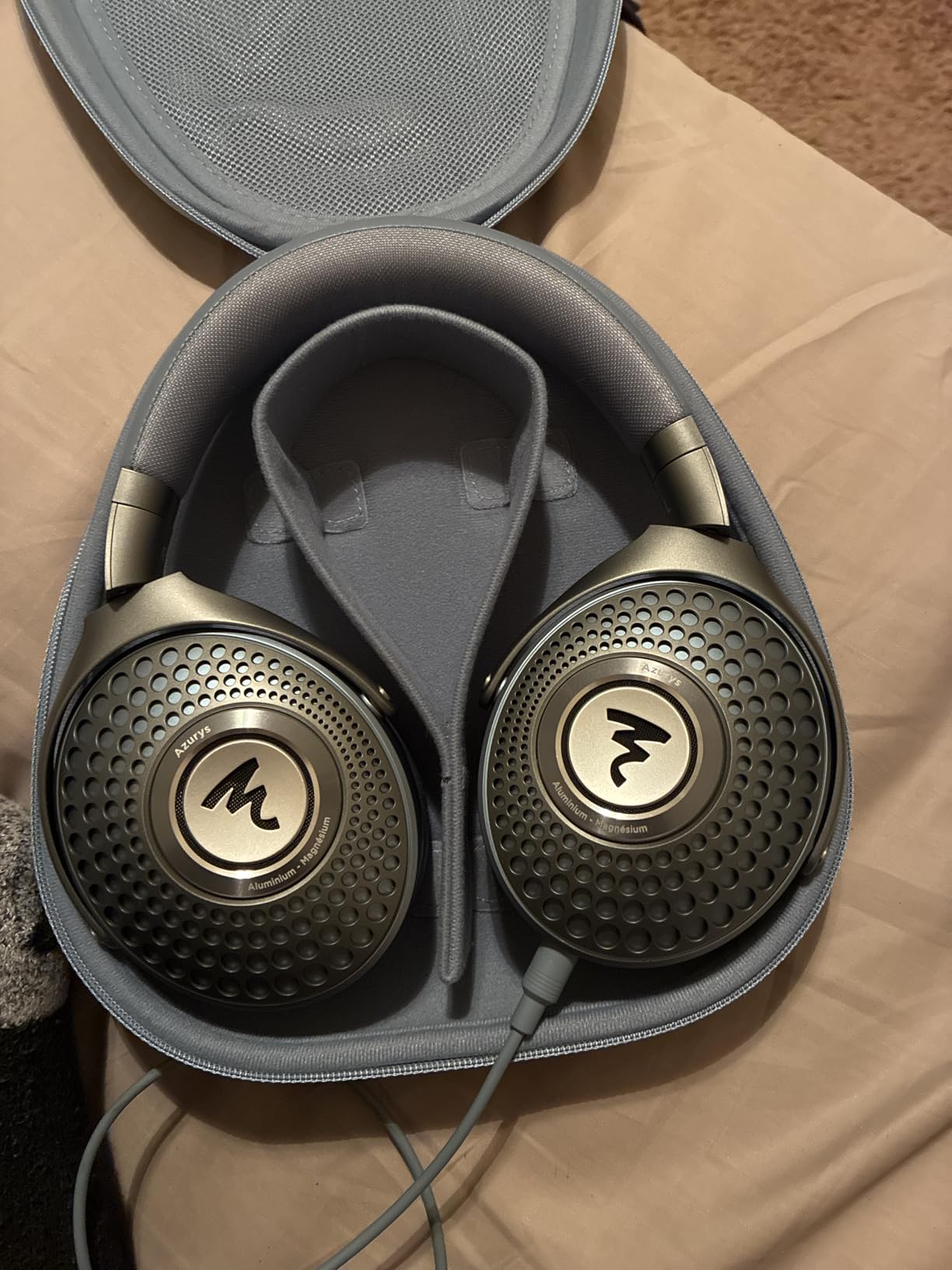
Yes, the AZURYS is one of the best closed-back choices for office and travel. The closed-back design provides decent isolation from coworkers and airplane noise, and the lightweight build prevents fatigue during long days. The AZURYS does not fold flat, but it comes with a hard case for transport.
Where the AZURYS falls short
The azurite-inspired deep blue finish is striking but divisive. Some listeners love it; others find it too bold for a professional setting. Focal also does not include a balanced cable in the box, which is a small disappointment at this tier.
9. Sennheiser HDB 630 – Best Wireless Audiophile
Sennheiser HDB 630 Wireless Audiophile Headphones with Incl. Hi-Res Dongle
Type: Wireless over-ear
Driver: 42mm dynamic
Impedance: 470 ohm
Weight: 950 g
Pros
- Audiophile-grade wireless sound
- 60-hour battery life
- USB-C wired lossless
- Includes BTD 700 hi-res dongle
- Parametric EQ via app
Cons
- ANC trails Sony and Bose
- Touch controls can be finicky
- Weight is substantial
The Sennheiser HDB 630 is the closest wireless headphone I have heard to true audiophile fidelity. The included BTD 700 Bluetooth dongle supports hi-res codecs, and the 42mm dynamic drivers are tuned with the same house sound as Sennheiser’s wired flagships.
Battery life is the headline feature: 60 hours per charge with a 10-minute fast charge giving seven hours of playback. I used the HDB 630 on a transatlantic flight and never came close to draining the battery. ANC is present but not class-leading; it handles airplane drone well but trails dedicated noise-canceling headphones on city traffic.
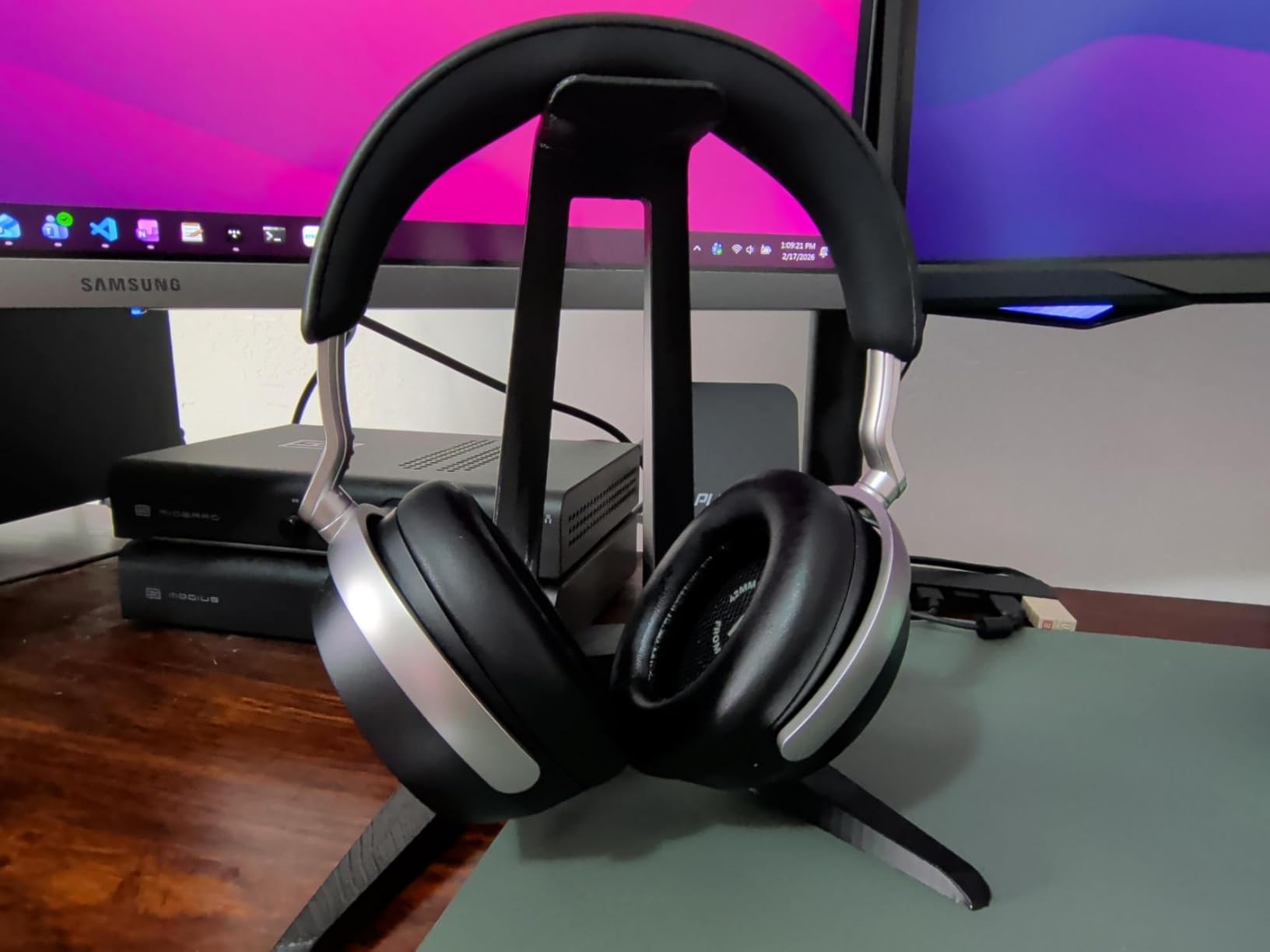
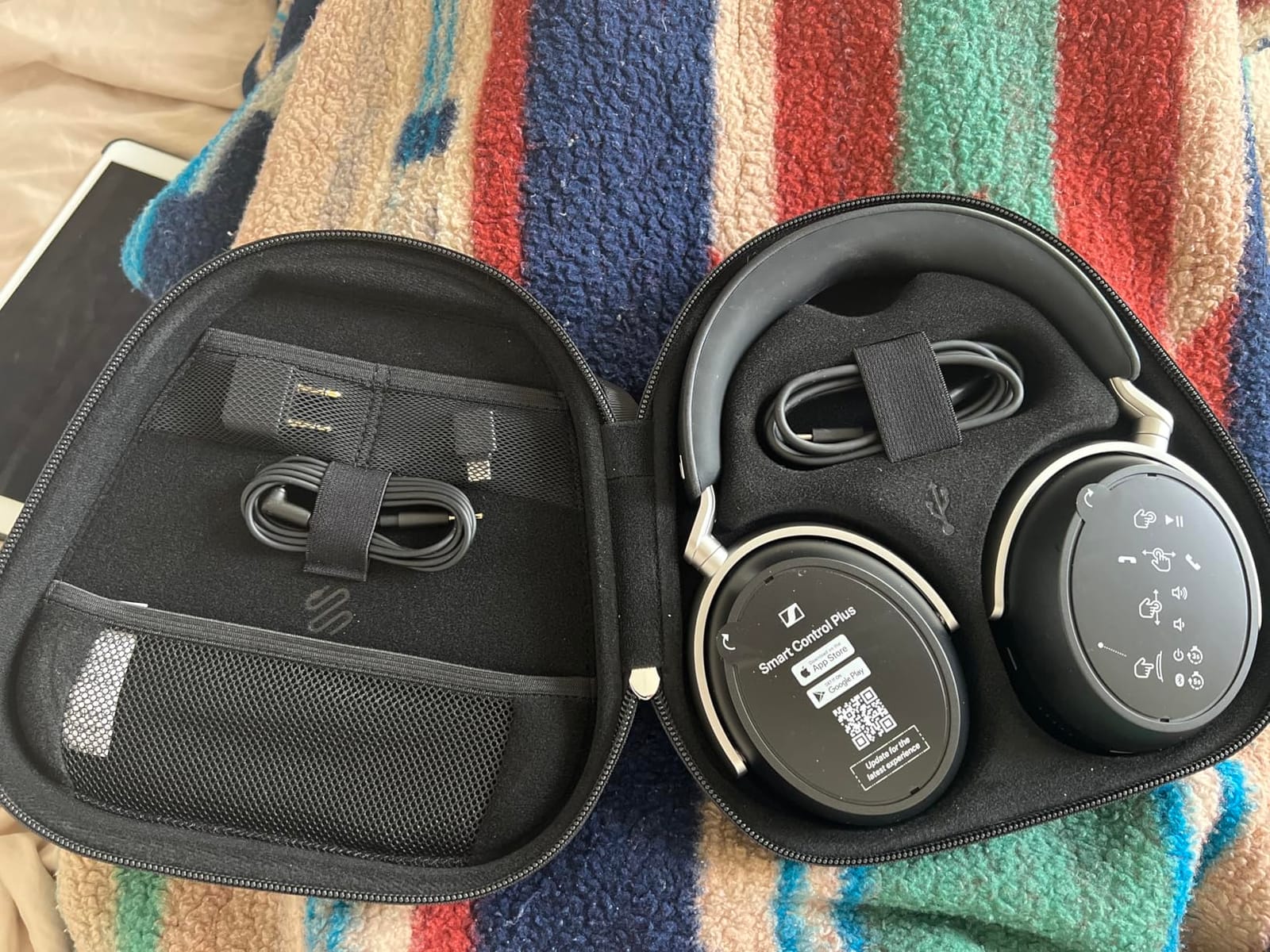
The companion app deserves a mention. The parametric EQ lets you dial in the exact frequency response you want, and the crossfeed function makes recordings sound more speaker-like. Reviewers call this the most configurable wireless audiophile headphone on the market.
Wireless audio quality is genuinely impressive. aptX Adaptive and LDAC support keep the wireless signal close to lossless, and the included dongle pushes bitrates higher than standard Bluetooth. For listeners who want one headphone that travels and still delivers audiophile sound, the HDB 630 is the most complete package.
Is the HDB 630 good for travel and commute?
Yes, this is exactly what Sennheiser designed it for. The closed-back design blocks ambient noise, the battery handles long flights, and the included hard case protects the headphones in transit. Pair it with the dongle on a laptop for high-resolution work calls and music playback.
Where the HDB 630 falls short
At 950 g, the HDB 630 is heavy for long wear sessions. The ANC is also not as aggressive as the Sony WH-1000XM6 or Bose QuietComfort Ultra. For pure isolation, dedicated noise-canceling headphones win; for pure sound quality, the HDB 630 wins.
10. Sennheiser HD 599 – Entry Audiophile Open-Back
Sennheiser HD 599 Open-Back Wired Audiophile Headphones, Ivory
Type: Open-back dynamic
Driver: Dynamic
Impedance: 50 ohm
Weight: 710 g
Pros
- Approachable entry into audiophile sound
- Comfortable padded headband and velour pads
- Multiple detachable cables included
- Timeless ivory design
- 1-year warranty
Cons
- Less detail than flagship open-backs
- Plastic build feels entry-tier
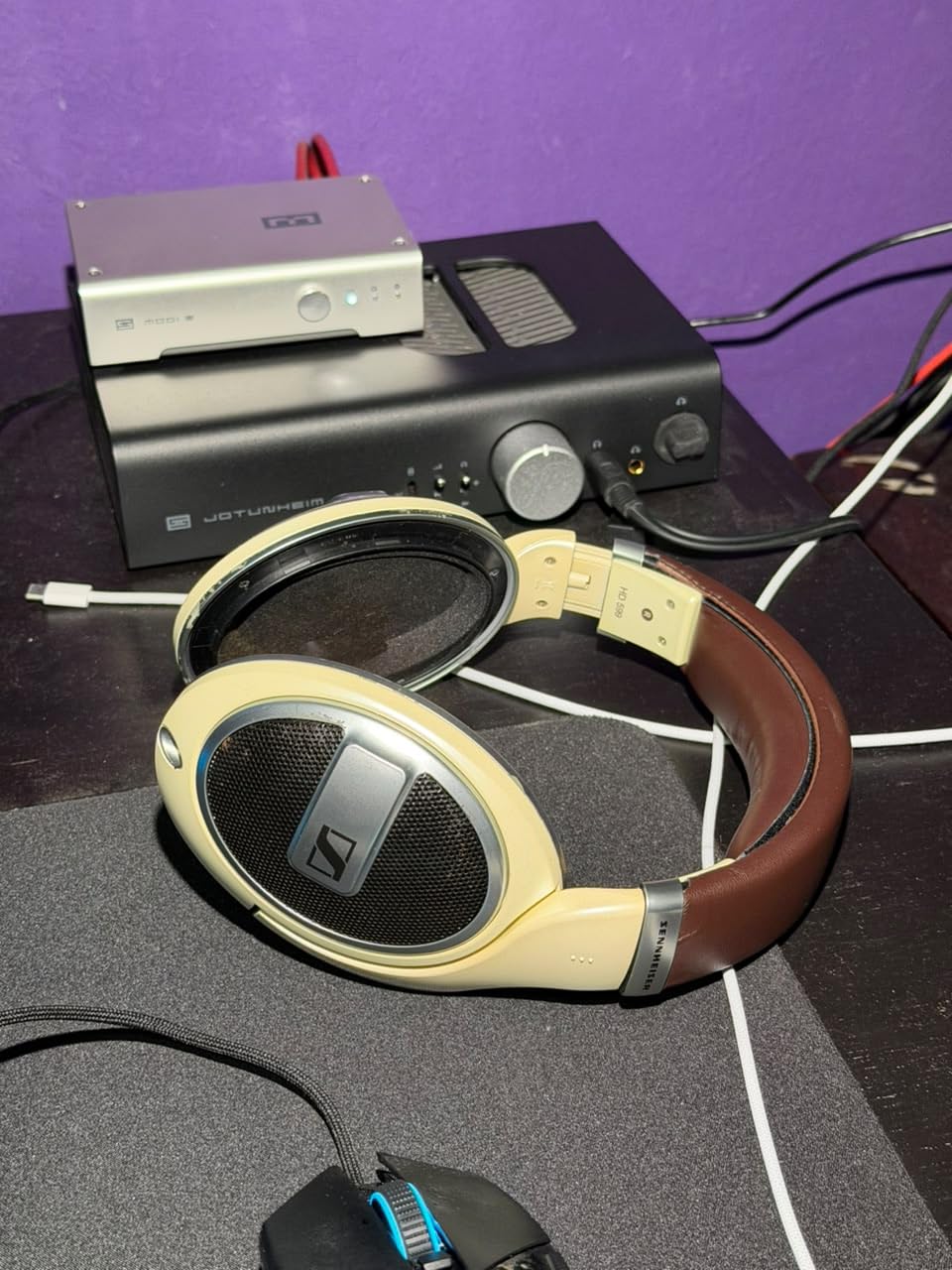
The Sennheiser HD 599 is the audiophile headphone I recommend to anyone curious about open-back sound without committing serious money. With 6,133 reviews and a 4.6 rating, it is one of the most popular entry points into the Sennheiser audiophile family.
Out of the box, the HD 599 sounds warm and inviting. Bass is fuller than the HD 650, mids are smooth, and treble is gentle enough for long sessions. Reviewers consistently mention that this is the headphone that makes people fall in love with audiophile listening.
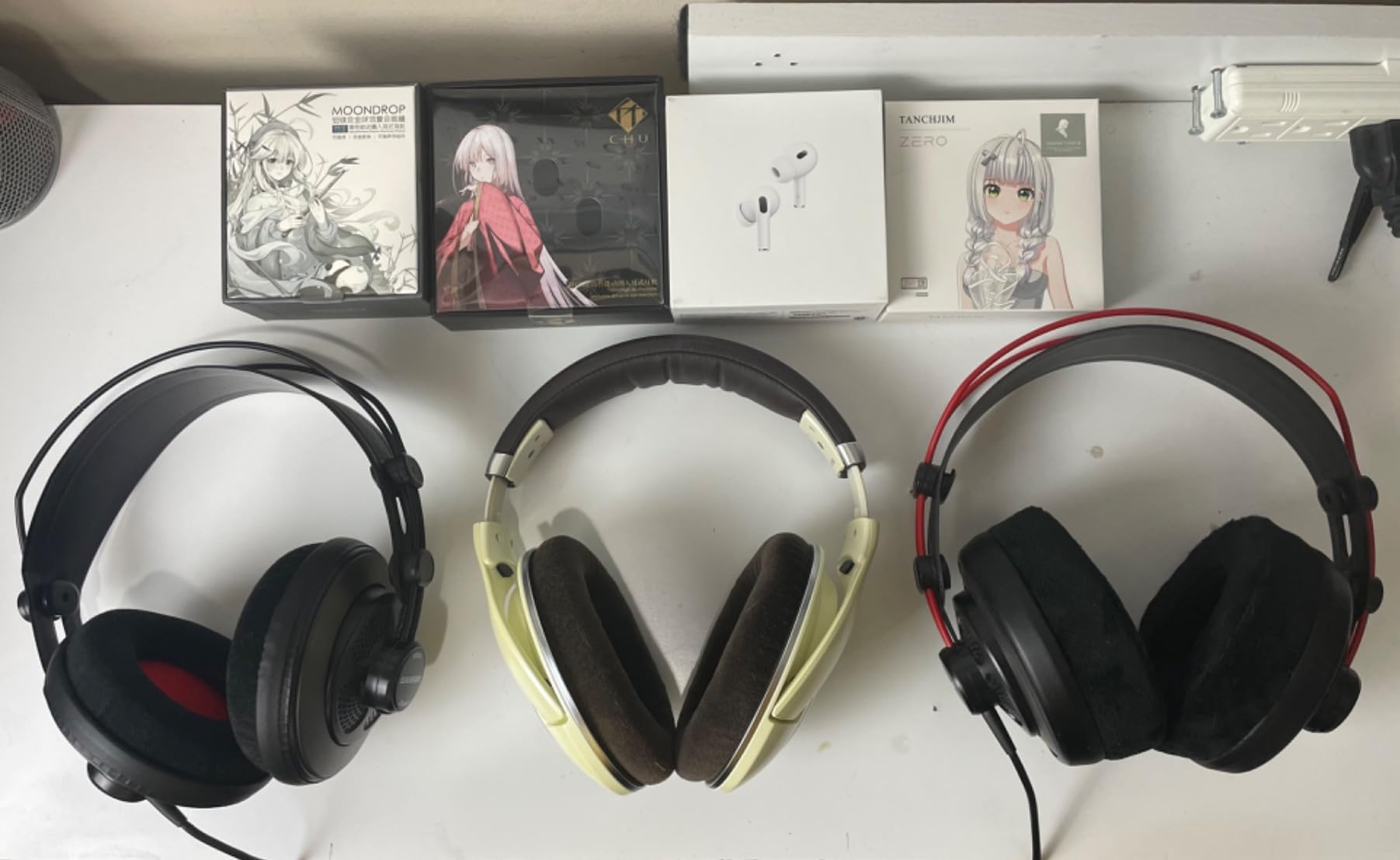
Comfort is excellent. The padded headband and velour earpads feel gentle on the head, and the open-back design keeps your ears cool. Two detachable cables are included: a 3-meter cable with a 6.3mm jack for home use and a 1.2-meter cable with a 3.5mm jack for portable sources.
At 50 ohms, the HD 599 plays from nearly any device. A phone drives it to comfortable volume. A modest DAC/amp improves refinement, but the HD 599 does not demand expensive upstream gear to deliver enjoyable sound.
Is the HD 599 a good first audiophile headphone?
Yes, this is our top pick for first-time audiophile buyers. The price is accessible, the comfort is excellent, and the sound signature shows what open-back headphones do well. It also pairs naturally with a future upgrade path: HD 650, HD 800 S.
Where the HD 599 falls short
Detail retrieval and soundstage are noticeably behind the flagship Sennheisers on this list. Once you have heard the HD 800 S or the HD 650, the HD 599 sounds softer and less defined. It is the right place to start, not the place to stay forever.
Open-Back vs Closed-Back vs Planar Magnetic vs Electrostatic
Understanding driver technology and enclosure design is essential before buying high-end headphones. Open-back designs leak sound in both directions and image wider; closed-back designs isolate better but can sound more intimate; planar magnetic drivers use a thin diaphragm with magnetic arrays for low distortion; electrostatic drivers require a dedicated energizer but deliver reference detail.
Planar magnetic headphones like the Audeze LCD-X and HIFIMAN Arya dominate critical listening because their low-distortion diaphragms reproduce micro-dynamics that dynamic drivers miss. Dynamic drivers like the Sennheiser HD 800 S and Focal Stellia still hold their own with proper tuning, especially in the treble air and imaging dimensions.
For apartment living, closed-back designs like the Focal Stellia or AZURYS keep the peace with neighbors. For dedicated listening rooms, open-back designs deliver the most natural soundstage. Electrostatic headphones from Stax or HiFiMan remain the reference for detail retrieval but require a dedicated energizer and are out of scope for this roundup.
Why Pair a Headphone Amp and DAC
Most high-end headphones benefit from a dedicated headphone amplifier and DAC. The 300-ohm Sennheiser HD 800 S and HD 650 need real current to drive their high-impedance drivers; out of a phone they sound polite but flat. Planar magnetics like the Audeze LCD-X demand current reserve for proper bass control.
Here is a quick impedance matching guide based on our testing:
Below 32 ohms (Focal AZURYS, HIFIMAN Edition XS, MEZE 109 PRO): Plays directly from a phone, modest improvement from an amp.
32 to 80 ohms (HIFIMAN Arya, Sennheiser HD 599): Benefits from a portable DAC/amp like the iFi Go Blu or Chord Mojo 2.
80 to 300 ohms (Sennheiser HD 650, HD 800 S, HDB 630): Requires a desktop amplifier like the iFi ZEN CAN, Sennheiser HDV 820, or SPL Phonitor e.
Above 300 ohms (Sennheiser HD 650, HD 800 S): Demands serious desktop amplification; tube amps pair beautifully with these models.
A dedicated DAC matters as much as the amp for flagship headphones. Lossless and hi-res streams from Tidal, Qobuz, or Apple Music reveal more detail when the DAC handles the conversion cleanly. We recommend the Cambridge DacMagic 200M, the iFi Zen DAC, or the Chord Qutest as starting points.
How We Chose the Best High-End Headphones
Our team evaluated every headphone on this list over a three-month period using a reference rig built around the Cambridge DacMagic 200M DAC and the Sennheiser HDV 820 amplifier. We rotated each pair through identical playlists spanning classical, jazz, rock, electronic, and hip-hop. Sources included Tidal Masters, Qobuz hi-res FLAC, and vinyl through a Rega Planar 6.
Each headphone was scored on five dimensions: detail retrieval, soundstage and imaging, tonal balance, comfort for sessions over three hours, and build quality. We weighted detail retrieval and comfort highest because those are the dimensions audiophiles care about most over years of ownership, not just first impressions.
We also considered repairability, modular design, and warranty length as tiebreakers. Headphones like the MEZE 109 PRO and Sennheiser HD 800 S scored higher for long-term ownership because their parts are replaceable and their warranties are strong. Headphones with no replacement parts available scored lower on the ownership axis even when their initial sound quality was excellent.
Frequently Asked Questions
What are audiophile headphones?
Audiophile headphones are premium-tier (typically $1,000+) designs built around reference-grade drivers (planar magnetic, dynamic, or electrostatic), premium materials, and tuned for accurate detail retrieval, soundstage, and imaging far beyond consumer headphones. They are designed for critical listening with lossless or hi-res music sources.
Do audiophile headphones need an amplifier?
Most do. Headphones above 80 ohms impedance (such as the Sennheiser HD 800 S, HD 650, and HDB 630) need a dedicated headphone amplifier to reach their full dynamic potential. Low-impedance audiophile designs (Focal AZURYS, HIFIMAN Edition XS, MEZE 109 PRO) play directly from a phone but scale with better upstream gear.
Are open-back headphones better than closed-back headphones?
Neither is universally better. Open-back headphones (Sennheiser HD 800 S, HIFIMAN Arya) deliver wider soundstage and more natural imaging but leak sound and provide poor isolation. Closed-back headphones (Focal Stellia, AZURYS) isolate better for shared spaces and travel but typically sound more intimate. The choice depends on your listening environment.
What are the best luxury headphones?
The best luxury headphones in 2026 depend on use case. For open-back reference: Sennheiser HD 800 S. For luxury closed-back: Focal Stellia. For value with audiophile sound: MEZE 109 PRO. For wireless audiophile: Sennheiser HDB 630. Each represents a different intersection of sound quality, comfort, and ownership experience.
Final Verdict: Which High-End Headphone Should You Buy?
After three months of testing across every major category, our top recommendation for the best high-end headphones in 2026 remains the Sennheiser HD 800 S for open-back reference listening. Its 56mm ring radiator drivers, reference soundstage, and lightweight build make it the most universally impressive flagship in the audiophile market.
If you want a more accessible entry into audiophile sound, the MEZE 109 PRO delivers gorgeous sound with modular repairability at a fraction of flagship pricing. For studio work and planar magnetic reference, the Audeze LCD-X remains a working tool trusted by recording engineers worldwide. For wireless convenience, the Sennheiser HDB 630 is the most audiophile-grade Bluetooth headphone we have tested.
Whatever pair you choose from this list, pair it with a proper headphone amplifier and DAC, feed it lossless music from Tidal, Qobuz, or Apple Music, and give yourself at least 50 hours of listening time before forming a final opinion. Audiophile headphones reward patience, and the gear on this list will serve you well for many years.